Lee Martin's Blog, page 2
September 15, 2025
Context and Association in the Essay
Cathy and I had a small serviceberry tree planted in our landscaping this summer. The tree, as is often the case, was just a tad crooked. Today, we finally got around to staking it with straps and ropes meant to straighten the trunk. In other words, we interrupted its natural growth to train it to grow in a way contrary to its natural inclination. We’re forcing it to be what it doesn’t want to be all in the service (pun intended) of straighter ascension.
When we write an essay, whether it be narrative or lyric, we’re money ahead if we do our best to not predict where the piece might go. We have to be open to the leaps and leans that take us in directions we didn’t know we needed to follow. We should give ourselves and the essay permission to meander, to jump from one thing to another, trusting our intuition to let various directions appear and being willing to follow the trails they lay out for us.
The serviceberry tree, for instance, is also known as shadbush, shadblow, or shadwood. It’s named after the fish that run and spawn while the tree is in bloom. This fact, connecting as it does the tree and the fish, provides an association that may be useful. The forced straightness of the tree held next to the hither and thither motion of the spawning fish provides a binary that might provide the central line of inquiry of an essay.
All essays are in some way a means of thinking out loud on the page. When we begin, we may not know what we need to think about, but if we follow the natural motion of the piece, and if we listen carefully to the clues it provides, we should be able to understand what’s brought us to the essay in the first place. Why, for instance, do I feel the need to write about straightening a tree whose other names honor the spawning fish?
Let’s say I need to explore this binary of permanence, as represented by the straight tree trunk, and escape, as represented by the fish, because my life has been disrupted in some way, and I find myself at a place where I have to decide whether to stay or to run. That’s the sort of context—and I could be more explicit—that provides the circumstances from which, in this imagined essay meant to let us think more deeply about how essays come to be, I write.
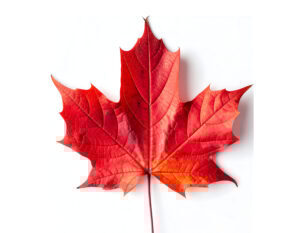
Think about something that draws your attention—something like the serviceberry tree—and open your essay with something about it. Then, make a leap. A bit of research might help. I had no idea the serviceberry tree was also known as shadwood, which led me to the spawning fish and its run. With that binary established, all you have to do is open yourself to further associations and possibilities. For instance, shortly after Cathy and I finished staking the tree, I found a crimson maple leaf that’s perfect in every way. It’s really one of the most beautiful maple leaves I’ve ever seen. What does it represent? Possibly, either a deepening of the binary or else a reversal. Let’s say most of the essay seemed to be leaning toward escape only to let the maple leaf be an example of perfection. Think about how the details want to connect. Maybe a detail at the end of the essay subverts what appeared to be an obvious connection, leading you to thoughts or emotions you didn’t know you had.
By the way, in case anyone wonders, all is more than fine with Cathy and me. I created the examples above to illustrate how one might construct an essay by following the leaps and associations it wants to make.
The post Context and Association in the Essay appeared first on Lee Martin.


September 8, 2025
Blackberry Picking
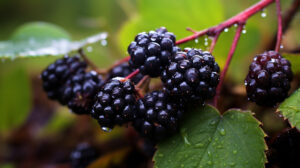
When I was a child on our farm, I often went blackberry picking with my mother. She patiently taught me which berries to pick and which to leave to ripen. She gave me an empty pail that once held the government surplus syrup we got because of my grandmother’s blindness. She lived with us, and she qualified for food assistance. Now, whenever I carry a paint can by its wire bail, I think of those days of picking blackberries, and I think, too, of what it felt like to stand in line along the tracks in town, waiting with a bushel basket for the commodities train to roll to a stop and for the men on a boxcar to fill our basket with pails of syrup and boxes of powdered milk and whatever else was allotted us that month. Our standing in line announced us as a family in need.
I did my best to forget the commodity train and the line we stood in and the way some folks, their cars bumping over the railroad crossing, would turn their heads to take in the sight of us. Some people brought cardboard boxes; others, like us, had baskets. Old women leaned on canes. Old men smoked hand-rolled cigarettes. Horseflies tried to pester us. We had no place to escape to. We kept standing in the line—we had to—waiting for the train.
The blackberry briars grew at the edges of our woodlands. My mother, and sometimes my other grandmother—the younger, healthier one—dressed in men’s overalls and long-sleeved flannel shirts to keep the chiggers from their skin. It wasn’t a foolproof method. We all left our berry picking with a few bites that itched like crazy. My mother and grandmother filled five-gallon buckets, while I worked with my syrup pail. I may have eaten more berries than I picked. I looked forward to the cobblers my mother would make.
Those nights, when I closed my eyes to sleep, I kept seeing the berries, their clusters of purple-black drupelets shining. It was as if I could reach out and just about touch them. The blackberries persisted even in my dreams. All night, I imagined the berries. I was, like the speaker in Robert Frost’s poem, “After Apple-Picking,” “. . . overtired/ Of the great harvest I myself desired.”
A blackberry is not just a blackberry to me. It’s emblematic of both abundance and want. Each summer the briars were heavy with fruit. Meanwhile, my grandmother spent much of her time resting, feeling “puny,” as she often said, but I can recall the sound of her fingers scratching our plaster walls as she slowly felt her way from her room to the kitchen where she made herself a cup of tea. She knew how to fill the kettle with well-water pumped at the sink and how to set it on a gas burner. She knew where the kitchen matches were and how to strike one against the stovepipe and light the burner. She knew how to fill her cup and how to dunk her Lipton teabag. I kept waiting for her to make a mistake, but she never did. What must she have been seeing—she who had lost her sight as an adult? What memory did she have of this house that had once been hers, a house she navigated with ease?
I was too young, then, to know how time passes in a blink and too young to know the images I’d never forget: the blackberries, the train, the people in line, my grandmother’s fingers trembling as she made her tea. I only knew I wanted to taste the sweetness of the fruit, those berries that tempted me even in my sleep.
The post Blackberry Picking appeared first on Lee Martin.
September 1, 2025
Work
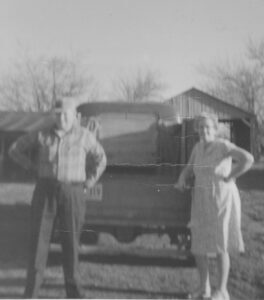 Today, Cathy and I sowed arugula, spinach, and turnips in our garden. As always, I thought of my parents and how they worked side by side when it came time to plant. My father marked off the rows with a one-wheeled cultivator; my mother dropped and covered the seed. I’d been the one to till the ground and work the soil down to tilth.
I hated this work when I was a teenager, but now I love the way it takes me back to my parents and reminds me of the love they maintained throughout their marriage until my father died in 1982. At that time, they’d been married nearly thirty-one years. They’d faced the hard time of the farming accident that cost my father both of his hands, a surprise pregnancy, and the challenges of raising a teenage son who caused them worry and distress during his rebellious years. Through it all, they kept working. My mother helped my father on our farm until I got old enough to fill her role. They planted large gardens, and my mother picked, and canned, and froze, and pickled. Our pantry shelves were full of jars of pickles and green beans and tomato juice. We had potatoes to last us through the winter, and strawberry preserves and freezer corn. Together, my mother and father managed our garden from seed to table, doing what had to be done to make it so.
The insects came—the tomato worms and bean beetles—and the raccoons sneaked in at night to gnaw on our sweet corn. My mother dusted and sprayed the plants to deter the insects; my father ran an electrical cord to our sweet corn patch and left a heat lamp hanging from a step ladder, hoping the light would scare the raccoons. Sometimes such measures worked, and sometimes they didn’t, but our garden was so big we hardly noticed our losses.
On this Labor Day, I think of my parents and their perseverance. They, like most farm families around us, had a stick-to-it-ness, that made them, during challenging times, hunker down and keep going. They had a stubborn refusal to accept defeat. It was one of the many valuable things I learned from my parents. The way to handle adversity was to keep working. When you want to give up, don’t. Keep going. Sooner or later, the much-needed rain will come, and the drought threatening your crops will end. Even if the rain fails to come in time to save your crops, there will be another growing season. Your heart might be breaking, but work will maintain your hope. Work is the one constant, so you keep at it because it’s the only way you know to be.
“Can’t never did nothing,” my father used to tell me when I complained about not being able to loosen a rusted nut or reach a fitting with a grease gun. He taught me there was always a work-around to accomplish a goal. You might have to work to find the strategy to overcome your obstacle, but you could trust an alternative was always there.
This blind faith, this stubbornness, this trust in the process of work—this is what I want to give all my writer friends on this Labor Day. Writing is like farming in the respect that both can break our hearts. Keep working. Have faith. Believe that something better lies on the other side of disappointment.
The post Work appeared first on Lee Martin.
August 25, 2025
Another School Year
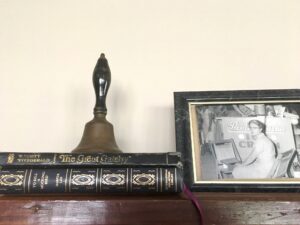 In my first memory of school, I’m four, and I’ve gone with my mother to Claremont Grade School where she teaches. She’s come to ready her classroom for the start of a new year, and I’ve come along. The hallways smell of floor wax. The lights are off in the gymnasium, where I’ve come to watch basketball games in the past, and it seems odd to peer into the shadows when I’ve spent so many evenings in the bleachers with my parents listening to the crowd cheer, and the squeak of sneakers on the glossy hardwood floor, and the cheerleaders shaking their red and white pompoms. Somewhere an oscillating fan makes a noise. A classroom door closes. I follow my mother to her room where she has textbooks to get ready for distribution, bulletin boards to decorate, supplies to check on: chalk and erasers, staplers and scissors, construction paper and tape. I breathe in the scents of pencil shavings, the cloth bindings of textbooks, an open jar of paste. My mother raises some windows because it’s a warm late August, and a breeze ruffles the folds of the small American flag in its staff at the corner of the chalkboard. I sit at a desk in front of my mother’s big desk. She gives me notebook paper and crayons, and I pretend to be a student.
Here, I think now, here is where it began—my lifelong love of being in a classroom.
On Tuesday, I’ll step into a classroom again—my 44th year of teaching—and, no matter how much I’ll mourn the end of summer, I’ll pause a moment to remind myself how blessed I’ve been to do what I love for so long. I’ve taught undergraduate students and MFA students and Ph.D. students. I’ve taught in low-residency MFA programs and at various writers’ conferences. I’ve also taught community groups through libraries and writing centers. I’ve been privy to so many people’s personal stories as well as those that have come from their imaginations. I’ve taught them what I can. We’ve talked about characterization, structure, point of view, detail, and language. With enough consideration and practice, everyone can learn the techniques common to the craft of storytelling. The question is to what end? What story do you have to tell that comes from your heart?
Here’s one of mine. Once, when I was in the second grade, I lied to my mother. I told her I had to write a report about some aspect of Native American life. I had a children’s book, complete with illustrations, that did exactly that. It was past my bedtime. My father, who rose early each morning to attend to his chores on our farm, was already asleep. My mother was sitting at our kitchen table trying to finish marking her students’ papers to return them the next day. She didn’t have time to indulge me. I’m convinced she knew right away I wasn’t telling the truth. She must have been so weary. She’d taught all day. She’d prepared our breakfast and supper. She’d helped my father with the evening chores, and here she was trying to finish her schoolwork before it got too late. And here I was, a whiny kid who must have been eager for his mother’s attention, which she gave me.
She helped me go through that children’s book, choosing a topic, and helping me decide what I wanted to say about it. She was patient, only once showing any frustration with my insistence that my report be perfect. Her jaw tightened, pressing her lips together in a tight line. Then she said, “Oh, Lee, it’s getting to be so late.”
I feel that now, here in the late stages of my life. Time is running short. I don’t know how many first days of school I’ll have left, but I know I’ll have one on Tuesday, and I’ll remember this story about my mother and me, and the way she helped me write something she must have known I really didn’t have to do. She did it because she loved me, and I hope she knew it was because of her I came to love learning. She was my first teacher. For forty-four years, each time I’ve stepped into a classroom, I’ve carried her memory with me. I’ll do it again come Tuesday.
Oh, and that report? I carried it to school in my notebook, stuck it in my desk, and forgot it until the end of the year when I found it while cleaning out my desk. I was embarrassed to see it, ashamed of how I’d kept my mother from her sleep. For whatever reason, I had a red marking pencil like hers. I gave myself an A-. I didn’t think I deserved an A because, after all, I’d lied about having to write the report. I took it home and showed my mother, who’d not asked me anything about how my teacher liked it. My mother looked at the report, a little smile on her face, and then she said what she must have said so many times over the 38 years she taught. “Good,” she said. “That’s very good.”
The post Another School Year appeared first on Lee Martin.
August 18, 2025
Right Place, Right Time, Wrong Person

Friday, Cathy and I had to make a stop at our local post office. Cathy pulled into a parking space as an elderly man in the space next to ours was getting out of his Cadillac. He was wearing a gray sweatshirt and darker gray sweatpants. His walk was a shuffle. He had to take a step up onto the sidewalk in front of the post office. He didn’t get his foot up high enough, caught his toe, and pitched forward. His face hit the concrete.
Cathy didn’t hesitate. Her years of nursing experience kicked in. She got out of our car, went to the man, and assessed his injury. He was bleeding profusely from his face. He tried to get up, and Cathy, not knowing how badly he might be hurt, told him to stay where he was. A young man brought what may have been a rolled-up towel or a hoodie and told Cathy she could have it to place under the gentleman’s head. She told a woman to call 911. The ambulance was there within minutes, and we left the gentleman to the EMTs’ care.
Fortunately, he turned out to be all right, just cut and a little shaken. After receiving treatment, he was able to drive away from the scene. The whole incident left me thinking about how calmly Cathy acted while tending to this man. Although she hadn’t been a floor nurse for several years, she knew exactly what to do. She was the right person in the right place at the right time.
I’ve also been thinking about how often narratives begin with the wrong person being present at the start of a sequence of events. My former writing teacher, Bill Harrison, has a story called “Under the House.” It’s about a plumber whose biggest fear is having to crawl under a house to make a repair. The story opens, of course, with the plumber having to do exactly that. The narrative has immediate conflict and tension. It requires a choice, and that choice leads to action.
This might be a good strategy for our own stories or memoirs or personal essays. If you’re a nonfiction writer, maybe you could recall a time when you or someone you knew had to do something they were ill-prepared to do. Can you craft a narrative that dramatizes their inadequacy or fear? Is it possible that they rose above whatever stood in the way of their acting? Did they surprise you by demonstrating something that you never could have imagined? Maybe they refused to act, leaving it to someone else, and maybe that confirmed what you’d always suspected about them. The key is to use whatever action they decide to take, or refuse to take, to deepen their character and your relationship to them. Quite possibly, their choice will create consequences that will require other scenes to explore.
The same approach could work with invented characters in our fiction. What do our characters fear or resist? How can the narrative open with a situation that requires them to step out of their comfort zone?
We walk through the world thinking we know who we are, or who someone close to us is, and then some situation comes along to show us more than we can imagine. Such situations can spark a narrative.
The post Right Place, Right Time, Wrong Person appeared first on Lee Martin.
August 11, 2025
Re-Entry
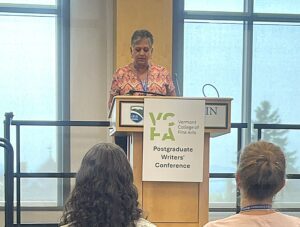 Cathy and I just got back from our week at the Vermont College of Fine Arts Postgraduate Writers’ Conference in Burlington, VT. Last year, due to cancelled flights, we had no choice but to drive from our home near Columbus, Ohio, to Burlington. This year, we decided we’d do it again. On the way out, we spent the night in Syracuse and then went on to Burlington the next day. On the way back, though, we made the entire trip in one day. We took the ferry across Lake Champlain, navigated the winding roads through the Adirondack Mountains, hit the New York State Thruway, and bit by bit we came back to the flatlands of central Ohio. We made our re-entry to a different landscape and to everything that lies ahead of us as we move through the rest of August. We had a lawn to mow, a garden to tend, cats to welcome us, and a new pool to maintain.
Coming back to one’s life can be as welcoming as it can be challenging. For a week, we’d immersed ourselves in Vermont and the writers’ conference where I teach each August. It was, as always, a thrilling conference that was made more so by the fact that Cathy got to read from her memoir-in-progress at one of the participant readings. We left Vermont, weary but also exhilarated by the time we’d spent with good friends, the workshop I taught, and the air that still seemed clean even though Canadian wildfires led to air quality alerts and obscured views of Lake Champlain and the mountains to its west.
Coming home or returning to someone or someplace after a time away can be good fodder for our writing. If you’re working on a memoir, is there a return scene waiting to be written? What were its complications? If you’re writing fiction, is there such a scene that might provide the premise for the narrative. Someone comes home after time away, perhaps, or someone sees someone they haven’t seen in years. What draws someone to return to a place or to reunite with someone from the past? How might they feel one way about the return or the reunion and how might they also feel quite the opposite way? What surprises are awaiting them?
We see familiar places and people with fresh eyes after some time away. How can you make that pay off for your memoir, your novel, your story? Start a new scene, one you maybe didn’t even know you need to write. Keep your heart open for whatever surprises come your way. I hope this prompt leads you to discover something you didn’t know.
The post Re-Entry appeared first on Lee Martin.
July 28, 2025
Reunions: A Writing Prompt

It’s been a period of reunions for Cathy and me. Last weekend, Cathy’s side of the family gathered in our native southeastern Illinois. At breakfast, on the day we drove back to Ohio, a woman approached our table. She turned out to be the girl I dated in high school before I dated Cathy. Finally, at the end of this week, Cathy and I had dinner here in Columbus with one of her high school friends and her husband. She and Cathy hadn’t seen each other in forty-nine years.
Such reunions bring up memories of time spent with family members, of young love, and maybe even that special friend—the one you thought would be in your life forever. Of course, when we reunite with people from our pasts, there can be a certain degree of awkwardness. After all, we’re not the same people we were many years ago, but maybe in a fundamental way we are. Maybe whatever it was that first brought us together still exists.
I once ran into a high school acquaintance, someone I hadn’t seen since those days. He’s a minister now, and he told me he often used me as an example in his sermons—an example, he said, of someone who turned his life around. I wasn’t sure how to take that, but I let it be what it was. After some chit-chat, he said to me, “Say that thing you always said.” What thing? I asked him. “Don’t you remember. You’d always come into our geometry class, and you’d point your finger at me, and you’d say, “It is what it is, man.”
I don’t remember ever saying that to anyone, but I didn’t ask if he was perhaps confusing me with someone else. I gave him what he wanted, complete with the finger point. “It is what it is, man,” I said, and then I walked away, leaving him to delight in a memory that was his but not mine.
At the end of this week, I’ll be off to another reunion of sorts. For the sixteenth year, I’ll be teaching at the Vermont College of Fine Arts Postgraduate Writers’ Conference. I’ll be seeing colleagues I’ve shared a week with summer after summer, and I’ll be encountering returning participants who’ve become my dear friends. I probably won’t be sharing new blog posts during the time of the conference, but never fear, I’ll be back when I can.
In the meantime, let me leave you with this writing prompt. Choose someone from your past whom you haven’t seen in several years. If you were to see them, what would you say and/or do? Imagine that scene of reunion. Write it as a piece of memoir (maybe you’ve actually had that experience), or feel free to fictionalize it or put it in a poem. Maybe you’ll begin with something like, “The last (or first) time I saw you, I. . . .” Fill in the blank and keep going.” Or maybe you start with something like, “I always wanted to tell you. . . .” Anything that takes you back into the past with a perspective you didn’t have at the time will work.
Here’s something from a new memoir I’m writing. I’ll see you all in a couple of weeks.
The first time I saw you, it was summer. My parents and I had just moved into our house on West Locust Street. Drainage ditches separated the street from the sidewalk, ditches with deep slopes I’d learn all too well while mowing our yard. A thunderstorm had come up that afternoon. A downpour. A deluge. A toad-strangler. When the rain stopped, the sun came out, and steam rose in wisps from the asphalt street. Water ran, hip deep, in the ditches. You came running down the sidewalk, barefoot, your short, slightly bowed legs, churning, and with a yelp you jumped into the ditch just to feel that water. It was a marvelous thing to see. You came up from the ditch with water streaming from your white tee shirt, your khaki shorts. The sun shone down on you, and in its light you appeared to be blessed. So often, because you were short—shorter than anyone else you knew—kids found it easy to tease and ridicule you. You always fought back even though you knew you’d never win. Maybe that’s why I’ve always remembered how you looked that day in the sunshine. You were completely and purely happy. You stood there grinning, and I knew, even before it happened, you’d dive into that water again.
The post Reunions: A Writing Prompt appeared first on Lee Martin.
July 21, 2025
For My Friend, Roy Bentley
 Let’s be honest; sometimes we writers can be an insufferable bunch. We’re always talking about what’s gone well and what’s gone horribly wrong. We’re always currying someone’s favor. We can be boorish, loutish, whiny, and self-pitying. And all the while, our intention is to get someone to notice us and our work. We want your validation. We want you to like us even if we are intolerable and vain.
We are, as my friend, the poet, Roy Bentley, once said to me, “Flies on the same turd.” Never one to gild the lily, or anything else for that matter, Roy tells it like it is even if we’d rather not hear it. He’s direct. He’s unafraid. No matter that the world can disappoint him, he’s unapologetic about his love for small moments of beauty and grace. He’s in love with the world, even though sometimes he pretends he’s not.
Check out this poem, “Taos, Lightning,” from his collection, Hillbilly Guilt:
That afternoon we moved through Taos Pueblo,
the oldest continuously inhabited human dwelling
in North America, learning what it is to live together,
a good thing to try and make sense of on a honeymoon.
We crossed light-burnished Red Willow Creek. Skies
had blackened to the south in the direction of Santa Fe.
We ventured into dim shops to handle silver artifacts,
eat frybread, and came out to the first huge droplets
of a thunderstorm. Arrows of lightning rained down
from the clouds above arroyos, star-bright branchings
of no discernible intelligent design loosed and blazing
and vanished in an instant. The strikes were in the hills
above the Taos street where Kit Carson had lived once.
We ducked for cover inside a rental car. You shivered
as I started the engine and rolled down a window. Lit
a cigar I’d bought in Santa Fe, the leaf-scent a thing
a passing Tiwa man said was pleasant and welcome.
All this was years ago, and my memory plays tricks.
Maybe the Tiwa man said nothing but only looked
in our direction—these beings who move as one—
and I learned what humans have always known or
might learn on any given afternoon in New Mexico:
that we are all just trying to come in out of the rain,
visiting for such a brief time under the turning sky.
This is a poem that tenderly leads us to what the speaker knows, the truth of all our striving. Despite our misdeeds, missteps, and dunderhead decisions, we share the human desire to come in out of the rain.
I share this poem on the eve of a major surgery for Roy, my friend, a marvelous teller of stories, a master craftsman of poems, and a fierce supporter for so many, like me, in our times of need.
I hope you’ll help me send good juju to Roy and his loved ones during this challenging time. We’ll keep the door open, a lamp lit, a fire burning, to light his way to the warmth inside, so we can visit a while longer “under the turning sky.”
The post For My Friend, Roy Bentley appeared first on Lee Martin.
July 14, 2025
The In-Between

For some reason, I woke up this morning feeling particularly chipper. All morning, I’ve had the lyrics of the old Bing Crosby song, “Ac-Cent-Tchu-Ate the Positive,” running through my head:
You’ve got to ac-cent-tchu-ate the positive
E-lim-i-nate the negative
Latch on to the affirmative
Don’t mess with Mr. In-Between
It’s that Mr. In-Between that interests me when I think about the writing of fiction and creative nonfiction. Those in-between places where people are torn, having multiple feelings all at the same time, make our writing memorable. These are usually moments when you, the writer, notice something in a character or a situation that others might overlook. Good writing lives in the in-between.
A story about love can also be a story about hate. A memoir can dramatize the moments from our lives when we felt victorious but also sad. We can be filled with satisfaction but also regret. We can want one thing while also wanting its opposite. If you’re going to be a writer, you better get practiced at noticing contradictions. That’s what makes people and the circumstances of their lives unforgettable.
So why not start with this simple exercise:
Have a character in a piece of fiction intend one thing with an action only to be surprised that it has its opposite result. Or find a moment in a narrative when, given the circumstances, a character does or says something we wouldn’t expect but which also seems believable.
Or maybe this exercise for a piece of creative nonfiction:
Recall a complicated moment from your past. Use the reflective voice to articulate something you couldn’t have articulated at the time. You might want to use this prompt: “At the time, I (fill in the blank with what you felt or thought), but now, as I look back on that day, I wonder whether (fill in the blank with a deepening of thought from the writer at their desk). Maybe something like this:
At the time, I only wanted to hate my father, but now, as I look back on that day, I understand he was doing his best to move us beyond the ugly thing that had happened, so one day I would be able to see he really loved me. It’s that thought that fills me with love for him, and maybe just a bit of pity. Above all, I understand our love had been there all along. I’d just been too young—too self-involved—to see it.
Our lives are complicated, and we’re equally intricate beings. Our writing should honor that complexity. Otherwise, we’re just constructing narratives of sequential actions without investigating what those actions have to tell us about ourselves and others.
The post The In-Between appeared first on Lee Martin.
July 7, 2025
On the Outside: The Writing of Memoir

I never learned to swim. Unlike most country boys who learned when their fathers tossed them into a pond and they had to keep themselves from going under, I remained grounded. My father couldn’t do the tossing because, as many of you know, he had no hands to lift me, having lost his in a farming accident when I was barely a year old. My mother apparently couldn’t bring herself to throw her only child into a pond and then watch him sink, as I might have done. I don’t believe my mother knew how to swim, and I imagine my father didn’t either. No uncle stepped up to teach me. As a result, I stayed on land whenever my friends took to the water.
When I was five, I attended a birthday party held at a public pool. I didn’t have any bathing trunks. Another little boy was in the same boat. One of the mothers said we could go into the wading pool and splash around in our tidy whities. I was enjoying myself. Then the other kid peed in the pool and that was the end of that. That’s pretty much my history when it comes to swimming.
Anytime I’ve been with a group who decided to go swimming, I’ve felt so much on the periphery I might as well disappear. It’s that feeling of exclusion I want to talk about today. I imagine we all have similar moments from our pasts—or maybe even our present times—that still haunt us. Can you recall a moment when you felt like you were outside whatever circle of light shone around others? Can you remember how you felt?
I always felt—and can feel to this day—the embarrassment of not being like my friends, to whom swimming came so easily. I also felt a desire, a yearning to be able to jump into a pool and swim with power and grace to its end. These contradictory feelings were at war inside me. I had an urge to stay on dry land with my mother, to cling to her and hide my face in the folds of the skirt of her dress, thereby practicing the misguided belief common to all children at some time or another; if I can’t see someone, then they can’t see me either. I also wanted fervently to be able to say, “Hey, everybody. Look at me.” I wanted to amaze my friends with my athletic swimming. Those few minutes in the wading pool with my friend were among the happiest of my young life. So what I was in my underwear? I was as close as I’d ever come to feeling at home in water. I was like my friends. I felt normal.
For those of you writing memoir, what’s your moment of feeling on the outside? Maybe you even have a moment like mine, one that for at least a while welcomed into the circle of light, only to have the invitation revoked. Write about that moment. Think about your contradictory urges. Let the narrative of what happened reveal aspects of the person—you!—that you may have not considered at the time. Use the reflective voice to think about what your moment has to show you about yourself. For instance, I often blamed my father’s accident for standing in the way of a more regular childhood for me. Worse yet, I sometimes blamed my father. Looking back on it all now, though, I see this: None of us can help what our lives give us—shucking boxes jam and snapping rollers mangle hands and little boys never learn to swim. But that’s not the end of the story. There really isn’t an end. We go on into the rest of our years, carrying the circumstances of our lives. Some people never realize that. Most people don’t want to look too closely at what harmed them. Most people don’t want to examine their lives, but if we do, we can take away the power of our pasts over our presents and our futures. We can write our way toward a healing of sorts. We can begin with something that may seem small—the memory of a little boy standing ankle deep in a public wading pool while wearing his white underpants—but it actually contains so much about the people we became.
The post On the Outside: The Writing of Memoir appeared first on Lee Martin.