Lee Martin's Blog, page 12
August 28, 2023
Retirement
 Last week’s blog focused on new beginnings and ended with this quote from Walt Disney: “We keep moving forward, opening new doors, and doing new things, because we’re curious and curiosity keeps leading us down new paths.” Apparently, my wife Cathy took Disney’s quote to heart because this past week, she decided to give her employer her notice of retirement. She’s been a health care professional for forty-seven years, first as a floor nurse and then an administrator. At one time, her job required extensive travel. She was on an airplane every Monday morning on her way to offer quality management and education to staffs at high-end retirement communities across the country. For the past ten years, she’s been the Director of Risk Management and Corporate Compliance at a small hospital. All these years, at whatever level, she’s been in the service of residents and patients to make sure they receive quality care.
I’ve always admired the self-sacrifice nurses make—the long shifts, the hours spent on their feet, the risks they accept. I’ve been their patient during my own frightening times, and I’ve been grateful for their gentle touch, their kind words, and their excellent care. I’ve known Cathy to be empathetic, understanding, patient, steadfast in any emergency, wickedly funny, and direct—even stern—when the situation called for her resolve.
I admire her more than any words, including the ones in this post, can ever express. Forty-seven years of those long hours. Forty-seven years of taking colleagues’ shifts so they could be with their families on the holidays, forty-seven years of being distant from her own family, forty-seven years of prioritizing the care of the elderly and the sick. No one comes to the Director of Risk Management and Corporate Compliance with good news. When Cathy’s phone rings, it’s because someone has a complaint or there’s an issue of legal exposure that she must deal with. I know, if I were a patient in need, hers is the voice I’d want to hear on the other end of the line. She’s willingly dealt with stressful situations time and time again because she believes in patients’ rights to superior healthcare, and she’s dedicated to doing whatever she can to protect those rights while also keeping her hospital compliant with all regulations. Her behind-the-scenes work has made a difference for countless people.
I admire her for her work, but I also respect her for the courageous decisions she made in her personal life. A single mother at the age of eighteen, she took a job as a nurse’s aide, worked her way through nursing school, passed her RN licensing exams, and later became an Assistant Director of Nurses. Once she started doing quality care and risk management work, she moved up the corporate ladder to a salary of just under six figures. Then her mother was diagnosed with lung cancer. Cathy didn’t hesitate. She resigned her position, so she could take care of her mother at her home in a tiny town in southeastern Illinois. Her mother lived only a short time, and there was Cathy, grieving, and without a job and very little prospect of one in this small, economically depressed town. So, she went to work for a landscaping crew. Her ex-husband told her she was too old to do that. It was all the incentive she needed.
Simply put, Cathy possesses tremendous strength. She’s always been a survivor, someone who doesn’t rely on anyone but herself to keep going, no matter how dark the days. And keep going she will. I have no doubt she’ll end up employed, probably part-time, because she’s not the type to just sit around, and she still has a great zest for life. “I want to do something fun,” she tells me. Something she won’t have to carry home with her. Maybe she’ll work at a local garden center, or become a personal shopper, or work at the public library. I can’t tell you how happy I am for her. She’s worked hard on behalf of others all her adult life, and she deserves to be able to start offering care to herself.
So, join me in a toast of congratulations to my lovely wife, and while we’re at it, let’s lift our glasses to all of us who are still pushing forward, especially the writers among us who get told no over and over and somehow find a way to keep doing what we love.
The post Retirement appeared first on Lee Martin.


August 21, 2023
“The First Time I. . . .”—A Writing Prompt
 It’s that time again, the start of a new school year. Today, I was on campus for our MFA picnic and orientation. I’d just entered Denney Hall via a side door that was open when I saw two young women peering through the glass doors at the front of the building. I opened the door for them and asked them if they wanted to come inside. One of them said, “She wants to see the room where her English class will meet.” I told them to come in, and I asked them which room they were looking for. “Room 214,” the other young woman said, and I told them how to find it.
I could feel that young woman’s anticipation and excitement. I knew, without having to ask, she was nervous as her college career was about to begin. I knew because she’d taken the time to make sure she knew where she was going for her class. I wish I’d told her I was nervous, too. I’m starting my forty-second year of teaching, and I still get a touch of nerves before those first classes. I’m especially nervous this year because I’m coming back to in-person teaching for the first time in three years when COVID kept me teaching online. I’m also nervous because I’m teaching a course I’ve never taught, one that will require some knowledge of technology, which has never been my strong suit. Like this young woman who was looking for her classroom, I’ll be doing what I can to make sure I’m prepared.
Yes, teachers get nervous, too. Here we are, students and teachers alike, at a time of new beginnings.
With that in mind, here’s a writing prompt you can use to call up new material. This prompt should work for both nonfiction and fiction writers:
Begin a freewrite with the words, “The first time I saw/met. . . .” If you’re writing nonfiction, the “I” will, of course, be you, and you’ll be recalling the first time you saw or met someone you’ve never been able to forget. Maybe you can’t forget them because they’re linked to some experience that still haunts or mystifies you. If you’re writing fiction, you can use this approach for a deeper understanding of your main character and the relationship they have with another important character.
What physical characteristics, mannerisms, or objects are relevant to this first sighting or meeting?
What story or stories can be told about this person?
This is a prompt designed to invite your careful consideration of character. Walt Disney once said, “We keep moving forward, opening new doors, and doing new things, because we’re curious and curiosity keeps leading us down new paths.” What are you curious about when it comes to this person or character you’re recalling? What makes them memorable? What concrete details and particulars make them so?
The post “The First Time I. . . .”—A Writing Prompt appeared first on Lee Martin.
August 14, 2023
The Toys We Never Had: A Writing Prompt
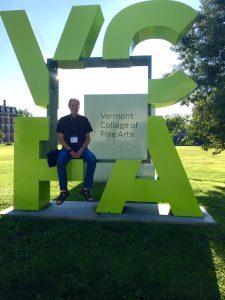
 This post is late today because I got back yesterday after teaching a week-long novel workshop at the Vermont College of Fine Arts Postgraduate Writers’ Conference. While there, I spent some time talking about the importance of finding a way to feel the emotional complexity of a character by tapping into some complicated moments from our own past experiences. It’s not that we’re looking to transcribe those experiences in our fiction. Instead, we’re hoping to make our inventions matter more to us because we see our emotions in those of our characters.
I suggested a writing activity to help us with this transference, and I’d like to share it with you. This activity might very well work for both fiction and creative nonfiction writers. Its objective is to put us in touch with moments from our past that had us feeling simultaneous contradictory emotions.
When you were a child, did you have a toy you always wished you had but never did? My dream toy was a Bobo doll, that inflatable toy that always sprang back up when you tried to knock it over. What was yours? Can you describe it? Why did you want it? What did you love about it? Do you remember a time, or times, when you begged for one, only to be told no? Why do you think you never got that toy? These are some of the questions you can use to let the toy access significant moments from your childhood.
Now, zero in on a specific memory that was emotional for you. Maybe it was a time when you threw a tantrum. Or maybe you have a memory of your mother and/or father being ashamed of not being able to get you that toy. Maybe you even did get that toy but felt ashamed because you knew your parents couldn’t afford it. Whatever you can recall that attaches to the memory of wanting this toy will take you to emotional complexity. Allow yourself to feel those emotions. Keep asking yourself what else you felt, so you can take an inventory of contradictory emotions.
You can write about the toy in the form of a personal essay, or you can freewrite, letting the movement of your hand sweep you through memory in a way that might surprise you. You can also find yourself feeling things you couldn’t have predicted if you take a reflective stance and consider what you didn’t know at the time.
If we can remember what it was like to feel contradictory emotions, we might very well be able to push our characters into similarly complex moments when they feel themselves pushed one way and pulled another.
The post The Toys We Never Had: A Writing Prompt appeared first on Lee Martin.
August 6, 2023
A Writing Community Is a Home
 For a while now, I’ve been obsessed with watching YouTube videos of people hearing particular songs for the first time. I like seeing them react to songs I remember from my teenage years: Simon and Garfunkel’s “Bridge Over Troubled Water,” Procol Harum’s “A Whiter Shade of Pale,” Jim Croce’s “Operator.” The listeners’ reactions—usually ones of amazement and delight—remind me of all I’ve loved about these artists and their songs for some time. Even though I’m watching people I don’t know on a screen, I feel a bond with them. Perhaps, especially when we’re engaged in the production and/or the appreciation of art, we’re always looking for our community.
Is that because we spent too much time when we were younger feeling like we were alone? Were we the kids who whiled away hours with our noses in books or our ears tuned to pop music on the radio? Were we eager to meet the characters who found themselves in situations similar to our own, or the songs that spoke to our own desires? Especially in those early teenage years we were feeling so many different emotions. How comforting it was to find the authors and the musicians who were expressing those same emotions.
Maybe this is why I keep watching those YouTube videos. Not only do I delight in the evidence that strangers appreciate the same songs I do, I’m also heartened to know those same strangers feel the same emotions I do.
Nine years ago on this day, I went to a city park to read. I sat at a picnic table in an open shelter house, and soon a teenage boy sat at the table next to mine, and he, too, began to read. A hot summer’s day, the sounds of splashing from the nearby pool, a warm breeze that lifted the pages of my book, and this young boy reading. At first, I was annoyed that he’d sat so close to me when there were so many other places he could have sat, but as the minutes went on, I came to accept his company. Children shouted and screamed and laughed at the pool, two lunkish boys jogged past, a mother pushed her small daughter on a swing. The world went about its business, as eventually so did I. But now I’m thinking about how those few minutes in the company of that boy won’t let go of me. At one time, I, too, was a boy who could while away a summer afternoon, lost in a book. How glad I am that this boy came to remind me of the boy I once was, an only child who was often alone, but who loved to live inside the worlds that writers built from words.
So, this is a post about connection, and it’s a post about finding people with whom you can feel at home. Tomorrow, I’m off to Vermont to teach for the fifteenth year in the Vermont College of Fine Arts Postgraduate Writers’ Conference. I’ll spend the week with people of likeminded interests and never once will we feel outside the mainstream. Never once will we feel alone.
The post A Writing Community Is a Home appeared first on Lee Martin.
July 31, 2023
The Artful Use of a Wound
 When I was in the fourth grade, my teacher told me I had no imagination. She’d asked us to draw something appropriate for Christmas, and I’d drawn a nativity scene—Joseph and Mary and the Christ child. My teacher, when she saw it, wrinkled her nose. “Clearly,” she said, “you have no imagination.” I’ll admit I never had any real talent for drawing, but I was impressed with this one. In fact, I thought it was one of the best drawings I’d ever done.
My teacher’s comment devastated me. No imagination? I was an only child who often had to entertain myself. I was an avid reader, and I loved television because each medium invited me into imaginary worlds. I used them as inspiration for my own creative works whether that meant trying to write the next Bobbsey Twins mystery or playacting imaginary scenarios that might have easily been episodes on The Rifleman or Combat. I was, like all children, capable of great flights of fancy, but perhaps I was even more inclined to use my imagination because I spent so much of my time alone. I’d always thought of myself as being extremely imaginative. I wrote poems, I wrote songs, I did oral interpretations of notable speeches like Lincoln’s Gettysburg Address. Now to be told I had no imagination? I never forgot my teacher telling me that. I could imagine (yes, I intend the sarcastic use of the word), had I been a different kind of boy, that such a comment might have kept me from ever becoming a writer. Somewhere inside me, though, was a spirit that couldn’t be suppressed. I became that writer, partly because I wanted to create more fiercely than I wanted to stop, and partly because I had no choice. I was merely following my natural talents to see where they might take me.
Even now, whenever an editor or an agent or a friend points out the shortcomings of my art, I remember that moment when my fourth-grade teacher said the hurtful thing she said, and I think how lucky I am to have used her insult to armor myself against the inevitable disappointments that were to come. There’s a lesson here about knowing yourself and not letting anyone else divert you from the path you know you’ve been chosen to walk. There’s a lesson about perseverance and how to use our wounds to make ourselves stronger, more determined, more dedicated to the necessary work.
There’s also a lesson for those of us who write fiction and/or creative nonfiction. Often, a character operates behind a façade, one they may not even know they’ve constructed. They think of themselves as a particular kind of person, only to have someone break down that façade and show them another aspect of the self that they’ve hidden or denied. Think of Gabriel at the end of James Joyce’s “The Dead,” and how the story of his wife and her past love, Michael Furey, punctures Gabriel’s inflated sense of himself and shows him just how ineffectual he actually is.
When my teacher told me I had no imagination, perhaps it was true that I was too wedded to realism, too somber, too earnest. What she couldn’t see was the fact that I wasn’t afraid to feel and to try to shape a piece of art in a way that would make someone else share my emotions. Of course, I couldn’t have said any of that then. I only felt angry and humiliated, but I’ve used that anger and humiliation over the course of my writing career to challenge myself to write things so imaginative and yet so real they can’t help but move a reader.
The post The Artful Use of a Wound appeared first on Lee Martin.
July 24, 2023
Characters and Pressure
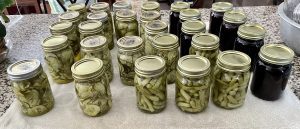 My wife Cathy has spent this weekend canning and freezing: blackberry jam, bread and butter pickles, and corn. I’ve lent a hand: toting, shucking, mashing, cleaning. My mother spent her summers preserving food, so it’s a nostalgic thing for me to listen to the jar lids popping as they seal, the hot jars cooling, the air pressure in the jars changing, creating something of a vacuum that sucks the lids down. Hence, the pop.
Narratives also rely on pressure for their effect. A character’s action changes the pressure of the dramatic situation and probably the pressure within the character as well.
What do our characters want, or what do they fear? What are they desperate to protect? What do they pretend to know about themselves? What truths are they afraid to confront? These questions and their variations invite us to think about building pressure within our characters.
To help with that pressure, we might think about what external factors compel our characters, putting them into action. One character wants an expensive hunting rifle, maybe; in another story, a character might be afraid of driving in the dark. What is it about the rifle that appeals to the first character? What is it about driving in the dark that frightens the other? Now give the first character a reason not to buy that rifle. Maybe that character is saving money for college tuition. And what about the character in the other story? Maybe that character misses the bus and has no choice but to drive. We’re creating internal pressure from simultaneous desire and aversion.
Now let’s take it a step further. Let’s think about internal factors. Maybe the first character wants the rifle because they think it’ll help them with their self-esteem. Maybe the second character is afraid of driving in the dark because their father always belittled them for their lack of mechanical ability. Now think about an internal reason for not buying that rifle or for driving in the dark. Maybe the first character is fearful they won’t be a good shot. Maybe the second character wants to prove the father wrong.
The important thing is to establish contradictory impulses within our characters, so they’re pulled in different directions at the same time. When we can do that, we can increase not only the external pressure but the internal as well. The plot of the narrative, then, is shaped by this pressure trying to find its release. When that release comes in the climactic moment of the narrative, something either gets sealed in forever, or it’s let loose in a way that changes everything.
The post Characters and Pressure appeared first on Lee Martin.
July 17, 2023
The Case of the Missing Shirt: Some Tips for Writing Narratives
 “You put it in the suitcase, didn’t you?” my wife Cathy says.
“Oh, no. Don’t tell me,” I say. “You have got to be kidding.”
(I rarely begin a narrative with dialogue, but in this case it seems called for, given the urgency of the situation).
The “it” in question is my favorite shirt. It’s the shirt I wear whenever I want to feel confident. It’s the sort of shirt that’s so beautiful it would have made Daisy Buchannan break down in tears as she does in the notable scene from The Great Gatsby when Jay is showing off the shirts his man in England sends over at the beginning of each season. “They’re such beautiful shirts. . .It makes me sad because I’ve never seen such—such beautiful shirts before.” Daisy would feel similarly about my shirt. It’s that kind of shirt. In fact, it’s the shirt, and now I’m getting ready to attend my 50th high school class reunion, and due to some oversight on my part, it’s hanging in my closet in my home, over three hundred miles from where the reunion is being held.
My own action has led to the panic I feel when I realize that I’ll have to settle for another, lesser shirt, one that won’t measure up to the one I’ve been planning to wear. Suddenly, I find myself in a teenage-like crisis. I’m nearly 68 years old, and I’m feeling like I did in high school when I feared my jeans weren’t tight enough, my shoes not fashionable enough, my shirts not cool enough.
(Note that my own decision not to check that I packed my favorite shirt created the pressure I feel pressing down on me).
Do we ever really escape the children we were? Do we carry some glimmer of the old insecurities and fears with us always?
(A character in motion always carries something from the past with them, and that something affects their interaction with others as well as the subsequent choices they make).
So, here in my real adult life, I know there’s nothing to be done but to carry on. I put on my lesser shirt, and I go to the reunion. I’m not happy about it, but what else can I do?
(A character’s choices narrow as the narrative unfolds; the closer we get to the end, the fewer choices there are to make).
I’m anxious as I walk into the reunion, but little by little I talk to people, some of whom I’ve not seen since graduation, and I end up having a wonderful time. At the end of the evening, Cathy says, “Well, no one got drunk, no one got angry, and no one got arrested.” She’s right. Whatever slights or resentments we suffered in our high school days seemed to have been forgotten. We were just a group of adults engaging in conversation and laughter and a tear or two for those classmates no longer with us.
(Narratives lead readers to expect certain outcomes; the good writer lets a character’s actions reverse those expectations, and we end up with more truth than we thought we had a right to receive).
The truth is it ended up being a wonderful evening, and it didn’t matter that no one ever knew how grand I would have looked had I only remembered to pack my favorite shirt.
The post The Case of the Missing Shirt: Some Tips for Writing Narratives appeared first on Lee Martin.
July 10, 2023
The Enduring Voice: COVID’s Effect on Writing
 Someone recently asked me how I think COVID-19 has influenced writing. Specifically, this person wondered whether I was seeing stories from workshop participants that deal with “the years of living in fear and losing people to the virus,” or whether everyone was avoiding thinking about the pandemic and writing uplifting stories.
I want to be careful not to speak for other writers or to make categorical statements about trends. I can only speak from my own experience, and I’ve seen a bit of work that has the pandemic in the background but not too much that addresses it directly. What I have noticed is an interest in dystopic fiction, and perhaps living during the COVID pandemic has contributed to that trend.
We live in frightening times. A mutant virus can attack us. Wildfires can make our air unhealthy. Carcinogenic “Forever” chemicals are in our public water supply. Gun violence is rampant. Much of this used to be unthinkable and relegated to imaginative fiction that we read for the purpose of escape. Now the imaginative as become all too real. Perhaps our insecurities and fears are being expressed in dystopic fiction set in what we used to think of as times very far removed from our own. The distance, however, between the present and the future is rapidly shrinking, and now this dystopic fiction has become the new realism.
Writers constantly confront what makes our lives unstable. Stories address the personal dramas at the heart of our relationships. Some do this against a broader canvas that includes the cultural, the political, the theological, the historical. Think of the work that finally dealt with WWII (From Here to Eternity), the Vietnam War (The Things They Carried), and 9/11(Extremely Loud and Incredibly Close). Eventually all writers must dramatize in whatever way they choose, the central human problem—enduring in the face of mortality. When William Faulkner gave his 1950 Nobel Prize acceptance speech, he did so at a time when nuclear extinction was on everyone’s mind. He claimed that due to this fear young writers had “forgotten the problems of the human heart in conflict with itself which alone can make good writing because only that is worth writing about, worth the agony and the sweat.” Faulkner went on to express his faith in human endurance:
It is easy enough to say that man is immortal simply because he will endure: that when the last dingdong of doom has clanged and faded from the last worthless rock hanging tideless in the last red and dying evening, that even then there will still be one more sound: that of his puny inexhaustible voice, still talking.
I see this as the writer’s obligation—to keep talking, especially in the darkest times. “The poet’s voice,” Faulkner said, “need not merely be the record of man, it can be one of the props, the pillars to help him endure and prevail.” No matter the form the fiction takes, if it’s to be as Faulkner claimed, “worth the agony and the sweat,” it must ultimately grapple with all that presses down on us. I have no doubt that the COVID pandemic will continue to make its way onto the page. As with anything that threatens our existence, it also, in the hands of the good writer, reminds us of our majesty.
The post The Enduring Voice: COVID’s Effect on Writing appeared first on Lee Martin.
July 3, 2023
Turning a Premise: Using Opposites to Make Our Fiction Memorable
 Today, my wife Cathy and I drove out to our favorite produce stand to see what we might find for our traditional Sunday evening country supper. New potatoes, locally grown green beans, sweet corn, and an orange tomato. The first time we found Bambi’s Produce Market, we did so by happy accident. We’d been driving in the country that day with no destination in mind, when we found exactly where we’d been going—Bambi’s. We found Bambi herself sitting behind the counter. She was an older lady who was hobbled by bad knees. Her voice was full of gravel, and I could tell right away she had grit. She wasn’t the sort to suffer fools. She brooked no nonsense. A sign behind the counter read, “Children left unattended will be sold to the circus.” Say no more. Bambi was the complete opposite of what her first name might suggest. She wasn’t innocent, she wasn’t meek, she wasn’t frivolous.
Some years ago, Cathy and I were listening to jazz on the patio of the Grand Hotel in Nacogdoches, Texas. We’d been enjoying some brandy and Benedictine. Cathy was wearing a pair of high heels, and, when we got up from our seats, she teetered just a tad on those heels. “I guess I’m just a drunk girl in stilettos,” she said. “Hey, that’s a good title.” I ended up writing a short story called “Drunk Girl in Stilettos,” and The Georgia Review was kind enough to publish it. The editor told me, “That story was nothing like what the title suggested.” I’d put a girl in stilettos along a blacktop road, and I’d let two misfit men pull over to give her a ride. A recipe for disaster. Then I asked myself how the story could be quite the opposite of what the premise led readers to expect. Instead of a promiscuous girl doing a walk of shame, I had the girl trying to get to her daddy’s wake even though her mother had told her not to come. Instead of violent men, I made the men in the car people whose own mistakes had given them great empathy for the down and out. When we find opposing traits in our characters—when we refuse to settle for stereotypes—their stories get interesting.
Sunday mornings always make me think of the Kris Kristofferson song, “Sunday Mornin’ Comin’ Down,” which became a big hit for Johnny Cash. When I hear the pain of the speaker, a man roaming the streets after a night of drinking, I recall a time when I was fifteen and coming nearer and nearer each day to being lost for good. I was walking the streets early on a Sunday morning when I heard something stir in the bed of a pickup truck. I saw a man stretched out on his stomach, one cowboy boot on and one off, flannel shirt untucked from his faded jeans, and empty beer cans all around him. Each time I recall this memory, I connect it to the part of the Kristofferson song where the speaker catches “the Sunday smell of someone fryin’ chicken”: “And it took me back to somethin’/That I’d lost somehow, somewhere along the way.” That awareness of a previous, better way of living being just out of reach touches me and makes me wonder about the man in the truck bed and how he ended up there. The first place I’d look would be the place most people passing by wouldn’t even consider. I’d look at the time when this man’s life was beautiful. I’d imagine his vulnerable times when he wishes he could have that beautiful life back. I’d look in the opposite direction from where most people—people who’d already made up their minds about the man—would look. Henry James said, “A writer is someone on whom nothing is lost.” Stories are all around us. All we have to do is pay attention. Let your imagination take you places the general population wouldn’t go. Find the opposites in your characters and their situations. There’s a tough woman named Bambi, and a drunk girl in stilettos, and a man asleep in a truck bed. What can you make of that?
The post Turning a Premise: Using Opposites to Make Our Fiction Memorable appeared first on Lee Martin.
June 26, 2023
Writing Toward Understanding
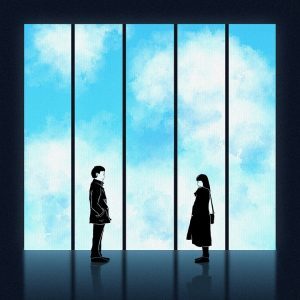 I just got back from a family reunion in southeastern Illinois, and next month I go to my fiftieth high school class reunion. The events have me thinking about a writing exercise that should work for both fiction and creative nonfiction.
Maybe you’ve had the experience of being close to someone and then drifting apart, either by a lack of effort to stay in touch, or maybe by a direct wound or insult that severed your ties. If you’re writing creative nonfiction, you might begin by presenting the facts of how you and someone you were once close to came apart. Maybe sometime later you had the chance to meet up with that person. Did you take that chance? Why or why not? If you never saw that person again, what do you think would happen if you did. What would you say and/or do? What do you think the other person would say and/or do? Write a speculative piece where you imagine this meeting.
If you’re writing fiction, perhaps you can use this prompt to develop your characters, and by extension, your plot.
Remember, you’re not writing for forgiveness or redemption, and you’re not writing for revenge. You’re writing because you want a deeper understanding of what happened in your relationship with this other person. What is it you don’t know? What have you always wondered about? This is your chance to write your way toward a better appreciation of the factors involved in the split. It’s an opportunity to understand the sources of your behavior as well as that of the other person.
If anyone would like to share what they end up writing, just post it in a comment.
The post Writing Toward Understanding appeared first on Lee Martin.