Lee Martin's Blog, page 10
January 29, 2024
What Are You Risking?
 We begin today with this famous quote from Robert Frost: “No tears in the writer, no tears in the reader. No surprise in the writer, no surprise in the reader.” We start here because I often read technically proficient pieces that don’t resonate because the writers haven’t left any parts of their hearts in them, and I want to think about how I can help us all be more willing to risk feeling something in our writing.
We have to be comfortable with being uncomfortable. Which is to say, we can’t veer away from the truth. No matter our genre, we should be writing to unearth as many layers of truth as possible. “All you have to do is write one true sentence,” Ernest Hemingway said in A Moveable Feast. “Write the truest sentence that you know.” True sentences come in the form of accurate observations, getting the facts right and depicting the details others might miss, but they also come in the form of honest admission—an opening of the heart, if you will. In creative nonfiction, we directly address our quirks, foibles, and flaws. In fiction, we do the same only through the guise of invented characters and plots. Sometimes we’re afraid of what others will think of us if we admit our shortcomings. The wonderful CNF writer, Silas Hansen, in a recent Brevity craft essay, writes about the importance of writing ourselves the way we really are. He recalls an undergraduate professor once telling him to stop trying to come across as a good person in his writing. “Stop trying to make me like you,” the professor said. “I’m not the admissions office. I’m not your grandmother.” Trying too hard to impress our readers with our goodness, our nobility, etc. leads us to write sentences that don’t vibrate with the truth. We have to be honest when we look at ourselves. As Silas says later in his craft essay, “Sometimes the part of me that needs to speak in an essay are the parts I don’t like very much, or the parts I’m afraid to let people see.” Exactly. We feel more as writers when we reveal more.
So, how do we do that? It’s not a bad idea to take an inventory of our less than better moments: our regrets, our sins, our grievances, our guilt. We should also inventory our quirks and flaws. All of these things make us human. A little rough around the edges just the way we all are. When we do these inventories, we start to feel deeply. We remember anger, pain, grief, and, yes even joy. We look at our idiosyncrasies. We regret again what we did or said, or maybe didn’t do or didn’t say. We practice empathy for ourselves and others.
When I was a freshman in high school, a girl who sat behind me in World History put a note on my desk. I felt it touch my elbow. This girl wasn’t a popular girl. In fact, she was quite odd. At the time, I couldn’t imagine the courage it must have taken for her to write that note. I had the ignorance of the young, concerned only with myself. I was a new student in this school, eager to fit in. I couldn’t risk accepting that note. I wasn’t brave enough, so I used my elbow to knock the note to the floor. I heard the girl shifting her weight in her desk, and I knew she was leaning over to retrieve what I’d lacked the courage to accept. As the class went on and the bell finally rang and I was able to gather up my books and escape, I tried to forget what had happened. I never could. It stays with me to this day. Even now, I feel a welling up of emotion when I think of how self-centered and unkind I was. I imagine the girl working up the courage to write whatever she wanted to say to me and how humiliated she must have been when I rejected her. I don’t know where she is now or whether she remembers this incident. If I did know, I’d tell her how sorry I am. I’d ask her to forgive me.
I used that incident in the title story of my first collection, “The Least You Need to Know.” No one who read it knew it was true, but I did. I wrote from my feelings of shame, regret, and, yes, admiration for this girl who was braver than I.
The post What Are You Risking? appeared first on Lee Martin.


January 22, 2024
Pressure in Narratives
I teach in an old building that’s long had its problem when it comes to heating and cooling. Last Tuesday, we had heat in parts of the building but not others. Also, something had happened to cut off electricity to the elevators, so they weren’t working. Then, overnight, some pipes burst, and we had flooding in the basement and on the first floor. To top it all off, the flooding knocked out the electric panel under repair, so there we were with no heat and no electricity. I taught my Thursday class via Zoom.
Word has it, the building is slated for demolition sometime in the future, but as it is with all narratives, I’m concerned with what’s happening in the here and now. Narratives have great power when their events, preferably those created by the choices characters make, put increasing pressure on the people living amid them.
Your main character’s choice can put a sequence of events in motion. Maybe they do something or say something (or maybe they refuse to do something or say something), and because of that, the next thing happens. That next thing makes the next thing happen, and on and on, each event increasing the pressure your main character feels until we reach the breaking point, that part of the narrative where something monumental shifts for your characters and their worlds. No further choices can be made, at least not in this narrative. The pressure has had its release, and that release has brought your main character’s life to a place beyond which it can never be the same.
We shouldn’t be afraid to let our characters bring trouble to their lives. That’s how we get to the precious thing, those moments of consequence that resonate with what Faulkner called “the old verities and truths of the heart.” Remember, the characters themselves are causing the trouble; we’re just amping up the pressure. Think in terms of a causal chain: Because this happens, this next thing happens, one event creating another. We can’t be polite when we’re constructing narratives; we have to put our thumbs on our main characters until they reveal some truth about themselves and their situations, some truth that was hidden until the pressure of the plot caused it to surface.
So, here’s a story starter for you. A character walks into a public building to find the elevators aren’t working. What choice do they make and what does that choice produce? How does it lead to a series of events, each of them increasing the pressure on the character? You might consider the reason the character walked into the building. What do they have to do there? What’s at stake for them? You might also consider what’s happened to the character just prior to them stepping onto the page. What’s their history? Who else is in their life? How does whatever’s happening in the main character’s personal life interact with what’s happening in that public building? How will the choices the character makes complicate things? How will the sequence of events increase in intensity, and how will the narrative shake the character’s world to the point that everything changes forever?
The post Pressure in Narratives appeared first on Lee Martin.
January 15, 2024
The Writer’s Vision: A Prompt

We’ve started a new semester here at Ohio State University where I’m teaching both a fiction and a creative nonfiction workshop. Last week, I found myself talking to students in both workshops about the importance of finding material that’s uniquely theirs. When I was a young writer, it took me some time before I figured out, first, what worlds I wanted to put on the page, and, second, how I saw those worlds. What were the stories and novels and essays only I could write?
I spent too long ignoring the places I knew most intimately, erroneously believing no one would be interested in my small-town, rural Midwest. It’s not uncommon for those of us out here in the heartland to think less of ourselves than we should. After all, there are plenty of messages, both subtle and more direct from both coasts that tell us nothing much happens out here in what’s commonly called “the flyover zone.” It’s easy to ignore us, but that shouldn’t mean we should be ignored, nor does it mean we should ignore the places and the people we know best. If we can’t create memorable literary works from the small places, what chance would we ever have with the large ones? Significant people live in seemingly insignificant places. They make choices that have consequences. They’re sometimes luminous or filled with dignity. They suffer and strive and celebrate and pray and love. Their lives matter.
Who are the people who matter to you? What are the places that have attached themselves to your heart? Answering these questions is a good place to start as you consider the question of the work only you can do. What are your obsessions, your regrets, your conflicted feelings? What mystifies you, unsettles you, soothes you? Where does your passion lie?
The answers to these questions might very well lead you to a deeper understanding of your vision of the world. What are your specific memories of that world? I remember stories of cruelty from my rural southeastern Illinois, but I also remember moments of great compassion. The cruel can surprise us with kindness, and the kind can sometimes be cruel. That’s the way I see my world. That vision creates pieces that sometimes have a small-town setting, and sometimes it comes to play in the stories I tell from more urban or suburban settings. Once you figure out how you see the world, you can use that vision to make any setting and its characters vivid and resonant.
The writer’s work doesn’t only involve the mastery of technique. Technique without vision is sterile. Here’s a prompt to get you started as you think about the way you see your own worlds. Put two people in a public place. It should be a place that matters a good deal to you—a library, a bus station, a grocery store, etc. Have one person extend a wallet to the other person. Have the first person say something like, “I believe you may have dropped this.” The wallet is a fat one. It promises to be full of cash. The second person knows the wallet isn’t theirs. What do they do? Flesh out your two characters however you like. Think about the second character’s response to the first character’s offer of the wallet. What does it say about the way you see the world? How does it lead to a significant chain of events? Once you have your place, your people, and an inciting event, you can let your imagination issue from your passion.
The post The Writer’s Vision: A Prompt appeared first on Lee Martin.
January 8, 2024
Using a Single Memory to See What You Can See
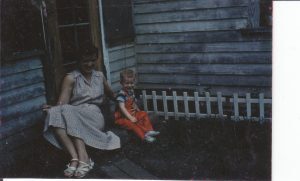
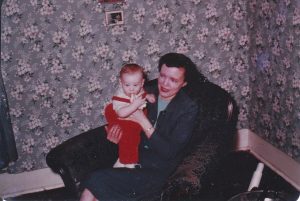 My Aunt Gladys, my mother’s sister, died in 1961 when I was five years old. I’d never really known her because she lived in Germany where her husband was stationed, lived there, that is, before she was diagnosed with lung cancer and the U.S. Army allowed my Uncle Duane to transfer to Washington, D. C., so Gladys could get treatment at Walter Reed Hospital. I only have one memory of being with her, although family photographs offer evidence of her holding me when I was a baby and playing with me when I was a toddler. These photographs were taken at my grandmother’s house where Gladys must have been visiting.
When I was four, my parents and I rode a train from our home in rural southeastern Illinois to Washington, D. C., so my mother could see Gladys. My mother was the oldest of six children and had assumed a maternal role in the lives of her siblings. She’d helped raise them, and her caretaking stayed with her throughout her life. The visit we paid in 1960 would be the final time she would see Gladys. I have one sharp memory from that visit that has stayed with me throughout the years.
Even now, when I close my eyes, I can see Gladys in black pedal pushers and a sleeveless white blouse that buttoned up the back, leaning over the gas ring of her stove, so she can light her cigarette. Her bobbed black hair is graying. Her lipstick is a bright red. She’s lost so much weight, her arms are thin, the backs of her hands heavily veined. Her fingers tremble. She straightens with her lit cigarette, taking a deep drag, and holding it before she exhales a stream of smoke. I remember a window above the sink. I remember my mother in the narrow kitchen fanning away the smoke. I’m there, too, watching, maybe trying to hide behind my mother’s skirt because I’m a shy child, and I don’t know my aunt, and I’ve never seen someone light a cigarette the way she has, and I suppose for that reason everything about this moment seems foreign to me—it’s so distant from the world I’ve left, a world where neither my mother or father smokes and where the gas burner on our stove is used for cooking and to make the Jiffy Pop popcorn I like so much. I’m no longer in that world as I stand in my aunt’s kitchen. I’m in Gladys’s world, one of sickness and fear and mortality where she can turn to my mother, her big sister, with a nearly defiant look on her face as she spews that stream of smoke, almost as if to say, this is it. This is the end. There’s nothing you can do to help me.
 When I think of my aunt Gladys now, this is the tableau I recall, the one that says so much about her, a woman who left the insular rural world of southeastern Illinois, eventually married a career military man, and traveled all the way to Germany. In adulthood, I’d come to learn more about her—a child given up for adoption, a first marriage gone wrong. My older cousin would tell me she was strongheaded. “She made her own path,” he’d say, “but she could be funny, too. She aways liked a good laugh.” She was in short, everything my mother wasn’t. My mother was a woman of duty and compassion. How she must have ached to know she couldn’t save her sister.
My point for writers in all of this? Sharpen your focus. Zero in on the small detail, the one that stands out, and from there widen your vision to see what that detail invites you to see. I remember my aunt’s face close to the flames of that gas burner. I remember her pedal pushers, her white blouse, her red lipstick. I remember the blush she left on the filter when she held it away from her lips so she could exhale.
The post Using a Single Memory to See What You Can See appeared first on Lee Martin.
January 1, 2024
Stronger at the Broken Places

Here in central Ohio, the last day of 2023 is overcast and cold. When I moved here from sunny Texas in 2001, I had no idea the winter days would be so gray. I grew up close to the same latitude in southeastern Illinois, so I thought the weather in Columbus would be similar. It is in several ways, but I certainly don’t remember such prevalent cloud cover during my time in Illinois. Perhaps, I’ve just forgotten.
Sometimes we’re blessed with the ability to forget, or at least to ignore, our pain and to move on beyond misfortune. I’m amazed when I consider the misery a human being can survive. I think of what Ernest Hemingway wrote in A Farewell to Arms: “The world breaks everyone and afterward many are strong at the broken places.” There are times, though, especially at the end of a year, when I think of those who can’t be strong at the broken places. I’ve had my own times of despair, so here on the verge of a new year, I wish comfort and strength to those who are suffering. I offer these quotes with the hope they’ll be helpful for anyone who’s struggling either with their writing or their personal life:
“It is never too late to be what you might have been.” ~ George Eliot
“We must let go of the life we have planned, so as to accept the one that is waiting for us.” ~ Joseph Campbell
“I hated every minute of training, but I said, ‘Don’t quit. Suffer now and live the rest of your life as a champion.’” ~ Muhammad Ali
“No act of kindness, no matter how small, is ever wasted.” ~ Aesop
“There are two ways of spreading light: to be the candle or the mirror that reflects it.” ~ Edith Wharton
“If opportunity doesn’t knock, build a door.” ~ Milton Berle
“Your present circumstances don’t determine where you can go; they merely determine where you start.” ~ Nido Qubein
“A champion is someone who gets up when he can’t.” ~ Jack Dempsey
As we move into 2024, I hope we’ll all be able to find joy, both in our writing and our living. On the gray days, in our times of distress, may we remember we aren’t alone. May we look for, and find, the light.
The post Stronger at the Broken Places appeared first on Lee Martin.
December 24, 2023
Creating Memorable Characters
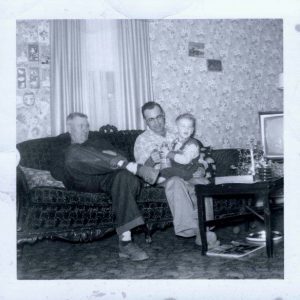 Cathy and I spent last week cleaning some things out of what used to be her parents’ house in Illinois. In the process, we came upon several old family photos. I love looking at old photographs even if I don’t know the people in them. The photos take me into a time period in the past, maybe one I lived through or else one before I was born. I like looking at the people, yes, and how they invite me to imagine what their lives were like, but I also like looking at the artifacts of their time—a calendar hanging on a kitchen wall, perhaps; a fat Christmas tree, shiny with tinsel and icicles; a pack of Old Gold cigarettes lying on a table, a Zippo lighter close by. I can imagine a work-worn hand picking up that lighter and the pad of a thumb flicking open the top. Maybe the thumbnail is split from the misplaced blow of a hammer. Maybe the man’s knuckles are swollen with arthritis. It could be Christmas. The oil refinery would be closed, and the man wouldn’t have to work his usual graveyard shift. The day and night are his to do with what he will.
It takes so little to spark the imagination. Maybe my description brought you to your own memories of people and times now gone. When I think of my father and the difficult relationship we often had, I remember how at Christmas time he’d bring home bags of candies and nuts— peanuts and walnuts and pecans, chocolate drops and ribbon candy. Somewhere beneath my father’s gruffness and anger, there lived a kind and gentle man.
When we write memoir, we must remember to look at all sides of a person’s character, including our own. When we write fiction, we similarly look at our characters from as many different vantage points as we can. It’s a human tendency to want to be able to categorize a person—the evil one, the saintly one, the unintelligent one, the miser, the flirt—but nothing makes a character more uninteresting than writers who make up their minds about their characters too soon. A dynamic character is one who’s capable of surprise. The pressures of the narrative, those created by a character’s actions, end up causing that character to reveal aspects of their personality they may never have been aware they had. A good writer pays close attention to people and the moments when they transcend type and become alive with added dimensions. Give your main characters actions that create problems for them to try to solve. Let them create trouble for themselves and then see what they’ll do to try to get out of that trouble. Look for the pressure points of the plot, those moments when your characters break free from what we’ve come to expect of them. We remember the people who surprise us by acting in a way we never could have expected. Writing is a matter of letting our characters create the moments in which they become something more than they were when our narratives began.
The post Creating Memorable Characters appeared first on Lee Martin.
December 11, 2023
Keep Doing the Good Work
I write this on a very overcast, raw day here in central Ohio. We’re coming to the end of the Autumn Semester at Ohio State, and I’m thinking of what it takes to keep going when we’re writers. After all, there are so many valid reasons to stop. I fear the students in my literary publishing seminar came up against some of them this semester when several visitors from the publishing world gave them a very realistic idea of the odds of getting a book published and also of that book doing well.
What can we do, though, if we’re truly writers but keep writing? I’ve long been a believer that if we pay attention to what we love to do—moving words around on the page—the journey will always take us where we’re meant to go.
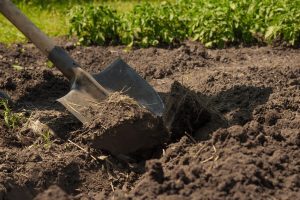
One summer, when I was a teenager, I helped my father clear overgrown fencerows around our farmhouse. We used a crosscut saw to take down small trees. We swung mattocks to grub out honeysuckle and wild blackberry briars. Sometimes the mattocks struck stones and brought our swinging to a halt. Sometimes, the sawblade stuck in the tree trunk, and my father would tell me to pour oil over it to provide lubrication. Soon, we’d be back on track. At the end of the day, we stood, sweat running off our faces, and we admired the clean path we’d cleared.
“Sometimes,” my father said one evening, “you just have to clear out the mess.” He waved his arm toward the clean fencerow. “Look there,” he said. “Now you can see what’s on the other side.”
A neighbor’s bean field, the green plants ankle high. There, in the Midwestern flatlands, I could see all the way to the horizon, that place where land met sky, and looking out at all that blue I felt something I can now only think of as hope. I wouldn’t have called it that then, this feeling of something clearing, but now I think there was a degree of absolution that evening. My father and I had been at odds throughout my teenage years, but here we were working together, and what we’d done was take hold of something out of control and toss it away so we could see in a way previously withheld.
Surely there’s a lesson here for writers. Keep at it. When you find yourself slowing down or stalled, do whatever you can to again find a working rhythm. Don’t be afraid to cut and discard. Keep looking for the aspect of the work you haven’t quite seen. Don’t hesitate to start anew. Keep doing what you love. Keep doing the good work.
The post Keep Doing the Good Work appeared first on Lee Martin.
December 4, 2023
Stanley and the Christmas Tree: A Lesson for Writers
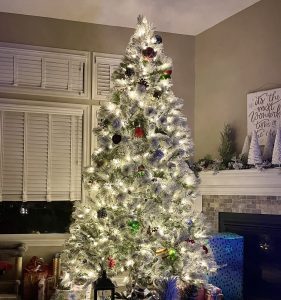 A few years ago, Cathy and I bought a flocked, pre-lit, Christmas tree. It’s a beautiful tree, one Cathy had always wanted, and I was glad to be able to get it for her. A few weeks ago, we adopted an orange tabby kitten named Stanley. (I’m sure you can see where this is going.) We put up our tree with the hope that Stanley wouldn’t be tempted to climb it.
How wrong we were.
Each morning, Stanley got into the tree and climbed a bit higher. In the process of trying to get him out of the tree, we dislodged something, and the lights went out on a couple of sections.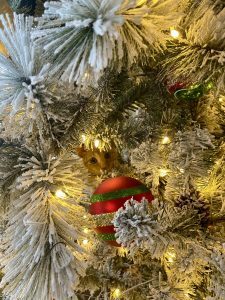
Finally, Cathy tired of trying to keep Stanley out of the tree, so we surrendered. “That tree has to come down,” Cathy said.
We took it down today and stored it in the basement where it waits until next year when our optimism will return, and we’ll hope that Stanley, being a year older, won’t have the same interest in climbing. We’re disappointed not to have the tree up during this holiday season, but, alas, sometimes it’s in everyone’s best interest to wave the white flag and then wait for another season.
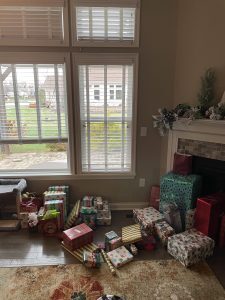 So it is with writing. Sometimes revision becomes a process of taking a piece apart and checking each section to make sure it’s earning its keep. This may mean thinking about where the piece ends and then asking how each scene, chapter, stanza, etc. contributes to that end. Or it might mean rethinking the arrangement of sections as a way of more fully developing the heart of the piece—a structural fix, if you will. Dismantling a piece might also highlight sections where the voice and the language seem distinctive and alive and then asking what you might do to give the flatter sections more verve. Looking closely at individual sections can also lead to a deeper consideration of character. Why are characters acting the way they do in particular sections? Are there opportunities for the characters to surprise us, thereby further rounding them and making them more memorable? Taking a piece apart can invite us to see it in a new light, to discover aspects of it we may not have recognized.
When Cathy and I took down our tree today, we checked each section’s lights and found all of them but one to be working. The one that didn’t work may need a new fuse. We’ll remember to put a new one in next year before we put the sections back together in hopes the tree will be lit and without a cat in its branches.
The post Stanley and the Christmas Tree: A Lesson for Writers appeared first on Lee Martin.
November 27, 2023
Start Small: Writing Memoirs and Personal Essays

This will be a brief post since it’s about small approaches to writing difficult material. That’s exactly what I’m doing now. I’m writing a memoir about something very personal and often times uncomfortable. I’m giving myself an hour each morning to write a small section. Unlike my usual strategy of telling a story from beginning to end, I’m jumping into memory wherever I can. I’m gathering sections that I hope are complete as themselves, knowing that eventually I’ll have to weave them into a narrative. For the time being, though, I’m enjoying these little pieces of flash that are allowing me to dive more deeply into characters than I might if my main concern was the narrative line.
I always start with something small—a detail, an image, a character, a memory—and then I see where it might take me. The stakes are low and the subject less intimidating when I concentrate on the small rather than the large. A breakfast table, a rocking horse, a cat—why do they lodge in my memory? To interrogate is to discover. The concrete detail tricks us into saying things we never thought we’d say. The miniature takes us deeper into the heart of what we’ve come to the page to explore.
For those of you writing memoirs or personal essays: follow the small details. Let them show you the larger story.
The post Start Small: Writing Memoirs and Personal Essays appeared first on Lee Martin.
November 20, 2023
A Personal Wish This Thanksgiving
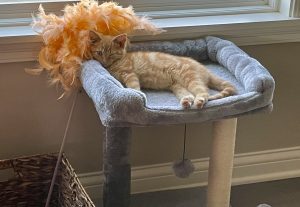 I didn’t do a blog post last week because I was away from home, teaching in a very busy writers’ residency. Now that I’m back with my family—the lovely Cathy and our orange tabby, Stella the Cat—I’d like to announce the addition of a kitten. Stanley is another orange tabby, and Stella is slowly coming to terms with this younger version of herself. Stanley is full of energy and determination. Can’t quite jump onto the second tier of the cat tree? No problem. He’s got claws and isn’t afraid to use them to pull himself to the top. He’s also not afraid of Stella. He eats her treats from the automatic feeder, chases her through the house, and invades her private upstairs spaces. He has the spirit and bravado we should all have in our writing. Stella has the patience and the observational skills. She knows it’s a long game, and she waits for the exact right time to assert herself.
This Thanksgiving week, I’m wishing you all so many blessings, not only in your work but in your personal lives as well. As we’ve done the past few years, Cathy and I will be opening our home to anyone who needs a place to be. We’ll have a mix of friends, colleagues, and students, and Cathy will provide a feast.
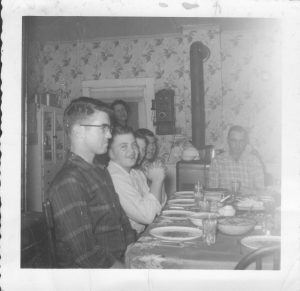 When I was a boy, my parents and I celebrated the holiday with my mother’s side of the family. We gathered at my grandmother’s house, and in later years, after she was gone, we ate at our house or at one of my aunt’s or uncle’s. I remember the smell of the turkey roasting and the pies baking when it was our turn to host. I remember aunts and uncles and cousins coming through the door, calling out, “Hello, hello, hello.” They carried in covered dishes along with the cold air on their coats. They piled those coats on my bed. Most of all I remember the stories told and the laughter, and the way we lingered, slipping back to the kitchen for another slice of pie or another cup of coffee, until dusk began to fall.
Most of my relatives are spirits now, and I no longer live in their native land. So each Thanksgiving I issue the invitation, and anyone who needs a place can come. We sit around the table, and we laugh. We celebrate the company of one another, and we eat, and we give thanks for this place we’ve made, this place where even the spirits can hover if they’ve a mind to.
This is what Cathy and I and Stella the Cat and Stanley wish for all of you—to be safe and warm and thankful and well in a place you can, if only for a few hours, think of as home.
The post A Personal Wish This Thanksgiving appeared first on Lee Martin.