
Elisabeth Storrs's Blog, page 8
February 17, 2019
Who were the Visigoths? by Charlotte Jardine
 My guest today is Charlotte Jardine who writes historical fiction, contemporary romance and romantic adventure. Her books feature courageous heroines, big-hearted heroes, adventure and love.
Her love of history came from reading the adventures of Asterix and Tintin at a young age and continued into adult life, when she studied Classics and Roman History to postgraduate level at university.
While working as a desk slave by day, she spends her evenings escaping into other worlds via her writing. The first two books in her Visigoth Chronicles are Jaws of the Wolf and Shadow of the Eagle.
You can connect with Charlotte via her website, Facebook and Pinterest.
So who were the Visigoths?
Researching any ancient people is fraught with difficulties. Sources are contradictory and often biased. The archaeological record is fragmentary. These have been some challenges I found while researching my series, the Visigoth Chronicles. But it’s been a fabulous journey and one I’m delighted to share.
The first issue was the name Visigoth. You’d think the name would be the easiest part to get right, wouldn’t you? In fact, the Visigothi weren’t a ‘real’ tribe. The Roman historian and statesman Cassiodorus invented this compound word in the sixth century. It means simply ‘Western Goths.’ He coined the term to ‘match’ a Gothic tribe called the Tervingi to the Ostrogothi (as this name, which was already in use, meant ‘Eastern Goths’).
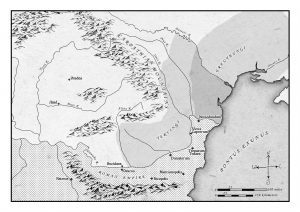 The Tervingi came from the lands to the north of the Danube River and the west of the Black Sea—the area now occupied by northern Romania, Moldova and southern Ukraine. The Ostrogoths’ antecedent tribe—the Greuthungi—inhabited the lands to the east, closer to the Black Sea. Hence, Cassiodorus called the two related peoples Visigothi and Ostrogothi: Western Goths and Eastern Goths.
The Migration Period
If the Tervingi had stayed north of the Danube, we might not know much about them today. But, in 376 CE, the Huns swept through their lands, ravaging and destroying everything in their path. After months of fighting, and losing, the Tervingi left their villages en masse and set up a camp on the northern bank of the Danube, opposite the Roman fort town of Durostorum (modern Silistra). They never returned to their old territory. Following months of negotiations, the Eastern Emperor, Valens, allowed them into Roman territory. In exchange, the Tervingi had to supply troops for the Roman army and convert to Christianity.
After their entry into the Roman Empire, the Tervingi appeared more often in written record, but not all reports were positive. A common complaint was that they stank due to their habit of wearing furs regardless of the climate and coating their hair with rancid butter. Procopius, writing in the sixth century CE, tells us the Visigoths were an attractive people to observe, if not to smell: “they all have white bodies and fair hair, and are tall and handsome to look upon,” despite the majority having “threatening blue eyes.”
The Visigoths and the Romans
The years that followed the Tervingi mass migration were tumultuous ones. Treachery on the part of the Romans led to their rebelling against their erstwhile saviours. Sweeping through the Roman territories, they eventually sacked Rome itself in 410 CE. The Tervingi transformed from a distinct ethnic group to a marching army. Escaped slaves, displaced Romans and other tribes joined their forces. This upheaval led to social and cultural transformation, as well as geographic relocation. No wonder they adopted a new name.
After long years of war, the Visigoths settled briefly in Toulouse before the Franks forced them out in 507 CE. They finally achieved relative peace and stability when they established their kingdom on the Iberian peninsula, where they remained until the seventh century, when the Moors arrived.
Tervingi/Visigoth Culture
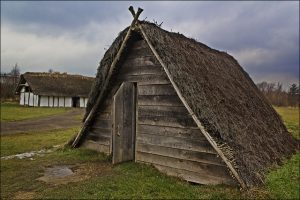
Grubenhaus, Gearwe, Bede’s World, Jarrow by Dun_Deagh
At the beginning of the Visigoth Chronicles, the Tervingi still lived north of the Danube. During this period, archaeological record provides most of the evidence regarding their culture. The excavations show they lived in small settlements, usually of no more than 10-20 dwellings built in river valleys. Usually arranged in parallel lines, their houses were of two main types. The rich lived in wooden stall-houses or byre-dwellings, with their living quarters in one section and their livestock stabled beside or underneath. The poor inhabited sunken huts with wattle-and-daub or stone walls and rush roofs.
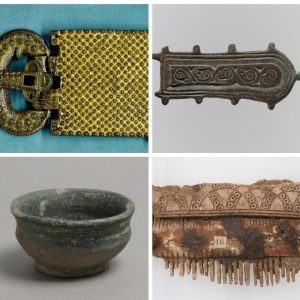
Tervingi buckles, drinking bowl and comb
Crafts were a big part of Tervingi society. Most villages had potteries attached to create their domestic and functional goods, including mugs and cups, storage jars and cooking pots. By far the most common items unearthed are shallow drinking bowls. No wonder the Goths were as famed as the Vikings for their beer and mead consumption! Lots of Roman amphora and pottery fragments have also been found on these sites, proving strong trade links with their southern neighbours.
The archaeological find that fascinates me the most is large workshops dedicated to the making of hair combs. Deer antlers, or sometimes iron, were the most common materials used for these. Combs were a popular item among the Tervingi. Their importance increased through time, with the designs becoming more elaborate and intricate.
Along with the ubiquitous pottery and combs, belt buckles and brooches were frequent burial items. Jewellery, such as rings, earrings, bracelets and necklaces, have also been found in many graves. However, Tervingi were never buried with their weapons, unlike other similar tribes.
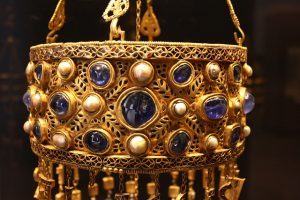
Votive Crown Treasure of Guarrazar
Like the Etruscans, the Visigoths were renowned for their jewellers (see my Pinterest page for lots of fabulous examples). I make use of this in my series. The Visigoth Chronicles features a master jeweller and his apprentice, Gelvira. The most spectacular examples of their jewellery come from Visigothic Spain, hidden in graves or buried hoards. The famous Treasure of Guarrazar contains 26 votive crowns and gold crosses. Archaeologists unearthed these items in an orchard near Toledo during the nineteenth century. Imagine finding that much gold under your oranges!
To conclude, prompted by invasion of their own lands, these obscure and unique people made an extraordinary migration that led them to conquer western Europe in only a few generations. Our knowledge of them and their origins is limited, but continues to grow. What we do know is that they left a legacy that continued for centuries, in some cases to the modern day.
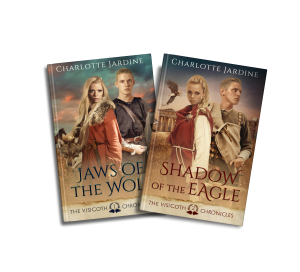 In the Visigoth Chronicles, Gelvira, the daughter of a warrior has been allowed to train as a jeweller. She starts off as privileged, sheltered, and very sure of her place in the world. Her childhood was spent during a time of peace – and she didn’t expect this to change.
By contrast, Adafuns—her childhood friend—has grown up a slave. His life has forever been uncertain and, although he has always dreamt of becoming a warrior and thus winning his freedom, he takes nothing in his life for granted, as he knows everything can so easily be taken away.
As the books progress, their positions change. Adafuns is captured by the Huns and offered the opportunity he always wanted: to be trained as a warrior. Only, the price he must pay is turning his back on his family and Gelvira.
Gelvira is forced to put aside her personal wants in order to help her people survive. Instead of making earrings and pendants, she must cast sling bullets and straighten spearheads. But even that isn’t enough to save her people, and they must flee, leaving everything she knew behind.
I loved researching and writing these stories and hope you’ll join me in exploring this fascinating period of history through ’Vira and Ada.
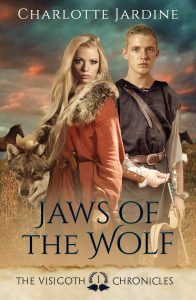
He’s her father’s slave. She’s promised to another. But war changes everything.
Northern Europe, 376 AD. Gelvira dreams of becoming a powerful jeweler. But the arrogant son of a tribal elder wants her for a wife instead. After a Hun raid sends her people into exile, her chance to master the ancient secrets of her craft are stripped away…
Adafuns yearns to become a great warrior and win Gelvira’s affection. But as a slave in her father’s service, he has little chance of either. Captured and carried off by the Huns, Adafuns’ dream of being a warrior could come true… at the cost of losing Gelvira forever.
With her people starving, marrying the tribal elder’s spoiled son may be Gelvira’s only hope to save her family. Will Adafuns reunite with the exiles in time to free Gelvira from her loathsome vows?
JAWS OF THE WOLF is the exciting first novel in the epic Visigoth Chronicles series. If you like strong heroines, thrilling action, and rich historical detail, you’ll love Charlotte Jardine’s page-turning saga.


January 31, 2019
On Inspiration: Interview with Judith Starkston
 I’m delighted to welcome fellow ancient world writer, Judith Starkston, to Triclinium. Judith has spent too much time reading about and exploring the remains of the ancient worlds of the Greeks and Hittites. Early on she went so far as to get two degrees in Classics from the University of California, Santa Cruz and Cornell. She loves myths and telling stories. This has gradually gotten more and more out of hand. Her solution: to write fantasy set in the exotic worlds of the past. Fantasy and Magic in a Bronze Age World. Hand of Fire was a semi-finalist for the M.M. Bennett’s Award for Historical Fiction. Priestess of Ishana won the San Diego State University Conference Choice Award. Judith has two grown children and lives in Arizona with her husband.
You can connect with Judith via her website, Facebook and Twitter. For a free short story set in her Bronze Age historical fantasy world (and a cookbook of foods in her novels), sign up for the newsletter on her website.
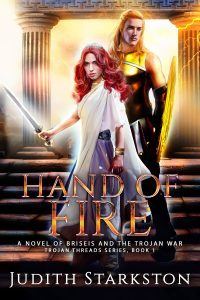
You can purchase Judith’s books on Amazon: Hand of Fire and Priestess of Ishana.
What or who inspired you to first write? Which authors have influenced you?
The impetus to start my first book came from wanting to tell a fully-voiced version of Briseis’s story from the legends surrounding the Trojan War. That dream gradually grew into the book Hand of Fire. Pretty quickly I was infected with the writing bug and it has become my fulltime occupation. As I researched Hand of Fire, I discovered an extraordinary queen who had ruled for decades over the most powerful empire in the world at that time (the Bronze Age Hittites). She had been lost to history until very recently. Her life and world inspire my historical fantasy series, starting with Priestess of Ishana.
As to author influence, I am perpetually reading, especially in the genres of historical fiction and fantasy, and whatever I’m buried in at the moment prods me to think about my own writing in new ways. Recent authors I’ve loved include Robin Hobbs and S.A. Chakraborty.
 What is the inspiration for your current book? Is there a particular theme you wished to explore?
When I discovered the Hittite Queen Puduhepa, who became the model for my fictional Tesha, I found I had stumbled upon a ruler with an intriguing combination of a pragmatic approach to leadership and a mystical, magical outlook. Her strengths appealed to me as themes to explore, such as her diplomatic skills that kept her empire at peace and her nuanced understanding of the law and implementing justice. She brings to the forefront the advantages of female leadership in an often male-dominated world.
What period of history particularly inspires or interests you? Why?
For a number of years, I have been kidnapped by the cultures of the Hittites and Greece in the Late Bronze Age (around 1200 BCE). My academic training was in Classical literature and history, so that laid the foundation. But what has held me lately, is the pure fun of writing about people who grapple with similar issues and crises that the modern world does, and yet frame everything in a way so totally unlike ours that it throws one’s eyes wide open. And then there’s the magic. What’s not to love about stories set in a civilization that believed in magic?
What resources do you use to research your book? How long did it take to finish the novel?
On the fun side, I’ve made extensive trips to Turkey, Greece and Cyprus to see firsthand the physical environment and explore key archaeological sites and museum collections. On the more prosaic side, I read lots of archaeological site reports, journals and books. Hittitology is actually a relatively new field. The Hittite Empire suffered the indignity of being forgotten to time (except for some Biblical references to groups we now call Neo-Hittites). The study of this culture arose once the ruins were found and excavated, and thousands of clay tablets were deciphered and translated.
What do you do if stuck for a word or a phrase?
After years of telling my students not to depend on a thesaurus, I find myself reaching for mine frequently. However, I usually noodle around from word to word, listening and trying them in the sentence I’m stuck on. The word I settle on is most often one that came to mind indirectly through that process. I value the sound and cadence of my sentences, as well as the precision of one meaning over another, so it can take a ridiculous amount of time to craft any given sentence or paragraph. And I work hard to keep my language straightforward but appropriate-sounding for the ancient time that serves as inspiration for my fantasy.
 Is there a particular photo or piece of art that strikes a chord with you? Why?
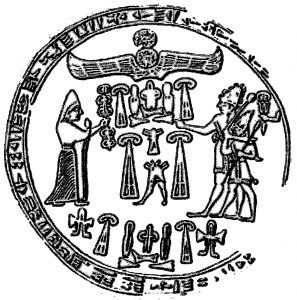
It’s only a line drawing, but when I see it, I feel as if Tesha is reaching out to me through time. The historic queen who inspires Tesha “signed” her correspondence and official decrees with her personal seal pressed into clay. She would have worn this seal as a ring or pendant. Archaeologists sometimes dig from Bronze Age sites plugs of clay, round-shaped with the imprint of seals, called bulla. I met with the director of my favorite museum in Turkey (the Çorum Museum) and had the moving experience of hearing him describe excavating the bulla on display in the case in front of us—Queen Puduhepa’s. He gave me a master of the line drawing done from this imprint that I now use as my author logo. The queen stands on one side, her son on the other under the protective arm of the Stormgod. Above them are the eagle wings joined by a sun disc that was the sign of the royal family. Around the outer edge are the cuneiform signs representing her name and status. In the middle of the seal are symbols used in an alternate hieroglyphic writing system of the Hittites, identifying her as ruler of the Hittite Empire.
Is there anything unusual or even quirky that you would like to share about your writing?
Writing fantasy that involves magic requires some rules. There’s nothing more annoying than novels where characters pull previously unidentified magic out of thin air to get out of an insurmountable jam. In the case of my fiction, all the “rules” of magic derive from what the Hittites believed could and would happen in their world. They had many rites to accomplish basically magic things. My character Tesha is a priestess (as was her historical inspiration) so that kind of magic is hers to command, but it has very tight limits and patterns. Because it is fantasy, I do extend the application of those rules outward to raise the danger and increase the excitement. Tesha takes on her foes with a mixture of intelligence and magical skill. The greater the disasters I throw her into, the more I discover the depth of her abilities.
Do you use a program like Scrivener to create your novel? Do you ever write in long hand?
I do use Scrivener. I love the ability that program gives me to see the layout of my whole novel and to slide scenes from one location to another. I love the “big picture.” A compact laptop goes with me all the time and saves me from having to decipher my illegible scrawl. My typing fingers are better at keeping up with my thoughts than my long hand.
What advice would you give an aspiring author?
Read a lot of books as models to grow in your own style. Seek and listen to editorial criticism. I once heard an agent say that she thought the defining feature of a writer who would succeed was the ability to incorporate suggestions in a productive way. The most important advice: keep at your writing every day in some way or other.
Tell us about your next book.
My next book is the second in my Tesha series. It takes place very soon after Priestess of Ishana ends, more fantasy and magic in the Bronze Age. I’m hoping it will be available this summer.
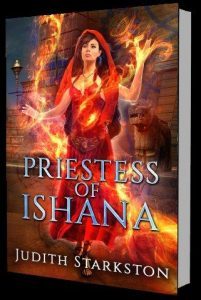
A curse, a conspiracy and the clash of kingdoms. A defiant priestess confronts her foes, armed only with ingenuity and forbidden magic.
A malignant curse from the Underworld threatens Tesha’s city with fiery devastation. The young priestess of Ishana, goddess of love and war, must overcome this demonic darkness. Charred remains of an enemy of the Hitolian Empire reveal both treason and evil magic. Into this crisis, King Hattu, the younger brother of the Great King, arrives to make offerings to the goddess Ishana, but he conceals his true mission in the city. As a connection sparks between King Hattu and Tesha, the Grand Votary accuses Hattu of murderous sorcery and jails him under penalty of death. Isolated in prison, Hattu’s only hope lies in Tesha to uncover the conspiracy against him. Unfortunately, the Grand Votary is Tesha’s father, a rash, unyielding man, and now her worst enemy. To help Hattu, she must risk destroying her own father.
Step into this exotic world of historical fantasy, with its richly imagined details of the Bronze Age, evocative of the Near East. In a whirlpool of magic, politics, family crisis and love, Tesha pursues justice over the dark forces arrayed against her.
Many thanks Judith. I enjoyed Hand of Fire immensely and look forward to dipping into the world of the Hittites!
 Haven’t subscribed yet to enter into giveaways from my guests? You’re not too late for the chance to win this month’s book if you subscribe to my Monthly Inspiration newsletter for giveaways and insights into history – both trivia and the serious stuff! In appreciation for subscribing, I’m offering an 80 page free short story Dying for Rome -Lucretia’s Tale.
History Girls: Neo-Classical Revivalism
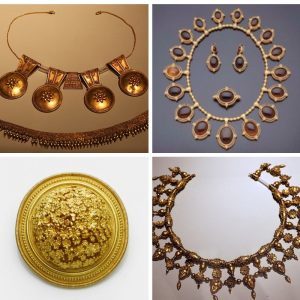
My latest essay on the History Girls blog on Neo-Classical Revivalism. I’ve fallen in love with Castellani jewellery!
January 6, 2019
On Inspiration: Interview with Deborah Swift
Happy 2019! My first interview this year is with Deborah Swift who is one of a team of bestselling WWII historical fiction authors. Their anthology, The Darkest Hour, includes ten never before published novellas exploring the theme of ‘resistance’ during WWII.
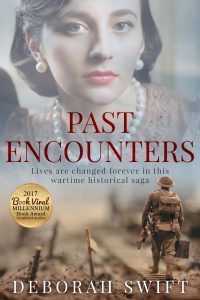
 Deborah Swift used to be a set and costume designer for theatre and TV, during which time she developed a love of research which fuelled her passion for the past. She holds an MA in Creative Writing from Lancaster University and also writes successful seventeenth century historicals. Her WW2 novel Past Encounters was a BookViral Readers Award Finalist for WW2 fiction. You can connect with Deborah via her website, Twitter @swiftstory or follow her on Amazon.
You can purchase The Darkest Hour here. ***All proceeds will be donated to the United States Holocaust Memorial Museum In Washington DC.***
What or who inspired you to first write? Which authors have influenced you?
Like so many other authors, I have always loved reading and devoured stories when I was a child. At school I always loved those assignments like ‘What I did on my holidays’, but I used to spice them up with extra things the family didn’t actually do. To me, this didn’t seem like lying, but giving the teacher a more interesting story. Heaven only knows what the teacher thought my family was like, with holidays that included escaped convicts, secrets in attics, and dogs we didn’t possess! (And yes, I was heavily influenced by children’s versions of Dickens, Charlotte Bronte, and Enid Blyton.) Nowadays I still read widely, but enjoy books by Geraldine Brooks, Rose Tremain, Kristin Hannah, and Kate Atkinson.
What is the inspiration for your current book? Is there a particular theme you wished to explore?
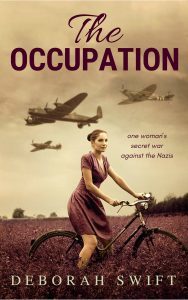 I’m currently collaborating with nine other authors on the anthology of novellas; The Darkest Hour. My novella, The Occupation, takes place on the island of Jersey during German Occupation in WW2. I’ve always been fascinated by stories of resistance, and read a newspaper article about a jerseywoman who hid her Jewish friend to prevent her deportation to a concentration camp. So my story is based on a true one. My protagonist Celine, like in the true story, is married to a German who has been conscripted against his will into the German army. I wanted to explore the different tensions that grew from her courage.
Jersey is a British territory, and being a Brit, it was interesting to research the effect of the occupation on the islanders. I suppose because it was so close to home, and gave a terrifying idea of how I might react if my town was suddenly taken over by an alien force. In another way, I wanted to explore the idea of ‘occupation’ itself, a large task for a short novella, but one I thought was important in this world of shifting migration.
What period of history particularly inspires or interests you? Why?
Many periods of history inspire me, and I have a hard time choosing which to go for every time I start a new novel. I have two main strands at the moment; the 17th Century and WW2. That probably seems strange – there are quite a few centuries between them! But for me these periods have enduring appeal because the effect they wrought on public and private life in the UK and US is still very visible. The 17th Century is a great time of political and religious upheaval, and a time of global expansion. WW2 reminds us of what is worth defending, and completely changed the role of women in society. I am particularly interested in how people resist oppression in whatever form it takes.
What resources do you use to research your book? How long did it take to finish the novel?
 For my WW2 books I use original newspapers of the time, letters, and interviews. Eyewitness accounts are possible, and often my problem is not lack of material, but too much of it. A lot of sifting has to go on to pull out the best nuggets of information. Many WW2 accounts and letters, though poignant, are very dry and factual. They were not designed to be read as fiction, so the author has to invest them with life by looking at photographs, and adding the small details that bring the scene to life. A novel takes me a year to write, often more, as historical fiction is heavy on the research, and I like to build books to last – books that you can read more than once and see different aspects or depths to the story.
Do you use a program like Scrivener to create your novel? Do you ever write in long hand?
I don’t use Scrivener or any software except Word. I do write in longhand occasionally if I’m ‘on location’ doing research, or interviewing someone. I jot a lot of notes about setting, or snippets of conversation. My WW2 novel Past Encounters is set in my home town, so I interviewed a lot of people about their memories of the film ‘Brief Encounter’ that took place there in 1945.
Is there a particular photo or piece of art that strikes a chord with you? Why?
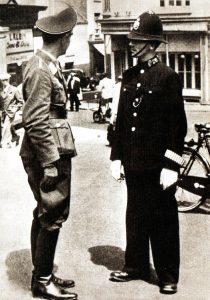 For my story, The Occupation, this photo really struck me. The British ‘Bobby’ or Policeman, talking to a German officer on the streets of Jersey. The British policeman in those days symbolized order, justice and trustworthiness. The German officer wanted to impose the Nazi idea of ‘order’ which included ‘cleansing’ the streets of what they called ‘undesirables’ – Jews, communists, political activists and anyone who opposed their views.
What advice would you give an aspiring author?
Read, read, read, and write, write, write!
Tell us about your next book.
A word first about the other stories in the Anthology – they are all different, set in different places around the globe, and each author has produced their own take on the theme of ‘Resistance.’ I was really impressed with the quality of all the stories, and you can find out more about each of these gripping novellas here.
Meanwhile, to go alongside The Occupation, I am working on the story of Celine’s husband, Siegfried (Fred), and how it felt for him when he was conscripted into the German army, first to occupy France, then at the Russian Front. The two novellas will fit together to make a complete picture, though both will stand alone as separate stories.
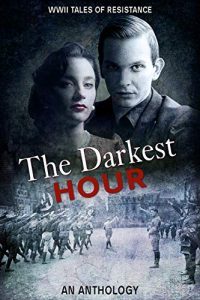
WW2. When the world falls to terror and tyranny reigns……how far would you go to resist?
Would you risk your own life or the lives of the ones you love?
From a young Jewish woman in love fighting her way out of the Warsaw ghetto, to a Czech assassin rising above his fears for an attempt on a Nazi Hangman’s life, to a daughter who vows to avenge her family by taking down a Japanese commander, and a French boy’s touching act of defiance no matter how small.
Come and get a glimpse of the invisible side of WWII – the Resistance, those who refuse to bow down to brutality.
Hold your breath and hope for the best in the darkest of times, when our heroes and heroines risk all to defy evil so the light of freedom will shine over their countries again.
This collection includes ten never before published novellas by ten of today’s bestselling WWII historical fiction authors.
Foreword by Terry Lynn Thomas, author of The Silent Woman, the USA Today Bestseller.
Featured Stories:
Bubbe’s Nightingale by Roberta Kagan
Catriona’s War by Jean Grainger
Reluctant Informer by Marion Kummerow
Killing the Hangman by Ellie Midwood
The Moon Chaser by Alexa Kang
Enemy at the Gate by Mary D. Brooks
The Occupation by Deborah Swift
Code Name Camille by Kathryn Gauci
V for Victory by John R McKay
Sound of Resistance by Ryan Armstrong
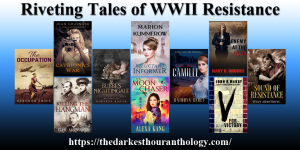
Buy The Darkest Hour *** All proceeds will be donated to the United States Holocaust Memorial Museum In Washington DC ***
Thanks Deborah – what a terrific project and such a good cause. Congratulations to all the authors!
Haven’t subscribed yet to enter into giveaways from my guests? You’re not too late for the chance to win this month’s book if you subscribe to my Monthly Inspiration newsletter for giveaways and insights into history – both trivia and the serious stuff! In appreciation for subscribing, I’m offering an 80 page free short story Dying for Rome -Lucretia’s Tale.
January 1, 2019
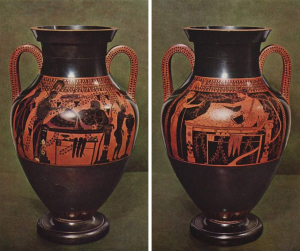
History Girls: Black on red; red on black-figure it out!
My latest essay on the History Girls is on the beauty of Attic vases. Chemistry and artistry combined. Read Black on red; red on black-figure it out!
December 2, 2018
On Inspiration: Interview with Rebecca Rosenberg
My guest today is Rebecca Rosenberg. A California native, Rebecca lives on a lavender farm with her family in Sonoma, the Valley of the Moon, where author, Jack London, wrote from his Beauty Ranch. Rebecca is a long-time student of Jack London’s works and an avid fan of his daring wife, Charmian London. The Secret Life of Mrs. London is her debut novel, following her non-fiction, Lavender Fields of America. Her upcoming novel, Gold Digger, will be released in March, 2019.
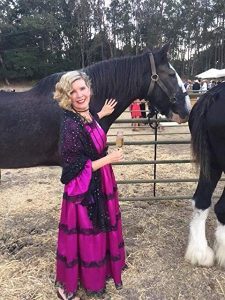
Rebecca and her husband, Gary, own Sonoma Lavender the largest lavender product company in America, selling to 4000 resorts, spas and gift stores. The Rosenbergs believe in giving back to the Sonoma Community, supporting many causes through financial donations and board positions, including Jack London Park, and Happy Walls, Charmian London’s residence and museum, as well as Worth Our Weight, an educational culinary program for at-risk children, YWCA shelter for abused women, Luther Burbank Performing Arts Center to provide performances for children, Sonoma Food Bank, Sonoma Boys and Girls Club, and the Valley of the Moon Children’s Home.
You can connect with Rebecca via her website and Facebook. The Secret Life of Mrs. London can be found an Amazon US, Amazon UK and Amazon Australia.
What or who inspired you to first write? Which authors have influenced you?
I love good stories rather than fancy writing. At sixteen I read Gone With The Wind, Doctor Zhivago, War and Peace and I was hooked on epic stories that teach us about people who lived in an era gone by.
What is the inspiration for your current book? Is there a particular theme you wished to explore?
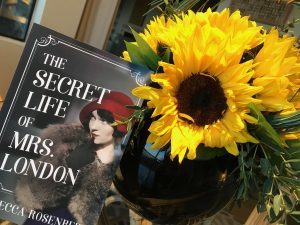 The Secret Life of Mrs. London was inspired by the adventurous, bohemian, limit-busting the London’s Beauty Ranch, which is now Jack London Park. I rode horses and hiked all over the London’s land for twenty years, discovering Pig Palace where Jack London kept his pigs in luxury, the pond where Charmian London swam, the cottage where Jack dictated his books to Charmian as she typed them up, later editing. And, the great Wolf House, a 25,000 sq. foot log lodge that mysteriously burned down before the London’s moved in. I could not help researching the Londons and reading both of their books. You can actually get a free ebook of all 50 of Jack London’s works! I wanted to write about the adventurous, bohemian London’s, but when I found out Charmian had an affair with Houdini, I knew that would be an even more satisfying novel!
What period of history particularly inspires or interests you? Why?
I am more interested in a woman’s story, rather than a specific time period. The Secret Life of Mrs. London is 1915-1918, America, just before World War I, a challenging time. Gold Digger, the story of remarkable Baby Doe Tabor, is set in 1878 when a twenty year old girl comes west with her new husband to work a gold mine and finds herself abandoned and pregnant, yet still works the mine. The novel series I am writing now is Champagne Widows, about the five French widows 1800-1945 who made champagne the worldwide phenomenon it is today. For me, it’s about remarkable women’s stories, regardless of time period.
What resources do you use to research your book?
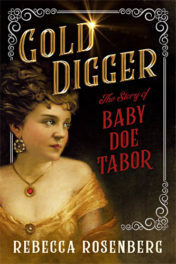 I travel to the place and spend time soaking in everything it has to offer. In the case of The Secret Life of Mrs. London, I wrote many afternoons sitting at a picnic table at Jack London’s Beauty Ranch. There you hear the bird sounds, smell the specific scents, feel the weather, imagine how they lived. I also read many Jack London books, and Charmian London’s books, including her biography, “Jack London.” I read many biographies of Houdini and Jack London, and Charmian’s diaries and letters.
How long did it take to finish the novel?
It took 3 years to complete The Secret Life of Mrs. London, and a year before that in research.
What do you do if stuck for a word or a phrase?
I love the thesaurus and the computer version has made it easier! Sometimes you have to search many words to find the right meaning. Before writing a book, I research the language needed. In The Secret Life of Mrs. London, I have a Japanese servant, Hawaiian characters and a Romany woman. I used some words in all those languages.
Is there anything unusual or even quirky that you would like to share about your writing?
I only write on one manuscript, which I see as a block of granite which I am sculpting. Many writers write many different versions, but I only work on one manuscript. If I cut a scene, I do save it, but usually do not return to it. I think of the novel as a story to be reread and rewritten until it flows as the story I want to tell. This may take a hundred rewrites!
Do you use a program like Scrivener to create your novel?
No, I have tried it and feel it doesn’t suit my process. Maybe I’ll try in the future!
Do you ever write in long hand?
I have but it does not work well for me, because what I scribble in long hand needs to be typed and I rewrite several times in the process.
Is there a particular photo or piece of art that strikes a chord with you? Why?
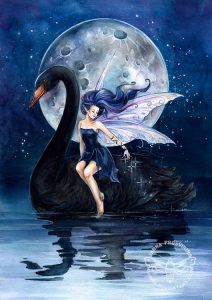 There is a legend about a Black Swan who seduces a woman, painted by many artists all over the world. I love that image to understand Houdini seducing Charmian. Houdini is mysterious and other-worldly and she can’t resist his spell, even though she is an independent woman. He is magic.
What advice would you give an aspiring author?
My advice is to take as many workshops and writing intensives as you can. Join a critique group. Write everyday. Read everyday. Sound familiar? But more specifically, make sure your novel concept is compelling. Why will readers want to read your book? Write the back cover blurb first and keep rewriting it grabs a reader to pick up that novel!
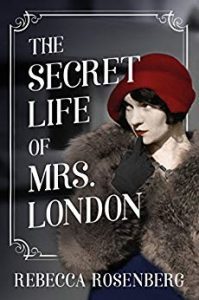
San Francisco, 1915. As America teeters on the brink of world war, Charmian and her husband, famed novelist Jack London, wrestle with genius and desire, politics and marital competitiveness. Charmian longs to be viewed as an equal partner who put her own career on hold to support her husband, but Jack doesn’t see it that way…until Charmian is pulled from the audience during a magic show by escape artist Harry Houdini, a man enmeshed in his own complicated marriage. Suddenly, charmed by the attention Houdini pays her and entranced by his sexual magnetism, Charmian’s eyes open to a world of possibilities that could be her escape.
As Charmian grapples with her urge to explore the forbidden, Jack’s increasingly reckless behavior threatens her dedication. Now torn between two of history’s most mysterious and charismatic figures, she must find the courage to forge her own path, even as she fears the loss of everything she holds dear.
Thanks for dropping by, Rebecca. How lovely to live amid lavender! Good luck with Gold Digger.
Haven’t subscribed yet to enter into giveaways from my guests? You’re not too late for the chance to win this month’s book if you subscribe to my Monthly Inspiration newsletter for giveaways and insights into history – both trivia and the serious stuff! In appreciation for subscribing, I’m offering an 80 page free short story Dying for Rome -Lucretia’s Tale.
November 22, 2018
I’ve joined The History Girls! Ancient World Glitter
For those of you who don’t know the History Girls, they run a blog with daily posts on history, historical fiction and research from different authors such as Elizabeth Chadwick, Mary Hoffman, Gillian Polack, Deborah Swift, Ruth Downie and so many more. Definitely worth a look.
I’ve joined The History Girls!
For those of you who don’t know the History Girls, they run a blog with daily posts on history, historical fiction and research from different authors such as Elizabeth Chadwick, Mary Hoffman, Gillian Polack, Deborah Swift, Ruth Downie and so many more. Definitely worth a look.
November 3, 2018
Stretching stories over 2,000 years by Alison Morton
 I’m delighted to welcome fellow Romaphile, Alison Morton, to Triclinium again. Alison writes the award-winning Roma Nova thriller series featuring modern Praetorian heroines. She blends her deep love of Roman history with six years’ military service and a life of reading crime, adventure and thriller fiction. Today she’ll tell you the background to writing her new short story collection Roma Nova Extra.
A ‘Roman nut’ since age 11, Alison has misspent decades clambering over Roman sites throughout Europe. She holds an MA History, blogs about Romans and writing.
Now she continues to write thrillers, cultivates a Roman herb garden and drinks wine in France with her husband.
All six Roma Nova full-length novels have been awarded the BRAG Medallion. Successio, Aurelia and Insurrectio were selected as Historical Novel Society’s Indie Editor’s choices. Aurelia was a finalist in the 2016 HNS Indie award. Successio was selected as an editor’s choice in the Bookseller. Carina is a novella set between Inceptio and Perfiditas.
You can connect with connect with Alison on her Roma Nova site, Facebook author page, Twitter @alison_morton, and Goodreads.
You can find links to all Alison’s books on her Amazon page.
Stretching stories over 2,000 years
Out of the blue, I was asked to contribute to an anthology of alternative history short stories centred on different possible outcomes to the 1066 invasion of England. I’d just finished the sixth novel in my Roma Nova alternative history series and was catching my (writing) breath.
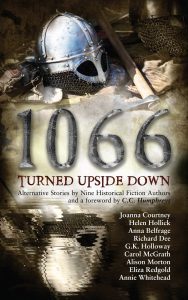 I nearly refused; most of the other authors were medieval or Conquest specialists. What did I know? But as a writer whose fictional world was nothing but alternative history and one who wrote about it in theory and practice, how could I refuse the biggest ‘what it’ in English history? And how wonderful to have an eleventh century Roma Novan female envoy clash with the macho society of William of Normandy? ‘A Roman Intervenes’ in 1066 Turned Upside Down was the result.
But a short story collection of my own? Hm. In the end my curiosity bit me. While writing the full-length novels, I’d always enjoyed giving the characters their own backstory as it rounded them out and illuminated how they became the characters they were. Almost without realising it, the desire to explore incidents in my characters’ lives, delve back into Roma Nova’s earliest days and find out what happened to characters after the main trilogies ended had been gathering strength.
Using that 1066 story as a basis, Roma Nova Extra, became a collection of eight stories covering a historical range from AD 370 to 2029. This presented a time problem in several senses.
Merging past with present
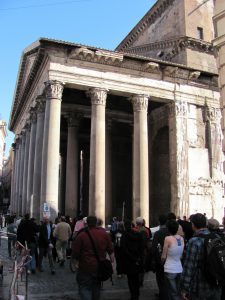
Pantheon in Rome
Stories are about people, but people live in places, some of which we will never see. This is the standard historical fiction writer’s dilemma. Checking what buildings were present in what form at a given time is tricky. Over the years, the centuries even, timber hall houses were replaced by stone buildings, castles which started as simple keeps developed into full-blown fortresses, river ports changed from landing stages into stone reinforced quaysides and later extensive docks. Victorian redbrick and urban sprawl followed, with passive and ‘green’ timber frame houses now pointing to the future, but with a strong conservationist streak preserving the past. The opposite is, of course, true as we see in ruins of Roman towns and blighted castles which will eventually fade from the landscape.
Tackling the alternate 1066 project, I needed to carry out a mountain of research. The Roma Nova of my imagination traded with Saxon England but never with Normandy. It was terra incognita for both me and Galla Mitela, my heroine. I spent hours, no, days looking up early transport routes, the landscape of the River Seine (Sequana), the town of Rouen (or Rotomagus as Galla called it) and detailed social, legal and economic dynamics prevailing in most eleventh century European states. And into all that, I had to weave a story of how Galla could possibly have stopped the Norman invasion.
And then the people must speak and act with the values and attitudes of their time. Galla disparages the ‘barbarian’ Northmen whose ‘ancestors were probably eating raw fish in smelly huts when mine ruled the known world’, but she displays wit and guile dealing with them, yet compassion even when ordering an attack where people will die.
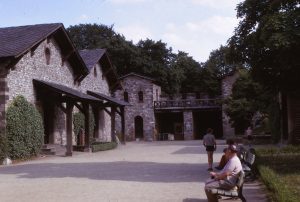
Saalburg German limes fort
In a story set earlier in AD 370, military tribune Lucius Apulius is posted to a Danube backwater. Tracking his journey from Britannia to Noricum involved horses, mules, wagons, armed escorts, pack animals, wayside inns, and inevitably weather. His six-week journey would take us hours today. Once arrived, his robust attitude is to us in the 21st century, bordering on the quasi-brutal, but like us, he is trying to navigate his place in the world.
Jumping forward to the 1980s isn’t as easy to write as you may think as it’s not ‘modern’; no mobile phones, no Internet, air travel requiring visas and those strange ticket booklets, rampant sexism, smoking, floppy haircuts and shoulder pads. I had the surreal experience of having to track down when plain-paper fax was invented and what handguns security and police forces used before today’s ever-present Glock.
The modern four stories seem easier, even when they hark back to an ancient mystery, but the research to anchor the alternative Roman timeline into 21st century Praetorian’s story needs careful consideration of the social mores descended from traditional Roman values of two thousand years ago.
What’s Roma Nova Extra about?
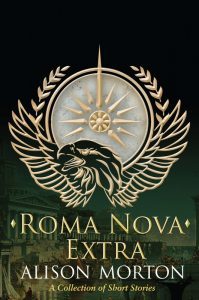
Eight stories – four historical and four present day and a little beyond – but they’re all about the people of Roma Nova.
A young tribune sent to a backwater in 370 AD for practising the wrong religion, his lonely sixty-fifth descendant labours in the 1980s to reconstruct her country, a Roma Novan imperial councillor attempts to stop the Norman invasion of England in 1066, her tough 21st century Praetorian descendant flounders as she searches for her own identity and happiness.
Some are love stories, some are lessons learned, some resolve tensions and unrealistic visions, some are plain adventures, but above all, they are stories of people in dilemmas and conflict, and their courage and effort to resolve them. Oh, and there are a few surprises…
The Girl from the Market AD 370
Victory Speaks AD 395
A Roman Intervenes 1066
Silvia’s Story 1987
Games 2011
Good luck with Roma Nova Extra, Alison. I’m sure your fans will love the chance to read more about the worlds you so expertly conjure.
Haven’t subscribed yet to enter into giveaways from my guests? You’re not too late for the chance to win this month’s book if you subscribe to my Monthly Inspiration newsletter for giveaways and insights into history – both trivia and the serious stuff! In appreciation for subscribing, I’m offering an 80 page free short story Dying for Rome -Lucretia’s Tale.
On Inspiration: Interview with Patricia Sands
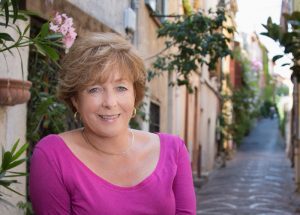 My guest today is Patricia Sands who lives in Toronto, Canada, when she isn’t somewhere else, and calls the south of France her second home. She is the award-winning author of The Bridge Club and the best-selling Love in Provence trilogy. Her fifth novel, Drawing Lessons which is also set in the south of France, was released by Lake Union Publishing on October 1, 2017. Find out more at Patricia’s Facebook Author Page or her website. There you’ll find links to Patricia’s books, social media, and a monthly newsletter that has special giveaways, photography from France, and sneak peeks at her next book. She loves hearing from readers. Follow her on Instagram @patricialsands Twitter, Pinterest, Youtube and LinkedIn. You will find links to all her books on her Amazon Author Page.
What or who inspired you to first write? Which authors have influenced you?
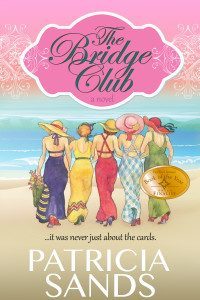 It actually happened quite by accident! Ten years ago, I began writing a book about my real-life Bridge Club, strictly for our little group. We’ve all been friends since we were in our twenties, some even earlier. A few friends began to read bits and pieces of what I had written and encouraged me to publish, saying their book clubs would want to read it. They felt I was telling women’s stories that should be shared. So that’s how the journey to publishing began. The Bridge Club was published in 2010 and an exciting new career began for me in my sixties.
Stephen King’s book On Writing: A memoir of the craft truly was influential in giving me the courage to pursue publishing. I often share this nugget that made the difference for me. He said (and I paraphrase) if you feel so strongly that you have a story to tell, sit down and write it. Don’t worry about style or mistakes. Simply tell your story. Find your voice. Then find a reputable editor to work with.
I’m influenced on a regular basis by many authors, but Canadian author Carol Shields is my idol.
What is the inspiration for your current book? Is there a particular theme you wished to explore?
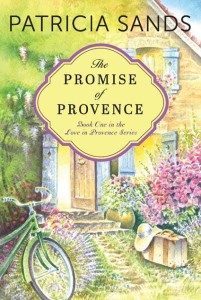 I was compelled to write the story of Drawing Lessons knowing a woman who had experienced a similar situation with her husband’s illness. Can there be a more difficult decision than for a spouse to move on with his or her life when their partner is alive but confined to a full-time support facility and unable to recognize or communicate with anyone? The path that I chose for my character to follow is fiction. However, in researching my facts I had conversations with many artists. One was particularly poignant. After I gave her a short description of the story on the phone, I realized she was crying. “You’re telling my story,” she said. Then she explained that her husband had been similarly afflicted. Like Arianna, my protagonist, she had gone on a two-week artists’ retreat in the south of France that changed her life.
What period of history particularly inspires or interests you? Why?
As a reader, I am in love with historical fiction through all ages. As a writer, my stories are set in current time. I’ve pondered that question and feel it is because I want to share what I’ve learned of life in my later years. I write to my demographic (women over 50) and share stories that might impact us all.
What resources do you use to research your book? How long did it take to finish the novel?
My husband and I have been spending time in the south of France for the last twenty years. For the ten years that I’ve been writing, those trips have turned into research opportunities. We spend extended time living in villages like a local. I’m also a photographer, so have a wealth of information and memories stored in thousands of photos. Apart from only writing about places I know, I also interview people connected with specific subject matter. Of course, reading and google research all comes into the mix. It took me just under a year to write Drawing Lessons.
What do you do if stuck for a word or a phrase?
I put a line of question marks and return to the spot later.
Is there anything unusual or even quirky that you would like to share about your writing?
 I love to have background noise when I write. I listen to a lot of music but also will write in noisy settings if we are traveling. I find it more difficult to concentrate if it is too quiet while I’m writing. One unusual result of writing my stories is that I co-lead a small (16) group of women on a 12-day tour to visit the locations in my stories. I’ve just returned from doing this for the fifth summer and it is great fun!
Do you use a program like Scrivener to create your novel? Do you ever write in long hand?
Never to both.
Is there a particular photo or piece of art that strikes a chord with you? Why?
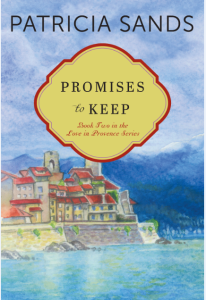
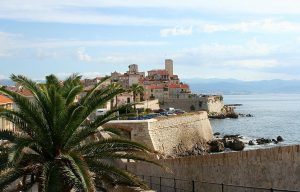 I’ve attached a photo that I use on my website and is also replicated on the cover of Book 2 of the Love in Provence series. Many years before I began writing, I fell in love with the old town of Antibes and the changing light on the hills across the bay, right back to the Alps. My heart lives there.
What advice would you give an aspiring author?
Keep believing in yourself and write something every single day.
Tell us about your next book.
I’m deep in edits for a Christmas-themed novella that involves the characters from my Love in Provence trilogy. I regularly hear from readers who are eager to know what is happening in their lives on the Cap d’Antibes.
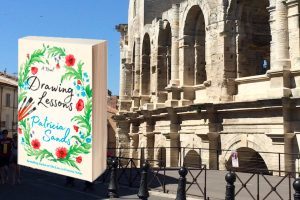
The author of the Love in Provence series returns to the South of France with a poignant portrait of a woman who must learn how to create a new life for herself…
Sixty-two-year-old Arianna arrives in the South of France for a two-week artists’ workshop full of anticipation, but burdened by guilt. Back home in Toronto, she has been living with the devastating diagnosis of her husband’s dementia and the heartbreak of watching the man she’s loved for decades slip away before her eyes. What does her future hold without Ben? Before her is a blank canvas.
Encouraged by her family to take some time for herself, she has traveled to Arles to set up her easel in the same fields of poppies and sunflowers that inspired Van Gogh. Gradually, she rediscovers the inner artist she abandoned long ago. Drawing strength from the warm companionship and gentle wisdom of her fellow artists at the retreat—as well as the vitality of guest lecturer Jacques de Villeneuve, an artist and cowboy—Arianna searches her heart for permission to embrace the life in front of her, and like the sunflowers, once again face the light.
Haven’t subscribed yet to enter into giveaways from my guests? You’re not too late for the chance to win this month’s book if you subscribe to my Monthly Inspiration newsletter for giveaways and insights into history – both trivia and the serious stuff! In appreciation for subscribing, I’m offering an 80 page free short story Dying for Rome -Lucretia’s Tale.


