
Elisabeth Storrs's Blog, page 6
March 8, 2020
Introducing the ARA Historical Novel Prize
My big news of which I’m immensely proud is that the Historical Novel Society Australasia has announced the ARA Historical Novel Prize, the richest genre prize in Australia and News Zealand. Thanks to the ARA Group, in association with New England Writers’ Centre, historical novelists will have a chance to be recognised in a class of their own.
In my ‘spare’ time, I’ve been the Chair of HNSA. I’m founded the Society back in 2012 which started with humble origins on a Facebook group that has now grown to over 1700 members. It’s great to part of a team which has held 3 biennial conferences that have snowballed in size over the years. Our next one will be in 2021. Hope to see you there.


January 31, 2020
On Inspiration: Interview with Sarah Woodbury
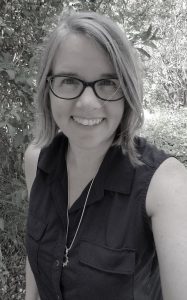 My first guest of 2020 is the wonderful Sarah Woodbury. With over a million books sold to date, Sarah is the author of more than forty novels, all set in medieval Wales. Although an anthropologist by training, and then a full-time homeschooling mom for twenty years, she began writing fiction when the stories in her head overflowed and demanded that she let them out. While her ancestry is Welsh, she only visited Wales for the first time at university. She has been in love with the country, language, and people ever since. She even convinced her husband to give all four of their children Welsh names. Sarah is a member of the Historical Novelists Fiction Cooperative (HFAC), the Historical Novel Society (HNS), and Novelists, Inc. (NINC). She makes her home in Oregon.
You can connect with Sarah on Facebook, Youtube or via her website.
You can buy Sarah’s extraordinary list of books on Amazon.
What or who inspired you to first write? Which authors have influenced you?
I wrote my first novel just to see if I could. It involved elves and orcs and magic stones. Basically, it was Lord of the Rings fan fiction. I’m actually not a huge fantasy reader normally, but my children always have been, and I was looking to connect with them. That book will never see the light of day. Fortunately the next books were better 
January 6, 2020
Australian bush fire crisis #AuthorsforFireys
This image will stick in my memory as representing the end and beginning of 2 decades: a young boy fleeing in a boat from the firestorm raging off the shore of the Victorian town of Mallacoota on new year’s eve in Australia at 8 am in the morning. It is reminiscent of accounts of people fleeing the catastrophe of Vesuvius in Pompeii.
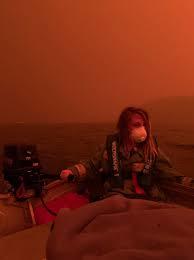
My country is in the midst of an unprecedented crisis with bush fires raging across nearly all States of Australia. The infernos have destroyed over 12 million hectares of land sending people fleeing to the sea to be evacuated while their homes and livestock are incinerated. Pyracumulous clouds are forming, smoke is choking our cities and is spreading as far away as New Zealand. Native wildlife is being decimated and old growth forests lost.
In an effort to raise money for the volunteer fire fighters ‘fireys’ who have been fighting these fires for months now I’m participating in the #AuthorsforFireys.
Rules are simple. It’s an “auction” over on Twitter. You reply with your pledged donation, and bidding closes on 11pm Sydney time on Saturday 11th Jan 2020. I’ll notify the winners on Sunday, they make a donation to the CFA (Victoria Country Fire Authority) or the RFS (NSW Rural Fire Service), send me the receipt. I’ll then mail the winner a signed copy of my trilogy ‘A Tale of Ancient Rome‘ and organise to give you a one hour tutorial on researching historical fiction if you’re interested.
More details are at the #Authors for Fireys website.
Here’s my tweet https://twitter.com/elisabethstorrs/status/1214393151172964352
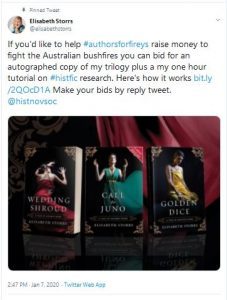
I’d greatly appreciate it if you could help me raise money in the auction for a good cause.
Warm wishes and may 2020 bring rain, prosperity and good health to you.
Elisabeth
December 23, 2019
History Girls: Son et Lumiere of Ancient Portents
My recent post on the History Girls explores the power of sound and light when interpreting portents from lightning bolts in Son et Lumiere – Ancient Portents. The Etruscans were expert. Read more
History Girls: The Quandary of What to Wear
What to wear? An age old question. In my post on the History Girls, I examine The Quandary of What to Wear when it comes to clothing a prostitute, concubine and noblewoman. Read more
November 10, 2019
On Inspiration: Interview with Donis Casey
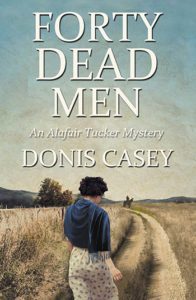
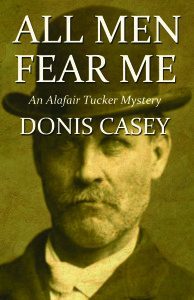
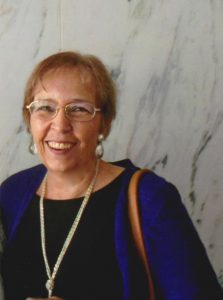 Donis Casey is the author of the Alafair Tucker Mysteries, an award-winning series featuring the sleuthing mother of ten children, set in Oklahoma during the booming 1910s. She is a former teacher, academic librarian, and entrepreneur who lives in Tempe, Arizona. Donis’ latest release,The Wrong Girl, is a coming-of-age tale of a girl in the glamorous 1920s which introduces the reader to a fresh new series starring Bianca LaBelle, star of the silent screen action serial, The Adventures of Bianca Dangereuse.
You can connect with Donis Casey via her website or Facebook. You will find all ten books in her Alafair Tucker Series on Poisoned Pen Press or on Amazon.
What or who inspired you to first write? Which authors have influenced you?
 My parents initially inspired me to write. They read to us from our babyhoods, and encouraged us to tell stories, and when we could hold a pencil in our little fists, to write stories. Then my mother would make a big deal over them. That is how you inspire a child, make a fuss over her. It also made a reader out of me, and as I got older, my reading inspired me to write. Now, many years later, when I get into my author’s head, practically everything inspires me in one way or another. As for which authors have influenced me, Ellis Peters’ Virgin in the Ice is the little mystery that set me on my current life course. My first Alafair Tucker novel is constructed very much as an homage to that book. Old favorites who taught me what a good historical novel looks like include Edith Pargeter/Ellis Peters, Mary Renault, Colleen McCullough, Pauline Gedge. Newer favorites include Rhys Bowen, Laura Joh Rowland, Martin Edwards, Karen Odden. There are so many others I love.
What is the inspiration for your current book? Is there a particular theme you wished to explore?
I had spent a dozen years writing a series about Alafair Tucker, raising ten rambunctious children with her on a farm in Oklahoma during the booming 1910s. The tenth book in that series was set in 1919, and as I began to ponder ideas for my next novel I realized that the kids were mostly raised now. I began to wonder what was going to happen to each of them in the future. The world is undergoing a radical change. World War 1 has changed the face of Europe, the influenza pandemic of 1918 has devastated the planet, and for the first time, the United States has emerged as a great global power and center of popular culture.
 I’ve settled Alafair’s older offspring with spouses and children of their own, but the younger ones are going to be coming of age in a new era. Besides, children don’t necessarily grow into the people you wish they would. What would happen to someone who was raised in a secure, loving environment, but grew to lust after adventure and excitement? So in order to satisfy my own curiosity and shake things up a bit, I decided to follow one of the children into the Roaring Twenties and see what became of her. As it turns out, she left Oklahoma altogether and had a really exciting life. Frightening, too. Several people have pointed out the The Wrong Girl has aspects that fit with the Me Too movement.
What period of history particularly inspires or interests you? Why?
 I like to read about ancient history – Roman and Greek, Asian, Indian, pre-Columbian America, European, any pre-historic imagining. I like to read and write about 20th Century United States, mainly because I lived through the entire last half of it, and my parents and grandparents lived through the first half of it. In my experience, readers may know the facts of what happened, but it’s really enlightening to know what it felt like to experience it at the time.
What resources do you use to research your book? How long did it take to finish the novel?
A new series set in a new location and era means lots of research. One great resource for learning about the world of 1920s America is silent movies. Besides reading old newspapers and doing historical research, I must have watched dozens of silent movies. Until … eureka! The magic happened and I realized that the new book should be fashioned like a silent movie, with inter-title cards rather than chapter headings, full of peril and ending on a cliffhanger.
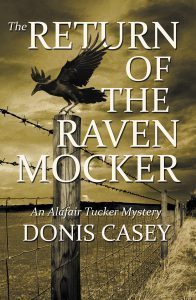 I’ve been to the places I’m writing about in southern California, especially Santa Monica and Los Angeles. I have felt the air and smelled the sea, so I know the feel, smell, colors, and vibe of the area. But I’m writing about what these places were like 100 years ago, so I have to superimpose the sensory feel of 21st Century SoCal over the black and white images of Southern California in the 1920s. There are lots of online images contemporary with the 1920s for me to work with. Some of my favorite images come from an odd online source, the Southern California Water and Power Museum.
What do you do if stuck for a word or a phrase?
I usually leave a blank and keep going. Then when inspiration strikes, I go back and fill it in. I know the perfect word is out there, so in order to find it, I sometimes use a thesaurus to look up an almost-but-not-quite-what-I-want-to-say word.
Is there anything unusual or even quirky that you would like to share about your writing?
It’s sometimes a slog, like it is for every writer I’ve ever met. Sometimes it’s almost a religious experience when inspiration strikes from you-don’t-know-where. It’s no wonder the ancients believed in the Muses. Since I live in southern Arizona, I usually write at home in the afternoon, because it’s too hot to go outside.
Do you use a program like Scrivener to create your novel? Do you ever write in long hand?
I don’t use a program to write/organize my work-in-progress, though I know some writers who swear by it. I’m too old-school. Which means I often compose in longhand. I find that writing by hand is a good way to clarify my thoughts. Most of my manuscript is written on a laptop, though.
Is there a particular photo or piece of art that strikes a chord with you? Why?
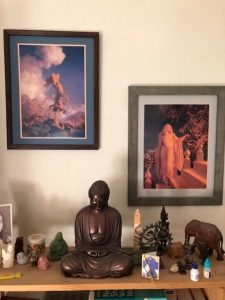
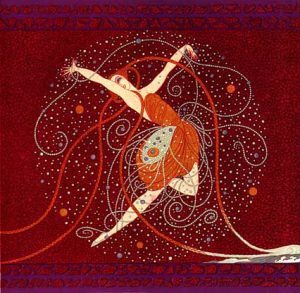 That’s like asking who’s my favorite child. My husband is an art historian, and when we were first married we spent a year in Europe where he took me to every art museum on the continent he could find and I got a crash education in art, which began a love affair that has continued for over forty years (with both art and husband). We had an apartment in a little French town called Cagnes-sur-Mer, where Auguste Renoir had his last studio. I love so many artists and types of fine art/sculpture/photography/architecture that I think there isn’t enough room in this essay to expound. Suffice it to say that I really got into Deco art while I was researching The Wrong Girl, which is set in the 1920s, and Erté (Romaine de Tirtoff) is the embodiment of Art Deco. I love Maxfield Parrish, too. I have eleven Parrish prints on my living room wall.
What advice would you give an aspiring author?
Just get the words down on paper and don’t worry about making them perfect on your first draft. You’ll make your MS beautiful when you go back and shape, shape, shape it. Writing is rewriting. b) If you want to get published, don’t give up. If you have a good book, there’s somebody out there who will appreciate it.
Tell us about your next book.
I set my new series up to be like a silent movie serial in that not every detail is wrapped up in the end. The second book, which is currently under construction, deals with the death of the first great lover and screen idol, and Bianca’s dear friend, Rudolph Valentino. My protagonist, Bianca, believes that Rudy’s death is no accident.
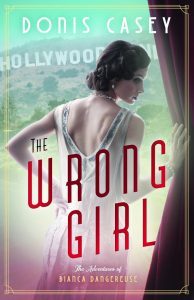
Blanche Tucker longs to escape her drop-dead dull life in tiny Boynton, Oklahoma. Then dashing Graham Peyton roars into town. Posing as a film producer, Graham convinces the naive teenager to run away with him to a glamorous new life. Instead, Graham uses her as cruelly as a silent picture villain. Yet by luck and by pluck, she makes it to Hollywood. Six years later, Blanche has transformed into the celebrated Bianca LaBelle, the reclusive star of a series of adventure films, and Peyton’s remains are discovered on a Santa Monica beach. Is there a connection? With all of the twists and turns of a 1920s melodrama, The Wrong Girl follows the daring exploits of a girl who chases her dream from the farm to old Hollywood, while showing just how risky—and rewarding—it can be to go off script.
Congratulations on your new release, Donis. Sounds like you have another 10 stories to tell about Bianca Dangereuse. Congratulations on The Wrong Girl receiving a starred review on Booklist.
 Haven’t subscribed yet to enter into giveaways from my guests? You’re not too late for the chance to win this month’s book if you subscribe to my Monthly Inspiration newsletter for giveaways and insights into history – both trivia and the serious stuff! In appreciation for subscribing, I’m offering an 80 page free short story Dying for Rome -Lucretia’s Tale.
November 5, 2019
Incomparable Power: Hittite Queens by Judith Starkston
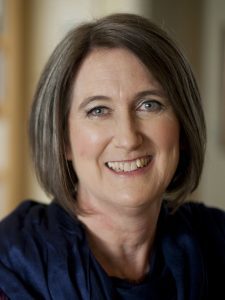 My guest today is award-winning author Judith Starkston, a classicist who feeds her obsession with the Bronze Age world of the Greeks and Hittites by writing historical fiction and fantasy. Her first novel, set in the Trojan War and told from the perspective of the captive woman Briseis, is titled Hand of Fire. She has just released the second book in her Hittite-based series, Sorcery in Alpara, featuring a much-forgotten queen. I interviewed Judith on her sources of inspiration earlier this year. Today she gives us the background to the history of the Hittite queen behind her female protagonist. You can also read my review of her first Hittite book, Priestess of Ishana here.
You can connect with Judith Starkston on her website, newsletter, Twitter, Facebook and Bookbub.
Incomparable power
I write historical fantasy based on the Bronze Age Hittites (c. 1275 BCE)—an empire of the ancient Near East nearly buried by the sands of time. In spite of the vivid glimpses of this lost kingdom brought to light by recent archaeology and the decipherment and translation of many thousands of clay tablets, there still remain vast gaps in historians’ knowledge. To be honest about my imaginative filling of those gaps, my storytelling combines fantasy and history.
For instance, I give my historical figures fictional names, though often only minimally different from their real names. I also let the magical religious beliefs of these historical people find full expression in the action. My “quarter turn to the fantastic,” to borrow Guy Gavriel Kay’s phrase, allows me to honor what we actually know while also owning up to my inventive extensions. Allowing room for the fantastical elements suggested by Hittite culture makes for the best storytelling.
The main character of my series, Tesha, is based directly on the historical Hittite queen Puduhepa. I chose to name her Tesha after the Hittite word for “dream” because Puduhepa was famous for visionary dreams sent by her goddess. Part of the appeal of writing a series based on Puduhepa comes from the model of female leadership she offers. She reigned for decades over the most powerful empire in the world at that time.
The Hittite empire stretched across what is modern Turkey and parts of Syria and down into Lebanon. It was thus close to Mesopotamia and borrowed a great deal from that and other Near Eastern civilizations. Hittite tradition about queenship, however, is distinctly different.
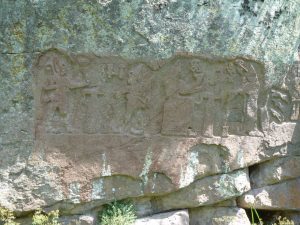
Rock Carving in Turkey Puduhepa and Hattusil
Hittite queens, unlike all the surrounding realms, held independent office for life. When their husbands died, they continued to rule, usually as co-rulers with their sons. The Hittite state allowed a full political role for these women. At the same time, Puduhepa took this allowed role to an active extreme not seen for other Hittite queens. Perhaps there were many other politically energetic queens who are not noted in our scanty historical accounts, but, interestingly and misogynistically, the other active queens we read about are renowned for killing off female rivals by sorcery and scheming to put their sons on the throne and negative acts like these. Puduhepa appears to be an anomaly, despite the powers granted to women by Hittite tradition. However, if there had not been this long tradition of respect for the role and status of queen, Puduhepa’s unique personality would not have had room to express itself.
An equal with her husband
Puduhepa enforced laws in her land to bring about fair justice, even when she had to decide court cases in favor of foreign merchants against her own citizens. She diplomatically corralled Pharaoh Rameses II into a peace treaty that, frankly, she and her husband Hattusili needed more than Egypt did, and she made it last. She held her power with her husband, but they shared equal control, a reality demonstrated visually on the peace treaty drawn up with Egypt. On one side of the version made of solid silver for public display, Puduhepa pressed her seal. On the other side, her husband placed his. They did have a joint seal they could have used, but on this most impressive accomplishment, their independent seals appear. Her judicial decrees and letters to world rulers frequently have only her name and seal on them—she didn’t need her husband’s blessing to administer her authority.
Puduhepa’s international correspondence is extensive. In comparison, we know of only two letters addressed to the Hittite court by Puduhepa’s Egyptian contemporary, Ramses’ wife Naptera, and those letters contain primarily polite greetings from one woman to another. Among Puduhepa’s extant letters are diplomatic exchanges with the kings of Cyprus, Babylonia and other countries. In one letter she grants lands to vassal kings under her sole authority. The Hittite expression, equivalent to “Your Majesty” was “My Sun” and it gets applied to both Puduhepa and Hattusili in the correspondence.
There was an exclusive group in the Late Bronze Age Near Eastern world. Certain kings referred to each other as “brother,” but only the kings of highest power: primarily Egypt, Babylonia and the Hittite Empire. Later, when Assyria’s power was on the rise, an Assyrian king was begrudgingly granted the right to use the term “brother” when addressing the Egyptian or Hittite kings. So how did Ramesses II refer to Queen Puduhepa? As “sister.” He didn’t give his own queens this high status.
Puduhepa ruled in a society that gave her legal rights to her power, unlike the surrounding kingdoms of the ancient Near East, but she also made more extensive use of those rights than any other Hittite queen. Part of this arises from her brilliance and personality. Part also came from the close partnership she shared with her husband. Their love for each other and genuine trust seems to have granted her extraordinary talents the room to flourish. Her accomplishments offer a worthwhile model for the modern world as much as a window into the ancient one.
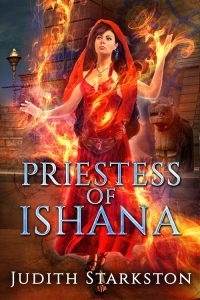
A curse, a conspiracy and the clash of kingdoms. A defiant priestess confronts her foes, armed only with ingenuity and forbidden magic.
An award-winning epic fantasy, Priestess of Ishana draws on the true-life of a remarkable but little-known Hittite queen who ruled over one of history’s most powerful empires.
A malignant curse from the Underworld threatens Tesha’s city with fiery devastation. The young priestess of Ishana, goddess of love and war, must overcome this demonic darkness. Charred remains of an enemy of the Hitolian Empire reveal both treason and evil magic. Into this crisis, King Hattu, the younger brother of the Great King, arrives to make offerings to the goddess Ishana, but he conceals his true mission in the city. As a connection sparks between King Hattu and Tesha, the Grand Votary accuses Hattu of murderous sorcery. Isolated in prison and facing execution, Hattu’s only hope lies in Tesha to uncover the conspiracy against him. Unfortunately, the Grand Votary is Tesha’s father, a rash, unyielding man, and now her worst enemy. To help Hattu, she must risk destroying her own father.
“What George R.R. Martin’s Game of Thrones did for the War of the Roses, Starkston has done for the forgotten Bronze Age Hittite civilization. Mystery, romance, political intrigue, and magic…” -Amalia Carosella
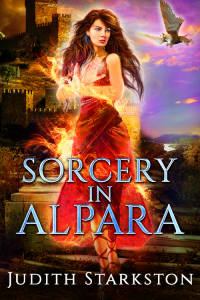 A curse that consumes armies, a court full of traitors, a clutch of angry concubines and fantastical creatures who offer help but hate mankind.
Tesha’s about to become queen of a kingdom under assault from all sides, but she has powerful allies: her strategist husband, his crafty second-in-command, and her brilliant blind sister.
Then betrayal strips her of them all. To save her marriage and her world, she will have to grapple with the serpentine plot against her and unleash the goddess Ishana’s uncontrollable magic—without destroying herself.
“Based on historical events in the Bronze Age, Starkston wraps history and magic together in an unforgettable package.”
If you like unique world building, ancient sorcery, and mythical beasts, with richly portrayed characters and enthrallingly complex plots, then immerse yourself in Sorcery in Alpara, the second in this award-winning epic historical fantasy series. See why readers call the Tesha series “fast-paced,” “psychologically riveting” and “not to be missed.”
Many thanks, Judith. You know how I love strong women of the ancient world. Wonderful to learn of the Hittite queens.
October 5, 2019
On Inspiration: Interview with Lesley Downer
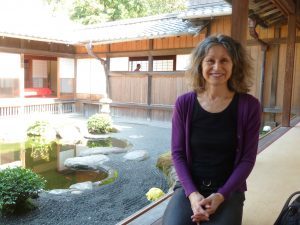 My very special guest today (and fellow History Girl) is Lesley Downer who has had a love affair with Japan ever since she first went there 40 years ago. In her books she tries to take readers to this fascinating, rather mysterious place and to open up aspects of its culture and history that people often miss.
Her non-fiction book, On the Narrow Road to the Deep North, followed the haiku poet Basho’s journey through northern Japan three hundred years earlier, was shortlisted for the Thomas Cook Travel Book of the Year Award in 1990, and televised by WNET and Channel 4 with the title ‘Journey to a Lost Japan’.
The Brothers, the story of a secretive and rather sinister real life Japanese business dynasty, was chosen as a New York Times ‘Book of the Year’ 1993. To research Geisha: The Secret History of a Vanishing World (2000), Lesley spent months living among geisha. Madame Sadayakko: The Geisha who Seduced the West (2003) is the story of the first Japanese actress who Puccini took as his model for Madame Butterfly.
 Besides writing Lesley lectures on her novels, on writing and on all things Japanese at, among other places, the British Museum, the Royal Opera House and in Japanese in Japan. I’m consulted as a Japan expert and a geisha expert and appear on TV or radio when a great event occurs in Japan, such as the recent accession of the new Emperor. She also teaches creative writing on the MA course at City University in London. And every day she does yoga!
You can connect with Lesley via her website, Facebook, Twitter and Instagram. All Lesley’s books are available on Amazon US.
What or who inspired you first to write? Which authors have influenced you?
Thank you so much for inviting me onto your blog, Elisabeth. I’m much honoured.
I’ve always loved stories. When I was a child my father read myths and legends to me every night before bed. As an avid library user, I loved Alice in Wonderland and The Lion, The Witch and the Wardrobe – that feeling of finding a portal that leads to somewhere completely different. To this day I still look for portals. For me travelling, reading and writing are all ways of transporting myself to other worlds.
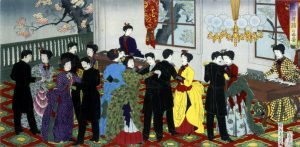
Wood print of early Westernisation in Japan
I love big books that I lose myself in, books that deal with huge themes – Hardy, George Elliot, Dickens, Dostoevsky, Tolstoy. I also like dark, densely written books like The Sheltering Sky by Paul Bowles where you have to slow down, not gobble it up – books that change you. Books I’ve read recently and adored include Sea of Poppies by Amitav Ghosh, set in the period I write about, the mid nineteenth century, The Secret River by Kate Grenville, on the early days in the settlement of Australia, and Taiko by Eiji Yoshikawa, the story of the larger than life people and events that led to the establishment of the Tokugawa regime in sixteenth century Japan.
As to what inspired me, the answer has to be Japan. I first visited 40 years ago and lived there for 5 years and have spent much of the rest of my life finding ways of getting back. All in all I must have spent some 15 or 20 years there. When I return to England I want to tell people about this distant and exotic place I know so well – its romantic history, marvellous literature and very different attitudes and perceptions of the world. I devour Japanese literature, from the epic Tale of Genji and the works of Tanizaki, to the poet Basho’s seventeen syllable haiku that encompass all of life.
What is the inspiration for your current book? Is there a particular theme you wished to explore?
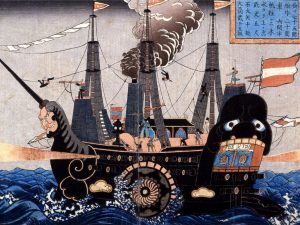
Wood print of black ship
On July 8th 1853, four mammoth American warships appeared, steaming towards the capital, Edo (now Tokyo). For Japanese of the time it was as horrifying and life changing as if aliens had landed – as indeed in a way they had. In The Shogun’s Queen I wanted to explore that pivotal moment when the entire world you know, which seems so solid and unchangeable – like Britain before World War II – suddenly shatters.
The Shogun’s Queen is also inspired by the true story of Atsu, a young woman who was thrust into a role she hadn’t chosen with a mission that she realised was virtually impossible. She was asked to give up everything, including love, and put duty and country first. I wanted to transport myself and my readers back to that era, to imagine how it must have felt to be a woman at that time with an impossible choice to make, between love and duty.
I was also staggered to discover that the shogun had a harem with 3000 women, where the only man who could enter was him – and where Atsu went to live. I hadn’t known such institutions existed in Japan. What could life have been like there? My imagination went to work …
What period of history particularly inspires or interests you? Why?
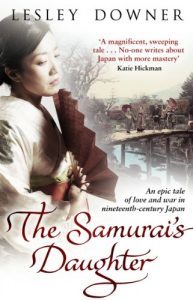 The four books of The Shogun Quartet are set in mid-nineteenth century Japan, a time of enormous change when the western powers, particularly the British, were carving up the world. In Japan the entire social order was shaken up. The arrival of the American ships led to 15 years of turmoil ending in regime change. But the story has largely been recorded by the winners. When I looked into the losers’ side of things I found an entirely different version of events, a poignant and heart breaking tale that cried out to be told.
What resources do you use to research your book? How long did it take to finish the novel?
The Shogun’s Queen is the fourth novel of The Shogun Quartet. I spent fifteen years immersed in nineteenth century Japan to write the entire quartet.
To research I absorbed myself in books both English and Japanese. There are many wonderful books by the first western travellers in Japan, from 1860 onwards, describing what they saw and experienced. SOAS library in London has one of the best collections of books on Japan in the world.
I also scoured early newspapers in the Diet Library in Tokyo. It’s important to be aware of how events looked to the people who lived them; they are often very differently reported in retrospect. There are marvellous woodblock prints, illustrations in The Illustrated London News and old photographs showing buildings, clothes and faces. I also read Japanese novels about the period and scholarly works, both old and recent.
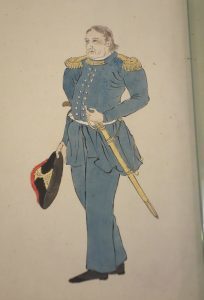
Commodore Perry
It was also of course an excellent excuse to go to Japan – to breathe the air of places I was writing about, hear Japanese spoken around me, to be reminded of how Japanese carry themselves, react and behave. And I used my own knowledge of Japan, having lived there as a woman for many years.
There are also many marvellous Japanese movies set at this dramatic and romantic period in Japanese history and blockbuster Japanese historical TV dramas, all of which I sat through with great pleasure, again and again.
What do you do if stuck for a word or a phrase?
Leave a gap. I often start off writing in pencil, then when I transfer it to my computer the word leaps to mind. I’m always moving between Japanese and English, trying to find ways to express Japanese feelings and thoughts in English. I often go back to haiku which I love; the haiku of Basho embody so many feelings and experiences.
Is there anything unusual or even quirky that you would like to share about your writing?
I started off as a travel writer and try to bring places and people alive. Writing historical fiction, especially about as distant and different a place as Japan, is rather like writing science or fantasy fiction. I ask my readers to imagine themselves into a completely different world with different landscapes, different buildings, different ways of using your body, different values and different ways of thinking.
Some of my best ideas come when I’m about to drop off to sleep or doing something completely different like walking to the tube. You need to write those ideas down straight away, otherwise you’ll forget the precise words and what you remember won’t be as good. So I always have a pencil and paper to hand. I once totalled my car because I was busy writing a sentence in my head.
Do you use a program like Scrivener to create your novel? Do you ever write in long hand?
I’ve heard of Scrivener but I don’t know what it is. I often write in longhand, including the answers to these questions. I then enter and make changes. I’ve written some novels to plan though I usually end up veering away wildly but manage to get back to the ending I’d planned. The Courtesan and the Samurai grew organically as I went along which was also interesting. My backbone is the historical events which I try to keep strictly accurate. This is the world in which my characters move.
Is there a particular photo or piece of art that strikes a chord with you? Why?
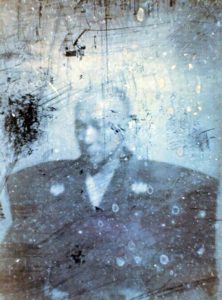
Daguerrotype of Shimazu Nariakira
Photographs, illustrations and woodblock prints bring a whole era to life for me. I look at them to get the flavour of the time and details of clothing, buildings, interiors and gardens. I also do illustrated talks on my books and on the period and use many pictures for these. The British Library has a Perry Scroll painted by a Japanese artist in 1853, depicting the arrival of the American ships, and the British Museum has one painted by Hibata Osuka in 1854, depicting Perry’s second visit. They both tell the story of what happened frame by frame, like cartoons.
There’s a haunting daguerreotype of Shimazu Nariakira, Atsu’s beloved uncle and an enlightened and brilliant daimyo warlord. He was the first to have a camera and the first portrait photograph in Japan and dates from 1857. It sends a tingle down my spine to see him looking back at me from 160 years ago.
There are also marvellous woodblock prints depicting the extraordinary changes that occurred in Japan after the Meiji Restoration, when Japan began to westernise with incredible speed.
What advice would you give an aspiring author?
You need to start by loving words and grammar, writing for the joy of it rather than in order to get published. It’s best to write every day and print out often and edit over and over again. So many revelations come in the editing process. Write in your own unique voice, write what yourself have to say and don’t worry about fashion. It also helps to read like a writer, forensically, analysing a particular scene and working out how the author makes that scene work. And always have a pencil and notebook to hand for sudden thoughts.
Tell us a little more about your series.
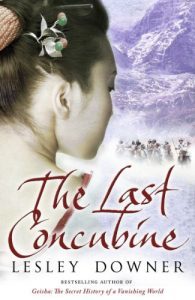
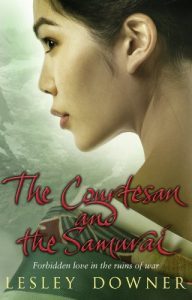 The novels that make up The Shogun Quartet are four women’s stories set in the tumultuous fifteen years after American ships arrived off Japan’s coast in 1853, sparking civil war. The first of the series, The Shogun’s Queen, is a woman’s Game of Thrones, set in the glittering and passionate world of the Women’s Palace, where three thousand women live in claustrophobic luxury and only one man can enter – the shogun. It’s the true story of Atsu, forced to leave the man she loves to marry the shogun. The Last Concubine is the story of Sachi, chosen as the shogun’s concubine and forced to flee the Women’s Palace as the civil war comes to its bitter end. It was short listed for Romantic Novel of the Year by the Romantic Novelists’ Association and translated into over thirty languages. The Courtesan and the Samurai takes us into the decadent world of the pleasure quarters with Hana, who has lost home and family and becomes a courtesan there. The Samurai’s Daughter is the Romeo and Juliet tale of Taka, the daughter of the greatest general on the winning side, and Nobu, whose family has lost everything in the civil war.
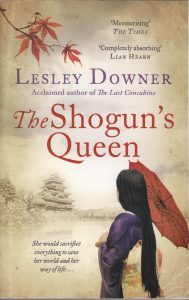
The year is 1853, and a young Japanese girl’s world is about to be turned upside down.
When black ships carrying barbarians arrive on the shores of Japan, the Satsuma clan’s way of life is threatened. But it’s not just the samurai who must come together to fight: the beautiful, headstrong Okatsu is also given a new destiny by her feudal lord – to save the realm.
Armed only with a new name, Princess Atsu, as she is now known, journeys to the women’s palace of Edo Castle, a place so secret it cannot be marked on any map. Behind the palace’s immaculate facade, amid rumours of murders and whispers of ghosts, Atsu must uncover the secret of the man whose fate is, it seems, irrevocably linked to hers – the shogun himself – if she is to rescue her people …
Thanks so much for being my guest today, Lesley. The history of Japan is fascinating and I’m sure readers will enjoy learning more by reading your novels and your wonderful blog.
All Lesley’s books are available on Amazon US with The Shogan’s Queen, The Last Concubine, The Courtesan and the Samurai, and The Samurai’s Daughter on Amazon UK.
Haven’t subscribed yet to enter into giveaways from my guests? You’re not too late for the chance to win this month’s book if you subscribe to my Monthly Inspiration newsletter for giveaways and insights into history – both trivia and the serious stuff! In appreciation for subscribing, I’m offering an 80 page free short story Dying for Rome -Lucretia’s Tale.
September 23, 2019
Call to Juno has been featured on Wiki.ezvid
A nice surprise for me! I was contacted by Wiki.Ezvid to say they have featured Call to Juno as one of 12 Dashing Historical Romances with Old World Charm. Delighted to be included among other novels with stories spanning Regency England to Etruria and Rome. You can learn more about Wiki.Ezvid here.
August 2, 2019
On Inspiration: Interview with Amalia Carosella
 My guest today is fellow ancient history lover and author, Amalia Carosella. She is the author of Bronze Age Greek and Viking Age historical fiction, including Tamer of Horses, Helen of Sparta, and Daughter of a Thousand Years. As Amalia Dillin she also writes mythic fantasy and time-hop fantasy romance, including the ongoing Orc Saga and the completed Fate of the Gods trilogy. Once upon a time, she dreamed of being a zookeeper, but she’s settled for a house cat and a husband instead.
You can connect with Amalia via Twitter, Facebook, Patreon and her website. You can find her Tamer of Horses on Amazon and a link to all her books here.
What or who inspired you to first write? Which authors have influenced you?
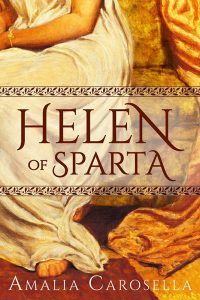 When I was a little girl my oldest brother was my hero. We’d spend hours creating elaborate stories and acting them out with his star wars action figures, and later my own. When he went to college (I was maybe in first grade), he studied creative writing, and of course then that was what I wanted to do, too! He also inspired my love of myth, particularly Greco-Roman myth, so we can go ahead and blame him for everything.
Beyond my brother, my biggest author influences are probably Anne McCaffrey and Lois McMaster Bujold. Every time I reread one of my favorite McCaffrey novels, I see stylistic elements that I picked up reflected back at me.
What is the inspiration for your current book? Is there a particular theme you wished to explore?
Tamer of Horses was inspired by Pirithous, who I LOVED writing as a secondary character in Helen of Sparta and unexpectedly became a fan favorite, too, and a line I found while researching him relating to Hippodamia—one of the writers said that Pirithous invited the centaurs to his wedding because they were kin to his wife, and I thought to myself, What does that Mean?! What would it LOOK like? And then I was off and running. In some ways it’s an exploration of kinship and how those bonds can be severed or broken by the people we love who refuse to let us grow, no matter how hard we try to hang on.
I’m also currently working on the final edits of a 1920s American historical fantasy novella Enduring Fate (part of my Fate of the Gods series as Amalia Dillin), which at its heart is about struggling with faith: how do you stay true to what you know on a soul deep level when everyone around you thinks you’ve lost your mind? (It’s also about the terrible treatment of women in mental wards during that period, and the horror of eugenics, too, which I think we often overlook in American history. As if we can just sweep it under the rug and pretend we had nothing to do with eugenics at all when we basically birthed it.)
What period of history particularly inspires or interests you? Why?
I LOVE the Greek Bronze Age. There’s so much room to explore and engage—we know just enough to inspire the imagination, and not so much that we have to worry about double checking if it rained on such and such a date. And I love being able to bring those people of the very distant past back to life, showing the world that they were still just people, like us. But even more, I’m extremely committed to writing historical fiction in this period that embraces the divine and the spiritual experiences relayed by the myths—many people who call what I write fantasy, but to me, it’s a true reflection of faith. This is what the Greeks believed in, how they remembered their history, and it isn’t my place to take that away.
What resources do you use to research your book? How long did it take to finish the novel?
For my Bronze Age titles, including my current work-in-progress: Homer, Pseudo-Apollodorus, Hesiod, Robert Graves, Bulfinch—Theoi.com is a phenomenal resource which does a lot of the work of collecting the attestations from all those sources and then some in one place when dealing with the gods themselves and bigger mythic figures. Also, M.I. Finley’s The World of Odysseus and the new research of Dr. Dmitri Nakassis influenced my interpretation and vision of the Bronze Age. I’m a little bit more fast and loose with my fantasy as Amalia Dillin, but I always try to look at translations of primary sources whenever possible. To read every variation/take on a mythic character that I can get my hands on before and after I dive in. Finding the heart of those figures and characters is one of the most critical elements for me, whether I’m writing historical fiction or fantasy.
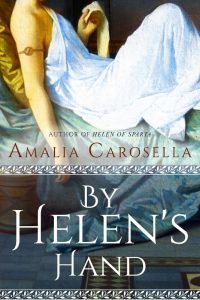 Tamer of Horses was originally, I thought, a novella. The first half I wrote fairly quickly (maybe a month or so?) as a result, thinking I might answer a call for novellas set in the ancient world with it (and that I did not want to write another tragedy) but after I’d finished, I realized—there is more to this story, it isn’t complete. So I kept going and wrote the war with the centaurs, as well. I don’t remember how long it took me altogether, several months maybe, for the second half of the book. but I definitely wrote it between Helen of Sparta and By Helen’s Hand. (Which was why I was so delighted to be able to include Polypoetes in By Helen’s Hand!)
I can write pretty fast when I need to, blast out a draft in three to five months if I am really pressed, but in contrast, one of my Amalia Dillin novels, From Asgard, With Love took me seven years to finish. I wrote most of Enduring Fate during National Novel Writing Month in 2010, and then left it to sit until just this year, when I finally pulled it back out again to finish it. I’ve written just shy of 160,000 words so far this year across at least seven different projects, because when left to my own devices and not under contract I like to just work on whatever strikes my fancy on any given morning until something really grabs hold. That was the lesson I learned from burning out! Not to force myself to grind if I didn’t have to!
What do you do if stuck for a word or a phrase?
I go to twitter or facebook or El Husband and say “What’s that word that means…” and then by the time I’ve phrased the question, and told them it starts with what turns out to ALWAYS be the WRONG letter (?!?!?! what is wrong with my brain?!), it’s usually come to me. Worst case, I look up the synonyms on thesaurus.com until I find the one I’m looking for!
Is there anything unusual or even quirky that you would like to share about your writing?
I don’t talk like I write. I am a terrible speaker, honestly. My cousins tease me for it all the time—that I can’t form a coherent sentence in person (exaggeration!) but somehow I write novels. And when I’m deep in draft mode, you really, really cannot rely on me to remember anything that’s said to me while I’m looking at my word doc. In fact, you can’t rely on me to remember much of anything beyond the next sentence or the next paragraph or the next scene. Was I supposed to empty the dishwasher? Oops! I swear, Writer Brain is a thing!!
Do you use a program like Scrivener to create your novel? Do you ever write in long hand?
I write in long hand when I’m out running errands mid-draft and the next sentences keep coming. I don’t generally LIKE to do it because I HATE transcribing those words into my word document later and that slows me down after the fact—I use Word 2007, with One Note for random associated notes and images. But I heard they finally fixed the closed-quotation mark following an em-dash issue I’ve been wrestling with my entire adult life in the latest version of Word and it’s ALMOST temptation enough to upgrade. Almost.
Is there a particular photo or piece of art that strikes a chord with you? Why?
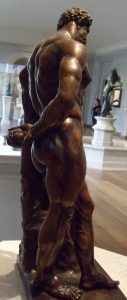 I love William-Adolphe Bouguereau’s painting Idyll, in particular. It’s an image of a goatherd and his wife, baby bouncing on the goatherd’s knee. I don’t know what it is about it, but it’s so beautiful, and I kind of imagine that it is Paris and Oenone, I guess, in that peaceful period before he leaves Mount Ida and discovers he’s a prince of Troy. I also love Pierre August Cot’s Spring and The Storm. And I am a SUCKER for classical and neo classical sculpture. Especially Farnese Hercules! Those apples behind his back!! The casual pose!! Perfection.
What advice would you give an aspiring author?
It’s okay to not write. That’s as much a part of the process as the actual words on the page and we should not feel guilty about it. Build in time for not-writing. For downtime. You need to make that part of your habit because while discipline is important, so is taking care of yourself. Burn out is not a thing you want to have to struggle to come back from, and it is so, so easy to fall into it—by the time you’re wondering if you might be burning out, it’s probably too late to stop it and the road to recovery is long.
Tell us about your next book.
I’m in the middle of about a half-dozen different books and novellas, including a Paris of Troy epilogue to my Helen of Sparta duology, but my next big project as Amalia Carosella is a Heracles novel—I’ve been dying to write his book for years now, and I finally cracked how to approach it. Thematically, I think it’s going to focus on how our myths and our gods evolve alongside us. As we grow in our understanding of the world, we’re able to see the divine more clearly, but I think that the divine, too, must change and grow and see US more clearly, as well. It’s strange to think of it as limited in any way. As being static. And it isn’t true to my experience as a pagan, which influences how I see the faith traditions of the past and I think gives me a little bit of a different perspective on myth across the board. I’m about 20K words into it now and just falling more in love with every chapter. Fingers crossed it finds a home.
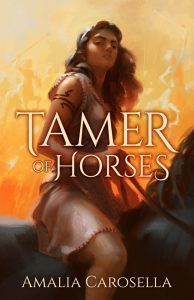
Abandoned as a baby, Hippodamia would have died of exposure on the mountain had it not been for Centaurus. The king of the centaurs saved her, raised her as his own, and in exchange asks for only one thing: she must marry the future king of the Lapiths, Pirithous, son of Zeus, and forge a lasting peace between their peoples by giving him an heir. It would be a fine match if Pirithous weren’t more pirate than king and insufferably conceited, besides. But Hippodamia can hardly refuse to marry him without betraying every hope her people have for peace.
After the death of Dia, queen of the Lapiths, tensions are running high. The oaths and promises protecting the Lapith people from the Myrmidons have lapsed, and the last thing Pirithous needs is to begin his kingship by making new enemies. But not everyone wants peace on the mountain. There are those among the centaurs who feel it comes at too high a price, and Peleus, King of the Myrmidons, lusts for the lush valley of the Lapiths and the horses that graze within it. Pirithous needs a strong queen at his side, and Hippodamia will certainly be that—if he can win her loyalties.
But no matter their differences, neither Hippodamia nor Pirithous expected their wedding banquet to be the first battle in a war.
Thanks Amalia – so many ideas bubbling inside your brain. Keep on writing such wonderful ancient world fiction.


