
Elisabeth Storrs's Blog, page 3
December 4, 2022
On Inspiration: Interview with Loren Stephens
 My last guest for 2022 is Loren Stephens. As you will read, Loren is an immensely talented lady. She is a widely published essayist and fiction and nonfiction storyteller. Her work has appeared in the Los Angeles Times, the Chicago Tribune, MacGuffin, the Jewish Women���s Literary Annual, The Forge Literary Magazine, Crack the Spine, Lunch Ticket���s Amuse Bouche series, The Write Launch, The Summerset Review, The Montreal Review, and Tablet travel magazine, to name a few. The book she co-wrote with Cliff Simon, Paris Nights: My Year at the Moulin Rouge, was deemed one of the best titles from an independent press by Kirkus Book Reviews. A two-time nominee of the Pushcart Prize, Loren is president and founder of the ghostwriting companies, Write Wisdom and Bright Star Memoirs. Prior to establishing her company, Loren was a documentary filmmaker. Among her credits are Legacy of the Hollywood Blacklist with on camera narration by Burt Lancaster, produced for PBS and nominated for an Emmy Award; Sojourner Truth: Ain’t I A Woman? produced for Coronet Films and recipient of a Golden Apple from the National Education Association; and Los Pastores: The Shepherd���s Play produced for the Latino Consortium of PBS and recipient of a Cine Gold Eagle and nominated for an Imagen Award. She is a member of the National Commission of the Anti-Defamation League; a member of its Deborah Awards Committee for Outstanding Women; and a member of Greenlight Women, an organization of women in the entertainment industry who serve as mentors.
Loren has now ventured into writing historical fiction with All Sorrows Can Be Borne. Inspired by true events,�� it’s the story of�� a Japanese woman forced her to give up her son to save her husband. Set in Hiroshima, Osaka, and the badlands of eastern Montana, the novel spans the start of World War II to 1982.
You can connect with Loren Stephens via her website, Twitter @LaurenStephensWW and Instagram @LorenStephensAuthor.
You can purchase All Sorrows Can be Borne at Barnes & Noble��and Amazon.
What or who inspired you to first write? Which authors have influenced you?I have always been an avid reader since I was a young girl: Sara Crew; The Secret Garden, the Oz books; Nancy Drew mysteries.�� Authors that have influenced me: too many to mention but currently Claire Massud; Barbara Kingsolver; Stephen King.
What is the inspiration for your current book? Is there a particular theme you wished to explore?My novel, All Sorrows Can Be Borne, is based on my husband���s family history in Japan.����I wrote this book to better understand why my husband���s Japanese birth parents gave him up for adoption to his aunt and uncle in Glendive, Montana, not knowing if they would ever see their son again. Their sacrifice ���to give him a better life��� led to unimaginable tragedy. ��I spent years conducting background research about the bombing of Hiroshima, the events of World War II and the rebuilding of Japan as well as the immigration policies between the US and Japan, which set up roadblocks to my husband���s parents��� intention.
What period of history particularly inspires or interests you? Why?I am particularly fascinated with World War II and its aftermath in the United States.�� How the war affected politics, the role of women in our society; the outbreak of feminism. I am interested because this is the period of my parents��� generation.
What resources do you use to research your book?�� How long did it take to finish the novel?I conducted a lot of in person interviews here in the United States and in Japan. I read extensively history books as well as novels set in the period of World War II, especially what was happening in Japan.�� I was very interested in books about diplomacy between the US and Japan and how President Kennedy worked to improve relations between the two countries after the war. It took me ten years to write and publish the novel.
Together with my husband’s adoptive mother, I went to Japan to meet with his birth mother, still living in Osaka, and we spent many days discussing my book. Since there were several people who were no longer alive including my husband���s birth father and some of the events were difficult to remember, I took a leap of faith and turned the book into a novel so that I could imagine what might have happened. ��I had to rely on instinct and creativity to craft a novel that is inspired by a true story, but reflects the freedom of a writer.
What do you do if stuck for a word or a phrase?I sit quietly and wait for a word to pop into my head. As a last resort, I use the internet to look up synonyms that are similar to a less inspiring word.
Is there anything unusual or even quirky that you would like to share about your writing?I write many genres and I am also a ghostwriter.�� I have written over forty books for my clients through my company, Write Wisdom.�� I switch between writing under my own name and writing under the name of my author/clients.
Do you use a program like Scrivener to create your novel? Do you ever write in long hand?I sometimes write in long hand when I am editing a hard copy of my manuscript; but when I am composing I write exclusively on the computer.
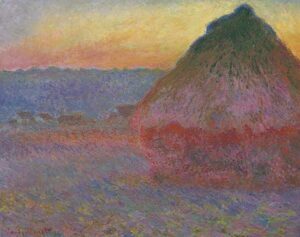 Is there a particular photo or piece of art that strikes a chord with you? Why?
I love the Impressionist painters.�� Standing in front of a Monet is heavenly.�� Seeing how he creates a work of art that at first may look ���foggy��� but as you stand there objects become clearer.�� The same may be true for the writing process.�� I also love Klimt.�� His decorative style is gorgeous.
What advice would you give an aspiring author?Write about what makes you curious.�� Writing is a long haul.�� You want to uncover a world of surprises.
Tell us about your next book.I am starting to work on a semi-autobiographical novel ��� a romance that goes haywire.�� The working title is Elise Goldberg Goes to Paris but that will probably change over time, or maybe not.
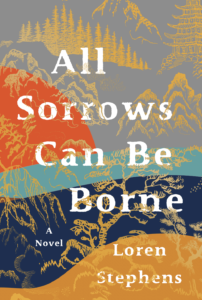
Inspired by true events, All Sorrows Can Be Borne is the story of Noriko Ito, a Japanese woman faced with unimaginable circumstances that force her to give up her son to save her husband. Set in Hiroshima, Osaka, and the badlands of eastern Montana and spanning the start of World War II to 1982, this breathtaking novel is told primarily in the voice of Noriko, a feisty aspiring actress who fails her audition to enter the Takarazuka Theater Academy. Instead, she takes the ���part��� of a waitress at a European-style tearoom in Osaka where she meets the mysterious and handsome manager, Ichiro Uchida. They fall in love over music and marry. Soon after Noriko becomes pregnant during their seaside honeymoon, Ichiro is diagnosed with tuberculosis destroying their dreams.
Noriko gives birth to a healthy baby boy, but to give the child a better life, Ichiro convinces her to give the toddler to his older sister and her Japanese-American husband, who live in Montana. Noriko holds on to the belief that this inconceivable sacrifice will lead to her husband���s recovery. What happens next is unexpected and shocking and will affect Noriko for the rest of her life. Eighteen years later, her son enlists in the U.S. Navy and is sent to Japan. Finally, he is set to meet his birth mother, but their reunion cracks open the pain and suffering Noriko has endured.
With depth and tenderness, All Sorrows Can Be Borne is a harrowing and beautifully written novel that explores how families are shaped by political and economic circumstances, tremendous loss and ultimately forgiveness.
You can purchase All Sorrows Can be Borne at Barnes & Noble��and Amazon.
Thanks so much for giving us a glimpse into your inspiration for your novel. There are few books exploring the Japanese-American experience so I’m sure readers would love to learn more.
 Haven���t subscribed yet to enter into giveaways from my guests?��You���re not too late for the chance to win this month���s book if you��subscribe to my Inspiration newsletter��for giveaways and insights into history ��� both trivia and the serious stuff! In appreciation for subscribing, I���m offering an 80 page free short story��Dying for Rome -Lucretia���s Tale.
The post On Inspiration: Interview with Loren Stephens first appeared on Elisabeth Storrs Historical Novels.


November 27, 2022
The History Girls – The Legend of Tanaquil
My latest post on the History Girls is about the legend of Queen Tanaquil, an Etruscan prophetess, who was the power behind the throne of two of the early kings of Rome. Tanaquil’s first prophecy was based on observing the flight of an eagle which is an example of the art of auspication ie divining the future from the flight of birds. Read more on the History Girls website.
The post The History Girls ��� The Legend of Tanaquil first appeared on Elisabeth Storrs Historical Novels.
August 29, 2022
Switching from alternate history – Alison Morton
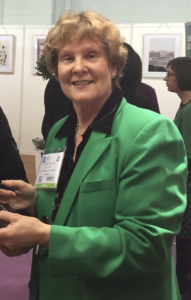 I’m delighted to welcome Alison Morton as my guest today. She’s a fellow Romaphile who’s has written alternate history for years. Now she’s has decided to switch to ‘straight historical’ fiction with her new release, Julia Prima.
Alison is writes award-winning thrillers featuring tough but compassionate heroines.��Her nine-book Roma Nova series is set in an imaginary European country where a remnant of the ancient Roman Empire has survived into the 21st century and is ruled by women who face conspiracy, revolution and heartache but with a sharp line in dialogue.
She blends her fascination for Ancient Rome with six years��� military service and a life of reading crime, historical and thriller fiction. On the way, she collected a BA in modern languages and an MA in history.�� Alison now lives in Poitou in France, the home of M��lisende, the heroine of her two contemporary thrillers, Double Identity and Double Pursuit. Oh, and she���s writing the next Roma Nova story.
You can connect with Alison via her Roma Nova site: Facebook author page: Twitter: Alison���s writing blog: Instagram: Goodreads��and her Newsletter sign-up��
You can find Alison’s ebook of her new release, Julia Prima, on various retail sites here and the paperback edition here.
You can find all of Alison’s books on her Amazon page.
I hope you enjoy her post on her journey.
Making the switchWhen you get a reputation for writing alternative history stories, it can be a surprise, even a shock, to readers when you write ���straight��� historical fiction.
Let me explain��� As a ���Roman nut��� since the age of eleven, I have a deep interest, possibly an obsession with history, especially Roman history. It led me to go back to university thirty years after I���d first graduated to study to gain an MA in the field. When the creative writing bug bit me twelve years ago, I knew there had to be a strong Roman element. Coupled with that was a desire to write a female lead who drove the story. Roman society was a strongly militarised one with no scope for women soldiers. A dilemma. Then I read Robert Harris���s Fatherland and discovered you could ���alternate��� history. So I rewrote history along a different timeline. Enter Carina and Aurelia, 21st and 20th century heroines, both Praetorian Special Forces officers serving in Roma Nova, a tiny remnant of the Roman Empire that survived through history.
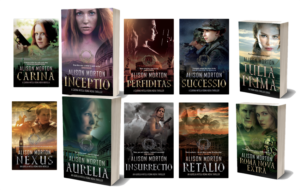 Like any country Roma Nova has its own history. In our real timeline, who today doesn���t have an older relative who remembers ���the war���? We know exactly which war they are talking about because it was such a formative experience for that generation and the following one. At school, we learn about 1066, American Independence in 1776, the Battle of Waterloo, events long in our past but which have an impact on our countries today. To give Roma Nova a depth and some collective memory, I invented a history for it with roots in real events in the 4th century.
Even in the first hundred pages of Inceptio, the first Roma Nova thriller set in the 21st century, the characters often refer to Julia Bacausa and Lucius Apulius ��� their legendary ancestors ��� so when readers said they were thirsty for more, I knew I had to tell the story.
Writing a prequel after I���d written nine books spanning the late 1960s to the present wasn���t straightforward. The scope for massive blooperdom loomed frighteningly large. ��Would I be able to remember all the references made by my characters to the past? Star Trek fans will remember the painful ���Klingon Question���. So I sat down with a new legal pad and re-read the whole series, making notes as you would for any research project. And I���m both pleased and relieved I did. Even for our own beloved creations, few of us have a good enough memory to recall everything.
Why this moment in the late 4th century AD?The timeline split for the Roma Nova world was triggered in AD 395 when Emperor Theodosius (pushed by Ambrose of Milan) finally outlawed any non-Christian religious activity on pain of death.�� Julia Prima is set in our ���real��� historical timeline between AD 369 and 371, i.e. twenty-five years before that point, at a time when the Roman world was riddled with religious strife and on the brink of transformation. That transformation hasn���t kicked off yet, but by then it���s hovering. No moment in history is fixed; it has its causes ��� direct and indirect ��� and its consequences ��� short term and long term. Behind the personal story of Julia and Lucius, this new book shows how the signs of decline are well and truly there and sets the scene for the start of the collapse.
Althist vs. histficAlternate history takes off from a point of departure (POD) triggered by an event, large or small. Writers need to use the conditions prevailing at that point as the basis for developing their alternative timeline along historically logic lines. But essentially, you are writing into a void. Even so, I don���t believe you should go completely off-piste and make up a load of implausible nonsense.
With standard historical fiction, there are sources, both documentary and archaeological, sometimes sparse and often biased, but they are something available for reference and consultation, even though analysis of these sometimes causes strong arguments!
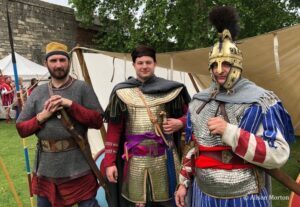 So, historical fiction writers have a skeleton, sometimes a whole body of research to mine for research. But the good historical fiction writer is constrained by being obliged to search out and check existing sources and in my opinion, not wander too far off verifiable facts. You can���t invent new Roman emperors, for example, and retain credibility ��� we know who they all were!
I���m reasonably familiar with the Roman timeline ��� people, politics, battles, personal and public environments, occupations, values, the complexity of Roman life ��� although I did check on many individual things I thought I knew. A great deal had moved on in the centuries since Augustus and Hadrian, from armour and military organisation to clothes, religion and dining arrangements. Although I researched about trekking horses in the 4th century and knew the ���no stirrups��� rule, I was a little rocky on the practical aspects of riding horses. So I consulted historical fiction legend Helen Hollick who owns and breeds horses and has ridden all her life. ��Other ���Romans���, such as Ruth Downie, author of the Medicus series, helped on travel and Gordon Doherty sent me a wonderful reading list for the 4th century.
Something unexpected���I discovered an entirely new (to me) Roman city! Carsulae lies on the western branch of the Via Flaminia and as that was a faster route that the eastern one, my heroine travels along it. ��At its height, Carsulae prospered, not least from trade and from the ��agricultural activity in the surrounding area. Its country setting in Umbria, large complex of mineralised thermal baths, theatres, temples and other public amenities even attracted wealthy and middle-class visitors from Rome. They were probably seeking relief from Rome in the cooler and healthier hill country. No one knows precisely why Carsulae was abandoned. Possibly it was destroyed and/or was made inhospitable by earthquakes, ��or it lost its importance and became increasingly impoverished because most north���south traffic used other, easier, branch of the Via Flaminia to the east, or as it was built in a valley without defensive walls, people moved to better defended settlements as political instability grew in later centuries. I���ve kept it as still lively and active for Julia Prima, but it may not be as thriving in the next Roma Nova foundation story set in twenty-five years��� time ;-)
The main delight was that although its marble and other dressed stone were ���appropriated��� for later buildings, nobody actually built on top of it! To complete my happiness, I discovered a beautifully produced three-minute video showing a reconstruction of Carsulae.��
Writing Julia Prima has been a rigorous but wonderful experience and it has given me the opportunity to add another layer to the Roma Nova story. I hope readers think so too!
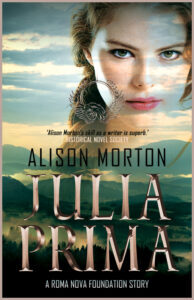
���You should have trusted me. You should have given me a choice.���
AD 370, Roman frontier province of Noricum. Neither wholly married nor wholly divorced, Julia Bacausa is trapped in the power struggle between the Christian church and her pagan ruler father.
Tribune Lucius Apulius���s career is blighted by his determination to stay faithful to the Roman gods in a Christian empire. Stripped of his command in Britannia, he���s demoted to the backwater of Noricum ��� and encounters Julia.
Unwittingly, he takes her for a whore. When confronted by who she is, he is overcome with remorse and fear. Despite this disaster, Julia and Lucius are drawn to one another by an irresistible attraction.
But their intensifying bond is broken when Lucius is banished to Rome. Distraught, Julia gambles everything to join him. Following her heart���s desire brings danger she could never have envisaged���
Thanks so much Alison – as you know I’m an ‘early Roman Republican’ but I look forward to learning about the decline of the Empire!
 Haven���t subscribed yet to enter into giveaways from my guests?��You���re not too late for the chance to win this month���s book if you��subscribe to my Inspiration newsletter��for giveaways and insights into history ��� both trivia and the serious stuff! In appreciation for subscribing, I���m offering an 80 page free short story��Dying for Rome -Lucretia���s Tale.
The post Switching from alternate history ��� Alison Morton first appeared on Elisabeth Storrs Historical Novels.
July 11, 2022
The Evolution of The Child of the Erinyes by Rebecca Lochlann
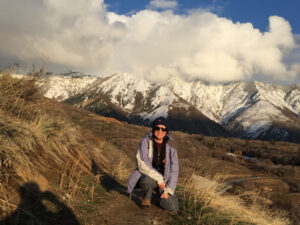 It’s my great pleasure to welcome Rebecca Lochlann today. Rebecca likes to say that deities will sometimes speak to us through dreams and visions, gently prompting us to tell their lost stories. That is how The Child of the Erinyes series began. Her goal was to create a new myth���one with a similar flavor to the Greek classics, yet designed to hold the interest of modern readers. She created Erinyes Press to publish and distribute the series, which she identifies as mythic fantasy fiction, beginning in the Bronze Age and winding up in the not-so-distant future. She lives with her husband in the American West.
Rebecca’s The Child of the Erinyes series is epic! She started her vision with three books set in Minoan Crete which demonstrated her meticulous research into the Bronze Age. Over the remaining 5 books, the story of an eternal love triangle moves through to C19th Scotland and onto a dystopian future. I was interested to learn how she managed to navigate time, space and myth to create her masterful 8 book series.
You can connect with Rebbecca Lochlann via her website, Facebook, Bookbub, Goodreads and Instagram. You can buy the books on Amazon, Barnes & Noble, Kobo or iTunes.
The Evolution of The Child of the ErinyesThe Child of the Erinyes is an eight-book journey spanning 4000 years. Beginning in the Bronze Age in a historical setting, it follows the lives of two men and a woman as they are reborn seven times through history.
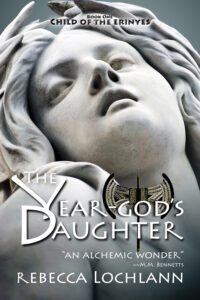 Some of us draw down the moon in dreams, prayer, or ritual, wanting to understand her inspiration and insight. From the initial release of The Year-god���s Daughter in late 2011 to the back-to-back publication of When the Moon Whispers, Book Seven, and Swimming in the Rainbow, Book Eight, the reincarnation series I call Child of the Erinyes has drawn down, too. The series is finished!
Each book takes the reader on a gradual evolution, from the adventures of young lovers on the idyllic isle of Crete in the first three books through the bleak dystopian setting of Book Seven, to the futuristic denouement of Book Eight.
As I have mentioned in posts and backmatter, writing this series became my life���s work, though I didn���t exactly intend it to be that way. I often wonder if I would have begun had I known how long it would take, how much work, and the cost, not only financially but physically and psychically. Still, the sense of accomplishment is satisfying.
When I was a kid, nothing gave me as much fulfillment as doodling a tale with pencil and paper, and later, the old Royal typewriter. One by one, inspirations revealed themselves, beginning with D���Aulaire���s Book of Greek Myths. It cracked open the door, hinting at the faraway worlds awaiting me. There are so many! When it comes to Greece and myth, the stories are endless. Later, I found out Scotland is similar in that regard.
As I enter my mid-sixties, I see things differently than I did as a child, writing stories in the forest, or as a young adult, juggling writing, work, love interests, and parties, or as a thirty-something, a working mom. Writing had to take a back seat in those years. But I knew I would get back to it, and I did, joining a writing group which forced me to have a new chapter ready every week, entering contests, collecting validation from other writers, and seeing this epic saga slowly form its final shape. I also discovered new truths about Greek myth that made the D���Aulaire book seem a bit biased. A bit wrong.
I thought I was barreling along, but the story needed time to simmer, many, many more rewrites, new visions, and much more introspection. This series builds one upon the next, so even though there are eight books, I classify them all as ���a story��� with different settings and time periods.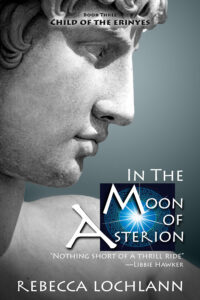
For When the Moon Whispers, which I started writing in the late 1980s, I had to conjecture what the world would be like in the futuristic year of 2020, my original chosen time period. I could hardly imagine such a far-off future. Turns out I missed the mark on some things. While I did foresee countries invading their neighbors, I failed to envision the lengths technology would go. When I reread Whispers somewhere around 2008 or so, I laughed to find cassette tapes holding on in my dystopian world. Apparently, I thought cassettes were the height of what humans would do with recordings.
I put that book aside and deliberately ignored it during the years it took to mold, write, rewrite, and expand The Year-god���s Daughter, The Thinara King, In the Moon of Asterion, The Moon Casts a Spell, The Sixth Labyrinth, and Falcon Blue. I knew the way those books evolved would change Whispers drastically, and they did.
I started the focused work on Whispers immediately after publishing Falcon Blue, in 2018. Falcon Blue is an Arthurian medieval tale, set in 502 AD; Whispers jumps from that setting to one beginning in 2049 AD, and quickly leaps to 2072! Swimming in the Rainbow takes place even farther on, in the 2090s.
It took a long time just to read the notes I���d added to the Whispers manuscript over the years. Don���t forget to���, inspiration from here and there, and a very long list of ���Prophecies that must be resolved.���
My memories had grown blurry so my next step was to reread the book itself. The reread caused more than one startled How can this be happening moment.
Whispers was meant to be purely speculative fantasy, but events were unfolding in America and the world that mirrored the story. Not Covid. Covid is never mentioned in Whispers nor does it need to be. It���s other things that caused uneasy shivers on the back of my neck. There are things in Whispers that I don���t want to come true, ever, anywhere on the planet, but many have already. I���d much prefer them to remain firmly in the realm of dystopian fiction. I may have missed the mark with cassettes, but I struck the mark squarely on other things, which doesn���t make me particularly happy.
 This seems like a good time to advise potential readers on the content. Sure, there are worse books out there, but some of my scenes were difficult to write and for some, will be difficult to read. There���s raw language and raw events. More so than the other books in the series.
Speaking of that shiver on the back of my neck, I noticed throughout the writing of all the books that every now and then, I was given a ���WOW��� moment, not because of disturbing things becoming reality, but signs that I wasn���t toiling alone.
For instance, there���s the way some things just inexplicably worked, despite my brain fog (It���s real), or the pressure/stress/adrenaline that made me write something down and continue on with the understanding that I would go back and fix it later, before publication.
In Whispers, there���s a scene where a main character explains ���Carnevale��� to his son. ���This year,��� he says, ���Carnevale will begin tomorrow morning and culminate in the Hunt on Tuesday night.���
I knew the scene was taking place in summertime, but I wanted this event on Tuesday night to fall on the same night that was the sacred ���day out of time��� in the Bronze Age books on Crete���the one holy day that fell between the old year and the new. I didn���t want to take time out to research how to write this in a way that would work, however, because it would take too much time when I was hurrying to get the draft finished. This was one of those things I would go back and fix on one of the rewrites. I left a note in red to remind myself.
 When the time came and I was cleaning up the manuscript, I opened this program I used with Whispers called Aeon Timeline���useful for setting up characters, their bios, their ages, and a timeline of every event in the book. Now I had to figure out how hard it would be to juggle things so that the Carnevale event would fall on the right day, and because I didn���t think this would be a quick or easy fix, I gave myself an entire day to work on it. I found some old notes from The Year-god���s Daughter where I���d researched the annual appearance of the star Iakchos (Sirius) and Crete���s time telling methods, and refreshed my memory. Chrysaleon, the Mycenaean prince, competed against the other contestants on the 16th of July. He fasted on the 17th, 18th, and 19th���the 19th being the holy day out of time that I was looking for. That night, he descended into the labyrinth. His task was to kill the old king, Xanthus, which would make him Crete���s new bull-king.
Going back to Aeon Timeline, I studied the various events that had already happened in Whispers, and their dates. I came closer and closer to the moment the MC was explaining the workings of Carnevale, and that���s when the back of my neck shivered, because somehow, the Tuesday night event���the Hunt���fell exactly and naturally on July 19th. I checked it several times. I didn���t have to change or fix anything.
Little moments like that throughout the series left me convinced of Athene���s involvement. She gazed over my shoulder and every now and then brought clarity in a dream. She made a random date mysteriously work when it needed to. She guided me, word by word, edit by edit, rewrite by rewrite, to the perfect ending. It was in front of my face the whole time but I couldn���t quite bring it into focus. Reading and working, concentrating and living the story brought out what had to happen.
 My intent for this series has always been fourfold: To Inform, to Entertain, to Empower, and to Inspire. To make a suppressed possible history with fictional elements come to life in the reader���s mind. And I���ve always wanted to offer a slightly different perspective of my heroine, Aridela, than what is currently popular in books and movies. I���m a fan of Joseph Campbell���s reluctant hero, as those who know my books have seen. I���ve read more than once in comments and reviews that Aridela (and her later incarnations) has been incredibly frustrating at times. There was a warning about this way back in The Thinara King, when Aridela married. ���Thou wilt breathe the air of slavery for as long as thou art blinded. For thou art the earth, blessed and eternal, yet thou shalt be pierced, defiled, broken, and wounded, even as I have been.���
Aridela did not hatch from an egg all super-power-ey and infallible, able to leap tall mountains and crush the bad guys with a glare while wearing a tiny leather bikini. To me that���s a modern-day stereotype that excludes real females. Aridela (and her later incarnations) was a normal girl, like our sisters and daughters and friends and selves. She made mistakes. Sometimes her mistakes were pretty bad. Sometimes it was one step forward and two steps back. But she did have a good heart. Always. She always tried to head in the right direction.
 ���Robbers Roost?��� you might ask. ���What���s that?��� Robbers Roost is a remote area in Utah that plays an important role in When the Moon Whispers. I won���t go into a description, as information about it is readily available online. Butch Cassidy supposedly hid from law enforcement there. ���Bluejohn Canyon��� of Aron Ralston fame, can be found nearby. It���s desolate, but in a magical, mesmerizing, almost otherworldly way���the perfect place for my protagonists to seek sanctuary from the corrupt world in which they find themselves.
Here is a photo of the butte in When the Moon Whispers, the one dominating the landscape, the inspiration for the place where Erin (the reincarnation of Aridela) and her granddaughter, Brie, shelter with Maya (the reincarnation of Selene.)
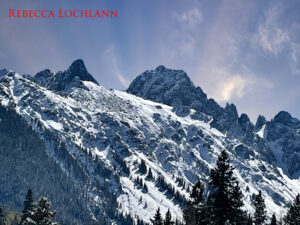
���Sneffels? Sounds like a cold.��� Early on in Whispers, this is where the reader is taken to find another place Erin has been sheltering. This, too, is an extraordinary location that worked well for a setting. Unlike Greece, which I can���t jet off to every time I have a question, I can and have popped over to Robbers Roost and the Sneffels area to solve dilemmas or memory lapses and say hi to the chipmunks. In this photo, you can clearly see why Erin and Will refer to the summit of Sneffels as ���Old Man Sneffels.���
 Swimming in the Rainbow is the last book of the series. Unlike most of my other books, this one barely reached 300 pages when all was said and done, but every book in the series leads up to it. It is the fulcrum, and the book I love the most.
From the text:
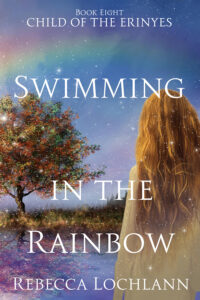 ���Te��filo described the enchanted world inside a rainbow thousands of times, and I never tired of listening.
It is an endless ocean. You will swim, breathe, and drink color. Colors will burst on your tongue and in your throat, purple like grapes, brown like earth, white like salt, blue like twilight. You will become color, freed of human limitations.���
Swimming in the Rainbow is a love letter. I hope my readers come away feeling the same love I felt as I wrote it.
I extend my gratitude to the many people who have helped and supported my efforts, Elisabeth Storrs being one of the staunchest.
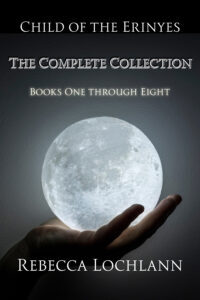
The epic reincarnation fantasy inspired by Ariadne, Theseus, and the Minotaur, can now be read completely, beginning to end, in this convenient boxed set.
In the Bronze Age, two brothers plot Crete’s overthrow, but desire for the queen’s daughter will propel all three into an unimaginable future, and spark the immortal rage of the Erinyes.
“Atmospheric, lyrical, and inspired. I envy readers newly discovering this riveting epic.” Lucinda Elliot, author of��That Scoundrel Emile Dubois, Ravensdale,��and��The Peterloo Affair.
For time beyond memory, Crete has sacrificed its king to ensure good harvests, ward off earthquakes, and please the Goddess. Men compete in brutal trials to win the title of Zagreus, the sacred bull-king, even though winning means they’ll die in a year.
Two brothers from Mycenae set out to trick the competition and its formidable reckoning as they search for weaknesses in this rich, coveted society.
Hindering their goal is the seductive and fearless Cretan princess, Aridela, an uncommon woman neither brother can resist, and ancient prophecies that promise terrible retribution to any who threaten Goddess Athene’s people.
A woman of keen instinct and unshakable loyalty.
A proud warrior prince and his wounded half-brother.
Glory, passion, treachery, and conspiracy on the grandest scale.
What seems the end is only the beginning.
Thanks Rebecca. I am in awe of your vision and your skilful execution of a massive story arc and detailed character development. Congrats!
You can buy the books on Amazon, Barnes & Noble, Kobo or iTunes.
Reading order and titles in The Child of the Erinyes:
The first trilogy:
The Year-god���s Daughter, Book One (The Bronze Age. The outside world attempts to conquer a sheltered princess and her rich society.)
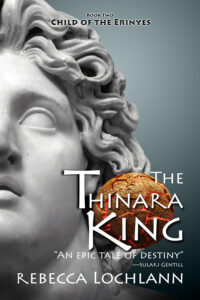
The Thinara King, Book Two: (During and after the eruption of the super-volcano on Santorini.)
In the Moon of Asterion, Book Three: (Aridela tries to bring her island back from devastation. Lies are exposed, and an innocent follower is imprisoned in the labyrinth.)
The second trilogy:
The Moon Casts a Spell, Book Four: (Early and mid 1800s: an island off the coast of Scotland. The reincarnated cast of characters is reunited, but only two remember their past lives.)
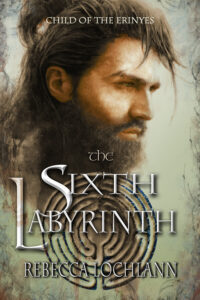
The Sixth Labyrinth, Book Five: (1870s, mainland Scotland. A reincarnated Aridela falls prey to the suppression of the time and nearly loses her courageous spirit.)
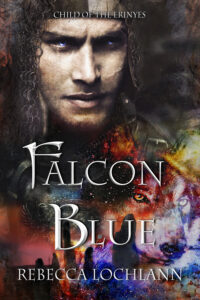
Falcon Blue, Book Six: (A leap backward to the first reincarnation, in 502 AD, on the northwest coast of Scotland. The Picts are barely holding on as Christianity creeps over the land.)
The third Trilogy:
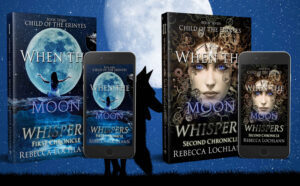
When the Moon Whispers, First Chronicle, Book Seven: (2070s America. The world has stripped away almost every right for ordinary citizens, especially women.)
When the Moon Whispers, Second Chronicle, Second half of Book Seven: (2070s America, Crete, and Scotland. Will the world we know disappear to a brutal dictatorship?)
Swimming in the Rainbow, Book Eight: (2090s Europe, the Mediterranean, and California. A girl flees the aftermath of near-extinction.)
Then there���s the Complete Omnibus: the entire eight-book series in one digital file.
Haven���t subscribed yet to enter into giveaways from my guests?��You���re not too late for the chance to win this month���s book if you��subscribe to my Inspiration newsletter��for giveaways and insights into history ��� both trivia and the serious stuff! In appreciation for subscribing, I���m offering an 80 page free short story��Dying for Rome -Lucretia���s Tale.
The post The Evolution of The Child of the Erinyes by Rebecca Lochlann first appeared on Elisabeth Storrs Historical Novels.
June 13, 2022
The Chinese Passion for Tea – MK Tod’s The Admiral’s Wife
 I’m delighted to welcome M.K. (Mary) Tod to my blog again to talk about the inspiration and some background research for her fifth novel, The Admiral���s Wife. In addition to writing fiction, Mary runs the award-winning blog A Writer of History. She can be contacted on Facebook,��Twitter��and��Goodreads��or on her website��www.mktod.com. You can find all Mary’s books on her Amazon page.
Mary’s previous novels, Unravelled,��Lies Told in Silence, and��Time & Regret��feature characters caught up in the turmoil of the world wars (you can read her post on writing��Time & Regret��here.) With��Paris in Ruins, she goes back to an earlier conflict – the siege of Paris in the 1870s (you can read her post on this period here.)
Now make yourself a nice cuppa and enjoy learning about tea ceremonies and teapots in China!
The Chinese Passion for Tea by MK TodMany thanks, Elisabeth. It���s a delight to share some of the inspiration behind The Admiral���s Wife.
Tea. Many of us think of tea as a drink that comes from little bags dipped in hot water. With fancy tea, those little bags might be made of muslin; for ���regular��� tea like Twinings or Lipton, the bags are made from fine paper.
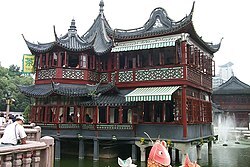 When I moved to Hong Kong, I soon understood that tea was an entirely different experience – a serious pursuit, a ritual, a search for the perfect blend. I remember participating in a formal tea ceremony while visiting Shanghai, a multi-step process that originated over a thousand years ago. I also remember attending a lengthy lecture that covered the history of tea making, the cultivation of tea, the importance of tea to trade between China and other parts of the world, and a discussion of the different types of tea, including white tea. This event ended with a chance to sample several varieties and taste their subtle and not-so-subtle differences.
In Chinese culture, tea is offered as a sign of respect, to apologize, to show gratitude, and to celebrate weddings. Hong Kong shops display all manner of tea making tools along with a wide range of teapots and cups. These are not the teapots you likely have in your kitchen, but smaller pots, some quite plain and others highly decorative.
[image error]
As I wrote The Admiral���s Wife, I wanted to incorporate a tea ceremony. But what would be the circumstances? The story has two main characters: Patricia Findlay, a woman born in America whose parents are Hong Kong Chinese, and Isabel Taylor, a British woman who moves to Hong Kong in 1912 with her husband and young daughter. Isabel is the admiral���s wife.
Patricia has a difficult mother. Wen Wang Shu is domineering and demanding. I decided that Wang Shu would be a tea afficionado and would conduct a tea ceremony to remind her daughter of her Chinese heritage.
Here���s a brief excerpt:
At five minutes to three, the housemaid opened the door of her parents��� grand home. The building filled the contours of the hillside, balconies cantilevered here and there to take advantage of the view. At the eastern end, an annex connected to the main house by a footbridge that crossed a large pond dotted with water lilies. After leaving her shawl and handbag in the front hall���a space that echoed with the sound of water trickling from a marble fountain���Patricia ventured into the living room, where red, black, and gold dominated the color scheme, and plush rugs and antique silk scrolls added to the feeling of luxury. The living room was large enough for two conversation areas; Patricia chose the one centered on a black lacquer coffee table inlaid with mother-of-pearl in the shape of a large crane. In the Chinese culture, the crane symbolized happiness and eternal youth, its powerful wings able to convey souls up to paradise and carry people to higher levels of spiritual enlightenment.
Every element of the house was laid out according to feng shui principles. Though Patricia was in the U.S. during its construction ten years earlier, she knew that the feng shui master had consulted daily with her mother and had blessed the home before anyone set foot in it. Each room had a water feature to facilitate harmony. Doors had been carefully positioned so that good fortune would not inadvertently slip out of the house. In the bedrooms, mirrors were hung away from the foot of the bed to prevent marriage problems.
In the second conversation area, Wang Shu kept an opium bed as a reminder of her grandfather���s addiction and subsequent disgrace. Fortunately, most of his wealth had survived, and his eldest son���Wang Shu���s father���had ultimately doubled the family fortune. Patricia never sat there.
 At precisely three o���clock her mother arrived. She had aged considerably in the last five years. Now seventy-four, her black hair was dyed to hide the gray and her cheeks and forehead were unnaturally tight from the latest facelift. As a result of arthritis that had invaded her mother���s left hip and knee, she walked with a slight limp. The slender figure that had once been a source of great pride had given way to a thickened waist and plump arms.
Patricia dutifully kissed her mother���s cheek.
���Tea?��� Wang Shu asked.
Patricia nodded. Her mother rang a silver bell, and the housemaid, An Su, appeared almost immediately with a tea tray.
Without wasting any time, Wang Shu began a traditional tea ceremony, which involved two teapots and many steps to ensure that the tea was served at the perfect temperature and taste. The sequence never varied. Patricia had been taught the intricacies of this ceremony when she was ten and knew that her mother was using it to signal filial duty and obedience.
Patricia took a sip and waited for her mother to speak. This too was part of their ritual.
���You���ve been well,��� her mother said.
���Yes, very well.���
���Dr. Leung says you haven���t been to see him recently.���
Patricia blew gently on the surface of her tea. ���No, not recently. I feel much better, so I���m not taking his pills anymore.���
Doctor Leung had prescribed anti-depressants to combat the fatigue and lethargy that had plagued Patricia after moving to Hong Kong. However, she had no intention of seeing her mother���s physician again. His views of medicine and women were too steeped in Chinese traditions.
���I see. And the Matilda Foundation?��� Her mother continued to probe.
���There���s a board meeting next week. I���m looking forward to it. The hospital needs to expand, which will require much planning and significant fundraising. I also spoke to Arthur Chung about job opportunities. He���s very well connected. He said he���s heard about a job that might be suitable and promised to get back to me.���
Wang Shu���s lips turned down. ���Your father won���t approve.���
Patricia took another sip of tea and considered how to respond. ���Perhaps,��� she said eventually, ���but whether I work or not is my decision, not his. How is Auntie Ling?���
 A thin smile emerged on Wang Shu���s face. She nodded a few times, and Patricia wondered if she was debating whether to criticize or ignore her daughter���s forceful declaration.
���Auntie Ling is very well,��� her mother said. ���Mei Lan has begun dating a man who is a surgeon. Unfortunately, your brother did not capture her attention. She���s an insipid little thing. Not good enough for my son.���
In an early draft, I described Wang Shu conducting each step of the tea ceremony, but eventually that went into the waste bin. However, you can find a description of the tea ceremony steps here https://www.travelchinaguide.com/chinese-tea-ceremony.htm .
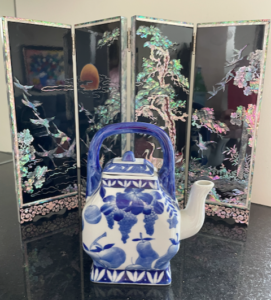
One day, while hiking in the hills surrounding Hong Kong, my friend Rita and I came across a small village where a woman was selling pottery. I bought the little tea pot shown in this photo to remind me of that walk and to take me back to that amazing time and place.
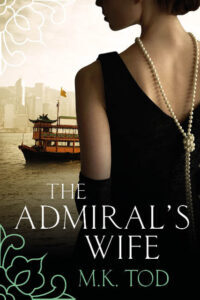
The lives of two women living in Hong Kong more than a century apart are unexpectedly linked by forbidden love and financial scandal.
In 2016, Patricia Findlay leaves a high-powered career to move to Hong Kong, where she hopes to rekindle the bonds of family and embrace the city of her ancestors. Instead, she is overwhelmed by feelings of displacement and depression. To make matters worse, her father, CEO of the family bank, insists that Patricia���s duty is to produce an heir, even though she has suffered three miscarriages.
In 1912, when Isabel Taylor moves to Hong Kong with her husband, Henry, and their young daughter, she struggles to find her place in such a different world and to meet the demands of being the admiral���s wife. At a reception hosted by the governor of Hong Kong, she meets Li Tao-Kai, an influential member of the Chinese community and a man she met a decade earlier when he was a student at Cambridge.
As the story unfolds, each woman must consider where her loyalties lie and what she is prepared to risk for love.
���Family secrets and personal ambitions, east and west, collide in this compelling, deeply moving novel.”��— Weina Dai Randel, award-winning author ofTHE LAST ROSE OF SHANGHAI
���Irresistible and absorbing.�����Janie Chang, bestselling author of THE LIBRARY OF LEGENDS
���A riveting tale of clashing cultures, ruthless corruption, and the consequences of corrosive lies.�����James R Benn, author of ROAD OF BONES and other Billy Boyle mysteries
Haven���t subscribed yet to enter into giveaways from my guests?��You���re not too late for the chance to win this month���s book if you��subscribe to my Inspiration newsletter��for giveaways and insights into history ��� both trivia and the serious stuff! In appreciation for subscribing, I���m offering an 80 page free short story��Dying for Rome -Lucretia���s Tale.
The post The Chinese Passion for Tea ��� MK Tod���s The Admiral���s Wife first appeared on Elisabeth Storrs Historical Novels.
May 5, 2022
On Inspiration: Interview with Maureen Morrissey
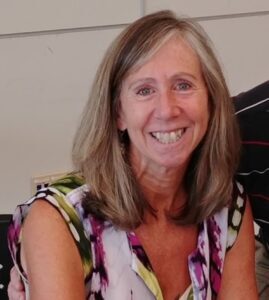 My guest this month is Maureen Morrissey. Maureen is a writer, retired educator, wife/mother/grandmother/ daughter/auntie/dog mommy, avid reader, photographer, traveler, blogger, and most recently, half-marathon runner. In her spare time, she volunteers at animal shelters and investigates the quality of rooftop bars in New York City, her hometown. Oh, and she loves concerts, museums and Broadway shows, too.
Maureen began writing her first novel, Woven: Six Stories, One Epic Journey, the day after retiring from teaching fourth grade, in the middle of the Covid-19 pandemic. Housebound, and with the mind-space and time, finally, to dedicate to the undertaking, she dove in to a daily routine of researching, composing and revising Woven; finishing the first draft in Autumn and self-publishing in December 2020.
She is recently published a second novel, Sonder: Janie���s Story, and is enjoying the companionship and support of her new community of writers and authors.
I was interested to interview Maureen because her books are set in the 1970s and 80s which are now being explored through historical fiction. It’s very daunting to discover I could now be used as a source for ‘oral history’!
You can connect with Maureen via her website or Facebook.
You can buy Woven: Six Stories, One Epic Journey and Sonder: Janie���s Story via Amazon.
What or who inspired you to first write? Which authors have influenced you?I have always loved stories: family stories, black and white movies from the 1940���s and 50���s, radio shows like The Shadow and The Green Hornet and, of course, reading books. One of my consistent early memories is walking a mile to the public library by myself and getting lost in the stacks for hours.
My first rejection as a writer came when I was seven years old. I had set up a publishing center in my room, where I wrote, illustrated, and stapled together stories on that thin beige-colored drawing paper common in the 1960���s. I went to my mother with my first self-published book, as proud as a peacock, and asked if she wanted to buy it for a nickel.
At the time, a nickel would have bought five Hershey���s chocolate kisses or half a fried chicken wing from the kosher butcher. I figured I would sell a second book for the other half or wait for my six-cent allowance on Saturday to make up the difference. At any rate, she just said, ���No.���
That hurt, but it also gave me a resolve to keep trying. Through these many, many (many, many, many) years, I have written countless short stories, published articles and book chapters for teachers, and continued my learning through endless Writing Workshop experiences and lectures and classes. And all of that brought me through to retirement in the middle of a pandemic, giving me time and mind space to sit down and write my first novel, Woven.
I learned to tell stories from the work of Roald Dahl, Judy Blume and later, Stephen King. Their ability to weave and build a tale around the foibles of their very human characters continues to inspire me today. I learned how to engage readers in historical fiction through Ken Follett and Herman Wouk; and one of my favourite writers about family and culture and characters is Amy Tan.
What is the inspiration for your current book? Is there a particular theme you wished to explore?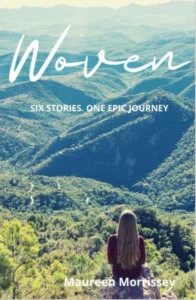 I belong to several online groups where writers share ideas, problems, successes, and failures (you can sometimes learn more from the latter than the former). It was in one of these groups that someone posted a ���Word of the Day.��� That word was ���sonder,��� and its definition (a realization that every single person you pass on the street without really noticing has an entire complex and interesting life story, and if you stop to think about that and engage, you learn infinite life lessons) galvanized me to begin writing Janie���s Story that same day. The theme of Sonder is personal growth or surviving adversity by learning from others.
All eras have incredible stories. I loved Greek myths growing up, imagining a time and place and life that would inspire such stories and what it would be like to be part of that. I also love books with time periods like Clan of the Cave Bear for the same reason. But now I really enjoy stories that take place in the nineteenth and twentieth centuries. I guess this is because the stories feel more current and real and possible, and I can imagine them happening to me or someone I know. I connect and relate strongly to them. It is hard to believe that the 1970���s are now considered historical, but that is how time works! I���m sure my grandmother, who was born in 1898 and lived for 87 years, felt the same about her lifetime. She was a holocaust survivor and there were so many fictional stories about that time period published while she was still alive.
What resources do you use to research your book?�� How long did it take to finish the novel?My own experiences often sneak into my work, as do family stories. But most of my research comes from travels around the United States and the world. My husband and I prefer not doing the ���tourist��� thing when we travel; it���s so much more interesting to engage with local people and experience their lives for a short while. Much of my background material comes from reading memoir or informational texts, especially in narrative form. Having access to the internet means a nearly overwhelming abundance of information. Sometimes I spend more time researching and reading than writing.
Woven, my first book, had been in my head and heart for ten years, but once I retired and made writing my full-time job, it took less than six months to complete. Sonder took just over a year. When I am working on a novel, I schedule 3-5 hours a day for writing and research. This helps me keep the momentum going.
What do you do if stuck for a word or a phrase?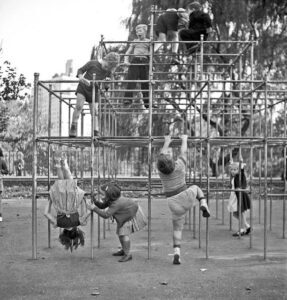 I love thesauruses (or thesauri), best invention ever; and the internet makes so many of those readily available. If I can���t find the right word, I don���t get stuck or trapped. I trust that I will be able to eventually find it, so I highlight that part and keep on truckin���, as they say. If you don���t do this, it can paralyse you and stop you from writing. When I taught Kindergarten, the grade-level team wrote a weekly letter to parents, and it was painful because every week my colleagues would argue over one single word. It made the writing of a simple newsletter take hours!
I discovered that I am not a commercial fiction writer, but rather a literary fiction writer. I did not know there were such divisions in style until I wrote Woven. I believe history is a collection of stories and so I wanted my book to be written in that form, as a series of stories that weave together. Many people told me I needed to follow the format of introduce character and setting, introduce a problem, show failed attempts to solve the problem, solve the problem and live happily ever after. That did not resonate at all with what I was trying to do, and it was only after I discovered this commercial vs. literary difference that I understood that it was okay to write my story my way. I continued in this vein with Sonder, which has short stories embedded into the main frame of the work.
Do you use a program like Scrivener to create your novel? Do you ever write in long hand?I use Word to write most of the time; it has features like navigation pane, read aloud and editor that are helpful for organizing, editing, and revising. I use pencil and paper for mapping out timelines and for jotting down ideas. I also keep a small journal in which I write ���I am grateful for…,��� ���I hope…��� and ���I wish…��� almost every day.
Is there a particular photo or piece of art that strikes a chord with you? Why?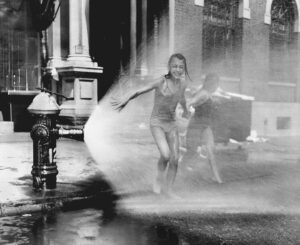 I love photography and most especially photos of the big rock stars when they were teenagers in the 1950���s and 60���s who had no idea what was coming. I think it is the combination of knowing the rest of their story and seeing the hope, expectation, and youthful hunger in their faces. I also love black and white candid photos from those years that show people just doing their thing. Every one of those has a story.
Write, write, and then write some more. Put aside all worries about style, skill, grammar, and lack of confidence in how your work will be perceived, and just write. Like most things, the only way to improve is to do it over and over. Don���t get stuck on a phrase or word or whether a paragraph belongs; that is what revising is for. I often later remove an entire section from my work, which is initially very painful; but I never ever throw it away. Some of those have found their places in other work or have even become the impetus for an entire other story. In my new book, , there is a piece I wrote thirty years ago that never found a home until now!
Also, read, read, and then read some more. As an educator, I learned (and taught my students) to read like a writer. Every book or story you read will have a gem or two that inspires your writing. Even text you dislike can teach and inform your writing; when you realize what you don���t like as a reader, you strive not to do the same to your own audience.
Tell us about your next book.I did not even know there would be a first book, and after that one was done, I had no idea there would be a second! This is why I suspect there may be a third, but I will have to let you know if and when inspiration strikes! For now, I am focusing on short stories that literary magazines might publish and blogging about this new life in which I am constantly surprised to find myself.
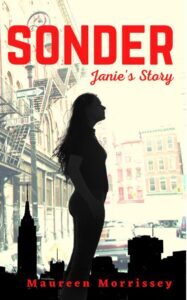
Downtown New York City in the 1970���s and 80���s is a dark and dangerous place for Janie Thompson.��
Her indifferent parents and her working-class Queens neighborhood offer too many opportunities to fail. Janie moves to Greenwich Village to attend New York University. She finds herself unequipped to make her way through the temptations and pitfalls of the era; at every turn she is in and out of danger. The journey takes her deep into rabbit holes as she tries to navigate a path through before it is too late. The people Janie meets, all of whom are on their own journey through that time and place, offer her paths forward. Some of those paths take her further down and some offer better opportunities.
A “sonder,” the realization that she is not truly alone, may be the only thing that saves her. ��Janie calls herself ���a solitary part of a million-piece jigsaw puzzle whose cover picture she could not see.��� If she can truly ���see��� the people around her and learn from them, she might be able to survive.
Thanks Maureen – fascinating to learn the meaning of the word ‘sonder’ and how it inspired you to explore the rabbit holes down which your character journeys. And I love those photos! Such joie de vivre!
Haven���t subscribed yet to enter into giveaways from my guests? You���re not too late for the chance to win this month���s book if you subscribe to my Inspiration newsletter for giveaways and insights into history ��� both trivia and the serious stuff! In appreciation for subscribing, I���m offering an 80 page free short story Dying for Rome -Lucretia���s Tale.
The post On Inspiration: Interview with Maureen Morrissey first appeared on Elisabeth Storrs Historical Novels.
April 3, 2022
On Inspiration: Interview with Fiona Valpy
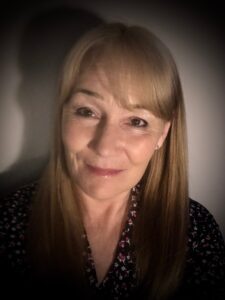 My guest this month is acclaimed number 1 bestselling author, Fiona Valpy, whose books have been translated into more than twenty-five different languages worldwide. She draws inspiration from the stories of strong women, especially during the years of World War II. Her meticulous historical research enriches her writing with an evocative sense of time and place. She spent seven years living in France, having moved there from the UK in 2007, before returning to live in Scotland. Her love for both of these countries, their people and their histories, has found its way into the historical novels she’s written such as The Beekeeper’s Secret, The Skylark’s Promise, Sea of Memories and The Dressmaker’s Gift. Her most recent novel is The Storyteller of Casablanca.
You can connect with Fiona via her website & blog, Twitter, Facebook and Instagram.
You can find a list of all Fiona’s books on her Amazon page. Buy The Storyteller of Casablanca here.
What or who inspired you to first write? Which authors have influenced you?From early childhood I���d always been an avid reader and lived in a home filled with books. Often, I would finish a book and think ���I wish I could have written that!���, but all my time was filled with my career and motherhood until I made a move to live in France. There, I found both the inspiration and the time to write my first books. Now I can���t imagine my life without my writing.
I still read avidly and usually have several novels on the go at once. I���ve definitely drawn inspiration from my favourite authors and there are many that I���d put on my list��� Barbara Kingsolver, Anita Shreve, Annie Proulx, Anne Tyler, John Steinbeck, George Eliot, Jane Austen, Elena Ferrante���
Sebastian Faulks and Pat Barker���s wartime novels have certainly helped shape my writing.
What is the inspiration for your current book? Is there a particular theme you wished to explore? I���ve included storytelling in many different forms in the book ��� there���s everything from Charlotte Bronte���s Jane Eyre and the murder-mysteries of Dorothy L. Sayers, La Fontaine���s Fables, and traditional African and Berber Folk Stories, to the Tales from the Thousand and One Nights. It���s one of the key themes of the book. I wanted to explore how the stories we tell are such an important part of our history and at the same time can inspire and shape our future, as well as illustrating the common ground between different cultures in the past and the present. There���s a universality in the human need to tell our stories and make our voices heard that transcends borders, cultures, race, religion, age and gender.
I���ve written several books set during World War 2. It���s a combination of factors that draw me to that era, I think. It���s still just within living memory for some, although of course that generation is slipping away fast and so there���s a sense of urgency in recording their first-hand testimonies and making sure their voices will still be heard as the years go by. We���ve also reached new milestones in terms of documents being de-classified and information released, allowing previously unknown facts to come to light and enabling new interpretations of some wartime events.
 Individual stories of courage and resilience from the war years can be hugely inspirational. While subsequent generations have been fortunate to live in a time of peace, life can still be challenging and I believe we can learn a great deal from understanding how others have suffered and faced up to difficulties. Women in particular often feel disempowered and can struggle to find their identity and make their voices heard. This was particularly true in the past, but it still applies today. In some ways, the war gave women an opportunity to break free of the limitations society placed on them and prove themselves in new ways, playing their part in the fight against oppression.
I believe women are incredibly resilient and have qualities that are absolutely vital in today’s world ��� not just strength and endurance but also kindness and compassion. I hope my books help women to see themselves in this light.
What resources do you use to research your book?�� How long did it take to finish the novel? I���d organised a research trip to Morocco but the global pandemic stymied those plans. So I had to find other ways to fill in the gaps and ensure I could still transport the reader to that other time and place. I studied travel guides and pored over maps, but also read more widely around my subject, including novels by Driss Chra��bi (The Simple Past), Paul Bowles (The Sheltering Sky) and Anthony Doerr���s Africa-based short stories (The Shell Collector). Meredith Hindley���s book Destination Casablanca offered a wealth of insight into the city during the war years and Hal Vaughan���s FDR���s 12 Apostles was a useful source of detail about the establishment of espionage networks in North Africa prior to the US invasion in November 1943.
Videos on YouTube helped me to visit the sights and souks, and the internet offered up additional information on some of the real-life historical characters that appear in the book, including the inspirational Josephine Baker and H��l��ne Caz��s-B��natar. Other such characters, like Dorothy Ellis, proved to be frustratingly elusive despite all my research efforts though, so I hope I have done her justice.
It took me about a year to complete my first draft. It was mainly written during lockdown, so it was a great way to ���escape���.
What do you do if stuck for a word or a phrase?I go to my trusty Thesaurus and try a few different options on for size. If that doesn���t help then I���ll get up and go for a walk. I find walking is a great way to get my brain working and turning my attention to something else often means ideas and phrases fall into place.
Is there anything unusual or even quirky that you would like to share about your writing?I still write the first drafts of my manuscripts the old fashioned way, with a pen and a notepad.
 Do you use a program like Scrivener to create your novel? Do you ever write in long hand?
I don���t use any writing programs other than Word. Transcribing what I���ve written longhand is an important part of my editing process and I make changes as I go, then revisit and re-edit several times over.
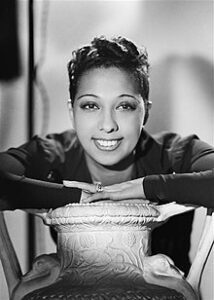
Is there a particular photo or piece of art that strikes a chord with you? Why?This photo of Josephine Baker was a big inspiration in writing The Storyteller of Casablanca. She is just one of the real-life characters that feature in the novel. She was an incredible woman, a barrier-breaking African American singer and dancer. She made the journey to North Africa when the Nazis took control of Paris, nailing a sign to the door of the Folies-Berg��re which read ���Access Forbidden to Dogs and Jews���. But Josephine refused to be cowed and spent the following years using her talents as an entertainer as cover for her work as a French resistance agent, carrying messages written in invisible ink on sheets of music back and forth between Morocco and Portugal. Her efforts provided invaluable information about conditions on the ground to the Free French under General de Gaulle and helped with the co-ordination of resistance activities in the run-up to Operation TORCH ��� the American invasion in 1942, which established an Allied bridgehead into Europe.
During the remaining years of the war, she travelled around North Africa and Italy performing for the Allied troops and helping to raise more than three million francs for the Free French. She was made a sublieutenant by the Women���s Auxiliary wing of the French air force, was awarded the Medal of Resistance and the Croix de Guerre, and was made a Chevalier of the L��gion d���honneur by de Gaulle.
What advice would you give an aspiring author?Remember, the ones who make it are the ones who never gave up. It takes a lot of determination ��� the world of publishing is a tough one. It���s a paradox, but cultivate resilience and the hide of a rhinoceros to protect the sensitivity within that writers still need.
Tell us about your next book.I���m working on a novel set in Italy during World War 2 at the moment, as well as revising my first three books (The French for��� series of contemporary novels) which are to be re-issued in the coming year, so my writing continues to keep me busy.
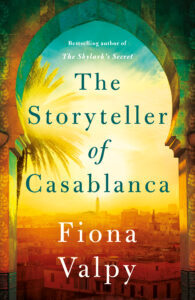
In this evocative tale from the bestselling author of The Dressmaker���s Gift, a strange new city offers a young girl hope. Can it also offer a lost soul a second chance?
Morocco, 1941. With France having fallen to Nazi occupation, twelve-year-old Josie has fled with her family to Casablanca, where they await safe passage to America. Life here is as intense as the sun, every sight, smell and sound overwhelming to the senses in a city filled with extraordinary characters. It���s a world away from the trouble back home���and Josie loves it.
Seventy years later, another new arrival in the intoxicating port city, Zoe, is struggling���with her marriage, her baby daughter and her new life as an expat in an unfamiliar place. But when she discovers a small wooden box and a diary from the 1940s beneath the floorboards of her daughter���s bedroom, Zoe enters the inner world of young Josie, who once looked out on the same view of the Atlantic Ocean, but who knew a very different Casablanca.
It���s not long before Zoe begins to see her adopted city through Josie���s eyes. But can a new perspective help her turn tragedy into hope, and find the comfort she needs to heal her broken heart?
Thanks so much Fiona. I never realised Josephine Baker’s role in the Resistance. I very much enjoyed reading your blog post on the real life characters behind your book.
Haven���t subscribed yet to enter into giveaways from my guests? You���re not too late for the chance to win this month���s book if you subscribe to my Inspiration newsletter for giveaways and insights into history ��� both trivia and the serious stuff! In appreciation for subscribing, I���m offering an 80 page free short story Dying for Rome -Lucretia���s Tale.
The post On Inspiration: Interview with Fiona Valpy first appeared on Elisabeth Storrs Historical Novels.
March 6, 2022
On Inspiration: Interview with Kathryn Gauci
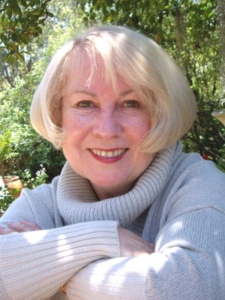 My guest this month is Kathryn Gauci, a critically acclaimed international, historical fiction author who produces strong, colourful, characters and riveting storylines. She is the recipient of numerous major international awards for her works of historical fiction. Kathryn was born in Leicestershire, England, and studied textile design at Loughborough College of Art and later at Kidderminster College of Art and Design where she specialised in carpet design and technology. After graduating, Kathryn spent a year in Vienna, Austria before moving to Greece where she worked as a carpet designer in Athens for six years. She now lives in Melbourne, Australia.
Before turning to writing full-time, Kathryn ran her own textile design studio in Melbourne for over fifteen years, work which she enjoyed tremendously as it allowed her the luxury of travelling worldwide, often taking her off the beaten track and exploring other cultures. The Embroiderer is her first novel; a culmination of those wonderful years of design and travel, and especially of those glorious years in her youth living and working in Greece. It has since been followed by more historical novels, set in both Greece and Turkey. Code Name Camille, written as part of The Darkest Hour Anthology: WWII Tales of Resistance, became a USA TODAY Bestseller in the first week of publication. The Secret of the Grand H��tel du Lac became an Amazon Best Seller in both German and French Literature, and The Poseidon Network received The Hemingway Award 2021 ��� 1st Place Best in Category ��� Chanticleer International Book Awards (CIBA).
You can connect with Kathryn via her website, Facebook, LinkedIn, Twitter and Instagram.
You can find all Kathryn’s book via her Amazon Page.
You can buy The Viennese Dressmaker here.
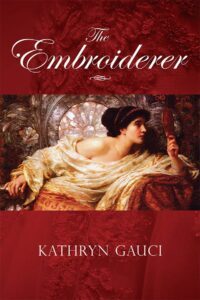 What or who inspired you to first write? Which authors have influenced you?
I decided to write after thirty years as a textile designer. I wanted a change that still allowed me to travel and to be creative. Writing does this as when I am not travelling physically, I am in my mind. In the beginning, I was probably influenced by writers I enjoyed reading ��� Charles Dickens, Nikis Kazantzakis, Louis de Bernieres, D.H. Lawrence, Phillip Kerr, and Alain Furst, to name just a few. Now that I���ve written quite a few books, I think I just write a story I would like to read myself.
What is the inspiration for your current book?Is there a particular theme you wished to explore?The Viennese Dressmaker: A Haunting Story of Wartime Vienna, has only just been released. It spans six years, from the annexation of Austria by Germany in 1938 until the end of the war in 1945. Having lived in Vienna for a year in 1971, I sensed there was a strong pro-German feeling and wanted to explore it more. At the time, I never thought I would be a writer, but the mood during the aftermath of the war always stayed with me. During the research, I uncovered some awful truths concerning the Austrian role in WWII, the Austrian Resistance (the Cassia Network), which played a vital role in passing on important information about the armaments factories to the Allies, in particular, details about the V-1 and V-2 rockets at Peenem��nde, and the Messerschmitt plants near Vienna. The research on the AmSteinhof Mental Hospital in Vienna also opened up a can of worms, particularly its role in Nazi eugenics. I also wanted to use my background as a textile designer in this novel as Viennese Women at the time were extremely stylish and cosmopolitan. Hence my protagonist is a fashion designer.
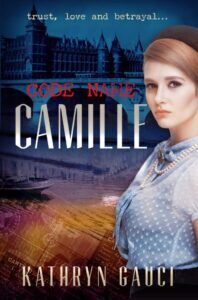 What period of history particularly inspires or interests you? Why?
Modern history. By that I mean from the Greek War of Independence in 1821 until WWII when it relates to my novels set in Greece and Turkey, and WWII in Europe in general. Maybe it���s because it wasn���t that long ago and it still feels tangible having known family and friends who participated in these recent wars. Living in the areas I write about has helped give a sense of those times too.
What resources do you use to research your book?�� How long did it take to finish the novel?The Viennese Dressmaker: A Haunting Story of WWII, took about a year. I began over two years ago but put it aside to write two other books. The research was intense for this one. As I said, I lived in Vienna, so having that sense of place wasn���t difficult, but apart from that, I am always on the internet and reading other books set in the period or area. Thank goodness for Google earth too where you can virtually drive along the roads and see the architecture and countryside. I also used quite a few Jewish sites for information too.
What do you do if stuck for a word or a phrase?Either go on to something else, bake and cook ��� which is an outlet for me ��� or go for a walk. I don���t worry about it. I know it will come eventually.
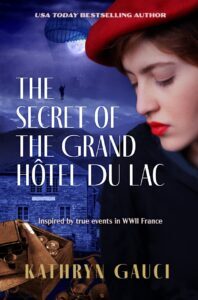 Is there anything unusual or even quirky that you would like to share about your writing?
It is hard to describe your own writing style. Readers may see it differently. I do get told by readers that they always feel they are there ��� in the moment ��� breathing in the same air as my characters. That makes me happy.
Do you use a program like Scrivener to create your novel? Do you ever write in long hand?I don���t use any programs. Maybe I should. I make lots of notes and always carry a notebook with me. In fact, I buy new notebooks for every book I write. I wrote quite a lot of my first book in long hand, but now I tend to go straight to the computer and see where it takes me. In a way, my writing has become more organic.
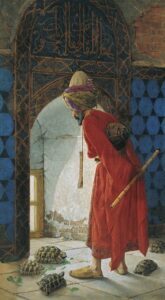 Is there a particular photo or piece of art that strikes a chord with you? Why?
Being a designer, I have too many from all eras, but if I really had to choose, it would be the Charioteer of Delphi or the statue of Poseidon in sculpture, and in painting, The Tortoise Trainer by Osman Hamdi Bey. The first two represent all the beauty of classical Greek art, and the painting, the dying days of the Ottoman Empire.
What advice would you give an aspiring author?Believe in yourself. Don���t get side-tracked, and give it 150%. Write, write, write, and read as much as you can. I would also like to add that if you want to succeed in a world where there are thousands of books coming out every year, know your genre and be ready to take on marketing and develop some business acumen. Network and join like-minded groups where you can learn. Not every author wants to do that, but it is important.
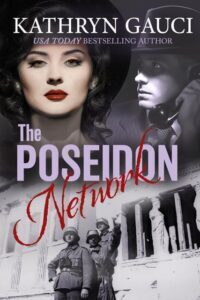 I started my WIP when the new book was being edited. It is set in WWII France ��� Paris, the Champagne region, and then Normandy. I am only 8,000 words into it. It is set in 1944 a few months before D-Day and ends when the Germans leave France, or at least Normandy.
THE VIENNESE DRESSMAKER- A HAUNTING STORY OF WARTIIME VIENNA
From USA TODAY Bestselling author, Kathryn Gauci, comes a powerful and unforgettable story of one woman���s incredible will to survive and protect those she loves against insurmountable odds.
���In the half-light of a new day, the city resembled a macabre scene from hell. The gay Vienna of her youth had disappeared ��� vanished as utterly as if it had never existed.���
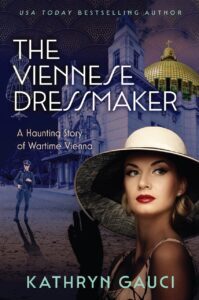
Vienna 1938: Austria���s leading couturier, Christina Lehmann, sits at the pinnacle of Viennese society. Her lover, the renowned painter, Max Hauser, is at the height of his career. But Max harbours a secret, and it is only a matter of time before the Gestapo finds out. The situation takes a dramatic turn on Kristallnacht, when the pogrom against the Austrian Jews escalates and one of Christina���s Jewish seamstresses is brutally murdered.
In order to protect both Max and her couture house, Christina begins a double life, plunging her into the shadowy world of Nazi oppression, fear, and mistrust fuelled by ancient hatreds.
As Vienna descends into chaos, hunger and disillusionment, will her deception be enough to save Max ��� or will it end in tragedy?
Based on actual events, this is an epic story of courage and resilience. It is the kind of book that wraps around your soul and leaves an impression.
���Brilliant and moving, The Viennese Dressmaker is a compelling and vivid portrait of wartime Vienna; a story of human relationships, and the will to survive under the shadow of the most evil power the world has ever known.��� ���JJ Toner, author of The Black Orchestra
Thanks so much, Kathryn. Your covers are so enticing and it’s wonderful to learn about your great love for both textile design and history – clearly you’ve woven many real threads as well as fictional ones throughout your life.
You can buy The Viennese Dressmaker here. You can find all Kathryn’s book via her Amazon Page.
Haven���t subscribed yet to enter into giveaways from my guests? You���re not too late for the chance to win this month���s book if you subscribe to my Inspiration newsletter for giveaways and insights into history ��� both trivia and the serious stuff! In appreciation for subscribing, I���m offering an 80 page free short story Dying for Rome -Lucretia���s Tale.
The post On Inspiration: Interview with Kathryn Gauci first appeared on Elisabeth Storrs Historical Novels.
January 31, 2022
On Inspiration: Interview with Eliza Graham
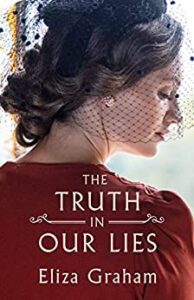
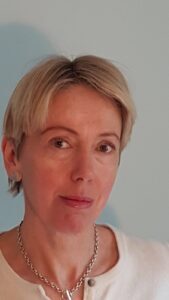 My guest this month is Eliza Graham, author of nine books including The One I Was, The Truth in Our Lies and The Lines We Leave Behind. Eliza’s novels have been long-listed for the UK’s Richard & Judy Summer Book Club in the UK, and short-listed for World Book Day’s ‘Hidden Gem’ competition. She has also been nominated for the Baileys Women’s Prize for Fiction and the Walter Scott Prize for Historical Fiction. Her books have been bestsellers both in Europe and the US.
Eliza lives in an ancient village in the Oxfordshire countryside with her family. Not far from her house there is a large perforated sarsen stone that can apparently summon King Alfred if you blow into it correctly. Eliza has never managed to summon him. Her interests still mainly revolve around reading, but she also enjoys walking in the downland country around her home and travelling around the world to research her novels.
You can connect with Eliza via her website, Instagram (@elizagraham1) and Facebook.
Eliza’s most recent release, Let Me Go, is available on Amazon. You can find all of Eliza’s books on her Amazon author page.
What or who inspired you to first write? Which authors have influenced you?There are honestly too many to list! I was the child who got dressed and cleaned her teeth while reading. Then I studied English Literature at university ���. Alan Furst, Elizabeth Jane Howard and Sarah Gainham have long been favourites for novels set in the 1940s: my own favourite time period when I���m writing. I also have a weakness for long Victorian novels and reread Dickens, Wilkie Collins and Trollope every few years. There���s a comfort in seeing that some sorrows and challenges are perennial. I think reading books that have been around for a hundred or more years or so is good for encouraging resilience. We���re humans: we have to get through difficult times and hope for better days. We can do it because our ancestors have shown us in books how to do this.
 What is the inspiration for your current book? Is there a particular theme you wished to explore?
I love books about generations in a family (Elizabeth Jane Howard���s Cazalet saga, for instance) and I wanted to explore the grandmother-granddaughter theme. You Let Me Go is about a wartime family secret that emerges to drive a wedge between a young woman and her grandmother. Many people didn���t talk much about their wartime experiences. There wasn���t a culture of ���getting it out��� and feeling better. People were told to get on with their lives and not dwell on sad or traumatic experiences. I can see that would work for some people, but it can mean that important things are revealed at the very end of their lives or even when they���re dead. Their loved ones may have questions that can never be answered.
What period of history particularly inspires or interests you? Why?I grew up exploring the semi-decayed air-raid shelters near my grandmother���s home in London���to her horror: she said they were full of rats and drunks. When I started work, I stared out at the tower of St Alban���s in the City of London, all that remained of church a built by Christopher Wren. So the Second World War and its effect on people, especially women, off the frontline has long fascinated me. Many of my ten books are about women struggling to survive in extraordinary wartime circumstances.
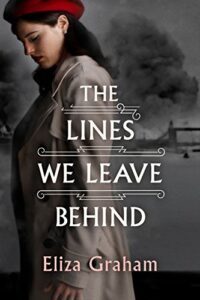 What resources do you use to research your book?�� How long did it take to finish the novel?
Ideally I visit my settings in person and have done this for every novel I have had published. I���ve been to remote bunkers in Brittany, forests in Poland and memorials to the dead in Slovenia, among other places. My work-in-progress is set in the New York of 1941. I���ve visited the city three times in the past and had hoped to return again, but that wasn���t possible in 2021 for obvious reasons. So I found a brilliant resource���a kind of Google maps for 1940s NYC which gives street views of the buildings. I have to ration myself when I look at it!
As far as historical research goes, I buy lots of books for research and also read scholarly journals. I love visiting archives and museums, though that���s been hard, too, over the last two years. More and more material is available digitally and that���s been such a help. One of 2021���s highlights was a visit to the Liverpool Docks and the wonderful Maritime Museum there. It was a particular delight as one of the lockdowns had just ended.
That���s what second and subsequent drafts are for���filling in the blanks! I never let it bog me down if there���s a word or detail missing, unless it is absolutely key for the story or character progression. My aim is to crack on with a book while it���s flowing.
Is there anything unusual or even quirky that you would like to share about your writing?I have multiple notebooks: at least one for each project, but still seem to revert to Post-It notes. So bright and easy and you can stick them on the screen so there���s a very immediate reminder that you need to sort something out in chapter 13.
Like many writers, I find running water: be it washing up, the shower, the bath, the sea, stirs my creativity and often find myself dashing to my laptop to capture a thought I���ve had while washing my hair.
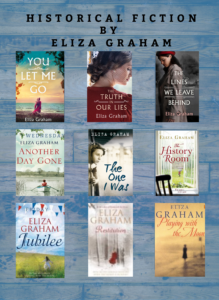
I do have Scrivener and sometimes find it useful but prefer the fluidity of Word. Increasingly I use quite detailed bookmarks in Word, which link me to how revelations unfold and characters develop, etc, and allow me to jump from one bit of a book to another to check whether someone knew something in 1941, for instance, or whether they only found out in 2019.
I always take a writing pad with me travelling and sometimes find myself writing scenes in longhand.
 Is there a particular photo or piece of art that strikes a chord with you? Why?
One of the last pre-pandemic research trips I took, back in the summer of 2019, was to the south of Cornwall. On the first evening we went for a walk on the coastal path. The foxgloves were everywhere and something about them, the blue sky and the coastal footpath itself just seemed so hopeful and full of possibility. This is just a simple photo, taken on my mobile, but when I look at it, I am back in Cornwall on a sunny Saturday evening in early summer, full of anticipation and optimism. I love the four sentinel foxgloves looking out to sea.
It was a trip that led to many interesting discoveries and took my last book, You Let Me Go, in a completely different direction. I missed my expeditions so much when we were locked down. Thinking about the good times in the past and trusting they would return helped keep me writing ��� and sane.
What advice would you give an aspiring author?Writers write. And writers read–copiously. Don���t be in too much of a rush to get your first book published before other eyes have looked at it and do join a writers��� group or forum or somewhere you can exchange your work and receive critiques. You���ll learn so much from this process. Writers��� groups are also good places to exchange industry gossip, find out who���s open to submissions, which editors and agents are moving on, etc. Above all, they���re the best support system. Writing can be a lonely business. I still swap critiques with a writer I first ���met��� about 15 years ago in a writers��� forum and we���ve grown close.
Tell us about your next book.My work-in-progress, tentatively titled The Girl in Lifeboat Six, is about Romilly who flees Blitz-ridden London for New York, anticipating an easier life. Instead her ship is torpedoed and she and the young boy she���s looking after find themselves trying to survive in a lifeboat in the stormy North Atlantic.
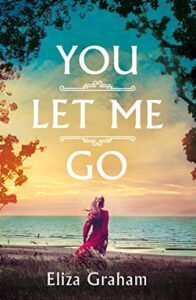
After her beloved grandmother Rozenn���s death, Morane is heartbroken to learn that her sister is the sole inheritor of the family home in Cornwall ��� while she herself has been written out of the will. With both her business and her relationship with her sister on the rocks, Morane becomes consumed by one question: what made Rozenn turn her back on her?
When she finds an old letter linking her grandmother to Brittany under German occupation, Morane escapes on the trail of her family���s past. In the coastal village where Rozenn lived in 1941, she uncovers a web of shameful secrets that haunted Rozenn to the end of her days. Was it to protect those she loved that a desperate Rozenn made a heartbreaking decision and changed the course of all their lives forever?
Thanks Eliza – I hope one day King Alfred might commune with you! Thanks for all your insights into your inspiration and writing process. I’m in awe of your wonderful list of books.
 Haven���t subscribed yet to enter into giveaways from my guests? You���re not too late for the chance to win this month���s book if you subscribe to my Inspiration newsletter for giveaways and insights into history ��� both trivia and the serious stuff! In appreciation for subscribing, I���m offering an 80 page free short story Dying for Rome -Lucretia���s Tale.
The post On Inspiration: Interview with Eliza Graham first appeared on Elisabeth Storrs Historical Novels.
December 18, 2021
Paulette Kennedy interviews Elisabeth Storrs
Paulette Kennedy kindly interviewed me about A Tale of Ancient Rome series together with Treasured, my current work in progress. Many thanks, Paulette! You can read the author spotlight here.
I also interviewed Paulette recently on her sources of inspiration for her debut novel, Parting the Veil, on Triclinium.
The post Paulette Kennedy interviews Elisabeth Storrs first appeared on Elisabeth Storrs Historical Novels.


