
Elisabeth Storrs's Blog, page 4
December 5, 2021
On Inspiration: Interview with Zenobia Neil
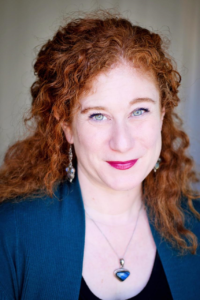 I’m so delighted to welcome fellow ancient world writer, Zenobia Neil, this month. Zenobia was born with a shock of red hair and named after an ancient warrior woman who fought against the Romans. In college, she studied Ancient Greece, Voodoo, and world mythology. She writes historical fantasy about the mythic past and Greek and Roman gods having too much fun. Ariadne Unraveled, a retelling of the Ariadne myth, is her fourth book which has been endorsed by Michelle Moran and Libby Hawker.
You can find a list of all Zenobia’s books on Amazon including Ariadne Unraveled: A Mythic Retelling
You can follow Zenobia via her website, Facebook, Twitter, Pinterest and Instagram.
What or who inspired you to first write? Which authors have influenced you?My mom and my third-grade teacher encouraged me to write. So I enjoyed writing stories from a young age. The first ���book��� I wrote was in third grade about a trip to Disneyland where the Pirates of the Caribbean ride is a gateway to a magical world.
As a teenager, I was inspired by Anne Rice, Margaret Atwood, and Stephen King. All three of them gave me new perspectives and a love of story. Anne Rice���s Interview with the Vampire gave me the idea that all historical fiction should contain magic.
 My first published short story was inspired by Robert Graves���s The Greek Myths. I love the way he describes mythology and some of his lines–a magical thong, Aphrodite���s enchanted girdle, lend a seductive air that made me want to delve deeper into the world of Greek myth. Mary Renault was also a huge influence in my desire to write historical fiction. The Persian Boy, her novel about Alexander the Great told from the point of view of his Persian eunuch lover Bagoas, made me want to write history from a different perspective than how stories are usually told. Mary Renault���s The Bull From the Sea and The King Must Die also stoked my interest in the Minoans, Crete, and mythic retellings.
My most recent novel is Ariadne Unraveled: A Mythic Retelling. Although I loved Mary Renault���s books, I kind of hate Theseus as a hero. I realized that many Greek myths are told through an Athenian lens, and I wanted to tell what we think of as the myth of Theseus and the Minotaur through a Minoan perspective.
I decided to write a feminist retelling of a well-known myth. It frustrates me how women like Ariadne are often side notes in Greek mythology. In many versions of the Minotaur myth, all the clever parts, like giving Theseus the string to find his way out of the labyrinth, are ascribed to Dedalus. Instead of portraying Ariadne as a lovestruck princess, I wrote her as a powerful high priestess.
I���ve also always been intrigued by Dionysus and the Minoans. Years ago, at the Getty Villa gift shop, I discovered a book called Bacchus: A Biography by Andrew Dalby. It was a great compilation about Dionysus���s life, mixing all the myths about him from different sources. I can���t remember if it was that book or another that said that no other mythic character died in so many different ways as Ariadne. I wanted to weave all these contradictory myths together to create a new story.
What period of history particularly inspires or interests you? Why?I don���t know if it���s because I���m named Zenobia or because I love Greek mythology, but I���ve always been drawn to the ancient world. I like writing about a place and time where there aren���t as many rules or technology. I feel like I can explore human desires more in ancient times. Probably because of the writers I read when I was younger, I like characters who are a bit bloodthirsty and not concerned with the kinds of things we are in the modern world. I also love writing about the sexual fluidity and diversity of the ancient world.
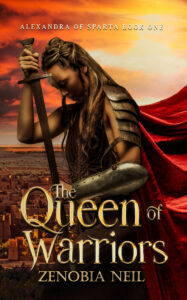
What resources do you use to research your book?�� How long did it take to finish the novel? I read and reread books about Dionysus, the Minoans, ancient wine, Bronze Age Greece, and sailing. I was lucky enough to travel to Crete a few years ago. I had planned a research trip to Greece to go to Sparta. When I was researching my novel The Queen of Warriors: Alexandra of Sparta Book One, the idea for this novel popped up, so I diverted my trip and went to Crete for a few days. Crete is a beautiful, magical place. It was amazing to visit and imagine my characters there thousands of years ago. I���m also in an online Modern Minoan Pagan group���which really shows the relevance of this ancient culture.
Writing Ariadne Unraveled took about five years from start to finish. The more research I did, the more I discovered. Someone in the Modern Minoan Pagan group mentioned the idea of the story of Pasiphae lusting after the sacred bull as a brilliant way for the Athenians to slander a powerful woman. This reminded me about how history is recorded by the victors and how those are the stories that keep getting recorded. That discussion helped me see the myth from the other side. Other writers have written about how the Minoans–a society where women had more freedom– could have been threatening to the Athenians. I loved being able to delve into that more deeply.
What do you do if stuck for a word or a phrase?Sometimes I use WordHippo.com and sometimes I write ���bagel��� and come back to that place later. A friend taught me this trick of using a word that I don���t ever use in my novels. No one���s eating bagels in Ancient Crete, so if I need to find that place to substitute a word later, it���s easy to find.
Is there anything unusual or even quirky that you would like to share about your writing?I can share a couple of things. I prefer to have a candle lit when I write, and Ariadne Unraveled was written in almost every room of my house. Midway through writing the book, my daughter decided she didn���t want to share a room with her brother anymore and moved into my office. So I moved my office into my son���s room, where I would write while he played video games in the living room. I also wrote on the dining room table and in my bedroom. Everyone being at home together during the pandemic definitely had its challenges.
Do you use a program like Scrivener to create your novel? Do you ever write in long hand?I don���t use Scrivener. I sometimes write long hand if I get an idea right before going to bed���which is when all the best ideas seem to come.
Is there a particular photo or piece of art that strikes a chord with you? Why? A lot of ancient art inspired me to write Ariadne Unraveled. I always make Pinterest boards of my books and look at art to better understand ancient cultures.
In addition to the Minoan frescoes that I hung up around my desk (in my son���s room), I love paintings of Dionysus and Ariadne from Greek vases. The image of Ariadne and Dionysus together shows their love in a way I don���t see enough in paintings of the gods. This picture inspired my cover artist to create my cover.
What advice would you give an aspiring author?Read. Read a lot and write. Realize that it���s a long process that���s greatly fulfilling but also incredibly difficult. Write your first draft for yourself and then edit for an audience. Also, find a writing community. Social media is great for that. There are groups for every kind of writer. It���s wonderful to have writing friends!
Tell us a little more about your books. All my books have history, sex, and magic. (I blame Anne Rice for this influence.) I also always want to tell history from unique perspectives.
I have three different series���mythic retellings, Ottoman harem stories and The Queen of Warriors.
I first started writing mythic retellings inspired by Robert Graves and then by Apuleius. My debut novel Psyche Unbound is an erotic retelling of the myth of Cupid and Psyche.��Ariadne Unraveled is also a mythic retelling.
My second novel The Jinni���s Last Wish is about a eunuch in the Imperial Ottoman Harem who is given a jinni in a bottle by a mysterious Jewish woman. I also wrote a short lesbian love story, The Odalisque���s Wish, about a girl in the harem who has no interest in bedding the sultan. She just wants to lie around, drinking coffee, smoking hashish, eating pastries, and eyeing the other girls.
 My third novel The Queen of Warriors: Alexandra of Sparta Book One was inspired by Xena Warrior Princess and Mary Renault���s The Persian Boy���only instead of Alexander the Great, I have a Spartan woman warrior who is haunted by the past and searches for redemption in the remains of Alexander the Great���s war-torn empire.
My WIP is the prequel about how Alexandra became the Queen of Warriors. Women in Sparta were not trained to fight, so I wanted to examine how a woman could become the head of an army in the ancient world. I start my novel with the Siege of Sparta in 372 BCE. When I got to Sparta to do research, our archaeological guide took us to the very spot where the siege took place, and a friendly dog immediately ran over to me. I took that as a good omen and can���t wait to dive into this new (ancient) world.

Ariadne, high priestess of Crete, grew up duty-bound to the goddess Artemis. If she takes a husband, she must sacrifice him to her goddess after no more than three years of marriage. For this reason, she refuses to love any man, until a mysterious stranger arrives on her island.
The stranger is Dionysus, the new god of wine, who empowers women and breaks the rules of the old gods. He came to Crete seeking vengeance against Artemis. He never expected to fall in love.
Furious that Dionysus would dare meddle with her high priestess, Artemis threatens to kill Ariadne if Dionysus doesn���t abandon her. Heartbroken, the new god leaves Crete, vowing to become better than the Olympians.
From the bloody labyrinth and the shadows of Hades to the halls of Olympus, Dionysus must find a way to defy Artemis and unite with his true love. Forced to betray her people, Ariadne discovers her own power to choose between the goddess she pledged herself to and the god she loves.
Thanks Zenobia! We have so much in common. The Persian Boy also inspired me to write historical fiction. And the Ariadne myth has always fascinated me especially her love affair with Dionysus. I look forward to reading your mythic retelling. And congratulations on this excellent review from Sarah Johnson on Reading the Past.
 Haven���t subscribed yet to enter into giveaways from my guests? You���re not too late for the chance to win this month���s book if you subscribe to my Inspiration newsletter for giveaways and insights into history ��� both trivia and the serious stuff! In appreciation for subscribing, I���m offering an 80 page free short story Dying for Rome -Lucretia���s Tale.
The post On Inspiration: Interview with Zenobia Neil first appeared on Elisabeth Storrs Historical Novels.


November 29, 2021
The Legend of Tarpeia – my latest post on The History Girls
My latest post on the History Girls: The Legend of Tarpeia – a Roman Morality Tale explores how the legends of Roman women in the Foundation stories of the city are morality tales depicting a women as either paragons of virtue or the epitome of disgrace. They are victims who become the catalysts for revolution but never lead rebellion. Read more
The post The Legend of Tarpeia ��� my latest post on The History Girls first appeared on Elisabeth Storrs Historical Novels.
November 1, 2021
On Inspiration: Interview with Paulette Kennedy
 My guest this month is Paulette Kennedy, author of Parting the Veil, her debut novel. Originally from the Missouri Ozarks, Paulette now lives with her family and their menagerie of pets in a quiet suburb of Los Angeles. In her free time, she enjoys tending to her garden, knitting, and finding unique vintage treasures at thrift stores and flea markets.
As a history lover, she can get lost for days in her research���learning everything she can about the places in her stories and what her characters might have experienced in the past. This dedication to research infuses her world-building with realistic detail, and creates a cinematic, immersive experience for the reader.
You can connect with Paulette Kennedy via her website, Facebook, Twitter, Instagram, TikTok and Goodreads.
The Parting Veil is available on�� Amazon, Barnes & Noble and Indie Bound.
What or who inspired you to first write? Which authors have influenced you?My mom was always reading when I was a child and I picked up my love of books from her. After that, it was my teachers. I had several who mentioned that I had an aptitude for writing, although I didn���t actively pursue writing novels until after high school. I have so many authors who are influential/inspirational to me. I���d say Daphne Du Maurier would be my most prominent idol, but I also love to read Philippa Gregory, Kristin Hannah, and Kate Morton. The way in which they write makes historical fiction�� accessible and engaging to readers who might not otherwise pick up a historical novel.
What is the inspiration for your current book? Is there a particular theme you wished to explore?There were many inspirations for Parting The Veil, but mostly I wrote it as an homage to the classic gothic romances I read as a girl with a modern, feminist twist that I hope readers will enjoy. The plot itself was partially inspired by the real-life stories of Gilded Age American heiresses who journeyed to England to marry into the aristocracy. Some of their new husbands lived in a state of genteel poverty, in crumbling mansions with mismanaged estates that had been suffering due to the longstanding agricultural depression in Great Britain. All of that was perfect fodder for a gothic novel. I would say grief and forgiveness are the central themes.
What period of history particularly inspires or interests you? Why?I���m interested in so many time periods, but the late Victorian into the Edwardian era is of special interest to me because of the massive social and political changes. You had the rise of the middle class, due in part to the Industrial Revolution, socialism, women���s suffrage, etc. There are so many echoes to our modern era, and that���s why I chose to set Parting The Veil on the cusp of the 20th century.
What resources do you use to research your book?�� How long did it take to finish the novel?I���ve been working on the novel off and on for over two years–almost three–and during that time I did extensive research, although I���ll always wonder if I did enough! Research is both the blessing and the curse of the historical fiction author. In writing this novel, I had to research day-to-day life in the Victorian era, the Great Boer War, medical and scientific advancements, and the flora and fauna of the location I was writing in. I consulted several books (which are listed in my Author���s Note) as well as online sources and expert readers to help shore up my research. The one regret I have was that I was unable to travel to Hampshire to do on-location research due to the global pandemic. Still, I had friends from the UK who helped to fact-check me and read the novel for cultural discrepancies. I���m very grateful to my expert readers and sensitivity readers for their help.

Miranda – The tempest
*signed b.r.: J.W. Waterhouse / 1916
I���ve always loved Miranda (The Tempest) by John William Waterhouse, because of the emotion and movement conveyed in that painting. The romantic part of me loves the entire Pre-Raphaelite aesthetic, although I also love Gustav Klimt���s work as well.
What do you do if stuck for a word or a phrase?I usually take a break to read or go for a walk to help clear my mind from the mental clutter that often happens when I���m drafting or revising.
Is there anything unusual or even quirky that you would like to share about your writing?I tend to keep to a schedule for accountability reasons, which is kind of boring, but it works! The quirkiest thing I can think of is that sometimes my ideas come to me in dreams. I once had a dream about a half-ruined gothic mansion, and that dream served as the inspiration for the manor house in Parting The Veil.
Do you use a program like Scrivener to create your novel?I use Word to draft, but I love my journals for scribbling down ideas and for brainstorming.
What advice would you give an aspiring author?To read widely and not take yourself too seriously. This business is full of hard-knocks–from rejections from agents to harsh criticism from readers and reviewers. The more you can separate your sense of self from how your work is perceived, the better your mental health will be. Focus on what you can control–growing your writing craft and learning something new with each manuscript–and try to let the rest go. Easier said than done, I know.
Tell us about your next book.My current work-in-progress is based in the Ozarks–where I���m from–and it centers a family of hereditary hedge witches/granny women along two timelines fifty years apart. It���s my love letter to ���home.���

When Eliza Sullivan inherits an estate from a recently deceased aunt, she leaves behind a grievous and guilt-ridden past in New Orleans for rural England and a fresh start. Eliza arrives at her new home and finds herself falling for the mysterious lord of Havenwood, Malcolm Winfield. Despite the sinister rumors that surround him, Eliza is drawn to his melancholy charm and his crumbling, once-beautiful mansion. With enough love, she thinks, both man and manor could be repaired.
Not long into their marriage, Eliza fears that she should have listened to the locals. There���s something terribly wrong at Havenwood Manor: Forbidden rooms. Ghostly whispers in the shadows. Strangely guarded servants. And Malcolm���s threatening moods, as changeable as night and day.
As Eliza delves deeper into Malcolm���s troubling history, the dark secrets she unearths gain a frightening power. Has she married a man or a monster? For Eliza, uncovering the truth will either save her or destroy her.
Congratulations on giving birth to your first book baby, Paulette! All very exciting. I love the cover!
Haven���t subscribed yet to enter into giveaways from my guests? You���re not too late for the chance to win this month���s book if you subscribe to my Inspiration newsletter for giveaways and insights into history ��� both trivia and the serious stuff! In appreciation for subscribing, I���m offering an 80 page free short story Dying for Rome -Lucretia���s Tale.
The post On Inspiration: Interview with Paulette Kennedy first appeared on Elisabeth Storrs Historical Novels.
October 27, 2021
Guest Post: Best Books on Etruscan, Greek and Roman Mythology
This month I was asked to provide a guest post on the Discover The Best Books site. This site has been set up to create an experience�� like wandering around your favorite bookstore with little notes from authors pointing out their favorite books. Each author nominates their topic which range from the specific to general. It’s worth taking a look.
Of course, I couldn’t resist recommending my favourite books on Etruscan, Greek and Roman mythology. I’m passionate about the myths and legends of the ancient world. My suggestions range from research sources to favourite novels.�� You can read the post here.��
Once you’ve finished, why don’t you continue browsing. But be careful – you’ll definitely end up with more books to add to your TBR pile.
The post Guest Post: Best Books on Etruscan, Greek and Roman Mythology first appeared on Elisabeth Storrs Historical Novels.
October 3, 2021
On Inspiration: Interview with Elizabeth Blackwell
 My guest this month is Elizabeth Blackwell. As the daughter of a U.S. diplomat, Elizabeth grew up in Washington, D.C., Africa, the Middle East and Italy. She studied history in college and later received a master���s degree in journalism. In her varied career, she has worked as a restaurant hostess, waitress, TV station receptionist, medical school secretary, magazine editor and freelance writer. Book author is her favorite job by far. Elizabeth lives in the Chicago suburbs with her family and stacks of books on her nightstand.
You can connect with Elizabeth via her website, Facebook, Instagram and Twitter.
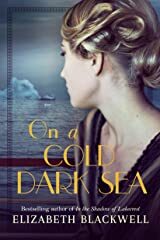
You can find all of Elizabeth Blackwell’s book on her Amazon Page.
What or who inspired you to first write? Which authors have influenced you?I was raised by parents who loved to read, so that was a good start, but I didn���t think of myself as a writer for a long time. It seemed like something you could only do if you were brilliant and had the right connections. It wasn���t until my mid-20s that I got the confidence to try writing a novel���and it took many years after that to get my first book published.
I grew up reading Susan Howatch and Victoria Holt, who both showed me that historical fiction could exciting and dramatic. I���m also a big fan of Sarah Waters and Laura Purcell, whose books are such a rich mix of suspense and historical atmosphere.
 What is the inspiration for your current book? Is there a particular theme you wished to explore?
My current book, Red Mistress, was inspired by my long-time interest in the Russian Revolution. At a very basic level, I wanted to understand what it would be like to see your whole world change in a matter of weeks. My main character, Nadia, comes from a privileged family, loses everything, and has to reinvent herself multiple times to survive. Many elements in her story were taken directly from historical accounts, so I think that became my underlying theme: what does it take to survive in desperate circumstances? What are the qualities that make a difference?
What period of history particularly inspires or interests you? Why?I love to read about most eras, from ancient Greece and Rome to the Middle Ages to the 20th century. However, most of the books I���ve written have been set in 1910s-1930s. There were so many interesting social changes going on at the time���plus I���m just personally drawn to that era���s fashions and culture. I use a lot of vintage photos for inspiration as I���m writing.
What resources do you use to research your book?�� How long did it take to finish the novel?For Red Mistress, the initial research was very intimidating: there are hundreds of books about the Russian Revolution! The key was to find a few that gave me a basic grounding in the facts, to get started. One of the very best resources was memoirs written by people who���d escaped to Europe or the U.S. after the Communists took over. They had incredible stories of near-starvation and courage, and I used many of those details in the book (for example: how much food you could get in trade for a pillow or coat). The book took about a year and a half to write, including weeks where I did no writing at all and thought to myself, ���I WILL NEVER FINISH THIS!���
 What do you do if stuck for a word or a phrase?
When you���ve got that writer flow going, you don���t want to slow it down by hunting through a thesaurus. So I���ll use ���placeholder��� text, which is can be literally, ���Blah blah blah��� or instructions like ���Come up with better description later.��� Sometimes, I���ll insert notes to myself, like ���MAKE THIS MORE EXCITING��� (yes, in all caps), and then I���ll get annoyed at myself months later when I���m revising and realize I have to actually create some excitement.
Is there anything unusual or even quirky that you would like to share about your writing?I don���t have an answer for this one���nothing quirky comes to mind!
Do you use a program like Scrivener to create your novel? Do you ever write in long hand?My writing process is very basic: I type everything in a Microsoft Word document. No writing programs, no elaborate outlines, no longhand. For each book, I do keep a little journal where I write notes to myself���either details from my research, or my characters��� birthdates, ages, etc. It always ends up a bit of a mess, but it���s the system that works for me.
 Is there a particular photo or piece of art that strikes a chord with you? Why?
A photo that really inspired me as I wrote Red Mistress was ���Lovers Under a Street Lamp��� by Brassai. I love the lighting and the mood it creates. I even wrote a scene based on that picture, when my heroine Nadia is in Paris with���. well, you���ll have to read the book to find out!
What advice would you give an aspiring author?One: It���s never too late to start. Two: every well-known writer has failed at some point, so persistence is key. Three: It often takes a few false starts before you ���find��� your book. Learn to embrace rewriting and revisions.
Tell us about your next book.I���m currently working on a book about a 1970s rock band finishing up their album in a rundown country mansion, where people start dying. It���s more suspense-driven than my other books, so it���s almost like I���ve had to re-learn how to write. But I liked the idea of pushing myself to try something new.
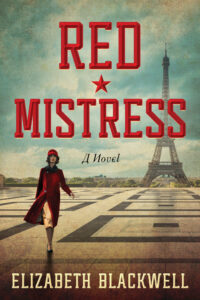
In the spring of 1914, Nadia Shulkina, the daughter of Russian aristocrats, looks toward a bright future. She has no premonitions of war, let alone the revolution that is about to destroy her comfortable world.
Her once-noble family is stripped of every possession, and more terrible losses soon follow. To save what���s left of her family and future, Nadia marries a zealous Bolshevik in an act of calculated reinvention.
It won���t be her last.
When she agrees to work undercover for the Soviets in 1920s Paris, Nadia is drawn into a beautiful yet treacherous world of secrets and deceit. Beset by conflicting loyalties and tested by a forbidden love affair, she becomes embroiled in a conspiracy that ends with a shocking murder. What chances will she take to determine her own fate?
Thanks Elizabeth. I’m�� a great fan of Susan Howatch, too. It brought back good memories to read your answers.
Haven���t subscribed yet to enter into giveaways from my guests? You���re not too late for the chance to win this month���s book if you subscribe to my Inspiration newsletter for giveaways and insights into history ��� both trivia and the serious stuff! In appreciation for subscribing, I���m offering an 80 page free short story Dying for Rome -Lucretia���s Tale.
The post On Inspiration: Interview with Elizabeth Blackwell first appeared on Elisabeth Storrs Historical Novels.
August 31, 2021
On Inspiration: Interview with Heather Webb
 My guest this month is Heather Webb, the USA Today bestselling and award-winning author of seven historical novels. In 2015,��Rodin���s Lover��was a Goodread���s Top Pick, and in 2018,��Last Christmas in Paris��won the Women���s Fiction Writers Association STAR Award.��Meet Me in Monaco,��was selected as a finalist for the 2020 Goldsboro RNA award in the UK, as well as the 2019 Digital Book World���s Fiction prize. To date, Heather���s books have been translated to over a dozen languages.�� She lives in New England with her family and one feisty rabbit.�� Heather���s next solo novel,��The Next Ship Home, is inspired by true events and reveals the dark secrets of Ellis Island as two unlikely friends challenge a corrupt system, altering their fate and the lives of the immigrants that come after them. It releases on Feb 8, 2022.
Heather���s co-written novels with Hazel Gaynor have all been published to critical acclaim. Last Christmas in Paris won the 2018 Women���s Fiction Writers Association Star Award, and Meet Me in Monaco was shortlisted for the 2020 Romantic Novelists��� Association Historical Novel award. Their latest novel is Three Words for Goodbye.
You can connect with Heather via her website and Instagram, Twitter & Facebook:����@msheatherwebb
You can buy Heather’s books on Amazon. Her upcoming book, The Next Ship Home, is currently on pre-order on Amazon, Barnes & Noble and Bookshop.Org.
What or who inspired you to first write?Which authors have influenced you? As a pre-teen and a young adult, I was a huge fan of Harlequin romances, Mary Higgins Clark mysteries, mythological stories, and a large array of British and American classics. Honestly, I read everything I could get my hands on. I was also the copy editor of my high school and university newspapers, won an essay contest two years in a row at my school that also won district-wide honors, but ironically, I didn���t see myself as a writer. It wasn���t until after resigning from my high school teaching job while raising my two little ones that I began to think of writing a book. Josephine Bonaparte appeared to me in a dream every day for more than a week and she wasn���t a person I was all that familiar with so I headed to the library, exasperated as to why I was dreaming about her, and checked out a couple of biographies. I got halfway through the first and it struck me���this woman was fascinating and led a rich and nuanced life. I had to write about her. And that did it! I started to learn how to write fiction and ended up writing my first novel, Becoming Josephine. I think Josephine chose me to tell her story.
I find history delicious to read and write in general; there���s always fascinating things to learn about social habits, tools, ways of life, etc. I enjoy looking at where we���ve come from as a society and how it tells us so much about who we are today. I do have favorite eras, however. I���d say the romantic era in Europe of the 1850s up through the interwar period of the 1920s is what I enjoy most, followed by the 18th century. That said, I do love a good book set in Africa or the Caribbean with lush world-building, or east Asia, India in particular. Frankly, if the characters draw me in, I���m there!
What resources do you use to research your book?�� How long did it take to finish the novel? I think I use the resources that most historical novelists use; biographies, books that examine aspects of society during certain eras, documentaries, films, maps, photographs, travel. I try to visit places in person as often as possible. I adore traveling and there���s simply no substitute for spending time in a place. The sights, smells, sounds. The soul of the place. My novel that is releasing February eight was three and a half years in the making, but I also worked on a collaboration with my writing partner, Hazel Gaynor, during that time. Our novel, Three Words for Goodbye, just released in July from William Morrow.
I open a thesaurus, my favorite writerly tool since I was twelve years old.
Is there anything unusual or even quirky that you would like to share about your writing?Not really? I enjoy ���teaching��� through my novels so I layer them with as many details as I can without bogging down the story. I also enjoy poignant and well-placed descriptions and metaphors.
Do you use a program like Scrivener to create your novel? Do you ever write in long hand?I use Microsoft Word and often take notes by hand, though I don���t write scenes that way. I will pull out a notebook from time to time when I get stuck.
Is there a particular photo or piece of art that strikes a chord with you? Why?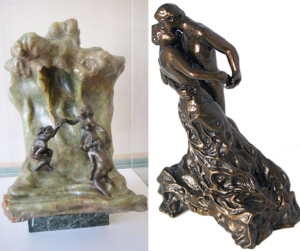
The Wave & The Waltz by Camille Claudel
Camille Claudel and Auguste Rodin are two of my favorite artists. In fact, I wrote a book about their tortured and passionate love affair and the ground-breaking works they created called Rodin���s Lover. A favorite of mine by Claudel is called The Wave made of onyx, one of the most difficult materials to work with as it���s extremely hard but also brittle. It features three women looking up as a huge wave over their heads is about to sweep them into the undertow.
She worked on this as her mind was unravelling and her relationship with Rodin was reaching its collision point before they parted for good. I also SO adore her piece called The Waltz, of two lovers dancing. It was scandalous at the time because it was said to evoke the sensation of two lovers who wish to finish ���their business��� in the bedroom after the dance concludes but also because it was a woman sculpting two nude figures twined together passionately.
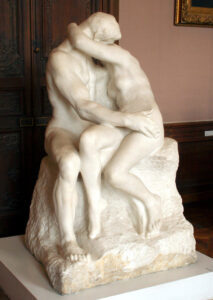
Rodin’s The Kiss
My favorite of Rodin���s is tougher to call. I think I���d say one of my favorites has to be the The Kiss, as it���s beautiful, pearly texture gleams and the passion in the piece is stunning. It was inspired by his love affair with Camille.
But I think it���s his The Burghers of Calais that I love most. It depicts six men who are marching toward their death, sacrificing their lives to the king of England so he might spare their Norman town on the coast of France. It���s a magnificent piece with nuanced detailing and gripping emotion. It was also ground-breaking because of its layout of six figures on a sort of triangular pedestal. It created an uproar first among those who commissioned a monument for it (they didn���t expect something so large or dark) and it almost did not get accepted. Several came to his aid and convinced the committee to keep the masterpiece. So many of both of their works created scandal.
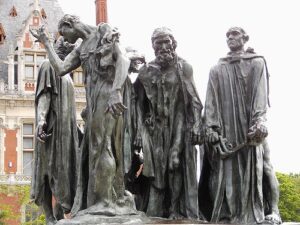
The Burghers of Calais
What advice would you give an aspiring author?Aspiring writers often have the habit of starting a story (or multiple), but never finishing a complete draft. They rewrite and rewrite those first several chapters, but never make it to the middle. My advice is to finish that first draft. Move forward, even if the sentences are less than perfect. Even if you���re unsure of the direction of the story. Your first draft is an exploratory draft; one in which you���re discover what is going to happen, what you���re trying to say, who the characters are. Don���t keep going over the pages you���ve already written as chances are, the story will change and those early revisions may very will have been a waste of time. Finishing a first draft is a huge accomplishment and should be celebrated���even if it needs loads of revisions. This is normal! Just remember that you can���t revise a story that isn���t complete.
Tell us about your next book.My next book is set in 1902 at Ellis Island and in the tenements of the Lower East Side (now called the East Village) in New York City. It���s inspired by true events, in which major reform was needed at the immigration station due to the unbelievable corruption happening there. In the words of my publisher: The Next Ship Home holds up a mirror to our own times, deftly questioning America���s history of prejudice and exclusion while also reminding us of our citizens��� singular determination. This is a novel of the dark secrets of Ellis Island, when entry to ���the land of the free��� promised a better life but often delivered something drastically different, and when immigrant strength and female friendship found ways to triumph even on the darkest days.
I was inspired to write this both when Hamilton the Musical burst onto the scene and we as a nation began to examine where we came from and who we were. This also happened to overlap with the election cycle and so many stories about immigrants arising from America���s borders. So I headed to Ellis Island and was so incredibly inspired to dig into the past, see how things were different then but alarmingly, how similar they still are today. The novel explores the bonds of friendship, acceptance and understanding of those who differ from us, the multicultural nature of the U.S., the power of language, and the concept of the American dream.
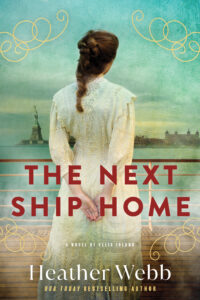
Ellis Island, 1902: Two women band together to hold America to its promise: “Give me your tired, your poor … your huddled masses yearning to breathe free…”
A young Italian woman arrives on the shores of America, her sights set on a better life. That same day, a young American woman reports to her first day of work at the immigration center. But Ellis Island isn’t a refuge for Francesca or Alma, not when ships depart every day with those who are refused entry to the country and when corruption ripples through every corridor. While Francesca resorts to desperate measures to ensure she will make it off the island, Alma fights for her dreams of becoming a translator, even as women are denied the chance.
As the two women face the misdeeds of a system known to manipulate and abuse immigrants searching for new hope in America, they form an unlikely friendship���and share a terrible secret���altering their fates and the lives of the immigrants who come after them.
Thanks so much, Heather. The Next Ship Home sounds like it combines what is essential to compelling historical fiction – the ability to transport a reader to a past world while also connecting with themes that resonate in the modern world.
Haven���t subscribed yet to enter into giveaways from my guests? You���re not too late for the chance to win this month���s book if you subscribe to my Inspiration newsletter for giveaways and insights into history ��� both trivia and the serious stuff! In appreciation for subscribing, I���m offering an 80 page free short story Dying for Rome -Lucretia���s Tale.
The post On Inspiration: Interview with Heather Webb first appeared on Elisabeth Storrs Historical Novels.
August 8, 2021
On Inspiration: Interview with Jeanne Reames
 My guest today is Jeanne Reames who is a fellow Etruscophile and lover of the ancient world,�� Macedonia.�� In short, she’s a mother, writer, Homer fangirl and Alexander the Great geek. Jeanne is also a history professor at the University of Nebraska-Omaha where she teaches Greek, Macedonian, and Ancient Near Eastern classes, and directs their Ancient Mediterranean Studies Program. She has also served as graduate program chair for history. She was born and raised in Florida but escaped its humidity and bugs. She has Miami and Peoria Indian ancestry. In her spare time, she likes to garden, cook, and run herd on her cats; she has three.
If you are fascinated by Alexander the Great then you’ll enjoy Jeanne’s Dancing with the Lion duology which examines Alexander’s story from the Macedonian perspective. You can find buy links to various sites for her books on here. Both books can be bought via her publisher, Riptide, at a discount.
Connect with Jeanne Reames via Tumblr, her blog, and Academia.
What is the inspiration for your current book? Is there a particular theme you wished to explore?Because I���m a history professor, most folks assume I started there, then decided to write a novel about Alexander the Great. Actually, it went the other way. My BA is in English/creative writing.
I���m a novelist who became a historian, not a historian who became a novelist.
As for themes, I should note that the Dancing with the Lion was divided for publishing, so both halves, Becoming and Rise, need to be read together for the original thematic arc. (Also, the Author���s Note is at the end of book 2, Rise.)
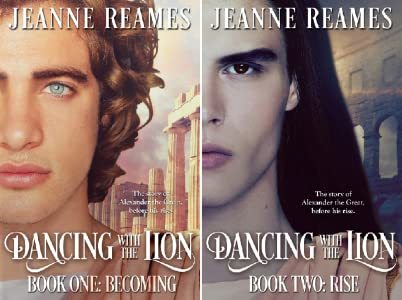
The main protagonists are Alexander before he became ���the Great��� and his dearest friend Hephaistion. It begins with their meeting and explores their relationships, both with each other and with their fathers, friends, families. Alexander must decide what sort of king he will be: how much like his father, and how different? He imagines himself more ethical than Philip, and the last line of Rise is both absolutely true for him in that moment, and also horribly ironic. As for Alexander and Hephaistion, their friendship/love was legendary in antiquity and for centuries after. Alexander was lucky; it���s rare for such an enormously powerful figure to have someone he trusted so absolutely. When Hephaistion died of some febrile illness in 324 BCE, Alexander gave him the most expensive funeral in history, then followed him to the grave 10 months later.
For the Greeks, philia (love/friendship) was more important than eros (desire). The ancient Greeks had no issues with homoeroticism (a better term for that era than homosexuality), but they had social restrictions���just not the same as ours. It was WHAT one did (active or passive), not who. That���s explored in the novel. Alexander and Hephaistion���s relationship is transgressive, but not because they���re both male. It���s transgressive because Alexander is the younger partner (by not-quite 3 years), yet the social superior as prince. How do they navigate that?
Women also have a role. Greek (and Macedonian) culture was misogynistic, men and women living largely separate lives, especially for the elite class. But Alexander���s sister Kleopatra is a point-of-view character. In the second half, Rise, there���s a subplot in the women���s quarters, and it���s not just Alexander and Hephaistion who come of age. So does Kleopatra. I do hope to continue the series in the future, and Kleopatra will remain an important secondary character.
Nor is Alexander���s mother the snaky bitch-queen from hell that we find so often in Alexander fiction (and film). You still wouldn���t want to mess with her, but I view her more akin to Katherine Hepburn as Eleanor of Aquitaine in The Lion in Winter than whatever hot mess Angelina Jolie was directed to perform in Oliver Stone���s “Alexander”. She���s smart, ambitious, and just as ruthless as her husband and son. Yet the things men did without critique as Realpolitik were condemned for women. Alexander���s relationship with her isn���t any less strained at times than with his father, but I swept out the silly Freudian stuff. I hope readers will respect her, if not necessarily always like her.
On my website, I have a number of goodies that my publisher, Riptide, didn���t permit me to include: a reader guide (month system, glossary, characters, a short note on obscenity), short vlogs of the Macedonian landscape, unpublished outtakes and extra scenes, how to pronounce their names, as well as a playlist just for fun.
What period of history particularly inspires or interests you? Why?
Portrait bust of Alexander the Great (356-323 BC) known as the Azara herm,
Louvre, Paris, France
I backed into Greek history from the north so I���ve always held a Macedonian perspective. The novels reflect that. Most stories about Alexander wind up heavily Greek-influenced as a result of both the ancient sources (which are Greek and/or later Roman), or because most people find out about Alexander as part of reading about/a class on ancient Greece.
I found out about Greece by studying Alexander. Then I brought that perspective to the novels.
While ancient Macedonia was at least quasi-Greek, in antiquity, many Southern Greeks didn���t consider them properly Hellenic. For one thing, they had a monarchy, not a city-state government. They drank their wine ���straight��� (like we do), which was considered a barbaric practice; Greeks cut their wine with water. Their religion was different too. Instead of building big shiny temples like the Athenian Parthenon, Macedonians built magnificent tombs for the elite classes. They put their money in the private sector rather than the public. Their religion was perceived as ���wilder��� too, although that���s more bias than actual truth. Those are just a few examples.
The problem understanding ancient Macedonia is that it���s always Greeks or Romans/Romanized Greeks telling us about them. No surviving history of Alexander or his father was written by a Macedonian, or even during their lifetimes by people who knew them. Yes, the histories we still have borrowed from earlier authors, but they���re at least second-hand, and sometimes third- or fourth-. Fishing out the Macedonian perspective takes some work.
In the novels, I wanted to take readers to Alexander���s Macedonia.
What resources do you use to research your book?�� How long did it take to finish the novel?Perhaps predictably, I used an enormous amount of academic material. Yet my goal was to internalize that data in order to render a fully-realized world that readers can see, smell, hear���and which customs may sometimes shock. I���ve also been to Greek Macedonia, Greece, and ancient Thrace (modern Bulgaria), as I think it important to tour the land, get a feel. Spring lightning looks different in Macedonia than in Florida where I grew up, or Nebraska, where I live now. No joke. That���s the sort of detail you have to observe. Like noticing the colour of the dirt (sorta orangish from iron oxide).
As for how long���getting it published was more difficult than getting it written. I typed the first line of the story in December of 1988, and had a completed, sellable manuscript by the mid-90s (after I���d decided to embark on a history PhD at Penn State). The snag was always length. As I cut the novel, the accepted word count also shrank, and there���s only so much one can cut. What agents would look at in 1996 was 30-40K longer than in 2006, never mind 2016. I���d thought I might have luck in the wake of Oliver Stone���s ���Alexander��� in 2004, but the film was such a dud, it killed interest for some years after.
I finally had an offer from Riptide around 2014���if I would divide it in half, which I agreed to do. (The word count of both novels, no back matter, is c. 180K.) For a variety of reasons (not having to do with me), negotiations took a long time: contract not signed till 2017, and the first of the two came out in mid-2019.
So it was quite the odyssey. 30 years to write, revise, and sell a book! With a PhD acquired along the way.
What or who inspired you to first write? Which authors have influenced you?I���ve been writing stories since 6th grade, and really, telling stories since I was four. My parents said I���d call them into my bedroom, then put on little plays for them.
As for inspiration, I joke that I want to be Toni Morrison when I grow up. There are a number of other authors who have inspired me from David James Duncan to Iris Murdoch to Leslie Marmon Silko to Flannery O���Connor. All write stories quite different from mine, in both genre and style, but I still consider them to be teachers.
How do you reconcile writing historical fiction with being a professional historian?
Alexandra Head, Prado, Madrid
In the author���s note at the end of book 2, I say, ���Historical fiction is not about who any given historical figure actually was, but with who we are now, and what it���s possible for us to become.��� I also like Guy Vanderhaeghe���s comment: ���History tells us what people do; historical fiction helps us imagine how they felt��� (���A Good Guy,��� Quill and Quire, Sept. 2011). These sum up my approach to writing historical fiction vs. academic history.
I tell people that writing fiction makes me a better historian, which may raise eyebrows, but fiction makes me ask questions my colleagues might not consider. For instance, King Philip was assassinated in a theatre full of thousands of spectators; Hollywood couldn���t have staged it better. Yet academic papers on his death ask who instigated the murder. As an author, I also have to wonder how they got everybody out of there without it turning into a madhouse! Or maybe it was a madhouse.
Also, fiction forces me to think harder about the ���layers��� of history. First, we have data and details (not all of which can be trusted), then we have varying degrees of supposition: what is probably true, what may be true, and what could be true: each a step further along the path of ���educated guesses.��� I���m less inclined to blur those lines because I get to do that in my stories. Yet historical fiction uses the past to talk about the present, so I���m always conscious that my characters are not the same as the historical figures, even if the historical figures provide a base on which to build.
Do you use a program like Scrivener to create your novel? Do you ever write in long hand?I only write notes to myself in longhand these days. I can still remember discovering word processors in my first year of college at Univ. of Florida. What a revelation! Painless editing! Ha. I���ve never used anything beyond a simple word processor, however.
Is there a particular photo or piece of art that strikes a chord with you? Why?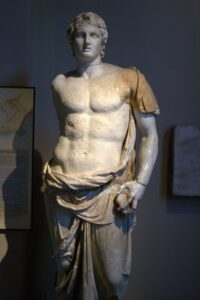
Alexander – Istanbul Museum
We have oodles of Alexander statues. He, Augustus, and Antinoos (Emperor Hadrian���s boyfriend) are probably the most frequently depicted non-religious figures in Greco-Roman art. The ���face��� cover of the first novel is based on the Acropolis Head of Alexander at about 18. It���s a pretty good match, almost uncanny, although idealized. (Alexander wasn���t that pretty.)
The image most likely to be an accurate likeness is the Azara Herm, found today in the Louvre. Even so, my personal favourite Alexander sculpture is a full-body version in the Istanbul Museum. For Hephaistion, I tend to think of the Prado Bronze. Although mostly identified as Demetrios Poliorcetes these days, that is an attribution; the statue isn���t labelled. Hephaistion has also been proposed as a possibility. I like it.
Neither the Azara Herm nor the Prado Bronze were used for the ���statue��� versions of the book covers, due to museum copyright costs. The novels have two cover versions: the ���face��� covers, and the ���statue��� covers. The interiors are exactly the same; only the exterior is different, so if you order a print-on-demand copy instead of the ebook, you can choose your cover.
What advice would you give an aspiring author?If I got a book published after 30 years���keep trying. There were many times in that 30-year period that I shoved the novel, convinced I sucked as a writer and should just quit. But periodically, I���d pull it out and try again. Finally, I found a publisher willing to take a chance on it. Sure, I had a ���platform��� as an academic, but that sort of platform can work against one with editors (and readers). Can an academic spin a good yarn? Most readers have no idea I began as a writer, not an academic.
Tell us about your next book.I would like to continue Alexander���s story but Riptide was willing to buy the first only because it could be marketed as a romance, even if it���s a coming-of-age story. They don���t want the rest, which is manifestly not a romance. I���ll need a new publisher for that.
In the meantime, my current project is a 4-book epic fantasy series called Master of Battles. Like a lot of fantasy, it steals from history as analogue, but is set on an alien world with a different geography���all part of the fun. Thematically, I explore questions of what ���civilized��� means, and upend popular narratives of conquest as heroic. I also explore issues of gender.
The elevator pitch is, ���A fugitive shaman fleeing his wicked teacher falls over a balcony into the bedroom of a quirky prince, setting off a prophecy that will change their world.��� But for me, the cool part is re-imagining how cultures might have developed if the geography were radically different. So I threw all the puzzle pieces up in the air to see where they landed. In terms of technological development, it���s roughly the 4th century CE (think Emperor Constantine). But there are no Himalayas, and Rome never rose. Ergo the monster empire is in the east (a mishmash of China-India-Persia). There���s a rainforest where North Africa/the Sahara is (think Brazil), and the Middle Sea is much larger, divided into two basins by an archipelago. The bulk of continental masses are south, not north, and there are two moons. There are also two human sub-species who survived: the Ens��ni and the Aph��, the latter of which has a prehensile tail (because who has never wanted an extra hand?). It���s loads of fun to do these re-imaginings.
I���m about 3/4s of the way through book 3, and I have a draft of book 4. If not historical fiction, or even historical fantasy, fans of history should still enjoy how I retooled historical details. Easter Eggs abound. For instance, book one starts in Felathri of Felsina, and Ision is prince of Emathia. Google those names. 

Two boys, one heroic bond, and the molding of Greece���s greatest son.
Before he became Alexander the Great, he was Alexandros, son of Philip, the celebrated King of Makedon. But rather than a life of luxury, as prince he must excel his peers in all ways: be faster, smarter, stronger, and more courageous, tackling problems without any help. Competition and status define one’s fate in his world, loyalty rare and precious. Alexandros finds that loyalty in Hephaistion, one of the boys assigned to accompany him for lessons under Aristoteles. With Hephaistion’s fidelity and friendship, he learns to trust his skills and become a leader of men.
Thanks so much Jeanne. You story has many echoes in my own publishing journey. And I know the Etruscans are also in your expert bailiwick. I look forward to learning more about the ancient Macedonians.
Both books can be bought via her publisher, Riptide, at a discount. You can find buy links to various sites for Jeanne Reames books on here.
Haven���t subscribed yet to enter into giveaways from my guests? You���re not too late for the chance to win this month���s book if you subscribe to my Inspiration newsletter for giveaways and insights into history ��� both trivia and the serious stuff! In appreciation for subscribing, I���m offering an 80 page free short story Dying for Rome -Lucretia���s Tale.
The post On Inspiration: Interview with Jeanne Reames first appeared on Elisabeth Storrs Historical Novels.
July 4, 2021
A lost civilization by Kate Johnson
I’m always delighted to connect with other Ancient World authors, especially fellow Romaphiles. My trilogy deals with Rome’s war with the mysterious Etruscans but there was another famous civilization which fought the Romans in early Republican times. Kate Q. Johnson joins me today with a post on the famous struggle between Rome and Carthage.
 Kate is a writer, scientist and academic who doesn���t believe in following only one dream. Moonlighting as a romance writer while completing her PhD in Pharmaceutical Sciences, it was her love of history that compelled her to write her debut novel, Daughter of Carthage, Son of Rome. Fueled by caffeine and croissants at 24-hour cafes, Kate brings the epic wars and earth-shattering events of Ancient Rome to life for a modern audience. She lives in Seattle with her husband and new baby, where she is probably multitasking with a cup of coffee. Follow along at kqjohnson.com, and on Twitter @kqjohnwrites.
You can find Daughter of Carthage, Son of Rome on Amazon, Barnes and Noble, Kobo, Google Play and on Apple Books.
A Lost CivilizationHistory is written by the victors is an oft-repeated phrase, but one that grows truer with time. On its path from small city-state to conquerors of most of the western world, countless civilizations were lost to Roman hegemony. Many of these civilizations were extremely advanced, with unique cultures, religion, and technology. As an empire, Rome tended to be relatively lenient with the peoples it conquered (with some very notable exceptions ��� see Julius Caesar and the Gauls). Provided they paid taxes and contributed militarily, local governments were often left intact. But for those opponents who managed to truly threaten Rome���s existence, or who lodged themselves in the Roman psyche in a way that altered the complexion of their society, there were few victors more ruthless than the Romans.
The CarthaginiansCarthage was a coastal city on the northern tip of Africa (modern day Tunisia). It was founded in 800 BCE by Phoenicians, a Semitic sea people who prospered following the Bronze Age collapse. Carthage grew rapidly in wealth and importance due to its naval prowess and location along lucrative Mediterranean trade routes. The Carthaginians were famous for their purple dye, which they manufactured using Phoenician techniques and distributed throughout the Mediterranean. Often used for ceremonial robes, it was one of the most highly valued commodities in the ancient world, worth many times its weight in gold. By 300 BCE Carthage was a wealthy superpower, with vast territories in northern Africa, southern Spain, Sardinia and Sicily, and a virtual monopoly over maritime traffic in the Mediterranean. In hindsight, a clash with the upstart city of Rome was inevitable.
The Punic WarsRome and Carthage fought three wars between 264 and 146 BCE, collectively known as the Punic Wars. At the start of the First Punic War, Rome was still an emerging power in the Mediterranean, having only recently subdued the entire Italian peninsula after centuries of war with the Samnites (�����290 BCE) and Etruscans (���265 BCE). The First Punic War lasted from 264���241 BCE and involved some of the greatest naval battles of antiquity, with hundreds of thousands dead on both sides. After a 23-year war of attrition fought mostly in Sicily, the Carthaginians bitterly accepted a peace treaty that resulted in the loss of their territories in Sicily and Sardinia, and humiliating reparations to Rome.
The economic and military defeat of Carthage proved temporary. Although they had lost their dominance over the seas, the Carthaginians quickly expanded their territory in Iberia (modern Spain) through the campaigns of Hamilcar Barca, father of the famous Hannibal. Once again flooded with riches, the Carthaginians chafed under Roman treaty conditions. The fortunes of the Barca family continued to rise, and it was the brilliant young general, Hannibal, who set the fires of war raging once again.
The Second Punic War (218���201 BCE) was made famous by Hannibal, best known for crossing the southern Alps with war elephants. Hannibal was a master of unexpected, and while Rome readied for a fight in Iberia in 218 BC, Hannibal slipped the Romans and led his troops on a grueling crossing through mountainous terrain previously thought to be unpassable. The Carthaginians entered the mountains with 50,000 men and 67 war elephants; they arrived in northern Italy with half their army and one elephant remaining. Hannibal faced two quick battles on the Ticino and Trebia rivers, where his tactical genius and superior Numidian cavalry were on full display. The Carthaginian army then marched down through the Apennine Mountains, suffering further casualties and desertions, before emerging in central Italy on the banks of Lake Trasimene. The Carthaginians ambushed the Romans along the northern bank of the lake, pinning them between the water and the previously hidden Carthaginian army now descending from the hills. 30,000 Romans were killed or captured, including the Roman consul for the year.

Despite this stunning success, the high-water mark of the Carthaginian campaign in Italy was still to come. Hannibal���s coup de gr��ce at Cannae (216 BCE) brought the Roman Republic to the brink of collapse and heralded in a period of near-hysterical panic that would forever after be known as Rome���s darkest days. On the open plains of southeastern Italy, Hannibal managed to totally envelop the Roman army despite having a much smaller force. 50,000 Romans were slaughtered in a single day, and in less than 2 years of fighting, Hannibal had killed or imprisoned 20 percent of Rome���s fighting force. But Hannibal chose not to march on Rome, and he would never get as good an opportunity to do so again. The conflict bogged down in a stalemate, with both sides refusing to give battle in unfavorable positions, and allied cities in Italy defecting and then being retaken in a brutal tug of war. After 15 years in Italy, Hannibal was finally recalled to Carthage to face a surprise invasion of Africa by Rome���s own brilliant young general, Scipio Africanus. The Battle of Zama (202 BCE) proved decisive. Exhausted and without an army in the field, Carthage surrendered. They were stripped of their overseas territories and forbidden to make war again.
Although thoroughly beaten, the Romans viewed Carthage���s mere existence as a threat. Cato the Elder was known to remark after every speech in the Senate: ���furthermore, I consider that Carthage must be destroyed���. The final Punic War did just that. After a three-year siege of Carthage (149-146 BCE), the city was reduced to rubble, its population dead or enslaved, and salt sown in the ground so no city could rise to threaten Rome again.
The defeat of Carthage marks the beginning of the Roman Empire. The former Carthaginian territories were Rome���s first overseas acquisitions, and they flooded Rome with unprecedented riches and slave labor, beginning a golden age of Roman expansionism. But no matter how far removed from that brutal day at Cannae, the Romans never quite forgot how close they came to annihilation, when history had been poised on a knife���s edge of being re-written. Perhaps that���s why the great city of Carthage is remembered by history so well, the specter of possibility still looms, even so long after the ink has dried.
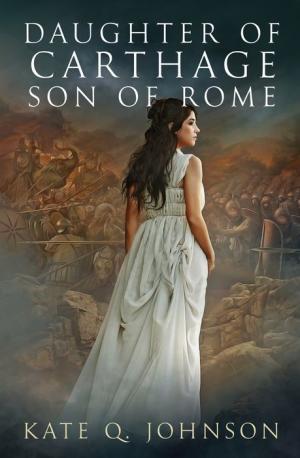
DAUGHTER OF CARTHAGE, SON OF ROME – Unexpected love in the midst of war in ancient Rome���a passionate story of conflicting loyalties, constant danger and fierce courage in the face of life-threatening risk.
Elissa Mago, a Carthaginian heiress, recklessly flees the prospect of a despised arranged marriage and arrives in Italy vulnerable yet defiant on the cusp of Hannibal���s audacious crossing of the Alps and invasion of Roman territory.
Marcus Gracchus, a brilliant and celebrated Roman Centurion, questions his own loyalty to Rome after his brother is murdered and he is ordered to serve under the leadership of the vindictive man who orchestrated his brother���s death.
A chance encounter thrusts the two together, first as captive and captor. But violence both on the battlefield and within the Roman legion eventually leads them into an alliance that is tested repeatedly by their ties to home. Ultimately, they must choose ���their love for one another or their loyalty to their country.
Thanks Kate for this wonderful post. I don’t think many people understand how close Rome was to being destroyed by first the Etruscans and later the Carthaginians. You have to wonder ‘what if’ either had defeated the Romans.
 Haven���t subscribed yet to enter into giveaways from my guests? You���re not too late for the chance to win this month���s book if you subscribe to my Inspiration newsletter for giveaways and insights into history ��� both trivia and the serious stuff! In appreciation for subscribing, I���m offering an 80 page free short story Dying for Rome -Lucretia���s Tale.
Image 1: Hannibal���s invasion of Italy.�� Photo credit: Encyclopedia Britannica. ���Hannibal��� (1964) London: William Benton. pp. 65���67. https://commons.wikimedia.org/w/index...
The post A lost civilization by Kate Johnson first appeared on Elisabeth Storrs Historical Novels.
May 31, 2021
On Inspiration: Interview with Jodi Daynard
 My guest today is Jodi Daynard, author of The Midwife���s Revolt, Our Own Country, A More Perfect Union, and A Transcontinental Affair. Recently, Lake Union Publishers awarded The Midwife���s Revolt a ���Golden Quill��� for selling more than 250,000 copies. Ms. Daynard has also published many short stories and essays in prominent literary magazines. She has been a keynote speaker, alongside George W.W. Martin, at the Historical Writers of America conference and this June will head up a panel of best-selling novelists at the Historical Novel Society North America Conference, ���Fact in Fiction: Bringing Long Lost Worlds to Life.��� Jodi has taught writing at Harvard University, M.I.T. and at Emerson College and served for many years as the fiction editor at Boston Review. When not writing, she is an avid swing dancer and jazz musician.
You can connect with Jodi via her website and Facebook. And if you love jazz ��� you can ask to join her private ���All that Jodi Jazz��� Facebook group.
You can also follow her on her Amazon page where you���ll find links to all her books including A Transcontinental Affair.
What or who inspired you to first write? Which authors have influenced you? Honestly, I was inspired to write from the moment I began to read. ��I wrote my first ���book��� when I was five. It was called something like My Animal Friends and was deeply derivative of Dr. Seuss���s One Fish, Two Fish, Red Fish, Blue Fish. I pretty much plagiarised his epigraph: ���From here to there, from there to here, funny things are everywhere.��� And I guess you could say those words have been my guiding star ever since! Fast forward to my younger adult life, when I was profoundly affected by the 19th century American authors Poe, Hawthorne, and Melville. They were my soulmates in recognizing the darkness in human beings (what a fun teenager I was!). In college, I had a Russian period in which I wrote like either Tolstoy or Dostoevsky depending on the week. It was only fairly late in life, when I was in my late twenties and began teaching at Harvard, that I made women writer friends who turned me on to other women writers. I soon began to know, love, and appreciate women authors like the Charlotte Bronte and Jane Austen. Bronte���s novel Jane Eyre had a profound effect on me. I learned a great deal from that novel and can honestly say it responsible for helping to mature and master my craft.
I just finished a new book, actually, called Solo Flight. It���s really an homage to my life as a swing dancer and jazz musician. It takes place in Harlem in the 1930s and celebrates the birth of swing.
My most recently published work, A Transcontinental Affair, depicts the beginning of Modern America, specifically the robber barons, their corruption greed and corruption in the building of the railroad and in the systematic annihilation of our Native Americans. I���d say that the overarching theme of all my novels is the great dichotomy between America in beautiful theory and America in not-so-beautiful fact.
What period of history particularly inspires or interests you? Why? I never thought about this before, because each new book takes place at a later date. I often joke that, at this rate, I���ll eventually write a contemporary novel. My first two books are set during the American Revolution. The third, the 1800 election. The fourth, 1870 and the railroad. The fifth, 1930s New York.
But, looking back on all of this, I see clearly that there���s a pattern: I have been choosing ���nodal points��� or crossroads, points where the future of America could go either way, where its fate hangs in the balance: Independence or oppression? Greed or Fairness? Solo Flight, I think, depicts and important moment racial progress, thanks the desegregation that began to occur among jazz musicians and dancers.
What resources do you use to research your book?�� How long did it take to finish the novel?I start with secondary material to get a broad picture of the time and place: biographies, documentary films, scholarly or popular history works, and many photographs (or paintings, for the 19th century). Then, over a period of 3-6 months, I drill down to the point where I have discovered which actual restaurants my characters would have visited and what they had to eat! To accomplish all this, I use the Internet, finding libraries with digital collections where I can read primary materials���memoirs, letters, newspapers, etc. At some point I do need to see the to go to historical societies and archives to see and feel the artifacts.
Finally, for me it is absolutely essential to go to the places where I���ve set my novel. For the first two, that was easy enough, since those take place in New England, where I live. But for the third, A More Perfect Union, once I began to write I realized that, in order to do justice to my character���s background and voice, I needed to go to Barbados. Which I did, alone, leaving my husband to deal with one of the worst snowstorms in Boston history! For A Transcontinental Affair, we flew to Omaha, Nebraska, and then drove along the old rail line all the way to San Francisco. I could not have written that book without seeing those railway depots and those extraordinary landscapes for myself.
As to the question of how long it takes me: A first draft takes me three months. Almost exactly. Same for each book. Weird, eh? Then there���s about one year of revision.
What do you do if stuck for a word or a phrase?I am never stuck in this way, because I rely on the fact that I will be rereading the manuscript.
Is there anything unusual or even quirky that you would like to share about your writing?I have not written a novel without revising it at least fourteen times. The Midwife���s Revolt underwent more than twenty revisions because, as my first novel, I had a lot of time on my hands before it was published! So, let���s say that in the past decade, I���ve reread and rewritten about 9 million words. People should probably call me a rewriter, not a writer. Or maybe they���re the same thing.
Do you use a program like Scrivener to create your novel? Do you ever write in long hand? All my first drafts are written in long hand. Not only that, but I must use the same exact type of notebook, pen, and if possible, chair. This was difficult when I was living in England when I was writing A More Perfect Union and couldn���t get American-size paper. I had it sent to me from America, because I was superstitious that I just couldn���t write on British-size (is it A5?) paper. I���m certifiable! But Truman Capote was much the same say, with many hilarious self-restrictions. So I take some comfort in that.
All my edits are by hand, on a printed manuscript that I then need to input back into the Word document. This is such ridiculously arduous work that I often hire an assistant to help me. She can never my handwriting, though, so I have to dictate MP3 files for her along with sending the manuscript.
Is there a particular photo or piece of art that strikes a chord with you? Why? Do you mean in general, or in relation to each book? I have profound attachments to many works of art and photographs. They often provide a key source information as well as inspiration. The entire inspiration for A Transcontinental Affair came when, looking through my mother���s book collection, I found the most amazing book, one volume from the massive 12-volume set of Reports of Explorations and Surveys, to Ascertain the Most Practicable and Economical Route for a Railroad from the Mississippi River to the Pacific Ocean. Vol. III.. This was a government report on the first excursions across America to determine the best transcontinental route for a railroad. But what moved me profoundly enough to write a whole novel were the lithographs included: portraits of Native American tribes, flora and fauna, and vistas the likes of which white people had never seen before and which they were, unbeknownst to anyone, about to annihilate. These surveys had been commissioned by Jefferson Davis, then Secretary of War, and were produced largely under the direction of Spencer Fullerton Baird, the Smithsonian���s first curator. My favorite art is by a European artist named was Heinrich Baldwin M��llhausen. You can read a bit more him and others in my attached article about the Union Pacific.
 Right now, I���m utterly in love a photograph of bandleader Chick Webb staring back adoringly at young Ella Fitzgerald as he plays the drums at the Savoy Ballroom in Harlem. I discovered this photo at the Schomburg Center for Research in Black Culture in Harlem. I made a copy, and it now sits in a frame on my desk and fills me with joy every time I look at it.
Looking back, I see clearly that I owe a lot of my success not to talent but to other qualities of character, persistence being the most important. I received a lot of rejections in my life. When Midwife didn���t sell at first, I became so depressed I thought, ���Okay, I���ll just stop writing.��� That didn���t work out so well! Instead, I channelled my depression into writing several more drafts of Midwife. I thought glumly, ���Well, what else do I have to do?��� It went on to sell over 250,000 copies.
I would add to this: Be open to feedback. Without it, you won���t grow. Let people you trust see you work. It���s very painful to hear criticism, I know. And one tends to avoid pain. Also, when you���re a new writer, you have no faith that you can make the changes you need to make. I cried for a whole week the first time my husband gave me feedback on Midwife. When he gave me feedback on Our Own Country, I cried for three days. One day for A More Perfect Union. ��By the time he read A Transcontinental Affair, I was like, ���Just gimme what you got and let me get on with it.���
Tell us about your next book.I just finished my fifth novel, Solo Flight, which is out on submission. Can I say that I love this book so much?! It takes place during 1937 and is about a young New York City debutante, Edie Hammond, who flees her coming-out party at the Ritz Carlton because she has found out some terrible news about her beau, Archie. She runs up to Harlem, where she has been doing volunteer work (all ���society��� girls did such work, primarily so that newspapers snap their photos) at a music school. She plans to stay one night at a musician���s Harlem apartment but winds up staying an entire year. ��It is a year in which she discovers her calling as a music critic, meets and befriends Count Basie, Billie Holiday and Benny Goodman, and tours the south with a group of black musicians, with eye-opening consequences. Finally, it is a year in which she will fall in love with someone amazing and wholly unexpected. The novel, despite the fact that it depicts serious issues of racial inequity, is ultimately a celebration of American jazz music and dance.

A sweeping tale of adventure and danger, innovation and corruption, and two women whose lives intertwine in unexpected ways on America���s first transcontinental train trip.
May 1870.��Crowds throng the Boston station, mesmerized by the mechanical wonder huffing on the rails: the Pullman Hotel Express, the first train to travel from coast to coast. Boarding the train are congressmen, railroad presidents, and even George Pullman himself. For two young women, strangers until this fateful day, it���s the beginning of a journey that will change their lives.
Sensitive Louisa dreads the trip, but with limited prospects, she���s reluctantly joined the excursion as a governess to a wealthy family. Hattie is traveling to San Francisco to meet her fianc��, yet she���s far more interested in the workings of the locomotive than she is in the man awaiting her arrival. As the celebrated train moves westward, the women move toward one another, pulled by an unexpected attraction.
But there is danger in this closeness, just as there is in the wilds of the frontier and in the lengths the railroad men will go to protect their investments. Before their journey is over, Louisa and Hattie will find themselves very far from where they intended to go.
Thanks for sharing insights into your inspiration so generously, Jodi. Cross fingers Solo Flight is hitting the bookshops soon!
Haven���t subscribed yet to enter into giveaways from my guests? You���re not too late for the chance to win this month���s book if you subscribe to my Inspiration newsletter for giveaways and insights into history ��� both trivia and the serious stuff! In appreciation for subscribing, I���m offering an 80 page free short story Dying for Rome -Lucretia���s Tale.
The post On Inspiration: Interview with Jodi Daynard first appeared on Elisabeth Storrs Historical Novels.
May 27, 2021
Greek Courtesans – History Girls
My latest post on The History Girls explores the world of the Greek courtesan including one of history’s most famous – Aspasia, companion to Pericles.
The post Greek Courtesans ��� History Girls first appeared on Elisabeth Storrs Historical Novels.


