
Elisabeth Storrs's Blog, page 5
May 2, 2021
On Inspiration: Interview with Kelly Rimmer
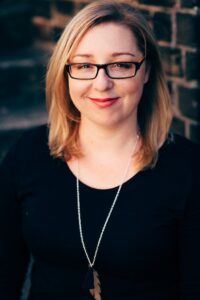 My guest this month is Kelly Rimmer,�� the New York Times, Wall Street Journal, USA Today and worldwide bestselling author of contemporary and historical fiction, including The Secret Daughter and The Things We Cannot Say. Kelly lives in rural Australia with her family and a whole menagerie of badly behaved animals. Her novels have been translated into more than two dozen languages. Her latest release is The Warsaw Orphan.
You can connect with Kelly via her website, Facebook, Twitter and Instagram.
You can find Kelly’s extensive list of books at her Amazon author page.
What or who inspired you to first write? Which authors have influenced you?I decided I was going to become an author the first time I read Heidi, by Johanna Spyri. I was probably 8 or 9 and I just fell in love with the way that story transported me.
I try to learn from every book I read, so over the years, hundreds or maybe even thousands of authors have had something to teach me.
What is the inspiration for your current book? Is there a particular theme you wished to explore?I was in Poland researching for another novel in 2017 when I first encountered real-life Polish nurse and social worker Irena Sendler. She spearheaded an effort to rescue Jewish children from within the Warsaw Ghetto, ultimately saving the lives of over 2,500 children. I could not stop thinking about Irena, and I also became quite fixated on the team who worked with her in this rescue effort. How were these women? What drove them to risk their lives day in and day out for the sake of children and families they���d never met? I wanted to explore the answers to these questions in The Warsaw Orphan, and also to reflect on the tumultuous years in Warsaw from 1942.
What period of history particularly inspires or interests you? Why? I���ve written two books now set in Poland during WW2. My fascination with the era stems from my maternal grandparents, who lived in rural Poland until they were displaced by the war. Although I was lucky enough to have a close relationship with them before their deaths, they effectively started a new life once they arrived here in Australia, and to this day there���s much my family does not know about their lives before and during the war.
This book took about 18 months. I had planned to travel to Poland to research it but the pandemic got in the way of that so I completed my research from home. We are so fortunate to live in these days when information is relatively easy to access. Between my notes from a previous research trip, reference books, and some amazing online libraries and repositories, I was still able to complete my research. My absolute favourite research resources are photographs and oral histories.
What do you do if stuck for a word or a phrase?Feeling stuck is usually a sign that I need to either skip a sentence or paragraph (or even a scene) and come back to it later. Sometimes that means taking a break from my work altogether, other times I will just leave a gap in my manuscript and keep going.
Is there a particular photo or piece of art that strikes a chord with you? Why?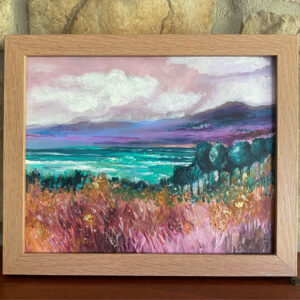 I purchased a piece by Cassandra Bland earlier this year. It���s just a small painting of the South Coast of NSW, however it reminds me of a particular spot near my aunt���s house. That spot has been a special ���thinking spot��� for me for a long time. The painting is a special reminder of some life-changing decisions I���ve made over the years.
My office is a tiny home, situated in some bushland near my house. I���m currently renovating it ��� it���s taking forever!
Do you use a program like Scrivener to create your novel? Do you ever write in long hand?My handwriting is so poor that even I can���t read it sometimes, so I try to avoid long hand. I do use Scrivener, but I also dictate around 80% of my first drafts, and for that I use Dragon Dictate. Once a rough draft is finished, I move it into Word and move through many drafts polishing there.
What advice would you give an aspiring author?I suggest aspiring writers ignore writing advice unless it strongly resonates for them. There���s so much advice around, some of it brilliant, some of it awful ��� and what���s awful advice to me might be brilliant advice to you!
Tell us about your next book.My next book is probably my most ambitious project yet ��� the working title is The German Wife. It���s a story which spans two decades in the lives of two women as they navigate the build up to WW2���and the aftermath.

Inspired by the real-life heroine who smuggled thousands of Jewish children to safety during WWII, the powerful new novel by the��New York Times��bestselling author
In the spring of 1942, young��Elzbieta Rabinek��is aware of the swiftly growing discord just beyond the courtyard of her comfortable Warsaw home. But she has no idea what goes on behind the walls of the Jewish Ghetto nearby until she makes a discovery that propels her into a dangerous world of deception and heroism.
Elzbieta comes face to face with the plight of the Gorka family who must give up their newborn daughter – or watch her starve. For��Roman Gorka, this final injustice stirs in him a rebellion not even his newfound love for Elzbieta can suppress. His recklessness puts their families in harm’s way until one violent act threatens to destroy their chance at freedom forever.
Kelly Rimmer, bestselling Australian author of��Truths I Never Told You��and��The Things We Cannot Say, has penned her most meticulously researched and emotionally compelling novel to date.
Thanks for joining me, Kelly. I’m sure readers will enjoy learning more about the war through the eyes of Polish characters.
 Haven���t subscribed yet to enter into giveaways from my guests? You���re not too late for the chance to win this month���s book if you subscribe to my Inspiration newsletter for giveaways and insights into history ��� both trivia and the serious stuff! In appreciation for subscribing, I���m offering an 80 page free short story Dying for Rome -Lucretia���s Tale.
The post On Inspiration: Interview with Kelly Rimmer first appeared on Elisabeth Storrs Historical Novels.


April 11, 2021
2021 ARA Historical Novel Prize
I’m proud to be Chair of the HNSA’s prize committee for the 2021 ARA Historical Novel Prize which is due to open on 14 April. HNSA’s generous patron, Edward Federman of the ARA Group, has increased the prize money to $100,000 making the contest the richest genre prize in Australasia. The prize has been expanded to include a category for Children and Young Adults with prize money totalling $40,000 while the Adult category totals $60,000.
I was excited (and nervous) to be interviewed by Libby Gore of ABC Radio Melbourne and Peter Goers of ABC Radio Adelaide to talk about the prize and this wonderful opportunity to reward and recognise historical novelists in Australia and New Zealand. Read more about the prize here.
The post 2021 ARA Historical Novel Prize first appeared on Elisabeth Storrs Historical Novels.
Inspiration comes in many flavours by MK Tod
 Today I have the pleasure of welcoming MK Tod to share the inspiration behind her latest release, Paris in Ruins. M.K. Tod writes and blogs about historical fiction. She can be contacted on Facebook,��Twitter��and��Goodreads��or on her website��www.mktod.com. You can also enjoy the Paris in Ruins book trailer on Youtube.
MK Tod’s previous novels, Unravelled, Lies Told in Silence, and Time & Regret feature characters caught up in the turmoil of the world wars (you can read her post on writing Time & Regret here.) With Paris in Ruins, she goes back to an earlier conflict. In 1870 Paris, over half the population lived in poverty. Protests seethed beneath the surface and spilled onto the streets in riots and demonstrations. Paris In Ruins takes readers to the time when the Prussian army laid siege to the city and two women risked everything to survive the chaos and destruction.
As I was intrigued to learn more about this era of history. Please enjoy this post by MK on her inspiration to write Paris in Ruins.

Inspiration comes in many flavours
The Franco-Prussian war occurred in 1870 during the reign of Napoleon III. The French were quickly defeated, and the Prussian army soon surrounded Paris, determined to force the French government to surrender. The siege resulted in thousands of deaths and untold suffering. Tragedy didn���t end there. In the middle of March, radical republicans overthrew the government and established the Paris Commune. For ten weeks, the Commune carried out acts of murder, assassination, pillage, robbery, blasphemy, and terror, until finally expiring in blood and flames.
A perfect setting for a novel!
Writers are not always masters of their own stories. There are editors to please, early readers who help tune the story, husbands and friends who offer suggestions���the list goes on. Each new story begins with a glimmer of an idea, that spark that ultimately leads to a finished novel. The challenge is to feed that spark and breathe life into the fire as the writing process unfolds. For that we need inspiration on an almost daily basis.
As writers we bandy about the word ���inspiration��� almost as if it were an everyday occurrence. And at times, it is. But at other times, inspiration is as difficult to grasp as a low-hanging cloud. It seems to me there are many levels of inspiration: the overall story concept, the characters who populate the story, the settings where the action takes place, the plotline of who does what to whom and when, and in the case of historical fiction, the real events that shape the story.
Paris In Ruins was inspired by two characters from an earlier novel, Lies Told In Silence. That novel begins in 1914, when a young woman called Helene Noisette leaves Paris along with her mother, grandmother, and younger brother to escape the threat of war by moving to northern France and the fictional town of Beaulieu. Helene���s grandmother, Mariele, is a widow in her mid-sixties, a woman whose past holds tragedy and secrets.
To my delight, readers were taken with Mariele and the role she played in Helene���s coming of age. They wanted to know more about her. What could Mariele���s story be? I pondered this question for a while and eventually asked: What if I went back to a time when Mariele was a young woman to see which historical events might have shaped her life? I did the calculation and landed in 1870. A quick search led me to the Franco-Prussian war, the siege of Paris and the Paris Commune. Wonderful! War, destruction, death, starvation, and a ruthless insurrection ��� all that drama. Surely, I could cook up something.
A second character threads her way through Lies Told in Silence ��� Camille Noisette, Mariele���s sister-in-law. Although Camille died before 1914���I have yet to decide the cause of death���she features in that story through the memories of Mariele and through her house, which is located just outside the village of Beaulieu.
Two capable women. A friendship. A siege and an insurrection. Throw in a dash of unscrupulous behavior, some clandestine activities, an element of romance, the desire to protect those you love and to serve your country, and voil��, as the French say.
But what other characters would populate the story? What would their strengths and weaknesses be? Would Mariele and Camille have brothers and sisters? What kind of relationships would they have with their parents? Should I add any real people to the mix? The answer to that last question turned out to be yes���I added Sarah Bernhardt, the famous actress who just happened to turn the Odeon Theatre into a hospital during the siege. All true. I also added Louise Michel, a woman who played an influential role in the formation of the Paris Commune. Louise Michel even enlisted in the National Guard to fight against the French army.
Settings are another element of inspiration. Paris is such an amazing city, full of life and architectural wonders and I was like a kid in a candy store trying to decide where my characters should be. A trip to Paris in 2016 helped me choose many of the settings: Parc Monceau, the Luxembourg Gardens, Montmartre, the church of Sainte-Clotilde, the Odeon Theater, the Pantheon, and Versailles to name a few.
In terms of the history, I narrowed the story so that most of it takes place during the months of siege (September 1870 to January 1871) and the Commune (March through May 1871). These were days marked by deprivation, loss, bombardment, starvation, street-by-street fighting, and death. Needless to say, I researched these months thoroughly and from time to time came across an incident that begged to be part of the story.
It���s a privilege to write historical fiction and find ways to bring history to life. Inspiration may sound like a simple process, but in reality, it���s very hard work.
Many thanks to Elisabeth Storrs for giving me the opportunity to guest post today. Elisabeth and I have never met, but I count her among my friends.
Paris 1870. Raised for a life of parties and servants, Camille and Mariele have much in common, but it takes the horrors of war to bring them together to fight for the city and people they love.
A few weeks after the abdication of Napoleon III, the Prussian army lays siege to Paris. Camille Noisette, the daughter of a wealthy family, volunteers to nurse wounded soldiers and agrees to spy on a group of radicals plotting to overthrow the French government. Her future sister-in-law, Mariele de Cr��cy, is appalled by the gaps between rich and poor. She volunteers to look after destitute children whose families can barely afford to eat.
Somehow, Camille and Mariele must find the courage and strength to endure months of devastating siege, bloody civil war, and great personal risk. Through it all, an unexpected friendship grows between the two women, as they face the destruction of Paris and discover that in war women have as much to fight for as men.
War has a way of teaching lessons���if only Camille and Mariele can survive long enough to learn them.
A meticulously researched novel about an almost forgotten war in which the newly assertive Prussians brought the French empire to its knees—a dress rehearsal for the two World Wars. In the 1870s women were far from the vote but were still very active in the war efforts.��The story of two women whose families were caught up in the defense of Paris is deeply moving and suspenseful ~~ Margaret George, author of Splendor Before the Dark: A Novel of the Emperor Nero
PARIS IN RUINS����is available at AmazonUS,��AmazonCanada,��Kobo��and��Barnes & Noble.
Thanks�� so much, Mary, for the terrific background into your new book and its history. I also love the fact a Canadian and Australian can share friendship across the years and the ether!
The post Inspiration comes in many flavours by MK Tod first appeared on Elisabeth Storrs Historical Novels.
February 28, 2021
On Inspiration: Interview with Tim Ellis
 My guest today is Tim Darcy Ellis who is a writer, physiotherapy business owner, and a professional archaeologist. He currently runs his own business, Excel Physiotherapy and Wellness (founded 2013 in Sydney), and writes historical fiction part-time.
Tim studied Archaeology at the University of York (1985-88), and as a professional archaeologist, worked extensively on sites throughout England and Wales, including the excavations of London’s Roman amphitheatre. He held posts at the Museum of London and was a tour guide at the British Museum. History, archaeology and literature continue to be Tim’s passions and writing The Secret Diaries of Juan Luis Vives enabled him to revisit his fascination with European early modern history.
You can buy The Secret Diaries of Juan Luis Vives on Amazon US and Amazon AU.
What or who inspired you to first write? Which authors have influenced you?I don’t know where it started, but I was obsessed with writing from an early age. It was mostly history and imagined history, rather than creative writing.
Growing up, I inherited the four weighty, leather-backed volumes of Hutchinson’s Illustrated Story of the British Nations, written between the two world wars. The images, from the stone age through to the end of the First World War were so vivid, and it gave me an indelible blueprint of the epochs of British history. I lingered over the Tudors and Stuarts, so full of passion, plot and treachery. I lost myself in the wandering of what life was like for the ordinary people during that period, and what life was like for immigrant and minority communities.
After standard English children’s fiction such as Enid Blyton (much criticised but much loved), I read masterpieces such as The Lord of the Rings (JRR Tolkein, 1955) and the War of the Worlds (HG Wells, 1898). I studied the Greek Classics at university, and although I loved Euripides, I swore that EV Rieu’s 1950 translation of Homer’s The Iliad would be my desert island book. I read the great European writers such as Dickens, Hardy, Chekhov and Zola. Then I found relief in American Literature such as Harper Lee’s To Kill a Mockingbird (1961) and JD Salinger’s The Catcher in the Rye (1949). There was a clarity, and crispness about those books that felt new to me, and I then read Maya Angelou, Alice Walker and Toni Morrison. My favourite writer would be Kazuo Ishiguro, but I read historical fiction and immensely enjoy Geraldine Brooks, Julian Barnes and Umberto Eco.
What is the inspiration for your current book? Is there a particular theme you wished to explore?I was researching my family – the Elisha family who lived in the Jewish quarter of London in the eighteenth century. In my research of London’s Spanish Jews, I stumbled across this incredible figure, Juan Luis Vives. Vives was born to a family of forcibly converted Spanish Jews in 1492 when Jews were expelled from Spain. He fled the Inquisition there at the age of 16, never to return. Vives visited England in the 1520s where he became the tutor to Princess Mary Tudor and a confidante of both Henry VIII and Catherine of Aragon, playing a dangerous game of double agent. He was a visionary, a man ahead of his time, and when I found him, I felt compelled to tell his story.
I found him to be the most complex and fascinating character. Although he left a vast amount of writing, he lead the ‘double-life,’ keeping so much of himself and his background hidden. Despite that, he wasn’t afraid to challenge Popes and Kings, so I became interested in getting to know him ‘from the inside out,’ which is why I wrote this in the first person.

I am particularly interested in two periods. As a former archaeologist, I am fascinated by late and post-Roman Britain, and secondly, as a writer by the Tudors and Stuarts.
In truth, I’ve never felt entirely convinced by the narrative of Roman Britain’s demise, and I’ve found the recent discoveries at Tintagel and Chedworth Roman Villa to support my intuitive view of 5th century southern Britain.
The Tudors and Stuarts are where history becomes very real for me – for the first time; I can strongly imagine the characters and the language. I get a sense of day-to-day life in a way that I can write about with at least a feeling of authenticity.
What resources do you use to research your book? How long did it take to finish the novel?Writing The Secret Diaries of Juan Luis Vives has been a real labour of love, and has taken me about seven years to complete. I go to a lot of second-hand bookstores, and I have ordered a lot of material online. Academic sites such as JSTOR and Brill make it a lot easier to get hold of academic papers these days. Nothing really replaces talking to experts about the topic.
What do you do if stuck for a word or a phrase?Occasionally that happens, and it is a question of ‘switching off my thinking,’ and allowing my subconscious mind to work it out. If I’m still stuck, I have to leave it for a day or two or even give myself space from others and go for a long walk. Usually, the word or phrase will come.
Is there anything unusual or even quirky that you would like to share about your writing?I don’t get writer’s block! I’m just time-poor.
For several years, I was a professional archaeologist before emigrating to Australia in 2000 for family reasons and retraining as a Physiotherapist. My writing keeps me in contact with my background in history and archaeology.
Do you use a program like Scrivener to create your novel? Do you ever write in long hand?I don’t use Scrivener, and I do a lot of writing long-hand, especially when researching the historical context. That requires me to be very organised with my notes. I am looking at a “Re-markable” device where I can handwrite and then convert to text, for my next novel. I use the whiteboard a lot, when I’m working out relationship and timelines.
Is there a particular photo or piece of art that strikes a chord with you? Why? I like the portrait of Vives as a young man before so many of the more difficult life events happened to him. He is full of the earnestness of the great scholar that he was, but also full of life and vivacity. There is an English artist called Douglas Kirsop, who paints Australian outback landscapes. His work is so impressive, and I have an original in the remote Pilbara region. I can lose myself in it for hours.
Keep going and just don’t be put off by the naysayers! It is important to keep your unique voice, but definitely do your research about plot, character and the basic constructs of a good story.
Tell us about your next book.I am working on a novel about the real-life Elizabethan character who may have inspired Shakespeare’s Shylock in The Merchant of Venice. His name was Roderigo Lopes, and he became the personal physician to Elizabeth I before suffering a spectacular fall from grace. He’s more light-hearted than Vives, and I’m enjoying getting to know him.
My grand oeuvre is my Sephardic trilogy. The trilogy is about the great men who eventually persuaded the English monarchs and government to allow the resettlement of Jews into England, and her colonies, something that ultimately transpired in 1665.
THE SECRET DIARIES OF JUAN LUIS VIVES chronicles the epoch-making adventures of Spanish humanist Juan Luis Vives.
The novel opens in Bruges, the Spanish Netherlands, in 1522. Living as a Nuevo Cristiano, Vives is on the run from the Spanish Inquisition, which devastated his Jewish family in Valencia.
In a pivotal moment, England’s Sir Thomas More invites him to the court of Henry VIII and Catherine of Aragon to become the tutor to Princess Mary Tudor. Vives quickly becomes torn between conflicting requests for aid from the king and the queen, whom the king now wishes to divorce. He walks a swaying tightrope between the two of them, knowing that to help one, he must betray the other. All the time, he tries to negotiate an escape from Spain for his family, and salvation for the Jewish people.
Central to the plot are Vives’s relationships with key players of the period, such as Erasmus, Cardinal Wolsey and Anne Boleyn, and the clandestine Jewish communities of Bruges and London. Vives is conflicted – in terms of his faith and between the love of two women. Forced to run, he suffers feelings of guilt regarding the family he left behind in Spain and the adopted family he left behind in Bruges. These circumstances drive much of the story.
Vives (1492-1540) was one of the great men of courage, and intellectual curiosity who defined the Renaissance as an age of scientific discovery, humanism, and scholarship. He truly was ahead of his time and has been named ‘The Godfather of Psychoanalysis (Zilboorg 1941), and the ‘Father of Psychology’ (Watson, 1915).
Although much admired in his day, and still so in Europe, his story has fallen away from the mainstream Tudor narrative known to most English speaking readers today. The Secret Diaries of Juan Luis Vives restores him, in fascinating detail, to his rightful place as a critical player of the period.
Thanks Tim – wonderful to interview a fellow Romaphile although you definitely have forsaken Roman Britain for the drama of Tudor times.
 Haven’t subscribed yet to enter into giveaways from my guests? You’re not too late for the chance to win this month’s book if you subscribe to my Inspiration newsletter for giveaways and insights into history – both trivia and the serious stuff! In appreciation for subscribing, I’m offering an 80 page free short story Dying for Rome -Lucretia’s Tale.
January 31, 2021
On Inspiration: Interview with Nigel Featherstone
My guest today is fellow Australian writer, Nigel Featherstone. His war novel, Bodies of Men, (Hachette Australia) was longlisted for the $60,000 2020 ARA Historical Novel Prize, shortlisted in the 2019 Queensland Literary Awards, and received a 2019 Canberra Critics Circle Award. His other works include the story collection Joy (2000), his debut novel, Remnants (2005), and The Beach Volcano (2014), which is the third in an award-winning series of novellas. He wrote the libretto for The Weight of Light, a well-regarded contemporary song cycle that had its world premiere in 2018. He has held residencies at Varuna, Bundanon, and UNSW Canberra at the Australian Defence Force Academy. He is represented by Gaby Naher, Left Bank Literary.
You can connect with Nigel via his website, Facebook, Twitter or on Instagram @ngfeathers. Bodies of Men is available in various formats via Hachette.
You can enjoy an illustrated reading from Bodies of Men on the HNSA Youtube channel.
What or who inspired you to first write? Which authors have influenced you?It was reading that inspired me to write. My mother was an avid reader – for a few years she worked as a Sydney bookseller – and every few weeks she would take my brothers and me up to the municipal library and we filled our library bags with books; sure there was a lot of Tintin and Asterix, but there were always novels. That was on top of what we read for school. To this day, especially when I’m reading something that has burrowed under my skin, I get flashbacks, or echoes, of my earliest literary experiences and I’m sure it’s because reading has been a part of my life since the beginning. Also, I think I wanted to do what the authors were doing: make up worlds and characters and situations; explore things, ask questions; document, share, communicate. I’m lucky that I went to a school that valued reading writing: we had creative writing classes until Year 10; I could have written for hours. In terms of influences, I love JM Coetzee’s novels – Disgrace is probably the novel I admire the most – as well as those by Kazuo Ishiguro, Sigrid Nunez, James Baldwin, and Andrew O’Hagan. I also greatly admire the Russians, especially Chekov and Tolstoy. Poetry is in the mix too, including Mary Oliver and ee cummings.
What is the inspiration for your current book? Is there a particular theme you wished to explore?The writing of Bodies of Men started with wanting to explore different expressions of masculinity under military pressure. For decades now, Australia has been manipulating, simplifying and amplifying its military history, for, I think, nefarious purposes, by which I mean domestic nationalism. The story that the nation has been telling itself is that all those who have served in our armed forces down through ages have been golden children and could do wrong; in essence, it’s a myth. A number of historians/writers, including Dr Peter Stanley and Paul Daley, as well as the Honest History group in Canberra, have been revealing the truth. In 2013 I had the good fortune of spending three months as a writer-in-residence at the Australian Defence Force Academy at UNSW Canberra, during which I wrote the first draft of the story that would become Bodies of Men. Of course, novels can be about many things, and it turned out that I was also writing about the way love can offer refuge.
What period of history particularly inspires or interests you? Why?I’m most interested in the more modern end of history, so perhaps from the mid-18th century onwards. That’s because I’m keen to better understand Australia as a concept and an idea. It is a privilege to live in this country, and on this country, and I feel extraordinarily fortune, but so much damage has been done. Having said that, the more I learn about First Nations histories, which, of course, go back much longer than most of us can imagine, the better I am as a human being.
What resources do you use to research your book? How long did it take to finish the novel? As mentioned, the writing of Bodies of Men began when I spent a good chunk of time as a writer-in-residence at ADFA/UNSW Canberra. The campus claims to have one of the world’s best military libraries, so I was able to fill my days exploring the stacks – in a way, I was simply seeing what interested me, and anything to do with military strategy or politics did not. I spent weeks reading as diversely as possible: novels, memoir, non-fiction, and poetry; I also watched documentaries. Two books became very important: Bad Characters – Sex, Crime, Mutiny, Murder and the Australian Imperial Force by Peter Stanley (2010), and Deserter: The Untold Story of WWII by Charles Glass (2013). Yes, I wrote the first draft of my novel while I was on campus, but that was really just the start of the process. I ended up doing 40 drafts, rewriting and editing most of it by hand (as in pen on paper), and it was not published until 2019, so it took six years from original idea to book in hand. It was a rather messy process, probably because this was my first work of historical fiction, so I felt that I needed to write my way into the history and the story, finding the characters and the key narratives as I went. To a large extent, the first draft was ‘stream of consciousness’, a directed dream, if you like, which I then refined and refined and refined, until it started to become more coherent and cohesive.
An interesting question! As noted above, I write by putting pen to paper, partly because that encourages me to compose rather than type, and partly it means I can be better connected to my body, which I know sounds rather odd but the more I practice writing the more I realise that it is a whole-of-body process, not just a brain process. So, if I’m stuck for a word or phrase, I try to listen more closely to what my body is telling me; it’s a matter of trying to feel my way to the right place – wait it out until there’s a tingle of electricity. Of course, I’m also a fan of the thesaurus and synonym dictionaries. My favourite of the latter is dated 1907.
Is there anything unusual or even quirky that you would like to share about your writing?I think I just did! Perhaps the other odd thing is that I do like to wear certain clothes. My house is an old worker’s cottage dating from around 1895 and it’s either cool or cold for most of the year. This means that when I’m writing more often than not I need good, warm clothes, which involve ugg-boots, tracksuit pants, and a woollen jumper that my mother knitted for me and is 35 years old. If I’m not wearing that outfit, then I’m not in the right headspace. I also need silence – the idea of writing in a café does not appeal; in fact, it sounds hellish.
Do you use a program like Scrivener to create your novel? Do you ever write in long hand?No, I don’t use Scrivener and never have. Writing by putting pen to paper is my preference. Having said that, I’m learning that typing has its place. Sometimes I type a scene or section very fast, just to see what that does to the prose – writing by putting pen to paper can result in too much detail and an over-emphasis on wordplay, whereby writing by typing can focus on the ‘and then and then and then’ of action. More recently I have been improvising scenes, especially when they comprise internal monologues, by speaking them aloud and recording them on my phone and then typing it all up verbatim, including the mistakes, just to see what’s there.
Is there a particular photo or piece of art that strikes a chord with you? Why?

Last year I read an extraordinary book called Olive Cotton: A Life in Photography, which is by Helen Ennis (2019). Olive Cotton was a wonderful Australian photographer, but for a time was married to Max Dupain so she was overshadowed by him, as was the way with these things (and perhaps still is). The image of Cotton’s that I love the most is ‘Tea Cup Ballet’, which dates from around 1935. As Ennis says in her book, despite the simplicity of the elements, the image is one of animation. I adore that. Perhaps, as a writer, I too am trying to use simple ingredients – words – to animate.
What advice would you give an aspiring author?Tell the story that you’d love to see in the world. Perhaps a little more practically, when something good happens with your writing practice, you have 24 hours to celebrate: drink champagne, eat French Camembert, dance naked to terrible pop music in the lounge-room – but then you have to keep going. When something bad happens with your writing practice, you have 24 hours to commiserate: drink whiskey, kick furniture, cry – but then you have to keep going.
Tell us about your next book.My next novel will be quite different, not historical fiction, though it will continue with my broad theme of exploring the trials and tribulations of living as well as possible despite the odds being stacked against us. At its core, Bodies of Men is a love story, and a family drama, and my next novel will stay in that general realm. I come from a complex family (don’t we all), and love, of all kinds, has been fraught (though there has been love), so I’ll probably spend my life exploring those things, because I doubt I’ll ever fully understand them. I’m also writing a play with songs – back in 2014 I was asked to write the libretto for a song cycle, which was such a thrilling experience (wild even) that I’m keen to write another piece for performance. Although there are similarities between writing for the page and writing for the stage, there are a heck of a lot of differences. Working in different modes helps to keep things fresh and exciting.
Egypt, 1941. Only hours after disembarking in Alexandria, William Marsh, an Australian corporal at twenty-one, is face down in the sand, caught in a stoush with the Italian enemy. He is saved by James Kelly, a childhood friend from Sydney and the last person he expected to see. But where William escapes unharmed, not all are so fortunate. William is sent to supervise an army depot in the Western Desert, with a private directive to find an AWOL soldier: James Kelly. When the two are reunited, James is recovering from an accident, hidden away in the home of an unusual family – a family with secrets. Together they will risk it all to find answers. Soon William and James are thrust headlong into territory more dangerous than either could have imagined. Bodies of Men is a beautifully evocative tale of two men whose lives are brought together in tragedy – for lovers of books by Kevin Powers and Sebastian Barry.
Thanks so much Nigel. Congratulations again on being longlisted for the ARA Historical Novel Prize. No mean feat!
December 7, 2020
History Girls: The Lost Tomb: Etruscan a la Baroque
My recent post on the History Girls blog features the story behind a lost Etruscan tomb and a Scottish Jacobite artist, James Byres in The Lost Tomb: Etruscan a la Baroque.
July 5, 2020
On Inspiration: Interview with Karen Brooks
 My guest today is the lovely Karen Brooks, author of The Chocolate Maker’s Wife and The Locksmith’s Daughter among many. Karen has had a rich and varied professional life before becoming a full-time writer and the co-owner of a brewery and distillery. She was a professional actor and drama teacher, an officer in the Royal Australian Army Survey Corps; she has a PhD in cultural studies and psychoanalytical theory and was an academic for over 24 years, winning national awards for her teaching. She was also a columnist with the Courier Mail in QLD for 18 years and wrote for many other major publications during that time in Australia, New York and London.
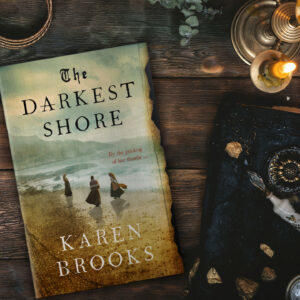
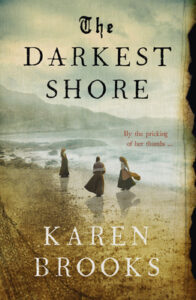
She’s also the author of 13 books. She’s written bestsellers, published in Australia and by William Morrow in the USA and UK. Her latest, set in Scotland in the 1700s, and based on a terrible true story, is The Darkest Shore.
You can connect with Karen via her website, Facebook and Twitter. Buy links to her books are on her Books page.
What or who inspired you to first write? Which authors have influenced you?
The first person to inspire me to write (novels) was Sara Douglass (Warneke). She was one of my closest friends and witnessing her putting her amazing ideas into words, creating fully realised worlds that became fantastical stories and later seeing them in print, was inspirational. To know someone you love did it (plus she was very supportive and encouraging) enabled me to finally give my long-held dream of being a writer of fiction a go.
As for which authors influenced me, that’s a harder answer to give. Without sounding clichéd or like I’m avoiding a direct answer, I think every single author I read influences me. I’m an avid reader across all genres and the pleasure reading gives me, the beauty of what these writers accomplish, whether it be a marvellous historical fiction, a lighter romantic read, the amazing scope of both fantasy and sci-fi, gritty crime, literary works (to me, all works are “literary” in one sense and often give me lexical envy) and erudite, philosophical, educational and amusing non-fiction all influence me. Not only to appreciate the joys of reading, but the craft of writing as well – together, they influence me to hone my craft and be better at telling stories!
What is the inspiration for your current book? Is there a particular theme you wished to explore?
The inspiration for my current book, The Darkest Shore, was two-fold. First, it was learning about the fishwives of Scotland (and other areas of Great Britain) and the work they used to do, some of the prejudices they endured and how resilient and sassy they were. This set me off on a path of learning more about them. I was also travelling to Scotland for a friend’s wedding and some other good friends told me I would not only learn heaps about the fishwives (who, in later decades, came to be known as “Herring Lasses”) but potentially about witchcraft as well, if I stayed in the Fife region in the east. How could I resist? My friends were right on both counts. Upon visiting the Fife coast and in particular, the fishing village of Pittenweem (I was staying in the neighbouring one of Anstruther – both beautiful), I encountered not only the history of fishwives and a functioning fishing village (Pittenweem), but a horrific story of a witch hunt and the consequent fallout of that on one tiny village in the early 1700s. After learning about it, I couldn’t NOT tell it.
 I wanted to explore a few themes in the book (in saying that, I don’t often set out to write with a theme in mind. I find they emerge as I write, almost organically, which is wonderful) such as social injustice and its corollary (you hope) justice. The power of a persuasive voice to influence people to act against their better judgment and moral code, but also how good people united in a worthy cause can be a force to be reckoned with as well. How fighting the good fight is not only a noble thing but the right thing to do. I also wanted to explore female friendship, loyalty and the bonds these forge, even when thrust in molten fires. The role of superstition in small communities and religion too. Also, the deadly power of patriarchy and how men and women can be complicit in their own oppression – this latter theme I find not only endlessly fascinating (and sad) but increasingly relevant today. Other themes are there too and I know readers have picked up ones I never intended and that is just marvellous.
What period of history particularly inspires or interests you? Why?
I honestly don’t think any one period interests me exclusively, though years ago, I would have said Ancient Greece and Rome – I’ve always loved those times and studied them at university. However, the more I research and the different periods I write in (14th, 15th, 16th, and 17th centuries so far), the more I find them all inspiring and utterly enthralling. There isn’t an era I’ve yet encountered that isn’t rich with startling people and facts. It’s hard to let go of the research and write, let alone choose what to include in a novel – though, of course, history must serve the story, not dominate it. So, while wars and politics and the impact of different laws and monarchs etc are interesting in and of themselves (never mind plots and plans and the machinations of those in power to hold onto it), it’s the impact of these things on the ordinary (and not so ordinary) people that most interest me. How decisions made in the corridors of power, or by those who had sway, how social changes, poverty, disease, exploration, business, and education, literacy etc. can affect the lives of those who simply want to live. Humans are endlessly amazing, whether they lived in ancient times or now – it’s them I want to explore and in particular, the women who, until the last few decades, have largely been absent from so much of recorded and fictive history.
What resources do you use to research your book? How long did it take to finish the novel?
I use anything and everything I can – from academic journal articles and books, to fabulous non-fiction books, biographies, letters, diaries, maps, music, artwork, the literature and plays of a period. I also read fiction set in the period by other writers, though not until I know the story I want to tell and have my “voice”. I call it immersive research. I lose myself in the eras. For The Darkest Shore, I even had the council minutes from Pittenweem and Anstruther of that period to draw upon and letters between the local council, concerned citizens and the privy council as resources.
It generally takes me between 1-2 years to finish a book from start to final edit. I am researching the next one before the edits arrive on a current one. So, for example, I have submitted another novel and have commenced research on my next two (in preparation for writing a detailed synopsis and choosing which one I will write first – I love both!).

What do you do if stuck for a word or a phrase?
Go for a walk with the dogs, watch some good television or read a book. I know I have to walk away from my desk and just give my mind time to come up with what I need. It almost always works J
Is there anything unusual or even quirky that you would like to share about your writing?
I never write in my pyjamas; I always “dress” for work – comfortably, but with hair brushed, a bit of makeup – as if I was at my former job. I treat it as a business and work business hours (mostly). Oh, and I always burn scented candles (various, but usually ones that will trigger me into a historical time and place) and listen to music written in the era. It cannot have lyrics though – that is too distracting.
Do you use a program like Scrivener to create your novel? Do you ever write in long hand?
I do use Scrivener and love it. I also write in long hand in my journals – notes from all my research and reading. I have many, many, journals with maps, pictures, and endless notes and ideas. I write in Scrivener up until I have a first edited draft, then I move it across into Word and edit again and prepare it for my agent and publisher. It’s quite momentous that moving it from one application to another, because I know there is a complete (unedited professionally) work there. It’s both immensely satisfying and utterly nerve-wracking… will people like it?!
Is there a particular photo or piece of art that strikes a chord with you? Why?
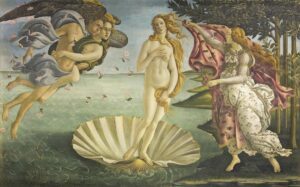 So many… but, if I had to pick one, it’s Botticelli’s ‘Birth of Venus’. I love the Greek and Roman myths and Botticelli’s take on these is exquisite. Birth of Venus is just one example. When you think of Venus/Aphrodite’s birth (which was quite violent) and then his rendering of her coming to human shores, naked and thus vulnerable (but oh, so knowing), blown gently by putti zephyrs, about to be cloaked in spring, her gorgeous hair embracing her and her sensuality, adrift for a moment on that delicate shell before she steps onto land and wreaks havoc with human hearts – I just love it. It’s a liminal moment, a threshold one, that changes the world forever. But there are many works that move me (sometimes, to tears) and inspire – but I have two copies of that particular work in my house. I also love the work of the Romantics – William Morris, et al.
What advice would you give an aspiring author?
Write, write, write, read, read, read, read. Quite seriously, these are the foundations stones, the scaffolding upon which books are born/built. It’s the one thing in common almost all authors have – we read lots and we write a great deal – most of it not very good! J But it’s only once words are on a page that they can be reformed into a story, through deleting, editing, and changing them – so get them down. The other piece of advice is don’t be afraid of the delete button. It’s a writer’s best friend. Sometimes, to make a story work, we have to kill our darlings (actually, we often don’t murder them, we just relocate them to a different file) J This is a variation of advice I’ve been given, I’ve heard others receive, and now it’s my turn to pass it on as well. I really hope it helps because if there’s one thing we can never get enough of, it’s great stories – something Covid-19 has made us appreciate even more.
Tell us about your next book.
I just submitted the ms for my next book which has the working title of The (Mostly) True Story of the Wife of Bath. It’s my 14th book (I cannot credit it). The Wife of Bath is a prominent character in Geoffrey Chaucer’s The Canterbury Tales. I’ve long been fascinated with her for a variety of reasons. All we know about her from the poem (she’s introduced in the prologue, tells us her story and then a tale) is she’s lusty, loud, travelled on pilgrimages a great deal, is well-versed in the classics, philosophy, and the Bible, a brilliant weaver and part of the rising middle classes. She was first married at the age of 12 and has had five husbands, three of whom were very old and she manipulated terribly, two whom were younger than her first three (her last was half her age) and whom broke her heart… among other things. According to the Wife what she desires most in a relationship is mastery… at least, this is what Chaucer would have us believe – and you can imagine how listeners of the time would have responded to such audacity – and from a woman! But, is the Wife a proto-feminist as some critics claim or is she simply a misogynist mouthpiece for Chaucer, confirming men’s negative views of women? The novel uses the Wife’s basic story as a framework to tell the tale of a medieval girl who, for reasons I won’t reveal, is married very young and then grows up against and survives a rich backdrop including not only many marriages, but plague, war, famine, prejudice, bigotry, social changes, class and gender prejudice; she triumphs, fails, experiences terrible loss, heartache and hardship but gains love, friendship, knowledge and ultimately self-awareness. Does she gain or even want mastery over men? The book is epic in one sense, in that it covers many years, different rulers, politics, people, places and pilgrimages to distant lands, but the story it tells is also intimate, timeless, familiar and hopefully moving and exciting too. I loved writing it and I loved writing this rather audacious girl/woman as a living, breathing being of her time, her strengths and frailties, her dreams and hopes, loves and foes and the many challenges she would have faced.
1703: The Wild East Coast of Scotland
Returning to her home town of Pittenweem, fishwife and widow, Sorcha McIntyre knows she faces censure and mistrust. After all, this is a country where myth and leg3end are when into the fabric of the everyday, a time when those who defy custom like Sorcha has are called to account. It is dangerous to be a clever woman who “doesn’t know her place” in a town rife with superstition.
So, when a young local lad falls victim to witchcraft, the Reverend Cowper and the townsfolk know who to blame. What follows for Sorcha and her friends is a terrifying battle, not only for their souls, but for their lives, as they are pitted against the villagers’ fear, a malevolent man and the might of the church.
Thanks so much for taking the time to give such thoughtful answers, Karen. Best of luck with The Darkest Shore – can’t wait to see what the your ‘mostly true’ Wife of Bath gets up to in your next book!
Haven’t subscribed yet to enter into giveaways from my guests? You’re not too late for the chance to win this month’s book if you subscribe to my Monthly Inspiration newsletter for giveaways and insights into history – both trivia and the serious stuff! In appreciation for subscribing, I’m offering an 80 page free short story Dying for Rome -Lucretia’s Tale.
May 2, 2020
On Inspiration: Interview with James Conroyd Martin
 My guest today is James Conroyd Martin who grew up in a suburb of Chicago and attended St. Ambrose and DePaul Universities. He managed to keep writing while teaching high school English, Speech, and Creative Writing for thirty years. Retired from teaching, Martin lives in Portland, Oregon, and writes full time. After publishing Push Not the River, a novel set in Poland and based on the diary of a friend’s ancestor, three more novels with Poland as a background followed, along with a paranormal story, Hologram: A Haunting. His most recent novel, Fortune’s Child: A Novel of Empress Theodora, is the first of a duology that brings to life an extraordinary woman of the sixth century.
You can connect with James via his website, Facebook, Twitter and Instagram.
Fortune’s Child: A Novel of Empress Theodora is available on Amazon US, UK, Canada and Australia. You can find all James’ books on his Amazon page.
What or who inspired you to first write? Which authors have influenced you?
I enjoyed writing from grade school on, but it was in college when I read Of Human Bondage by Somerset Maugham that made me want to write novels. Other early inspirations came from Henry James, Edith Wharton, Emily Bronte, Mary Shelley, Nathaniel Hawthorne, Mary Stewart, and Mary Renault.
What is the inspiration for your current book? Is there a particular theme you wished to explore?
 I was living in Hollywood when I started Fortune’s Child: A Novel of Empress Theodora. An agent had taken my first novel to send out, so she told me to start something else. I was taking an Art Appreciation class for fun at the time and we were studying the Byzantine mosaics located in Ravenna, Italy. The professor pointed to the likeness of Empress Theodora and said, “I’m not a writer, but if I were, that would be the woman I’d be writing about.” Boing! That was it. What a fascinating woman, much like an Eva Peron in the sixth century. I went down to the Hollywood Public Library and took out a dozen books on Theodora, Constantinople, and Rome. Strangely enough, the library burned to the ground the next week. Life interfered, but the project remained on the back burner through a couple of decades, until recently. So, I could site the theme of resiliency. Theodora always rose again after being struck down, just as this story was fated to come to light despite the interruptions.
 What period of history particularly inspires or interests you? Why?
For now it’s the Byzantine period because of the times in which Theodora and her husband Emperor Justinian lived. My first book Push Not the River came to me by way of a friend who had a diary written by his ancestor, a Polish Countess in the 1790s, a fascinating time for Poland. That book led to a trilogy and then to a stand-alone novel on the Polish hussars at the Battle of Vienna.
What resources do you use to research your book?
The library, of course, as well as the internet and many purchased resource books. Often, too, I’ll e-mail experts on the eras. For instance, I was just trying to learn the exits and entrances of the Hippodrome in Constantinople/Istanbul.
 How long did it take to finish the novel?
Hard to say since I worked at it during different eras, but all total, maybe six years.
What do you do if stuck for a word or a phrase?
I use a thesaurus, a Flip Dictionary, and an “Ultimate Visual Dictionary.”
Is there anything unusual or even quirky that you would like to share about your writing?
I’m not sure it’s quirky, but getting a scene down the first time is terrorizing. However, I love to go back and rework and edit. Revising? No problem.
Do you use a program like Scrivener to create your novel? Do you ever write in long hand?
No Scrivener or anything like that. I used to write in long hand, but now I just scratch a few ideas down for a chapter and then I go right to my desktop computer. However, I broke my leg in January and had to remain on the first floor, away from my second floor office. After a couple of days of no writing, I started writing long hand again. I’m glad to be back in the office again!
Is there a particular photo or piece of art that strikes a chord with you? Why?
The mosaics at the Basilica di San Vitale in Ravenna, Italy, for the inspiration they provided me for the current book, the first of a duology.

Theodora (San Vitale)
What advice would you give an aspiring author?
Read, read, read in the area in which you wish to write. Take classes, study, join critique groups. Most importantly, don’t be too impatient to get published! Know that you’ve done your best and hit your stride before you put it out there. Also, find good editors.
 Tell us about your Poland trilogy.
My series The Poland Trilogy begins with Push Not the River, a family saga based on young Countess Anna’s diary written during the political upheaval in Poland at the time of the Third of May Constitution (1791). Against a Crimson Sky continues Anna’s saga as Napoleon comes calling, implying independence from her neighbors would follow if only Polish lancers would accompany him on his fateful 1812 march into Russia. Anna’s family fights valiantly to hold on to a tenuous happiness, their country, and their very lives. Set against the November Rising (1830-31), The Warsaw Conspiracy depicts partitioned Poland’s daring challenge to the Russian Empire. Brilliantly illustrating the psyche of a people determined to reclaim independence in the face of monumental odds, the story features Anna’s sons and their fates in love and war.
Tell us about your next book.
Too Soon the Night will conclude the amazing story of Theodora. From a little girl dancing at the Hippodrome, to an actress, prostitute, mistress, outcast, she becomes Empress of the New Rome and the civilized world.
Theodora: actress, prostitute, mistress, feminist. And Byzantine Empress of the civilized world. Stephen: handsome Syrian boy, wizard’s apprentice, palace eunuch. And Secretary to the Empress. How does this unlikely pair become such allies that one day Empress Theodora asks Stephen to write her biography?
From a very young age, Theodora, daughter of a circus bearkeeper in Constantinople, sets her sights well above her station in life. Her exquisite beauty sets her apart on stages and in the eyes of men.
Stephen, a Syrian lad of striking good looks, is sold by his parents to a Persian wizard, who teaches him a skill in languages that will serve him well.
By the time Destiny brings them together in Antioch, Theodora has undergone heart-rending trials and a transformation, while Stephen has been sold again … and castrated.
Discover the enduring bond that, however imperfect, prompts Theodora—as Empress—to request palace eunuch Stephen to write her biography.
“A historical novel set in sixth-century Constantinople charts the extraordinary ascent of a woman from poverty to royal power. In this ambitious novel, the author vividly brings to life the cinematic story of Theodora’s life, chronicling her rise, more halting than meteoric, to spectacular power. Martin’s command of the historical period—not just the chief political events, but also the nuances of its cultural mores—is masterful. Furthermore, he conjoins that scholarly rigor with novelistic excitement—the entire tale is intelligently conveyed with great emotional poignancy. [This is] a meticulously researched historical account presented in the form of a thrilling political drama.” KIRKUS REVIEWS
Thanks James – so delighted you’ve converted to the ancient world!
Haven’t subscribed yet to enter into giveaways from my guests? You’re not too late for the chance to win this month’s book if you subscribe to my Monthly Inspiration newsletter for giveaways and insights into history – both trivia and the serious stuff! In appreciation for subscribing, I’m offering an 80 page free short story Dying for Rome -Lucretia’s Tale.
On Inspiration: Interview with James Conroy Martin
My guest today is James Conroyd Martin who grew up in a suburb of Chicago and attended St. Ambrose and DePaul Universities. He managed to keep writing while teaching high school English, Speech, and Creative Writing for thirty years. Retired from teaching, Martin lives in Portland, Oregon, and writes full time. After publishing Push Not the River, a novel set in Poland and based on the diary of a friend’s ancestor, three more novels with Poland as a background followed, along with a paranormal story, Hologram: A Haunting. His most recent novel, Fortune’s Child: A Novel of Empress Theodora, is the first of a duology that brings to life an extraordinary woman of the sixth century.
You can connect with James via his website, Facebook, Twitter and Instagram.
Fortune’s Child: A Novel of Empress Theodora is available on Amazon US, UK, Canada and Australia. You can find all James’ books on his Amazon page.
What or who inspired you to first write? Which authors have influenced you?
I enjoyed writing from grade school on, but it was in college when I read Of Human Bondage by Somerset Maugham that made me want to write novels. Other early inspirations came from Henry James, Edith Wharton, Emily Bronte, Mary Shelley, Nathaniel Hawthorne, Mary Stewart, and Mary Renault.
What is the inspiration for your current book? Is there a particular theme you wished to explore?
I was living in Hollywood when I started Fortune’s Child: A Novel of Empress Theodora. An agent had taken my first novel to send out, so she told me to start something else. I was taking an Art Appreciation class for fun at the time and we were studying the Byzantine mosaics located in Ravenna, Italy. The professor pointed to the likeness of Empress Theodora and said, “I’m not a writer, but if I were, that would be the woman I’d be writing about.” Boing! That was it. What a fascinating woman, much like an Eva Peron in the sixth century. I went down to the Hollywood Public Library and took out a dozen books on Theodora, Constantinople, and Rome. Strangely enough, the library burned to the ground the next week. Life interfered, but the project remained on the back burner through a couple of decades, until recently. So, I could site the theme of resiliency. Theodora always rose again after being struck down, just as this story was fated to come to light despite the interruptions.
What period of history particularly inspires or interests you? Why?For now it’s the Byzantine period because of the times in which Theodora and her husband Emperor Justinian lived. My first book Push Not the River came to me by way of a friend who had a diary written by his ancestor, a Polish Countess in the 1790s, a fascinating time for Poland. That book led to a trilogy and then to a stand-alone novel on the Polish hussars at the Battle of Vienna.
What resources do you use to research your book?
The library, of course, as well as the internet and many purchased resource books. Often, too, I’ll e-mail experts on the eras. For instance, I was just trying to learn the exits and entrances of the Hippodrome in Constantinople/Istanbul.
How long did it take to finish the novel?Hard to say since I worked at it during different eras, but all total, maybe six years.
What do you do if stuck for a word or a phrase?
I use a thesaurus, a Flip Dictionary, and an “Ultimate Visual Dictionary.”
Is there anything unusual or even quirky that you would like to share about your writing?
I’m not sure it’s quirky, but getting a scene down the first time is terrorizing. However, I love to go back and rework and edit. Revising? No problem.
Do you use a program like Scrivener to create your novel? Do you ever write in long hand?
No Scrivener or anything like that. I used to write in long hand, but now I just scratch a few ideas down for a chapter and then I go right to my desktop computer. However, I broke my leg in January and had to remain on the first floor, away from my second floor office. After a couple of days of no writing, I started writing long hand again. I’m glad to be back in the office again!
Is there a particular photo or piece of art that strikes a chord with you? Why?
The mosaics at the Basilica di San Vitale in Ravenna, Italy, for the inspiration they provided me for the current book, the first of a duology.
Theodora (San Vitale)
What advice would you give an aspiring author?
Read, read, read in the area in which you wish to write. Take classes, study, join critique groups. Most importantly, don’t be too impatient to get published! Know that you’ve done your best and hit your stride before you put it out there. Also, find good editors.
Tell us about your Poland trilogy.My series The Poland Trilogy begins with Push Not the River, a family saga based on young Countess Anna’s diary written during the political upheaval in Poland at the time of the Third of May Constitution (1791). Against a Crimson Sky continues Anna’s saga as Napoleon comes calling, implying independence from her neighbors would follow if only Polish lancers would accompany him on his fateful 1812 march into Russia. Anna’s family fights valiantly to hold on to a tenuous happiness, their country, and their very lives. Set against the November Rising (1830-31), The Warsaw Conspiracy depicts partitioned Poland’s daring challenge to the Russian Empire. Brilliantly illustrating the psyche of a people determined to reclaim independence in the face of monumental odds, the story features Anna’s sons and their fates in love and war.
Tell us about your next book.
Too Soon the Night will conclude the amazing story of Theodora. From a little girl dancing at the Hippodrome, to an actress, prostitute, mistress, outcast, she becomes Empress of the New Rome and the civilized world.
Theodora: actress, prostitute, mistress, feminist. And Byzantine Empress of the civilized world. Stephen: handsome Syrian boy, wizard’s apprentice, palace eunuch. And Secretary to the Empress. How does this unlikely pair become such allies that one day Empress Theodora asks Stephen to write her biography?
From a very young age, Theodora, daughter of a circus bearkeeper in Constantinople, sets her sights well above her station in life. Her exquisite beauty sets her apart on stages and in the eyes of men.
Stephen, a Syrian lad of striking good looks, is sold by his parents to a Persian wizard, who teaches him a skill in languages that will serve him well.
By the time Destiny brings them together in Antioch, Theodora has undergone heart-rending trials and a transformation, while Stephen has been sold again … and castrated.
Discover the enduring bond that, however imperfect, prompts Theodora—as Empress—to request palace eunuch Stephen to write her biography.
“A historical novel set in sixth-century Constantinople charts the extraordinary ascent of a woman from poverty to royal power. In this ambitious novel, the author vividly brings to life the cinematic story of Theodora’s life, chronicling her rise, more halting than meteoric, to spectacular power. Martin’s command of the historical period—not just the chief political events, but also the nuances of its cultural mores—is masterful. Furthermore, he conjoins that scholarly rigor with novelistic excitement—the entire tale is intelligently conveyed with great emotional poignancy. [This is] a meticulously researched historical account presented in the form of a thrilling political drama.” KIRKUS REVIEWS
Thanks James – so delighted you’ve converted to the ancient world!
Haven’t subscribed yet to enter into giveaways from my guests? You’re not too late for the chance to win this month’s book if you subscribe to my Monthly Inspiration newsletter for giveaways and insights into history – both trivia and the serious stuff! In appreciation for subscribing, I’m offering an 80 page free short story Dying for Rome -Lucretia’s Tale.
April 2, 2020
On Inspiration: Interview with Anna Castle
 My guest today is Anna Castle who writes the Francis Bacon mystery series and the Professor & Mrs. Moriarty mystery series. She has earned a series of degrees — BA in the Classics, MS in Computer Science, and a PhD in Linguistics — and has had a corresponding series of careers — waitressing, software engineering, documentary linguist, assistant professor, and digital archivist. Writing fiction combines her lifelong love of stories and learning.
You can connect with Anna via her website, Facebook, Pinterest and Bookbub. You can find all the books in both her series on Amazon.
 What or who inspired you to first write? Which authors have influenced you?
I’ve wanted to write novels since college, but never took it seriously until my late 30’s. Then I binged on Elizabeth Peters’ novels and started thinking, “Hey, I could do this.” So she’s the one who got me rolling. J.R.R. Tolkein is the foundational influence for my sense of language and story, but P.G. Wodehouse better reflects my worldview, if I can put it like that.
What is the inspiration for your current book? Is there a particular theme you wished to explore?
I’m not much good at themes, though I’m constantly trying to come up with them and stick to them. Alas, I forget about them before very long. Mostly, I come up with a crime or a villain and everything develops out of that. For the Moriartys, I like to explore the lush variety of financial crimes in the late nineteenth century. For the Bacon series, I’m usually picking up on some event that happened in his life or around him in the year of the current book. The last book, The Spymaster’s Brother, was set in 1592, which is the year Francis’s brother Anthony came home at last from France. So it’s about Anthony and his time in France.
 What period of history particularly inspires or interests you? Why?
I like periods of rampant cultural transformation, like the Elizabethan period and the Victorian period. They’re full of larger-than-life characters and lots of fruitful conflict to explore. And fun costumes!
What resources do you use to research your book? How long did it take to finish the novel?
Having retired as staff from the University of Texas, I have full privileges in one of the world’s biggest research libraries. (Not to brag or anything.) I read less now that I’m well into my series. I know my two periods of interest pretty well by this time. But I’ll read everything I can find about the central issue in each new book. Usually it’s something focused like “Indians in London in the late nineteenth century,” so there isn’t much.
It typically takes me 3 months to finish the first & second draft. Then a month for content feedback, which I get from beta readers at this point. Then another month to do draft 3, get copy-editing, do draft 4, format & publish. So that’s 5 months all told.
What do you do if stuck for a word or a phrase?
I jump into the online OED and look for inspiration. Or I just write whatever’s in my head and let future revisions take care of it. I try not to fuss too much about language in the first couple of drafts.
 Is there anything unusual or even quirky that you would like to share about your writing?
I’m orderly-minded as a rule: start a book and work until it’s finished. That’s kind of quirky for a writer :-). And I’m all done with those inner critics people moan about. Write enough books and they just shrivel away.
Do you use a program like Scrivener to create your novel? Do you ever write in long hand?
Ugh to both! I write in Word. Why bother to learn a new tool?
Is there a particular photo or piece of art that strikes a chord with you? Why?
I look at portraits a lot when I’m writing. I think about the wary, “don’t-hurt-me” look on Francis Bacon’s face in his middle-aged portrait, compared to the stunningly arrogant look in his portrait at 18. Life slapped him around pretty good.

What advice would you give an aspiring author?
Focus on writing until you learn your craft. Story-telling is something you can learn; it doesn’t have to flow from the cosmos. Take courses, read tons of books on craft, especially about your chosen genre. Write three books, getting good critical feedback and revising each one twice, before you even start thinking about how you’re going to publish them. And for heavens’ sake, don’t worry about marketing until you have three books in the pipeline!
Tell us about your next book
The next one is being copy-edited as I type these words. This is the fourth in the Professor & Moriarty mystery series, titled Moriarty Lifts the Veil. I’m including the blurb below, so I won’t belabor it here. It’ll be out March 15th.
The Moriarty mysteries are set in late Victorian times, mostly in London. My Prof. Moriarty is a good guy, but he’s willing to skirt the law if the law is unfair — especially when his wife, an actress brought up as a confidence trickster, wants him to do it.
The Francis Bacon mysteries are set in late Elizabethan times, also mostly in London. Francis Bacon reluctantly puts down his books to solve crimes in Elizabethan London, aided by Thomas Clarady, a privateer’s son who will do anything to climb into the ranks of the gentry — or up to a lady’s bedchamber.

James and Angelina stave off their late summer boredom by accepting two cases: one for him, and one for her. His looks like a scheme to swindle Army veterans out of their discharge pay. Hers is finding a missing servant, an Indian ayah who was probably poached by another officer’s wife. Simple enough on both counts. But once they start asking questions, things take an ugly turn. James learns the army barracks is riddled with corruption. Angelina uncovers a vile secret in the circle of officers’ wives. When their best friend is accused of murdering an officer, the Moriartys must join forces and exercise every scrap of their ingenuity to clear his name and put the real villains behind bars.
Many thanks Anna. Good luck with your next instalment in the Moriartys series! Readers can find Moriarity Lifts the Veil on Amazon, and all the books in series here.
Haven’t subscribed yet to enter into giveaways from my guests? You’re not too late for the chance to win this month’s book if you subscribe to my Monthly Inspiration newsletter for giveaways and insights into history – both trivia and the serious stuff! In appreciation for subscribing, I’m offering an 80 page free short story Dying for Rome -Lucretia’s Tale.


