
Elisabeth Storrs's Blog, page 10
March 4, 2018
On Inspiration: Interview with Joy Jordan-Lake
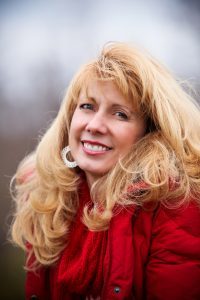 Today I welcome Joy Jordan-Lake to Triclinium. She is a very accomplished lady! Joy is the author of the bestselling novel A Tangled Mercy, a dual timeline story set in 1822 and 2015 Charleston, South Carolina, and six other books, including Blue Hole Back Home, winner of the 2009 Christy Award for Best First Novel. Chosen by both Amarillo College and Baylor University as the Common Book in 2014 and 2009, respectively, Blue Hole Back Home has become required reading in a number of diverse educational settings, and, like A Tangled Mercy, is also a frequent book club selection. Recently, Joy has ventured into the writing of children’s picture books, and A Crazy-Much Love, her first book in this genre will be published in September 2019.
Joy’s five other books include a collection of short stories and reflections, an academic text, and three other nonfiction works. Joy holds a Ph.D. and masters in English and American Literature, as well as a Masters from a theological seminary. While living in Cambridge, Massachusetts, she led initiatives targeting low-income and homeless families. She and her husband have three children and live just south of Nashville, where she writes and, some semesters, teaches as an adjunct professor for Belmont University. When not spending time hiking or hanging out with her kids, she loves reading, traveling and sequestering herself (for writing and more reading) in her attic office with a sweet, needy Golden Retriever and the new addition, a rescued Maltipoo pup.
You can connect with Joy via her website, Facebook, Twitter and Instagram. You can buy A Tangled Mercy and Blue Hole Back Home on Amazon.
What or who inspired you to first write?
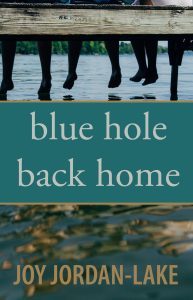 I read voraciously as a kid, partly because I was sick a lot, and partly because I was painfully shy, and partly because I loved being able to enter another world through books–maybe one where I wasn’t so sickly or shy and instead could be sassy and confident, sword-wielding and fierce.
Which authors have influenced you?
As a child, I loved L.M. Montgomery and Louisa May Alcott, and then, still early on, the 19th-century British novelists like Jane Austen and then Charles Dickens and others. This would all be great–and it certainly helped me expand my vocabulary, except that I still have a kind of 19th-century rhythm about my writing, so that it feels normal to me to describe a tree for five pages. You think I’m kidding. This is NOT, I have found, a good thing. Thank goodness for editors who keep me moving the action along at a more 21st-century pace!
What is the inspiration for your current book?
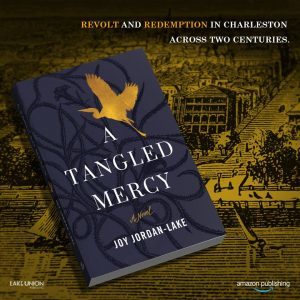 A Tangled Mercy is my most recent book to be published. I wrote about its inspiration fairly extensively in the novel’s Note from the Author, but the short-ish version is that the historical story of the dual timeline plot originally came from research for my doctoral dissertation that began–brace yourself–20 years ago. I became so much more interested in the historical characters–Denmark Vesey, for example, and the Grimké sisters and a blacksmith named Tom Russell– and then the stories I imagined swirling around them, I could barely keep slogging away on the dissertation–and it ended up taking me ridiculously long to finish because I began spending more time on the novel it inspired. The present-day storyline was originally purely imagination, based loosely on a floundering graduate student that I could totally relate to from my own floundering grad student days. I added the contemporary storyline to the novel about 4 years ago so that I include some lighter bits, including some humor, and some present-day perspectives on Charleston, SC, a fascinating city where you always feel haunted by the past–in both charming and deeply disturbing ways. And then there was the horrific massacre in Charleston in 2015, quite literally the week I’d finished completely re-writing and putting what I thought were the finishing touches on the novel. Since so many of the settings and events at the center of the story already involved places and people connected with the tragedy, I knew I either had to shelve the book permanently or go back and incorporate it as part of the story. My agent and I agreed that I would try, and that if in any way the new version seemed to smack of trying to profit from someone else’s pain, she would tell me, and we’d simply scrap the book. My goal has been not just to try and tell a riveting story, but to honor the people of Charleston who’d shown such extraordinary courage and grace 200 years ago in 1822 and later in 2015. The real lives behind this story are truly extraordinary, and at the heart of its inspiration.
A portion of the proceeds from A Tangled Mercy go to the Emanuel African Methodist Episcopal Church, the scene of the 2015 racially motivated shooting, and to the permanent memorial to the victims being created by the designer of the 9/11 memorial. Here’s link to the planned memorial.
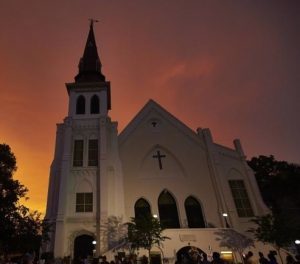
Emanuel African Methodist Episcopal Church, Charleston, South Carolina
Is there a particular theme you wished to explore?
Courage. Redemption. Forgiveness.
What period of history particularly inspires or interests you? Why?
I love the 19th-century, but any time period is potentially fascinating to me once I begin learning more that I didn’t know. It’s always startling to find issues that the people of 1822 or 1895 (my current work in progress) or 1946 were struggling with that are struggles again today. In the 1890s for example, part of the political debate was over white supremacy, and which ethnic groups were most despised, and from which countries. It’s really chilling to read, and to know we’re still having this debate well over a century later–only some of the despised countries have changed. The debate, though, rages on.
What resources do you use to research your book?
Everything I can find. Libraries, local experts, guided tours, Internet… And if it’s a fun location, mandatory research trips!
How long did it take to finish the novel?
I’ve written one of my past books in as little as a few months, but most of them take a year or several years, depending on how much research and rewriting is involved. This latest novel was the mother of all rewrites for lots of different reasons, but it was actually the first book I started more than 20 years ago. In the interim, I published several other books and taught university classes and had two babies and adopted one…all while A Tangled Mercy kept not being quite right in the way I was telling the story. So, yeah, 20 years is the answer on that, which I hope doesn’t discourage new writers. Instead of the very depressing 20 year answer, I’d hope aspiring writers could focus on this: First, you can take heart that you will never fail more times than I did on any single book. And second, all writers learn we have to be enormously tenacious if we want to write as a career, and that book was the acid test for me. I could just never walk away from the story for some reason, and finally, thanks to some remarkable very real people at the heart of the novel, it finally came together and was published last November.
What do you do if stuck for a word or a phrase?
Sometimes use the online Thesaurus. Sometimes get up for another cup of coffee, which seems to work even better.
Is there anything unusual or even quirky that you would like to share about your writing?
I like to write in my attic office or on my screened porch with my two dogs, one on either side. But if I’m feeling especially easily distracted, it helps to go to a public place like a coffee shop or restaurant and write there–preferably a place with no Internet access for my laptop. It’s worth leaving a big tip in order to have the privilege of hanging out in a place where there is no laundry waiting to be done.
Do you use a program like Scrivener to create your novel? Do you ever write in long hand?
I mostly use Microsoft Word BUT I’ve found that sometimes when I’m terribly stuck or uninspired or feeling like I’m just grinding out words to reach my day’s page goal, switching to write long hand can knock me out of my slump. Also, it can be really helpful if I keep being sucked in to social media or answering email to go back to an old-fashioned form of writing that unhooks me from the creativity-killing dangers of technology.
Is there a particular photo or piece of art that strikes a chord with you? Why?
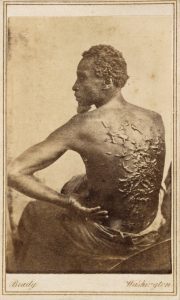 I love to look at photos or daguerreotypes from the era I’m writing about. Right now, I’m watching lots of documentaries from the Gilded Age and loving seeing the old film clips and photos. This early photo was taken in 1863, so later than my 1822 storyline, but it depicts the back of a slave named Gordon who escaped from bondage. The photo was used in abolitionist circles to depict the horrific beatings of the sale system.
What advice would you give an aspiring author?
NEVER GIVE UP. And learn from every rejection or critique that comes your way. They may be wrong in precisely what they are saying about your writing (especially if they tell you to give up and go back to waiting tables), but there’s usually something you can take and learn from to improve. And make friends who are also writers, since they will understand your manias and loose screws in ways no one else ever can entirely, no matter how much they love you.
Tell us about your next book.
This next book takes place at the Biltmore Estate in North Carolina in 1895/96, a kind of American “Downton Abbey.” Like A Tangled Mercy, (and like “Downton Abbey,” come to think of it) this novel involves lots of huge social questions and struggles, as well as individual character’s searches for a lost family member, another hiding from his past–and from someone who wants him dead, and others longing for love or power or change.
Thank you so much for joining me, Joy. And well done for donating proceeds from you book to such a worthy cause.
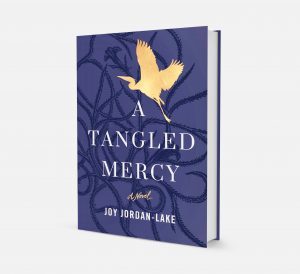
Told in alternating tales at once haunting and redemptive, A Tangled Mercy is a quintessentially American epic rooted in heartbreaking true events examining the harrowing depths of human brutality and betrayal, and our enduring hope for freedom and forgiveness.
After the sudden death of her troubled mother, struggling Harvard grad student Kate Drayton walks out on her lecture—and her entire New England life. Haunted by unanswered questions and her own uncertain future, she flees to Charleston, South Carolina, the place where her parents met, convinced it holds the key to understanding her fractured family and saving her career in academia. Kate is determined to unearth groundbreaking information on a failed 1822 slave revolt—the subject of her mother’s own research.
Nearly two centuries earlier, Tom Russell, a gifted blacksmith and slave, grappled with a terrible choice: arm the uprising spearheaded by members of the fiercely independent African Methodist Episcopal Church or keep his own neck out of the noose and protect the woman he loves.
Kate’s attempts to discover what drove her mother’s dangerous obsession with Charleston’s tumultuous history are derailed by a horrific massacre in the very same landmark church. In the unimaginable aftermath, Kate discovers a family she never knew existed as the city unites with a powerful message of hope and forgiveness for the world.
 Interested in learning the inspiration behind other novels? Subscribe to my Monthly Inspiration newsletter for giveaways from my guests – and history – both trivia and the serious stuff! You’ll also receive an 80 page free short story Dying for Rome -Lucretia’s Tale.


February 3, 2018
On Inspiration: Interview with Lisa J Yarde
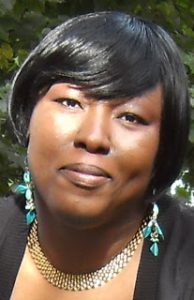 I’m delighted to welcome Lisa J. Yarde to Triclinium today. Lisa writes fiction inspired by the Middle Ages in Europe. She is the author of eight historical novels, including the six-part Sultana series set in Moorish Spain, where rivalries and ambitions threaten the fragile bonds between members of the last Muslim dynasty to rule in Europe. She serves as the social media manager of the NYC chapter of the Historical Novel Society after having been its co-chair (2015-2017). Learn more about Lisa and her writing at her website and through her Brooklyn Scribbler blog. Follow her on Twitter, Pinterest or become a Facebook fan. Join her mailing list for news on upcoming releases. You can buy all of Lisa’s Sultana series here.
What or who inspired you to first write? Which authors have influenced you?
The opening line of my bio indicates, ‘Lisa J. Yarde writes fiction inspired by the Middle Ages in Europe – but it would be more appropriate to add, ‘the stories of the losers in history.’ Everyone “knows” what happened in the past, when, where and how, because the victors have typically told us. The all-important why is often missing or usually tainted by those who’ve influenced what we think we know of history. I think it’s the job of historical novelists to fill in the gaps in the record with possibilities. The losers in history often have their own unique stories that enhance, or challenge accepted knowledge.
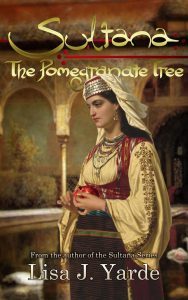 Among authors, my greatest influences have been within and outside my genre. Frank Herbert’s Dune series introduced the concept of world-building, which I’ve applied to fully immerse readers in the medieval period. Historical novelists I’ve long admired include Colin Falconer, who inspired my fascination with harems in his novel about Suleiman the Magnificent’s wife Hurrem, and C.C. Humphreys, Jeanne Kalogridis and the late Persia Wooley for her Guinevere trilogy. New favourites have included Ruth Downie with her Medicus series and Giles Kristian for his Viking saga, Raven.
What is the inspiration for your current book? Is there a particular theme you wished to explore?
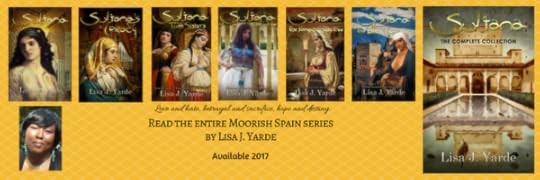
Sultana: The White Mountains is part of a series I began publishing in 2011 – amazing how those seven years have flown by and how much I’m still learning. The series chronicles the lives of the last Muslim dynasty to rule southern Spain from Granada’s Alhambra Palace. This final novel is the story of the final monarch commonly known as Boabdil and his only known spouse, Sultana Moraima, who struggled against Queen Isabella and King Ferdinand to maintain an Islamic presence in the Iberian Peninsula. The existence of Alhambra Palace, and the culture of Spain, including its foods and language is a testament to whether they truly succeeded. A religious studies course in the first year of college introduced me to the history of Muslim Spain and I’ve been intrigued since. The theme of the novels is universal: a strong family united by bonds of love. When those bonds fray, family fortunes go awry.
What period of history particularly inspires or interests you? Why?
The medieval, of course, because so much of what we have been led to believe is wrong. No, medieval people did not run around smelly and ignorant. There was a great exchange of ideas that occurred, particularly beginning in Spain, and led to the Renaissance period.
What resources do you use to research your book? How long did it take to finish the novel?
Too many over the course of twenty-three years of research! Around sixty books, coupled with articles from JSTOR, Brill, and Academia.edu. By the time I reached book #4 of the series, I discovered I had only needed four of the titles: Las Sultanas de la Alhambra by Barbara Boloix Gallardo, Arab Women in the Middle Ages by Shirley Guthrie, The Alhambra: Volume I by Antonio Fernandez-Puertas, and Reading the Alhambra – A visual guide to the Alhambra through its inscriptions by Jose Miguel Puerta Vilchez, which I found in Alhambra Palace’s book shop in my 2013 return trip to Granada. All the knowledge I needed to write the novels in the series. The others were not a waste, but I could have done well with just those four.
What do you do if stuck for a word or a phrase?
I rarely am, but there’s always an online thesaurus handy.
Is there anything unusual or even quirky that you would like to share about your writing?
I cannot write with other people in the room. Just another presence has been a distraction. Dogs are better company. I cannot write without music that is evocative of the period I’m exploring. Hence, the Arabic and Lebanese music in my music folder.
Do you use a program like Scrivener to create your novel? Do you ever write in long hand?
Perhaps under quirks, I should have added that I used to begin each new novel in longhand, but I stopped that after 2012. I’m considering Scrivener now for my next series, because of some overlapping events in the history. But I’m taking baby steps with the program.
Is there a particular photo or piece of art that strikes a chord with you? Why?
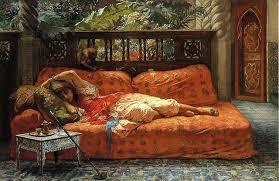
Yes, the inspirational image I kept at eye-level on my computer desk for the Sultana series, The Siesta by Frederick Arthur Bridgman. It’s an Orientalist-period painting in the public domain that I kept coming back to with each successive novel, wondering if I could use it as cover artwork for a book. Then I realized why it would never suit; the Sultanas I wrote about rarely had an opportunity for rest and relaxation as portrayed in the painting. They were too busy securing the future of a dynasty and saving lives.
What advice would you give an aspiring author?
Never stop. If you want to find an agent or editor, never stop querying. You just need one person to say yes. If you want to self-publish, just know that it shouldn’t be a solo effort – hire a cover artist and editor and find some beta readers before you go that route, at minimum.
Tell us about your next book.
I’m so excited to introduce would-be readers to the world of 15th century Romania in a new series about the father and brothers of the real Prince Dracula. In The Order of the Dragon, Sons of the Dragon – Mircea the Proud and Sons of the Dragon – Radu the Beautiful, learn more about late-medieval legends and superstitions, which abounded throughout the forests and river fortresses of Romania. Journey to the regal but dangerous courts of Hungary, and the Turkish conquests of Adrianople and later, Constantinople. For those who share a decades-long fascination with the historical figures who knew Dracula so well, look for those novels in late 2018 and late 2019.
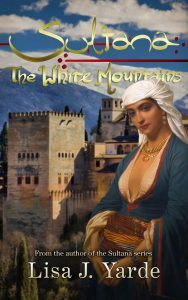
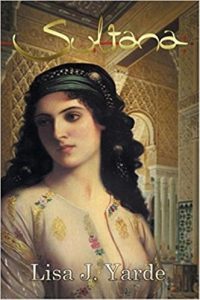
In fifteenth-century Moorish Spain, Moraima, wife of the last Sultan of Granada faces an uncertain future. Her husband’s realm endures terrible odds in battles against dangerous foes. The united Catholic monarchs Isabella of Castile and Ferdinand of Aragón gain ground steadily, encroaching upon Granada, while dynastic rivalries fracture the Moorish kingdom from within the palace. How can Moraima ensure the survival of her family, shattered by warfare and betrayal? Sultana: The White Mountains is Book #6 of the Sultana series.
Thanks so much for sharing your inspiration with us, Lisa. I can’t wait to see your vision of the world of Dracula!
Interested in learning the inspiration behind other novels? Subscribe to my Monthly Inspiration newsletter for giveaways and history – both trivia and the serious stuff! You’ll also receive an 80 page free short story Dying for Rome -Lucretia’s Tale.
January 31, 2018
My first Youtube video interview!
A new experience for me. I was interviewed on Youtube by the Sydney Mechanics’ School of Arts to talk about my journey, my books, and my advice to aspiring authors. I hope you enjoy it. Many thanks to Phil Jang for organising it.
January 18, 2018
How Do Historical Novelists Research their Stories?
How do historical novelists research their stories? This is a common question asked of me. I thought I’d take the opportunity to explore this question with Dusk Petersen who runs Historicalfic: Historical Research for Fiction Writers. Over to Dusk….
When I started a Twitter account to accompany my historical research services for fiction writers, I was curious how my fellow authors of historical genres go about their business. I soon learned that historical novelists are imaginative in their pursuits of the past.
Historian’s accounts
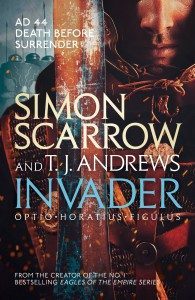
Many authors start by reading historians’ accounts. “Research is so much fun that as soon as [a new book] comes out I’m straight in the shops and buying that [because] it might offer an interesting new angle on some aspect [of] ancient Rome that I wasn’t previously aware of,” says Simon Scarrow.
Most novelists agree, though, that it’s also important to examine books from the past. “I look for period costumes in pattern books and magazines of the times,” says children’s novelist Caroline Starr Rose. “But my favorite resource, depending upon the era, is period newspapers. . . . From those I can harvest a feeling for what people were dreaming about – what they wanted, aspired to acquire, and how much that might cost.”
Letters and diaries
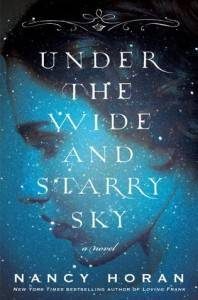
“I like reading letters and diaries to get as close as I can to the speaking voices of these people,” says Nancy Horan. “I sometimes weave actual quotes into the dialogue.”
Caroline Lawrence, who writes children’s historical mysteries, goes even further in her dialogue research, reporting, “I also listen to audiobooks to get the speech rhythms right, just as I’d listen to some language podcasts before going to Italy or France.”
 Sometimes it’s necessary to examine manuscripts and other unpublished documents. “There’s something magical about scouring through meters of racks, drawers and file folders until you find an interesting or odd snippet of information recorded long ago which helps a character or story truly come to life,” says Jennifer S. Alderson, who visited the Amsterdam City Archives in order to research a mystery novel about historical art.
Art as inspiration
The host of this blog, Elisabeth Storrs, used historical art as her inspiration. The Wedding Shroud, she says, “was inspired after finding a photo of a C6th BC sarcophagus depicting a husband and wife embracing on a divan. I knew it was extremely unusual to commemorate women in funerary art during that period so I was intrigued to find out what society would portray both a man and a woman in such a sensuous pose. The answer led me to the Etruscans.”
Getting your hands dirty
Some authors feel that just staring at a screen or a piece of paper isn’t enough. When YA novelist Gigi Amateau needed to know about eighteenth-century blacksmiths for her novel Come August, Come Freedom, she took classes in blacksmithing and metalworking. “I made two copper bracelets and one sharp pointy thing,” she reported. “And got a few blisters and burns!”
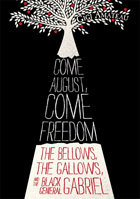
Victoria Strauss agrees about the importance of knowing historical objects. “If you’re going to write about a blacksmith, it doesn’t matter whether he’s smithing in medieval Europe or in your own invented version of a pre-industrial society – you’d better know how a forge works.”
Some of this get-to-know-the-object research can be especially fun for the author, if not necessarily for their family. YA novelist Katharine Edgar describes “an experimental approach to research . . . also known as ‘Making your children eat historical food’, or ‘Please, Mum, not Roman bread again!'”
Walking the ground
“I find that there is a kind of research that is even more important than archival research: it’s what you might call place-based or sensory research,” says Tim Weed. He likes to visit landscapes. “Because nature is relatively unchanging, landscape descriptions transcend time; they provide us with a reliable, scenic, and well-built bridge to the past.”
Eileen Haavik McIntire, who writes historical adventure and cozy mystery novels, explores cemeteries for clues. She says, “In an old cemetery in St. Augustine, FL, I noticed many graves with the year of death as 1918, the time of the terrible influenza epidemic that killed so many people.”
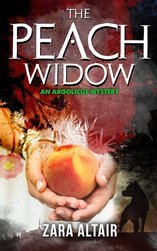
Location research can provide authors with concrete information for their novels. When Zara Altair visited Ravenna to research her historical mystery series set in sixth-century Italy, she “noted down times to walk between various places in the city in order to get a feel for how the protagonist, Argolicus, would get from place to place. When a character moves from place to place in the city I may not write, ‘Ten minutes later he arrived at the palace.’ But I may know how long a conversation will last before the character arrives at the palace door and the conversation ends.”
Lose yourself in museums
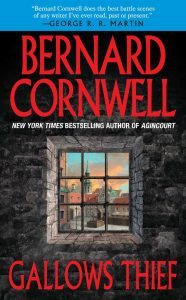
And of course there are museums. “Curiously, I needed to find out how cricket was played in 1817,” says Bernard Cornwell about his historical adventure novel Gallows Thief. “Then, by a sheer stroke of luck, a television company wanted me to go over and appear on a This Is Your Life program and they were going to fly me over and I got them to give me an extra day and I went down to the cricket museum and spent a day with the curator and got everything I needed.”
 As for me, I’ve done much of the above when researching my alternate history novels, but I’ve also spent a lot more time than I’d ever have imagined using data and charts to research historical weather, sunrises and moonsets, and water depths. Sometimes I’m tempted to give up, figuring that the reader will never know otherwise if I place a wharf in a location that wouldn’t be able to handle an ocean steamer. Then I remember what Geoffrey Trease said about one of his children’s novels: “A whole chapter of Thunder of Valmy had to be rewritten when I discovered by chance that a certain morning at Versailles in May, 1789, had been grey and drizzly, not sunny as I had first pictured it. What does it matter, a pedantic detail like that? Just as much, or as little, as the workmanship which old-time sculptors and carvers put into figures so far from the ground that no human eye would ever appreciate it.”
Honored in the Rainbow Awards, Dusk Peterson writes historical speculative fiction with diverse characters: historical fantasy, alternate history, and retrofuture science fiction. Friendship, romantic friendship, and romance often occur in the stories. Dusk Peterson also runs Historicalfic: Historical Research for Fiction Writers. A resident of Maryland, Mx. Peterson lives with an apprentice and several thousand books.
Author links: Website | Twitter | Facebook | Tumblr | Goodreads | Wattpad | Archive of Our Own.
Historicalfic Researcher links: Website | Twitter.
Many thanks Dusk. Great insights from some wonderful authors!
Interested in learning the inspiration behind other novels? Subscribe to my Monthly Inspiration newsletter for giveaways and history – both trivia and the serious stuff! You’ll also receive an 80 page free short story Dying for Rome -Lucretia’s Tale.
January 1, 2018
On Inspiration: Interview with Ella Carey
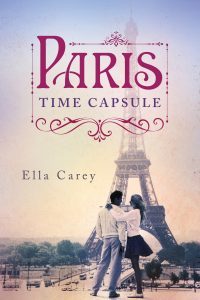
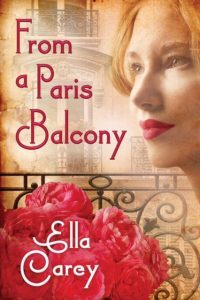
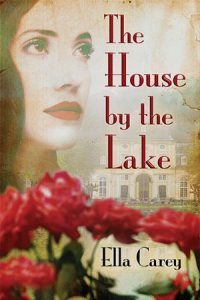
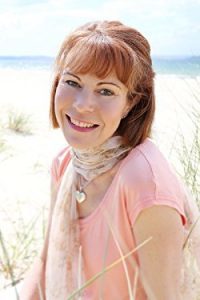 To celebrate the start of a new year, I’m pleased to interview Ella Carey. Ella is the internationally bestselling author of Paris Time Capsule, The House by the Lake, From a Paris Balcony, and Secret Shores, all published with Lake Union Publishing in the US. Paris Time Capsule has been adapted into a feature film screenplay and is agented in LA, and the novels are being translated into several European languages. Paris Time Capsule was released in Australia with Harlequin Australia in September, 2016.
Ella is a Francophile who has long been fascinated by secret, forgotten histories set in Europe’s entrancing past. She has degrees in music, majoring in classical piano, and in Arts majoring in nineteenth century women’s fiction and modern European history. Ella has recently moved to Melbourne from Hobart, Australia, with her two children and two Italian Greyhounds who are constantly mistaken for whippets. You can connect with Ella via Facebook and her website.
What or who inspired you to first write? Which authors have influenced you?
I’ve been making up stories since I was a young child- it’s just that I never stopped. I’ve always loved reading, and going to the library when I was little was so exciting! I loved the smell of books. My favourite book when I was young was The Secret Garden, and when I was a teenager, it was Wuthering Heights. But I think the turning point for me, in terms of wanting seriously to become a writer, was when I was studying English Lit at Adelaide University. My English lecturer, for nineteenth century women’s writing, told us all to go and just sit at Adelaide Writer’s Week for the week, sit there and listen to the authors and not come to uni…guess who took her up on that offer! I felt at home in the world of writing and writers and, as always books. I was at a crossroads as was also doing a music degree, but it was while I was at uni that I realised that I felt more at home in the writing world. As for authors who inspired me- there are too many. But, living writers at that time were Joanna Trollope, Mary Wesley, Frances Mayes and Rosamunde Pilcher, then I’ve always loved the Brontes and Jane Austen. Definitely Hemingway, particularly Fiesta and A Moveable Feast and F. Scott Fitzgerald. Around that time, I was also so moved by Jean Rhys’ Wide Sargasso Sea.
What is the inspiration for your current book? Is there a particular theme you wished to explore?
For Secret Shores, the inspiration came from a true story, which then widened into becoming interested in the real people behind that true story, and then a theme propelled me to write the novel. So, the true story was that when I was young, my mother and I were walking around Granite Island, which is a small island off the sea-side town of Victor Harbor in South Australia, when my mother told me that a young girl had fallen off one of the boulders into the Southern Ocean while sketching on a rock. She leaned down to pick up her pencil and slipped into the treacherous, wild sea below. I think I was fascinated by the idea of this girl off sketching on her own- it seemed romantic to me, and also, perhaps it stayed with me because it was one of the first times that I realised that life could be extinguished so very quickly. Next, I was inspired by the Tom Roberts exhibition in Canberra- by this idea of artists being so sensitive to the world- I wanted to write about the way writers and artists relate to the world around themselves. Then, I was also interested in the writer Geoffrey Dutton whom my mother’s close childhood friend Ninette married. Once I’d read more about him, I went to Anlaby, the merino station where he grew up, and found that it was none other than his aunt Ethel who drowned on that rock…once I’d become involved in the history of Anlaby, I then discovered Joy Hester, a Melbourne artist who was born in the 1920s, and I started weaving my own story around these fascinating characters. I became interested in their bohemian lifestyles and the way they related to the world as artists and writers.
What period of history particularly inspires or interests you? Why?
 I think the first half of the twentieth century intrigues me. There was such momentous change and that time shaped our world in so many ways. My parents grew up in that landscape, and it was, in so many ways, quite different from our time, and yet, perhaps, the same. We can relate to it, and yet, it’s also… gone.
What resources do you use to research your book? How long did it take to finish the novel?
I wrote the book in around nine months. It’s extremely important to me to visit the settings in the book, so spending a weekend at Geoffrey Dutton’s ancestral home, Anlaby, due to the kindness of the current owners, was pivotal for this book. Going to Heide was too. I find that nothing beats walking where my characters walked, and feeling the atmosphere of the places they lived in is vital to me. Then, I read biographies, in this case Geoffrey Dutton’s autobiography, everything I could on Heide and Sunday Reed, along with Joy Hester, and history books about the general setting and the time. It is mostly reading physical books and looking at photographs apart from going to the places in the books that works for me. For this book, I knew Victor Harbor extremely well.
What do you do if stuck for a word or a phrase?
I grab my dogs and go for a walk. Or, I usually have another piece of writing on a page by my computer, and I work on that for a while. It’s usually something for me, a short story or a poem, then the word or phrase I need comes to me. It’s no use trying to think and think about it!
Is there anything unusual or even quirky that you would like to share about your writing?
 For me, ideas come to me at the oddest of times. I can wake up at two in the morning with a fully formed idea in my head. I’ve learned that if I’m relaxed, the ideas come to me, so there’s no point in being stressed. And, while I’m quite an organised person, you should see the crossings out and the mess when I write long hand! But it all makes sense to me! And I love writing in the second person, and breaking all the writing rules in the short stories I write for myself. I have hundreds of notebooks- messy ones filled with character notes and ideas and random fragments of writing.
Do you use a program like Scrivener to create your novel? Do you ever write in long hand?
I am going to try Scrivener. I went to Kelly Gardiner’s workshop at the Historical Novel Society Australasia conference, and it was inspiring. Yes, I do write longhand, but for me- for my own short stories. Sometimes, if I’m out and something comes to me for a current novel, I’ll write in a notebook.
Is there a particular photo or piece of art that strikes a chord with you? Why?
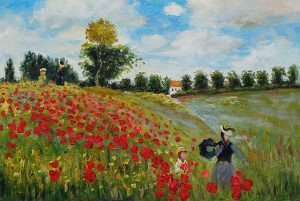
When you asked me that question, I thought of Monet’s Poppy Field straightaway- it is probably of his wife Camille and their son in a field of poppies. There is something whimsical and beautiful about it- and it’s in France.
What advice would you give an aspiring author?
Writing is like learning a musical instrument. Think about how long it takes to learn an instrument. Keep practising!
Tell us about your next book.
My next book is called The Things We Don’t Say and is releasing on July 1st, 2018. It is set from 1913 to 1980 in London and Sussex. I’ve just seen the cover concepts and they are gorgeous! Here is the blurb:
A beguiling painting holds the secrets of a woman’s past and calls into question everything she thought she knew about the man she loved…
Nearly sixty years ago, renowned London artist Patrick Adams painted his most famous work: a portrait of his beloved Emma Temple, a fellow bohemian with whom he shared his life. Years after Patrick’s death, ninety-year-old Emma still has the painting hanging over her bed at their country home as a testament to their love.
To Emma’s granddaughter, Laura, the portrait is also a symbol of so much to come. The masterpiece is serving as collateral to pay Laura’s tuition at a prestigious music school. Then the impossible happens when an appraiser claims the painting is a fraud. For Laura, the accusation jeopardizes her future. For Emma, it casts doubt on everything she believed about her relationship with Patrick. Laura is determined to prove that Patrick did indeed paint the portrait. Both her grandmother’s and Patrick’s legacies are worth fighting for.
As the stories of two women entwine, it’s time for Emma to summon up the past—even at the risk of revealing its unspoken secrets.
Thanks for being interviewed, Ella. Good luck with The Things We Don’t Say! I’m sure six months will fly by.
You can purchase all of Ella Carey’s books at Amazon.
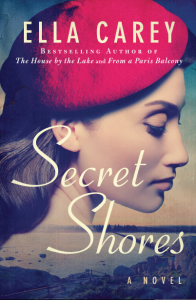
In 1946, artist Rebecca Swift’s dreams of love and a life free from convention are crashing like the waves of the Australian coast below her. And it’s into those roiling waters that she disappears.
Forty-one years later, Tess Miller’s dreams are crashing, too. The once-successful New York editor has lost her most prestigious author to the handsome new golden boy of publishing. Meanwhile, she’s stuck with Edward Russell, a washed-up Australian poet writing a novel about some obscure artist named Rebecca Swift. But Tess may have underestimated Russell. His book is not only true—it’s a searing, tragic romance and a tantalizing mystery set in a circle of postwar modernists. When Tess uncovers a long-hidden secret, she’s drawn even deeper into Rebecca’s enigmatic life and death.
As Rebecca’s past intertwines with the present, Tess finds herself falling for the last man she thought she’d ever be drawn to. On the way, she discovers the power of living an authentic life—and that transcendent love never really dies.
Interested in learning the inspiration behind other novels? Subscribe to my Monthly Inspiration newsletter for giveaways and history – both trivia and the serious stuff! You’ll also receive an 80 page free short story Dying for Rome -Lucretia’s Tale.
December 29, 2017
How Art can Inspire Historical Fiction
Inspiration and obsession are two concepts that all writers keenly understand. The inspiration for my Tales of Ancient Rome saga led me to a distant civilization in Tuscany and Lazio, and on a publishing journey from Australia to America. That odyssey lasted 16 years. I’m delighted to have told the story of how my love of art inspired the Tales of Ancient Rome saga on TCK Publishing’s blog.
December 2, 2017
On Inspiration: Interview with Isolde Martyn
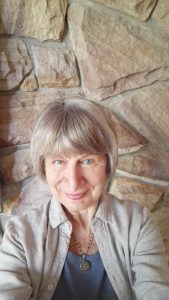 My guest this month is Isolde Martyn, an international award-winning author who is also a fellow Australian. Before taking up writing full-time, her career was in academia and then publishing. She is the co-founder of the Plantagenet History Society of Australia. Troubadour is her eighth historical novel. You can connect with Isolde via her website or Facebook.
What or who inspired you to first write? Which authors have influenced you?
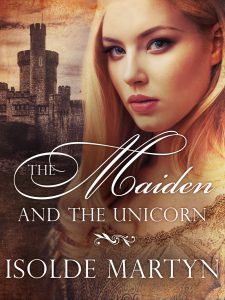
The mention of an anonymous woman spy known as ‘the Lady of Calais’! I was fourteen and decided that one day I’d write a novel about her, but to be really qualified, it meant getting a history degree at a uni specializing in the Yorkist era. Getting published took far longer but the lady’s story became my debut novel The Maiden and the Unicorn and to my delight and astonishment, the book won top awards in the USA and Australia.
Dorothy Dunnett was a great influence. Her humour, characters, research, everything! It was an honour to meet her when she came to Sydney because she was not only so gifted but also a lovely warm person, not at all stuffy, and the interview is on my website.
What is the inspiration for your current book? Is there a particular theme you wished to explore?
 With the current WIP, idea came from something that Australian actor/director John Bell mentioned in a talk arranged by the Richard III Society at the NSW State Library. There is no deliberate theme but I hope readers, especially in the UK, will find a resonance in our own time.
What period of history particularly inspires or interests you? Why?
Five of my novels are set in the Wars of the Roses. It’s a time that hasn’t left a lot of archival material so there are plenty of gaps for historical novelists like me to interpret what may have motivated people. The Devil in Ermine is about Richard III’s coup from the viewpoint of his shady cousin, Buckingham. Mistress to the Crown is about Mistress Shore, King Edward IV’s lover, whose wiles must keep her from danger in the turbulent English Court.
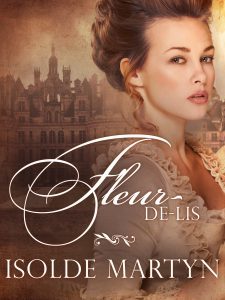
I also wrote Fleur-de-Lis, a guillotine-free novel set in Paris during the French Revolution. Having turbulent events as a backdrop puts greater pressure on a book’s characters, and brings out qualities they did not realise they had. It gives an edge to everything. The subplot is about the rise of people-power and the press and why the revolution took a sinister turn. The main story is upbeat, though, and no one gets to ride in a tumbril.
What resources do you use to research your book? How long did it take to finish the novel?
For my novels set in England, I mostly use collections in the UK National Archives and British History On-line, especially people’s wills – amazing how many of these have survived.
Visiting a place where a novel is set is always good, too, because that inspires and helps direct the plot. Very frustrating sometimes to be so far away in Australia. I can’t do a mad research dash over to France or Wales for the weekend.
How long does a book take? Well, if it’s fifteenth century, I’ve masses of Ricardian journals and it’s always been my area of study. For the Tudor era, I’ve needed to spend more time getting up to speed.
What do you do if stuck for a word or a phrase?
Roget’s Thesaurus can help and the Oxford English Dictionary is great for making sure the word’s not an anachronism. I try and collect slang and phrases from the literature of the time I’m writing about. Absolutely NO ‘twas’ and ‘twasn’t’ and ‘alack the day!’ stuff.
Is there anything unusual or even quirky that you would like to share about your writing?
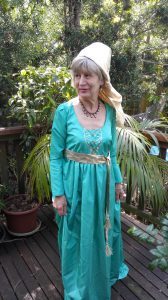 Not sure what you are after here, Elisabeth. I love using humour, especially in dialogue. Errour, the dog belonging to the hero in my first book would only ‘sit’ if the command was in Latin.
Do you use a program like Scrivener to create your novel? Do you ever write in long hand?
Tried using it when suspense write Jaye Ford and I were putting together a conference workshop but I was under pressure and couldn’t get it right.
Is there a particular photo or piece of art that strikes a chord with you? Why?
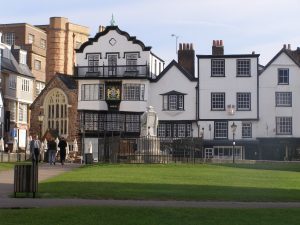 Yes, a drawing of a medieval banquet where one of the high class serving gentlemen has his long sleeves tied back. I used that in my first book. It’s fun looking for the little details that tell you about everyday life. A couple of years back, there was a splendid exhibition of Tudor clothing in portraits at the Buckingham Palace Gallery. The lace ruffs and fine embroidery were extraordinary. A fabulous pictorial reference. However, I could not find a picture of the banquet scene, instead I’ve chosen a photo of a corner of Exeter Cathedral Close. It reminds me of a very happy three years as an undergraduate, and last time I sat and had a coffee in one of those buildings, they’d just unearthed a Roman skeleton beneath the pavement outside. It’s a reminder how much there is still to discover and that history is full of surprises.
What advice would you give an aspiring author?
 Read your story aloud to yourself to help eradicate the boring bits and be prepared to make cuts if fellow writers advise that you have too much backstory. It’s a good idea to learn how to style your mss and avoid default settings like line breaks between paragraphs and dialogue – create a novel not a report.
Tell us about your next book.
A real historical murder mystery. It was a real problem what kind of story to tell and from whose POV but I am three-quarters through — not sure how it will end!
Thanks for the interview, Elisabeth!
Featured Books:
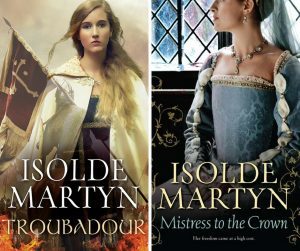
Troubadour
Can an unlikely alliance between a maidservant and a powerful lord save a city from destruction?
Troubadour, set in 1208-09, is about how a lord, a jester and a resourceful serving wench are determined to save their city-state in southern France from being destroyed by a crusading army. How civilised are we? It’s sad that even in our own times, cities and civilians are being destroyed with such savagery in the name of religion.
Set in the time of the Crusades, Isolde Martyn’s newest historical adventure has all the battle, action and romance of the Outlander series, plus the political intrigue and danger of a Philippa Gregory novel.
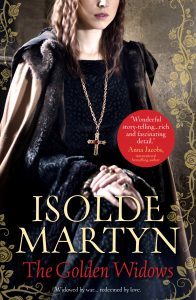
Mistress to the Crown, set in the turbulent times of the War of the Roses, tells the tale of Elizabeth Lambard, better known as the notorious whore, ‘Jane Shore’ – mistress to King Edward IV. Can Elizabeth’s wiles keep her out of trouble? Or will they lead her to the hangman’s noose?
All Isolde Martyn’s books can be purchased via her website.
Thanks for being interviewed, Isolde. So many wonderful books from which to choose!
Interested in learning the inspiration behind other novels? Subscribe to my Inspiration newsletter for monthly giveaways and history – both trivia and the serious stuff! You’ll also receive an 80 page free short story Dying for Rome -Lucretia’s Tales.
November 10, 2017
Call to Juno shortlisted for the Chaucer Awards
Very excited to say Call to Juno has been shortlisted for the Chanticleer Book Reviews Chaucer Award. Cross fingers for me. The Golden Dice was a first category winner in 2014 so I’m hopeful history will repeat itself!
Keynote Speech and ‘The Telling Detail’ Workshop
I had a wonderful time giving the keynote speech at the Society of Women Writers’ NSW luncheon this week at the Mitchell Library. The topic was ‘Art, Inspiration and Historical Fiction: A Tuscan Odyssey’. I always LOVE talking about the Etruscans! And I enjoyed meeting participants in my workshop ‘The Telling Detail: Transforming Research into Imagery.’
November 6, 2017
On Inspiration: Interview with Elizabeth Jane Corbett
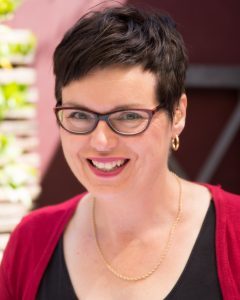 My guest today is a fellow Australian. She is debut author Elizabeth Jane Corbett. When Elizabeth isn’t writing, she works as a librarian, teaches Welsh at the Melbourne Celtic Club and writes articles for the Historical Novel Review. In 2009, her short-story, ‘Beyond the Blackout Curtain’, won the Bristol Short Story Prize. Another, ‘Silent Night’, was short listed for the Allan Marshall Short Story Award. An early draft of The Tides Between was shortlisted for a HarperCollins Varuna Manuscript Development Award. Elizabeth lives with her husband, in a renovated timber cottage in Melbourne’s inner-north. She likes red shoes, dark chocolate, commuter cycling, and reading quirky, character driven novels set once-upon-a-time in lands far away. You can connect with Elizabeth Jane via her website and blog, Facebook and Twitter.
What or who inspired you to first write? Which authors have influenced you?
I have always wanted to write. Ever since I got lost on a lonely moor with the Famous Five, I’ve dreamed of writing a novel. I grew up with stories of an historical novelist in my family – John James, my mother’s cousin, who wrote in the 1960s. I even set out to write a horse novel in my childhood. But I didn’t know anything about horses, so the project didn’t get far (an early lesson in the importance of research). Once I hit my teens life took over and it wasn’t until my fortieth birthday that I revisited the dream. It was one of those OMG-what-have-I-done-with-my-life-? moments. I figured if I was going to write a novel, I’d better get started before it was too late.
I have always read historical fiction. Edith Pargetter/Ellis Peters fuelled an interest in Wales’ history, as did Sharon K Penman’s books. I was heavily into Dorothy Dunnett’s historical novels at one stage, and have read all of Diana Gabaldon’s books. I also enjoy Joanne Harris’ and Emma Donoghues’ work.
What is the inspiration for your current book? Is there a particular theme you wished to explore?
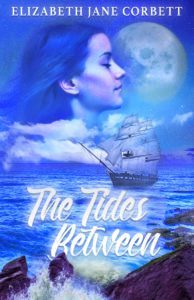 I moved to Australia as a five-year-old. It. was the defining event of my childhood. So, I knew I wanted to write about immigration. Not my own story, something historical, set in Australia (so I could access resources easily). I started by reading a biography on Caroline Chisholm – an upper-class English immigrant who was instrumental in improving the conditions for steerage migrants (she is featured on our five-dollar note). I then broadened my research to encompass government assisted immigration in general. In 1841 (the date I settled upon), the voyage to Australia took over three months, in some cases as long as five. Migrants were orientated in depots prior to embarkation and divided into Messes – a group they cooked, cleaned and were rationed with throughout the voyage. As I read about this process, a young girl entered my mind. I called her Bridie. Having lost her father in tragic circumstances, she was travelling to Australia with her mother and stepfather. I had this idea that a creative young couple would be in their mess. They would help Bridie overcome her grief. I intended the novel to be a sweeping saga, spanning several decades. But my creative couple became Welsh storytellers and totally high-jacked the novel. So, although, I have depicted the conditions in steerage as accurately as possible, the book has ended up being an historical coming-of-age novel about fairy tales and facing the truth. It explores themes of loss, trauma, and the power of myth.
What period of history particularly inspires or interests you? Why?
The decision to include a Welsh storyteller not only hijacked my story, it hijacked my life. Mum was Welsh. But having been in Australia since childhood, I knew very little about Wales. Some quick research had shown me that Wales had a strong bardic culture (hence the storyteller decision). I also recalled the Wales had their own language. To my surprise, I learned there were Welsh classes in Melbourne. I enrolled for what I thought would be one term. But I had no idea the Welsh language was so beautiful. One term became two terms, then three. Before long, I was totally smitten – the words, the sounds, the letters were like a soul-song to me. I wasn’t a particularly diligent student. I had four teenagers still living at home. I’d been rubbish at languages in school. It was enough to simply be in the presence of those ancient words.
 Then, we went through a difficult time with our youngest daughter. My writing ground to a halt. I found myself in a pretty dark place. My husband suggested, I need to get away for a while. We had loads of frequent flyer points. So, I decided to go to Wales. At which point, I came across a free online course called Say Something in Welsh. The tutor, Aran, was so encouraging. He told me I was doing well, that I would succeed, that I could become a Welsh speaker. His words were like rain on parched earth. I felt like a failure in every other area of my life. So, I chose to believe him. And it worked. I now tell everyone I walked through that difficult time holding onto the tail of an ancient language.
I have no doubt the cultural connection has given me a great empathy for my characters. But more importantly, I have found my way home. I can’t imagine ever writing a book without a Welsh character. So, for me, it is not so much an era, but a place.
What resources do you use to research your book? How long did it take to finish the novel?
For The Tides Between, I read reference books about the voyage to Australia and then combed their bibliographies for primary source material. Much of it has been digitised – diaries, letters, instructions for surgeons on emigrant ships, pamphlets on the immigrant experience. I spent loads of time in Covent Garden (my protagonist’s father was a theatre musician), slept on a sailing ship overnight, went underground in the Big-Pit Museum (my Welsh storyteller was a miner’s son), visited the sites of my Welsh fairy tales, learned a language… Did I mention I have a mildly (cough) obsessive personality? Research is the easy part. Getting the words down is tougher. I wrestle constantly with self-doubt and fall into a slough of despair every time I have a manuscript assessment. But some days, the words sing and that makes it all worthwhile.
 I knew nothing when I started writing. But I figured if I took everything I need to know to write a successful novel I’d be too scared to start. I simply gave myself permission to write. As a consequence, the first draft was a mess. I knew nothing about viewpoint, dialogue, pace, or story structure. Nevertheless, it was shortlisted for a manuscript development award. I also had a paid manuscript assessment. The assessor, Alison Goodman, suggested I learn about story structure in order to “do consciously what you have tried to do unconsciously”. I therefore enrolled in some college novel writing subjects. That took two years, during which time my youngest daughter worked her way through a checklist of every parent’s worst fears. Excuses, excuses, this is a long-winded way of admitting that re-wrote the novel four times, over a process of twelve years.
What do you do if stuck for a word or a phrase?
If it is a first draft, I use any old word but put brackets around it to indicate it needs thought. On subsequent drafts, I use a thesaurus. Or try to come up with a unique way of saying it.
Is there anything unusual or even quirky that you would like to share about your writing?
Sometimes, when I am trying to imagine a person’s actions, I mime them in front of a mirror and then describe what I see.
Do you use a program like Scrivener to create your novel? Do you ever write in long hand?
I write in Scrivener. I like the ability to take snapshots of work and refer to them in a side panel. I also like the way you can move scenes around, compile research folders and make notes on scenes.
Is there a particular photo or piece of art that strikes a chord with you? Why?
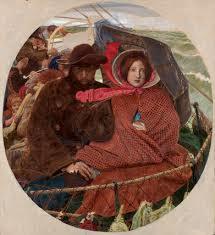
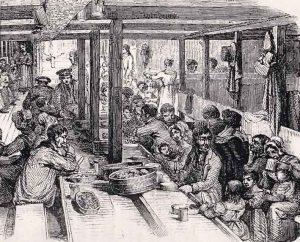 There are loads of paintings and also newspaper artwork for the era. I created an image file when I started working, for inspiration. But here are my two of my favourites. The painting by Ford Maddox Brown captures the bleakness of leaving home forever. The black and white newspaper image gives an idea of how crowded and claustrophobic steerage would have been. You will notice the immigrants slept dormitory style on an open deck. There was no privacy.
What advice would you give an aspiring author?
It will be hard work and you may have to wrestle with confusion and self-doubt (even after you’ve won prizes and been published). So, focus on the journey and learning your craft. And remember, writing is the real magic. It is worthwhile, regardless of the outcome. My all-time favourite writing book is Bird by Bird, by Anne Lamott
Tell us about your next book.
I had a number of ideas for my next book. I could have written a second instalment of a trilogy based on the characters I had created in The Tides Between. I suspect I will at some stage. I have the story all plotted out. However, I had this idea that working on the second book in a series while receiving rejection letters for the first may not be good for my mental health. I toyed with writing a novel based on my grandmother’s life. But she was English and lived in Ilford. I found myself desperately trying to work out how to include a Welsh character. J
While living at Stiwdio Maelor, a residency studio for artists and writers in North Wales, I did some research on Owain Glyn Dŵr – the last native Welshman to hold the title Prince of Wales. I realized he’d had a wife, who ended up in the Tower of London as a consequence of his revolt. I thought: what would it be like to be that woman? A story concept was born. I am currently up to my elbows in research on fourteenth century Wales. I’m having a ball. Research is by far my favourite part of the process. No, nagging self-doubt, or wrestling with words, just dreams and endless possibility.
She fancied herself part of a timeless chain, without beginning or end, linked only by the silver strong words of its tellers.
In the year 1841, on the eve of her departure from London, Bridie Stewart’s mother demands she forget her dead father and prepare for a sensible, adult life in Port Phillip. Desperate to save her precious childhood memories, fifteen-year-old Bridie is determined to smuggle a notebook filled with her father’s fairy-tales to the far side of the world.
When Rhys Bevan, a soft-voiced young storyteller and fellow traveller realises Bridie is hiding something, a magical friendship is born. But Rhys has his own secrets and the words written in Bridie’s notebook carry a dark, double meaning.
As they inch towards their destination, Rhys’s past returns to haunt him. Bridie grapples with the implications of her dad’s final message. The pair take refuge in fairy tales, little expecting the trouble it will cause.
The Tides Between is available through Book Depository, Odyssey Books, iBooks, Amazon (all stores), Kobo, Barnes & Noble, and Google Play.
Congratulations on releasing your first book, Elizabeth Jane! I look forward to hearing more about Owain Glyn Dŵr and his wife in your next one.
Interested in learning the inspiration behind other novels? Subscribe to my Inspiration newsletter for monthly giveaways and history – both trivia and the serious stuff! You’ll also receive an 80 page free short story.
Save


