
Elisabeth Storrs's Blog, page 11
September 30, 2017
On Inspiration: Interview with Carol McGrath
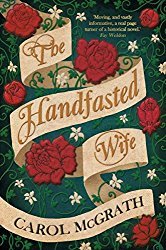
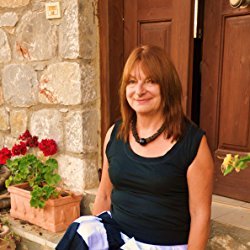 My guest today is Carol McGrath. Carol has an MA in Creative Writing from The Seamus Heaney Centre, Queens University Belfast, followed by an MPhil in Creative Writing from University of London. The Handfasted Wife, first in a trilogy about the royal women of 1066 was shortlisted for the RoNAs in 2014. The Swan-Daughter and The Betrothed Sister complete this best-selling trilogy. The Woman in the Shadows, a novel that considers Henry VIII’s statesman, Thomas Cromwell, through the eyes of Elizabeth his wife, was published on August 4th, 2017. Carol is working on a new medieval Trilogy, The Rose Trilogy, set in the High Middle Ages. She speaks at events and conferences on the subject of medieval women, writing Historical Fiction, The Bayeux Tapestry, and Fabrics, Tapestry and Embroidery as incorporated into fiction. Carol was the co-ordinator of the Historical Novels Association Conference, Oxford in September 2016 and reviews for the HNS. Find Carol on her website, Facebook, Pinterest, Twitter @carolmcgrath and her blog, Scribbling in the Margins.
What or who inspired you to first write? Which authors have influenced you?
Thank you, Elisabeth for inviting me to your blog. It is a privilege to be here. You ask me about other novelists who have inspired my writing. I am an avid reader. As a teenager I adored the stories told by Anya Seton. My favourite was Katherine. I loved The Black Arrow by Robert Louis Stevenson and The Rider of the White Horse, a Civil War novel by Rosemary Sutcliff. Thomas Hardy is a superb lyrical writer with a sense of place. Pasternak’s Dr Zhivago, a novel about the Russian Revolution has a great love story. The Name of the Rose by Umberto Eco is unsurpassable. Gabriel Garcia Marquez’s writing is inspirational also. These authors write memorable characters and possess wonderful writing styles that even come through in translation.
What is the inspiration for your current book? Is there a particular theme you wished to explore?
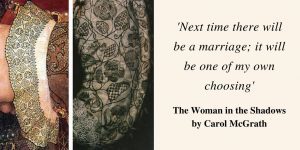
The Woman in the Shadows is influenced by Wolf Hall, my own interest in women’s history and in the history of Tudor London. I wanted to know more about Cromwell’s early career and his home life. I have always enjoyed researching and writing a woman’s history, and looking at historical events through their eyes. In this book, I explored the Tudor London Merchant class because Elizabeth Cromwell came from a family of wealthy cloth merchants. She was a young and wealthy widow when Thomas Cromwell married her. This novel tells her story through her daily life and her marriage to an ambitious man. Elizabeth inhabits the shadows of Wolf Hall. I thought to bring her out of the shadows and allow her a plausible story.
What period of history particularly inspires or interests you? Why?
More inspired by an idea than by a particular historical era, as a writer I refuse to be pigeon holed into one era. I was a history teacher before writing novels, thus possess a wide interest. My favourite era, and one I studied in detail at University, contains an event I have not as yet written- The English Civil War. The seventeenth century is a period in waiting. I also studied and enjoy the medieval era, of course. I like its colour, pageantry and edginess. The ‘mind set’ before the Renaissance is really fascinating but quite worrying too. Best way to write it is to send the men off to war and make the women custodians of manor or castle! In a war situation women could have more freedom, face incredible dangers and were thrown on their own resources.
What resources do you use to research your book? How long did it take to finish the novel?
I research in the Bodliean Library in Oxford using both primary and secondary source material. I like hearing actual voices from the past. My research books inhabit many shelves. It took two years to research and write The Woman in the Shadows and five for The Handfasted Wife. With the latter, I was on an MPhil programme at London University when I wrote a 40k word thesis on How Romance Tempers Realism in Historical Fiction.
What do you do if stuck for a word or a phrase?
If I find a sentence or phrase difficult, and often do, I substitute but think about it and return to it later. Poetry is great for language. I find Seamus Heaney inspirational. He was also one of my early teachers at University.
Is there anything unusual or even quirky that you would like to share about your writing?
I tend to write best in the Greek Mani where I have a cottage with a view of the sea and which is covered with bougainvillea. The Peloponnese is an old world and utterly inspiring. It is quiet and tucked away from distractions. I think I usually spend around a quarter of a year here writing.
Is there a particular photo or piece of art that strikes a chord with you? Why?
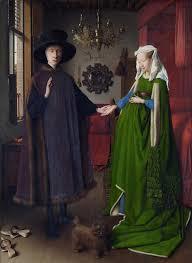 I look at lots of photographs and paintings. I have Pinterest boards for all my books too. I love studying detail such as footwear and fabrics in seventeenth century Dutch paintings and Renaissance Art. My favourite painting is The Arnolfini Marriage by Jan Van Elyck, 1434.
Do you use a program like Scrivener to create your novel?
I very often write in long hand first, chapter by chapter, not always but enough. I have never used Scrivener though am thinking about it. I plan in three or four parts and then break that down. I keep a chapter plan with a grid for characters with names and details like eye colour etc. and for each chapter thrust, POV, page number beginning and also the number of words in the chapter. You can make up a grid to suit you and use it as you write. It makes it easy to find details later. I keep my research in notebooks and love my notebooks.
What advice would you give an aspiring author?
Advice. New writers, a first draft is a beginning. The future drafts are where the real work lies. That can take longer, much longer, and though it might seem tedious at first, since when you change one thing other bits change but it can be a pleasure too. Never ever send out to agents until you have a really good full manuscript. Make sure it is as good as you can get it. If you can get a professional critique do get it. Structural edits matter. Have an ending before you begin, even if it changes. Know your characters. I write into a novel a little first before planning in three or four acts because I really do need to get its feel. It is the characters’ journey that a reader usually wants most. Each act should have a crisis- cause, crisis, effect and solution and another crisis can soon arise, sometimes though not always connected to the first. These crises can be dramatic, emotional or simply quiet. Colm Tobin does quiet well, as does Sebastian Barry. It is the unknown that generally makes us turn pages.
Tell us about your next book.
My next book, The Silken Rose, is set in the magnificent thirteenth century. It is the first book in a trilogy. The Silken Rose tells the story of Provençal Queen Ailenor of England and Eleanor de Montfort, King Henry III’s sister. Ailenor is determined to preserve family and throne in the face of adversity. Eleanor de Montfort is loyal to her husband who emerges as King Henry’s enemy.
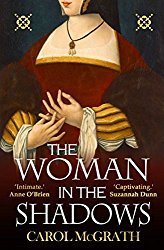
A powerful, evocative new novel by the critically acclaimed author of The Handfasted Wife, The Woman in the Shadows tells the rise of Thomas Cromwell, Tudor England’s most powerful statesman, through the eyes of his wife Elizabeth.
When beautiful cloth merchant’s daughter Elizabeth Williams is widowed at the age of twenty-two, she is determined to make herself a success in the business she has learned from her father. But there are those who oppose a woman making her own way in the world, and soon Elizabeth realises she may have some powerful enemies – enemies who also know the truth about her late husband.
Security – and happiness – comes when Elizabeth is introduced to kindly, ambitious merchant turned lawyer, Thomas Cromwell. Their marriage is one based on mutual love and respect…but it isn’t always easy being the wife of an influential, headstrong man in Henry VIII’s London.
The city is filled with ruthless people and strange delights – and Elizabeth realises she must adjust to the life she has chosen…or risk losing everything.
You can buy The Woman in the Shadows on Amazon UK and Amazon US. Find out more about Carol’s books on her Amazon page.
Thanks so much for joining me on Triclinium, Carol. Good luck with your wonderful new book.
Save
Save
Save
Save
Save
Save


August 27, 2017
On Inspiration: Interview with Kate Forsyth
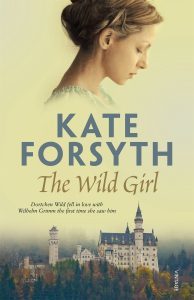
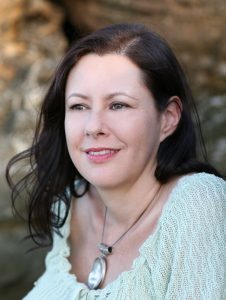 Kate Forsyth is best known for her historical novel Bitter Greens, which interweaves a retelling of the Rapunzel fairy tale with the true life story of the woman who first told the tale, the 17th century French writer Charlotte-Rose de Caumont de La Force. Kate has continued her fascination with entwining fairy tales with historical fiction in The Wild Girl and The Beast’s Garden. Her latest novel, Beauty in Thorns, blends the Sleeping Beauty legend with the world of the Pre-Raphaelite painters.
Kate is also the author of several children’s books and has also published two heroic fantasy series, The Witches of Eileanan and Rhiannon’s Ride. She is a five-time Aurealis Award winner.
She is married with three children, and lives in Sydney. She is also a direct descendant of Charlotte Barton, the author of Australia’s earliest known children’s book.
You can find out more about Kate on her website, blog and follow her on Twitter, Facebook and Pinterest.
What is the inspiration for Beauty in Thorns? Is there a particular theme you wished to explore?
Beauty in Thorns tells the story of the passions, scandals and tragedies behind the Pre-Raphaelite artist Edward Burne-Jones’s lifelong fascination with the Sleeping Beauty fairy-tale, which he painted half-a-dozen times over the course of his life. I have been interested in the Pre-Raphaelites since discovering their work as an undergraduate. My interest was reignited while I was studying my Doctorate of Creative Arts in fairy-tale studies. I wrote a thesis chapter on William Morris, who wrote the first creative response to ‘Rapunzel’ in the mid-19th century. I got interested in the Pre-Raphaelites’ use of fairy-tales, which echoed my own, and one day stumbled upon the story of Edward Burne-Jones and his famous ‘Legend of Briar Rose’ quartet of paintings, which in 1890 sold for the largest sum ever paid a British artist. It was just such an intriguing story, and contained within it all the things that interest me – art, poetry, mythology, love, death, and obsession.
What particular aspect of this period of history inspired? Why?
It is always the story that compels me to write a novel, not the setting. However, I’ve always loved the Victorian era and have read a great many books set during that period, both fiction and non-fiction. It was such a time of change and unrest, and the psychology of the time is just fascinating, with its twin obsessions with sex and death. I was really excited to have the chance to study it and bring it to life on the page.
What resources did you use to research Beauty in Thorns? How long did it take to finish the novel?
I began work on the novel in November 2014 and finished the final edit in March 2017, so it was a long and challenging project to work on. I read all the books about the Pre-Raphaelites that I could find, plus countless journal articles and blog posts. I spent a lot of time examining the art and poetry of the Pre-Raphaelites, and trying to 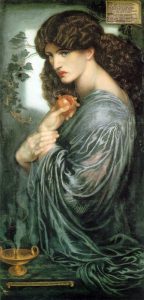 understand the thoughts and motivations of the artists and their models.
What do you do if stuck for a word or a phrase?
Keep on writing. The perfect phrase rarely comes with the first draft anyway. Sometimes the subconscious mind needs time to dwell on something before it comes up with the answer.
Is there anything unusual or even quirky that you would like to share about your writing?
I like to start a new book when the moon is new. It means that I can try and get everything else done first and get my desk cleared, and be ready to focus all my energies on the next project. It gives me a clear start date, and feels somehow energising and inspiring. It also stops me from procrastinating or taking on too much other work.
Do you use a program like Scrivener to create your novel? Do you ever write in long hand?
 I keep a notebook where I jot down ideas, questions, and lists of things to do, as well as word counts, diagrams, maps, photos and other sources of information and inspiration. I write most of my poetry long hand, as well as songs, spells, charms and incantations that I might be working into the book.
However, I type the narrative straight into Word, which I find very simple and easy to move around in. I work away steadily, usually writing in a linear fashion, though I often circle back to rewrite a scene or chapter as needed, or to add in a new scene.
Is there a particular photo or piece of art that strikes a chord with you? Why?
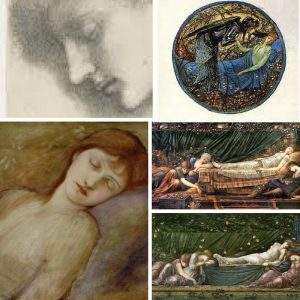
The key works of art that helped inspire Beauty in Thorns were ‘Proserpina’ by Dante Gabriel Rossetti, and the sequence of ‘Sleeping Beauty’ paintings by Edward Burne-Jones.
What advice would you give an aspiring author?
Read as much and as widely as you can. Make writing a natural part of your daily routine. Be steadfast and unshakeable in your faith in both yourself and your story. Have courage, in both your writing and your life.
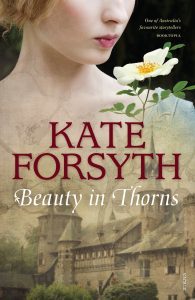
A spellbinding reimagining of ‘Sleeping Beauty’ set amongst the wild bohemian circle of Pre-Raphaelite artists and poets. The Pre-Raphaelites were determined to liberate art and love from the shackles of convention.
Ned Burne-Jones had never had a painting lesson and his family wanted him to be a parson. Only young Georgie Macdonald – the daughter of a Methodist minister – understood. She put aside her own dreams to support him, only to be racked with grief and scandal.
Dante Gabriel Rossetti was smitten with his favourite model, Lizzie Siddal. She wanted to be an artist herself, but was seduced by the irresistible lure of laudanum.
William Morris fell head-over-heels for a ‘stunner’ from the slums, seventeen-year-old Janey Burden. Discovered by Ned, married to William, she embarked on a passionate affair with Gabriel that led inexorably to tragedy.
Meanwhile, fifteen-year-old Margot Burne-Jones was her father’s muse. He painted her as the ‘Sleeping Beauty’, a fairy-tale that had haunted him all his life. Yet Margot was growing up, and longed to be awakened to love.
Bringing to life the dramatic true story of love, obsession and heartbreak that lies behind the Victorian era’s most famous paintings, Beauty in Thorns is the story of awakenings of all kinds.
Beauty in Thorns is available via Penguin Random House and Amazon.
HNSA 2017 Conference
As a co founder of the Historical Novel Society Australasia (HNSA) and programme director of the 2017 HNSA Melbourne conference, I am delighted that Kate Forsyth is our patron and will be celebrating Beauty in Thorns at our History with a Twist cocktails on 8 September. There will be lots of prizes including the chance to win a 1:1 Skype session with Kate for yourself or your book club.Come and join the fun. More information is at the HNSA website.
Kate is also appearing in conversation with Deborah Challinor on 10 September, and will join Anna Campbell and Luke Devenish to read their saucier scenes in our Beyond the Comfort Zone: Writing Sex and Violence.
The HNSA 2017 Melbourne Conference is being held on 8-10 September 2017 at Swinburne University. This celebration of the historical fiction genre will showcase over 60 speakers discussing inspiration, writing craft, research, publishing pathways and personal histories in our weekend programme. Among the many acclaimed historical novelists participating are Kerry Greenwood, Kate Forsyth, Deborah Challinor, Libby Hathorn, Lucy Treloar, Sophie Masson, Sulari Gentill, Robert Gott and Arnold Zable. The HNSA’s speakers’ list is available on the HNSA website.
In addition to the two stream weekend programme, there will be ten craft based super sessions and two research masterclasses.You won’t want to miss our interactive sessions on armour and historical costumes either! Purchase a ticket and you will be entered in the draw to win a $100 Dymocks Gift Card.
Manuscript assessments will be conducted by industry experts, Alison Arnold and Irina Dunn. Our free extended academic programme is open for general admission but bookings are essential.
Our First Pages Pitch Contest offers an opportunity for submissions to be read aloud to a panel of publishers. And we are delighted to announce the introduction of our inaugural HNSA Short Story Contest with a $500 prize!
Visit our website to purchase your tickets now!
Subscribe to our newsletter for interviews, reviews and news.
Learn about our sponsorship opportunities.
Let’s make a noise about historical fiction!
August 21, 2017
Interview: HNSA Programme Director
Sophie Masson was kind enough to interview me on her blog about the upcoming 2017 HNSAustralasia Conference in Melbourne. I’ve really enjoyed being the programme director!
Review of Call to Juno by Isobel Blackthorn
I was delighted to receive this lovely review of Call to Juno from Isobel Blackthorn, author of The Drago Tree.
‘It is refreshing to read of Roman times from a distinctly feminine perspective, one that captures the intimacy of motherhood and domesticity as much as it does the political horrors of war. Storrs maintains narrative control throughout, displaying that necessary skill of the historical fiction author, a deep empathy with the times she has chosen to set her work.
This is a story for those who enjoy their historical fiction rich with fine and accurate detail. Call to Juno is intensely visual, bringing ancient Rome to life, composed by an author who clearly knows her subject.’
July 28, 2017
On Inspiration: Interview with Kate Quinn
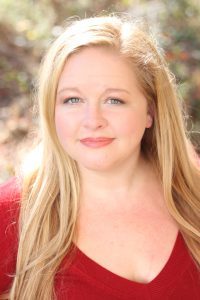
My guest today is the wonderful Kate Quinn, a fellow Romaphile who has diverted from Rome to venture into the world of women spies in WW1. Kate is a native of southern California. A lifelong history buff, she has written four novels in the Empress of Rome Saga, and two books in the Italian Renaissance, before turning to the 20th century with The Alice Network. All have been translated into multiple languages.
What or who inspired you to first write? Which authors have influenced you?
I’ve always had the urge to tell stories, who knows why. My mother has a history degree, so I grew up hearing fascinating historical tid-bits as bedtime stories rather than fairy-tales; because of that, I gravitated naturally toward stories grounded in the past. My role-model authors for hist-fic have been Gwen Bristow (great story-telling, clean clear prose), Judith Merkle Riley (who showed me that historical fiction can be funny) and Bernard Cornwell (most thrilling historical action writing ever).
What is the inspiration for your current book? Is there a particular theme you wished to explore?
I wrote The Alice Network after stumbling across a reference to the historic ring of spies which operated during World War I, headed and masterminded by a brilliant woman nicknamed the Queen of Spies. I was astounded that the entire network wasn’t more well known, and wanted to pay homage to the incredible courage of these women who risked their lives to spy on the Germans. It’s fundamentally a book about women in war, and what they can accomplish when they join forces and refuse to be beaten.
What period of history particularly inspires or interests you? Why?
There are so many I find fascinating! Ancient Rome, Renaissance Italy, Tudor England, World War I & II, the Roaring 20s…I suppose what they all have in common is that they are periods with both tremendous advancements in art or culture or science, but also tremendous upheaval and turmoil and violence, which makes great grist for novelists.
What resources do you use to research your book? How long did it take to finish the novel?
I wrote The Alice Network in a year, which is fairly standard for me. I couldn’t travel to Europe to research the places visited in the book—it was a year with a lot of upheaval; extended travel wasn’t possible—so I relied on every online source and written source I could find to aid my research. I was lucky enough with The Alice Network to work with the modern-day descendants of several actual spies who worked for the real network during WWI, and whose archived letters gave me invaluable insights.
What do you do if stuck for a word or a phrase?
Tear my hair a while, then find another one and keep going.
Is there anything unusual or even quirky that you would like to share about your writing?
 Something fun I’ve started doing with the last two books is playing with scent to get into a new writing project. For my last Rome-set novel about Emperor Hadrian, I spritzed a citrusy perfume called “Nuits d’Hadrien” (and as a result, lemon trees popped up everywhere in the book!) For The Alice Network I picked a scent called “Code” because I figured my lady spies would like it. It’s silly, but it’s fun—and there is something about linking the sense of smell to work, because after a while I associate the new scent with “Ok, time to get cracking on that word-count.”
Do you use a program like Scrivener to create your novel? Do you ever write in long hand?
I am a recent Scrivener convert—now I have no idea how I would work without it. I haven’t written longhand since I was a teenager; my thoughts race way too quickly for my hand to catch up!
Is there a particular photo or piece of art that strikes a chord with you? Why?
I love historic photographs. Look at a picture of the Queen of Spies who headed the Alice Network, and you see a tiny woman with a big lace collar and a corseted waist and poofed Edwardian hair…she looks as fragile and decorative as a china shepherdess on a shelf. Then you take a closer look at her eyes, and they’re sharp and humorous and hiding so much.
For the current WIP I have a photograph of Lake Baikal I’m using as inspiration—a huge, mysterious lake on the very eastern edge of Russia which I decided was my heroine’s birthplace.

What advice would you give an aspiring author?
Find and befriend other writers, because your writer friends will keep you sane.
Tell us about your next book.
My next book is another 20th century dual timeline, like The Alice Network. It involves an English war correspondent turned Nazi hunter teaming up with a Russian female pilot from the all-women night-bomber regiment known as the Night Witches, tracking a Nazi murderess who fled to America post-World War II…even as a budding teenage photographer in Boston begins to suspect there is something very wrong about her father’s new fiancee. I’m about 2/3 done and enjoying it hugely!
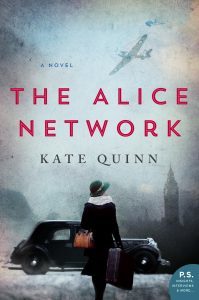
In an enthralling new historical novel from national bestselling author Kate Quinn, two women—a female spy recruited to the real-life Alice Network in France during World War I and an unconventional American socialite searching for her cousin in 1947—are brought together in a mesmerizing story of courage and redemption.
1947. In the chaotic aftermath of World War II, American college girl Charlie St. Clair is pregnant, unmarried, and on the verge of being thrown out of her very proper family. She’s also nursing a desperate hope that her beloved cousin Rose, who disappeared in Nazi-occupied France during the war, might still be alive. So when Charlie’s parents banish her to Europe to have her “little problem” taken care of, Charlie breaks free and heads to London, determined to find out what happened to the cousin she loves like a sister.
1915. A year into the Great War, Eve Gardiner burns to join the fight against the Germans and unexpectedly gets her chance when she’s recruited to work as a spy. Sent into enemy-occupied France, she’s trained by the mesmerizing Lili, the “Queen of Spies”, who manages a vast network of secret agents right under the enemy’s nose.
Thirty years later, haunted by the betrayal that ultimately tore apart the Alice Network, Eve spends her days drunk and secluded in her crumbling London house. Until a young American barges in uttering a name Eve hasn’t heard in decades, and launches them both on a mission to find the truth …no matter where it leads.
Many thanks, Kate. Can’t wait to read The Alice Network and your next book about Night Witches!
You can connect with Kate via her website, Twitter, Instagram and Facebook.
Buy Kate’s books via the following links:
June 24, 2017
On Inspiration: Interview with Crystal King
My guest today is Crystal King who is a writer, culinary enthusiast, and social media expert. Her writing is fueled by a love of history and an obsession with the food, language, and culture of Italy. She has taught writing, creativity, and social media at Grub Street and several universities including Harvard Extension School and Boston University.
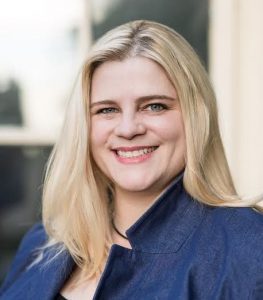
Crystal received her masters in critical and creative thinking from the University of Massachusetts Boston. She lives with her husband and their two cats, Nero and Merlin, in the Boston area. You can connect with Crystal via her website, Twitter, Facebook, Pinterest, Tumblr, Goodreads, Google+, and Instagram
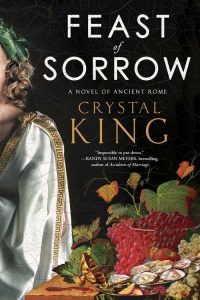
Crystal’s debut novel Feast of Sorrow is a delicious mix of culinary delights and drama. I was delighted to endorse the book as follows:
“An engaging foray into the treacherous world of Claudio-Julian Rome from a fresh perspective. Who knew that the gourmand Apicius was larger than life? King deftly serves up intrigue, scandal and heartbreak with lashings of exotic sauces, mouth-watering recipes and the occasional drop of poison. Highly recommended.”
As a fellow Romaphile, I was interested to hear Crystal’s sources of inspiration.
What or who inspired you to first write? Which authors have influenced you?
 I was a very early reader and that led me to begin writing when I was very young, at the age of five or so. I had great, encouraging teachers. I remember being chosen by my school to attend a young writers conference when I was ten. The author speaking was Madeleine L’Engle and I was so excited because I loved her books. My influences over the years have been eclectic, ranging from poets like Anne Carson and Czeslaw Milosz to authors such as Stephen King, Margaret Atwood, Ursula K. LeGuin, Anais Nin and MFK Fisher. I also love reading the classics such as Tacitus, Virgil, Herodotus, Dante and Shakespeare.
What is the inspiration for your current book? Is there a particular theme you wished to explore?
I was writing a different book, about a celebrity chef with a special set of knives. I needed an origin story for these knives, which had been passed through the centuries from chef to chef. I was reading a book on banquets called Feast: A History of Grand Eating by historian Roy Strong. There was a line about how the ancient gourmand, Apicius, died. I thought I would use that idea and I wrote a scene with Apicius and how he had the knives made. When I finished I realized that was far more interesting than my other concept. I began researching everything I could about ancient Rome and Feast of Sorrow was born.
What period of history particularly inspires or interests you? Why?
I tend to be most interested in anything pre-1600, possibly because there is more mystery there. As a child I was drawn to the ancient world in particular and dreamt of seeing the Pyramids or visiting the Rome described in myths. However, as I get older, I find my interests have varied a great deal and it becomes more about the story itself. For example, I have plans for a book set in 1800s Italy and for another set in 1930s Italy, both books about food and chefs.
What resources do you use to research your book? How long did it take to finish the novel?
The almighty Google is a source of a lot of fantastic information, thankfully, enabling me to do a lot of research without having to leave my desk. I also spend a lot of time with my head in a book. I read fast, and voraciously, devouring anything I can of the time period including writers of the era, books describing the customs, foods, politics, architecture, etc. I want to know everything I can about the period in which I’m writing so that I can paint the most evocative picture. Nothing, however, can compare to going to Italy to walk in the footsteps of my character and to talk to historians first hand.
It took me about 3-4 years or so of writing and editing then another 3 to find an agent, then 6 months to land the contract and then another 18 months until the book is in the world. Essentially it took me the better part of a decade to see it published. Hopefully subsequent books will happen much faster!
What do you do if stuck for a word or a phrase?
It depends. Sometimes I will reach for the thesaurus, while other times I will just add a big XX and highlight that spot in the manuscript till I can come back to it later. On some bigger ideas where I’m stuck I’ll describe the problem to my husband who nearly always has a great solution or he jars something loose in my thoughts that spurs me to an answer.
Is there anything unusual or even quirky that you would like to share about your writing?
Not sure how unusual I am overall. I tend to be very easily distracted and it can be helpful when I go to places specifically to write, such as the library or a coffee shop. Turning off the wi-fi is important to making sure I’ll get something down on the page. If I start researching that could lead me down a rabbit hole that is interesting but not necessarily as beneficial to my writing. I really love writing in the winter in my little study next to the fireplace, cat on my desk, with a glass of wine, typing, typing, typing away.
Do you use a program like Scrivener to create your novel? Do you ever write in long hand?
I like Scrivener a lot and used it exclusively when I wrote Feast of Sorrow. I stopped using it a few years ago when my husband bought me a Chromebook for my birthday. I couldn’t install Windows software on it—it was an online Android type of device. If I had chosen the laptop I would have picked something different but I wanted to give it a good go as my husband seemed so pleased that he had chosen it for me. I ended up using Google Docs for my second novel. I bought a new laptop last year and attempted to go back to Scrivener but found that I was frustrated that I couldn’t keep documents in one place and access them anywhere, from different computers. I went back to Google Docs. I’ll probably add the chapters back into Scrivener when I start the editing process…being able to do global search and replace is helpful. I do like writing long-hand, mostly in bars and cafés. When meeting friends I will sometimes to the location early and try to get a half hour of freehand writing done. I find those short bursts of writing are sometimes some of the most lucrative.
Is there a particular photo or piece of art that strikes a chord with you? Why?
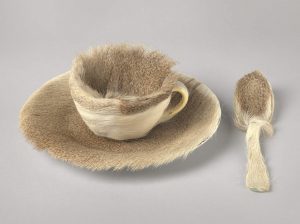
When I was a child (in the 1970s) I had a set of Childcraft encyclopedia books. My favorite volume was the one on art. I poured over that, memorizing the incredible works of art within. There was a photo of a coffee cup, saucer and spoon that were entirely made out of fur, a piece by Meret Oppenheim called “Object.” It was such a sense of wonder for me as a kid. Why would you put fur on an object like that? What could you drink from a cup made from fur? What sort of person would own a cup of that ilk? How would the spoon feel if you picked it up? It made me think and made me imagine. When I randomly came across the piece in New York’s Museum of Modern Art (MoMA), I cried. I don’t think I realized it was a real thing that I might someday see in person.
What advice would you give an aspiring author?
The best advice is the truest. Derriere in the chair. Even if you don’t feel like it, write, write, write. Writing a paragraph of garbage is better than no writing at all. The more you write the better you become.
Tell us about your next book.
My books are thematic but stand-alone, all about Italian chefs. I’m currently working on a novel now about Bartolomeo Scappi, who was the chef to several popes in the Renaissance. The working title is The Secret Chef, which is actually the translated job title he held as a private chef, or cuoco segreto. It’s also fitting, however, because the book also holds a fifty-year secret love affair at its heart.
Set amongst the scandal, wealth, and upstairs-downstairs politics of a Roman family, Crystal King’s seminal debut features the man who inspired the world’s oldest cookbook and the ambition that led to his destruction.
On a blistering day in the twenty-sixth year of Augustus Caesar’s reign, a young chef, Thrasius, is acquired for the exorbitant price of twenty thousand denarii. His purchaser is the infamous gourmet Marcus Gavius Apicius, wealthy beyond measure, obsessed with a taste for fine meals from exotic places, and a singular ambition: to serve as culinary advisor to Caesar, an honor that will cement his legacy as Rome’s leading epicure.
Apicius rightfully believes that Thrasius is the key to his culinary success, and with Thrasius’s help he soon becomes known for his lavish parties and fantastic meals. Thrasius finds a family in Apicius’s household, his daughter Apicata, his wife Aelia, and her handmaiden, Passia whom Thrasius quickly falls in love with. But as Apicius draws closer to his ultimate goal, his reckless disregard for any who might get in his way takes a dangerous turn that threatens his young family and places his entire household at the mercy of the most powerful forces in Rome.
Feast of Sorrow is available at Amazon, iTunes, Google, B&N, Kobo, BAM! and Indie Bound.
Many thanks Crystal – good luck with Feast of Sorrow!
Save
Save
Save
Save
Save
June 22, 2017
Interview on History Girls
Gillian Polack was kind enough to interview me on History Girls blog about my role as programme director for the Historical Novel Society Australasia Conference which is being held on 8-10 September 2017 in Melbourne. Over 60 speakers, 20 panels, 10 workshops and an academic programme. Not to mention a short story contest with a prize of $500!
May 30, 2017
Interview for Historical Novel Australasia Blog
I was delighted to be interviewed on the Historical Novel Society Australasia blog. I can’t wait until the HNSA 2017 Conference on 8-10 September. Read about a few of my favourite things here.… Read more
May 20, 2017
On Inspiration: Interview with Lisa Chaplin
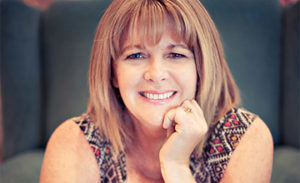 My guest today is Lisa Chaplin, author of The Tide Watchers. Lisa is a former nurse, wife and mother of three who has sold more than 1.6 million books worldwide with 20 published romance and historical fiction novels. The Tide Watchers was her first published historical fiction, published across the English-speaking world by HarperCollins. Her next historical fiction is … Read more
April 12, 2017
On Inspiration: Interview with Alison Morton
My guest today is fellow Romaphile, Alison Morton. A ‘Roman nut’ since age 11, Alison continues to be fascinated by that complex, power and value driven civilisation. Armed with a masters’ in history, six years’ military service and the love of a good thriller, she explores via her award winning Roma Nova adventure thrillers the ‘what if’ idea of a … Read more


