
Doug Lemov's Blog, page 7
October 2, 2023
Reading Comprehension Breakdowns are Often Knowledge-Problems Disguised As Skill Problems. An example.

Different from a magician.
I watched a fascinating moment in a reading classroom last week.
The class (third grade) was reading Charlotte’s Web when they came across this scene:
“But Charlotte,” said Wilbur, “I’m not terrific.”
“That doesn’t make a particle of difference,” replied Charlotte. “Not a particle. People believe almost anything they see in print. Does anybody know how to spell terrific?”
“I think,” said the gander, “It’s tee double ee double rr double rr double eye double see see see see see.”
“What kind of acrobat do you think I am?” said Charlotte in disgust.
The teacher paused here and asked why Charlotte was disgusted with the gander.
Two students responded. The first said because the gander always talked to much. The second because the gander always said everything three times.
Both of which are true and both of which are wrong.
It would have been easy to assume that the problem was skill-based: that the students didn’t understand something about Charlotte’s perspective, that they didn’t understand something about how to infer a character’s point of view.
But the teacher asked a simple question: Who knows what an acrobat is?
There were a smattering of hands but not many. A boy responded: “It’s a little bit like a magician.”
Revelation: The problem was not a skill problem. It was a knowledge problem. The class did not know what an acrobat was. If you don’t know what an acrobat is you don’t know that Charlotte is disgusted because the gander’s very long spelling of the word implies lots of work hanging precariously from a web. And asking a bunch of “what might Charlotte be feeling?” questions or discussing how to make an inference about character won’t help.
I suspect this is a chronic problem in the teaching of reading. We see reading comprehension issues as skill-based problems when in fact they are knowledge-based, but because we, as teachers, have more knowledge than our students, we can be blind to the gaps. This is sometimes called the curse of expertise or the curse of knowledge. It’s actually quite difficult in the moment to ask about the knowledge gaps because it’s hard to see them. It might never cross a teacher’s mind —that kids wouldn’t know what an acrobat is.
So A+ to the teacher I observed for her question.
But what to do next?
The teacher in this case asked students to discuss with their partner what an acrobat might be and here I thought: good but not great. They were mostly guessing. Best, I think would be to provide a definition of acrobat: “a person who performs skillful moves in the air, like in a circus,” perhaps. Maybe even with a picture like the one above. Then: “Write that in the margin. Great. Why might writing the word the gander has proposed require Charlotte to be an acrobat? Why might it disgust her?”
This, I would argue, is a knowledge-based solution. Give students the knowledge they lack. Ask them to apply it to the problem.
The post Reading Comprehension Breakdowns are Often Knowledge-Problems Disguised As Skill Problems. An example. appeared first on Teach Like a Champion.


September 24, 2023
We Loved These Examples of Lesson Preparation from Our Recent Workshop
TLAC team members Teneicesia White and Sadie McCleary recently returned from leading a workshop in Raleigh, NC, where the focus was on Checking for Understanding. While there they gathered some fantastic examples of Lesson Preparation from teachers who joined them! Sadie was so inspired she shared this analysis:
This example of Lesson Preparation from Paige, a 6th/7th grade math teacher is a great example of the kind of Lesson Preparation work teachers were sharing.
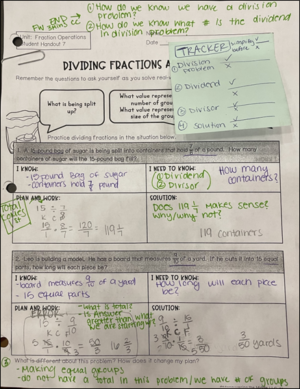
The lesson plan is reflected on the printed page. It involves a sequence of problems and questions. But the lesson preparation consists of the things Paige has hand-written on her plan. It shows what she’s thinking about as she gets ready to teach. Fortunately, she’s used two colors so we can see some of the steps she takes more clearly.
She’s written out her Exemplar in blue pen and pencil. She has Planned for Error with her back pocket questions in green. When Paige implements this lesson, she’ll be able to circulate thoughtfully, checking student responses against her exemplars and quickly recognize where to give them feedback. But she’s likely to do a very good job of this because she’s thought through the mistakes she’s likely to see and the questions she might ask in response: “Does 119 1/7 make sense? Why or why not?” and “What is total? Is [the] answer [going to be] greater than what we are starting with?”
In the upper left-hand corner she’s written: “EW 3 mins → CC”. It means she’ll use “Everybody Writes for 3 minutes and then Cold Call… she’s thought through not only what questions to ask but how students will answer—her Means of Participation.
And then there’s Post-It. She said she was planning to create a different Post-It for each class period, which would allow her to track data efficiently but without cluttering up her Lesson Prep document.
With thoughtful and practical preparation like that, Paige is likely to crush it.
Here’s another example! This teacher, MJ, a 9th grade Biology teacher, decided to create a data tracker that will allow her to quickly and efficiently use tallies as she circulates to identify ideas she needs to review with students.
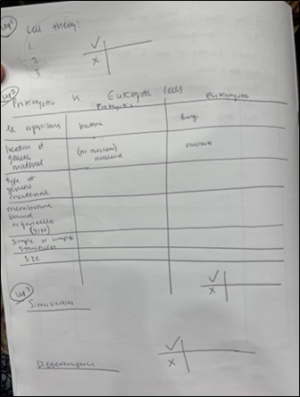
Note her ‘laps’ – these indicate when she will ‘lap’ around the room and what she will be looking for. In lap 1, she’s going to remain laser-focused on looking for the 3 components of cell theory, even if a student has moved onto the next part of the task. We think this is supportive in a few ways:
It will free her working memory to look just at one piece of every student’s work so she’s not having to think through multiple exemplar responses at once.She will quickly know if she needs to review cell theory with the entire class or if they have a solid grasp and can move onto the similarities and differences in prokaryotes and eukaryotes.MJ won’t get ‘stuck’ at a student’s desk giving feedback. She might say, ‘The second component of the cell theory you wrote is incorrect; check your notes,” and then move onto the next student.We think laps are helpful because you can also use them to announce to students what you’ll be looking for as you circulate. “In my first lap around the room, I’m looking that you have the 3 components of cell theory. If I put a check, you’re correct, and if I circle one of them, I want you to check it against your notes.”
Importantly, both Paige’s and MJ’s Lesson Preparation documents were created over the course of a combined 25 minutes of practice time during our workshop.
More on the Distinction between Lesson Planning and Lesson Preparation.
Lesson Plans, what teachers are often most familiar with, detail what content will be taught within a carefully constructed sequence of activities. The sequence is usually aligned to an instructional framework and designed to occur within a defined block of time. Here’s an snapshot of a lesson plan from a unit on Number the Stars in our Reading Reconsidered curriculum:Lesson Preparation , the focus of this post, consists of answering a series of questions about how you will teach the content outlined within a lesson plan to ensure all students experience mastery. We think this is where the magic happens. We think there are 3 foundational steps to Lesson Prep:Plan the Exemplar: Draft the ideal response, including vocab and key ideas, you’d expect your students to produce for core tasks and questions.Plan for Error (& Challenge): Anticipate and plan responses to gaps or errors that may appear in student responses. Plan questioning for Right is Right and Stretch It.Plan Means of Participation: Script how you want students to engage with tasks or questions within a lesson. Be sure to plan the entire sequence.
Want to learn more?
Blog Post: Examples of Lesson Preparation and Adaptation from Teachers at Believe Memphis Academy
Blog Post: Lesson Preparation: How Christine Torres Prepares to Teach
The post We Loved These Examples of Lesson Preparation from Our Recent Workshop appeared first on Teach Like a Champion.
Examples of Lesson Preparation That We Loved from Our Recent Workshop
TLAC team members Teneicesia White and Sadie McCleary recently returned from leading a workshop in Raleigh, NC, where the focus was on Checking for Understanding. While there they gathered some fantastic examples of Lesson Preparation from teachers who joined them! Sadie was so inspired she shared this analysis:
This example of Lesson Preparation from Paige, a 6th/7th grade math teacher is a great example of the kind of Lesson Preparation work teachers were sharing.
The lesson plan is reflected on the printed page. It involves a sequence of problems and questions. But the lesson preparation consists of the things Paige has hand-written on her plan. It shows what she’s thinking about as she gets ready to teach. Fortunately, she’s used two colors so we can see some of the steps she takes more clearly.
She’s written out her Exemplar in blue pen and pencil. She has Planned for Error with her back pocket questions in green. When Paige implements this lesson, she’ll be able to circulate thoughtfully, checking student responses against her exemplars and quickly recognize where to give them feedback. But she’s likely to do a very good job of this because she’s thought through the mistakes she’s likely to see and the questions she might ask in response: “Does 119 1/7 make sense? Why or why not?” and “What is total? Is [the] answer [going to be] greater than what we are starting with?”
In the upper left-hand corner she’s written: “EW 3 mins → CC”. It means she’ll use “Everybody Writes for 3 minutes and then Cold Call… she’s thought through not only what questions to ask but how students will answer—her Means of Participation.
And then there’s Post-It. She said she was planning to create a different Post-It for each class period, which would allow her to track data efficiently but without cluttering up her Lesson Prep document.
With thoughtful and practical preparation like that, Paige is likely to crush it.
Here’s another example! This teacher, MJ, a 9th grade Biology teacher, decided to create a data tracker that will allow her to quickly and efficiently use tallies as she circulates to identify ideas she needs to review with students.
Note her ‘laps’ – these indicate when she will ‘lap’ around the room and what she will be looking for. In lap 1, she’s going to remain laser-focused on looking for the 3 components of cell theory, even if a student has moved onto the next part of the task. We think this is supportive in a few ways:
It will free her working memory to look just at one piece of every student’s work so she’s not having to think through multiple exemplar responses at once.She will quickly know if she needs to review cell theory with the entire class or if they have a solid grasp and can move onto the similarities and differences in prokaryotes and eukaryotes.MJ won’t get ‘stuck’ at a student’s desk giving feedback. She might say, ‘The second component of the cell theory you wrote is incorrect; check your notes,” and then move onto the next student.We think laps are helpful because you can also use them to announce to students what you’ll be looking for as you circulate. “In my first lap around the room, I’m looking that you have the 3 components of cell theory. If I put a check, you’re correct, and if I circle one of them, I want you to check it against your notes.”
Importantly, both Paige’s and MJ’s Lesson Preparation documents were created over the course of a combined 25 minutes of practice time during our workshop.
More on the Distinction between Lesson Planning and Lesson Preparation.
Lesson Plans, what teachers are often most familiar with, detail what content will be taught within a carefully constructed sequence of activities. The sequence is usually aligned to an instructional framework and designed to occur within a defined block of time. Here’s an snapshot of a lesson plan from a unit on Number the Stars in our Reading Reconsidered curriculum:Lesson Preparation , the focus of this post, consists of answering a series of questions about how you will teach the content outlined within a lesson plan to ensure all students experience mastery. We think this is where the magic happens. We think there are 3 foundational steps to Lesson Prep:Plan the Exemplar: Draft the ideal response, including vocab and key ideas, you’d expect your students to produce for core tasks and questions.Plan for Error (& Challenge): Anticipate and plan responses to gaps or errors that may appear in student responses. Plan questioning for Right is Right and Stretch It.Plan Means of Participation: Script how you want students to engage with tasks or questions within a lesson. Be sure to plan the entire sequence.
Want to learn more?
Blog Post: Examples of Lesson Preparation and Adaptation from Teachers at Believe Memphis Academy
Blog Post: Lesson Preparation: How Christine Torres Prepares to Teach
The post Examples of Lesson Preparation That We Loved from Our Recent Workshop appeared first on Teach Like a Champion.
September 11, 2023
Rebecca Sloots: Building Ratio…and Great Writers in Queensland
Writers in the Making…
The newest clip in the TLAC library is one that’s really worth watching.
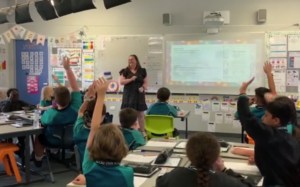
It’s of Rebecca Sloots’ grade 4 class at Fernbrooke State School in Redbank Plains, Queensland, Australia.
That makes it some of our very first classroom video from Australia. But more importantly it’s an outstanding example of how to build a high ratio classroom via strong academic routines and especially intentional and deliberate writing.
Here’s the clip.
At the outset Rebecca cues her students to answer the question—”How do we know this is a poem?”—in writing. This causes every student to answer the question and to answer it well- writing being more challenging and precise than mere speaking.
She cues the writing with the phrase “silent solo” and as you can see the room bursts to life. With a strong routine like this there’s no lost time and no hesitation and students are happily and busily at work straight away. This has the added benefit of reinforcing the perception among students that Rebecca’s classroom is an orderly, productive, positive place.
Even though her routines are crisp, Rebecca circulates to reinforce the silent solo expectations, interacting briefly with students to let them know what they write and that they do their best writing is important to her.
Next she cues another routine: Turn and Talk. Again students are familiar. We know this because a mere phrase and a non verbal gesture is enough to cause the room to crackle into conversation.
After the Turn and Talk Rebecca asks for volunteers and practically every hand in the class goes up. Of course it does. Everyone has thought deeply about the answer. Everyone has rehearsed their thoughts with a peer. They’re prepared and confident.
Rebecca then source four or five answers from students and makes perhaps my favorite moves: she goes back and asks them to write their answers again, improving them. “We’re not going to write more,” she tells students. “We’re going to write it better.”
I love this because it shows how powerful writing in short deliberate bursts and then revising to improve can be. As Judith Hochman observes, teachers assign a lot of writing but they don’t always teach it that well. Here, by having students write in small amounts she instantly allows students to revise and improve.
She’s also adapts one of my favorite tools for classrooms the front the writing template. The idea is to have students write before they discuss and then revise after so that they are caused to listen carefully and harvest ideas from their peers.
And you can see what a great job Rebecca’s students do of that. They write much-improved sentences and do a great job of using each others’ ideas (and identifying what makes their sentences better.
We love what Rebecca and her students have done here and note that she’s set the bar high for further video from Oz. Australian teachers, we can’t wait to see more!!!
The post Rebecca Sloots: Building Ratio…and Great Writers in Queensland appeared first on Teach Like a Champion.
September 6, 2023
The Power of the ‘Roll Out Speech,’ Featuring Associate Professor of Medicine Rene Claxton
Training better doctors…with transparency about methods
Next week Erica Woolway, Sadie McCleary and I will be leading the first session in a remote workshop on teaching for medical educators. It’s our second time offering the workshop and we’ve found it really fun and fascinating to talk about how Wait Time and Everybody Writes and Cold Call can apply to–and accelerate learning during–the education doctors receive.
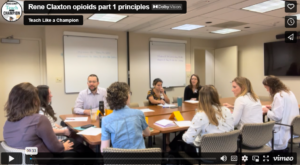
One of the best parts of the workshop is that we get to show video of both K-12 teachers and medical educators. And our newest clip–we just added it to the workshop this morning–is this one of Rene Claxton and her colleague Maria Lowry. It’s the first day of a course for Palliative and Supportive Institute clinicians at University of Pittsburgh Medical Center and Rene is giving what we call a “Roll Out Speech”… it’s a very brief explanation for students of the how and why of a specific teaching technique the teacher will be using.
In this case, Rene is explaining and making explicit her use of Cold Call and Habits of Discussion. She uses these techniques because…. well, I’ll let her explain them herself:
It’s such a service to students to know what to expect from the teacher and why. And it’s such an exemplar of team teaching that Rene explains the what and why and Maria then uses those techniques right away! Great teamwork!
Some things we loved:
Rene’s explanation of the “why” for Cold Call–which focuses on two reasons for her use of the technique. 1) “We want to hear your voice. It helps us gauge how good of a job we’re doing teaching”–we love that she explains that its partly about she and Maria understanding the effectiveness of their own teaching. Most students probably hadn’t thought of that. And if I hear on the first day that my teacher is always assessing how well she has taught me, I am much more bought in to the process as a student. 2) “And,” she notes, “It helps all pay attention.” Before summarizing one of the key findings of cognitive psychology, “What you pay attention to is what you learn.” The other big reason for their use of the technique is to help students learn more. This sort of framing will help them see it as a positive part ofthe learning process.
The “Culture of Error” framing. “It is ok if you don’t know the answer,” Rene says. “That’s why you’re learning. Because you don’t,” beautifully diffusing potential anxiety about not getting it right- it’s a safe bet that doctors feel this strongly. And glory points for the what to do about it: “So just say pass and we’ll come back to you.”
Getting started right away. The roll out speech only works if Rene and Maria let students experience what they’re talking about right away. So after Rene has explained Cold Call and Habits of Discussion Maria Cold Calls and asks for a participant to build off that answer. Bonus points for choosing on the first iteration a student whose notes are visible and therefore is likely to be successful the first time through!
There are lots more great details here but I’ll just close by pointing out how fast it is. Less than two minutes and everyone understands what to expect and why it will make them successful. And before they know it they’ve tried it out.
FYI if you’re a medical educator and find this interesting, we still have a few spaces left in our upcoming workshop. It’s running Tuesday and Thursday afternoons throughout September. Details and registration here:
And thanks to Rene and Maria for sharing their amazing work!
The post The Power of the ‘Roll Out Speech,’ Featuring Associate Professor of Medicine Rene Claxton appeared first on Teach Like a Champion.
September 5, 2023
How Millfield School Socializes Positive Listening and Discussion Behaviors, School-Wide

Without the listening part, it’s not going to be much of a discussion…
I recently had the pleasure of working with teachers at Millfield School in Somerset (England). The topic was classroom discussions and how to make them more effective by 1) socializing students to listen better and 2) socializing them to talk to rather than past each other… to build off of and develop one another’s ideas and to signal appreciation for what classmates said.
We discussed this outstanding video of Ben Hall rolling out Habits of Discussion with his students at Ipswich Academy, for example, and they like so many schools loved the explanatory slide Ben and his colleagues developed to help build those behaviors into the fabric of classrooms.
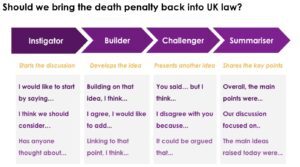
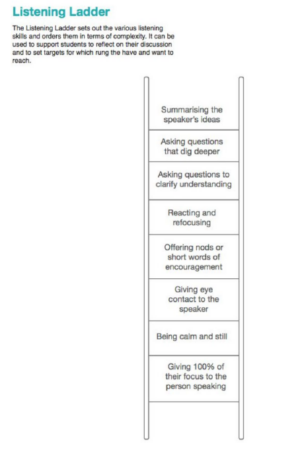
As part of the preparation for my session at Millfield Deputy Head Alex Haydon shared a booklet the school had developed to guide their work on the Oracy Project they’d developed. The booklet developed some of these in really useful ways that, aith Alex’s approval, I thought I’d share a few things I loved.
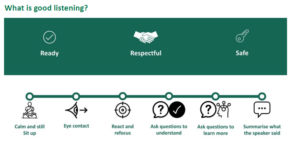
First the booklet is explicit about the central role of listening in any discussion. It’s something we can and must teach when students talk and these two pages from the booklet do a great job IMO of naming clear and important foundational behaviors so teachers can reinforce them with students.
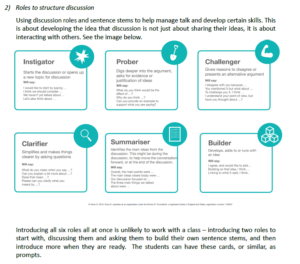
I also loved this framing of “discussion roles.” It’s similar to what Ben and company put together at Ipswich Academy but it adds additional roles for students to take on. Naming that they can seek probe and clarify adds real value, I think. But I also love the guidance at the bottom: don’t try to teach (or ask students to use) all six roles at once. Let them learn them a few at a time. It’s great practical advice.
Lastly I love the idea of all of this being in a booklet for staff so everyone is on the same page, has common vocabulary, and has a shared vision of what they model they aspire to in classroom discussion. Obviously these sorts of norms work best when everyone n the school is working on them at the same time.
It’s great stuff… and not to late to borrow or adapt for this year!
The post How Millfield School Socializes Positive Listening and Discussion Behaviors, School-Wide appeared first on Teach Like a Champion.
August 17, 2023
Advocacy Partnerships: Studying the Craft of Teaching with Man Up, Memphis

Supporting a great organization…
As an organization, Teach Like a Champion has grown quite a bit over recent years and there are quite e few projects we’re involved in that even our faithful readers may not be aware of. In this blog post, Director of Advocacy and Partnerships, Brittany Hargrove describes our work with Man Up Memphis to help bring more men of color into the teaching profession and ensure their support and success.
Over the past few years, our team has been working alongside (and learning from) organizations that, like us, are fighting for a more just and equitable society by inspiring more effective teaching. These partnerships have been part of our team’s commitment to supporting organizations that ensure educators of color are positioned to impact and thrive in the school communities they serve. This blog series, which we’re calling “Advocacy Partnerships: Stories of Growth and Impact”, will chronicle what we’re learning from these amazing organizations and hopefully inform schools’ efforts to attract, nurture, retain, and advance the careers of educators of color.
First up in our blog series is an introduction to Man Up Memphis. Led by Dr. Patrick Washington along with Nicole Lytle and Sarah Isenhart, Man Up Memphis is a non-profit organization helping students succeed by providing an educator talent pipeline of men of color. Through our partnership with Man Up, we support the Fellows with development that will advance their expertise as classroom teachers. It’s critically important to get more men of color into the teaching profession; but it’s equally important to ensure their success once they get there, so that they rise in the field and so that they are master teachers and their students thrive. We have had the privilege of working alongside Man Up coaches, Dr. Mike Brown, Camile Melton Brown, Vaughn Thompson, and Jonathan Humphrey, with whom we created Practice Lab opportunities for Fellows to continue to practice techniques and get real time feedback.
This past year we spent time studying the technique of Active Observation with Fellows. The technique involves making intentional decisions about what to look for when observing student’s work in the classroom and maintaining discipline in looking for what you’ve prioritized. The goal of our Active Observation session was to help Fellows become more flexible and responsive to student work, so that their feedback was more specific and could ultimately lead to improved work quality. Man Up Fellow, Derrick Squaire, who is a dedicated mathematics teacher in his fifth year of teaching, graciously allowed us to learn from his expertise this past year.
The video below showcases Derrick’s journey implementing his learning and how Man Up’s investment in developing their fellows is paying off for students.
You’ll notice in the first clip that Derrick’s instinct to circulate and check-in with students as they’re working independently is spot on. Breaking the Plane and Circulating are important techniques for initial implementation of Active Practice. And you’ll see how his implementation then advances after practice.One of the things that strikes us most about the practice in the second part of the video is how deliberate Man Up, Memphis is about structuring practice so that it’s practical and meaningful for Fellows. Notice how all Fellows are up, practicing together in parallel. This is a great way to build a positive and safe culture of practice. You’ll notice Derrick, highlighted in the clip, engaged deeply in the practice alongside his peers.As you observe Derrick’s implementation of his learning back in his classroom, his Active Observation appears to have improved tenfold. You probably noticed that his feedback was more specific, that he was intentionally making sure he gets to each and every student, sharing feedback both privately and publicly with his class, and that he was capturing the data to drive future instruction.
We believe Derrick’s progress and growth can help answer a question that is critical to our organization: How do schools and organizations successfully attract, nurture, retain, and advance the careers of their educators of color? Research suggests that all students benefit from having diverse teachers, and for students of color, learning from teachers of color leads to better academic performance, improved graduation rates, and increases the prospect of college attendance. It is critical for us to uplift and learn from the efforts of organizations like Man Up, who through their programming are providing not just a pipeline for educators of color to enter the field, but a real chance for Fellows to sustain their impact and outcomes for the communities they serve.
Man Up, Memphis isn’t alone in their charge. In fact, we’ve spent the better part of four years trying to learn as much as we can from other amazing organizations helping schools attract, nurture, retain, and advance the careers of educators of color. In addition to our partnership with Man Up, we’ve had the honor of learning with and from two additional organizations, Teachers Like Me and National Fellowship for Black and Latino Male Educators, who’ve also committed to ensuring exceptional educators of color can lend their talent, expertise, and wisdom to school communities that need them most.
In addition to providing the sustained training and coaching opportunities that we know lead to success for all educators, our Advocacy partners also give educators of color safe spaces to process and reflect on their experiences, access to an advocate within their school communities, and connection to an organizational culture where they feel belonging with their colleagues. These resources ultimately help determine whether educators of color remain and thrive in their school communities.
Over the next few months, we’ll continue our blog series, exploring the ideas and insights previewed above, with the hope that schools might adopt and adapt practices that better position them to attract, nurture, retain, and advance the careers of exceptional educators of color.
At TLAC, we believe teaching is the most important work in the world and that any contemplation of a more just and equitable society requires that classrooms and schools are radically better for children. We thank Man Up, Memphis and all our Advocacy partners for the incredible work they do on behalf of kids and families, and for helping us get smarter about teaching and learning.
For more information on our Advocacy partners and how you might support their efforts, please see below:
Teachers Like Me (www.teacherslikeme.org) aims to increase the number of Black teachers by removing barriers to entry and providing the support needed to be effective and responsive to the academic and social needs of all students, specifically students of color. One-third of the schools in the Kansas City metro area do not have a teacher of color on campus and TLM is here to change that statistic.National Fellowship for Black and Latino Male Educators’ (www.nfblme.org) purpose is to create a dynamic, life-changing, empowering fellowship for Black and Latino males that springboards them into principal, senior level, and C-suite roles, increasing the number, longevity, and impact of Black and Latino males in the education sector. Only 17% of CEOs in education are Black or Latino and the Fellowship aims to change this data.
Man Up Memphis’ (www.manupteach.org) mission to give students in high poverty, urban and rural communities, particularly male students of color, access to high quality male teachers and advancing policies that promote equity in K – 12 schools. As you know, 2% of educators are Black male educators. Man Up is charged with changing that narrative which we know has impacts both on the teacher but also on their students.
David Blazar, Teachers of Color, Culturally Responsive Teaching, and Student Outcomes: Experimental Evidence from the Random Assignment of Teachers to Classes, 1-58.
The post Advocacy Partnerships: Studying the Craft of Teaching with Man Up, Memphis appeared first on Teach Like a Champion.
August 10, 2023
Erica Woolway: Studying the Art of Facilitating Professional Development

The General Idea: Minds Aglow
Teachers deserve to love studying their work and improving their craft. They deserve great professional development characterized by smart, practical content and by facilitation that models what great teaching looks like. One of the shocking things about our field is how rarely that happens. On Team TLAC, we take delivering PD seriously. We think teachers should walk out with their minds blazing. TLAC CAO and President Erica Woolway shared this blog post describing some of the ways we study and develop our own capacity to train teachers.
Studying the Art of Facilitating Professional Development
Getting to celebrate the work of great teachers is my favorite part of our work. It’s not everyday though, that one of those great teachers is on our team and that we get to be her students. In this post, I’m sharing a clip of our very own Hannah Solomon presenting at a workshop last spring on Building Strong Classroom Cultures.
The workshop coincided with our TLAC staff retreat in which we geeked out on leading effective Adult PD. We watched facilitation clips and discussed the moves that build engagement, belonging, attention, and learning in adults.
As we hope is clear to anyone who has come to one of our workshops, ensuring a great training environment for adults is really important to us. We think adults deserve to love getting better, together. And we think that when they do it’s often because they are experiencing the same techniques that make classrooms better for students. Feeling how different the things you’re studying are as a participant can be a great motivator for change.
The day after our staff retreat, Hannah put our learning to work during our workshop and, per usual, she crushed it.
As many of you are either on the verge of or in the midst of leading hours of PD yourselves, we wanted to share some of the things that we learned from watching Hannah in action. And perhaps seeing her incredible facilitation will also have you checking out our workshop schedule so that you can come learn with us!
In this first clip, Hannah tees up two back-to-back clips with clarity and finesse. Take a look:
Here are some of the things that jumped out at us when we watched this video with our team a few weeks ago:
We love the way Hannah directs participants’ attention to exactly what she wants them to see in the clip, even acknowledging the rigorous instruction that they won’t see. “We cut the video to see the moves that Kirby makes with her body so that she is able to see and support all of her students.”Hannah manages participants’ working memory by asking them to jot notes on the first video before watching the second, allowing participants to save their first observation points for later and preventing the recency effect (a cognitive bias in which ideas that came last are remembered more than those that came earlier).Hannah’s formative and low stakes language is an invitation for them to think in writing. The phrase “take a beat and jot” gives participants the chance to write before chatting with a partner and her lovely and inviting tone supports participants’ attention.Participants in the room feel “seen” because of how Hannah subtly scans the room as she’s talking. When participants are writing she reads over participants’ shoulders in a supportive but noninvasive way to set up the ensuing discussion for success (you’ll see this in the next clip!).An overall driver of Hannah’s expert facilitation vibe is her deep knowledge of the clips along with her cues for watching help participants feel attended to. On the second clip for example, Hannah notes, “This is a short clip, so we’ll watch it twice.” She knows exactly what participants need because she has so carefully prepared for each moment of her facilitation.
Let’s now hop back into the PD and see Hannah surfacing participants’ observations in a whole group discussion.
Once participants have viewed the short Denarius Frazier clip twice, they have a chance to jot brief notes before entering a Turn and Talk. As a result, the room crackles to life in the Turn and Talk because everyone is prepared to engage with their partner.After the Turn and Talk, it’s subtle and brief, but her call to attention (which was explicitly rolled out earlier in the day), was accompanied by a bright smile and a scan. When she doesn’t get everyone’s attention immediately because they’re engrossed in their Turn and Talks, she uses a brief but warm self-interrupt to bring everyone back together – honoring both their time and attention.She expertly uses a “Warm Call (Doug calls it a Glow Call), “If you don’t mind, Evvie, I love the point I just heard you made about how Denarius waited….could you say a little bit more about it.” She then gently pushes for volunteers by suggesting a topic: “I heard a lot of folks talk about Kirby’s body language, does anyone want to share out what you discussed with your partner?” This type of targeted questioning helps keep the discussion focused on the takeaways that Hannah wants participants to get from the clips while not overly relying on Cold Calling which can start to disincentivize hand raising after too much use in adult PD facilitation.Hannah’s strong Economy of Language between participants’ responses ensures that the discussion is lively and efficient. Too often we as facilitators (and often teachers!) spend valuable time repeating a participants’ answer rather than using it as a chance to build habits and advance the discussion. Hannah is able to create a game of volleyball amongst participants rather than ping ponging back and forth with her as the facilitator.Most overwhelmingly, our team noted how Hannah’s careful preparation enabled such a seamless and productive discussion to flow among participants. After we showered her with praise, Hannah humbly declared the discussion she led to be a “happy accident,” but it’s clear that her preparation and seamless Active Observation made it possible for her to be flexible, personable, and genuine with participants in surfacing their analysis.And finally, Hannah makes participants feel seen and heard through the use of their names and noting the specific insights they provided. She uses her questions to narrow the focus on what she wants participants to be paying attention to and share when she calls on them. Notably, her final Cold Call of Jamie provided the transition for her next teaching point – illustrating the idea we share with teachers – that Cold Calling allows you to be the architect of the conversation.
Takeaways for your Video Facilitation: So, if you’re looking for a few concrete takeaways from watching Hannah facilitate that you can add to your own PD tool box, consider the below:
Clearly and briefly provide context for the video. Shape participants’ attention by telling them what to look for.Use writing and Turn and Talk to manage working memory and boost adult engagement.Consider watching short clips (<30 seconds) twice to allow for a bit of processing time.Circulate to inform who you will call on for whole group conversation and help people feel seen and valued (just the way you want their students to feel).Incidentally, leading PD in this way is an excellent way to also model these engagement and discussion techniques for teachers because feeling the impact of the techniques can be just as important as seeing them in action.
Thank you to Hannah for letting us learn from us! Reach out to us if you’d like Hannah come to your school to lead PD!
The post Erica Woolway: Studying the Art of Facilitating Professional Development appeared first on Teach Like a Champion.
August 1, 2023
Introducing the School Culture Curriculum (formerly the Dean of Students Curriculum)
Introducing the School Culture Curriculum
Our Dean of Students Curriculum is getting a new name: the School Culture Curriculum. This change reflects our commitment to empowering School Culture Leaders who play a vital role in building strong school communities. Whether you are a Principal, Assistant Principal, Dean of Students, Social Worker, Parent Advocate, you play a crucial role in shaping your schools’ culture.
Comprising of 72 student facing lessons, the School Culture Curriculum addresses common issues students face in school. It encourages students to reflect on challenging situations, comprehend the impact of their actions, and develop character through thoughtfully curated activities. From Peer Pressure to Social Media use, our curriculum equips middle school students with the tools to make positive choices.
The School Culture Curriculum serves as a powerful tool to:
Help students reflect on challenging situations, analyze their actions, and learn replacement behaviors for counterproductive actions.Foster an understanding of how students’ actions impact both themselves and others.Proactively teach virtues and values to support character development among students.Cultivate critical thinking, writing skills, and character development through meticulously curated activities organized by topic.Over the last three years we have gotten the feedback that there is a need for a curriculum at the high school level. We are currently in the process of piloting the high school curriculum with a number of schools around the country. Stay tuned for the official launch of our high school curriculum next year!
To learn more about the School Culture Curriculum and how to bring it to your school, please visit our website: https://teachlikeachampion.org/school-culture-curriculum/
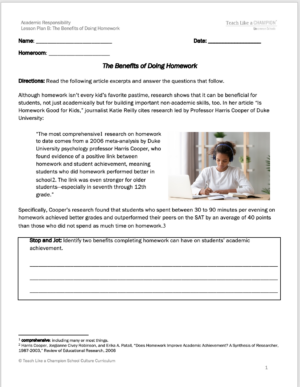
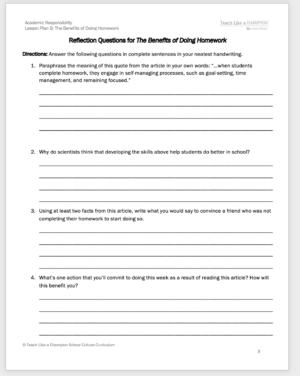
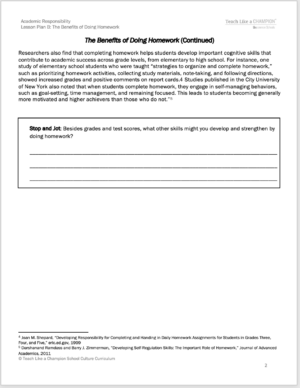
The post Introducing the School Culture Curriculum (formerly the Dean of Students Curriculum) appeared first on Teach Like a Champion.
July 12, 2023
How Katie Jukes Builds Contagious Enthusiasm for Learning
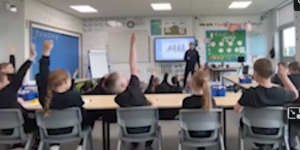
Contagious Enthusiasm for Learning
Last week I posted a really lovely video of Beth Peakman’s Cold Call and Wait Time at Rivers Primary Academy in Walsall, England. Today I get to share another video from the same school. This one is of Katie Jukes’ year two maths lesson. It shows how Katie builds contagious enthusiasm for learning.
Katie kicks things off by asking her students what operation they’d need to use to distribute 20 bananas equally. As Ashby (Ashley?) reads the problem aloud you’ll notice that Katie praises his beautiful reading, but if you look carefully you’ll also notice four or five pupils giving Ashby a thumbs up. Katie has “wired” her classroom to allow and encourage students to send each other signals of belonging and appreciation when they give effort, and she is careful to draw attention to it when students use those signals. She notes the “lovely appreciation” from Ashby’s peers, which causes them to be more likely to appreciate one another and causes the speaker to notice more the signals of peer approval he’s getting as he reads.
“So,” Katie asks, “what operation do I need to use?” After a nice bit of Wait Time in which she builds Culture of Error by noting that the problem is “a tricky one,” she notices hands raised by about half the class- but she’s not satisfied with that. Yes, it means she can probably get a right answer from someone… but it doesn’t suggest that everyone understands. So she uses what we call a “reactive Turn and Talk”: “Ok, not everybody’s hand’s quite up yet so, talk to your partner. Tell them. What do you need to use and why?”
The room crackles to life–sign of a well-installed core academic routine [note if you’d like your classroom to look more like that, you can join us for a day’s training on Academic Systems in August]–and she offers lots of encouragement. Coming out of the Turn and Talk you can see that a larger number of hands are now raised, but still she encourages hand raising behavior by Narrating Hands: “Let’s see, whose hands have I got this time. Loads this side of the room. can I get more this side? Wow! Nearly everybody.” This is such an important move. Students who raise their hands with the intent to speak are those who have answered in their heads. That is, Katie is multiplying the number of students who have already answered her question and also encouraging them to send a signal to their peers that their enthusiasm for learning and willingness to take risks are normal in Katie’s classroom.
After Daisy answers and Sagan builds off of and explains Daisy’s thinking, Katie again expresses appreciation for their work herself and also points out and reinforces (“magnifies”, you might say) the appreciation their peers are expressing. She is building a norm, and people’s perception of a shared norm, Peps Mccrea reminds us, is the biggest influence on their behavior and motivation. Subtly, as Katie works, her students are coming to think: My peers approve of me when I try hard in school.
The next question she asks is harder: “What question do I need to write?” Here again there are hands, and here again Katie Narrates Hands, expressing appreciation to more students than she can call on and reinforcing effort and the willingness to take risks. “Chase is having a go,” she says. “Ten hands. Can I get any more? Wow. Eleven. Twelve! Jake’s now being really courageous. Thank you. So is Ethan” There’s lots of wait time for students to work it out and the eager hands keep coming before Gabrielle caps the sequence with an excellent answer.
It’s lovely stuff all around, and Katie’s management of her Means of Participation–robust and intentional routines for the way students participate like Turn and Talking and raising hands–causes everyone to be a part of the learning.
The post How Katie Jukes Builds Contagious Enthusiasm for Learning appeared first on Teach Like a Champion.
Doug Lemov's Blog

- Doug Lemov's profile
- 112 followers

