
Doug Lemov's Blog, page 2
May 6, 2025
Reading Aloud for Fluency: Celebration is as Important as Correction
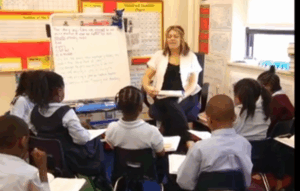
Just waiting for the fun to start….
Reading aloud both to and WITH students is one of the most important things teachers can do in reading class. Doing so helps build accuracy and automaticity in a way that silent reading can’t. And when students are socialized to read with a bit of prosody, to capture the intended meaning in their expression–we get double value because prosodic oral reading leads to prosodic–and therefore better–silent reading. This is a point Colleen Driggs, Erica Woolway and I make repeatedly in our forthcoming book The Teach Like a Champion Guide to the Science of Reading.
But teachers are often reluctant to ask students to read aloud. They’re worried students won’t want to read or that they will struggle. Or they think they’re “not teaching” when students read aloud.
Yes it’s important to build systems to cause all students to be attentive when read aloud happens. FASE Reading is a great tool for that. Yes, it’s important to have a plan for student who will struggle. But it’s also important to understand that those are solvable problems. Especially if you are attentive to building a positive reading culture.
A phrase we sometimes use is “celebration is as important as correction.” And you can see that clearly in this beautiful video (one of our longest serving in the TLAC library) of Hannah Lofthus.
Hannah celebrates Cartier’s expressive reading beautifully: His classmates get to talk about “what’s so great” about his fluent prosodic reading. Hannah rewards him by letting him read a bit more. [Note that Cartier punches it up a bit on the second read; he knows he’s got it and he’s proud]. And then it’s Mahogany’s turn and she’s NOT going to be outdone.
Yes, there is also correction and deliberate practice. Those are critical factors. But this video is a beautiful example of how we can make effective oral reading go viral in the classroom by attending to the culture of reading.
The post Reading Aloud for Fluency: Celebration is as Important as Correction appeared first on Teach Like a Champion.


May 2, 2025
Casey Clementson’s Reflections on What to Do in Music Ensemble + Happy Teacher Appreciation Week!

Give clear, concrete directions. Scan for follow-though
Happy Teacher Appreciation Week! Casey Clementson, author of the following post, is a middle school music teacher at Rosemount Middle School in Rosemount, MN.
As part of her work as a Teach Like a Champion Fellow, Casey studied the What to Do Cycle, using its principles and adapting them to the challenges of doubly-complex settings like Concert Band.
Her reflections (below) are so helpful… they’re our Teacher Appreciation Week gift to you!
Meanwhile if you’re interested in learning more about What to Do Directions or other elements of productve and orderly classrooms, join us for our Building Strong Classroom Cultures workshop in Tarrytown, NY, on June 5th and 6th; info here .
And if you are interested in finding our more about becoming a TLAC Fellow, applications for our fourth cohort are open and available here: https://teachlikeachampion.org/teach-like-champion-fellows/ and are due by May 30, 2025.
Meanwhile, here are Casey’s insights:
The Concert Band or Orchestra is a complex environment. Not only are students responsible for their personal materials needed for learning, they are also in charge of a musical instrument (one that costs hundreds of dollars). In my subject area – Concert Band – there could be over ten different types of musical instruments being used among the students, up to four different key signatures, and two different clefs used for reading music notation. To top it off, most percussionists are required to perform musical tasks completely independent but at the same time as the other students in the ensemble!
Self-regulation and self-discipline from the students is essential to making this type of classroom shine. The best Instrumental Music teachers know how to harness these challenges to shape the attention of their student musicians to keep everyone learning and helping every student become an independent musician.
During my time as a TLAC Fellow, I tried on many techniques to see how they fit in a class where nobody sits at a desk to learn. The technique that I fell in love with most was the What to Do Cycle. The What to Do Cycle is a sequence of moves that provides students clarity so they can experience success and belonging in the classroom.
See Casey use the What to Do Cycle here:
Here are a few things I learned during this process:
What To Do Cycles take planning, practice, and refinement.
There is a potency in consciously naming a What to Do Cycle. Teachers may say they are giving clear instructions when they are really not. Teachers may assume the students will magically do what is asked of them no matter what. I was this teacher.
For example, I have been teaching out of the same rhythm workbook for years. This year, I carefully craft my explanations, my examples, and my directions each day we have a rhythm lesson. I learned to change the register and tempo of my voice to make the ask exciting, or magical, or to harness middle school energy into concentration.
Sometimes Be Seen Looking and Correct When Necessary are the most important part of the What to Do Cycle.
A What to Do Cycle is more than just giving clear concise directions. By using Be Seen Looking and some positive narration: “The flute section has really got their pencils moving” or using an Anonymous Individual Correction such as, “Waiting for two saxophones to get their Scale sheet out,” while circulating the room is effective.
One of the greatest benefits has been the use of Private Individual Correction. Anything from softly saying “Check you counts in measure 1” to “Do you have something in your mouth that needs to go in the garbage?” to the more urgent “I need you to turn your body to the front and participate” allows students to feel safe while they practice the expectations of the task at hand or of the classroom in general.
Purpose not Power.
One of my most impactful take-aways from a training of the What to Do cycle was the phrase “Purpose not Power.” In my 26 years of teaching, I certainly remember many instances of power struggles between me and a student. Being able to reframe my thinking that everything I do to guide behavior and culture is for the service of learning music versus trying to control young people has resulted in powerful outcomes:
Our rehearsals are calmer.My emotional constancy has been easier to maintain.Our students are visibly and audibly improving at a rate we have not seen since pre-pandemic.
My “thank yous” and smiles to students have been more genuine than ever after a Be Seen Looking, an Anonymous Individual Correction, or in celebration of a job well-done.
The purpose of the TLAC Fellows program is a two-way street: The TLAC team learns from the Fellows and receives a ton of great video from us to work with. And, in return, I was inspired to improve my craft, thus reigniting my love of teaching.
Post script 1: Since adopting the use of strong WTD cycles, Cold Call has become a natural extension/part of our classroom (even without a roll out). After a Be Seen Looking and making eye contact with multiple students, I can engage in successful Cold Calls, but that’s for another blog post.
Post script 2: Our school is a 1:1 iPad school. After reading the book The Anxious Generation by Jonathan Haidt over the summer, my colleague and I decided the Band Area would be an iPad-free zone. Students turn their iPad in at the beginning of class and don’t pick it up until the bell rings. For 52 minutes, our musicians get to engage in something truly collective – learning music together – without the distraction of gaming, doing work for another class, or communicating with peers online. Could this be another factor in a successful classroom this year? Probably, yes!
The post Casey Clementson’s Reflections on What to Do in Music Ensemble + Happy Teacher Appreciation Week! appeared first on Teach Like a Champion.
April 21, 2025
Steve Kuninsky On Using (FASE) Reading in Science
Steve Kuninsky is one of our twelve Cohort 3 Teach Like a Champion Fellows. His cohort began working with our team in December 2022 and just presented their final projects in January. Steve’s final project explored the use of FASE Reading in high school Chemistry at the Gwinnett School of Mathematics, Science, and Technology. If you are interested in becoming a TLAC Fellow or know someone who might be a good fit, applications for our fourth cohort are open and available here: https://teachlikeachampion.org/teach-like-champion-fellows/ and are due by May 30, 2025.
In order to become better readers, students need to read, and this is why I chose to study FASE Reading in Chemistry for my Fellows project. FASE reading is a systematic approach to having students read out loud and follow along as others read. The goal is to encourage reading that is Fluent, Accountable, Social, and Expressive.
For years, I would ask my AP Biology students to read their science textbooks in preparation for class. I was consistently frustrated by the lack of compliance and success with what I thought was a very simple request.
It turns out my request wasn’t actually so simple. I was asking students to read a college level textbook, understand concepts addressed in the text, and come to class with an understanding of those concepts. At some point, I started wondering if I was asking them to demonstrate mastery of a skill on which they had yet to develop proficiency.
In order to successfully make meaning from any text, students must read with fluency. And in order to become fluent readers, they need to practice reading – something they typically don’t do enough of on their own, especially in science classes. What I needed was some way to help my students practice reading fluently in a way that held them accountable to participate, provided effective feedback, and modeled what fluent reading looks like.
In October 2023, I had the opportunity to attend the TLAC Reading Reconsidered Workshop. I had already experimented with FASE on my own, and this workshop inspired and equipped me to deepen my use of this technique. I had recently shifted from teaching AP Biology to Chemistry, which is a 9th grade course. FASE seemed like a great method for working on reading skills with my freshmen, who I knew would be expected to read a college level Biology textbook the following year.
What I love most about FASE is that it provides a low pressure/low stakes environment in which students can practice reading while receiving immediate feedback. Those who aren’t reading follow along, listen, and hear feedback offered to their peers.
Here’s a clip of the first time I used FASE Reading in my class back in August:
Planning and preparation are key to successful use of FASE. Prior to implementing FASE, explain to your students how they are expected to participate. The video of my roll out is provided here for reference. One of the most important points to make is that mistakes are normal, expected, and ok – Reinforce that Culture of Error.
When preparing a text for FASE:
Plan reading sections and identify who will read each section in advance. Mark your copy of the text to indicate when you will transition between readers. Keep reading durations short, but variable. Keep readers unpredictable. Avoid going in a specific order that allows students to predict the next reader. Intentionally match students to a text. Especially for struggling readers, look to provide a section that will challenge but not overwhelm them. Identify what section(s) you will read to model fluency for your students – this is called bridging.
Here’s the text that I marked up for this first instance of FASE Reading in class. Note that the first sentence is marked for bridging (where I read to model fluency), and slashes indicate where I planned to transition between readers. Questions to ask after certain sentences are written on the document to help me check for understanding of students’ comprehension. I preselect students to read and keep a list of their names on a post-it note; this helps me ensure that I hear a multitude of voices across the classroom, and I can use my knowledge of students to determine which portion of the text I want them to read.

Perhaps at this point, you’re wondering how we got here. Some people think that students aren’t okay with reading out loud together. Right before the clip above, I gave a quick Roll Out of FASE Reading. I told students the purpose of the system and how they should expect to be invited to read and what they should do while peers read.
See my Roll Out of FASE Reading here:
My biggest takeaway is when reading out loud becomes a regular part of class, when mistakes are normalized, and when successes are celebrated, FASE can become a community building experience. Your students will feel a sense of enjoyment and belonging as you work together with the common goal of reading fluency.
Want to bring FASE Reading to your campus or learn more about Science of Reading? Check out:
The Teach Like a Champion Guide to the Science of Reading: Translating Research to Reignite Joy and Meaning in the Classroom by Doug Lemov, Erica Woolway, and Colleen Driggs, addresses the pressing challenges educators face in effectively incorporating the Science of Reading into their instruction once students already know how to decode. By offering actionable guidance grounded in seven evidence-based principles, this book helps teachers elevate their instructional practices and better prepare students to be lifelong readers and thinkers. Coming out in late July! Preorder your copy here.
Plug and Plays: Check out our FASE Reading Plug and Play, a fully-scripted professional development session including the PowerPoint slides, videos, handout, and talking points here.
TLAC Online: Teachers can study Ways of Reading, including FASE Reading, in these 15-minute teacher-facing modules that include video, quick reading, and practice here.
The post Steve Kuninsky On Using (FASE) Reading in Science appeared first on Teach Like a Champion.
April 3, 2025
Fellows at Work: Using Cold Call to Develop Better Doctors

It’s not this…
Dr. Bob Arnold, Gerald J. and Dorothy R. Friedmans Chair in Palliative Care and Vice Chair for Professional Development at Mount Sinai’s Brookdale Department of Geriatrics and Palliative Medicine, and Dr. Rene Claxton, Director of Palliative Care Undergraduate and Graduate Medical Education at UPMC, are two of our twelve Teach Like a Champion Fellows from cohort 3. For their final projects. Bob and Rene studied Cold Call in the medical educator setting. They shared the following brief summary of their project!
If you are interested in becoming a TLAC Fellow or know someone who might be a good fit, applications for our fourth cohort are open and available here: https://teachlikeachampion.org/teach-like-champion-fellows/ and are due by May 30, 2025.
Cold Calling in Medical Education
For decades, medical educators have employed questioning as a teaching strategy. Senior doctors quiz learners, asking them questions until they do not know the answer and then moving on to a more senior member of the team. The focus is building on knowledge deficits.1 While learners felt this practice known as “pimping” (a gendered term for a demeaning practice) was a rite of passage, it did not cultivate psychological safety and its impact on learning is unclear. In the era of physician wellness, some educators called for the elimination of this form of questioning practice.2
Teach Like a Champion Fellows and physicians, Bob and Rene, honed in on the dissonance between their experience of pimping and their observation of exceptionally skilled educators employing questioning strategically to ensure voice equity, demonstrate loving accountability and ensure learning. They came up with the following differences:
Pimping Cold Calling Teacher intentionHighlight knowledge shortfall Celebrate knowledge acquisition and maximize voice equity
Group dynamics
Reinforce hierarchy
Create supportive learning environment
Pre-requisite knowledge
None explicitly provided
Provided prior to questioning sequence
Learner errors
Underscores learner knowledge deficit
Provides teacher insight into the success of their teaching (allows for checking for understanding)
As they brainstormed replacing the antiquated method of pimping with Cold Calling, they agreed on several core steps:
1. Start by outlining the rationale for cold call and distinguishing it from pimping in a short roll out speech. In Rene’s roll out for the first day of a series of fellows’ education, she makes sure to say:
What she’s doingI’m going to call on people even if their hands aren’t raised
Why she’s doing it
Helps us gauge how good of job we are doing teaching…to help us stay engaged…what we pay attention to is what we learn
What to do if a learner doesn’t have the right answer
It’s okay if you don’t know the answer. That means you’re learning…that’s why you’re here … just say pass
2. Carefully craft and place Cold Call questions in the lesson to set students up for success. Don’t call on someone as a punishment or to call out that they were distracted. To ensure learners have pre-requisite knowledge, assign pre-reading prior to the class session. Use Wait Time to give the students time to think about a thoughtful answer. Use formative language by starting cold call questions with low-stakes phrases like, “Who can start us off?”
In this example, Bob planned a Turn and Talk before a Cold Call to help learners teach each other (increase motivation) and feel more confident in their responses. He transitions from the Turn and Talk to the Cold Call using low stakes phrasing by directing the group, “We’re going to go from team Becca to team Courtney and see how we do.”
3. Positively frame the Cold Call practice by repeatedly setting expectations that mistakes are part of learning and respond to mistakes with supportive phrases such as, “You’re 80% there” or “Who can build on that?” When the answer is wrong, use it as an opportunity for the group to learn together by using phrases like, “That is a common mistake that we can all learn from.” These phrases maintain accountability for learning while enhancing psychological safety. Learners are more excited to contribute when they know their answers will be taken seriously and used to promote their learning.
In Bob and Rene’s experience, medical students reported high satisfaction with Cold Calling – the key was making sure teachers perform the technique effectively–setting it up carefully and making it safe which allowed students to bring their best answers and appreciate what they do know.
References
An example of pimping from the television show ER: https://www.youtube.com/watch?v=qoT5QkGBjOAChen DR, Priest KC. Pimping: a tradition of gendered disempowerment. BMC Med Educ. 2019;19(1):345. doi:10.1186/s12909-019-1761-1
Want to learn more?
Join us for our remote Engaging Academics in the Medical Educator Setting (four 90 minute remote sessions on May 22nd, May 29th, June 5th, and June 12th). Bob and Rene will be co-facilitating with the TLAC Team! Learn more and register here.
The post Fellows at Work: Using Cold Call to Develop Better Doctors appeared first on Teach Like a Champion.
March 7, 2025
A Great Example of Retrieval Practice from Kerrie Tinson’s classroom

We love to share examples of great teaching on the TLAC blog–especially great teaching that demonstrates core principles of cognitive psychology in action. If you follow the learning science at all you’re probably familiar with the importance of Retrieval Practice: how critical it is to bring previous content back into working memory so students remember it.
We’ve recently added this beautiful example of Retrieval Practice to our library. It’s from Kerrie Tinson’s English classroom at Windsor High School and Sixth Form in Halesowen, England.
Kerrie’s students are reading Macbeth and she starts her lesson with a Smart Start that focuses on Retrieval Practice… a series of questions that asks students to review and reflect on things they learned in the first scenes of the play.
We love how Kerrie asks students to write the answers to her questions–this causes all students to answer–universalizing the retrieval. We also love how familiar students are with the routine of starting with retrieval. This not not only makes the Retrieval Practice more efficient and easier to use but it socializes them to conceptualize Retrieval Practice as a great way to study on their own.
As students answer questions, Kerrie circulates and takes careful notes. This allows her both understand what students know and don’t know–you can see that she’s added one question to address a common misunderstanding–and also to Cold Call students to give good answers, which expedites the retrieval, making it efficient and pace-y.
But Kerrie doesn’t just rely on simple retrieval. She often asks students to “elaborate”: to connect what they are thinking about to other details from the play. For example, when a student recalls that Macbeth was a traitor, she asks “Why was that important?” The connections that come from elaboration build–schema–stronger connected memories that cause student’s knowledge to be connected and meaningful.
We also love the way she ends the session–by pointing out a couple of key concepts–that Macbeth is Impatient and eager– that are especially important and that everyone should have in their notes.
All in all its great stuff and we are grateful to Kerri and Windsor High School for sharing the footage with us!
The post A Great Example of Retrieval Practice from Kerrie Tinson’s classroom appeared first on Teach Like a Champion.
March 5, 2025
Reading Aloud From Real Books To Build Fluency, Attention and Meaning

Engaged, attentive students learning to read productively
In our forthcoming book The Teach Like a Champion Guide to the Science of Reading, Colleen Driggs, Erica Woolway and I discuss the overlooked importance of shared oral reading of rich and complex literature in book form.

This is a critical part of reading instruction for several reasons.
1) It builds student fluency, which is critically overlooked. If students can’t read fluently, their working memory will be engaged in the task of figuring out the words and will not be available for meaning making. Oral reading practice is critical, especially when it builds prosody, the ability to imbue text with meaning as students read it. Students learn what text sounds like from hearing models and this then influences the way they read silently.
2) It brings the story to life in a group setting. Students connect with the book via that shared experience of reading it aloud together. THis makes reading class more meaningful and increases their motivation to read.
3) They learn to sustain focus and attention while reading longer segments of text without break or distraction.
4) They are exposed to books and read them cover to cover, a topic I have discussed frequently here and elsewhere. Books are long-form complex arguments in which ideas are developed through deep reflection. A protagonist never thinks and believes at the end of the book what he or she thought and believed at the beginning. In an age when social media has normalized the “hot take”–one can understand a complex issue in a few seconds–the book is the antidote.
With that in mind here’s a beautiful example of what the activity of reading aloud as a class can look like.
In this video Christine Torres reads aloud from Lois Lowry’s Number the Stars with her fifth grade students.
Notice how much fluency practice there is for students, but also how Christine combines this with her own beautiful (and carefully prepared) oral reading. Students develop a clear mental model of what the text should sound like. And it comes to life so powerfully, with students experiencing it together. Notice also how student attention is focus and maintained via the shared experience of reading together. Students sustain their attentional focus in part because everyone around them is also doing so.
It’s a beautiful and joyful thing and, happily, much more valuable to young readers than a 45 minute discussion of the main idea of a text excerpt students have no connection to and little background knowledge about.
The post Reading Aloud From Real Books To Build Fluency, Attention and Meaning appeared first on Teach Like a Champion.
February 19, 2025
Application Window Open for The Teach Like a Champion Fellows–Cohort 4!!

Since 2016, one of our most exciting projects here at Team TLAC has been our Teaching Fellowship, which has allowed us to learn from champion teachers and share their expertise through our workshops and materials with schools all over the world. We are excited to announce that we are opening applications for our fourth cohort of TLAC Fellows!
The goal of our Fellows program has always been to recognize, support, and develop outstanding classroom teachers. In our initial launch of the program, we described the purpose like this:
We want to create incentives for great teachers to become even better teachers. That is, we want ways for them to be ambitious and remain in the classroom, to be ambitious about being a classroom teacher, rather than having entering administration be the only way to be ambitious.
And we want to encourage very, very good teachers to focus on getting even better- to strive to become classroom artisans who love and are fascinated by the mastery of the craft. We want them to love deep study of teaching and importantly, to influence their peers though the excellence of their daily teaching and their passion for the craft- their growth mindset, if you will. We think great schools need people like that. And being who we are of course we also want to learn not just from but with people like that- study them and their work but also study the craft generally alongside them.
The time is right for a program like this one. Since 2020, teachers have been required to adapt to a constantly changing educational landscape, and students have returned to school with increasingly urgent learning needs. Across the country and around the world, schools are struggling to attract and keep top teachers in classrooms. This is our opportunity to honor the incredibly hard and important work teachers are doing.
Of course, our team benefits tremendously from the Fellows program. Not only have we been inspired and energized by the work that our Fellows have done in their schools, but we’ve gained invaluable video and reflections about the nuances of various TLAC techniques. Many of our former Fellows are featured in TLAC 3.0, including in our new Keystone videos (extended videos, 10 minutes or so, intended to show a longer arc of a teacher’s lesson where they use multiple techniques in combination). We still have strong relationships with former Fellows who continue to contribute to our team and help us learn. Over the next few months on the blog, we’ll be shining a spotlight on Fellows from our recently concluded third cohort to share some of the work and learning they’ve done during their time in the program (see the end of this blog post for their names and independent study areas).
If you are a teacher who is looking to be valued and celebrated for your work while being pushed to grow in your own practice to become even better for your students and colleagues, we invite you to apply and learn alongside us!
Cohort 4 Details:
The program will run from January 2026-January 2028, for which Fellows must remain in the classroom. The first 18 months will involve active programming (bi-monthly remote and some in-person meetings with the team, classroom filming, video analysis, etc.) and the final 6 months will be an independent project. A $10,000 stipend (paid over the course of two years, provided that Fellows remain in the classroom and complete the independent project)
For more detailed information and to see the application, visit our Fellows page here: https://teachlikeachampion.org/teach-like-champion-fellows/
Here’s a list of our most recent cohort of TLAC Fellows, along with their grade band and subject, and their area of study for their independent project.
Ben Katcher, HS History, Implementing Knowledge Organizers in the Classroom Beth Greenwood, MS Science, TLAC Techniques in the UK Bob Arnold and Rene Claxton, Medical Education, Engaging Academics in the Medical Education Setting Casey Clementson, MS Orchestra, What to Do Cycle in Middle School Orchestra Christina Mercado, MS ELA, Habits of Discussion Implementation and Maintenance Diana Bentley, HS ELA, Cultivating Facilitator Expertise Across the School Doug Doblar, MS Math, Supporting Thinking Classrooms with TLAC Techniques – Read more here: https://teachlikeachampion.org/blog/how-doug-doblar-uses-cold-call-to-solve-the-endemic-problems-of-group-work/ Jamarr McCain, MS Math, Adult PD on Knowledge Organizers Kathleen Lavelle, HS Science, Supporting Students with IEPs in General Practical Science Rockyatu Otoo, ES SPED, Increasing Belonging and Collaboration with Colleagues through Culturally Responsive Lesson Prep Checklist Steve Kuninsky, HS Science, FASE Reading and Accountable Independent Reading in Chemistry
The post Application Window Open for The Teach Like a Champion Fellows–Cohort 4!! appeared first on Teach Like a Champion.
February 13, 2025
The Power of Read Aloud & Come See Us in Denver

Reading aloud to students creates the music of text for them…
In mid-March we’ll be in Denver leading a workshop on reading.
The workshop will incorporate content for our new book, The Teach Like a Champion Guide to the Science of Reading.
One of the themes of the book is bringing the text back into the center of the classroom. When we read together, from a book, during class, often aloud, we can bring the text to life and make the story compelling, we can socialize students to sustain their attention in text, we can practice fluency if students read, and model it if we read to them.
Check out these beautiful moments of Pritesh Raichura’s science class reading aloud—excerpted from the outstanding Step Lab documentary Great Teaching Unpacked for example.
Or this montage—from the book—of Spencer Davis, Will Beller, Emily DiMatteo, Jo Facer and Rob De Leon reading aloud with their classes.
Read Aloud, then, is a literacy tool that shouldn’t be overlooked, even among older students, we note in The Teach Like a Champion Guide to the Science of Reading.
Some other key benefits of doing what we see Spencer, Will, Emily, Jo and Rob doing.
Read Aloud can be an opportunity to share in, relish, and savor the beauty of books—one of the most joyful parts of the students’ and teachers’ day. It is also more critical to building fluency and preparing students to comprehend rich, complex texts than we originally understood.
A good Read Aloud allows students to access a text well beyond what they can read on their own, enabling them to familiarize themselves with more complex vocabulary, rhythm, and patterns of syntax.
Read Aloud also has the benefit of speed. A teacher reading a book aloud to students can cover more ground, more quickly, than the students themselves could if they were reading on their own, especially if the text is complex and challenging. In that case, the rate of exposure to key ideas, background knowledge, rare words, and technical vocabulary is accelerated.
Teacher Read Aloud also provides a model of fluent expressive reading for students. It helps students hear what language sounds like when read aloud with mastery and develop a mental model.
Developing such a mental model, will not only inform how students read aloud but also how they read silently. One of the core outcomes we seek as reading teachers is a sort of cognitive afterimage in our students when they read silently. We want their internal reading voice to be characterized by expression and prosody that bring the book to life during independent reading, thus enhancing meaning and perhaps pleasure.
Some details that we love about the clips in the montage.
90/110: Good read aloud is of done at 90% of your natural pace—providing students a bit more room to hear and process the words and information clearly but not so slow as to lose the story—and 110% expression—to build that mental model of expressive meaning making. You can hear that for sure in all of the clipsCheck for Attention: We want students locked in and listening and often reading aloud themselves. So it’s important that they have texts out and are following along. Quick call and response checks that they are with you can help. Spencer, for example, pauses to say “We were specifically told….” And students respond “not to go past,” proving they are locked in. Rob does something similarCirculate as you read: This lets you get near to students to observe them more closely and interact with them subtly if they need direction. It also somehow makes the reading a bit more dynamic.Feed knowledge: Emily very quickly explains that the phrase “in league” means “teamed up with.” Jo asks students to clarify who ‘her father’ was in Othello’s soliloquy.Shape Attention. It’s often helpful to give students something to “look for” such as “be on the look out for ways in which Squealer is scapegoating Snowball.”
We’ll spend two days “close reading” dozens more videos of teachers in action at the Reading workshop in Denver. Come join us! Details here: https://teachlikeachampion.org/readin...
The post The Power of Read Aloud & Come See Us in Denver appeared first on Teach Like a Champion.
February 5, 2025
How Doug Doblar Uses Cold Call to Solve the “Endemic Problems” of Group Work

The challenge is real…
I’m pretty cautious about “group work.”
It can be beneficial but the “can be” should be in italics because it has endemic problems that are often over-looked. One of which is the fact that it can be really hard to ensure that everyone is working, thinking and benefitting.
The happy buzz of voices in the classroom, just far enough away that you can’t really hear what they are saying, can be a recipe for happy collusion: I will let you go off to the corners of the room and we will both pretend the optimal case is occurring.
So I was very happy to read a brilliant blog post by my friend, colleague and TLAC Fellow (see below) Doug Doblar of Bay Creek Middle School in Gwinnett County, Georgia, that uses the TLAC technique Cold Call to solve some of group work’s endemic problems.
Here’s how Doug describes the endemic problems of group work:
One of the challenges that requires constant vigilance … is assuring that every member of a group thinks and learns during the day’s thinking task. There are quite a few ways this can go wrong, I’ve found:
One or two students in the group form a quick understanding of the new topic and race forward, leaving the other member or members of the group in the dustOne or two students in the group do not form a very quick understanding of the topic, but are afraid to say so, so they feign an understanding, allowing the other member or members of the group to similarly leave them in the dustOne or two students in a group “aren’t feeling it today,” so they don’t participate, feign an understanding, and get left in the dust
Or some other iteration of this situation where part of the group is off to the races while another part of the group is stuck at the starting line, willingly or not.
Perfectly put. I love an advocate for an idea who is keenly aware of the potential downside!
Doug advises addressing these challenges through a variety of tools, which is supremely practical and realistic. A complex challenge in the classroom is rarely solved by one tool alone.
First Doug advises building strong routines and setting clear expectations that address the pitfalls.
But Doug also advises using Cold Call and I think this application of the technique is brilliant.
As you walk from group to group, he advises you should Cold Call students who are at risk of non-engagement.
Here’s how he describes it:
Cold calling is my go-to technique during thinking tasks when I’m worried that a member of a group might be getting left behind, willingly or unwillingly.
As I actively observe during thinking task time, it usually isn’t too hard to spot these students. They stand a little farther from the group, maybe don’t face the whiteboard, rarely have the marker, and might be ones I already know are “not feeling it” today and who feel that their bad mood should excuse them from learning and participating. They’re also ones with personalities who make them regular disengage-ers who I’m always aware of.
As Doug circulates he finds these students and Cold Calls them in one of three ways, which I will let him describe:
Directly asking a student to do the next “thin slice”: Du ring thin-sliced thinking tasks – which I use more days than not – I’ll often just show up to a group and ask a student who I’m afraid might be disengaged to lead the next example or to explain a prior example to me. “Bryce, will you lead the next one?” or “Maddie, will you explain this last one to me?” “What’s he/she talking about? : When I come to a group whose leader is doing great of explaining thinking and trying to make sure the group is following along, but I’m worried that a member of that group is either disengaged or feigning an understanding to keep things moving, I’ll often just slide up to that student and ask “what’s he/she talking about?” It’s a quick and easy cold call that holds the student accountable for explaining the leader’s example. “ What’s he/she doing?”: This version of cold calling works just like the “what’s he/she talking about” one, except I use it when the group’s leader isn’t doing as good of a job. Sometimes I’ll catch the student with the marker silently and independently working a slice on his or her own with just the other members of the group watching. Usually this is ok, but I’ll frequently slide in and ask another group member “what’s he/she doing?” while it’s happening to make sure that the rest of the group actually understands what’s going on.
As if that’s not helpful enough, Doug has posted videos of himself doing this and I’ve made a short montage of them here:
Doug wraps by talking about how important it is to keep the Cold Calls positive and how that helps build what we sometimes call ‘loving accountability.’
They know I might move over at any moment and cold call one of them, and not a single one looks anxious about it…the students understood and they were proud to be able to explain that to me…. Accountability is hard to build into any instructional setting, but once it is assumed, kids really take ownership of their learning most of the time.
It’s great stuff and there’s plenty more insight in Doug’s full post, which you can read here.
Want to know more?
Check out:
Doug’s Blog: Doug writes beautifully about implementing Building Thinking Classrooms in Mathematics and how TLAC techniques support that framework. He provides practical advice and video. To read more, visit his blog here: http://www.dougdoblar.com/
TLAC Fellows: Doug is one of twelve of our talented TLAC Fellows – Cohort 3. We’re opening the application for Cohort 4 on February 18th! All application materials and more information about the program can be found here: https://teachlikeachampion.org/teach-like-champion-fellows/
Upcoming Engaging Academics Workshop: Interested in exploring Cold Call with us? We’re in LA on February 27-28 for an Engaging Academics workshop where we’ll study high engagement strategies like Everybody Writes, Cold Call, Means of Participation, and Lesson Preparation. Join us here: https://teachlikeachampion.org/engagingacademicsfeb2025
The post How Doug Doblar Uses Cold Call to Solve the “Endemic Problems” of Group Work appeared first on Teach Like a Champion.
January 10, 2025
On Attention, ‘cognitive endurance’ and reading

In our forthcoming book on the Science of Reading, Colleen Driggs, Erica Woolway and I discuss the importance of attention to reading.
Short version: if nothing else, the smartphone, having fractured the attention of millions, has taught us that attention is malleable. This is especially important in reading, which places such intense demands on students’ ability to sustain periods of focus attentiveness.
The flip side, we argue, is that by attending to attention in reading classrooms—by bringing the act of reading back into the classroom where we can shape the experience of reading for students–could help rebuild students’ attentional capacity. To quote our own forthcoming book:
If we build a habit in which reading is done with focus and concentration and even, to go a step further, with empathy and connectedness, and if we do that regularly for a sustained period of time, our brains will get better at reading that way—more familiar with and attuned to such attentional states… We can re-build attention and empathy in part by causing students to engage in stretches of sustained and fully engaged reading. One thing this implies is more actual reading in the classroom with more attention paid by teachers to how that reading unfolds. Attending to how we read—thinking of the reading we do in the classroom as “wiring”—gives us an opportunity to shape the reading experience intentionally for students.
In light of this is was struck by this study by Christina Brown and colleagues: COGNITIVE ENDURANCE AS HUMAN CAPITAL.
“We focus specifically on cognitive endurance: the ability to sustain effortful mental activity over a continuous stretch of time,” the authors write and what they find is stunning.
“Using a field experiment with 1,600 Indian primary school students, we randomly increase the amount of time students spend in sustained cognitive activity during the school day,” the authors write. Doing so, they find, “markedly improves cognitive endurance: students show 22% less decline in performance over time when engaged in intellectual activities.”
“This indicates that the experience of effortful thinking itself increases the ability to accumulate traditional human capital.”
One of the key benefits good schooling can provide is the ability to sustain deep, focused attention. Acquired via the habit of being caused to engage via deep, focused attention.
Sadly the authors find that access to such environments correlates to wealth: “Globally and in the US, the poor exhibit cognitive fatigue more quickly than the rich across field settings; they also attend schools that offer fewer opportunities to practice thinking for continuous stretches.”
So two takeaways from this very important study.
In reading classrooms its urgently important to cause students to engage in focused reading for sustained blocks of time as a matter of habit. If you’re interested in this, there’s a whole chapter in our forthcoming book about harvesting attention in reading classrooms. Among other things it means bringing shared reading back to the heart of the classroom.
It also means recommitting to orderly schools, something many educators have sadly abandoned in recent years. One of the things you need to be able to practice “cognitive endurance” is reliable and predictable quiet in which to focus your attention and stay on task without disruption. There’s lots of research on the frequency of low-level disruptions in most classrooms, I would only argue that it is “low-level” only in the level of noise it creates. It’s consequences are far from small.
The post On Attention, ‘cognitive endurance’ and reading appeared first on Teach Like a Champion.
Doug Lemov's Blog

- Doug Lemov's profile
- 112 followers

