Julia Flynn Siler's Blog, page 5
September 15, 2019
Five Generations at Cameron House
The Rev. Harry Chuck can trace his family’s history at 920 Sacramento Street back to the late 19th century.
That’s when his grandmother was sold into slavery by her impoverished family in China. Her owners sent her to San Francisco but she was intercepted by immigration officials before she reached one of Chinatown’s many brothels. They brought her instead to the Presbyterian Mission Home on 920 Sacramento Street, which was established in San Francisco’s Chinatown in 1874 as a refuge for vulnerable women.
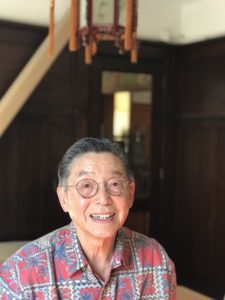
The Rev. Harry Chuck at Cameron House, photo by author.
Because many of the home’s residents were former prostitutes, Harry’s mother, who was born in 1900, rarely spoke of her own mother’s time there. In fact, Harry only learned about it by accident, when Mae Wong, a staffer, said to him “You are the grandson of Jern Ho,” a name given to his grandmother at the home which roughly translates to “one who has been transformed.”
When Harry mentioned that encounter to his mother, she asked how he’d heard that name. “I later learned that women who lived at the home carried the stigma of prostitution,” Harry told me one morning, as we sat together recently in 920 Sacramento Street’s sunny, wood-paneled parlor. “My mother managed to keep that secret” until that moment.
His own mother, Edna Evelyn Chan, was born in 1900. Six years later, she was among the sixty girls and women who were part of the group that safely fled San Francisco after an earthquake struck in the early morning of April 18, 1906. Firestorms soon swept through the city and firefighters used dynamite to try to battle the flames. The twelve-square-block neighborhood of Chinatown was almost entirely destroyed and its residents left homeless.
As the large group from the Mission Home moved through the city, there was an ever-present fear that traffickers would use the chaos following the disaster to try to snatch back girls and women. “We were instructed not to stop of talk to anyone as the older girls kept us moving,” Harry’s mother told him.
Led by Donaldina Cameron, the group, which included his mother, took shelter in a barn on the grounds of the San Francisco Theological Seminary in San Anselmo and then moved, for several months that summer, to a large home in San Rafael. On the steps of that home, which some of the girls called “a fairy palace,” Harry’s mother may have been among the young residents photographed that day.
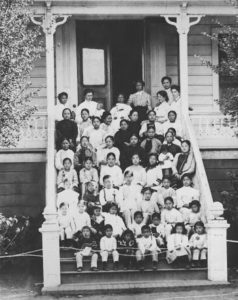
Earthquake refugees in San Rafael, courtesy of Marin County Free Library
Harry’s family remained connected to the home. He joined the youth program in 1947, graduated from the San Francisco Theological Seminary in 1962, and was assigned to serve as a minister at 920 Sacramento Street, now named Cameron House in honor of Donaldina. He served as its executive director for more than two decades, from 1977 to 2000, and lived in the home for much of that time.
Now, a fourth-generation member of the Chuck family – Josh Chuck – volunteers at Cameron House, and a fifth-generation, Harry’s grandson Tristan, is a volunteer and youth participant in its Friday Night Club. Meanhile, the Rev. Harry remains closely connected to it. He beautifully led a conversation on Saturday, September 21st at 920 Sacramento Street with Doreen Der-McLeod, also a former executive of Cameron House, Donaldina’s grand-niece Catherine Cameron, and myself. Thank you to all of you who came to that remarkable event.
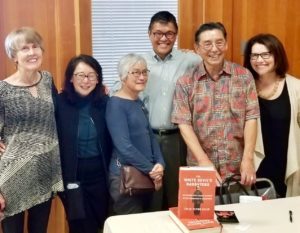
Panelists at Cameron House discussion of The White Devil’s Daughters on September 21, 2019 (from left to right) Catherine Cameron, grandniece of Donaldina Cameron, Tamiko Wong, executive director of the Chinese Historical Society of America, Mike Lee, executive director of Cameron House, Rev. Harry Chuck, community activist and former executive director of Cameron House, and Julia Flynn Siler, author and journalist.
The post Five Generations at Cameron House appeared first on Julia Flynn Siler.


Deep roots at Cameron House
Harry Chuck traces his family’s history at 920 Sacramento Street to the late 19th century.
That’s when his grandmother was sold into slavery by her impoverished family in China and sent to San Francisco. She was intercepted by immigration officials before she reached one of Chinatown’s many brothels, who brought her instead to the Presbyterian Mission Home on 920 Sacramento Street, which was established in San Francisco’s Chinatown in 1874 as a refuge for vulnerable women.
The Rev. Harry Chuck at Cameron House, photo by author.
Because many of the home’s residents were former prostitutes, Harry’s grandmother and mother, who was born in 1900, rarely spoke of her time at the home. In fact, Harry only learned about it by accident, when Mae Wong, a staffer, said to him “You are the grandson of Jern Ho,” a name given to his grandmother at the home which roughly translates to “one who has been transformed.”
When Harry mentioned that encounter to his mother, she asked how he’d heard that name. “I later learned that women who lived at the home carried the stigma of prostitution,” Harry told me one morning, as we sat together recently in 920 Sacramento Street’s sunny, wood-paneled parlor. “My mother managed to keep that secret” until that moment.
His own mother, Edna Evelyn Chan, was born in 1900. Six years later, she and Harry’s grandmother were among the sixty girls and women who were part of the group that safely fled San Francisco after an earthquake struck in the early morning of April 18, 1906. Firestorms soon followed.
As the large group moved through the city, there was an ever-present fear that traffickers would use the chaos following the disaster to try to snatch back girls and women. “We were instructed not to stop of talk to anyone as the older girls kept us moving,” Harry’s mother told him.
Led by Donaldina Cameron, the group, which included his mother and grandmother, took shelter in a barn on the grounds of the San Francisco Theological Seminary in San Anselmo and then moved, for several months that summer, to a large home in San Rafael. On the steps of that home, which some of the girls called “a fairy palace,” Harry’s mother and grandmother along with the other residents were photographed.
Earthquake refugees in San Rafael, courtesy of Marin County Free Library
The family remained connected to the home. He joined the youth program in 1947, graduated from the San Francisco Theological Seminary in 1962, and was assigned to serve as a minister at 920 Sacramento Street, now named Cameron House in honor of Donaldina. He served as its executive director for more than two decades, from 1977 to 2000.
Now, a fourth-generation member of the Chuck family – Josh Chuck – volunteers at Cameron House, and the Rev. Harry remains closely connected to it. I am honored that he’ll be leading a conversation on Saturday, September 21st, from 1-3 p.m. at the home with Doreen Der-McLeod, also a former executive of Cameron House, Donaldina’s grand-niece Catherine Cameron, and myself. Tickets are available here and I hope you’ll
The post Deep roots at Cameron House appeared first on Julia Flynn Siler.
August 3, 2019
From Cameron House to Civil Rights Work
Donaldina Cameron’s work inspired many people. One of the most memorable is Marion Kwan, a civil rights activist who marched with the Rev. Dr. Martin Luther King in the 1960s.
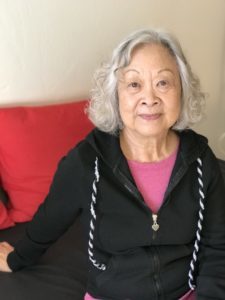
Marion Kwan, photo by author
Born and raised in San Francisco’s Chinatown, Marion calls herself a “Cameron House kid.” When Marion’s mother immigrated from China in 1940, she was detained along with Marion’s older 7-year-old sister at Angel Island. After their release, they were met on San Francisco’s docks by one of Cameron House’s Chinese staffers, possibly Mae Wong.
Just like one of the main characters of my nonfiction book, The White Devil’s Daughters, Marion’s mother was sold in China as an eight-year-old as a mui tsai, or child servant. Later, she came to the U.S. as the third wife of Marion’s father, who was a Chinatown merchant. Under the terms of the 1882 Chinese Exclusion Act, Marion’s mother, as a family member of a merchant, was permitted to immigrate from China to the U.S.
Six of Marion’s seven siblings took part in Cameron House’s youth programs in the 1950s and 1960s. As a first generation Chinese American, someone at Cameron House suggested to Marion she could go away to college: she applied and was accepted. One of her professors talked about his experience with civil rights in Mississippi, and with the Delta Ministry –a civil rights organization sponsored by the National Council of Churches.
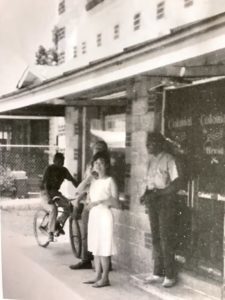
Marion Kwan in Hattiesburg, MS. in 1960s, photo courtesy of Kwan.
After graduation in 1965, Marion and a classmate decided to join the Delta Ministry. “We knew it was dangerous, but that’s what it’s like when you’re young,” Marion told me. ”I didn’t know it at the time, but Mississippi was the ‘lynching capital’ of the nation and the most dangerous state to be in.”
She and her classmate headed south to Hattiesburg, Mississippi.
“That exposure profoundly changed me; I returned the next year to continue grass-roots organizing in Hattiesburg.”
Marion started a girl’s club in the local community, and worked to integrate the YWCA, the libraries, and tried to integrate the local swimming pool, as well as advocating for African Americans who were denied their social security checks. She did voter registration. She eventually returned home and became an academic counselor at City College of San Francisco for low-income and first-generation college students.
Marion is now part of a group called the Bay Area Veterans of the Civil Rights Movement, which meets once a month and offers outreach to schools and colleges to share their experiences in the 1960s. Here are Marion’s own words on this:
“The struggle for civil rights is not just history; we need to cross lines and be fully engaged allies with all other groups who are fighting for the same justice in this country. Regardless of race, as a multiracial force we can support each other; that’s how the Civil Rights Act was won — a mass movement of different races came together and made the difference. That’s how Cameron House came to be: outsiders, women, and then more women, stepped in and made the difference.”
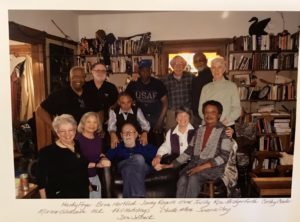
Bay Area Veterans of the Civil Rights Movement, photo courtesy of Kwan.
Her work today, she says, “is really directly related to the influence of Donaldina Cameron,” although Marion never got to meet the pioneering social worker and anti-trafficking crusader who had retired before Marion came to Cameron House, though Cameron lived for nearly a century, from 1869 until 1968. Several years ago, Marion sat down for a long oral history of her experience in Mississippi. She described how that time – which grew out of her Christian faith – fundamentally changed her. You can read her oral history here.
“Hattiesburg was like my other Chinatown. Two communities rising up for justice and equality,” Marion told me. “The people of Hattiesburg showed me the humanity of their community: what bravery, courage, perseverance and hope was like….”
The post From Cameron House to Civil Rights Work appeared first on Julia Flynn Siler.
July 3, 2019
Chinatown Rising
This weekend, I plan to see “Chinatown Rising” in San Francisco. It’s a new documentary directed by Harry Chuck and Josh Chuck, a father and son team. Both of them have been deeply involved with Cameron House, whose early history I explore in my latest book.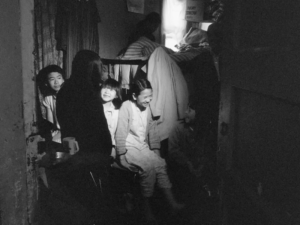
The Rev. Harry Chuck, a social activist and now filmmaker, was a youth director and then Executive Director of Cameron House. He mentioned to his son Josh, who also worked at Cameron House over the years, that he was thinking about getting rid of some film reels that had been sitting in his garage for decades. Josh asked if he could see them first.
The more than 20,000 feet of film, shot on a 16 mm Cameron, were his father’s footage of the Asian-American movement of the mid-1960s, as Harry Chuck experienced that period of intense social change as a young minister in Chinatown. It captures the San Francisco State College Strike, the desegregation of public schools, and the successful organizing efforts of the Chinatown Coalition for Better Housing.
I’ve spoken with others who were inspired by their experience at Cameron House to push for changes in their communities. I’m especially looking forward to the Q&A after the sold-out screening. Here’s the trailer:
The post Chinatown Rising appeared first on Julia Flynn Siler.
June 27, 2019
Anti-Trafficking Pioneers
Donaldina Cameron (1869-1968) captured the nation’s imagination at the turn of the 20th century. She was an early anti-human trafficking pioneer who ran a “safe house” for vulnerable girls and young women on the edge of San Francisco’s Chinatown. A tall, auburn-haired woman with a Scottish lilt, she who fascinated headline writers and the public alike.
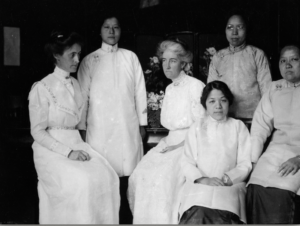
Staffers at 920 Sacramento Street: Donaldina Cameron center, Tien Fuh Wu standing to her right. Photo courtesy California State Library.
But Cameron wasn’t the founder of the Presbyterian Mission House in Chinatown, nor did she run it single-handedly. The home opened in 1874, more than two decades before Cameron first arrived as a sewing teacher in 1895. Throughout its sixty-year history, all of the home’s superintendents, including Cameron, relied on Chinese translators and volunteers to help the home run smoothly.
The White Devil’s Daughters: The Women Who Fought Slavery in San Francisco’s Chinatown tells the story of the many people involved with the home – white and Asian, women and men. I was fascinated by how this extraordinary and often cash-strapped band of activists managed to disrupt the lucrative business of human trafficking between China and America for more than half a century.
To investigate the history of the home and its people, I traveled from my home in the San Francisco Bay Area in 2014, and then again in 2015, to Philadelphia to spend several days working in the archives of the Presbyterian Historical Society. My goal was to uncover the stories of the many people who founded, supported, and worked in the mission home starting from the early 1870s to the mid-1930s, as well as the inspiring stories of some of the thousands of residents who passed through its doors to find their freedom there.
Margaret Culbertson, the superintendent of the home from 1877 to 1897, is a largely overlooked hero of the story. She came to life with the help of the materials I found about her in Presbyterian Historical Society’s archives. I learned, for instance, from her biographical file in the PHS that Culbertson nearly seven hundred girls had found refuge at the home during her tenure as its superintendent. She also hired and mentored Cameron, who first arrived at the home in 1895 as a sewing teacher.
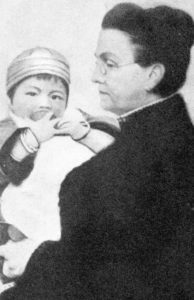
Margaret Culbertson was the superintendent of the home for two decades before Cameron. Photo courtesy of Cameron House.
Culbertson and Cameron faced down many threats: sticks of dynamite placed at the home, legal assaults from brothel operators and traffickers and even outbreaks of the Bubonic Plague in the first decade of the 20th century. Those stories made it into the newspapers. But more interesting were the quiet, yet inspiring stories I found in the records at the Presbyterian Historical Society involving the home’s Chinese aides and residents.
Perhaps the most moving involved Cameron’s longtime colleague Tien Fuh Wu, who had been sold by her father into servitude as a child to pay his gambling debts. Wu arrived at the home about 15 months before Cameron, in 1894, gained an education at the elite Stevens School in Philadelphia with the help of a sponsor, and then onto a Bible College in Toronto, before returning to work at the home in San Francisco in 1911 as an interpreter and on “rescue missions.”
Cameron and Wu worked side by side for more than 25 years, until Cameron’s retirement. The letters and employment files contained by the PHS archives helped reveal the nature of their long working relationship and friendship, which extended into both women’s retirements. Cameron lived in a tidy home in Palo Alto, California and she arranged for Wu to retire into a cottage next door.
After five years of researching the history of the home, with many visits to archives at Berkeley, Stanford, and elsewhere, I remain fascinated by how Cameron and Wu, both immigrants from distant continents, leaped barriers of race, class and culture to unite in a shared mission: to offer refuge for vulnerable women. In a folder at the PHS, I found this touching letter written by Cameron, written in 1941 describing the woman she called “Blessed Tien”: “…no daughter could be more faithful and devoted, she is a great solace to my heart…”
I am deeply grateful to the PHS’s staff for their assistance over the many years it took me to research and write this book. And I urge other researchers to begin exploring its deep and bountiful holdings.
Julia Flynn Siler is a New York Times bestselling author and journalist. Her latest book is The White Devil’s Daughters: The Women Who Fought Slavery in San Francisco’s Chinatown. She will be speaking at the Presbyterian Historical Society in Philadelphia on Thursday, July 25th, at noon. For more information, please visit www.juliaflynnsiler.com
The post Anti-Trafficking Pioneers appeared first on Julia Flynn Siler.
May 31, 2019
Five Books of Narrative History
As a teen, I fell in love with narrative history — the use of classic storytelling techniques, such as characters, scenes, and dialogue — to write compelling histories. My first crush was on Barbara Tuchman, a journalist-turned-author who won the Pulitzer Prize for her books The Guns of August and Stillwell and the American Experience in China.
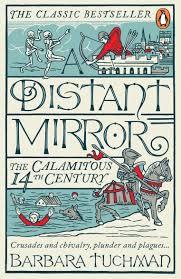
A history teacher assigned me to read A Distant Mirror, a book about what Tuchman called “the calamitous 14th century.” Her writing was so evocative to my eighteen-year-old imagination: I could almost feel and see the fine particles dust kicked up during the jousting matches she described.
Now, her somewhat old-fashioned prose doesn’t quite stir me in the same way, and I’m aware that academic historians haven’t always been her fans. But I still appreciate Tuchman’s ability to synthesize beautifully information and her gift for recreating a distant world with the delicate brushwork of a watercolorist.
I was honored to have been asked to pick five books that influenced my life as a writer by Jane Ciabattari, a columnist for Literary Hub. My choices included Common Ground by J. Anthony Lukas, Adam Hochschild’s Bury the Chains, The Warmth of Other Suns, by Isabel Wilkerson, and Last Boat Out of Shanghai by Helen Zia.
You can read our lengthy conversation here. With the recent passing of Tony Horwitz, a former reporter turned-bestselling author, I wish I had added one of his many wonderful books to my list (I read Baghdad Without a Map many years ago and, more recently, Blue Latitudes, in which he follows Captain Cook to Hawaii and elsewhere. His wonderful Civil War book, Confederates in the Attic, is also a favorite.)
Here’s an article by one of my favorite historians, Jill Lepore, from Harvard’s Nieman Foundation on how the line between scholarly and popular history writing has become blurred. I’d love to hear what your favorite books of narrative history are!

The post Five Books of Narrative History appeared first on Julia Flynn Siler.
May 25, 2019
The local settings of my latest book…
The women who ran the Mission Home in THE WHITE DEVIL’S DAUGHTERS crossed the country for their work. They pursued sex trafficking cases and checked up on former residents in New York, Boston, Philadelphia, Seattle, Sacramento, Fresno, Los Angeles, and elsewhere.
The charitable organization that supported them, the Occidental Board, was founded in the San Francisco Bay Area. And surprisingly, many of the places those 19th and early 20th century churchwomen founded are still around, providing education and social services to their local communities.
Here are some of the most notable settings for the book, as well as links to the non-profit groups that now occupy those same buildings. I originally compiled as part of a Q&A with longtime Mills College journalism professor Sarah Pollock for Local News Matters. You can read her excellent piece here.
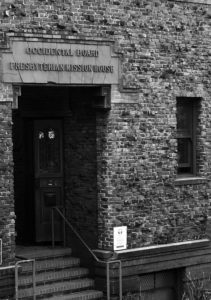
The main entrance today to Cameron House in San Francisco, photo courtesy of Julia Flynn Siler
920 Sacramento St.,San Francisco: Since the 1870s, the Occidental Board Presbyterian Mission House has stood on the same steep hillside site on the edge of San Francisco’s Chinatown. Rebuilt after the 1906 earthquake, this is where Donaldina (Dolly) Cameron and Tien Fuh Wu lived for most of their working lives. An estimated 3,000 women passed through its doors on their way to freedom. It is now a faith-based community center, with a food pantry, after-school programs, and adult education. www.cameronhouse.org
Ming Quong home, Mills College campus, Oakland:A home for younger girls that was an offshoot of the Occidental Board Presbyterian Mission House in San Francisco, funded in large part by the shipping magnate Robert Dollar. The pioneering woman architect Julia Morgan designed the building, which now sits at the entrance to the Mills College campus and has become the Julia Morgan School for Girls. One of its rooms is named in honor of Donaldina Cameron. https://www.juliamorganschool.org/
San Francisco Theological Seminary, San Anselmo: A castle-like seminary overlooking the Ross Valley in Marin County, this is where the residents of the Mission Home sought refuge after the 1906 earthquake, staying in a barn on its campus for about a week. The seminary is also where Ng Poon Chew studied to become a minister: he soon abandoned preaching and instead formed the Chung Sai Yat Po, or Chinese Western Daily newspaper. https://sfts.edu/about/
3 Bayview, San Rafael: The Victorian home that the 60 or so earthquake refugees from the Mission Home nicknamed “The Fairy Palace.” This home still stands today and is tucked down away near San Rafael’s Panama Hotel. The 60 or so girls and young women from the home soon found the space too cramped and moved to a larger home in Oakland in the autumn of 1906. https://www.zillow.com/homedetails/3-Bayview-St-San-Rafael-CA-94901/80732020_zpid/
Cameron Park, Palo Alto: This is a small park in Palo Alto’s College Terrace neighborhood named in honor of Donaldina Cameron. It is only a few blocks away from the tidy home and cottage where Cameron and Wu lived for decades at 1020 California St. in the same neighborhood as the park in Palo Alto. https://www.cityofpaloalto.org/news/displaynews.asp?NewsID=103
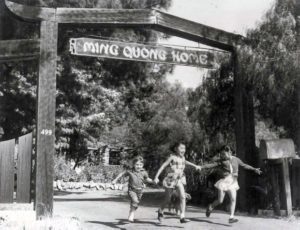
Photograph courtesy New Museum Los Gatos
This old photograph shows the entrance to the Ming Quong Home n Los Gatos whenit was still an orphanage. Although Ming Quong started out as a haven for Chinese girls, children from other races and boys were admitted beginning in 1953.
Ming Quong orphanage, Los Gatos: The original home for younger girls moved to Los Gatos in the mid-1930s, on Loma Alta Avenue. Part of the original 13-acre site is now occupied by Uplift Family Services, a behavioral health provider. One of Ming Quong’s former residents, Nona Mock Wyman, later wrote about her experience there in her memoir, “Chopstick Childhood In a Town of Silver Spoons.” https://www.mercurynews.com/2017/05/25/lighting-the-way-orphanage-for-young-sex-slaves-is-now-modern-treatment-refuge/
The post The local settings of my latest book… appeared first on Julia Flynn Siler.
The Bay Area Settings of “The White Devil’s Daughters”
The women who ran the San Francisco Mission Home I write about in THE WHITE DEVIL’S DAUGHTERS often traveled across the country for their work. They pursued sex trafficking cases and checked up on former residents in New York, Boston, Philadelphia, Seattle, Sacramento, Fresno, Los Angeles, and elsewhere.
Their charitable organization, the Occidental Board, was founded in the San Francisco Bay Area. Surprisingly, many of the places those 19th century churchwomen established are still there, providing education and social services to their local communities.
Here are some of the most notable settings for the book, as well as links to the non-profit groups that now occupy those same buildings. I originally compiled as part of a Q&A with Mills College journalism professor emerita Sarah Pollock for Local News Matters. You can read her excellent piece here.
The main entrance today to Cameron House in San Francisco, photo courtesy of Julia Flynn Siler
920 Sacramento St.,San Francisco: Since the 1870s, the Occidental Board Presbyterian Mission House has stood on the same steep hillside site on the edge of San Francisco’s Chinatown. Rebuilt after the 1906 earthquake, this is where Donaldina (Dolly) Cameron and Tien Fuh Wu lived for most of their working lives. An estimated 3,000 women passed through its doors on their way to freedom. It is now a faith-based community center, with a food pantry, after-school programs, and adult education. www.cameronhouse.org
Ming Quong home, Mills College campus, Oakland:A home for younger girls that was an offshoot of the Occidental Board Presbyterian Mission House in San Francisco, funded in large part by the shipping magnate Robert Dollar. The pioneering woman architect Julia Morgan designed the building, which now sits at the entrance to the Mills College campus and has become the Julia Morgan School for Girls. One of its rooms is named in honor of Donaldina Cameron. https://www.juliamorganschool.org/
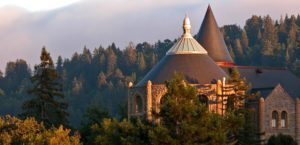
The San Francisco Theological Seminary
San Francisco Theological Seminary, San Anselmo: A castle-like seminary overlooking the Ross Valley in Marin County, this is where the residents of the Mission Home sought refuge after the 1906 earthquake, staying in a barn on its campus for about a week. The seminary is also where Ng Poon Chew studied to become a minister: he soon abandoned preaching and instead formed the Chung Sai Yat Po, or Chinese Western Daily newspaper. https://sfts.edu/about/
Cameron Park, Palo Alto: This is a small park in Palo Alto’s College Terrace neighborhood named in honor of Donaldina Cameron. It is only a few blocks away from the tidy home and cottage where Cameron and Wu lived for decades at 1020 California St. in the same neighborhood as the park in Palo Alto. https://www.cityofpaloalto.org/news/displaynews.asp?NewsID=103
Photograph courtesy New Museum Los Gatos
This old photograph shows the entrance to the Ming Quong Home n Los Gatos whenit was still an orphanage. Although Ming Quong started out as a haven for Chinese girls, children from other races and boys were admitted beginning in 1953.
Ming Quong orphanage, Los Gatos: The original home for younger girls moved to Los Gatos in the mid-1930s, on Loma Alta Avenue. Part of the original 13-acre site is now occupied by Uplift Family Services, a behavioral health provider. One of Ming Quong’s former residents, Nona Mock Wyman, later wrote about her experience there in her memoir, “Chopstick Childhood In a Town of Silver Spoons.” https://www.mercurynews.com/2017/05/25/lighting-the-way-orphanage-for-young-sex-slaves-is-now-modern-treatment-refuge
The post The Bay Area Settings of “The White Devil’s Daughters” appeared first on Julia Flynn Siler.
April 22, 2019
Seeking Refuge on the “Castle” Grounds
I’ve walked or biked past our local “castle” hundreds of times: Its Romanesque Revival campus perched on a hillside above my home town has a magical quality to it, particularly at dusk. In the days when our boys were reading J.K. Rowling’s books, it seemed as if Harry Potter might swoop through it spires any moment during a Quidditch match.
The San Francisco Theological Seminary
Only in recent years, as I began researching my new book, The White Devil’s Daughters, did I realize that “the castle” is where a key chapter in my book takes place. After the devastating earthquake and fires of San Francisco, the girls and women of the rescue home in San Francisco’s Chinatown fled to the castle grounds, living lived in a barn on its grounds for a week.
I’ve written about the “castle,” or the San Francisco Theological Seminary in San Anselmo (it’s real name) for this month’s issue of Marin Magazine. It was on the grounds of the Seminary where a large group from the Presbyterian Mission Home in Chinatown sought refuge from the disaster. And today, its library still holds century-old records of the home in Chinatown where thousands of women passed through on their way to freedom.
Here’s the story for Marin Magazine, along with some of the archival photographs from my book. The book launch party will take place on Thursday, May 16th, at Book Passage in Corte Madera, Ca.
The post Seeking Refuge on the “Castle” Grounds appeared first on Julia Flynn Siler.
March 5, 2019
Disrupting the Business of Human Trafficking – Then and Now
In 1874, a group of women opened a “safe house” on the edge of San Francisco’s Chinatown. Because their work disrupted the thriving trade in women between China and America, they faced endless legal challenges and even sticks of dynamite placed on their doorstep. By offering a place for survivors of sex slavery and other forms of servitude to escape to and drawing public scrutiny to the crime, they threatened their century’s existing business model of human trafficking.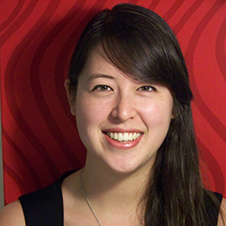
Today, activists are using digital tools to challenge the business of modern-day slavery. I was particularly struck by the story of Berkeley doctoral grad Rebecca Sorla Portnoff who has used her computer sleuthing skills to track down and catch sex-traffickers. Portnoff, who is 29, graduated from Cal in 2017 and since then, she’s been working for Thorn: Digital Defenders of Children, a group that uses technology to fight the sexual abuse of children.
There are some notable differences – and at least one surprising similarity – between some of the first organized efforts to disrupt trafficking, which took place in the latter half of the nineteenth century and the early decades of the twentieth, and Portnoff’s twenty-first century work. Those pioneers in San Francisco wore tightly-corseted dresses and elaborate piles of hair. Few had college degrees (women were first admitted to U.C. Berkeley in 1871, and far later to most Ivy League schools.) Many professions were closed to women and they did not have the right to vote.
Portnoff, by contrast, knew by the end of her freshman year at Princeton that she wanted to follow her father into computer science. And while most students in her field were men, she wasn’t the only woman as she earned her doctorate degree from Cal. She wears her dark hair in a bun or tied back in a pony-tail, usually wears jeans and a t-shirt to work, and was inspired to work for a non-profit by the book HALF THE WORLD: Turning Oppression into Opportunity for Women Worldwide, by Nicholas Kristoff and Sheryl WuDunn. “I was moved and inspired by the efforts women made to improve their lives,” she told me, and Portnoff decided to help.
While the Victorian-era activists were known to climb ladders, scramble across rooftops, and barge into brothels to help vulnerable women in children, Portnoff creates computer codes that spot or identify similarities in traffickers’ online ads and to hunt down the Bitcoin accounts used to pay for the advertisements. She works on a laptop, often tracking down traffickers who are operating hundred or thousands of miles away.
I was fascinated by this video produced by UC Berkeley of Portnoff’s work. She hasn’t faced the sort of threats that the women of Chinatown’s Presbyterian Mission Home experienced, but, notably, comments have been disabled from the recent video posted of her work, since trolling is one of the hazards that Portnoff and others in her field face. She faces off other kinds of threats through teamwork. “This is not something any single person can do by sweeping in and saving the day,” she says. “I have a team to watch my back.”
There is another clear similarity between then and now: both instances are examples of women helping other women to find their freedom, deploying teamwork, organization, and grit. Both the 19th century anti-trafficking pioneers and Portnoff were inspired by their religious faith.
“I’m a Christian, and my choice to work in this space is directly derived from my understanding of the core tenants of the Christian faith: to love God, and to love my neighbor,” Portnoff explained to me. “In this modern era, my neighbor can be both my physical neighbor next door, or the child a thousand miles away that I will never meet.”
While technology has changed (and, thankfully, women can exercise the right to vote and most of us, thankfully, no longer wear bustles) the compassionate spirit that infuses Portnoff is similar to that which inspired her anti-trafficking sisters many years ago. #antitrafficking #womensempowerment #womenshistory
Julia Flynn Siler is the author of The White Devil’s Daughters: The Women Who Fought Trafficking in San Francisco’s Chinatown, which is forthcoming from Alfred A. Knopf in May. www.juliaflynnsiler.com.
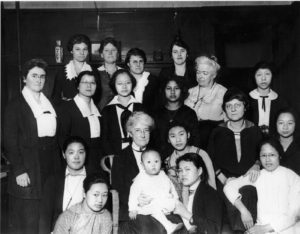
Donaldina Cameron (center, with toddler on lap) surrounded by Mission Home workers, who were early anti-trafficking activists. Courtesy of Cameron House.
The post Disrupting the Business of Human Trafficking – Then and Now appeared first on Julia Flynn Siler.