Julia Flynn Siler's Blog, page 4
June 23, 2020
Honoring Californian Women
Junipero Serra. Sir Francis Drake. Ulysses S. Grant.
What do most of the statues being pulled down across California have in common?
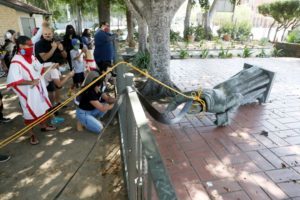
A statue of Junipero Serra being taken down by protestors, photo: L.A. Times
They’re statues of historic figures who were complicit in racist systems. They’re also all statues of men. And perhaps that’s in part because there are very few monuments to women in our state.
So here’s a modest proposal. Why don’t we erect monuments to some of the women who’ve helped shape our state?
I can suggest a few. Bridget “Biddy” Mason, an African American woman born into slavery, she bought her freedom, became a successful investor, and helped found Los Angeles’s First African Methodist Episcopal Church.
Or Julia Morgan, the first woman to become a licensed architect in the state who helped erect some of California’s greatest architectural treasures.
Perhaps we should consider Tien Fuh Wu, a child servant at a brothel who’d been sold by her father, she eventually became a pioneering social worker who worked tirelessly for decades to help vulnerable girls and women in San Francisco’s Chinatown.
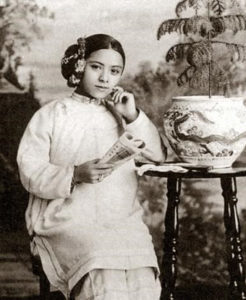
Tye Leung Schulze, courtesy of the Los Angeles Public Library
For inspiration, you may want to join us at an online event June 30th co-hosted by the California Historical Society, Cal Humanities, and KQED Public Media, for a viewing of three short documentaries on women who changed California’s history.
One of the women I wrote about in The White Devil’s Daughters, Tye Leung Schulze, is the subject of one of the documentaries. The other two are Lois Weber, the first woman to direct a feature-length film, and Charlotta Spears Bass, a newspaper editor, Civil Rights crusader, and the first African American woman to be nominated for Vice President.
Let’s start honoring California women!
The post Honoring Californian Women appeared first on Julia Flynn Siler.


June 4, 2020
The Bible as Literature (vs. Political Prop)
As a high school freshman in the 1970s, I took a course titled “The Bible as Literature.” It wasn’t exactly in the spirit of that freewheeling era. At a time when many of us were listening to the Grateful Dead and wearing our Birkenstock sandals with rainbow socks, we were also studying the Book of Job and the Song of Solomon.
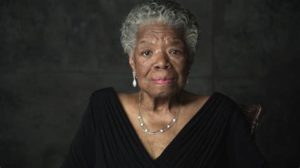
Maya Angelou, who incorporated the rhythm and imagery of the Bible into her writing
Yet, what I learned in that class managed to permanently lodge itself in my foggy adolescent brain – something I can’t say for most of what I studied in high school or college. It taught me that much of the world that I live in is informed by those ancient stories, with a power and resonance that seems to move us on a subconscious level. Bob Dylan’s lyrics taps into this, as does Margaret Atwood’s The Handmaid’s Tale and Maya Angelou’s poetry. The lesson was that the Bible provides the narrative architecture of the Judeo-Christian world, even during this secular age when many are not church goers.
Which brings me to President Trump’s photo-op in front of St. John’s Church in Washington, D.C. on the evening of June 1st. To clear away the peaceful protestors and clergy members handing out water on the steps of the church, police in full riot gear fired gas canisters and rubber bullets to make way for the President and his entourage. Trump held up a Bible long enough for the photo shoot, without reflecting on its words or meaning, and without expressing any sorrow over the police killing of George Floyd, who himself was involved in Christian ministry for many years. It was an offensive political stunt.

As a group of New England Episcopal Bishops wrote on June 2nd, “Our church may rightly feel outraged and insulted by having the symbols of our faith used as a set prop in a cynical political drama. The real abomination before us, however, is the continued oppression of and violence against people of color in this nation.” I am glad our church leaders are speaking out – first and foremost – against racism and police violence against black people, and for the church’s ongoing commitment to social justice. Mariann Edgar Budde, the bishop of the Episcopal Diocese of Washington, also wrote eloquently about what she called this “crucible moment.”
My own pastor, the Rev. Chris Rankin-Williams at St. John’s Episcopal Church in Ross, told the local paper, “Let’s keep our eye on the prize, which is racial justice.” He an many other faith leaders in our community spoke out against Trump’s propaganda and for racial justice. Leaders of the high school I attended, Chris Mazzola, and its board chair Claudia Lewis of the Branson School, have also spoken in support of the protestors and the black lives matter movement. You can read their full statement here. That is a welcome change from the school’s stance towards institutional racism from when I attended. Compared to the 1970s, today’s Branson students are more aware of their privilege and the school is making a greater effort towards inclusion and diversity.
Two remarkable faith leaders working for social change came out of Branson in the 1960s and 1970s. One is the Rabbi Bradley Shavit Artson, who holds a Dean’s Chair at the Ziegler School of Rabbinic Studies at the American Jewish University in Los Angeles, California. The other is the Rev. Sally Grover Bingham, an Episcopal priest in San Francisco and a prominent climate activist. Sally took a similar “Bible as Literature” class in college and seminary, and I’m guessing that Brad probably did.
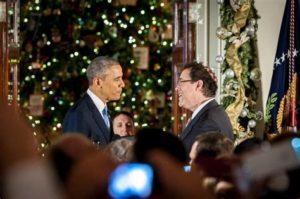
President Obama and Rabbi Bradley Artson
You can listen to a conversation between Rabbi Artson and the Rev. Bingham here that took place as part of Branson’s Centennial celebrations. We are connected through ancient traditions and stories, as well as our privilege of having attended a high school that is now acknowledging a need to take action against injustice, discrimination, and inequity. I’m also deeply grateful for having gone to a school which urged us to begin exploring the meaning and the beautiful language of the Bible, all those years ago.
Thank you to Branson’s late Helen Britt, an inspired teacher, for sparking my interest all those years ago in the beautiful language of the Bible, and for all those working towards racial justice.
The post The Bible as Literature (vs. Political Prop) appeared first on Julia Flynn Siler.
May 11, 2020
Unladylike2020
Women’s lives have long been overlooked by many historians, especially the lives of women of color. But a new PBS project, UnladyLike2020, led by the prize-winning filmmaker Charlotte Mangin, is producing 26 documentary shorts of unsung women heroes of American history.
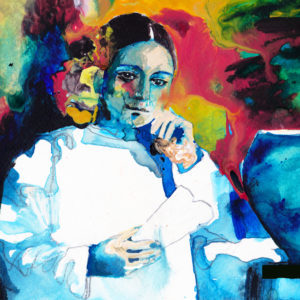
Tye Leung Schulze, artwork by Amelie Chabannes
Part of PBS’s American Masters series, it includes a film about a pathbreaker who I came to know admire while researching my latest history. Her name is Tye Leung Schulze and she was the first Chinese American woman to work for the U.S. Federal Government.
Charlotte interviewed me for the film, along with Tye’s grandson, Ted Schulze, and Judge Toko Serita, New York State Acting Supreme Court Justice who presides over the Queens Human Trafficking Intervention Court and the Queens County Criminal Court. You can watch the film here, starting on May 13th.
I got to know Tye because she was one of the thousands of girls and young women who took refuge at the Presbyterian Mission Home in San Francisco’s Chinatown at the turn of the 20th century, which is the subject of my latest book. The youngest daughter of impoverished Chinese immigrants, she fled to the home to escape an arranged marriage at twelve.
There, she gained an education and became an invaluable aide to the home’s longtime superintendent, Donaldina (Dolly) Cameron, who affectionately called her “Tiny” because of her short stature (Tye was just four feet tall.)
Dolly was so impressed with Tye’s gift for languages and good judgment that she recommended her for a job in 1910 at the newly opened Angel Island Immigration Station, a detention center in the middle of the San Francisco Bay designed to control the flow of Asian immigrants into the U.S.
Tye Leung Schulze, courtesy of the Los Angeles Public Library
Tye took the job, commuting each day to the island by boat to work as an assistant matron and interpreter. There she met a fellow immigration officer named Charles Frederick Schulze, a white man. They fell in love. Defying both their parents’ wishes and the state of California’s anti-miscegenation laws, they travelled to Washington state to marry.
Not long after to returning to work at Angel Island, they both lost their jobs. But Tye soon rose to prominence again. In 1912, one year after California granted women the right to vote, Tye became the first Chinese American woman to vote in a U.S election.
Tye is one of the young women I write about in The White Devil’s Daughters: The Women Who Fought Slavery in San Francisco’s Chinatown. Tye left a rich written record of her life, including a first-person oral history that the historian Judy Yung kindly shared with me. There is also a new box of materials from the Leung-Schulze family at the University of California’s Ethnic Studies Library, which I was able to pore through for clues about Tye’s story.
Charlotte and her team at Unladylike2020 are illuminating the remarkable lives of Tye and twenty-five other “hidden figures” from American history. In July, PBS will be broadcasting an hour-long film from the series…I was interviewed for that, too, about Hawaii’s Queen Lili’uokalani. More on that soon!
The post Unladylike2020 appeared first on Julia Flynn Siler.
April 15, 2020
“Are you wearing a mask…?”
Donaldina Cameron and Tien Fuh Wu, two of the women whose life stories I weave together in The White Devil’s Daughters, lived through the terrible flu pandemic of 1918-1919, which killed an estimated 20 to 50 million people worldwide.
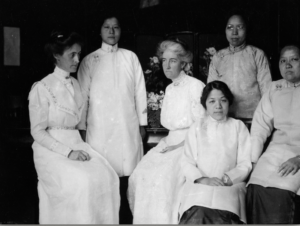
Staffers at 920 Sacramento Street: Donaldina Cameron center, Tien Fuh Wu standing to her right. Photo courtesy California State Library.
Just as today’s Covid-19 pandemic has taken its steepest toll to date at nursing homes and other institutions, so did the so-called “Spanish Flu” sweep through the two homes for vulnerable girls and women that Cameron and Wu ran in the San Francisco Bay Area. One of the homes was on the edge of San Francisco’s Chinatown and the other was in Oakland.
Both homes were crowded, with many girls and young women sharing bathrooms and bedrooms. At 920 Sacramento Street in San Francisco, Cameron reported to her board that the flu had sickened nearly all of the home’s residents and staffers. “Not one death out of almost fifty cases,” praising the tireless nursing and care provided to the sick by her longtime colleague, Tien Fuh Wu, and others.
Cameron, who marked her fiftieth birthday during the pandemic, was already overworked and under a great deal of stress when the Spanish Flu hit. The city government of San Francisco had mandated that everyone wear masks. A former teacher at the home was so worried about Cameron’s health that she wrote to her that year, asking, “Are you wearing a mask and taking precautions?”
Since Cameron worked closely with city officials and was a well-known public figure in the Bay Area, it is likely she followed the order and wore a mask. Cameron also put herself at risk by traveling during that time, including weekly trips to the home in Oakland, where the flu had also spread among its young residents. About thirty of its fifty girls got sick, but thankfully, no one died.
But Cameron and Wu’s wider circle of its supporters did suffer. One of the home’s earliest champions, Phoebe Apperson Hearst, died from the flu in 1919. Sadly, Hearst had not heeded the advice of health officials: she did not wear a mask to protect herself, according to her biographer Alexandra M. Nickliss. She died on April 13, 1919, at her beloved Hacienda del Pozo de Verona, about thirty-five miles southeast of San Francisco.
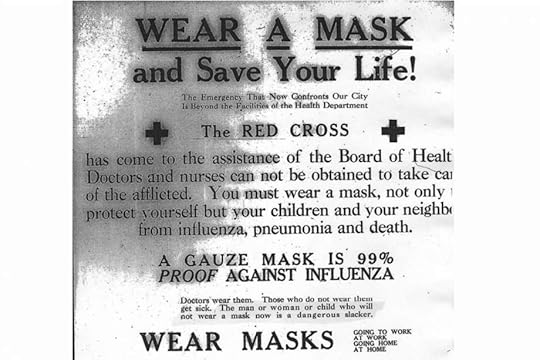
Advertisement in the San Francisco Chronicle by the Red Cross: “Wear A Mask and Save Your Life!”
The post “Are you wearing a mask…?” appeared first on Julia Flynn Siler.
March 24, 2020
Awarded Two Golden Poppies!
Each year, the Northern California Independent Booksellers Association (NCIBA) presents its Golden Poppy Book Awards “to recognize the most distinguished books written by writers and artists who make Northern California their home.”
I learned yesterday that The White Devil’s Daughters, my history of a pioneering group of women in Chinatown that fought human trafficking at the turn of the 20th century, won Golden Poppy awards in two categories: regional interest and nonfiction.

This is an honor bestowed by the people who nourish Northern California’s thriving literary culture: its independent booksellers. The NCIBA has recently joined with its Southern California counterparts to form the California Independent Booksellers Alliance (Caliba.) Thank you!
My congratulations to the other winners, as well. To my friend, the wonderful mystery writer Cara Black, who won the Martin Cruz Smith Mystery/Thriller Award for Murder in Bel-Air (Soho Crime) and to Elisabeth M. Prueitt and Chad Robertson for Tartine, A Classic Revisted (Chronicle Books) whose cookbook is one of our favorites.
The White Devil’s Daughters was a long labor of love – five years long – that was midwifed by my brilliant editor at Knopf, Ann Close, and her colleague Todd Portnowitz. The project was adeptly guided to publication by my longtime friend and agent Michael V. Carlisle, a co-founder of Inkwell Management in New York.
During this difficult time of quarantines and social distancing, I am deeply grateful for this honor. It brightens an otherwise dark time. Wishing you and your families health and courage.
The post Awarded Two Golden Poppies! appeared first on Julia Flynn Siler.
February 18, 2020
Update on My United Nations Trip….
March is Women’s History Month and I had planned to participate by telling the story of a group of pioneering women who fought human trafficking…but, alas, our panel at the U.N. Women’s Conference in New York was just cancelled due to concerns over the coronavirus.
As part of a delegation of women to the United Nation’s CSW64, the Commission on the Status of Women. I was planning to take part in a panel to discuss the late 19th and early 20th century efforts to combat human trafficking detailed in my book, The White Devil’s Daughters: The Women Who Fought Against Slavery in San Francisco’s Chinatown, on March 12 in New York City, as part of the parallel NGO CSW Forum.
Our delegation was being organized by the San Francisco Collaborative Against Human Trafficking, a public-private partnership established more than a decade ago by the National Council of Jewish Women and the Jewish Coalition to End Human Trafficking in collaboration with the San Francisco Department on the Status of Women, the San Francisco Human Rights Commission, and the San Francisco Mayor’s Office.
Our delegation of 42 women included California Superior Court Judge Susan Breall, Emily Murase, Executive Director of the San Francisco Department on the Status of Women, Alla Whitney-Johnson, founder of Freedom Forward, Nancy Goldberg, a co-founder of the Collaborative, and many more inspiring leaders from the San Francisco Bay Area.
I was especially looking forward to the convening day on Sunday, March 8th, which was scheduled to take place at the historic Apollo Theater in Harlem. Women from around the world working towards social justice will be gathering to discuss ways to implement the goals of gender equality and women’s empowerment worldwide.

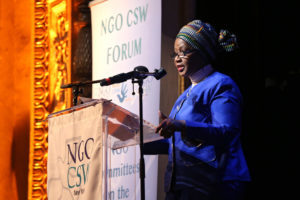
UN Women Executive Director speaks at NGO CSW Forum Consultation Day
The post Update on My United Nations Trip…. appeared first on Julia Flynn Siler.
Heading to the United Nations….
March is Women’s History Month and I’m thrilled to participate by telling the story of a group of pioneering women who fought human trafficking at a U.N. Women’s Conference in New York.
I’ll be joining a delegation of women to the United Nation’s CSW64, the Commission on the Status of Women, and will take part in a panel to discuss the late 19th and early 20th century efforts to combat human trafficking detailed in my book, The White Devil’s Daughters: The Women Who Fought Against Slavery in San Francisco’s Chinatown, on March 12 in New York City.
The delegation is being organized by the San Francisco Collaborative Against Human Trafficking, a public-private partnership established more than a decade ago by the National Council of Jewish Women and the Jewish Coalition to End Human Trafficking in collaboration with the San Francisco Department on the Status of Women, the San Francisco Human Rights Commission, and the San Francisco Mayor’s Office.
Our delegation of 42 women includes California Superior Court Judge Susan Breall, Emily Murase, Executive Director of the San Francisco Department on the Status of Women, Alla Whitney-Johnson, founder of Freedom Forward, Nancy Goldberg, a co-founder of the Collaborative, and many more inspiring leaders from the San Francisco Bay Area.
I’m especially looking forward to the convening day on Sunday, March 8th, which will take place at the historic Apollo Theater in Harlem. Women from around the world working towards social justice will be gathering to discuss ways to implement the goals of gender equality and women’s empowerment worldwide. I’ll be posting on social media from the gathering so watch this space!
UN Women Executive Director speaks at NGO CSW Forum Consultation Day
The post Heading to the United Nations…. appeared first on Julia Flynn Siler.
January 21, 2020
Two Historic “Safe Houses”
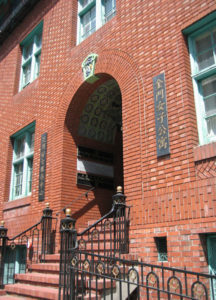 Cameron House, at 920 Sacramento Street in San Francisco, is famous as the place where thousands of vulnerable girls and women found their freedom in the late nineteenth and early twentieth centuries. It opened its doors in 1874 and is the setting for my book, The White Devil’s Daughters.
But it was not the first organization to supporting trafficking survivors in Chinatown.
That honor goes to the Methodist Mission Home, now located a few blocks away at 940 Washington Street. It opened its top floor two years earlier, in 1870, to provide a refuge to Chinese girls and women who’d been trafficked into labor or sex slavery. Like Cameron House, the institution now known as Gum Moon Residence Hall & Asian Women’s Resource Center still provides services to vulnerable women.
Gum Moon recently marked its 150th anniversary with a short film. You can watch it here and it features David Lei, a historian and community activist, as well as Jeffrey Staley, who has written a deeply researched historical novel, titled Gum Moon, based in part on the experience of his wife’s grandmother, who was sold to a brothel keeper when she was two.
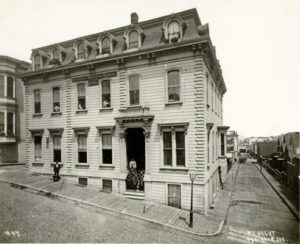
The Methodist Mission Home in the late 1860s, just before it opened its top floor to women. Source: San Francisco History Center, SFPL
Both David and Jeff generously shared materials and their insights with me as I was researching The White Devil’s Daughters, a nonfiction account of the women who fought slavery in San Francisco’s Chinatown. The key setting for my book is Cameron House, but Gum Moon and the Methodist missionaries who founded it also make cameo appearances.
Why did Cameron House, founded by Presbyterians, become famous while Gum Moon, founded by the much larger Protestant denomination of Methodists, recede into history? In part, because the long-time superintendent of 920 Sacramento Street, Donaldina Cameron, had a knack for publicity and fundraising, while Gum Moon suffered from management upheavals at the turn of the 20th century.
I spent a fascinating afternoon with David Lei and Jeff Staley, along with Chinatown Rotarians Vanita Louie (who co-produced the Gum Moon film along with Horatio Jung) at the home of Rose Chew, about eighteen months ago – before the film or either Jeff or my book was published. The subject? Gum Moon’s fascinating history. I just reconnected with Vanita in her role as the Chinatown Rotary Club’s webmaster.
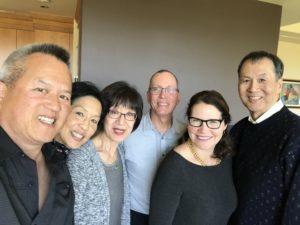
A gathering to discuss Gum Moon’s history (left to right) Horatio Jung, Rose Chew, Vanita Louie, Jeffrey Staley, Julia Siler, David Lei
I’m honored to have been invited to speak to her club on February 5th at a luncheon to be held at Cameron House. Open to the public for this occasion, this is a good chance to spend a visit 920 Sacramento Street. Meanwhile, Jeff Staley will be speaking at Pardee House in Oakland on Sunday, January 26th, and several descendants of Gum Moon residents will be joining him.
The post Two Historic “Safe Houses” appeared first on Julia Flynn Siler.
Supporting Survivors of Human Trafficking for 150 Years
Since we’re in January, which is National Slavery and Human Trafficking Prevention Month, I thought I’d reflect on two pioneering homes in San Francisco’s Chinatown that have long supported survivors of human trafficking — Gum Moon and Cameron House.
Cameron House, at 920 Sacramento Street, these days is famous as the place where thousands of vulnerable girls and women found their freedom in the late nineteenth and early twentieth centuries. It opened its doors in 1874. But it was not the first organization to supporting trafficking survivors in San Francisco’s Chinatown.
That honor goes to the Methodist Mission Home, now located a few blocks away at 940 Washington Street. It opened its top floor two years earlier, in 1870, to provide a refuge to Chinese girls and women who’d been trafficked into labor or sex slavery. Like Cameron House, the institution now known as Gum Moon Residence Hall & Asian Women’s Resource Center still provides services to vulnerable women.
Gum Moon recently marked its 150th anniversary with a short film. You can watch it here and it features David Lei, a historian and community activist, as well as Jeffrey Staley, who has written a deeply researched historical novel, titled Gum Moon, based in part on the experience of his wife’s grandmother, who was sold to a brothel keeper when she was two.
The Methodist Mission Home in the late 1860s, just before it opened its top floor to women. Source: San Francisco History Center, SFPL
Both David and Jeff generously shared materials and their insights with me as I was researching The White Devil’s Daughters, a nonfiction account of the women who fought slavery in San Francisco’s Chinatown. The key setting for my book is Cameron House, but Gum Moon and the Methodist missionaries who founded it also make cameo appearances.
Why did Cameron House, founded by Presbyterians, become famous while Gum Moon, founded by the much larger Protestant denomination of Methodists, recede into history? In part, because the long-time superintendent of 920 Sacramento Street, Donaldina Cameron, had a knack for publicity and fundraising, while Gum Moon suffered from management upheavals at the turn of the 20th century.
I spent a fascinating afternoon with David Lei and Jeff Staley, along with Chinatown Rotarians Vanita Louie (who co-produced the Gum Moon film along with Horatio Jung) at the home of Rose Chew, about eighteen months ago – before the film or either Jeff or my book was published. The subject? Gum Moon’s fascinating history. I just reconnected with Vanita in her role as the Chinatown Rotary Club’s webmaster.
A gathering to discuss Gum Moon’s history (left to right) Horatio Jung, Rose Chew, Vanita Louie, Jeffrey Staley, Julia Siler, David Lei
I’m honored to have been invited to speak to her club on February 5th at a luncheon to be held at Cameron House. Open to the public for this occasion, this is a good chance to spend a visit 920 Sacramento Street. Meanwhile, Jeff Staley will be speaking at Pardee House in Oakland on Sunday, January 26th, and several descendants of Gum Moon residents will be joining him.
The post Supporting Survivors of Human Trafficking for 150 Years appeared first on Julia Flynn Siler.
November 14, 2019
“Auntie” Tye and one degree of separation….
One of the unexpected pleasures of my book tour has been meeting readers whose own life stories overlap with the characters I write about in The White Devil’s Daughters.
After a recent talk I gave at the San Francisco Theological Seminary , a retired Chinese American woman named May Lynne Lim came up to introduce herself to me. We chatted briefly and she handed me a sealed envelope with my name inked onto it in careful handwritten script.
Tye Leung Schulze, courtesy of the Los Angeles Public Library
I waited until the next morning to open the envelope and read what was inside. There were three pages of a typed, single-spaced story about Mrs. Lim’s own history with Cameron House, the setting of my book, as well as a handwritten note with her address and telephone number, inviting me to contact her about seeing some family photographs.
I read about her father’s first wife, Rose (Fung Ho) Lee Young, and Rose’s sister, Tye Leung Schulze, whose extraordinary story I tell in the book. A short-statured woman whose nickname was “Tiny,” Tye Leung Schulze was a pioneering staffer at the Angel Island immigration station and the first Chinese American woman to cast a vote in a U.S. presidential election.
Tye Leung Schulze was one of the sixty or so girls and women who fled from the Presbyterian Mission Home on the morning of April 18, 1906, to safety after the earthquake and subsequent firestorms that destroyed Chinatown and much of San Francisco.
Mrs. Lim’s family believes that Rose also “must have been one of Miss Cameron’s girls….but we were never able to find any records of her having been there.” In 1906, Rose was not yet married to Mrs. Lim’s father (Mrs. Lim’s own mother, a “picture bride” married her father in 1930, after Rose’s death two years earlier. In turn, after Rose’s death, Tye and her sister Alice took May Lynne’s mother under their wings and called her “Little Sister” in Chinese. Alice and Tye, in turn, became May Lynne’s informal “aunties.”)
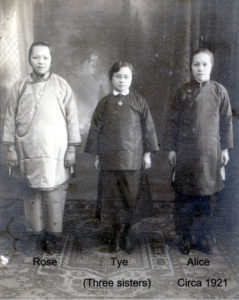
Rose, Tye, and Alice (photo courtesy of May Lynne Lim)
The remembrance that Mrs. Lim shared was especially moving in its detail of all the ways she and her husband remained connected with Cameron House for many years afterwards, first through the youth programs and later as an alumnae.
Mrs. Lim’s late husband Roger also grew up in San Francisco’s Chinatown and participated in Cameron House’s youth programs. May Lynne and Roger were married at the Chinese Presbyterian Church sixty-three years ago, in 1956 – a time in which the namesake of the home, Donaldina (Dolly) Cameron, was still alive.
By the mid-1950s, Miss Cameron’s successor, Lorna Logan, lived upstairs at 920 Sacramento Street, while Dolly and her longtime aide and friend, Tien Fuh Wu, had moved in their retirement from the home to Palo Alto. When Dolly died in 1968, the city of Palo Alto named a small park in her honor. Both Cameron and Wu were pioneers in the fight against what we now call human trafficking.
Meanwhile, Mrs. Lim told me that her family now numbers around 200 people. Each year, more than a hundred relatives gather for her family’s annual Chinese New Year’s celebration!
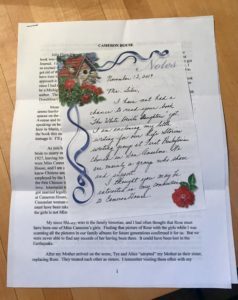
The typed remembrance and hand-written note that Mrs. Lim gave me.
The post “Auntie” Tye and one degree of separation…. appeared first on Julia Flynn Siler.