David Gessner's Blog, page 10
March 25, 2016
Lundgren’s Lounge: “Innocents and Others,” by Dana Spiotta
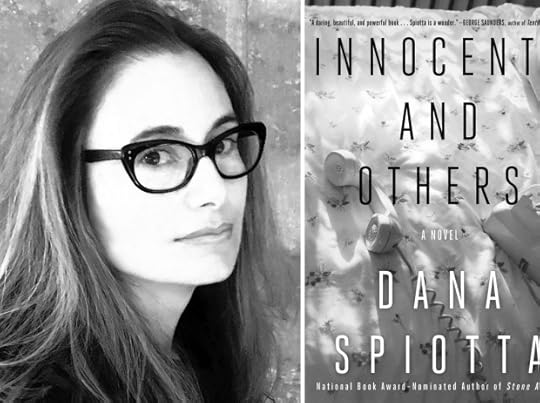
The tumultuous ’60s and their aftermath were occasion for a seismic cultural shift, a ‘subversion of the dominant paradigm,’ in the parlance of the times. Few novels have come close to capturing the mercurial complexity and staying power of this period. Roth’s American Pastoral nibbled at the edges, while Susan Choi’s American Woman offered a fascinating glimpse of the radical left… and then there was Eat the Document, a haunting National Book Award nominee by Dana Spiotta, a tale of two radical survivors of the chaos of those times whose lives intersect again, years later, after they have re-assimilated into mainstream culture… as though that were possible.
Spiotta followed Eat the Document with Stone Arabia, another haunting tale of a Walter Mitty-like rock musician, who, despite the early dissolution of a promising career, has carried on, meticulously documenting his “fame.” There are reviews and records and interviews that occur in a vacuum, read and heard only by a few, most notably the musician’s sister, who narrates the story. The novel is a both a reflection on identity and celebrity and the edgy weirdness of contemporary popular culture. It is a theme that Spiotta returns to in her latest novel, Innocents and Others.
The irresistible opening of Innocents and Others is a love story involving Meadow Mori, a high school senior who, obsessed with film and movies, dupes her parents into thinking she has left LA after graduation to attend NYU’s filmmaking school. Except that she actually becomes the live-in girlfriend of a distinctly Orson Welles-like character. When her paramour dies, Meadow leaves for New York to pursue her obsession for making movies. It doesn’t matter that we learn later that this opening tale is fiction–after all, we are reading a novel, right? Innocents and Others then proceeds to spread its tendrils in myriad directions–at its core is the story of the friendship between Meadow and her high-school friend Carrie Wexler that may remind readers of Elena Ferrante’s brilliant examination of the nature of female friendship. Both women become successful filmmakers, but their lives and their movies could hardly be more different.
And then there is Jelly… a woman who gains access to a Rolodex and parlays it into developing relationships with some of the most powerful men in Hollywood. Jelly has refined an approach that seduces her listeners. Not only does she actually listen, she allows the silence to create an empathetic bond. The conversations are almost excruciatingly intimate, without being sexual, but they never reach fruition because of Jelly’s inability to be truly honest about who she is.
There are distinct echoes of DeLillo in Spiotta’s work (she has been described as “the female DeLillo” more than once) and certainly a connection with Flamethrowers author Rachel Kushner, whose work shares a similar obsession with film. Spiotta is brilliantly raising questions around identity and the ways that we choose to represent, or misrepresent ourselves in a culture that offers us powerful new ways to manage how we are perceived. The inevitable question becomes, how real are those perceptions and the relationships that grow out of them?

[Bill Lundgren is a writer and blogger, also a friend of Longfellow Books in Portland, Maine (“A Fiercely Independent Community Bookstore”), where you can buy this book and about a million others, from booksellers who care. Bill keeps a bird named Ruby, a blind pug named Pearl, and a couple of fine bird dogs, and teaches at Southern Maine Community College. ]


March 11, 2016
Table for Two: Debora Black talks with Steve Almond about Football, Hate Mail, Life, and Art
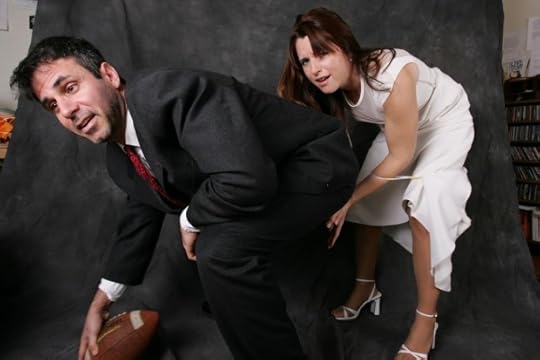
Debora: Steve you’re everywhere—The Best American Short Stories, The Pushcart Prize, The New York Times Magazine’s Riff, The Rumpus online magazine, and you host the Dear Sugar podcasts with Cheryl Strayed. You are into journalism, fiction, life advice, and politics. You are Football, candy, rock and roll, hate letters, open letters, writing strategies, and book reviews. What is your mission as a writer, what impulses drive your work?
Steve: Oh, I’m like the rest of you suckers. I have this persistent dream that I’ll build a bridge of love to the rest of the species. For the most part, I chase my obsessions down.
Debora: Do you feel most at home within any of your past or present writing roles?
Steve: Well, I admire the folks who sort of go where the energy takes them. Vonnegut, for example. He wrote all kinds of shit. Stories. Novels. Plays. Articles. Dispatches. Speeches. Sermons. Jeremaids. I feel at home whenever the muse is lending a hand, when I’m not just pushing the language around. If I were left to my own devices, I’d destroy all the devices. Wait a second. What I’d do is write short stories.
Debora: You’ve done some interesting self-publishing. Tell us about that material and why you self-published.
 Steve: Oh, I just got tired of putting out books as part of the writer/publisher arranged marriage, tired of all the complaints about the dowry and the dishes, and my art getting trampled by the profit motive and blah-blah-blah. So I had these little books I wanted to write and put in the world and I got my pal Brian Stauffer to help out. He’s maybe the best illustrator on earth. And I carry them around to readings in a little satchel and sell them like drugs. It’s all very street.
Debora: In your 2006 publication of An Open Letter to William P. Leahy at Boston College you bring together two platforms that interest me greatly, politics and education. Your letter protests the administration’s decision to invite Condoleezza Rice to speak at that year’s commencement ceremony. There was some division on this within the student body and the public. People on both sides of the argument expressed feelings of anger and deep disappointment over the controversy, which seems an unfortunate mood for a commencement ceremony. This makes me ask the larger question, is it okay for any political figure to speak at a commencement, considering the diversity of beliefs and values likely held by the members of a student body? What is your take-away from the entire experience?
Steve: Oh please. Condoleezza Rice is on the board of Exxon Mobil. She lied her head off to get us into a stupid, reckless war that killed a lot of people and destroyed a lot of lives. She was shopping for shoes in NYC while thousands of people were drowning in New Orleans. A person like that shouldn’t be invited on-stage as a moral exemplar. I’d have said the same thing about Bush or Cheney or Rumsfeld—any of those callous bastards.
Debora: Steve, the word is still getting out—I hadn’t heard about the Dear Sugar podcasts until a few months ago. I binged on all of them over the course of two days, so now I’m all caught up. It’s a great show. Describe for us your format and intentions.
Steve: Cheryl Strayed and I get a lot of very intense letters from people struggling with big issues in their lives and we just sit there and talk about them, often inviting a guest to help us be less stupid in our talk. We’re not trying to give advice, or heal people so much as giving people permission to feel what they feel, which is often dark and intense.
Debora: Just when I started watching and enjoying football, I began hearing some studied opinions that seemed to validate the reasons why I never liked football in the first place. Your latest book, Against Football: One Fan’s Reluctant Manifesto, offers a comprehensive look into that world, and I find the content compelling on many levels, even if I don’t find myself in complete agreement on some points. What is the principle concern, or concerns, under discussion in your book?
Steve: I love football as a form of entertainment, and have for 40 years. But as a moral undertaking it’s just atrocious, in the sickening violence absorbed by the players, in the medieval values it imparts, in the nihilistic greed of the industry that has grown up around the game, and the way it’s warped our educational system. Really, it’s just a sickening arrangement when you look at it for what it is. That’s all my book is trying to do: get folks to see it for what it is.
Debora: I have to confess that my original reasons for not liking football did not include the violence on the field. I figured that if guys wanted to play, that was their choice. It’s notable, though, the line of thinking you bring to this concept of individual choice as it pertains to football. Would you explain a little of this?
Steve: It’s not about the players choosing to play. It’s about us fans—who incur none of the risk—choosing to watch a game so dangerous that the players get brain damage. On some level, it’s that simple. What gives us the right? And by assuming that right, what have we given up, in terms of our capacity for mercy.
Debora: My guess is that it’s not easy to take on the NFL or Boston College or other matters in such direct and honest ways. Tell us about your book, Letters From People Who Hate Me.
Steve: It’s just a bunch of hate mail I’ve gotten and my responses. I find hate mail very moving. It’s violent and crazy, but it’s also deeply confessional. My correspondents are telling me the truth – about how they see the world. It’s not this airbrushed Fox News version of the right-wing id. It’s the real monster.
Debora: In Against Football you show us an NFL powerhouse that hasn’t been talking straight to its players or the public regarding injury and long-term consequences. You show us a media that soft-pedals their questions and commentary related to NFL injury and its trickle-down to the college and high school game. And you show us a White House that hedges while making statements on violence levels and safety policies of youth games. Are these entities as linked as they appear in their collective avoidance? What is your view of journalism today in regard to its relationship to political figures and corporate special interests and its role in national discourse?
Steve: I’m going to defer to Bernie Sanders on this one. He says it better and quicker than I could: https://www.facebook.com/CollectiveEvolutionPage/videos/10153847183408908/?fref=nf
Debora: Who should read Against Football, and why?
Steve: Anyone who’s a fan of the game, or is the wife or husband or parent or good friend of a fan, by which I mean: everyone. Football is the most popular shared narrative in America. It means a tremendous amount to us. So it’s worth asking not just what it does for us, but what it does to us.
For more about Steve and what football does to us, visit againstfootball.org, where you can also get hooked-up with those street books and more.
Connect to the Dear Sugar podcasts here http://www.wbur.org/series/dear-sugar
Tweet Steve @stevealmondjoy
Debora Black is a writer and athlete living in Streamboat Springs, Colorado. Find her at http://www.deborablack.com/
March 7, 2016
Lundgren’s Lounge: “The Ancient Minstrel,” by Jim Harrison
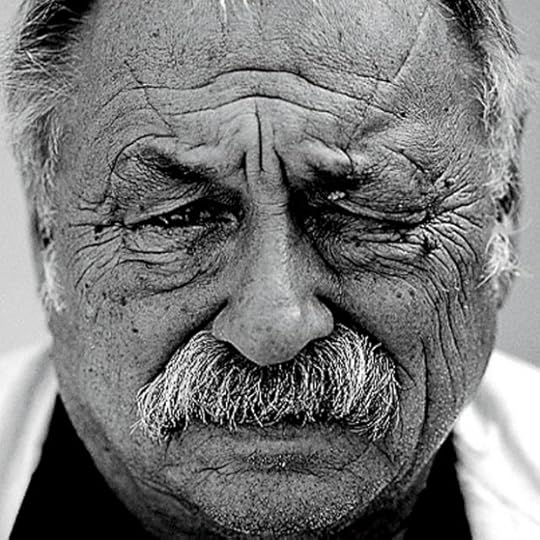
During a lifetime of obsessive reading, there are certain authors whose new work merits an immediate trip to the bookstore for a hardcover copy… Jim Harrison is on that short list and now graces us with a new collection, The Ancient Minstrel. The trilogy of novellas is deeply, richly satisfying in a manner that only Harrison can conjure.
When I sit down to write reviews of Harrison’s works, I often realize that the “order” or “detail” of what I’d just read isn’t always easily recaptured. Harrison writes in his own unique semi-stream of consciousness style, jumping amongst the details of a life like a drunken monkey–or like the way that we consider our lives as we are living them. What prevails is a sense of gaining admittance inside a mind that never fails to capture the reader’s wholehearted attention–whether it be the reminiscences of the memoirist of the title tale or the adventures of Brown Dog or the rollicking tales of Sunderson, the now-retired detective. Or perhaps most memorably, of any of the surpassingly lovely women, mostly middle-aged now, strong, self-sufficient women that will make you ache with recognition (if you are lucky). The details of these characters’ lives are conveyed by lovely skeins of words, for that is what they resemble, mercurial formations or skeins, like wild geese, always forging new connections and relations as they move the narrative forward. There is a sense of being lulled into a natural world animated by love and lust and food and alcohol and depravity and dogs and animals, but always a fierce self-consciousness and reflection upon the vagaries of a life.
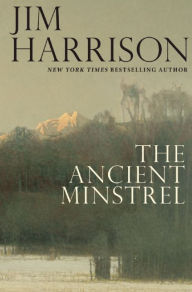 For the cognoscenti, the title novella teases the line between fiction and memoir, so faithful is it to the details of the author’s life. The narrator is a seventy-ish writer, successful because he whored himself out to Hollywood to write screenplays, but also a poet and novelist. And now, as his editor in New York awaits the “big novel” he’s rashly been promised, the poet (as the narrator labels himself), does what makes the most sense to him: he buys a pregnant sow and settles in to raise the piglets. This is a writer with a clear sense of his mortality. Harrison writes:
“What held him back was how could he die with an unfinished novel or sequence of poems in his files ? This was vanity… as if the world were waiting for his books. Whoever told writers they were so important to the destiny of man? … thousands and thousands… dropped into the void without a sound.”
The next story, “Eggs,” is an achingly lovely depiction of the life of a woman, Catherine, from young girlhood and surviving the London Blitz to finding lasting refuge on a farm in Montana, where she raises pigs and cows and especially her beloved chickens. It is hard to avoid thinking of the passing of Linda, Harrison’s wife of 55 years, last fall and sensing the novella as a memorial to his lifelong partner. The trilogy ends with a final tale of retired (and increasingly lecherous), detective Sunderson–the detective is on the trail of a cult that achieves satori by howling along with the local zoo’s howler monkeys, but it is really a sobering tale of an aging alpha male, seemingly incapable of reigning in his libidinal impulses–suffice it to say, it does not end well.
In his previous collection another Harrison character offers the following counsel for a satisfying life:
get outside as often as possible, ideally right now
take your meals seriously
keep your libido stoked
have a sense of humor about yourself
read good books
scorn snobs and greedheads
live the examined life.
Advice well-taken and representative of the philosophy of life as extolled by the marvelous assemblage of characters dotting the landscape of the fiction of one of our greatest living writers.
[Bill Lundgren is a writer and blogger, also a friend of Longfellow Books in Portland, Maine (“A Fiercely Independent Community Bookstore”), where you can buy this book and about a million others, from booksellers who care. Bill keeps a bird named Ruby, a blind pug named Pearl, and a couple of fine bird dogs, and teaches at Southern Maine Community College. ]
March 2, 2016
Bad Advice Wednesday: Avoid Literary Postpartum Depression
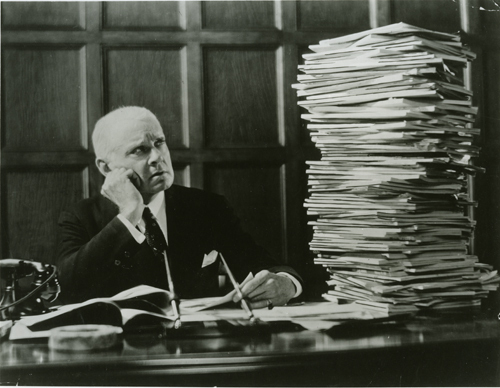 So for weeks, months, maybe years you have been pushing toward the end of the book you are writing. It has been your main goal, your driving purpose. Not a few times each day you fantasize about being done. What could be better? It sounds like heaven.
And this morning, miracle of miracle, you have finally finished. You’re done! Maybe you will drink some champagne and tell some people and try to make an occasion of it. But maybe you also feel, instead of elation, a kind of depression setting in. Immediately. What the hell is this?
What is the root of this strange depression? It is emptiness. It turns out that all this time, even when you were griping about it and dreaming of the end, this book was keeping you full. And while you thought there was nothing you wanted more than to be done with the book, without it your life feels empty. The book has filled up your days, even if you only work on a it for a couple of hours in the morning. And even if you don’t know you are, you are thinking about it while you eat, drink, and sleep. It has kept you company. It has given you purpose. And now it’s gone. And you are back to normal life, which as it turns out seems pretty blah.
So what to do? Accept it is one answer, I suppose. Live with it and let the feeling go away on its own accord. Do the things you have not been doing while writing like the dishes. Chalk it up to yet another fucked up aspect of living the writing life.You can do that.
Or you can do what I do and what most writaholics do. Start on a big new project immediately. Some of us hate the emptiness so much we do this on the very same day. As you get on in your career it might not be so much that you are starting a new project as turning from one to another, moving from unfinished project to the next like swinging from one trapeze bar to the next, with only that brief moment in the void in between.
This of course does not sound like the route to great mental health. And if you have a healthier way of dealing with this problem, go to it. I’ve tried myself. I often will try to wait a couple of days but inevitably a kind of creepy, itchy non-writing feeling comes over me and I head back to writing. I don’t know what this says about me psychologically, though I’m sure it isn’t good. But it makes me feel better. And it’s a pretty good way to get books done.
February 24, 2016
Paperback Writer
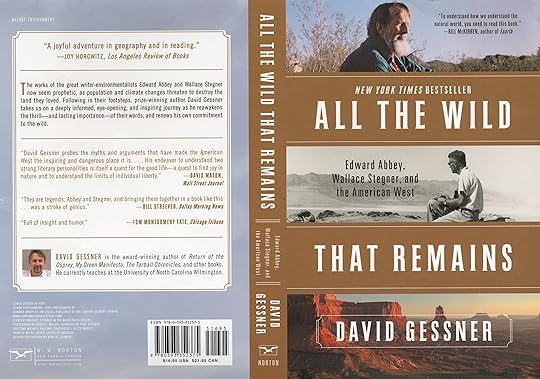
The Paperback is due out in the world on March 14 (Birthday eve). Got some readings coming up in Boston (March 8: Emerald Conservancy with Dan Driscoll/March10: Waltham Land Trust with Dan also), Tucson (March 12: Tucson Festival of Books), California (April 1:Book Passage in Corte Madera /April3: Henry Miller Library in Big Sur).
February 16, 2016
Please Give to the Jason Bradford Memorial Fund!

Please give to the Jason Bradford Memorial Fund, which will help his family with final expenses [only two more days!]
#
Poet and teacher Jason Alexander Bradford, age 28, of Center Point, IA passed away on Tuesday, January 19, 2016, at New Hanover Regional Medical Center after a lifelong battle with Muscular Dystrophy.
Jason was a member of the Wilmington, North Carolina’s literary community, and was entering his final semester at UNCW (where Dave and Nina both teach) as an MFA in Poetry candidate. In addition to his graduate studies, he taught two sections of Creative Writing to undergraduate students, and was the Poetry editor for UNCW’s literary journal, Ecotone.
Along with his mother and caregiver, Shirley Niedermann, he was a constant presence at readings and an invaluable part of our community.
There will be two Celebrations of Life: one in Wilmington for his UNCW Department of Creative Writing family, and one in Iowa for his family and friends there.
We are asking for any help possible. Our goal is to ensure that the costs associated with his passing do not have a catastrophic effect on his family. If we exceed this goal, we plan to establish scholarships (both to UNCW’s Creative Writing Program and to Camp Courageous in Iowa) in his name.
Please share condolences and memories with the family at wilmingtoncares.com
February 11, 2016

January 30, 2016
Anxious Bode Loves Paris (Despite Anxious Times)
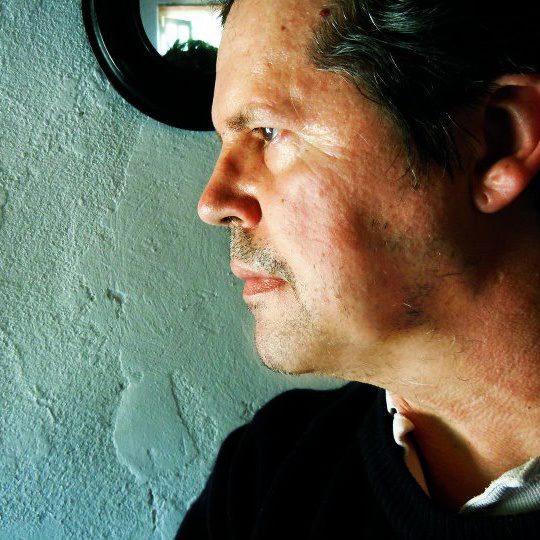
Thierry Kauffmann, aka Anxious Bode
Bonjour! It’s me, Anxious Bode. I’m having French roast at my favorite
cafe, in the Paris airport. I’m on my way to New York. That’s the
truth. Many writers write to access a reality deeper than reality
itself. That’s my street address, reality deeper than reality. I write
to reach the surface of things. Pardon my levity, but the joy of
actually flying is hard to resist. But for you, readers of my
extraordinary adventures in the land of love, I will retreat slightly
from the glare of the sun on the surface of my coffee cup, I will
forget that the first thing a coffee cup reminds me of, is the giant
convection cells above the ocean surface, where the heat accumulated
at the Equator, rises then travels northward, before sinking at the
pole and back, the so-called General Circulation of the Atmosphere,
not the atmosphere of celebrated French film Hotel du Nord, but the
atmosphere that I studied when I first came to the US, in 1987, in the
Midwest. I had applied to graduate school, mailed one hundred
applications. Two said yes, one had money to fund me. It was Indiana.
Coming to America, as immigrants would say, and Elia Kazan said, but
that was eons ago, is a transforming experience. Coming to the US is
the shape it takes in the real world. But for me, back in my Paris
suburb, when I first conceived the project of going to the US, it
wasn’t to study. I was a student already in Paris. It was the
culmination of a long process of understanding, discovering, that my
true nature, my true culture, the one in which I would truly flourish,
was not the one I was born with, but that of New York. I was crossing
the ocean to be baptized, to begin a new life as me. But I don’t want
to drag you into my memoir, it’s a memoir because a true account of
all that happened, starting age ten and less, doesn’t fit in the space
allotted, so instead I will zoom in and take you to the first favorite
cafe. In the little town of Evry, a town split in two, the old, with
French houses, maisons, the mandatory square, trees, fountain, and the
modern, that is built with concrete, grey, postwar. My cafe was at the
edge. I would bring a book of exercises to learn English. I had to
take a test to be admitted. I had twenty days to learn, or to be able
to recognize, thousands of words. I would sit under the rising sun,
and let the words flow into my mind. I didn’t have time to review
mathematics, which was my major. Instead I focused on English. I had
not taken a single lesson, never studied it in school. My school was
watching films in Paris. My highest score on the GRE was in English.
It made me laugh, at that time, I wasn’t a writer yet. I came to the
US because I was told. It was my destiny. And that’s all I needed to
know. I had no doubt, and neither do I now. I know Paris is hurting, I
hurt too, but nothing will stop this city from existing. I have no
doubt about that either. Paris, New York, both cities attacked, London
too, are not united by this. They are united in me because they all
contain love, massive amounts, reservoirs of love. The concerto I’m
going to record in New York, was recorded in London for the strings,
by extraordinary people, friends which I hope to visit soon, and jam
with. They fell in love with the music. I’m not a man of politics and
cold intelligence, I trust others to do this. My intelligence is of
the heart, and my message is simple, as always. Love will prevail. And
Paris is more than a city, it is a state of heart, I see Paris in New
York City, I see love in small town life, I also see the strife of
living but I have no doubt. That is what Paris is for me. But Paris is
also in Syria, in Irak, in Palestine. Everywhere people can reach
above their condition and circumstances to live in love, is Paris. A
state of mind, an inextinguishable source of hope. I love. Paris.
[Anxious Bode is Thierry Kauffmann, who lives in Grenoble, France, where he’d do stand up if he could stand up, and fights Parkinson’s, all while keeping his chops on the piano.]
January 29, 2016
Lundgren’s Lounge: Between the World and Me, by Ta-Nehisi Coates
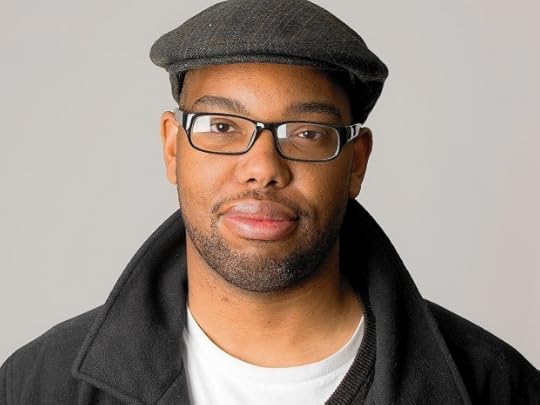
Ta-Nehisi Coates
Many years ago, as I was dipping my toes into the teaching profession, I wrote the following: “Between the campus where I attended graduate school classes and the school where I was student teaching was a large city park. I would sometimes mention my walks through the park to my students (who were all brown or black), describing the welcome sight of the spring’s first crocuses or the sense of wonder that came while watching birds gather material for their nests. One day James, one of my students, interrupted me: ‘Why do you keep talking about that park? Don’t you know that park’s not for us? We’re not welcome there. That’s a park for white people.‘ “ Excerpted from Becoming (Other)Wise, “Notes From a New Teacher.”
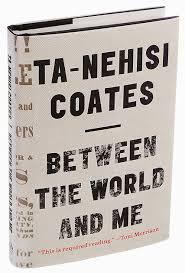 I was reminded of this episode while reading Between the World and Me, the recent, magnificent National Book Award winning work by Ta-Nehisi Coates. Coates’ extended essay is presented both as autobiography and as a letter to his son. The autobiographical thread recounts Coates’ dawning awareness as a young man of the violence that lies at the heart of the European invasion of the Americas and the ensuing formation of the United States. The letter becomes a warning to his son, Samori, of the inherent danger that this violence poses to black males living in the contemporary United States. Coates refers to ‘the Dream’, an idealized version of the country that “the people who believed they were white” cling to in order to nurture the fiction of a society based upon equality and fairness. Coates writes, “I came to see the streets and the schools as arms of the same beast. One enjoyed the official power of the state while the other enjoyed its implicit sanction. But fear and violence were the weaponry of both and ‘good intentions’ “…became a hall pass through history, a sleeping pill that ensures the Dream.” We hear echoes of Martin Luther King Jr. and his thoughts from the Birmingham Jail: “I must confess that over the last few years I have been gravely disappointed with the white moderate. I have almost reached the regrettable conclusion that the Negro’s great stumbling block in the stride toward freedom is not… the Ku Klux Klanner, but the white moderate who is more devoted to order than to justice.”
And here in xenophobic and very, very white Maine, we have the good ol’ local boys fulminating on Facebook about the inability of drivers to ‘correctly’ merge with traffic, adding “and they’re all Somalians,” and then acting grievously offended when their racism is pointed out to them. It is a phenomena that has been described as “racism without racists,” and Coates is quietly asking us to consider at what point does that ‘devotion to order‘ or standing on the sideline, unconsciously aiding and abetting, become complicit support for a virulently violent and racist culture?
Coates might argue that this question is less relevant then ensuring that his son remain aware of the violence surrounding him and do whatever is necessary to protect and save his body. We are reminded of James Baldwin’s monumental essay, The Fire Next Time, which begins similarly with a letter of warning to Baldwin’s nephew. Coates is a prophet in the tradition of Drs. DuBois and King and Mr. Baldwin, and while many, many well-intentioned people have weighed in on this issue, clearly those we need to listen to are those that actually have skin in the game: their assigned status as people of color gives them a gravitas no person who choose to be white could ever match.
And while race is a cultural construct with absolutely no basis in biology or science, recall if you will what consolation that offered to Trayvon Martin and Freddie Gray and Emmett Till and countless, forgotten others.
Please read this book.
[Bill Lundgren is a writer and blogger, also a friend of Longfellow Books in Portland, Maine (“A Fiercely Independent Community Bookstore”), where you can buy this book and about a million others, from booksellers who care. Bill keeps a bird named Ruby, a blind pug named Pearl, and a couple of fine bird dogs, and teaches at Southern Maine Community College. ]
January 28, 2016
Dave’s first poem
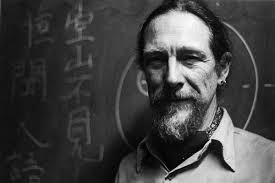 Brother Gary
In Oregon
Sitting by my deep green
swimming hole
in Lookout Creek on a coldish evening,
Drinking my Lagunitas and
reading Gary Snyder
(No Nature),
I am the perfect hipster.
I even try to write a poem, my first
It goes like this:
A net of mist
Almost indistinguishable from
smoke
rises
past Douglas firs
up the valley
to join its brethren
the clouds
Not bad, I think
For a beginner.
Then after another sip of IPA
I decide to cut
its brethren.