David Gessner's Blog, page 6
December 12, 2016
Let’s Go On Strike on January 20th!
So I know there are a lot of marches and protests happening and I’m all for those. But what about a huge, well-organized general strike? There needs to be some real way to protest both the asinine appointments/nominations and the growing foreign policy horror show that threatens all of our safety. Trump and his biz cronies love productivity so let’s just shut it all down. Maybe it is exactly what social media evolved to do….Let’s declare that the country, or at least the vast majority of the country that didn’t vote for this clown, will go on strike starting on Friday, January 20, inauguration day.

Wait, you can’t DO that!!!


December 8, 2016
Lundgren’s Lounge: “Avid Reader,” by Robert Gottlieb

Sometimes I feel like my life-long devotion to the act of reading marks me as a member of a cabal, furtive and unnoticed, moving around the edges of contemporary culture. And by reading I mean reading books… bound, tangible artifacts symbolic of the perhaps quaint notion that we can be enlightened and entertained by the words on a page.
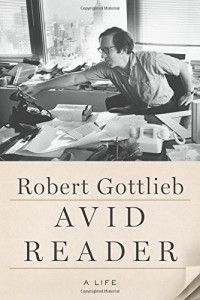 And then along comes a book like Robert Gottlieb’s Avid Reader: A Life. This is a memoir that reassures all is not lost. Gottlieb has been at the center of American publishing for over six decades. Fresh out of Cambridge and a stint in the greeting card department at Macy’s, Gottlieb “stumbled” into a job at Simon and Schuster. By the time he left to join Knopf a dozen years later he had forged a reputation as one of American publishing’s preeminent editors.
Gottlieb’s memoir of his life as editor of such luminaries as Joseph Heller, Toni Morrison, Doris Lessing, John Cheever, Robert Caro, John le Carre, Charles Portis and Nora Ephron, to name but a very few and his subsequent stint at the helm of The New Yorker magazine, is gossipy and sometimes rather self-indulgent, but it is never less than fascinating AND it might help to dispel the notion that we are alone in this seemingly Sisyphean endeavor of putting reading (and writing) at the center of our lives. For Gottlieb the issue is never in dispute: he has devoted his life to his work as a person of letters because for him it matters, both on a personal level and in a broader cultural or social sense. This attitude towards the work drives his inveterate, workaholic nature: indeed, it can be daunting and exhausting to read the record of his daily regimen as he strives always, to return work to his writers “right away.” Other of his editing mantras include, “It’s the writer’s book not yours,” and “Try to help make the book a better version of what it is, not into something that it isn’t,” and finally, “It’s a service job.”
It is that last dictum that makes Avid Reader so utterly charming. Even while Gottlieb sometimes offers an almost suffocating deluge of detail, it is always with an ethos of a profound love of and appreciation for the work and the writer/artists that create it. Near the end of the book Gottlieb surprises by giving us an account of his lifelong love of dance and how that love affair evolved into his becoming both a participant in the dance world as publicist, board member and advisor and as one of its most formidable and respected critics. Being quite illiterate regarding the world of dance myself, I nevertheless found this chapter describing the nuances of that previously unknown world to be wonderfully edifying and supremely entertaining.
Gottlieb ends by talking about his curiosity at how his changing role from editor to publisher to writer, will play out. He writes, “Recently I came across these lines from Robert Frost—‘No memory of having starred / Atones for later disregard, / Or keeps the end from being hard’— and was surprised to realize that my reactions are opposite to these. I never felt I was a star. I don’t now feel disregarded. And, yes, the end may very well be hard, but perhaps fate will be kind, and at least let me keep on reading for awhile.”
December 7, 2016

November 30, 2016
Bad Advice Wednesday: Wally Stegner Chimes In
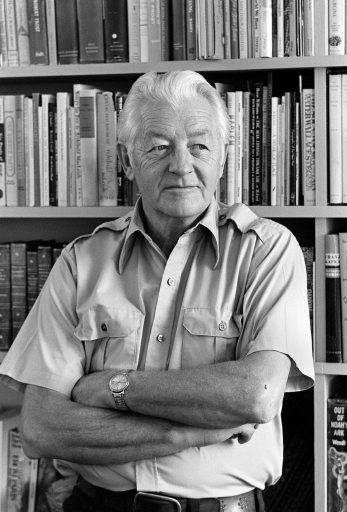 I don’t know of any better bad advice for writers, and humans, than what follows, from an interview in the middle of On Teaching and Writing Fiction by WS (edited by Lynn Stegner):
Most artists are flawed; but they probably ought to make the effort not to be. But how do you teach people to enlarge themselves in order to enlarge their writing? It is a little like asking them to “commit experience” for literary purposes.
Largeness is a lifelong matter–sometimes a conscious goal, sometimes not. You enlarge yourself because that is the kind of individual you are. You grow because you are not content not to. You are like a beaver that chews constantly because if it doesn’t, its teeth grow long and lock. You grow because you are a grower; you’re large because you can’t stand to be small.
If you are a grower and writer as well, your writing should get better and larger and wiser. But how you teach that, the Lord knows.
I guess you can suggest the ideal of it, the notion that is is a good thing to be large and magnanimous and wise, that it is a better aim in life than pleasure or money or fame. By comparison, it seems to me, pleasure and money, and probably fame as well, are contemptible goals.
I would go so far as to say that to a class. but not all the class would believe me.
November 15, 2016

November 9, 2016
Gessner Election Conclusion #1. The Idiocracy Factor: Smart People have to Start Having More Children
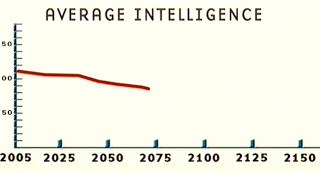 Okay, on the surface this sounds snobby and elitist. But let me alter it slightly: smart, moral people need to start having more children. “Smart” alone is an iffy term. I went to a fancy-dancy college and have known plenty of so-called smart people who, politically speaking, only give a shit about one thing: cutting their own taxes. The ones who we really need to prod to reproduce are the people of some intelligence who also have at least a minor capacity to care for other people. Those who have occasional glimmers of empathy and are concerned about more than their own bottom line.
Oh, and how do I define smart? Well, maybe we can make the cut off line people who didn’t buy into the biggest lie in the history of American politics: Oh, they were both flawed candidates. Give me a fucking break. If you met one of these people at a party you would afterward turn to your spouse and-assuming you had not been fed giant piles of media crap–say, “Oh, what an interesting, intelligent woman.” If you met the other you would say, “What a giant asshole.”

November 7, 2016
Lundgren’s Lounge: “Everybody’s Fool” by Richard Russo

Over the course of a rich and varied reading life, I find myself returning to the pleasures of an engaging story, well-told, again and again. Excursions to the academic and literary fringes (and too often, the fiction pages of the New Yorker) reveals a miasma of intellectual postmodern tomfoolery that leads this reader, unfulfilled, back to the power of a simple story, offered up by the hands of a master story-teller. Everybody’s Fool, a sequel to the much loved Nobody’s Fool, by Richard Russo, is the quintessential example of just such a story and just such a writer.
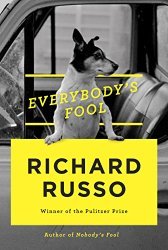 There are few pyrotechnics in Russo’s writing. Instead there is faith in the power of story and the careful craft of storytelling to entertain and perhaps edify. The genesis of Everybody’s Fool is by now well known; author Russo heard a rumor, perhaps apocryphal, about a police chief in coastal Maine who found an unfamiliar garage door opener in his wife’s car. The ensuing paranoia led the hapless chief to spend his days driving slowly through the streets of surrounding villages, attempting to open garages with the mysterious garage door opener. The conceit is beguiling and the kind of thing that a reader will turn over and over in their mind, surfacing while you’re pumping gas or grocery shopping or engaged in any of the quotidian tasks that make up our days—because it is both believable and so very, very strange.
In Everybody’s Fool Russo returns to the upstate hamlet of North Bath, NY and the sometimes exasperating and irascible but always endearing characters that live there.
As Russo’s longtime editor Gary Fisketjohn wrote, this is “… a book full of humor, heart, hard times and people we know inside and out who are lovable—and strikingly human—possibly because of their faults.” It is this talent for universalizing his characters’ stories that distinguishes Russo’s novels. In a recent interview, historian Doris Kearns Goodwin discusses what the impact of losing her parents at a young age had upon her writing. She says, “… it made me want to tell stories of people… to somehow bring them back to life…” (because) “… it is stories that keep people alive.” And this is what seems to motivate Russo—he is clearly very fond of the citizens of West Bath (well, most of them anyway), though he does not hesitate to share with us all of their various foibles. And in telling their stories, he is keeping them alive… and we, his readers are the fortunate beneficiaries.
In the fictional universe of North Bath, Russo has once again brought us the story of everyman (and everywoman) and in the process reasserted his role as America’s storyteller.
 Bill Lundgren, reader, critic, blogger, athlete, teaches at Southern Maine Community College.
November 6, 2016
Last Trump Blasts
Okay, so it’s not the most sophisticated political cartoon in the world, but it passed an important test: it made Hadley laugh out loud. (And I finally got around the whole problem of his face being too much of a caricature to draw a caricature of…)

October 18, 2016
Lundgren’s Lounge: “Unknown Caller,” by Debra Spark

Debra Spark’s recently published fourth novel, Unknown Caller, might be superficially characterized as a mystery, for it is certainly mysterious. From the opening (“It is two in the morning when the phone rings… When the phone rings at 2:00 a.m. at their house, it is always her calling.”), author Spark is inviting her readers to interrogate the reliability of their assumptions. An early morning phone call is ALWAYS a portent of disaster, right? And when the caller on the other end of the line rarely speaks, it weaves an almost claustrophobic sense of impending doom. But this beguiling novel is far more than mere mystery. At the heart of this riveting, non-chronological narrative, riven as it with myriad twists and turns and somersaults and flips, lies an examination of the very nature of perception.
 The caller at the story’s beginning is Liesel, the woman who was married to Joel, the caller’s intended target, for a mere five months. Liesel left Joel 19 years ago, pregnant and with no explanation, ‘breaking his heart’ in the process. Their subsequent contact has included Liesel’s announcement that Joel has a daughter—the phone calls over the years are a plea for child support, which Joel, a doctor, is perfectly willing to provide as long as Liesel will allow him to meet his daughter. and there our story remains stuck, until Liesel gets terminally ill and the reconciliation of father and daughter becomes more urgent.
Throughout, author Spark deftly manipulates time. But as she shifts the focus of the stories and backstories, from those of Joel and his new wife Daniella, to Liesel and the friends and lovers she makes during her global travels and finally to daughter Idizia, an aspiring film maker, Spark encourages the reader to notice how the characters ‘evolve’ depending upon the context of the narrative. Joel is initially an object of sympathy—clearly he has been wronged by a capricious, flighty, unreliable woman… or is he just another controlling, critical, power-tripping male? And what of Liesel… is she just a crazy, unhinged female or is she a woman asserting her power by fleeing a relationship where she had none?
This is one of those rare literary works: a philosophical rumination on the nature of truth that is also an engrossing page-turner. It is the work of a writer at the height of her craft.
Bill Lundgren, reader, critic, blogger, athlete, teaches at Southern Maine Community College.