David Gessner's Blog, page 3
December 4, 2017
Fighting for Bears Ears: The Freedom of Restraint
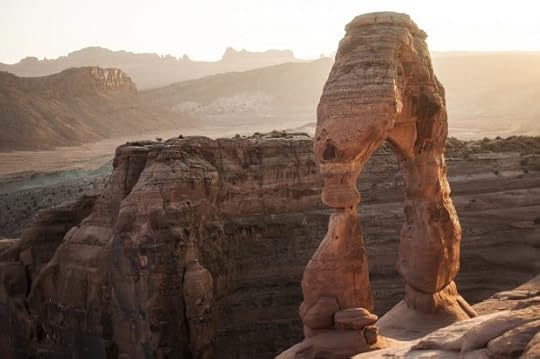 The Harasser-in-Chief is heading to Utah today to announce that he’ll shrink Bears Ears and Grand Staircase-Escalante national monuments, possibly by as much as 85%. According to the Southern Utah Wilderness Alliance, this will be “the largest rollback of protected areas in U.S. history” and “an appalling affront to Native American tribes who sought healing and cross-cultural understanding through protection of their sacred sites and ancestral homelands.”
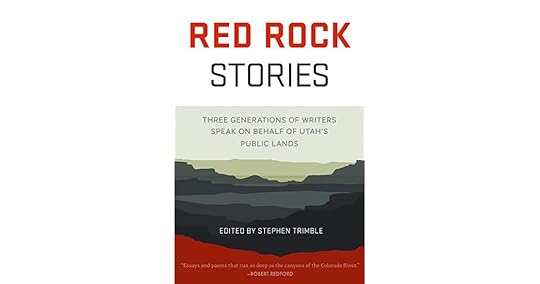
A year ago I was part of a group of writers who contributed to a chapbook, edited by Stephen Trimble and put out by Torrey House press, that was distributed to congress and other decision-makers in the build up to President Obama declaring Bears Ears a National Monument. To find out more about the project click here. And I’ll post some more information about the book below.
Here was my offering:
The Freedom of Restraint
I remember the moment exactly and I remember the word that came with the moment. The word that the moment all but summoned:
Freedom.
For me, for many Americans it is a word that has had any true meaning hammered out of it by rhetoric and commercialism. It has been worn down and out by too many truck commercials and blowhard politicians, a fine and shining word now left behind on the ground like an old soda can.
But now it was back–filling my mind.
It wasn’t a bomb bursting in air that revived the word for me but falling water. The rain had come down in Utah’s red rock desert, a thing made even more beautiful by rarity, a thing I had been waiting all week for, praying for really, and now here it was sliding down the rock chutes that rains from years before had created over eons. I stared up at a huge limestone chute, fifty feet above me, which, during the rains, served as a water slide. At the feet of the chute was a slimy pool from remnant rains. Ferns bearded its edge, hanging down, green against red. Water landed on rock with a ferocious splatter, shaking the maidenhair ferns, hackberry and buffalo berry plants, and splashing between a white oak and gambol oak, a whole tiny oasis that had grown up here just for occasions like this. I ducked my head under the water and soaked myself and I started laughing.
I can’t pretend my first thoughts at that moment were of grand ideals. I was filled with a giddy wild happiness, a sense of being unrestrained, a feeling that it was good to be an animal on planet earth. It wasn’t until later, sitting around the fire, that my mind expanded with the night. I thought about how smart, how wise, our forebearers had been to have the foresight to claim a place like this, not for any individual or corporations profit, but for all of us, every American. It’s possible that my sense of intoxication was due to the beer I was drinking but I don’t think so. I think it was due to understanding, for the first time, what a stroke of genius putting aside land like this had been, and that the day I had just experienced, the wild freedom of it, had been the consequence of others coming before me not doing something.
The myths of western land are myths of freedom. Wallace Stegner wrote: “Lawlessness, like wildness, is attractive, and we conceive the last remaining home of both to be in the West.” Yes: we come to places like this for that feeling of wildness, of lawlessness, the sense that we can do what we want and do it on our own. Those who want to take public land out of our hands, out of the people’s hands, pepper their sentences with images of throwing off the shackles of the federal government and taking back their land. This is freedom of a sort but it is freedom for the few, impinging on the freedom of the many.
Championing restraint will never be as sexy as championing its opposite. But what I felt that day, under the water and later around the fire, was what I can only call the thrill of restraint, the excitement of it. Putting land aside for parks was, to paraphrase Stegner paraphrasing Lord Bryce, the best idea our country ever had. Quiet recreation—mountain biking, hiking, river rafting, backpacking, fishing, even, relatively speaking, hunting—brings almost a billion dollars into Utah each year, but it goes far beyond that. We define ourselves by our decision to keep land open to all. We say “We are not chattel; we are not slaves; we do not make our every decision serve the powerful and ever-grinding economic machine.” We say, in short, we are free.
Here is what I thought sitting in front of the fire: the best thing about being an American is having places like this. Here freedom becomes more than a jingoistic word used to wage war and sell trucks. And if we let these places of freedom get swallowed up they are not coming back, and those who come after us, playing on their futuristic screens and looking at some virtual image of a waterfall splattering on red rock, will never know the feelings we felt. That is the irony of freedom. The only way for others, for our children and grandchildren, to experience the crazy, gleeful, youthful, mad feeling that I experienced, is if we are calm, restrained and wise. This is a grown up version of freedom. This is the freedom of restraint.
RED ROCK STORIES: THREE GENERATIONS OF WRITERS SPEAK ON BEHALF OF UTAH’S PUBLIC LANDS
From high mesas to deep canyons, the red rock canyon country of Utah has sustained and inspired people for
centuries. And yet special interests demand that these irreplaceable natural treasures be industrialized and privatized for the short-term benefit of too few. The poems and essays in
Red Rock Storiesengage imagination andempathy to show a newer, older way to love one of America’s last wild places.
“Utah has been my home for over half a century. Native Americans have inhabited these landscapes
since time immemorial. The writers in Red Rock Stories capture that connection in essays and poems
that run as deep as the canyons of the Colorado River.”
—ROBERT REDFORD
Red Rock Stories conveys spiritual and cultural values of the American West’s canyon country through the words
of writers whose births span seven decades. Notable contributors range from acclaimed writer Terry Tempest
Williams and Poet Laureate of the Navajo Nation Luci Tapahonso, to Charles Wilkinson of the University of Colo
rado Law School and Regina Lopez-Whiteskunk of the Ute Mountain Ute Council. First delivered to decision mak
ers in Washington as a limited-edition chapbook, this beautiful art-as-advocacy book explores the fierce beauty
of and the dangers to ecological and archaeological integrity in this politically embattled corner of wild America.


November 30, 2017
Meditating with Labs
I have been meditating in the mornings recently. After years of mocking those who claim to want to “be in the present moment”–“Cows, for instance, are good at being in the present,” I wrote in one book–and agreeing with Ed Abbey that I liked Gary Snyder’s work “except for all the Zen bullshit,” I have embraced my inner monk. It’s really more of a return than a new beginning, however, since past versions of me have spent a good deal of time with my eyes closed and legs crossed. The first time was after seeing a psychiatrist as a twelve year old when an obsession with the idea that “everything is nothing” ballooned out of control. The second was after my bout with cancer at thirty when none other than Mr. Mindfulness, Jon Cabot Zinn, led my post-operation meditation sessions in the hospital with a voice that was meant to be soothing but that I found annoyingly adenoidal. My reaction to his commands to calm myself was an urge to strike him, though how much that had to do with my shock over my sudden turn of medical fate I am not sure. On neither occasion did the practice take. Unlike napping in the afternoon, a staple of mine, it did not fit my day’s rhythms. Sitting never quite fit my constitution the way the more active meditations of biking and running did.
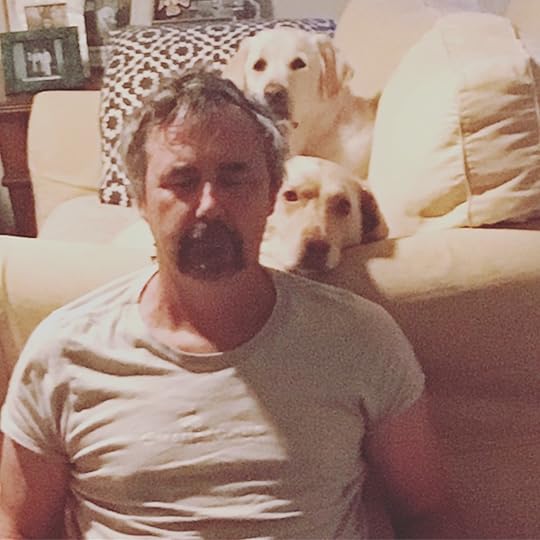
Until now. Now, older and grayer, I find I can suddenly put in 40 morning minutes on the yoga mat, and head to my desk feeling as if I’ve popped half a Xanax. True, I have adapted the practice to fit to my personality by making it more active and athletic, adding in some sessions of Wim Hof breath holding. And it’s also true that there are still challenges. One is the persistence of our two yellow labs, who seem equally amused and attracted by the fact that I, after feeding them and letting them out to pee, choose not to retreat to my writing desk, as I have since they have known me, but instead sit down on the floor and lounge with them, part of the pack. The issue is compounded by the fact that they, being labs, like to stay close. And while I try to focus on my breathing I hear not just my own inhalations and exhalations, but two others sets of the same echoing mine. And so my attempts at oneness start with three-ness. Luckily the sounds they make don’t spark the Pavlovian response that Zinn’s did. Together, sometimes in rhythm and sometimes not, we pant our way toward Nirvana.
November 16, 2017
Father Throws Best
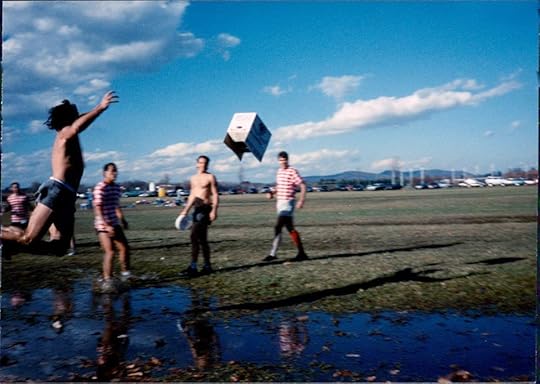
During my last year “off” I played with a team of older players, many of whom had children, on a team called Father Throws Best. Father had several ex-Rude Boys on the team, and at the end of one tournament in Amherst they indulged in an old Rude Boy tradition of diving after discs into a big mud puddle. One player would flip a disc into the air and another would come running up and lay out for it, “getting horizontal” as it was known in the sport, then splashing down and sliding in the puddle. I refused to play along; it was a Rude Boy thing after all, and I, in my heart, was still a Hostage. But then a bunch of them grabbed me by the arms and tried to drag me over to the puddle. I told them to let me go, that I’d do it, only I’d do it my way.
I whispered instructions to one of my teammates, an ex-Rude Boy named Toby Lou, and then began my running approach to the puddle. Toby did what I’d asked him to do, tossing not a Frisbee but a half-empty case of beer into the air. I took off and flew toward the case, getting horizontal, ready to make a spectacular catch. But our timing was a little off. Toby’s underhanded beer case toss was a little ahead of my dive. The beers were out of reach and they landed and shattered upward just a second before I landed on them. For a second the puddle was a mess of water, blood, mud and flesh. Then in became clear that a good chunk of my left forearm, a scrag of flesh, was hanging down where it wasn’t supposed to hang. Fortunately, we were on the whole a more mature team, and we had our very own doctor playing for us. Dr. Gil immediately set to cleaning out my wound and picking glass out of my arm before accompanying me to a nearby emergency room.
November 9, 2017
October 27, 2017
My Summer of Ultimate–a Wrap-Up
I have moved on to a new book (a novel about Cape Cod) but I wanted to take a moment to do a wrap up of my summer of ultimate. Also maybe to remind you what a nice present Ultimate Glory would make as the holidays approach. Give it to any and all of those relatives who never understood what the hell ultimate was. As the Washington Post put it: “An exploration of the questing desires of the young heart, “Ultimate Glory” should be recommended reading for every college student. A 20-something, unsure whether to listen to the yearnings of the soul, might find answers in Gessner’s chase of a flying plastic disc.”
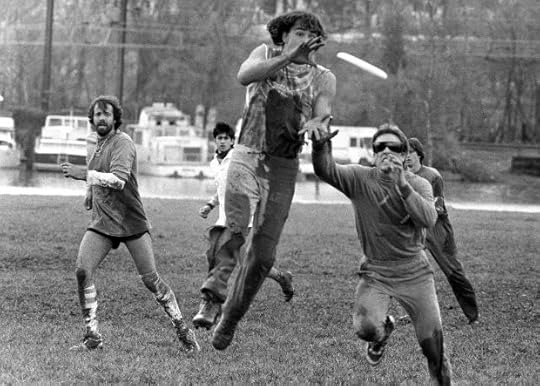 Here’s the full Washington Post Review. It’s title is “NEW HARVARD GRAD TELLS DAD: “NOW I’M GOING TO PLAY ULTIMATE FRISBEE.”
Here is No Disc-Respect, my article in Outside magazine about Ultimate and Beau Kittredge.
Here is the Slate podcast of Hang Up and Listen where I talk Ultimate.
Here is the great Wall Street Journal Review.
Sin the Fields is a wild, fun podcast from Ultiworld.
This is my Longform interview, where we touched on a lot of non-ultimate topics, including “immortality.”
Here’s a brief but fine review from Harvard magazine.
Here is the website I created, but honestly never visited much. But it has a very cool connection to Stu Beringer’s vintage photos, which you can also go to through UltiPhotos….
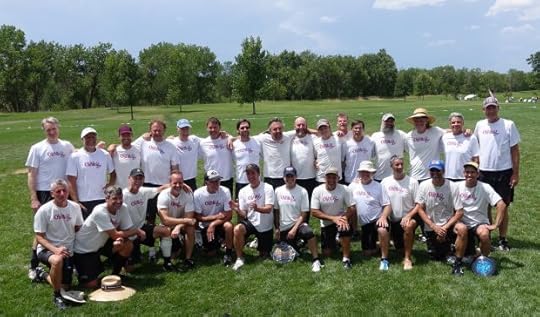
Here’s our Old and In the Way squad. We got a silver at old-guy Nationals in July and (hopefully) will be reuniting for Worlds.
And here, once again, is the book trailer, edited by daughter Hadley.
This website, Big-Hearted Boy, asked me to create a playlist of the music that goes with my book.
And speaking of beautiful music, here are some pics of our post-game singalong (and book signing):
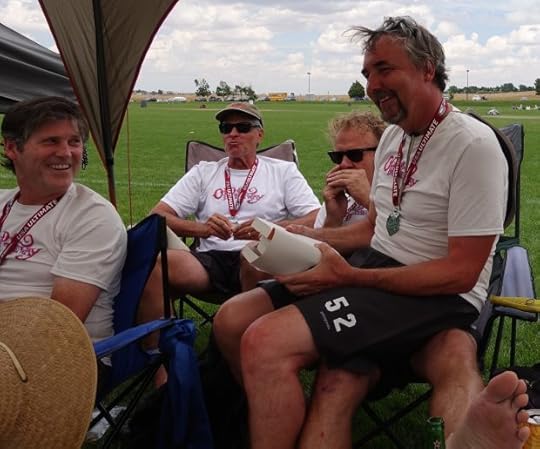
One with Dancin’ Dave Smith….
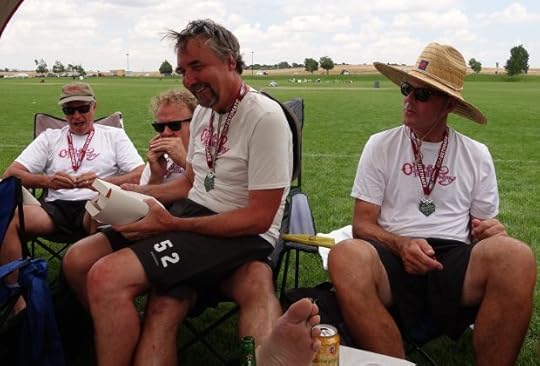
A Bunch of old guys…
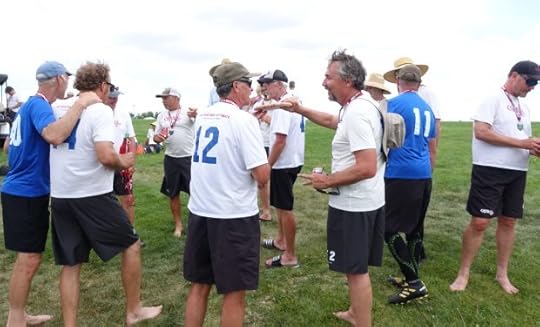
Thanks for everyone for coming out this summer. It was a blast.
Here is/was the tour, more or less:
TUESDAY JUNE 6, 2017
WRIGHTSVILLE BEACH BREWERY 6201 OLEANDER-
EVENTS ROOM
7:00 PM Event HOSTED BY POMEGRANATE BOOKS
WEDNESDAY, JUNE 7 – DURHAM
THE REGULATOR BOOKSHOP
7:00 PM Event 720 Ninth Street, Durham, NC 27705
SUNDAY, JUNE 11 – ALBUQUERQUE
BOOKWORKS ALBUQUERQUE
3:00 PM Event 4022 Rio Grande Blvd NW, Albuquerque, NM 87107
MONDAY, JUNE 12 – TELLURIDE
BETWEEN THE COVERS
6:30 PM Event 224 W Colorado Ave, Telluride, CO 81435
• They would like to organize an outdoor Frisbee mini-match or demo or interactive target throws in the pocket park near them. The reading itself will likely not be in their shop.
• They are thinking that the interactive part would start at 6:30pm and the reading will start at 7:30pm.
THURSDAY, JUNE 15 – EDWARDS
BOOKWORM OF EDWARDS
6:00 PM Event 295 Main St, Edwards, CO 81632
TUESDAY, JUNE 20 – BOULDER
BOULDER BOOKSTORE
7:30 PM Event Pearl Street Mall, 1107 Pearl St, Boulder, CO 80302
WEDNESDAY, JUNE 21 – DENVER
TATTERED COVER BOOKS
7:00 PM Event 2526 E Colfax Ave, Denver, CO 80206
THURSDAY, JUNE 22 – FORT COLLINS
OLD FIREHOUSE BOOKS
6:00 PM Event 232 Walnut St, Fort Collins, CO 80524
MONDAY, JUNE 26 – PORTLAND
POWELL’S BOOKS ON HAWTHORNE
7:30 PM Event 3723 SE Hawthorne Blvd, Portland, OR 97214
TUESDAY, JUNE 27 – SAN FRANCISCO
BOOK PASSAGE at the Ferry Building
6:00 PM Event 1 Ferry Building, San Francisco, CA 94111
THURSDAY, JUNE 29 – SEATTLE
EAGLE HARBOR BOOKS
12:30 PM Event 157 Winslow Way E, Bainbridge Island, WA 98110
THURSDAY, JUNE 29 – SEATTLE
ELLIOTT BAY BOOK COMPANY
7:00 PM Event 1521 10th Ave, Seattle, WA 98122
Rantin’ time
AND……
OTHER GESSNER BOOKS
ALL THE WILD THAT REMAINS: Edward Abbey, Wallace Stegner and the American West
Come along as I follow the trail, both physical and biographical, of two great western writer-environmentalists.
MY GREEN MANIFESTO
A wild ride down the Charles River with a different sort of environmentalist.
THE TARBALL CHRONCILES
Follow me down to the Gulf during the BP oil spill.
RETURN OF THE OSPREY
A Year spent intertwined with the lives of beautiful and daring birds of prey.
MORE GLORIOUS ULTIMATE
Help Save the World through Ultimate.
FLATBALL: A HISTORY OF ULTIMATE
See the flick that tells the story of the sport.
Help Team E.R.I.C. fight cancer through Ultimate.
ULTIMATE: THE FIRST FOUR DECADES
Tony Leonardo and Adam Zagoria’s definitive history of early ult.
Joe Seidler’s ULTIMATE HISTORY site
Find out everything that I got wrong!
ULTIMATE: THE FUNDAMENTALS OF THE SPORT
The early classic by greats Irv Kalb and Tom Kennedy.
ULTIMATE: THE GREATEST SPORT EVER INVENTED BY MAN
Pasquale Anthony Leonardo has written the second funniest book of all time–by far.
ULTIMATE: TECHNIQUES AND TACTICS
Learn how to do it from DoG players Jim Parinella and Eric Zaslow
ESSENTIAL ULTIMATE: TEACHING, COACHING AND PLAYING
Learn it all from Michael Baccarini and the immortal Tiina Booth!
You’re sad that you have finished Ultimate Glory…you’re feeling empty. Well, don’t fret! Pick up Kevin Kramer’s Universe Point!
WEDNESDAY, JULY 26 – WASHINGTON, DC
FIRST TIME BACK IN WASHINGTON SINCE BEING BANNED IN ’89
KRAMERBOOKS
6:30 PM Event 1517 Connecticut Avenue, NW, Washington, DC 20036
http://kramers.com/ultimate-glory-david-ges...
FRIDAY, JULY 28 – MAPLEWOOD, NJ, THE BIRTHPLACE OF ULTIMATE!!
[words] BOOKSTORE
7:30 PM Event 179 Maplewood Ave, Maplewood, NJ 07040
http://wordsbookstore.com/2017/01/ultimat...
MONDAY, JULY 31 – BOSTON–MY RETURN TO THE STORE WHERE I ATTACKED THE CUSTOMER!
BROOKLINE BOOKSMITH
7:00 PM Event 279 Harvard Street, Brookline, MA
https://www.brooklinebooksmith.com/events/2...
TUESDAY, AUGUST 1
HARVARD SUMMER SCHOOL
THOMPSON ROOM BARKER CENTER 12 QUINCY STREET
6:00 PM EVENT
TUESDAY, AUGUST 8 – PORTLAND, ME–WITH BILL ROORBACH
PRINT: A BOOKSTORE
7:00 PM Event 273 Congress St, Portland, ME 04101
http://www.printbookstore.com/event/david-...
Aug. 16: Ultimate Frisbee, Steve Rushin, and Sports Stadiums
Varsity Letters is back at The Gallery at Le Poisson Rouge on Wednesday, August 16 with an eclectic evening of sports authors, including David Gessner.
September 17, 2017
Lundgren’s Lounge: “My Absolute Darling,” by Gabriel Tallent
With the arrival of summer comes the inevitable onslaught of summer titles, those books you all MUST read, for your own edification, or for cocktail party chatter or for the simple pleasures of this increasingly arcane act that we call reading. These books arrive on the scene to great trumpet blasts and ubiquitous and rapturous front page reviews… and by the next year they have been largely forgotten, relegated to the remainder shelves or the used book section of the bookstore or most ignominiously, serving duty as a doorstop.
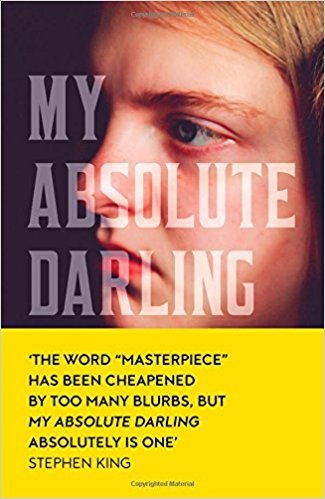 But very, very occasionally a book bursts onto the scene and is anointed as the IT book of the summer season and all the effusive praise and mention of the word ‘masterpiece’ is justified. Such is the case with Gabriel Tallent’s first novel My Absolute Darling. Tallent’s novel introduces us to Turtle Alveston, one of the most singular and unforgettable characters in modern fiction. Turtle is being raised by her father, Martin, on the rugged northern California coast. At 14 she is attending school, but she is fiercely uninterested and disengaged. Isolated from her peers, she spends her time in a natural world that Tallent describes with startlingly original and mesmerizing language. Early on we as readers begin to suspect a darkness at the core of Turtle’s existence that might explain her chosen social isolation. Turtle spends her days rebuffing the interests of her classmates, playing cribbage with her elderly grandfather who lives just down the road and being subjected to the rantings of her survivalist father, whose eloquence often lapses into violence, both verbal and sexual.
Tallent depicts the complex dynamics of an abusive relationship with unblinking, searing honesty. Despite the horror of her situation Turtle loves her father, though she understands that he is a monster. One night while wandering through the forest, Turtle chances upon two boys, Jacob and Brett, who are hopelessly lost. After she leads them to safety a friendship begins, allowing Turtle to think of her world and her life outside of the isolation that has suffocated her since the death of her mother years before. But as she muses about what might develop between her and Jacob, “…she thinks, you’re forgetting what your life is, Turtle, and you can’t forget that and you have to stay close to what is real, because if you ever get out of this it will be because you paid attention and moved carefully and did everything well.”
Tallent marvelously shows the indomitability of Turtle’s spirit and the self-loathing that is the inevitable product of victimhood. Her teacher, Anna, tells her, “…I think you come to school and you think you’re bad at school and so you are bad at school. But you’re not bad at school.” Anna reaches out impulsively and grabs Turtle’s hands. Holding them she says, “Just try. Just try.”
As Martin begins to suspect the budding relationship between Turtle and her new friends, he becomes increasingly violent and enraged, constantly reminding Turtle that “You are mine. I created you.” As a reader you will fall in love with Turtle and your heart will break as you witness her struggles. Tallent has accomplished the rare feat of leading us into an almost unbearable darkness while also taking our breath away with the translucent beauty of his writing.
Did I mention that Turtle is an expert with guns of all kinds? As she wrestles with how she might extricate herself from her father, a series of riveting adventures ensue that you will find nearly impossible to stop reading without learning what happens to this lovely girl, who has captured your heart in a way that might seem impossible for a fictional creation.
 Bill Lundgren is a voracious reader who writes book reviews in hopes of sharing his enthusiasms with fellow readers. He lives in Portland, Maine with a wild menagerie of dogs and cats and birds and his wife Carol, the veterinarian. He teaches writing and literature at Southern Maine Community College.
August 31, 2017
Soldiers in Boots, Girls in Lakes: Bill Talks with David Abrams
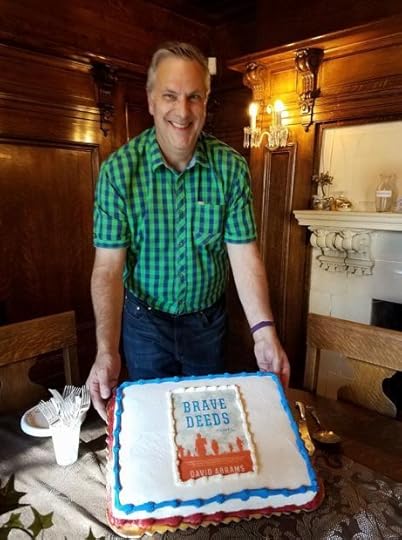
David at his launch party. Wouldn’t a cake be a good idea?
David Abrams and Bill Roorbach first met at PNBA, Pacific Northwest Booksellers Association conference, which took place in Tacoma, Washington back in 2012, when David’s book Fobbit was new and Bill’s book Life Among Giants had just been released. These friendships on the road with new books bloom quickly, and are reinforced by chance meetings across years to come. On the occasion of the publication of their newest books, Bill and David (Not that Bill and Dave!) thought they better have a virtual conversation, as the road wasn’t going to bring them close this time around.
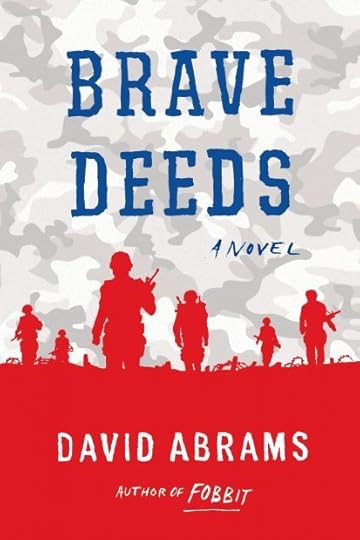 Bill: David, David—if only we could do this in person over a stack of books and a cup of coffee. I’m a fan since Fobbit, and love that you’re continuing to mine your own Iraq war experience for the new novel. I hope it won’t give too much away to say that Brave Deeds follows a squad of six men going AWOL and crossing an explosive Baghdad to attend the funeral of their late, lamented leader—sounds like they’re going to be up against it from both sides. Is there an incident in your own experience that got you inventing this terrifying journey?
David: Bill, it’s great to have a dialogue with you again. We need to make plans to reunite more than once every five years; that PNBA encounter was too long ago, my friend. You know, I actually tried stalking you last autumn. My wife and I spent two weeks in Maine, driving all over the eastern half of the state. I never did see you, though. You’re elusive. Are you one of those “Stranger in the Woods” (http://www.penguinrandomhouse.com/boo...) kind of guys? Do you retreat to a rustic cabin in the Allagash and write your novels by kerosene light?
But circling back to your question to me….
Brave Deeds was initially inspired by a 2007 Washington Post article by David Finkel (whose The Good Soldiers and Thank You For Your Service are war literature classics). In that account, an entire company of soldiers–27 of them–performed a similar “memorial march” across Baghdad to attend a funeral for their sergeant killed in a bomb blast a week earlier. While nearly every mission in Iraq at that time carried a considerable weight of danger, these particular soldiers were backed up by a full contingent of Humvees, gunners, maps, and compasses. In Brave Deeds, as a cruel creator, I stripped away all of that security. Despite their best-laid plans, my six soldiers are left with no Humvee, no maps, no compass, no food, and only limited ammunition for their rifles. They are AWOL and they are truly fucked. I thought that might make for more interesting reading–stripping away the reliable “comforts” of military life, heightening the “strangers in a strange land” aspect of wartime deployment, and giving them a ticking-clock timeline to get the job done. So that’s how it began: I read a story in the newspaper while drinking my morning coffee and started plotting the fates of these fool-hardy, loyal, and brave soldiers.
Never having walked in the figurative footsteps of my characters–my deployment to Baghdad in 2005 was nearly all served in the confines of the Forward Operating Base–I was definitely writing as an outsider, a non-infantry soldier. But none of that mattered much once I got underway because my intent was not to write a bombs-and-bullets military thriller but a character-driven story about six co-workers who go off the grid and must survive not only the enemy but themselves.
How do you approach writing something that’s well outside of your experience? I’ve just finished reading the first story in your collection, the wonderfully-named “Harbinger Hall.” Surprises peel like an onion in these thirty pages, so I won’t say too much except that we, the reader, eventually end up in Russia around the time of the 1917 Revolution. How did this story come about? What paths brought you to these two characters–a sixth-grade boy skipping school and an elderly recluse whose first words to the boy are “You want to play war?”—and this dazzling story?
Bill: I love that you stripped away the security apparatus. Your mission sounds like it cost a lot less! At least in dollars and cents. Yes, I felt your presence in Maine. Actually, I saw your were here on Twitter. We live a little isolated from the coast world up in Farmington, which is western Maine, foothills of the White Mountains. It’s been a great place to live relatively inexpensively and at the edge of civilization. We have a place now in Scarborough, too, that puts us closer to the sea and to Portland, a city I love, and full of writers, too.
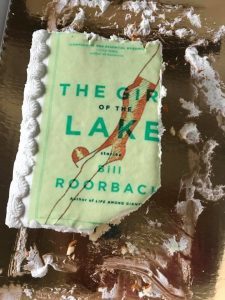
I got a cake, too! Thanks to Patty Byers.
I wrote “Harbinger Hall” a while back, published it in The Atlantic, and then revised it for this collection. It starts with a ten-year-old deciding to bail out of school forever, using a method I dreamed up in sixth grade but never dared try. Great thing about fiction is you get to see what might have happened. We kids used to play war extensively, and one of our battlefields was on an estate you could approach through the forest from my neighborhood. We’d spy on the old guy who lived there, pretend we were going to rescue him or kill him or kidnap him depending on the various storylines. This story has a kid braver than I who goes ahead and skips out of school, begins to hang around the estate on the far side of the woods. But he gets caught, and gets a dose of history. I’ve always been fascinated by the Russian Revolution and all the mayhem that preceded it. Here was a chance to be in two worlds at once. I did a lot of research, but in the end, as you say, the story has to be about characters in motion. And really, a boy’s imagination, which is still alive in me.
Did you have any personal experience to go on for Brave Deeds? I know you were part of some dark times in Iraq. Have you been back at all since? Is it hard to sit still and write when the memories, or the imagination they’ve unleashed, start coming back to life on the page?
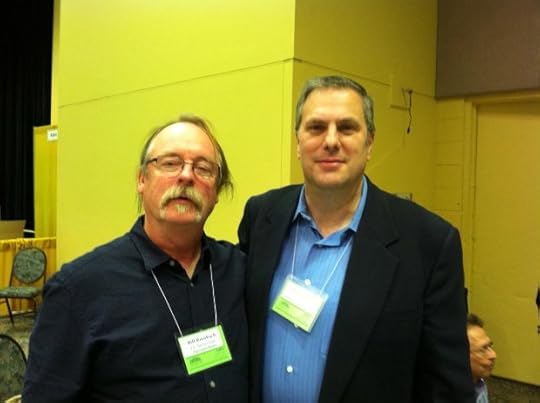
Bill and the other Dave at PNBA, 2012
David: While portions of Fobbit were lifted almost whole-cloth from my war diary, the plot, characters and much of the setting in Brave Deeds were far beyond the scope of my experience in Iraq in 2005. I was, sadly, a headquarters-bound Fobbit during my entire time in-country. So, Brave Deeds gave me a chance to think about soldiers whose lives were vastly different than my own (infantry vs. support soldier) and to virtually and vicariously step out into the more dangerous world of Baghdad beyond the Forward Operating Base. If I had “dark times” during my time in Iraq, they came when I read about (or, worse, saw photos) of the grisly and unpredictable violence which more courageous soldiers saw nearly every day. This is nothing compared to actually standing on a street, staring down into a crater made by an exploding mortar, smelling the blood, and seeing–well, sights too horrible to describe. I’ve seen the pictures—many of them—from these types of attacks and that was enough for me.
To answer your other question: no, I have not been back to Iraq. Nor do I plan to vacation there in the future. Baghdad is a chapter in my life I hope to never re-read.
Speaking of stretching exercises we authors perform at the keyboard, what about your story “Broadax, Inc.”? The narrator is a self-proclaimed corporate shark who finds himself deep in a love triangle (and, boy, do I dig these lines: “Sharks do fall in love. It isn’t all just gnashing and splashing and arms coming off clean.”). You don’t strike me as the Wall Street executive type. (But maybe you have a hidden double life? If so, I have a few questions about how I can sweeten my investment portfolio.) Ted Broadax is the kind of guy who bites his sentences into chunks, prides himself on his immense wealth, and is a total mess when it comes to personal relationships. This doesn’t sound like the Bill Roorbach I know. How did Ted arrive in your head? And have you ever watched the Showtime series Billions? Your Ted reminds me an awful lot of Bobby Axelrod (whose name, if you stutter-slur resembles “Broadax”).
Bill: Well, I’m loving seeing your imagination at work–it’s clearly well informed. I haven’t seen Billions, not yet, but I’m really enjoying these long-form cable series, which are like novels on TV. I can even read them the way I read novels, going back to check on plot elements I might have missed, flipping back a few pages when I realize I’ve been spacing out. I worked with HBO a while developing a show based on my novel Life Among Giants. It was fascinating to pull that thing apart into seasons and episodes, and to write scripts as opposed to novels, where nothing’s getting done by actors or cinematographers—that’s all in our hands. These are great narrative minds, is what I’m saying, and I learned a lot from them. Before they killed my show, that is. You wouldn’t want to see the pictures of that carnage. Though in fact my main emotion was relief–I could get back to being a novelist, which is where I live.
As for Broadax—I just wanted a name that included a weapon, because that’s the way he’d come to see himself as the story opens. I’ve got a number of high school friends who went into finance, as they used to call it, and these guys, math whizzes, all of them, seemed pretty mild-mannered sitting in Algebra II. But the aggression when they went out in the world, and the pure focus on money! Astounding what was hiding behind those khaki slacks and Bass Weejuns. I just wanted to see what was left of a particular guy if every bit of his business success and money dependence was taken away from him. I’m also interested in how easy it might be to manipulate the electronic everything of our lives to destroy someone. Or a country, come to think of it. “Broadax” the story comes from that. In the end, what he’s got is love, and that turns out to be enough.
You’ve been busy–this I know based on our exchange, which has taken quit a few good weeks. A new book is a whirlwind, even months before it ever hits the shelves. The Girl of the Lake is my tenth book, amazingly, and the experience of every single book has been different, with emotions from despair to ecstasy along the way, and back again. And again. Second books are notoriously tough—how is this one different from your first? The reception has been fantastic. Did you feel more prepared?
David: Putting out a second book is like the Grand Central Station of Neuroses for self-doubters like me. On the exterior, I may look much the same like I did when Fobbit came out in 2012; but inside, I’m a storm of worry. The early reviews for Brave Deeds and the reception I’ve gotten from readers on this book tour have certainly been reassuring. And yet, there’s always that second-guessing that goes on: a reverse of Sally Fields’ famous line from her Oscar acceptance speech, “Do you really like me?” But that’s just ego talking and has nothing to do with the finished, published book we now hold in our hands. No matter what my conflicted, complicated feelings are about the so-called “sophomore slump,” Brave Deeds the novel stands on its own. It’s written, it’s published, I’ve tossed it like a homing pigeon from my worrisome grip. It has to fly to readers with its own wings. But, yes, anxious voices inside my head still clamor. I’m not sure how to tamp them down, muffle the overthinking. As a seasoned veteran in this business (ten books!!), do you have any Rilke Letters to a Young Poet type of advice for me?
Bill: We really like you! I have no advice for you—I think your art and life are well in hand. The only observation I really have after a lot of ups and downs is that nearly all of the pleasure of writing comes in the making. That’s what lasts, and that’s where we’re most in our element. Please keep it coming!
David: You are entirely right! I will carry that forward with me to Book 3 and 4 and beyond. Thanks again, my friend.
Bill: But wait—I want to ask you about the cave of rewrite you mention on your twitter page. It sounds fucking scary!
David: The cave of rewrite can be a dreadful place, can’t it? Sometimes I look at the process with the same amount of joy I once felt for trips to the dentist (Dr. Rusty Pliers, DDS). All those words—All. Those. Fucking. Words. –demanding reevaluation and judgment. It’s deflating, isn’t it? Or maybe that’s just me. One of my faults is trying to take an all-encompassing, long-range view instead of just relaxing and taking small bites from the elephant. Too often, I deflate my tires before I start driving.
Then again, revision is the time of discovery: plunging my hand into my characters’ chests and pulling out surprises (“Wow, Rusty — I had no idea you were a dentist by day and stamp collector by night!”). So, yes, the Cave of Rewrite is dark and frightening, but if we can swallow our fear and keep walking forward to that pinprick of light at the end of the tunnel, the rewards can be infinite.
Bill: Revision is where it all happens, for me. It’s what makes our stories smarter than we could ever be. Okay, brother! See you in the wings!
David: Maybe Texas Book Festival?
Bill: Nope, not me, but I’ll be at National Book Festival over Labor Day weekend. We’ll cross paths again yet, my friend.
David: “The Girl of the Lake” is shaping up to be one of my favorite stories of all time–it goes on the shelf of honor next to the other long-time residents: Mr. Carver, Mr. (R.) Ford, Miz O’Connor, et al. Other things I still want to talk about include “The Fall”–good googly-moogly, I LOVE that freakin’ story!–your style/voice (alluded to a little in that remark about Broadax’s choppy dialect), and the relationships between men and women in these pages, not to mention your marvelous novel The Remedy for Love. So, if you’re up for it, I’d like to keep up this conversation.
Bill: That is a promise! Loved it, David. And thanks for kind words. More talk soon!
June 27, 2017
Today is publication day, accompanied by the usual excit...
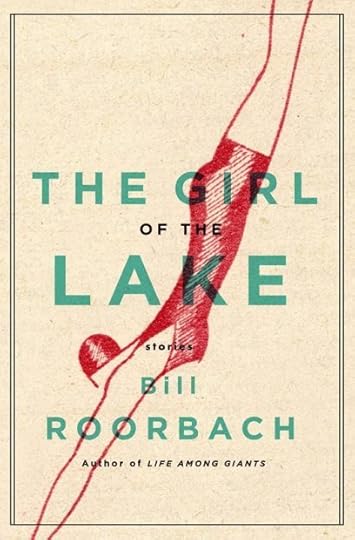
Today is publication day, accompanied by the usual excitement and dread. Have I got a story for you!
June 25, 2017
Audio, Audio!
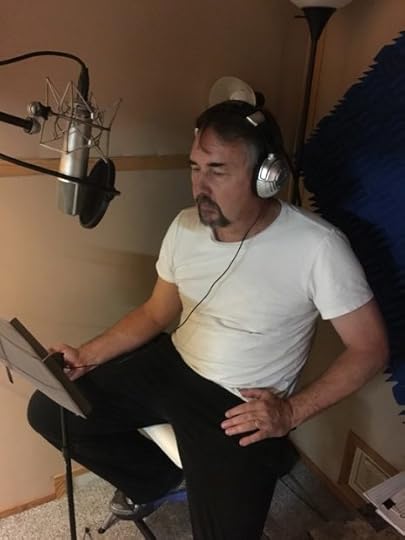 Nina, my wife, didn’t read my last book, All the Wild That Remains. She listened to it as an audio book instead. That means she got to hear a strange man say things like this about my then-eight year old daughter: “I got in the car with Hadley and drove seven hours up to Wyoming…..”
I liked the narration for the book a lot but the narrator’s voice was distinctly unlike mine. It had a hint of Englishness to it, not effete exactly but slightly fancy, and the word “bullshit” did sound right when he said it.
When I told a friend of ours, Bekki Lee, about Nina listening to the not-me narrator, her story-making mind came up with this: what if a wife listened to a husband’s book and fell in love with the narrator’s voice, then left the husband for him?
That can’t happen this time since I will be reading my own book. I’ll be very happy to have narrated Ultimate Glory myself, and to have it. But I was surprised by how brutal a process the recording has been. Six days of 6 hour days of reading. Who knew I had so much saliva in my mouth or then, the next minute, so little? Who knew the letter L makes a clicking sound? Who knew I couldn’t pronounce half the words I thought I knew in my head?
Barring any unforeseen circumstances, that will be the last time in my life where I read anything out loud for six hours.
For the next book I’ll just let my wife’s lover do it.
* * *
You can hear all my thoughts on the recording sessions at Penguin-Random House’s “This is the Author.”
June 14, 2017
Lundgren’s Lounge: “Augustown,” by Kei Miller
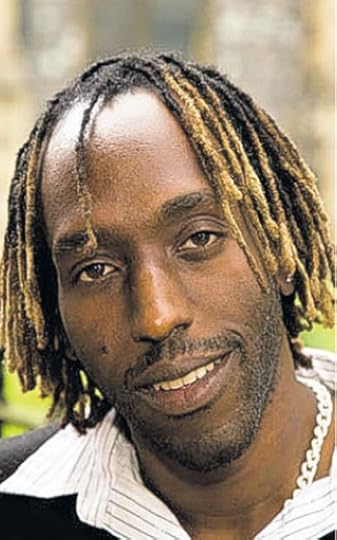
Into every reading life an occasional slump will occur, a period marked by encounters with a surfeit of desultory and uninspiring work. But then the world rights itself and one encounters a marvelous, luminous and exquisite work of art like Augustown by Zei Miller. While it is impossible to read Miller’s novel without hearing echoes of Garcia Marquez’s Macondo and Toni Morrison’s Song of Solomon, Miller insists his is not a metaphorical tale given wings by ‘magical realism.’ He writes, “Listen, this isn’t magical realism. This is not another story about superstitious island people and their primitive beliefs. No, you don’t get off that easy. This is a story about people as real as you are… You may as well stop to consider a more urgent question; not whether you believe in this story or not, but whether this story is about the kinds of people you have never taken the time to believe in.”
 Our story takes place in Jamaica, an island riven by the cleaver of colonialism and imperialism, a land of two separate and unequal societies. Early on we hear the tale of the Flying Preacherman as narrated by Ma Taffy: “The preacherman’s name was Alexander Bedward, and is him who did tell we one day that him was going to fly.” It seems that Beward has begun to float up from bed, to rise to the ceiling, because the “stone’ has somehow, inexplicably, been lifted from his head, the very stone Ma Taffy tells us, “… that poor people like us born with… a stone that sits right on top of our heads. The one that stops us from rising.”
Fast forward to the present and Bedward’s legend becomes the backdrop for a mesmerizing cast of characters and their stories, all woven around the tragedy suffered by Kaia, a young Rastafarian who is Ma Taffy’s grandson. Kaia has been unjustly shorn of his dreadlocks by Mr. Saint-Josephs, a schoolteacher tormented by his role as overseer, a Black man promoting the racist ideology of the oppressor. The unceremonious barbering sets in motion a series of events culminating in the “autoclaps,” which Miller describes as “the collapse of the heart, a small apocalypse… even to say it causes a sense of dread.”
The author writes with the exquisite fluency of the poet that he is. His magnificent novel deftly weaves the history of Rastafarianism and the racial politics of Jamaica and the legacy of colonialism around a narrative of spellbinding tales. Augustown speaks to the power of stories and their role in the survival of indigenous and oppressed communities. For as Leslie Marmon Silko so eloquently describes it in Ceremony, “Stories… aren’t just entertainment… they are all we have to fight off illness and death… Their evil is mighty but it can’t stand up to our stories. So they try to destroy the stories, let (them) be confused or forgotten. They would like that because we would be defenseless then.”
Augustown is a bulwark against those forces that attempt to erode our power.
#
Bill Lundgren is a voracious reader who writes book reviews in hopes of sharing his enthusiasms with fellow readers. He lives in Portland, Maine with a wild menagerie of dogs and cats and birds and his wife Carol, the veterinarian. He teaches writing and literature at Southern Maine Community College.