Kelsey Timmerman's Blog, page 8
April 4, 2018
A war criminal & humanitarian
Tiger Woods is one of the greatest golfers ever, but the last decade has revealed a series of affairs, transgressions, and DUI’s. He’ll play in the Masters this weekend. Is Tiger back? I’m not much of a golf fan, but I’ll keep tabs on him as he makes his way through Augusta National.
Mother Teresa is a saint and a Nobel Peace Prize Winner. She’s also criticized for not giving patients in her clinic adequate medical attention despite pulling in huge sums of money. She had dubious political connections and held dogmatic views on abortion, divorce, and contraception.
Can we accept the good works of people while acknowledging their mistakes and flaws?
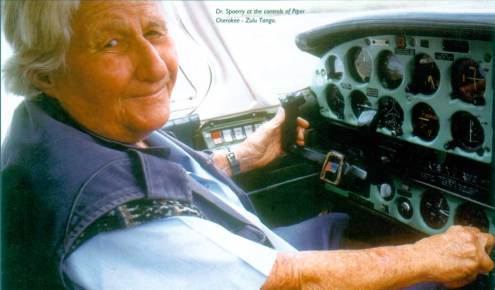
While researching WHERE AM I GIVING? I came across an extreme example of this in the life of Anne Spoerry.
Famed paleoanthropologist and conservationist Richard Leakey, said Anne “probably saved more lives than any other individual in east Africa—if not the whole continent.“
Anne, a physician, learned to fly at the age of 45, so she could reach Kenyans who didn’t have access to medical care. She worked with Flying Doctors for 30 years until she died in 1999.
There was a dark reason Anne left France. She was exiled. Anne was a member of the French resistance and was captured by the Nazis during World War II. She was placed in Germany’s only concentration camp for women. When the Nazis asked her to lethally inject some of her fellow patients, she complied. One inmate said that Anne “did not hesitate” and as a doctor herself wondered “how anyone who is a medical doctor or wants to become one could deliberately execute a patient . . . I can only explain it by her fear of reprisals.”
None of this was known until after Anne died and her nephew found a document titled “Central Registry of War Criminals Consolidated Wanted List” in which he found his aunt’s name. [1]
Many of the mobile clinics she supported closed with her passing.
Anne was a convicted war criminal and a humanitarian.
When I was in Kenya, I spent a few days with former gang members who now promote peace. They called themselves The Legend of Kenya. They had committed acts in their former lives that still brought tears to their eyes.
“I’m a victim of crime and I’m a criminal,” Stephen, one of the groups members told me. “I used to do bad things. My mind was corrupt. I was totally evil.”
He feared mob justice, where, once the community has had enough, they beat you, lay you across a tire, and then light you on fire.
“Now I’m proud to be an agent of peace and a good person,” he said.
“The darkest and best parts of him are in this community,” Rozy the leader of the group said. “People remember him as he was and as he is.”
Now Stephen volunteers at a local hospital.
Giving Rules: If we only accept the good from those who’ve never done bad, we’ll have very little good to celebrate.


January 23, 2018
I love republicans
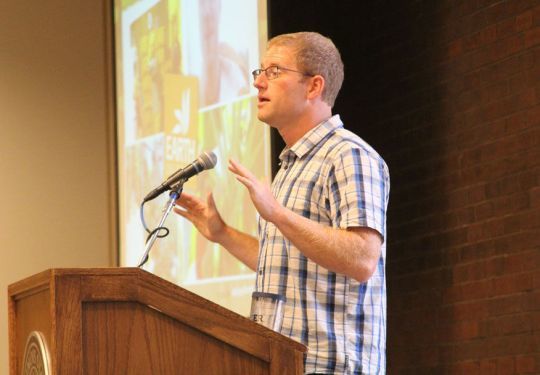
Speaking at NKU about Donald Trump, but not about Donald Trump
Two days after the November 2016 election, I spoke at Northern Kentucky University to a few hundred first year students. What would I tell them?
After the election, I was in shock. I couldn’t believe that Trump won. Annie came down stairs in tears. We knew what it could mean for our health insurance that we buy from healthcare.gov. We’re heavy insurance users. Between paying our premium and hitting our deductible in February, we paid about $20,000 in 2017.
Could our son with autism be seen as a preexisting condition and denied insurance that pays for his therapy?
The election seemed to validate racism, sexual assault, and a lack of basic decency, kindness, and empathy.
I decided I was going to talk to the NKU students about Donald Trump. I thought about all the people I’ve met on my travels and what I’ve learned from them. There was Amilcar, the migrant from Honduras, who risked his life to come to the U.S. so he could better support his daughters. There was the time in 2007 that I was outside of mosque in Bangladesh when it let out, and–this is sad to admit–I was afraid. According to the news, people like them were not supposed to like people like me. Spending a month there having dinner with families and even celebrating a birthday party showed me otherwise.
I put together a talk that was against everything I felt that Donald Trump stood for, but I didn’t mention him or the election once. Here are some of the notes I jotted down:
About the election but not about election
Diversity
Meet people who are different, embrace diversity, and find ways to connect.
I was different, society wanted me to be something else.
Surround yourself with diversity.
Our responsibility is beyond our own family, state and country.
Do I know my neighbors? Will I let our differences divide us?
Fear
How can you be afraid of people you haven’t met.
The world is complex – the world isn’t binary – good and evil.
Travel increases caring.
Listen
Listen to people who disagree with you
I don’t think it was the best talk I’ve put together. The flow from story-to-story wasn’t the smoothest, but it FELT GOOD. It was therapeutic. And even if it was a bit disjointed, I felt everything I had to say. It felt important.
I’m very anti-Trump. I don’t post about it on social media or write about it much. Because I feel that all of my work is pro-connection, pro-diversity, pro-empathy, pro-travel, pro-compassion, pro-justice, pro-truth, pro-social responsibility, and those are all things I consider to be anti-Trump.
Recently my opinion of the president was shared in The Guardian in a piece written by Gary Younge, who I’ve had the pleasure to get to know as he has written about Muncie before and after the election.
Here is the passage from Gary’s story that reflect some of my feelings:
Griffin Timmerman, six, is a runner. Given the opportunity, the small, lively boy, who has autism and prefers to play on his own, would just keep going. He once ran into the road; this is one of the reasons why his family moved out of Muncie, Indiana, to the country, giving him more space and free rein for his energy.
It is also why his family paid $20,000 (£14,500) in health insurance last year, which they bought on the Obamacare exchange. For that they got, among other things, a regular assistant for Griffin, who accompanied him to school and helped him integrate socially with his peers. “It’s crazy,” says Kelsey, his father, who is an author. “It’s our biggest expense as a family. But since it got Griffin what he needed, we were prepared to pay it again this year.”
Only this year was not like other years. Since Donald Trump took office, the Republicans have not been able to get rid of Obamacare. But by eliminating many of the provisions in the legislation they have managed to make it even more expensive and less available. “There used to be three or four companies that offered what we needed,” says Kelsey. “This year there was one and it didn’t cover an in-school therapist.”
The last time I saw Kelsey, he was watching the presidential election results come in with a couple of friends. As Pennsylvania fell to Trump, and Wisconsin and Michigan wavered, the nation’s self-image changed overnight – it was not the country many thought it was. When we meet again, it is Griffin’s first day back at school without a teacher’s aide. Kelsey’s wife has been awake at night worrying about it. “Trump’s win came at great personal cost to us,” says Kelsey. “It makes it tough to drive around town and see the Trump signs and bumper stickers.”
The article ended with a quote from me:
“I hoped that after he won he would sober up to the demands of his office, like a drunk dunking their head in the water,” says Kelsey. “But it’s just far worse than I imagined it could be and is having real consequences. Maybe we had to go through this to get to a better place. I just hope he doesn’t do too much permanent damage in the meantime.”
But here’s the thing, there were other people mentioned in the story who I know and respect, who see things differently. My friend Ted said: “Trump hasn’t done just a good job. He’s done a great job!”
I had an office at the incubator Ted manages. When my last book came out, Ted threw me a banana-split book launch party.
My friend Brad also spoke positively about Trump in the story:
Brad Daugherty, a small business owner who voted for Trump because he favoured less business regulation and wanted an anti-abortionist on the supreme court, carries new pairs of warm socks with him in his car in case he meets homeless people.
I strongly disagree with their political views. This wouldn’t come as a surprise to either of them. In fact, I see their support of Trump going against many of their values. We might disagree on this point as well.
A friend of mine, who is politically aligned with me, shared the story on Facebook. One commenter said something on the lines that they knew there was something wrong with the incubator that Ted runs, and that they won’t be going there any more. I like to think this is an extreme view: We should only associate with people and places who vote like us.
But I see it becoming more and more common online and in real life.
“If you support football player kneeling, unfriend me now!”
“If you support Trump, don’t talk to me!”
Maybe I’m naive, but I think we can resist, and stand against the president’s actions without abandoning relationships. The divisions in our community are what Trump capitalized on in the first place.
I live in rural Indiana, and was born in raised in rural Ohio. Some of the most important people in my life are conservative Trump supporters. I love republicans, not all of them, mind you (I don’t love all democrats either), but some of them. I feel like it’s not a choice. We’re friends and we’re family. We build our community together. We’ve faced loss and hardship together.
We shouldn’t follow the lead of our divisive politicians; they should follow ours.
January 11, 2018
An opportunity to Give to The Legend of Kenya
(Rozy Mbone shares her dream of having a safe place for those in her community to escape a life of crime)
I was in Kenya researching WHERE AM I GIVING and I met a young woman named Rozy in the Korogocho slum of Nairobi.
Rozy and her friends were all former gang members. There were few opportunities to make a living in their community, so they lived a life of crime surrounded by death, violence, prostitution, and robbery.
A woman named Selline Korir visited Korogocho and talked about peace and encouraged Rozy to leave her old life behind. Rozy did and soon the others followed and now they promote peace and dialogue in a community where death and violence are everyday life.
We often think our lives have to be in perfect order before we can make an impact. That’s bullshit. These folks prove that. The Legend of Kenya have been honored by USAID and Rozy even met President Obama. She chose the name of the group “because Legends live forever.”
I enjoyed writing an entire chapter on them and I’m looking forward to you reading it.
HELP SEND ROZY TO UNIVERSITY
There are very few jobs in Korogocho, and many businesses outside of Korogocho refuse to hire someone from the slum who doesn’t have the correct papers. Rozy is basically a full-time peace worker in her community and isn’t paid.
Here’s what Rozy wants to do with that degree:
“I am planning to be an investigator with an aim of supporting people from informal settlements of Nairobi; who are sometimes victims of poor judgment due to lack of proper evidence provided in court during their case proceedings.”
Here’s how to help:
One semester costs – $720
One month of room & board – $120
I’m hoping we can raise at least enough to pay for this semester. Whatever we are short, I’ll do my best to make up the difference.
If you’d like to help support Rozy email me at Kelsey@KelseyTimmerman.com and I’ll send you details.
November 21, 2017
4 Questions one of the most effective NGOs asks before giving
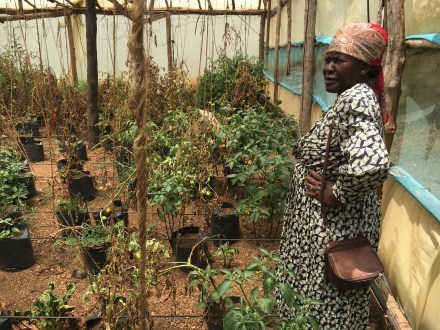
Benter showing me her greenhouse in Kenya
I visited GiveDirectly in Kenya this summer and write about them in Where Am I Giving? GiveWell ranks GD as one of the most effective nonprofits in the world. GD gives direct cash payments to extremely poor families and allows them to make their own decisions on how to spend that money.
I don’t think all giving can be measured, but GD’s impact can, and they measure it better than almost any other NGO. So when it comes to asking question about how to give and whom to give to it’s worth listening to their advice.
GD’s 4 questions to ask before giving:
1. Can I tell where my dollar (or pound, mark, etc.) will go? This one is the most basic, but surprisingly hard to answer. Charities often run many programs, some through subcontractors or “local partners,” and it isn’t easy to figure out where a donation will end up. “Gift catalogues” are a classic example – these make it seem like you can choose what to give, but typically the fine print says the charity will still do whatever it thinks is best with your donation. (GD answer: no surprises here – when you give, we transfer your money directly to someone living in extreme poverty.)
2. Is there rigorous, experimental evidence of the impact it will have? We look for very basic things – do charities have an easy-to-find “evidence” section on their website with results from a rigorous, randomized controlled trial? Or do they talk about “theories of change” and what they “believe” works? (GD answer: our very first transfers were part of an RCT, now published in a top economics journal, and we have 7 more evaluations now in progress.)
3. How much does the good / service cost to deliver? This one is so obvious it seems embarrassing to ask, but the reality is we haven’t found many charities that report their unit costs and clearly explain how they calculate these. (GD answer: it costs us between 10.7 and 11.6 cents to deliver a dollar in Kenya, Uganda, or Rwanda.)
4. How poor are the people we’re helping? The evidence we’ve seen says that we can have a much bigger impact by helping people who are starting with less. Pretty intuitive. But we’ve had a hard time finding charities that actually quantify how well they are doing at locating the poorest. (GD answer: recipients live on an average of around $0.75 / day.)
November 16, 2017
Giving Rules
I’ve spent much of the last 15 years talking to people about giving, meeting amazing givers, and reading books and research about giving. I’m currently writing my 3rd book, Where Am I Giving? A global adventure exploring how to use your gifts and talents to make a difference, and since it is the “giving season,” I thought I’d chime in with a few things I’ve learned about giving.
(Note: Many of these are offered without context and some of them may even seem contrary to one another. I welcome arguments and suggestions.)
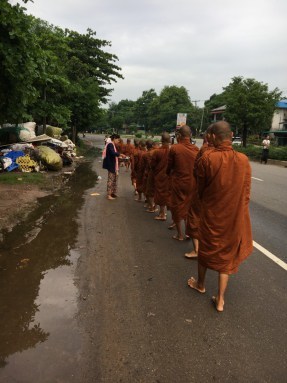
Giving Rules
#1 You can give more.
#2 Gifts can be as small as a financial donation and as big as a smile.
#3 Gratitude first, then giving. When you look at your life, time, money, and talents as gifts, you will give more of them all.
#4 A gift is only a gift if you use it and pass it on. You don’t have to pass on the exact thing that you were gifted, but the spirit of it.
#5 Giving should connect us to people and causes in our local and global communities.
#6 If you give to an organization and don’t want to receive updates on their work, you should not give to them.
#7 Giving is an opportunity to make an impact and connection; it shouldn’t feel like a burden.
#8 Our gifts should give others dignity, not take it. Giving isn’t about you.
#9 Excluding foundations, if an organization’s name focuses on the givers and not those receiving the gifts, you should question the mission of the organization.
#10 Consuming is the opposite of giving.
#11 Not all gifts can be measured or evaluated.
#12 The more focused our efforts, the better our results. People way smarter and with way more money than us have tried to end poverty and have failed, but individual diseases have been eradicated and saved millions of lives.
#13 Give unconditionally and without expectation to individuals.
#14 Expect impact from organizations you support. (We spend less than 2 hours per year evaluating organizations to which we give. Ask about their goals and how they measure outcomes.)
#15 The impact of an organization is more important than their overhead.
#16 If you volunteer 100 hours/year, you’ll be happier.
#17 Give at least 1% of your income to fight global poverty and disease. And give at least that much to helping those in your own community.
#18 Give because not everyone can. We can’t all give equally and we can’t give equally throughout our lives.
#19 Support the giving of friends and family. Sometimes we give without question to causes that aren’t our causes because they are important to people who are important to us.
This list is subject to change. Where Am I Giving? (coming the summer of 2018) will include stories from 6 continents that give context to each of the “rules.”
If you want to be the first to hear my giving stories, invite me to speak this spring by emailing me at kelsey@kelseytimmerman.com.
Let’s make an impact together. Subscribe.
* indicates required
Email Address *
First Name
Last Name
November 2, 2017
Chef feeds Puerto Rico despite FEMA telling him he lacked the experience
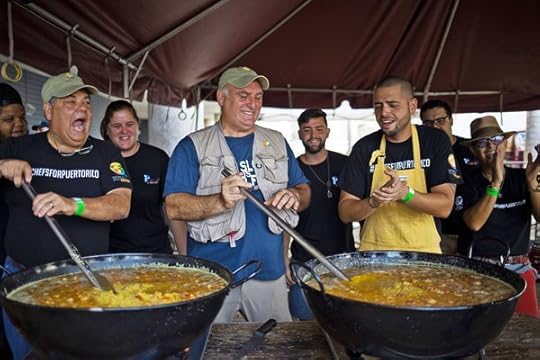
For the most part it’s a bad idea to show up to a disaster area to “help.” You’d just be another mouth to feed and keep hydrated. This is the case, of course, unless you have some special skill.
José Andrés is a chef who came to Puerto Rico organized chefs and served more than 2.2 million meals.
From the NY Times:
Since he hit the ground five days after the hurricane devastated this island of 3.4 million on Sept. 20, he has built a network of kitchens, supply chains and delivery services that as of Monday had served more than 2.2 million warm meals and sandwiches. No other single agency — not the Red Cross, the Salvation Army nor any government entity — has fed more people freshly cooked food since the hurricane, or done it in such a nurturing way.
FEMA told him he didn’t have enough experience, but he didn’t let that stop him. The Salvation Army has asked him for help.
“At the end, I couldn’t forgive myself if I didn’t try to do what I thought was right,”Andrés told the Times. “We need to think less sometimes and dream less and just make it happen.”
November 1, 2017
Fake News Even Worse in Developing Countries
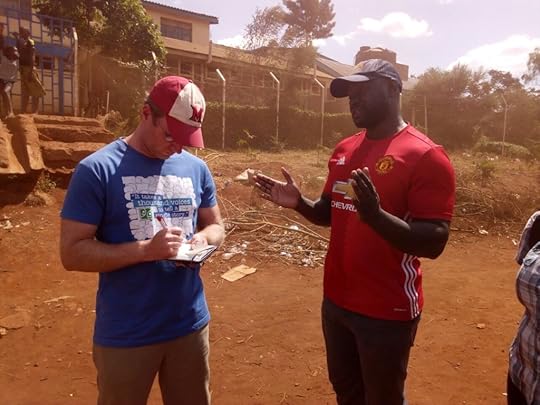
(Me reporting in Nairobi)
I was in Kenya for the election in August.
The day of the election and for a few days after, most places were closed and most people were holed up in their homes watching the election play out on the news and on social media.
The network news only reported on the results and the leaders’ opinions of those results. One candidate said that it was rigged and mishandled. The supreme court later agreed with him.
Meanwhile, friends who lived in slum communities across Nairobi were sending me pictures via WhatsApp of people who had been shot and killed by the police, or taken out of their homes and beaten.
None of this was on the news.
Some images on Twitter and Facebook offered two very different pictures. There were the ones showing mass violence and others mass peace. The truth was somewhere in the middle, unknowable, and unreported by Kenyan media. When international reporters on the ground shared what was happening, they were instantly attacked for trying to insight more violence. Fake news! Fake news!
The New York Times reported that the same thing is happening in Myanamar and hundreds of thousands of Rohingya are paying the price:
Violence against the Rohingya has been fueled, in part, by misinformation and anti-Rohingya propaganda spread on Facebook, which is used as a primary news source by many people in the country. Doctored photos and unfounded rumors have gone viral on Facebook, including many shared by official government and military accounts.
BuzzFeed reported on what fake news looks like in Myanmar:
YANGON, Myanmar — Harry Myo Lin’s problems started with a photo on Facebook.
The picture showed Harry, who is Muslim, posing with a female friend who is Buddhist. Somehow, an account belonging to a Buddhist nationalist group found it and reposted it with a caption that would put a target on Harry’s back.
It claimed that Harry, a soft-spoken 26-year-old who runs a nonprofit that works to promote religious tolerance, had “seduced” the woman and was converting her to Islam.
“They wrote it like it was a news story — like, here is this Muslim guy and the Buddhist girl he is trying to convert and bring to the beach,” said Harry. “It’s easy to say it wasn’t calling for violence — but when people share it, there were comments saying, ‘Muslims like him should be killed.’”
In a world of fakes news, what is truth? And without an agreed upon, reliable source, and trust in that source, is democracy possible?
Honestly, I’m not sure.
Somehow the photos of the dead and wounded in Kenya sent by my friends automatically populated the photos folders on my phone and computer. So that even today when I scroll through looking for a photo, there’s a picture of a man with an exploded head. To delete it requires stopping over it and taken it all in again. So I scroll.
Sometimes when we are confronted with the truth, it’s easier to look away.
October 25, 2017
September 26, 2017
9 ways to eat healthier in college
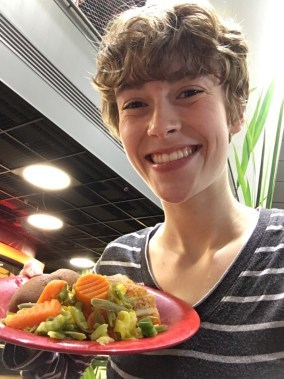 A few years ago I lived in a dorm at University of Illinois for a week as an artist-in-residence. At breakfast there was french toast. At lunch and dinner dessert. I think I put on 5 pounds that week. It’s not easy to eat healthy in college.
Besides, buffet-related eating issues, someone in your dorm is always looking for someone to go in on a late night pizza. My dad put on the freshman 60! He played point guard on the basketball team at Tiffin University, and pretty much fueled himself on donuts and beer, so the legend goes.
I asked my friend, Claire Moorman, a dietetics major at University of Cincinnati, to offer some tips on eating while in college. Please share with any students you know, and also point them to Claire’s blog EatingCollege.
—
By Claire Moorman
Everyone’s situation is unique. So my advice is attempting to aim towards all situations within the college dining experience. I have spent over a year researching and writing about the college dining system and culture and intend to help others in similar situations as well as cause change.
Opt out of the meal plan if you can and want to
If your concerns are for your health, financial situation, religious, spiritual, or environmental beliefs and you believe you can handle sourcing, preparing, and planning food on your own, opting out of the meal plan may be a good option. However, to preface this process, it may not be easy depending on your school and or its policies on the meal plan. Some universities are now dropping the meal plan requirement for freshmen, but it is not a widespread practice and most schools are extremely strict about the requirement. I believe that through a widespread fight against this requirement in the voices of students, parents, and alumni, this requirement will be dropped eventually across schools.
How to Opt Out
Most of this process requires your persistence. The universities that require the meal plan do not openly advertise how to fight it. However, if you do not want the meal plan or need to opt out because of medical or religious reasons, I recommend that you investigate the school’s policies on meal plans and contact the dining services to fight the requirement. I know a couple of people who have been able to drop out of the meal plan because of medical or religious reasons, and, most of the time, there is an application and the medical or religious reason needs corroboration from an affiliated party such as a doctor or religion leader.
If You Couldn’t Opt Out, Start with the Good Stuff
Get fruit, a salad, and water on your first trip. After that, you’ve had a serving or so of fruit, vegetables, so the original instinct to grab fries, cake, and pizza may have been reduced slightly. Even if you still go for pizza every single time after you eat fruit and a salad, you’re still adding more fruit and vegetables into your diet than you may have before.
Dessert is okay. But not all the time
Don’t spend your whole time in the dining hall avoiding sweets, but instead choose when to eat the ice cream, cookies, or other dessert options.
Supplement on the side in your dorm
The dining halls lack in many areas and, as a starving college student, you will learn that dorm snacks are essential. What types of snacks you keep in your room is crucial. I recommend keeping a range of foods that may cover the bases the dining hall lacks. I keep fruit (apples and bananas usually taken from the dining hall, strawberries, oranges, etc.), vegetables (salad from one of the places I can use a meal swipe at lunch, cucumbers, carrots, etc.), grains (bread, chips, popcorn), and usually a couple treats like candy or ice cream just for fun. If you keep some healthy fruits, vegetables, simple snacks, etc. in your room, you will more likely consume fruits and vegetables as well as curb your hunger to avoid crazy sugar, fat, and salt binges that happen so easily in the dining halls.
Allergies
One interesting experience I have had this year with the dining halls I did not expect was the extensive allergy and dietary restriction issues. I of course was already aware and frustrated with the limited availability of accommodations for people with food allergies or people with dietary restrictions such as vegans, vegetarians, etc., but being in dietetics where many of the students have dietary restrictions in one way or another, gave me an even more extensive experience.
I don’t have any food allergies but I do react slightly to dairy sometimes so I am lucky when it comes to food because I don’t have to avoid entire dishes because of one ingredient. One of my friends has both celiac disease and a shrimp allergy that she discovered this year while eating at the dining hall. Her reactions started when they were serving steak and shrimp side by side in the dining hall, and, although she did not eat the shrimp, she began to have allergic reactions (tight throat, hives, etc.) for which she ended up in the emergency room, doctor’s office, an allergist, and still had the reactions for a month. She is currently talking to dining services to try to get at least some of the meal plan cost back so that she can pay for the medical bills because of the allergic reactions. However, this could have been avoided.
Already having a dietary restriction, the dining hall has been a rocky road for my friend. There’s also the abnormal exposure to shrimp, the continuous reactions, and doctor bills. One of the biggest problems with large, highly-trafficked food sources like college dining halls is that they do not account for each individual food allergy, intolerance, preference, restriction, and practice. Cross contamination may mean an unnoticeable mishap to one student whereas to another, it means an ER visit, frustration, fear, and exhaustion for months. No matter how much dining halls evolve to “fit student needs,” they will always be missing countless details that are essential to some.
Being a Voice for Change
Surveys are a popular way in college to receive feedback and the opinions of many when there are 40,000 students spread across many different avenues. If your university offers dining service feedback surveys to students, fill them out. Be honest, and maybe it’ll change something. They may also offer in-person feedback groups. For example, at the University of Cincinnati, there is a food focus meeting each month where students can voice their positive/negative opinions on the dining experience. I went, and even if they did not listen to all my suggestions (i.e. I’m guessing they are not going to drop the meal plan requirement for freshman quite yet), they were heard and if you don’t try to voice your opinion, there is no possibility you will be heard.
If Its Broke, Fix it
In my now over year-long research into campus dining services, I’ve reaffirmed my distaste for the widespread meal plan requirement for freshman and learned more about the college dining culture. The biggest conclusion I’ve seen is that the college dining culture not only creates but encourages bad eating habits and not only are the students paying the monetary upfront price of approximately $4000, they are paying the price in the long run for the convenient, cheap, and quick meals.
The system is broken and detrimental to both students and our society in the long run. I intend to be a part of the change and will continue to write and disrupt the cycle that is college dining and the American food culture.
September 18, 2017
An opportunity to give: The Slum Library
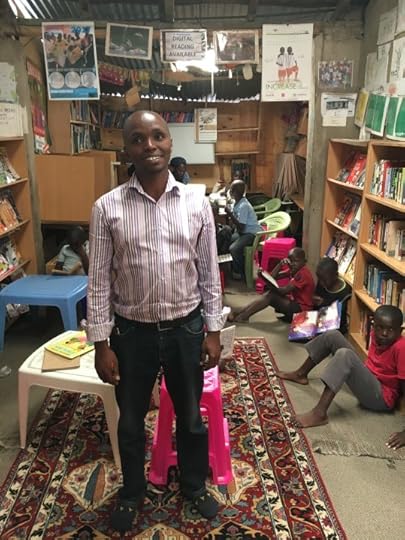
Douglas is a taxi driver who lives in the Mathare Valley slum where most kids grow up without books in their homes. So he decided to turn his home into a library. At first, he wasn’t sure how he would fill it with books, but they just started showing up courtesy of his neighbors. Now the library has 3,000 books. He covers 50% of the monthly costs himself and the other 50% comes from community members. Members don’t pay anything but each of them brings in newspapers to sell to the recycling center. No matter where you live in the world or what you do, you can make a big impact.
When I first posted about the library on Instagram and Facebook many folks said they would like to support him. I asked Douglas to send me more info about his need and he sent the note below. He originally gave me the bank account info for the library, which is managed by a board from the community, but I figured many of us wouldn’t go through the trouble to wire money, so I suggested he get a PayPal account.
If you’d like to support the Slin Library you can send money via PayPal to douglas0722@yahoo.com.
—
Hi Kelsey!!
Many thanks for visiting us and sharing our story with your friends, that’s very humbling and kind of you. Our library is now back to normal after some post-election tension in the area and fracas between the locals and the police force. The disturbances were almost 400m away from the library at a place called Gateways which is the main entrance of our area.
On the other hand, we have at least 10 ways in which we can be assisted by your team, namely:
[KT: 1,000 Kenyan shillings is roughly $1]
1. We request for some assistance to be able to purchase a postal address going for Ksh. 7,780, and annual fee of Ksh 560. The postal address will helps as in getting books, magazines, small indoor games, toys etc. for our library users.
2. We wish to delink arts activities i.e. dancing, poetry, narratives, debates, drama etc from our study hall, this can be achieved by renting a nearby hall or buying the structure if possible, note – renting will cost us Ksh. 8,000 a month. Delinking the two will give more time to users to study.
3. We shared with you about our monthly bills which amount to Ksh. 15,500, we humbly request for any percentage in terms of assistance/contribution.
4. We shared with you on our intention to launch a computer services for an affordable fee on our community, we therefore request for a computer, digital camera and a commercial copier.
5. We will be glad to own the structure that host our library, the structure is made of 3 rooms, each measuring 10X10 feet and each room going for Ksh. 200,000.
6. There are two other different rooms up for sale in our locality for Ksh. 200,000 each, we would wish to have them for rental purposes and the income will be used for our activities.
7. At least 8 of our active members are struggling with secondary school boarding fee, we wish to request for Scholarships for the same.
8. We also wish to invest in transport sector, whereby a van can be bought for us for hire assignments only and the income can be used for our activities
9. We have identified a very reputable bank in Kenya (Cooperative Bank of Kenya) that is doing agribusiness and we wish to do a value added farming with them and the profit can be channeled to our activities
10. We are also very flexible and open for other ideas.
Many thanks for your visit and pass our regards to your friends.
Regards
Douglas Ng’ang’a
Slin Library – Team Leader
+254 720 481644