Kelsey Timmerman's Blog, page 2
November 22, 2022
Toilets
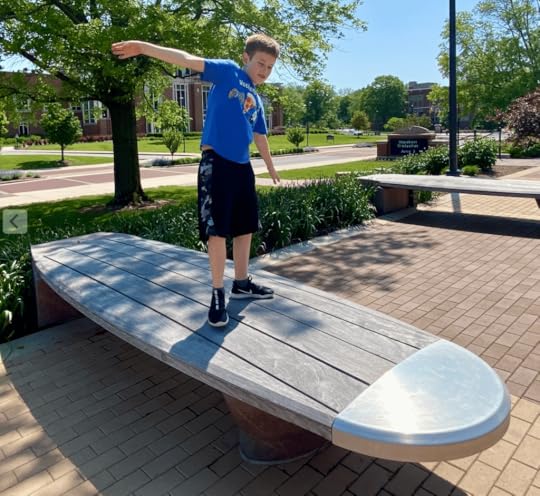
I don’t mean to brag, but my son Griffin has flushed more toilets on Ball State University’s campus than any other person in history. And he’s only eleven.
Most Fridays after I pick him up from school, we head to campus and choose a building or three to explore. We start at the first floor and work our way up and down the floors and halls. We check the floor plans, which sometimes show toilets, sometimes not.
We’ve visited the bowels of museums and auditoriums. New buildings with fancy efficient toilets, and old porcelain dinosaurs that flush with the ferocity of a T-Rex roar.
It’s not completely stress-free. He wants the bathroom to himself. He narrates his visits like he sees on Toilet YouTube. Yes, Toilet YouTube is a thing. There’s an order in which he likes to flush the urinal, stalls, and check the sink. People get in the way. Especially stinky old grandpas.
A “stinky old grandpa” (SOG) is anyone who sits in a stall for longer than 30 seconds. I’m not sure why he started calling them that. Having discovered an SOG, Griffin will walk out, grit his teeth and report that “There’s a stinky old grandpa pooping.” He’s not the best at modulating the volume of his voice. Adjectives like stinky and old should be whispered in public. We’re working on it.
While first floor bathrooms see the most traffic, SOGs prefer the little-visited top floor or basement bathrooms where they think they can poop in peace and quiet. On Fridays that peace and quiet is sometimes distubed by an 11-year-old boy who may or may not have peeked under the stall before stomping out of the bathroom and reported the findings to his father.
Sometimes we’ll wait outside the bathroom for the SOG to take care of business. Once while waiting Griffin hollered, “He’s been pooping for an hour!” Griffin was right he was taking a long time. I blame TikTok.
So, yes, it gets awkward. His obsession with toilets began with a fear. Griffin is autistic and is sensitive to loud noises like flushing and hand dryers. It all started when we were on a road trip and he refused to use any public bathroom. His ABA therapists began working with him, taking him to various public bathrooms at gas stations, restaurants, and stores. He became fascinated with the variety of toilet brands (Kohler is his favorite), flushing mechanisms, and various plumbing characteristics. Now he wants to see every toilet in every bathroom.
At times it’s debilitating. We visited Cedar Point where there are so many bathrooms and so many SOGs. I’m sure he flushed 25 toilets for every ride we rode. It’s almost a compulsion. He has to flush the toilets. He was a knot of anxiety. We eventually gave up on the day and went home.
If we set expectations of how many toilets he can visit, we can manage some of his anxiety. Some environments, like amusement parks, it’s unmanageable.
But on Fridays at Ball State I let him loose. He’s learning to deal with the disappointment of an SOG taking forever to poop. He’s learning not to call anyone a Stinky Old Grandpa or remark on physical differences. He’s learning how to stand to the side as an elevator door opens. He’s learning how to walk in crowds in public and use his manners. Between buildings, he does parkour on every bench and rock outside.
The other day at the student center, he walked into the piano room where four students were studying and asked them if he could play a jazz song for them. Of course they said yes. Griff sat at the piano, which was very out of tune (get on that BSU), and filled the room with a little bit of New Orleans. He doesn’t need music. He doesn’t need to look at his hands, so he played and watched the students watching him. At the end, they applauded him and praised him. I had him take a bow. None of this would’ve happened if not for his toilet obsession.
Maybe I shouldn’t give into this obsession, but after years of trying to wean him off of his bathroom visits, we now lean into it. We both look forward to Fridays. Griffin isn’t into sports or cartoons or movies. He’s into toilets and I’m into Griffin, therefore I’m into toilets as well.
It can be hard to control what our own likes and interests are. We like what we like. And it’s impossible to control the likes and interests of others.
Instead of trying to change him, we’ve learned, not just to accept his differences, but embrace them. It’s fun seeing the world through his eyes.
Griffin loves toilets and I love Griffin.


August 9, 2022
Election Day in Kenya
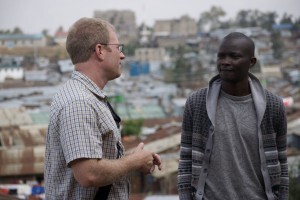
Today is election day in Kenya. Presidential elections are sometimes violent and chaotic in Kenya (in the United States, now, too). I was in Kenya for the 2017 elections and thought I’d share an excerpt from my book Where Am I Giving? about what that was like.
***
Mom thought we were being abducted. But it was worse than that.
Her flight landed in Nairobi at the absolute worst time of the last 10 years. After days of contention in the presidential race, the election commission had declared incumbent, Joseph Kenyatta the winner. Nairobi had essentially been closed since the election—stores were boarded up and the streets of a city with 3 million people were empty. The few times I had ventured out it felt like the excitement and anticipation of Christmas met the hesitation and fear of a zombie apocalypse.
For Mom’s sake, I tried to act like I wasn’t afraid and made small talk about inflight movies and how serious London airport security took liquids left in your luggage. I looked at the crappy car’s fuel gauge buried on E as the driver pulled into another gas station.
Mom thought that he was looking for someone to meet up with at the gas station to pass us on into some tourist trafficking ring. But I sensed his fear and Mom sensed mine. All the stations were closed. There were no other cabs, no cars, no one.
Residents of the slums supported the challenger, Raila Odinaga, and any news about the results led to violence spilling out onto the streets. Reports of gunshots and roadblocks were already filling up social media channels. There were protestors on the street, legitimately protesting elections results that would be overturned and later reaffirmed, and there were those who took advantage of the chaos to loot and create their own justice and injustice. I hated to even think about what would happen to our car and us if our car ran out of gas in the wrong place at the wrong time.
“Welcome to Kenya! Welcome to Africa!” I told mom, still trying to convince her and myself that everything was cool.
The driver pulled into the fourth closed gas station before giving up and making a go for our hotel.
What kind of an idiot doesn’t start this night, of all nights, with a full tank?
If he ran out of gas, I was going to kill him myself, but we made it.
He dropped us at our hotel behind a guarded gate and drove back into the night. It was only then that I started to feel any compassion for the driver. I hoped he made it back.
To calm our nerves, Mom and I each had a Tusker beer at the outdoor bar. That was when the gunshots began.
It was like a reverse PTSD. The sound of fireworks made me happy, and then the realization that they weren’t fireworks scared me. The shots sounded close. At first they popped with the frequency of an Independence Day’s grand finale or a war zone and then tailed off into a shot here and there and then silence.
“I’ll take the first watch,” I told Mom, when we made it back to our room. That’s something I always wanted to say, something the tough guys in the movies who can fight off terrible things in the night say. But it’s not so cool, when you mean it.
At 2AM a shot closer than all the rest—seemingly just outside the wall of our hotel—slammed into something. I put my shoes on and got ready for whatever. I’ve heard gunshots. I live in rural Indiana and my neighbors seem to have an arsenal, but the thunder of a shot has different meaning when you know they aren’t directed at a target but at a person. And then there was silence. No sirens. No yells. Dead silence.
The police had shot someone at our gate. I was conflicted how to feel about that. I had spent the last week with people who feared the police.
I told Mom to go back to sleep as I peeked through the curtains of our first floor cabin. I sat still and focused my hearing out into the night beyond the walls searching for threats on the edge of reality and imagination.
At 4AM the front gate squeaked open. Here they come, I thought.
I peeked through the curtain, my heart racing.
Mom sat up. “What’s wrong?”
“Nothing. I heard the gate. Wait . . . there are people walking this way!” I yell whispered.
I went to a different window not because there was a better perspective, but simply because I was full of nervous energy and had no idea what to do. Eyes. Throat. Groin. I was prepared to go for all the places you weren’t supposed to go for in my college Kung Fu class. A man dressed all in black was waving his arms as he walked next to another man.
Here they come!
I recognized the guy as a fellow guest, walking next to a security guard. I was awake the rest of the night.
I’ve rarely felt more afraid, trapped, and exposed to the violence of the world than I did sitting in that hotel behind high walls with electric fencing and a guard.
The night was just a small taste of what daily life was life for many, including the friends I had spent time with leading up to the election who lived in the slums.
Their night and the days following were much different.
“We are safe, Kelsey, and forced to stay indoors during the night,” texted Rozy Mbone, the leader of a group known as the Legend of Kenya that promotes peace in the slums. “So far one man was killed by hungry mob who were supporting Raila. Criminals also took advantage of looting and breaking into people’s shops. One of our member has been shot dead.”
Others sent me pictures through WhatsApp of people beaten, shot, and killed in the slums. For some reason the photos would automatically populate my photo album, so a man with his brains literally on the street next to him were adjacent to a picture of my kids’ first day of school, which I had missed for this trip.
January 22, 2021
Where is Bernie Wearing?
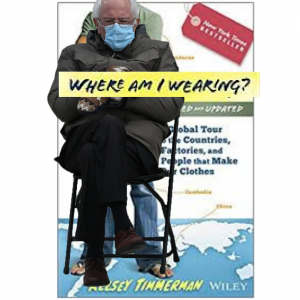
Where is Bernie wearing?
Bernie’s coat is from Burton, a snowboard apparel company in Vermont. Of course, it wasn’t made in Vermont. As someone who has traveled around the world to ask where my clothing came from, I took a few minutes to look at Bernie’s jacket. Some thoughts:
1) It’s sold out because Bernie is a fashion icon.
2) The Burton site simply states that the coat was Imported. Sometimes that’s because an item is made in several countries. Nothing necessarily nefarious, but I like to see companies acknowledge where their products actually come from.
3) The Burton CEO visited 5 of the factories from which they source in 2017. That’s good to see.
4) The company has the addresses of the factories from which they source on its site.
5) The company belongs to the Fair Labor Association, which audits factories.
6) The company is a Certified B Corporation, which means it’s legally required to consider its impact on workers, customers, suppliers, and the environment.
Overall seems like a decent company. I’d like to see exact sourcing locations of each product, some Fair Trade items, and more recent updates on factory visits or audits.
January 15, 2021
Good People: Memoirist & Uke Rocker Pam Mandel
Pam Mandel left suburbia for a lifetime of travel when she was only 17. She writes about her early travel days in her new memoir THE SAME RIVER TWICE.
Pam joined Kelsey and Jay to chat about hitchhiking, travel, questioning intentions while doing good, the time she went to the airport to help a refugee, founding a nonprofit, and, of course, jamming in a ukelele rock band.
Pam’s Uke rock bank The Castaways
Amanda Palmer’s Ukelele Anthem
October 16, 2020
Good People: Soccer in the Wake of Civil War
Seren Fryatt didn’t want to tape ankles the rest of her life. She quit her job to volunteer internationally with Mercy Ships. In Liberia she was recruited to play professional soccer. She saw what the sport meant to the women on her team and its potential to be a force of positive change. Eventually she founded L.A.C.E.S., an NGO that works to create a sustainable, replicable model of community development using sports as a tool to reach at-risk youth and empower their local communities.
Seren joined Jay and I to chat about her path and the struggles of international NGOs during the global pandemic.
KelseyTimmerman · 32: Soccer in the Wake of Civil War
June 30, 2020
Good People: Eric Henry (Entrepreneur, Farmer, Candidate, Local Citizen)
KelseyTimmerman · 31: Eric Henry (Entrepreneur, Farmer, Candidate, Local Citizen)
Eric Henry’s T-shirt business and North Carolina community were turned upside down by NAFTA. Ever since, he’s focused on the triple bottom line: people, planet, and profit. Eric is a champion for his community, cooperatives, chickens, electric cars, local economies, farmers, and now he’s seeking to represent all of these interests in the North Carolina House of Representatives.
Show notes and links:
Prepare for the Ultimate Gaslighting
National Cooperatives Business Association
Article on Triple Bottom Line
May 22, 2020
Good People: Muncie not Mercury
In the summer of 2019, a violinist stood up at a city council meeting in Muncie, Indiana, and expressed concern over a factory that was coming to town. A local reporter wrote a story about the meeting. That story was passed around to concerned citizens who started asking questions. A few weeks later more than 1,000 people showed up at the courthouse protesting the Waelz Sustainable Products factory. A factory that would likely be the #1 polluter of airborne Mercury in the nation. Ultimately the billion-dollar corporation left town.
Kelsey talks with Josh Arthur, a local pastor, and Bryan Preston, a county employee, who were both in early on the action.
Part 1
KelseyTimmerman · Small city fights big corporation and wins (Part 1)
Part 2
KelseyTimmerman · 30: Muncie Not Mercury (Part 2)
Get the Facts event
In 2019 the citizens of Muncie stood up against Waelz Sustainable Products which sought to build an electric arc kiln furnace factory. The company discontinued its plans in our community. In an effort to help other communities face the threat of such a factory presents, we are sharing resources. This event features doctors, scientists, community planners, and activists all talking about the impact the factory would have on our community. A few hours before this event took place, Waelz announced they would not be coming to our community, which means they might be coming to yours.
News Coverage
The Muncie Star Press covered our fight extensively. Here’s a collection of all of their stories.
Resources
8-page factsheet with links to studies, stories, and permits
May 19, 2020
Good People: A Doughnut Economy
What does an economy of living within the means of our planet look like? Welp, according to economist Kate Raworth it looks like a doghnut. Kelsey and Jay are joined by John Motlotch and Scott Truex of the Sustainable Communities Institute for a discussion on Raworth’s TED Talk.
Topics we discussed and relevant links:
Kate Raworth’s Ted Talk, site, book
How Scott’s focus on landscape design impacted his thinking and how John’s focus on systems impacted his
More in-depth explanation of how the doughnut economy works
How our economy/culture doesn’t give value to the environment and often people
Problem of focus on short-term growth and how nothing in nature works like that
George Monbiot’s Ted Talk: For more wonder, rewild the world
Comparison of an economies of degeneration, sustainability, and regeneration
We are dependent on biological system, but we expect it to adhere to our laws
How earth is bouncing back during pandemic
The Age of the Unthinkable by Joshua Cooper Ramo
A not so invisible hand: How much is Adam Smith’s mom worth?
What is the value of people?
Growth isn’t all bad if regenerative growth and not degenerative/extractive
Hope in the global reaction to COVID-19
Harder to change a nation, less hard to change a town, less hard to change a family, less hard to change yourself
Importance of cultural diversity
April 24, 2020
Good People: Kids & the Trauma Pandemic
KelseyTimmerman · 27: Kids & the Trauma Pandemic
For kids “The System” doesn’t work in the best of times. And during a time of global pandemic, there are even fewer supports. Psychologist Janay Sander joins Kelsey and Jay to discuss how best to support kids facing traumatic circumstances.
Show Notes:
If you or a child you know in the United States is in a volatile situation or are subjected to domestic violence, please reach out to the following resources:
National Domestic Hotline (800) 799-7233
Crisis Text Line | Text HOME to 741741
What we discussed
The System during COVID-19
Issues with telehealth
Importance of in-person home visits, especially for kids who can’t speak
Resiliency of kids
How to be present for kids
Changes to system post-quarantine?
Inequalities in juvenile justice and health systems
How to help
April 21, 2020
Good People: Kohl Crecelius on Good Business & Importance of Job
Kohl Crecelius believes that jobs matter almost more than anything. He has helped lead the modern movement integrating social good and business, as he founded Krochet Kids and KNOWN SUPPLY. Kohl joins Kelsey and Jay to discuss Fair Trade, B-Corps, and how his journey started with crocheting.
Show Notes:
Kohl’s B-crop business – KNOWN SUPPLY
Nonprofit Kohl started with high school buddies – Krochet Kids
What we discussed:
His path to social entrepreneurship
Importance of travel
Aid and cycle of dependency
Rana Plaza factory collapse
Cause washing
Decision to create a nonprofit vs. a cause-oriented for profit
B Corps
Benefit Corporations
Fair Trade
Article: Prepare for the Ultimate Gaslighting