Kelsey Timmerman's Blog, page 5
May 31, 2019
Good People know the art of the comeback is to give back
Heidi Ganahl has faced extraordinary adversity in her life. But her entrepreneurial spirit and leadership skills helped her focus on others allowing her to build a $100 million brand, found SheFactor to empower young women, help kids (Fight Back Foundation), run for office, and a whole lot more.


Good People help kids dream
Laura and Bill Grindle, co-founders of See Kids Dream, empower kids to give back to their own communities, and in the process, teach us all how to be better givers.
May 9, 2019
Good People become social workers
Julie Austin had it all–big job, big salary, big house–and then she left it all behind to work as a social worker. Kelsey and Jay talk to Julie about her journey, happiness, and purpose.
In the conversation we mention:
The Social Worker Code of Ethics
The New Jim Crow by Michelle Alexander
Good People join the Peace Corps
Joshua Berman has volunteered with the Peace Corps, fought wild fires, gone on a 1+ year-long honeymoon, and written guidebooks. He’s a dad, a teacher, columnist for the Denver Post, and he’s good people.
Joshua writes a monthly column in The Denver Post and is the author of six books. His travel articles have appeared in The New York Times, Yoga Journal, Delta SKY, Sunset, and National Geographic Traveler, among other publications.
Joshua has appeared multiple times on the Travel Channel, including as a tour guide for the host of “Bizarre Foods with Andrew Zimmern” in Nicaragua.
His first narrative travel book, CROCODILE LOVE: Travel Tales from an Extended Honeymoon, was published in December, 2015. His latest book is Moon Colorado Camping.
April 24, 2019
Good People Episode #5: Fashion Revolution Day
On the 6th anniversary of the Rana Plaza factory disaster that killed 1,134 Bangladeshi garment works and injured thousands more, Kelsey shares his experiences in Bangladesh. This episode also features Christopher Cox of the Human Thread Campaign who, along with Kelsey, was a featured speaker at DePaul University’s Fair Trade fashion show.
Please subscribe, rate, and review on iTunes or on Stitcher.
April 12, 2019
Good People Episode #3: Ben Conard talks Fair
Ben Conard’s class assignment became a business – Five North Chocolate. Ben shares his journey from farmer’s market to national shelves and how and why Five North became the first to print the LGBTQ-owned label on its packaging.
We discussed Fair Trade, ethical consumption, Ben offers advice for social entrepreneurs, and the importance of being who you are everywhere and in all aspects of life.
Please subscribe, rate, and review on iTunes or on Stitcher.
Notes:
Forbe’s article on Five North: This Chocolate Brand Is The First To Feature A New LGBT Seal
Ben’s Tedx Talk
April 3, 2019
Good People Podcast Episode #2: Are $400 jeans ethical?
Jay and I have been meeting for beers for years and wrestling with life’s toughest questions like: is a $400 pair of jeans unethical?
There’s no guest this episode, just Jay and I sharing a beer. The conversation shifts into a discussion of Effective Altruism (EA).
There are several EA sites you should check out:
Peter Singer’s The Life You Can Save (Take the giving pledge and use the tool to determine how much of your income you should give)
Please subscribe, rate, and review on iTunes or on Stitcher.
March 27, 2019
Good People Podcast Episode #1: Justin Narducci
After a year of my friend Jay Moorman bugging me about doing this…I started a podcast. The Good People podcast explores what it means to be good by talking to everyday heroes, philanthropists, altruists, and do-gooders.
I’ve spent the last 18 years traveling to 50+ countries to research my books and meeting amazing people who do so much good in the world. Meeting them changed me. And it’s my hope that I can introduce listeners to these people and others who’ve had such an influence on me. They’ve helped me see how I can best make an impact in the world in very tangible ways. It’s my hope that together we learn how to be better local and global citizens in order to make a positive impact on people and our planet. And that we can all live meaningful lives with a bit more purpose.
Please subscribe, rate, and review on iTunes or on Stitcher. You can also stream the episode below via SoundCloud.
Episode 1: Justin Narducci
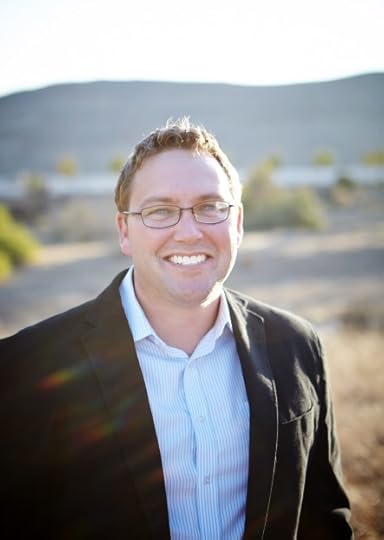
Justin Narducci of Lifewater International
Jay and I introduce the podcast and talk with my friend Justin Narducci of Lifewater International. I traveled with Justin to Kenya in 2010 and he really influenced my thinking on aid and development.
We talked about:
The water and sanitation crisis
Open defecation free villages and why many in NGO circles don’t want to talk about ODF (because poop) but why we must
The difference between aid and development
How to market development and what we can learn more mutual funds
Educating donors vs marketing to donors
Inputs, outputs, and outcomes and why there should be more focus on the latter
If I look more like a missionary or mercenary
Role of faith-based organizations in community mobilization and development
Justin’s path from MBA student to NGO leader
The high ROI of public health
To support the work of Lifewater visit lifewater.org
March 20, 2019
What difference can a story make?

I sent my friend, Rozy, in Nairobi $200. She was able to enroll in college.
$200 = college
I sent my friend Collins in Kenya $15. He sent me a note that he’d be able to eat for the month and focus on his studies.
$15 = a month of food
I’ve spent the last two years working on a book project (Where Am I Giving?) researching how to responsibly give our time, talent, and money to make the largest impact. Our donations can save and improve lives, so we should make them wisely. Sometimes when we donate to effective causes in places like Kenya our gift can make 100 times the impact as it can in the United States.
The entire time I was researching the book, I was haunted by a question:
But why should I give to The Facing Project?
The nonprofit I co-founded seeks to create a more understanding and empathetic world through stories that inspire action. A community chooses a topic to face. Two people–writer and storyteller–have a chat and then collaborate on a monologue from the storyteller’s point of view. Stories are collected in a book, shared online, and performed on stage.
I give money and time to The Facing Project. And I’ve worked to encourage others to support the project as well. Was I redirecting life-changing funds to an organization that simply produced stories?
What good can a story do?
Turns out a hell of a lot of good.
I give to The Facing Project because it creates more givers, inspires people to volunteer, educates a community on the issues people face, and mobilizes them to more effectively address the issues in their own community.
A story doesn’t feed a hungry student, but The Facing Hunger project at Kansas State University led to the creation of a food pantry on campus that feeds many students.
A story makes an exponential impact. Our assessment has shown that 90% of those who participate in Facing Projects are likely to volunteer for one of the partner organizations running the project, 80% are likely to donate, and 70% would likely join the board if asked. Each community project involves 50 to 100 volunteers and reaches a much larger audience through books, performances, and outreach.
Facing Autism books have been used to train Indiana State Police on working with individuals with autism. Was a situation deescalated because an officer approached someone with more understanding? Was a life improved? Saved?
Facing Sex Trafficking stories were used in a kiosk at the Atlanta airport to educate flyers on how to identify someone being trafficked. Was a trafficker thwarted? Was a victim rescued?
Times these impacts by 75 projects, 1,500 stories, and 7,500 volunteers.
Roughly, we turn every $10 in donations into one story. And the impact of that story multiplies because…
Stories inspire people to give.
Stories inspire people to volunteer.
Stories inspire people and communities to act.
Each story shared ripples out from a conversation between two people to wash over many more.
—
I’d love if you considered joining me to support The Facing Project.
February 14, 2019
Give the gift of loving-kindness this Valentine’s Day

I hate cards. It’s okay getting them, but I don’t like buying them. It seems so impersonal and as a writer, I feel like it’s just lazy.
The comedian Jim Gaffigan has a bit where he shops for a card: “I guess that is something I’d say. I guess I’ll sign here.” And then he hands the card to his loved one: “See what that other person wrote about how I feel about you.”
See, seems kind of dumb.
Maybe I’m too focused on the giving of the card and not what the most important part is: the shopping for the card. In those moments of shoebox greetings and Hallmark hell, you stop and think about someone you care about. Of course, it might not be someone you care about at all and just a social hoop you have to jump through. And in that case you’ll make the process as quick as possible, and not take the time, as you would for someone you really care for, to think about what this person really means to you. Now, that’s a gift.
So often I don’t sit down with loved ones and express how thankful I am for them, how much hope and love I have for them. I don’t actually take the time to let those thoughts and feelings breathe. And maybe I would if I took the time to buy more cards.
Or there is another way.
Buddhists practice Loving-Kindness meditation where you focus positive thoughts on a particular person – say, a friend, a family member, or an uncle who drank too much at your birthday party and made a fool of himself.
The positive thoughts don’t magically make your uncle less of a doofus, but do impact the way you feel about your uncle. Good thoughts push out the bad. Or good thoughts simply increase your love and compassion for a fellow human being.
When I researched Where Am I Giving? I spent some time meditating and researching meditation. It’s often referred to as a “practice.” Something that can’t quite be perfected like other intimidating pursuits such as medicine and law. Overall, I find the word meditation to be intimidating. But it doesn’t have to be.
The monk who talked to me after my six-hours of mediation in Burma told me that you can always meditate. While you are sitting in traffic. While you are walking. While you are at the dentist. It’s the simple act of observing and noticing your thoughts. And you can focus those thoughts on an object, a breath, a step, or another person. You can practice even if you aren’t sitting on a cushion in an incensed-filled room with monks. In fact, you could take 90-seconds and do it right now as you are reading this at your desk or…on the toilet.
Simply close your eyes and think about someone, on this Valentine’s Day, you love: your wishes for their health and happiness, their dreams and joys.
It only takes 90-seconds. Less than the time it takes to shop for a card written by a stranger who doesn’t love either of you.
—-
If you want to explore loving-kindness meditation more fully, this is a good place to start.