Kelsey Timmerman's Blog, page 4
August 26, 2019
Good People: Is Kiva the Shake Weight of Do-gooding
I first saw microlending in action while traveling with the Grameen Bank in Bangladesh in 2007. Then it was being sold as a silver bullet solution to ending poverty. I wrote about the experience in WHERE AM I WEARING and dedicate a whole chapter to examining microlending champion Kiva.org in WHERE AM I GIVING.
I shared my experiences in a chat with Jay on the Good People podcast. Listen, rate, subscribe.
Key takeaway: Lending isn’t giving.


August 15, 2019
Good People Fight for Peace: Rozy Mbone
Rozy Mbone, founder of The Legend of Kenya, is one of the most remarkable people I’ve ever met and she’s featured on the latest episode of The Good People podcast.
Rozy and her friends were all former gang members. There were few opportunities to make a living in their community, so they lived a life of crime surrounded by death, violence, prostitution, and robbery.
A woman named Selline Korir visited Korogocho and talked about peace and encouraged Rozy to leave her old life behind. Rozy did and soon the others followed and now they promote peace and dialogue in a community where death and violence are everyday life.
We often think our lives have to be in perfect order before we can make an impact. That’s bullshit. These folks prove that. The Legend of Kenya have been honored by USAID and Rozy even met President Obama. She chose the name of the group “because Legends live forever.”
Rozy has one semester of university left and needs $285 to finish. With a little help from us, we can cover her fee. If you’d like to help Rozy finish her Masters degree, email me kelsey@kelseytimmerman.com.
Here’s what Rozy wants to do with that degree:
“I am planning to be an investigator with an aim of supporting people from informal settlements of Nairobi; who are sometimes victims of poor judgment due to lack of proper evidence provided in court during their case proceedings.”
Ultimately, Rozy want to have a safe space for those who want to leave a life of violence and begin to live lives of peace. She shared her dream with me when I visited:
August 2, 2019
Good People: Why I’m wearing my Scout uniform for the first time
Remember that time I sent my Eagle Scout badge back because of BSA’s exclusionary policies? Well, if you do, you might find the fact that I’m wearing my Scout uniform and Eagle badge two decades after earning the rank somewhat surprising.
In this episode of Good People, Jay and I chat about it and everyday activism.
July 18, 2019
Good People aren’t White Saviors
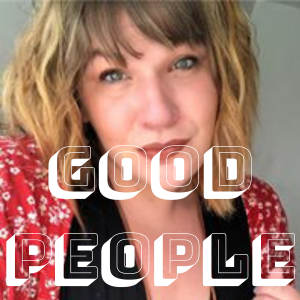
Kelsey Nielsen first traveled to Uganda to “love on babies” at an orphanage as a self-described “White Savior.” Then she started to ask questions about privilege and power and how best to help people. She is one of the founders of “No White Saviors” an Instagram account that has turned into a movement.
Our conversation on the Good People podcast went so long that I broke it into two parts. I could’ve asked her more questions. You can listen below or on Apple Podcasts or probably other places too. (I like doing the interviews, but not so much the administrivia a podcast or life requires.)
Part 1
Part 2
Show notes:
No White Saviors Instagram page
Africa Does Not Need More Orphanages : Kelsey N. wrote this guest post on my blog in 2012 about her early experiences at the orphanage in Uganda.
On Being White and Saving Africa: From 2014. Shows Kelsey’s evolution in her thinking from her 2012 post. You can definitely see the roots of No White Saviors in this essay.
Renee Bach wasn’t a doctor, but she still treated many patients in Uganda, lawsuit says : ABC news report on NWS and Renee Bach.
On A Mission To Make White People Uncomfortable : Nonprofit quarterly profile of NWS.
A Frivolous Gift or a Lifelong Memory: My story on visiting Fantasy Kingdom in Bangladesh
July 10, 2019
Building on the work of other journalists
Yesterday I chatted with a documentarian in Scotland who is working on a film on where food comes from. We chatted for an hour about chocolate, bananas, and coffee.
I think journalism is like science in that community members build on each other’s work. I always take the time to help out a fellow journalist. I think it’s part of the responsibility of this work.
I had a chat with Elizabeth Cline very early on in her process of writing Overdressed. I even introduced her to my friend Dalton, who appeared in WHERE AM I WEARING. I also chatted with Marcus Stern who did a really great piece on child labor in coffee for The Weather Channel and Telemundo.
July 2, 2019
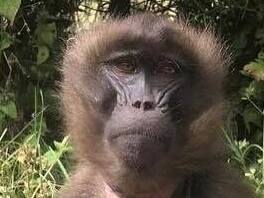
A baboon in Ethiopia is named after me
Check out this note from a student who read WHERE AM I EATING a few years ago:
Hi Kelsey! Thanks for the invite for The Facing Project. Can’t wait to look into it more! You spoke to my sociology class with Máel Sheridan at Hamline university after we read your book in 2015. Funny story, and long story short: I’m a Peace Corps health volunteer in Ethiopia and was trying to explain in local language the idea behind your books as it relates to my community (where are all these goods coming from? How did they get here?). A couple weeks later the live-in guard at my health center appeared with a pet baboon. It was then named after you in honor of your books. “Kelsey” spelt differently in afran Oromo means “socks,” so they think that’s funny too. Thought I’d take this opportunity to share, despite its strangeness. Good luck with your endeavors and thanks again for the invite and doing the work you do!
Here’s Kelsey, aka sock, the baboon:
June 28, 2019
Good People Give a Shit
Plastic straws! Recycling! Composting! Wishcycling! Climate Change! Fast Fashion! Products tested on animals! Micro-plastics!
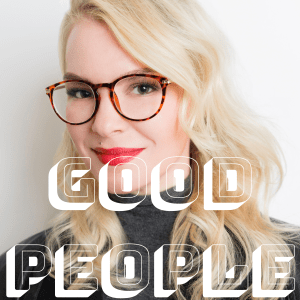
Ashlee Piper examines all of these topics and more in her book on sustainable living “Give a Sh*t: Do Good. Live Better. Save the Planet.”
Ashlee Piper is a political strategist turned vegan and eco-lifestyle expert, writer, and TV personality whose work has been featured in GLAMOUR, Refinery29, Apartment Therapy, Reader’s Digest, and on pretty much every network.
June 27, 2019
Hitchhiker’s Guide to Hitchhiking on Earth
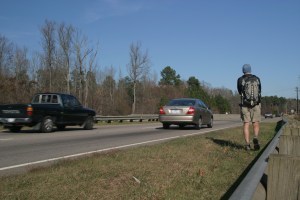
(Wrote this 10 years ago. You can tell because I was still using two spaces after a period.)
“I was told I was going to die nine years ago. Are you religious?”
My mind raced, what went wrong? Standing beside the road waiting for someone to give me a lift I had considered myself quite lucky when Don pulled over in his BMW. He sported a Rolex and was dressed nicely. Our conversation was interesting and pleasant and abduction was the farthest thing from my mind when he asked if I wanted to take a tour of his kiwi fruit farm and join him for tea. In hindsight, a Rolex and a nice car do not mean that a man is of sound mind.
“Let me assure you there is a god.” He squinted his eyes, and upon opening them stared off into the far corner of the room recalling another time and another place. When his eyes were closed I looked him up and down for any signs of lunacy: What I thought to be dress pants were actually sweat pants and they were held to his waist by a shiny leather belt. Don’s toenails were grotesquely long and yellow as they poked out through a hole in his socks. My eyes darted from the Rolex to the toenails; this man was troubled.
I discovered a scar hidden amid his loose, weathered face, which distorted his smile. I could not turn my gaze away and I was caught staring, “Chainsaw accident…near lobotomy.”
I uncomfortably picked at the grains of wood on Don’s kitchen table where he was about to begin his tale. I sipped my tea and settled back into the hardwood chair.
It’s a long complex story so let me summarize: Don was diagnosed with a tumor and given a few months to live. He was told by a stranger on the street in Malaysia while traveling on business that his tumor was gone. This mysterious stranger took Don “to his leader,” who just happened to be the one and only Jesus. Apparently before getting on with the whole Armageddon thing, Christ is living it up managing the career of his wife, a Malaysian movie star. From here Don makes pilgrimages to Mecca where he meets the Abraham and to Scotland where he denounces a Catholic Priest. His guide is Esan or Jesus (it depends on how well you know him), who feeds him signs via drawings and wood carvings in his sleep.
“Thanks for listening. Most people get mad and tell me that my story in unbelievable. I just like to share it. Would you like to spend the night?”
I pictured Don in the middle of the night wielding a knife carving wood in his sleep, “No, thanks.”
A country is made up of its people and you get to meet a wide variety of them while hitch hiking. When I spent two months hitching in New Zealand I got to know its people quite well, having received rides from a mountaineer, a helicopter pilot, a couple married for fifty years, a church youth group, truckers, businessmen, and many other unique individuals.
Hitchhiking is a remarkable and often cheap way to travel. Your travels don’t have to be planned around a schedule. When you want to leave, just pack up your things and stand beside the road. But it can be dangerous and must be approached with caution. In some countries and areas hitching may be extremely unsafe or very unreasonable, so ask around before setting out.
The anatomy of a Ride–
THE WAIT- Find a spot that is not in front of a place of business, but has ample room for a vehicle to pullover. Set your pack down and pull out your bag of cookies- they tide you over between meals and act as one more reason to pick you up. Take off your sunglasses and make eye contact with the drivers as they zip by. Hold out your hand, stick up your thumb, stand on your head, whatever it takes to get their attention.
THE DECISION- Once the car pulls over approach with caution. Begin sizing up the vehicle and its occupants immediately. Listen to your gut. Be the first to ask “Where are you going?” If your first impression of them is bad, no matter what they say you are going in a different direction, but “thanks anyway.”
THE RIDE- Earn your keep by carrying on a good conversation, give them cookies, and offer to buy them lunch. This is your chance to talk with the locals. Often they will go above and beyond. I have had rides buy me lunch, take me on tours of the countryside, and on one occasion take me sailboat shopping: “So Kelsey what do you think.” We were tucked into the berth of a thirty-foot boat.
I’ve only known you for a few hours, but I would go with the big expensive one. “Its nice.”
THE DROP- Figure out where the best place is for them to drop you; chances are your destinations will diverge at some point. I have had to get as many as seven rides in a single day to get from A to B. When you step out of the vehicle have your bag in hand if possible. They could easily pull away with all of your possessions if your bag is in the trunk. Thank them for letting you into their car and their lives for a short time. Hopefully you made their day a little more interesting.
The good thing about hitchhiking is the people. The bad thing about hitchhiking is the people. Be prepared to have the same conversation ride and ride again. Try to turn the conversation towards them- people love to talk about themselves. Avoid topics like religion and politics, the latter being very hard to do if an American (everyone wants to talk Politics with an American).
Keep in mind that some people are too nice, too weird, and some even carve wood in their sleep.
June 25, 2019
Good People help others find purpose
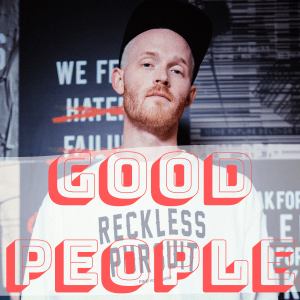
Nick Gross is an entrepreneur and philanthropist. He signed with a major recording label in his teens, was on a hit MTV show, and has worked with Ariana Grande. Nick chatted with me on the Good People podcast about helping students find their way, where drive comes from, and how social media inhibits self-discovery.
Learn more about Nick and his Find Your Grind initiative.
June 13, 2019
Do Good People Go on Missions from God?
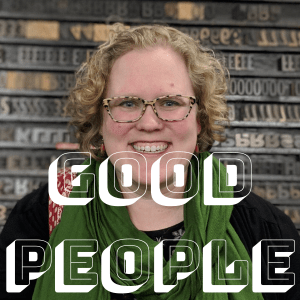
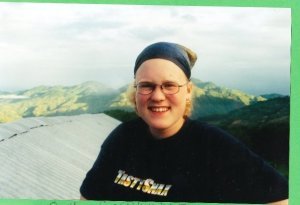
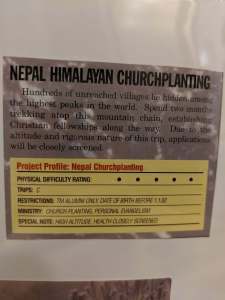
As a teenager in the 90s, Liz Boltz Ranfeld, trekked up mountains in Nepal carrying a leather bound Bible, intent on planting a church and winning souls. She looks back on the experience with regret, shame, and anger. Liz joins Kelsey and Jay to discuss mission trips, responsible travel, racism, and even the controversial work of Mother Teresa.
Liz in Nepal in 1999:
The description of her trip:
If you’d like to exam mission trips more, I recommend reading Toxic Charity: How Churches and Charities Hurt Those They Help, And How to Reverse It by Roberton D. Lupton.