Kelsey Timmerman's Blog, page 11
March 6, 2017
Bring me & other Indiana authors to your K-12 school courtesy of The Indianapolis Public Library Foundation
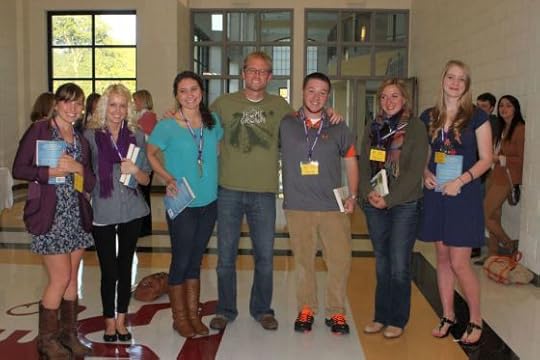
“What’s your favorite color?”
“Do you drive an El Camino?”
Students say the darnedest things. These were just a few of the questions I was asked when I visited the Friends School in Richmond, Indiana, two week ago. I talked for about 20 minutes, answered questions for about 20 minutes and then visited an English class,
(For the record, I don’t drive an El Camino. But why don’t they bring it back? It has all the strengths of a truck and a car. It’s like the Blade of automobiles.)
Last week I had the opportunity to speak in an auditorium in Greenville, Ohio, where I went as a student to watch others share stories from its stage. Whether presenting to grade schoolers, high schoolers, or college students I always try to imagine myself at that age sitting in the audience. What did I need to hear?
I’ve been trying to speak at more K-12 schools over the past few years. I’ve realized that middle schoolers on up are ready for the full weight of my stories, even the really heavy ones on child labor and slavery. As for the younger students, I enjoy sharing some of my adventures stories, the importance of experiencing other cultures, and writing. Always love dusting off my snake and shark stories!
The amazing folks at The Indianapolis Library Foundation are offering grants to Indiana schools to bring in winners of the Eugene & Marilyn Glick Indiana Authors Award (I won in the Emerging category in 2014). The Foundation covers the cost of the authors visit, meaning the schools get a free authors visit, and the authors get paid for their time.
So far I’m participating in this program as are Adrian Matejka, Helen Frost, Greg Schwipps, Barb Shoup, Norbert Krapf, Ray Boomhower, Mike Mullin, Bill Kenley, and Sarah Gerkensmeyer.
The Foundation is hoping to plan one author visit per month, except for in October when they are busy putting the finishing touches on the Indiana Authors Award event.
Interested?
Caity from The Library Foundation is ready to hear from you. Here’s what she sent me about how all this works:
If your school or classroom is interested, email Caity Withers with The Indianapolis Public Library Foundation at cwithers@indyplfoundation.org. The Library Foundation will then coordinate the author’s involvement and schedule appearances. You would work with the author to plan the topic and format of the appearance. We will be paying them a flat fee for their appearance and cover their mileage, but we ask that you provide them with a snack or meal depending on the length of the presentation. This is a virtually free opportunity for your school! To show appreciation to Glick family for this opportunity, we ask that you take a “thank you” picture or video with the participants.
We are always interested in hearing about what types of author outreach and literary opportunities are best for your students! Please direct any thoughts or inquiries to Caity Withers, Development Officer, at cwithers@indyplfoundation.org or at 317-275-4868.
Visit www.indianaauthorsaward.org for more information on the Eugene & Marilyn Glick Indiana Authors Award and to read bios of all past winners and finalists.
Meet the Authors
Here are the bios of all the participating authors:
Kelsey Timmerman – Kelsey is the author of “WHERE AM I WEARING? A Global Tour to the Countries, Factories, and People That Make Our Clothes” and “WHERE AM I EATING? An Adventure Through the Global Food Economy.” His writing has appeared in publications such as the Christian Science Monitor and Condé Nast Portfolio and has aired on NPR. Kelsey is also the cofounder of the Facing Project, a community storytelling project that connects people through stories to strengthen communities. He has spent the night in Castle Dracula in Romania, played PlayStation in Kosovo, farmed on four continents, taught an island village to play baseball in Honduras, and in another life, worked as a SCUBA instructor in Key West, Fla. His focus as a speaker is on globalization, poverty, education and empowering students to see themselves as active global and location citizens. His work is best for middle school, high school and college classes. For more information, visit www.whereamiwearing.com/kelsey-speaks/.
Adrian Matejka – Adrian is a graduate of Pike High School in Indianapolis and Indiana University in Bloomington. He earned his MFA in creative writing at Southern Illinois University Carbondale. His first collection of poems, “The Devil’s Garden,” won the 2002 New York / New England Award from Alice James Books. His second collection, “Mixology,” was a winner of the 2008 National Poetry Series and was also a finalist for a NAACP Image Award for Outstanding Literature – Poetry. His most recent book, “The Big Smoke,” was awarded the 2014 Anisfield-Wolf Book Award. “The Big Smoke” was also a finalist for the 2013 National Book Award, the 2014 Hurston/Wright Legacy Award and the 2014 Pulitzer Prize in Poetry. He is the recipient of fellowships from the Guggenheim Foundation and the Lannan Foundation and serves as the Lilly Professor /Poet-in-Residence at Indiana University in Bloomington. He is currently working on a new collection of poems, “Hearing Damage,” and a graphic novel. His focus as a speaker is flexible. His work is best for middle school, high school and college. For more information, visit www.adrianmatejka.com.
Helen Frost – Helen Frost was born in Brookings, South Dakota and lived in many places prior to moving to Fort Wayne. She graduated from Syracuse University with a degree in Elementary Education and a concentration in English. She received her Master’s degree in English from Indiana University and has taught writing at all levels, from pre-school through university. In 2009-2010 she received a National Endowment for the Arts Literature Fellowship in Poetry. Frost has been active in the Indiana community of writers in many ways, including participation in Ropewalk, Young Audiences of Indiana, the Mary Anderson Center for the Arts, the Writers Center of Indiana, the Indiana chapter of the Society of Children’s Book Writers and Illustrators, Arts United of Greater Fort Wayne, and as a speaker at the Butler Children’s Literature Conference, and at Indiana Library Federation Conferences. Frost has written books for readers of all ages. She has received the Robert H. Winner Memorial Award and the Mary Carolyn Davies Memorial Award from the Poetry Society of America. Her six novels-in-poems have won numerous awards, including, for “Keesha’s House,” a Michael L. Printz honor from the American Library Association; for “Diamond Willow,” The Mitten Award from the Michigan Library Association and the Lee Bennett Hopkins Award for Children’s Poetry, and for all her books, many “Best of the Year” honors and inclusions on state reading lists. Frost worked with the Fort Wayne Dance Collective for more than 10 years as part of an inter-disciplinary artistic team in a violence prevention program incorporating creative movement, percussion, visual arts and writing. She also worked with the Fort Wayne YWCA and the Fort Wayne Youth Theatre to help high school students write about how they have been affected by violence. The students’ writing was the basis of a play and an anthology, both entitled “Why Darkness Seems So Light.” Frost has set programs based on her different books, but can adapt her presentations to different age groups and group sizes. Her work is best for elementary, middle and high school students. For more information, visit www.helenfrost.net.
Greg Schwipps – Greg Schwipps was raised on a working farm in Milan, Indiana. He graduated from Milan Jr. /Sr. High School in 1991 and attended DePauw University, where he majored in English Writing. Following his graduation from DePauw, he attended Southern Illinois University at Carbondale for his MFA in Creative Writing. After receiving his MFA, Greg returned to DePauw, where he teaches primarily creative writing classes. His creative nonfiction articles and essays appeared in outdoor magazines like Outdoor Indiana, Indiana Game & Fish and In-Fisherman. His first novel, “What This River Keeps,” was published by Ghost Road Press. He is also the co-author of the 2nd Edition of “Fishing for Dummies.” A lifelong fascination with fishing and rural living has deeply influenced his life and work. His focus as a speaker is flexible. His work is best for middle and high school.
Barb Shoup – Barbara Shoup is the author of seven novels: “Night Watch,” “Wish You Were Here,” “Stranded in Harmony,” “Faithful Women,” “Vermeer’s Daughter,” “Everything You Want” and “An American Tune” and the co-author of “Novel Ideas: Contemporary Authors Share the Creative Process” and “Story Matters.” Her short fiction, poetry, essays and interviews have appeared in numerous small magazines, as well as in The Writer and The New York Times Travel Section. Her young adult novels, “Wish You Were Here” and “Stranded in Harmony” were selected as American Library Association Best Books for Young Adults. “Vermeer’s Daughter” was a School Library Journal Best Adult Book for Young Adults. She is the recipient of numerous grants from the Indiana Arts Council, two creative renewal grants from the Arts Council of Indianapolis and the 2006 PEN Phyllis Naylor Working Writer Fellowship. She was the writer-in-residence at Broad Ripple High School Center for the Humanities and the Performing Arts for 20 years. Currently, she is the executive director of the Indiana Writers’ Center, an associate faculty member at Indiana University-Purdue University at Indianapolis and an associate editor with OV Books. Her focus as a speaker is flexible. Her work is best for high school. For more information, visit www.barbarashoup.com.
Norbert Krapf – Jasper native, Indianapolis resident and former Indiana Poet Laureate Norbert Krapf was inspired to start writing poetry in 1971 by the poems of Walt Whitman and the songs of Delta blues great Robert Johnson. Norbert released a CD with jazz pianist-composer Monika Herzig, “Imagine,” and performs poetry and blues with Gordon Bonham, his guitar teacher. Of Norbert’s 26 books, 11 are full-length poetry collections, including the recent “Catholic Boy Blues: A Poet’s Journal of Healing,” “American Dreams,” “Songs in Sepia and Black and White,” “Bloodroot: Indiana Poems” and “Invisible Presence.” He has also published a prose childhood memoir, “The Ripest Moments,” edited a collection of pioneer German journals and letters from Dubois County and translated early poems of Rainer Maria Rilke and legends from his ancestral Franconia. Norbert is emeritus professor of English at Long Island University where he directed the C.W. Post Poetry Center. He holds degrees from St. Joseph’s College and the University of Notre Dame and was Fulbright Professor at the Universities of Freiburg and Erlangen Nuremberg in Germany. He received the Lucille Medwick Memorial Award from the Poetry Society of America, had a poem included in a stained-glass panel at the Indianapolis Airport and held an Arts Council of Indianapolis Creative Renewal Fellowship to combine poetry and the blues. Garrison Keillor has read his poems on The Writer’s Almanac. His focus as a speaker is on the healing powers of poetry. His work is best for high school. For more information, visit www.krapfpoetry.com.
Ray Boomhower – Ray E. Boomhower is senior editor of the Indiana Historical Society’s quarterly popular history magazine Traces of Indiana and Midwestern History. A native of Mishawaka, Boomhower graduated from Indiana University in 1982 with degrees in journalism and political science. He received his master’s degree in U.S. history from Indiana University, Indianapolis, in 1995. Before joining the Society staff, he worked in public relations for the Indiana State Museum and as a reporter for two Indiana daily newspapers, the Rensselaer Republican and the Anderson Herald. In 1999 he received the Hoosier Historian award from the Indiana Historical Society. His books have also been finalists in the annual Best Books of Indiana competition sponsored by the Indiana Center for the Book, as well as finalists in the annual Benjamin Franklin Awards from the Independent Book Publishers Association. Along with numerous articles, Boomhower is the author of the books “Jacob Piatt Dunn, Jr.: A Life in History and Politics, 1855-1924,” “The Country Contributor: The Life and Times of Juliet V. Strauss,” “Destination Indiana: Travels through Hoosier History,” “‘But I Do Clamor’: May Wright Sewall, A Life, 1844–1920,” “‘One Shot’: The World War II Photography of John A. Bushemi,” “Gus Grissom: The Lost Astronaut,” “The Sword and the Pen: A Life of Lew Wallace,” “The Soldier’s Friend: A Life of Ernie Pyle,” “Fighting for Equality: A Life of May Wright Sewall,” “Robert F. Kennedy and the 1968 Indiana Primary” and “Fighter Pilot: The World War II Career of Alex Vraciu.” His focus as a speaker is on Indiana history. He is best for middle and high school. For more information, visit www.rayboomhower.blogspot.com.
Mike Mullin – During high school, Mike Mullin served as a Congressional Page for the Honorable Andy Jacobs, Jr. and later spent a year in Brazil as a Rotary Youth Exchange Student. He paid his way through college working full-time for Kids Ink Children’s Bookstore, graduating in three and a half years with a degree in Political Science and minors in Latin American Studies and Economics. He spent two years computerizing Kids Ink’s operations and opening a new store, then returned to school to earn a Master of Business Administration from Indiana University. While studying for his Masters, Mike worked as a reference assistant for the IU library. After graduation, Mike worked in brand management for Procter and Gamble, marketing Pampers diapers. Later, he moved to Spectrum Brands, where he founded the Terminate brand. After Spectrum, Mike launched his own remodeling company. In addition, he has continued to work for Kids Ink as a consultant and part-time helper during his various other careers. Mike wrote his first novel in elementary school and has been writing more or less non-stop ever since. He is the author of the “Ashfall” trilogy, which has won awards from National Public Radio, Kirkus Reviews and the American Booksellers Association. Mike holds a black belt in Songahm Taekwondo. Mullin has set programs he presents to different age groups. His work is best for elementary, middle and high school. For more information, visit www.mikemullinauthor.com/author-visits/.
Bill Kenley – Bill is an English teacher at Noblesville High School and the author of “High School Runner (Freshman),” a fictional love letter to high school cross-country running. “High School Runner” is Kenley’s debut novel and the first in a series of four planned books highlighting the protagonist Sherman Kindle’s journey through school and the lessons he’s learned through running. Three times voted by students as his school’s most inspiring and influential teacher, Kenley writes for a primarily young adult audience. A graduate of Miami University with a master’s in English education from Ohio State, Kenley is also an avid runner with multiple Boston Marathons with a fifty-mile trail run under his belt. His focus as a speaker is on sports, identity and goal-setting. His work is best for middle and high school. For more information, visit www.billkenley.com/speaking/.
Sarah Gerkensmeyer – Sarah’s story collection, “What You Are Now Enjoying,” was selected by Stewart O’Nan as winner of the Autumn House Press Fiction Prize, longlisted for the Frank O’Connor International Short Story Award, and chosen as winner of Late Night Library’s Debut-litzer Prize. A Pushcart Prize nominee for both fiction and poetry and a finalist for the Katherine Anne Porter Prize in Short Fiction and the Italo Calvino Prize for Fabulist Fiction, Gerkensmeyer’s stories and poetry have appeared in American Short Fiction, Guernica, The Massachusetts Review, Hayden’s Ferry Review, B O D Y, Hobart, and Cream City Review, among others. Her story “Ramona” was featured in a Huffington Post piece on flash fiction and also chosen for the 2014 Best of the Net Anthology. Gerkensmeyer was the 2012-13 Pen Parentis Fellow. She received her MFA in fiction from Cornell University and now lives with her family in Greencastle. She has taught creative writing courses for twelve years. Her focus as a speaker is on writing about the unknown, memoir writing and the publishing industry. Her work is best for high school and college. For more information, visit www.sarahgerkensmeyer.com.


March 5, 2017
Is the Pope wrong about beggars?
This week Pope Francis offered what to do when we pass beggars on the street: We should give to them without a thought. We should look them in the eye and maybe shake their hand. To give without engaging is robbing them of their human dignity.
The Catholic News Service reported on the Pope’s comments:
People who don’t give money to the homeless because they think it will be spent on alcohol and not food should ask themselves what guilty pleasures they are secretly spending money on, Pope Francis said.
“There are many excuses” to justify why one doesn’t lend a hand when asked by a person begging on the street, he said in an interview published the day before the beginning of Lent.
But giving something to someone in need “is always right,” and it should be done with respect and compassion because “tossing money and not looking in (their) eyes is not a Christian” way of behaving, he said.
Is he right?
I haven’t read the transcript of exactly what he said, but I feel that the focus on what the panhandler does with the money should play less a part of whether to give or not than what you should do with yours and the responsibility each of us has to make an impact through our giving.
Planned Acts of Kindness > Random Acts of Kindness
First, if your giving strategy is to randomly give when someone asks you for money on the street, at the checkout, at your front door, or because of a random post you see on Facebook, I think you need to rethink the way you give. We need to be more intentional on what causes we support and how we support them.
Random acts of kindness are swell, but alone they pale in comparison and in impact to planned acts of kindness.
Make your money have a greater impact
You only have so much money to give. And choosing to give to one person is a choice of not giving to another. A dollar to a beggar on the street in Indianapolis could have 100 times the impact if you gave it to an effective nonprofit in Malawi. The dollar could go to fighting root causes of homelessness and poverty in your community, if you gave it to an organization working to address them.
This week I attended a benefit lunch for Second Harvest Food Bank in Muncie, IN, where I live. Clarence, who has worked in the warehouse for seven years, gave me a tour. If I were to go to a grocery store and spend $500, I could buy several hundred pounds of food (I don’t remember the exact numbers here), but through the partnerships and model of Second Harvest that $500 could buy more than a tonne of food. That food is used to fight hunger, but it’s also used in programs that support those who are food insecure in other ways, such as connecting parents with teachers in schools through distribution events.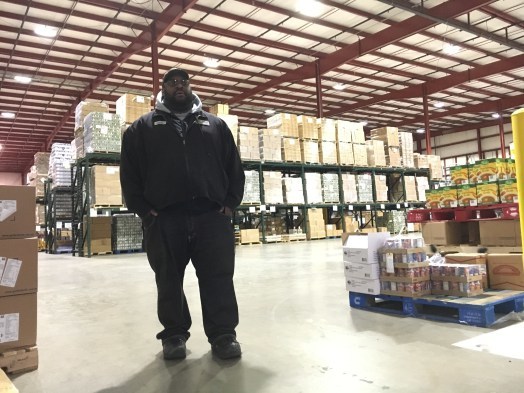 So I could give to the guy next to the Interstate holding a sign, or I could give to Second Harvest and impact way more people. I’m not against people doing both, as long as they aren’t just doing the first.
We should SEE & LISTEN
The homeless shouldn’t be invisible, we shouldn’t ignore them, but if we really want to improve their lives, we should think about them more than when they are in our line of sight. We need to do more than simply shake their hands and look them in the eye. We need to listen to them.
Brenau University did a recent Facing Project on homelessness. The students listened and helped lift the voices of the homeless in their community. Read their stories, hear their voices.
The Pope’s advice seems to be more about us, our compassion, what we should do when confronted with a beggar, than about how to genuinely help those who are beggars or homeless.
Compassionate and respectful giving may be always right in the eyes of Popes and Gods, but that doesn’t guarantee it will do any good.
What do you think? Do you give to beggars?
February 28, 2017
Union City Pride

I haven’t watched a high school basketball game from start to finish since my wife hung up her sneakers in 1998. (Annie was #44 in the playbook and #1 in my heart, although I was too cool to admit it.)
That changed this past Saturday when I cheered on the Union City Lady Indians against Wood Memorial in the Class 1A State Championship.
“I don’t know why I’m crying,” I said to Annie after a girl from Union City drilled a three out of the gate. (To qualify crying: I had a single tear welling up in each eye. It wasn’t like I was ugly crying.)
“I had tears running down my face watching The Facebook video of them leaving town,” Annie confessed.
Our hometown is Union City, Ohio, our school, the Mississinawa (yep, it’s spelled wrong) Valley Blackhawks. Our town was divided by the Indiana-Ohio state line. Our rivals were the Union City Indians.
Union City is a small town (2 towns actually) with a combined population of 5,000 with two mayors, two fire departments, two schools, and two time zones (part of the year).
I remember playing in a junior high basketball game against the Indians that ended in an all out brawl.
When we looked across the state line, we were rivals, but when we looked at the outside world, we were one. From the same small town. Many of our parents and grandparents went to school together or played against one another. Many of the factories that employed them left town taking pensions and futures with them. Leaving us.
Why do people stay in a small town when opportunity abandons them? Because it’s home.
The Indians drilled a jumper and went up 5 to nothing.
I didn’t know most of the girls on the team, but I knew their families and their stomping grounds and what our town had been through. I went to school with a few of the girls’ parents. I knew my piano teacher was cheering them on and so was everyone else who made up my entire world the first 18 years of my life.
Five to nothing would be the Lady Indians’ biggest lead. I think the game was tied at 7 and then Wood Memorial dominated with floor spacing, ball movement, and shot selection. They were a well-oiled machine. Union City was grit and hustle. They blocked shots, fought after loose balls, and somehow managed to hang around until the fourth quarter.
My hometown was written on their jerseys and they were on TV, and for a few minutes punched a perennial state-contender in the face. They had worked hard and were playing in a stadium where the Pacers play. I’ve seen LeBron James play on that floor. That floor was good enough for LeBron and it was good enough for the Lady Indians.
I think that’s what brought on the tears. They stood on a stage worthy of kings, and they played like winners. They belonged there. They knew it. They weren’t dwelling on the past or what might’ve been.
They were winners from a town that had experienced too much losing, and for two hours they reminded me and others just how proud we were to be from Union City.
February 26, 2017
Facing Project on Nightly News in Flint
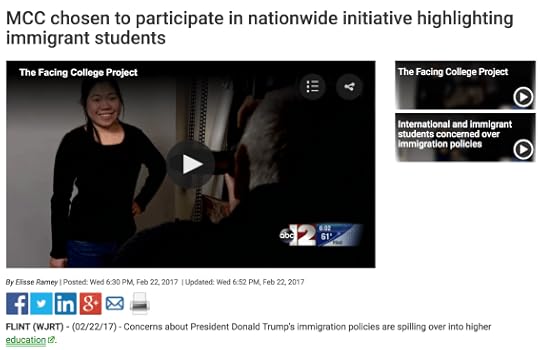
Mott Community College is running a Facing College project focusing on the stories of immigrant students. They recently received coverage on Flint’s ABC channel 12.
Everyone has an opinion of what should be done politically about immigrants, even people who don’t even know or have conversed with a single immigrant. MCC’s Facing Project seeks to correct that.
Read the story and watch the coverage of their project here.
Here’s a video of the writers and storytellers getting to know each other…
February 25, 2017
Rattling our Lightsabers

Tonight I had a lightsaber duel outside with Harper set to Darth Maul’s theme. It was sort of like this…
I like to think our badass dusk lightsaber fight was a show of force to our neighbors who are always popping off gunfire. Sometimes I think it’s a competition of which neighbor has the loudest guns and the most ammo.
Well, now they know that we have two lightsabers and the Force on our side.
February 2, 2017
My friend/grandma Frances
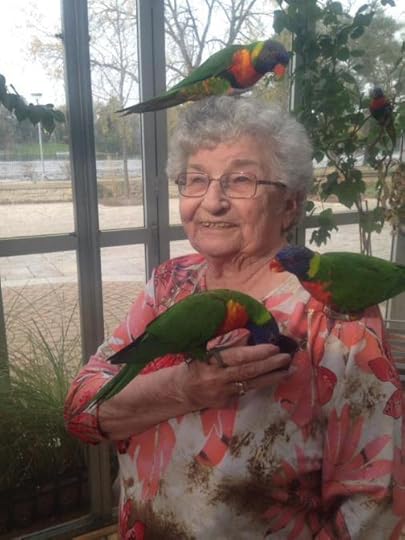
My grandma, Frances (Copeland) Wilt, looked like Bob Dylan and laughed like Popeye. Two inarguable facts that I’ve kept to myself until now.
She died on Monday morning in Rockford, Illinois, while I was eating donuts and drinking coffee in Muncie, Indiana.
The smell of coffee reminds me of her and Grandpa. They were the only reason our house had a coffee maker growing up. When the coffee maker came out, I knew they were on their way and grandma would be loaded down with paper bags of garage sale toys–He-Mans and Han Solos and some of the weirdest toys you could imagine.
They’d pull up in their multi-Brown RV and it was like a whole planet just showed up in the driveway. When it wasn’t another world, the RV was the least aerodynamic spaceship of all time. If you’ve seen Spaceballs, it was exactly like LoneStar’s Eagle 5.
Grandma was an explorer. She and Grandpa traveled the nation in that RV. We received postcards from all over, and once even pens full of ash from Mt. St. Helens. My brother, Kyle, and cousins, Brice and Brandt, and I joined a few of their expeditions to Myrtle Beach, Disney, and the Smokey Mountains. I wrote about the RV for a piece that was published in the CS Monitor 11 years ago. Grandma helped me factcheck the story.
I can’t help but think those trips in the RV and postcards and trinkets from all over, had something to do with me wanting to travel. Grandma was a traveler.
She traveled in books, reading more than anyone I knew. Clive Cussler, James Michener, Panther in the Sky, It, Dean Koontz. She’d recommend books to us that were more mature than our parents were comfortable with. I learned a lot about sex from witches and Anne Rice.
Grandma escaped into Charles Bronson and Chuck Norris films. I watched a lot of Walker Texas Ranger shows with her. Makes me wonder if Grandma wanted to be someone she wasn’t or somewhere she never could be.
Her dad was an alcoholic. Her mom worked a lot of jobs to make ends meet. I traveled around the world to meet garment workers to write a book about them, and then when I got back, Grandma told me she was one. As a kid, Grandma worked at a factory making bibs in Versailles, Ohio.
After Grandpa died, she traveled to Branson, Nova Scotia, and Alaska with friends.
When I, or my cousins graduated from college, she gave us each a $5,000 gift. I spent mine on a one-way ticket to Australia that was the first leg of a six-month world tour. I’m not sure Grandpa would’ve approved, but Grandma was proud. I traveled just to travel. I never knew it would become something. Eventually I started to write about my travels and Grandma loved reading my stories that became a weekly column in a newspaper. She read them all.
Society told me that I should get a real job, and start a career, but Grandma told me I should write a book. I wrote two, and she read them both and kept them in her apartment after she downsized from her house.
She could bake the hell out of a pie, but she wasn’t the stereotypical warm-hearted grandma who you could talk to seeking wisdom. She cheated at board games. She was more of a friend than a grandma. She didn’t have to worry about us running off at a museum; we had to worry about her following her curiosity away from the responsibility of watching her grandkids.
She wasn’t warm or gentle. One time she gave me a suppository. One time…and…never again… she gave me a suppository.
She called me Kels. I called her Gma.
In an age of housewives and homemaking, when women were supposed to fill a certain role, I wonder if she wanted more. Action? Adventure? Travel? Follow her curiosity wherever it took her?
Grandma put her head down and never looked back. No apologies. No deep reflections. Life was ahead of her. It was a flaw and a strength.
I’m glad that she’s gone; she didn’t belong tethered to anything let alone oxygen. She suffered from emphysema but didn’t act like it. Bob Dylan wrote a song titled “Death is not the End.” I always thought grandma would literally die laughing . . . laughing like Popeye.
Wherever Grandma is I know she’s got better places to be than looking down upon all of us.
She was proud of me when others weren’t, and I am proud to be her grandson.
A house on wheels provides tons of adventure
This article first appeared in the CS Monitor on June 12, 2016. My Grandma just passed away and I’m dusting it off in remembrance of her and her love of travel.
My cousin Brice is armed with the bow and arrow. Of the two of us, he is the better shot and the more ruthless. I have a plastic bag filled with paper “snaps” that go bang! when thrown on the ground.
A foolish woman thought she could steal a few moments of rest alongside this winding road in the Great Smokey Mountains. Little did she know that lurking behind the shade tree she had parked under were two 7-year-old boys about to attack.
She is asleep. This is going to be easy. First, I will startle her awake by throwing a handful of snaps at her car. If her car doesn’t explode into a burning inferno, we figure she will stumble out to see what’s happening. That’s when deadeye Brice will take aim and launch an arrow at her. If everything goes as planned, she will have an arrow suction-cupped to her forehead.
The plan seems so perfect to us. There is just one thing we don’t account for … Grandma!
Brice readies the arrow, I let fly the snaps. Walking purposefully in our direction, Grandma shouts, “Kelsey! Brice!”
Busted.
We are banished to opposite ends of the RV.
It’s strange what memories are forever etched in your mind. A child’s imagination blends with reality, and you can’t be sure what actually happened.
Some memories I am certain about. Riding shotgun with Grandpa in the monstrous house on wheels was a special – although somewhat frightening – privilege. It was scary enough watching him drive a compact car on a flat, open country road, let alone drive a seven-ton RV around sharp mountain curves. But his lemon drops, sweet and sugary, calmed my nerves.
Breakfast in the RV was a special time. We would eat from single-serving boxes of sugar-loaded cereal. Sometimes fights would break out over the Fruit Loops.
After breakfast, Grandpa would have us stand on a stump. He would pull out his black plastic comb – they don’t make plastic that hard or sharp anymore – and pull at the tangles in our hair. I can still hear the ripping sound. Such pain is not easily forgotten.
It was on trips in the RV with my grandparents when I first learned that the adventure is often found in the journey more than in the destination.
The motor home barreling down the Interstate was much more than an RV – it was an entire world: The blanket-covered bed in the back was a swampland. Under the bed we found a mysterious cave; on the card table, a vast desert.
On occasion, Brice, my brother, Kyle, and I would turn our attention to the outside world of motorists. Brice liked numbers more than McDonald’s Happy Meal toys with imaginary missiles, and we would help him inventory license plates according to their state of origin. He’s now a banker.
I remember that the first time I walked into the ocean, I was holding my grandpa’s hand. I don’t think I have had a better day at the beach since. We rented small inflatable rafts and played in the surf – and played in the surf.
We called the large waves Big Johns: “Look out, here comes a Big John.” By day’s end, my stomach was sore from the canvas on the rafts. Kyle had a sunburn. That night, a storm shook the RV so hard we sought shelter in the shower house. I thought the palm trees were going to blow away.
Of course, Grandma and Grandpa couldn’t always take their grandchildren with them when they traveled. We had school. But they were always sure to send us postcards and souvenirs such as pens filled with ash from Mt. St. Helens.
Every summer they would stop by our house in the RV on the way to or from somewhere. Grandma would empty paper grocery bags of treasure from garage sales across the nation. Kyle and I would play in the RV with our new toys.
With each visit, there would be more states filled in on the outline of the USA in the RV’s back window. Grandpa made it to 46 states before he died. Grandma, after a trip to Alaska, is up to 47.
Grandma, Grandpa, and their RV introduced us to a larger world beyond the fields of corn and beans in Ohio – a world with mountains, oceans, and volcanoes.
Even though a few of the memories have faded over the years, some things – like grandmas and grandpas – are unforgettable.
December 31, 2016
What my autistic son taught me about happiness
It’s that time of year when we are constantly reminded through ads, resolutions, and unrealistic expectations that we are less than others. People are more organized, fitter, harder workers, better looking, and overall live better lives being better people than you and me.
Feel better? Are you overcome with hope and positivity?
Perhaps the happiest human I know is my son Griffin. This might surprise some people because Griffin, 5, is on the autism spectrum. The stereotype for someone on the the spectrum is that he or she becomes easily frustrated by people, lights, sounds, a break in routine. This can lead to anxiety and sometimes depression.
One night recently Griffin woke us up, not crying, not whining, but laughing an uncontrollable, body trembling belly laugh.
Every night around 1 -4 AM Griff crawls into bed with us. In the morning when he wakes, often, even before he opens his eyes, he’s smiling.
Who does that? How can he be so happy?
To be sure, there are challenges. His happiness is predicated on his environment. Listening to the radio in the car is not allowed. Too many questions about his day could lead to tears. He doesn’t want anyone to hold a door open for him because he wants to open it. There are certain “Griffin rules” that must be followed. Ones that we push and the therapists at his ABA clinic push for his long term development.
But most of the time Griffin is happy.
And I am happy with Griffin . . . until the comparisons begin.
I see a five-year-old having a conversation with a parent, and my heart drops a bit not knowing when he’ll be able to tell me about his day.
At his preschool graduation this past spring, where most of the kids Griff’s age would be moving on to Kindergarten, Griff was the only one who had to have a teacher assigned to him. He still threw his “diploma,” made random sounds into the mic, and jumped off the stage. In a room filled with 200 people, I saw through their eyes, and I saw Griffin as less.
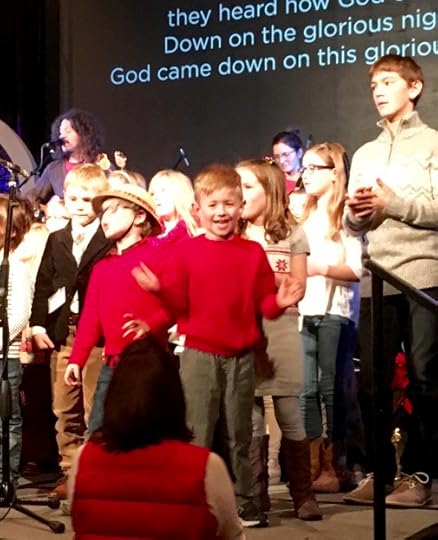
At a Christmas program this month, once again, of all the kids ages kindergarten through 5th grade, Griff was the only one who had to have a helper (Holly, who we love!). He stood in front with the biggest smile on his face, vibrating with joy. When the part of the song referenced baby Jesus sleeping in the manger, Griff curled up in a ball on the floor with his hands tucked beneath his head as if he were sleeping. When he spotted me in the audience a few rows back from the front, his smile got even bigger. He pointed at me, hopped up in down, hollered, “Daddy!” and then ran off stage toward me. We heard from several people how much they enjoyed watching Griffin that morning. We did, too.
He wasn’t doing exactly what he was supposed to be doing all the time. He wasn’t being “normal,” he was being Griffin.
And when I focus on Griffin and the love and joy he gives me, he is more than I could’ve ever imagined. But when I look at the other kids his age singing the words, doing what they are supposed to be doing, playing the way they are supposed to be playing, moving through the world the way they are supposed to be moving through it, I feel for Griffin. I feel for him because someday he may see himself as less. I feel for him because sometimes in the shallows of comparison, I see him through the eyes of others as less.
But with every smile, laugh, hug, joke, and kiss, Griffin reminds me that he is perfect. He is enough. That comparisons to others only make us feel inferior or superior, and both positions are petty places from which to interact with people.
He reminds me happiness is only relative if we allow it to be.
Other people should inspire us to evolve, not see ourselves as less, shaming us to change.
Griffin reminds me that happiness is up to us. Happiness is absolute. And I’m absolutely honored to be his dad.
December 28, 2016
In defense of “f**king 2016” + My New Year’s wish for you
Something bad happens toward the end of the year, trigger the “Fuck 2016” posts on social media just like the Fuck 2015…2014…2013…” posts. What year are we not cursing?
When were the years great, again? You know the years void of terror, when no one died, wars weren’t fought, economies didn’t collapse, poverty ceased to exist, all were equal, and disease was too tired to disease. I’m waiting….
This year, we reached peak “Fuck this year” absurdity after John Glenn died. John Glenn, a man who flew 59 combat missions in WWII and 63 combat missions in the Korean War including a few with future baseball hall of famer Ted Williams, John Glenn, the first human to orbit the Earth, a U.S. Senator, the oldest human at 77 to fly into space, a man who was married to his high school sweetheart for 73 years died at at the age of 95 and was buried in Arlington National Cemetery as a national hero.
“How could you 2016?!”
He was 95! He survived an incredibly dangerous life and died of old age. We shouldn’t mourn his death or curse the year of it, but celebrate his amazing life.
Look, 2016 didn’t kill anyone. We are just out of touch with mortality. I hate to out pessimism our culture of pessimism, but we are all going to die. Let that fact, and these reminders of our mortality, drive you to embrace your family, friends, moments, your work, and your life.
If you are down on 2016 because Donald Trump was elected president, wait until 2017 when he is actually the president! If you were a pessimist in 2016, you are going to be a pessimist in 2017 no matter what happens or who dies.
Let the injustices of 2016, inspire your work and life into 2017.
Still, I get why some are happy to see the end of the past 12 months.
I have a friend whose stomach hasn’t allowed her to eat for like four months. Genocides are taking place in Syria, Sudan, Iraq, Somalia, Central African Republic, Myanmar, Nigeria, and Burundi. Parents buried their children. A son was killed in a mass shooting. Someone took their own life. Someone went bankrupt.
For those facing these circumstances, I wish that an actual end comes with the arbitrary year’s end and they step into a peaceful new beginning. Yet there is no magical second between December 31st 11:59 PM and January 1st 12:00 AM that rids us of our demons and absolves the world of its problems.
Fellow space travelers, I wish you the absolute best during our next 365-day orbit around our star. And if shitty things happen in 2016, I hope you’ll find hope and comfort in the good, and if that’s not possible, I hope you’ll inspire others to work toward change or live meaningful lives.
The possibility and hope of a Happy New Year aren’t embedded in January 1st. They are in you. And it is my New Year’s wish that you’ll find them.
December 23, 2016
Should we be for child labor in Bangladesh?
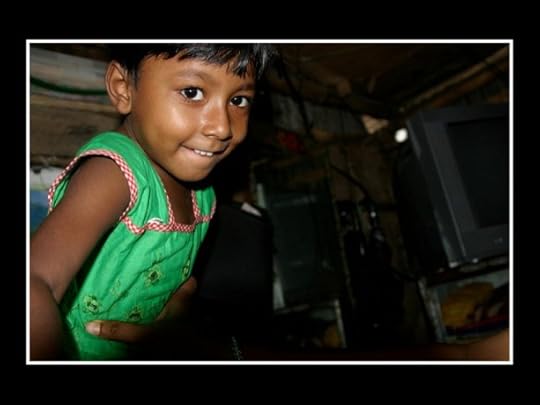
The worst thing isn’t that we live in a world where child labor exists, it’s that we live in a world where mothers and fathers who love their children send their kids off to work for the day because they have to. They have to rely on their income.
At least that’s how I feel about child labor. It’s not as clear cut of an issue as some make it out to be. In fact, a group of academics came out against the UN’s stricter child labor rules calling them a damaging mistake:
“Banning children from work doesn’t bring them back into school; in fact, it might do the opposite if they were working to pay their school fees.
“For some children it’s a matter of rational economics. We have years of evidence that show that work doesn’t end a childhood and often can enhance it, can create a solidarity. In some countries in Africa, and in India, we are seeing collectivisation movements of child workers, a unionisation where they are trying to participate in politics, be heard, as opposed to this being a story of victimisation and oppression.”
The Guardian recently featured a report on child labor in Bangladesh:
Children are driven into work by necessity. Poor families send their sons and daughters out to work to make ends meet: the survey found that the wages earned by children equalise the average incomes of households with and without working children…
Bangladesh has a good record on human development. Poverty levels have fallen and it is close to getting every child in primary school. It has taken steps to achieve gender equity. Put simply, plenty of countries could learn some lessons from Bangladesh.
The report involved 2,700 households and found that 15% of children between the ages of 6 to 14 worked. Forty-five percent of 14-year-olds worked. Fifteen percent of children were not in school and not working. Children who worked did so on average for more than 42 hours per week. Two-thirds worked in the garment industry.
Regardless of our opinions of child labor, obviously the more educated a nation’s populace, the brighter future it will have. The Guardian proposes a solution: mandatory school between 6-14, and students receive direct payments that would equal their typical wage–$45/month.
The United Nations would like to ban child labor by 2025. I agree with the intentions of the ban, but the only way that this will actually be achieved is if we end the necessity for child labor on a family level.