Kelsey Timmerman's Blog, page 13
May 24, 2016
All Because a Girl Loved to Read
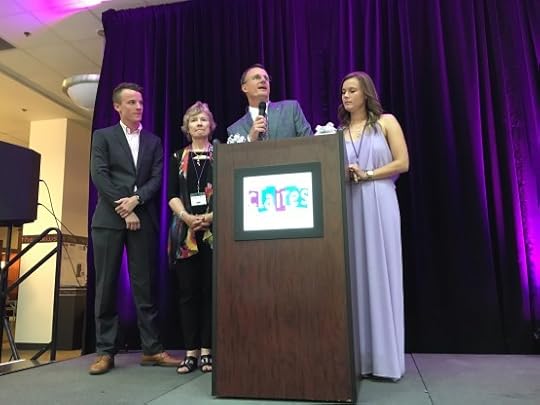 The Rubini family
Ten-year-old Claire Rubini loved to read. After she suddenly died from a previously unknown heart condition at summer camp in 2000, her parents, Brad and Julie, wanted to spread her love of reading. And boy have they.
Last week I had the chance to see how Claire’s love of reading has led to thousands of kids in the Toledo-area receiving free books and reading awards.
Brad and Julie started a children’s book festival they called Claire’s Day with the purpose “to honor [Claire] in a special tribute to her love of reading, storytelling, music, encouraging others to read and simply having fun with friends.”
The Claire’s Day staff, a team of volunteers along with Read for Literacy, arrange for authors to visit kindergarten through 8th grade classes over the course of the week leading up to a dinner on Friday night and the book festival on Saturday.
Middle Schoolers are older than I thought
I visited two middle schools: Beverly and Gateway in the Maumee area. I mainly visit colleges and high schools until the last year or so. In the past when I chatted with students junior high or younger, I talked about traveling, other cultures, and being a writer. I shared stories about encountering snakes in the jungle and staying at Castle Dracula, while holding back on the stories of child labor, slavery, and the other harsh injustices my work often highlights.
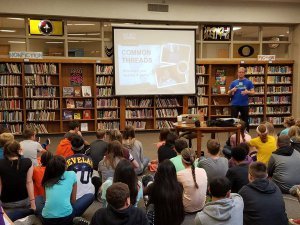 But a month or so ago, I visited a class of 6th graders at Marion Local elementary where my junior high English teacher was filling in. I took these stories head on. In the middle of sharing the story of Solo, a slave on a cocoa farm, I paused and asked, “Is this okay? Is this too heavy?”
The teachers told me to go on. It has been a few moons since I was a middle schooler myself and I think I wasn’t giving them enough credit. Also, I think middle schoolers are better informed about the injustices of the world than I was. They are more prepared to talk and to learn about these issues. They can handle it.
And so could the students of Beverly and Gateway. A few of the several hundred middles schoolers I talked to chattered and fidgeted during my talk, but they laughed when they were supposed to laugh and got real quiet when the air got heavy as we all felt the weight of certain moments of the stories. Those moments are magic.
Authors celebrating readers
I was one of 15 authors who participated in Claire’s day. Between us, we visited more than 90 schools. Most of the other authors wrote children’s or middle grade books. One of my fellow authors asked me what reading level my books were written at. To which I responded “uhh…”
I was a bit of an odd duck at the festival. We sat at tables at the exit of the makeshift Barnes & Noble store where students could use their vouchers to purchase one of our books and then have them signed. Most of the students receiving awards were into picture books not books on global slavery.
The volunteer staff took pity on me a few times. They printed off a sign for me to hang on my table. A few of the other authors had posters, banners, life-sized cutouts of their characters. I had a borrowed copy from B&N of each of my books as my display.
At one point someone told me, “You look lonely.”
And then after that I did my best not to look lonely, which isn’t easy.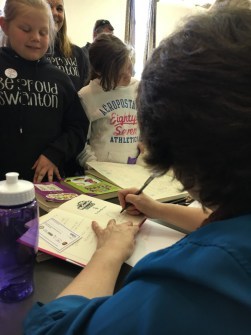
I sat next to Ruth McNally Barshaw an amazing author/illustrator behind the Ellie McDoodle books. She had a never-ending line of kids waiting to have their books signed. In each one, she drew a picture of the kid in the book as if they were a character in Ellie McDoodle.
“Look at me,” Ruth would say as she studied their faces. “Okay, how long is your hair.”
The joy and wonder on one kid’s face exceeded my joy quota for the day, and I got to witness this over and over again.
I talked to many of the parents in Ruth’s line. Some of them talked about how hard they and their child had worked this year to improve their reading (awards are given based on improvement). One mother was moved to tears as she watched Ruth sign her daughter’s book.
All those kids. All those books. All those readers. It was wonderful.
And it’s all because a little girl loved to read.
—
Julie Rubini, now an author herself, sums up Claire’s Day’s partnership with Read for Literacy as such:
“I can honestly see Claire, smiling from ear to ear, pumping her fist in the air and saying, ‘YES!’”
Through my work and the work with the Facing Project, I often have the honor of hearing about the most challenging parts of people’s lives. I’m constantly reminded that it’s our lowest, toughest, most challenging experiences that prepare us the most to help others.
It was a pleasure to participate in Claire’s Day, and it was uplifting to meet Julie and Brad, and Claire’s siblings, Kyle and Ian. They turned an unimaginable tragedy into an amazing celebration of family and reading.


May 19, 2016
The new Facing Project trailer
This captures 30% of the last four years of my life and 100% of what I’m about: connecting people through stories to strengthen communities.
Watch. Share. Join a project. Start a project.
May 12, 2016
Syrian children flee ISIS for sweatshops in Turkey
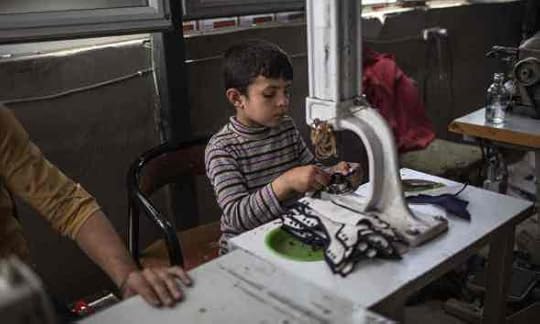
A small boy makes shoes in the factory. Photograph: Ahmed Deeb
Syrian refugees have been flooding into Turkey, but what do they do when they make it there? Some work in apparel factories.
“He can make 400 shoes a day. He’s a real man.”
That quote is from the manager at a shoe factory about his 13-year-old Syrian worker. According to the story in the Guardian, more than ⅓ of the workers at the factory were Syrian children.
From the article:
According to Unicef, more than half of Turkey’s 2.7 million registered Syrian refugees are children – and nearly 80% of them are not in school. Across the wider region, Unicef estimates that half of school-age Syrians – 2.8 million children – have no means of accessing education.
The 13-year-old man in the story is a boy named Hamza. War makes men out of boys and unfortunately this is the case for Hamza:
“Hamza’s life is a good example of why this is all happening. Two years ago, his father was reportedly beheaded by Isis fighters in northern Syria, so his family fled to Turkey. There, his mother works as a housekeeper for the family’s elderly landlords, in exchange for a lower rent. But with Hamza’s father dead, the family has no other means of earning a money. So to put food on the table, he and his younger brothers, Tarek and Hammouda, work in this local shoe factory. Their daily wage is less than $10 – lower than the retail price of every pair of shoes they make.
“I would love to go to school, I miss reading and writing,” says Hamza. “But if I go to school, nobody is going to bring food to my home.”
There are realities in this world too harsh for many of us to process. We don’t want kids making our clothes or shoes or farming our cocoa, but many kids do exactly this. Calls for banning child labor in these industries are often nothing more than proof of our naivete and our inability to understand the realities faced by many. Child labor is a symptom of war, poverty, no access to education, and the extreme lack of opportunities that exist for many people around the world.
The Syrian children and their parents are desperate and desperate people are easy to exploit. Even though working in a factory might be a kid’s best opportunity that doesn’t make it right. Many of these kids report sexual, physical, and verbal abuse.
I have no idea of what will come of Hamza and the thousands of other children like him. I have no idea how anything about this situation can be fixed. But I do know that we live in a complex world and it is our duty as glocals to recognize that complexity and that this exists…
May 10, 2016
Farmer/cartoonist fired for holding mirror to Big Ag
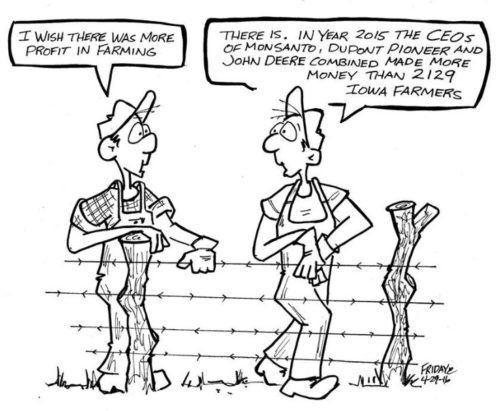
Rick Friday is a farmer and a cartoonist. Farming is his muse or at least it was his muse until he he poked Big Ag in the eye with a recent cartoon.
The cartoon as described in the NY Times story on his firing:
The cartoon shows two farmers, in overalls and skewed baseball caps, chatting at a fence.
“I wish there was more profit in farming,” one farmer says.
“There is,” the other replies. “In year 2015 the C.E.O.s of Monsanto, DuPont, Pioneer and John Deere combined made more money than 2,129 Iowa farmers.”
After 21 years drawing more than 1,000 cartoons at his kitchen table after milking his cows, Farm News fired Rick. A “seed company” pulled its advertising dollars from the publication and Rick was gone and his editor reprimanded.
Rick announced his firing on Facebook:
I am no longer the Editorial Cartoonist for Farm News due to the attached cartoon which was published yesterday. Apparently a large company affiliated with one of the corporations mentioned in the cartoon was insulted and cancelled their advertisement with the paper, thus, resulting in the reprimand of my editor and cancellation of It’s Friday cartoons after 21 years of service and over 1090 published cartoons to over 24,000 households per week in 33 counties of Iowa.
I did my research and only submitted the facts in my cartoon.
That’s okay, hopefully my children and my grandchildren will see that this last cartoon published by Farm News out of Fort Dodge, Iowa, will shine light on how fragile our rights to free speech and free press really are in the country.
Marion Nestle offers this action step on her post on the events:
How to help? Consider a quick note to Farm News about how badly Americans need a free, independent press to discuss farm issues.
Here’s the publisher’s contact information:
Larry Bushman
lbushman@messengernews.net
Answering to the nearsighted overlord of quarterly profits
Honestly, I don’t think any action will right this wrong other than elevating Rick’s voice and the plight of many farmers who are working harder to make less. Follow Rick on Facebook.
This story hits me in two sensitive areas: 1) As a writer, journalist, and someone who works in publishing; 2) As a rural American.
I write and speak about industries with loads of money: the clothing and food industries. I’ve pitched articles critical of these industries to publications that receive advertising dollars from these same industries. Publishers may try to explain that they give editors freedom to operate without thinking of advertising. But that’s absolutely not the world we live in today. And it’s depressing.
That’s why I feel that public media (NPR, PBS, etc.) and foreign media outlets (BBC, Al Jazeera) need to fill in the gaps of our media diet.
Whether Big Ag or Big Media, both answer to the nearsighted overlord of quarterly profits. People and planet aren’t factored in. There are no room in either for an Iowan farmer who has been drawing cartoons since he was a kid, who is wondering why he is getting paid less while the companies he supports as a customer are getting paid more.
In Where Am I Eating? I shared one of my favorite quotes on agriculture from writer Bill McKibben: “What’s the purpose of agriculture to grow food or grow money?”
We could ask a similar question about media.
What’s the purpose of media to inform or to sell ads? To educate or to make money?
When it comes to the food or media we consume, each of us needs to examine what we are being fed.
May 9, 2016
Where the hell do dreams come from?
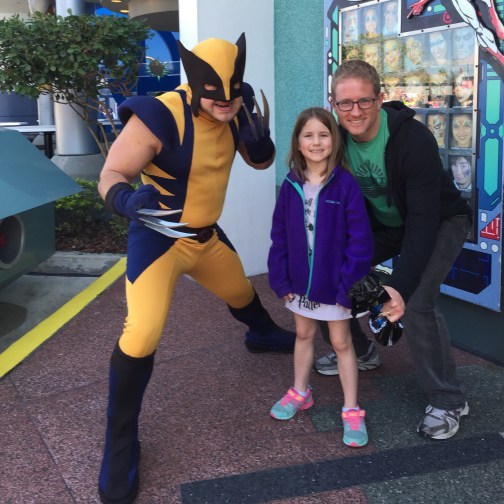
I haven’t eaten Domino’s for years, so I’m not sure why I was dreaming about Domino’s, but I was. And I wasn’t just normal me, but SuperMe, as in I was a superhero with the ability to fly.
So Super Kelsey was looking for a way to earn a few more bucks. Domino’s apparently in this dream world was delivering pizzas via an uber-like delivery service accessible from the Domino’s app. If you had time to deliver pizzas, you logged into the app and saw what opportunities were available. Different deliveries earned you a different amount. I suppose this had to do with distance and the size of the order, maybe, but I really have no idea. None of this exactly makes sense.
I thought, “I’m a flying superhero, and I can deliver a lot of pizzas and make a lot of money.”
I picked a delivery that was to earn me $30. There was a catch. In the “special instructions” field the customer had written that I was to pick up cupcakes as well.
First, I had trouble flying. I had to concentrate really hard to do it. When I finally made it to the cupcake shop, it was the wrong one. Ultimately, I showed up with the pizza and cupcakes a few minutes late, which meant I earned nothing. Although, I did earn a pretty big hit to my superhero ego.
All of this begs the question: Where the hell do dreams come from?
After further examination, I actually think I’ve got this one.
Domino’s: Last night I was watching the Spurs vs. Thunder game and saw a Domino’s add with a guy folding boxes with superhuman efficiency.
The Sharing Economy: I wasn’t thinking about uber, but yesterday I did try to convince my wife that we should list our bedroom basement and a campsite in our woods both on Air BnB.
Why I was dreaming at all: Most nights I sleep like a deadman. But last night every kid in the house (all two of them) ended up in our bed, and everyone knows that 80 pounds of kids take up 97% of a king-sized bed.
Final Random Thoughts:
There was a Domino’s box in the fridge at my office today. Where did it come from? What does it mean? Am I actually a superhero at night while I’m sleeping and took the pizza to my office to eat my damaged ego back to superherodom?
Domino’s and every other pizza delivery place should really be doing this.
May 1, 2016
360-degree tour of garment factory
What questions would you ask if you could visit if a garment workers home, commute, and factory?
via LaborLink
April 25, 2016
Class reads EATING, connects to farmers in community garden
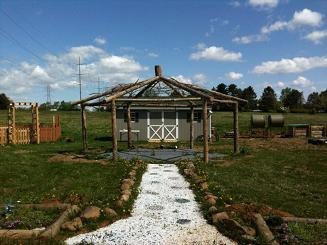
A few years ago Northampton Community College in Bethlehem, PA, invited me to campus to speak about my work. Since then, Dr. Pamela Bradley has been using my books in her English class. I Skype in with her class once per semester. (If you use any of my work, I’d be happy to Skype with your class for free, although Pam sent me a box of locally produced goodies!)
This semester Pam had the students read EATING while also working at the campus community garden.
She was kind enough to share more about the experience:
I teach Academic Literacy, a developmental reading and English course at Northampton Community College. This semester my students have had the experience of gardening while reading Where Am I Eating? We have an organic community garden on campus which has made this opportunity possible. It has been an absolutely fantastic learning experience for these young adults. Many of my students are either from Philadelphia or New York City and have never had any exposure to growing food.
In the Spring semester while reading about the hardships of many of the farmers in Where Am I Eating?, my students actually planted their own food and experienced the farmers’ frustrations and challenges, as well as their rewards. We spent one class planting seeds indoors, then went several weeks later to study the seedlings’ progress. In April, the students planted their vegetables and flowers in the college’s community garden. During the last week of class, we went to the garden to see how their “babies” were adapting to their new outdoor environment. After each of these visits, the students wrote a journal entry reflecting on their physical and emotional responses to working with their plants. There was also a service learning component to the course: the students were required to spend one hour during the first week of April in the community garden helping the garden manager.
These students have learned that farming is a science and that not all plants grow as expected. They have come to appreciate the needs of farmers in other countries that they have been reading about with regard to the importance of education about growing. In addition, my students have learned the surprising reality that plants are sharing the earth with us; we are not sharing the earth with them. Plants can survive without us, but we cannot survive without them. My students have a new appreciation for plants, growing, and the experiences of the farmers described in Where Am I Eating? I very highly recommend this hands-on opportunity to help bring to life the experiences of the farmers Kelsey has introduced us to in Where Am I Eating?—if even in such a small way!
April 24, 2016
Her name was Laboni, she died making our clothes.
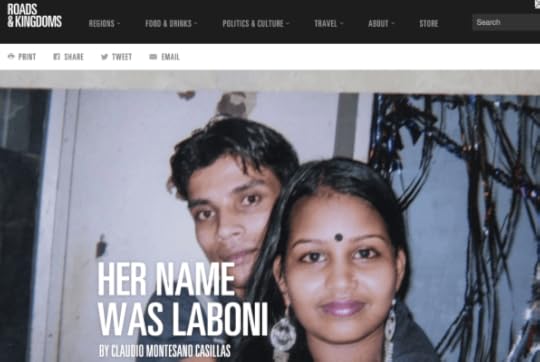
Three years ago the Rana Plaza factory in Bangladesh collapsed killing 1,134 people and injuring more than 2,500 more.
Sometimes when I deliver the information above in a lecture I say,”killed 1,134 workers.” As if a worker is a cog without a family, friends, and a complex life just like ours. I cringe at the word workers passing my lips. It’s vital that we all remember that people make our things.
Sons. Daughters. Fathers. Mothers. Aunts. Uncles. Best friends. These are the lives that were snuffed out by the unregulated manic growth of the Bangladeshi garment industry trying to feed consumers ever-hungry for cheaper prices and throwaway fashions.
Today marks three years since the disaster, and I hope you’ll join me in doing one thing. Just one.
Promise?
Read this story, “” by Claudio Montesano Casillas in Roads&Kingdom. Take in the photos of the village Laboni left to seek the opportunity of the factories in Dhaka, see where she went to school, meet her husband and her father. Learn a little about the life of 1 of the 1,134 victims.
Know her name.
Laboni.
April 13, 2016
The Limo at the Daddy-Daughter Dance
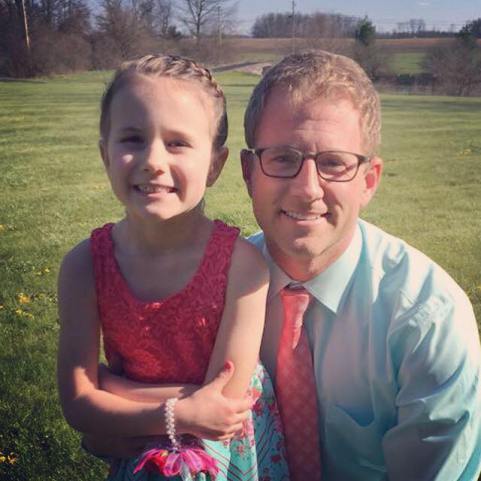
“Man, who comes here in a limo?” I said, to my fellow dad, Zach, as we left the daddy-daughter dance with our daughters.
Maybe I’m reading too much into it, but there seemed to be some pressure at the daddy-daughter dance to “out-dad” one another. This dad wore a suit. That dad wore a bow tie. This dad has some dance moves. That dad is on the phone.
But a limo?
As I turned to watch it drive by, I saw it slow in front of a dad and daughter well within earshot of my comment. As soon as I saw them, I knew that there was probably some super special reason that this dad came with his daughter in a super special limo. I was convinced he was dying or deploying, or even worse, she was dying and this was some kind of Make-a-Wish situation. I immediately felt like a jackass.
“Cool…you got a limo.” I said something like that trying to do damage control.
“Ha,” the dad said, as he waited for the limo to pass. “If I see that guy, I’ll punch him in the face.”
There were all types of dads at the daddy-daughter dance, but I’m pretty sure we all loved our daughters.
—
Some other thoughts:
The girls mainly ran around, ate cookies, and jumped up and down. Why am I paying for dance lessons? Harper did dance the whip and nae-nae though.
The world is too fascinated with alliteration. Why does everything have to start with the same consonant when we are naming a thing? The human ear is too attracted to alliteration, and we end up with names that don’t make any sense.
I mean the daddy-daughter dance makes sense, but it is awkward. What if a girl doesn’t have a dad? What if she has two moms? What if the girl identifies as a boy or a boy as a girl? I know we can drive ourselves nuts over such matters, but little girls (and kids in general) can have sensitive hearts and they should be protected.
Have any suggestions for other names?
I mean the “Legal Guardian – Daughter Dance” sounds pretty lame.
How about: Girls Night, Girls Night Out?
April 7, 2016
Act: Support Blueberry farmers in Peru
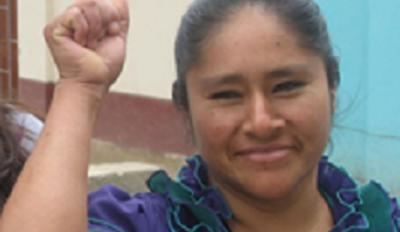
(Stand with Santos Celestina Carranza, General Secretary of SITETSA, a union supporting blueberry farmers in Peru)
If you trust my opinion on these matters click here and fill out the form at the bottom of the page.
I’m thankful for the global food economy. One of the reasons is because I like to eat blueberries year round. But the luxury of being able to eat out-of-season produce comes with a cost. A cost that blueberry farmers in Peru are currently paying.
The U.S. Department of Labor recently released a report on how farm workers are being mistreated–hired on short term contracts, unions being busted by employers–all which are in violation of the trade agreement between the United States and Peru.
Even Nike isn’t cool with how things are going, joining Life is Good, New Balance and other companies to send this message to the president of Peru:
While we celebrate Peru’s success under your leadership, we are also concerned that Decree Law 22342, which allows ‘non-traditional’ exporting companies to employ workers on fixed-term contracts, acts to encourage and condone violations of labor rights and therefore poses an obstacle to the proper application of our codes of conduct.
The International Labor Rights Forum (one of my go-to resources on acting to support global farmers and factory workers) has joined the Make Fruit Farm campaign to put pressure on the agribusiness company Tal S.A. They recently fired all 9 union leaders after refusing to negotiate renewal of their collective bargaining agreement. And in an uber-dick move the company had the gall to seek out criminal charges against the leaders for getting paid time off for work related to the union and publicizing the company’s labor violations.
Please join me and using the tool on the ILRF’s page to send a letter to Tal S.A..