Alicia McKay's Blog, page 15
June 8, 2021
Wednesday Wisdom: Are you working too hard?
Welcome to another Wednesday Wisdom. Every week, I share with you what I'm thinking about life, work, and leadership. This week we're talking about performance.
When I started my consulting business in 2014, things were tight. I had two young kids at home, a mortgage to pay, and a husband on apprentice wages. Every fortnight was a financial and logistical juggling act as I put in crazy hours to get things off the ground.
Fast-forward five years, and we were no longer battling the bank. I had a steady flow of clients and I’d published my first book. I was on the speaking circuit, known for my expertise in strategy and change. So, I should have been working fewer hours and feeling a lot less stressed… right?
Ha. Nope. That's not how it works. I was busier than ever, and I'd become an insufferable control freak in the process. A workaholic, a shocking delegator, and battling to set good boundaries around my time and energy.
I'm far from healed. It's an ongoing job, but I am getting better. More importantly, I work with lots of people facing the same kind of frustration and overwhelm - they've hit their goals, they've got what they wanted... yet here they are, busier and more stressed than ever.
The problem is when we accumulate responsibilities and tasks, without letting anything go. We're holding more in our heads and hands than ever, and if we don't have the skills and confidence to let things go - by automating, delegating or cancelling regularly - then we'll quickly hit capacity.
It can be hard to see a better way. Everything is important, and everything needs doing. It's particularly difficult to see a better way when you're so bogged down in the operational stuff that you can't zoom out.
As a helpful start, I often ask my mentees to keep a time and energy diary for a week. An accurate one, with no lies. Track what you're spending your time on, but also mark with a little arrow what gives you energy, and what takes it away. Then, go back through at the end of the week and highlight the stuff that made a real difference to your work and life. Odds are, there are some clear themes in where the value lies... and you're probably not doing enough of those things.
You'll always be busy. But if your days are gobbled up by $10 tasks and you don't have the space to develop new ideas and build important relationships, you'll spin your wheels in the same place, in perpetuity, until you eventually slide backwards.
This stuff doesn't happen by accident. Space is always hard to make, and it doesn't get easier with time. But if you don't do it now, you won't ever find it. So give it a go.
Track your time, track your energy, make some space to think about it... and let me know how you go!
Til next week.
A
PS - for more on the skill of perspective in tricky times, check out this interview on Medium. It's a long one, but a good one.
Medium - Five things you need to be an effective leader in turbulent times


June 1, 2021
Wednesday Wisdom: Are you flexible?
You know that saying: that courage isn't an absence of fear, it's feeling fear and doing it anyway? I had a dose of that this week. I had a couple of articles go live as part of the publicity for my new book, which exposed a bit more of my personal life and background than I'm used to (which, I am aware, is saying something).
Both articles were about flexible leadership, and one in particular - on Womens Agenda (link below) jumped into a time machine and took us back to 2010, when I was a broke student and single mum, and life was a bit bloody tough.
It's a weird feeling, putting those things out there into the world. I've been left feeling a little exposed, though not necessarily in a bad way. One thing I was aiming for, in sharing some new parts of my story, was to break down the "hero" narrative that frustrates me. You know: "Rags to riches! Homeless man becomes CEO! Find out how you can overcome all your bullsh*t and be amazing forevermore!"
I don't reckon it's helpful. When we only share the lightness, we do everyone a disservice. People's lives are rarely simple, and the same stuff that's a blessing is generally also a curse. Having a job is great for money and meaning, but annoying for freedom. Having kids is lovely for family and joy, but a right pain in the ass most days. And so it goes.
What both of these articles talk about is what I consider to be at the core of strategic leadership - the ability to accept all of this reality for what it is, and make choices from there, rather than waiting for things to reach an unattainable ideal. Flexibility is at the core of our ability to respond to change, and it asks three things of us:
Awareness - What's going on around and inside me?
Agency - What can, and should, I take responsibility for?
Resilience - Can this make me better?
When we're not flexible, we're inevitably frustrated. We're thinking that one day we're finally going to "get there" and all of our trauma, neurosis, and bad habits will be cured. Thinking like that sets us up for disappointment.
Nobody else has got there. The most successful people you know, on whatever metric you're choosing to use, are all battling their own stuff.
They work too much, or their relationships are hard, or their job is on the line, or their health is dicey, or their boss is mean, or their kid is an asshole, or they don't have many friends, or they had a terrible childhood, or they're sad about themselves, or they're uncomfortable in their own skin... the list goes on.
The ticket to success isn't getting rid of all the stuff. It will only be replaced by new stuff - which might be better, or might be worse, but will be there. The ticket is being aware of the stuff, doing your best to learn and grow, and rocking on.
You're never stuck. You've always got the opportunity to transform and grow. But you'll also always probably be battling with something, and while that might be cold comfort, at least you can be safe in the knowledge that you're not alone.
We're all messed up, man. Let's just be the best version that we know how to be, which will change as we do, and keep cracking on.
‘til next week.
A
PS - check out these articles for more on flexible leadership
CEO World - Flexible leadership: How to bend without breaking
Womens Agenda - How a turbulent life made me a great entrepreneur (an an insufferable control freak)
May 25, 2021
The Mistrust Epidemic
Estimated reading time: 18 minutes
 IN THIS ARTICLE:
The COVID fallout has triggered a creeping crisis of mistrust
How to spot a trust deficit
What happens when we don’t have trust at work
How and why things got so bad
How and why things aren’t all bad
How trust works
How to rebuild trust in your workplace.
A creeping crisisI’m fortunate to work with some incredible companies and people – ambitious, passionate leaders who are dedicated to their jobs and work their butts off to get things done. When they call me, it’s usually because something isn’t working quite right. They’re finding it hard to agree on their next steps, or they’ve noticed a gap in their capability.
For years, this has usually meant I’ve had a lot of variety in my work: everything from teaching policy advisors how to build more influence, working with executive teams to get strategic clarity, designing programmes to accelerate organisational change, or training eager consultants to facilitate better meetings.
But over the last six months… that’s started to shift. While the reasons for calling might still be different, there’s been a consistent underlying issue common to almost everyone I speak to: a lack of trust.
 How to spot a trust deficit
A trust deficit shows up in lots of different ways, depending on your organisation or the size of your team. For some, it might be that meetings are taking longer, and people aren’t sharing or speaking up. In other workplaces, it might be that staff seem to be checking in more, and are less confident making judgement calls in case they get it wrong. Oftentimes, it’s slow or one-sided decisions – lots of relitigating, not a lot of action. People say things in the room, but they don’t take action back at their desk.
Sometimes it’s super sneaky. I see things like: people only reporting good news to their boss, because they’re afraid to show the truth. Or even trickier: nodding-head syndrome - a lack of conflict or disagreement at the surface, masking secretive politics and manuevring behind the scenes.
What all of these situations have in common is a lack of overall safety. People don’t trust themselves, each other, or their leaders, and when that reaches a tipping point, the backslide happens quickly.
You can tell when you’re in an environment like this, even if you can’t name it. People are unreliable, and they don’t talk to each other. The vibe changes all the time, and it’s stressful. People don’t own their mistakes, they don’t help each other out. After a while, work feels like a guessing game.

DIAGNOSE YOUR TRUST LEVEL

Are job expectations clear? Do people understand exactly what they need to do?
Are meetings enjoyable and productive - or slow and energy-sapping?
Is there an us/them mentality with the leadership team? Does it feel like leaders play favourites?
How much gossip is there? Is promotion and progress more about ‘who you know’ than following the rules?
Are people trusted to take on new responsibilities? How often do you need to check in with your boss?
The impact of mistrustTrust ultimately drives performance. Left untreated, mistrust spreads like a disease, infiltrating all of our choices and conversations and making it impossible to do great work – or feel good about it.
When we don’t nab a deficit in time, the cracks in our foundation start to show up everywhere. We see:
The loss of spark and joy in even our most dedicated performers, sending engagement downward. Over half of employees say trust has an impact on their mental health, career choices and sense of belonging.
Information withholding, as people cling to what gives them power and stop sharing openly with others
Trouble collaborating on joint projects, slowing progress and making innovation impossible
Exhaustion and overwhelm, caused by bottlenecks that could be solved by delegation… if only people felt safe handing things over
Productivity dropping off, as decisions are re-hashed or not made at all
Climbing absenteeism, leading to an eventual spike in turnover, as people plot their exit from an environment they don’t enjoy anymore. Over a quarter of employees have left a job because they didn’t feel trusted.
 When did things get so bad?
Struggles with trust-building are nothing new. In Five Dysfunctions of a Team, published in 2002, (the brilliant model that Meetings that Matter is closely tied to), Patrick Lencioni points to trust as the absolute foundation of building a powerful team.
As Lencioni describes, the lack of trust is about a fear of being vulnerable – which stops us from developing as a team, engaging in productive conflict and delivering useful outcomes.
Lencioni talks about what happens when people hold back from asking for help, giving advice or sharing their learning. As people become increasingly uncomfortable working together, achieving a common goal gets further out of reach as we respond poorly to problems and stop supporting each other.
Ultimately, mistrust kills an organisation from the inside out – and we’ve known this for a while. In its 2016 global CEO survey, PwC reported that 55% of CEOs think a lack of trust is a threat to their organisation’s growth. It’s nothing new.
But things are getting worse – and not just at work. This is a bigger issue, spreading across communities. Working off my hunch, I started digging for information – and it’s not pretty. The 2021 Edelman Trust Barometer has revealed “an epidemic of misinformation and widespread mistrust of social institutions and leaders across the world.” They identify a “failing trust ecosystem unable to confront the rampant infodemic, leaving the four institutions – business, government, NGOs and media – in an environment of information bankruptcy and a mandate to rebuild trust and chart a new path forward.”
According to the latest report, the pandemic has accelerated an erosion of trust at all levels around the world, most evident in—unsurprisingly—the US and China.
Why, though?There’s a bit going on, out there. Some of the most significant factors underpinning our current mistrust epidemic include:
COVID economics
Job uncertainty
Pandemic fatigue and chronic stress
Remote working
Media mistrust
New workplace expectations.
COVID ECONOMICS
The pandemic has had a huge economic toll, even in countries like New Zealand and Australia who’ve escaped the worst of it. In Australia, GDP per capita took a massive hit – peaking with a 7% quarterly loss in June 2020, with unemployment reaching 7.5%. In New Zealand, it took longer, but we officially entered a recession in September 2020, with GDP contracting by a massive 12.2% in the June quarter. In the US and Europe the toll has been far worse.
JOB UNCERTAINTY
With heavy travel restrictions, closed workplaces, rapid restructures and job losses, our sense of safety at work has been shaken. The impact on trust – and performance – makes perfect sense. When people feel insecure about the safety of their job they’re less engaged, because their energy is focused elsewhere. Employees harbouring fear about the stability of their work are, on average, 37% less engaged than their safer counterparts, according to Gallup research. Given less than a third of employees are truly engaged in their job as it is, according to the same research, that’s a worry.
While things are now looking up for our economies, our jobs may not be any safer. In the latest Mercer report, 71% of Australian HR leaders expect COVID-19 to impact their business negatively, with restructuring or workforce changes the top priority for investment in 2021. 66% of Australian organisations surveyed are planning a restructure – compared to just 45% globally. This has trickled down quickly to employees, with a December 2020 Hays report indicating the 74% of employees are planning to look for a new job in 2021.
PANDEMIC FATIGUE AND CHRONIC STRESS
We’re super stressed. When the pandemic hit and we needed to mobilise quickly, most of us did. We worked harder than ever to rapidly shift – moving services online and staff into remote environments – and for many people, the dial got stuck in hero mode
Hero mode is an amazing thing, and can bring an exceptional productivity boost – but it’s not sustainable. The lag effect of powering up and powering through is hitting home, with people now feeling exhausted and overloaded.
In many workplaces, people feel an expectation to be constantly at their best, and this is eroding trust between leaders and staff. Burnout is on the increase globally, and we’re no safer on this side of the world. New research out of AUT suggests 11% of New Zealand workers are facing burnout thanks to stress and overwork.
It’s a dangerous place to be. According to research by Accenture, burned out employees are 63% more likely to take sick days and are 2.5x more likely to leave their jobs. Mental health issues are on the rise, with more employees accessing EAP programmes as pandemic fatigue hits. People have been expending huge amounts of extra energy dealing with the struggles and changes of a new lifestyle, and it’s exhausting - which lowers our resilience and boosts negative feelings. We’re more on edge, we’re more anxious, and, if we’re not careful, this puts us in a negative self-perpetuating cycle of chronic unhappiness.
REMOTE WORKING
People who started new jobs in the midst of lockdown often speak of the difficulties of adjusting to a work environment and getting to know their colleagues online – and it’s not limited to new hires. Zoom might be great for juggling family responsibilities and reducing the pressure to wear work outfits, but it comes at a cost.
Virtual meetings can be challenging environments, especially when we use them over a long period of time – and the impact on our working relationships is starting to show. Without the intermittent personal interaction of a physical office environment, we can find it harder to build relationships and personally connect with people. We miss body language and facial cues, and miss out on the face-to-face advantages of eye contact and small talk. Over time, these lost connection opportunities can worsen an existing culture of mistrust or make it impossible to build relationships at all.
MEDIA MISTRUST
Media thrives on fear. It’s how journalists meet click targets and provoke hateful conversations in their comment threads, boosting visibility and attracting advertisers. We see it in our entertainment too, as true crime podcasts continue to be all the rage and people seek solace in the complexity of others’ lives to escape their own. This has long been a trend in a resource-constrained, fast-news media environment – but things are getting worse.
The click-fodder provided by COVID has sparked a sharp increase in anxiety-inducing media – and politics! – which might be great for news budgets, but has a long tail impact on the way we feel about the world around us. As we operate in a context of mistrust, those external forces start to affect the way we judge situations, people and challenges in our own lives, making it harder for us to assume positive intent.
In Talking to Strangers: What We Should Know About the People We Don’t Know, Malcolm Gladwell examines the harm and tragedy we face as a society when people fail to understand each other or see others’ points of view. Targeted marketing and algorithms drive these divisions deeper, serving us content that aligns with our existing viewpoints, and creating bubbles of mistrust between key groups in society. It might be easy journalism… but it’s ruining us.
NEW WORKPLACE EXPECTATIONS
As we continue to bring important social and equity issues to light, in our communities, and at work, the pressure is on for employers to show how they’re tackling diversity and inclusion in the workplace. Recent movements, like Black Lives Matter and fair pay initiatives, are casting the spotlight onto the way we make decisions – and not everyone is coming up well. These forces, while undeniably for good, can sow seeds of doubt when it comes to the way we’re treated at work.
A recent Workforce Institute study, which surveyed almost 4,000 leaders and employees globally, has surfaced some of these tensions, showing that we’re not totally convinced our employers are on our side. For example, 38% of employees don’t trust their organisation to put employee interests ahead of profits. 32% don’t trust equal standards for pay and promotions, and 29% don’t trust their employer to create a diverse and inclusive workplace.
Beyond diversity, our mistrust extends to logistics and administration too, with 27% of people not trusting they will be scheduled fairly, 25% not trusting their employer to create a safe workplace, and 24% of people not even trusting they’ll be paid accurately each pay period.
The lag effect of the pandemic, and the ongoing ripples of change, confusion and uncertainty are hitting us hard – and in organisations who aren’t actively responding, we may very well be about to reach a tipping point in mental health, performance and engagement.
But it’s not all bad!We’re definitely wobbly, but the game isn’t lost yet. In fact, some workplaces are experiencing higher trust levels than ever. In many workplaces, the shifts caused by the pandemic have had a positive effect on trust, and the rise in flexible working has unleashed new levels of freedom and permission that would have been unheard of a few decades ago.
Bright spots include:
Flexible working
Business reputation
Trusting + thriving
FLEXIBLE WORKING
The same Workforce Institute Survey that unveiled the curly statistics above also found that flexible working trust levels are pretty positive, with a quarter of employees globally saying they’re now trusted to swap shifts without manager approval, and a third able to select their own time off.
The positive flow-on of having autonomy in the way we schedule our lives and work is huge, and provides real hope for managing mistrust in the future. We’ve seen a greater focus on employee health and wellbeing than ever before, as people have been forced to bring more of their lives in view of their work.
School closures and lockdowns supported a transition toward a more flexible approach to managing work and children, and many of us have more flexibility than ever in the way we do our work.
BUSINESS REPUTATION
Interestingly, with trust in social institutions at an all-time low, business has become the most trusted institution globally (across business, NGOs, government and the media.) Recent data is suggesting that when social trust is shaken, many consumers and employees expect business to step in. While this puts added pressure on businesses, socially conscious or not, it also provides an opportunity for employers to build new pathways and relationships with their teams.
TRUSTING = THRIVING
People who do work in high-trust environments thrive. In a 2017 US study, neuroscientist Paul Zak discovered a physical link between trust and performance, thanks to the power of oxytocin. He found that employees in a high trust environment experience…
74% less stress
50% higher productivity
106% more energy at work
13% fewer sick days
76% more engagement
29% more satisfaction in their lives, and
40% less burnout.
Beyond the personal, trust helps businesses thrive financially too, increasing speed and lowering costs. It’s a shortcut to getting things done more quickly.
When people trust a business to deliver, marketing and sales are easier. When airport security trusts people to be more compliant, scanning is twice as fast. When people trust each other to deliver, meetings are quicker. When opinions feel safe to share, problems are solved faster. When we don’t have to build in extra layers of bureaucracy and accountability, everything is simpler and easier.
So… how does it work?
How trust worksTrust involves different directions, dimensions and dynamics.
Directions of trust are about the different kind of relationships involved.
Dimensions of trust are about the different types of trust we build in those relationships.
Dynamics of trust are about the actions we take in those relationships to build trust.

DIRECTIONS OF TRUST
Trust moves in at least three different directions – inwardly, horizontally, and vertically.
Inward trust – In order to trust others, we need to trust ourselves. When we have a negative self-perception around our reliability, competence, or worthiness, we tend to project that to others. In The Speed of Trust, Stephen M. R. Covey identifies the key areas we need to focus on here – our intent, our integrity, our capabilities, and our results. When we believe in our own credibility, we’re able to extend that compassion and faith to others.
Vertical trust – Leaders need to trust their people, and people need to trust their leaders. Vertical trust looks at both directions – do people feel safe and supported? Do leaders feel confident in the capability and integrity of their teams?
Horizontal trust – People need to trust their peers to uphold their commitments, deliver on their promises and be reliable, positive sources of support and collaboration. Trust between teams enables us to make decisions and get things done together. Without horizontal trust, progress slows to a standstill.
DIMENSIONS OF TRUST
Stephen M. R. Covey: “We judge ourselves by our intentions and others by their behaviour” – The Speed of Trust.
Trust at work isn’t just about our performance – it’s about our personality, too. Gardner identifies two key, mutually reinforcing dimensions of trust – competence trust (professional ability) and interpersonal trust (personal connection.)
Trying to have competence trust without the interpersonal connection is challenging, because we need connection to humanise people and reduce attribution error – where we judge ourselves by our intent, but others by their behaviour.
Jack Zenger, author of “Speed: How Leaders Accelerate Succesful Execution” calls these three elements of trust: relationships, judgement and consistency. In his research, he found that relationships matter the most - so that even if we mess up, or we’re occasionally unreliable, our relationships will save us.
DYNAMICS OF TRUST
While trust might be an inward job first, it isn’t built alone – you can’t just “become more trusting” (…I’ve tried). But it does require things to work on all levels.
Each actor in a trust ecosystem needs to be committed to the same behaviours and attributes When people embrace vulnerability, choose to forgive and assume positive intent of their peers, we create a virtuous cycle of trust that feeds on its own outcomes.
Trust is a team sport, as Glaser outlines in Conversational Intelligence. Trust requires small deposits of proof and positive interaction, which means we need to make space for that to happen, and build it in a managed and incremental way.

The ties of trust are built through
Transparency of communication – “tell me how things are, honestly.”
Perception of fairness – “treat me equally.”
Role clarity – “be clear about what you need from me.”
Reliability – “do what you say you will.”
Safe conflict – “disagree with me respectfully, without attacking me personally.”
Accountability – “have proportionate consequences when I don’t hold up my end of the bargain.”
Forgiveness – “make it safe for me to try things and fail.”
How to build trust at work
I’m not an expert here, and I have plenty of trust issues of my own. In fact, a lack of trust is my singlemost challenging barrier to being an effective leader.
In many ways, I’m the worst person out there to give advice on trust, as it doesn’t come naturally to me at all… but I suspect that might be exactly why I can help.
To support my own journey toward being both trusting and trustworthy, I’ve taken the nerd approach and done the research.
Then, I’ve applied this thinking in my own life, and to the coaching work I do in supporting others to build powerful teams, and to lead successful conversations with Meetings that Matter.
Both evidence and anecdote support some powerful interventions that can turn mistrust around, and none of them are particularly challenging – they just require intention around the way we show up and spend time together.
Nine things you can do to build trust at work:
Give more praise. Being recognised for our efforts triggers a flood of oxytocin, the feel good chemical in our brain, which boosts the way people feel at work. According to neuroscientist Paul Zak, recognition works best when it’s “tangible, unexpected, personal and public.”And when it happens as quickly as possible once the goal has been met. And when it comes from peers.
Set achievable goals.- When we can’t realistically achieve the workload we’ve been set, we lose trust and happiness quickly. With attainable challenges that have a clear end point, we feel good. Harvard Business School professor Teresa Amabile found that 76% of people report their best days when they make progress toward their goals.
Chat more openly. Uncertainty about what’s going on increases chronic stress, reduces teamwork and drives down engagement. It sets off the rumour mill and makes it hard for people to concentrate or feel good about each other or their work. In 2015, a Gallup study of 2.5 million manager-led teams across 195 countries found that engagement improves when employees have daily communication with their supervisor. Be accountable and communicate. Be honest, be vulnerable and give real authentic feedback. When people don’t know what’s going on, they make up their own stories. Take control of those before the wrong news spreads.
Be more social. People are inherently social - check out Wired to Connect for a great read on this - and trust is multi-dimensional. When we can blend the two (interpersonal connection with professional competency) we’re more productive and far more likely to enjoy coming to work.
Show respect. Respect people’s time, energy and ideas. Make it safe to share unpopular opinions and treat people how you want to be treated. Simple. Human 101.
Care more. When we invest in people, they invest in us. John C. Maxwell once said that “people don’t care how much you know until they know how much you care.” Value people, their futures, and their lives outside work. Instead of looking backwards, on people’s performance, focus forwards, on helping them achieve their goals.
Give clearer direction. Make it crystal clear what people are supposed to do, how It fits into the big picture, and what success looks like. Then, be surprised when they do it.
Reward unity. Incentivise teamwork and collaboration – rather than simply putting a values poster on the wall and then judging everyone’s performance individually. Make teamwork the way to succeed, where everyone shares in the spoils – and the failures.
Make the space. This stuff doesn’t happen by accident. Make the time and space to check in, schedule team building activities (just nothing lame, please…) and make it a priority rather than seeing it as a nice-to-have. Think about how you show up.
IN SUMMARY
There is a mistrust epidemic creeping into our workplaces
It’s mostly COVID’s fault, but there’s other things too
Mistrust makes everything feel hard and not fun
Trust makes things faster, easier and more enjoyable
We can build trust by doing nine key things
Giving more praise
Set achievable goals
Chatting more openly
Being more social
Showing respect
Caring more
Giving clearer direction
Rewarding unit
Making the space.
References
Workforce Institute Survey – Trust In the Modern Workplace is a global survey of nearly 4,000 employees and business leaders in 11 countries. Read here.
https://www.pwc.com/gx/en/ceo-survey/...
https://www.edelman.com/trust/2021-tr...
https://www.gallup.com/workplace/2658...
https://www.hays.net.nz/blog/insights...
https://thespinoff.co.nz/society/29-0...
https://financialservicesblog.accentu...
https://www.everydayhealth.com/corona...
https://hbr.org/2017/01/the-neuroscie...
https://hbr.org/2019/02/the-3-element...
https://hbr.org/2011/05/the-power-of-...
May 18, 2021
Wednesday Wisdom: Turn Your Attention Around
One of the nicest things about lockdown was the feeling that you could relax a little. Be yourself. Let a few expectations go. Chill in your own surroundings, wear your daggy trackpants and have unfolded washing, rowdy dogs and half-dressed kids.
But as we throw off the COVID shackles and recommit to life outside the home, we’re losing that comfort at pace. I’m working with some incredible people right now, and many of them are just … weary. The grind is back. They’re getting up every morning and dutifully dressing up to hit the commute. They’re guiltily hiding any inconvenient sniffles and spending most of their day in meetings that further wear them down. Sigh.
In last week’s Wednesday Wisdom, I talked about being kind – to others, and to yourself. As I mull on this further, I’ve been thinking about the pressures that make it challenging to do that. The internal pressures, and the external ones.
Genuine comfort with being whoever we are, however we are – like we got a taste of in lockdown - is an incredible gift. It’s not one we get enough of. It’s a bit odd really, given that we all want it for ourselves, and others. But like most systems, unless we actively work against it, we’ll get the default instead – and the default at work today is to push hard and hide the true cost of it.
I reckon imposter syndrome has a lot to answer for here. Imposter syndrome creates an inner sense of double standards, that leads to us treating ourselves worse than we’d treat an enemy.
Like most of my clients, I’m a high achiever, with high standards. I work too hard, I stress too much, and I regularly take on more than I should. Birds of a feather flock together! Also unsurprisingly, however, I do a great job of supporting my clients to live, work and feel better. With my attention turned outward, I happily and confidently provide the tools and support my treasured clients need to create space, manage time and focus their energy.
It’s the same reason that when my kids are sick, I get them to bed early and make sure they drink plenty of fluids – while I ignore my own illness to do “just one more thing that can’t wait.”
It’s in the same way when my friends are down on themselves, I’m the first one in there with a “ARE YOU JOKING ME RIGHT NOW? YOU ARE F**KING AWESOME! STOP BEING MEAN TO MY FRIEND!” – while I’m simultaneously battling with my own inner critic.
Isn’t that ridiculous? We clearly have the skills to do this better. So what if we just, like, turned that inward? How good would that be?
At L’Oreal yesterday, we had a great Meetings that Matter session that talked about the way those double standards show up with meetings at work. We realised that if we treat internal meetings with the same respect and reverence as we treat client time, we’d all feel a lot better and get a lot more done.
That makes sense. When we’re attention-out, and focused on serving others, we do a brilliant job. It’s when our attention turns in the other direction that we start changing the rules.
Well… f**k that. It’s time we took all that outward-facing brilliance and treated ourselves with a bit of it. Turn it around, team. I dare ya.
'til next week,
May 11, 2021
Wednesday Wisdom: How to be kind
I'm not always a very kind person. Not because I'm not good or generous, or because I don't care about others, but because my natural style is pretty focused and blunt. I'm easily frustrated by niceties or disingenuous patter, because I want to cut through and get to the real stuff. As pointed out in this week's WOYM: I'm a bit of a rhino.
For people who know me well, this is generally fine. They don't expect much introductory chat to a text message, phone call or conversation, and they know that when I say something, it comes from a good place.
For people who don't know me so well, this is not always so fine. In managing teams and nurturing new friendships, I have to try a bit harder - and I don't always get it right. It's interesting, because it's not that I don't know how. I'm a career facilitator, and I specialise in understanding a group's needs and fears!
In Meetings that Matter, we talk about meeting people where they're at, from where you are. We learn how to understand what sits below a surface behaviour (disengagement, belligerence or lack of commitment) to find the true driver (lack of trust, fear of loss or unclear focus) and tailor our workshops and change processes to suit that.
I think the same might be true in our personal relationships - what do people need to feel good? Some might be like me, and appreciate getting straight to the point. Others might need conversational foreplay, or a different delivery style. Being kind looks different depending on who's on the receiving end.
My clients and students definitely get the best of me in that regard. I find it fairly easy to tune in and take them on a journey that will suit them. But in interpersonal relationships, I can forget to have the same level of intention. If you struggle with that too, I think I might have an idea why...
You can't be kind to others, if you're not kind to yourself.
How can you be forgiving of others, when you're busy pushing and punishing yourself? How can you nurture connection and softness, when you're running on an internal diet of striving and firmness? How can you create space for people to be themselves, when you won't take any for you?
The answer is: you probably can't.
In the current phase of my life, I'm focused on growing the the team at Alicia McKay and prioritising connection with the people I love - both of which require a much larger dose of kindness.
To remind me to do that, I'm currently doing these things:
Re-reading my messages, texts and emails before I send them
Checking in with my team and partner to see how they're going and how I'm making them feel
Staying open to gentle reminders of kindness from the people around me
Trying really hard to be kind to myself, by manually overriding the urge to do more, be more or push harder.
I'd love to know what you do to be a kind person - does it come naturally to you? Do you have to readjust depending on your surroundings?
And most importantly... any hot tips?
'til next week,
April 20, 2021
How to overcome burnout
Estimated reading time: 5 minutes
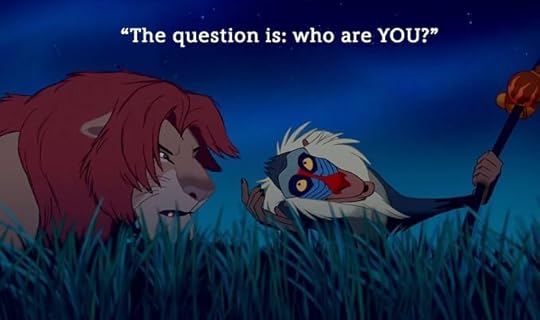
One of my favourite childhood movies, like many kids of my generation, was The Lion King. It was one of a few films that my cousins had on VHS and we would watch it on repeat, until we knew all of the words by heart.
My favourite character was always Rafiki the monkey. That guy gives NO f**ks. He’s an incredibly wise shaman, a total oddball and an all-round good time who, on close examination, has a lot to tell us about life, work and leadership. (OK, that might be a step too far, but honestly – that monkey (mandrill, actually) knew what was going on.)
In one memorable scene, Simba’s moping around all depressed and confused and decides to project a bit of his angst at Rafiki, who’s bouncing around annoying him. Amused and unfazed Rafiki hits him with:
“I’m not the one who is confused. You’re the one who doesn’t even know who you are!”
Truth-bombs.
Since speaking out about my recent meltdown, and being inundated by personal, beautiful stories, I’ve sought to understand more about the risks and benefits of being open about potentially shameful aspects of our lives. I know for a fact that the version I’ve articulated to the world is still a glossy one, and the messages and emails I’ve received have made it clear that having a tough time is still shrouded in shame.
Suppressing your feelings will eat you aliveAs it turns out: all that suppression is extremely bad for us. Suppressing our emotions leads to having more negative feelings than if we’d expressed them, makes us more depressed, isolates us interpersonally and all around makes our life feel worse. And annoyingly: just because we don’t acknowledge our emotions or experiences, doesn’t mean they don’t show up! Our feelings impact our relationships, work, performance and behaviour, whether we realise it or not. There’s a few different theories about why that is, but the prevailing thesis is that when we suppress what’s really going on, we battle with a sense of internal inauthenticity.
Yep. When we’re not ourselves, we fall to bits.
Now, we talk a big game about ‘authenticity’ these days. We tell people to bring their whole self to work, and we praise people who speak out and speak up. We know that genuine interactions at work strengthens our connections to each other and our jobs, make us happier and more productive, and reduces stress levels. But knowing that doesn’t make it easy. And while it would be easy to point the fingers at our bosses and colleagues, there’s a big part of this that’s an internal job.
Own your realityOwning our reality – messy, disappointing, conflicting or otherwise – is work we do for ourselves, first and foremost. It’s one thing to accept ourselves and value who we are – but it’s another job entirely to admit what needs accepting in the first place.
I reckon a lot of us aren’t quite sure who we are, and what we’re about. We spend so much time crafting narratives for ourselves and the world about what our lives, values and goals are, that it’s easy to lose touch with our personal reality. The line between what we post on social media, how we talk to friends (“really good thanks, how are you?”) and what we know to be true starts to blur, and then we shrink and fade.
All this suppression and obfuscation makes life much harder than it has to be, because while we might still experience all the impacts of living out of alignment – a loss of purpose, sense of internal frustration, despair or apathy – we don’t get the benefits of being able to identify why.
Really owning our sh*t is hard to do. It needs radical honesty – about the dark and the light – and deep interrogation. We need to work out why we’re like this, what we really want, what’s working and what’s broken in a way that isn’t guided by shoulds, musts and have-tos.
On the one hand, I can accept that this is a life’s work, and it’s never going to be done. But that’s no reason to stop trying. When we deeply understand ourselves, we’re taking steps toward building one of the most powerful tools we have in our arsenal against burnout and breakdown.
Fight burnout with authenticityWhen we know what’s important to us, what our values are, what our interests are and what our boundaries look like, we can make decisions that are in alignment with those. By tackling the root cause of our inauthenticity, we can fight back against the internal conflict and tap into a deep well of passion for the things that really matter.
When we truly understand what we’re about, it becomes easier to care about our work – and to identify when we’re not fired up by it. We can spot situations that put us out of our personal moral code, and take action to stop it. We can put less effort into behaving the way others expect us to, with a renewed sense of confidence in our own conviction.
Because here’s the lightbulb moment I had last week: authenticity is not intrinsically valuable on it’s own. Authenticity without legs is just introspection. What it needs, to be useful is accountability.
Authenticity needs accountabilityWhat’s the use in being authentically messed up, if we don’t use that as a catalyst to understand why and how we could shift it?
What’s the use in showing our deepest and darkest sides to anyone if we don’t intend to do anything about them?
Without accountability, authenticity is impotent. But when we combine the two, magic happens. When we add a dose of accountability, we start to take ownership of ourselves. We start to own our problems, our responsibilities, our goals and our behaviours, and that ownership opens doors to change and next steps.
Ask yourself hard questionsSo, if you’re falling to bits, or trying to come back together, try making some space for some bigger questions. They won’t have easy answers, and being honest with yourself and others is unlikely to be the easy path.
But it’s less work than remembering to be somebody else all the time, and even if you wind up broke and friendless for a while, you’ll definitely sleep easier.
I reckon that’s probably worth it. We’re alive for a long time. Let’s do a good job of it.
April 6, 2021
Wednesday Wisdom: A word from the pupae
When it came time to share this week’s What’s On Your Mind episode, I had a complicated reaction. The episode was recorded a little while ago, following what I thought was my personal low.
I had just emerged slowly from the pupae when that episode was filmed. Unfortunately, rather than emerging as a transformed butterfly, I was still a soft, fragile, cobbled-together little caterpillar... and I promptly threw that poor wee mate into more of the same.
With renewed fervour and misplaced confidence, I took on more pressure and work than ever, until I really crashed. That was almost 6 weeks ago, and last week I took a deep breath and started to talk about it publicly, with this LinkedIn post.
Ironically, this has all taken place just as my second book You Don’t Need An MBA: Leadership Lessons that Cut Through the Crap goes to print, where I outline a path out of the overwhelm and into a more strategic approach to life, work and leadership. The universe, eh? Why not add a crisis of credibility, to pair nicely with the crisis itself.
I’m not an expert on breaking down, but I do know a fair amount about change and what it takes to make it happen. Many of the principles are the same, and while I continue drafting an article on this topic, it seems quite fitting to share some unfinished thoughts from inside the pupae with you all in the interim:
Breaking down is a process, not an event. You know when you have a baby and they say “it took 9 months to put the weight on, it’ll take 9 months to take it off.”? Personal change is like that too. You can make big gains quickly, but sustainable change requires breaking the habits of a lifetime and replacing them with new ones. It took time to get here, it’ll take time to get out.
You can’t just stop a speeding freight train – When we decide to make a big change in our life, we often want to throw away the old in favour of the new. Unfortunately, for people with real responsibilities and embedded ways of doing things, change doesn't work that way. The trick is to leverage what we're already good at and point it in another direction. For my recovery, that's sometimes meant planning and scheduling, in a similar way to a a work day – blocking out time for nature, rest, movies, naps, connection with friends and books. Dead space saw me going on work or renovation binges by accident because nature abhors a vacuum and you can’t flip from ‘overachiever’ to ‘total chiller’ just like that.
There’s a lot of project management involved – Like all change, implementation isn’t straightforward. Despite that, I was genuinely taken aback at how much admin went into managing the implementation of my own loss of sanity. I had to organise kids, clients, a medical team, checkups, refunds... It took a full day of emails and calls at the outset just to make it happen. Admin, eh. It’ll find you everywhere.
It’s not linear – You will go in and out of the mush. Some days will be amazing, which will feel strange when you know you’re mid-breakdown. Some days will be dark and despairing, which will feel hopeless when you’ve been trying so hard. Both of those extremes are true, but neither of them are the truth. Like all change, we should ignore the daily fluctuations and keep an eye on the trend and patterns – if there are habits being broken, and the overall movement is positive, keep moving.
Asking for help isn’t easy – especially when you’ve never learned how.
Not getting help the first time is even harder – just because you ask for it, doesn’t mean you'll always get it! I’ve been knocked back by friends and struggled to get access to the right health support and none of that is because people are no good, or I’m no good – it just is. People are people, and they're all battling their own stuff. We can't take lack of buy-in or support personally, whether we're changing our lives or our teams.
Sharing the process is frowned upon – Unless you’ve already come through the other side. When I published this article on mistakes, I had a ton of private messages and calls from people saying they totally agreed, had been making a bunch of mistakes, but didn’t feel safe admitting that in a public forum or with their team in case their competence was called into question. I've felt the same pressure, initially keeping my personal status hidden from many friends and using the term "health emergency" to explain the cancellation of my obligations which is both entirely true, and feels like a shady copout.
You can’t do it alone – Well, maybe you can. But you shouldn’t. The caterpillar might be doing his own thing and emerging as a solitary butterfly, but being in the mush on your own is not the answer.
Your purpose and values matter more than ever – They’re the only things that stay certain when everything else seems up for question. I have no idea what the shape of my life, business and days will look like as I emerge from this, but I do know a few things:
I’m here to contribute to the lives of others
My voice is a powerful way to do that
I value integrity and authenticity, and if I don’t share my process, I’m not living in accordance with those things.
I stumbled across an Anais Nin quote recently that's reinforced that for me:
“The role of a writer is not to say what we can all say, but what we are unable to say.”
So, that's what I'll keep busy doing while I work out which way is up. Change is a funny old thing - it both always exists, and therefore sort of doesn't. Don't panic, team. We're all banging around in the dark, trying not to f**k things up too badly.
Stay sane. And if you can’t, stay alive.
Could COVID-19 change relationships forever?
When I receive grateful emails and messages from readers and fans, I sometimes feel uneasy. I received one such email last week, which went as far as to say: “Everything I’ve been thinking lately you are writing and f**k it’s reassuring - thanks!” The uneasiness is because while I absolutely write for the benefit of others, it’s also a selfish act.
Writing is how I make sense of what’s happening to and around me. It’s how I process my personal and professional challenges, and the work that goes into researching and writing an article is a powerful tool for me to normalise, understand and contextualise the world I live in.
When I write about how to manage stress, it’s because I’m finding a way through unmanageable stress. When I write about boundaries, it’s because I’m learning how to set them. When I write about change, tricky conversations, or values, it’s because I’m devoting my energy to navigating and understanding those things for me, my family and my clients. Sometimes this feels like a conflict, or a selfish behaviour. But I came across an Anais Nin quote recently that has stuck like glue:
“The role of a writer is not to say what we can all say, but what we are unable to say.”
I can’t get this one out of my head. There is no lonelier an experience than feeling as though we’re the only ones struggling with something. Sometimes it seems as though everybody else has access to a secret we don’t, so they can navigate the world happily while we battle silently.
It isn't true. I know that, because every time I share a piece of my own confusion in a book, article, Wednesday Wisdom or social media post, I’m bowled over by others’ relief that they’re not alone. When we give voice to the whispers, the fears, the doubts and the worries, something shifts. When we share a work in progress, not a heroes journey, the game changes.
It took me 6 weeks to own up to my recent collapse, and I broke my silence (with some trepidation) in a LinkedIn post that’s gone gangbusters. I owned up to the guilt and shame I experienced in being unable to care for my children, and the battle of reconciling a deeply held sense of personal competence and credibility with raw and unavoidable human struggle. My heart is full from the outpouring of support that accompanied that post, which streamed in publicly and privately in a way I’ve never experienced.
Why is it so powerful to see people publicly own their darkest times? We know, intellectually, that if we feel something, we’re unlikely to be the only ones. There are billions of people in the world, and as special and unique as we like to think we are, it’s highly unlikely we’re the only one feeling some kind of way at any given time. Yet still, we box on solo.
We’ve never had so many different ways to communicate. Instantaneous, multi-channel, multi-sensory connection sits in our pockets and on our desks, and we’ve got our entire network at our fingertips - so why do we feel so alone?
The pandemic has been a time of paradox for many. A time of both crushing loneliness and new connection. Of terrifying ambiguity and purposeful clarity. Of destabilising anxiety and newfound confidence. The ties that bind are stronger than ever, while the forces that divide seem to gain new momentum every day.
Politically, socially, personally and professionally, we’ve lifted up rocks and asked new questions. We’ve confronted demons. We’ve wondered about equality, morality, success and sustainability. We’ve talked about race. Gender. Work. Money. The environment. Leadership. Connection. The price we’re willing to pay, and the price we’re not. The future we want to invest in, and the past we want to leave behind.
And now it’s all about to shift again. The vaccine is here. Bubbles are opening. People are flooding back into offices, tired and weary, but ready for another round. The concurrent permission and exhaustion that accompanied lockdowns - whether persistent or intermittent - is coming to a close and we’re both thrilled and terrified about what that means.
In Epidemics and Society: From the Black Death to the Present, Frederick Snowden makes the case that global health crises act as a mirror to society, exposing and amplifying reality rather than changing it. “Epidemic diseases are not random events that afflict societies capriciously and without warning,” he writes. “On the contrary, every society produces its own specific vulnerabilities. To study them is to understand that society’s structure, its standard of living, and its political priorities.” The hope that COVID would force a re-examination of those priorities is starting to wane, and unfortunately, I share that pessimism on many fronts.
In a recent MindF**k Monday, Mark Manson expressed a similar sentiment. COVID, he argues, has been a sort of “hydrostatic stress test for each place and each person around the world. Each systems’ weakness has been revealed.” But rather than laying the foundation for a new way, Manson believes that our faith in a new normal is misplaced. Things will soon be more or less as they were in 2019, says Manson, with little political or social change to show for it.
I don't disagree. But I’m also not without hope for us at a personal level. Lines of communication are different now. Topics are different too. We’ve started podcasts in record numbers - Spotify saw a threefold increase in 2020 alone. Blogging has exploded. We’re sharing our lives in ways we never have before, we’ve seized the power from mainstream media and celebrity voices, and I firmly believe we’re better for it.
I also believe that doesn’t need to change. We may not be any smarter, and in a year’s time, we may not be living much differently than we did three years prior. But we can change the way we talk about our lives. We can continue to share how we think and feel, and we can make sense with others - even if we don’t know what the answers are, or we don’t get there any quicker than before.
You don’t need to be a writer, or a podcaster, or an ‘influencer’ to make that happen. The real power in sharing experience comes in the everyday moments. In the same way a shared smile or friendly word on the train or in the grocery store can change the trajectory of our day, understanding the reality of people we know through conversation is immensely powerful.
And we know how to do it now.
We've seen our boss’s kids and pets. We’ve seen the inside of our colleague’s garages and spare rooms. We’ve swapped ties for trackies, eaten lunch into a webcam and shown our personal selves in a professional environment in a way we could never have expected.
We’ve caught glimpses of spouses and washing piles. We’ve merged worlds, changed conversations and started to show up in new and different ways as work, family and home muddled together in messy ways.
Even if our lives aren’t different, the way we relate to each other can be. And it should be. The toll of the pandemic on mental health and personal relationships has been staggering, whether you live in a fortunate country or one still besieged by record case numbers. We need each other more than ever, and not in a glossy, ‘here’s how I beat this’, heroes journey way, but in a real, ‘here’s what I’m fighting’ fashion that empowers and normalises the full range of human experience.
We don’t need to be experts to be impactful. We can say: “Here’s what’s working for me. Might it work for you, too?” We can ask “How are you, really?” and actually listen to the answer. We can remember details about people’s lives, and follow up on them, by asking “Is your son feeling better?” and we can add our own experiences to show empathy “I remember that first year at daycare and all the bugs that came with it, it’s a killer.” We can inject microdoses of compassion, humanity and encouragement into the onslaught of mundane meetings and we can acknowledge small wins for each other, remembering the team spirit we were able to rally as we fought a pandemic together.
And we can do all that without losing credibility, respect or reputation. In fact, we can do all that and bask warmly in what we gain: trust, connection, vulnerability, empathy and understanding. We can experience the surprising benefits of feeling like shit first hand, and help others to do that too.
We might not have new answers. We might not have our revolution.
But we can sure as hell have new conversations.
Keep talking. And if you can’t do that, at least keep listening. We need each other.
March 30, 2021
Wednesday Wisdom: Practising what you preach
On Thursday night, I received the final proof of my new book, ready to go to print on Friday morning. I scanned over the cover, checked the layout and was just about ready to send the all clear to my publisher... when my blood suddenly ran cold.
I have four quotes from famous authors featured on the cover - one on the front from Seth Godin, and three on the back. But on Thursday night, it all of a sudden hit me that every one of the authors was a man. In fact, every one was a white man over 50.
Gulp.
In the preface to my book, I boldly claim my right to be in this space, as a young female with something to say about strategy and leadership. I even use the line - I kid you not - "I'm not a white man over 50."
Sure, I might not be - but every one of the people who we'd considered credible enough to endorse the book were. Oops.
I had a mildly dramatic 'Stop the press!' moment, and got my grovel on, reaching out to female authors I admire with the hopes of nabbing an urgent read-through and endorsement. By the grace of the universe, the exceptional Kim Scott (if you haven't read Radical Candor, do it now. Or watch the this short video. This woman is amazing.) made space over her weekend to read my book, as we both juggled kids and life in between. You Don't Need An MBA now features a marvellous endorsement from Kim, and I have a new friend. Nice.
Now, it's not like I hadn't included any women in my original reach out. It's not like I did this on purpose. But, like it or not, despite my effort, I was living out of alignment with my values.
When our values run even mildly in opposition to the status quo, sticking to them isn't always easy, no matter how much we believe them. The systemic and structural forces at play push everything toward the path of least resistance, and it's how we find ourselves a cog in the wheel, wondering how we've got here.
It's how leaders who desperately want an innovative and agile culture find themselves buried under bureaucracy and risk aversion. Its how outspoken feminists find themselves unwittingly feeding the patriarchy (this happened to me a few months ago, when I included a now redacted 'Karen' reference in this article. Ugh. I'm grateful to the wonderful reader who called that one out!) It's how we put our families second by accident, when work gets mad, or sacrifice our integrity for a project or sale that we feel we can't say no to.
What's right and what's easy often aren't the same thing. We don't need to beat ourselves up about getting it wrong, but we do need to sometimes take a deep breath and bravely stand up for what we believe in.
I firmly believe that values are no good unless they've got actions to go with them - and that boundaries are values on legs. The world rarely falls in when we stick up for ourselves, and while we might not always be popular, we do earn respect - for ourselves, and from others.
Nothing that matters happens by accident. But living a life that's congruent with your values gives you the chance to feel good about the choices you make, regardless of how things pan out. You're likely to slip up and make poor calls along the way, but that's all part of it.
I did a bit of that yesterday, with a LinkedIn post that's gone bonkers. Practicing what we preach is risky. It's brave, and sometimes it carries a cost - but it is almost always worth it.
Keep fighting the good fight!
Til next week,
- A
Longer, relevant reads that you might enjoy:
Boundaries 101: Your guide to personal and professional peace
How to learn from your mistakes
March 22, 2021
The surprising benefits of feeling like sh*t
Estimated reading time: 7 minutes

Feeling like sh*t, or FLS, is one of the most common elements of the human experience. I dare you to find someone that’s managed to get through a week without a case of the FLS in the last year - because everywhere I look, I’m seeing tired, jaded people having a tough time.
And I reckon that’s OK. There’s no contract we sign when we become adults that says we need to, or get to, feel good all the time. Yet the pressure to pretend that we do, to our children, our colleagues, or our friends, is real. We know, in theory, that everyone else FLS sometimes too, but we don’t honour that part of our experience.
Instead we bury it, mask it, or try to run from it. Advice on how to feel better is plentiful. Apathy, low mood and malaise are treated as terrible afflictions that require treatment and dispatch. Emotional states that require minimising or fixing, as quickly as possible. We’re told to get outside. Go for a run. Talk to a friend. Smile more. Eat better. Write it down. Take a holiday. Anything that pushes those entirely normal feelings away before they get the chance to take hold, because god forbid we just don’t feel great today.
And let’s be clear: sometimes that’s helpful. Nobody wants to be stuck in a pit forever and taking care of yourself, as you would a loved one, is extremely important. But in other ways, it’s entirely unhelpful.
Nobody gets to have a meaningful life without a healthy dose of suffering. Happiness, gratitude and success are relative concepts, and humans are complicated. Sometimes we FLS because we can’t get what we want. Sometimes we FLS because we got what we wanted. Sometimes we FLS because we don’t know what we want. Sometimes we FLS and we can’t understand or explain why. That’s cool. We’re all doing it.
Rather than pushing these feelings to the side or feeling ashamed of having them, I think there’s benefit in a good bit of rumination now and again. In fact, the evidence suggests that there are some surprising upsides to malaise, if we can tap into it.
(Now, I’m mindful of the Alicia-McKay-ness of trying to find a productivity hack for depression. It reminds me of a conversation I had with my best mate one seedy Sunday morning where, after a hard night on the gins and a morning in my PJs, I found myself in the grips of a burst of inspiration, scribbling ideas on a whiteboard. I remember the exasperation from my friend vividly- “FFS, do you have to turn a hangover into a productivity hack, Alicia?!” So, no. I’m not trying to say you have to turn a sow’s ear into a silk purse.)
I do, however, think it's worth reflecting on both the dangers of an expectation of being constantly OK. And to do that in a way that doesn’t require us to take a duvet day and hide every time we can’t face the world.
I want to live in a world where we can turn up to the things that we love and care about, even when we don’t feel 100%, and I want to live in a world where we don’t feel ashamed about doing that.
I want to live in a world where we see the value of showing the good, bad and ugly sides of ourselves to the people we care about, the people we work with, and the people we lead, without a layer of embarrassment.
I want us to model a healthy way of getting through life, to give others the permission to do that too. If you’d like to live in that world too, you might enjoy this article.
FLS can make the world a better place
When we can fully accept our own human-ness, in all of it’s forms, we can do that for others too.
By deeply understanding our own experience, and extending that understanding to others, we can become more empathetic and compassionate, and ultimately, more effective.
We develop more user-focused products, more workable solutions, more resonant marketing strategies and more meaningful connections. We lead change programmes that engage people in a tangible way. We have better quality conversations, create more empowering work environments and build strategies that focus on touching people's lives, rather than ticking a box.
Our own vulnerability, shared appropriately, doesn't detract from our credibility. it builds trust, and adds power to our message. Nobody wants to be led by a perfect example of inspiration they can't hope to measure up to. It just makes us feel crappy in comparison. People want to be reached, and they can only be reached if we show up as ourselves, whatever that means.
Feeling like sh*t sucks, but it is a normal and useful part of being a person - and it has some upsides.
Here are six benefits to having dark days.
Benefit 1 - Compassion
Everyone is struggling. Seriously, everyone. Lisa O’Neill once told me to assume that everyone’s life is hard, and I’ve thought about that a lot since - and I’m yet to disprove it.
That’s fine in theory, but until you know… sometimes you just don’t know. Without the humbling experience of your own battle, true compassion and acceptance of others is harder to come by.
Depression can be lonely, but it can also be a unifying experience. I’ve spent my life being the most competent person I know, with little patience for the perceived inactivity of others.
It wasn’t until a point last year where I found myself unable to think clearly or perform basic tasks that I suddenly understood how challenging it must be to struggle like that regularly. I reached out to friends and family who’d been through similar times with a combination of apology and vulnerability.
It was a similar process to the birth of my third child. After two fairly easy babies, I’d developed that parent smugness that people with compliant children get, and I thought (and said!) things like “If they’re hungry, they’ll eat…” and “I wouldn’t tolerate that in my house…” Thankfully, Harriet arrived in time to cure me of my unfounded and insufferable superiority, ready to teach me that some kids are just hard work no matter what you do.
(And that, hungry or not, some children would rather starve than admit defeat. And that I will, in fact, tolerate all sorts of things for the sake of a moment’s peace.)
What or who can you relate to better now as a result of FLS? How can you extend that compassion into other areas of your life?
Benefit 2 - Connection
Last year, I turned up uncharacteristically early for a meeting and caught a client in a fluster. She was organising school holiday care for her kids, she confided, which as a single mum was a constant stress for her.
Catching her in that moment inspired a brilliant conversation about the juggle of working parents and everything that means, showing me a completely different side to her usual high-powered brilliance. The trust and connection in that meeting gave me the permission to drop my “professional woman out to schmooze” mask too, and I’ve never forgotten it. If I’d turned up 10 minutes later when she’d regained composure, we would have missed an opportunity for real connection and trust-building.
Meaningful conversations and relationships aren’t formed when we turn up with our armour on. Nobody wants to be friends with a perfect person, and nobody wants to be led by an inspirational robot without flaws.
When we can share the softer sides of ourselves, we open up new opportunities to reach others, which is great for us, and for them.
Share your struggles with others around you, and try to catch your surprise at how many other people have similar experiences.
Benefit 3: Creativity
Innovation is an over-used buzzword, but at it’s heart, its about solving problems. When we see the world differently, we get a new lens for old problems, and that can be helpful.
By understanding people and their lives more deeply, especially the things they’re finding hard, we can tap into a more creative ideas that that will reach people on a new level.
Whether that’s a more intuitive user experience, a change programme that takes human error and disengagement into account, or a service offering that addresses pain points more effectively, it’s not just positive a-ha moments that give us innovation.
Human-centred innovation thinks about both ends of the stick - what we aspire to, and what we avoid. We shape better cities when we have empathy for people’s safety and personal challenges. We design better products when we think about what’s making people’s lives difficult. Netflix isn’t so successful because they make great movies, they’re successful because they provide a solution to people with busy schedules that can’t watch scheduled programming.
How can you bring your current discontent into your problem solving? What does it tell you about the struggles of others? Can you help solve them in some way?
Benefit 4: Comparison
When everything’s good all the time, we don’t appreciate it. It’s a human design flaw, as far as I’m concerned, but it does make FLS a useful piece of the puzzle.
Problems are like cockroaches, and glitter - even when the world ends, they’ll still be there. The trick isn’t living a problem-free life, that just makes us complacent and ungrateful Instead, we should aim to progressively upgrade our problems, and make them ones that we can be grateful for having. Everything that’s worth having requires us to struggle for it, but we get to pick those struggles based on what matters to us and to enjoy the satisfaction of when things do go to plan.
Having kids is hard work some days, but being a good parent and raising good humans matters too much to me to quit the struggle. Doing meaningful work feels like a heavy load at times, but I’m thrilled to have the opportunity to reach people and share my thinking with the world. These are things I’m willing to suffer for, and the tough times makes the great days so much more satisfying.
Put your current problems into perspective by considering how much progress you’ve made. Past You would have loved the problems of Today You. Tap into the comparison and make sure to appreciate your next easy patch, safe in the knowledge that a new batch of upgraded problems awaits you.
Benefit 5: Courage
The real nasty, when it comes to depression, isn't sadness... it’s hopelessness. Feeling like crap is manageable when you have a healthy perspective on how temporary it is. But when you don’t have confidence that things will ever get any better, or faith in your own ability to make things better, it gets unmanageable with speed.
The silver lining to FLS now and again is the reminder that you’ve been here before, and it’s all been OK. Every feeling or challenge you’ve had in the past has come to an end, and remembering that can give you the boost you need to get through a new batch of bulls*t. While it might seem counter-intuitive to layer historical negativity on top of a low mood, it can be a useful way of reminding you of your own resilience.
Think about the worst things you’ve been through before. Remember how terrible they felt at the time, and how you thought you’d never get through. Remind yourself that you did, and therefore you will again - but better this time, with the benefit of all that resilience you put in the bank. Pat self on back.
Benefit 6: Clarity
The Rolling Stones were right when they sang: “You can’t always get what you want.” Especially if you don’t live your life in a way that makes it possible.
When we don’t feel good, its often a sign that something is out of alignment or needs to change. If you persistently don’t feel good, it could be your body’s way of telling you it’s time to change something important. If your life is out of balance with your values, or you’re taking on unsustainable or unsatisfying levels of stress or effort, you’re going to find it harder and harder to feel buoyed by your daily activities.
If you FLS all the time, stop putting coping bandaids on a gaping wound. That thing you’re most afraid of changing, or keep putting off doing something about? It’s probably that. Start there.
In summary
Everyone feels like sh*t sometimes
FLS is normal and so we should normalise it
Six benefits to FLS are:
Compassion - we develop more empathy
Connection - we form meaningful bonds with others
Creativity - we develop richer ideas and solutions
Comparison - we appreciate good things more fully
Courage - we gain confidence in our own resilience
Clarity - our sense of what truly matters becomes stronger.