Alicia McKay's Blog, page 16
March 15, 2021
Three Things You Can Do To Make Your Meetings Suck Less
Estimated reading time: 5 minutes

Why are so many workshops and meetings that are supposed to be important, so hopeless? Boring talkfests, frustrating circularity or outright disengagement are raging in meeting rooms across the world, despite the best efforts of leaders and facilitators alike.
There’s lots of good reasons, but here’s one biggie:
Because we expect our time in the room to be enough.
We think that focusing on the time we spend together will do the job, and we pour our energy into that. Materials. Slideshows. Exercises. Building marshmallow towers. Having good discussions.
But fast forward three months, and still nothing has happened. What’s that about?
Meetings that matter are about driving change outside the meeting room - which means we need to put our attention there. You know at university, when your lecturer explains that for every hour of class time, you’ll have an hour’s reading, and an hour’s assessment? This is a bit like that.
Here’s why:
People have way too many meetings to go to, and not enough time to do the work they talk about in them
Every one is under so much pressure that they’re dropping balls left right and centre
It’s easy to forget or deprioritise stuff that you actually care about, much less things that don’t have a direct impact on our life.
In Meetings that Matter, we put just as much attention on the work we do before and after a workshop, as we do on the time we spend in the room. Making the most of our time together is important. We need to build trust and understanding, shape meaningful choices, share new perspectives and make careful decisions.
But if we don’t pay careful attention to what happens when people leave, we’re going to see progress stall.
Here’s three simple things you can do to turn the curve on workshops that suck:
Make your purpose crystal clear
Eliminate obstacles to engagement
Close the loop - quickly
Tip 1: Understand your purpose
Every meeting should only have one job - and everyone should know what it is, ahead of time. If people are opening their calendars to find a meeting invite that says something like “digital transformation committee workshop 7” with no other information, they’re going to groan, and do their best to get out of it. To change this:
Choose the one job of your meeting
Think about how people are feeling coming in, and how you want them to feel when they leave
Send a brief email, video or invite that makes the purpose of your meeting crystal clear
Use a purpose planner to guide your thinking.
Tip 2: Eliminate obstacles
It’s hard to focus when there’s lots of other stuff going on. Whether that’s interpersonal, personal, or professional, people find it hard to show up and engage at the best of times. Because of that, running an effective workshop process is less about adding things - exercises, questions and activities - than it is about removing obstacles. Technology, conflict, unsaid worries and fears, disenchanting meeting rooms, people that don’t pay attention… all of these issues have the potential to throw your meeting off course, regardless of how good your agenda is.
Before running a meeting, take the time to think about:
What your attendees are dealing with right now - including what they might be thinking and feeling. An empathy map is a great tool for this - download a template for free from the MTM website
How you can make it easy for people to show up at their best
What obstacles you will need to remove to make your meeting great.
Tip 3: Close the loop
Once people leave your session, you have a short window to tie things back together and keep them on track. Respecting people’s time, energy and input means going out of your way to thank them and show them the product of their efforts. No-one should wait more than a week - and preferably no more than three days - to see an output, even if it’s a simple email.
Simple but effective tools for closing the loop include:
A brief video thanking people for their time
An email with bullet points summarising the discussion and next steps
Photos of the whiteboard or flip charts
An additional resource, link or book to build on what you discussed together.
Note that none of these suggestions are based on what you do in the room - because if we’re targeting action to happen outside the room, what we do there matters at least as much.
Happy workshopping, everyone.
For more on Meetings that Matter and how to lead strategic conversations that drive change, check out the MTM website to:
Download free guides and resources
Enquire about workplace training
Join the next MTM Online intake.


March 9, 2021
8 Things People Get Wrong About Strategy
Estimated reading time: 4 minutes

Strategy is the Emperor with No Clothes of the working world. It’s one of those buzzwords that lost much of it’s meaning in the 1980s, but people need to keep using, whether they understand it or not.
Once you reach a certain seniority, people assume you know what strategy is all about, despite the fact you’ve unlikely to have been taught. This is how we wind up in meeting room with people clearing their throats and saying things like “The initiatives in the action plan are blue-sky vision statements for the future state…”
And rather than sticking our hand up to say “… wtf?” most people nod sagely and try to keep the blank look off their face, rather than admit they have no idea what’s going on.
A lack of strategy education leads to the development of misguided and lengthy documents that jump straight from a big-picture ‘why’ to a detailed ‘what’. These documents then gather dust on the bookshelf, because as soon as things change, they become irrelevant.
This is a damn shame, because a well-crafted strategy is a potent force in the face of change. In an ideal world, strategy is referenced daily, as an invaluable tool for the ‘how’. Teams and leaders draw on it as a reassuring guide to make decisions and shape choices as everything shifts around them, keeping everyone on track to make the change we want to see in the world.
With that in mind - here’s 8 common myths about strategy, and a few ways to think differently.
Myth 1: Strategy is about what to do nowTruth: Strategy is not about the short-term. It’s about using our clarity on the long-game (what we stand for, and the change we want to make in the world) to plan for the medium term. Strategy guides the steps we take along the way, but it doesn’t spell them out. In fact, good strategy is more worried about what we don’t do - the trade-offs we’re willing to make, and the things we’re willing to cancel - while we take steps toward the new. If you can achieve your strategy in the next 6-12 months, it’s not a strategy. It’s a plan.
Myth 2: Strategy is about making plansTruth: On that note - strategic planning is not about plans (I know! It’s in the name!) It’s about principles. When we create a strategy, we do it on the assumption that we don’t know what’s going to change, or what kind of decisions we’ll be forced to make along the way. Instead of compiling detailed tables of actions with unreasonable timelines we feel bad for missing, strategy is more concerned with criteria. What good looks like, what matters most to us, and how we will make choices. When we know this ahead of time, we find it easier to make strategic decisions as we go.
Myth 3: Strategy is about prescriptionTruth: Strategy trusts the people that will make decisions about it’s implementation. Instead of prescription, it offers direction - about where we’re heading and the key levers we’ll pull to get there. When we know, for example, that we’re focused on leverage, we enable people to design projects and programmes to be repeatable and reach more people, in ways that suit their environment at the time. They will refer to your strategy for the criteria we discuss in Myth 2 (key outcomes, values and priorities), to decide how to shape those choices and how much effort to invest - but not for instruction about exactly what that will look like.
Myth 4: Strategy should be detailedTruth: Strategy shouldn’t be longer than 1-3 pages, and you should be able to sum it up in the time it takes to travel 3 floors in a lift. If you can’t explain it simply, you either don’t understand it, or you’ve put too much in - in which case, it isn’t a strategy at all, it’s a list. Strategy demands focus on the most critical things we need to shift to get where we’re going. Aiming for fullness will dilute and nullify your effort. Force prioritisation through ranking or weighting, and keep your language plain, snappy and clear.
Myth 5: Strategy should describe the pastTruth: If you’re spending your time focusing on statistics, context and data in your strategy, you’re wasting space. Strategy isn’t about the past. It might draw on that information to form your view, but it only talks about the future. We use everything we know in the present to set direction for where we’re going next, and to plot our path there. If you’ve got a whole section on ‘trends and issues’ - cut it out. No-one’s reading it anyway. I don’t want to know where you’ve been. I want to know where you’re going, what strengths you’re drawing on to get there, and what gaps you’re filling to make it possible.
Myth 6: Strategy needs predictionTruth: While strategy is all about the future, it doesn’t to predict what’s coming. There’s plenty of futurists and economists who will try to do that for you - but they’ll all tell you something different, and if research is to be believed, they generally do worse than a bunch of chimps pointing randomly at signs on a wall. Scenario planning is useful, but we shouldn’t assume we know which scenario is most probable, or that we can cover all our bases. Instead, strategy should focus on how we will respond if those things do happen, so that we’re prepared for anything. Strategic risk management spends time worrying more about what will have the most impact, not trying to predict what’s most likely, because we rarely see the most significant shifts coming.
Myth 7: Strategy should be accurateTruth: We don’t know the truth. We’re running around full of assumptions, biases and righteousness, and it’s usually off at best. Even if we are right, facts don’t convince people to seize hold of a new and exciting direction. Instead of accuracy, strategy aims for ownership. A direction that everyone buys into and gets moving toward - that’s slightly wrong and needs tweaking - will beat out a perfect plan that no-one cares about, every time. Why? Because things actually happen.
Myth 8: Strategy needs agreementTruth: While we do need ownership, we don’t need everyone to agree. What we want instead is alignment - which is more about productive disagreement. When we’ve been honest about all of the competing positions, agendas and ideas out there, we can line those up in a way that strike at the core of our strategy - purpose, values and narratives. We don’t need everyone to agree - that’s usually a sign we’ve lost diversity - but we do need people aligned on what our most important priorities are. Read more about how to do this with difficult groups here.
Need more?If you’re leading the development of a strategy or strategic plan, and you need a boost in the right direction check out this online course - Nail Your Strategic Plan.
With a series of snappy, useful videos and a workbook packed full of templates, exercises and resources, you’ll have everything you need to avoid common pitfalls, and to craft a strategy that people care about, and take action toward.
FOR A LIMITED TIME - Get your NYSP access for just $99!
For a free taster, check out this video, which sums up the myths tackled in this article.
February 16, 2021
How to learn from your mistakes
Estimated reading time: 10 minutes

In late 2019, I interviewed a Mayor on stage at a conference in Australia. His Council had pulled off some seriously impressive work that they were receiving an award for, and it was my job to get the scoop on the secret sauce.
“What do you think it is that made your success possible, when so many others couldn’t pull it off?” I asked.
His answer was clear: “In our Council, we make it safe to fail. People here know that it’s OK to make mistakes, and so they aren’t scared to put themselves out there.” Nice answer.
To follow up, I asked “Awesome. Can you share with us a mistake you’ve made recently, Mr Mayor?”
….. cue crickets.
Oops. Maybe not so safe after all, eh?
This week, I'm running strategic leadership training with some senior government leaders, and we opened our first session by sharing some of those mistakes and near-misses with each other. The relief in the room was palpable, as people witnessed their competent, professional, impressive colleagues sharing their recent mistakes - everything from kitchen mishaps, to public speaking blunders. Together, we realised something important: either none of us are imposters... or, we all are.
I reckon we’re all imposters. I work with leaders at all levels, from team leaders to Chief Executives, and the one thing we have in common is: we're all banging around, being human and messing things up. All the time. Since my very first job, I’ve spent my career working with senior leaders and politicians. It was equal parts reassuring and terrifying to realise very early on that there’s nothing god-given about any of them. They’re just as human as the rest of us, and they’re all making mistakes - some are just more visible than others. We gain nothing by thinking that anyone is above making choices they regret.
If you're not making mistakes, odds are, you're not trying anything new. Mistakes are proof that you’re trying. If you're not failing, course-correcting, and feeling like an idiot at least once a week, there are probably shots you're not taking, opportunities you're missing out on, and growth you're short-changing.
The answer isn't to be more perfect, it's to be more forgiving. First of yourself, and then of others. I firmly believe that people, almost without exception, are doing their best. But if we're too hard internally, and don't tolerate weakness and fragility in ourselves, there's no way we can forgive it in others.
Alexander Pope once said: "To err is human. To forgive is divine."
Like most over-used proverbs, it's bang on. But I reckon it's missing a piece. Forgiveness isn’t enough. What we really want, is learning.
Mistakes make us better
Or at least, they can. Unlike success, which we often move past quickly without reflection or acknowledgement, mistakes force us to stop and think. They’re an immediate source of feedback, and they’re right in our face, demanding corrective action.
If we’re lucky, they do a few other things too…
Mistakes make us more creative - Mistakes are a sign that what we’re doing now isn’t working. They force us to look more closely at the situation we’re in and the choices we’re making, and come up with a new way of working.
Mistakes teach resilience - Very few things are as bad as we think they will be. Mistakes are the tangible manifestation of our worst fears and hang-ups… and usually, they work out just fine. When we confront our deepest worries and survive, we gain faith in our own ability and capacity.
Mistakes fill our story bank - No good holiday story starts with all the things that went to plan. When we make mistakes, we add richness and colour to our personal stories, which give us interesting and engaging examples to draw on when we talk to other people.
Mistakes connect us to others - In fact, data suggests that when someone we respect makes a mistake, we trust them more, because we can relate more easily to them. (Caveat: this only works for people we already think are credible. If someone who we think is an idiot messes up, it reinforces our original perception.)
Mistakes make us smarter - When we experience the uncomfortable consequences of our errors, we store that information in a real and tangible way. Our brains are wired to avoid pain and discomfort, so it automatically searches for ways to avoid feeling that bad again.
Mistakes make us braver - When we own up to our faults and foibles, our inner strength gets a boost. When we’re forced to do better, by our own hand, we’re more likely to make important changes and take scary risks that take us closer to our goals.
Mistakes keep us humble - Success can be dangerous. It makes us complacent and can lead to us taking things for granted, or overestimating our own abilities. Mistakes are a useful reminder that no matter how well we’ve done, we’ve always got room to grow.
Mistakes motivate change - Negative experiences are a more powerful catalyst for change than positive ones. When things are going well, it’s much easier to embrace the familiarity of the status quo and defer change. The immediacy and intensity of recovering from a mistake push us to take actio nsooner.
Mistakes help us to know ourselves - We do the things we do for a reason - good, bad and ugly. Every habit, behaviour or tendency has developed in response our environment and experiences, which is fine… until it isn’t. When we examine our motivations and patterns, we gain deeper understanding into why we are the way we are and what we’d like to be instead.
Mistakes remind us what really matters - When we’re faced with losing something important, we get real clarity about our priorities. When we make a mistake that threatens those things, we realise how much we value them and get a fresh perspective on what needs to come first.
Mistakes might not feel good, but they’re important, so let’s not let them go to waste. Learning from our mistakes requires us to do 7 critical things.
Step 1 - Realise you’ve messed up
Our brains lie to us, all the time. When we’re faced with something that’s embarrassing, shameful or doesn’t align with how we view ourselves, it’s easier to ignore or deny the truth.
Mistakes aren’t always obvious - but even if you don’t acknowledge them, your behaviour changes. If you’re not sure whether you’re in the wrong, try observing the way you act and feel.
How to spot a mistake:
You feel guilty or have an uneasy sensation in your gut
You’re overreacting to something that wouldn’t usually bother you, to deflect attention
You’re feeling exhausted and you can’t explain why
You’re lying about some, or all, of what happened
You’re keeping unusually quiet, so you’re not found out
You’re trying to move on too quickly.
If you’re feeling or noticing one or more of these behaviours, it’s time to pause. You might have done something wrong.
Step 2 - Take responsibility
Human relationships are complicated. Things are rarely clear-cut, and there’s usually an opportunity to point the finger outward when something goes wrong.
It’s unlikely that what happened is entirely your fault, but that’s irrelevant. You’re not responsible for anyone else’s behaviour, and you’re certainly not responsible for their growth or change.
The only person you can control is you - so do it. Own up to your role in the error, using plain language and tangible details. You might be tempted to minimise your own liability, soften the truth, or play down the impacts. Or, you might find yourself playing the role of the over-apologetic martyr to garner sympathy and prove what a good person you really are. Neither of these are helpful - they’re both a form of emotional manipulation. Avoid going to extremes and don’t add unnecessary explanations, disclaimers or excuses that will undermine your integrity and the authenticity of your apology.
Step 3: Reflect on what happened
We usually try to move past discomfort as quickly as we can, and when we’re tempted by relief, it’s hard not to grab it.
If you’ve owned your role in the mess - no more, and no less - you’ve probably put out the obvious fire. The easy and most comfortable choice is to quickly put it behind you and get on with being great again. But do that, and you waste the opportunity you’ve just been given. Odds are that you were trying, but you got something wrong. Take the time to work out what bit failed, so you can do something differently next time.
Good reflection asks questions like:
What was I trying to do here?
Why did I choose to do it that way?
What was I afraid of?
What good came out of it?
What information was I missing?
What did I assume or misjudge?
What other options did I have?
What made those options unappealing?
Do I still think that?
How did my actions affect others?
How do I feel about that?
How would I like to approach the same situation differently, if it happened again?
Record your answers, and for bonus points, test your thinking on someone else for a more complete perspective. They’re likely to ask further questions, or point out inconsistencies in your thinking that you haven’t noticed. If it’s not safe or fair to involve affected parties, talk to a trusted friend or colleague instead, who you know will tell you the truth, even if it doesn’t feel great.
Step 4: Put things right
Reflection isn’t enough. It’s important, but it’s also largely self-serving, because it’s helping you to become better as a result of your actions.
Mistakes are an opportunity to build trust and deepen connection with others, but they require you to walk the talk. People don’t need to hear about what you’ve learned or how you’ve changed - they need to see it.
Once you’ve owned your role in the situation, show that you’re committed to change by doing something tangible that relates directly to the thing you messed up. Sometimes you have the opportunity for remedial action that makes the situation better, and other times you don’t. Either way, you need to put things right.
If you missed a deadline, submit your next report early.
If you let someone down, go out of your way to make their life easier.
If you broke or lost something, buy a new one.
And if you have no idea what to do, ask. Direct questions are helpful, that don’t put any onus or pressure on the other person. “What could I do to make this up to you?” is OK, but questions like “What are you struggling with now?” “How has this made things harder for you?” or “What will you have to do now that you didn’t plan on?” are better, because they’re a good pointer for where you can target your efforts.
Importantly, don’t take action expecting recognition or forgiveness. Putting things right means you’re starting from a position of deficit, and you’re aiming to get back to zero. Think from a position of service, and be happy that you’ve made a dent in the ledger.
Step 5: Try something new
If we don’t embed new learning quickly, we lose it. All the reflection and understanding in the world won’t help us, if we don’t have a chance to practice our new skills.
Look for, or create, opportunities to try out a new way of being or responding.
If you reacted poorly to a spouse, child, or staff member, be on the lookout in your conversations for a chance to try a new approach. If you missed a deadline on an important project, volunteer for a role on something else so that you can plan your time or effort differently. Make a conscious effort to notice your defaults or patterned responses, drawing on the outputs of your reflection, and plan for success ahead of time.
Step 6: Make the same mistake again
Very few lessons are learned the first time, at least not in full. Practice makes perfect, and the first new thing you try might not work, especially if your initial mistake was the result of deeply embedded behaviours, habits or decisions.
It’s frustrating, but it’s also totally OK. The goal is progress, not perfection and when you relapse - which is more likely than not - move back through steps 1-5 with a light heart and some self-compassion. It takes time to learn new behaviours, and when we regress, it’s common to think that all our effort has been for nothing.
That’s not how it works. All growth is messy, and growing pains are normal. The worst thing we can do is believe that our time has been wasted - because it hasn’t. Your continued trial and error is a necessary part of changing something important, in a way that you can sustain. Keep going.
Step 7: Make a different mistake
Yeah, sorry.
Mastery is never done. As soon as you learn something new, you realise how much more there is to learn - and that’s perfect. Your journey of self-discovery and improvement will uncover new challenges at every step. Each mistake you make takes you a step closer - but the goalposts will keep shifting.
Be ready to make new mistakes, and approach each day, project or new endeavour with an air of compassionate curiosity. Muse to yourself “I wonder what will go wrong today?” or “I wonder what I’m about to learn here?” and rather than finding yourself in frustration, disappointment or defeat, relish the chance to keep growing and be grateful that you’re moving forward with something that matters.
Remember, mistakes are proof that you’re trying. If you’ve stopped making any, you’ve become too comfortable and it’s time to do something new.
Keep messing up, team. I’m with you.
In summary
Mistakes are a necessary component of change
Mistakes make us better - or at least, they can
Seven steps you can take when you mess up are:
Realise you made a mistake
Own your role
Reflect on the situation
Put things right
Try something new
Make the same mistake again
Make a new one.
Rinse and repeat. Happy mistake-making!
February 1, 2021
8 ways to kill stress… for good
Estimated reading time: 20 minutes

We’ve been on a bit of a stress rollercoaster the last year or so, haven’t we? We had all that lovely acute stress in COVID, where we smashed into panic adrenaline superhero mode and rose to the challenge. Then we had all the ongoing uncertainty and ambiguity stress, which was harder and weirder, but we managed.
Now we’re heading into another year, and all the normal advice about managing stress is feeling a bit tired and victim blamey. No, Karen, I don’t want to control my breathing and think positive thoughts. I want to be awesome and thrive even when things are shit, and stay in my own locus of control.
Most modern resilience training is a crock. It’s all about coping with temporary setbacks and being OK. Cliche wellness advice. Ugh. No thanks. Here’s the thing: COVID didn’t create anything new, where uncertainty and change and future-skills were concerned. It exposed the reality that was already there, and put it right in front of our faces.
Being awesome in the face of madness isn’t a temporary thing. It’s a daily skill we need - and have always needed - and thanks to the pandemic, it’s more obvious than ever. Leadership teams are scrambling when it comes to meaningful support with resilience. They’re hiring wellness officers. They’re developing breathing apps. They’re desperately trying to help people cope… but they kind of don’t know how.
And you know what really annoys me? The idea that stress is your fault, if you’re a high-achiever. That if you’d like to live a meaningful and peaceful existence, you need to switch off your goals and learn to chant.
What rubbish. Here’s what I think: you CAN be a high-performing, ambitious, awesome human and cope with stress well at the same time. You don’t need to calm the f**k down and put your dreams in the bin.
But to do that well, we need to get a whole lot better at dealing with stress. Because otherwise every day, you get up, and it’s there. A murky, gut-twisting cloud of trouble. And if you don’t take it by the horns, it’s going to mess you up.
Here’s the gist of it: Stress kills.
Kill stress before it kills you
Unresolved, long-term worry puts your internal stress system into overdrive, and keeps it there. It messes with your central nervous system, which makes it harder to learn, remember and make good decisions. It fires up your sympathetic adrenomedullar system, keeping you constantly alert and vigilant, and then it hits your hormones, so you pump your body with a steady supply of chemicals that you’re only supposed to make now and again.
Over time, it touches every part of your body, compromising your immunity, causing pain and inflammation, screwing up healthy gut function, making you more prone to injury and exponentially increasing your odds of debilitating illness.
It’s not good. In short, if you don’t kill stress, it will do it’s best to kill you.
Most advice about how to tackle stress focuses on short-term interventions that tackle the symptoms, but aren’t useful for long-term change. Things like meditation, exercise, nutrition and rest are great. They’re coping mechanisms that support interim relief. But they’re no more useful than a bandaid on a gunshot wound if you remain the same person, thinking, feeling and living life in the same way.
The other end of the stress advice spectrum suggests that you make significant structural shifts to your life - usually ones that compromise your goals. And look, if you genuinely need to switch careers, move to the country or get out of a bad relationship, then by all means do it. But if you don’t want to sacrifice your ambitions or relationships to live a better life, you don’t have to.
Here’s eight genuine, meaningful ways that you can reduce the stress load in your life. They’re not as easy as opening your meditation app, or heading out for a run this afternoon, but practised regularly, they will change your life - without putting your dreams in the bin.
Committing to just one of these stresskillers, and following it through, will make you much less of an overwhelmed nutcase and lead to you liking yourself and other people a lot more.
Plus, you can keep doing awesome stuff, without running yourself into the ground every three months and needing an intervention. (No, just me?). Let’s crack on.
Stresskiller #1 - Tidy your backyard
When I shifted into my new/old house recently (that’s a story for another day) my first project was to get stuck into the overgrown back garden.
It’s a weird one, because when I’d been imagining getting back in, I kept thinking about the frontage. I wanted to paint the front door and sort the front garden. But once I got all the boxes and furniture in, I was like a woman possessed, trimming shrubs, clearing weeds and making things neat and tidy.
Tidying the backyard was something I did for me – (OK, and for my kids, to have some play space) – but anyone who looks in from the front wouldn’t know any different. It’s not for them. It’s given me peace, and it’s left me with pride. When I finally made it round to pull some weeds from the front yard, I found myself pondering what that meant, and thinking about some of the other ‘backyard’ type projects I’d like to tackle in my life and business.
If you want to do awesome things in the world, you first need to treat yourself like an awesome human who’s worth it. If you’re a serial carer, the good news is: you already know how. All those things you do for other people - reassurance, compassion, treats, love - just do them for you. Seriously, it’s that simple. Because if you don’t get your insides right, there’s no point trying to make the outside look better.
This is critical for integrity too. There’s no point being popular at parties if you’re a lying scumbag at home. There’s no use rebranding if your organisational culture’s toxic. There’s no use changing the payment portal on your website, if you’ve got a team of people doing manual data entry on the other end (yes, this is a real example.)
So, tidy your backyard first. And not in a ‘put on your own mask, run a bubble bath’ kind of a way. Do actual, useful things that make you feel good, improve your life and shore up your foundation. Little things, like leaving the house with matching bra and undies. Big things, like investing in your development and emotional health. Make choices that lead to peace and calm, that only you know about.
Because if you don't feel good about your own stuff, it doesn't matter how many external accolades you collect. They’ll just feel hollow. Love the living sh*t out of yourself. Treat yourself like a treasured friend, or a valued employee. Prioritise you and the things that make you great. Then go and spread that conviction like an infection (too soon?) to the rest of the world.
Stresskiller #2 - Embrace transition
‘Once we get over this bit, things will get back to normal.’
‘We’ve got a bit of change fatigue, but it will be better once this new thing is installed and everything settles down.’
‘We’re just recovering from the impact of COVID.’
New things are exciting, and hard. But transition periods are even harder. When we’re in-between things, it feels like we’re in a holding pattern, waiting for something to happen, so that our real life can start. It’s all a bit wobbly, and we’re looking forward to the stability of getting things sorted. It’s a life of winters and summers, with nothing in between.
Newsflash: we’re always in transition of some kind. Denying, rushing or avoiding the in-between is a fast road to nowhere. The ticket here isn’t coping with transition and uncertainty, it’s seizing it. Transition is full of opportunity, to be a bit exposed, to learn, experiment and adapt. So, what if you expected it? What if you accepted the hell out of it? What if you grew to love it, and actively sought it out?
The biggest mistake I see people make when they’re managing the frustration of big transitions is impatience. When you’re in the early days of something new - a job, a house, a project - it’s tempting to want to get stuck in and sort everything immediately.
I felt that way about the house before I got in, and one of my mentoring clients who has a new CE gig is facing the same challenges - itchin’ to get fixin’. Whether it's renovating the bathroom, changing systems, or restructuring leadership teams, there’s so much that’s needs righting, and you should really do it all when you’ve got fresh eyes… right?
Wrong. This beautiful new bit doesn’t come again, not like this. It’s a huge opportunity, and if you squander it by rushing to the finish, you’ll lose so many chances to make something truly amazing. The messy time you spend in between, learning your context, understanding what makes people tick and getting the lay of the land is extremely valuable.
So, don’t make permanent decisions on who should be on your leadership team or where the couch should stay until you really get your bearings. Sit in the mess. Poke things. Play a long game. Get it right, instead of getting it done.
In the meantime, enjoy the chaos. Notice the new things. Write all your ideas down. Delight in the brilliance of unpacked boxes, new personalities to understand and surprises around every corner. This is what you’ve been waiting for, isn’t it? Don’t rush it now.
Stresskiller #3: Top up your tank
I reckon we all drained the tank a bit last year, and if we’re not careful, we’ll be setting ourselves up for more of the same in 2021 – except this time, we don’t have the same reserves we used to.
It’s like running your car on fuel light. Yeah, it's fun - and sometimes necessary - but it's a dangerous game that will ultimately leave you stranded.
Be careful with yourself as you kick back into the year. If you don’t commit to keeping enough in the tank, you’re going to find yourself on empty a lot faster than you think, and it won’t be as easy to get back up anymore.
Topping up your tank needs two things: a healthy reserve, and a source of new fuel.
For the reserve, think about how to put some buffer into your life. Instead of instinctively overcommitting, fresh off the fear and anxiety of last year, take a minute to think about what really matters to you, and give it the space it deserves. Consider what you’re most likely to oversubscribe - your time, your energy, your sympathy, your family commitments, your social calendar, your bank account or your workload - and run some thought experiments. What would it mean to leave 20% around the edges? If you took out one committee, could you win back an afternoon to use as you please? If you took a nice-to-have project out of your budget, would you have some breathing room for unexpected issues?
This isn’t about just doing less, it’s about intentionally doing better. There’s a whole bunch of stuff on your list right now that doesn’t make a difference. It doesn’t bring you joy, and if you took it away, nothing would explode. Get some margin.
Reserves aren’t enough though - they get depleted, and much more quickly than we expect. Nature abhors a vacuum, and that 20% margin will be gobbled up by the end of the month, if you don’t find a new source of fuel to keep you running. Fuel looks different for everyone. For me, it’s exercise. It’s never worth skipping 45 minutes in the gym to gain an hour of half-productive resentful effort at my desk. I’m so clear on this now, having learned that lesson more times than I’d like to admit, that I make it a top priority even if it means sacrificing a dinner with clients or friends, an important meeting, or even an hour of sleep. I put F45 classes in my calendar as a priority appointment, and I don’t shift them unless there’s a total emergency. Yours might be quite different- a skipped run might not make much difference, but if you don’t catch up with a friend, go for a walk with your spouse or read a chapter of a book, you find yourself quickly irritable and resentful. You do you. The point is: treat those things as the pillars they are.
Another brilliant source of fuel, which is a bit counterintuitive, is to give more. I know! More? I just told you to take some stuff out! But not all giving is created equally. In Give and Take, Adam Grant makes the case for giving back as a key way to build meaning into your life, boost your energy and create new networks of reciprocity and connection. When you use your unique talents to contribute to the lives of others, without asking anything in return, you add fuel to your tank. Whether it’s volunteering, mentoring, or supporting a cause, adding some giving in could be just what you need to stay fuelled when the reserves get low.
Stresskiller #4: Know your limits
You can’t keep some fuel in the tank, unless you know what the capacity of the tank is in the first place! Digs and I talk about this in the latest episode of What’s On Your Mind.
How much time, energy and giving-a-f**k do you really have available? Maybe you’re young, single, unencumbered and brimming with enthusiasm. In that case, your container is large, and you can jam it full. But maybe you’re middle-aged, juggling kids, a house, a marriage, and aging parents. Or maybe you’re an active member of a club that really matters to you. In that case, your container is smaller - so you need to make decisions to fit.
Setting reasonable limits and boundaries is one of the most critical skills of a high-performing leader. But unless you’re clear on what your boundaries are, you have no hope of protecting them.
Boundaries aren't something you can download a template for, because they don’t look the same for everyone. You might be fabulous on 5 hours sleep, while your partner needs 8 to be human. You might be able to run 7 workshops a week, or you might be dead after 3. You might be able to absorb days of parties and events, or you might be drained after just one. Work out what your limits are, and then guard them with your life.
If this sounds like nice theory, but impossible reality given all the limits you’ve already committed to exceeding in the next three months, all hope is not lost. To manage days or weeks where you already know you’re going to have to push it, we come back to buffer. Or, as someone aptly named it over a coffee this week “scheduled breakdowns.”
I learned this lesson the hard way lately. I moved house, three kids in tow, and then promptly kicked into a massive work week, including travel, workshops, client meetings up the wazoo - and a programme launch! Oops. If I’d been smart about it, I would have thought about the physical and emotional toll moving would take, and left myself at least a day or two to lose it a bit. I wouldn’t have scheduled so many back-to-backs, and I would have left the launch a week or two, anticipating a loss of energy or unexpected issues.
As it turned out, I did manage to salvage a bit of breakdown time. When I felt the overload creeping in, I backed away from my original itinerary where I could. I canned my evening flight in favour of another night at home and a red-eye the next morning, rescheduled or cancelled non-essential meetings and adapted my workshops to require fewer resources and complications, to reduce the cognitive and logistical load while I pulled myself back together. But it wasn’t ideal.
You can absolutely be a hero and run at 120% capacity for short bursts of time when you need to. Because sometimes, you do. But you absolutely cannot be a hero all the time. It doesn’t work, and eventually you’ll drop balls that you didn’t mean to drop. So, drop some in advance. Leave the evening free after a huge day. Book in a long weekend in the week after your new system goes live. Plan for your own overload in advance, because if you don’t, nobody else will.
Stresskiller #5: Choose guilt I love Gabor Mate. He’s the man. I recently read two of his books. ‘When the Body Says No', which was a recommendation from the marvellous Kate Billing, and ‘Hold Onto Your Kids’ which is all about building strong connections with your children.
They’re a bit long, and tough-going in parts, but they’re absolutely packed full of data, evidence and information. If you’re keen to dabble in some Gabor (and you should!) I recommend listening to podcasts or webinars where you can - he speaks much more clearly than he writes. That said, a line from When the Body Says No has stuck with me like glue since I first read it. I come back to it about 20 times a day, and I’ve sent it to countless friends. The line says:
‘If you face the choice between feeling guilt and resentment, choose the guilt every time… Resentment is soul suicide .”
I just love this. I can think of so many situations where I chose to do what I should have done, and carried it around, when one tough conversation would have been over and done with nice and quickly. (This is especially for you, ladies and people pleasers!)
Resentment triggers the same neurological and physiological responses as stress. It follows you around like a bad smell, leaving you feeling burdened, overwhelmed and unappreciated, and it erodes your sense of agency and control. Almost without exception, resentment is the wrong option.
The thing about guilt is, it’s usually selfish. When we make choices to alleviate our guilt, we often tell ourselves it’s to serve others - to protect them from harm, or save them from consequences. But the reality is a bit darker. When we make choices out of guilt, we’re usually doing it for us. We’re trying to protect our own identities, bolster our sense of power or worth, or keep control of the situation.
It’s not worth it, team. Choose the guilt. Cancel the thing.
Stresskiller #6: Argue with yourself Most feelings are lies. They look and feel real, but they’re secondary emotions, masking the real culprit.
It’s kind of our bodies to do this. When we’re faced with a secondary emotion, it’s a defence mechanism to save us from the weight and upset of the real problem.
We talk about this a bit more in Angry People. Anger is a secondary emotion, that’s covering up fear or sadness. Frustration is another flavour, which is usually about disappointment… which is sadness, too. Like colours on the wheel, while there are many blends, emotions generally boil down to just a few primary states: anger, joy, love, fear and sadness.
Everything else (pride, optimism, resentment, jealousy or anxiety) is rooted in one of them. You can’t always trust your first thought, instinct or reaction. Those things are habits you’ve developed over time to keep you moving, but they’re often not the real culprit - which means that reacting on their behalf won’t make you feel better. The stress doesn’t go away, even though we’ve tackled the things we thought were bothering us. Annoying, eh?
So, when you’re mad, take the time to think about what you’re scared or sad about. For real connection and insight, make a habit of digging a bit deeper into your own psyche. Develop a practice where, before you respond, you pause and interrogate yourself. Poke around. Question your own assumptions. Feel the actual thing, so you can move on from it.
Even better, question the thoughts that your feelings trigger. They’re generally full of stuff that doesn’t need to be there.
In the landmark ‘The Work’ Byron Katie recommends asking four critical questions of ourselves, regularly, for things that are bothering us.
Is it true?
Can you absolutely know that it’s true?
How do you react, what happens, when you believe that thought?
Who would you be without that thought?
When you’re furious at your colleague for throwing you under the bus, for example, take the time to notice and interrogate your process is transformative.
“John is a selfish assh*ole. He doesn’t care about me, and he’s only worried about looking good to the boss.”
Is it true? … Maybe
Can you absolutely know that it’s true? … No. I don’t know what’s going on in John’s head. He could be motivated by any number of different things, or trying his best.
How do you react when you believe that thought? … I feel unsupported. Unappreciated. Foolish. Put upon. Fearful of my own status with the boss. I react with sarcasm, martyrdom and bitterness. I’m passive-aggressive, and I’m not much fun to be around.
Who would you be without that thought? Oh, if I didn’t think John was a selfish asshole? Well, I guess I’d be less angry. I’d probably be more open to assuming positive intent and asking better questions. I’d probably respond in a way that didn’t project all my own fears and issues onto John. John would like me more and probably be more inclined to work alongside me. He’d trust me more.
…oh. I’m probably better off without that thought. My initial feeling might have had more to do with me, than John.
Right. Carry on.
Rinse and repeat.
Stresskiller #7: Balance the ledger
“You’ve got your gift, and you’ve got what it costs”
This is a line someone quoted me this week from Netflix show The Queens Gambit, and I just adore it. What a difficult and beautiful truth. All of us have a strong set of skills and capabilities that we’ve been rewarded for developing over time.
Not only do those result in lopsidedness – which we talked about last week – they also have a shadow side. The same skills, overdeveloped, will become what holds us back.
Mine are resilience and independence. I’m from a long line of strong women, who can take care of themselves. But that makes it extremely hard to depend on others, and, taken too far, comes at a cost to my relationships and health. When I lean too far into that resilient streak, it inevitably costs me down the line. I look up from my little island of achievement, and I realise I’m not happy with the price I’ve paid along the way.
Like most of these stresskillers, the key skills here are awareness and acceptance. You’re like this for a reason - a good reason. You’ve been what you’ve had to be, to do what you’ve had to do. And maybe you’re not happy with that now. Maybe you’re sick of having no confidence. Maybe you’re sick of being all sizzle and no steak. Maybe you’re sick of being a workaholic. Maybe you’re sick of being a chiller. Maybe you’re sick of being the highly-strung one. The funny one. The pedantic one. The dependable one. Whatever it is, you feel like you’ve leaned in too far, you’ve been pigeon-holed, and you don’t know how to get out.
Guess what? You’re not stuck. There is nothing about your identity that is fixed or immovable. Just because your team, or your family, or your friends know you as being one thing, doesn’t mean you can’t wake up today and decide to be something else.
You can absolutely set an intention, right now, today, to rebalance your ledger. To remove some of the costs of your gift. To be something and someone different.
Make no mistake, it will take time to change. There will be setbacks, frustrations, and you will revert to type regularly along the way. And like any gradual change such as weight loss, it will take a lot longer for others to notice it than you’d like.
Do it anyway. Start in your own backyard, remember? Make changes about you, for you. The stress and upset of being trapped inside an identity that doesn’t fit anymore isn’t worth it.
I have a mentoring client who recently confided in me that he’d always dreamed of joining the Police, but having risen to the top position in his field, he didn’t feel like he could ‘throw it all away now’. This same man is thirty-seven. He’s been an adult for all of about 15 years, he will more than likely live for a good fifty years or more yet, and he felt like he couldn’t start again now? What rubbish. You can decide to be someone new any day of your life, and it’s never too late. Start now.
Stresskiller #8: Refine your tribe
There’s a famous Jim Rohn quote that I’ve rattled off a few times over the years: “You’re the average of the five people you spend the most time with.”
The idea here is simple: unless you’re surrounded by people that share similar goals, values or attributes to you, you’re holding back your own growth and happiness.
Turns out, this is wrong. You’re not the average of the five people you see the most - it’s much larger than that. New research on the power of social influence on everything from health to money and happiness tells us that you’re influenced by the networks of the people you hang out with as well.
So, if your friends are obese, you’re more likely to be overweight too. If your friends smoke, you’re more likely to smoke. If your friends get promoted and earn higher incomes, you’re more likely to do that too (phew, finally good news.) But even if your friends aren’t doing those things - and their friends are, you’re also more likely to be influenced. What? How does that work? Friends, of friends, of friends, whether we know them or not, have the power to influence the choices we make in our lives, by dictating our broader norms, perceptions, anchors and worldview.
The people you know, the communities you’re part of, and the networks you participate in, have a massive, sometimes invisible influence, on the kind of life you lead and the kind of person you are. Humans are deeply connected, social animals. We exist in relation to one another.
Which means you get to choose who you exist in relation to. If the circles you move in don’t sit properly with your goals, values or lifestyle, it’s OK to move on. The stress you’re absorbing with the sense that you don’t belong will eat you up, and it will hold you back.
Refining your tribe means forging new connections that do fit, and removing ones that don’t. Not all relationships are meant to last forever. No matter how long you’ve worked together, been friends or lived together, many relationships have an expiration date.
Maybe you’ve changed and they haven’t. Maybe they’ve changed and gone in a different direction. Maybe your goals are different, and you don’t like the vibe they’re bringing to your life anymore.
Maybe your goals are too big, too ambitious, or too foreign for them to understand. Maybe you want different things than you used to, and it doesn’t include them. This is one of those times to choose guilt, over resentment. Move on, gracefully, before you hate them.
Replace them, over time, and watch your stress levels plummet as you share experiences, failures and successes with people that truly get it. Feel the joy of being stretched and pushed by people you want to be more like. Experience the warmth and affirmation of really belonging. Get excited about going to work, to drinks, or for a run with people that bring light into your life. Cultivate new, old or weak links and nourish them. They exist, you’re worth it, and the difference to your life will be astonishing.
In summary
If you don’t kill stress, it will kill you.
You don’t have to become a zen master to manage stress, and you can still be an ambitious high-achiever.
Short-term fixes are just that: short term.
Eight meaningful ways to manage your stress are:
Tidy your backyard
Embrace transition
Top up your tank
Know your limits
Choose guilt
Argue with yourself
Rebalance your ledger
Refine your tribe.
Happy stress-killing, friends.
January 26, 2021
Why are you like this?
Estimated reading time: 5 minutes

Why am I like this?!" is a bit of a catch phrase in my house.
Usually I’m bemoaning something I’ve stuffed up, in the same way I always do. Either I’ve messed up my admin, worked too many hours, overcommitted, or left the house at a time that makes a punctual arrival dicey.
It’s usually said with a laugh, but ‘why am I like this?!' is a more useful question than it first appears...if you take the time to answer it.
Because here's the thing: you're probably like that, for a good reason. Every habit, pattern and behaviour that annoys you developed in response to your experiences and environment, and they served a useful purpose. You're like this, because you had to be.
We’re all lopsided
I've been thinking about this a bit this week, as I prepare to move again. Like many vulnerable kids and teens, I moved a lot in my life. I’m now in my early 30s, and I’ve moved over 30 times.
It means I’m really good at packing, not accumulating too much stuff, and setting up new places. It also means I’m great with change. Tweaking, rearranging and staying flexible are my default. They had to be, right?
But like most well-developed skills, they have a shadow side. I’m not so good at... staying. Being present and sitting still. I have to actively cultivate these qualities through intention, mindfulness - and constant course correction - and I've got a long way to go. I'm a runner. A mover. An escaper. A changer. And patterns of a lifetime are hard to break.
You might have the opposite experience - if you’ve had a lot of stability, you might need to try harder to stay open to new opportunities, or seek new experiences.
This lopsidedness is common, normal and reasonable. If you’ve spent your career rewarded for technical proficiency and detail orientation, strategy will be harder. If you’ve always been in a liaison role, stepping back from the people to take a systems view might be tricky.
That’s cool, we’re contextual animals. We do what we’re required to and rewarded for. But we're not stuck. There's always a chance to take a fresh look, if we're brave enough to ask the tricky questions.
Ask tricky questions
We should be asking ‘why am I like this?” or, in a team setting ‘why are WE like this?’ far more often. Rather than accepting things at face value, we need to dig a bit deeper into why the same things keep happening, and tackle the underlying forces instead of the symptoms.
Of course, questions like that don’t work when they contain blame, shame or regret. They definitely don’t work when they come with a sanctimonious pointed figure, and they ABSOLUTELY doesn’t work when we say “Why are YOU like this?”.
Ew.
Tricky questions only work when we use a tone of compassionate curiosity – which is the number one skill of a good facilitator. When we’re curious about why we are the way we are, or why other things, people or teams are the way they are – genuinely curious, and not judging – we ask better questions, and we have better insights.
Good facilitation is no different to good communication, good strategy, good leadership, or good person-ing in general. It’s about harnessing an innate curiosity about the world. It’s about assuming positive intent, listening before forming an opinion, and seeking to understand differences, rather than eliminate them. It’s about finding the shared values and sense of purpose that rest inside conflicting opinions and perspectives, to create the foundation for collaborative change.
Good facilitation - and good leadership - is about asking tricky questions without ego or recrimination. Being able to wonder, without attachment, how the world works, and how we might start to improve it together.
It’s about being able to accept a situation or story for what it is – even when it sucks – and use that as the starting point for what comes next. The best facilitators, leaders, communicators, strategists – and people – ask tricky questions with uncertain answers, because they know that you can’t work with what you can’t see.
Get messy
They’re not afraid to go places where strong feelings live, because they know that if you don’t feel it, you can’t heal it. They know that the path to progress is muddy, messy and twisted, because meaningful change doesn’t often feel good.
They don’t get tangled up in their own sh*t, or make judgements, or decide the answer before they’ve asked the question, because, actually, they don’t really care what the ‘right’ answer is – just that we can work on solving it together.
Unless we’re aware of what’s really going on, and we can accept it for what it is – even, no especially, when it’s butting up against shame, ego, fear, regret, anger, disappointment or anything else - we can’t work with it. Unless we can be compassionate with ourselves and others, and recognise that every system works exactly as it was designed, and was made that way for a good reason, we can't move forward. All we can do is perpetuate the status quo, stick bandaids on things and leave ourselves and other people feeling hollow and unheard.
Don’t shy away from the tricky stuff. Don't take your own behaviour at face value. Don't feel paralysed by the habits of a lifetime. Don't rage and despair at the way things are, or assume that everyone else is just an asshole and everything's broken.
Stay open, and go deep. Seize the messy stuff. Sit in it. And then (and ONLY THEN) you can work on how to solve it.
So, why are you like this?
And how do you want to be?
Are you asking enough tricky questions?
... and most importantly... what are you avoiding the answer to right now?
Learn more about… asking tricky questions
Five skills for leading strategic conversations
Leaders aren’t the experts anymore… so what are they? And how do they make good things happen? Answers inside…

Check out a treasure trove of upcoming and recorded webinars on how to ask tricky questions and build buy-in for your change initiative.
Check out Meetings that Matter for a four-week intensive on how to build buy-in and lead conversations that drive change.
January 24, 2021
Five skills for leading strategic conversations
Estimated reading time: 5 minutes

Leadership used to be a pretty straightforward affair. The boss knew all the things, and told all the people who worked for them what to do.
Nice. Simple. Clear.
With the explosion of knowledge work, it’s not quite this easy anymore. Leaders aren’t always the experts - and nor should they be.
Who’s the expert now?Peter Drucker describes a knowledge worker as “people who know more about what they are doing than their boss does.”

When you’re leading people who know more about their job than you, you can’t just tell them what to do. So the whole ‘leader-as-expert’ paradigm doesn’t work anymore. As an expert, your job was to have the answers. As a leader, your job is to enable your team to find the answers.
Which is hard, because actually - expertise does matter. Leaders without domain-specific expertise generally have to work harder to gain the respect of their teams. General managers and sector-hoppers can struggle to understand context, design suitable systems and motivate and reward people effectively. For commercial managers in fields like law, medicine or engineering, this can be double-tough if all the SMEs you lead turn up their nose.
When you’ve got domain-specific expertise, it’s easier to hold your team to account, to deliver first-rate technical performance and to communicate internally. So, yeah. What you know counts.
But you can’t know it all. Besides, the more senior you are, the more you’d have to know. No-one expects the CEO to be a marketing whiz, IT guru, legal boff, technical expert and communications visionary all in one (or at least, they shouldn’t) but they do expect you to know enough to ask the right questions.
Enter: the strategic conversation leader.
The strategic conversation leader
Finding the expertise/leadership sweet spot lies in knowing enough to ask good questions. If you can ask good questions, it doesn’t matter whether you understand the technical aspects of someone else's job. Because your role isn’t to do the work - or even to direct it. It’s to enable it.
I might be biased here - I’m a career facilitator after all - but I’m convinced that the leaders who’ve mastered the skill of leading strategic conversations have a huge edge on those who don’t. In one of my favourite books on the topic - Moments of Impact - Ertel & Solomon argue that leading strategic conversations that drive change is the most important leadership skill that you’ve never been taught. I couldn’t agree more.
Strategic conversation leaders are the ones who can marshall and mobilise their teams in the right direction, to draw insight from the clever people they hire, and to build ownership and engagement that sustains.
Sure, you can just work on your communication skills instead. You can find the right way to tell, persuade, command or manipulate people into doing what you think is right. But if that’s the goal, why bother having a team of clever people at all?
Strategic conversation leaders know better. They know that setting direction or rolling out change needs them to harness the collective power of talented individuals, so that those people can get out there and make good things happen.
Basic facilitation won’t cut it
Here’s where it gets tricky, though. Regular facilitation training is unlikely to help you.
You’re not just a facilitator. Traditional facilitation, like early leadership, was a clearly defined task.
An objective, process-driven person would rock in with a handy-dandy toolbox full of exercises, remain totally detached from the outcome, and make sure a group delivered an outcome.
They had no skin in the game, and the responsibility for making conversations a reality stayed with the people in the room.
When you’re the leader, it’s a bit murkier. You’ve got responsibility here. The outcomes of your conversations - and the change they inspire - rest on your shoulders. You’re holding a strong sense of vision and direction, and your teams look to you for that. So, what do you do?
You learn to ask tricky questions. You take your ego out of the game. You slowly and consistently build a reputation for being onto-it, but open. You genuinely open yourself up to the brilliance of your people, and master the art of supporting them to succeed and holding them accountable, in equal measure.
Five strategic conversation leadership skills
For a long time, we assumed that if you were a technical expert, and you did more of the same, you’d be successful. An MBA would give you all the add-ons - finance, marketing, accounting, operations management - and you’d be away laughing.
My upcoming book You Don’t Need An MBA, busts that myth. In the new world of work, those things can be outsourced. But there’s some five critical areas that can’t be, and each of them comes into play here...
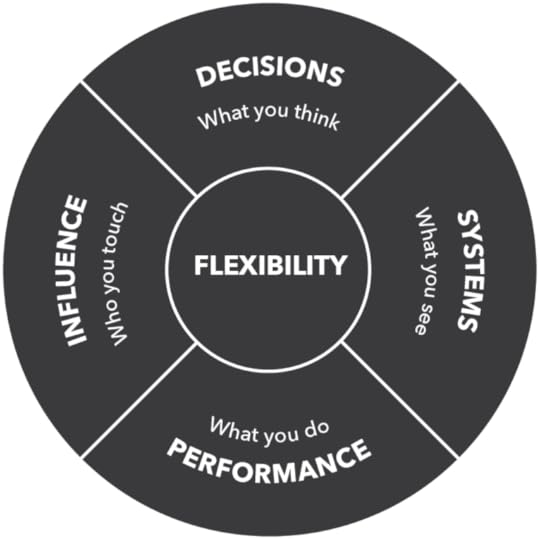
Skill one: flexibility
You need to be flexible - aware of your environment, open to new ideas and ready to change course while the world shifts around you. In a facilitation context, that means putting away your preconceptions and cultivating a sense of consistent and compassionate curiosity about what’s possible.
Skill two: decisions
You need to know how to make good decisions - which is all about the process, not the outcome. In a facilitation context, that means putting your attention into structuring the conversation - the right people, at the right time, talking about the right thing, with the right attitude - rather than attaching to an outcome.
Skill three: systems
You need to think in systems - which is all about perspective. Rather than focusing on the symptoms of your problem, you encourage others to zoom out and work together to see how the puzzle pieces fit together, and what the underlying issues are.
Skill four: performance
You need to understand the true drivers of performance - which is all about focus and empowerment. Rather than getting entangled in the work yourself, or bulldozing your way to the finish, you help others to narrow their focus to what matters the most, and create the conditions where they are able to make those priorities a reality.
Skill five: influence
You need to prioritise influence - which is all about mobilising others to action. Rather than worrying about how to communicate, or what to put on your slides, put your energy into building a coalition of enthusiastic collaborators who feel heard and seen.
Do these things, and you’re not the know-it-all leader, but you’re not the know-nothing facilitator, either.
You’re a strategic conversation leader, drawing on your expertise to mobilise others and drive change… outside of the room.
And who doesn’t want to be that?
 Learn more about… leading strategic conversations
How to lead change… when people don’t seem to care
It’s hard enough to get people’s attention, much less their commitment. Inside: your toolkit for leading conversations that drive change.
Check out a treasure trove of upcoming and recorded webinars on how to ask tricky questions and build buy-in for your change initiative.
Check out Meetings that Matter for a four-week intensive on how to build buy-in and lead conversations that drive change.
Here’s a curriculum sneak-peek on bringing your expertise into the room:
The number one untaught leadership skill
Estimated reading time: 5 minutes
Leadership used to be a simple affair. The boss knew all the things, and told all the people who worked for them what to do.
Nice. Simple. Clear.
With the explosion of knowledge work, it’s not quite this easy any more. Leaders aren’t always the experts anymore - and nor should they be.
Who’s the expert now?Peter Drucker defines a knowledge worker as “people who know more about what they are doing than their boss does.” I love this simple, plain-language summary of the changing leader-follower relationship.
In this new dynamic, it’s not enough to be able to tell people what to do. In fact, you often can’t, because you probably don’t know what the right thing is.
In most teams today, the leader-as-expert paradigm has been tipped on its head. As an expert, your job was to have the answers. As a leader, your job is to enable your team to find the answers.
Which isn’t to say that’s easy. Because it’s not that your expertise doesn’t matter. In fact, leaders without domain-specific expertise generally have to work harder to gain the respect of their teams. General managers, or people that come in from other sectors, can struggle to understand their context, design suitable systems and motivate and reward people effectively. For commercial leaders in complex technical fields, like law, medicine or engineering, this can be double-tough.
Research tells us that leaders with domain-specific expertise consistently enjoy increased credibility, are better able to support first-rate technical performance and appropriately hold their teams to account. They also find it easier to communicate with their people in ways that resonate. So, yeah. What you know counts.
But you can’t know it all, and the more senior you are, the more you’d have to know. No-one expects the CEO to be a marketing whiz, IT guru, subject-matter expert, communications visionary all in one (or at least, they shouldn’t) but they do expect you to know enough to ask the right questions.
Enter: the strategic conversation leader.
The strategic conversation leader Finding the expertise/leadership sweet spot lies in knowing enough to ask good questions. It means knowing enough to enable the right kind of work, rather than do it, or direct it. To curate information instead of just seek or create it. To do the right things, instead of do things right. To put meaning ahead of accuracy.
This is the work of the strategic conversation leader.
I might be biased here - I’m a career facilitator after all - but I’m convinced that the leaders who’ve mastered the skill of leading strategic conversations have a huge edge on those who don’t.
They’re the ones who are able to marshall and mobilise their teams in the right direction, to draw insight from the clever people they hire, and to build ownership and engagement that sustains.
Sure, you can just work on your communication skills instead. You can find the right way to tell, persuade, command or manipulate people into doing what you think is right. But if that’s the goal, why bother having a team of clever people at all?
Strategic conversation leaders know better. They know that when it comes to setting direction or rolling out change, they need to harness the collective power of talented individuals, so that those people can get out there and make good things happen. I’m not the only one that thinks so, either. In one of my favourite books on the topic - Moments of Impact - Ertel & Solomon argue that leading strategic conversations that drive change is the most important leadership skill that you’ve never been taught. I couldn’t agree more.
Basic facilitation won’t cut it Here’s where it gets tricky, though. Regular facilitation training is unlikely to help you.
You’re not just a facilitator. Traditional facilitation, like early leadership, was a clearly defined task.
An objective, process-driven person would rock in with a handy-dandy toolbox full of exercises, remain totally detached from the outcome, and make sure a group delivered an outcome.
They had no skin in the game, and the responsibility for making conversations a reality stayed with the people in the room.
When you’re the leader, it’s a bit murkier. You’ve got responsibility here. The outcomes of your conversations - and the change they inspire - rest on your shoulders. You’re holding a strong sense of vision and direction, and your teams look to you for that. So, what do you do?
You learn to ask tricky questions. You take your ego out of the game. You slowly and consistently build a reputation for being onto-it, but open. You genuinely open yourself up to the brilliance of your people, and master the art of supporting them to succeed and holding them accountable, in equal measure.
Five strategic conversation leadership skills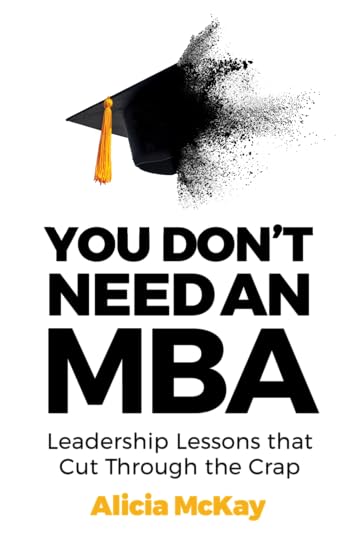
In my upcoming book You Don’t Need An MBA, I outline the five key areas that today’s strategic leader needs to succeed in an uncertain environment.
Each of these five areas comes into play here.
You need to be flexible - aware of your environment, open to new ideas and ready to change course while the world shifts around you. In a facilitation context, that means putting away your preconceptions and cultivating a sense of consistent and compassionate curiosity about what’s possible.
2. You need to know how to make good decisions - which is all about the process, not the outcome. In a facilitation context, that means putting your attention into structuring the conversation - the right people, at the right time, talking about the right thing, with the right attitude - rather than attaching to an outcome.
3. You need to think in systems - which is all about perspective. Rather than focusing on the symptoms of your problem, you encourage others to zoom out and work together to see how the puzzle pieces fit together, and what the underlying issues are.
4. You need to understand the true drivers of performance - which is all about focus and empowerment. Rather than getting entangled in the work yourself, or bulldozing your way to the finish, you help others to narrow their focus to what matters the most, and create the conditions where they are able to make those priorities a reality.
5. You need to prioritise influence - which is all about mobilising others to action. Rather than worrying about how to communicate, or what to put on your slides, put your energy into building a coalition of enthusiastic collaborators who feel heard and seen.
Do these things, and you’re not the know-it-all leader, but you’re not the know-nothing facilitator, either.
You’re a strategic conversation leader, drawing on your expertise to mobilise others and drive change… outside of the room.
And who doesn’t want to be that?
Learn more about… leading strategic conversations How to lead change… when people don’t seem to care
It’s hard enough to get people’s attention, much less their commitment. Inside: your toolkit for leading conversations that drive change.
Check out a treasure trove of upcoming and recorded webinars on how to ask tricky questions and build buy-in for your change initiative.
Check out Meetings that Matter for a four-week intensive on how to build buy-in and lead conversations that drive change.
Here’s a curriculum sneak-peek on bringing your expertise into the room:
January 17, 2021
How to lead change… when people don’t seem to care
Estimated reading time: 8 minutes

I’ve seen a few articles recently suggesting that millennials now have a smaller attention span than a goldfish. Thanks to screen time, distraction and general inferiority, millennials have now fallen below goldfish on the focus ladder, checking in at only five seconds of uninterrupted focus time.
As it turns out, this ‘data’ is totally bogus. First of all, fish have exceptional memories. Goldfish can remember things for up to five months. If you've ever had fish or been near them and you want to rub your fingers over a fish tank, you'll see pretty quickly that they remember what that means.
Secondly, our attention spans haven't shrunk. What has changed is the density, saturation and quantity of information we're trying to jam into them. The number of ads we see a day, the amount of content that's coming at us, the number of emails that we have in our inbox, the number of messages that we've got on our phone, and the number of balls we're expected to juggle at any point in time. It’s a lot. There’s more of it, it’s trickier, it’s denser, and it’s asking more of us in response than at any point in history.
This means we're competing in a tough environment when we're trying to get people's attention, much less to secure their commitment or action. So we need to work a little harder to keep things moving.
Is that annoying? Sure. But that’s the environment we’re operating in, and if we can’t do anything to change it, we may as well work with it.
Dropping balls
There’s plenty of things that rob us of our time and energy. Compliance requirements. Process. Lack of sleep. People needs. The easy, trivial tasks that steal our bandwidth. Shifting priorities. Shifting dates. Shifting… everything. Life stuff. Personal stuff. Health stuff. General bullshit and drama.
Here’s the thing: it's really easy for us to drop what's important to us, right?
I have a commitment to a half-hour daily exercise practice that I know will undoubtedly transform my day and my mood. But what's the first thing to go if I stay up too late working and then I don't get enough sleep? …you guessed it. I don't exercise in the morning.
What have you started and loved lately, that you’ve dropped? A podcast you were listening to? A course you’ve signed up to? A new hobby you really enjoy? It’s easy to put away even the things we love the most, when life gets busy and we lose focus.
The lesson here is simple: we drop the things that are important to us, much less the things that are important to anyone else. So it’s even easier for other people to drop the commitments they’ve made to us. Which is fine, and understandable – but isn’t going to help us make progress.
So, what can we do? How do we get people involved with our initiative, strategy, working group or programme? It’s not hard, it just takes some thought.
Earning commitment
There are some basic preconditions we need to meet before we can expect people to commit. Unfortunately, in an organisational setting, we often rush. People often ask me to run workshops to get people to “own” a new programme – which is a pretty big ask for something they've never heard about before! It’s a bit like proposing on a first date.
(Now, there are some communities where you can get away with that. I spent my formative years in Ashburton, which is a town about an hour south of Christchurch. And I had three kids by 26. Things happen fast there. You go to a party, before you know it, you're having a baby. Your results may very)
Most of the time, though, a first date proposal won’t land. We've got to do a bit of work first. We've got to attract some interest. We've got to show them why they should be interested in what we've got to offer. We've got to prove that we can back it up. And then we can ask for a commitment.
Work's a bit the same.
Enter: your buy-in toolkit.
From toxic to transformational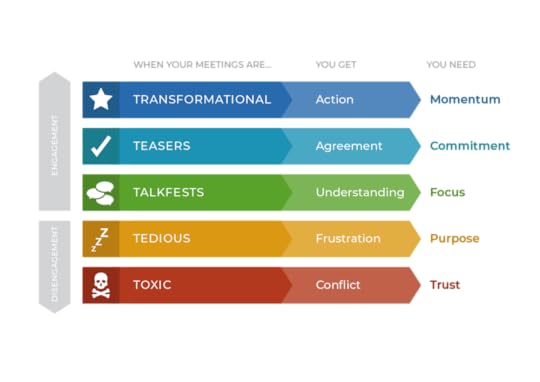
This magical ladder is the foundation of Meetings that Matter, and is an utterly indispensable tool to diagnose workshops, relationships and conversations of all kinds.
Toxic
The first level is toxic, or tense. When things are toxic, there's conflict. Sometimes it’s visible. Sometimes it isn’t, and it shows up as tension. Sometimes, it’s even trickier and it shows up as things we aren’t even saying.
Conflict is toxic, because it makes it really difficult for us to trust each other. And when people don't trust you, they can't hear a word that comes out of your mouth.
Or maybe they trust you, but they don't trust each other. It might be that they don't trust their boss right now, because they’ve heard rumours of a restructure. It might be siloed or adversarial relationships between teams. It might be tension within a team.
Either way, unless we’ve got a strong foundation of trust to work from, it’s extraordinarily difficult to go any further.
Top tips to build trust in conversation
Speak the same language. Thanks to processing fluency, people automatically trust you when you build familiarity through shared language.
Acknowledge current or historical grievances. Don’t pretend stuff didn’t happen - bring it up, work it into the big picture narrative and move on.
Don’t use jargon. If you send out a meeting invite that says, "We would like you to be involved in our continuous improvement, agile, change transformation, digital strategy programme” you’ve already lost the game.
Tedious
Trust is great, but it’s not enough. The next variety of relationship or meeting is the tedious one. Here, things are boring. And boring makes us frustrated. Because we have no real connection to what’s going on, and we don't really know or care what we're doing or why, we get frustrated at the time and energy we’re wasting.
If we want to put the tedium away, we need to connect to purpose. Rather than telling someone they need to be involved in a "Continuous improvement, digital strategy business change programme,", which sounds a lot like something boring they don’t have time for, connect to why you need a programme in the first place.
Try talking about the time that’s being wasted and the overwhelm experienced in your teams. Try talking about the impact on mental health and wellbeing. Try talking about the money being wasted on systems that don’t talk to each other.
Even better… try asking people why. Before you even start talking about what you need to do, or how you’ll make things better, take the space to ask people why it matters at all.
Top tips to connect to purpose:
Don’t tell, ask. A classic sales method is never to sell to someone – but have them sell to you. In a conversation with a potential client, I’ll never tell them why they need me – I’ll just ask them what they’re struggling with, and how things would be better if they could beat it.
Notice we're not even talking about ownership yet? We're just going, "Care, please. For the love of god, care about my thing." Because we've got to earn our way there.
When we have people connected to why something matters, the tide changes. We shift from a zone where people walk out of your conversations feeling worse than when they went in, to a situation where people are feeling better. Welcome to… the talkfest.
Talkfests
In the talkfest, everybody comes together and talk about what's going on. Talkfests have a really important role to play, because they build understanding. Knowing why something matters isn't enough. You have to be able to locate it in a broader context, and understand what’s going on.
What gets problematic is when we get stuck there. We come together to talk about things every six weeks, but nothing happens.
The problem here is that it’s all too much. We’ve got so much context that it feels immovable. So, to move on from a talkfest stage, we need focus. We need to focus our energy and we need to focus our attention on our most important priorities.
Top tips to bring focus to a talkfest:
Narrow the playing field. Ask questions like…
What are the three things we should focus on to move forward?
What are our priorities?
What matters the most?
If we could only fix one thing, what would it be?”
Teaser
Once we’re focused, we can move on from the talkfest and actually get some work done. Enter: the teaser. Here, we all trust each other, we all care, and we've agreed where to put our attention. Fantastic. You have now officially gotten further in your strategy and change process than most teams and organisations.
At this point, things are starting to feel quite good, because you've got agreement. You’re nodding your heads together. You’re leaving meetings on a Thursday afternoon feeling like you’re not wasting your time.
The problem is: people agreeing to things to your face or on email or in a room doesn't necessarily translate to people actually doing anything. If you’ve ever agreed on something in a meeting, and then been baffled when nothing happens, you’ll understand the danger of the teaser. It’s not because people don’t care – they’ve just got their own shit going on. They're overwhelmed. They're looking for a new apartment. They've got too many emails. They're dealing with people issues. The problem here isn’t a lack of care, but a lack of balance and personal connection.
Moving on from the teaser requires genuine commitment. Agreement is not enough. With commitment, people have real skin in the game. At this point, we move away from theory, and we ground people's focus and energy back to what our ideas really mean, for us. Which is why commitment is all about personal connection. What each person will fund. What each person will lead. What each person will change, do more of, do less of, or do differently.
The appointments they put in my calendar. The meetings they've scheduled. The purchases they’ve made. The conversations they’ve had. Commitment makes things real.
Top tip to build commitment:
Peer pressure works well here. Ask people to commit to action, within the next week, in front of others.
Note: this might not be about committing to implementation, or transformation. Sometimes, commitment is about taking the next step.
Transformational
At the transformational level, things feel quite magic. People aren’t coming together to talk about what they should do, or will do. They’re talking about the progress they’ve made, and the things they’ve done. In a transformation meeting, you’re sharing progress and action rather than ideas.
At this point, we need momentum. Because good things don’t happen by themselves. In between starting something and finishing something, there will always be any number of hurdles that are going to get in your way. Too many small, unacknowledged hurdles, and your project will die.
Rather than launching into a strategy process or a change process assuming that people will stay the course, assume that they won't. Build your communication and milestones in a way that support people, on a continuous basis. Celebrate small successes, and make them visible along the way, so that people feel committed to keeping things moving.
Top tip to build momentum:
Don’t prescribe to people what their ongoing commitment needs to be… ask them.
Where are your meetings and relationships currently at?
What can you do to take the next step up the ladder?
Learn more about building buy-in Check out upcoming and recorded webinars on building buy-in.
 sale Meetings that Matter Online March 2021
 Check out Meetings that Matter for a four-week intensive on how to build buy-in and lead conversations that drive change.
January 11, 2021
15 Signs You Might Be A Strategist
Estimated reading time: 8 minutes

When it comes to strategy, things aren’t that complicated. I shouldn’t even really have a job. But thanks to a litany of fancy MBA programmes and boring textbooks written by old white American dudes, strategy has become some kind of mystic art. It’s largely dominated by the Big 4, it’s swimming in a sea of complicated jargon and it makes us all the victim of long, expensive and mostly unreadable documents.
It doesn’t need to be like this. You heard it here first, kids: Strategy is simple.
In fact, if you’d like a strategy MBA in 4 minutes, here you go:
Strategy needs a strategistWhile strategy might be simple, if we want it to actually happen, then we need people who understand it, and who lead and work in a way that supports its execution. For that reason, the number one leadership training request I get is to teach people "how to be more strategic."
Now, in some ways, this is a bit of a misnomer. At heart, everyone is strategic. Our ability to strategise - join the dots, think long term and plan for the future - is the defining characteristic of being a human.
But… some of us embrace that side of our nature more than others.
If you’re wondering whether you might be a strategist, check out this list for the top 15 telltale signs.
You ask annoying questions
When everyone else is keen to accept what’s in front of them and crack on with it, you’re the one holding up the process. You’re probably asking questions like…
“Are we sure this is really a problem?”
“Do we need to do it like this?”
“Is there a better way to tackle this?”
My top three annoying questions, inspired by my three children are:
But why? - Courtesy of my 5-year-old, this one is best when asked 3-5 times. There is no easier way to dig below the surface and find the root causes of our problems than repeatedly asking why something is really happening. If you were hoping for a crash course on systems thinking, this is basically it.
So what? - Courtesy of my 10-year-old, this is best served with a touch of belligerence. Asking ‘so what’ is all about getting real on impacts and consequences. That way, we make sure we don’t waste our effort on minor things. This one can rub people (and mothers) the wrong way, but it’s important- not all problems need to be solved, and lots of things don’t really matter.
Is it, though…? - Courtesy of my 15-year-old, this is best asked with a dubious, authority-questioning inflection. Strategists know that we tend to make decisions that rest on untested assumptions, and that if we don’t check whether things are true now and again, we get into trouble.
Pro tip: To keep your friends and colleagues on side, learn when people just want you to listen, and to distinguish when urgency matters more than accuracy. In those times, your questions can be unhelpful.
2. You’re always thinking about the next step
… or twelve. You live in a state of perpetual discomfort. Before you’ve even reached the goal you’ve spent months striving for, you’ve moved the goalposts.
The weekend before your half marathon, you’ve booked into a full and you’ve googled “World’s most scenic 100 milers.” You hardly notice you’ve run the half.
Pro tip: Start to meditate. Presence makes things more enjoyable. Honestly.
3. You see angles everywhere
Everything becomes part of a potential narrative for you. If you’re in business, you’re thinking about the USP or commercial spin to outdo your competitors with.
If you’re a writer, you’re always thinking of new headlines or story arcs. Sometimes, you only need one or two facts to string together something exciting and compelling.
Pro tip: Try not to shut yourself off to non-conforming ideas too early. Once you’re locked into your own spin, you’re vulnerable to blind spots.
4. Your mind never stops It just goes and goes. People often ask if you ever ‘switch off.’ And then when you do try to chill out, the extra headspace seems to unleash little havoc bubbles of new creativity you didn’t see coming.
You’ll try to read or relax, but you keep having little ‘aha!’s that get in the way.
Pro tip: Run. It’s tiring. If that doesn’t work, write everything down.
5. You exhaust people Not everyone has, or wants, a master plan. When you see the potential in everything, this can be very frustrating for your friends and family who just want to be happy with their achievable goals.
Pro tip: Learn to accept where people are at on their journey, and be ready when they are.
6. You’re always running simulations
Budgets. Plans. Ideas. The scribbles are many. The ideas are plentiful.
It’s not enough for you to wonder ‘what if’, either. You immediately go looking for how it would work, and what the steps would be to get there. This is a great advantage, because you can turn dreams into reality. But the danger, of course, is missing the value of what’s right in front of you, and failing to appreciate what you already have.
Pro tip: Cultivate a gratitude practice. Journal each day.
7. You often start sentences with “isn’t it interesting how…”
You respond to new ideas with enthusiasm, often citing something you’ve read, or listened to recently. (‘Oh yes! I just heard a podcast about that…’)
This curiosity and boundless appetite for knowledge is beautiful, but it does risk eye rolls from people who’d prefer small talk (or you becoming the human Google of your family or friend group.)
Pro tip: Know when to put your things away.
…or, just don’t talk to boring people. That’s my preference.
8. You love change
It could even be said you’re a change junkie. When the shit hits the fan and other people look panicked, you’re trying to keep the glee off your face for the sake of politeness. Change means challenge and innovation to you, which are two of your favourite things.
In fact, if you don’t have some change land in your lap regularly enough, you go out and create some.
Warning: this kind of preference can be needlessly disruptive to you, and the people in your life. It’s also a fast path to stress addiction, which, y’know, will slowly kill you. As my favourite strategy author and buddy Max McKeown famously said: “Change is inevitable. Progress is not.”
Pro tip: Make sure you’ve closed out your last batch of stress before you kick off another. Try not to f**k with things for the sake of it.
9. You know yourself
Strategists have a strong sense of who they are, and what they’re about.
You’ve got a clear vision, strong values and you know what you’re willing to tolerate… and what you’re not. You play a long game, and you’ve got rock solid boundaries to make that happen.
Of course, this can also make you insufferable, not much fun at parties, and more inflexible than you’d like.
Pro tip: Be open to emerging versions of your vision, and yourself.
10. You love a framework
This leads on from the simulation one, and for the most part, it’s great.
Because you know that every impossible-looking goal is just a series of steps you can follow (writing-a-book steps, running-a-marathon steps, starting-a-business steps), you’re a sucker for new approaches and theories.
5AM club? Sign you up! Cold showers? Totally! Lean? Agile? Servant leadership? Sure thing, you’ll have a crack!
This kind of experimentation is cool, until you become a fickle human guinea pig. For your family and team, it can be a pain in the ass to accommodate your latest thing… only for it to go in the bin a few weeks later.
Pro tip: Learn to sample principles and small steps at a time, instead of throwing yourself into a new system every three months.
11. Nothing’s ever done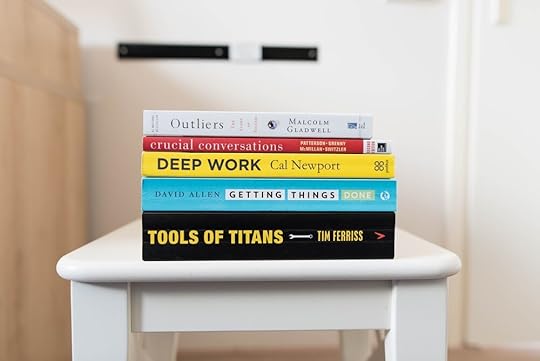
And why should it be? You get your best go, and then you get your next go!
You’re always optimising, tweaking your website, changing your setup and researching new tools. There’s always a smarter, faster, more innovative way to tackle something - and you love working out what those are. Which is cool… until you start wasting time that could be better spent elsewhere.
Pro tip: Learn when something is good enough and no longer deserves your energy. You’ve got bigger fish to fry.
12. You can be disconcertingly decisive
… especially for big decisions.
While you might dilly-dally on generating ideas or working out the right way to get somewhere, once you’ve made up your mind, that’s that.
Big decisions like which house to buy, which job to take, or which person to marry happen quickly.
(Or, hypothetically speaking, you might spend 3 months with half a dozen internet tabs open researching a new clothes dryer or standing desk, and be able to quote specifications people have never heard of, but you’ll launch a new programme after a 3-minute conversation and have registrations up on the same day. Hypothetically.)
Pro tip: Have a trusted truth-teller close by who can let you know if you’re being more impulsive than you realise.
13. You underestimate your own effort
You’re so accustomed to planning, researching and strategising your way through life, that it’s second nature now.
When people ask you how you achieved something, you’ll brush it off, or exclaim “oh, it’s easy! Anyone can do it!”
Which is partly true. But it also isn’t, because not everyone thinks like you do. And it wasn’t actually easy, you’ve just forgotten how hard it was now that you’ve reached the end and you’re eyeing up the next challenge. So, don’t be a dick about it.
Pro tip: Take the time to celebrate your achievements, and acknowledge how hard you worked for them.
14. You’re incredibly resilient
Strategists think a lot about risk, which means they prepare for and expect the worst. They know failure is part of the game they play, so instead of betting on things going well, they back themselves.
Over time, that bet pays off, and you learn that there’s pretty much nothing you can’t handle or work your way out of.
The obvious danger here is that you can get a bit cocky and fail on a much grander scale than you expected…. but that’s actually OK. The more insidious danger of your self-reliance is failing to depend enough on others. Anything that’s worth having is a collective effort, and anything world-changing needs other people to be on the journey with you.
Pro tip: Work on your collaboration skills. Impact needs scale.
15. You’re still reading this article
Yeah look, I know it’s a bit twee, but honestly - if you’re on a strategy website, and you’ve just read 14 points in an article about whether you’re a strategist…
You’re probably a strategist.
So, own it. As far as I’m concerned, strategists are the heart of progress. Yeah, it’s a bit exhausting at times - for you, and the people around you - but it’s thanks to people like you that things keep getting poked, prodded and fixed. Who wants to live in a world where the status quo is untested and nothing new happens?
Not me. But then, what would I know? I’m a strategist too.
I’m bringing strategy back.
(Yeah)
Them other leaders don’t know how to think.
(Yeah)
You think you’re special, what’s your master plan?
(Yeah)
So turn around, and I'll pick up the slack
(Yeah)
Take it to the bridge!
Ok, I’ll stop.
January 4, 2021
Boundaries 101: Your guide to personal and professional peace
Estimated reading time: 17 minutes

In a recent Wednesday Wisdom, I wrote about how to use a “flag system” to make better decisions about which things and people we want to be involved with, and which things we don’t. Red flags are signs and symptoms that experience has taught you will lead to trouble, while green flags are the opposite.

I’m really good at using flags in my professional life - particularly at identifying troublesome clients or projects, and taking early action to change or stop the situation…but the personal stuff is a work in progress.
Even harder is finding the balance between the two, and spotting the flags that suggest I’m compromising my own wellbeing in the process.
Work is an easier option, because it’s a known quantity, and I’ve had lots of practice. I’ve spent almost all of my career running my own business, so through practice, trial, error - and necessity -I’ve refined that filter.
(This is a polite way to say “I’ve been f**ked over enough to know when it’s coming, and I can’t afford it, so I’ve done something about it.”
That’s the thing about red flags, isn’t it? We don’t really know what they are until we’ve been burned.
That sounds a bit tragic, but it’s kind of beautiful. In the same way that no good deed goes unpunished, no disaster comes without a lesson we can use in the future. The real defeat is when we have to keep learning the same lessons over and over again.

What flags are really about is boundaries. Most of us know (even if we don’t always practice it) that when it comes to preserving our health, time, and energy, boundaries are critical.
If we don’t know when to draw a line and put our wellbeing first, we eventually burn out. We get tired, frustrated and resentful, and we drop balls.
We snap at the people we’re “doing all this for”, we lose passion for the stuff that used to get us out of bed, and we start to wonder why everything has to be so hard… and why other people aren’t stepping in to help us sort it out.
Here’s why: because it’s not about them. It’s about you. Boundaries are a gift you give to yourself. Which I’m sure you’ve read in a dozen different glossy self-help books, right?
Here’s what we don’t always recognise, though: boundaries are also a gift to others.
Signs that it’s time to set boundariesUnless we have clarity about where our shit starts and ends, others won’t know either. If you’re a serial responsibility-taker or over-functioner, you’re doing the people you care about a real disservice.
You’re denying them their own autonomy and chance to grow or change in ways that would serve them, and putting yourself on a fast-track to resentment.
If you find yourself thinking or saying things like “I really should...” or “I have to…” more often than you’d like, or you regularly feeling taken advantage of, disappointed, or frustrated by not getting what you want out of life, it’s time to set some personal boundaries.
(Sure, you could try and change the people you interact with, or the way the world works instead - and hey, good luck. Sometimes that works. But if you lack the time and energy, and don’t want to spend more time feeling like shit than you need to, you might want to try another tack.)
WTF are boundaries?Boundaries are the decisions you make ahead of time about what you will do, accept and take responsibility for - and what you won’t.
They are your personal policy manual and protective shield against avoidable bullsh*t.
Not only are boundaries powerful, they’re an excellent time and agony saver. The more decisions we can make ahead of time, the better we conserve ourselves for the tricky stuff. Peter Cook reckons this is his number one productivity hack.
Boundaries are the perfect example of a decision made once - once we know what they are, we use them as a cheat-sheet for making good choices when we’re confronted with situations that have the potential to compromise us or mess with our values. Ambiguity is a breeding ground for boundary violation, so unless you show up with clarity on what matters to you, you’re fighting a losing battle.
Boundaries might be physical, intellectual, emotional, sexual, material, professional, or ethical. What they all have in common is that they are ours. While your boundaries might affect other people, they’re not about other people. You can’t decide what other people’s boundaries are or should be, or how they should react to yours. Just what you’re OK with, and what you’re not.
This all makes sense, right? You know this stuff already. Cool.
Here’s a few things you might not know about boundaries.
Boundaries are values on legs
Boundaries are invisible armour
Boundaries open doors.
Boundaries are values on legs
The only way to lead a meaningful life is to live in accordance with your values.
Unless you know what matters to you, and why, it’s really hard to feel good about your choices, especially when things go badly.
When things turn to shit, but you’re confident that you acted in accordance with your values, it’s easier to shrug it off and play the long game. Things don’t always go your way, but you sleep well at night.
But when you aren’t living from a values-led place, even the good stuff can feel hollow. When the bad stuff hits, you can find yourself trapped in an endless loop of guilt, blame, questioning and self-loathing. No good.
Unfortunately, values aren’t much good on their own. It’s like those companies that have fancy posters on the wall about sustainability or diversity, but then work with tobacco manufacturers and 80% of their staff are white males from middle-class families that studied the same degree.
The leaders who put those values together aren’t liars or villains. They’re well-intentioned people that missed a critical step - they didn’t give their values any legs. Enter: boundaries.
Companies who put a poster up about diversity need boundaries about who they will and won’t hire. What behaviour is acceptable in the workplace, and what isn’t. Which activities are company sponsored, and which aren’t.
Companies who put up a poster about sustainability need boundaries about who they will work with, and who they won’t. How they will dispose of their waste, and what kind of project decisions they will and won’t endorse.
The same is true in your leadership and personal life.
If your value is about spending time with family, you draw boundaries about which of your personal time is off limits, what kind of commitments you’re willing to take on, and what you’ll say no to.
If your value is honesty, you decide what you’ll disclose to your partner, and how.
If your value is connection, you make choices about who to keep in your life and how to make those relationships a priority.
If your value is health, you make choices about what to eat, when to exercise and what to avoid.
Without clear boundaries, you have to make these kinds of decisions in the moment, and it’s much harder for your values to thrive. Once you know what you’re willing to suffer for, and make tricky choices ahead of time, you make better choices on the daily.
Boundaries are your invisible armour
Boundaries are a protective barrier between your identity, and the world outside. Because here’s the beautiful thing: once you’ve decided to take responsibility for your own feelings, thoughts and behaviours, you take back any power that you’d delegated to others.
If you’ve ever lamented someone for ‘making you feel’ a certain way, it’s definitely time to set some boundaries.
No-one can make you feel anything. They can make their own choices and decisions which affect you, and give you cause to respond, but they don’t have control of your life, or your emotions.
When you make conscious decisions about what you will and won’t tolerate, and something or someone violates that code, you’re not powerless. When you have clear boundaries, you seize the opportunity to act in accordance with your values, and use the disappointment or frustration to get better at identifying red flags in the future,
Boundaries are like an impermeable personal responsibility shield that keeps you connected, in healthy ways, to the people and events around you, while maintaining an iron wall around your values.
Boundaries don’t require you prove anything, explain anything, mount a case or convince other people to agree with you. Because boundaries are all about personal values, they become a personal policy. Personal policies don’t come with judgement or blame, and they don’t need other people to have the same position.
Take this example - you’ve been asked to come to a committee meeting on Tuesday night, and it would mean crossing a family boundary. When your boundaries aren’t clear, and you don’t own your responses, you might be able to turn it down, but it would probably sound something like…
“I can’t come to the meeting on Tuesday night, I’m so sorry. It’s just that Matthew has his karate grading that night, and I haven’t been home for dinner twice already this week. I hate letting you down, but I really don’t want Matthew to think I don’t care, you know? He’s had such a wobbly year at school. And George has been so good about picking up the slack while I get this project done at work, I really feel like he needs a break. I hope you understand? It’s really hard to balance work and family sometimes, especially in this place where everyone seems to be OK with out of hours stuff. It’s a crappy culture, actually. I find it tough. But I would so be there if I could. Just not this time. Please don’t hate me!”
Ugh.
When you have clear boundaries, you don’t need all the apologies and passive-aggression. You don’t hand-ball the reasons for your decisions onto other people’s issues (like the kid, or the husband) or try to take responsibility for how the receiver will feel.
Instead you just say things like:
“I won’t be at the meeting on Tuesday, it’s family time.”
or
“I don’t work on Tuesday nights.”
or
“I have a personal policy to go to all of my children’s sporting events.”
End of story. Armour intact. Friendly smile. Moving on.
Boundaries open doors
Boundaries are an inherent contradiction. On the face of it, they’re about closing doors and saying no to things. Which means that one of the hardest things about setting boundaries is FOMO - fear of missing out. When we say no to a friend, event, opportunity, project or job, it’s easy to get tangled up in what we’ll lose, even if we’re certain it’s the right choice.
Our little brains quickly mount an internal protest, urging us to consider all the things we could have if we just let this one slide. The money! The fun! The popularity! The promotion! The satisfaction of pulling off the impossible!
When the carrot doesn’t work, our asshole brains then turn to the stick, planting grave fears like
“What if another job or client doesn’t come along, and I go broke?”
“What if people think I’m boring and don’t want to hang out with me anymore?”
“What if I get stuck in the same job forever?”
“What if someone else gets the glory and I fall behind?”
Here’s your secret weapon against that annoying inner voice: focusing on the open doors.
When you close the doors that aren’t right for you, you create the opportunity for new ones to open.
Your company’s stance on sustainability might lose you three shitty clients, but then earn you one passionate, aligned one that propels you to the next level.
Your personal policy on drinking might lose you a couple of hours messy bonding after midnight, but open the door to Sunday mornings spent trail running with a new buddy instead of a day lost to eating hangover pizza alone in bed.
Your relationship boundary on me-time might result in a grumpy spouse today, but open the door to a happy marriage that goes the distance.
Your social boundary on having tech-free evenings might mean you miss an in-joke from group chat, but open the door to taking the painting course you’ve been talking about for years.
Your financial boundary about group holidays might see you miss out on a killer Air B’n’B weekend, but open the door to buying your own house sooner.
The trick is to focus on the doors you’re opening, not the ones you’re closing. You chose those values for a reason, give them a chance to happen.
How to set boundaries
Now that you know what boundaries are all about, and you’re enthusiastic to get started, what do you do?
Cancel everything? Go on a social media tirade about all the shit you’re not going to put up with anymore? Tell your kids and partner that the gravy train on responsibility-taking is over? Quit your job? Get a rebel tattoo?
I mean, yeah. You can definitely do that if you want. I’m personally inclined to a bit of drastic life-change myself. Send me an update on how it goes.
If you’d like a more measured approach however, you might want to do it this way:
Take an inventory
Check your values
Convert your shoulds
Look for small wins
Communicate with respect.
Step One: Take an inventory
Draw up three columns on a piece of paper, and head them up: “obligations” “resentment” and “unease”.
In the first column, write down all the things you think you should be doing, and leave two lines after each one.
You might write personal things like “I should get more sleep” “I should spend more time with the kids” “I should have a tidier house” or professional things like “I should join that working group” “I should earn more revenue this quarter” and “I should find a better job.”
In the second column, write down all the things that have been pissing you off about others lately. You might write personal things like “My kids don’t look after the stuff I buy them” “My husband doesn’t recognise how much more I do around here” or “My mother doesn’t realise how much pressure I’m under at work.” You might write professional things like “I’m the only one who sends my reports in on time” “My direct report always stuffs up important emails so I have to double-check everything” “My boss doesn’t realise how long it takes to roll out a new system.” Again, leave two lines after each entry.
In the third column, write down all the things you’re involved with that don’t sit quite right, or that have been weighing on you. You might write personal things like “My best friend is having an affair” or professional things like “We’re misleading our customers on response times”.
And (you guessed it) leave two lines after each entry.
Step two: check your values
Now, for each of the entries in your inventory, identify which of your values this is butting up against. (If you don’t know what your values are yet, it’s definitely time to have a crack. Have a read of this article, or try this online test as a start.)
You might write “health” next to the sleep thing, “fairness” next to the lazy husband thing, and “honesty” next to your dodgy best friend’s entry.
Take a look, and see what comes up most often. You’ll probably have a clear theme: you might have a strong value for reliability, for example, which being tested at work. You might have a strong value about family, and you’re not currently living up to it.
The most common value violations are the most important ones for you to solve. Those are the things that keep that gnawing feeling in your gut, and make it hard for you to bring your best to the things that you do really care about.
Step three: Convert your shoulds
Every one of your three columns is about a ‘should’. The first column is about what you should be doing. The second two columns are about what you think others should be doing.
But here’s the thing: shoulds suck.
Shoulds have no agency. Shoulds are about obligation, guilt, frustration and resentment. Shoulds aren’t about activity, they’re about anguish.
So we need to get rid of them all. Instead of worrying about what you, and others should be doing, you need to take control of what you are doing, and what you’re not.
Column one - release guilt
In column one, use the space under each entry to convert them into I statements that starts with one of four options: ‘I must…’ ‘I must not…’ I ‘will’ or ‘I will not’.
For example, ‘I should sleep more’ might be a non-negotiable health value for you. Change that one to ‘I must sleep more’ and identify ways to make that a priority. Guilt, be gone.
‘I should have a better job’ might become ‘I will get a better job’ which creates actions for you to take.
Or you might realise that isn’t in alignment with your values at all. You’re just feeling comparison pressure against your friends, and you love your job. In which case, convert it to: ‘I will not get a different job.” Phew, obligation released.
Columns two and three - release resentment and unease
In the second column, consider which of those behaviours bother you the most, which ones are about your critical values, and what you need to do in response.
Remember: you can’t make your kids more responsible, your best friend more faithful, or your husband more appreciative. When you try and do that, you’re focusing your energy on things outside of your control, and taking responsibility for other people’s thoughts and behaviour - which is theirs to worry about.
Boundaries are your personal policies. They’re the decisions you make about who you will do, accept and take responsibility for. That doesn’t mean becoming an island, or that you can’t state your needs or ask for help. Instead, it means being clear about what your choices are, and not depending on the compliance of others for you to be happy.
So, for each of your second and third column entries, write in the gap underneath what a boundary would be that reflects your values, and isn’t dependent on other people for you to feel good about. Use the same “I will” or “I will not” format, but include an “I will release” section at the end, to affirm your personal responsibility.
They might be things like…
“I will not replace items that my children lose. If they need to replace them, they will need to make their own purchases. I will release my bitterness or disappointment.”
“I will only do the household tasks that bother me the most. I will ask my husband to be more involved in the housework, and let him know which things would be most helpful. I will release guilt and responsibility for the rest - either they will happen, or they won’t.”
“I will be clear and respectful in my project plans and recommendations about timeframes, and I will not take on projects with unreasonable deadlines. I will release fear of damaging the relationship with my manager - either my opinion is respected, or it isn’t.”
“I will not cover up for my best friend. I will release responsibility for her decisions - the consequences are for her to accept.”
“I will not lie to our customers. I will release fear of recrimination, because I need to work in a place that aligns to my values.”
For bonus points, try saying them out loud. Feels good, doesn’t it? Empowering… and a bit scary!
But that’s the thing about boundaries - if we aren’t committed to being brave and acting on them, they’re just values without legs. Every one of those conversions requires us to release our fear about other people’s reactions, or the consequences of our decisions.
Every one of those conversions requires us to take responsibility for our own behaviour, taking the power away from others to determine our feelings.
Every one of those conversions requires us to put our long game lens on, and to sacrifice short-term wins like popularity or peace, for long-term gains like respect or value.
And every one of those conversions is worth making, for your own personal peace.
Step four: choose small wins
Once you’ve done your inventory, and converted all of your shoulds into boundary statements, you might feel a bit overwhelmed.
It’s a lot of things to tackle at once, and the thought of sending your work, marriage, family, friends and personal life into disarray might be terrifying.
The good news is: that is unlikely to happen. Setting boundaries rarely goes as badly as we expect, especially not in the long term. In fact, most of the things we fear are:
A) The things we most need to do
B) Never as bad as we expect.
Check out this post for more on that.
You’re playing a long game, though - which means you don’t need to turn your life upside down all at once. The trick is to choose small, manageable wins that will create a snowball of boundary confidence.
Every time you can confidently state a boundary aloud, you get a little hit of agency dopamine, training your brain to enjoy it. Over time, you learn to feel good about taking control of your own choices, and it will become easier and easier.
Choose an easy one, and practice saying it out loud before you set it in action or have a conversation with anyone. Which brings me to…
Step five: Communicate with love
Boundaries are about love. Love for yourself, and love for others. Remember: when you don’t have a clear idea about where you start and another person ends, you aren’t loving them enough to grant them accountability and the chance to grow.
That means when we communicate our boundaries, they need to come from a place of love, not anger or frustration.
You can’t change others. This isn’t about their behaviour or choices - it’s about yours, and what you’re willing to do, accept or take responsibility for.
Boundaries are uniquely you. They’re a reflection of your personal values and policies, which doesn’t make them objectively ‘right’ - it just makes them right for you.
That means it’s important to stay in our own sphere of responsibility when we make requests of others, or let them know what we’ve decided to do.
It means saying things like:
“I have a personal policy against underquoting for work”
“I don’t use my phone on Sundays”
“I need more help around the house”
rather than judging or blaming statements like:
“You’re a devious prick with poor customer values and I won’t tolerate it”
“Using phones on the weekend is what’s creating a tech-addicted society and it’s setting a bad example for your children”
“I need more help around the house… because you never do anything and always expect me to pick up the mess”
These conversations won’t be easy to start with. You’ll get it wrong some of the time, make compromises you’re unhappy with, judgement calls that turn out to be misguided and lapse into finger-pointing more often than you would like.
That’s OK. You’re a flawed, learning human like the rest of us, who’s practising living a life with values and boundaries. The worst-case scenario here is that you learn what not to do, and adjust course as you go. And who’s responsibility will it be to fix that?
Yours. Because who else can you take responsibility for, but yourself?
Get out there and smash it, my boundary-setting bad-asses. I believe in you.