Alicia McKay's Blog, page 19
October 13, 2020
Freshen up your focus
If 2020 has taught us anything, it’s that priorities shift.
As we returned to our homes, spent more time with our families, watched our health more carefully and started to question the way we’d been doing things, everything seemed up for question. Did we really need to be putting on expensive outfits, to get in expensive cars, drive to expensive offices, pay for expensive parking, and buy expensive coffees, in order to get things done? Did it really matter if we made more crap, got another promotion, travelled more countries, ticked more things off our never-ending to-do lists… or was there more?
In March this year, Kiwi-born UK poet Tomos Roberts (aka Tom Foolery) went viral with his poem The Great Realisation where he paints a utopian post-COVID future. It ends on a message of hope: “And so when we found the cure, and were allowed to go outside; we all preferred the world we found to the one we’d left behind.”
Here’s a secret: everything was always up for question. COVID just made it visible. How long for? It’s hard to tell. All the things we take for granted as the default – how we work, how we earn, how we live, what we care about, what our identities should be, how we should look – are always up for question, if we’re brave enough. Choices all carry their own risks and consequences, but there’s nothing we can’t do, just things we don’t want to suffer for.
As this crazy year rolls into its final stretch, my inbox is filling up with people asking for help to update their strategic plans, grasping for a way to pull people back into the fold and on board with their mission. Rather than reply to all of them individually, I made you all this: a little pick and mix of self-serve options for getting back on track. For those that can’t find 5K in their COVID frozen coffers, they’re doing it themselves, with a DIY kit in hand.
But here’s the thing: rewording all the stuff you’re already saying, updating the colours on your poster and changing “connection” for “inclusion” isn’t going to help you if you don’t have real priorities that you’re willing to make hard choices for. It’s not enough to tell me your buzzwords. I need your commitment.
If your priority is inclusion: what does that really mean? Are you willing to put your money where your mouth is? Piss off some influential stakeholders? Prioritise people over politics or promotion? Make it into the papers? Stay the course when the pressure come on? Risk a lawsuit?
It’s never been a better time to get clear on what really matters, and to do something about it.
Is it time you took another look at what matters to you?


Freshen up.
If 2020 has taught us anything, it’s that priorities shift.
As we returned to our homes, spent more time with our families, watched our health more carefully and started to question the way we’d been doing things, everything seemed up for question. Did we really need to be putting on expensive outfits, to get in expensive cars, drive to expensive offices, pay for expensive parking, and buy expensive coffees, in order to get things done? Did it really matter if we made more crap, got another promotion, travelled more countries, ticked more things off our never-ending to-do lists… or was there more?
In March this year, Kiwi-born UK poet Tomos Roberts (aka Tom Foolery) went viral with his poem The Great Realisation where he paints a utopian post-COVID future. It ends on a message of hope: “And so when we found the cure, and were allowed to go outside; we all preferred the world we found to the one we’d left behind.”
Here’s a secret: everything was always up for question. COVID just made it visible. How long for? It’s hard to tell. All the things we take for granted as the default – how we work, how we earn, how we live, what we care about, what our identities should be, how we should look – are always up for question, if we’re brave enough. Choices all carry their own risks and consequences, but there’s nothing we can’t do, just things we don’t want to suffer for.
As this crazy year rolls into its final stretch, my inbox is filling up with people asking for help to update their strategic plans, grasping for a way to pull people back into the fold and on board with their mission. Rather than reply to all of them individually, I made you all this: a little pick and mix of self-serve options for getting back on track. For those that can’t find 5K in their COVID frozen coffers, they’re doing it themselves, with a DIY kit in hand.
But here’s the thing: rewording all the stuff you’re already saying, updating the colours on your poster and changing “connection” for “inclusion” isn’t going to help you if you don’t have real priorities that you’re willing to make hard choices for. It’s not enough to tell me your buzzwords. I need your commitment.
If your priority is inclusion: what does that really mean? Are you willing to put your money where your mouth is? Piss off some influential stakeholders? Prioritise people over politics or promotion? Make it into the papers? Stay the course when the pressure come on? Risk a lawsuit?
It’s never been a better time to get clear on what really matters, and to do something about it.
Is it time you took another look at what matters to you?
Freshen Up.
If 2020 has taught us anything, it’s that priorities shift.
As we returned to our homes, spent more time with our families, watched our health more carefully and started to question the way we’d been doing things, everything seemed up for question. Did we really need to be putting on expensive outfits, to get in expensive cars, drive to expensive offices, pay for expensive parking, and buy expensive coffees, in order to get things done? Did it really matter if we made more crap, got another promotion, travelled more countries, ticked more things off our never-ending to-do lists… or was there more?
In March this year, Kiwi-born UK poet Tomos Roberts (aka Tom Foolery) went viral with his poem The Great Realisation where he paints a utopian post-COVID future. It ends on a message of hope: “And so when we found the cure, and were allowed to go outside; we all preferred the world we found to the one we’d left behind.”
Here’s a secret: everything was always up for question. COVID just made it visible. How long for? It’s hard to tell. All the things we take for granted as the default – how we work, how we earn, how we live, what we care about, what our identities should be, how we should look – are always up for question, if we’re brave enough. Choices all carry their own risks and consequences, but there’s nothing we can’t do, just things we don’t want to suffer for.
As this crazy year rolls into its final stretch, my inbox is filling up with people asking for help to update their strategic plans, grasping for a way to pull people back into the fold and on board with their mission. Rather than reply to all of them individually, I made you all this: a little pick and mix of self-serve options for getting back on track. For those that can’t find 5K in their COVID frozen coffers, they’re doing it themselves, with a DIY kit in hand.
But here’s the thing: rewording all the stuff you’re already saying, updating the colours on your poster and changing “connection” for “inclusion” isn’t going to help you if you don’t have real priorities that you’re willing to make hard choices for. It’s not enough to tell me your buzzwords. I need your commitment.
If your priority is inclusion: what does that really mean? Are you willing to put your money where your mouth is? Piss off some influential stakeholders? Prioritise people over politics or promotion? Make it into the papers? Stay the course when the pressure come on? Risk a lawsuit?
It’s never been a better time to get clear on what really matters, and to do something about it.
Is it time you took another look at what matters to you?
October 6, 2020
How to live your values
I’ve had an absolute sh*t of a few weeks. I’ve made some of the hardest choices I’ve ever had to make in my personal life, in the face of confusion, conflict and grief. The only thing that’s saved me, and preserved my mental health is clarity on my values. Knowing that integrity, freedom and responsibility have to come first has guided my choices, even though the consequences seem impossible.
In 2016, PayPal took a stand that made waves. When CEO Daniel Schulman discovered that North Carolina violated transgender rights by requiring people to use bathrooms corresponding with the gender on their birth certificates, PayPal cancelled construction on a new corporate office in Charlotte. They moved it, along with 400 jobs, to a different state. It was a controversial move, but it aligned with their purpose to 'focus on what connects us, instead of what separates us.'
PayPal took a stand on diversity early, when they decided to forbid websites that promote violence, hatred, or intolerance from using their platform. This sense of purpose and values has guided their business decisions ever since.
Every day, we make decisions about how we spend our time, attention, and energy. Those actions reflect our values. When we know and live our values, we’re more connected to our behaviour and we can focus on what matters.
Living your values is extraordinarily freeing. When you know what you’re not willing to compromise, you can let go of everything else.
To find your values, try asking what you most detest in others. The reverse is what you care about. If stinginess is upsetting, then you value generosity. If lateness offends, you value promptness. If groupthink grinds your gears, you value independence.
For bonus points, try upgrading your values. Mark Manson argues that not all values are created equally. Bad values are based on uncontrollable and destructive emotions, while good ones centre on controllable and constructive evidence. When we’re propelled by how we feel, we make distorted, short-term decisions. But when we’ve chosen our values carefully, we can override those instincts and make choices that really count.
Try replacing low-level values with more abstract versions. If you chase money, seek freedom. If you crave popularity, prioritise connection. Most importantly, commit to values that you have agency over. You can’t always control how much money you have or whether people like you, but you can control how you manage your time and how genuine you are.
What are your core values? What are you supporting right now, even tacitly, that doesn’t align with those? How would it feel to change those things?
Values.
I’ve had an absolute sh*t of a few weeks. I’ve made some of the hardest choices I’ve ever had to make in my personal life, in the face of confusion, conflict and grief. The only thing that’s saved me, and preserved my mental health is clarity on my values. Knowing that integrity, freedom and responsibility have to come first has guided my choices, even though the consequences seem impossible.
In 2016, PayPal took a stand that made waves. When CEO Daniel Schulman discovered that North Carolina violated transgender rights by requiring people to use bathrooms corresponding with the gender on their birth certificates, PayPal cancelled construction on a new corporate office in Charlotte. They moved it, along with 400 jobs, to a different state. It was a controversial move, but it aligned with their purpose to 'focus on what connects us, instead of what separates us.'
PayPal took a stand on diversity early, when they decided to forbid websites that promote violence, hatred, or intolerance from using their platform. This sense of purpose and values has guided their business decisions ever since.
Every day, we make decisions about how we spend our time, attention, and energy. Those actions reflect our values. When we know and live our values, we’re more connected to our behaviour and we can focus on what matters.
Living your values is extraordinarily freeing. When you know what you’re not willing to compromise, you can let go of everything else.
To find your values, try asking what you most detest in others. The reverse is what you care about. If stinginess is upsetting, then you value generosity. If lateness offends, you value promptness. If groupthink grinds your gears, you value independence.
For bonus points, try upgrading your values. Mark Manson argues that not all values are created equally. Bad values are based on uncontrollable and destructive emotions, while good ones centre on controllable and constructive evidence. When we’re propelled by how we feel, we make distorted, short-term decisions. But when we’ve chosen our values carefully, we can override those instincts and make choices that really count.
Try replacing low-level values with more abstract versions. If you chase money, seek freedom. If you crave popularity, prioritise connection. Most importantly, commit to values that you have agency over. You can’t always control how much money you have or whether people like you, but you can control how you manage your time and how genuine you are.
What are your core values? What are you supporting right now, even tacitly, that doesn’t align with those? How would it feel to change those things?
September 29, 2020
How to keep going
It’s hard to stick to new stuff.
We sign up to new things all the time – fitness regimes, ideas, podcasts, committees – and the initial burst of enthusiasm is usually enough to sustain the first days and weeks. After that, things start to fall away. Life happens. We miss a day, and then another of our fitness regime. We forget about that podcast we were into. We see the committee meeting in our calendar and groan a little, because we know we’ve got nothing to report this time. Things take longer to happen than we expect, and we lose faith and energy in the interim.
No matter how committed we are to something in principle, sustaining momentum is hard for everyone. Sometimes we get stalled because we’re waiting on someone or something else to happen and that delay becomes a killer. Sometimes, we just drop the ball. We know this, we live this – and yet we still launch into every new thing as though it will be different this time.
Epiphanies are exciting, but they’re not the stuff that transformation is made of. Real transformation might need a catalyst to get started, but after that, it’s about showing up and doing the work.
When you’re trying to lose weight, it really doesn’t matter what system you pick - if you stick to it, even when you’re not seeing the results you want initially, it will work. Personal or organisational change is the same – it’s far more about consistency than about creativity.
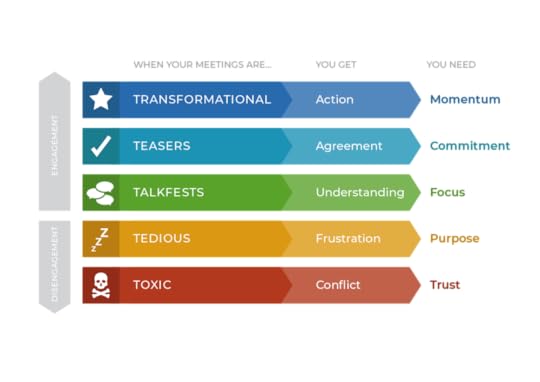
Sustain big change by taking small, incremental steps, and building the systems that make doing the right thing the easiest – or only - option. Plan for obstacles ahead of time, so you respond well when they hit (because they will). Know there will be a lag time between all your brilliant action, and seeing the results, and stick with it anyway. Assume that some days you will probably suck, and create habits, prompts, and routines that nudge you in the right direction even when things seem too hard.
Your initial commitment might give you the push, but you need momentum to keep moving – and as time goes on, your base level rises, so that even Sucky You is 10x better than Old You.
You will get there. Just keep going.
Keep going.
It’s hard to stick to new stuff.
We sign up to new things all the time – fitness regimes, ideas, podcasts, committees – and the initial burst of enthusiasm is usually enough to sustain the first days and weeks. After that, things start to fall away. Life happens. We miss a day, and then another of our fitness regime. We forget about that podcast we were into. We see the committee meeting in our calendar and groan a little, because we know we’ve got nothing to report this time. Things take longer to happen than we expect, and we lose faith and energy in the interim.
No matter how committed we are to something in principle, sustaining momentum is hard for everyone. Sometimes we get stalled because we’re waiting on someone or something else to happen and that delay becomes a killer. Sometimes, we just drop the ball. We know this, we live this – and yet we still launch into every new thing as though it will be different this time.
Epiphanies are exciting, but they’re not the stuff that transformation is made of. Real transformation might need a catalyst to get started, but after that, it’s about showing up and doing the work.
When you’re trying to lose weight, it really doesn’t matter what system you pick - if you stick to it, even when you’re not seeing the results you want initially, it will work. Personal or organisational change is the same – it’s far more about consistency than about creativity.
Sustain big change by taking small, incremental steps, and building the systems that make doing the right thing the easiest – or only - option. Plan for obstacles ahead of time, so you respond well when they hit (because they will). Know there will be a lag time between all your brilliant action, and seeing the results, and stick with it anyway. Assume that some days you will probably suck, and create habits, prompts, and routines that nudge you in the right direction even when things seem too hard.
Your initial commitment might give you the push, but you need momentum to keep moving – and as time goes on, your base level rises, so that even Sucky You is 10x better than Old You.
You will get there. Just keep going.
September 22, 2020
Commit or quit
Do you ever sit in a conversation where everybody furiously agrees, leave feeling great about what you’ve decided – but then nothing happens?
I see this a lot.
Everything important you’ve ever achieved has required commitment – from university to employment, marriage to children. Involvement isn’t enough. As the saying goes: the difference between involvement and commitment is like a bacon and egg breakfast. The chicken was involved, but the pig was committed.
Good decisions are not about what we should do or will try to do; they’re about what we will do. Fuzzy decisions fail. Good decisions demand a genuine commitment to action, which means:
A) Being extremely careful about what we say yes to, or tacitly agree to B) Only saying what we mean C) Taking tangible action that backs up our promises, as soon as possible.
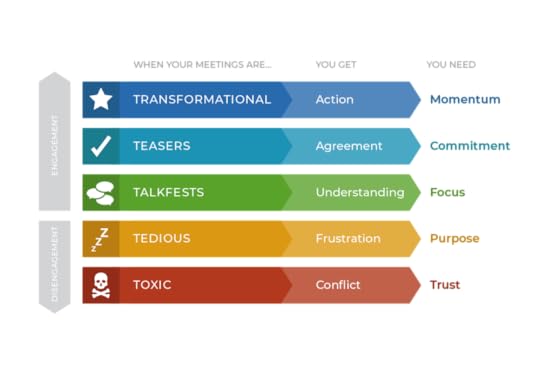
When it comes to change, you need to commit or quit.
For strategic conversations, that means securing a specific, tangible commitment from everyone in the room – and, when you can, taking action on that commitment immediately. In my workshops, I’ll often have people stand and publicly commit to the rest of the room what they’re going to do next, and when possible, I’ll have them make a phone call, schedule a meeting, send an email or take the next step before they leave the room.
The longer you leave it, the more likely it will die.
In your next important conversation, how can you make sure people really commit?
Commit or quit.
Do you ever sit in a conversation where everybody furiously agrees, leave feeling great about what you’ve decided – but then nothing happens?
I see this a lot.
Everything important you’ve ever achieved has required commitment – from university to employment, marriage to children. Involvement isn’t enough. As the saying goes: the difference between involvement and commitment is like a bacon and egg breakfast. The chicken was involved, but the pig was committed.
Good decisions are not about what we should do or will try to do; they’re about what we will do. Fuzzy decisions fail. Good decisions demand a genuine commitment to action, which means:
A) Being extremely careful about what we say yes to, or tacitly agree to B) Only saying what we mean C) Taking tangible action that backs up our promises, as soon as possible.
When it comes to change, you need to commit or quit.
For strategic conversations, that means securing a specific, tangible commitment from everyone in the room – and, when you can, taking action on that commitment immediately. In my workshops, I’ll often have people stand and publicly commit to the rest of the room what they’re going to do next, and when possible, I’ll have them make a phone call, schedule a meeting, send an email or take the next step before they leave the room.
The longer you leave it, the more likely it will die.
In your next important conversation, how can you make sure people really commit?
September 15, 2020
Taming talkfests.
Man, I get sick of people talking sh*t. To be fair, it’s an occupational hazard. I run strategy and leadership workshops, where people are used to coming along and saying lots of wise things before walking out, relieved they don’t actually have to do anything. It could be said that I’ve surrounded myself by professional sh*t-talkers – it’s even been said that I AM one!
It gets exhausting though, doesn’t it? Talking in circles and leaving in frustration when those conversations don’t turn into anything. Too many of those and mutual trust starts to break down. When we have the same conversation one too many times, we lose hope.
“If your actions don't live up to your words, you have nothing to say.” ― DaShanne Stokes
How many of you have been to meetings like that? ...How many of you are going to one today?!
Talkfests are important – they have a job to do. We can’t build understanding together, unless we get stuck into the whys and what-fors. If we don’t have a shared idea about the problem we’re solving, or the goal we’re aiming for, then we trip ourselves up later.
We covered this last week, when we talked about purpose. People need to care about the why, before they can even think about the what.
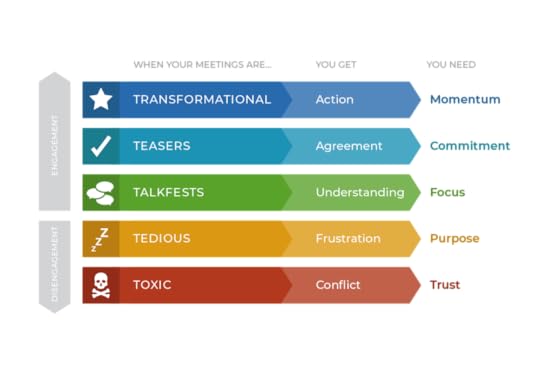
The problem is when we get stuck there. If we stay in the talkfest zone too long, our chances of changing anything drop right off. To get out of the talkfest vortex, we need to convert our insights into something real – and that starts with focus.
You can’t have change, unless you’re willing to let go of something. Change is not as well as – it’s instead of. And unless you know what matters the most, you won’t be able to let go with any conviction.
This is the stage where we need to make tricky trade-offs that will shape our choices and take us closer to action, and that’s not always easy. You will need to trade off things that matter. Things that you care about, value and worked hard to get – but aren’t serving you anymore.
That’s where focus comes in.
It’s where we ask questions like: who are we willing to let down? What can’t we do anymore? What scary thing will we have to confront? Where is our energy best spent, to create the kind of future we really want?
Nail those things, and magic starts to happen.
What do you reckon? Is it time for a tough conversation?