Alicia McKay's Blog, page 17
December 29, 2020
Your 2020 digest
Estimated reading time: 6 minutes

It would be easy to treat 2020 a bit like a regretful purchase – you know, when you throw the receipt away without looking at it, or when you stuff your shameful Big Mac evidence in the outside bin. You could even be forgiven for then wanting to set the bin on fire.
If that’s you – mate, no judgement here. Have a great holiday and toast a marshmallow for me!
But if you’re a bit more optimistic and sitting somewhere between “let’s try and salvage something from this dumpster fire of a year” and “I’m so grateful for all of the wonderful lessons and experiences this year brought me” then I’d love to invite you to create a bit of a 2020 digest – and I’m here to share mine with you too.
The final week of the year, as we hazily float between Christmas and New Years wondering what day of the week it is, and whether we care anyway, is about more than poor food decisions and annoying relatives.
It’s a great time to kick back with some fresh perspective and think about what the year held and what, if anything, we’d like to take with us into the next. Temporal milestones are important. Like little landmarks in our brains, they help us to draw lines and make sense of the structure of our lives – and a new year is one of the most powerful temporal milestones we’ve got at our disposal.
We get to zoom out, set intentions, and bask in the opportunity for a fresh start.
How to build your 2020 digestPick one word
Record your lessons
Credit your sources
Evaluate your opinions
Celebrate your achievements
Start, stop, keep
Choose your own adventure
2020 Digest Step 1: Pick One Word
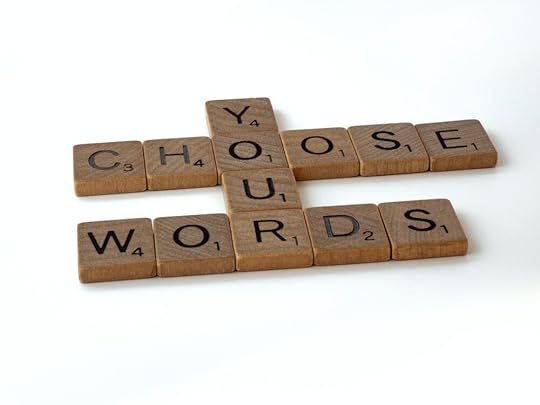
If you had to sum up your year in a word, what would it be?
For bonus points, have a think about what your 2019 word would be, and what your intention for 2021 will be too.
My 2019 word was exploration – all about adventure and challenge. 2020 was the year of realisation – when things broke down, and started to break through.
My 2021, I’ve decided, is going to be about connection – to purpose, to self and to others.
For more help with picking your word, check out Dr Jason Fox’s work here.
2020 Digest Step 2: Record Your Lessons
If 2020 had one thing going for it, it was lessons. Buckets of them. We learned, together, about what we were capable of. About what really mattered. About how we want to live, work and lead.
But lessons, if we don’t embed them, have a habit of wearing off. So before we launch into another year, have a think about the most important lessons you learned this year. They don’t need to be big and profound, you probably won’t remember them all, and you’ll get some of them wrong. It doesn’t matter. Just write them down.
In no particular order, here’s five important lessons I learned this year. In brief:
Values shape everything. There is nothing less gratifying than living a life out of alignment with your values – except a life that doesn’t have any.
It’s a long game. Very few of the things we get worked up about matter as much as we think they do.
You’ve only got your health. When our health is threatened, we’ll shut down the whole world for it, if we have to.
Nothing is as bad as you think. Every worst-case scenario you have planned for your life, health, relationships or work is much worse in your head than it is in real life. There’s nothing you can’t handle.
The process is the real work. We’re so used to reading heroes journeys and happy endings, that we’ve become accustomed to thinking it’s outcomes that make us happy. But we're wrong.
2020 Digest Step 3: Credit Your Sources
If you take the time to read my blogs, odds are that you’re a learner. A grower. Someone who’s hungry for insight, direction and development.
There’s an interesting paradox about learning though - the most powerful insights often feel so common-sense, once we understand them, that we can forget what it was like not to know. The Heath Brothers call this ‘the curse of knowledge.’
Break the curse, and consider all the places you drew ideas, inspiration and growth from this year. People, podcasts, books… the lot. That way, you’re well placed to share it with others and help them learn the things you’ve forgotten you didn’t used to know.
I like learning through reading, and I powered through over 100 books this year! Here’s 12 that I recommend.
2020 Digest Step 4: Evaluate Your Opinions
What did you change your mind about this year? What did you let go of? Importantly... how has that changed you as a person?
Here’s three things I changed my mind about this year.
Feelings - It turns out they actually drive everything, and they’re really important. Who knew?
Brene Brown - I don’t know why I resisted jumping on the Brene bandwagon for so long. Well, actually, I do. It’s an unnecessary oppositional response to anything popular or mainstream. It turns out, her work ticks all of my boxes: evidence-based, accessible, relevant in every area of our lives and utterly transformative… if you’re ready to listen. She’s great.
Doing nothing - I’m the first one to recommend the importance of space, especially where strategy and leadership is concerned, but my version of it usually has an agenda. A book to read, something to wonder about, a podcast to listen to, or a conversation to have. Doing nothing is hard – it requires us to genuinely be with ourselves, and that’s not always comfortable. But in the same way that building muscles requires intentional recovery between sessions for our torn fibres to rebuild, grow and strengthen, our ideas and selves need that too.
2020 Digest Step 5: List Your Achievements
What are you most proud of this year? What did you pull off? I can almost guarantee that you achieved more than you realise. Write them all down, map them across a timeline and then step back, satisfied. Nice one, you.
This year, I'm proud of:
Finishing my second book and landing a contract with Major St Publishing. You Don’t Need An MBA: Leadership Lessons that Cut Through the Crap hits stores April 2021.
Taking a break when I needed it. I held a lot of space for others during lockdown. I nurtured dozens of leadership teams through tough decisions, supported my team, clients and family and worked more than ever. After a few personal and health catalysts piled on, I crashed and burned - so I stopped. I cancelled everything and focused on my own wellbeing. I was upfront with my team, my clients, and my family about what I was doing and why it was important, and guess what? It was great. Nothing was ruined.
2020 Digest Step 6: Start, Stop, Keep
What did you start this year? What did you stop? Most importantly... what do you want to keep, as you roll into 2021?
If you don't choose it now, you risk forgetting or slipping back into old habits. Set the intention, and put them to life - make them real, schedule them and commit, today.
I started heaps of things this year. I'll be keeping:
What's On Your Mind - These chats with Digby have kept me sane all year, and your messages, feedback and support bring us joy each and every week.
A phone-free zone in the bedroom - A gamechanger for starting and ending the day.
Meetings that Matter - Strategic facilitation training for people who need to lead conversations that drive change. It's a beauty (and there’s 3 spots left, as of today, in our February intake!)
Long form blogs – I used to think people only wanted to read short things, and I needed to cut my thinking short. If the web traffic is anything to go by, I was wrong!
2020 Digest Step 6: Choose Your Own Adventure
Chances are that once you get your brain juices flowing, you'll unleash a flood.
Things you gained. Things you lost. Things you bought. Things you sold. Things you’re grateful for. Things you regret. Things that make you angry. Things that give you pause. Things that bring you joy. Places you went. People you met.
This bit is totally up to you. Get it all down, put it somewhere you can come back to... and then help yourself to some more Christmas leftovers.
You’ve earned it.
As for next year… who knows what’s coming?
All I know is, we need to be ready for anything. So take the time to consider your digest, and what you’re going to take into 2021 with you, to be ready and waiting.


Twelve books I enjoyed in 2020
I’m a book junkie - and I read over 100 in 2020! Here’s 12 books that I think are worth checking out.
On personal developmentThink Like a Monk by Jay Shetty – Mindfulness, purpose and connection, without the woo-woo.
Burnout: The Secret to Solving the Stress Cycle by Emily and Amelia Nagoski – A science-based, game-changing expose of the danger of accumulating stress over time, and a path forward.
On leadershipGive and Take: A Revolutionary Approach to Success by Adam M. Grant – An encouraging read on the power of generosity and contribution to generate success, for everyone.
Essentialism: The Disciplined Pursuit of Less by Greg McKeown – My most-gifted-to-clients book. Do more of the things that make you awesome and a whole lot less of everything else.
Upstream: How to Solve Problems Before They Happen by Dan Heath – This should be required reading for all aspiring strategists and managers. A compelling, plain language explanation of systems thinking.
On politics and societyPoverty Safari: Understanding the Anger of Britain’s Underclass by Darren McGarvey – One of my favourite books of all time. Scottish rapper Darren McGarvey tackles what I think is the most critical next frontier on diversity and equality – class.
Factfulness: Ten Reasons We're Wrong About The World (And Why Things Are Better Than You Think) by Hans Rosling – Even when things are really bad, they’re actually much better than they used to be. Packed with data and hope.
The Righteous Mind: Why Good People Are Divided by Politics and Religion by Jonathan Haidt – A brilliant read on how values and opinions work that I’m still processing.
On thinkingDecisive: How to Make Better Choices in Life and Work by Chip and Dan Heath - I’m a massive Heath Brothers fan… I’ve read them all at least once. This book is a great step-by-step guide to halt decision-making behaviours that get us into trouble and think more clearly.
Rebel Ideas: The Power of Diverse Thinking by Matthew Syed - Diversity isn’t a trendy nice to have… it’s a critical guard against the danger of sameness. Excellent read.
FictionShuggie Bain by Douglas Stuart - A gripping novel exploring how class, addiction and childhood experiences shape our lives.
American Dirt by Jeanine Cummins - A beautiful read that tells the tale of a mother and her son fleeing certain pain for an uncertain future.
Five important lessons I learned in 2020

If 2020 had one thing going for it, it was lessons. Buckets of them. We learned, together, about what we were capable of. About what really mattered. About how we want to live, work and lead.
But lessons, if we don’t embed them, have a habit of wearing off.
So, before we launch into another year, have a think about the most important lessons you learned this year. Importantly, don’t put any pressure on it. They don’t need to be big and profound, you probably won’t remember them all, and you’ll get some of them wrong. It doesn’t matter. Just write them down.
In no particular order, here’s five important lessons I learned this year.
Lesson One: Values shape everything.
There is nothing less gratifying than living a life out of alignment with your values – except for living a life that doesn’t have any.
Without a compass to check ourselves against, we unwittingly make choices that leave us feeling off at best, and self-loathing at worst.
If you’re not clear on what you stand for, and what matters most for you, it might be time.
When you’ve got your head around what your values are, try developing a set of ‘test’ questions for each one. I work with people and organisations on this all the time – asking: what’s your checklist? How do you test your decisions? How will you tell if it’s real?
For example, if your value is about contribution, you might have the question: “does this make a difference other people’s lives?”. Or, if your value is about collaboration, you might ask: “does everyone come out of this better off?” or “have all the right voices been included?”
The people, experiences, projects or quick thrills you compromise your integrity for are temporary. But you’ll have to live with yourself forever. So you’d better feel good about it.
Lesson Two: It’s a long game
Very few of the things we get worked up about matter as much as we think they do. Minor skirmishes and frustrations, deadlines, emails, meetings that look important on the surface often mean nothing as soon as they’re over.
Try checking your calendar from three months ago, if you don’t believe me. Paradoxically though, that means that it’s all the little things that really do matter.
How we spend our days is how we spend our lives, after all.
Personal lives filled with meaning and work lives rich with purpose don’t happen by accident. They’re built on the small decisions we make about how we show up, where our time and energy is spent and how we respond to the bullshit we’ll encounter every day.
When you make your small, daily decisions an obvious demonstration of your intention and values, your long game will take care of itself.
Lesson Three: You’ve only got your health
When our health is threatened, we’ll shut down the whole world for it, if we have to. Despite that, we live our lives pretending that it doesn’t. We prioritise all the things that 2020 showed us didn’t really matter, skipping exercise, cutting sleep short and grabbing something on the go.
We fork out thousands on our homes and cars, and then we defer going to the dentist, claim we can’t afford a personal trainer and put off getting our moles checked. Isn’t it time we changed that?
If you’ve been putting pressure on your body, torching it with chronic stress and disrespecting it, make no mistake: it will catch up with you eventually. Get out in front. Nothing else matters.
Lesson Four: Nothing is as bad as you think
Every worst-case scenario you have planned for your life, health, relationships or work is much worse in your head than it is in real life.
Natural disasters, job losses, relationship breakdowns, betrayals, regrets, failures… all the stuff we work up in our heads to be catastrophic can just… happen.
Despite setback after setback, the world keeps turning and in time, everything’s fine. There’s nothing you can’t handle.
If 2020 taught us anything, it must be that. So trust yourself. Face your fears head on (I love Tim Ferris’ ‘fear setting’ for this) and stop making excuses why you can’t handle the worst or do the scary thing. Of course you can.
Lesson Five: The process is the real work
We’re so used to reading heroes journeys and happy endings, that we’ve become accustomed to thinking it’s outcomes that make us happy.
Once we finish the project, find the right person, buy the perfect home, or get the dream job, our real life will start… right? Nup.
One of the most disconcerting things we can experience is achieving a goal, especially one that we’ve sacrificed for, and then realising we don’t feel any different. Everywhere you go, there you are.
Most people simply raise the stakes – often before they’ve even reached their first destination, living in a state of continuous dissatisfaction and striving. But there’s another way.
When you can drop your ‘When I… then I…” and “Once we… I can…” , you can start finding joy and taking pride in what you get from the process instead. Celebrate the interim wins, take the time to reflect on your progress and learn to love the journey.
Because it’s a long one.
December 16, 2020
Angry people

I woke up on Sunday morning full of Christmas spirit. Oh wait, no I didn't. I woke up on Sunday morning full of indignation, and channeled it into festivity. "2020 has taken enough from us!" I fumed as I pulled the tree out of it's box "... it's not taking Christmas!"
My children were mildly bemused, but got involved, decking the tree, scattering decorations around the house (don't underestimate the impact of tinsel in your houseplants) and wrapping gifts.
Truth be told, I was angry. And that anger has simmered away throughout the week, channeled at various things. People that have let me down. Tech that doesn't work. Things that are harder than they should be. Stuff I can't find.
The injustice!
Anger is not a feeling we're not encouraged to have. It makes people uncomfortable. It's associated with violence and destruction. We're taught to 'manage' - aka stifle - it... and that sucks. Because anger is important.
Anger is useful
Anger is great, because it's telling us something. Anger is saying: "Something needs to change." Fury is even stronger, and it's saying "Something really needs to change... now." Anger gives us the focus and energy to tackle things that aren't right.
Anger has an attractive cousin, too: passion. Who doesn't love a bit of passion? At a speaking gig to a room of risk professionals on Monday, I let loose on my frustration with senior leaders who are trapped in the weeds, and laid out my prescription for putting strategy first. "Wow, that was great!" said the MC in his concluding remarks "...I love your passion." Thanks, anger.
I use anger to fuel my #aliciarants series on LinkedIn too, where I take a regularly stab at the most infuriating leadership and change behaviours I see. These rants validate the experiences of others and provoke useful conversations about how to do better.
But anger often feels inappropriate, especially in the workplace. When we confront anger in others, we generally don't know what to do. So, we retreat, or, worst case, retaliate. Neither of these reactions is very helpful - so what can we do?
Let's break it down.
Anger means we care
Anger is a front
Anger can be channeled
Anger means we care
Anger = engagement.
If we care enough about something to get angry, it's a clue that we're dealing with something important. We wouldn't bother with a strong reaction to something we felt ambivalence toward. So before you dismiss your feelings, or try to shut them off (let's just shove that deep down, I'm sure that won't come back to bite...), take a moment and listen. Why is this important to you?
If you're facing angry people at work, or in workshops, you're a step ahead already - because you've got engagement, which is hard on the best of days. When you know how to understand and harness the anger of others, you can make great things happen.
Anger is a front
Anger is what psychologists call a secondary emotion. In plain speak, that means it's usually a front for something else we'd rather not feel. The two most popular primary emotions that anger masks are fear, or sadness.
Fear includes anxiety and worry, and is usually when we're afraid of losing something. If you're angry, ask yourself what you're really worried about. What are you afraid you might lose here? Is that true? What steps can you take to protect what matters to you?
If you're facing others who are scared, do the same thing. What's threatening about this situation? Instead of assuming people are just being a-holes, dig a layer deeper. Are they afraid of losing something? How can you address that?
Sadness includes disappointment and regret, and is usually about something we've lost. When we lose something significant to us, it's easier to get angry than feel the impact of it's absence. If you're sad, ask yourself what you're grieving. How can you express that? What steps can you take to recover a new version of what's gone?
(A hack for this one: if you're expressing your frustration to a trusted friend, and a hug has you suddenly fighting back tears... you're probably sad. That's cool. Work with it.)
If you're facing others who are sad, do the same thing. What are they disappointed about? How can you acknowledge and respect that? How can you facilitate a path forward?
(A hack for this one: don't hug other people without asking. It's dodgy territory.)
Anger can be channeled
It's OK to be angry. It's super OK to be scared or sad. It's not OK to be a d*ck about it, and it's not OK for others to behave badly either. Instead of retreating from your feelings, or the feelings of others (*sticking my fingers in my ears, la la la*) or retaliating, take the time to understand what sits underneath. What's worrying here, or what's been lost?
What injustice are you arc-ing up against? What can you do about it? What are the most important things for you to change? How can you get others on board and take action?
Harness anger for good
I'm a big fan of anger, when it's harnessed for good.
I love it when I walk into a workshop packed with warring factions and nervous tension, because I've got something to work with. What facilitator doesn't want a room full of people who care, and have the passion and focus to do something about it?
When you can channel that anger to unpack what's come before and create a new narrative together, powerful things happen. Trust builds. People connect. Problems are tackled. Change gets started - and it keeps going, because the energy to is there to keep momentum.
Next time you feel fury starting to bubble, don't push it away. Next time you walk into a room full of tension - silent, or expressed - don't despair. It's a great opportunity to create something new.
Breathe, put your own sh*t to the side, and get ready to make great things happen.
NEED MORE HELP? DOWNLOAD YOUR FREE GUIDE!
Most workshops are talk-fests. All Post-It notes, no action. But it doesn’t have to be that way. In this free guide, learn about the missing ingredients that take your workshops from toxic to transformational.
From building trust to establishing purpose and securing commitment - it’s all in here.
December 14, 2020
Facilitating difficult groups: 6 lessons I learned the hard way
Estimated reading time: 5 minutes
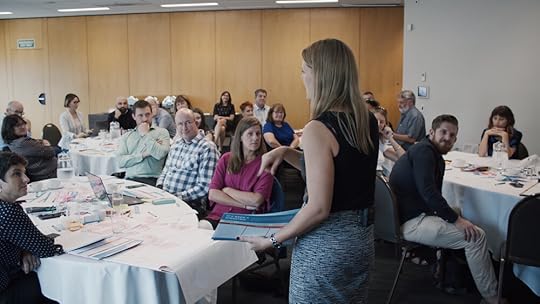
When I was 22 years old, a graduate policy wonk in my first real job, I was tasked with my first strategic planning assignment.
The brief: prepare a “Biodiversity Action Plan” for the district, acting on Council’s behalf.

I was handed a preselected working group – farmers, landowners, industry representatives, environmental protection groups, regional and central government - and told to “get them to agree on a plan for the future”.
… I think this is what’s known as a baptism by fire?
Either way, I set to my task with the kind of starry-eyed enthusiasm that only fresh grads have, and throughout a series of meetings, which weren’t all pleasant, we found our way.
That job taught me some of the most important lessons in my work as a facilitator, and I’ve drawn and built on those for the remainder of my career. On the face of it, it’s almost an impossible task, right? The representatives on my group had deeply entrenched positions, with a lot at stake. They had:
Wildly different ideas about what mattered most – in particular, the tension between economy and environment
Strong identities in their professional and personal roles – farmers in our district were representing a long, multi-generational tradition of working the land for production, while our unpaid activists had dedicated their lives to protecting our native species.
Lesson 1: Alignment is not agreement
From the outside, those positions looked untenable. How could we get people to agree, if it meant losing face on what mattered most to them?
Here’s the secret: alignment isn’t about agreement. It’s about productive disagreement. Real alignment, the stuff that brings diverse groups and communities together, is about productively disagreeing in a way that reaches consensus.
Lesson 2: Anger beats apathy
High-tension groups are great, because they care. Anger beats apathy every time. People that bring loud, strong opinions to a room like that (which they did!) are passionate, which means they’re engaged.
Rather than working to convince a room of decision-makers why they should care, which is often the first hurdle, the facilitator’s role in that environment is to harness the energy for good.
So, how did we do it? How did we reconcile opposing ideas and competing identities, to reach a solution that worked for everyone?
Lesson 3: Facts and feelings are unhelpful
If I’d asked anyone to give up their position, I would have been wasting my time. While we all tend to believe that our beliefs are based on evidence, we’re generally wrong. No-one’s feelings have ever been shifted by facts.
I could have tried though, telling the environmentalists about the annual GDP contribution of the local farms, the number of jobs they create, and the dependence of the town on supporting services and businesses. I could have stated the percentage of biodiversity loss to the farmers, outlined the forecast impact on the climate if we didn’t preserve balance in the ecosystem and explained the long-range impacts on the economy if we don’t become more sustainable.
But I didn’t.
So, did I try appealing to their emotions instead? Did I urge the compliance-focused regional council to think about how much they love using their lakes and rivers for recreation, and tug on the heartstrings of industry to restore the history of a lush Canterbury Plains?
No. Because those things don’t work. Both approaches require my participants to give something up. To admit that they’ve been wrong, and lose something.
Lesson 4: Find the sweet spotInstead of focusing on our differences, this group made progress when they could focus on what made them the same. We find this in the sweet spot between ideas and identities. The sweet spot isn’t made of facts, or feelings. It’s made of things like values, and shared narratives. This handy Meetings that Matter model helps us to see when we're in the sweet spot looks like:
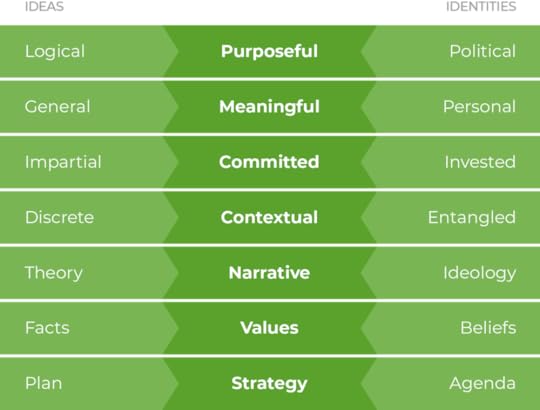
While we couldn’t agree on what came first: the economy, or the environment, there was some things we could furiously align on. Things like:
A deep respect for, and connection to, the land
and
A strong desire to preserve it for future generations – whether that was for farming, recreation or the survival of native bush.
Working from there, we were able to focus on what we gained, not what we lost. We developed a set of shared values, and created a shared narrative that looked to the future.
Lesson 5: Plans need principles, not positions
With our values and principles agreed and understood, the difference in positions began to dissolve.
With a pathway for making decisions together, we were able to put aside the things that kept us apart and stay focused on what united us, so that we could:
Ensure everyone could access and enjoy what our natural environment has to offer, now and in the future
Maintain a strong quality of life in our district, supported by a thriving economy
Preserve what was special and unique about our place, so we could be proud of it
Take responsibility for our local area and owning our role in making those things a reality.
With those principles laid out clearly, people were able to commit to taking action in their unique space that brought them to life, without being asked to lose any of the things that mattered most to them.
Lesson 6: Facilitators are translators
When I train facilitators, I draw on this story and others, and implore them to treat their role as a great privilege and responsibility.
Facilitators act as a bridge between worlds, able to translate the ideas and identities of their groups into a safe, shared space. They hear what isn’t said, extract the commonalities and meaning from often heated statements, and bring those things together to create something new.
This is a special job, and it isn’t for the fainthearted – but once you master those skills, you can take them everywhere. Family Christmas. Arguments with your spouse and children. Political tensions between friends.
With very few exceptions, people aren’t stupid or evil. They aren’t out to get you. The benefits of harnessing diversity in the way we think and the things we care about far outweigh the cons, even when we don’t always understand why others think the way they do – and as facilitator, you get to experience that every time you walk into a room.
Pretty cool, eh?
NEED MORE HELP? DOWNLOAD YOUR FREE GUIDE!Most workshops are talk-fests. All Post-It notes, no action. But it doesn’t have to be that way. In this free guide, learn about the missing ingredients that take your workshops from toxic to transformational.
From building trust to establishing purpose and securing commitment - it’s all in here.
December 8, 2020
How to move on

One of the most important ways we come to terms with unexpected events and uncertainty is to sense-make. I'm a huge fan of sense-making. I do it every week with Digby Scott on What's On Your Mind, and it brings tremendous value to my life.
I'm a career facilitator, so I built the first iteration of my business on helping others make sense of things. It's clear to me from personal and professional experience that when we don't take enough time to reflect on what's happened, and why, we rob ourselves and our teams of the opportunity to learn, grow and change things for the future.
But here's the thing: we can't stay there. Getting caught in a sense-making loop gets us stuck and keeps us looking backward. I know so many people that feel stuck right now. Teams are spinning their wheels. Leaders are getting nervous about how to gear up for another year of uncertainty, as people wallow in the malaise and fallout of the one we just had.
Will there be another wave?
Should we have managed the last one differently?
Did we make a mistake laying people off?
Did we make a mistake not laying people off?
What should we commit to?
Who should we commit to?
Should I have bought a house this year?
Should I have left my job?
Should we have changed our business completely?
…. and so it goes. So many questions, so few answers.
The truth is, it kind of doesn't matter. What's done is done. At some point, we just have to move on.
We all know someone who can't move on - from a hurt, an ex, a job, or a disappointment. Eventually, we don't want to hang out with them anymore, because we know we're going to hear the same old rehash. Maybe you're that person.
When we feel like that, on some level, it's because we don't want to move on. It's scary. It might mean doing something new and unknown. Confronting something uncomfortable about ourselves. Taking a risk. Losing something or someone we really care about. When things are uncertain, we often don't have any idea what we're even moving on to.
So what can we do?
The first step is to find acceptance.
Don't get me wrong, acceptance is hard. It's even harder when you're taking a whole family, team or business along with you. But if we can't accept things for what they are, we stay stuck.
When you reach a place of acceptance in your life, team or business, you start hearing phrases like:
"We've talked this to death. Now let's move forward."
"Of all the things we can't control - and there's a lot - let's get clear on what we can."
"This is a great map of our journey... what comes after this?"
"What's the title of the next chapter?"
Acceptance doesn't mean faking a silver lining. It doesn't mean justifying, rewriting the past, or supporting regretful decisions. It just means giving permission for things to be as they are, instead of struggling against them. Leaving things alone that you can't change. Acknowledging the past and present, without the anxiety, guilt or shame that comes with it.
Acceptance gives you peace, power and happiness. So, let go of regret. Let go of disappointment. Take a step back, and a deep breath, and bravely look toward the uncertain future. Things were never as certain as they looked. Things are never as bad as they seem. You've got the power to take charge.
I can't promise that your decisions will be right, or that the things you try will work. A good proportion of them won't. But it's a long game, and if you don't look forward now, you'll soon be the person that people avoid. The business people avoid working with. The leader people don't listen to. The team-member that drags everyone else down.
It's time to get unstuck, accept reality, and take new steps.
It's time to move on.

Get a head-start on your acceptance journey with these four baby steps:
Decide you want it
Acknowledge your reality
Define your frame
Choose your response

Step 1: Decide you want it
You can’t actually achieve something you don’t want yet. If you’re still holding on to your frustration, disappointment or anger, it might be because you want to. There’s probably a little voice inside you saying: “why should I accept this? This is bullsh*t!”
Yep, it probably is. But if you ever want to get on with your life, you have to want to accept it. Acceptance is widely misunderstood. When we’re battling, or we’ve been done wrong by, it’s easy to see acceptance as giving in. Weakness. Losing power.
This couldn’t be further from the truth. Acceptance gives you your power back, by freeing up your energy from all the things you can’t control.
Acceptance is not agreeing with, or acquiescing to what’s happened. It’s not about being weak - it’s about being strong enough to see things for what they are, and take action anyway. Acceptance is about making an intentional choice to put your precious and finite attention in places that will bring you progress.
Try asking questions like:
“Is this where I want to put my energy?”
“What do I get out of panicking, ruminating or complaining about this?”
“How much power am I giving up by sitting here stuck?”

Step 2: Acknowledge your reality
Acceptance needs awareness. You need to see things as they really are - not as you want to see them - if you’re ever going to move forward. Acknowledgement means sticking to the facts, and stripping away the stories we put with them.
For example…
“I lost my job" is acknowledgement.
“I lost my job because my boss is an unreasonable asshole” is a story that keeps us stuck in blame.
“I lost my job and now I’ve wasted years for nothing” is a story that keeps us stuck in anxiety.
or
“We need to find new revenue streams this year” is acknowledgement.
“We need to find a new revenue streams because COVID has ruined everything” is a story that keeps us stuck in disappointment.
“We need to find new revenue streams and we don’t have many options” is a story that keeps us stuck in fear.
When you’re observing your own thoughts, or the conversations of others, keep an ear out for stories and try to nip them in the bud. Try saying things like:
“That’s just a story we’re telling ourselves.”
“Let’s stick to the facts.”
“Let’s be honest with ourselves here.”

Step 3: Define your frame
Once you’ve acknowledged things for how they really are, you get to tell a better story. While you might not have any control over what happens, you do have control over your perspective.
With all of your unhelpful stories unearthed and put to bed, you can zoom out and start to ask some better, bigger-picture questions.
How does this fit into the scheme of things?
What chapter title will you give this bit?
What will this help with?
How can you grow from this?
What opportunities does it open up?
Once you define a new, more helpful frame, you’re getting close to real acceptance. You can tell, because you find yourself thinking and saying things like ‘I’m actually glad this happened, because…’ ‘If there’s one thing I’ve learned from this, it’s…’
This step isn’t about finding silver linings that don’t exist, but it is about taking a more useful view of your reality that you can do something with. When you focus on growth, learning and the big picture, you get out of the short-term stress response loop and come very close to moving on.
Step Four: Choose your response
When you’ve decided to move on, made peace with your reality and put things into perspective, all that’s left is the hard bit. You need to do things differently.
This isn’t about a list of new tasks, or a new project, though. These are what choices, which are only helpful when you’ve got some certainty about what’s coming next. Odds are, if you’re trying to accept something big, you have no idea what’s around the corner.
That’s cool. Acceptance isn’t about the what. It’s about how you’re going to show up and tackle the ongoing fallout. Acceptance is about taking the power back for your own behaviour and mindset, and living in accordance with those choices.
If you’ve lost your job, it might be choosing to stay open to new opportunities you haven’t considered.
If you’re looking for new revenue streams, it might be choosing to have confidence in your customer relationships and show them extra support.
If you’re coping with the end of a friendship or relationship, it might be choosing to have clear boundaries and standards for who you have in your life.
If you’re coping with a big personal or professional failure, it might be choosing to focus on the lessons you can learn and having conviction in your own abilities.
Try asking yourself, or your team:
“Who do we want to be, as we move on from this?”
“What matters most to us?”
“How can we respond in a way that we can be proud of when we look back?”
Bonus Step: Keep goingAbove all, acceptance isn’t an achievement to unlock, it’s a practice.
When things are tough, you’ll probably move in and out of these steps each and every day. That’s not a sign it isn’t working. It’s just more proof that things keep shifting, and that you can shift with them.
Challenge yourself, and those around you, and when you get it wrong… start again tomorrow.
You’ve got this.
Move on.
December 3, 2020
10 things to take charge of in 2021

During lockdown, I worked with a great executive team who had their head screwed on when it came to support. Seeing what was coming, they carefully handpicked a womb of different experts to support them while they navigated the pandemic for their organisation and community.
They had an expert on emotional intelligence, one on crisis resilience, and me, for making strategic decisions. In one of our planning sessions, Lance Burdett (our resilience expert) explained why COVID was having such a big impact on mental health, so quickly - and it’s stuck with me since.
Usually in a disaster, Lance explained, there’s a lag between the event and the psychological impact. I was living in Christchurch for the 2010/11 earthquakes, and this was definitely the case there. The months following the disaster were… busy. Everyone sprang into action. Shovelling liquefaction, looking after their neighbours, navigating insurance minefields and putting together memorials and support for bereaved families. It was hard, but it felt knowable, and there was lots that you could do. The eventual fallout came - and it was tough, with mental health needs skyrocketing - but it took a while to kick in.
Lockdown was quite different. The best thing we could do to help was to just… stay home. There was so little agency in our response that people fell into the doldrums, fast. By the second week of lockdown, people were reporting weird sleep, low motivation, and anxiety. And that was just in April.
We’ve now reached December, after spending most of the year in unknowable uncertainty, and it’s taking it’s toll. For many of us, our energy and sense of agency has taken a real beating. Ironically, this seems to be particularly true for those that did have something to do during lockdown. Everyone who sprang into hero mode, protecting their teams, families and businesses, are out of adrenaline now and things are just a bit… bleugh.
Well, bleugh no more. There’s no way of knowing what’s coming next year - at this point, nothing would be a surprise! But drawing on the lessons of the year, there are plenty of things you can take control of. Here’s ten. You can pick two.
One - Your buffer
Anything can turn to shit, at any time. Minor things - sick kids, traffic jams, car repairs. Major things - PR nightmares, natural disasters, pandemics. It doesn’t matter how well you plan, or how much you prepare, something’s going to throw you off course. When you’re running too close to the edge - financially, emotionally, physically or logistically - even minor things can be a nightmare. You need a buffer.
This year, the buffer’s taken a hit. Funds are down. Energy is low. Pressure is up. Some of you might have used all of it up, and you’re already in the red. But you don’t have to run dry. Make the choice now, figure out where your deficits are, and rebuild some space and margin in your life. An extra month’s expenses. A few hours a week of nothing time. An extra hour’s sleep each night.
Odds are, you’re going to need it.
Two - Your attitude
This year, I encountered a Nietzsche phrase that I adore: amor fati. A Latin term, it loosely translates to ‘a love of one’s fate.’ Brilliance. Nothing is inherently positive or negative. It just… is. Whether we like it or not, there’s a lot in our lives we can’t control.
When I work with leaders who are deep in the shit, I often ask them to try writing five or ten different headlines or interpretations of what’s just happened. We write a spread, all the way from doomsday proclamations, to nauseatingly positive spins. Around the third or fourth headline, the pin usually drops - the story is up to you. You can’t control what’s happened, but you can choose how to think about it. You can hate it, you can handle it or you can love it.
So why would you choose to do anything but love it?
Three - Your intention
2020 is a blip on the radar of your life. You’re playing a long game, and people who are serious about their long game all have one thing in common: a clear intention.
They might not know what’s coming, or how they’re going to make their intention a reality, but they know what they’re aiming for. They hold it lightly, but they take it seriously. These are the same people who are surprised when their dreams start to come to fruition, because they had so many roadbumps along the way. It’s not a surprise, it’s just how it works. Strong intentions, held lightly, act as a guide and filter for your decisions. They open up possibilities you wouldn’t see otherwise, and open your eyes to options others might miss.
Know yourself, and know what you’re aiming for.
Four - Your loose ends
The stuff we commit to, but don’t get done, doesn’t go away. It festers in your consciousness and weighs you down, making it hard to be great at the stuff you are doing. Worse, we don’t even know what half of it is. We know it’s there, but we’re too afraid to write it down and make a plan, because we know it will be overwhelming.
If just reading that paragraph makes you uneasy, this is the thing you need to take charge of - it’s time to tackle that backlog. You can’t work with what you can’t see, so make it visible. Make the list, make a plan, and start checking it off. Set a day aside over the break and kill it. Make the calls, book and order things, organise a tradesperson, hire that person, fire that other one, drop that broken thing in for repair. Once you get a roll on, it’s astonishing how quickly it all goes away.
Five - Your time
When I do strategy work, teams often tell me “this won’t need any extra budget, just time” or “I don’t think we need to take anything away to make room for this.” This is usually the point at which I start banging my head against the wall (or camera lens… #2020). Where do you think you’re getting extra time from? Can you bend the space time continuum? No. No you can’t.
You’ve got 24 hours in a day. 156 hours in a week. How do you want to spend them? What’s your ideal split, between work, family, friends and personal time? How much time should go on exercise? How much should go on your most important projects? It’s up to you. Kick off 2021 with some clarity about your spread, and organise your life to suit.
Six - Your tolerance
I’ve had kids for most of my life, and the one myth that I had to bust quickly was my vision of the calm, patient, Earth Mother I thought I would be. I thought the patience came with the kid, and I’m not sure whether mine had missing accessories, but… it didn’t. I’ve had to work at it.
Here’s what I do know: trying to change everyone around you is an exhausting and unwinnable battle. Your kids are always going to act up. There’s always going to be someone at work who makes your life hard. You’re always going to have to interact with frustration, distraction and general fuckery - so get better at it.
Meditate. Get therapy. Exercise. Write your frustration down. Learn to take deep breaths. Cancel your stress. Working on your own tolerance is a far more winnable battle.
Seven - Your technologyYour technology matters. If you’ve suffered through this year with an OK camera, a failing laptop, a shitty webcam, or a bunch of ‘does the job, sort of, with a workaround’ platforms, it’s time to sort it out.

Work out your ideal tech stack, buy the best you can afford, get rid of the rest and spend some of your downtime tinkering with it this holidays. Technology has never been more intuitive and user-friendly, and there has never been more free guidance out there about how to use it well. Don’t suffer the death-by-a-thousand-cuts that comes from using crap gear.
Eight - Your team
I’m genuinely baffled at some of the behaviour I’ve seen around team management this year. There’s been a full spectrum.. Panic redundancies followed by attempted rehires. Total isolation and freedom without accountability. Absolute micro-management and lack of trust. Attempted restructures. Refusal to hire. No professional development.
That’s cool, we did what we had to - but in 2021, it’s time to get it together. You might not know who, and you might not even know how, but it’s important to be clear about the capabilities you need around you. At home, work out the support you need and ask for it. At work, review your team for gaps and issues, and tackle them. In your personal life, think about who needs to be on your personal board of directors, and recruit. Nothing great is achieved alone, so stop limiting yourself.
Nine - Your homeIn January, returning from overseas after a year of ridiculous work travel, I said the following sentence:

“It would be nice to spend more time at home this year.”
I know. I’m sorry, everyone. I’ll take some of the blame for what happened.
Many of us have never spent this much time at home, and still more of us were surprised at how much we enjoyed it. Your home has been your sanctuary from the world - so make it a place you love to be. Buy great sheets - that’s what half of the hotel bill is anyway. Get into the garden. Sort out your maintenance. Light a scented candle. Clean out your garage. Water your houseplants. Cultivate love, respect and care for your safe place, and enjoy coming back to it everyday. You don’t know when you’ll be trapped there for weeks again.
Ten - Your health
This is last on the list, but that’s not indicative of it’s importance. Nothing, nothing, is more important than your health. When it comes down to it, we’ll shut the whole country down if we have to, when our health is at risk. So why do we keep playing games with it? Why are we so willing to trade off our health for all the crap that 2020 has shown us doesn’t matter anyway?
Most of us will happily hand over thousands to fix our car, or maintain our home, but wince at the cost of a trainer, surgery or dentist bill. Stop it. This is the perfect time for an inventory on the state of your mental, emotional and physical health. Book in a few months of therapy. Make daily exercise a priority. Change what you put in your mouth. Get that mole checked. Go to the dentist. Commit to a sleep schedule. Invest in your own wellbeing - when it comes down to it, it’s all you’ve really got.
December 1, 2020
How to plan for 2021 (and beyond)
This is usually the time of the year where I’d have my 2021 on the wall, month by month, meticulously planned out – significant pieces of work, trips away, and key events clearly marked. Conferences. Concerts. Holidays. Colour-coded. Organised. Beautiful.
Spoiler alert: I do not have 2021 on the wall right now. I’ve got January – April in scribbles next to me on my desk, and most of the usual items are written in pencil.
Every time I book a keynote for next year – like the Emerging Leaders Summit in June, or the Corporate PA Summit in September, I smile at the end of the conversation and think to myself “Yeah, righto. We’ll see…”
Given the dogs breakfast that was 2020, there’s no point planning for next year… right?
Wrong.
So, so wrong.
In times of high uncertainty, it’s more important than ever to take charge of your life. To get clear on what you really care about, what you want to do, how you want to spend your time, and what your intentions are for the next stage in your journey.'
What are you going to do otherwise, spin your wheels for a year? Waste another 12 months doing the same sh*t, with the same people, thinking about what you'll do once things "settle down"?
Are you going to be a victim of circumstance? Surrender like a plastic bag in the wind, swept up in the way you've always been, the way things always are, and other people's bullsh*t?
Not if you’re one of my tribe, you won’t.
You can absolutely make a plan… it just has to look a bit different.
Uncertainty management is a thing, and it’s time we learned it. When we plan for uncertainty, we focus a lot less on the 'what' - the details, deadlines and projects - and turn our attention to the 'why' and 'how. 'Why' questions strike to the core of our identity, purpose and values. 'How' questions ask us to consider our priorities, and the most important changes we need to make. When we have those things nailed, it doesn't matter what comes up on the daily - we just push it through the lens of what matters to us, and what we're aiming for, and act accordingly.
When it comes to uncertainty management, it’s never been more important for you to have an eye on your long game. Here’s the thing: when everything seems a bit f…raught, you’ve got two frames you can use:
Option one: Nothing makes sense anymore, so there’s nothing I can do
Option two: Nothing makes sense anymore, so I can do anything.
2021 Vision - Set Your Frame
When you use the second frame, the world all of a sudden opens up. Anything becomes possible. That’s the frame I want you to use, as you look ahead to the next year.
Planning for 2021 is all about throwing the shackles of the knowable out the window, and asking things like...
What really matters to you?
Who do you want to be?
What kind of life do you want to live?
What do you want to be remembered for?
What impact do you want to have on the world?
What you want to take from this year... and what you want to leave behind?
What choices would you have to make for that to be real?
What commitments would you have to set in stone?
What would you have to take a deep breath and let go of?
Who would you have to let down?
What support will you need - and how can you line that up now?
The answers might be easy. You might be more certain than ever of your values and intentions. 2020 might have only solidified that you're on the right track, and you just need to keep it up.
Or, the answers might be hard. You might be less confident than ever about your decisions and direction. The changes you want to make might appear impossibly large. Part of you doesn't dare to believe you can, because your answers might seem too big, or ridiculous, or far away to even get started - especially if you have no idea what's coming for you next year.
I mean, yeah. That's cool. But the uncertainty isn't a reason to shrink. The audacity of your ideas are no reason to put them down. The ambiguity of what 2021 will hold is a terrible excuse to freeze, because the time's going to pass anyway. We'll be here, next year, having this same conversation - and what do you want to be telling me then?
Here's what I know about you...
You can do anything. You're smart, you're capable and you're designed to do great things. You're here for a reason.
Things are always going to change, shift, morph and turn to sh*t. Whether it's a pandemic, an illness, a disaster at work, or a disaster at home**, there's plenty more in store. The only thing really standing in your way is you, and your ability to grab onto possibility... and do something.
So, what will it be?
November 24, 2020
4 steps to playing the long game

How was your 2020, overall? Mine was a nightmare, to be honest.
I worked so hard that I became an insufferable control freak, burnt out and temporarily hated everything. My first post-divorce relationship went up in a flaming pile of crap. My health fell in for a while, and a shoulder injury messed me up for months. One of my closest family members got a terminal cancer diagnosis. Oh, and, y’know, there was a global pandemic.
What a dick of a year.
But here’s the good news: 2021 probably won’t be any easier. COVID isn’t going anywhere, and the impacts are going to become more obvious and intense.
…Oh, wait, that’s not the good news. It’s just the news.
Here’s the actual good news: nothing matters as much as you think, in the long run.
Don’t believe me? Take a look at your calendar or to-do list from three months ago. Scroll through some of your messages with your best mate from a year ago.
The stuff that kept you awake at night, had you put in extra hours, or agonise over the right choice doesn’t seem such a big deal now, does it? If you simply hadn’t done a third of it, nothing much would have changed.
Now, think about some of the hardest things you’ve coped with. The stuff that felt unmanageable and you didn’t know how you’d get past. Odds are, it all worked out all right. In fact, you probably refer to that stuff now and appreciate how you changed, grew, or learned.
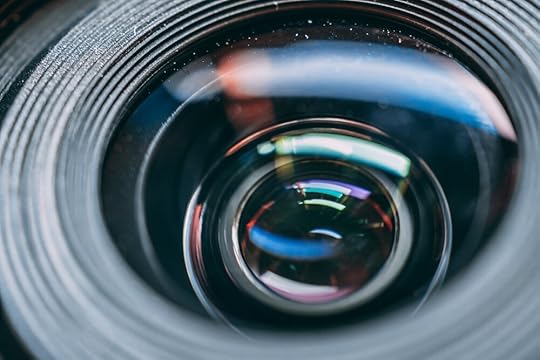
When you look back, you’ve got a long game lens . It's like a wide-angle setting for your brain.
When the long game lens is on, you see how individual choices, events, and upsets fit into the bigger picture, and you work those into your narrative.
We can do that for the past, and often for the future too. That’s how we set goals and make plans. But we struggle to do it for the present. It's why there's such a disconnect between strategy sessions and workplace behaviour - we get the long game lens out in the meeting room, and put it away again when we got back to our desk.
When we can bring some of that long-game perspective into the present, we see our options, choices and daily events differently. We ask questions like:
"Does this take me closer to the end goal?"
"How will I talk about this in a year's time?"
"Is this the best use of my time?"
"What consequences will this have?"
I’ve been making a concerted effort to bring a long-game lens into my present, and I can feel the difference.
I increase my weights more slowly at the gym and pay more attention to my form now – because I want long-term strength and fitness, and another injury would mess with that.
I don’t take on work that I’m not excited about or pull all-nighters - because I need the space and energy to work on the projects that are building the future
I cancel meetings if I'm unwell – because one meeting or client will be forgotten quickly, but shortchanging my recovery will have a ripple effect.
I don’t snap at my kids over their messy rooms as often* - because I want a lifelong relationship based on love and respect.
As a blackboard outside a coffee shop will probably tell you sometime soon, (but apparently John Lennon said first):
"Everything will be okay in the end. If it's not okay, it's not the end.”
That’s all well and good, but other than the fact that John Lennon was kind of a nutcase, it’s not helpful when you need to work out how to think differently now. If you didn’t feel like shit, you wouldn’t have stopped to read a quote like that in the first place.
Your long game toolkit
To get you started, here’s your top four tools in playing the long game:
Perspective
Purpose
Patience
Practice.

1 - Perspective will take care of your pain
The main reason things seem like such a big deal is because we’re too close to them. Daniel Kahneman* calls this WYSIATI (‘What You See Is All There Is’) but wise people have been telling us this for ages. You’ve probably said “you can’t see the wood for the trees” at some point.
Like most things, the Stoic philosophers had it nailed early on.
“Everything we see is a perspective. Not the truth.”
- Marcus Aurelius
The closer you are to something, the more important it seems. Our brains are wired to put immediate threats first, which makes sense from an evolutionary biology standpoint. We need to react to the threats in front of us, to stay alive. This is great when we’re staring down a woolly mammoth, but not so useful when we turn into reactive drama queens, panicking at every new email and catastrophising every relationship, project or meeting that doesn’t go to plan.
Given we’re so good at putting things into perspective in retrospect, it can be helpful to play Future You when everything seems unmanageable. Try thinking about your life as a book, and about this disaster or phase as an event or a chapter. How would it fit into the broader story, of what came before and what came next? What would this chapter be called?
If you’re not a reader (which seems unlikely, if you’ve read this far), try writing a list instead, titled something like ‘10 Reasons This Doesn’t Really Matter’ or ‘5 Reasons I’m Glad This Happened.’ For bonus points, read your list aloud. When we say things out loud, our brain believes us, and we’re naturally pretty good story tellers. Hack that annoying bias for good***.
2 - Purpose will give you perspective
It feels like our experiences are factual, because they’re tangible. If you can see, smell, hear or taste something, it must be real… right? Wrong. Our external world isn’t as objective as it seems. In short, most of what we experience is just a projection of our own shit.
Like Google, our mind runs on a series of filters, helpfully sorting through the metric tonne of sensory information available at any given time to present us with relevant results. This is great, if you’re a good Googler and you’re using the right search criteria. But if your criteria are unhelpful - or worse, if they’re unclear, the sorting function doesn’t really work. Some things seem more important than they really are, while the most critical stuff falls by the wayside.
It’s why you get to the end of a busy day, exhausted but wondering what you achieved. In Essentialism (my most-gifted client book) Greg McKeown calls this the ‘paradox of leadership’ - feeling overwhelmed and underutilised at the same time.
The thing is, perspective doesn’t work without purpose.
It’s hard to see things for what they really are,if you don’t know who you are
or what you care about.
McKeown calls this your ‘highest point of contribution.’ Simon Sinek calls it your ‘why.’ Woke mindfulness teachers talk about your ‘calling.’ Call it what you like. The guts of it is: when you’ve got your eye on something bigger and more meaningful, the minutiae doesn’t seem so relevant.
Who cares if someone cut you off on the motorway, or if Ben in Accounting took the wrong tone in his email, when you’re focused on building something important?
I don’t know what your bigger purpose is – maybe it’s saving dolphins with autism. Maybe it’s bringing sustainability into the workplace. Maybe it’s being a present parent.
Like the bad stuff, it kind of doesn’t matter – at least, it doesn’t matter what it is. It just matters that you have one.
Your life is always going to fill up with stuff, because, secretly, you want it to. All those pressing concerns are a helpful distraction from spending any time with yourself. We avoid boredom, because we’d have to face the truth about our super-important work and life things and wonder… “is this all bullshit?” “what am I even doing this for?” And those are scary questions.
Taking the time to understand what you really value and the impact yo want to have on the world might be scary, but the evidence suggests it’s worthwhile. People that are motivated by a strong sense of purpose tend to live more meaningful lives, have more satisfying relationships and do better at work. These are nice things to have.

3 - Patience will find your purpose
How uncomfortable would you be if I asked you directly - ‘Hey Charlie, what’s YOUR purpose?’
Some of you might be enlightened already, and point straight to your LinkedIn tagline or Instagram bio. The rest of you would probably squirm awkwardly and make a bad joke, or stumble through a jumbled explanation, apologising as you went and secretly fearing that you might not have a purpose.
That’s OK. Most of us are banging around in the dark trying to work it out as we go. It’s a long game, remember? Your purpose probably won’t come to you in a bolt of lightning and it will morph and shift over time. You can read this blog post for some prompt questions, but for on-the-job learning, the first step is: do things and notice how they make you feel.
When I work with clients, I ask them to notice how their energy changes when they do different things and how they react in different situations.
What lights you up?
What do you love the most about your job?
What do you hate the most about your job?****
What do you get lost in?
What gets you all over-excited and annoying when it comes up at dinner?
Pay attention to those things, and you’ll start to work it out. If you’ve spent the last decade working too hard or getting lost in your kids and you don’t know what you like anymore, that’s cool. Just do some stuff, and see how it feels.
Maybe you’re an artist? Maybe you like gardening? Maybe you’re into social justice?
Maybe you don’t know yet.
Start noticing, keep track, and when you find something that works, do more of that. Over time, your criteria will get clearer - and your search results will too.
4 - Practice will give you patience
Once you’ve thrashed around for a while figuring out what you care about, and you can sum it up in an Instagram bio, you will then have a happy and fulfilling life, maintain useful perspective on everything and become a Zen master.
…Or not. Knowing your purpose isn’t enough. You have to do something about it.
Knowing your purpose and not living in alignment with itwill make you more miserable.
Now, you can see all the ways you’re wasting time and energy, but you’re still doing them. Ah, transition.
Unfortunately, having a long-term vision doesn’t make it magically appear (sorry, if you’ve read The Secret and thought it would.)
Everyone knows the guy that talks the big game about what they’re going to do ‘one day.’ One day, they’ll write a book. One day, they’ll start their own business. One day, they’ll run a marathon. Maybe you are that guy. But one day will come, and if you didn’t write anything, launch anything, or pick up a running habit, the odds are against you.
In this way, playing the long game is a bit of a paradox. One the one hand: nothing matters as much as you think it does. On the other hand: all your small choices add up to big change. James Clear writes about this in Atomic Habits, but every wealth expert has been preaching consistent, incremental deposits for exponential change forever. Compound interest is the 8th wonder of the world, and you can create compound payoffs in your life too.
How we spend our days is, of course, how we spend our lives.
– Annie Dillard
When we use our long-game lens in the present, we channel our purpose-filtered search results to create small choices, habits and behaviours that get us closer to the big picture… and we let the rest go.
To keep a healthy perspective on the present, do more of what lights you up - write that book, start that website, go to that class and take small steps to bring sustainability into your workplace and help autistic dolphins.
Do less of what gets in the way, and when something really pisses you off, push it through your filter. Ask questions like:
“Is this really worth my energy?”
“Does investing my time here take me closer to my long game?”
“What should I focus on instead?”
“How do I get rid of this from my life"?”
“Can I just let this go?”
Watch your language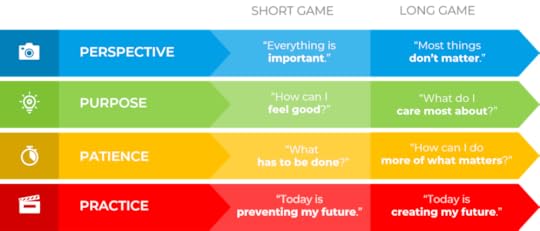
Your long game is ultimately defined by your short term. So check how you’re reacting, what you’re choosing and what you’re saying.
Above all:
Figure out what you really care about
Pace yourself while you make better choices
Let most of the other shit fall away. It doesn’t matter anyway.
Or, in the words of my daughter, scrawled on a post-it note on my fridge:
“Do something today that helps you tomorrow.” (Charlotte, 10)
- AM
————————-
*OK, I’m still working on this one.
** Daniel Kahneman is the MAN. He uses behavioural economics and cognitive science to explain why our brains are such assholes, and why we’re all totally biased. Check out Thinking Fast and Slow .
*** This is a psychology technique called positive reappraisal. The literature gets a bit ‘silver lining’ or ‘when life gives you lemons, make lemonade’ for my liking, but its a handy tool to have in your arsenal, even when you don’t believe it yet.
**** Like finding your values , sometimes the best way to work out a positive answer is to reverse the logic and start with the negative.
November 17, 2020
How to convert a cynic
As a facilitator, I can spot a cynic a mile away. Their body language is pure resistance: folded arms, suspicious expression, and deep sighs. They don’t need to say anything to identify themselves (although they usually do…) because their energy says most of it for them.
It’s easy to be frustrated by these people – negative, shooting down people’s ideas and generally throwing a spanner in the works. Worse, it’s even tempting to argue with them.
Why do they have to be so resistant to change? Why are they such a pain in the a*s? Why can’t they play the game like everyone else?
Here’s why: because they represent something important. Either they’re expressing things that other people are thinking but not saying, or they can spot a problem that others don’t.
Almost without exception, your cynics are worth converting. As I wrote in this article last week: anger beats apathy every time. When people care enough to be grumpy, they’re worth spending the time on.
When I train people to lead strategic conversations, I often have them complete a design-thinking empathy map for their cynics before they walk into a room (download yours free here). Digging a bit deeper doesn't take long, but it can make all the difference between getting frustrated, and understanding.
For some leaders, or facilitators, dealing with cynics is a chore. In the same way that traditional parenting encouraged us to ignore or punish bad behaviour, lest we ‘reward’ our children for needing help, traditional leadership was all about shutting down, removing or punishing cynicism. This might send it underground, but it won't remove it.
Positive parenting is all about taking the time to understand our children’s unmet needs, (so that they can learn to understand them too!). It took me a while to deprogram my instinctive response to shut my girls down when they acted out, because I certainly wasn’t raised that way. But once I managed it, and my children began to trust that my love and support wasn’t conditional, the difference was extraordinary.
The same is true of good facilitation, and good leadership. Not because we should think of our people like children (although, as Russell Brand once said, we’re all babies...) but because when people are being difficult, it’s usually for a good reason. If we take the time to figure that out, by moving past what we see on the outside, we find the good stuff. There’s no such thing as a single crime, so if someone is expressing cynicism or mistrust, you can be sure that exists quietly in other corners too.
Maybe this is the seventh one of these they've suffered through.
Maybe they've seen something similar fail.
Maybe they're afraid of what this will mean for their job.
Maybe they're worried how it will look to their boss, or an important client.
Maybe they're more switched on than you realise.
I like to operate on the assumption of positive intent - most people come to work to do a good job, and try their best. If they're being difficult, it's probably for a good reason*. I reckon this is true in most situations - friends, colleagues, and people overall.
And hey - maybe I'm wrong. Maybe they're not worried about something important, or seeing something you're not. But if you don't take the time to understand where they're coming from, you're asking for trouble. And if you do, you might be surprised. When you convert a cynic, they often become your biggest champion.
So, what's going on with your cynics?
What if you assumed positive intent?
Til next week
- A