Alicia McKay's Blog, page 20
September 15, 2020
Taming Talkfests
Man, I get sick of people talking sh*t. To be fair, it’s an occupational hazard. I run strategy and leadership workshops, where people are used to coming along and saying lots of wise things before walking out, relieved they don’t actually have to do anything. It could be said that I’ve surrounded myself by professional sh*t-talkers – it’s even been said that I AM one!
It gets exhausting though, doesn’t it? Talking in circles and leaving in frustration when those conversations don’t turn into anything. Too many of those and mutual trust starts to break down. When we have the same conversation one too many times, we lose hope.
“If your actions don't live up to your words, you have nothing to say.” ― DaShanne Stokes
How many of you have been to meetings like that? ...How many of you are going to one today?!
Talkfests are important – they have a job to do. We can’t build understanding together, unless we get stuck into the whys and what-fors. If we don’t have a shared idea about the problem we’re solving, or the goal we’re aiming for, then we trip ourselves up later.
We covered this last week, when we talked about purpose. People need to care about the why, before they can even think about the what.
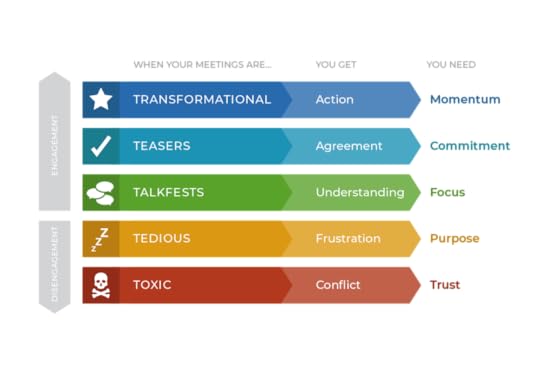
The problem is when we get stuck there. If we stay in the talkfest zone too long, our chances of changing anything drop right off. To get out of the talkfest vortex, we need to convert our insights into something real – and that starts with focus.
You can’t have change, unless you’re willing to let go of something. Change is not as well as – it’s instead of. And unless you know what matters the most, you won’t be able to let go with any conviction.
This is the stage where we need to make tricky trade-offs that will shape our choices and take us closer to action, and that’s not always easy. You will need to trade off things that matter. Things that you care about, value and worked hard to get – but aren’t serving you anymore.
That’s where focus comes in.
It’s where we ask questions like: who are we willing to let down? What can’t we do anymore? What scary thing will we have to confront? Where is our energy best spent, to create the kind of future we really want?
Nail those things, and magic starts to happen.
What do you reckon? Is it time for a tough conversation?


September 8, 2020
Purpose.
Purpose gets a bad rap. It’s the domain of the out-of-touch woke millennials who spend more time thinking about working than actually doing it… wants to shirk the real work… right?
Wrong.
Purpose isn’t fluff – it’s a responsibility. If you don’t have the resolve and determination to do good sh*t, leadership is not for you. People management, maybe. Technical expertise, sure. But leadership? Not enough. Society deserves a lot more from the people with influence and power to change things.
More importantly, if you can’t tap into people’s sense of purpose, you can’t motivate them. If you want people to care about your thing, or get involved in solving problems, you can’t rely on assumptions and platitudes. People need to deeply understand the why, before they can even start to think about the what or the how.
"If you don’t know why, you don’t care how”- Simon Sinek
These conversations get woo-woo very quickly, but connecting to purpose is not about transcendence or self-development. It’s about tapping into the potential to do work that matters by getting clarity on why it matters.
Mark Manson, author of Everything is F*cked: A Book About Hope, tackles purpose head-on. He recommends seven things we should think about when we try to find ours. In brief, he suggests asking:
1. What struggle or sacrifice are you willing to tolerate? The thing you’re most willing to struggle with and stick with is a good start.
2. What did you love to do as a child, that you were truly passionate about, even if you weren’t rewarded for it?
3. What do you get obsessed with? The stuff that you get so focused on, you forget to eat or sleep? Look at the principles behind those things and use them for good.
4. How would you like to embarrass yourself? The more scared you are of doing something, the more likely you need to do it.
5. What problem do you care enough about to start solving it?
6. If you had nothing else to do, and nowhere else to go, what you most want to do with your time?
7. If you knew your life was coming to an end, what would you want to be remembered for?
Manson’s conception of purpose is ideal in its simplicity. Discovering your purpose is about finding the things that are bigger than you, not so you can accomplish world-changing achievements, but so you can spend your limited time as well as possible.
In a group setting, building a shared sense of purpose is the number one thing you can do to get people motivated, on track and creating something new together.
Are you spending your time on purpose?
September 1, 2020
Trust.
When people ask me to help them run workshops and meetings, they often come in with lofty goals. How do I get people to really be in this? To own these outcomes and to take action? How do I get people to put away their siloes, their fears and their issues to make real progress?
Generally, I start with the basics. The very first hurdle is trust. Without it, it doesn’t matter what you have to say, how good your workshop is or how important these problems are. If they don’t trust you, they can’t hear you. If they don’t trust each other, they can’t engage.
The level of influence you have on others is directly proportionate to the level of trust they have in you - and trust is a prize worth having. Teams with high trust produce better results, with fewer resources. Leaders with high trust enjoy the benefit of the doubt every time they enter a new room, have a new idea or approach a new client, customer or employee. Their reputation precedes them - and carefully nurturing that should be a high priority for any strategic leader.
“Waste no more time arguing what a good man should be. Be one.” – Epictetus
In the consulting world, where I’ve spent much of my career, its often said that you’re only as good as your last job. As a leader, the principle is the same.
Stephen Covey, in The Speed of Trust defines four key elements to establishing credibility:
Integrity - being honest, walking the talk
Intent - making sure your motives are clearly understood
Capabilities – the skills and knowledge to do your job well
Results – what we get done.
Covey puts credibility down to two questions:
Do I trust myself?
Am I someone others can trust?
If you want to influence others, start with trust. People need you to be consistent, accountable and honest. Then, and only then, they might listen.
August 25, 2020
Heroes.
Heroes overcome odds. We need to change the odds.
I used to think I was a bit of a hero. I was proud of it, even. Beating the odds, I shifted my life story from high school dropout, teen mum, and no-hope foster kid to university graduate and business owner. Unlike many of my family members and friends, I kept off welfare and out of prison. I limited my addictions to caffeine and nicotine. My kids have a safe, happy and healthy home. It was a bumpy road, but I got there.
I knew my future, and that of my kids, wasn’t guaranteed. That if I wanted something different, I was the only one who could make it happen. So, for most of the last fifteen years, I worked every hour under the sun to make that future a reality. Now, I’m putting most of my energy into unravelling that heroism, so I can be a better parent, boss and leader.
If you want something done right, you do it yourself… right? Wrong. You can’t be trusted. The hero model is a risky strategy, cleverly disguised as a safe option – and I see this in my work with leaders all the time. They’ve reached the top through sheer grit, and not only are they exhausted… they’ve reached the ceiling of their effort.
When we’re heroes, we don’t trust others to deliver, and we stunt our potential to go any further. But if we can’t stop thinking of ourselves as irreplaceable, we get stuck.
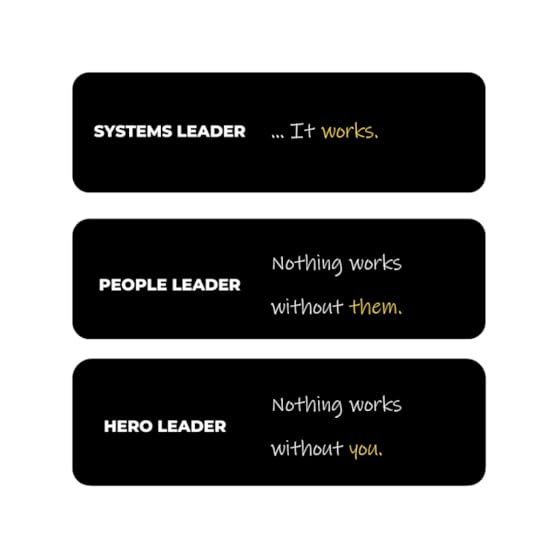
When we operate a people leadership model, we reduce some of that risk by spreading it among others. We delegate tasks and functions into the hands of others and concentrate on supporting them to make it happen.
Systems leadership takes an entirely different approach – it’s no longer just about what you can do, or what your teams can achieve. It’s about shifting the default so that our rules, processes and relationships make it work.
Every system is perfectly designed to get the results it gets. If your system depends on heroes, it’s broken.
Heroes overcome odds. Systems leaders change the odds.
August 18, 2020
The next is always here.
I wrote a Wednesday Wisdom last week, that I had to do an emergency withdrawal for on Tuesday night, after the Prime Minister’s COVID announcement. I talked about the uncertainty in our current environment, and how a changing public service was more important now than ever to step up and lead through it. It was a long one, and a good one, but it felt hugely inappropriate once the landscape changed.
I just re-read it, and I’ve changed my mind. Every word still counts, although the dates are probably off. Time is funny – everything changes, but at the same time it all stays the same.
Enjoy.
It feels a bit odd to be in New Zealand right now. Life feels close to normal here, while the rest of the world seems to be going to hell in a handbasket. It also feels completely different, in ways we can’t necessarily describe, but we can intuitively feel.
I went to Hanmer Springs for a few days last week. It was the same as it’s always been, except for all the ways that it wasn’t. The pools were busy. The restaurants were full. But everything was touched by change.
What a baffling and uncertain context. This is how crisis seems to go, isn’t it? Whether it’s public, professional or personal. Some things stay eerily, persistently the same. Work needs doing. Lunches need making. Emails need answering. At the same time, nothing feels the same. Every decision we make is tinged with uncertainty and strangeness.
The success of New Zealand’s pandemic response was due to unparalleled commitment at every level. There was no room for hedging. No way to be half-in. No what-about-ism. No greed. No selfishness. No grandstanding. Once we were in, we were in.
We didn’t know the future then, and we still don’t. Nobody does. We certainly didn’t know what was coming after we hit the shutters. It wasn’t what everyone else was doing, but that didn’t matter, did it? We knew what was right, we knew it would be hard, and we had the courage to knuckle down. It’s the New Zealand Way.
Our lives have changed forever, in ways we haven’t fully understood yet. It may all be for nothing in the end. But that’s not how we judge a good decision. We might have another fight on our hands in 3, 6, or 12 months, but we can’t let that fear stop us from doing what’s right.
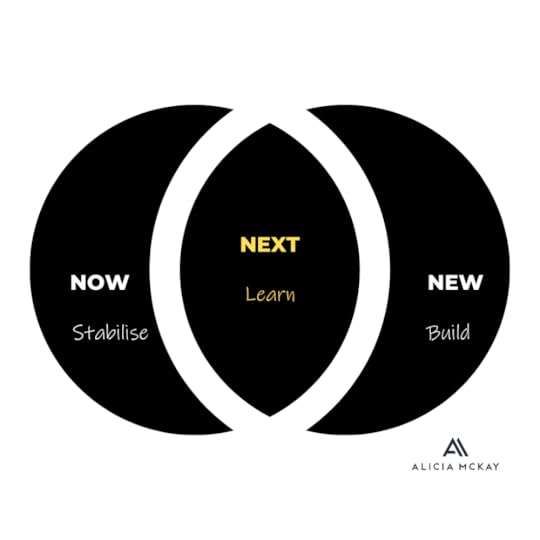
Last week, we talked about finding the balance between the now and the new. The nexus is in the next - the things we’re always fixing, changing, building, trying and learning. Here’s the secret: we’re always in the next. Always. As soon as we’re better, we see how much further there is to go. Sometimes it’s big, obvious, jarring, inescapable and turns everything upside down. Other times it isn’t. It’s quiet, insidious and shifty.
We need to be careful of the quiet times. It’s much easier to be a hero in a crisis than it is to be open, aware and committed in the quiet. It’s easy to push for transformation when the sh*t hits the fan. When we capsize, we can be the best version of ourselves. It’s much harder to keep things in the open and rock the boat when everything is going OK.
Last week saw the passage of the new Public Service Act. After decades of contractual, siloed public management, we’re changing the game. After years of doing our best, in our own corners, in a system that wasn’t working how we needed it to, doing what looks good and silencing our fears, trying hard and coming up short, we’re trying something new.
It’s not going to be easy. We need a completely different approach to how we tackle the hardest, deepest, ugliest stuff. The stuff that doesn’t feel good to acknowledge and is easier to put in the too-hard basket. It’s an uncomfortable dissonance. We’re a good country, doing our best, with many good things to show for it. Yet our children are still dying, our families are still struggling and our environment is still suffering.
We need a new commitment to tackling what lies beneath the surface. Real acknowledgement of how we keep setting ourselves up to fail, because we don’t know how to work together and we’re too busy protecting our patch. It’s time. The stakes are high and the conditions are right. While we still realise how important that leadership is, before the memory of our latest crisis fades, we need to commit.
It’s OK that we’re changing things. We’ve been battling away, with flaws and unintended consequences, and that’s OK too. Our now is rarely the result of ineptitude or personal failing. Our now is rarely unreasonable. Our now is the way we’ve had to respond in the past, for reasons that make sense, and it served us… until it didn’t.
And it doesn’t anymore. The future, which we never know and never will, will depend on showing the same courage we’ve demonstrated in the last few months. A commitment to working together, putting away the scorecard and self-protection and closing the gap between what we think and what we do. To stop pointing the finger and hiding behind our titles, our identities, our barriers and our differences and get real about change.
The next is here. The new is within reach.
But there’s work to do.
The new can be anything we need it to be. It can be open. It can be collaborative. It can tackle the hard stuff. It can be focused on what really matters. But it won’t happen by accident. It needs us to do the work. It needs us to build the systems, support and accountability that will guard us against our most deeply ingrained behaviours.
The bones are there – we have a new rulebook, a new structure and a lot of goodwill. The devil will be in the detail.
The detail needs commitment. It needs you.
Are you ready?
August 4, 2020
The now and the new.
It’s been a hell of a few months. We’ve had to adapt fast, as the world around us has gone mad. For many of us, it hasn’t been all bad. COVID has provided the opportunity to accelerate change that’s been in the works for a while – digital transformation, more flexible and remote working are two biggies.
As Trade Me and The Warehouse Group slash staff numbers and shift their operating models, ostensibly due to the pandemic, murmurs from commentators tell a different story: those companies are seizing the opportunity to make changes that have been in the works for some time.
We’ve had that here too. Shifting to virtual facilitation and executive coaching has enabled us to speed up big new initiatives, providing the chance to hit go on more leveraged forms of delivery as we launch forward with training, licensing and distribution.
Take care, though: The lure of the new is powerful, but it can come at the expense of the now. When we get too tangled up in the new, we risk losing what’s working now.
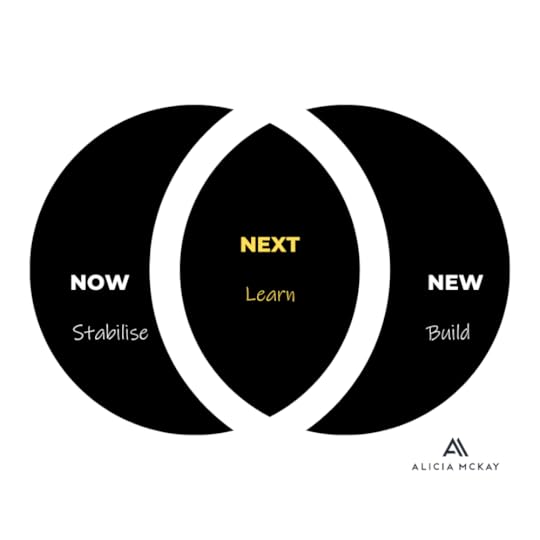
I love the concept of “dual transformation”, described in the book of the same name. In Dual Transformation, the authors argue that when we’re faced with disruptive change (like, I don’t know, a global pandemic) we need to do two things at the same time: reposition our existing work by stabilising the core, while we build a new engine for the future.
I spent two days last week in deep facilitation mode, crafting a four-year strategic direction with the Board and executive team of a regional sporting trust. We took the time to get clear on strategic priorities, developing a carefully balanced path toward the new (connecting with new groups, activating new spaces and supporting emerging sports) while retaining the best of the now (the core relationships, programmes and events that create proven value for their community.) It was a brilliant couple of days, my first long-form in-person delivery since COVID, and a wonderful reminder of how much I enjoy working alongside committed teams that have found themselves stuck when it comes to the future.
On the trip home, I had an eerily parallel call with my mentor. As soon as Pete was on the phone, I excitedly described all the new things we’ve got on the agenda: my second book, the pilot for a new leadership programme, strategic conversation training workshops in Wellington and Auckland and preparation for the licensing of our business change accelerator. However, I didn’t get the encouraging reception I expected.
Instead, I got a kind warning: The new stuff is great, but, like all new things, it’s still unproven and uncertain. Without enough energy for sustaining our foundation, we’re taking on unnecessary risk.
The same is true for teams and leaders who are stuck in the now – without sufficient preparation for the future, we risk losing opportunities and relevance as the world marches on unheeded.
The nexus is in the next – what we need to try, and what we need to learn. When we build from a foundation of what we’re already great at, with a mindset of curiosity and experimentation, we minimise our downside while creating an exciting new future. Resisting the temptation to set everything on fire is one of my hardest leadership lessons, but it’s a critical one.
Get the balance wrong, and we risk not having a future at all.
How’s your balance right now?
Are you doing enough to stabilise your now, and to move toward your new?
I’d love to hear your stories.
July 28, 2020
Good decisions.
When COVID hit, many of us experienced – and are still experiencing – serious financial uncertainty. Businesses lost revenue, people lost jobs and the economy went into a tailspin. Those of us who are self-employed had some serious decisions to make about the way our businesses would manage in a new and uncertain environment.
One of the first things we did, after a family meeting to work out how we would get through lockdown, was make some important financial decisions. How long would we be able to operate, if we lost our existing clients and projects? How strong was our household buffer? What should we do with our investments and savings.
We had some tough calls to make. One of those concerned money tied up in an index fund. It was a big proportion of our accessible reserves, and might be the tipping point for the survival of our household and business if we experienced many months of disruption.
It was a tricky bind. Index funds are a long-term investment that should never try to time the market. Successful long-range returns need the confidence to leave them alone, even in a dip.
Ultimately, though, we chose to liquidate. While we couldn’t predict what might happen in the market, the impact of losing access to the money would be serious, and our need for cashflow, in an equally uncertain credit environment, outweighed the potential benefits of holding onto the shares. Taking the hit, we transferred the money…. and within weeks, it was clear that our business would continue to thrive, and that the market would recover.
Does that mean we made a bad decision? Absolutely not.
While the outcome couldn’t be predicted, our process was sound. We considered our context, weighed up risk, uncertainty and impact, applied clear criteria to our choices, considered our options and committed to a direction.
The quality of the decision was not about the outcome – it was about the process. And on that front, the decision passed the test.
“Strategic thinking unleashes the power of managers to solve problems, overcome challenges and creatively take the business from where it is, to where it needs to go.” – Rich Howarth, CEO Strategic Thinking Institute
Contrary to popular wisdom, what makes a good decision good or bad isn’t the outcome – it’s how we make it. While individually, good decisions don’t guarantee good outcomes, consistently good decisions do lead to consistently better outcomes.
Increased decision quality is the single most effective performance intervention in a modern organisation. Decision effectiveness and financial results correlate at a 95% confidence level or higher, irrespective of your country, industry, or size.
When I run strategic leadership development, I am often surprised to learn that this is the first time executives have learned how to think and put rigour around their decision processes. When I teach how to run Meetings that Matter, less than a third of managers know how to facilitate strategic conversations to make those decisions together. How can this be true?
For leaders, the way you make decisions matters. If you’re not investing in your skills and your process, you’re on the back foot.
Do you know how to make good decisions?
Are you focused on the process, or the outcome?
July 21, 2020
Friends at work.
I often meet leaders with an “I don’t go to work to make friends” kind of attitude. I get that, I really do.
One of the reasons I’ve never lasted in an employment environment is the obligatory niceties. Why am I signing a leaving card for someone I’ve never met? How could they possible value my cliché contribution? Why should I contribute to a morning tea for Jane’s baby? I can’t stand Jane, and I’ve got work to do
“If someone is liked, his colleagues will seek out every little bit of competency he has to offer” - Tiziana Casciaro
Cultivating networks doesn’t mean you need to join the social club. But it does mean that you need to be likeable.
According to Cuddy, Kohut and Neffinger, who wrote Connect Then Lead, leaders who rank low on ‘likeability’ have a one in 2000 change of being regarded as effective. In Robert B. Cialdini’s cornerstone text Influence, likeability is one of six key levers of influence.
When you’re likeable, people buy from you, hire you, marry you, spend time with you and do things for you – even when you’re not the most charismatic, the highest performer, or the most senior. Being likeable is a shortcut to influence that takes the pressure off us to create perfection in our work and ideas. It’s an enabler that gives us margin and permission.
But these connections don’t happen by accident. Like lifelong friendships, or relationships with our children or partners, they need effort. They require us to deeply understand others, to have compassion for differences and manage conflicts.
Most importantly, they require intentional care, planned time together and a commitment of time and energy, or they wither and die.
Are you likeable?
Are you making enough space for relationships?
Did you write in Jane’s leaving card?
July 14, 2020
First things first.
It’s school holidays! My girls and I had a trip to Germany planned this holidays, but for obvious reasons, we had to can that. Instead, we’re on the road, spending the week at a holiday park in the Coromandel and swinging past some family in the Hawkes Bay on the way back.
Not the holiday we had planned, but pretty awesome nonetheless. The principles are the same: connecting with people we love, getting out into the world and having new experiences together.
“Put first things first and second things are thrown in. Put second things first and you lost both first and second things.” – CS Lewis
Our holiday plans are just the tip of the iceberg for the changes we’ve all had to make this year. Life is not what any of us imagined, in many ways – but for most of us, our values remain the same. In fact, many of you are telling me that you’re clearer on those values now more than ever. Lockdown brought the chance to realise what’s really important, a chance to get off the treadmill and ask some bigger questions.
I love the story about Warren Buffet and Mike Flint. Legend has it, Mike Flint, Buffet’s personal pilot for ten years, asked Warren’s advice about his career priorities. Warren instructed Mike to write down his top 25 career goals and bring them to him.
When Mike had done this, Warren instructed him to choose the top five most important goals on the list. Mike was grateful and pledged to start working on the top 5 right away.
Warren asks him about the second list – “and what about the other 20 things? That you didn’t circle?”. Mike says “well, I’ll get to those as I can – they’re important, but not as urgent as the top 5, but I’ll still do them!
It was Warren’s response to this that threw Mike Flint, and is golden advice to all of us.
“No, you’ve got it all wrong! Everything you didn’t just pick, in the top 5, needs to be the Avoid-At-All-Costs list. Don’t give any one of those things your attention, until you’ve done your top 5…. Or you won’t do them.”
That’s the thing, isn’t it. There’s plenty of stuff we can focus on. But unless we’re clear on what comes first, it won’t happen.
What are your core values?
How can you make sure you put those things first?
July 7, 2020
Thinking needs space.
I’m off the grid this week, holed up in an adorable little cabin in Martinborough, finishing up my second book From Action to Impact: The Strategic Leader's Guide to Doing Good Sh*t. I’ve been working on this book for months, but working in the cracks only gets me so far. For the final push, I needed uninterrupted time, a change in location, and the headspace that comes with that.
“It’s only by concentrating, sticking to the question, being patient, letting all the parts of my mind come into play, that I arrive at an original idea. By giving my brain a chance to make associations, draw connections, take me by surprise”
- William Deresiewicz
Our day to day lives are designed in a way to make it hard to focus. This is why strategic offsites are so popular. Big-picture thinking requires time, headspace, and physical space to kick off insight and perspective.
Even more than this, it requires a pattern interruption of some sort, to provoke us into a different headspace, or tap a different part of our brain to make connections between the things we didn't see before.
Expecting to do important, different work inside the same constraints, environments and attitudes that we do everything else in doesn't make logical sense - that's not how we're wired.
The flashbulb moments that change the way you think about a problem, while they can’t be manufactured, can be nurtured by the right conditions. For me, that’s often travel – I have my best ideas on a plane. J.K. Rowling is said to have drafted the first Harry Potter book on a four hour train ride.
We know this, yet, when we ask people how much time they make for thinking, the results are disappointing. Warren Buffet might manage a regular Think Week, but most of us don’t. On average, 70% of leaders spend less than one day a month on the big picture. 85% of leadership teams spend less than an hour per month discussing strategy.
It’s not enough. Expecting to do important, different work inside the same constraints, environments and attitudes is a fools game. If you want insights that matter, you need the space to make it happen. Otherwise, you’ll keep doing the same old stuff. And who wants that?
Are you making the space for thinking?
Where do you have your best ideas?