The surprising benefits of feeling like sh*t
Estimated reading time: 7 minutes

Feeling like sh*t, or FLS, is one of the most common elements of the human experience. I dare you to find someone that’s managed to get through a week without a case of the FLS in the last year - because everywhere I look, I’m seeing tired, jaded people having a tough time.
And I reckon that’s OK. There’s no contract we sign when we become adults that says we need to, or get to, feel good all the time. Yet the pressure to pretend that we do, to our children, our colleagues, or our friends, is real. We know, in theory, that everyone else FLS sometimes too, but we don’t honour that part of our experience.
Instead we bury it, mask it, or try to run from it. Advice on how to feel better is plentiful. Apathy, low mood and malaise are treated as terrible afflictions that require treatment and dispatch. Emotional states that require minimising or fixing, as quickly as possible. We’re told to get outside. Go for a run. Talk to a friend. Smile more. Eat better. Write it down. Take a holiday. Anything that pushes those entirely normal feelings away before they get the chance to take hold, because god forbid we just don’t feel great today.
And let’s be clear: sometimes that’s helpful. Nobody wants to be stuck in a pit forever and taking care of yourself, as you would a loved one, is extremely important. But in other ways, it’s entirely unhelpful.
Nobody gets to have a meaningful life without a healthy dose of suffering. Happiness, gratitude and success are relative concepts, and humans are complicated. Sometimes we FLS because we can’t get what we want. Sometimes we FLS because we got what we wanted. Sometimes we FLS because we don’t know what we want. Sometimes we FLS and we can’t understand or explain why. That’s cool. We’re all doing it.
Rather than pushing these feelings to the side or feeling ashamed of having them, I think there’s benefit in a good bit of rumination now and again. In fact, the evidence suggests that there are some surprising upsides to malaise, if we can tap into it.
(Now, I’m mindful of the Alicia-McKay-ness of trying to find a productivity hack for depression. It reminds me of a conversation I had with my best mate one seedy Sunday morning where, after a hard night on the gins and a morning in my PJs, I found myself in the grips of a burst of inspiration, scribbling ideas on a whiteboard. I remember the exasperation from my friend vividly- “FFS, do you have to turn a hangover into a productivity hack, Alicia?!” So, no. I’m not trying to say you have to turn a sow’s ear into a silk purse.)
I do, however, think it's worth reflecting on both the dangers of an expectation of being constantly OK. And to do that in a way that doesn’t require us to take a duvet day and hide every time we can’t face the world.
I want to live in a world where we can turn up to the things that we love and care about, even when we don’t feel 100%, and I want to live in a world where we don’t feel ashamed about doing that.
I want to live in a world where we see the value of showing the good, bad and ugly sides of ourselves to the people we care about, the people we work with, and the people we lead, without a layer of embarrassment.
I want us to model a healthy way of getting through life, to give others the permission to do that too. If you’d like to live in that world too, you might enjoy this article.
FLS can make the world a better place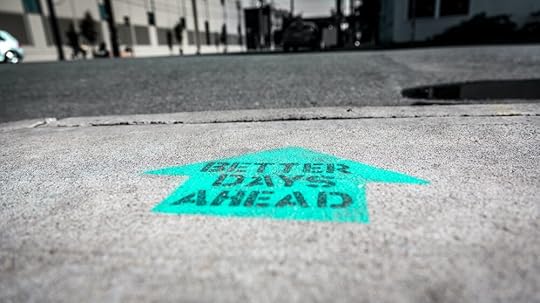
When we can fully accept our own human-ness, in all of it’s forms, we can do that for others too.
By deeply understanding our own experience, and extending that understanding to others, we can become more empathetic and compassionate, and ultimately, more effective.
We develop more user-focused products, more workable solutions, more resonant marketing strategies and more meaningful connections. We lead change programmes that engage people in a tangible way. We have better quality conversations, create more empowering work environments and build strategies that focus on touching people's lives, rather than ticking a box.
Our own vulnerability, shared appropriately, doesn't detract from our credibility. it builds trust, and adds power to our message. Nobody wants to be led by a perfect example of inspiration they can't hope to measure up to. It just makes us feel crappy in comparison. People want to be reached, and they can only be reached if we show up as ourselves, whatever that means.
Feeling like sh*t sucks, but it is a normal and useful part of being a person - and it has some upsides.
Here are six benefits to having dark days.
Benefit 1 - Compassion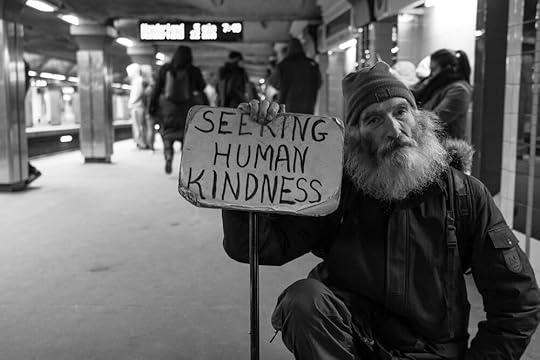
Everyone is struggling. Seriously, everyone. Lisa O’Neill once told me to assume that everyone’s life is hard, and I’ve thought about that a lot since - and I’m yet to disprove it.
That’s fine in theory, but until you know… sometimes you just don’t know. Without the humbling experience of your own battle, true compassion and acceptance of others is harder to come by.
Depression can be lonely, but it can also be a unifying experience. I’ve spent my life being the most competent person I know, with little patience for the perceived inactivity of others.
It wasn’t until a point last year where I found myself unable to think clearly or perform basic tasks that I suddenly understood how challenging it must be to struggle like that regularly. I reached out to friends and family who’d been through similar times with a combination of apology and vulnerability.
It was a similar process to the birth of my third child. After two fairly easy babies, I’d developed that parent smugness that people with compliant children get, and I thought (and said!) things like “If they’re hungry, they’ll eat…” and “I wouldn’t tolerate that in my house…” Thankfully, Harriet arrived in time to cure me of my unfounded and insufferable superiority, ready to teach me that some kids are just hard work no matter what you do.
(And that, hungry or not, some children would rather starve than admit defeat. And that I will, in fact, tolerate all sorts of things for the sake of a moment’s peace.)
What or who can you relate to better now as a result of FLS? How can you extend that compassion into other areas of your life?
Benefit 2 - Connection
Last year, I turned up uncharacteristically early for a meeting and caught a client in a fluster. She was organising school holiday care for her kids, she confided, which as a single mum was a constant stress for her.
Catching her in that moment inspired a brilliant conversation about the juggle of working parents and everything that means, showing me a completely different side to her usual high-powered brilliance. The trust and connection in that meeting gave me the permission to drop my “professional woman out to schmooze” mask too, and I’ve never forgotten it. If I’d turned up 10 minutes later when she’d regained composure, we would have missed an opportunity for real connection and trust-building.
Meaningful conversations and relationships aren’t formed when we turn up with our armour on. Nobody wants to be friends with a perfect person, and nobody wants to be led by an inspirational robot without flaws.
When we can share the softer sides of ourselves, we open up new opportunities to reach others, which is great for us, and for them.
Share your struggles with others around you, and try to catch your surprise at how many other people have similar experiences.
Benefit 3: Creativity
Innovation is an over-used buzzword, but at it’s heart, its about solving problems. When we see the world differently, we get a new lens for old problems, and that can be helpful.
By understanding people and their lives more deeply, especially the things they’re finding hard, we can tap into a more creative ideas that that will reach people on a new level.
Whether that’s a more intuitive user experience, a change programme that takes human error and disengagement into account, or a service offering that addresses pain points more effectively, it’s not just positive a-ha moments that give us innovation.
Human-centred innovation thinks about both ends of the stick - what we aspire to, and what we avoid. We shape better cities when we have empathy for people’s safety and personal challenges. We design better products when we think about what’s making people’s lives difficult. Netflix isn’t so successful because they make great movies, they’re successful because they provide a solution to people with busy schedules that can’t watch scheduled programming.
How can you bring your current discontent into your problem solving? What does it tell you about the struggles of others? Can you help solve them in some way?
Benefit 4: Comparison
When everything’s good all the time, we don’t appreciate it. It’s a human design flaw, as far as I’m concerned, but it does make FLS a useful piece of the puzzle.
Problems are like cockroaches, and glitter - even when the world ends, they’ll still be there. The trick isn’t living a problem-free life, that just makes us complacent and ungrateful Instead, we should aim to progressively upgrade our problems, and make them ones that we can be grateful for having. Everything that’s worth having requires us to struggle for it, but we get to pick those struggles based on what matters to us and to enjoy the satisfaction of when things do go to plan.
Having kids is hard work some days, but being a good parent and raising good humans matters too much to me to quit the struggle. Doing meaningful work feels like a heavy load at times, but I’m thrilled to have the opportunity to reach people and share my thinking with the world. These are things I’m willing to suffer for, and the tough times makes the great days so much more satisfying.
Put your current problems into perspective by considering how much progress you’ve made. Past You would have loved the problems of Today You. Tap into the comparison and make sure to appreciate your next easy patch, safe in the knowledge that a new batch of upgraded problems awaits you.
Benefit 5: Courage
The real nasty, when it comes to depression, isn't sadness... it’s hopelessness. Feeling like crap is manageable when you have a healthy perspective on how temporary it is. But when you don’t have confidence that things will ever get any better, or faith in your own ability to make things better, it gets unmanageable with speed.
The silver lining to FLS now and again is the reminder that you’ve been here before, and it’s all been OK. Every feeling or challenge you’ve had in the past has come to an end, and remembering that can give you the boost you need to get through a new batch of bulls*t. While it might seem counter-intuitive to layer historical negativity on top of a low mood, it can be a useful way of reminding you of your own resilience.
Think about the worst things you’ve been through before. Remember how terrible they felt at the time, and how you thought you’d never get through. Remind yourself that you did, and therefore you will again - but better this time, with the benefit of all that resilience you put in the bank. Pat self on back.
Benefit 6: Clarity
The Rolling Stones were right when they sang: “You can’t always get what you want.” Especially if you don’t live your life in a way that makes it possible.
When we don’t feel good, its often a sign that something is out of alignment or needs to change. If you persistently don’t feel good, it could be your body’s way of telling you it’s time to change something important. If your life is out of balance with your values, or you’re taking on unsustainable or unsatisfying levels of stress or effort, you’re going to find it harder and harder to feel buoyed by your daily activities.
If you FLS all the time, stop putting coping bandaids on a gaping wound. That thing you’re most afraid of changing, or keep putting off doing something about? It’s probably that. Start there.
In summary
Everyone feels like sh*t sometimes
FLS is normal and so we should normalise it
Six benefits to FLS are:
Compassion - we develop more empathy
Connection - we form meaningful bonds with others
Creativity - we develop richer ideas and solutions
Comparison - we appreciate good things more fully
Courage - we gain confidence in our own resilience
Clarity - our sense of what truly matters becomes stronger.