Shahree Vyaas's Blog, page 8
June 15, 2025
A Synopsis of Us Literature: 1890 -1910.
In the 1890’s, many realists became naturalists, a term created by Emile Zola. For them realism was an ideology and the novel had the power to become a political weapon. Crane had the view that life and death are determined by fate. He wrote about a man who said to the Universe “Sir, I exist! “
“However,” replied the Universe “The fact has not created in me a sense of obligation”.
Thanks to modern psychology and writers like Henry James, we are now more interested in the working of the human mind. We know that events inside one’s head can be as dramatic as events in the outside world.
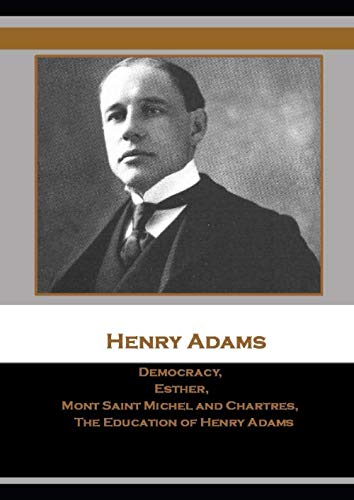
Adams is best remembered for his “St Michel and Chartres”. On the surface it is a guidebook to two famous French religious sites. However, it is a deep study of medieval culture. The old Europe had a calm unity; the new culture of America, however, had neither calmness nor unity. One of Adam’s finest quotes was; “Chaos is the Law of nature, order, the dream of man”.
Meanwhile in Europe at the turn of the 19th century, hypocrisy was the cement that kept the society together, cumulating in a nostalgic enjoying of decay that regretted only the loss of sexual opportunities. Art Nouveau wanted to bring the heaven to earth, but created only artificial paradises separated from the cities, hidden under their streets or on elevations above them. They were closed reservations of esoteric symbolism and pseudo-ritualism; the idioms of a retreat in the inner self.
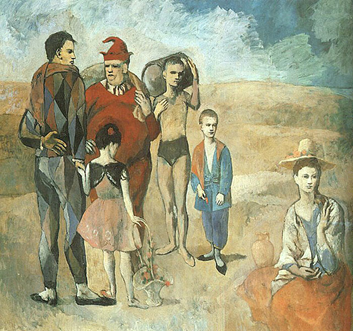
The painting “Trismegisturian Harlequins” (Picasso 1901 -1905) portrayed the neglected offspring of Hermes. Because evolution in art or science is often the result of disrespect and revolt, they were punished with social exclusion for their diverging talents. Simmel and Durkheim considered that the collective always cannibalizes the individuality till it becomes socially acceptable. Freud declared in 1906 that the masochistic satisfaction that people experience when a theatre character suffers on stage, originates from the primitive offer rites who suppressed the impulse to revolt. He also stated that love is no remedy against war because sex and death aren’t enemies but clandestine collaborators.


June 13, 2025
A sinsopsis of US literature: 1854 – 1890
European observers, who take a close look at the characteristics that they qualify as typical for white Americans, discover soon that they were originally attributes of the American Indian. The liberation from a social hierarchy and the idea that “all men are born equal” is also an American Indigenous invention that crossed the Atlantic Ocean and made old European feudal institutions crack at their foundations.
Not that the white American will give credit to the indigenous tribes for those values since they are still perceived as a hostile and primitive culture. This attitude can be held responsible for much of the dissatisfaction and restlessness found in the U.S. To trace down the roots and evolution of the American mentality, there is no better source than to follow the historical development of the American Literature. All along the attentive reader can feel the mostly invisible presence of the Native American and the subtle incorporation of his values in the American mainstream of thinking.
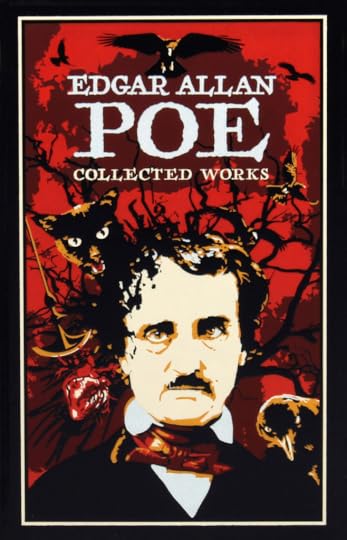
Poe’s method was to put his characters in unusual situations. Next, he would describe their feelings of terror or guilt. Poe was also one of the creators of the modern detective -story. Instead of examining characters and feelings, these stories examine mysteries or problems in an attempt to liberate the reader from cultural conformity.
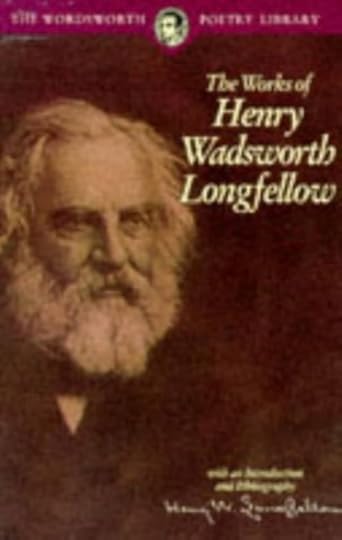
Longfellow was an excellent linguist and gained a lot of popularity with poetry containing pseudo-profundities as “Life is real and life is earnest, and the grave is not its goal”. Longfellow borrowed legends of colonial times but his main contribution to the American culture was to translate European poetry and make it accessible for all Americans.
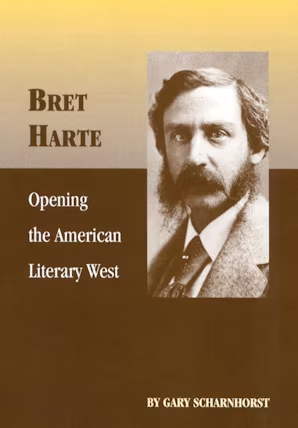
Where Longfellow was more a facilitator, Brett Harte (1836 – 1902) wrote original stories about the Far West and many writers followed his lead. In all Harte’s work we see all the main characters of the West American folk culture return; the pretty New England schoolteacher, the sheriff, the bad man, the gambler and the bar girl.
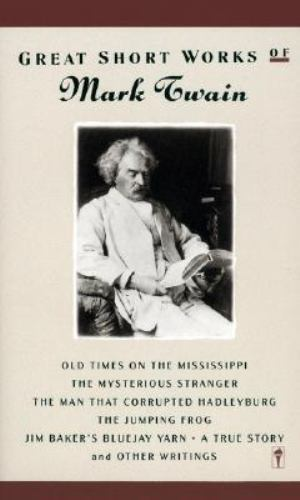
Mark Twain’s writing was strongly influenced by his work as a pilot on the Mississippi. He became nationally famous with “The celebrated jumping Frog”, based on stories he heard as a journalist in a mining camp. Twain’s work is filled with stories about ordinary people tricking experts. In “The adventures of Tom Sawyer”, his two heroes are “bad boys” because they fight against the stupidity of the adult world. Some critics complain that he wrote only well when he was writing about young people. Throughout all of Twain’s writing we see the conflict between the ideals of Americans and their desire for money.
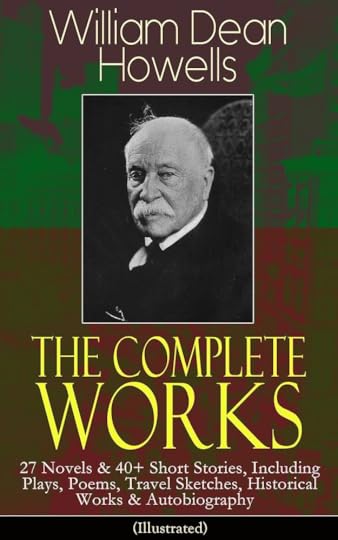
By 1875, American writers were moving toward realism in literature. William Dean Howells (1837 – 1920) stated that romanticism created false views about life. Like most Americans in the 1880’s, he realized that business and businessmen were at the center of society, and he felt that novels should depict them. Later he began attacking the evils of American capitalism.
June 10, 2025
A sinopsis of US literature: 1810 – 1854.
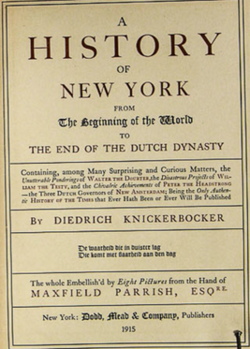
1810 – 1840 is known as the Knickerbockers’ Era of American literature. The name comes from “A History of New York” by Dietrich Knickerbocker, a pseudonym of Washington Irving. It was a humorous rather than a serious history of the city. He invented many of the events and legends he wrote about in the book. “The Sketch Book” (1819) contains two of the best loved stories from American literature, The Legend of Sleepy Hollow & Rip Van Winkle. It was based on old German folk tales filled with the local color of New York’s Hudson River Valley. Irving regarded the story as “a frame on which I sketched my materials”. Neither Irving nor any of the other Knickerbockers really tried to speak for the whole country. For them the world tended to stop at the borders of the New York State.
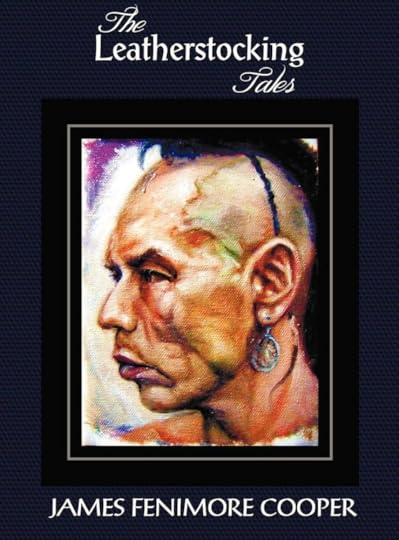
The victory of time and civilization is beautifully described by J.F. Cooper. Natty Bumppo appears in all of his novels and is one of the best-known characters in American Literature. Nathaniel “Natty” Bumppo was a child of white parents who grew up among the Native Americans. He criticized the wastefulness embodied in the settlers and demonstrated a way of life that was a synopsis of man and nature in the West. Also, in Bryant’s Thanatopsis (North American Review, September 1817), the life of man is part of the nature as whole, and death is the absolute end of the individual.
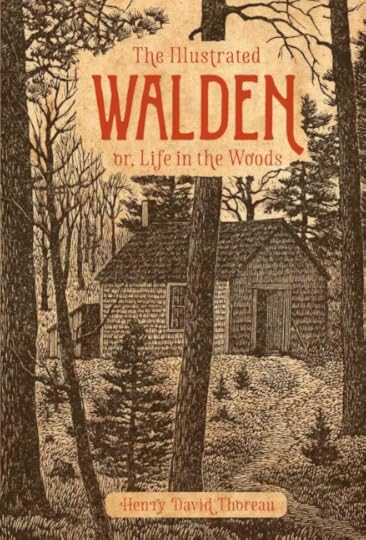
In the 1830 – 1840’s the frontier of American society was quickly moving to the West. At this time, Boston and its neighboring towns and villages were filled with intellectual activities. In the center of these activities were the Transcendentalists. The Transcendentalists tried to find the truth through feeling and intuition, rather than through logic. In their vision “Wisdom does not inspect, it beholds” (Thoreau). Thoreau’s most famous book was Walden (1854). Apparently, it speaks only of the particular side of living alone in the woods, but in fact it is a completely Transcendentalist work. He was convinced that while civilization has been improving our homes, it has not equally improved those who live in them. He observed that the mass of humankind lead lives of quiet desperation and wrote on that subject; “As if you could kill time without injuring eternity”.
Emerson stated in a publication (Nature) that man should not see nature merely as something to be used; that man’s relationship with nature transcends the idea of usefulness. First Emerson would “deposit” ideas in his journal (which he called his bank account) and then he developed his lectures from the notes in his journal. Self-Reliance (1841); to believe in your own thought, to believe what is true for you in your heart is true for all man, – that is genius. He believed that to be great is to be misunderstood and considered a foolish consistency as the hobgoblin of little minds.
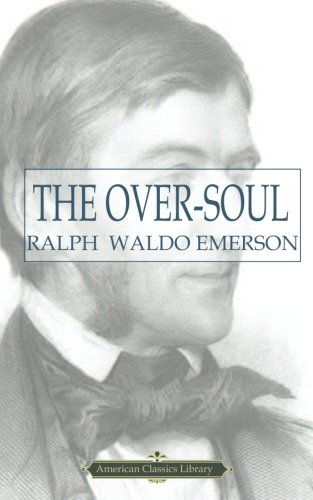
In “The Over-Soul” (1841) he claimed that “We live in succession, in division, in parts, in particles. Meantime within man is the soul of the whole; the wise silence; the universal beauty, to which every part and particle is equally related, the eternal ONE. And this deep power in which we exist and whose beatitude is all accessible to us, is not only self-sufficing and perfect in every hour, but the act of seeing and the thing seen, the seer and the spectacle, the subject and the object, are one. We see the world piece by piece, as the sun, the moon, the animal, the tree; but the whole, of which these are shining parts, is the soul” (cit.).
June 9, 2025
A Brief Sinopsis of US literature: 1735 – 1810.
In the early days of independence, American novels served a useful purpose. They used realistic details to describe the reality of American life. But when some of the good American literature started to arise above the time and place where they were written; these works became universal.
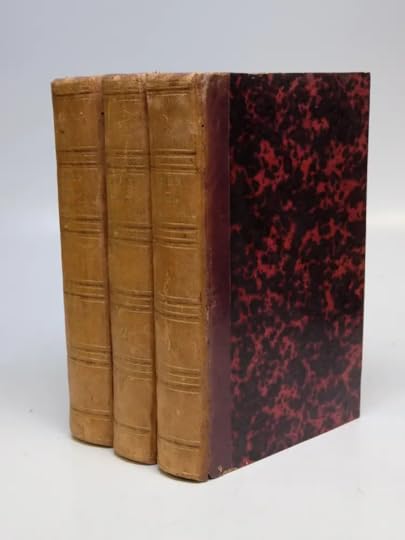
The oldest examples are the sketches and observations of Michel Guillaume Jean de Crèvecoeur (1735 – 1813), bundled in “Lettres d’un cultivateur Américain”, and published in Paris, 1787. He did not describe America as a Utopia, nor did he expect it to become one, but he saw more hope and health in a society where: “individuals of all nations are melted in a new race of man” than in the older, closed societies of Europe. In the remarkable life of J. Hector St. John de Crèvecoeur, the highs and lows of Franco-American cosmopolitanism are evident. As Durand Echeverria described in his work Mirage in the West, the dream of America and the mutual admiration of Frenchmen and Americans peaked in the 1770s and 1780s, before dissipating under the intense pressures of state-building in America and the Revolution in France. As a writer and intellectual, and in his experiences in Paris, it was easy for Crèvecoeur to celebrate the cosmopolitan exchange across the Atlantic Ocean that was more than just a myth. But as a diplomat between 1783 and 1790, the practices of national self-interest and political and economic behavior that he had to deal with on a daily basis ultimately disillusioned him about that exchange.
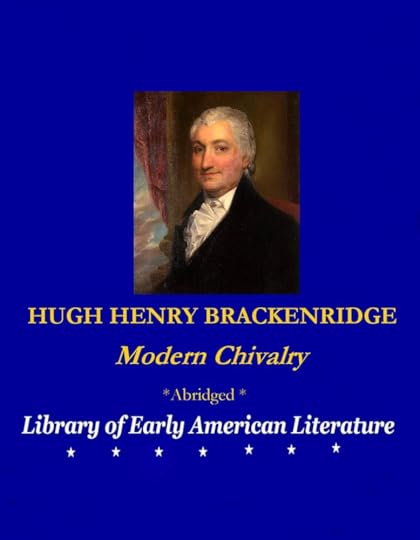
Modern Chivalry by Hugh Henry Brackenridge was the first important American novel. He wanted to achieve a reform in morals and manners of the people. The book is a series of adventures in which the author laughs at America’s backwards culture. Brackenridge hoped that satire, which exaggerated and parodied the flawed and irrational thinking he saw in the political sphere, would help readers to visualize American problems more clearly and would motivate readers to think and behave differently from the poor models of character exhibited in the novel.
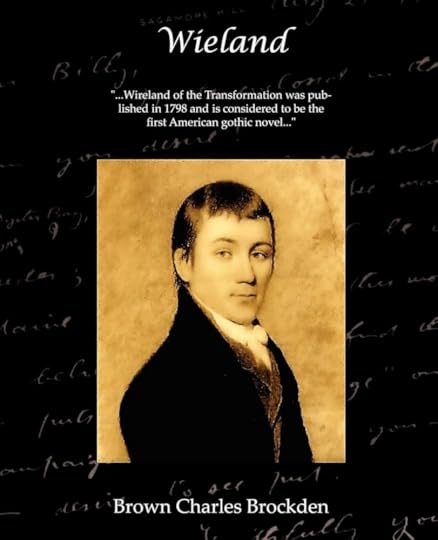
Charles Brockden Brown’s interest in the psychology of horror greatly influenced such writers as Hawthorne and Poe many years later. In his mayor novel “Wieland”, things may not be as they appear, and genuine truth must be actively searched for. With this philosophy, it is not surprising that he spent his last years with political pamphlets against the optimistic philosophy of Jefferson.
June 4, 2025
Reading the Canon of World Literature
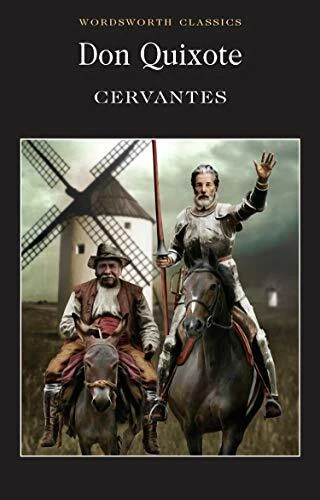
Chapter 18; Don Quixote by Miguel Cervantes.
May, 20th, 2015.
Summary.
The main character got introduced as Alonso Quixano, a financially independent old man who spends all his time on reading tales about medieval knights ‘s slaughtering dragons and saving princesses.
He became so obsessed with this subject that one day he puts on his bet grandfather’s harness, changes his name into Don Quixote and starts out for the countryside on the outlook for adventures. Since dragons and giants actually don’t exists, his fertile imagination turns regular day to day objects (as windmills, sheep, etc..) into giants and monsters.
Very soon he got a companion, Sancho Panza, who didn’t share the don’s delusions, but hoped to nick some of his wealth. The guy was such a maroon that after a while he started to share some of his master’s delusions, to the extent that he believed that Don Quixote would reward him with an island to govern.
They set out for a series of adventures that consist of so many plotlines that cannot be summarized briefly. Some relatives and friends tried to cure him from his delusions but underestimated the degree of his delusions. In the end, one of them, dressed up as a knight, defeated him in a duel and made him swear not be an errant knight for a whole year.
Thus deprived of living his delusions, he realized that he went completely of the record and implored everybody not to take chivalry books for true stories. The loss of his fantasy world caused him to fall physically ill and due to the severe fevers that this induced, he died.
Comments
This was a fascinating book that I kept reading and researching this for a whole month to finally come to an understanding why the Norwegian Book Club rated it as the absolute topper of the world literature, scoring with at least 50% more than whatever other book listed into their top 100.
The first part was published in 1605 and grew immediately to the first bestselling novel of all times. Because Cervantes took his time to publish the second part, a ghostwriter took it upon him to pick up the thread where Cervantes dropped his pen. This irritated Cervantes so much that finally in 1615 he published the second part and made sure that his hero died at the end to prevent further ghost sequels.
Cervantes principal reason for writing this book was his infatuation with his contemporary fellows who very often took novels and fables about chivalry for granted historical facts (to compare with people who’re thinking that The Matrix is for real), due the fact that they were written down into a book thus elevating them to historical and moral beacons.
He wanted to give an example what could happen to someone who took all these tales and fictional values as an orientation for setting their moral compass. He demonstrated that this would result in a complete delusional character.
In fact, people who into their own life have had experience with delusional people may find it difficult to read Don Quixote as a comedy. When he was not fighting windmills that he believed to be giants he was, on occasions, actually harming and robbing people.
The book demonstrated some of the old attitudes towards the mentally ill as a source for amusement and exploitation with little consideration for the close circle of friends and family who were trying to cure him from his delusions.
But the story offers more than the adventures of a madman and his moronic but loyal squire. It mirrors that particular period in Spanish history by describing to detail its morals, social problems and politics.
June 1, 2025
Reading and Location: Dublin and Finnegans Wake.
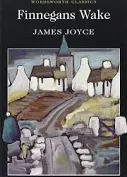
In Finnegans Wake, James Joyce uses various representations of Dublin, including the double-n “nn” (total negation) and the Irish name Baile Atha Cliath (Town of the Ford of Hurdles). Joyce often draws parallels between Dublin and other cities, believing that the particular can reveal the universal. This name appears frequently in the book, along with variations like “Baulacleeva” and “Bauliaughacleeagh,” highlighting the city’s connection to water and the river Liffey. The book introduces “Errorland” and “Aaarlund,” which can be seen as alternative Dublin-like cities, suggesting a multiplicity of perspectives and realities.
Joyce’s perspective on Dublin as a microcosm of the world is evident in his statement that by understanding Dublin, he can understand all cities. Finnegans Wake incorporates both real Dublin locations (like Howth Castle and Phoenix Park) and symbolic or dreamlike places, blurring the lines between reality and fiction. The River Liffey, flowing through Dublin, is a significant element, particularly through the character Anna Livia Plurabelle, who is associated with water and the world’s rivers.
This novel will make you see aspects of the city that otherwise might go unnoticed.
I admit that Finnegans Wake is probably the most enigmatic novel that exists in English Literature and that many readers have set it aside as an unreadable Moloch. My wife was one of those readers, and especially for her I’ve transcribed the book from Joycean Gibberish into plain English (Here Comes Everybody’s Karma, ISBN 9781737783299 or here for the Kindle edition on Amazon) .
That said, even after the removal of all the foreign language idiosyncrasies, it still remains a challenging read due to its stream of consciousness writing style and surrealistic allusions.
May 29, 2025
Reading and location: Shantaram’s Mumbai
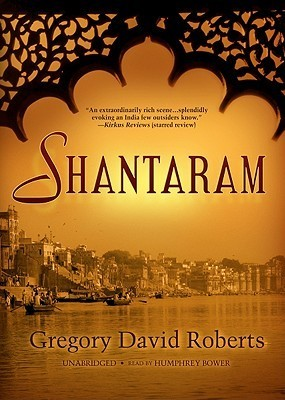
Shantaram is another book that should be read while gathering impressions of a place. It is a 2003 novel by Gregory David Roberts, in which a convicted Australian bank robber and heroin addict escapes from Pentridge Prison and flees to India. The novel is commended by many for its vivid portrayal of life in Bombay in the 1980s and many of the places described in the book are still in full swing.
While Shantaram reads as an autobiography, it’s a novel wherein de narrative is structured in a way to read like fiction but feel like fact. The novel offers vivid descriptions of the Colaba part of the city, the old downtown of Mumbai and its touristic and expat epicenter. Colaba is a shopping mecca, and many of the other famous and semi-famous attractions in Mumbai are located there, or on the way to there from the airport.
Next to the Gateway monument is the legendary Taj Mahal Palace Hotel. It was probably already Mumbai’s most famous hotel, and the 2008 terror attacks made it even more known. Just a few blocks away is the legendary Café Leopold, around which Gregory David Roberts’ Shantaram revolves. Less known is the fact that also Leopold was attacked by the same terrorists before they went on to Taj Mahal Hotel.
The main slum described in Gregory Roberts’ novel “Shantaram” is Navy Nagar, where the protagonist Lin, a character inspired by Roberts, lives and establishes connections. The novel also depicts life in a slum near Cuffe Parade, where Lin becomes part of the local community. Other slums and areas of Mumbai are mentioned in the book, but Navy Nagar and the slum near Cuffe Parade were the slums wherein Lin was forced to live, sheltering him from the authorities. After a massive fire on the day of his arrival in the slum, he set up a free health clinic as a way to contribute to the community. He learned about the local culture and customs in this cramped environment, got to know and love the people he encounters, and even became fluent in Marathi, the local language. He also witnessed and battles outbreaks of cholera and firestorms, became involved in trading with the lepers, and experiences how ethnic and marital conflicts were resolved in this densely crowded and diverse community.
A sequel entitled The Mountain Shadow was released on 13 October 2015 by Little Brown, but I can’t tell you much about it since I didn’t read it. The blurb tells that it narrates how Lin strives to survive in the new Mumbai, now run by another mafia than the one he was familiar with in the first book.
May 27, 2025
Reading and Location. The Cemetery of Forgotten Books and Barcelona.

I came to the realization that there are certain novels wherein the authors elevate their settings almost to the level of a protagonist. Most of them are big cities and if, by chance of whim, you possess a more intimate knowledge of their layout, history, and inhabitants, it increases manifold the reading experience. Even more when you reading them on the premises of the novel’s setting.
One of them is a series called The Cemetery of Forgotten Books by Carlos Ruis Zafrón, that I reread on insistence of my wife who wants to take the Zafrón literary tour here in Barcelona. Zafón’s novel is atmospheric, beguiling and thoroughly readable. If you thought the true gothic novel died with the 19th century, this will change your mind.
The Cemetery of Forgotten Books is a four-part literary series set in Barcelona from the 1930s to the 1960s, during and after the Spanish Civil War under the Francoist regime. It combines Gothic fiction with historical intrigue, and psychological drama, all centered around a mysterious, secret library that preserves books forgotten by time. The series begins with The Shadow of the Wind, where a young boy named Daniel is introduced to the Cemetery of Forgotten Books and selects a novel that leads him into a complex investigation involving lost authors, political repression, and personal tragedy. Subsequent volumes—The Angel’s Game, The Prisoner of Heaven, and The Labyrinth of the Spirits—expand the scope of the story across generations, revealing hidden connections between characters, the consequences of literary obsession, and the lasting impact of memory and storytelling. The plots of the four novels are complex and densely interrelated.
In 2001, Carlos Ruiz Zafón put the great Barcelona novel on the best-seller map with The Shadow of the Wind, the first installment of the series. Its merits: tying up with the realist narrative tradition to imagine a gothic city with the arts of the audiovisual. The writer does not pursue historic rigor, but rather creates unforgettable atmospheres. La Rambla is conjured up as “dawn poured” over it in a “wreath of liquid copper”.
Zafon’s book brings to life post-war post-Gothic Barcelona in a special way. The city does not take over from a story that focuses on its intense characters; there are no long architectural descriptions, no paeans to the glorious past. Yet the city is a person, present at every turn. A backdrop, a refuge, a cruel taskmaster, a friend offering solace. Zafon constructs a Gothic Barcelona, dark, elusive, misty and mysterious and he weaves it into the experiences of his characters. This is a city that I didn’t see before Zafrón opened my eyes.
In an interview to The Independent in 2012, Zafon said: “The haunting of history is ever present in Barcelona. I see cities as organisms, as living creatures. To me Madrid is a man and Barcelona is a woman. And it’s a woman who’s extremely vain. One of the great Catalan poets, Joan Maragall, wrote this famous poem in which he called Barcelona the great enchantress, or some kind of sorceress, and in which the city has this dark enticing presence that seduces and lures people. I think Barcelona has a lot of that.”
I always wondered why he moved away from Barcelona to live in the US. It must be some inane impulse that drives writers away from the places they love to enable them to write about. Carlos Ruis Zafrón died in Los Angeles on June 19th, 2020 at the age of 55 of colon cancer. Part of his ashes were buried in Los Angeles and the rest in Barcelona. THE CITY OF MIST is his final book — a collection of stories prepared before his death in June 2020, meant to be published posthumously. It is an extraordinary collection that offers eleven brief but vivid glimpses into the hidden corners of Barcelona, past and present. I hesitated if I should add it to the corpus of the series and finally decided that it was more an anecdote than a contribution to it.
I consider to follow up on this post with a couple of my past reading experiences that have affected me in similar ways during my ongoing relocations as a digital nomad.
Reading and Location.
I came to the realization that there are certain novels wherein the authors elevate their settings almost to the level of a protagonist. Most of them are big cities and if, by chance of whim, you possess a more intimate knowledge of their layout, history, and inhabitants, it increases manifold the reading experience. Even more when you reading them on the premises of the novel’s setting.
One of them is a series called The Cemetery of Forgotten Books by Carlos Ruis Zafrón, that I reread on insistence of my wife who wants to take the Zafrón literary tour here in Barcelona. Zafón’s novel is atmospheric, beguiling and thoroughly readable. If you thought the true gothic novel died with the 19th century, this will change your mind.
The Cemetery of Forgotten Books is a four-part literary series set in Barcelona from the 1930s to the 1960s, during and after the Spanish Civil War under the Francoist regime. It combines Gothic fiction with historical intrigue, and psychological drama, all centered around a mysterious, secret library that preserves books forgotten by time. The series begins with The Shadow of the Wind, where a young boy named Daniel is introduced to the Cemetery of Forgotten Books and selects a novel that leads him into a complex investigation involving lost authors, political repression, and personal tragedy. Subsequent volumes—The Angel’s Game, The Prisoner of Heaven, and The Labyrinth of the Spirits—expand the scope of the story across generations, revealing hidden connections between characters, the consequences of literary obsession, and the lasting impact of memory and storytelling. The plots of the four novels are complex and densely interrelated.
In 2001, Carlos Ruiz Zafón put the great Barcelona novel on the best-seller map with The Shadow of the Wind, the first installment of the series. Its merits: tying up with the realist narrative tradition to imagine a gothic city with the arts of the audiovisual. The writer does not pursue historic rigor, but rather creates unforgettable atmospheres. La Rambla is conjured up as “dawn poured” over it in a “wreath of liquid copper”.
Zafon’s book brings to life post-war post-Gothic Barcelona in a special way. The city does not take over from a story that focuses on its intense characters; there are no long architectural descriptions, no paeans to the glorious past. Yet the city is a person, present at every turn. A backdrop, a refuge, a cruel taskmaster, a friend offering solace. Zafon constructs a Gothic Barcelona, dark, elusive, misty and mysterious and he weaves it into the experiences of his characters. This is a city that I didn’t see before Zafrón opened my eyes.
In an interview to The Independent in 2012, Zafon said: “The haunting of history is ever present in Barcelona. I see cities as organisms, as living creatures. To me Madrid is a man and Barcelona is a woman. And it’s a woman who’s extremely vain. One of the great Catalan poets, Joan Maragall, wrote this famous poem in which he called Barcelona the great enchantress, or some kind of sorceress, and in which the city has this dark enticing presence that seduces and lures people. I think Barcelona has a lot of that.”
I always wondered why he moved away from Barcelona to live in the US. It must be some inane impulse that drives writers away from the places they love to enable them to write about. Carlos Ruis Zafrón died in Los Angeles on June 19th, 2020 at the age of 55 of colon cancer. Part of his ashes were buried in Los Angeles and the rest in Barcelona. THE CITY OF MIST is his final book — a collection of stories prepared before his death in June 2020, meant to be published posthumously. It is an extraordinary collection that offers eleven brief but vivid glimpses into the hidden corners of Barcelona, past and present. I hesitated if I should add it to the corpus of the series and finally decided that it was more an anecdote than a contribution to it.
I consider to follow up on this post with a couple of my past reading experiences that have affected me in similar ways during my ongoing relocations as a digital nomad.
May 22, 2025
Unlocking Finnegans Wake: Free Plain English Version
I invite everyone who has been putting Finnegans Wake aside as an unreadable Moloch, to have a look at this transcription in plain English that you can download for free during the weekend (from Friday May 23, 2025, 12:00 AM PDT till Saturday May 24, 2025, 11:59 PM PDT ) by following this link.
You can watch a promotional video of the print version of this book by clicking on the image bellow:
Joyce claimed that by writing Finnegans Wake he was attempting to “reconstruct the nocturnal life”, and that the book was his “experiment in interpreting ‘the dark night of the soul’.” Alas, for most lovers of English literature, he (subconsciously?) created a reader’s ultimate nightmare.
The impression exists that only accomplished philologists have ever managed to decipher the novel’s polysemantic vocabulary that was borrowed from approximately sixty-five languages and dialects.
The primary transcription goal of Finnegans Wake into Here Comes Everybody’s Karma was to open Joyce’s Opus Magnum for a wider reading public by replacing the foreign language idiosyncrasies with an English equivalent and by streamlining Joyce’s sibylline prose.
This required me to engage with the prose of Finnegans Wake that goes beyond that of simply transcribing the text in readable English.
While the foreign language idiosyncrasies in Finnegans Wake are often open constructs that gave place to multiple interpretations, transcribing this novel into plain English required choices to be made which translation would fit best with my interpretation of Finnegans Wake.
I chose to interpret the novel from a personal crypto-mathematical perspective by placing the novel into a contemporary context that reflects the links that can be laid between Finnegans Wake and some Asiatic philosophical tenets, quantum mechanics, and the system theory.
Cryptomathics is a method to access a new way of thinking, which can enrich our lives and empower us to better understand the world and our place in it. It is an invitation to discover the hidden structure of the universe using analytic mathematical tools. People who get curious about the subject and google it, will most likely stumble upon a website of a company that develops cryptographic codes that are meant for securing online transactions or confidential messages. Their goal is to encode information while a cryptomathician tries to decode information about the hidden structures of our reality.
I had to leave out the decorative page frames due to some formatting issues, but could keep them around the illustrations. You can download the Kindle version for free from Friday May 23, 2025, 12:00 AM PDT till Saturday May 24, 2025, 11:59 PM PDT on this link. After that it costs 9.99 USD. Book reviews of the print version can be found on Goodreads and reviewers are invited to leave their impression of the book under the same link or on Amazon (or both, if it’s not too much asked for).
PS. People who have a Kindleunlimited subscription can download it at any moment free of extra charge.