Shahree Vyaas's Blog, page 32
March 22, 2021
About Analysis and Synthesis.
Since I became aware that lately became a little sloppy in giving regular updates, I decided to recycle on of my older posts where I was pondering about the tension field between artists and scientists. My general take upon this issue is that artists tend to have a synthetic approach towards the reality while scientists favor more the analytical method.
There really are no such things as Art or Science. There are only artists and scientists. Take as an example all those discussions about Leonardo; his art and science. For Leonardo, art was a skill, a know-how applied both to his scientific experiments and to painting. I go back deliberately to the old meaning of the term “art,” when art was identified with skill or mastery – the art of war, the art of love, or whatever else. Art is something with a skill. There’s no disembodied skill as such; skill is always applied to a particular task.
Art has to do with the embodiment of our value systems: we value elegance and tenderness; love and other such emotions are ingredients in our value system. I do think that the intellectual level of discourse of, say, a number of great scientists and Nobel Prize winners, is much higher than the level of discourse in most art criticism. Much of the activity of art historians has been wedded to whatever is fashionable in the art market at a given time. There is a constant temptation for artists to be sensationalists – not to make great works of art or even minor works of art but merely talking points – and to achieve notoriety for a time.
Artistry can be defined as having mastered a skill sufficiently enough so that you don’t have to think about it; you live it. Artistry is the bridge between concept and craft. Once you have mastered a skill you can transcend technicalities and focus on creating, inventing and innovating. Artists and scientists constantly work their crafts by developing their skills. In order to take on more challenge and stay in the flow, you constantly need to learn new skills. Mastery is what separates the virtuoso from the technician; in science, art and living.
Art and science are the results of actions by people who’re living while paying attention.
Featured image: Last Supper on Utila, acryl on canvas 40 over 30 cm by Urban Vyaas (Mar. 20, 2021).


March 4, 2021
The Becoming of a Symphonic Rock Opera.
Music is a facet of my artistic activity that I find difficult to explain to others. In the end I decided to call it symphonic rock, for the simple reason that it has affinities with Frank Zappa’s compositions for symphonic orchestras, and he called it like that.
The main difference between my compositions and those of Frank Zappa is that he wanted to bring whatever he heard in his head to life, while my compositions are based upon sonifications of the electromagnetic waves emitted by Galactic bodies.
NASA used instruments on several probes (like Voyager and HAWKEYE) to record these waves. Then they put them together into a recording of a sound for all of us to hear. The result is a sound that is (frighteningly) akin to what you would expect to hear echoing as you sink into a black abyss.
Those frequencies came with given rhythms and amplitudes that I threw through a sound-to-notation app that gave me a partition that could be played on a concert piano. And there my problems began: it was absolute nonsense.
So I started to cut up pieces and stick them back together till I had a result that sounded as music, but the piece was too complicated to be executed by one instrument. To create music from it, I needed a bigger gamma of instruments. I consulted with a friend who’s a professional musician and he suggested me to give it a try on the synclavier.
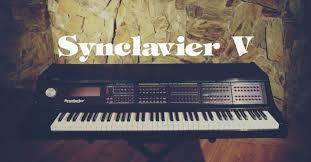
The synclavier isn’t just an instrument: it’s ALL the instruments. Where the first versions were costing around 25,000 USD, right now anyone with a modest budget can buy a Synclavier (I borrowed one for 6 weeks or so). The software allows you to assign segments of the partition over different instruments. The rest is just more puzzle work, done by the sausage machine of my own personality and emotions.
The theme of this opera revolves around a comparison between the cyclic nature of human civilization and that of our solar system, where each planet got assigned with a particular phase of civilization. In these compositions, every sound has a value, and every action is part of the universal diapason, a colossal vibration that makes energy rather than reflecting it.
When I finished, I marveled how much the compositions reflected some of the themes of The Planets, a seven-movement orchestral suite by the English composer Gustav Holst, written between 1914 and 1916. Only, his music wasn’t inspired by the planets, but by the mythology surrounding the Roman gods after which the planets are named. I put it down to a weird manifestation of synchronicity.
It’s probably the most intellectually challenging endeavor I’ve ever undertaken, and I don’t think I will ever do it again. I’m even not sure if it’s any good. I’m just the guy who wants to try everything, and ends up feeling an even bigger ignorant afterwards than before.
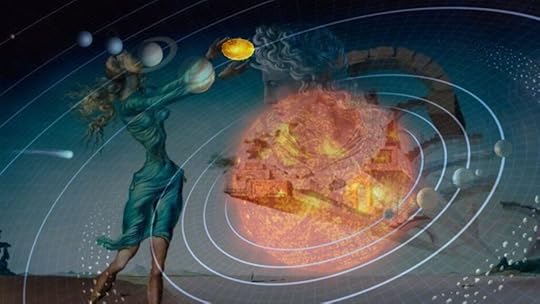

The paintings and poems that accompany this opera have found inspiration in the works of a wide variety of artists. They connect this project further to its object, the mystic cyclical synthetic vision I’ve outlined in my manifest The All is an Egg.
February 26, 2021
Mystic Cyclical Synthetism.
My artistic approach found inspiration in Frank Zappa’s Project/Object concept for his work in various mediums. Each project (in whatever realm) is part of a larger object, that I call mystic cyclical synthetism. This method rejects the idea that the human knowledge and skills can be divided into art, science, and religion. You have only artists, scientists and mystics.
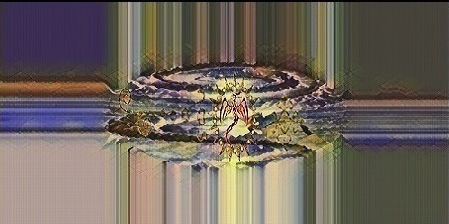 “Mystic Cyclical Synthetism” by Urban Vyaas. Acrylic on canvas 15 x 35 cm (2021)
MY MANIFEST
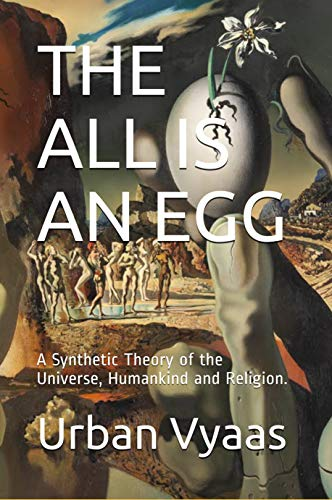
Most of my work rests upon an attempt to offer a unifying metaphysical frame for the fragmentized human knowledge, a vision I’ve outlined in my book The All is an Egg. The concept of this essay is founded upon the idea of how the cyclical nature of a multitude of phenomena mirrors circulatory biological patterns. Connecting art, science, and religion, with the metaphor of the egg foisted onto it, is a transformative work, and a profound invitation to reflect.
MY MUSIC
Shortly after the publication of my manifest I composed a symphonic rock album called A Cosmology of Civilization. The theme of this opera revolves around a comparison between the cyclic nature of human civilization and that of our solar system. The music is derived from a sonorization of the electromagnetic waves emitted by the main celestial bodies that form our solar system, where each planet got assigned with a particular phase of a civilization. These chaotic sounds where then processed through a synclavier1 in order to produce some melodies that make sense to the human ear. In these compositions, every sound has a value, and every action is part of the universal diapason, a colossal vibration that makes energy rather than reflecting it.
I took inspiration into the works of Salvador Dali for a big amount of images that are accompanying this album

MY PAINTING
My visual works rest between figuration and abstraction, coherence and disintegration, and organic and technological forms. I like to combine dream-like imagery with techno-biomorphic forms to create surreal, liminal landscapes, trying to explore the affinity between science and the artistical praxis. They very often contain autobiographical elements that illustrate my becoming as an artist.
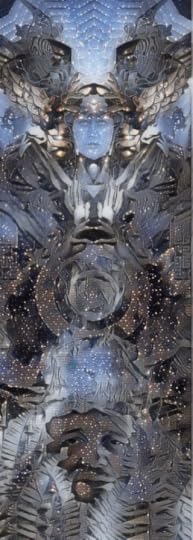 “The Artist and his Muze” by Urban Vyaas. Acrylic on canvas 20 x 60 cm (2019)
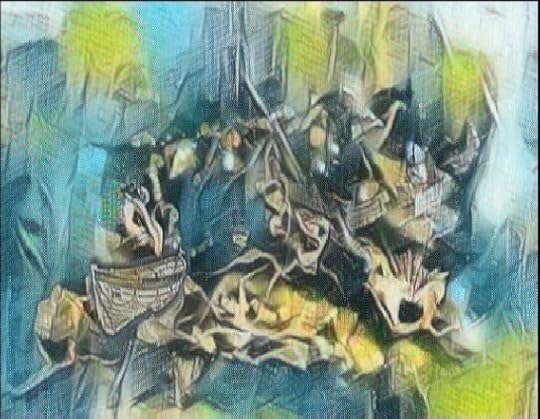 “The Tides of Civilization” by Urban Vyaas. Acrylic on canvas 30 x 40 cm (2020).
MY NOVEL
The title of my novel The Maharajagar is a self-coined portmanteau through combining parts of the Hindu words; mahaan (great), hare (green) and ajagar (dragon). The main purpose of this novel is to entertain the reader with a historical fantasy: a spellbinding epic tale of ambition, anarchy and absolute power, set against the canvas of North America, Europe and Asia during World War 1 and the ensuing great depression.
This novel uses metaphors, symbols, ambiguities, and overtones which gradually link themselves together to form a network of connections binding the whole work. This system of connections gives the novel a wide, more universal significance as the tale becomes a modern microcosm presented from a fictive metaphysical perspective. This system can be described as the “mythic method”: a way of controlling, of ordering, of giving a shape and give significance to the immense panorama of futility and anarchy which is contemporary history.
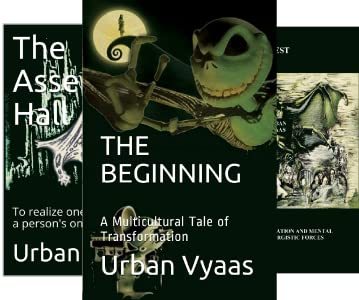
As such, this derivate of the Mahabharata contains several textual, biographical, temporal, and topographical discrepancies during its adaption to a contemporary novel, as do the names and some facts derived from the lives of real people in a variety of often unexpected ways to recreate the life-stories of its protagonists. This tale is conceived as a series of five books, the fourth part “Virata” expected to be ready for publication by the end of this year.
Although this is a work of fiction, there are nevertheless three meta-themes interwoven with the tale of the Maharajagar;
The All is a projection of informational modulated energy waves by a cosmically horizon on the time-space continuum. Synchronicity is a phenomenon that comes to us with a message. The Long Now is the only time concept to give a lasting meaning to our thinking and, hopefully consequent, actions.These principles offer a perspective from where a powerful code of conduct can emanate, transforming our lives to a new experience of freedom, happiness, and love.
February 23, 2021
Can you really have a virtual presence without Facebook and Instagram?
Again I had a week where I had to restrain myself not to snap at people on Facebook, posting stuff like: “What about could I write a book?” or the 20 years old college student that wants to write an autobiography that would mainly center around some grievances she perceived during her freshman’s year. Or questions like ” Why is no one buying my book?” and “let’s boost our pages by mutually liking each other”, “I will review your book when you review mine”, drivel… not to mention the one that, out of the blue, actually asked for a review copy of my book and then disappeared over the virtual horizon.
Some people will probably find me an elitist for my views upon Facebook and Instagram, and just remark that no one will stop me from leaving these platforms. To me that equals to the saying “if you don’t like airplanes, you can always walk”.
Out of the population of somewhere about 8 billion people in this world, 2.2 billion were active on Facebook in 2019, making it an unbelievable fraction with access to the internet. On average, people from across the planet spend 58 minutes per day on Facebook.
The average US adult spends 38 minutes per day on Facebook. 16-24-year-olds spend a median of 3 hours a day on social media. Internet users spend an average of 2 hours and 22 minutes per day on social networking in 2019.
That’s the reason why all artists who want to inform the public in general about their work, are condemned to use those platforms. For my literary activity I favor Facebook while I show my latest visual work on Instagram.
No being there is not to exist in the virtual world. And to be fair, not all of it is drivel. There are groups where interesting ideas and works are posted. It’s just so difficult to resist the groups with the biggest follower-ship and to concentrate on the few that have interesting contend.
In the end, I didn’t pull out of these platforms with a huge amount of members. I just don’t read their posts anymore and only respond to those who react on my postings. I only engage with forums that offer interesting contend and comments. They’re the ones that stimulate my own artistic and creative drive.
Anyone having similar feelings?
February 11, 2021
Depression
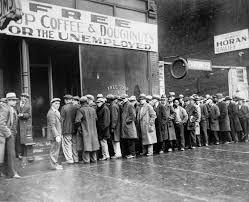
It´s a fact of life that some people are more susceptible to depression than others. Sometimes there plays a genetically component, sometimes it´s the socio-economical situation, a disease that eats away their vitality, but most of the time it´s a deeply felt sentiment of being blocked in their development; a job they hate, a relation that degraded into a monotone ritual, etc…
When I look around me, I notice that about 50 % of the people I know are swallowing antidepressants and are in psychotherapy. The current pandemic has even increased the amount of people that appeal upon the mental healthcare system. It´s a dark side of this disease that very often also hits people that didn´t have to deal in person with an infection but who´re just getting hit by the quarantine measures that are put in place to curb the spread of the epidemic. While politicians and journalists are focusing on r-factors, hospitalization numbers, and dead rates, the collateral effects of this pandemic may prove to be more devastating than its actual impact.
Domestical violence and divorce rates are peaking, acts of public violence erupting, business going bankrupt. It still must be seen if the baby boom that gynaecologists are perceiving will have a beneficial effect or will just be a part of the problems that will arise in the aftermath of this pandemic.
And sometimes I ask myself; why isn´t everybody depressed? Those for whom teleworking is an option saw themselves relieved of the daily pilgrimage towards the office, saving them daily two, sometimes four hours daily. Some others who were running a small internet business saw their turnover exploding. Ready or not, the pandemic has launched our society into the future.
Some people can transform an occasional setback into an opportunity to try something new. Learn a new skill, language, rethink their life, do chores they always had to postpone and readjust their lifestyle to the new reality.
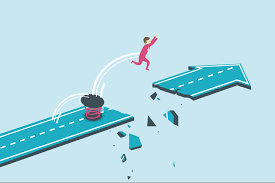
Those who´re left behind are alas not blessed with such adaptation skills. They feel scared because their old world is crumbling and they fear, sometimes rightfully, that in the new world there will be no place anymore for their old selves. Somehow, they don´t have it into them to reinvent themselves. They will need some professional guidance that forces them out of their cocoon of old time certainties. And those who can´t be helped will probably become redundant sociological ballast. And that´s really depressing.
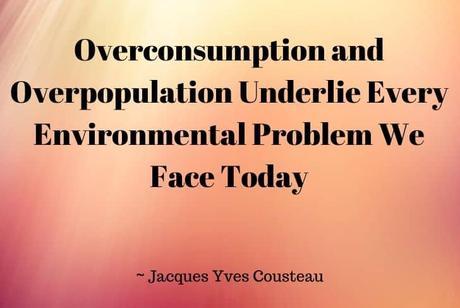
While demographists are screaming murder about China´s plumbing birth rate, they should consider that this is maybe an example that the whole world should follow, and take into account the temporary setback of having to deal with an aging population. In an increasingly overpopulated world, science has to get rid of the over-glorified “growth-concept”.
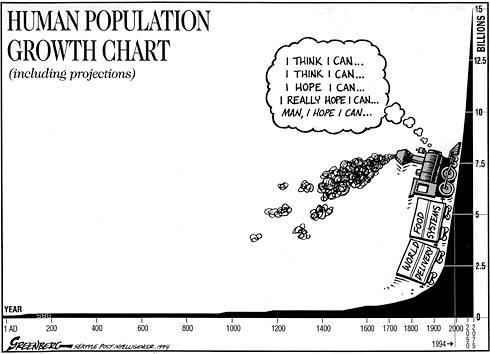
The focus has to be laid on quality instead of quantity. Not an easy concept for families that are used to live in an airconditioned nightmare, with two or three cars under the carport, stuffing themselves with takeaway fast-food junk while swallowing their antidepressants with a soft-drink mixed with some liquor.
February 9, 2021
A Woman of No Importance: The Untold Story of the American Spy Who Helped Win World War II by Sonia Purnell
My rating: 4 of 5 stars

In 1942, the Gestapo sent out an urgent transmission: “She is the most dangerous of all Allied spies. We must find and destroy her.”
This spy was Virginia Hall, a young American woman–rejected from the foreign service because of her gender and her prosthetic leg–who talked her way into the spy organization deemed Churchill’s “ministry of ungentlemanly warfare,” and, before the United States had even entered the war, became the first woman to deploy to occupied France.
Virginia Hall was one of the greatest spies in American history, yet her story remains untold. Just as she did in Clementine, Sonia Purnell uncovers the captivating story of a powerful, influential, yet shockingly overlooked heroine of the Second World War. At a time when sending female secret agents into enemy territory was still strictly forbidden, Virginia Hall came to be known as the “Madonna of the Resistance,” coordinating a network of spies to blow up bridges, report on German troop movements, arrange equipment drops for Resistance agents, and recruit and train guerilla fighters. Even as her face covered WANTED posters throughout Europe, Virginia refused order after order to evacuate. She finally escaped with her life in a grueling hike over the Pyrenees into Spain, her cover blown, and her associates all imprisoned or executed. But, adamant that she had “more lives to save,” she dove back in as soon as she could, organizing forces to sabotage enemy lines and back up Allied forces landing on Normandy beaches. Told with Purnell’s signature insight and novelistic flare, A Woman of No Importance is the breathtaking story of how one woman’s fierce persistence helped win the war.
My review
This is a book about a disabled woman who does a better job as an undercover agent behind enemy lines than most of her male colleagues and gets snubbed for it. While this will rub some contemporary readers the wrong way, you have to keep the historical context in mind. Only after France and the UK bestowed honors upon her, her own country (the USA) reluctantly recognized her contribution to the war effort. Despite her experience gathered during five years as a successful clandestine operator, she was never offered any senior position into the CIA and only years after her death they gave her the recognition she deserved. After the war she had to watch how her superiors were fishing up rank and file fascists in their effort to fight communist sympathizers. No wonder that her performances during that time of her career were judged to be “poor” by her superiors who preferred a colonel´s regime in Greece and sponsored some fascist freemason loge in Italy than risking that duly elected communist politicians would gain on influence. In other words: she was to hunt down those who helped her to fight Nazism, while her superiors facilitated the escape of her archenemy, Claus Barbie, the leader of the French Gestapo to Bolivia.
The book sets also down what kind of personality traits are needed to be an undercover operator: smart, paranoid, discrete, unassuming, courageous, resourceful and also points out some traits that are unwanted; recklessness, boisterous, trusting, loudmouthed, substance abuser, in search of glory, table jumpers …
It´s a pity that the main protagonist was unwilling to give her own account of her exploits during the war and its aftermath, but it fits the profile of a good operator; they´re not into the business of memoirs.
View all my reviews
February 5, 2021
Reading up
Sometimes it´s a difficult task to balance your activity as a creative artist with the needs to keep up with the obligations of daily life and still be left with some time to keep track of what shakes and moves in other artistic circles.
Stephen King put it succinctly: Can I be blunt on this subject? If you don’t have time to read, you don’t have the time (or the tools) to write.
I came to realize that almost everything I´m doing is done “in between”. Now I can hear the agenda gurus howling that´s just bad agenda management, but do they know when a rain conduct in their house will start leaking, causing troubles with insurance companies and synchronizing agendas with plumbers and painters? Or when their wives will get sick? Or when the next corona-wave will strike their environment with all known consequences?
Is that the doom of the struggling artist? I´m jealous of the late Belgian painter René Magritte. At 8 am he left home for his workshop, dressed as a little bourgeois. Once there he changed for his working clothes, painted the whole day long till 5 pm. Then he put down his pencil, washed up, changed back into his little bourgeois costume, and walked back home for dinner. No fuss, no bluster, just another well spent day at the work shop. I must admit that I have no idea how he managed his time BEFORE he became a famous painter.
Once I´ve made an effort to schedule something similar after some heavy rows. Nobody was to disturb me between 2 and 5 pm. It held for exactly 3 days. Do I hear the agenda wolves howling again? Yes: they would sacrifice their relation, health, and financial security on the altar of the Muses if that was needed. I digress. Being hungry, lonely, homeless, penniless, and probably substance addicted, will most likely not turn me into a better artist.
You know what? Instead of writing this stupid, whining posts, I better get into some reading. Maybe make some progress in that slow moving fantasy audiobook that came highly recommended by a couple of reviewers on this forum.
I´m not sure if I´m going to post this. I will let it rest for one night and decide about it tomorrow morning.
January 26, 2021
Giveaway promotion
I wish to inform this community that I´m running a giveaway promotion of the kindle version of my book “The All is an Egg: A Synthetic theory of the Universe, Humankind and Religion” . The concept of this book is founded upon the idea of how the cyclical nature of a multitude of phenomena mirrors circulatory biological patterns. Connecting art, science, and religion, with the metaphor of the egg foisted onto it, is a transformative work, and a profound invitation to reflect. The promotion runs from Wednesday, January 27, 2021, 12:00 AM PST till Thursday, January 28, 2021, 11:59 PM PST. The video that accompanies this message is the prologue of “A Cosmology of Civilization”, a multimedia project that places the main subject of my book, human civilization, in an artistically context. The other parts can be watched on my YouTube channel at https://www.youtube.com/channel/UCk7aBYutcyB7zVT-ZN5UYrw
January 25, 2021
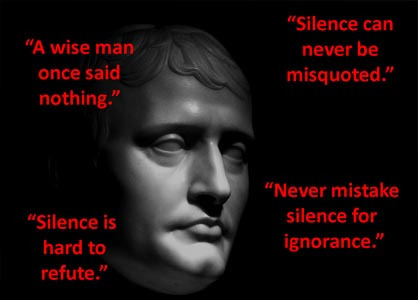
Silence.
We are so much used to noise that many people perceive silence as discomforting. A pause into a conversation must be filled up with meaningless innuendo. Every room into the house must have a blaring TV or other noisemaker. Some people even claim they can´t work when there isn´t any sound producing device around (albeit I might make an exception for the noises produced by a construction yard).
Silent people very often get the predicament of being asocial, shy, or just stupid. It apparently never occurs to all those talkative persons that listeners also participate into a conversation. And yeah, those who have the habit of thinking before they say something, can sometimes getting bored by the talk of those who just let their mouth run ahead of their brain.
To speak is to exist. When you don´t howl with the wolves, you´re a sheep.
I incline to think that humankind resembles more a tree populated by chattering parrots. To twitter is to exist. A damned nuisance if you want to concentrate on something that requires some creativity or thinking.
Who thinks about the fact that you should only speak or write when you have something meaningful to share? That saying or writing nothing is always better than saying or writing something stupid or hurtful?
I refuse to speak up when I have nothing to say. I do my best to keep my mouth shut when I´m angry and only speak out when I´ve calmed my thoughts. I only write when I have a thought to share that can make the world a better place to live in. But mostly I value silence. It is a source of great strength. Lao Tzu said this already long time ago.
January 18, 2021
Why Do People Blog?
Express Yourself and Share Your Passions
Who gives a damn. Everyone is about writing posts. Not reading them.
Make A Difference
Really?
Share Your Knowledge
For free? And what will I sell then?
Refine Your Writing Skills
MS word editor is doing fine, thank you.
Learn How To Make Money Online
For a price, of course.
Build Your Professional Network
Writers need readers. Not more writers also looking for readers.
Earn More Exposure
How much will that cost?
Become an Authority in Your Industry
The internet is paved with self proclaimed gurus.
Market Your Business
Pay or sink into oblivion.