Shahree Vyaas's Blog, page 10
March 23, 2025
Reading the Canon of the World Literature. March 20 till 22
20 March 2015
It was my intent to read the “The Diary of a Madman and other stories by Xun Lu” , but when I did a little research on this title I found out that “The Diary of a Madman” was the first short story of a book called “Call to Arms” written by Xun Lu around 1918.
It was described as being inspired by Michael Gogol’s short story “The Diary of a Madman” and as an ironic attack on traditional Chinese culture and Confucianism in particular. Since I know barely something about Confucianism, a humanistic doctrine that has dominated ethical, philosophical, cultural and social thinking in China for centuries, I felt not apt to read a criticism upon a subject that I know only superficially.
Instead I switched this title for the above mentioned Five Classics of the “Confucian” (551-479 BC) canon—the Book of Changes, the Book of History, the Book of Rites, the Book of Songs and the Spring and Autumn Annals. All candidates for a position into the imperial bureaucracy from 115 BC till 1905 AC had to pass an exam on these subjects.
Introduction
The Book of Poetry is a collection of 305 texts reflecting everyday life in court and countryside during the Eastern Zhou period; the same collection includes a series of hymns, composed for dealing with a range of issues, including love and marriage, agricultural concerns and war.
The Book of History purports to be a collection of archaic archival materials over 58 chapters that preserve important edicts and memorials outlining the responsibilities of the ruling elite toward Heaven and the common people. It relates the story of the early sage-kings Yao and Shun, the history of the Xia, Shang and Zhou dynasties.
The Book of Rites contains the the three Rites classics, the Ceremonials (Yili), Rites Records (Liji), and Zhou Rites (Zhouli), include as many as three thousand discrete rules of conduct, in addition to fabulous descriptions of an ideal government structure and anecdotes about paragons of Confucian virtue. Proper ritual conduct would keep the empire in harmony, as well as emphasize the virtue of piety.
The book of Changes can be read as a divination manual eventually expanded for use as a philosophical text, because it attempts to recreate through its graphic symbols and attached texts the full range of shifting phenomena that proceed from the unitary prime mover, the Dao and is centered around the principles of yin and yang. It’s still in use for divination practices and has been translated as I Ching.
The Spring and Autumn Annals is a court diary detailing the activities of the rulers of the small state of Lu during the years 722-481 BC and appears to have been written specifically for annalistic purposes.
The most important underlying idea in Confucianism was the perfectibility of human beings through Shu (profound empathy) leading to Ren (human kindness). Such developed humanity was typically realized by a two-step process: unremitting study of the Way of the Ancients, which ensured a gradual habituation to goodness through immersion in the ancient models preserved in ritual, to be crowned by a profound awareness of one’s place within the community of civilized human beings.
The Confucian model of Civilization is both embodied in and enhanced through the distinctive ritual acts that inevitably govern most aspects of human interaction; if those in power would only take the trouble to express their human feelings through time-honored rituals, there would be no need for repressive penal codes and punishments to control the bestial impulses.
Just like so many other teachings, Confucianism postulates the existence of a Golden Age and situates it during the early days of the Western Zhou dynasty (1050 -770 BC). The restoration of that Golden Age might be better led by men of noble character than by men of noble birth.
Humankind needed only to become so adept in the ritual usages, the verbal and gestural language for dignified human interaction, so that cultivation became virtually second nature, at once spontaneous and graceful. Lower humans would still require the loving support of a strong family system and the suave model of a just ruler to arrive at a corresponding nobility of character.
A fundamental adagio of Confucianism is that all humans are capable of becoming insofar as they learn to weigh their relative claims on goods and to find the single most humane solution to problems arising from social interaction, called the Perfection of the Middle Way.
In the 12th century, during the Song dynasty, there was a fundamental reconsideration of early classical learning, which represented a virtual reassessment and reinvention of the Confucian message. Specifically the content of the original Five Classics should be compared with the Four Books favored by later Confucian masters to argue the deification of the Emperor (where did we hear that before).
A rediscovery of early classicism must serve to dispel lingering stereotypes about an eternal and unchanging China. Only the classics as a group can reveal the original Confucian vision upon the entire workings of the divine Way and its operation within human society.
The Han view was that the Five Classics are not only tightly integrally connected texts but also texts that weave together the constant principles underlying the socio-cosmic fabric. The Han classical masters devised following rules to determine whether a work qualifies as a true Classic or set of classics;
• It must constitute a complete and perfect order of sufficient breadth to answer every moral question put to it;
• the classic must be “easy to know” and “easy to follow” in the sense that it contains no “treachery or trickery,” that is, no internal contradictions;
• the classic must be eternally relevant in the ever changing present, so that its traditions remain alive in every generation;
• The classic must function as a kind of access route to the ethical makeup of its sage author(s), providing models of inner strength and integrity, if not conventional power;
• on both the literary and ethical levels, reading of the classics must yield such reliably exquisite pleasures as to forge in the most knowledgeable adherents—the connoisseurs of morality—the strong desire to emulate the ethical exemplars of the past.
21 March 2015
Dong Zhongshu, a Han master who lived between 174 – 104 BC gave the following description of the classics;
Each and every one of the six branches of learning is great, but each has that in which it excels.
• The Book of Poetry tells of the aspirations of the heart and mind; therefore, it excels in substance.
• The Book of Rites mandates moderation; therefore, it excels in refinement.
• The Book of Music intones virtue; therefore, it excels in influence.
• The Book of History illustrates merit; therefore, it excels in human affairs.
• The Changes bases itself in Heaven and Earth; therefore, it excels in regularities (shu ).
• The Spring and Autumn rectifies notions of right and wrong; therefore, it excels in governance.
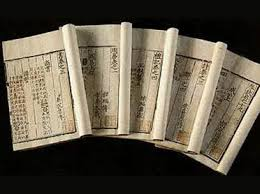
In the mid- to late Western Han, centuries later, a scholastic impulse to group things by fives, in imitation of the Five Phases worked to suppress mention of a Book of Music classic in connection with the corpus, resulting in the incorporation of a music text into a text on rites.
Comments
Just like the Mahabharata, the corpus of the Five Classics was unusual in the degree to which it remained open, subject to continual amplification and revision. It lent a sturdy framework within which to construct aesthetic experience and cultural ideals, even when individual writings in the canon and attached commentaries clearly reflected the contemporary preoccupations of their separate authors. Confucius himself taught that true learning consists of “reanimating the old” through the creative adaptation of core behavioral modes to changing circumstances.
Confucianism promotes five constants for the personal development of virtue and the upholding of ethics. The basic Confucian ethical concepts include Ren, Yì, lǐ, Zhì and Xin. Ren is an obligation of altruism towards other individuals. Yi is the obligation to be righteous and benevolent. Li is a ritual system of norms that defines how a person should properly act in daily life and defines the rules for proper government. Zhi is the ability to judge what is right or wrong on other people’s behavior and to strive for knowledge and understanding. Finally there is Xin who encourages the adept of Confucianism to live and act into a way that is cohesive with his thinking and beliefs.
There are still many other virtues, but these were the most important ones while Ren and Yi are considered to be the capital virtues and those who’re not living by it are considered lesser humans. Those who manage to live by these five constants are called Junzi (an English equivalent would be a gentleman).
Then there are the four sizis for a good functioning society; Loyalty, Filial Piety, Continence and Righteousness. Zhōng (loyalty); the minister has to be loyal to his prince but reciprocally the prince has the obligation to be righteous. Xiào (filial piety); if there is one virtue that can be found back into all Asian religions, it are the obligations that one has towards his parents and family.
Jié (continence); everybody should know his place into the world and behave accordingly. Yì (righteousness); this virtue is also part of the five constants, described in previous paragraph. Following Confucius social disorder is a result of not understanding the reality and order of things so that above principles are badly applied. He conceded that into times of social unrest loyalty and filial piety could become conflicting virtues.
22 March 2015
Around the 12th century under the impulse of Zhu Xi (1130 – 1200) Confucianism underwent a reformation by lying more emphasis upon The Four Books than upon The Five Classics.
The Four Books are lifting certain texts out of the Five Classics by considering as more important. Since they were written only a couple of hundred years before, their language was not so archaic and their content was more coherent and less voluminous that of the Five Classics.
Whereas the Five classics put more weight on good rule, the Four Books emphasized more upon self-cultivation as a first and necessary step to improve the World.
Zhu Xi proclaimed to his students “Not the places where you have questions, but rather the places where you have none: that is where you should focus your energies.” Zhu Xi’s teaching method was based upon following principles;
• To reduce the amount of texts his students had to read
• To make them recite what they were reading till they knew it by heart
• To apply that knowledge into their daily lives.
Zhu Xi grew also more and more impatient with the already since centuries going on debate of the correct way to interpret the Classics to find out about the Middle Way and decided to settle the dispute for once and for ever by making The Four Books the new canon of Confucianism.
Only in 1756 would the Classics regain some of their earlier influence when the state examination system placed them back on equal foot with the Four Books.
However during the early 20th century, activists accused scholars who studied the Classics of elitism. Again the status of the Five Classics declined to a secondary canon and has since then never regained their importance for the study of the Middle Way.


March 18, 2025
Reading the canon of the world literature Mar 17 till 19.
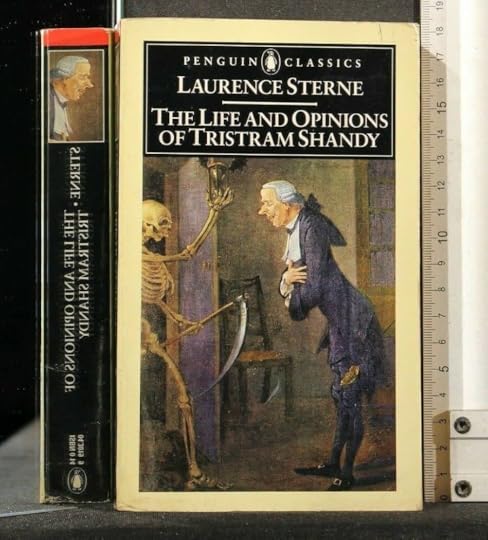
17 March 2015; finally finished the first volume of Tristam Shandi.
We got also introduced to his father’s brother, uncle Toby, a battle maimed army officer and his man-servant, also a crippled veteran, corporal Trim. Further it seems that the author is giving away a lot of storylines; his nose being broken by dr. Slop’s forceps during the birth process, the whole explanation of the reasons why the narrator’s father the name Tristram defined as “unison with Nincompoop” followed by a whole expose of a congress of physicians who decided that in case of an emergency, a baby could be baptized while still stuck into the mother’s womb. And the narrator is even not born at that timeline of the story! Obviously a book written with a dictionary at hand reach by a snob exposing his erudition who wants to make fun of other people, including his readers.
Up to now it didn’t induce any crack of a laughter into me; more a feeling of exasperation of the incapacity of the author to bring an argument to an end without eloping too much. 17th century humor is obviously not spent on me with a narrator who casts himself as a righteous and educated gentleman pushed by an ignorant society into the position of an underdog (you can spot the influence of Cervantes’ Don Quixote, who’s by the way very often quoted by the author, mostly combined with some touch of self-irony, a trait which I found a little refreshing after a whole barrage of bombastic paragraphs).
Dreadfully I decided to finally get over with the 1st volume but to check the headlines of the news first. There I found out that by archeological excavations under the monastically Trinity church in Madrid, they’ve found the remains of Cervantes and his wife Catalina into a crypt, who’s exact location got lost during ensuing renovations. Into the same article Cervantes was prized for his Don Quixote, as the author of the first novel ever written known to the world literature.
It seems that most scientists are still too much biased by their Western upbringing and blinded by the shockwave that the invention of the book press and the ensuing scientifically Tsunami have caused into the western society, known as the Illumination (the light went on in Europe while the rest of the world remained blissfully into the darkness). Meanwhile you and I know better.
But back to our dear Tristram and his melodramatically surroundings. The first chapter ends by the mistress of the house lying upstairs in agony, trying to give birth to a child with the men (physician included, the instruments of his trade hanging into a side pocket of the saddle of his into the wild roaming pony, with a servant having the task to fetch both) are listening to corporal Trim giving a sermon about morals, religion, honor and conscience.
A speech who was at best a fairytale dressed up into a philosophers’ vocabulary and illustrated with metaphors extracted from military architecture by uncle Toby (who’s a little monomaniac about the subject). I suppose 17th century scholarly readers will have found it fun; I found it utterly boring. Afterwards it turns out that the sermon has been written by the local parson (who still has to meet his already revealed doom).
Volume 2; more news from the narrator as a fetus.
This author is collecting anathema like a scavenger, most of them even not having a modicum of literary value. The poor mistress of the house still agonizes upstairs, trying to give birth to the narrator while the Shandies are boring the poor Dr. Slop to dead, the first one with his half-baked philosophies and the second one by relating every sentence to some military tactic or architecture.
The mood of the poor physician didn’t improve when he learned that the future mother dictated that he could only be of assistance when the old midwife didn’t know how to proceed any further.
The only moment when the author got me almost smiling was when he wrote his foreword (half-way the second volume) “- when I sat down, my intent was to write a good book”.
The way to Hell is paved with good intentions.
March 19, 2015
Finally Dr. Slop with his forceps got involved and since it was a difficult birth the curate was called in for an emergency baptism. Due to a long and complicated birth, the child’s face was black and Suzanna, the simpleminded maid came running down asking for the child’s name.
Trismegistus said his father by the time she ran up it was Tristramgistus there is no such name said he curate; Tristram it must be. Shortly afterwards, the narrators condition improved fast.
Comments;
Alas, after five chapters of philosophy about noses, I’m done with Tristram Shandy, gentlemen. I leave it to braver and more determined people to go on with the rest of his life (volumes 3 till 9) but my head feels already like filled up with cotton and I cannot have anymore. Six days spent upon two volumes of nonsense have drained me and there is still a world to be conquered. I decided that these books will not become my Stalingrad, so I turned my back to it and marched further.
March 16, 2025
Reading the canon of the World literature Mar 13
The Life and Opinions of Tristram Shandy, Gentleman by Laurence Sterne.
This humorous book has been publicized in nine volumes between December 1759 (vol. 1, 2) and January 1767 (vol. 9). The author was an Anglican clergyman who’s first book “The History of a Good Warm Watch-Coat”, describing the little squabbles and intrigues of church dignitaries, was burned upon request of his embarrassed ecclesial superiors, which caused Sterne to develop an aversion for gravitas. Although barred from advancement, the book made him aware of his writing skills and he decided to compensate his failing chances of advancement by pursuing a second career as an author of satiric novels. The first editor to whom he presented his first volumes turned him down at the worst of times; his mother just died and his wife was terminally ill, which probably softened a little his satirical whim into a more comic tune who’s sometimes flirting with tragedy. When the work finally got published, it made him an instant celebrity and he enjoyed it to be fêted into the highest cultural salons of London. But just like his wife he suffered of tuberculosis and died in 1768, a month after the publication of his second novel, “A Sentimental Journey Through France and Italy”, at the age of 54.
13 March 2015
Volume 1; About the narrator’s conception
Tristram starts his narrative by dedicating a whole chapter to the circumstances surrounding his conception. Following his belief the implantation of the Homunculus (A tiny person inside a sperm) was disturbed because his mother asked his father at that precise moment if he didn’t forget to wind up the clock.
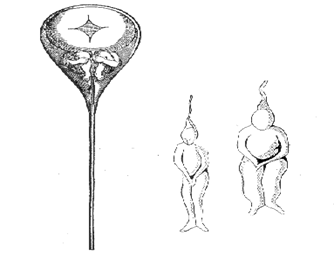 Dawning of a Homunculus by N. Hartsoecker in 1695
So the whole implantation process of the homunculus went wrong ab ovo (narrator citing Horace). Into the first chapter the narrator would give further indications of his erudition by citing the Essays by Montagne, suggesting an intimate knowledge of the works of Locke, Burgersdicius, Ramus, Cervantes, etc…
Another way that the author used to display his erudition is by constantly inserting sentences like” … and then he would break off in a sudden and spirited Epiphonema, or rather Erotesis …“or “… (a name that) was unison to Nincompoop and every name vituperative under heaven…” These examples came from one page somewhere in the middle of the first volume, when I became aware of how many times I’d used the dictionary function of my Kindle.
He spent also a couple of pages on sneering at colorfully dressed nobles making the roads unsafe by speeding along upon their Hobby-Horses (Another word I had to lookup).
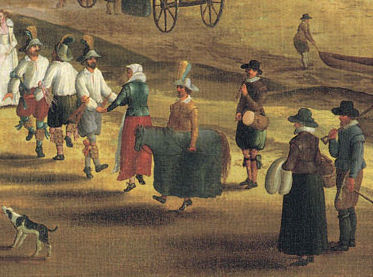 Hobby-Horse at the Morris dance; detail of Thames at Richmond, with the Old Royal Palace, c.1620
He also makes fun of the local Parson for a couple of pages by comparing the parson’s horse with Don Quixote’s horse Rosinante. It seems that at that time, the best way to make fun of someone was to ridicule their horse. But later on into the chapter, the parson gets good points because he can join the laughter about himself and his horse and is just like the narrator an enemy of gravity that he describes as a deceit “twas a taught trick to gain credit of the world for more sense and knowledge than a man was worth”. The parson, his name was Yorick, was gifted with a great wit but little common sense and a mercurial temperament. Just as happened to the author of this book, he joked a couple of times about the wrong persons. They formed a coalition to destroy him and drove him subsequently into an early grave (the author luckily escaped that fate by becoming a celebrated writer; it was his frail health that caused him to die at 53).
March 15, 2025
Reading the Canon of the World literature March 11 till 12
The Tale of Genji by Murasaki Shikibu.
March 11, 2015
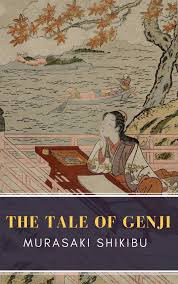
This novel is written around the beginning of the 11th century in Japan and is probably the oldest novel ever. The most recent English translation runs over more than 1200 pages. Although its volume is the double of what I did limit myself, the book appealed to me because of the jump in time and geographical location compared with its predecessor (The Mahabharata, India, and 5th century BC). There was nothing on my list that would have prevented a return to the old continent (Europe).
Introduction
This is the story of a medieval Japanese noble who lost his mother at the age of three and developed a major Oedipus complex because of that. All his lovers (apart from one homosexual diversion and politically induced marriages) have to be lookalikes of his mother. As a young teenager he would seduce the concubine of his father (who chose her because she resembled so much his deceased favorite) and would father a child with her, who would later become the emperor Reizei.
12 March 2015
Summary
Although a polygamist and philander, Genji would dedicate himself mostly to Lady Murasaki, whom he abducted as a ten years old girl (again because she had a striking likeness to his deceased mother) to mold her into what was, into his opinion, a perfect woman and lover. She became possessed by a spirit in chapter 39, beset upon her by a jealous rival and died in chapter 40. After that Genji’s own light started to dim fast and soon after that he dies also.
The last ten chapters are about his son Kaoru (who’s biological father was one of Genji’s friends) and Nio no miya, the third prince born by the Empress Akashi (his daughter) and by so his grandson. It’s again more of the same; rivalries, jealousies, philandering and political marriages and concubines.
Comments
The more I’m getting acquainted with the world literature, the more analogies I discover; The Mahabharata could be a blueprint for The Iliad and its derivate The Metamorphoses by Ovid who was a source of inspiration for generations of Western artists and scientists. The biggest difference is that the big battle that the Iliad describes marks the fall of an empire while the battle that marks the end of the Mahabharata marks the foundation of an Empire. The characters of the Tale of Genji could have been substituted by members of whatever Royal Court in mediaeval Europe, with the only difference that the Christian tradition didn’t condone polygamy as a political instrument.
March 13, 2025
Reading the canon of the world literature March 8 till 10
March 08, 2015.
Already since a couple of days I’ve done not much about this project, mainly because of life that got into the way. At yesterday’s party, thrown by my proofreader who writes children books, I had to refrain my other proofreader to declare me the smartest man on the Island. Because that would have been false, since I think that our local veterinarian (who was also at the party) and a couple of other people are smarter; they’re just not writing any essays (anymore). There I met also a funny and clever 70 something year’s old man that people introduced to me as Uncle Herman. He was visiting his niece here on the Island who lives with her Cuban husband into some small, beachside alternative community that is connected to the rest of the Island by a dirt road that meanders over the island’s only hill and who is almost inaccessible during the wet season. The community that lives at the end of that road is not connected to the island’s electricity grid or whatever other utilities. They’re mostly vegans, trying to grow their own food (and marihuana), have small wind generators and live into huts that they construct from branches, palm- or coconut leaves, bamboo and clay. Whatever they cannot produce by themselves, they buy with money they earn from a little sidekick like selling space cakes, chocolate balls (equally doped), handmade jewelry and a little sting as barman or helping out in one of the many dive shops. For the rest of the time, they run their little eco-projects; environmental friendly sewage, turtle breeding station, recycling and art ateliers, etc… Most of them prefer techno music although some of them have their own instruments and they organize on regular intervals jam sessions. They like to be left to their own devices and for most of the island’s habitants (natives, expats and tourists) that’s just fine. Their biggest nuisances come from the local insect colony and crack heads snooping around the whole Island, constantly on the outlook for some opportunity theft.
Some expats have organized a circle of writers who congregate every Thursday morning at a local bar called The Rehab whose patrons proclaim that „Recovery is not an Option”. But I’m too busy with reading and writing to go to such meeting. All the time and attention that I’m not putting into this, goes to my wife, my assigned household tasks and our social agenda.
Summaries
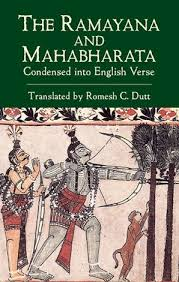
Meanwhile into the Mahabharata, Yudhishthir, the first Indian Emperor fucked up grandly by gambling away his kingdom and wealth into some trumped gamble game with loaded dices and has to go into exile to the jungle for twelve years, leaving his biggest rival, Duryodhan in charge of things. His wife is not the happiest person around and he’s also not very ported with himself, but decided to use the ordeal to turn himself into a better and smarter person. He gets visits from all kinds of people and gods who tell him lengthy stories about the duties of each cast and the rules that govern society, religion, etc…
My Kindle indicates that I’ve been through 1/3rd of the book. The verses require much attention and time. Whenever the editor jumps to a next chapter of verses, he nicely summarizes the action between them into a short narrative. I’ve already made up my mind that the next book will not be another epic poem.
March 10th, 2015.
More Summaries of the Mahabharata. Of course the evil Duryodhan doesn’t want to make place again when after 13 years Yudhishthir claims back his throne; he goes like “To whom will he gamble it away next time?” Yudhishthir of course doesn’t accept a no for answer and start to collect support to take his throne back with force. At the end they fight for 18 days and the good one wins and the bad one dies (together with a lot of other good and bad people). At this point the Mahabharata officially ends but there is a little addendum.
After the war, the shamans advised Yudhishthir to perform a horse sacrifice. This goes as follows; they let a horse loose and run wherever it wants. When it doesn’t get stopped, that means that the ruler of that land is accepting Yudhishthir’s supremacy. When it gets stopped, war follows. When the horse gets back home, it gets sacrificed to the gods and the emperor inhales the smokes of the fire to cleanse him from all sins.
Comments
Although my wife discarded the book as unreadable (because of the verses) I’ve got fun into it once I got into the rhythm. The author/editor by himself has done a great effort to reduce the epics 90.000 verses to 2.000. The magnitude of the Mahabharata is due to the fact that during the ensuing centuries after its conception, religious rules and teachings were added to it by putting them into the mouth of one of the protagonists.
March 11, 2025
Reading the canon of the world literature March 5 till 7
Chapter 8; The Mahabharata.
March 5, 2015
The title of this book can be translated as “the great tale of the Bhārata dynasty“. It is assumed that the origins of the epic probably fall between the 8th and 9th centuries BCE and that the text probably reached its final form by the early Gupta period (c. 4th century CE). It’s one of the two pillars of the Indian literature; the other one being The Ramayana. The Mahabharata can be described as the longest epic poem ever written; it contains over 100,000 couplets or over 200,000 individual verse lines. A critical edition contained 13.000 pages in 19 volumes was produced between 1919 and 1966 by scholars at the Bhandarkar Oriental Research Institute, Pune. A project to translate the full epic into an English translation is still underway and will cover an estimated 32 volumes of which 15 are already available. I would never have considered to read it if it wouldn’t have been summarized to 141 pages of A4 format.
The further I’m getting into this New Year’s Resolution, the itchier I’m getting. I admit that when I’ve put an idea into my head, I can get a little monomaniac, but how else can you bring to a successful end a difficult task. At the end of the previous paragraph, my wife decided that it was time for us to go to the beach and have a swim, followed by doing some shopping for a party she wants to organize tomorrow at 5pm (some sunset drink combined with some potluck).
The day after that we have to go to a party organized by some other friend (one of my proofreaders) for a repetition of more of the same. Ok, I must admit that if it was not of my wife, I would probably ruin my health and social life by spending my whole day on reading and writing.
Book I; The tournament (Astra Darsana)
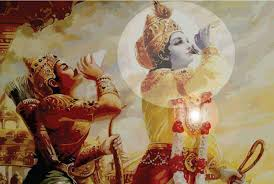
It’s the introduction to the two rivaling clans of paternal cousins; the 5 sons of the deceased King Pandu and the 100 suns of his blind brother Dhrita-rashtra who succeeded him as King. In reality however, the 5 sons of Pandu are fathered by five different Gods. . Yudhishthir was the son of Dharma or Virtue, Bhīma of Vayu or Wind, Arjun of Indra or Rain-god, the twin youngest were the sons of the Aswin twins, and Karna was the son of Surya the Sun, but was believed by himself and by all others to be the son of a simple chariot-driver.
The 100 sons of Vidura, of whom Duryodhan was the eldest, had more demoniacal progenitors and were jealous of the 5 sons of Pandu. To settle things, their father organized a tournament. Arjun, one of the Pandu princes proved to get the upper hand, till an unknown warrior, named Karna, comes into the arena and challenges Arjun. Nobody knew from whom Karna descended, but he was a secret premarital son of Pritha, Arjun’s mother. First the Pandu brothers protest that their brother would have to compete a man with no lineage, but Duryodhan makes him King of Anga, after which he can challenge Arjun. Against all expectations, Karna wins the tournament.
March 10, 2025
Reading the Canon of the World Literature Feb 28 till Mar 3.
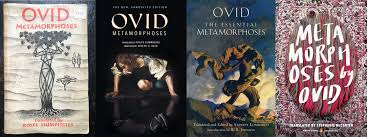
6; Metamorphoses by Ovid
February, 28th 2015
To make a symbolic gesture, I choose at this point to continue my readings with a book whose title, translated into English means “The books of changes”.
Book I; The four Ages of Humankind
A long time ago, humankind lived into conditions that were comparable with what the Bible describes as “The Garden of Eden”; Ovid called it the Golden Age and humans enjoyed almost godlike status and lives. They didn’t know the Art of Navigation and didn’t feel the urge to explore the rest of the world. During that age, the god Saturn was in charge of the creation, but got deposed by one of the younger gods, Jupiter, what kicked off the next age.
Into the Silver Age, we see the introduction of the four seasons because Jupiter granted the goddess of the harvest to go to the underworld for six months a year to stay with her daughter, who was abducted by Pluto, the king of the underworld. Humankind had to learn Agriculture because nothing would grow during the months that she was in the underworld and Architecture to build houses to protect themselves against the cold. Into the Bronze Age most man were warmongers, but still respectful to the Gods, till some stupid king serves a boy to Jupiter for dinner, igniting the God’s fury about the desecration.
As a punishment, Jupiter sent a huge flood that lasted for 9 days and that destroyed all life, apart of that of two chosen ones; Deucalion and his wife Pyrrha. Because Deucalion was already 82 years old, they were to repopulate the World by throwing stones over their shoulder.
His stones turned into man, hers into women. Into the Iron Age we see the world to be divided into nations and they discovered Navigation and Mining. Since then, humans became greedy, aggressive and impertinent. We get also introduced to Apollo, Daphne, Io and Phaeton, all linked by a complicate genealogy.
Book II; More Divine Comedy.
The second book starts with the same personage as the first book ended; Phaeton, the son of Phoebus, the sun god. When he asks to borrow his father’s car (the sun chariot) for one day he nearly burns up the earth. Or ancestors can be grateful to Jupiter that he killed the reckless driver with a thunderbolt before he could do so.
The story goes on with the nymph Calisto, a follower of the goddess Diana, who breached her vow to remain a virgin after being seduced by Jupiter. She got banned out of Diana’s inner circle and gives birth to a boy named Arcas. The goddess Juno, Jupiter’s wife, sick of jealousy, changes the nymph into a bear who 16 years later, nearly got killed by her own son. At the last moment, Jupiter could avert the tragedy and transformed them into star constellations. Another nymph Ocyrrhoe meets her fate because one of the gods (in this case Apollo) became besotted of her. And so this chapter goes on, to conclude with the rape of Europa by Jupiter into the disguise of a bull.
March 1, 2015
Book III and IV; the wrath of the gods
The third book starts with the story of Cadmus, the founder and first ruler of Thebes, who’s also credited for the creation of the first Phoenician alphabet from which the Greek alphabet is a derivate. But he became a victim of the wrath of the gods when he killed a water dragon that was held sacred by Mars.
These two books are full of similar stories of mortals who, sometimes unintended, provoked the anger of a god or goddess and who have subsequently had to carry the burden of their vengeance. For example Cadmus, he only killed the dragon after the dragon killed two of his companions because they were taking water out of a well that the dragon was protecting.
March 2nd 2015
Books IV till XI; Pathetic love-struck Gods.
Cupid is amongst the ranks of the gods only a minor god, but if this story had a central protagonist, it was him. Repeatedly he sneaked through the pantheon to ridicule and surprise the other gods, made them react in an irrational way. In these books, Ovid reverted with humor the normal order of things; there where the gods were behaving as irresponsible teenagers, while the human thoughts, passions and actions were almost noble.
Book XII till XV; the history of Rome presented as an explanation for the deification of its emperor.
Into this section of Metamorphoses, one can observe the shift from myth to history. First there is an old god, Saturn (probably the creator) who got deposed by Jupiter the almighty. In the second part you find the victorious hero (Perseus) and in the third part the hero Hercules becomes a god. Into his last section, Ovid connected the fall of Troy with the founding of Rome, the first three parts preparing us for the introduction of the divine human. So one could discern that where in the Pythagoras episode, the wisdom that Numa learns at Croton, was following the writer related to the small city over whose cultural beginnings he would preside. That way Rome’s foundation became divinely motivated and of which the seers predicted the leadership of the world under the rule of the descendants of Aeneas. Connecting the foundation of Rome with Troy was Rome’s connection with the mythical past of it. Into this context, argues Ovid, Troy was not completely fallen since Aeneas would claim another land and one of his descendants would make “mistress of all things” thus reaching the heavens as a new god; the Augustine connection.
Yet he, when all is said, came over the seas
To join the ranks of Roman deities;
Cesar is god at home.
Ovid was born a year after the murder of Julius Cesar and this verse was meant to give his successor and heir, Augustine, a Godlike progenitor (although Ovid omits to tell that Augustus Cesar was an adoptive son of Julius Cesar).
And now a radiant star
He sees his son’s great exploits from afar,
And grants them greater as his own to be,
Rejoicing into his son’s supremacy.
The whole transitional design of this poetic tale was to come to this evolutive apotheosis;
Far be the time, deferred beyond our days,
When great August leaves the Earth he sways,
And joins the gods, yet still with loving care,
From heaven shows favor to our prayer.
Ovid ends his book with a prayer for the future of Rome and its Emperors, but insists that where all of those can fall to dust, his tale will stand for ever (as it did indeed, up to now).
Comment;
The only institute that survived the collapse of the Roman Empire, the Roman Catholic Church, has sovereignty rights over a tiny part of the city of Rome, known as the Vatican, where Latin is still the official language. Of course the small territory stands in big contrast with the spiritual influence its absolute ruler, the Pope, has over his millions of followers worldwide. Upon his elevation to Pope, the Roman Catholic doctrine attributes him with a couple of demi –god-like qualities. He is infallible in matters of theological teachings and is to be referred to as Your Holiness; they just stopped short before deification. Another analogy is that the soldiers who’re responsible for the Papal security are called The Pretorian Guard; the same as the Roman imperial life guard.
Ovid would probably argue that thus the Roman Imperium has never fallen completely and still lives on into one of the institutes it founded. It was after all the Roman Emperor Constantine I who, in 325, convened the first council of all Christian bishops a Nicaea.
Since Rome at its turn was a continuation of Troy, that would connect the church with the Greek mythology and their pantheon of gods. That’s maybe why the roman catholic church, who believes that there is only one and unique god (who’s a trinity) assisted by a bunch of helpers called angels, felt the urge to create that many saints who can also be venerated and be prayed to in order to request a special favor (just like the Greek gods, every saint has a specialism). The only real general requirement for being canonized a saint is that the person in question has to be dead. I feel pretty much sure that on this subject a thick volume can be written, but I have to go on with my New Year’s resolution.
Before starting this chapter I sacrificed some time to get familiar with my Kindle; it definitively makes the reading experience more comfortable and less time consuming. Sometimes one has to sacrifice some time into the present, in order to save some time at future exploits.
March 8, 2025
Reading the Canon of the World Literature Feb 24 till feb 25
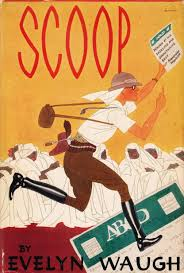
4; Scoop by Evelyn Waugh.
February 24, 2015
Today I feel already a little more confident than two days ago when I was agonizing over the fact that after one month and a half into the new year I only managed to clear two titles from my list. This time I managed to check one off the list into just two days and I feel confident that this one I can process in maximum three days (220 pages).
Still, Tolstoy is looming at the horizon and as long I’ve not digested this one, I’ll stick to my self-imposed rule of not picking something that lies beyond number 20 of my list. The Kindle is still not activated; just don’t have the time to figure out that time saving device.
This morning I woke up at seven and it’s a quiet beautiful morning on the reef. After watering my plants, brewing some coffee and having some light breakfast I could work undisturbed on my literary challenge (apart two small interruptions; the waterman delivering two 5 gallon bottles of drinking water and our friend Ralph to ask if I wanted to buy some eggs from him), till 10 am when things fell into his daily swing with my wife waking up and wanting company at breakfast.
February 25, 2015
The same morning routine as yesterday; just no disturbances this time. This is definitively the best moment of the day to work on my new years’ resolution. Got a message from my two proofreaders; one of them wants me to help her tomorrow to visualize the notion of quantum mechanics over a bottle of rum. Now the base of quantum mechanics is the Schrödinger Equation and goes a follows;
For one particle that moves into one direction in space;
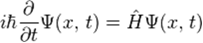
Instead I’m going to explain her the way a transistor works. That way I hope she’ll be able to visualize what QM does, without me having to explain her underlying subatomic process over a bottle of rum (Heavens forbid what monster version of the QM we will create; I told her already that somebody should take notes).
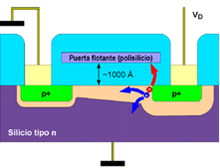
The essential usefulness of a transistor comes from its ability to use a small signal applied between one pair of its terminals (the base) to control a much larger signal at another pair of terminals (emitter and collector). This property is called gain. It can produce a stronger output signal, a voltage or current that is proportional to a weaker input signal; that is, it can act as an amplifier. Alternatively, the transistor can be used to turn current on or off in a circuit as an electrically controlled switch, where the amount of current is determined by other circuit elements.
The modern transistor has an internal structure that exploits complex physical mechanisms. Device design requires a detailed understanding of how device manufacturing processes such as ion implantation, impurity diffusion, oxide growth, annealing, and etching affect device behavior. Process models simulate the manufacturing steps and provide a microscopic description of device “geometry” to the device simulator.
My other proofreader is into the process of reviewing a book for publication, following remarks of her editor, while she eagerly pushes him to publicize her latest, just finished work. As usual with writers, she’s more enthusiastic about her latest literary “Scoop” then in revising some stuff she already left behind her.
Resume
The Scoop that is the subject of this post is a book that has been published in 1938 and figured a hapless countryside journalist who contributed nature article articles to a major British newspaper. He lived a quiet life till his identity got mixed up with that of John Courtney Boot, a remote cousin and famous novelist. Before he knew it he was sitting on an airplane, on his way to Africa to report about some crisis into some fictional country over there. Having no experience as a foreign correspondent, he ran from one situation into another, at some points, endangered his life by pure ignorance. But into the process into of doing so, he stumbled upon a real scoop. By the time he got back to London, his story was attributed to his far away cousin, but he didn’t care and returned happily to his previous existence.
Comment
This was a funny book, written with lots of puns and insights into the functioning of Fleet Street in London, where most of the newspaper reporters used to have their favorite drinking holes and where most of the newspaper editing of that time was done.
March 6, 2025
Reading the Canon of the World Literature Feb 22 till Feb 23
February 22nd
I’ve finished only two titles of my list. This book is listed number fifteen and I started to consider if, for the time being, when picking a book, I shouldn’t stay below number twenty. After all, on number three figures Ana Karina by Tolstoy, and that’s also a giant of 864 pages of difficult reading. By the end of the year, I want at least to be able to say that I’ve been reading the best 20 literary fiction books without having to celebrate Christmas as a bachelor.
We’re also into the middle of closing on two real estate transactions, some garden renovation and minor repair and maintenance works on our house. Meanwhile the daily household stuff also keeps coming back and during the summer months looms another real estate transaction. So right now, I’m in the mood to read something lighter and the description of the next book sounded right.
3; The Code of the Woofers by PG Wodehouse.
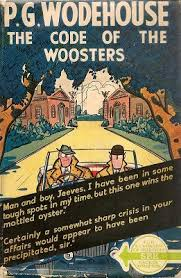
February 23th; the evening.
Resume
As I expected, the book was fun. The narrator started his story the way I do very often; recovering from a hangover. When I would be honest to my general physician back home by telling him that I’m drinking every day one bottle of wine, I would be sent straight into some rehab.
But I’m neglecting poor Bertie Wooster and his best friend, Gussie Fink-Nottle, whose engagement with Madeline Bassett was of extreme importance to Bertie because Madeline believed that he loved her and when her engagement with Gussie would have failed, she would “have made him happy” by marrying him.
On top of that, his aunt Dahlia sent him on a crusade to hunt down a silver cow creamer, snatched away under the nose of her husband by another collector, Sir Watkyn, Father of the droopy and snotty Madeline. When Gussie lost a personal diary into which he lovely described all the shortcomings of Sir Watkins and a couple of other protagonists, hell broke loose and the engagement alert went off.
At the end, the cow creamer was placed back into the hands of his rightful owner and the diary was recovered before it could cause irreparable damage to the engagement.
Comment;
Bertie was a typical prototype of the British gentleman; chivalrous and would never let a friend down. The typical British Gentlemen of that époque were proud of their bachelor status; they looked with condescending pity upon their married or engaged friends and always had to be „lured” into marriage by “scheming” woman. The only reason why a British gentleman would have considered a marriage was to avoid having to work to uphold his status. The woman in question then had to be a rich, silly heiress. This book was also the first installment of the Totleigh Towers saga, but I’m dispensed of reading the remaining volumes because they’re not included into the list. Nevertheless, this book was a pleasure to read and once I’ve accomplished my resolution, I’m committed to read “Right Ho, Jeeves”.
March 4, 2025
Reading the Canon of the World Literature Jan 15 till Feb 22.
2. In Search of Lost Time by Marcel Proust.
The original title of this series of books was “A la Recherche du Temps Perdu” and contains the following volumes;
1 Volume One: Swann’s Way,
2 Volume Two: In the Shadow of Young Girls in Flower
3 Volume Three: The Guermantes Way
4 Volume Four: Sodom and Gomorrah
5 Volume Five: The Prisoner
6 Volume Six: The Fugitive
7 Volume Seven: Finding Time Again
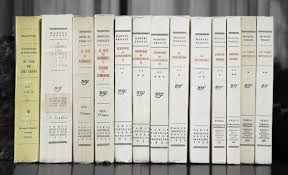
After consulting my favorite online library (www.gutenberg.org), I discovered, to my dismay, that only the first volume, Swann’s Way, was available into an English translation. I started to ponder if I should lose some time, trying to dig up the English translations of the remaining volumes or just read them into the original version.
Finally I decided to give “A l’ombre des jeunes filles en fleurs – Première partie” ( the first part of the French version of “In the shadow of young girls”) a tryout when I finished Swann’s way.
Impressions: There are striking resemblances with Middlemarch, especially by the way that the characters live inside the head of other people instead of inside their own. The end of the first book features probably to most famous lemony cake in literature, in French called “une madeleine”, dipped into some tea, whose taste invoked into the mind of the narrator a whole set of involuntary memories. Like in Middlemarch, the narrator uses a little pedantic pedagogical language, but unlike in Middlemarch, is also a participant into the story.
Resume
The whole series of books is a cascade of involuntary memories of an old man; from his childhood in the fictive town of Combray and the occasional holyday trips to the fictive seaside town resort of Balbec, his discovery of girls, his weak health that plagued him his whole life, his observations on homosexuality and extramarital relations, his constant jalousies, his lifelong struggle to get access to the “right” circles (mostly highly educated bourgeois with artistically ambitions), …
The most disturbing characteristic of the narrator is to long very long from a distance to acquire something, just to lose interest the moment he gets what he wants. This is for example the case with his Albertine; he longed for her when she was a young girl who held him at arm length but when she finally gives in to move with him to Paris, he neglects her while at same time being utterly possessive about her. When she finally runs away (The Fugitive) he plunges into despair but when at the end he receives a telegram of her, he reacts with indifference (made his point). Into the last book, he finally learns how to read people’s signals and the way they communicate their vision upon reality and relate to it. This last ability, into the opinion of the narrator, allowed his vocation, to become a writer, to come to fruition.
Comment
Meanwhile I kept tinkering at my previous manuscripts. Especially the essay is a special needs child and is right now into the phase of proof reading by two friends, both professional writers. The first one has a college degree in English literature and writes children’s books and the second one has a degree in Environmental Science and is a ghost writer of scientifically articles.
Because all of that I still didn’t have time to give proper attention to my Kindle. On top of that, my wife putted me in charge of todays’ dinner, to retrieve a huge cactus from the estate of one of her friends and wants me to assist her by the planting of a coconut tree at sunset. This challenge became a real test of character, especially since she thinks of it as a kind of competitor for my attention.
After finishing the last part of In Search of Lost Times, I decided that I’ve got my monthly dose of human jealousy, betrayal, the death of loved ones and platonic romantics. I wanted to read now something more lighthearted.