Shahree Vyaas's Blog, page 7
July 13, 2025
Reading the canon of world literature
Chapter 21; Ulysses by James Joyce.
July 15th, 2015
Description
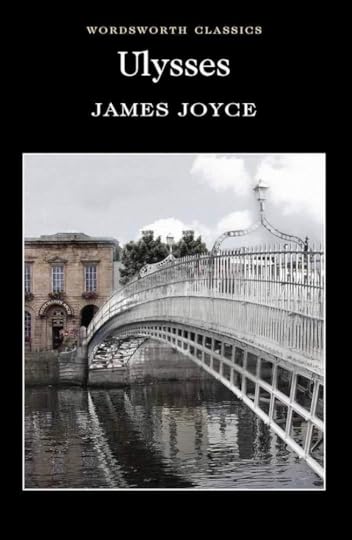
Quotes in Ulysses;
– The mirror is the instrument of the narcist and solipsist, the broken looking glass is the instrument of the artist.
– History is my reversal omnibucal cord to humankind. It’s nothing that I suffer from, but something I keep contributing to.
– Is a ghost any more than one who faded into impalbility through dead, through absence, through change of manners?
– The growth of the son is his father’s decline his youth his father’s envy, his friend his father’s enemy.
– The intellect is worthless in the absence of love.
– What can be said of a society based upon its attitude towards procreation?
– At the termination of any allotted life, only an infinitesimal part of any person’s desires has been realized.
Ulysses (1922) was originally setup as a short story to be published in his book “Dubliners” (1914) about a young erudite teacher who had a brawl with an English constable, but was pulled out of the escalating conflict by a middle-aged Jewish man. But Joyce kept adding prose and detail to it and elaborated, and elaborated … till it ticked off at a 783 pages description of what happened to Leopold Bloom and the people he interacted with in Dublin on June 16th, 1904.
Reading this book was an exercise in strained concentration to place all the detail, comments and information of the book in a coherent perspective. It’s a sequel to a semi-biographical book “Portrait of the Artist as a Young Man”(1916) wherein the character Stephen Dedalus is the literary alter ego of James Joyce and is also an important protagonist in “Ulysses”.
The book was revolutionary at that time; as well for its mix of styles as for its content. As no writer before him, Joyce demonstrated that the content of a text defines its writing style and vice versa thus retorting to writers of that time who were lamenting about their incapacity to write to the full extend about certain subjects. Joyce resolved that by experimenting with different writing styles in one novel. So is the narrator sometimes an all knowing spirit, the thoughts of a protagonist or just absent.
Each of the eighteen chapters of the novel refers to a part of Homer’s epic “Odyssey” and its content is structured in a way to depict Bloom ( a middle aged, middle class modest man) as Ulysses and Stephen Dedalus (the young arrogant and erudite artist) as Telemachus.
Joyce reworked the ancient epic in such a way that he could lift an undistinctable average man to heroic proportions by describing the ordinary as something extraordinary.
Comments
The book is also largely encyclopedic since a lot of its protagonists discussed and thought of all kinds of subjects like literature, art, science, politics, history, and philosophy … (this list is not exhaustive).
Joyce liked to display his erudition and very often I had to put the book aside to check what he was writing about. This arrogant attitude in combination with his elusive writing style caused many prospective readers to lay down the book and never to pick it up again.
Initially the book got blacklisted in a lot of countries for its vivid and explicit descriptions of some sexual acts (ex. masturbating) and body processes (ex. farting).
After finishing “Ulysses” in 1921, Joyce would work for 17 years on what most critics call his masterpiece “Finnegan’s Wake” that was published in 1939, which has the reputation to be one of the most difficult novels ever written.
In 2015, when I made the above entry in my literary diary, I was only familiar with the first sentence of the book preceded by its last one (Bold): “A way a lone a last a loved, along the riverrun, past Eve and Adam’s, from swerve of shore to bend of bay, brings us by a commodius vicus of recirculation back to Howth Castle and Environs.” symbolizing the author’s view upon history as a cyclical process; arising from chaos, passing through theocratic, aristocratic, and democratic phases and then lapsing back into chaos . Whole dissertations have been written about this sentence alone.
To judge the increasing level of complexity of Joyce’s writing style, I give you here the opening sentence of Ulysses “Stately, plump Buck Mulligan came from the stair head, bearing a bowl of lather on which a mirror and a razor lay crossed.” Compare that to the above mentioned first/last sentence of Finnegan’s Wake and judge by yourself.
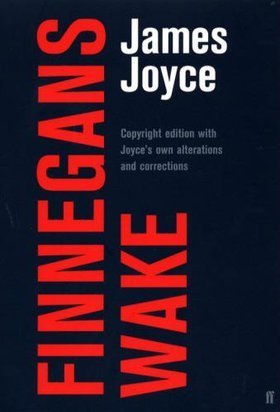 Format:628 pages, Paperback
Published, November 4, 2002 by Faber & Faber, ISBN
9780571217359 (ISBN10: 0571217354)
ASIN 0571217354
Also about this book there were there mixed reactions, with some people finding enlightening and inspiration in Joyce’s prose, and others condemning it as the unreadable ravings of a lunatic.
Lately Chinese literature lovers have discovered Finnegans Wake, although the first two parts alone took eight years to translate and the translator commenting that eight words out of ten required footnotes. Not astonishing when you know that the book contains an assortment of foreign language idiosyncrasies, derived from 69 different languages, that are very often prone to different interpretations.
This last issue starts already with the title “Finnegans WAKE”: one Spanish editor translated WAKE as “La velada” (meaning vigil), another one translated it as “La estela” (trail or stele) and again another one thought it should be “La despierta” (the act of waking up or arouse).
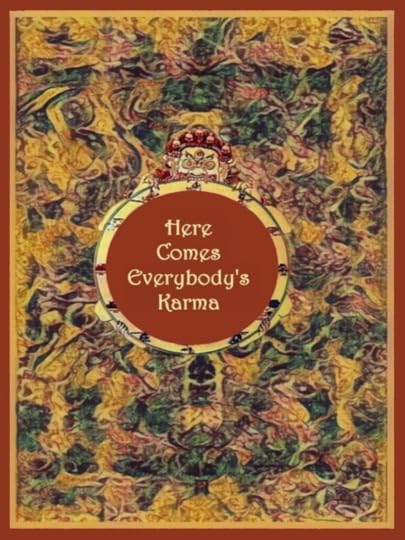
I dedicated one year of my time to translate Finnegans Wake from Joycean Gibberish into plain English (no footnotes needed) and titled it: “Here Comes Everybody’s Karma”, thus adding my own contribution to the controversy surrounding the novel’s title. I removed all the foreign language idiosyncrasies and streamlined Joyce’s prose. In case of some words or sentences with a double bottom, I settled for the one I thought to be the most appropriate into the given context (it’s a source of contention that I have with many Joyce afeccionados).
For those who set Finnegans Wake aside as an unreadable Moloch but who’re willing to give a plain English version a try, this transcription can be acquired on Amazon as a Kindle version for 9,99 euro (for free for those with an Amazon Prime subscription) or as an illustrated print edition for 40 euro. Just click on the image below to get get directed to the Amazon Kindle version.


July 12, 2025
Geographies
Last week I submited some contribution to an open call launched by LoosenArt who is inviting photographers, video makers and digital visual designers to take part in the collective exhibition “Geographies: an exploration between places, environments and cultures”, an exhibition project that seeks to question and narrate the many forms of contemporary geography: physical and symbolic, human and environmental, local and global.
The aim is to explore borders – geographical, cultural, political, and emotional – and their transformations through the creative gaze of participants.
For this ocasion I dug into my archive and came up with my series “Citiscapes”. Every city has a unique psycho-historical character that reflects its collective memory, culture, and identity. Its architecture, landmarks, streets, and neighborhoods shape its aura and sense of place. A city’s traumas, victories, and transformations are imprinted in its psyche, creating a complex tapestry of emotions and meanings. Understanding the psycho historical character of a city can help us appreciate its nuances, conflicts, and potentials, and foster a deeper connection between its residents and visitors. It also invites us to reflect on the social and environmental factors that shape our urban experience and shape our future cities.
Emotional atmospheres exist constantly and everywhere. Every gathering, even if it is no more than a crowd on the street, is dominated by some sentiment. The emotional atmospheres of a city can be mysterious or specific, incomplete, or complete. They belong to the present and/or the past, and/or the future. They can be fluid or more solid, temporary, or more enduring. Affects can be, and are, attached to things, people, ideas, sensations, relations, activities, ambitions, institutions, and any number of other things, including other affects.
The character of a city is a collection of moments that encompass a range of emotions and events. From the exciting to the heartbreaking, spiritual to adventurous, all these moments come together to form the colorful tapestry of its timeline. Whether its habitants experience happiness or sadness, each piece contributes to the overall mosaic of its psycho-historical map. And while each piece may seem small and insignificant on its own, when seen from a kaleidoscopically perspective, they create a beautiful and unique picture that reflects what it is and the journey it undertakes.
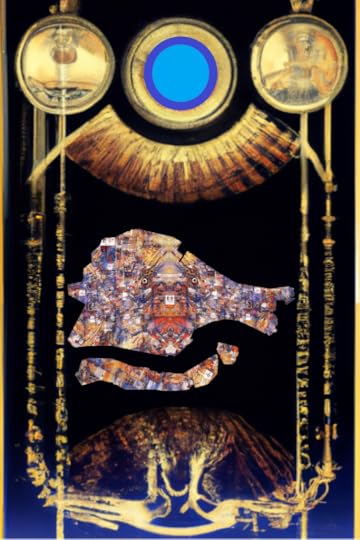 Venice (citiscapes part 1). Mixed techniques on pressed cardboard 60 x 80 cm by Shaharee Vyaas.
The artwork “Venice: A psycho-historical Map” invites people not to obey existing opinions and common stories about Venice, but to slip away and with confidence listen to their own feelings and play with the city’s atmospheres. The contemporary island of Venice exists in a state of duality, bridging the gap between two pandemics – the Plague and Covid.
These designs want to break away from a purely geographical representation of a cityscape by introducing the dimension of time into a snapshot.
The concept of these paintings is based upon the premise that cities have psycho-historical contours, with constant streams of movement, fixed points, and fixed angles, which discourage entry or exit from certain zones.
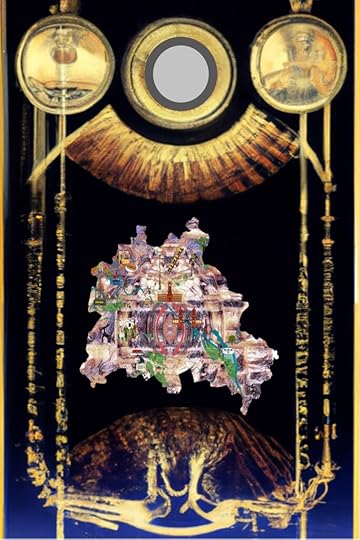 Berlin (cityscapes part 2). Mixed techniques on presses cardboard 60 x 80 cm by Shaharee Vyaas
Berlin is damned forever to become, and never to be. From the golden twenties to the anarchic nineties and its status of world capital of hipsterdom at the beginning of the new millennium – the formerly divided city has become the symbol of a new urbanity, blessed with the privilege of never having to be, but forever to become.
Unlike London or Paris, the metropolis on the Spree lacked an organic principle of development. Berlin was nothing more than a colonial city, its sole purpose to conquer the East, its inhabitants a hodgepodge of materialistic individualists. No art or culture with which it might compete with the great cities of the world. Nothing but provincialism and culinary aberrations far and wide. Berlin: “City of preserves, tinned vegetables and all-purpose dipping sauce.”
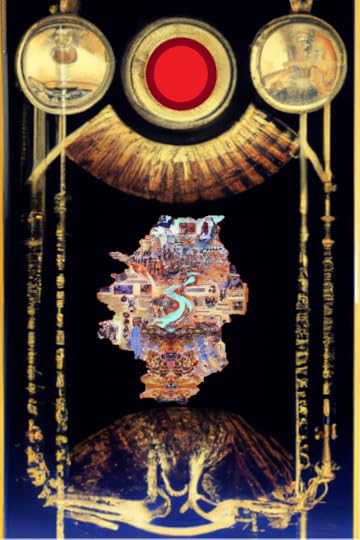 Londo (cityscapes part 3). Mixed techniques on pressed cardboard 60 x 80 cm by Shaharee Vyaas.
The history of London, the capital city of England and the United Kingdom, extends over 2000 years. In that time, it became one of the world’s most significant financial and cultural capital cities. It has withstood plague, devastating fire, civil war, aerial bombardment, terrorist attacks, and riots.
A psycho-geography of London derives from the subsequent ‘mapping’ of an unrouted route which, like primitive cartography, reveals not so much randomness and chance as spatial intentionality. It uncovers compulsive currents within the city along with unprescribed boundaries of exclusion and unconstructed gateways of opportunity. The city begins, without fantasy or exaggeration, to take on the characteristics of a map of the mind.
Particularly over the last 150 years, London has been the site of repeated attempts to comprehend the physical, social and economic fabric of city life through exercises in cataloguing and mapping. These mapping exercises render the city legible and articulate its spaces in textual form. Henry Mayhew’s four-volume work London Labor and The London Poor, the first three of which appeared in 1851 and the fourth, ‘Those that will not work’, published in 1862, was the first of the great Victorian investigations of London. Mayhew’s nod to sociological rigor is to offer a taxonomy of London characters, but his methodological emphasis is on personal witnessing through a series of visits to key areas of the city.
London is one of the oldest cities on earth and is shrouded in mystery and legend. Its history is a popular topic for debates and discussions
July 9, 2025
Reading the canon of World Literature
Chapter 20; Father Goriot by Honore de Balzac.
July 2nd, 2015
Summary
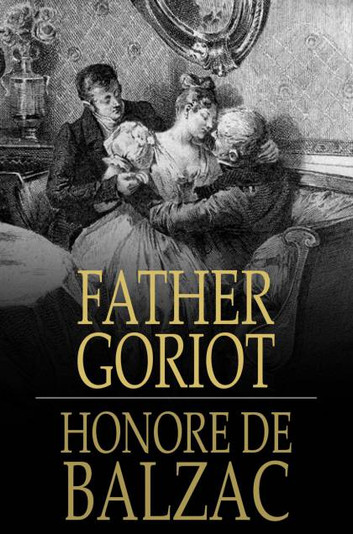
Most of the action is centered around a boarding house called Maison Vauquer, ran by a widow, Mme. Vauquer. The story relates mostly to the interactions between Jean-Joachim Goriot, a retired vermicelli maker who bankrupted himself to give his daughters a better future; a secretive cynical anarchist called Vautran and a law student Eugène de Rastignac, descending from a poor family in Southern France attracted to Paris by an all-consuming ambition to climb the social ladder.
Old Goriot, who liked to be referred to as Father Goriot, was very often ridiculed by the others because he bankrupted himself for the sake of his daughters who had at that time a yearly income of 50.000 francs and rewarded him with despise and neglect. Meanwhile Madame de Beauséant, another but financially better off habitant of the boarding house, instructed her cousin, Rastignac about the conventions and functioning of the Parisian upper-class. Vautrin tried to engage Rastignac with a woman called Victorine, whose brother blocked her access to her share of their heritance. He offered Rastignac to kill the brother in a duel but Rastignac freaks out at the idea to murder someone for his money and is more interested in one of Old Goriot’s daughters, Delphine. In order to seduce her, he borrowed more money from his already poor family. Shortly afterwards, the habitants of the boarding house learned that Vautrin was in fact an escaped criminal nicknamed “Cheater of Dead”, because of the many times he narrowly avoided the dead penalty. In the end Rastignac cooperated with the police to capture Vautrin.
Old Goriot was supportive to Rastignac’s efforts to start an affair with his daughter because he could not stand her husband’s antics, but could in fact exercise very little influence upon the developing events. When his other daughter, Anastasia, informed him that she almost bankrupted herself to satisfy the demands of her lover, he got into such a fit of rage and frustration that it provoked a stroke. Shortly after that he died and his daughters sent just their empty coaches bearing their respective coats of arms to his funeral. The only ones in attendance were Rastignac, a servant and two paid mourners. After the funeral Rastignac takes Delphine out for dinner and makes a vow that he would conquer his way into the Parisian upper-class at whatever price or sacrifice.
Comments
This novel was first published in 1835 and gives a fair description of daily life in France in 1819 (the setting of this novel) just after Napoleons’ defeat and the restoration of the Bourbon dynasty on the French throne.
It was received with mixed feelings; a group of critics prizing Balzac for the painstaking description of his characters and their surroundings while others where condemning him for his blatant exhibition of the wide spread acts of crime, corruption and greed.
It cannot be denied that Balzac cultivated a fascination for the criminal mind and Vidoc , a famous master criminal who turned his coat and became a chief of Police, inspired him for the personage of Collin, who appears in the series as Vautrin, who showed up into several sequences of his oeuvre that he called ”La Comédie Humaine” .
Vautrin is a protagonist in the novels Lost illusions, (1837–43) and Scenes from a Courtesan’s Life (1838–44), the sequel of Lost Illusions, posing as Reverend Carlos Herrera.
July 1, 2025
Is the Pen really mightier than the Sword?
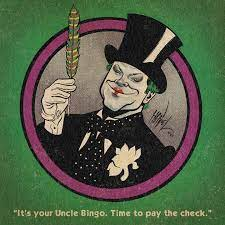
The phrase “the pen is mightier than the sword” was first written by English novelist and playwright Edward Bulwer-Lytton in his 1839 play Richelieu; Or the Conspiracy.
It may be true that history is full of people who have never personally held any type of weapon and have nevertheless sent millions to an early grave. It’s very unlikely that Cardinal Richelieu ever killed someone in person. Neither did Hitler (he served as a runner during WW1). They left it to others to carry out their dirty jobs.
Demagogues thrive in environments of societal frustration, economic hardship, and political polarization, where they can exploit people’s fears and anxieties to gain power. They often present themselves as champions of the common person, promising simple solutions to complex problems and appealing to emotions rather than reason: Crime and joblessness are an immigration issue, Give all your problems to God, The State will provide, …
All ideologists, be they inspired by religion, nationalism, or socio-economical themes, very soon realized that they need a group of armed men to carry out their visions. The medieval knights carried out the wishes of the (catholic) church, Nazism was enforced by the SS, and Marxism by the KGB.
In the Western world the press is often seen as the fourth pilar of democracy (next to the legislative, judiciary and executive). Lately we can see a remarkably erosion of the journalistic prerogatives caused by a shift of the opinion influencing power from the newspapers towards the social media.
Newspapers got into financially stormy waters and tycoons with direct links to the governments acquired those sinking flagships of the freedom of speech. While journalists still wield considerable influence, opinion makers that are not adhering to the official discourse, see themselves increasingly excluded from press conferences and some even face deportation.
Until recently we associated that kind of restrictions upon the freedom of speech with third world countries, where journalists a very aware of the fact that a press card doesn’t make them bullet proof or immunizes them (and their families) from arbitrary arrest and prosecution.
Opinions are now forged on the social media where fact checking is almost nonexistent. By hiding themselves behind the freedom of speech, those influencers are secretly undermining the very principle that protects them by presenting opinions and fabrications as facts. Websites that are doing fact checks against this stream of disinformation are fighting an uphill battle and the irony wants that they are on their turn get accused of being foreign spies or subversive conspirators by the same websites they’re factchecking. And the followers follow their leaders into their delusional rantings.
In the end, modern demagogues rather stick to Mao’s quote in which he claimed: Political power grows out of the barrel of a gun.
That’s how it ends when a civilized debate is deadlocked by extreme polarization fed with demonisation and desinformation on both sides. Modern democracies became the dictature of self-serving clans where the ones who manage to acquire the 50% + 1 of the popular vote controls the guns and, by extension, all other facets of society.
June 29, 2025
North American Literature and the Universe.
Since American literature, as represented by the collection of the US Library of Congress, has the whole universe as a subject, one could assume that this system is also governed by the same mechanisms that it describes.
UNIVERSE
Alan Guth believes that the universe bubbled up out of a pre-universal singularity. During a short moment, all the forces and building stones of matter were one.
When the Higgs-field symmetries started to break up, followed a hot expansion. For the function of our actual model of the Big Bang, the particles of our universe must have been organized with such a perfection that cannot be explained by coincidence. This improbable circumstance is known as the homogametic principle.
When the Higgs-field instead of exploding, coagulated, can it be possible that this created parallel universes, divided by energy fields that are dividing the universe into different domains.
The Universe is governed by four fundamental forces; Gravity, Electromagnetism, Weak Core Energy and Strong Core Energy with the space-time as background.
Following the Grand Unified Theory (GUT) can everything that we can experience in our physical reality be reduced to vibrating algorithms that keep fractalizing in a seemingly random complexity over time.
The degree of our understanding of the cosmological horizon sets also the scale of the universe we can observe.
In this sense, future events could already influence the present, depending upon the scale of the applied cosmically horizon
LITERATURE
Frye launched the idea that the mythological framework of American Literature and Cosmology is provided by the Bible. He developed this theory in his work “The Great Code” in which he established how the Bible’s narrative is related to all conventions and genres of American Literature. In this context, we assume that the pre-literary singularity of the American Literary Model is the Bible.
The first Western settlers arrived around 1561 on the American continent and the Bible or – related literature stood at the center of their existence till 1716 (see table A at the end of this essay). When this first symmetries started to break up, followed a hot expansion of the American Literary Universe.
I postulate that time in American Literature started with this expansion and those previous times are undefined.
The three basic forces that drive North American literature are Biblical -, Indigenous -, and European values.
All works of literature have an origination, an escalation of conflict or paradigm, and a resolution. It works itself through this cycle by going through five phases; orientation, crisis, escalation, discovery and change.
Those phases can come in the following sequences: linear, nonlinear, interactive narration and interactive narrative.

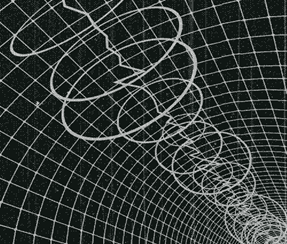
To the left a visualization of the evolution of a centrifugal function through the literary system with the centripetal functions circling around it. To the right a detail of multiple centripetal functions circling around a centrifugal function in 5 phases while respecting the 3-phase rhythm of the latter.
It can be safely assumed that the size of the system expanded since 1863 at the same logarithmic pace as the collection of the US Library of Congress (from /- 200,000 in 1863 to 32 million printed books in 2020, averaging a yearly growth of 3.4 %).
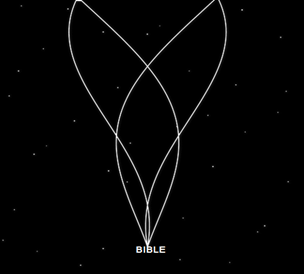
North American literature produces yearly about 1,000,000 new fiction and non-fiction titles, totaling a sale of 675 million books. There are more than 168,000 Bibles that are sold or given to others in the United States every day, which averages to about 20 million yearly. For this reason, the Bible is actually excluded from book bestsellers lists because it would always be on top.
One of the most surprising and most profound insights from the science of memetics is that your thoughts are not always your own original ideas.
You catch thoughts—you get infected with them, both directly from other people and indirectly from viruses of the mind. People don’t seem to like the idea that they aren’t in control of their thoughts. It touches to the subject of the free will, which will become even a more contentious issue during the further development of this series of articles.
‘A hen has ‘an egg’s way of making another egg’…. An organism is a gene’s way of making another gene … The North American Literary System is the Bible’s way of making more Bibles.
June 25, 2025
Reading the Canon of World Literature
Chapter 19; The Adventures of Huckleberry Finn by Mark Twain
June 25th, 2015
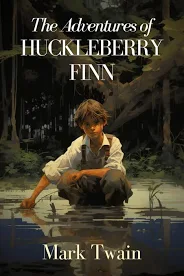
This book counts 366 pages and was first published in 1884 in the UK and a year later in the US. It played mainly along the Mississippi River into a pre-civil war society that already 20 years ceased to exist by the time the book was published. It was often criticized for the use of the colorful slang language of that time. Especially the common use of the term “nigger” to describe an Afro-American drew suspicions that Twain was a racist although the main protagonists in his books and their story-lines are quite the opposite.
Summary
The narrator in this particular book is Huckleberry Finn, 13 or 14 years old, who came after his adventures with Tom Sawyer, his best friend, into considerable wealth and was placed under the guardianship of the widow Douglas, assisted by her sister Miss Watson in an effort of the local authorities of St. Petersburg (a fictive town in Missouri) to civilize him.
Miss Watson had an easygoing well-mannered slave named Jim, but when Jim overheard a conversation between his owner and a slave trader were his mistress was offered considerable amount of money to sell him to a plantation down the river, he decided to elope and hid upon an island a little bit down the river.
Meanwhile, Huck’s father, an incorrigible drunken tramp, got wind of his son’s fortune and abducted him in an effort to put his hands upon the money. Finally Huck managed to escape by making everybody believe that he was murdered and soon joined Jim on Jackson’s Island. Jim’s plan was to escape to Cairo, a town down the river in Illinois where slavery was abolished and to acquire enough money to buy his wife and two children free.
They got around in Huck’s canoe, but after a heavy flood they found a raft and a house drifting on the river. They decided to keep the raft and to search the house for useful and valuable items. Inside the house they stumbled upon the naked body of a brutally murdered man, but Jim forbade Huck to look at the corpse.
After that Huckleberry dressed up as a girl in order to sneak into town and to gather some information. There he had a meeting with the perspicuous Mrs. Judith Loftus, who very soon found out that he wasn’t a girl but nevertheless told him that Jim was suspected to have murdered him and that a reward of 300 dollar had triggered a manhunt.
She also mentioned that around midnight the search party to which her husband belonged would search Jackson Island because some people saw signs of a campfire there. After that Huck hastily returned to the island and both of them loaded swiftly their belongings upon the raft and took off.
At a certain moment during their eventful travel, their raft got hit by a steamship and they got separated. Huck found refuge by the Grangerfords, a wealthy Kentucky family who possessed large estates and had a blood feud with the equally wealthy Sheperdsons. Huck befriended the youngest member of the family, a boy of his age named Buck. However the vendetta escalated when Buck’s older sister ran off with a male member from the Shepherdson family. In the ensuing fight, all the male members of the Grangerford family, including Buck, got killed. A slave that belonged to the Grangerford household, led Huck to the swamps where to his big relief he got reunited with Jim who was secretly supported by the slaves belonging to the Grangerford estate and who used his time in hiding to recover and repair the raft.
During their travel further downstream, they took two con artists on the run on board who would be referred to as to as the king and the duke. They were constantly putting together schemes to trick unsuspicious country side people out of their money.
To Huckleberry Finn’s opinion they crossed a line when they were trying to trick three young girls out of their heritage by posing as estranged relatives. Huck hid the money that they stole into the coffin of the girl’s benefactor but then they buried the man before he could retrieve it.
The girl’s real relatives arrived and all three of them got apprehended. In a discussion about a tattoo on the deceased man’s chest, they exhumed his body and found the disappeared money. Into the following turmoil they could escape and went a way down the river in an effort to create some distance.
The two crooks ended up penniless into a small town, where during Huck’s absence they sold Jim to a local plantation owner who gave them a 30 dollar reward, hoping that he would cash in on Jim’s still outstanding warrant of 300 dollar.
Very soon Huck found out that Jim was held at the plantation of Silas and Sally Phelps, and he decided at once to liberate Jim. Without any plan of action in mind he went to the plantation and is welcomed as a relative. It appeared that they were expecting a nephew; the son of Sally Phelps sister, a boy named Tom Sawyer.
When Huck retraced his way to town he intercepted the real Tom Sawyer and Tom decided to pose as his younger half-brother Sid. Tom, who was always a little of a fantast with a Don Quixote-like vision upon reality, convinced Huck to go to an elaborate hoax to set Jim free.
When their plan was about to succeed, Tom suffered a bullet wound and Jim got out of the woods where he was hiding to assist the doctor to hold Tom while the doctor removed the bullet out of Tom’s leg but the doctor nevertheless returned him to the Phelps plantation as a prisoner.
Shortly after, Tom’s Aunt Polly arrived and revealed their true identities. She also told that Jim’s mistress, who died two weeks earlier, out of remorse for considering selling him to a plantation owner, had set him free into her testament.
Huck is still unwilling to return to St. Petersburg, fearing that he would again be abducted by his abusive father, but then Jim revealed that the dead man that they found into the house drifting on the river was his father. The story ended with Sally planning to adopt Huck, but Huck intended to escape west wards, into the Indian Territories.
Comments;
The best comment on this book has been delivered by the writer himself into his lecture notes; “…a book of mine where a sound heart and a deformed conscience come into collision and conscience suffers defeat”
June 23, 2025
A Synopsis of US literature: Science Fiction
An answer to Pynchon’s question “What comes now?” is heavily explored by an often-neglected facet of US literature; science fiction, a genre that contemplates possible futures. Because science fiction spans the spectrum from the plausible to the fanciful, its relationship with science has been both nurturing and contentious.
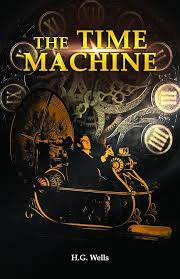
HG Wells who, by most critics, is considered the US pioneer of the genre, used his time machine (1895) to take the reader to the far future to witness the calamitous destiny of humanity.
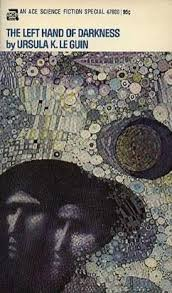
The renowned novelist and poet Ursula K. Le Guin said once, “The future is a safe, sterile laboratory for trying out ideas where anything at all can be said to happen without fear of contradiction from a native… a means of thinking about reality, a method.” Her award-winning 1969 novel, The Left Hand of Darkness—set on a distant world populated by genetically modified hermaphrodites—is a thought experiment about how society would be different if it were genderless.
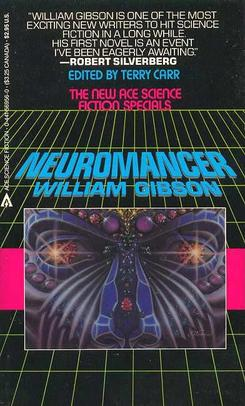
William Gibson published in the 1980s the cyber punk novels wherein he depicted visions of a hyper-connected global society where black-hat hackers, cyber war and violent reality shows are part of daily life. He also coined the term cyberspace.
In recent decades there is a tilt toward dystopian futures, partly because of a belief that most of society has not yet reaped the benefits of technological progress. Bertrand Russell’s words from 1924 are prophetic when he wrote: “‘I am compelled to fear that science will be used to promote the power of dominant groups, rather than to make men happy.’
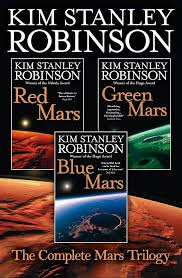
This fear is shared by Kim Stanley Robinson—the best-selling author of the Mars trilogy, 2312(2012) and Suzanne Collins’ who authored The Hunger Games (2008), in which a wealthy governing class uses ruthless gladiatorial games to sow fear and helplessness among the potentially rebellious, impoverished citizens.
The current state of US society with the current power struggle among billionaires to take control of the socio-economical landscape elevates them to a prophetic stature.
June 21, 2025
A Synopsis of US literature: 1960 – 1980.
The 1960s, a period often called the “Sixties” or the “Swinging Sixties,” were characterized by significant social, political, and cultural shifts. Key themes included the fight for civil rights, the Vietnam War, the rise of the counterculture, the sexual revolution, and the beginning of the feminist movement. The decade witnessed both optimism and upheaval, with progress in areas like civil rights and technology, but also setbacks like the Vietnam War and social unrest.
Those new trend are reflected in the characters in Updike’s later novels seemed to have only their bodies. These bodies became more important than their souls. In his books, Updike becomes the novelist of the modern religion; sex.
Important new forms for American fiction were;
• Factualized novel; the author used the facts of history to create new and unusual forms of fiction.
• Post-realism; we can no longer be sure that there is a “real world” outside our heads.
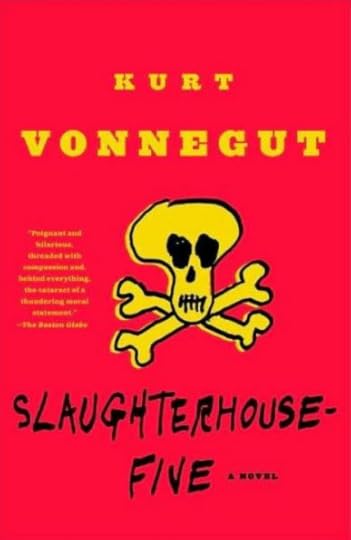
In Vonnegut’s novels, life was described as a terrifying joke. Real time was broken up into little bits and mixed together. Then he turned away from experimentalism, towards a style where his humor was still black, but softer and less painful.
This attitude is equally reflected by Barth who wrote, “What the hell, reality is a nice place to visit, but you wouldn’t want to live there, and literature never did, very long”.
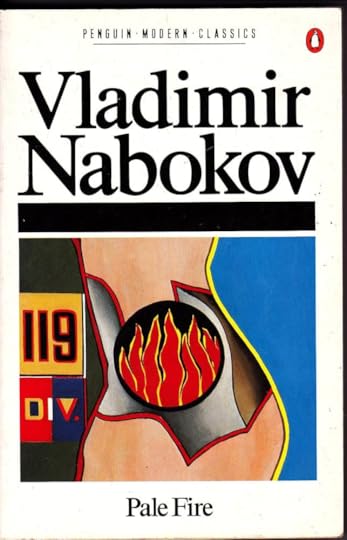
Vladimir Nabokov agreed and believed that art is a kind of reality where “the invention of art contains far more truth than life’s reality”. In his opinion, “Fiction is the most urgent game, a contest of minds with the reader”. Nabokov was an artist who tried to “defeat time and destroy reality”.
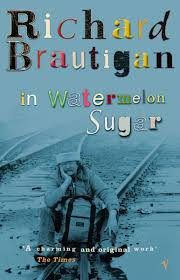
In Brautigan’s book “In Watermelon Sugar” a character asks the narrator; “What’s your book about?”. He answered, “Just what I’m writing down, one word after another”.
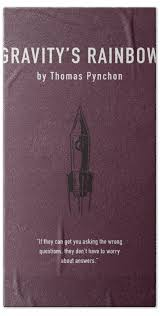
This contrasts with the stories of Thomas Pynchon, whose plots and the things he wrote about were mostly real. He was unusual because he seemed to know everything. His novel “Gravity’s Rainbow” has been studied by Scientific American because of the interesting ideas in it. Pynchon’s novels tried to create the “emotion of mystery”. His main characters became detectives, spending their lives to understand strange mysteries. One of the leading themes of his novels seems to be “What comes now?”
June 19, 2025
Synopsis of US literature: 1930 – 1960
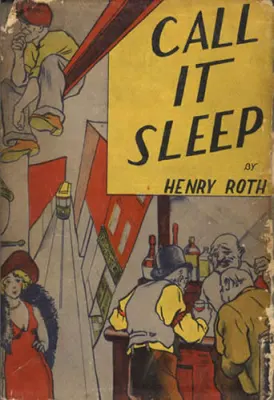
In the early thirties, the first reaction to the depression was a literature of social protest. The failure of the American dream became the main theme in Jewish-American literature. The novel “Call it Sleep” mixes Marxism and Freudian theory, Jewish mythology and a stream of consciousness writing style.
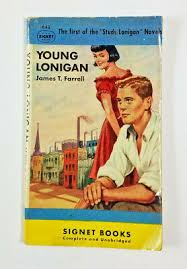
Farrell writes more about spiritual poverty then about economic poverty in “Young Lonigan”(1934). It handles about the emotional religion, the new child every year, the money-worries and the heavy drinking of Irish-Catholic families.
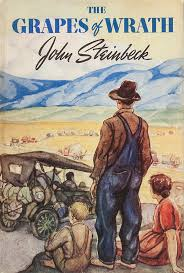
The work of John Steinbeck represents a similar attempt to get it all on paper. In “The Grapes of Wrath” (1939) he told the story of a great national tragedy through the experiences of a single family of individuals.
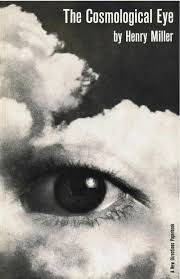
A couple of years later Miller (1891 – 1980) called America “an air-conditioned nightmare”. In “The Cosmological Eye” (1939) he stated that all his life he had felt a great kinship with the madman and the criminal. He developed his own vision of how man should live. Laughter, freedom and joy should be the goals of life.
By 1945, America was a world power with huge international responsibilities. After the war, America entered in an” Age of Anxiety”. First there was the fear of The Bomb and The Fear of Communism became a national sickness. Many writers in this period tried to find answers to old questions like “Who am I?” They tried to find it in their own racial backgrounds, while others explored the new ideas of philosophy and psychology and the young beat-writers used oriental religion for the same purpose.
In the 1940’s 1950 the Jewish-American literature looked at the spiritual and psychological problems in a different way. They brought a new interest in the old moral problems and created the humor of self-criticism.
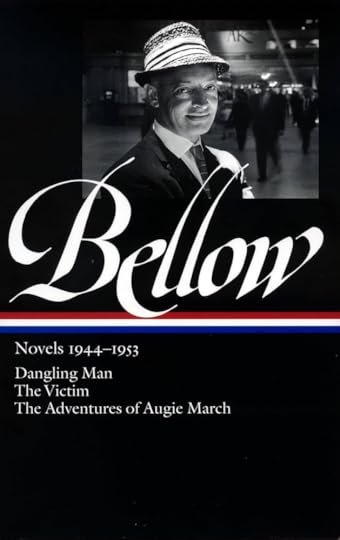
Saul Bellow once stated, “According to the philosophy of existentialism, man is completely alone in a meaningless world without God or absolute moral laws”. The Bellow-hero lives actively in his own head. He searches for answers in his mind rather than in the outside world while Singer wrote about eastern-European Jews, their superstitions and folktales and brought this lost world back to live.
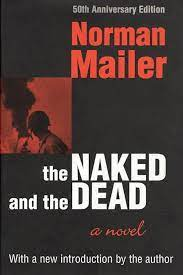
Norman Mailer did more than trying to describe the existential pain of modern world. “I will settle for nothing less than making a revolution in the consciousness of our world”. He reported on the psychological history of America while that story still happened. Some other writers in the sixties and seventies looked deep into the nature of American values in order to understand what is happening in their souls.
June 17, 2025
A synopsis of US literature: 1910 – 1930.
On December 11th, 1910, the human character changed, and the modernist consciousness founded itself upon the inherent instability of the new relative worldviews. Suddenly humankind was lost in a relativistic universe where there are no more rules that can be transgressed, and nobody can be accused of abnormality. The Chinese pagoda became popular in European culture as the cathedral of a religion that accepts a void because its five floors symbolize the five mystical nothings of life (earth, water, air, fire and ether) and the reality of a barrel became its emptiness inside (Lao-tse).
Existentialism placed the individual on a rope that spans an abyss and turned his daily occupations in acts of courage and perseverance. Language became, just as money, an exchange object whose circulation serves only as a vector that maintains a sense of community. Wittgenstein perceived the language as the limit of our knowledge and declared; „Wovon man nicht reden kann, darüber muss man schweigen“. But the modernist thinking crosses the language barriers and stipulates that the unspeakable can be expressed in paintings, music or mathematical equations.
Another modernist credo is that the artist or scientist cannot create anything new because the world is already made. All they can do is to reorganize it and being innovative is to force the reality in new molds of perception. The modernist art diverges in two directions; the impressionists who wait for the evaporation that will drain away the observable world in favor of the pure and unlimited space and the cubists who replaced religion by a happily chaotic pantheism. When Apollinaire in 1913 analyzed a cubist painting, he warned for the hybrid and deviating creatures that modernism can produce. He predicted a world where individualism will be erased and humankind mentally and physically adapted to serve the machines.
The most intriguing paradox of the 20th century modernists was their tendency to primitivism; the desire to abandon the laboriously earned advantages of culture and science in order to be attracted by a reckless regression. This fanatically cultivated barbarism elevated actors, musicians and athletes to the status of temporary deities to be worshiped by the masses. The Rite of Spring by Stravinsky became the musical expression of modernist’s primitive nature. It opposed the social contract that binds the individual to an institutionalized and repressive conscience.
The human condition still has to come to terms with the idea that primitivism and industrialism are allies in the modernist vision. The dilemma the of the 20th century is synthesized by their affinity; the primitive culture and art of the American Indian on one side, and the worldwide atrocities committed on the battlefields on the other side, show the world before and after the mechanization. So is it not astonishingly that most of the contemporary American isolationism originated from regions with the closest ties to the indigenous populations.
American newspapers were becoming very powerful by this period. They were very patriotic and pleased their readers with stories of courage and red blood. American society was united in a kind of conspiracy against the growth and freedom of the mind.
For too long, American life had been divided between the businessman (who only thinks of making money) and the intellectual (who has only unpractical theories and ideas).
The new generation of American writers did construct a middle ground where they meet. Hiding the truth about human sexuality – and punishing those who tried to talk about it – was and is still part of America’s puritanical morality. Only intelligent readers are able to accept even ugly truths about human nature.
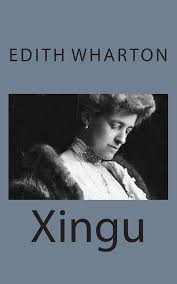
This can be illustrated by a quote from Edith Warter who wrote about a ladies’ culture circle in Xingu (1916) “Her mind was like a hotel where ideas came and went like transient guests, without leaving their addresses behind”. Edith Warter was brought up to see herself as a decorative object for wealthy man. The upper class claimed to be highly moral, but often, their actions – towards women as well as in business – were not moral at all. In all her works, the natural instincts of people are crushed by an untruthful society
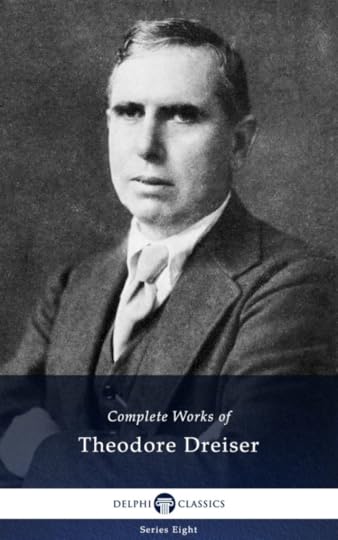
Theodore Dreiser’s characters did not attack the nation’s puritanical moral code; they simply ignored it. While looking at individuals with warmth, he also sees the disorder and cruelty of life in general.
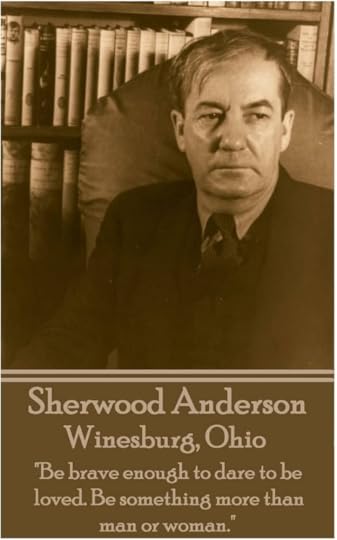
Sherwood Anderson brought the techniques of modernism in American literature. These techniques include; a simpler writing style, more emphasis on the form of the story than on its content and a special use of time.
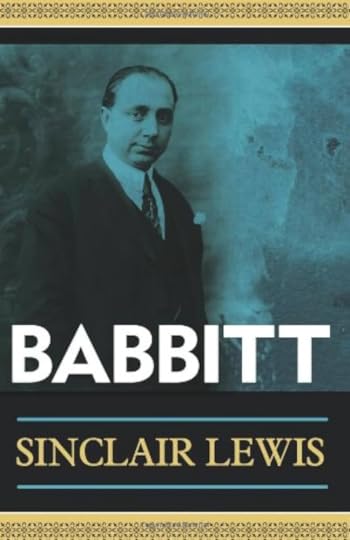
Sinclair Lewis character, Babbitt, is part of the American language. It means a joiner, a conformist. Lewis severely condemns the values of middle-class America, but he doesn’t suggest any other values that can take their places.
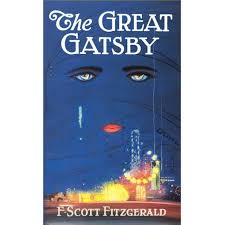
Fitzgerald hero Gatsby symbolizes the belief that money can buy love and happiness. His failure makes him a rather tragic figure.
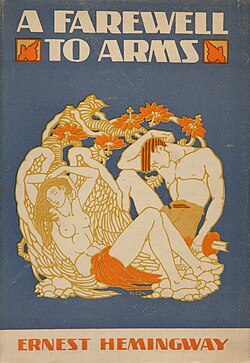
Ernest Hemmingway was trying to create his own answer to that problem. Many of the young people in the post-war I period had “lost” their American ideals. In this context, Hemingway spoke about a lost generation. Without hope or ambition they tried to enjoy each day as it comes. All they want to know is how to live in the emptiness of the world. The typical Hemingway hero must always fight against the nada of the world. He developed a theme of heroism, stoicism and ceremony.