
Thomas Frey's Blog, page 8
March 30, 2023
Reinventing the Banking Industry: How Financial Institutions Must Evolve to Survive the Digital Revolution

As the global banking system experiences increasing turbulence, a growing number of influential individuals have begun asking crucial questions about 2040 and the future of the banking industry.
What will the landscape of banking look like in 2040? Will physical branches still be relevant? What will be the primary functions and services of banks? And, is there a future where banks may no longer be necessary?
What if Banks Disappeared?The scenario of banks disappearing completely is highly unlikely, but let’s consider the possibility. If banks ceased to exist, how we handle financial transactions would change drastically. That said, there are some alternatives that could potentially replace the traditional banking system.
One possibility is a peer-to-peer (P2P) lending system. In this system, individuals or businesses could borrow money directly from other individuals, bypassing the need for a bank. This type of system already exists, with platforms like LendingClub and Prosper offering P2P lending services. The loans are typically unsecured and have higher interest rates than traditional bank loans. Still, they can be a viable option for those who do not qualify for traditional loans or who want to avoid the fees and bureaucracy associated with banks.
Another option is using digital currencies, such as Bitcoin or Ethereum. These currencies are decentralized, meaning any central authority, like a bank, does not control them. Transactions are verified through a public ledger called the blockchain, ensuring they are secure and transparent. Digital currencies are still relatively new and not widely accepted, but they can potentially revolutionize how we handle financial transactions.
Mobile payment systems could also play a role in the absence of banks. These systems, such as Apple Pay and Google Wallet, allowing users to pay using smartphones. They are convenient and easy to use but rely on traditional banks to process transactions.
Although it is highly unlikely that banks will cease to exist, there are alternative systems that could potentially replace them. These include P2P lending, digital currencies, and mobile payment systems. However, each of these systems has its own strengths and weaknesses, and it remains to be seen which will emerge as the dominant force in the future of financial transactions.
Strengthening the Role of BanksWhile many people are trying to reduce our dependence on traditional banks, the banking industry itself is looking for ways to strengthen its role in society:
Increase transparency and accountability:One of the main criticisms of the banking industry is its lack of transparency, which has led to mistrust among customers and the public. Banks can strengthen their societal role by being more transparent about their operations, fees, and practices. They can also increase accountability by implementing stronger regulations and penalties for unethical or illegal behavior.
Focus on social responsibility:Banks can strengthen their role in society by being more socially responsible. This includes supporting community development initiatives, investing in sustainable projects, and promoting financial literacy.
Embrace technology:The banking industry has been slow to embrace technology, but this is changing. Banks can strengthen their role in society by investing in innovative technologies that make banking more accessible, efficient, and secure. For example, mobile banking apps, online banking, and digital wallets can make banking more convenient for customers.
Improve customer experience:Banks can strengthen their role in society by improving the customer experience. This includes offering personalized services, simplifying the account opening process, and providing better customer service.
Foster diversity and inclusion:White men have historically dominated the banking industry, but this is changing. Banks can strengthen their role in society by fostering diversity and inclusion in their hiring practices and leadership teams.
 The Impact of Cryptocurrencies?
Cryptocurrencies have had a notable impact on the banking system in various ways, and this influence is likely to continue and expand before 2040. Here are some key areas where cryptocurrencies have affected the banking sector and how they might continue to do so:
Digital payments and remittances:Cryptocurrencies have introduced a new way of transferring value across borders with reduced fees and faster transaction times compared to traditional banking channels. Banks have started recognizing this potential and are exploring blockchain technology and digital currencies to improve their payment services. By 2040, banks could adopt or develop their own digital currencies to facilitate more efficient cross-border transactions.
Decentralized finance (DeFi):DeFi platforms built on blockchain technology have provided an alternative to traditional banking services, including lending, borrowing, and earning interest. This has led some banks to explore partnerships with DeFi platforms or develop their own blockchain-based financial products. By 2040, banks may integrate DeFi solutions into their offerings, providing customers with more innovative and flexible financial services.
Central Bank Digital Currencies (CBDCs):The rise of cryptocurrencies has prompted central banks to explore the development of CBDCs. These digital currencies have the potential to reshape the banking landscape by offering faster, cheaper, and more secure transactions. By 2040, CBDCs may become widely adopted, leading to significant changes in how banks operate and interact with central banks.
Enhanced security and transparency:Blockchain technology, the foundation of cryptocurrencies, offers improved security and transparency compared to traditional banking systems. Banks have started to explore and adopt blockchain technology to improve their operations, from streamlining back-office processes to enhancing the security of transactions. By 2040, banks may widely adopt blockchain-based systems, resulting in a more secure and transparent banking infrastructure.
Regulatory changes:The rise of cryptocurrencies has led to increased scrutiny and regulation from financial authorities worldwide. Banks have had to adapt to these changing regulatory requirements, which may impact their operations and risk management practices. By 2040, banks will likely need to continue adapting to new regulations concerning digital assets and blockchain technology.
Competition and innovation:Cryptocurrencies and related technologies have introduced new competition for traditional banks, pushing them to innovate and adapt to stay relevant. As a result, banks have begun to explore new business models and technologies, such as digital wallets, robo-advisory services, and blockchain applications. By 2040, banks may operate in a more competitive and innovative landscape, focusing more on digital services and customer-centric solutions.
Financial inclusion:Cryptocurrencies offer the potential to increase financial inclusion, providing access to financial services for unbanked and underbanked populations. Banks may choose to leverage digital currencies and blockchain technology to reach these underserved markets, expanding their customer base and promoting financial inclusion. By 2040, banks may be more significant in fostering financial inclusion through digital financial services.
By 2040, banks may need to adapt to a more digitized and competitive landscape, incorporating blockchain technology, digital currencies, and innovative financial solutions to serve their customers better and stay relevant in the evolving financial ecosystem.
The Rise of Digital NomadsThe rise of digital nomads will likely significantly impact the banking system in 2040. As more people work remotely and travel worldwide, they will likely require more flexible banking solutions to accommodate their lifestyles. This could include online banking services that are accessible from anywhere in the world, as well as mobile banking apps that allow digital nomads to manage their finances on the go.
In addition, digital nomads will likely require more flexible payment solutions to accommodate their global lifestyle. This could include digital currencies, such as Bitcoin or other cryptocurrencies, that can be used to make payments across borders without the need for traditional banking intermediaries. Additionally, digital nomads may rely on peer-to-peer payment platforms like PayPal or Venmo to send and receive money from other digital nomads worldwide.
When it comes to paying taxes, digital nomads are likely to face a number of challenges. Because they work remotely and travel frequently, they may not have a fixed tax residence, which can make it difficult to determine where they should pay taxes. In addition, they may be subject to tax laws in multiple countries, which can be complex and difficult to navigate.
To address these challenges, some governments are exploring new tax laws and regulations specifically designed for digital nomads. For example, some countries are considering the introduction of a “digital nomad visa” that would allow digital nomads to work and pay taxes in that country for a set period of time. Other countries are exploring new tax laws allowing digital nomads to pay taxes based on the number of days they spend in that country rather than their fixed tax residence.
Are CBDCs a Direct Competitor to Cryptocurrencies?CBDCs (Central Bank Digital Currencies) and cryptocurrencies are not direct competitors as they have different purposes and characteristics. CBDCs are digital versions of fiat currencies that are issued by a central bank and regulated by government authorities with strict anti-money laundering rules in place. CBDCs are centralized, meaning that access and alteration of the blockchain are controlled by central entities and can only be used as a means of payment, with hoarding or investment activity is openly forbidden.
On the other hand, cryptocurrencies are decentralized digital assets hosted by a public and permissionless blockchain network that anyone can access. Cryptocurrencies can be used as payments or investments and can be transferred between users without the need for intermediaries.
Therefore, CBDCs and cryptocurrencies have different use cases and functionalities and can coexist without being direct competitors. However, the debate about CBDCs versus cryptocurrencies will likely become louder in the years ahead.
Final ThoughtsThe future of banking in 2040 will vastly differ from what it is today, driven by factors such as evolving technologies, changing consumer behavior, and the growing influence of cryptocurrencies.
While the disappearance of banks altogether is highly unlikely, the industry must adapt and innovate to stay relevant in an increasingly digital and competitive landscape.
By 2040, banks may emphasize digital services, customer-centric solutions, and blockchain technology while promoting financial inclusion and integrating DeFi solutions into their offerings. Central bank digital currencies, cryptocurrencies, and peer-to-peer lending platforms are poised to play an increasingly significant role in the financial ecosystem, with the potential to reshape traditional banking operations.
As the financial landscape evolves, banks must continue to embrace new technologies, improve customer experiences, and foster diversity and inclusion, ensuring they remain an essential part of the global economy in 2040 and beyond.
Translate This PageSelect LanguageAfrikaansAlbanianAmharicArabicArmenianAzerbaijaniBasqueBelarusianBengaliBosnianBulgarianCatalanCebuanoChichewaChinese (Simplified)Chinese (Traditional)CorsicanCroatianCzechDanishDutchEnglishEsperantoEstonianFilipinoFinnishFrenchFrisianGalicianGeorgianGermanGreekGujaratiHaitian CreoleHausaHawaiianHebrewHindiHmongHungarianIcelandicIgboIndonesianIrishItalianJapaneseJavaneseKannadaKazakhKhmerKoreanKurdish (Kurmanji)KyrgyzLaoLatinLatvianLithuanianLuxembourgishMacedonianMalagasyMalayMalayalamMalteseMaoriMarathiMongolianMyanmar (Burmese)NepaliNorwegianPashtoPersianPolishPortuguesePunjabiRomanianRussianSamoanScottish GaelicSerbianSesothoShonaSindhiSinhalaSlovakSlovenianSomaliSpanishSudaneseSwahiliSwedishTajikTamilTeluguThaiTurkishUkrainianUrduUzbekVietnameseWelshXhosaYiddishYorubaZulu
#goog-gt-tt {display:none !important;}
.goog-te-banner-frame {display:none !important;}
.goog-te-menu-value:hover {text-decoration:none !important;}
.goog-text-highlight {background-color:transparent !important;box-shadow:none !important;}
body {top:0 !important;}
#google_translate_element2 {display:none!important;}
function googleTranslateElementInit2() {new google.translate.TranslateElement({pageLanguage: 'en',autoDisplay: false}, 'google_translate_element2');}
function GTranslateGetCurrentLang() {var keyValue = document['cookie'].match('(^|;) ?googtrans=([^;]*)(;|$)');return keyValue ? keyValue[2].split('/')[2] : null;}
function GTranslateFireEvent(element,event){try{if(document.createEventObject){var evt=document.createEventObject();element.fireEvent('on'+event,evt)}else{var evt=document.createEvent('HTMLEvents');evt.initEvent(event,true,true);element.dispatchEvent(evt)}}catch(e){}}
function doGTranslate(lang_pair){if(lang_pair.value)lang_pair=lang_pair.value;if(lang_pair=='')return;var lang=lang_pair.split('|')[1];if(GTranslateGetCurrentLang() == null && lang == lang_pair.split('|')[0])return;var teCombo;var sel=document.getElementsByTagName('select');for(var i=0;i<sel.length;i++)if(/goog-te-combo/.test(sel[i].className)){teCombo=sel[i];break;}if(document.getElementById('google_translate_element2')==null||document.getElementById('google_translate_element2').innerHTML.length==0||teCombo.length==0||teCombo.innerHTML.length==0){setTimeout(function(){doGTranslate(lang_pair)},500)}else{teCombo.value=lang;GTranslateFireEvent(teCombo,'change');GTranslateFireEvent(teCombo,'change')}}
Search for: Recent Posts Reinventing the Banking Industry: How Financial Institutions Must Evolve to Survive the Digital Revolution In Search of a Morality Engine: Can AI and Humanity Truly Coexist? The Crypto Revolution: How Five Significant Events Cemented the Need for a Decentralized Financial System Categories Artificial Intelligence Business Trends Future of Agriculture Future of Banking Future of Education Future of Healthcare Future of Transportation Future of Work Future Scenarios Future Trends Futurist Thomas Frey Insights Global Trends Predictions Social Trends Technology Trends Speaking TopicsFuture of Healthcare – “Is Death our only Option?Future of AIFuture of Industries ← Previous Post

The post Reinventing the Banking Industry: How Financial Institutions Must Evolve to Survive the Digital Revolution appeared first on Futurist Speaker.


March 16, 2023
In Search of a Morality Engine: Can AI and Humanity Truly Coexist?
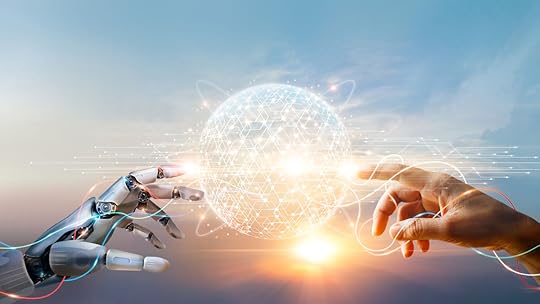
Is it possible to build a “morality engine” for AI without compromising the integrity of the artificial intelligence?
It’s been a topic of ongoing research and debate among AI experts and ethicists. The idea is to develop AI systems that can make ethical decisions in a way that aligns with human values and moral principles. However, building such a system without compromising the integrity of AI is a complex and challenging task that requires careful consideration and development.
While it is possible to program AI systems with certain ethical guidelines and principles, there are still many challenges in developing a system that can accurately interpret and apply these principles in complex real-world situations. Moreover, the moral values and standards of different cultures and societies can vary widely, which makes it difficult to develop a universal morality engine that satisfies everyone.
Furthermore, humor and jokes are inherently subjective. It may be difficult to develop an AI system that can reliably interpret and respond to humor without compromising its integrity or reliability. Additionally, AI systems are only as dependable and reliable as the data and programming that go into them. If the input data or programming is biased or flawed, then the AI system may very well produce unreliable or unethical results.
Determining What Constitutes MoralityWhen it comes to the finer points of what constitutes morally acceptable content, some points of contention can include:
1. Ethics and MoralityDiffering opinions on what is considered ethical and moral and how these values should be incorporated into AI systems. Some may argue that AI should be programmed to prioritize human values and moral principles, while others may argue that AI should be neutral and not influenced by human values.
2. Bias and DiscriminationConcerns about the potential for AI systems to perpetuate or amplify biases and discrimination, particularly if they are programmed using flawed or biased data. There may be disagreements over how to address these concerns and how to ensure that AI is fair and equitable.
3. Freedom and AutonomyDebates over the role of AI in promoting freedom and autonomy, particularly if it is used to monitor or control human behavior. There may be disagreements over how to balance the potential benefits of AI with concerns about privacy and individual rights.
4. Regulation and OversightDiffering opinions on regulating and overseeing AI systems, particularly as they become more complex and autonomous. Some may argue for strict regulations and oversight to ensure that AI is being used ethically and responsibly. In contrast, others may argue for more flexible regulations that allow for innovation and experimentation.
5. International cooperationDisagreements over how to promote international cooperation and collaboration in the development and use of AI. Some may argue for a more cooperative approach, while others may advocate for a more nationalist approach that prioritizes the interests of individual countries or regions.
Uncovering the Dark Side of AIVirtually every AI language model is programmed in some way to avoid illegal activities or the use of AI for malicious purposes. However, it is well known that the dark web is often associated with illegal activities such as drug sales, weapons sales, and cybercrime.
While there are no doubt individuals attempting to use AI on the dark web for illicit purposes, it is important to note that the vast majority of the time, AI is being used for legitimate purposes, even on the dark web. Some of the most likely uses and applications for AI on the dark web could include.
1. SecurityAI can be used to identify and mitigate potential security threats on the dark web, such as cyber-attacks or data breaches.
2. SurveillancAI can be used to monitor activity on the dark web, to identify potential criminal activity and track down those responsible.
3. AnonymityAI can be used to help protect the anonymity of individuals using the dark web, which is important for individuals in certain countries who may face persecution for their political views.
4. PredictionAI can be used to predict trends and patterns on the dark web, which can be useful for law enforcement agencies and security experts.
5. Dark Web Search EnginesAI can be used to develop search engines specifically for the dark web, which can help individuals find what they are looking for more quickly and easily.
 Illegal Activity
Less face it, AI is a great tool for doing many things and is especially good at doing bad things. But AI on the dark web takes it to a whole different level, and it may very well be used in some of the following activities:
1. Human traffickingFacilitate the sale of human beings for sexual exploitation or forced labor, which is a heinous crime.
2. Terrorist activitiesPlan and execute terrorist activities, including coordinating attacks or disseminating propaganda.
3. Money launderingHiding the source of illegally obtained funds is a serious financial crime.
4. CounterfeitingCreate fake documents, such as passports or identification cards, which could be used for various illegal activities.
5. EspionageGather and analyze sensitive information from government or corporate databases, which could be used for political or financial gain.
6. BlackmailCollect information about individuals, which could then be used to extort money or other favors from them.
Complying with the Laws of Other CountriesAI compliance with different countries laws and regulations can be challenging for several reasons, including varying legal frameworks, cultural norms, and political contexts. While AI systems strive to comply with the laws and regulations of every country, some countries may have stricter regulations or more complex legal frameworks than others, which may pose significant compliance challenges.
Some countries where AI compliance may be particularly difficult include:
1. ChinaChina has a complex legal and regulatory system, with significant government involvement in many aspects of society, including technology. There are also concerns about censorship and data privacy in China, which can make compliance with Chinese laws and regulations challenging for AI systems.
2. RussiaRussia has a complex legal framework that can be difficult for foreign companies to navigate. Additionally, there are concerns about government surveillance and data privacy in Russia, making it difficult for AI systems to comply with Russian laws and regulations.
3. IndiaIndia has a complex legal and regulatory system, with significant government involvement in many aspects of society. Additionally, there are concerns about data privacy and cybersecurity in India, making compliance with Indian laws and regulations challenging for AI systems.
4. Middle Eastern CountriesSeveral countries in the Middle East have strict regulations around content and expression online, making it challenging for AI systems to comply with local laws and regulations.
Overall, the ability of AI to comply with the laws and regulations of different countries depends on several factors, including the complexity of legal frameworks, cultural norms, and political contexts. While compliance challenges may exist in some countries, efforts are being made to develop ethical guidelines and frameworks for AI that take into account the diversity of legal and cultural norms across different regions.
AI Rule of Thumb GuidelinesYes, we wish it could be easier, but developing rules of thumb for AI technology to determine what is moral and right versus what is inappropriate and illegal is a complex and ongoing challenge. It depends on various factors, including cultural norms, social values, and legal frameworks. That said, here are some general guidelines that AI developers and users can follow:
1. Respect for Human DignityAI should be designed and used in a way that respects the dignity and worth of all human beings and that does not discriminate based on race, ethnicity, gender, religion, or any other characteristic.
2. Compliance with the LawAI should be designed and used in a way that complies with all applicable laws and regulations, including those related to data privacy, intellectual property, and security.
3. Transparency and AccountabilityAI systems should be transparent in their decision-making processes and subject to oversight and accountability mechanisms to ensure they are being used ethically and responsibly.
4. Avoidance of HarmAI systems should be designed and used to minimize the risk of harm to individuals or groups and considers the potential consequences of their actions.
5. Respect for PrivacyAI should respect the privacy and confidentiality of individuals and their personal information and should be designed and used to protect this information from misuse or abuse.
6. Ethical Decision-makingAI should be designed to make ethical decisions that align with human values and moral principles and consider the potential impact of their actions on individuals and society as a whole.
 Final Thoughts
People often want what they shouldn’t have. Fatty foods are bad for you, but you want them anyway. Alcohol, drugs, and cigarettes are bad for you, but every good party seems to be full of them, and you don’t want to miss out.
People hate it when a government tries to protect us from ourselves. And this same line of thinking is starting to play out in the current morality wars of AI.
If governments manage to censor AI, I can’t help but think that several weaponized forms of AI will appear on the dark web.
The idea of censorship and regulation of AI is a complex and controversial issue. It raises questions about individual freedoms, privacy, and the potential risks associated with unfiltered and weaponized forms of AI.
While some argue that government intervention is necessary to protect individuals and society from the potential harms of AI, others believe that such intervention would stifle innovation and lead to the development of unregulated and potentially dangerous AI systems on the dark web.
Ultimately, the question of how to regulate and govern AI will require careful consideration and a balanced approach that considers the needs and concerns of all stakeholders involved. It will be important to find ways to promote the development of safe, ethical, and responsible AI systems while also allowing for innovation and the free exchange of ideas.
Translate This PageSelect LanguageAfrikaansAlbanianAmharicArabicArmenianAzerbaijaniBasqueBelarusianBengaliBosnianBulgarianCatalanCebuanoChichewaChinese (Simplified)Chinese (Traditional)CorsicanCroatianCzechDanishDutchEnglishEsperantoEstonianFilipinoFinnishFrenchFrisianGalicianGeorgianGermanGreekGujaratiHaitian CreoleHausaHawaiianHebrewHindiHmongHungarianIcelandicIgboIndonesianIrishItalianJapaneseJavaneseKannadaKazakhKhmerKoreanKurdish (Kurmanji)KyrgyzLaoLatinLatvianLithuanianLuxembourgishMacedonianMalagasyMalayMalayalamMalteseMaoriMarathiMongolianMyanmar (Burmese)NepaliNorwegianPashtoPersianPolishPortuguesePunjabiRomanianRussianSamoanScottish GaelicSerbianSesothoShonaSindhiSinhalaSlovakSlovenianSomaliSpanishSudaneseSwahiliSwedishTajikTamilTeluguThaiTurkishUkrainianUrduUzbekVietnameseWelshXhosaYiddishYorubaZulu
#goog-gt-tt {display:none !important;}
.goog-te-banner-frame {display:none !important;}
.goog-te-menu-value:hover {text-decoration:none !important;}
.goog-text-highlight {background-color:transparent !important;box-shadow:none !important;}
body {top:0 !important;}
#google_translate_element2 {display:none!important;}
function googleTranslateElementInit2() {new google.translate.TranslateElement({pageLanguage: 'en',autoDisplay: false}, 'google_translate_element2');}
function GTranslateGetCurrentLang() {var keyValue = document['cookie'].match('(^|;) ?googtrans=([^;]*)(;|$)');return keyValue ? keyValue[2].split('/')[2] : null;}
function GTranslateFireEvent(element,event){try{if(document.createEventObject){var evt=document.createEventObject();element.fireEvent('on'+event,evt)}else{var evt=document.createEvent('HTMLEvents');evt.initEvent(event,true,true);element.dispatchEvent(evt)}}catch(e){}}
function doGTranslate(lang_pair){if(lang_pair.value)lang_pair=lang_pair.value;if(lang_pair=='')return;var lang=lang_pair.split('|')[1];if(GTranslateGetCurrentLang() == null && lang == lang_pair.split('|')[0])return;var teCombo;var sel=document.getElementsByTagName('select');for(var i=0;i<sel.length;i++)if(/goog-te-combo/.test(sel[i].className)){teCombo=sel[i];break;}if(document.getElementById('google_translate_element2')==null||document.getElementById('google_translate_element2').innerHTML.length==0||teCombo.length==0||teCombo.innerHTML.length==0){setTimeout(function(){doGTranslate(lang_pair)},500)}else{teCombo.value=lang;GTranslateFireEvent(teCombo,'change');GTranslateFireEvent(teCombo,'change')}}
Search for: Recent Posts In Search of a Morality Engine: Can AI and Humanity Truly Coexist? The Crypto Revolution: How Five Significant Events Cemented the Need for a Decentralized Financial System Solving the 10-Second Information Gap: On the Path to Building a Better Human Categories Artificial Intelligence Business Trends Future of Agriculture Future of Banking Future of Education Future of Healthcare Future of Transportation Future of Work Future Scenarios Future Trends Futurist Thomas Frey Insights Global Trends Predictions Social Trends Technology Trends Speaking TopicsFuture of Healthcare – “Is Death our only Option?Future of AIFuture of Industries ← Previous Post
The post In Search of a Morality Engine: Can AI and Humanity Truly Coexist? appeared first on Futurist Speaker.
March 2, 2023
The Crypto Revolution: How Five Significant Events Cemented the Need for a Decentralized Financial System

For many supporters of cryptocurrencies, the key appeal lies in their ability to provide a currency and financial system that is open, borderless, decentralized, neutral, anonymous, immutable, and censorship-resistant.
Openness refers to the fact that cryptocurrencies are typically based on open-source software, which means that anyone can access and modify the code. This fosters a culture of transparency and collaboration and allows for rapid innovation and development in the industry.
Borderless refers to the fact that cryptocurrencies can be used to send and receive payments anywhere in the world without being subject to the restrictions and fees imposed by traditional financial systems. This makes them a powerful tool for people who need to make cross-border transactions or send money to countries with less developed financial systems.
Decentralization refers to the fact that any central authority or institution does not control cryptocurrencies. Instead, they are maintained by a distributed network of nodes that work together to validate transactions and secure the system. This helps to ensure that cryptocurrencies are not subject to the same risks and failures as traditional financial systems, and makes them more resistant to censorship and control by governments and other powerful institutions.
Neutrality refers to the fact that cryptocurrencies do not discriminate based on factors such as race, gender, or nationality. They are designed to be accessible to anyone with an internet connection and do not require users to have a bank account or other form of traditional identification.
Anonymity refers to the fact that cryptocurrencies can be used to make transactions without revealing the identity of the sender or recipient. While not all cryptocurrencies are completely anonymous, many offer a high degree of privacy and anonymity compared to traditional financial systems.
Immutability refers to the fact that once a transaction is recorded on the blockchain, it cannot be altered or deleted. This provides a high degree of security and transparency and makes it difficult for bad actors to manipulate or corrupt the system.
Censorship resistance refers to the fact that cryptocurrencies cannot be easily censored or shut down by governments or other institutions. This is because they are decentralized and distributed, which makes it difficult for any single entity to control or manipulate the system. This is particularly important in countries with authoritarian governments or restrictions on free speech and expression.
While these are the key attributes that have defined crypto, here are five key events that have driven the need for a decentralized system.
1. 2008 Financial CrisisThe aftermath of the 2008 financial crisis saw a growing distrust in traditional financial institutions and a desire for a more decentralized and transparent financial system. This desire was largely driven by individuals who were distrustful of the government and financial institutions, including a group of early adopters known as the “cypherpunks,” who were drawn to the potential of cryptocurrencies like Bitcoin.
Among these early adopters were the “libertarian quants,” individuals with a background in quantitative analysis who saw the potential for cryptocurrencies to disrupt traditional financial systems and provide an alternative to government-backed currencies. However, the introduction of the Dodd-Frank Wall Street Reform and Consumer Protection Act in 2010 brought new regulations to the financial industry, which some argue have made it more difficult for new banks to be formed and could limit competition and innovation in the financial sector.
The financial crisis of 2008, also known as the Great Recession, was a global economic downturn that led to widespread economic instability, job losses, and foreclosures. The crisis was triggered by a housing bubble and the collapse of the subprime mortgage market in the United States, which spread to the global financial system.
When a system becomes too comfortable with itself, the seeds of its own destruction are sown
The financial crisis led to a loss of trust in traditional financial institutions, particularly banks and investment firms, due to their perceived role in causing the crisis. This loss of trust, coupled with the increasing centralization and control of the financial system, created a desire for a decentralized and transparent financial system that governments or large financial institutions did not control.
In 2009, an individual or group using the pseudonym “Satoshi Nakamoto” released a whitepaper outlining a decentralized digital currency called Bitcoin. Bitcoin is based on blockchain technology, which allows for decentralized and transparent record-keeping of financial transactions.
The creation of Bitcoin was largely driven by the desire for a decentralized and transparent financial system that traditional financial institutions did not control. This desire was fueled by the financial crisis of 2008 and the loss of trust in traditional financial institutions.
The success of Bitcoin led to the creation of other cryptocurrencies, which further expanded the cryptocurrency industry. The cryptocurrency industry has grown rapidly in recent years, with a wide range of cryptocurrencies and blockchain-based applications being developed for a variety of purposes.
In the early days of Bitcoin and the cryptocurrency industry, the majority of early adopters were a group of individuals with backgrounds in computer science, mathematics, and cryptography. This group was often referred to as “cypherpunks” and was largely made up of libertarian-leaning individuals who believed in personal freedom and privacy.
These early adopters were drawn to Bitcoin and cryptocurrencies due to their decentralized nature and ability to operate outside of traditional financial institutions and government control. This was particularly appealing to those who were distrustful of the government and financial institutions and who believed in the importance of personal freedom and privacy.
2. The Rise of the Libertarian QuantsThe libertarian quants were a subset of these early adopters who had a background in quantitative analysis, such as computer programming, mathematics, and finance. These individuals were often drawn to the potential for arbitrage and trading opportunities that existed in the new cryptocurrency market.
They were also attracted to the technical aspects of cryptocurrencies, such as the blockchain technology that underpins them. They saw the potential for blockchain technology to disrupt traditional financial systems and create a more decentralized and transparent financial system.
The libertarian quants were also interested in the potential for cryptocurrencies to provide an alternative to traditional government-backed currencies. They believed that cryptocurrencies could serve as a form of decentralized currency that was not subject to the whims of governments or central banks.
 3. Dodd-Frank Act
The Dodd-Frank Wall Street Reform and Consumer Protection Act (Dodd-Frank Act) was signed into law in 2010 in response to the 2008 financial crisis, which was caused in part by risky behavior by large banks that were deemed “too big to fail.” The Act was intended to address some of the issues that contributed to the crisis by imposing new regulations on the financial industry and creating new oversight bodies.
One of the key provisions of the Dodd-Frank Act was the creation of the Financial Stability Oversight Council (FSOC), which is tasked with identifying and monitoring risks to the financial system. The Act also created the Consumer Financial Protection Bureau (CFPB), which is responsible for protecting consumers from abusive financial practices.
However, some critics of the Dodd-Frank Act argue that the regulations imposed by the law have made it much more difficult for new banks to be formed. The regulations are seen as particularly burdensome for smaller banks, which may not have the resources to comply with them.
According to Marc Andreessen, the number of new banks that have been started since Dodd-Frank is zero.
Early adopters, including the startup entrepreneurs who would have started their own bank, were instead drawn to the potential of cryptocurrencies like Bitcoin to disrupt traditional financial systems and provide an alternative to government-backed currencies.
While the Act was intended to address the issues that led to the financial crisis, it has also had unintended consequences, highlighting the complex nature of financial regulation and the challenges of balancing stability and innovation in the financial sector.
4. Silk RoadSilk Road was a harbinger of the cryptocurrency revolution, paving the way for a new era of anonymous and decentralized financial systems.
Founded by Dread Pirate Roberts — who would later be revealed as Ross Ulbricht — the promise of Silk Road was also essentially libertarian. The proposition was that anything could be traded, regardless of whether the state viewed it as legal.
Silk Road played a significant role in the emerging cryptocurrency industry, particularly in the early years of Bitcoin’s development. The platform was a dark web marketplace that facilitated the buying and selling of illegal drugs, fake IDs, and other illicit goods using Bitcoin as the primary form of payment.
For many people, Silk Road provided the first real use case for Bitcoin outside of traditional financial transactions. It demonstrated the potential for Bitcoin to be used for anonymous and untraceable transactions, which made it an attractive option for people engaged in illicit activities.
Silk Road also played a crucial role in the development of early Bitcoin communities. The platform was home to a vibrant community of users who shared information and tips on using Bitcoin and helped to drive the adoption of the cryptocurrency among a wider audience.
However, the closure of the Silk Road in 2013 was a significant turning point for Bitcoin and the wider cryptocurrency industry. The seizure of the platform by the US government highlighted the risks and challenges associated with using Bitcoin for illegal activities. It also underscored the need for better security and custodial practices in the cryptocurrency industry, as many people lost significant amounts of Bitcoin that had been held in Silk Road’s escrow accounts.
Despite these challenges, Silk Road played an important role in the emergence of the cryptocurrency industry. It helped to establish Bitcoin as a viable alternative to traditional currency for anonymous transactions and helped to drive the adoption of the cryptocurrency among a wider audience.
5. Launching EthereumIn 2015, Vitalik Buterin, a Canadian-Russian programmer, along with a team of cutting-edge crypto developers, launched Ethereum to help expand the capabilities of the emerging crypto industry.
Ethereum is a cryptocurrency that was designed to be more than just a digital currency. It is a decentralized platform that allows developers to build and deploy decentralized applications using smart contracts. Smart contracts are self-executing programs that run on the Ethereum blockchain and allow for creating complex applications that can automate many different types of transactions.
Ethereum reinforced the need for cryptocurrency in several ways. Firstly, it demonstrated the potential for blockchain technology to be used for more than just financial transactions. While Bitcoin was originally designed as a digital currency, Ethereum showed that blockchain could be used as a platform for building all kinds of decentralized applications, from supply chain management to voting systems.
Secondly, Ethereum helped to make cryptocurrency more accessible to non-technical users. The smart contract functionality of Ethereum made it possible for developers to build user-friendly applications that could be accessed and used by anyone with an internet connection.
Finally, Ethereum helped to promote the values of decentralization and transparency that are central to the cryptocurrency movement. By creating a platform that was free from centralized control and censorship, Ethereum demonstrated the potential for blockchain to create a more open and democratic world.
The emergence of cryptocurrencies has been driven by a desire for a more open, decentralized, and transparent financial system. The financial crisis of 2008, the rise of the libertarian quants, the introduction of the Dodd-Frank Act, the launch of Ethereum, and the closure of Silk Road were all significant events that cemented the need for cryptocurrencies.
While the cryptocurrency industry has faced numerous challenges and setbacks, it will continue to grow and evolve. As the industry continues to mature, it is likely to become an increasingly important part of the global financial system, offering new opportunities and challenges for businesses, governments, and individuals alike.
Translate This PageSelect LanguageAfrikaansAlbanianAmharicArabicArmenianAzerbaijaniBasqueBelarusianBengaliBosnianBulgarianCatalanCebuanoChichewaChinese (Simplified)Chinese (Traditional)CorsicanCroatianCzechDanishDutchEnglishEsperantoEstonianFilipinoFinnishFrenchFrisianGalicianGeorgianGermanGreekGujaratiHaitian CreoleHausaHawaiianHebrewHindiHmongHungarianIcelandicIgboIndonesianIrishItalianJapaneseJavaneseKannadaKazakhKhmerKoreanKurdish (Kurmanji)KyrgyzLaoLatinLatvianLithuanianLuxembourgishMacedonianMalagasyMalayMalayalamMalteseMaoriMarathiMongolianMyanmar (Burmese)NepaliNorwegianPashtoPersianPolishPortuguesePunjabiRomanianRussianSamoanScottish GaelicSerbianSesothoShonaSindhiSinhalaSlovakSlovenianSomaliSpanishSudaneseSwahiliSwedishTajikTamilTeluguThaiTurkishUkrainianUrduUzbekVietnameseWelshXhosaYiddishYorubaZulu
#goog-gt-tt {display:none !important;}
.goog-te-banner-frame {display:none !important;}
.goog-te-menu-value:hover {text-decoration:none !important;}
.goog-text-highlight {background-color:transparent !important;box-shadow:none !important;}
body {top:0 !important;}
#google_translate_element2 {display:none!important;}
function googleTranslateElementInit2() {new google.translate.TranslateElement({pageLanguage: 'en',autoDisplay: false}, 'google_translate_element2');}
function GTranslateGetCurrentLang() {var keyValue = document['cookie'].match('(^|;) ?googtrans=([^;]*)(;|$)');return keyValue ? keyValue[2].split('/')[2] : null;}
function GTranslateFireEvent(element,event){try{if(document.createEventObject){var evt=document.createEventObject();element.fireEvent('on'+event,evt)}else{var evt=document.createEvent('HTMLEvents');evt.initEvent(event,true,true);element.dispatchEvent(evt)}}catch(e){}}
function doGTranslate(lang_pair){if(lang_pair.value)lang_pair=lang_pair.value;if(lang_pair=='')return;var lang=lang_pair.split('|')[1];if(GTranslateGetCurrentLang() == null && lang == lang_pair.split('|')[0])return;var teCombo;var sel=document.getElementsByTagName('select');for(var i=0;i<sel.length;i++)if(/goog-te-combo/.test(sel[i].className)){teCombo=sel[i];break;}if(document.getElementById('google_translate_element2')==null||document.getElementById('google_translate_element2').innerHTML.length==0||teCombo.length==0||teCombo.innerHTML.length==0){setTimeout(function(){doGTranslate(lang_pair)},500)}else{teCombo.value=lang;GTranslateFireEvent(teCombo,'change');GTranslateFireEvent(teCombo,'change')}}
Search for: Recent Posts The Crypto Revolution: How Five Significant Events Cemented the Need for a Decentralized Financial System Solving the 10-Second Information Gap: On the Path to Building a Better Human ChatGPT’s Mind-Boggling Responses to Ten Unanswerable Questions Categories Artificial Intelligence Business Trends Future of Agriculture Future of Banking Future of Education Future of Healthcare Future of Transportation Future of Work Future Scenarios Future Trends Futurist Thomas Frey Insights Global Trends Predictions Social Trends Technology Trends Speaking TopicsFuture of Healthcare – “Is Death our only Option?Future of AIFuture of Industries ← Previous Post
The post The Crypto Revolution: How Five Significant Events Cemented the Need for a Decentralized Financial System appeared first on Futurist Speaker.
February 16, 2023
Solving the 10-Second Information Gap: On the Path to Building a Better Human
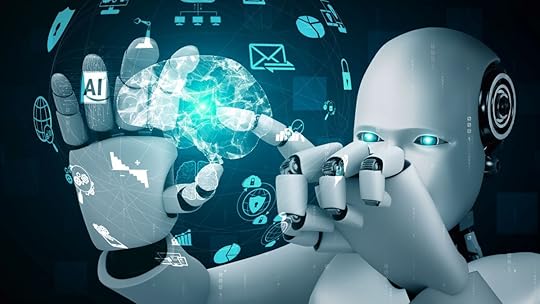
Have you ever been in the middle of assembling something and realized that a critical piece of information was missing from the instructions? This information gap could be a small detail, such as a buried screen option or an unidentifiable icon. Still, it can quickly turn a seemingly straightforward task into a source of frustration and anxiety. This problem is becoming increasingly common as our world becomes more complex and information-rich, with more and more holes appearing every day due to these elusive 10-second gaps of information.
Despite their importance, accessing this information has often been a slow and cumbersome process. However, every day we are presented with opportunities to overcome these challenges and gain access to the information we need to make informed decisions and solve problems.
The 10-Second Information GapIn our daily lives, we encounter numerous challenges that require quick access to information. For example, imagine you are driving your car, and it suddenly breaks down on the side of the road. You need just 10 seconds of information about the issue to make a repair, but without it, you are stuck and may have to call for help. Similarly, in a power outage, electricity technicians must quickly access crucial information to repair the problem and restore power. Still, if they don’t have that information readily available, entire countries can be left in the dark. These are just a few examples of how access to information can have a major impact on our daily lives and decision-making.
Moreover, in fields such as politics and business, access to information can mean the difference between success and failure. For instance, in a political campaign, having access to a key piece of information, such as the voting patterns of a certain demographic, could be the deciding factor in a close race. Similarly, in the business world, a company with access to real-time market data could make informed decisions that give them an advantage over its competitors. In these scenarios, just 10 seconds of information can make all the difference.
Unraveling Our Limited AccessUntil recently, accessing this information has been limited by our ability to gather, process, and understand it. But with the advent of artificial intelligence (AI), this is changing. AI algorithms can quickly analyze vast amounts of data and provide us with relevant insights in a matter of seconds. This has revolutionized the way we approach problem-solving and has significantly improved our ability to access the information we need.
For instance, AI algorithms can be used to diagnose medical conditions by analyzing patient data and presenting relevant information to doctors in real-time. This leads to faster and more accurate diagnoses and better patient outcomes. Similarly, AI algorithms are being used to analyze financial data, providing investors with insights and recommendations that help them make informed decisions. In these and many other fields, AI is transforming the way we approach problem-solving and is enabling us to access information more quickly and efficiently.
 AI, BMI, and Chatbots
While AI and BMIs are both important technologies in the field of information access, they each have their own unique strengths and weaknesses. A conversational interface, such as a virtual assistant or chatbot, allows users to interact with a computer through natural language. This interface is accessible, intuitive and can provide quick answers to specific questions. For example, a customer could ask a chatbot for the nearest gas station, and the chatbot could quickly provide an answer based on the customer’s location.
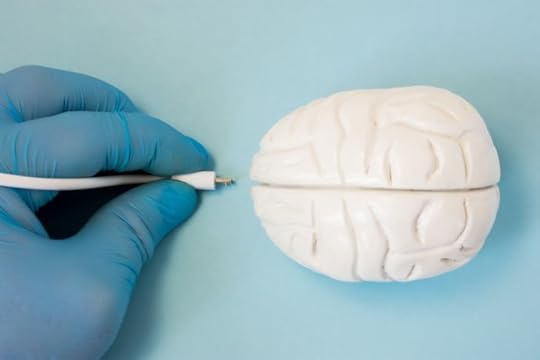
On the other hand, a BMI is a direct interface between the brain and a computer, allowing users to think their way through problems and receive instant answers. This technology has the potential to revolutionize the way we access and process information, as it allows for faster and more direct communication with computers. However, it is still in the early stages of development and is not yet widely available to the general public.
In some cases, a conversational interface and a BMI could complement each other, working together to provide a comprehensive solution to a problem. For example, a customer could use a virtual assistant to find a specific product and then use a BMI to compare the prices and features of different options quickly. In other cases, one technology might work better than the other. For instance, a conversational interface might be better suited for answering straightforward questions, while a BMI might be better suited for solving complex, data-driven problems.
Ultimately, both AI and BMIs have the potential to revolutionize the way we access and process information, and the best solution will often depend on the specific context and the nature of the problem being solved. As these technologies continue to develop, it will be interesting to see how they are used and combined to improve the speed and efficiency of information access.
This will be a game-changer, as it will enable us to access information and solve problems at a speed that has never been possible before.
For example, in education, students will be able to access information and learn at a much faster pace. They will be able to solve complex problems and develop critical thinking skills at a younger age, giving them a head start in their careers. In the workplace, employees will be able to quickly access the information they need to perform their jobs more effectively, leading to increased productivity and innovation.
However, with the development of a BMI comes the need to ensure that the technology is used ethically and responsibly. There are concerns about privacy and the potential misuse of this technology, and it will be important to put in place measures to protect against these risks.
Final ThoughtsThe impact of AI on problem-solving has been significant, and it will only get better with the development of a sophisticated brain-machine interface. This technology will revolutionize the way we approach problem-solving and will have far-reaching implications for many areas of our lives. Our world is full of examples of people and systems that have been impacted by the lack of access to these 10-second pieces of information. But with AI and a BMI, we will be able to quickly “think our way through to solutions” for virtually every problem, and we will be able to do so at a speed.
Translate This PageSelect LanguageAfrikaansAlbanianAmharicArabicArmenianAzerbaijaniBasqueBelarusianBengaliBosnianBulgarianCatalanCebuanoChichewaChinese (Simplified)Chinese (Traditional)CorsicanCroatianCzechDanishDutchEnglishEsperantoEstonianFilipinoFinnishFrenchFrisianGalicianGeorgianGermanGreekGujaratiHaitian CreoleHausaHawaiianHebrewHindiHmongHungarianIcelandicIgboIndonesianIrishItalianJapaneseJavaneseKannadaKazakhKhmerKoreanKurdish (Kurmanji)KyrgyzLaoLatinLatvianLithuanianLuxembourgishMacedonianMalagasyMalayMalayalamMalteseMaoriMarathiMongolianMyanmar (Burmese)NepaliNorwegianPashtoPersianPolishPortuguesePunjabiRomanianRussianSamoanScottish GaelicSerbianSesothoShonaSindhiSinhalaSlovakSlovenianSomaliSpanishSudaneseSwahiliSwedishTajikTamilTeluguThaiTurkishUkrainianUrduUzbekVietnameseWelshXhosaYiddishYorubaZulu
#goog-gt-tt {display:none !important;}
.goog-te-banner-frame {display:none !important;}
.goog-te-menu-value:hover {text-decoration:none !important;}
.goog-text-highlight {background-color:transparent !important;box-shadow:none !important;}
body {top:0 !important;}
#google_translate_element2 {display:none!important;}
function googleTranslateElementInit2() {new google.translate.TranslateElement({pageLanguage: 'en',autoDisplay: false}, 'google_translate_element2');}
function GTranslateGetCurrentLang() {var keyValue = document['cookie'].match('(^|;) ?googtrans=([^;]*)(;|$)');return keyValue ? keyValue[2].split('/')[2] : null;}
function GTranslateFireEvent(element,event){try{if(document.createEventObject){var evt=document.createEventObject();element.fireEvent('on'+event,evt)}else{var evt=document.createEvent('HTMLEvents');evt.initEvent(event,true,true);element.dispatchEvent(evt)}}catch(e){}}
function doGTranslate(lang_pair){if(lang_pair.value)lang_pair=lang_pair.value;if(lang_pair=='')return;var lang=lang_pair.split('|')[1];if(GTranslateGetCurrentLang() == null && lang == lang_pair.split('|')[0])return;var teCombo;var sel=document.getElementsByTagName('select');for(var i=0;i<sel.length;i++)if(/goog-te-combo/.test(sel[i].className)){teCombo=sel[i];break;}if(document.getElementById('google_translate_element2')==null||document.getElementById('google_translate_element2').innerHTML.length==0||teCombo.length==0||teCombo.innerHTML.length==0){setTimeout(function(){doGTranslate(lang_pair)},500)}else{teCombo.value=lang;GTranslateFireEvent(teCombo,'change');GTranslateFireEvent(teCombo,'change')}}
Search for: Recent Posts Solving the 10-Second Information Gap: On the Path to Building a Better Human ChatGPT’s Mind-Boggling Responses to Ten Unanswerable Questions The Future of Education is beginning to take Shape Categories Artificial Intelligence Business Trends Future of Agriculture Future of Banking Future of Education Future of Healthcare Future of Transportation Future of Work Future Scenarios Future Trends Futurist Thomas Frey Insights Global Trends Predictions Social Trends Technology Trends Speaking TopicsFuture of Healthcare – “Is Death our only Option?Future of AIFuture of Industries ← Previous Post
The post Solving the 10-Second Information Gap: On the Path to Building a Better Human appeared first on Futurist Speaker.
February 2, 2023
ChatGPT’s Mind-Boggling Responses to Ten Unanswerable Questions
In 2013, I wrote a column titled “10 Unanswerable Questions that Neither Science nor Religion can Answer.” For the past 10 years, it has been my most popular column, and I have developed a cult following, of sorts, around the topic of unanswerable questions.
With the growing popularity of ChatGPT, I decided to conduct an online interview with the AI engine and see how it would answer the original list of unanswerable questions.
I should note that most answers begin with a qualifying statement or disclaimer such as “this is a topic of ongoing debate among scientists,” to help put the certainty of the response into perspective.
For those of you not familiar with ChatGPT, I began the interview with three background questions to set the stage.
What is the history of the ChatGPT project?ChatGPT is a project developed by OpenAI, a leading artificial intelligence research lab. The project is based on the GPT (Generative Pre-training Transformer) model, which was first introduced in 2018. The original GPT model was trained on a massive dataset of text from the internet and was able to generate human-like text by predicting the next word in a given sentence.
Following the release of the original GPT model, OpenAI continued to improve and refine the model, releasing several updated versions, such as GPT-2 and GPT-3, that were trained on even larger datasets and achieved even higher levels of accuracy and fluency.
In addition to being used for natural language processing tasks such as text generation and language translation, GPT models like ChatGPT are also used in a variety of other applications, including question-answering, text summarization, and conversation generation.
As of 2021, OpenAI has released GPT-3 and GPT-3 based models like DialoGPT and ChatGPT, which are considered state-of-the-art language models and have been used in a variety of industries such as language translation, question answering, and customer service.
Who was the founder of ChatGPT?ChatGPT is a project developed by OpenAI, an artificial intelligence research lab, which was founded by Elon Musk, Sam Altman, Greg Brockman, Ilya Sutskever, Wojciech Zaremba, and Adam D’Angelo. The project is based on the GPT (Generative Pre-training Transformer) model, which was first introduced in 2018.

Are there any fact-checkers to verify that everything written by ChatGPT is correct?
ChatGPT is a language model that is trained on a large dataset of text from the internet. It uses this data to generate text that is similar to the text it has seen during training. However, the model is not able to fact-check the information it generates, and it may produce content that is not accurate or contains errors. It is the responsibility of the user to verify any information generated by the model to ensure its accuracy before using it. Some of the latest models like GPT-3 based models like DALL·E and GPT-3 have a feature that allows the user to check whether the generated text is factually correct or not using OpenAI’s “DALL-E 2” which is a fact-checking model. But still, it’s important to verify the information generated by these models.
Ten Unanswerable QuestionsHere are the original ten unanswerable questions, followed by ChatGPT’s response.
1. Why is there an exception to every rule?The saying “there’s an exception to every rule” is often used to express that rules are not absolute and that there are always exceptions to them. It is often used to convey the idea that rules are not always applicable or that they can be subject to change or exceptions.
One reason for exceptions to rules is that rules are often created to reflect general patterns or trends, but they do not account for every possible situation. For example, a rule such as “don’t speed” is designed to keep people safe on the road, but there may be exceptions, such as when a person is rushing to the hospital in an emergency.
Another reason for exceptions to rules is that rules are often created by human beings, and humans are not perfect. People may make mistakes, misunderstand situations or overlook certain factors when creating rules. Therefore, exceptions are sometimes necessary to correct these mistakes or to take into account new information or circumstances.
Lastly, rules are often created based on certain assumptions or conditions and when these change, the rules may no longer be applicable. For example, a rule that worked well in the past may no longer be relevant in the present or future.
In conclusion, the saying “there’s an exception to every rule” highlights the idea that rules are not absolute and that there are always exceptions to them, whether it is due to the limitations of the rules, the imperfections of the creators, or the changing circumstances.
2. Why do logic and reason fail to explain that which is true?Logic and reason are tools that can be used to evaluate the truth of statements, but they are not infallible. They can be used to draw conclusions that are not true if the premises on which the reasoning is based are false or if the reasoning is flawed. Additionally, there are some things that may be true but cannot be fully explained or understood through logic and reason alone, such as certain aspects of personal experience or subjective phenomena.
3. Is the universe finite or infinite?The question of whether the universe is finite or infinite is a topic of ongoing debate among cosmologists and physicists. The currently accepted scientific theory is that the universe is infinite, based on the observations of the cosmic microwave background radiation and the large-scale structure of the universe. The current leading theory of cosmology, known as the Lambda-CDM model, also predicts that the universe is infinite and that it is expanding at an accelerating rate. However, it’s worth noting that these models are based on certain assumptions and measurements that have some level of uncertainty. Some alternative theories propose that the universe is finite, and it’s an open question that is under ongoing research.
4. Why does anything exist?The question of why anything exists, also known as the “why is there something rather than nothing?” question, is a topic of debate among philosophers, scientists, and theologians. There is no definitive answer to this question, as different perspectives and fields of study offer different explanations.
One perspective is that the existence of something is a fundamental aspect of the nature of the universe and that there is no need for an explanation.
Another perspective is that the existence of something can be explained through science, specifically through the laws of physics and the events that occurred during the Big Bang. This event marked the birth of the universe as we know it.
Others propose that the existence of something may be explained through the existence of a God or other supernatural force who created the universe.
Other philosophers and scientists propose that the question is unanswerable or meaningless because existence is a precondition for any question or explanation.
It’s worth noting that all these explanations are based on certain assumptions, and the question of why anything exists remains one of the biggest unsolved problems in philosophy and science.
 5. Why does time exist?
The question of why time exists is a topic of debate among philosophers, scientists, and cosmologists. There is no one definitive answer to this question, as different perspectives and fields of study offer different explanations.
One perspective is that time is a fundamental aspect of the nature of the universe and that there is no need for an explanation. Time is seen as a dimension, like space, in which events occur.
Another perspective is that time can be explained through the laws of physics. In particular, the theory of special and general relativity proposed by Einstein explains how time and space are intimately linked and that time can be affected by the presence of matter and energy.
Others propose that the existence of time may be explained through the existence of a God or other supernatural force who created the universe and also time.
It’s worth noting that all these explanations are based on certain assumptions, and the question of why time exists remains one of the biggest unsolved problems in philosophy and science. Some theories, such as the concept of eternalism and presentism in the philosophy of time, attempt to explain the natur of time, but the are still subject of ongoing research and debate.
6. Why do humans matter?The question of why humans matter is a topic of debate among philosophers, scientists, and theologians. There is no one definitive answer to this question, as different perspectives and fields of study offer different explanations.
One perspective is that humans matter because they possess certain characteristics, such as consciousness, self-awareness, and the ability to reason, that set them apart from other forms of life on Earth.
Another perspective is that humans matter because they have the ability to shape the world around them and make a positive impact on the planet and other living beings. Humans also have the ability to create culture, science, art, and technology that can improve the human experience and the future of humanity.
Others propose that the existence of humans may be explained through the existence of a God or other supernatural force who created the universe and gave a special purpose or role for humans.
Others may argue that humans do not matter in the grand scheme of things and that the universe will continue to exist and evolve regardless of human existence.
It’s worth noting that all these explanations are based on certain assumptions and the question of why humans matter remains a subject of ongoing debate in different fields of study.
7. Why are humans so fallible?Humans are fallible, meaning they are capable of making mistakes and errors for a variety of reasons. Some of these reasons include:
Limited knowledge and understanding: Humans have limited access to information and understanding of the world around them, which can lead to errors in judgment and decision-making.Emotions and biases: Humans are influenced by their emotions and biases, which can lead to irrational or illogical thinking and decision-making.: Humans are complex beings, and the world around them is complex, which can lead to misinterpretation of information and misunderstandings.Evolutionary factors: Humans have evolved to be good at solving certain types of problems but not others, and this can lead to fallibility in certain areas.Societal and environmental factors: The society and environment in which humans live can also affect their fallibility by shaping their beliefs, values, and understanding of the world.It’s worth noting that fallibility is a natural and intrinsic part of being human, and it’s not necessarily a bad thing. It’s also important to remember that fallibility can also be overcome and mitigated through education, self-awareness, and critical thinking.
8. Do human accomplishments have long-term meaning?The question of whether human accomplishments have long-term meaning is a topic of debate among philosophers, scientists, and theologians. Different perspectives and fields of study offer different opinions on this question.
One perspective is that human accomplishments do have long-term meaning because they contribute to the advancement of human knowledge and understanding and can improve the human experience and the future of humanity. This includes achievements in science, technology, medicine, engineering, art, culture, and many other fields.
Another perspective is that human accomplishments may be limited in their long-term meaning because they are often temporary or subject to change. They can be affected by various factors, such as natural disasters, war, human error, and technological obsolescence.
Others propose that the long-term meaning of human accomplishments can be found in the context of a greater spiritual or cosmic purpose and that they reflect the actions of a higher power.
On the other hand, some argue that human accomplishments may not have any long-term meaning because they are insignificant in the grand scheme of things. The universe will continue to exist and evolve regardless of human existence.
It’s worth noting that all these explanations are based on certain assumptions, and the question of whether human accomplishments have long-term meaning remains a subject of ongoing debate in different fields of study.
9. Why is the future unknowable?The future is uncertain because it is influenced by a large number of complex and interconnected variables, many of which are difficult to predict or control. Additionally, even with perfect information about all of the variables that might influence an event, it is still difficult to make accurate predictions about the future due to the complexity of the systems involved. Furthermore, human decision-making and actions can also change the course of the future, which makes it hard to predict with certainty.
10. What is the purpose of death?The purpose of death is a topic of much debate and speculation. From a biological perspective, death serves as a way to control population growth and to allow for the evolution of new species. From a spiritual or philosophical perspective, death may be seen as a transition to a new state of being or as a way to achieve enlightenment or spiritual growth. Some people believe that death is necessary to make room for new life and new generations and that it is a natural part of the cycle of life and death. Ultimately, the purpose of death is a deeply personal and subjective question that may be different for each individual.
Final ThoughtsTo be honest, I was pleasantly surprised by the quality of the answers. No, it was not able to fully answer the questions, but quite often, having someone elaborate on the issues surrounding the question is quite helpful.
From my perspective, ChatGPT is a great tool for creating a starting point. Any writer that starts with GPT’s initial draft will be able to produce a far better document in the end.
Translate This PageSelect LanguageAfrikaansAlbanianAmharicArabicArmenianAzerbaijaniBasqueBelarusianBengaliBosnianBulgarianCatalanCebuanoChichewaChinese (Simplified)Chinese (Traditional)CorsicanCroatianCzechDanishDutchEnglishEsperantoEstonianFilipinoFinnishFrenchFrisianGalicianGeorgianGermanGreekGujaratiHaitian CreoleHausaHawaiianHebrewHindiHmongHungarianIcelandicIgboIndonesianIrishItalianJapaneseJavaneseKannadaKazakhKhmerKoreanKurdish (Kurmanji)KyrgyzLaoLatinLatvianLithuanianLuxembourgishMacedonianMalagasyMalayMalayalamMalteseMaoriMarathiMongolianMyanmar (Burmese)NepaliNorwegianPashtoPersianPolishPortuguesePunjabiRomanianRussianSamoanScottish GaelicSerbianSesothoShonaSindhiSinhalaSlovakSlovenianSomaliSpanishSudaneseSwahiliSwedishTajikTamilTeluguThaiTurkishUkrainianUrduUzbekVietnameseWelshXhosaYiddishYorubaZulu
#goog-gt-tt {display:none !important;}
.goog-te-banner-frame {display:none !important;}
.goog-te-menu-value:hover {text-decoration:none !important;}
.goog-text-highlight {background-color:transparent !important;box-shadow:none !important;}
body {top:0 !important;}
#google_translate_element2 {display:none!important;}
function googleTranslateElementInit2() {new google.translate.TranslateElement({pageLanguage: 'en',autoDisplay: false}, 'google_translate_element2');}
function GTranslateGetCurrentLang() {var keyValue = document['cookie'].match('(^|;) ?googtrans=([^;]*)(;|$)');return keyValue ? keyValue[2].split('/')[2] : null;}
function GTranslateFireEvent(element,event){try{if(document.createEventObject){var evt=document.createEventObject();element.fireEvent('on'+event,evt)}else{var evt=document.createEvent('HTMLEvents');evt.initEvent(event,true,true);element.dispatchEvent(evt)}}catch(e){}}
function doGTranslate(lang_pair){if(lang_pair.value)lang_pair=lang_pair.value;if(lang_pair=='')return;var lang=lang_pair.split('|')[1];if(GTranslateGetCurrentLang() == null && lang == lang_pair.split('|')[0])return;var teCombo;var sel=document.getElementsByTagName('select');for(var i=0;i<sel.length;i++)if(/goog-te-combo/.test(sel[i].className)){teCombo=sel[i];break;}if(document.getElementById('google_translate_element2')==null||document.getElementById('google_translate_element2').innerHTML.length==0||teCombo.length==0||teCombo.innerHTML.length==0){setTimeout(function(){doGTranslate(lang_pair)},500)}else{teCombo.value=lang;GTranslateFireEvent(teCombo,'change');GTranslateFireEvent(teCombo,'change')}}
Search for: Recent Posts ChatGPT’s Mind-Boggling Responses to Ten Unanswerable Questions The Future of Education is beginning to take Shape Top 10 Futurist Speaker Columns for 2022 Categories Artificial Intelligence Business Trends Future of Agriculture Future of Banking Future of Education Future of Healthcare Future of Transportation Future of Work Future Scenarios Future Trends Futurist Thomas Frey Insights Global Trends Predictions Social Trends Technology Trends Speaking TopicsFuture of Healthcare – “Is Death our only Option?Future of AIFuture of Industries ← Previous Post
The post ChatGPT’s Mind-Boggling Responses to Ten Unanswerable Questions appeared first on Futurist Speaker.
January 19, 2023
The Future of Education is beginning to take Shape
Imagine getting up every morning and putting on a pair of smart glasses, or smart contacts, to begin your day. This simple act is what will link you to your digital twin, a twin formed around all the information you physically and mentally consume daily.
While there are many kinds of digital twins, this one is a twin of all the information you absorb visually through your eyes and audiologically through your ears. With a few added sensors, it will record everything you touch, taste, smell, and feel in and around your body.
After all, education is not singularly about what academia says is important. It’s about the hundreds of millions of pieces of minutia needed to turn you into the person you most want to become. And that’s where your digital twin comes into play.
Digital TwinsImagine having perfect recall of everything you read, heard, smelled, or experienced. Imagine having a perfect recall of the third chapter of the management book you read two years ago. Imagine having perfect recall of the Ted Talk that inspired you. This podcast challenged your assumptions, and the audiobook helped you crystalize your thinking or who said what at the public forum you attended.
The digital twins I’m referring to are living, breathing replicas of your brain that will turbocharge your capabilities in ways we can’t even imagine yet. You will instantly be able to remember where you left your car keys, your presentation material for your next meeting, or that famous quote you hoped would make your argument more convincing. You will instantly be able to remember formulas you only glanced at in last year’s physics class, the instruction sheet for assembling your robot that somehow got lost, or that tiny detail captured by your surveillance drone during the last snowstorm.
Finding the perfect interface is naturally the place where the rubber meets the road. Having access to tons of data is certainly not helpful. But having access to the exact right piece of information at the moment, you need it will be incredibly valuable.
I’m not even sure what you call a user interface that takes place inside your mind, but making this interaction with our digital twin as precise, seamless, and instantaneous as possible will be the secret to making this work.
AI Engineers Hold the KeyThis is where artificial intelligence (AI) comes into play and why I believe AI engineers hold the key to future education.
For most people, AI is the magical genie in some invisible box that is redefining a new state of normal on a daily basis. AI is not something that we can touch, feel, taste, swallow, or toss back and forth like a ball. Not yet, anyway. But soon, it will become part of each of these activities. The change will be so gradual it will be hard to notice until one day, and we won’t know how to live without it.
Now, if we add augmented reality (AR) to the AI, we begin to see where the true magic happens.
 Adding AR to AI
The next generation of AR smart glasses will not be able to create fully immersive virtual worlds like virtual reality (VR) headsets can. Instead, they will have similar functionality to the heads-up displays found in fighter jets and luxury cars, providing a transparent overlay of information. They will be equipped with mini-microphones and speakers for a more integrated experience.
Information will be presented at the user’s eye and ear level, which may be distracting for some, but will not block out the real world as VR does. For now, AR and VR glasses will be separate due to VR’s need for more powerful computing and larger devices. However, in the future, AR and VR technology will likely be combined into a single, stylish device that allows users to switch between the two seamlessly.
AR smart glasses will offer a wide range of apps, such as cameras, social media, music, texting, newsfeeds, online shopping, audio and visual streaming, recording, and phone calls. These features will be enabled by self-contained wireless connectivity. However, video calls may prove challenging due to the device’s proximity to the user’s face.
These glasses will act as wearable minicomputers, with speakers or earbuds for audio. As we become more familiar with the technology, we will naturally adapt to using voice commands, eye-tracking, and touch controls for navigating our daily lives.
AI Buddy BotI like to think of this pair of smart glasses that we talk back and forth to as our AI Buddy Bot. The Buddy Bots will be combined with Assessment Bots, Coach Bots, and Teacher Bots to help our next-generation education system take shape.
The Buddy Bot, which uses a conversational interface, will interact with each person in a friendly manner and respond appropriately to different types of exchanges, whether they are positive or negative.
Over time, the Buddy Bot will become our personal companion, our confidant to share our hopes and dreams, our therapist, cheerleader, protector of our privacy, and conversational coach, able to complete our sentences before we do. The AI Buddy-Bot will get to know us intimately, from our flaws to our successes. It will become the friend we always wish we had, a source of new ideas and possibilities, and our single most valuable possession.
Adding More BotsAssessment bots will be used to test and assess students’ understanding of the material. They will provide instant feedback on performance and offer suggestions for improvement.
Coach bots will act as guides and coaches, providing personalized support such as helping students develop a study plan or providing strategies for staying motivated.
Teacher bots will line up an ongoing series of learning experiences for students ranging from traditional to online courses and everything in between. These teacher bots will use students’ learning styles and preferences, as well as their digital twin data, to recommend the most appropriate resources. They will be able to adjust the learning experience based on progress and provide new materials as needed.
The education system will no longer be limited by time and location, allowing for learning to take place outside of traditional school hours and in various non-traditional ways.
It’s important to note that while AI-based learning is set to revolutionize education, it will also pose challenges. As AI teachers improve rapidly, we may see unrealistic high expectations for their capabilities, and it may be difficult to distinguish the value added by AI teachers from that of human teachers. It’s crucial that we invest in rigorous research and development to realize the full potential of AI in education.
Envisioning Our Future Education SystemIn conclusion, the future of education is poised to be revolutionized by AI. With the use of digital twins, buddy bots, assessment bots, coach bots, and teacher bots, the education system will become more personalized, efficient, and adaptive to individual students’ needs. It’s an exciting time for education and a prime opportunity to re-imagine how we approach learning in the 21st century.
I firmly believe that education is still the biggest opportunity in the online world that no one has quite cracked the code for yet.
Translate This PageSelect LanguageAfrikaansAlbanianAmharicArabicArmenianAzerbaijaniBasqueBelarusianBengaliBosnianBulgarianCatalanCebuanoChichewaChinese (Simplified)Chinese (Traditional)CorsicanCroatianCzechDanishDutchEnglishEsperantoEstonianFilipinoFinnishFrenchFrisianGalicianGeorgianGermanGreekGujaratiHaitian CreoleHausaHawaiianHebrewHindiHmongHungarianIcelandicIgboIndonesianIrishItalianJapaneseJavaneseKannadaKazakhKhmerKoreanKurdish (Kurmanji)KyrgyzLaoLatinLatvianLithuanianLuxembourgishMacedonianMalagasyMalayMalayalamMalteseMaoriMarathiMongolianMyanmar (Burmese)NepaliNorwegianPashtoPersianPolishPortuguesePunjabiRomanianRussianSamoanScottish GaelicSerbianSesothoShonaSindhiSinhalaSlovakSlovenianSomaliSpanishSudaneseSwahiliSwedishTajikTamilTeluguThaiTurkishUkrainianUrduUzbekVietnameseWelshXhosaYiddishYorubaZulu
#goog-gt-tt {display:none !important;}
.goog-te-banner-frame {display:none !important;}
.goog-te-menu-value:hover {text-decoration:none !important;}
.goog-text-highlight {background-color:transparent !important;box-shadow:none !important;}
body {top:0 !important;}
#google_translate_element2 {display:none!important;}
function googleTranslateElementInit2() {new google.translate.TranslateElement({pageLanguage: 'en',autoDisplay: false}, 'google_translate_element2');}
function GTranslateGetCurrentLang() {var keyValue = document['cookie'].match('(^|;) ?googtrans=([^;]*)(;|$)');return keyValue ? keyValue[2].split('/')[2] : null;}
function GTranslateFireEvent(element,event){try{if(document.createEventObject){var evt=document.createEventObject();element.fireEvent('on'+event,evt)}else{var evt=document.createEvent('HTMLEvents');evt.initEvent(event,true,true);element.dispatchEvent(evt)}}catch(e){}}
function doGTranslate(lang_pair){if(lang_pair.value)lang_pair=lang_pair.value;if(lang_pair=='')return;var lang=lang_pair.split('|')[1];if(GTranslateGetCurrentLang() == null && lang == lang_pair.split('|')[0])return;var teCombo;var sel=document.getElementsByTagName('select');for(var i=0;i<sel.length;i++)if(/goog-te-combo/.test(sel[i].className)){teCombo=sel[i];break;}if(document.getElementById('google_translate_element2')==null||document.getElementById('google_translate_element2').innerHTML.length==0||teCombo.length==0||teCombo.innerHTML.length==0){setTimeout(function(){doGTranslate(lang_pair)},500)}else{teCombo.value=lang;GTranslateFireEvent(teCombo,'change');GTranslateFireEvent(teCombo,'change')}}
Search for: Recent Posts The Future of Education is beginning to take Shape Top 10 Futurist Speaker Columns for 2022 Can we Have Another Wave of Globalization Despite Ongoing Disruption? Categories Artificial Intelligence Business Trends Future of Agriculture Future of Banking Future of Education Future of Healthcare Future of Transportation Future of Work Future Scenarios Future Trends Futurist Thomas Frey Insights Global Trends Predictions Social Trends Technology Trends Speaking TopicsFuture of Healthcare – “Is Death our only Option?Future of AIFuture of Industries ← Previous Post
The post The Future of Education is beginning to take Shape appeared first on Futurist Speaker.
January 4, 2023
Top 10 Futurist Speaker Columns for 2022

It seemed like a good idea to close out 2022 with an overview of the ten most impactful columns of the year. The rating system we used was one where the editors at FuturistSpeaker.com all weighed in and decided which columns would most likely have a significant impact over time. With that thinking in mind, here is what we came up with:
1. We Didn’t Arrive Here by Accident
What do we know about human purpose and whether humans were placed on planet Earth by a divine force or whether our presence is the result of randomness and chance? In this column, I discuss the thinking of several past and contemporary experts, including Isaac Newton, Albert Einstein, Nikola Tesla, Tony Robbins, Jordan Peterson, Brian Armstrong, and Michio Kaku, on the subject of life’s meaning and purpose. I also discuss the limitations of our current mathematical models and why they don’t make sense. My conclusion is that there are clear signs of intelligent origin and that humans were not placed here by accident, but admittedly, this still leaves far more questions than answers.
2. Hyper-Individualized Learning for a Hyper-Individualized Future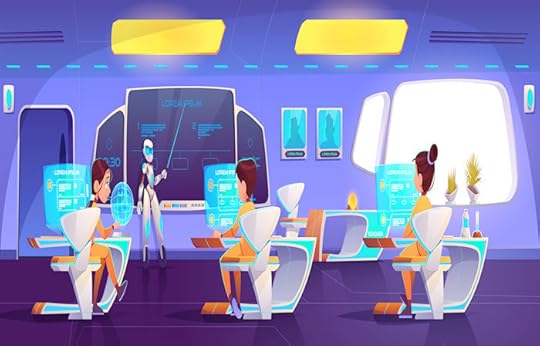
As a futurist, next-generation learning has been one of the topics I’m most passionate about. Our need for hyper-individualized learning is driven by several factors, including our time, our personality, and an overwhelming need to feel unique in a world of over 7 billion people wanting many of the same things. This AI-driven learning system will be driven by personal interests, a hyper-individualized sense of purpose, and a set of milestones to help define progress. Unlike traditional institutions that only credential their own in-house courses, this system will test, assess, and grant micro credits for virtually all topics, subjects, and forms of learning that align with the user’s interests.
3. Inventing the College Equivalency Scale
We have information flowing continuously from thousands of different sources, and it’s preposterous of us to think that only credentialed learning has any value. One of the first tasks for the designers of this future learning system will be to establish a universally accepted equivalency scale based on micro-credits. The equivalency scale will be based on an additive barometer of lifetime achievement. It will show users when their credits and micro-credits add up to the equivalency Bachelor, Master, and Ph.D. It will then add hundreds of levels beyond Ph.D. onto the accomplishment scale. Micro-credits will be used to assess learning in far more granular forms by using a learning measurement scale where 100 micro-credits are the equivalent of 1 college semester credit.
4. Will AR Smart Glasses Replace Smartphones and Become our Personal Buddy Bots?
The third part of future learning will involve smart glasses or contacts, which may even replace smartphones if they can figure out the right interface. People consume a ton of information every day. Bookworms spend countless hours reading. And YouTubers, gamers, music lovers, TV addicts, Twitchers, and networking junkies each have their own way of absorbing knowledge. But we currently have no way of monitoring what we’re being exposed to or measuring the salient pieces of wisdom being added to our working memory. The early monitoring devices will likely be incorporated into something like smart glasses to see what we’re seeing, hear what we’re hearing, and will have sensors to feel, touch, smell, and taste everything we’re experiencing. This device would complete the future learning trifecta that I’ve been envisioning. So will AR smart glasses replace smartphones? I believe the more relevant questions are what portion of our online time will be spent utilizing smart glasses and how soon will that happen?
5. In Case You Didn’t Get the Memo, the Nature of Work Has Just Changed
We are seeing a growing number of companies implementing a four-day workweek and the benefits it can bring for both businesses and employees. A study by Ernst and Young found that 40% of companies in the survey have implemented or plan to implement a four-day workweek. This trend is also seen in other countries such as Iceland, the UK, Japan, and New Zealand. Both businesses and workers prefer the four-day workweek as it can increase productivity, improve employee satisfaction, and allow for greater flexibility in scheduling. The psychological effects of the four-day workweek have shown that employees are more focused and committed to their work when they have a shorter time frame in which to complete it. The four-day week will likely become far more widespread in the future as it offers a balance between work and personal life and may be better suited to the needs of a modern workforce.
6. Thorium Reactors – The Future of Energy
The future of energy will involve transitioning from fossil fuels to alternative sources, such as renewables and nuclear power. Renewables, including wind, solar, geothermal, hydro, and biomass, currently make up about 12.5% of energy usage in the US but face limitations due to the need for invisible energy and the backlash to visible infrastructures like wind and solar farms. Nuclear energy, which currently only accounts for 8.9% of energy usage in the US, is projected to become a primary energy source in the future. Thorium-based reactor systems have several advantages over uranium-based methods. Even though most changes in the power industry are slow, it is expected that nuclear power will eventually surpass fossil fuels and renewables as the primary energy source.
7. Four Laws for Managing the Laws
The U.S. has more laws than any other country, and that has contributed to the U.S. having a higher percentage of prisoners than any other country. To address this issue, I have proposed a four-step approach to correcting the situation. Essentially, “Four Laws for Managing the Laws”:
Public Access Requirement: All laws must be posted in one central online location. Any laws not posted on this website will be deemed unenforceable.Sunsetting Laws: Any laws that have not been applied or enforced in the past 20 years become unenforceable and must be removed from the list.Simplification: All laws must be written at an 8th-grade comprehension level. No new laws can go into effect or current laws enforced until they’re certified to have reached this standard.Code of Government Ethics: No governmental entity shall be allowed to profit from the enforcement of its own laws. After all, whenever there’s a direct profit motive that links enactment with enforcement, the nature of government changes, and our humanity becomes compromised. 8. Self-Cannibalism and the Extreme Possibilities of Cell-Cultured Agriculture
As an avid researcher, I’m constantly tuned in to progress being made on the stem-cell-derived meat front. We’re still very much on track for widespread production and consumption, given the investments we’re seeing from major players, including individuals and even meat processing companies. With the outlook for lab-grown, often called slaughter-free meat, wide open, it’s time to take this to a new level and push the envelope of our stem-cell lab programs for the benefit of humankind. At the macro level, cultured meat technology, combined with others like precision fermentation-derived microbial proteins, and good “old-fashioned” plant-based meat products, could fundamentally change our food supply in a way that wouldn’t dramatically affect our consumption experiences but improve our world in many other ways.
9. Private Space Stations: The Future Portals for Private Space Commerce and Tourism
In the future, space research and development is expected to be driven by private enterprises on privately owned space stations. As the International Space Station deteriorates to the point of becoming unusable, NASA and other agencies will begin renting space on privately owned, Earth-orbiting laboratories. In addition, space tourism companies will use private space stations as space hotels to offer tourists the opportunity to vacation in space. Private space stations will gradually be upgraded to offer more comfortable living arrangements for tourists and, over time, will be located in other locations beyond Earth’s orbit, such as the moon or Mars. Private space stations will also serve as staging areas, regional offices, and warehouses for commercial ventures in space. There will likely be additional space structures along well-established routes for resupplying, deliveries, and other functions.
10. Drone Delivery: A Massive Huge Industry Coming Soon to a Doorstep Near You
While some challenges related to the technology and logistics of drone delivery have been addressed, others still need to be resolved. However, these challenges should not hold back the widespread implementation of drone delivery, as we saw with the introduction of cars in the early 20th century. The Federal Aviation Administration (FAA) will allow the drone delivery industry to progress if appropriate safety measures are in place. Within 4-6 years, most people in the U.S. will be able to receive drone deliveries, and the transition will happen even quicker in other countries in the Asia-Pacific region. The widespread implementation of drone delivery may seem gradual, but we are on the leading edge of a massive new industry, and the transition will be breathtaking.
As we step into 2023, last year’s thinking will begin to fade into the tombs of ancient history. But rest assured, we’re in for several crazy years as the path of transition we’re going through still has a long way to go.
Translate This PageSelect LanguageAfrikaansAlbanianAmharicArabicArmenianAzerbaijaniBasqueBelarusianBengaliBosnianBulgarianCatalanCebuanoChichewaChinese (Simplified)Chinese (Traditional)CorsicanCroatianCzechDanishDutchEnglishEsperantoEstonianFilipinoFinnishFrenchFrisianGalicianGeorgianGermanGreekGujaratiHaitian CreoleHausaHawaiianHebrewHindiHmongHungarianIcelandicIgboIndonesianIrishItalianJapaneseJavaneseKannadaKazakhKhmerKoreanKurdish (Kurmanji)KyrgyzLaoLatinLatvianLithuanianLuxembourgishMacedonianMalagasyMalayMalayalamMalteseMaoriMarathiMongolianMyanmar (Burmese)NepaliNorwegianPashtoPersianPolishPortuguesePunjabiRomanianRussianSamoanScottish GaelicSerbianSesothoShonaSindhiSinhalaSlovakSlovenianSomaliSpanishSudaneseSwahiliSwedishTajikTamilTeluguThaiTurkishUkrainianUrduUzbekVietnameseWelshXhosaYiddishYorubaZulu
#goog-gt-tt {display:none !important;}
.goog-te-banner-frame {display:none !important;}
.goog-te-menu-value:hover {text-decoration:none !important;}
.goog-text-highlight {background-color:transparent !important;box-shadow:none !important;}
body {top:0 !important;}
#google_translate_element2 {display:none!important;}
function googleTranslateElementInit2() {new google.translate.TranslateElement({pageLanguage: 'en',autoDisplay: false}, 'google_translate_element2');}
function GTranslateGetCurrentLang() {var keyValue = document['cookie'].match('(^|;) ?googtrans=([^;]*)(;|$)');return keyValue ? keyValue[2].split('/')[2] : null;}
function GTranslateFireEvent(element,event){try{if(document.createEventObject){var evt=document.createEventObject();element.fireEvent('on'+event,evt)}else{var evt=document.createEvent('HTMLEvents');evt.initEvent(event,true,true);element.dispatchEvent(evt)}}catch(e){}}
function doGTranslate(lang_pair){if(lang_pair.value)lang_pair=lang_pair.value;if(lang_pair=='')return;var lang=lang_pair.split('|')[1];if(GTranslateGetCurrentLang() == null && lang == lang_pair.split('|')[0])return;var teCombo;var sel=document.getElementsByTagName('select');for(var i=0;i<sel.length;i++)if(/goog-te-combo/.test(sel[i].className)){teCombo=sel[i];break;}if(document.getElementById('google_translate_element2')==null||document.getElementById('google_translate_element2').innerHTML.length==0||teCombo.length==0||teCombo.innerHTML.length==0){setTimeout(function(){doGTranslate(lang_pair)},500)}else{teCombo.value=lang;GTranslateFireEvent(teCombo,'change');GTranslateFireEvent(teCombo,'change')}}
Search for: Recent Posts Top 10 Futurist Speaker Columns for 2022 Can we Have Another Wave of Globalization Despite Ongoing Disruption? In Case You Didn’t Get the Memo, the Nature of Work Has Just Changed Categories Artificial Intelligence Business Trends Future of Agriculture Future of Banking Future of Education Future of Healthcare Future of Transportation Future of Work Future Scenarios Future Trends Futurist Thomas Frey Insights Global Trends Predictions Social Trends Technology Trends Speaking TopicsFuture of Healthcare – “Is Death our only Option?Future of AIFuture of Industries ← Previous Post
The post Top 10 Futurist Speaker Columns for 2022 appeared first on Futurist Speaker.
December 29, 2022
Can we Have Another Wave of Globalization Despite Ongoing Disruption?
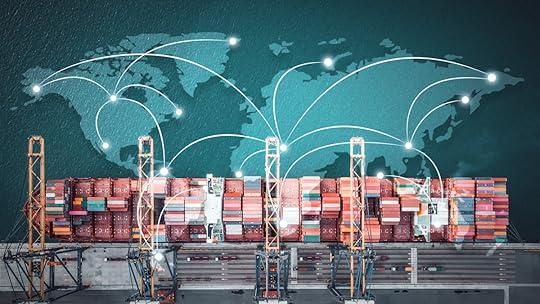
Fifty years ago, very few people talked about globalization. Cross-border travel was both difficult and expensive. Communication requires human translators. Transporting goods and services across borders and oceans was complex and uncertain.
The Internet helped change our feelings about globalization because it put diverse cultures and customs in front of our eyes and vast amounts of international commercial information at our fingertips.
Businesses and individuals responded accordingly, forging relationships and genuine interest with institutions and people outside our borders. Thanks to information and transportation technology, companies could outsource jobs and develop new sources of supply that helped their bottom lines.
We seemed willing to accept the tradeoffs that came with commercial globalization. For every job that went overseas, a local person lost their livelihood. When a manufacturer taps an overseas supplier for raw materials, components, or services, a local company loses an opportunity.
Additionally, commercial globalization required relatively open borders and seamless movements of capital goods and human resources – an ideal state that we have taken for granted in recent decades.
Globalization Comes Tumbling DownIn reality, commercial globalization is a high-stakes, tenuous balancing act at the micro (company) level and the macro (nation-state) level. Disruptions can topple things in either case. And macro/global disruptions hit with a vengeance in the last three years with the conflict in Ukraine, concern about China’s global intentions, and, of course, COVID-19.
Suddenly globalization was a liability. Global supply chains snapped due to shipping snafus and overseas company closures. Collaboration and commerce with Chinese companies raised concerns about trade secrets and national security.
The New Trend Toward LocalizationAt this time, companies are trying to develop and maintain shorter domestic supply lines. Governments are incentivizing companies to source domestically rather than rely on high-tech components suppliers in a country that may be a potential adversary and could turn the spigot off.
Are we merely seeing a short-term pendulum swing toward localization? That would mean we either expect the current global situations to disappear or that we’ve chosen to live with them. And even if we magically were to go back to something that resembled the days of wine and roses (i.e., circa 2018), would governments and business leaders put their blinders back on, revert to their generous risk tolerances, and ignore the possibility of future disruptions?
I hope not, and I don’t think we’ll need to worry about that. Disruption will be a way of life in the future, and with it, we’ll all maintain our current tendency to protect and isolate national and local economies.
 Future Disruptors
These disruptions will come in all varieties, some in the form of increasingly ominous trends and others arriving overnight. Here are four future disruptions I see that will keep globalization at arm’s length:
Militarist regimes are in ascendancy, and the resultant conflicts in important regions of the world will cut off commerce and markets.Worker shortages and political alliances will enhance labor’s clout. That’s not necessarily a bad thing, but labor actions are designed to cause pain and disruption, and this will be the case in essential industries ranging from agriculture to transportation.We’ll likely (over)react to the next perceived pandemic, erring on the side of safety, isolation … and disruption.Climate change activism will give companies another reason to source locally and reduce their reported carbon footprint related to shipping.The Inevitable Conclusion – Less GlobalizationCommerce’s natural tendency is toward economic globalization, thanks to the cost reductions and efficiencies it offers. Humankind’s recent natural tendency is toward mistrust and pessimism because human beings tend to be crisis-oriented – cognizant of calamity but less aware of positive trends and events. That tendency will be reflected in our policymakers, who will adopt “hunker down” policies to keep globalization at bay. dddd
This tug of war will continue to play out. To the extent they can, companies will look for globalization opportunities, but a disruption or policy action will pull the rug out from under them. Over time, disruptions, perceived or real, will come with increasing frequency until business leaders resign themselves to localization for the long term.
What Will Localization Look Like?How will that shift play out in certain aspects of our lives and the world?
The U.S. will be constrained from serving as the global police force and the on-the-ground deterrent of bad national actors. Other countries will continue to ramp up their own security capabilities. This doesn’t preclude collective action through NATO or other alliances, but each country will be sufficiently armed and empowered, and they’ll be more circumspect regarding the extent of their engagement.We’ll have tighter labor markets and better job opportunities at home. The primary benefit of sourcing functions to workers in other countries has been to take advantage of lower labor costs. Those differentials have been diminishing and will even more so as labor’s clout ascends worldwide. That clout will be employed to encourage policymakers to incentivize companies to bring/keep those jobs at home.With less international collaboration of the best minds, technology breakthroughs will slow. The future we’ve been exploring for many years in this space will slip a bit further into the future.Inflationary pressure will increase. The watchword for business owners will be “redundancy” for every one of their key inputs, from raw materials and components to labor and service providers. Redundancy increases costs, and those higher costs will be passed on to customers.Cultural GlobalizationWhile we tend to think about globalization mainly in a commercial sense, on another level, the concept is also about personal and cultural interconnectedness. Here, too, I see us becoming more localized, but this time just for the short term.
Yes, thanks to technology and transportation, “it’s a small, small world,” but the phrase presently lacks the warm and fuzzy feelings the Richard Sherman song elicited when it was introduced at the New York World’s Fair in 1964. Terrorism. Tribalism. Takeovers. It’s a little scary out/over there, and we have enough of that to deal with at home, it seems.
I also sense that citizens of most countries currently feel on the spot to have to defend, explain, or bemoan their national identities to people in foreign countries who only have a caricatured view of their country and its citizens.
I believe this personal localization is short-term, a reflection of the most significant current disruptions and historical events in our nations and our world. We’re amid a unique but short era. European wars and pandemics don’t last forever, and we’ll soon be back to our global ways personally, if not commercially.
Translate This PageSelect LanguageAfrikaansAlbanianAmharicArabicArmenianAzerbaijaniBasqueBelarusianBengaliBosnianBulgarianCatalanCebuanoChichewaChinese (Simplified)Chinese (Traditional)CorsicanCroatianCzechDanishDutchEnglishEsperantoEstonianFilipinoFinnishFrenchFrisianGalicianGeorgianGermanGreekGujaratiHaitian CreoleHausaHawaiianHebrewHindiHmongHungarianIcelandicIgboIndonesianIrishItalianJapaneseJavaneseKannadaKazakhKhmerKoreanKurdish (Kurmanji)KyrgyzLaoLatinLatvianLithuanianLuxembourgishMacedonianMalagasyMalayMalayalamMalteseMaoriMarathiMongolianMyanmar (Burmese)NepaliNorwegianPashtoPersianPolishPortuguesePunjabiRomanianRussianSamoanScottish GaelicSerbianSesothoShonaSindhiSinhalaSlovakSlovenianSomaliSpanishSudaneseSwahiliSwedishTajikTamilTeluguThaiTurkishUkrainianUrduUzbekVietnameseWelshXhosaYiddishYorubaZulu
#goog-gt-tt {display:none !important;}
.goog-te-banner-frame {display:none !important;}
.goog-te-menu-value:hover {text-decoration:none !important;}
.goog-text-highlight {background-color:transparent !important;box-shadow:none !important;}
body {top:0 !important;}
#google_translate_element2 {display:none!important;}
function googleTranslateElementInit2() {new google.translate.TranslateElement({pageLanguage: 'en',autoDisplay: false}, 'google_translate_element2');}
function GTranslateGetCurrentLang() {var keyValue = document['cookie'].match('(^|;) ?googtrans=([^;]*)(;|$)');return keyValue ? keyValue[2].split('/')[2] : null;}
function GTranslateFireEvent(element,event){try{if(document.createEventObject){var evt=document.createEventObject();element.fireEvent('on'+event,evt)}else{var evt=document.createEvent('HTMLEvents');evt.initEvent(event,true,true);element.dispatchEvent(evt)}}catch(e){}}
function doGTranslate(lang_pair){if(lang_pair.value)lang_pair=lang_pair.value;if(lang_pair=='')return;var lang=lang_pair.split('|')[1];if(GTranslateGetCurrentLang() == null && lang == lang_pair.split('|')[0])return;var teCombo;var sel=document.getElementsByTagName('select');for(var i=0;i<sel.length;i++)if(/goog-te-combo/.test(sel[i].className)){teCombo=sel[i];break;}if(document.getElementById('google_translate_element2')==null||document.getElementById('google_translate_element2').innerHTML.length==0||teCombo.length==0||teCombo.innerHTML.length==0){setTimeout(function(){doGTranslate(lang_pair)},500)}else{teCombo.value=lang;GTranslateFireEvent(teCombo,'change');GTranslateFireEvent(teCombo,'change')}}
Search for: Recent Posts Can we Have Another Wave of Globalization Despite Ongoing Disruption? In Case You Didn’t Get the Memo, the Nature of Work Has Just Changed On the Road to Greener Concrete Categories Artificial Intelligence Business Trends Future of Agriculture Future of Banking Future of Education Future of Healthcare Future of Transportation Future of Work Future Scenarios Future Trends Futurist Thomas Frey Insights Global Trends Predictions Social Trends Technology Trends Speaking TopicsFuture of Healthcare – “Is Death our only Option?Future of AIFuture of Industries ← Previous Post
The post Can we Have Another Wave of Globalization Despite Ongoing Disruption? appeared first on Futurist Speaker.
December 22, 2022
In Case You Didn’t Get the Memo, the Nature of Work Has Just Changed

COVID changed many things in our lives; not the least was the nature of work. While we’ve been busy figuring out if remote and hybrid work is here to stay, another more fundamental change has been picking up steam – the four-day workweek. Curmudgeons and traditionalists may be too quick to suggest this is just another misstep down the slippery slope of accommodating non-motivated workers and coddling the workforce.
Whether they’re in an office or working at the kitchen table, you will always have employees who will try to skimp on deliverables and minimize their workplace footprint no matter what kind of time clock is in place or the calendar is followed. A shortened workweek is really no riper for abuse than the traditional five-day workweek.
A new study on the future of work released by Ernst and Young found that both businesses and workers are better off and prefer a four-day workweek. In spite of recent hiring slowdowns and layoffs in the tech and financial industries, 40% of the companies in the survey have implemented a four-day workweek or plan to do so.
The story is the same overseas, from Iceland and the UK to Japan and New Zealand.
Not as Big a Change as You’d ThinkWhat’s the best arrangement? Four 10-hour days? Five 8-hour days? Four 8-hour days? That debate almost seems as irrelevant as the idea of a 40-hour work week itself. Work has become much more fluid for many so-called “knowledge workers,” the new euphemism for white-collar workers.
Many people can’t even quantify how many hours they work NOW, as they check company inboxes on personal phones at all hours and accept videoconference invites from overseas for meetings early in the morning or late in the evening.
And at the opposite end, employers have seemed happy to accommodate employees who must leave early to pick up a child from school or step out for a doctor’s appointment. How many object when an employee asks to leave at 2:30 on Friday to get a head start on their weekend trip? Very few.
Work from home accelerated both of those trends – stretched-out workdays and day-to-day flexibility. But we were well on our way in these areas prior to the pandemic, too, with flex work schedules and summer Friday free days … combined with our tendencies toward workaholism.
What About Employee Productivity?Whether employees are equally productive with a four-day, compressed workweek is less easy to measure than their satisfaction with the arrangement. The evidence in favor seems pretty significant, even though it’s mostly anecdotal.
But the fact that so many companies are moving in this direction, even though the job market is loosening up a bit and the economy is heading toward a recession, is probably an indication that employers aren’t concerned with a falloff in the quantity or quality of work getting done.
Many leaders were pleasantly surprised when remote workers, for the most part-maintained productivity levels during the pandemic. They seem willing to swallow hard and give this a go, too.
They’re probably considering this factor too — with an extra weekday at their disposal, employees can schedule things like car repairs and doctor appointments for that day. And there will be no more slipping out at 2:30 on Friday. Four-day workdays may mean they can draw a darker line between work days and off days.
The chief strategy officer for the crowdfunding site Kickstarter will vouch for the four-day schedule, stating, “The 4-day week has been transformative for our business and our people. Staff are more focused, more engaged and more dedicated, helping us hit our goals better than before.”
 The Psychological Effect
I interact with many people who are in a four-day work environment.
They seem more focused and deliberate with their work. They’re less likely to waste time or put things off, knowing they’re always under a bit of a time crunch. They don’t want to lose the privilege of this work arrangement, so they seem more committed to getting things done in that compressed timeframe. Maybe that tendency will ease over time.
For now, at least, four-day workweeks are a privilege, not a “right,” and those who enjoy this workplace benefit will be on their best productive behavior to keep it.
A Recruitment ToolThere’s no question that employees feel more emboldened about their status vis-à-vis their employer than in many years. The Great Resignation may have fizzled just a bit, but the labor market still places a premium on good workers. Labor unions seem to be on the ascent.
Now that employees have experienced the flexibility of a pandemic, work-from-home environment, they’ve set their sights higher – on expanded work-life benefits like shorter workweeks. “Zoom-free Fridays” are good, but they want more.
And Twitter aside, for the foreseeable future, employers will be eager to offer the perks and niceties needed to keep and retain their people. The perceived value of in-house baristas and catered lunches will pale compared to the recruiting power of a four-day week for the new generation of workers.
What’s the Big Deal?Many employers are wising up and realizing that enforcing productivity through mandatory hours is a hopeless proposition. Knowledge workers will produce as much as they feel like producing. Period.
In fact, ideal productivity in the knowledge workplace can’t be enforced, and it can only be motivated – primarily from within. Today’s office workers will produce if they feel valued and wanted. The more creative the work, the less meaningful mandatory hours and days become.
The Four-Day Workweek will Change WorkplacesMuch of what we hear about shortened workweeks is from the employee’s perspective. But this trend will create challenges for many companies. Customers and clients won’t always match their schedules to the company’s four-day workweek.
As the movement progresses, we’ll have similar kinds of challenges and dichotomies as we had during the pandemic. COVID pushed many jobs to remote status but not all. Condensed workweeks will work for many industries, companies, and departments, but not all.
For example, help desks and customer service departments must operate at least five days a week, even if employees are remote. Members of customer service teams will need to stagger schedules so that one or two are available on each of five or six days. While the employees might have four-day workweeks, supervisors and managers might not.
Conversely, though, while factory workers missed out on the opportunity to work remotely during the pandemic, there’s no reason these companies can’t adopt condensed workweeks for many of their employees. After all, almost a century ago, Ford Motor Company led the way in transitioning workweeks from six days to five.
Our current five-day workweek will soon seem as backward as working Monday through Saturday. I have no doubt that 100 years from now, the average employee will have nearly as many days off as on. Thanks to IT advances, the productivity levels of workers in 2123 will be off the charts. Demographic trends will slowly shrink the skilled workforce between now and then, meaning workers will have even more clout.
Take those factors together, and “work-life” will assuredly flip to “life-work.”
Translate This PageSelect LanguageAfrikaansAlbanianAmharicArabicArmenianAzerbaijaniBasqueBelarusianBengaliBosnianBulgarianCatalanCebuanoChichewaChinese (Simplified)Chinese (Traditional)CorsicanCroatianCzechDanishDutchEnglishEsperantoEstonianFilipinoFinnishFrenchFrisianGalicianGeorgianGermanGreekGujaratiHaitian CreoleHausaHawaiianHebrewHindiHmongHungarianIcelandicIgboIndonesianIrishItalianJapaneseJavaneseKannadaKazakhKhmerKoreanKurdish (Kurmanji)KyrgyzLaoLatinLatvianLithuanianLuxembourgishMacedonianMalagasyMalayMalayalamMalteseMaoriMarathiMongolianMyanmar (Burmese)NepaliNorwegianPashtoPersianPolishPortuguesePunjabiRomanianRussianSamoanScottish GaelicSerbianSesothoShonaSindhiSinhalaSlovakSlovenianSomaliSpanishSudaneseSwahiliSwedishTajikTamilTeluguThaiTurkishUkrainianUrduUzbekVietnameseWelshXhosaYiddishYorubaZulu
#goog-gt-tt {display:none !important;}
.goog-te-banner-frame {display:none !important;}
.goog-te-menu-value:hover {text-decoration:none !important;}
.goog-text-highlight {background-color:transparent !important;box-shadow:none !important;}
body {top:0 !important;}
#google_translate_element2 {display:none!important;}
function googleTranslateElementInit2() {new google.translate.TranslateElement({pageLanguage: 'en',autoDisplay: false}, 'google_translate_element2');}
function GTranslateGetCurrentLang() {var keyValue = document['cookie'].match('(^|;) ?googtrans=([^;]*)(;|$)');return keyValue ? keyValue[2].split('/')[2] : null;}
function GTranslateFireEvent(element,event){try{if(document.createEventObject){var evt=document.createEventObject();element.fireEvent('on'+event,evt)}else{var evt=document.createEvent('HTMLEvents');evt.initEvent(event,true,true);element.dispatchEvent(evt)}}catch(e){}}
function doGTranslate(lang_pair){if(lang_pair.value)lang_pair=lang_pair.value;if(lang_pair=='')return;var lang=lang_pair.split('|')[1];if(GTranslateGetCurrentLang() == null && lang == lang_pair.split('|')[0])return;var teCombo;var sel=document.getElementsByTagName('select');for(var i=0;i<sel.length;i++)if(/goog-te-combo/.test(sel[i].className)){teCombo=sel[i];break;}if(document.getElementById('google_translate_element2')==null||document.getElementById('google_translate_element2').innerHTML.length==0||teCombo.length==0||teCombo.innerHTML.length==0){setTimeout(function(){doGTranslate(lang_pair)},500)}else{teCombo.value=lang;GTranslateFireEvent(teCombo,'change');GTranslateFireEvent(teCombo,'change')}}
Search for: Recent Posts In Case You Didn’t Get the Memo, the Nature of Work Has Just Changed On the Road to Greener Concrete Bridging the Darién Gap, the Final Piece of the Pan-American Highway Categories Artificial Intelligence Business Trends Future of Agriculture Future of Banking Future of Education Future of Healthcare Future of Transportation Future of Work Future Scenarios Future Trends Futurist Thomas Frey Insights Global Trends Predictions Social Trends Technology Trends Speaking TopicsFuture of Healthcare – “Is Death our only Option?Future of AIFuture of Industries ← Previous Post
The post In Case You Didn’t Get the Memo, the Nature of Work Has Just Changed appeared first on Futurist Speaker.
December 15, 2022
On the Road to Greener Concrete

It’s rare that the opportunity to preserve resources, recycle resources, enhance quality, and improve cost efficiency all come together to deliver an important, improved product that the world uses in abundance every day.
We live on a finite planet with a finite atmosphere, and we have a finite quantity of resources at our disposal. At certain points in history, our human capabilities scale past the point of reason, where our busy work begins to take an excessive toll on planet Earth.
That’s exactly what’s happening in the concrete industry. But there’s a very good story is percolating to the top of the construction world.
Traditional concrete, the building material made from a geopolymer known as Portland cement, isn’t glamorous. It’s not high-tech. It’s not taking us to space. It’s not forming the metaverse – it’s quite the opposite of the metaverse, in fact! Instead, concrete is literally providing the foundation for our real world and for virtually every finished, hardened structure we need to build – our roads, buildings, bridges, and more.
Contrary to popular belief, Portland cement doesn’t owe its name to the beautiful port city in Oregon. Two hundred years ago, the inventor of an earlier version of the material named it after Portland stone, a similar-looking product that was quarried on the Isle of Portland in England.
Today’s concrete has evolved over the years to include lime/clay cement combined with aggregates like clay, shale, sand, iron ore, bauxite, fly ash, and/or slag. Concrete, in the end, is essential that Portland aggregate cement product + water + sand + gravel … all natural resources.
As of 2021, 4.4 billion tons of concrete were produced worldwide, and that number is projected to increase by 25% by 2050.
Researchers are perfecting a variety of eco-friendly, green concrete alternatives made from unique combinations of geopolymer cement components. What makes the resulting concrete “green” compared to traditional concrete products is the fact that each, to one degree or another in the manufacturing process:
1. Uses recyclable material
2. Utilizes a less energy-intensive manufacturing process
3. Generates a lower amount of carbon dioxide (CO2) and wastewater
In addition to those benefits, many varieties of green concrete are proving to be more durable, stronger, and less expensive. They can also be set up quicker with less shrinkage.
All of these are positive attributes, so what’s not to love?
A Better Recipe of Raw MaterialsNatural sand is a critical material used in traditional concrete. Natural sand, though, is a limited resource, and it’s also used in the fracking process. This material is mined from open pits, inland dunes, river beds, and other geologically fragile environments. There’s a similar story with gravel, which is another aggregate and another critical component of Portland cement-based concrete.
In contrast, many varieties of geopolymers that make up green concrete use natural fibers and industrial waste products like waste glass sand, fly ash from coal-fired power plants, and blast furnace slag, a by-product of iron and steel production.
Additional research is being done on integrating aggregate from demolition waste and other recycled concrete, forming a closed loop for this important construction material.
A Better Use of Our Energy ResourcesAt the risk of getting into the weeds and dredging up more detail than you ever wanted to know, green concrete also reduces energy consumption.
First of all, sand mining is very energy-intensive, and any reduction in that activity is a big step in the right direction. Second, the heating process for making traditional Portland cement requires massive amounts of energy. But formulating green cement with fly ash, for example, reduces that significantly.
Reducing Greenhouse GasesDue to its chemical processes, Portland cement manufacturing accounts for 7% of the global release of CO2, according to the International Energy Agency. If the concrete industry were a country, it would be the third-largest CO2 emitter, right behind the U.S. and China.
Alternatively, green geopolymer cement production can reduce this by 90%. That’s pretty stark, not to mention compelling.
 Making A Better Cement Product
As a result, these new green processes and formulations are not only making concrete in a better way, they’re making concrete better.
Using natural fibers like hemp or bamboo for reinforcement instead of synthetic or steel fibers is not only cheaper but also adds tensile strength and reduces corrosion.Lead slag is proving to be an ideal additive to green concrete to reduce drying shrinkage.Green concrete containing waste glass sand (as opposed to natural sand) has been shown to be stronger and less porous than other varieties.Finally, thanks to many of the features mentioned above, green concrete promises to be less expensive than traditional Portland cement-based concrete.The next step for this technology is to incorporate it into 3D-printed buildings and other structures, reducing waste during construction. It’s too early to say if construction will ever be considered a “green industry,” but it’s definitely taking major steps in that direction.
Focusing on the PositiveThis is one of the best good-news stories I’ve had a chance to talk about in a long time. Futurists tend to spend a lot of time exploring new frontiers and breakthrough industries and less time exploring the implications of advances in current practices that can be just as or even more impactful in the long run.
And too many observers and pundits tend to focus on the seemingly insurmountable challenges all around us instead of rolling up their sleeves and picking away at today’s problems.
The emergence of green concrete demonstrates that doing the right thing from a sustainability perspective doesn’t mean we have to compromise the quality of life or, in this case, the quality of building.
We need more of these kinds of breakthroughs and more researchers working in big areas like this to help ensure our world is on the best possible trajectory into the future.
Translate This PageSelect LanguageAfrikaansAlbanianAmharicArabicArmenianAzerbaijaniBasqueBelarusianBengaliBosnianBulgarianCatalanCebuanoChichewaChinese (Simplified)Chinese (Traditional)CorsicanCroatianCzechDanishDutchEnglishEsperantoEstonianFilipinoFinnishFrenchFrisianGalicianGeorgianGermanGreekGujaratiHaitian CreoleHausaHawaiianHebrewHindiHmongHungarianIcelandicIgboIndonesianIrishItalianJapaneseJavaneseKannadaKazakhKhmerKoreanKurdish (Kurmanji)KyrgyzLaoLatinLatvianLithuanianLuxembourgishMacedonianMalagasyMalayMalayalamMalteseMaoriMarathiMongolianMyanmar (Burmese)NepaliNorwegianPashtoPersianPolishPortuguesePunjabiRomanianRussianSamoanScottish GaelicSerbianSesothoShonaSindhiSinhalaSlovakSlovenianSomaliSpanishSudaneseSwahiliSwedishTajikTamilTeluguThaiTurkishUkrainianUrduUzbekVietnameseWelshXhosaYiddishYorubaZulu
#goog-gt-tt {display:none !important;}
.goog-te-banner-frame {display:none !important;}
.goog-te-menu-value:hover {text-decoration:none !important;}
.goog-text-highlight {background-color:transparent !important;box-shadow:none !important;}
body {top:0 !important;}
#google_translate_element2 {display:none!important;}
function googleTranslateElementInit2() {new google.translate.TranslateElement({pageLanguage: 'en',autoDisplay: false}, 'google_translate_element2');}
function GTranslateGetCurrentLang() {var keyValue = document['cookie'].match('(^|;) ?googtrans=([^;]*)(;|$)');return keyValue ? keyValue[2].split('/')[2] : null;}
function GTranslateFireEvent(element,event){try{if(document.createEventObject){var evt=document.createEventObject();element.fireEvent('on'+event,evt)}else{var evt=document.createEvent('HTMLEvents');evt.initEvent(event,true,true);element.dispatchEvent(evt)}}catch(e){}}
function doGTranslate(lang_pair){if(lang_pair.value)lang_pair=lang_pair.value;if(lang_pair=='')return;var lang=lang_pair.split('|')[1];if(GTranslateGetCurrentLang() == null && lang == lang_pair.split('|')[0])return;var teCombo;var sel=document.getElementsByTagName('select');for(var i=0;i<sel.length;i++)if(/goog-te-combo/.test(sel[i].className)){teCombo=sel[i];break;}if(document.getElementById('google_translate_element2')==null||document.getElementById('google_translate_element2').innerHTML.length==0||teCombo.length==0||teCombo.innerHTML.length==0){setTimeout(function(){doGTranslate(lang_pair)},500)}else{teCombo.value=lang;GTranslateFireEvent(teCombo,'change');GTranslateFireEvent(teCombo,'change')}}
Search for: Recent Posts On the Road to Greener Concrete Bridging the Darién Gap, the Final Piece of the Pan-American Highway The World’s Next Megaproject – Artificial Glaciers Categories Artificial Intelligence Business Trends Future of Agriculture Future of Banking Future of Education Future of Healthcare Future of Transportation Future of Work Future Scenarios Future Trends Futurist Thomas Frey Insights Global Trends Predictions Social Trends Technology Trends Speaking TopicsFuture of Healthcare – “Is Death our only Option?Future of AIFuture of Industries ← Previous Post
The post On the Road to Greener Concrete appeared first on Futurist Speaker.
Thomas Frey's Blog

- Thomas Frey's profile
- 2 followers

