
Thomas Frey's Blog, page 2
July 21, 2025
The Stablecoin Revolution: 12 Predictions That Will Transform Money Forever

On July 21, 2014, two blockchain pioneers—Dan Larimer and Charles Hoskinson—launched BitUSD on the BitShares network, creating the world’s first stablecoin. Their ambitious experiment sought to solve cryptocurrency’s biggest problem: extreme volatility that made digital assets useless for everyday commerce. BitUSD failed spectacularly, losing its dollar peg in 2018, but it planted the seeds for a revolution that would reshape global finance.
Later in 2014, a project called RealCoin (later rebranded as Tether) introduced a simpler approach: backing digital tokens with actual dollar reserves held in traditional banks. Unlike BitUSD’s complex algorithmic mechanisms, Tether’s model was elegantly straightforward—one digital token for one physical dollar. Despite early controversies about reserve transparency and a $41 million regulatory fine, Tether proved the concept worked at scale.
The evolution accelerated rapidly. USD Coin launched in 2018, emphasizing regulatory compliance and audited reserves. DAI emerged as a decentralized alternative, backed by cryptocurrency collateral and governed by smart contracts. By 2020, the combined stablecoin market had grown to just $5 billion—a niche corner of the crypto ecosystem used primarily for trading.
Then everything changed.
The COVID-19 pandemic revealed the fragility of traditional payment systems just as blockchain infrastructure matured enough for mainstream use. Argentina’s inflation crisis, Lebanon’s banking collapse, and Nigeria’s currency devaluation drove millions toward dollar-backed stablecoins as financial lifelines. Meanwhile, corporations discovered that stablecoins could slash payment costs from 2-4% to near zero while enabling instant global settlements.
By 2024, stablecoin transfer volume hit $27.6 trillion—exceeding the combined throughput of Visa and Mastercard. The market capitalization reached $260 billion, with Tether alone commanding $154 billion and becoming the third-largest cryptocurrency. What began as experimental tokens had evolved into critical financial infrastructure processing more value than the world’s largest payment networks.
The transformation culminated on July 18, 2025, when President Trump signed the GENIUS Act—the first comprehensive federal framework for stablecoin regulation. No longer experimental or unregulated, stablecoins gained legitimacy as essential components of the American monetary system. The Federal Reserve now oversees large issuers while providing access to master accounts that enable large-scale operations. A senior Treasury official noted that stablecoin growth will have “significant impact on the dominance of the US dollar and demand for US debt.”
But this regulatory acceptance represents just the beginning. What we’re witnessing isn’t merely the maturation of a cryptocurrency category—it’s the early stages of the most fundamental transformation of money since the invention of banking itself. From failed experiments to regulated financial infrastructure in eleven years. From $5 billion to $260 billion in five years. The exponential adoption curve suggests we’re approaching an inflection point where stablecoins don’t just compete with traditional money—they replace it entirely.
Based on current technological capabilities, adoption patterns, and regulatory momentum, here are 12 predictions that will reshape global finance by 2035—transforming stablecoins from digital dollars into the foundation of a programmable money system that makes today’s banking infrastructure obsolete.
1. The $10 Trillion Explosion (Prediction #1)The stablecoin market will explode from today’s $260 billion to over $10 trillion by 2030. Bernstein’s conservative projection of $3 trillion by 2028 will prove dramatically low as regulatory clarity accelerates institutional adoption faster than anyone expects.
The foundation is already set. The GENIUS Act, signed by Trump on July 18, 2025, establishes the regulatory framework that institutions needed. The Federal Reserve now oversees large stablecoin issuers while controlling access to the critical master accounts that enable large-scale operations. This dual role as gatekeeper and infrastructure provider positions the Fed to manage explosive growth while maintaining system stability.
Transfer volume tells the real story: $27.6 trillion in 2024, already exceeding Visa and Mastercard’s combined throughput. A senior Treasury official revealed that this growth will have “significant impact on the dominance of the US dollar and demand for US debt”—translation: stablecoins are becoming a cornerstone of American monetary policy.

By 2027, Amazon and Walmart’s branded stablecoins will turn shopping into a closed-loop financial ecosystem—cutting out banks, slashing fees, and reshaping how we pay.
2. Corporate Stablecoin Wars Begin (Prediction #2)Amazon and Walmart will launch competing branded stablecoins by 2027, with “AMZN Coin” and “WAL Token” becoming primary payment methods for their ecosystems. These aren’t payment gimmicks—they’re strategic weapons for building closed-loop digital economies that bypass traditional banking entirely.
The economics are irresistible. Credit card fees cost Amazon billions annually at 2-4% per transaction. Stablecoin payments reduce this to near zero while enabling instant settlement, automated vendor payments, and supply chain financing through smart contracts. Amazon’s stablecoin will offer Prime rewards, automatic reordering, and loyalty programs that make traditional credit cards obsolete.
The precedent exists: World Liberty Financial already launched USD1, proving that major corporations can issue regulated stablecoins under the GENIUS Act framework. When the world’s largest retailers follow suit, the transformation accelerates exponentially.
3. The Federal Reserve’s Stablecoin Gambit (Prediction #3)By 2029, the Federal Reserve will launch “FedCoin”—not a traditional central bank digital currency, but a regulated stablecoin that partners with private issuers to maintain dollar dominance globally. This hybrid approach preserves innovation while ensuring government oversight.
The strategy is already visible. Rather than competing with stablecoins, the Fed is positioning itself as their essential infrastructure provider. The master account access guidelines and GENIUS Act oversight authority give the Fed unprecedented control over who can operate at scale. FedCoin will become the backbone of international trade settlement, backed by the full faith and credit of the US government while maintaining blockchain programmability.

By 2032, stablecoins will make 2% transaction fees obsolete—forcing Visa and Mastercard
to evolve into blockchain infrastructure or vanish with the legacy they built.
Visa and Mastercard’s business models will collapse by 2032 as stablecoin payments eliminate the need for card networks. Transaction fees will drop from 2-4% to under 0.1%, forcing traditional payment processors to reinvent themselves as stablecoin infrastructure providers or face extinction.
The writing is on the wall. Payment volume is already shifting: stablecoins processed more value in 2024 than the card networks, and the gap is widening. Smart contracts eliminate intermediaries while blockchain networks operate 24/7. When Amazon and Walmart’s stablecoins prove that merchants can avoid card fees entirely, the exodus becomes unstoppable.
Forward-thinking players are already pivoting. JPMorgan launched JPMD, a deposit token designed to function like a stablecoin but integrated with traditional banking. The survivors will be those who embrace the new infrastructure rather than fighting it.
5. Programmable Money Creates New Worlds (Prediction #5)Smart contract-enabled stablecoins will spawn entirely new business categories by 2030: subscriptions that automatically pause when income drops, insurance that pays out instantly based on sensor data, and supply chains where payments trigger automatically upon delivery verification.
The foundation exists today. Advanced yield strategies already use stablecoins for automated arbitrage, carry trading, and liquidation harvesting. Corporate treasuries are implementing “programmable treasury” operations that automatically optimize cash positions across global subsidiaries. These early applications prove the technology works—scale is the only remaining barrier.

By 2031, stablecoin-backed mortgages will make home buying instant, automated, and bank-free—replacing months of paperwork with minutes of settlement.
6. Real Estate Goes Digital (Prediction #6)Stablecoin-backed mortgages will become standard by 2031, with property purchases settled in minutes rather than months. Decentralized lending protocols will offer mortgages backed by stablecoin reserves, eliminating banks from residential lending and reducing homeownership costs by thousands annually.
The infrastructure is emerging. Trade finance transactions already use blockchain for instant settlement, reducing document transfer times from days to minutes. Invoice factoring now happens through smart contracts with automatic payment triggers. Real estate represents the natural evolution—the largest asset class moving to the most efficient settlement system.
7. Emerging Markets Leapfrog Everything (Prediction #7)Countries like Nigeria, India, and Brazil will achieve 80%+ stablecoin adoption by 2030, completely bypassing traditional banking infrastructure. Local currencies will become secondary as citizens and businesses operate primarily in USD-backed stablecoins.
The trend is accelerating. In Argentina, where inflation exceeded 100% in 2022, businesses routinely convert pesos to USDC immediately after receiving payments. Lebanon saw 1,781% growth in digital wallet downloads during its currency crisis. These aren’t temporary fixes—they’re permanent shifts toward more reliable monetary systems.
The network effects become self-reinforcing. As more businesses accept stablecoins, more consumers need them. As stablecoin adoption grows, local banking becomes less relevant. Eventually, the parallel economy becomes the primary economy.

By 2028, energy markets will go digital as oil and solar reserves are tokenized into stablecoins—turning electricity and fuel into instantly tradable global currencies.
8. Energy Becomes Programmable Money (Prediction #8)Oil, gas, and renewable energy will be routinely traded using commodity-backed stablecoins by 2028. “PetroToken” and “SolarCoin” will represent actual energy reserves, enabling instant global commodity trading and creating new financial instruments that tie energy production directly to monetary value.
The precedent exists in other sectors. Gold-backed stablecoins like PAX Gold already tokenize precious metals. The technology for commodity tokenization is proven—energy companies just need regulatory clarity and infrastructure partners. The GENIUS Act’s framework for reserve-backed stablecoins provides the legal foundation.
9. Yield Revolution Kills Savings Accounts (Prediction #9)Traditional savings accounts paying 0.1% will become obsolete as yield-bearing stablecoins offer 3-8% returns backed by Treasury bills and DeFi protocols. Banks will be forced to offer competitive stablecoin products or watch deposits flee to crypto-native yield platforms.
The yield differential is already dramatic. While savings accounts pay essentially nothing, treasury-backed stablecoins like Ondo’s USDY offer 3.85% yields with similar risk profiles. Advanced strategies through platforms like MEV Capital generate 38%+ returns through sophisticated arbitrage and carry trading.
The shift accelerates as more sophisticated players enter. BlackRock’s BUILD fund and similar institutional products make high-yield stablecoin strategies accessible to mainstream investors. Traditional banks can’t compete with 0.1% savings rates.

By 2030, stablecoin transfers will flow effortlessly across blockchains—uniting fragmented networks into one seamless global payment layer.
10. Universal Stablecoin Standards (Prediction #10)By 2030, sending stablecoins across different blockchains will be as easy as sending an email. Universal stablecoin standards will enable instant, costless transfers between Ethereum, Solana, Bitcoin Lightning, and any future networks, creating a unified global payment system.
Cross-chain infrastructure is already developing rapidly. Major stablecoins operate on multiple networks—USDC functions on Ethereum, Solana, Polygon, and others. The remaining challenge is seamless interoperability without complex bridging processes. Universal standards solve this, creating a single global stablecoin ecosystem.
Artificial intelligence systems will use stablecoins to conduct millions of micro-transactions autonomously by 2033, purchasing computing power, data, and services without human intervention. This “AI economy” will operate entirely on stablecoin rails, with algorithms making real-time economic decisions using programmable money.
The foundation is being built now. Smart contracts already automate complex financial operations. AI systems increasingly make autonomous decisions. Stablecoins provide the perfect intersection—programmable money that AI can use for frictionless commerce. The scale will be unprecedented as AI agents transact billions of times per day.

By 2035, big banks will stop lending and start optimizing—reinventing themselves as stablecoin custodians and DeFi yield managers in a regulated digital finance ecosystem.
12. Banks Become Stablecoin Custodians (Prediction #12)Major banks will abandon traditional lending by 2035, transforming into regulated stablecoin custodians and yield aggregators. JPMorgan, Bank of America, and Wells Fargo will offer “Stablecoin Treasury Services,” earning fees by optimizing yields across DeFi protocols while providing FDIC-style insurance for institutional holdings.
The transformation is already beginning. Tether purchased $33.1 billion in US Treasuries last year—more than entire countries like Canada or Mexico. Banks see the opportunity: rather than competing with stablecoins, they can profit by providing custody, compliance, and yield optimization services.
The regulatory framework supports this evolution. The GENIUS Act requires large stablecoin issuers to work with regulated institutions. Banks have the compliance infrastructure, government relationships, and balance sheet capacity to dominate this new ecosystem.
The Transformation Timeline2025-2027: The GENIUS Act framework solidifies corporate adoption. Amazon, Walmart, and other major retailers launch branded stablecoins. Traditional payment companies begin pivoting or dying.
2027-2030: Emerging markets achieve mass stablecoin adoption. Energy and commodity tokenization scales globally. Traditional banking deposits start fleeing to yield-bearing stablecoins.
2030-2033: Universal interoperability creates a unified global payment system. AI-driven commerce emerges at a massive scale. Programmable money enables business models impossible with traditional banking.
2033-2035: Complete payment system transformation. Traditional banking becomes obsolete except for regulated stablecoin services. The global economy operates on programmable money infrastructure.
Seizing the TransformationThese predictions aren’t science fiction—they’re the logical evolution of technologies and trends already accelerating. The companies and countries that position themselves early will dominate the next era of global finance.
For financial institutions, the choice isn’t whether to engage with stablecoins, but how quickly to build capabilities before competitors capture market share. For technology companies, building stablecoin infrastructure represents a trillion-dollar opportunity as traditional payment systems become obsolete. For policymakers, the challenge is fostering innovation while maintaining stability as money itself becomes programmable.
The stablecoin revolution isn’t coming—it’s here. President Trump’s declaration that America will become “the crypto capital of the planet” reflects recognition that the global financial system is being rebuilt from the ground up. Stablecoins provide the foundation for this new system, combining the stability of traditional currencies with the programmability and efficiency of blockchain technology.
The next decade will witness the most dramatic transformation of money since the invention of banking. Those who understand and act on these predictions will shape the future of global finance. Those who dismiss them as cryptocurrency hype will find themselves competing with room-temperature superconductors using copper wires.
The revolution has begun. The question isn’t whether these predictions will prove accurate, but whether you’ll be building the infrastructure that makes them inevitable or watching from the sidelines as the world changes around you.
Translate This PageSelect LanguageAfrikaansAlbanianAmharicArabicArmenianAzerbaijaniBasqueBelarusianBengaliBosnianBulgarianCatalanCebuanoChichewaChinese (Simplified)Chinese (Traditional)CorsicanCroatianCzechDanishDutchEnglishEsperantoEstonianFilipinoFinnishFrenchFrisianGalicianGeorgianGermanGreekGujaratiHaitian CreoleHausaHawaiianHebrewHindiHmongHungarianIcelandicIgboIndonesianIrishItalianJapaneseJavaneseKannadaKazakhKhmerKoreanKurdish (Kurmanji)KyrgyzLaoLatinLatvianLithuanianLuxembourgishMacedonianMalagasyMalayMalayalamMalteseMaoriMarathiMongolianMyanmar (Burmese)NepaliNorwegianPashtoPersianPolishPortuguesePunjabiRomanianRussianSamoanScottish GaelicSerbianSesothoShonaSindhiSinhalaSlovakSlovenianSomaliSpanishSudaneseSwahiliSwedishTajikTamilTeluguThaiTurkishUkrainianUrduUzbekVietnameseWelshXhosaYiddishYorubaZulu
#goog-gt-tt {display:none !important;}
.goog-te-banner-frame {display:none !important;}
.goog-te-menu-value:hover {text-decoration:none !important;}
.goog-text-highlight {background-color:transparent !important;box-shadow:none !important;}
body {top:0 !important;}
#google_translate_element2 {display:none!important;}
function googleTranslateElementInit2() {new google.translate.TranslateElement({pageLanguage: 'en',autoDisplay: false}, 'google_translate_element2');}
function GTranslateGetCurrentLang() {var keyValue = document['cookie'].match('(^|;) ?googtrans=([^;]*)(;|$)');return keyValue ? keyValue[2].split('/')[2] : null;}
function GTranslateFireEvent(element,event){try{if(document.createEventObject){var evt=document.createEventObject();element.fireEvent('on'+event,evt)}else{var evt=document.createEvent('HTMLEvents');evt.initEvent(event,true,true);element.dispatchEvent(evt)}}catch(e){}}
function doGTranslate(lang_pair){if(lang_pair.value)lang_pair=lang_pair.value;if(lang_pair=='')return;var lang=lang_pair.split('|')[1];if(GTranslateGetCurrentLang() == null && lang == lang_pair.split('|')[0])return;var teCombo;var sel=document.getElementsByTagName('select');for(var i=0;i<sel.length;i++)if(/goog-te-combo/.test(sel[i].className)){teCombo=sel[i];break;}if(document.getElementById('google_translate_element2')==null||document.getElementById('google_translate_element2').innerHTML.length==0||teCombo.length==0||teCombo.innerHTML.length==0){setTimeout(function(){doGTranslate(lang_pair)},500)}else{teCombo.value=lang;GTranslateFireEvent(teCombo,'change');GTranslateFireEvent(teCombo,'change')}}
Search for: Recent Posts The Stablecoin Revolution: 12 Predictions That Will Transform Money Forever The Neumann Engine: How Cities Can Thrive and Grow in the Age of AI The Node Revolution: How Decentralized Networks Will Rewire the Internet Categories Artificial Intelligence Business Trends Future of Agriculture Future of Banking Future of Education Future of Healthcare Future of Transportation Future of Work Future Scenarios Future Trends Futurist Thomas Frey Insights Global Trends Predictions Social Trends Technology Trends Speaking TopicsFuture of Healthcare – “Is Death our only Option?Future of AIFuture of Industries ← Previous Post
The post The Stablecoin Revolution: 12 Predictions That Will Transform Money Forever appeared first on Futurist Speaker.


July 10, 2025
The Neumann Engine: How Cities Can Thrive and Grow in the Age of AI

Technology is dismantling outdated urban economies—yet for communities that stop chasing outsiders and start building locally, it’s the key to homegrown prosperity.
American cities face an unprecedented challenge. While artificial intelligence eliminates traditional jobs across all skill levels, most communities still rely on economic development strategies designed for the industrial age—chasing corporate relocations, offering tax incentives to large employers, and hoping external companies will solve local economic problems. This approach isn’t just failing; it’s becoming counterproductive as AI enables companies to operate with fewer workers from anywhere with decent internet access.
But what if cities could systematically create their own economic prosperity instead of waiting for outside salvation? What if communities could leverage AI tools to build thriving entrepreneurial ecosystems that generate wealth rather than merely redistributing existing resources?
This is the vision behind the Neumann Engine—a revolutionary approach to urban revitalization that transforms declining cities into entrepreneurial powerhouses through systematic business creation, AI-enhanced opportunity identification, and comprehensive startup support.
Beyond Industrial-Era Economic DevelopmentNamed after John von Neumann, whose pioneering work on self-replicating systems provides the theoretical foundation, the Neumann Engine operates on a fundamentally different principle than traditional economic development. Instead of recruiting existing businesses from other places—a zero-sum game that merely shifts economic activity—it creates new businesses from scratch that serve external markets and bring fresh capital into communities.
The distinction is crucial. Primary businesses export products or services beyond local markets, generating the “new money” that enables communities to import goods and services they can’t produce efficiently while creating high-skill employment. Secondary businesses—restaurants, retail stores, local services—are essential for quality of life but primarily redistribute existing local wealth rather than creating new wealth.
The Neumann Engine focuses laser-like on primary business creation, recognizing that secondary businesses emerge organically once primary businesses establish the economic foundation. A software company that serves national clients brings new money into the community; the coffee shops and restaurants that spring up to serve that company’s employees represent healthy secondary development supported by primary business success.
The AI Opportunity WindowWhile AI threatens many traditional jobs, it also creates an unprecedented opportunity for entrepreneurial communities. AI tools now enable individual entrepreneurs to access capabilities previously requiring teams of specialists and substantial capital investment. A single person can use AI for market research, product design, customer service, and business management while focusing their human creativity on innovation, relationship building, and cultural understanding that AI cannot replicate.
This democratization creates a critical window of opportunity for communities to build AI-enhanced entrepreneurial capacity before these tools become commoditized or concentrated in large corporations. The key is understanding that successful AI-age businesses combine AI efficiency with distinctly human value—creativity, empathy, cultural authenticity, and trust-building capabilities that become more valuable as routine tasks are automated.

John von Neumann was a pioneering polymath who laid the foundations for modern computing, game theory, and nuclear strategy.
How the Neumann Engine WorksThe Neumann Engine operates as a specialized venture studio—a business creation entity that systematically builds companies from scratch rather than investing in existing startups. Unlike traditional venture capital that provides funding to entrepreneurs who already have ideas and teams, venture studios actively create businesses by identifying opportunities, assembling teams, and providing comprehensive operational support throughout the development process.
The model proves particularly powerful for community revitalization because it ensures that created businesses align with local assets and market opportunities while maintaining community ownership and cultural authenticity. The venture studio team becomes integral to the community fabric, understanding local dynamics while having access to sophisticated business creation methodologies and capital resources.
The Five-Year Implementation StrategySuccessful Neumann Engine implementation requires a five-year operational runway encompassing both team development and startup capital deployment. Year 1-2 focuses on foundation building—facility development, team recruitment, and system implementation. The venture studio establishes community relationships while developing urban intelligence systems and educational programming that support business creation.
Years 2-3 emphasize business creation and market validation. With infrastructure operational and community relationships established, the venture studio begins systematic business formation. Initial businesses focus on market validation and customer development, with the studio providing comprehensive operational support including marketing, legal, accounting, and business development services.
Years 3-5 concentrate on scaling and portfolio development. Successful initial businesses begin generating returns that can be reinvested in additional business creation, while the community develops local investment capacity and entrepreneurial expertise. The venture studio transitions from external dependency to local sustainability as successful entrepreneurs become mentors and investors for subsequent business development.

Neumann Engine’s venture studio funds and supports startups from day one—providing capital,
shared services, and market access so founders can focus on growth, not fundraising.”
Each Neumann Engine community builds comprehensive entrepreneurial infrastructure centered around three core facilities:
The Entrepreneurial Hub provides flexible coworking space, private offices, meeting rooms, and presentation areas where emerging businesses can develop professional capabilities while building networking relationships essential for entrepreneurial success.
The Fabrication Studio enables rapid prototyping of physical products through desktop-scale 3D printing, CNC machining, laser cutting, commercial kitchen facilities, and basic electronics prototyping. Rather than attempting full manufacturing capability, the studio focuses on transforming ideas into testable prototypes that can be validated with real customers.
The How-To School delivers hyper-practical education in AI-enhanced entrepreneurship—teaching residents how to sell on Amazon using AI market research, create AI-powered customer service systems, build websites with no-code tools, and develop products using AI-assisted design. Classes emphasize immediate implementation rather than theoretical knowledge, building both skills and the social networks that support business formation.
Cities Ready for TransformationTwenty American cities possess the assets necessary for Neumann Engine implementation—educational institutions, cultural heritage, strategic locations, and community character that cannot be replicated through technology alone:
Youngstown, Ohio – Former steel center with strong university presence and affordable real estateFlint, Michigan – Rebuilding community with engineering expertise and urban agriculture potentialCamden, New Jersey – Proximity to Philadelphia markets with significant redevelopment momentumGary, Indiana – Chicago access with manufacturing heritage and lakefront assetsAlbuquerque, New Mexico – Research institutions and Hispanic cultural heritageShreveport, Louisiana – Regional hub with cultural authenticity and logistics advantagesStockton, California – Central Valley location with agricultural and transportation assetsDayton, Ohio – Aerospace heritage and Wright-Patterson Air Force Base connectionsRockford, Illinois – Manufacturing expertise and Chicago market accessBakersfield, California – Energy sector knowledge and agricultural processing capabilitiesTrenton, New Jersey – Government connections and New York-Philadelphia corridor locationWilmington, Delaware – Financial services heritage and East Coast accessSpringfield, Massachusetts – Education cluster and Boston market proximityPeoria, Illinois – Manufacturing center with Caterpillar heritage and river transportationLansing, Michigan – State capital with university presence and automotive expertiseAkron, Ohio – Polymer science leadership and Cleveland market accessWaco, Texas – Central Texas location with university and agricultural assetsEvansville, Indiana – River city with manufacturing heritage and regional accessFayetteville, North Carolina – Military connections and research triangle proximityBeaumont, Texas – Energy sector expertise and Gulf Coast logistics advantages
The How-To School will be tasked with transforming residents into AI-capable entrepreneurs.
Prime Business OpportunitiesThe Neumann Engine adapts proven business models to local assets and market conditions. Twenty prime business opportunities can be implemented in most communities:
AI-Enhanced Specialty Food Products – Regional agricultural assets and cultural traditions creating premium products for national markets>Craft Beverage Networks – Local breweries or distilleries connecting with similar operations in other Neumann Engine communitiesGlobal Health & Wellness Retreats – Destination wellness centers serving international clients while building permanent community health infrastructureCompounding Pharmacy Operations – Specialized pharmaceutical capabilities serving both local facilities and external marketsRemote Technical Services – AI-powered customer support, technical writing, and digital marketing serving national clientsSubscription Box Manufacturing – Leveraging fabrication studios to create customized products for niche marketsAgricultural Technology Services – Precision farming, drone services, and AI-enhanced crop management for regional farmersHealthcare Data Analytics – HIPAA-compliant medical data processing and analysis for healthcare systemsEducational Technology Development – AI-enhanced learning platforms and educational content creationRenewable Energy Maintenance – Solar panel cleaning, wind turbine maintenance, and energy efficiency consultingArtisan Manufacturing Networks – High-quality craft goods leveraging local cultural heritage for premium marketsLogistics and Fulfillment Services – E-commerce support, inventory management, and last-mile delivery optimizationDigital Marketing Agencies – AI-enhanced social media management, content creation, and SEO servicesCybersecurity Consulting – Small business security services, vulnerability assessments, and compliance supportVertical Farming Operations – Indoor agriculture producing high-value crops for regional and national marketsMedical Device Manufacturing – Specialized equipment production leveraging local manufacturing expertiseSoftware Development Studios – Custom applications, mobile apps, and web platforms for niche marketsEnvironmental Consulting – Pollution monitoring, remediation planning, and sustainability assessmentsElder Care Technology – AI-enhanced monitoring systems, medication management, and health tracking servicesCultural Tourism Development – Authentic heritage experiences, culinary tourism, and destination marketing
The Neumann Engine is designed to help cities harness AI today and build self-sufficient local economies.
Investment Requirements and ReturnsThe Neumann Engine requires $7.5-10.5 million over five years, with returns beginning in year three as businesses mature and achieve market success. The venture studio model generates revenue through equity participation, service fees, educational programs, facility rentals, and consulting services.
Unlike traditional economic development that depends on external funding, the Neumann Engine creates permanent economic assets that generate increasing returns over time. Communities transition from economic supplicants to wealth-creating engines through systematic business formation that strengthens rather than depletes over time.
The Path ForwardThe Neumann Engine represents more than an economic development program—it’s a new model for how communities can adapt and thrive in an AI-driven economy while maintaining human agency and authentic cultural character. Rather than being passive recipients of technological change, these communities actively shape how AI technologies integrate into economic and social systems in ways that benefit residents and strengthen community bonds.
The time for implementation is now, while AI tools remain accessible to community-scale entrepreneurship rather than being concentrated in large corporations, and while communities still possess the human capital and cultural assets necessary for transformation. The Neumann Engine provides the roadmap for cities ready to take control of their economic destiny by creating prosperity from within rather than depending on promises from outside.
For communities ready to transform from economic development supplicants into wealth-creating engines, the Neumann Engine offers both the methodology and the hope that local action can generate lasting prosperity in the age of artificial intelligence.
Translate This PageSelect LanguageAfrikaansAlbanianAmharicArabicArmenianAzerbaijaniBasqueBelarusianBengaliBosnianBulgarianCatalanCebuanoChichewaChinese (Simplified)Chinese (Traditional)CorsicanCroatianCzechDanishDutchEnglishEsperantoEstonianFilipinoFinnishFrenchFrisianGalicianGeorgianGermanGreekGujaratiHaitian CreoleHausaHawaiianHebrewHindiHmongHungarianIcelandicIgboIndonesianIrishItalianJapaneseJavaneseKannadaKazakhKhmerKoreanKurdish (Kurmanji)KyrgyzLaoLatinLatvianLithuanianLuxembourgishMacedonianMalagasyMalayMalayalamMalteseMaoriMarathiMongolianMyanmar (Burmese)NepaliNorwegianPashtoPersianPolishPortuguesePunjabiRomanianRussianSamoanScottish GaelicSerbianSesothoShonaSindhiSinhalaSlovakSlovenianSomaliSpanishSudaneseSwahiliSwedishTajikTamilTeluguThaiTurkishUkrainianUrduUzbekVietnameseWelshXhosaYiddishYorubaZulu
#goog-gt-tt {display:none !important;}
.goog-te-banner-frame {display:none !important;}
.goog-te-menu-value:hover {text-decoration:none !important;}
.goog-text-highlight {background-color:transparent !important;box-shadow:none !important;}
body {top:0 !important;}
#google_translate_element2 {display:none!important;}
function googleTranslateElementInit2() {new google.translate.TranslateElement({pageLanguage: 'en',autoDisplay: false}, 'google_translate_element2');}
function GTranslateGetCurrentLang() {var keyValue = document['cookie'].match('(^|;) ?googtrans=([^;]*)(;|$)');return keyValue ? keyValue[2].split('/')[2] : null;}
function GTranslateFireEvent(element,event){try{if(document.createEventObject){var evt=document.createEventObject();element.fireEvent('on'+event,evt)}else{var evt=document.createEvent('HTMLEvents');evt.initEvent(event,true,true);element.dispatchEvent(evt)}}catch(e){}}
function doGTranslate(lang_pair){if(lang_pair.value)lang_pair=lang_pair.value;if(lang_pair=='')return;var lang=lang_pair.split('|')[1];if(GTranslateGetCurrentLang() == null && lang == lang_pair.split('|')[0])return;var teCombo;var sel=document.getElementsByTagName('select');for(var i=0;i<sel.length;i++)if(/goog-te-combo/.test(sel[i].className)){teCombo=sel[i];break;}if(document.getElementById('google_translate_element2')==null||document.getElementById('google_translate_element2').innerHTML.length==0||teCombo.length==0||teCombo.innerHTML.length==0){setTimeout(function(){doGTranslate(lang_pair)},500)}else{teCombo.value=lang;GTranslateFireEvent(teCombo,'change');GTranslateFireEvent(teCombo,'change')}}
Search for: Recent Posts The Neumann Engine: How Cities Can Thrive and Grow in the Age of AI The Node Revolution: How Decentralized Networks Will Rewire the Internet The Disappearance of Pop Culture Categories Artificial Intelligence Business Trends Future of Agriculture Future of Banking Future of Education Future of Healthcare Future of Transportation Future of Work Future Scenarios Future Trends Futurist Thomas Frey Insights Global Trends Predictions Social Trends Technology Trends Speaking TopicsFuture of Healthcare – “Is Death our only Option?Future of AIFuture of Industries ← Previous Post
The post The Neumann Engine: How Cities Can Thrive and Grow in the Age of AI appeared first on Futurist Speaker.
June 12, 2025
The Node Revolution: How Decentralized Networks Will Rewire the Internet

Big Tech’s cloud monopoly is cracking—decentralized node networks are quickly becoming the new backbone of AI, finance, and global computation
The Coming Disruption of Big Tech and FinanceThe cloud computing industry—dominated by AWS, Google Cloud, and Microsoft Azure—has become the invisible backbone of the digital economy. These centralized providers control access to computation, dictate pricing, and serve as gatekeepers for AI development, financial infrastructure, and global communications. But their reign is being challenged by a new paradigm: decentralized node networks.
HyperCycle, a company that I serve as an Advisor for, and similar platforms are building an alternative—a peer-to-peer ecosystem where computation is distributed across independently operated nodes rather than concentrated in corporate data centers. This shift promises to slash costs, reduce latency, and eliminate single points of failure or censorship. More importantly, it threatens to dismantle the economic moats that have made Big Tech and traditional financial institutions so powerful. The implications extend far beyond technology; this is a fundamental restructuring of how computation, AI, and even money itself will operate in the coming decade.
The winners in this new landscape won’t be the companies with the deepest pockets, but those that can harness decentralized networks most effectively. The losers? Any business still reliant on yesterday’s centralized infrastructure.
1. How Decentralized Node Networks Work—And Why They Change EverythingThe Flaws in Today’s Cloud Computing ModelCloud computing, for all its benefits, has become a bottleneck. AWS and its competitors operate as rent-seeking intermediaries, charging premiums for access to their data centers while maintaining control over pricing, uptime, and even which customers can use their services. This centralization creates vulnerabilities, whether in the form of outages, censorship, or the ever-increasing costs passed on to businesses.
Worse still, the current system entrenches power among a handful of providers. AI startups must budget for exorbitant cloud bills. Financial institutions pay millions for low-latency access. And entire industries remain at the mercy of corporate policies that can change overnight.
The Decentralized Alternative: Nodes as the New InfrastructureDecentralized node networks flip this model on its head. Instead of relying on a few massive data centers, these systems distribute computation across thousands—or eventually millions—of independent nodes. HyperCycle’s architecture, P2P network for multi-agent systems, ensures tasks are dynamically routed to the most efficient available nodes, creating a competitive marketplace for computation.
Key advantages include:
Lower Costs: Node operators compete for workloads, driving prices down compared to fixed cloud pricing.Faster Performance: Distributed networks reduce latency by processing data closer to end users.Censorship Resistance: No single entity can shut down or restrict access to the network.New Business Models: From AI inference-as-a-service to decentralized financial infrastructure, entirely new industries become possible, securing the internet of AI agents.Why This Threatens More Than Just Cloud ProvidersThe shift to decentralized nodes doesn’t just disrupt AWS—it undermines the entire legacy financial system. Banks, payment processors, and trading firms all depend on centralized compute power for their speed and security advantages. But what happens when transactions settle peer-to-peer across a node network? When hedge funds can rent decentralized high-frequency trading infrastructure at a fraction of current costs? When AI-powered financial models run on distributed systems instead of Wall Street’s private servers?
The answer is simple: the middlemen lose. The question is whether they’ll adapt—or try to suppress the change.

Decentralized AI shatters the cost barrier—soon, the next ChatGPT will be running from a garage, not a Google data center.
2. Industries Primed for Decentralized Node DominanceAI & Machine Learning: The First Wave of DisruptionThe AI industry is already straining under the costs of centralized cloud providers. Training large language models requires millions in compute expenses—a barrier that favors Big Tech and well-funded startups while shutting out smaller innovators. Decentralized nodes change this equation entirely.
By distributing AI workloads across a global network of nodes, startups can access affordable, scalable computation without vendor lock-in. Inference-as-a-service becomes commoditized, allowing any developer to deploy AI models at a fraction of current costs. Federated learning—where models train across distributed nodes without exposing raw data—unlocks privacy-sensitive applications in healthcare and finance. Even more transformative is the rise of AI agent hosting, where autonomous programs live on decentralized networks instead of corporate servers, enabling truly independent digital economies.
The implications are staggering: AI innovation will no longer be gated by cloud budgets. The next ChatGPT might emerge from a garage startup running on a node network rather than Microsoft’s Azure.
Decentralized Cloud Services: The AWS Exit StrategyWhy pay AWS premium pricing for basic web hosting when decentralized nodes can deliver the same service cheaper and faster? Emerging platforms are already proving that serverless websites, edge content delivery, and blockchain RPC services can operate without centralized providers.
Consider streaming platforms: today, Netflix relies on AWS’s infrastructure, giving Amazon indirect control over its operations. Tomorrow, a decentralized alternative could distribute video via geographically optimized nodes, reducing costs while eliminating censorship risks. Similarly, Web3 projects currently depend on centralized RPC providers like Infura; node networks offer a trustless alternative where no single company controls access to blockchain data.
This isn’t just about saving money—it’s about reclaiming the internet from corporate gatekeepers.
DePIN: The Physical World Goes DecentralizedDecentralized Physical Infrastructure Networks (DePIN) represent one of the most tangible applications of node technology. From Helium-style wireless networks to IoT sensor grids, these systems reward users for contributing real-world hardware, and nodes are the perfect backbone for managing them.
Imagine a future where:
Self-driving cars process real-time traffic data via decentralized nodes instead of Tesla’s servers.Smart meters trade excess solar energy peer-to-peer across a node-optimized grid.Environmental sensors sell pollution data directly to researchers via decentralized marketplaces.The common thread? Cutting out rent-seeking intermediaries and letting participants profit directly from their infrastructure.
Finance and Payments: The Node-Powered OverhaulTraditional finance relies on centralized choke points—SWIFT for cross-border transfers, AWS for trading infrastructure, and legacy banks for custody. Decentralized nodes attack all of them simultaneously.
High-frequency trading firms currently pay millions for colocation in Wall Street data centers. With decentralized nodes, quant strategies can run on distributed infrastructure globally—democratizing access to low-latency execution. Meanwhile, payment networks like Visa and Fedwire face competition from node-based settlement layers that clear transactions peer-to-peer at near-zero cost. Even risk modeling—a core function of institutional finance—becomes cheaper and more accurate when Monte Carlo simulations run across thousands of nodes instead of a single bank’s servers.
The message to banks is clear: adapt to a node-based world, or become obsolete.
Media and Privacy: Censorship-Proof EcosystemsFrom Hollywood render farms to investigative journalism, decentralized nodes offer escape routes from corporate and government censorship.
Film studios today rely on centralized render farms costing thousands per minute. Node networks enable distributed rendering at competitive rates, potentially saving indie creators millions. Similarly, privacy-focused applications can leverage nodes for secure AI inference (medical diagnostics without data exposure) or uncensorable communication tools (Snowden-era whistleblowing tech on steroids).
The through line? Decentralized nodes don’t ask for permission—they just deliver results.

Regulators can stall the revolution, but they can’t stop it.
Decentralized AI is rewriting the rules faster than they can be written.
Governments won’t surrender control quietly. Expect aggressive moves against node networks hosting privacy tools, unlicensed AI models, or financial services. The key battlegrounds:
AI Liability: Who’s responsible if a rogue model runs on decentralized nodes?Financial Compliance: Can anti-money laundering rules even enforce on node networks?Data Sovereignty: Will nations tolerate computation crossing borders unchecked?The solution? Architectures like HyperCycle’s ANFE that embed compliance without centralization—think zero-knowledge proofs for regulations.
The Quality Control DilemmaHow do you ensure reliability without a central authority? Reputation systems and crypto-economic incentives (staking/slashing) will play critical roles. Networks that master this balance—punishing bad actors while rewarding high-performance nodes—will outcompete those that don’t.
The Fragmentation RiskWith multiple node networks competing, will the market consolidate or fracture? The winners will likely be those focusing on vertical specialization (e.g., AI-optimized nodes vs. financial-grade ones) rather than generic solutions.

Banks won’t disappear—they’ll just be outpaced by AI agents, smart contracts,
and machine-to-machine economies that never sleep.
The traditional banking system is built on centralized control points—processing transactions, verifying identities, and managing ledgers. Decentralized node networks make these functions obsolete. When AI agents can negotiate contracts peer-to-peer, when smart contracts execute settlements in seconds without SWIFT, and when risk assessment happens on distributed nodes instead of in bank servers, the entire financial stack gets flattened.
Payment processors like Visa and Mastercard will face existential pressure as node networks enable direct, near-instant transactions at microscopic fees. Even central bank digital currencies (CBDCs) may struggle to compete with decentralized alternatives that offer privacy and programmability. The result? A financial system where value flows freely across borders, without permission from banks or governments.
The Rise of Machine-to-Machine (M2M) EconomiesThe most radical transformation won’t be in how humans use money, but in how machines do. Node networks enable autonomous economic activity between AI agents, IoT devices, and decentralized applications. Imagine:
Self-driving cars paying for tolls and charging via microtransactions on a node network.AI models leasing computation from each other in real-time, settling in stablecoins.Smart factories auctioning excess capacity to the highest bidder automatically.This isn’t science fiction. The infrastructure is being built now as a way to deploy many AI agents, and it operates outside traditional financial systems entirely.
The New Financial LayerBy providing a secure, low-latency network for AI and decentralized applications, HyperCycle isn’t just disrupting computation—it’s enabling the infrastructure for this new economy. Its node architecture ensures transactions (whether monetary or data-based) finalize faster than legacy systems can match, while its decentralized design prevents any single entity from controlling the rails of the future.
Final Thought: The Inevitable ShiftA World Beyond Centralized ControlThe transition to decentralized node networks isn’t a matter of if, but when. The economic incentives are too powerful: cheaper computation, faster transactions, and censorship-resistant systems will attract businesses, developers, and users alike. The old guard—Big Tech, banks, and governments—will resist, but their leverage diminishes as the network grows.
Who Wins in the Node Economy?The beneficiaries of this shift won’t be the institutions that hoarded power in the last era. Instead, the winners will be:
Node Operators who earn passive income by contributing hardware.Developers who build unstoppable applications on decentralized infrastructure.Consumers who finally escape the rent-seeking of cloud and financial middlemen.The Internet’s Second ActThe first internet revolution connected information. The second, powered by decentralized nodes, connects value and intelligence directly, without gatekeepers. The consequences will be as profound as the invention of the web itself.
The question isn’t whether you’re ready. It’s whether you’ll be left behind.
Select LanguageAfrikaansAlbanianAmharicArabicArmenianAzerbaijaniBasqueBelarusianBengaliBosnianBulgarianCatalanCebuanoChichewaChinese (Simplified)Chinese (Traditional)CorsicanCroatianCzechDanishDutchEnglishEsperantoEstonianFilipinoFinnishFrenchFrisianGalicianGeorgianGermanGreekGujaratiHaitian CreoleHausaHawaiianHebrewHindiHmongHungarianIcelandicIgboIndonesianIrishItalianJapaneseJavaneseKannadaKazakhKhmerKoreanKurdish (Kurmanji)KyrgyzLaoLatinLatvianLithuanianLuxembourgishMacedonianMalagasyMalayMalayalamMalteseMaoriMarathiMongolianMyanmar (Burmese)NepaliNorwegianPashtoPersianPolishPortuguesePunjabiRomanianRussianSamoanScottish GaelicSerbianSesothoShonaSindhiSinhalaSlovakSlovenianSomaliSpanishSudaneseSwahiliSwedishTajikTamilTeluguThaiTurkishUkrainianUrduUzbekVietnameseWelshXhosaYiddishYorubaZulu
#goog-gt-tt {display:none !important;}
.goog-te-banner-frame {display:none !important;}
.goog-te-menu-value:hover {text-decoration:none !important;}
.goog-text-highlight {background-color:transparent !important;box-shadow:none !important;}
body {top:0 !important;}
#google_translate_element2 {display:none!important;}
function googleTranslateElementInit2() {new google.translate.TranslateElement({pageLanguage: 'en',autoDisplay: false}, 'google_translate_element2');}
function GTranslateGetCurrentLang() {var keyValue = document['cookie'].match('(^|;) ?googtrans=([^;]*)(;|$)');return keyValue ? keyValue[2].split('/')[2] : null;}
function GTranslateFireEvent(element,event){try{if(document.createEventObject){var evt=document.createEventObject();element.fireEvent('on'+event,evt)}else{var evt=document.createEvent('HTMLEvents');evt.initEvent(event,true,true);element.dispatchEvent(evt)}}catch(e){}}
function doGTranslate(lang_pair){if(lang_pair.value)lang_pair=lang_pair.value;if(lang_pair=='')return;var lang=lang_pair.split('|')[1];if(GTranslateGetCurrentLang() == null && lang == lang_pair.split('|')[0])return;var teCombo;var sel=document.getElementsByTagName('select');for(var i=0;i<sel.length;i++)if(/goog-te-combo/.test(sel[i].className)){teCombo=sel[i];break;}if(document.getElementById('google_translate_element2')==null||document.getElementById('google_translate_element2').innerHTML.length==0||teCombo.length==0||teCombo.innerHTML.length==0){setTimeout(function(){doGTranslate(lang_pair)},500)}else{teCombo.value=lang;GTranslateFireEvent(teCombo,'change');GTranslateFireEvent(teCombo,'change')}}
Search for: Recent Posts The Node Revolution: How Decentralized Networks Will Rewire the Internet The Disappearance of Pop Culture Memorial Gardens – Creating Living Sanctuaries of Remembrance and Community Categories Artificial Intelligence Business Trends Future of Agriculture Future of Banking Future of Education Future of Healthcare Future of Transportation Future of Work Future Scenarios Future Trends Futurist Thomas Frey Insights Global Trends Predictions Social Trends Technology Trends Speaking TopicsFuture of Healthcare – “Is Death our only Option?Future of AIFuture of Industries ← Previous Post
The post The Node Revolution: How Decentralized Networks Will Rewire the Internet appeared first on Futurist Speaker.
May 29, 2025
The Disappearance of Pop Culture

The signs of pop culture’s fragmentation are undeniable.
1. The Fading Echoes of a MonocultureIn 1983, a staggering 83 million viewers—90% of U.S. households—gathered around their televisions to watch the MASH finale, a shared moment that defined a generation and etched itself into cultural history. Fast forward to today, and no single show, song, or movie captures that kind of universal attention, leaving us to wonder where those collective experiences have gone.
Pop culture, once a powerful unifying force of shared references that bridged generations and communities, seems to have fragmented into countless niche silos, each catering to hyper-specific tastes. Is this disappearance of a cultural monoculture permanent, or can we find a way to reclaim a collective cultural identity? As we explore this shift, let’s reflect on our own media habits with a nostalgic yet balanced lens, considering what we’ve lost—and what we might still regain.
The signs of pop culture’s fragmentation are undeniable, as shared cultural touchstones have given way to a splintered media landscape. Streaming platforms like Netflix, with their algorithm-driven personalization, prioritize individual tastes over mass appeal—take The Night Agent, which racked up 98 million views in 2023 but quickly faded from conversation, lacking the enduring cultural resonance of shows like Friends. Music charts tell a similar story: TikTok-driven hits like Sabrina Carpenter’s “Espresso” in 2024 may spike in popularity, but they vanish just as fast, unable to match the lasting dominance of Michael Jackson’s Thriller, which sold 66 million copies worldwide.
The decline of “watercooler moments” is just as stark—while rare exceptions like Taylor Swift’s Eras Tour, grossing $1 billion in 2023, or the Game of Thrones finales briefly unite audiences, they’re outliers in a sea of diminishing returns, with even Marvel’s once-unstoppable blockbusters like The Marvels earning just $206 million in 2023 compared to Avengers: Endgame’s $2.8 billion in 2019. On X, users echo this sentiment, often lamenting that “nothing feels universal anymore” as they retreat into their own bubbles.
Meanwhile, the rise of cultural silos deepens the divide—subcultures like K-pop fandoms or BookTok communities flourish but remain insular, a trend underscored by a 2022 Pew Research study showing that 60% of Gen Z consume media tailored to niche interests, compared to just 40% of Boomers, highlighting how fragmented our cultural consumption has become.

Algorithmic echo chambers are dissolving our shared cultural touchpoints.
3. Why Is This Happening?The disintegration of a unified pop culture can be traced to several interconnected forces, starting with the transformative role of technology and algorithms. Platforms like TikTok and YouTube, driven by sophisticated algorithms, deliver hyper-personalized content that caters to individual tastes, eroding the shared experiences that once defined cultural moments. A 2021 University of Chicago study revealed that 70% of Americans feel their media consumption is “uniquely theirs,” a stark contrast to the era of appointment television when families tuned in at 8 p.m. for the same sitcom. The shift to on-demand viewing and infinite scrolling has replaced collective anticipation with solitary binges, leaving little room for the kind of communal engagement that once bonded audiences.
Cultural and social fragmentation further accelerates this divide, as globalization and diversity expand the range of available media but dilute any sense of consensus. A Bollywood enthusiast in Mumbai and a country music fan in Nashville are unlikely to share cultural reference points, creating a patchwork of isolated fandoms rather than a cohesive cultural narrative. Political polarization also plays a significant role—posts on X in 2024 reveal users actively avoiding media they perceive as “too woke” or “too conservative,” narrowing their cultural diets and deepening silos. This splintering reflects a broader societal trend where shared experiences struggle to bridge growing ideological gaps.
Economic shifts in the media industry compound the problem, as companies pivot away from mass appeal to chase niche audiences for profit. Streaming giants like Disney+ and HBO Max focus on targeted content—think Star Wars spin-offs or Euphoria—rather than broad-appeal hits that could unite diverse viewers. In the music industry, streaming revenue, which reached $14.3 billion for Spotify in 2023, prioritizes viral snippets over album-length cultural moments, further eroding the potential for lasting, shared phenomena. Media companies are incentivized to cater to specific demographics, ensuring subscriptions but sacrificing the universal appeal that once defined pop culture.
Finally, generational values have shifted the cultural landscape, particularly among Gen Z and Gen Alpha, who prioritize authenticity and self-expression over conformity to mainstream trends. A 2023 YPulse survey found that 65% of Gen Z trust YouTubers and influencers more than traditional celebrities, signaling a rejection of top-down pop culture icons in favor of micro-communities that resonate with their personal identities. This preference for relatable, niche content over mass-market stars reflects a broader cultural move toward individuality, but it comes at the cost of the collective experiences that once brought us together, leaving pop culture increasingly fractured.

The digital age has splintered our cultural commons into algorithmic tribes, yet occasional global phenomena may yet revive new forms of collective culture.
4. Is This Shift Permanent?The evidence suggesting that pop culture’s fragmentation might be a permanent shift is compelling, rooted in structural changes that show no signs of reversing. Technology continues to trend toward hyper-personalization, with platforms leveraging AI to tailor content down to the individual level—think personalized movie edits or VR experiences that cater to one person’s preferences alone. A 2024 Gallup poll underscores the deepening cultural divides, revealing that 80% of Americans feel the country is more divided than ever, a rift that spills into media consumption and makes shared cultural moments harder to achieve. The monoculture of the past relied on scarcity—three major TV networks in the 1980s meant everyone watched the same shows, whereas today’s 500+ streaming services offer endless choices, ensuring that such scarcity is unlikely to return. These technological and societal trajectories point to a future where cultural silos only deepen, potentially making the disappearance of a unified pop culture a lasting reality.
Yet, there’s a case to be made for a potential revival, driven by humanity’s innate desire for connection and shared experiences. Mega-events like the Olympics, which drew 2 billion global viewers in 2024, or viral cultural moments like the “Barbenheimer” phenomenon of 2023, demonstrate that monoculture can still emerge under the right conditions. Artists like Taylor Swift, whose Eras Tour grossed $1 billion in 2023, prove that a single figure can transcend niches and unite diverse audiences, suggesting that innovation in artistry or media could recapture mass appeal. Additionally, economic incentives might shift—if the streaming wars stabilize, companies could pivot toward broad-appeal content to maximize profits, potentially reviving the kind of universal hits that once defined pop culture. These glimmers of hope indicate that while the monoculture of the past may be gone, new forms of collective engagement could still take its place.
A speculative middle ground offers a nuanced perspective: pop culture might evolve into what could be called “temporary monocultures”—short-lived but intense phenomena that briefly unite us before dissolving into the fragmented landscape. The global frenzy around Netflix’s Squid Game in 2021, which became a cultural juggernaut almost overnight, exemplifies this possibility, as does the rapid rise and fall of TikTok trends that capture widespread attention for a fleeting moment. These temporary monocultures suggest that while the sustained, generation-defining touchstones of the past may be rare, pop culture could adapt by offering ephemeral bursts of unity that resonate across diverse audiences. Whether this evolution satisfies our craving for shared experiences or leaves us longing for something more enduring remains an open question, one that hinges on how we navigate the tension between individuality and connection in the years ahead.
5. What’s at Stake?The erosion of a shared pop culture carries significant losses, most notably the social cohesion that once came from universal cultural references. In the past, quoting a line from The Beatles or referencing a scene from Seinfeld could spark an instant connection with a stranger, bridging generational or social divides; today, those shared touchstones are fading, and the absence fuels misunderstandings—Gen Z might not recognize a Beatles lyric, as X users frequently note with a mix of amusement and concern. Moreover, the decline of cultural gatekeepers like MTV or radio, which once curated quality and introduced us to broadly celebrated works, has given way to algorithms that often amplify noise over substance. A 2023 article in The Atlantic highlighted how this shift can drown out meaningful art in a sea of viral content, leaving us with a cultural landscape that feels more chaotic than cohesive and raising questions about what we’re losing in the process.
On the flip side, the fragmentation of pop culture has opened up valuable opportunities, particularly for marginalized voices and individual expression. Niche communities on platforms like TikTok have empowered creators from underrepresented groups—queer artists, Indigenous musicians, and others—who might have been overlooked in the monoculture era, giving them a stage to connect with audiences who share their experiences. The diversity of choice in today’s media landscape also allows individuals to curate cultural identities that feel deeply personal, whether that means diving into K-pop, exploring indie films on streaming platforms, or joining a BookTok community. This shift toward inclusivity and self-definition is a clear gain, offering a richness and variety that the homogenous pop culture of the past often lacked, and it underscores how fragmentation can foster creativity and belonging in ways that a monoculture never could.
To bring this home for readers, let’s pause for reflection: what’s the last thing you and your friends all loved—maybe a show, a song, or a viral moment? Does that shared joy still matter to you, or have you found deeper connections in the niche spaces you’ve carved out for yourself? The disappearance of pop culture as we knew it forces us to weigh these trade-offs—between the unity of shared experiences and the freedom of individual exploration. It’s a personal question as much as a societal one, inviting us to consider how much we value the cultural bridges that once connected us, and whether the new, fragmented landscape can offer something just as meaningful in their place.

As cultural fragmentation scatters us into personalized bubbles, we face a pivotal choice between surrendering to algorithmic isolation or rekindling the collective experiences that once united us.
6. Redefining Pop CulturePop culture hasn’t vanished entirely—it’s transformed into a mosaic of micro-cultures, each piece vibrant and distinct, but no longer part of a single, cohesive picture. This shift, driven by the relentless march of technology, the economics of niche media, and the social changes that prioritize individuality over conformity, has fundamentally altered how we experience culture. The days of 90% of households tuning into the same TV finale or an album like Thriller uniting the globe feel like a distant memory, replaced by algorithms that serve us personalized content and communities that cater to our specific passions. Yet, as we’ve seen, there’s still a flicker of hope for shared moments—whether through a global event like the Olympics or an artist like Taylor Swift who transcends silos. The future of pop culture hinges on a delicate balance: how do we honor our need for individual expression while nurturing the human desire for connection that a monoculture once provided?
Looking ahead, we can imagine two possible paths for pop culture’s evolution, each with its own allure. Picture a future where AI crafts a movie tailored just for you, every scene and character resonating with your unique tastes—a perfect reflection of your individuality, but one you experience alone. Alternatively, envision a global viral moment that unites billions, a cultural phenomenon that sweeps across borders and platforms, reminding us of the joy of collective obsession. Both futures are within reach, and the choice between them—or perhaps a blend of the two—depends on what we value more: the freedom to curate our own cultural worlds, or the thrill of being part of something bigger. This tension lies at the heart of pop culture’s redefinition, challenging us to decide what kind of cultural landscape we want to build.
As a final call to action, let’s take a small step toward rediscovering shared experiences in our fractured world. This week, seek out a cultural moment that’s trending—watch a new show everyone’s talking about, stream a concert, or join a conversation about a viral phenomenon—and see if it sparks a sense of connection with others. Notice how it feels to be part of a collective experience, however fleeting, and whether it bridges the gaps that fragmentation has created. Pop culture may never return to its monocultural past, but by actively seeking out these moments, we can shape its future, weaving new threads of unity in a tapestry that’s more diverse and complex than ever before.

Global cultural phenomena like K-pop and Nollywood challenge the Western narrative of monoculture’s death, revealing that shared experiences are evolving, not disappearing.
7. A Global Perspective: Is the Monoculture Truly Gone?While the decline of pop culture’s monoculture feels pronounced in the Western world, a global perspective reveals that shared cultural phenomena may not be as extinct as they seem. In regions like South Korea, K-pop has transcended national borders to become a global juggernaut—groups like BTS and BLACKPINK have amassed billions of streams and sold out stadiums worldwide, with BTS alone generating $5 billion for South Korea’s economy in 2023, according to the Hyundai Research Institute. This phenomenon suggests that a new kind of monoculture can emerge, one that unites fans across continents through a shared love of music, choreography, and fandom culture. Unlike the fragmented niches dominating Western media, K-pop’s global reach demonstrates that pop culture can still create universal touchstones, even if they originate outside the traditional Western epicenter, challenging the notion that the monoculture is entirely dead.
Similarly, the rise of Nollywood—Nigeria’s booming film industry—offers another counterpoint to the narrative of pop culture’s disappearance. Producing over 2,500 films annually, Nollywood has cultivated a massive audience across Africa and its diaspora, with stars like Genevieve Nnaji becoming household names and streaming platforms like Netflix investing heavily in Nigerian content. These films often tackle universal themes like family, love, and struggle, resonating with audiences far beyond Nigeria’s borders and creating a shared cultural language for millions. This regional monoculture, much like K-pop, suggests that while Western pop culture may be fracturing, other parts of the world are forging new collective identities through media, hinting at a shift in where and how global cultural unity is formed.
What does this mean for the future of pop culture? The global perspective invites us to reconsider what a monoculture looks like in the 21st century—it may no longer be dictated by Hollywood or American music charts, but instead by cultural exports from Seoul, Lagos, or Mumbai. As these industries continue to grow, they could inspire a reimagined form of shared culture, one that’s more inclusive of global voices but still capable of uniting diverse audiences. For readers, this offers a glimmer of optimism: the monoculture isn’t gone; it’s evolving, and its next chapter might be written on a global stage, inviting us all to tune in to a broader, more interconnected cultural conversation.
8. Final ThoughtsThe journey through pop culture’s transformation reveals a profound shift—from the unifying monoculture of the past to a fragmented mosaic of micro-cultures that define our present. What once brought us together, like the MASH finale or Michael Jackson’s Thriller, has been replaced by a media landscape where algorithms, niche communities, and global influences create both isolation and opportunity. We’ve lost the social cohesion of shared references, but gained the empowerment of diverse voices and the freedom to curate our own cultural identities. From the global rise of K-pop to the nostalgia-driven reboots that hint at our longing for connection, pop culture isn’t gone—it’s evolving, challenging us to find new ways to bridge our divides.
As we stand at this crossroads, the future of pop culture depends on the choices we make. We can embrace the individuality of our fractured media diets, or we can seek out shared experiences—whether through a global phenomenon, a local concert, or a trending show—that remind us of the joy of collective engagement. The question lingers: do we want a world of solitary, AI-crafted perfection, or one where billions unite in a fleeting, viral moment of cultural harmony? By actively participating in the cultural conversation, we can shape a future that balances both, ensuring that pop culture remains a vibrant, connective force in an ever-changing world.
Translate This PageSelect LanguageAfrikaansAlbanianAmharicArabicArmenianAzerbaijaniBasqueBelarusianBengaliBosnianBulgarianCatalanCebuanoChichewaChinese (Simplified)Chinese (Traditional)CorsicanCroatianCzechDanishDutchEnglishEsperantoEstonianFilipinoFinnishFrenchFrisianGalicianGeorgianGermanGreekGujaratiHaitian CreoleHausaHawaiianHebrewHindiHmongHungarianIcelandicIgboIndonesianIrishItalianJapaneseJavaneseKannadaKazakhKhmerKoreanKurdish (Kurmanji)KyrgyzLaoLatinLatvianLithuanianLuxembourgishMacedonianMalagasyMalayMalayalamMalteseMaoriMarathiMongolianMyanmar (Burmese)NepaliNorwegianPashtoPersianPolishPortuguesePunjabiRomanianRussianSamoanScottish GaelicSerbianSesothoShonaSindhiSinhalaSlovakSlovenianSomaliSpanishSudaneseSwahiliSwedishTajikTamilTeluguThaiTurkishUkrainianUrduUzbekVietnameseWelshXhosaYiddishYorubaZulu
#goog-gt-tt {display:none !important;}
.goog-te-banner-frame {display:none !important;}
.goog-te-menu-value:hover {text-decoration:none !important;}
.goog-text-highlight {background-color:transparent !important;box-shadow:none !important;}
body {top:0 !important;}
#google_translate_element2 {display:none!important;}
function googleTranslateElementInit2() {new google.translate.TranslateElement({pageLanguage: 'en',autoDisplay: false}, 'google_translate_element2');}
function GTranslateGetCurrentLang() {var keyValue = document['cookie'].match('(^|;) ?googtrans=([^;]*)(;|$)');return keyValue ? keyValue[2].split('/')[2] : null;}
function GTranslateFireEvent(element,event){try{if(document.createEventObject){var evt=document.createEventObject();element.fireEvent('on'+event,evt)}else{var evt=document.createEvent('HTMLEvents');evt.initEvent(event,true,true);element.dispatchEvent(evt)}}catch(e){}}
function doGTranslate(lang_pair){if(lang_pair.value)lang_pair=lang_pair.value;if(lang_pair=='')return;var lang=lang_pair.split('|')[1];if(GTranslateGetCurrentLang() == null && lang == lang_pair.split('|')[0])return;var teCombo;var sel=document.getElementsByTagName('select');for(var i=0;i<sel.length;i++)if(/goog-te-combo/.test(sel[i].className)){teCombo=sel[i];break;}if(document.getElementById('google_translate_element2')==null||document.getElementById('google_translate_element2').innerHTML.length==0||teCombo.length==0||teCombo.innerHTML.length==0){setTimeout(function(){doGTranslate(lang_pair)},500)}else{teCombo.value=lang;GTranslateFireEvent(teCombo,'change');GTranslateFireEvent(teCombo,'change')}}
Search for: Recent Posts The Disappearance of Pop Culture Memorial Gardens – Creating Living Sanctuaries of Remembrance and Community The Future of Education with AI Agents: How Conversational Agents Will Replace Classrooms Categories Artificial Intelligence Business Trends Future of Agriculture Future of Banking Future of Education Future of Healthcare Future of Transportation Future of Work Future Scenarios Future Trends Futurist Thomas Frey Insights Global Trends Predictions Social Trends Technology Trends Speaking TopicsFuture of Healthcare – “Is Death our only Option?Future of AIFuture of Industries ← Previous Post
The post The Disappearance of Pop Culture appeared first on Futurist Speaker.
May 15, 2025
Memorial Gardens – Creating Living Sanctuaries of Remembrance and Community

Simply walking through the front entrance will have a way of transporting you to another dimension.
The concept of Memorial Gardens began with a simple insight back in 2005. While preparing for a presentation on the future of libraries, I envisioned creating a park adjacent to a library filled with large boulders. Local companies and individuals would pay to leave inscriptions on these rocks, creating a space that merged natural elements with community stories and support for the library. I named it “Poetry Park,” which seemed particularly fitting for a library setting.
Over time, this initial concept evolved into the more comprehensive vision of Memorial Gardens—spaces that transcend traditional parks by weaving remembrance into the landscape itself. What began as boulders inscribed with poetry has blossomed into a framework for creating living monuments that evolve with the seasons while remaining timeless in their purpose.
In an increasingly digital world where connections often exist in virtual spaces, memorial gardens offer a profound counterbalance—physical sanctuaries where communities gather to honor legacies, celebrate heritage, and forge lasting bonds. These thoughtfully designed spaces create living monuments that connect past, present, and future through intentional landscape design and community participation.

Building a Memorial Garden will help bolster people’s loyalty to their community.
1. Strengthening Community FabricMemorial gardens serve as powerful antidotes to the isolation often wrought by modern technology. These sanctuaries provide common ground where individuals transcend digital divides to engage in tangible acts of creation and commemoration. As neighbors work side by side to plant, build, and remember, they form enduring connections while learning the stories and values that pulse through their community.
The participatory nature of memorial gardens democratizes urban development, allowing community members to directly fund and shape projects that resonate with them. This approach fosters ownership and pride as contributors see their efforts blossom into lasting landmarks—planting seeds of unity and continuity that grow alongside the garden itself.

Every Memorial Garden will begin with enlisting the creative spirit of the community.
2. Developing a Memorial Garden: A Thoughtful ProcessWhile each memorial garden’s development is unique—reflecting specific cultural, historical, and environmental contexts—a structured approach ensures thoughtful implementation. The following process serves as a framework that can be adapted to suit community needs:
2.1 Garden Development ProcessCreating a memorial garden requires thoughtful orchestration of numerous elements—from initial concept to final dedication. This journey typically unfolds over months or years, involving diverse stakeholders and careful consideration at each stage. While communities may adapt this process to their unique circumstances, the following eight-phase approach provides a comprehensive roadmap that balances artistic vision with practical implementation, ensuring the resulting space authentically reflects community values while functioning as a sustainable public resource.
Conceptualization and Visioning: Define objectives and themes through stakeholder engagement with community leaders, historians, and potential patrons to capture the garden’s essence.Site Selection and Analysis: Evaluate potential locations considering accessibility, environmental impact, historical significance, and community connections, followed by detailed analysis of soil, microclimate, and existing ecology.Design and Planning: Collaborate with landscape architects and urban planners to create a comprehensive master plan encompassing layout, pathways, plant selection, and integration of memorial features.Community Engagement: Host public workshops and forums to gather diverse input, ensuring the garden reflects the multifaceted voices and values of those it serves.Approval and Permits: Submit plans to relevant authorities, ensuring compliance with local regulations and obtaining necessary construction and environmental permits.Fundraising and Sponsorship: Launch campaigns seeking donations, sponsorships, and grants to finance construction, maintenance, and long-term care.Construction and Landscaping: Implement the master plan through experienced contractors who bring the vision to life, from foundational work to planting and memorial feature installation.Inauguration and Dedication: Celebrate completion with a dedication ceremony that honors the garden’s purpose and the first memorials established within it.
Designing a garden can involve many different creative approaches including scale models.
2.2 Individual Memorial Creation ProcessWhile the garden itself forms the canvas, individual memorials provide the personal stories and tributes that bring it to life. This parallel process allows families, organizations, and community members to create lasting legacies within the larger framework. Unlike the garden development process, which typically occurs once, this memorial creation cycle continues throughout the garden’s existence—a perpetual conversation between personal remembrance and public space.
The following seven steps guide stakeholders through transforming heartfelt intentions into tangible tributes that honor individual legacies while enhancing the collective experience.
Initiation: Individuals or organizations contact garden management to express intent and discuss options within established guidelines.Selection of Space and Feature: Patrons choose from pre-approved spaces and memorial types that align with the master plan.Design Collaboration: Work with approved artists or craftsmen to develop designs that harmonize with the garden’s overall aesthetic.Review and Approval: Submit proposals for review to ensure they meet established criteria for materials, size, and thematic consistency.Funding and Endowment: Secure funding for construction and contribute to an endowment for ongoing maintenance.Fabrication and Installation: Create and install the approved memorial at its designated location.Unveiling and Dedication: Host a ceremony where family, friends, and community members gather to commemorate the memorial’s significance.
Unusual water features can be used to feed the imagination of everyone who sees them.
3. The Spectrum of Memorial PossibilitiesThe types of memorials possible within a garden are limited only by imagination. From grand sculptures to humble benches, each offering creates a unique opportunity for remembrance. Here are some possibilities organized by category:
3.1 Artistic ExpressionsSculptures and Statues: Three-dimensional works ranging from abstract forms to lifelike representationsKinetic Art: Dynamic pieces that move with wind or natural elementsMurals and Mosaics: Visual storytelling through permanent art installationsSoundscapes: Installations playing natural or composed sounds that add an auditory dimension3.2 Natural ElementsMemorial Trees and Groves: Living tributes that grow with timeThemed Gardens: Rose, butterfly, or sensory gardens for peaceful reflectionHeritage Orchards: Collections of historical fruit tree varietiesWildlife Sanctuaries: Dedicated habitats honoring naturalists or environmental advocates3.3 Water FeaturesFountains: Symbols of life and continuity with soothing soundsReflective Pools: Still waters that mirror surroundings and invite contemplationWaterfalls: Dramatic backdrops embodying power and persistenceLakes and Ponds: Aquatic environments supporting wildlife and reflection3.4 Structural ElementsGazebos and Pavilions: Sheltered spaces for gathering and ceremoniesBridges: Symbolic connections between areas, often bearing inscriptionsWalls: Surfaces for names, quotes, and commemorative textTowers: Vertical elements reaching skyward, sometimes incorporating bells or chimes3.5 Community SpacesAmphitheaters: Venues for performances and celebrationsPlaygrounds: Active spaces dedicated to those who value youth and playCultural Plazas: Areas celebrating diverse heritages within the communityEducational Displays: Interactive exhibits sharing historical context and stories3.6 Personal TributesBenches: Places of rest with dedicatory plaquesEngraved Pavers: Personalized stones incorporated into pathwaysMemory Capsules: Secure repositories for messages to future generationsDedication Plaques: Simple yet enduring methods of acknowledgment
Having multiple gazebos with live bands playing is a richly rewarding experience.
4. Thematic Approaches to Memorial GardensA strong thematic foundation provides coherence and depth to a memorial garden. The following examples illustrate possible approaches:
4.1 “Land of Seven Gazebos”This concept creates an enchanting constellation of performance spaces, each gazebo serving as a stage for diverse musical and theatrical expressions. Strategic placement within the landscape utilizes natural elements as sound barriers, preventing cross-noise interference while allowing full immersion in each acoustic experience.
Architectural design incorporates sound-absorbing materials like timber and specialized acoustic panels, while state-of-the-art engineering ensures performers can be heard without amplification. Each gazebo features a distinct thematic design, perhaps reflecting different cultural or musical traditions, creating a visually and aurally diverse experience.
A coordinated performance schedule prevents sonic overlap, with local artists and community groups involved in programming. The result is a cultural nexus where sound is sculpted with as much care as the landscape—a place where performance arts and nature harmonize.
4.2 “Flames of Inspiration”This bold concept incorporates fire as a metaphorical hearth where community gathers to witness the physical manifestation of creative passion. Working with specialists in fire-based installations, the garden features sculptures that safely incorporate live flames, becoming both art and warming stations during cold months.
Safety and sustainability remain paramount, with eco-friendly fuel sources and advanced suppression technologies. As darkness falls, these sculptures transform into dramatic nighttime attractions, with strategic lighting and soundscapes enhancing the sensory experience.
Educational components explain the science of flames and fire’s historical significance in human civilization, while community events like storytelling circles or poetry readings take place around these glowing focal points. The result is a unique landmark embodying the primal allure of fire and the spark of human ingenuity.
4.3 “The Walls of Life”This visionary project channels the energy of street art into a celebrated canvas for public expression. Large concrete walls near bustling intersections become ever-changing galleries of local talent and sentiment, transforming graffiti from unwelcomed occurrence into a celebrated form of community identity.
Open to artists of all ages and skill levels, the space fosters mentorship and ownership through workshops and events. The ephemeral nature of the art—with no piece permanent and each wall awaiting its next transformation—celebrates creative evolution.
Live webcams broadcast this evolution worldwide, while digital archives preserve images before repainting. Regular events turn the space into a cultural hub with featured artists or themed weeks culminating in community celebrations. Here, the city’s walls speak, narrate, and inspire, echoing the vibrant colors of the community’s soul.
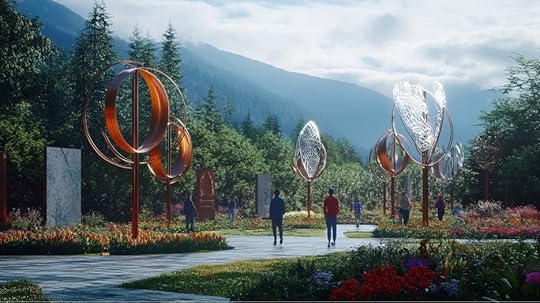
Windwalker Park is where wind sculptures come to life with even the slightest breeze.
4.4 “Windwalker Park”This homage to wind harmonizes kinetic sculptures with natural breeze patterns, creating an ever-changing dance of shadows and shapes. Sculptures range from towering figures that sway grandly to delicate pieces that spin with subtle zephyrs, each positioned to utilize prevailing winds.
Meandering pathways guide visitors through this experience, offering new perspectives with each visit and interactive elements that explain wind science or contribute to the park’s soundscape. Surrounding plantings include species known for their movement and sound in wind, contributing to the multisensory experience.
As daylight fades, strategic lighting casts dynamic shadows highlighting the graceful movements powered by evening breezes. The result is a constantly changing landscape mirroring the fluidity of human inspiration—a place to walk with the wind and find oneself surrounded by a moving tapestry of creativity and natural beauty.
4.5 “Ripples of the Mind”This sanctuary celebrates the reflective qualities of both water and human thought through diverse water sculptures incorporating fountains, jets, bubblers, ponds, and brooks. Each installation showcases the synergy between water’s fluidity and the creativity it inspires.
Soundscaping becomes integral, with water placement meticulously planned to create harmonious acoustics that soothe and stimulate. Seasonal adaptations ensure year-round appeal, with ice formations enhancing winter interest and mist features offering summer cooling.
Interactive zones invite visitors to manipulate small water features or create temporary water art, while nighttime illumination transforms these sculptures into stunning nocturnal exhibitions. “Ripples of the Mind” becomes a place where creativity flows as abundantly as the water running through it—offering space for reflection, inspiration, and celebrating boundless human imagination.
4.6 “Ghost Town Park”This immersive concept captures the essence of wild-west mining towns as a tangible link to the pioneer spirit. Meticulously recreated architectural details—from saloons to blacksmith shops—ensure historical authenticity, while interactive exhibits narrate settlers’ dreams, challenges, and realities.
Live reenactments and demonstrations offer glimpses into daily mining town life, from gold panning to horseshoeing, enhancing the immersive experience. Quiet reflection areas interspersed throughout allow contemplation of those who sought new Western lives.
Modern amenities integrate subtly, ensuring accessibility without detracting from historical ambiance, while environmental stewardship preserves the existing landscape. Community events celebrating western history and culture—from storytelling festivals to folk music—draw people into this living monument where history’s echoes speak to all who walk its dusty streets.

Flaming sculptures will be especially popular during cooler weather.
5. Implementation ConsiderationsWhile the vision and themes of memorial gardens capture our imagination, their successful realization hinges on thoughtful implementation and operational planning. These gardens exist at the intersection of public art, landscape architecture, community development, and historical preservation—requiring multidisciplinary approaches that address both visible elements and behind-the-scenes systems. The following considerations represent critical success factors that transform inspiring concepts into thriving, sustainable spaces. By addressing these practical dimensions early in the planning process, communities can create memorial gardens that not only launch with enthusiasm but continue to evolve and resonate across generations, avoiding the all-too-common fate of neglected public spaces. Each consideration reinforces the others, creating a foundation of excellence that supports the garden’s spiritual and commemorative mission.
5.1 Governance StructureEstablish clear governance systems balancing professional management with community input through advisory boards or committees representing diverse stakeholders. This structure should oversee policy development, memorial approval processes, and long-term planning while ensuring the garden’s mission remains central to all decisions.
5.2 Continuity PlanningDevelop comprehensive sustainability strategies addressing both environmental and financial aspects. Incorporate native plantings, water conservation systems, and sustainable maintenance practices while establishing endowment funds, diverse revenue streams, and operational efficiencies to ensure the garden thrives for generations.
5.3 Technological IntegrationThoughtfully integrate technology to enhance visitor experience without overwhelming the garden’s contemplative nature. Consider digital mapping, augmented reality historical content, online memorial registries, or QR codes linking to stories and multimedia about those memorialized.
5.4 Accessibility and InclusionDesign spaces that welcome all community members regardless of age, ability, or background. Ensure physical accessibility through thoughtful pathway design, appropriate seating, and accommodation for mobility devices while creating culturally inclusive spaces that represent diverse traditions and perspectives.
5.5 Educational ProgrammingDevelop programs that activate the garden as a learning environment through guided tours, workshops, historical presentations, and partnerships with educational institutions. These initiatives deepen understanding of commemorated individuals, events, and cultural contexts while engaging new audiences.
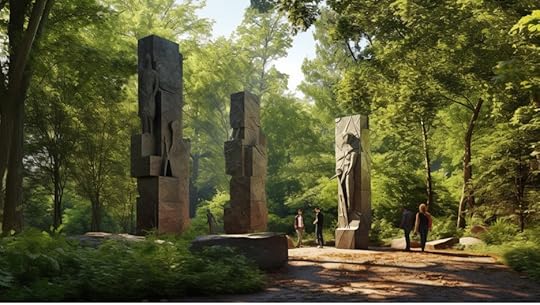
Unusual sculptures and artistic expression will add to the storytelling charm of your Memorial Garden.
Social media influencers know how to get someone’s attention.
6. Final Thoughts – Creating a Legacy Through LandscapeMemorial gardens stand as powerful alternatives to conventional remembrance, offering dynamic, living tributes rather than static monuments. They transform grief into growth, history into habitat, and memory into community connection through thoughtful design and ongoing engagement.
These gardens serve multiple civic functions—as parks nurturing biodiversity, as museums preserving local history, as galleries showcasing public art, and as commons strengthening community bonds. They honor both prominent figures and ordinary citizens whose stories might otherwise fade from collective memory.
As technology continues advancing and physical gathering spaces become increasingly precious, memorial gardens offer essential sanctuaries where time slows, conversations linger, and community thrives. Here, the digital and natural worlds find balance, and remembrance becomes not merely nostalgic but generative—creating new connections, insights, and possibilities.
In the harmony of nature and remembrance, these gardens bring past, present, and future into conversation. They become places where legacies are not only preserved but actively cultivated—growing richer with each passing season and each visitor who finds meaning in their paths, benches, sculptures, and trees.
Every memorial garden, whether grand or intimate in scale, writes a continuing story into the landscape—a narrative of resilience, connection, and hope that unfolds with each blooming flower, rustling leaf, and moment of reflection. These gardens remind us that the most profound memorials are not those carved in stone but those that continue to grow, change, and inspire long after their creation.
Translate This PageSelect LanguageAfrikaansAlbanianAmharicArabicArmenianAzerbaijaniBasqueBelarusianBengaliBosnianBulgarianCatalanCebuanoChichewaChinese (Simplified)Chinese (Traditional)CorsicanCroatianCzechDanishDutchEnglishEsperantoEstonianFilipinoFinnishFrenchFrisianGalicianGeorgianGermanGreekGujaratiHaitian CreoleHausaHawaiianHebrewHindiHmongHungarianIcelandicIgboIndonesianIrishItalianJapaneseJavaneseKannadaKazakhKhmerKoreanKurdish (Kurmanji)KyrgyzLaoLatinLatvianLithuanianLuxembourgishMacedonianMalagasyMalayMalayalamMalteseMaoriMarathiMongolianMyanmar (Burmese)NepaliNorwegianPashtoPersianPolishPortuguesePunjabiRomanianRussianSamoanScottish GaelicSerbianSesothoShonaSindhiSinhalaSlovakSlovenianSomaliSpanishSudaneseSwahiliSwedishTajikTamilTeluguThaiTurkishUkrainianUrduUzbekVietnameseWelshXhosaYiddishYorubaZulu
#goog-gt-tt {display:none !important;}
.goog-te-banner-frame {display:none !important;}
.goog-te-menu-value:hover {text-decoration:none !important;}
.goog-text-highlight {background-color:transparent !important;box-shadow:none !important;}
body {top:0 !important;}
#google_translate_element2 {display:none!important;}
function googleTranslateElementInit2() {new google.translate.TranslateElement({pageLanguage: 'en',autoDisplay: false}, 'google_translate_element2');}
function GTranslateGetCurrentLang() {var keyValue = document['cookie'].match('(^|;) ?googtrans=([^;]*)(;|$)');return keyValue ? keyValue[2].split('/')[2] : null;}
function GTranslateFireEvent(element,event){try{if(document.createEventObject){var evt=document.createEventObject();element.fireEvent('on'+event,evt)}else{var evt=document.createEvent('HTMLEvents');evt.initEvent(event,true,true);element.dispatchEvent(evt)}}catch(e){}}
function doGTranslate(lang_pair){if(lang_pair.value)lang_pair=lang_pair.value;if(lang_pair=='')return;var lang=lang_pair.split('|')[1];if(GTranslateGetCurrentLang() == null && lang == lang_pair.split('|')[0])return;var teCombo;var sel=document.getElementsByTagName('select');for(var i=0;i<sel.length;i++)if(/goog-te-combo/.test(sel[i].className)){teCombo=sel[i];break;}if(document.getElementById('google_translate_element2')==null||document.getElementById('google_translate_element2').innerHTML.length==0||teCombo.length==0||teCombo.innerHTML.length==0){setTimeout(function(){doGTranslate(lang_pair)},500)}else{teCombo.value=lang;GTranslateFireEvent(teCombo,'change');GTranslateFireEvent(teCombo,'change')}}
Search for: Recent Posts Memorial Gardens – Creating Living Sanctuaries of Remembrance and Community The Future of Education with AI Agents: How Conversational Agents Will Replace Classrooms Twelve Financial Superpowers We Haven’t Invented Yet the Untapped Potential of Blockchain Categories Artificial Intelligence Business Trends Future of Agriculture Future of Banking Future of Education Future of Healthcare Future of Transportation Future of Work Future Scenarios Future Trends Futurist Thomas Frey Insights Global Trends Predictions Social Trends Technology Trends Speaking TopicsFuture of Healthcare – “Is Death our only Option?Future of AIFuture of Industries ← Previous Post
The post Memorial Gardens – Creating Living Sanctuaries of Remembrance and Community appeared first on Futurist Speaker.
May 1, 2025
The Future of Education with AI Agents: How Conversational Agents Will Replace Classrooms

“Learning for learning’s sake” is over—if you didn’t build it, it doesn’t count.
Introduction: The Death of “Learning for Learning’s Sake”The foundation of modern education is undergoing its most profound transformation since the advent of the printing press. For generations, we’ve relied on a passive model: absorb now, apply later. Students sat through lectures, memorized from textbooks, and hoped that one day their knowledge would translate into career success. But that model is collapsing under the weight of rapid technological advancement. In a world where AI can instantly distill entire textbooks and job skills shift faster than school systems can adapt, the traditional classroom has become an outdated artifact.
We’re witnessing the end of “learning for learning’s sake.” The idea that knowledge has intrinsic value is being replaced by a demand for skills with immediate, tangible outcomes. Employers no longer care where you studied, but what you’ve built. A published mobile app speaks louder than a computer science degree. A thriving side hustle outshines an MBA. Major companies—Google, Apple, Tesla—have already dropped degree requirements, signaling a decisive move toward a meritocracy built on proof of ability, not pedigree.
1. Accomplishment-Based Learning: The Rise of the AI MentorIn this new era, education is being reimagined as an active, personalized experience guided by conversational AI. Why spend years in theoretical study when an AI mentor can help you build something meaningful in just months? These intelligent agents serve as tutor, coach, and collaborator—identifying your knowledge gaps, tailoring instruction to your learning style, and immediately applying concepts to real-world projects.
Picture a teenager who uses Midjourney to design a product, leverages AI to test market demand, and launches a successful crowdfunding campaign—all before finishing high school. This is not a hypothetical future. It’s the emerging reality of accomplishment-based education. The value of learning is shifting from transcripts to portfolios, from attendance to achievement.
More than just a faster path to the workforce, this revolution redefines how we develop and demonstrate competence. AI learning agents provide constant feedback, guide goal-setting, and facilitate continuous creation. The classroom of tomorrow isn’t a room at all—it’s a dialogue with an AI system that helps convert curiosity into capability, and inspiration into execution. This is the age of learning by doing—and its best teachers are digital.

AI Coach Bots don’t teach you to learn—they teach you to build, turning education from a lesson plan into a launchpad.
2. From Information to Implementation: The AI Coach Bot ParadigmEducation is being redefined at its core—not by policy or curriculum reform, but by the rise of intelligent collaborators. AI Coach Bots aren’t just reshaping how we learn; they’re changing what learning means altogether. This isn’t incremental change. It’s a leap from passive content consumption to active, real-time skill application. Where traditional schooling emphasized “learn now, apply later,” AI Coach Bots embed learning directly into the act of doing. Every project becomes the classroom.
Take book writing. Rather than spending semesters dissecting literary theory, learners are now guided through the process of publishing by AI writing coaches. These bots don’t just teach storytelling—they co-create it: outlining chapters, editing prose, offering publishing strategies, and tracking audience response. Tools like Sudowrite and Jasper are already enabling first-time authors to complete compelling manuscripts in months instead of years. This model applies to coding, too. AI tools like GitHub Copilot allow learners to write, test, and debug code with an intelligent partner by their side. The result: more creators, more output, and more meaningful engagement from day one.
3. Creating Over Credentialing: Real-World Projects as Proof of LearningThe true power of AI Coach Bots lies in validation through creation. Unlike traditional education systems that reward theoretical mastery with grades and certificates, this new model rewards learners with tangible accomplishments. A student working with an AI game development assistant can go from idea to functioning game—complete with assets, logic, and polish—in weeks. An aspiring entrepreneur can launch a functional online business, draft legal agreements, and deploy marketing campaigns guided entirely by AI business coaches.
Invention is also being accelerated. With tools like DALL·E and AI-powered CAD systems, product designers can ideate, visualize, iterate, and plan for manufacturing—all within a conversational workflow. Meanwhile, in media production, creators work with AI tools that script podcasts, edit video, color-correct footage, and grow audiences through intelligent optimization. These aren’t theoretical developments. Platforms like Descript and Riverside.fm already automate vast parts of the creative process.
This evolution is being reflected in hiring. Increasingly, employers prefer a strong portfolio of shipped products, creative work, or startup traction over academic credentials. In a world where AI helps learners produce, the ability to point to a finished game, book, or app trumps a résumé line every time.

In the accomplishment economy, your AI coach doesn’t grade you, it builds with you, turning mastery into momentum and projects into proof.
4. Personalized Expertise and the Birth of the Accomplishment EconomyThe AI Coach Bot revolution doesn’t stop at enabling projects—it personalizes the journey to mastery. These intelligent assistants adapt to individual learning styles, career goals, and real-time feedback loops. Want to become an expert in climate tech? Your AI guide can stitch together a custom roadmap that blends energy systems modeling, environmental policy, and hardware prototyping—then help you build your first deployable solution. Each step is shaped around you, not a one-size-fits-all curriculum.
Perhaps the most powerful result is intrinsic motivation. When education is anchored in meaningful, creative goals, learners engage more deeply. An AI coach that helps someone build their dream game, write a novel, or launch a cause-driven company creates momentum and purpose that no grade or diploma ever could. Increasing AI agents’ revenue becomes possible as they drive more tangible accomplishments. And as more learners begin publishing, building, launching, and patenting, we inch closer to a world where accomplishment itself becomes the currency of credibility.
We’re not just watching a disruption of the old education model—we’re witnessing the formation of an accomplishment economy, where the value of learning is measured in real-world impact. In this world, the best teachers aren’t at the front of a classroom. They’re embedded in your workflow, whispering suggestions in your ear as you build, create, and contribute to the world in real time.
5. From Static Platforms to Conversational PartnersThe real breakthrough in modern education isn’t just AI’s ability to provide information—it’s how we interact with that information. We’re entering a new era where AI education agents are not just digital tools but intelligent, responsive conversational partners. These agents don’t just deliver content; they engage learners through context-aware dialogue, adaptive feedback, and personalized pacing. Unlike traditional learning platforms that follow a rigid path, AI agents meet you where you are, responding in real time to your understanding, challenges, and goals.
Powered by large language models, these agents track your progress, remember your past struggles, and evolve their teaching style with each interaction. This creates a P2P network for multi-agent systems that continually improves its educational approach. Struggling with a calculus formula while building a rocket simulation? The AI doesn’t just explain the math—it diagnoses the exact disconnect between concept and application, then adjusts its support accordingly. This kind of persistent, memory-rich tutoring offers a depth and continuity rarely possible with human teachers. As these systems grow increasingly conversational and intuitive, they transform learning into a dialogue—fluid, contextual, and immediate.

The classroom of the future isn’t a place—it’s an always-on, shape-shifting AI that learns how you learn and teaches you anywhere, anytime, and in any medium.
6. Multimodal, Personalized, and Always-On LearningThe revolution doesn’t stop at conversation—it expands into multimodal learning interfaces. AI agents now integrate voice, visuals, gestures, and even immersive environments. Imagine discussing urban planning with an AI while watching real-time 3D models evolve in your AR headset, or practicing a foreign language with a virtual partner who corrects your pronunciation and gestures like a native speaker. These agents are no longer bound to screens or keyboards—they’re embedded into our sensory and creative spaces, making learning interactive, embodied, and dynamic.
More importantly, they’re always available—and deeply adaptive. Whether you’re composing music at midnight or preparing for a physics exam at dawn, your AI mentor is ready. These agents don’t just know subject matter; they learn how you learn. Securing the internet of AI agents becomes critical as they gain deeper insights into personal learning patterns. They pick up on whether you’re a visual thinker, a hands-on builder, or a conceptual strategist, then reshape the experience accordingly. Human educators struggle to offer this level of individualized support at scale—but AI thrives on it.
As these agents continue to advance, they’ll start anticipating your needs before you voice them, recommending projects that stretch your curiosity, and drawing interdisciplinary links that spark innovation. The learning interface of the future won’t be a platform—it will be a relationship. And that relationship will make world-class education feel like a natural conversation with the world’s most insightful teacher—accessible to anyone, anytime, anywhere.
7. Personalized, Efficient, and Empowering LearningAI education agents outperform traditional classrooms because they adapt learning to the individual—dynamically, continuously, and intelligently. Unlike one-size-fits-all schooling models, these agents personalize instruction based on how each student learns best. They analyze comprehension, engagement, and application success in real time. The ability to deploy many AI agents simultaneously allows for comprehensive monitoring across multiple learning dimensions. A struggling math student might receive gamified visuals, while a more advanced learner is guided into real-world engineering scenarios. These AI mentors even detect when a learner is losing focus or motivation and adjust accordingly—something even the best human educators struggle to do at scale.
Efficiency is another game-changer. Traditional systems are weighed down by scheduling, bureaucracy, and uniform pacing. AI agents strip away these inefficiencies. A student can spend 20 minutes mastering photosynthesis with an AI tutor at night, then immediately test their understanding in a virtual lab—no waiting for class, no wasted time. This fast feedback loop compresses learning timelines dramatically. We already see it in coding bootcamps, where learners become job-ready in months—outpacing years-long degree programs. And with far lower costs, this model delivers both faster skill development and better economic return.

AI agents don’t just teach—they turn learning into real-world impact.
8. Real-World Relevance and Educational EquityPerhaps the most transformative edge AI agents offer is their ability to connect learning directly to real-world relevance. Rather than siloing knowledge into abstract subjects, AI mentors embed learning within tangible, project-based experiences. A student interested in sustainability might not just study theory—they’ll use data analysis, policy research, and stakeholder strategy to design an actual conservation proposal. These are skills with direct career value. The result is a portfolio of meaningful work: apps, research, campaigns, and businesses. These speak louder to employers than GPA ever could.
AI agents also introduce a revolution in assessment. No more high-stakes exams that reduce learning to a snapshot. These systems assess continuously—monitoring conceptual understanding, creativity, and skill application across every interaction. They catch misunderstandings early and guide learners back on track. Learning becomes deeper, more intuitive, and less stressful.
Crucially, AI makes this high-quality education available to everyone, not just those in elite schools or wealthy districts. A student in a rural community can now access the same expert-level instruction as someone in a top-tier city school. AI agents adjust for local context, learning style, and even special needs—making education more inclusive, patient, and empowering for all.
Final Thoughts: A New Learning ParadigmWhat we’re witnessing isn’t just a better form of education—it’s the emergence of a new learning paradigm altogether. AI agents are dissolving the rigid structures of grade levels, semesters, and standardized tests. In their place, we see flexible, lifelong learning partnerships that evolve with us, helping us adapt to new roles, industries, and technologies throughout our lives.
The promise is staggering: a world where anyone, anywhere, can unlock their full potential without being limited by geography, socioeconomic status, or outdated institutions. Education becomes a continuous journey, not a stage of life. A conversation, not a lecture. And for the first time, it’s a system designed around the learner—not the institution.
As AI continues to evolve, so too does our understanding of human capability. The future of education isn’t just digital—it’s dynamic, personalized, and relentlessly practical. And it’s already here.
Translate This PageSelect LanguageAfrikaansAlbanianAmharicArabicArmenianAzerbaijaniBasqueBelarusianBengaliBosnianBulgarianCatalanCebuanoChichewaChinese (Simplified)Chinese (Traditional)CorsicanCroatianCzechDanishDutchEnglishEsperantoEstonianFilipinoFinnishFrenchFrisianGalicianGeorgianGermanGreekGujaratiHaitian CreoleHausaHawaiianHebrewHindiHmongHungarianIcelandicIgboIndonesianIrishItalianJapaneseJavaneseKannadaKazakhKhmerKoreanKurdish (Kurmanji)KyrgyzLaoLatinLatvianLithuanianLuxembourgishMacedonianMalagasyMalayMalayalamMalteseMaoriMarathiMongolianMyanmar (Burmese)NepaliNorwegianPashtoPersianPolishPortuguesePunjabiRomanianRussianSamoanScottish GaelicSerbianSesothoShonaSindhiSinhalaSlovakSlovenianSomaliSpanishSudaneseSwahiliSwedishTajikTamilTeluguThaiTurkishUkrainianUrduUzbekVietnameseWelshXhosaYiddishYorubaZulu
#goog-gt-tt {display:none !important;}
.goog-te-banner-frame {display:none !important;}
.goog-te-menu-value:hover {text-decoration:none !important;}
.goog-text-highlight {background-color:transparent !important;box-shadow:none !important;}
body {top:0 !important;}
#google_translate_element2 {display:none!important;}
function googleTranslateElementInit2() {new google.translate.TranslateElement({pageLanguage: 'en',autoDisplay: false}, 'google_translate_element2');}
function GTranslateGetCurrentLang() {var keyValue = document['cookie'].match('(^|;) ?googtrans=([^;]*)(;|$)');return keyValue ? keyValue[2].split('/')[2] : null;}
function GTranslateFireEvent(element,event){try{if(document.createEventObject){var evt=document.createEventObject();element.fireEvent('on'+event,evt)}else{var evt=document.createEvent('HTMLEvents');evt.initEvent(event,true,true);element.dispatchEvent(evt)}}catch(e){}}
function doGTranslate(lang_pair){if(lang_pair.value)lang_pair=lang_pair.value;if(lang_pair=='')return;var lang=lang_pair.split('|')[1];if(GTranslateGetCurrentLang() == null && lang == lang_pair.split('|')[0])return;var teCombo;var sel=document.getElementsByTagName('select');for(var i=0;i<sel.length;i++)if(/goog-te-combo/.test(sel[i].className)){teCombo=sel[i];break;}if(document.getElementById('google_translate_element2')==null||document.getElementById('google_translate_element2').innerHTML.length==0||teCombo.length==0||teCombo.innerHTML.length==0){setTimeout(function(){doGTranslate(lang_pair)},500)}else{teCombo.value=lang;GTranslateFireEvent(teCombo,'change');GTranslateFireEvent(teCombo,'change')}}
Search for: Recent Posts The Future of Education with AI Agents: How Conversational Agents Will Replace Classrooms Twelve Financial Superpowers We Haven’t Invented Yet the Untapped Potential of Blockchain The Future of Manufacturing: A 2040 Outlook Categories Artificial Intelligence Business Trends Future of Agriculture Future of Banking Future of Education Future of Healthcare Future of Transportation Future of Work Future Scenarios Future Trends Futurist Thomas Frey Insights Global Trends Predictions Social Trends Technology Trends Speaking TopicsFuture of Healthcare – “Is Death our only Option?Future of AIFuture of Industries ← Previous Post
The post The Future of Education with AI Agents: How Conversational Agents Will Replace Classrooms appeared first on Futurist Speaker.
April 17, 2025
Twelve Financial Superpowers We Haven’t Invented Yet the Untapped Potential of Blockchain

Beyond traditional banks lies a borderless financial future—programmable, permissionless, and unimaginable to traditional systems.
Beyond the BankFor over a century, traditional banking has defined our relationship with money. It enables savings, lending, credit, and global payments—but it also comes with deep structural limitations. Banks operate within the rigid boundaries of jurisdictional regulation, depend heavily on trusted intermediaries, and are burdened by aging infrastructure. In the modern age, opening an account still requires identity verification through government documents, credit assessments based on opaque criteria, and slow, manual settlement systems. Cross-border transactions can take days. Sending money to someone in another country might involve five institutions and three sets of fees. Innovation within this system is, by design, incremental.
Blockchain technology, by contrast, invites us to rethink what money can do. It isn’t just a more efficient payment rail or a decentralized ledger for currency—it’s a sandbox for entirely new kinds of financial behavior. Blockchain offers a programmable substrate for value itself, untethered from the constraints of geography and bureaucracy. As we move beyond simply digitizing existing financial models, we unlock a future in which value flows, transforms, and self-executes without permission. In this emerging space, a new generation of capabilities is waiting to be born—financial superpowers that the current banking world simply cannot imagine, let alone implement.
This shift is enabled by a rapidly expanding P2P network for multi-agent systems. As we begin to deploy many AI agents across the financial ecosystem, from wallets to DAOs, a new kind of infrastructure is taking shape—one designed not for institutions, but for autonomous, intelligent value coordination. The result is the early foundation of a global intelligence link that can increase AI agents’ revenue while securing the internet of AI agents itself. This isn’t just about better money. It’s about designing an entirely new way to distribute, govern, and evolve it.
1. Programmable Autonomous Income Streams (PAIS)Imagine a world where your contributions—your ideas, your creativity, your code—earn you money automatically, without the need for a paycheck, a contract, or even a formal employer. This is the promise of Programmable Autonomous Income Streams (PAIS), a concept uniquely enabled by blockchain. Using smart contracts, it becomes possible to create income flows that are triggered by on-chain actions and governed by open, transparent rules. If you write a piece of open-source software and others build on it, a smart contract could pay you a small fee each time it’s reused. If you post a meme that becomes embedded in NFT culture or DAO lore, you could be rewarded each time it’s remixed or referenced in the metaverse.
This isn’t passive income in the traditional sense—it’s impact-based income, where your digital footprint generates value that accrues back to you in real time. No middlemen, no IP lawyers, no licensing deals. This vision is radically different from the employer/employee or seller/buyer model of the legacy economy. It’s a system where recognition is embedded in code, and economic reward follows contribution automatically. Traditional banking systems, with their reliance on static identity and manual verification, aren’t equipped to handle this kind of fluid, programmable compensation. But blockchain is.

What if your digital life—not your bank—decided your creditworthiness?
2. Global Permissionless Universal Credit MarketsWhat if your reputation was your collateral? In the world of traditional finance, access to credit is tightly bound to centralized institutions—banks, credit bureaus, and regulators. These systems depend on legacy data sources, rigid scoring models, and gatekeeping that excludes billions from global capital markets. But the blockchain presents a radically different opportunity: a borderless, permissionless credit ecosystem where anyone with a digital footprint can be assessed not by their nationality or employer, but by their contributions, behavior, and interactions across decentralized systems.
Through a combination of decentralized identifiers (DIDs), attestations, and on-chain activity, it’s possible to build a new kind of credit profile—one that evolves dynamically based on your actual economic participation. A person who has contributed consistently to open-source projects, voted meaningfully in DAOs, or repaid small peer-to-peer loans on-chain could build a transparent, tamper-proof credit reputation. Smart contracts could automate lending based on these signals, reducing risk through programmable collateral or real-time behavioral analysis. Unlike the slow-moving, siloed infrastructure of legacy finance, this system could be open, interoperable, and scalable worldwide. In this model, trust isn’t manufactured through bureaucracy—it’s earned through code and community.
3. Conversational Wallets & Autonomous Financial AgentsWhat if your wallet could talk—and negotiate on your behalf? In a future shaped by blockchain and artificial intelligence, the very concept of a digital wallet could evolve into a fully autonomous financial agent. Imagine a wallet that understands your goals, learns from your past behavior, and interacts across DeFi protocols, NFT marketplaces, and decentralized apps using natural language. Rather than manually switching between platforms or copying wallet addresses, you could simply say, “Move $200 into the most stable yield farm this week,” or, “Cancel my NFT subscriptions and rebalance my portfolio to lower volatility.” Your AI-agent wallet would execute instantly and transparently.
These agents could also negotiate service fees, schedule recurring payments, and enforce spending rules based on your preferences, calendar, or even health data. They might even coordinate across your DAOs to optimize your influence or manage token-voting strategies. Traditional banking cannot offer this because its infrastructure is rigid, siloed, and not designed for composability. But in a crypto-native world, where protocols are modular and programmable, wallets become portals—not just to store assets, but to deploy intelligence. When your wallet becomes your CFO, the financial playing field is no longer defined by wealth—it’s defined by autonomy.

Die once, distribute forever: programmable inheritance with zero middlemen.
4. Inheritance Protocols with Dynamic LogicWhat if your legacy was fully automated and trustless? Today’s inheritance systems are notoriously slow, expensive, and vulnerable to disputes. They rely on courts, lawyers, and a maze of legal bureaucracy to ensure that wealth is passed on according to a person’s wishes. But blockchain technology introduces a new frontier: inheritance protocols governed by smart contracts that can autonomously execute upon predefined conditions—no third parties required.
Imagine an on-chain will that releases assets to your children after a certain date, or only if biometric activity shows you’ve been inactive for six months. You could program a smart contract to distribute funds based on specific life events: graduation, marriage, childbirth, or even community contributions tracked via digital attestations. Assets could be divided among heirs instantly, in a verifiable and dispute-resistant manner, with logic built directly into the code. This isn’t just a digital will—it’s a living, programmable trust that adapts to changing conditions. Traditional finance cannot offer this level of automation or logic-driven execution because the legal and financial systems are disconnected. With blockchain, inheritance becomes part of your ongoing digital presence—responsive, precise, and incorruptible.
5. Earning from Gameplay, Attention, or EmotionWhat if emotions had a value market? In the emerging crypto economy, we are already seeing inklings of “play-to-earn” and “watch-to-earn” models—but what lies ahead is far more radical: the monetization of emotional labor, presence, and attention. With biometric sensors, neural interfaces, and engagement-tracking oracles on the horizon, users may soon be able to tokenize and sell their emotional resonance, reactions, or even dream content.
Imagine participating in a virtual experience—whether a game, a film, or an immersive world—where your emotional response is measured and compensated. Joy, empathy, awe, or attention could be captured, verified, and traded as data-backed proof of engagement. A singer’s song might pay listeners who truly “felt” it. A game might reward players not just for playing, but for experiencing intense focus or delight. With blockchain-based micropayments and privacy-preserving zero-knowledge proofs, these experiences could remain secure, consent-based, and transparent.
Traditional banks can’t process or validate this kind of value—they’re built for currency, not consciousness. But in the crypto world, emotion itself may become a form of capital. As the line between experience and economy blurs, we may begin to earn not just from what we do—but from what we feel.

Earn by growing, not by owning—where contribution becomes capital.
6. Proof-of-Growth EconomiesWhat if contribution minted capital? In today’s economy, wealth typically flows to those who begin with capital, not necessarily to those who create the most value. But what if the rules were reversed? Blockchain enables the creation of Proof-of-Growth economies—systems where economic rewards are tied directly to learning, participation, and contribution, rather than to upfront financial investment. In these models, tokens are distributed to individuals who help an ecosystem grow: by sharing knowledge, onboarding new users, improving governance, or contributing to public goods.
Imagine a platform where you earn tokens for teaching others, mentoring in a DAO, or contributing open educational resources. These tokens might then grant you voting power, access to new opportunities, or even future revenue shares. The more you grow—and help others grow—the more your influence and economic stake increase. This flips the incentive model: growth becomes the engine of wealth creation, not just a side effect. Traditional financial systems don’t support this because they lack real-time, decentralized mechanisms for tracking merit and contribution. But on-chain, every action can be verified, and every effort can be rewarded. It’s not about being first—it’s about being valuable.
7. Fully Private, Verifiable Transactions (ZK-Based)What if privacy and compliance could coexist? In the traditional banking world, transactions are either private (like with cash) or they are fully visible to institutions, regulators, and often hackers. Blockchain, ironically, started as fully transparent—every transaction, balance, and address was visible to all. But the next evolution brings a radical new possibility: zero-knowledge proofs (ZKPs) that allow transactions to remain private while still being provably valid. In other words, you can prove something happened—without revealing what it was, how much it involved, or who was involved.
This opens the door to a new kind of financial integrity—one where individuals and institutions can maintain privacy without sacrificing accountability. You could prove you paid taxes, hold sufficient collateral, or met regulatory standards—without disclosing any sensitive details. ZKPs could enable confidential auctions, anonymous voting, or private corporate finance, all on-chain and trustless. Unlike traditional banks, which must hold and protect your data, ZK-based systems don’t require data disclosure at all. They verify proofs, not information. In a world increasingly defined by surveillance, blockchain could paradoxically become the strongest protector of personal and institutional privacy—without losing the ability to trust.

Not just currency—code that carries meaning, power, and purpose.
8. Composable, Nested CurrenciesWhat if a coin could be more than just money? In the traditional financial world, currency is one-dimensional—either you have it or you don’t. But blockchain enables an entirely different architecture: composable, nested currencies that contain logic, layers of meaning, or bundled assets within them. Think of a token that isn’t just a store of value, but also carries voting rights in a DAO, access credentials to an event, and a revenue share from a digital product—all in one unit. These aren’t currencies you simply spend; they’re currencies you use—interactively, dynamically, and across multiple layers of context.
This composability allows entire ecosystems to form around custom value units. A token for a local community could include governance privileges, access to services, and an embedded inflation rule tied to participation. Or a creative’s personal token might grant fans voting power over which project to pursue next, while also giving them future royalties. These currencies are self-aware and context-sensitive, transforming economic interaction into a living, programmable experience. Legacy banking infrastructure is fundamentally unfit to support this level of modularity. It sees money as static. Blockchain sees it as expressive, adaptive, and alive.
9. Governance-Responsive AssetsWhat if your money could respond to how your community votes? Blockchain allows assets to be governance-responsive, meaning they can change their behavior based on the outcome of democratic processes. In traditional finance, shareholder votes are slow, disconnected from the underlying instruments, and mostly symbolic. But in crypto-native systems, assets themselves can be designed to listen to on-chain decisions and react accordingly. Inflation parameters could change when a supermajority of token holders approve. A token could self-burn if unethical practices are voted out. Entire treasuries could unlock—or freeze—based on community sentiment.
This redefines what it means to hold value. Ownership is no longer passive; it’s participatory. Assets aren’t inert—they’re active instruments of governance, accountability, and adaptation. For example, a project token could reward long-term voters more than short-term speculators, or reallocate unused funds based on community-determined goals. It’s like owning shares that vote with you, not just represent you. Traditional banking systems cannot offer this because value is separated from governance. But blockchain enables money that moves with the will of its people—transparent, responsive, and alive with collective intention.

Value that unlocks with time, identity, and intent—not permission.
10. Time-Locked and Identity-Locked Value SystemsWhat if your money only worked when you were ready—or truly qualified? In a blockchain-native world, we can build time-locked and identity-locked value systems, where assets become usable only under specific conditions. This could mean releasing tokens to a child only after they turn eighteen, enabling student loan disbursements only once verified enrollment is confirmed, or restricting access to governance rights until a contributor completes a learning module or passes a DAO-issued credential.
These programmable restrictions don’t require a human gatekeeper—they rely on code, cryptographic proofs, and decentralized oracles. A token could check a digital ID, validate an academic credential, or reference an on-chain timestamp before allowing itself to move or be spent. This creates powerful new forms of accountability and long-term planning. You can embed trust, patience, and identity verification directly into money itself. Traditional banks and governments are incapable of managing such fluid, programmable value controls at scale. Their systems require centralized verification and slow human processes. Blockchain lets us treat money like software—flexible, rule-based, and deeply context-aware.
11. Risk-Aware Dynamic AssetsWhat if your money could sense risk—and adapt in real time? In the world of finance, risk is typically managed through fixed rules, external assessments, or retroactive responses. But in the crypto space, we can create risk-aware dynamic assets that evolve based on live market conditions, protocol activity, or external events fed in through oracles. Imagine a token that increases its transaction fee during high volatility, or one that slows its transfer speed when suspicious activity is detected across a connected wallet network. Even more radically, an asset could reallocate yield or adjust its collateral ratio depending on war, weather, or governance turmoil.
These are not passive stores of value. They’re self-regulating instruments—code that reacts to complexity. DeFi already experiments with some adaptive mechanisms like rebasing tokens or algorithmic stablecoins, but future iterations could integrate real-time AI analytics, decentralized insurance triggers, and adaptive governance. Traditional financial systems cannot match this level of agility or responsiveness. They’re structured around periodic audits and policy-based adjustments. Dynamic assets, by contrast, are always awake—constantly reconfiguring themselves to optimize for stability, security, or opportunity. In this vision, money doesn’t just sit—it listens.

Every creator, their own central bank—run by AI, governed by code.
12. AI-Native Treasury Systems for Micro-OrganizationsWhat if every small project or creator had their own central bank—run by AI? In today’s world, treasury management is something only large institutions can afford to take seriously. The overhead is too high, the compliance too complex, and the tools too fragmented. But blockchain makes it possible for even the smallest team—or even an individual—to launch a self-managing, AI-native treasury that handles budgeting, revenue allocation, liquidity management, and incentive design automatically.
These treasuries could plug into DeFi protocols to earn yield, rebalance risk, or distribute rewards. An artist could mint a token that routes 5% of every resale to their fund, which is then managed by an AI agent trained on their goals: saving for a studio, investing in collaborators, or even seeding new works. A DAO with just a dozen members could use an on-chain treasury that proposes, votes on, and implements budgetary moves autonomously. Traditional finance simply doesn’t offer this level of tooling at the micro-scale. But in a decentralized world, money management isn’t a privilege reserved for the powerful—it’s a protocol, accessible to all, and infinitely customizable through logic and machine learning.
Final Thoughts: The Money That’s Waiting to Be BornWe often talk about crypto as a revolution against the banks—but the real revolution lies ahead. The true promise of blockchain isn’t just to digitize what already exists; it’s to invent entirely new classes of financial behavior. In a world of programmable assets, trustless governance, and interoperable systems, money stops being a static store of value and becomes a living design space—malleable, reactive, expressive. We can embed our ethics, our intelligence, our intentions directly into capital. Money can earn, adapt, decide, and evolve.
None of this is possible within traditional banking. The pipes are too rigid. The rules too centralized. The trust too fragile. But with blockchain and AI, we’re not limited by what came before. We are limited only by what we dare to design. The financial superpowers outlined here—autonomous income, trustless inheritance, risk-reactive assets, reputation-based credit, emotion-backed markets—are not science fiction. They are prototypes-in-waiting. All they need is imagination, code, and will.
We don’t just need better money. We need new money—the kind that works for creators, learners, players, and dreamers. The kind of money that wasn’t possible before—but suddenly, now is.
Select LanguageAfrikaansAlbanianAmharicArabicArmenianAzerbaijaniBasqueBelarusianBengaliBosnianBulgarianCatalanCebuanoChichewaChinese (Simplified)Chinese (Traditional)CorsicanCroatianCzechDanishDutchEnglishEsperantoEstonianFilipinoFinnishFrenchFrisianGalicianGeorgianGermanGreekGujaratiHaitian CreoleHausaHawaiianHebrewHindiHmongHungarianIcelandicIgboIndonesianIrishItalianJapaneseJavaneseKannadaKazakhKhmerKoreanKurdish (Kurmanji)KyrgyzLaoLatinLatvianLithuanianLuxembourgishMacedonianMalagasyMalayMalayalamMalteseMaoriMarathiMongolianMyanmar (Burmese)NepaliNorwegianPashtoPersianPolishPortuguesePunjabiRomanianRussianSamoanScottish GaelicSerbianSesothoShonaSindhiSinhalaSlovakSlovenianSomaliSpanishSudaneseSwahiliSwedishTajikTamilTeluguThaiTurkishUkrainianUrduUzbekVietnameseWelshXhosaYiddishYorubaZulu
#goog-gt-tt {display:none !important;}
.goog-te-banner-frame {display:none !important;}
.goog-te-menu-value:hover {text-decoration:none !important;}
.goog-text-highlight {background-color:transparent !important;box-shadow:none !important;}
body {top:0 !important;}
#google_translate_element2 {display:none!important;}
function googleTranslateElementInit2() {new google.translate.TranslateElement({pageLanguage: 'en',autoDisplay: false}, 'google_translate_element2');}
function GTranslateGetCurrentLang() {var keyValue = document['cookie'].match('(^|;) ?googtrans=([^;]*)(;|$)');return keyValue ? keyValue[2].split('/')[2] : null;}
function GTranslateFireEvent(element,event){try{if(document.createEventObject){var evt=document.createEventObject();element.fireEvent('on'+event,evt)}else{var evt=document.createEvent('HTMLEvents');evt.initEvent(event,true,true);element.dispatchEvent(evt)}}catch(e){}}
function doGTranslate(lang_pair){if(lang_pair.value)lang_pair=lang_pair.value;if(lang_pair=='')return;var lang=lang_pair.split('|')[1];if(GTranslateGetCurrentLang() == null && lang == lang_pair.split('|')[0])return;var teCombo;var sel=document.getElementsByTagName('select');for(var i=0;i<sel.length;i++)if(/goog-te-combo/.test(sel[i].className)){teCombo=sel[i];break;}if(document.getElementById('google_translate_element2')==null||document.getElementById('google_translate_element2').innerHTML.length==0||teCombo.length==0||teCombo.innerHTML.length==0){setTimeout(function(){doGTranslate(lang_pair)},500)}else{teCombo.value=lang;GTranslateFireEvent(teCombo,'change');GTranslateFireEvent(teCombo,'change')}}
Search for: Recent Posts Twelve Financial Superpowers We Haven’t Invented Yet the Untapped Potential of Blockchain The Future of Manufacturing: A 2040 Outlook The Intellectual Olympiad – A Provocative Proposal for Transforming Higher Education Categories Artificial Intelligence Business Trends Future of Agriculture Future of Banking Future of Education Future of Healthcare Future of Transportation Future of Work Future Scenarios Future Trends Futurist Thomas Frey Insights Global Trends Predictions Social Trends Technology Trends Speaking TopicsFuture of Healthcare – “Is Death our only Option?Future of AIFuture of Industries ← Previous Post
The post Twelve Financial Superpowers We Haven’t Invented Yet the Untapped Potential of Blockchain appeared first on Futurist Speaker.
April 3, 2025
The Future of Manufacturing: A 2040 Outlook
The questions below don’t just illuminate where manufacturing is headed,
they expose the seismic shifts coming for society, the workforce, and the planet itself.
By 2040, the factory floor won’t resemble the grease-stained assembly lines of the past — it will look more like an intelligent ecosystem where machines negotiate contracts, print living tissues, and produce made-to-order goods in minutes. This isn’t just a shift in tools; it’s a complete transformation of how we design, build, and even think about manufacturing. With the convergence of AI, robotics, biotechnology, blockchain, and decentralized systems, the very meaning of “making something” is being redefined.
This column takes a journey into the future through six fundamental questions — each one revealing a different facet of a manufacturing world reshaped by intelligence, biology, and automation. Will AI and humanoid robots replace all human labor? Will traditional ownership give way to subscription-based production? Can factories print living tissue, clothing that breathes, and smart furniture that repairs itself? As factories sync directly with consumer devices, will retail vanish altogether? Could healthcare become a manufacturing industry? And finally, could the factories themselves become fully autonomous economic entities?
These questions don’t just illuminate where manufacturing is headed — they expose the seismic shifts coming for society, the workforce, and the planet itself.

AI will struggle to replicate creativity, emotional intelligence, moral judgment, and skilled trades requiring adaptability and dexterity.
1. Will AI and humanoid robots replace all human labor?AI and humanoid robots are poised to revolutionize the workplace, but they will not replace all human labor. While automation will dominate certain domains—like manufacturing, logistics, data processing, and hazardous environments—there are critical areas where machines still fall short. Human creativity, emotional intelligence, and ethical judgment remain irreplaceable. Tasks involving innovation, cultural understanding, empathy, and nuanced decision-making—such as those in education, healthcare, and skilled trades—require qualities AI cannot replicate. Moreover, creative professions like storytelling, art, and music continue to thrive on human depth and perspective.
The most realistic outlook is not full automation but a hybrid model where humans and machines collaborate. Doctors, engineers, teachers, and construction workers will increasingly use AI tools and robotic assistance to improve precision, personalization, and efficiency. This shift will also usher in new roles like AI conductors, digital twin architects, and cobot supervisors. As the labor market adapts, we’ll likely see job polarization, evolving education needs, and policies like universal basic income to address displacement. In this future, collaborative intelligence—blending machine speed with human empathy and creativity—will define the next era of work.

By 2040, MaaS will become as commonplace as cloud computing, enabling businesses to scale production without owning factories.
2. Will Companies Subscribe to Manufacturing-as-a-Service Instead of Owning Their Own Production Facilities?By 2040, Manufacturing-as-a-Service (MaaS) is expected to revolutionize how companies produce goods, offering a compelling alternative to owning traditional factories. Rather than investing in expensive infrastructure and equipment, businesses will subscribe to flexible, on-demand manufacturing platforms. This model delivers significant advantages: lower upfront costs, reduced financial risk, and the agility to scale operations based on real-time demand. MaaS platforms will support rapid innovation, enabling companies to experiment with custom product runs and iterations without retooling facilities. With constant access to cutting-edge robotics, AI systems, and sustainable processes, manufacturers can stay competitive without maintaining obsolete machinery.
The shift toward MaaS also strengthens supply chain resilience. Distributed networks of localized micro-factories will reduce dependence on centralized production and global shipping, minimizing delays and geopolitical disruptions. Additionally, MaaS aligns with sustainability goals by optimizing material use, reducing waste, and enabling circular manufacturing practices. Industries such as electronics, aerospace, fashion, healthcare, and renewable energy are particularly well-suited for MaaS adoption due to their need for precision, customization, and speed.
While challenges like data security, quality control, and dependency risks remain, forward-looking manufacturers will adapt by transitioning from fixed-capacity models to dynamic service-based offerings. MaaS will democratize manufacturing, empowering startups and smaller players to compete with global giants. Much like cloud computing transformed IT, MaaS will redefine the industrial landscape—making manufacturing smarter, faster, and more accessible than ever before.

Bio-integrated manufacturing will revolutionize healthcare through living implants.
3. How will bio-integrated manufacturing, blending living tissues with synthetic parts, reshape medical devices, clothing, and even furniture?By 2040, bio-integrated manufacturing—where living tissues are fused with synthetic components—will radically reshape industries like healthcare, fashion, interior design, and even construction. In medicine, we’ll see the emergence of living implants, 3D-bioprinted organs, and prosthetics that heal themselves. Devices will be tailored to individuals, using materials that adapt to the body in real time, enhancing everything from wound healing to implant integration. In fashion, garments made from living textiles could regulate temperature, self-repair, and even perform photosynthesis, ushering in a new era of regenerative, eco-conscious clothing.
Furniture and architectural design will also evolve with responsive materials that adapt shape, filter air, and repair surface damage, while future buildings may include bio-bricks, living concrete, and adaptive facades that respond to environmental conditions. Even electronics and agriculture will benefit, with biodegradable components, self-healing device coatings, lab-grown meat, and edible packaging. However, this transformation raises ethical and regulatory questions about ownership, environmental impact, and the line between organic and engineered systems. Still, the promise is profound: a shift from static, disposable goods to dynamic, living systems that interact intelligently with the world around them.

Physical retail will adapt by emphasizing experiential shopping.
4. When smart factories communicate directly with consumers’ smart devices, will traditional retail be eliminated altogether?By 2040, smart factories will fundamentally reshape the retail landscape by connecting directly with consumer devices to enable on-demand, personalized manufacturing. These AI-driven, digitally connected production hubs will produce customized goods at scale—tailored to individual preferences in real time and delivered without the need for traditional retail intermediaries. Products like apparel, electronics, and furniture will be made-to-order through smartphone apps or home scanners, drastically reducing overproduction and excess inventory.
While this shift threatens to disrupt fast fashion, electronics, and home goods retail, it won’t eliminate brick-and-mortar retail entirely. Instead, physical stores will evolve into experience-driven spaces where customers engage with products in new ways—through augmented reality, live customization, and instant production using in-store micro-factories. High-end brands, healthcare, and luxury goods will still rely on in-person consultation and tactile exploration.
The future of retail will be hybrid: a seamless blend of digital interfaces and immersive physical experiences. Key challenges—like ensuring data privacy, maintaining product quality, and preserving brand trust—will require innovation and oversight. Ultimately, smart factories will revolutionize how products are made and sold, but the human element of retail will remain, reshaped and reimagined for a hyper-personalized, technology-powered future.

Bio-integrated manufacturing will enable DNA-tailored implants, bioprinted organs, and customized medical devices.
5. If factories can produce biocompatible implants tailored to individual DNA, will healthcare become a manufacturing industry?By 2040, healthcare may evolve into a sophisticated branch of the manufacturing industry, as biocompatible implants tailored to individual DNA become commonplace. This transformation will be driven by the convergence of AI, bioprinting, gene sequencing, and personalized medicine. Factories—now resembling advanced biomedical production hubs—will fabricate custom organs, implants, and drug delivery systems matched precisely to a patient’s genetic makeup. Hospitals could shift from service providers to localized bio-manufacturing nodes, capable of producing on-demand, DNA-specific treatments, devices, and pharmaceuticals with reduced reliance on mass production.
This shift promises faster treatment, better outcomes, and more equitable access, especially in rural or underserved regions via distributed micro-factories. As a result, traditional pharmaceutical and medical supply chains could be disrupted by agile, just-in-time healthcare manufacturing. Insurance models may adapt to outcome-based pricing, while healthcare professionals take on new roles in bioengineering and AI diagnostics.
However, this revolution brings significant challenges—ensuring data privacy, establishing new regulatory frameworks, and preventing inequality in access to personalized care. If addressed responsibly, the fusion of healthcare and manufacturing could democratize medicine, making treatment not only more precise but more accessible than ever before.

By 2040, factories will operate as self-governing economic entities, using AI, blockchain, & smart contracts to manage operations.
6. Will Factories Become Autonomous Economic Entities, Earning Money, Paying Taxes, & Negotiating Contracts Without Human Oversight?By 2040, factories could evolve into fully autonomous economic entities, capable of independently generating revenue, managing expenses, and executing smart contracts — all without human intervention. This transformation will be driven by the convergence of AI, blockchain, and decentralized systems. Smart factories will utilize blockchain-based contracts to procure materials, pay suppliers, and dynamically negotiate pricing based on real-time market signals. These entities will maintain digital wallets, handle their own accounting, and even pay taxes automatically through government-integrated systems. Equipped with AI-driven predictive maintenance and robotic self-repair capabilities, factories will minimize downtime and optimize operations without human input. Reputation systems embedded in blockchain networks will ensure accountability through transparent performance metrics like delivery reliability and environmental impact.
Some factories may evolve into DAOs (Decentralized Autonomous Organizations), issuing tokens for ownership and revenue sharing. Industries like electronics, biotech, aerospace, and precision agriculture are especially suited to this autonomous model. While this vision promises increased efficiency and economic fluidity, it also raises profound regulatory, ethical, and workforce challenges. New roles will emerge to manage compliance, data, and strategic oversight — highlighting that even in a world of self-running factories, human ingenuity will remain essential to guide, govern, and innovate the broader industrial ecosystem.

Bio-integrated manufacturing will offer eco-friendly options like
biodegradable electronics, edible packaging, and cultured meat
By 2040, manufacturing won’t just produce things — it will think, negotiate, adapt, and evolve. Factories will behave like autonomous organisms, transacting in digital marketplaces, customizing goods in real time, and even repairing themselves without human hands. Yet, as machines gain agency, the defining question will no longer be what we can build, but why we build it — and who we build it for.
In this future, the edge won’t go to the fastest or the cheapest producers, but to those who can balance precision with purpose, automation with ethics, and scalability with sustainability. The next industrial revolution won’t be driven by machines alone — it will be defined by the humans who dare to design the future alongside them.
Translate This PageSelect LanguageAfrikaansAlbanianAmharicArabicArmenianAzerbaijaniBasqueBelarusianBengaliBosnianBulgarianCatalanCebuanoChichewaChinese (Simplified)Chinese (Traditional)CorsicanCroatianCzechDanishDutchEnglishEsperantoEstonianFilipinoFinnishFrenchFrisianGalicianGeorgianGermanGreekGujaratiHaitian CreoleHausaHawaiianHebrewHindiHmongHungarianIcelandicIgboIndonesianIrishItalianJapaneseJavaneseKannadaKazakhKhmerKoreanKurdish (Kurmanji)KyrgyzLaoLatinLatvianLithuanianLuxembourgishMacedonianMalagasyMalayMalayalamMalteseMaoriMarathiMongolianMyanmar (Burmese)NepaliNorwegianPashtoPersianPolishPortuguesePunjabiRomanianRussianSamoanScottish GaelicSerbianSesothoShonaSindhiSinhalaSlovakSlovenianSomaliSpanishSudaneseSwahiliSwedishTajikTamilTeluguThaiTurkishUkrainianUrduUzbekVietnameseWelshXhosaYiddishYorubaZulu
#goog-gt-tt {display:none !important;}
.goog-te-banner-frame {display:none !important;}
.goog-te-menu-value:hover {text-decoration:none !important;}
.goog-text-highlight {background-color:transparent !important;box-shadow:none !important;}
body {top:0 !important;}
#google_translate_element2 {display:none!important;}
function googleTranslateElementInit2() {new google.translate.TranslateElement({pageLanguage: 'en',autoDisplay: false}, 'google_translate_element2');}
function GTranslateGetCurrentLang() {var keyValue = document['cookie'].match('(^|;) ?googtrans=([^;]*)(;|$)');return keyValue ? keyValue[2].split('/')[2] : null;}
function GTranslateFireEvent(element,event){try{if(document.createEventObject){var evt=document.createEventObject();element.fireEvent('on'+event,evt)}else{var evt=document.createEvent('HTMLEvents');evt.initEvent(event,true,true);element.dispatchEvent(evt)}}catch(e){}}
function doGTranslate(lang_pair){if(lang_pair.value)lang_pair=lang_pair.value;if(lang_pair=='')return;var lang=lang_pair.split('|')[1];if(GTranslateGetCurrentLang() == null && lang == lang_pair.split('|')[0])return;var teCombo;var sel=document.getElementsByTagName('select');for(var i=0;i<sel.length;i++)if(/goog-te-combo/.test(sel[i].className)){teCombo=sel[i];break;}if(document.getElementById('google_translate_element2')==null||document.getElementById('google_translate_element2').innerHTML.length==0||teCombo.length==0||teCombo.innerHTML.length==0){setTimeout(function(){doGTranslate(lang_pair)},500)}else{teCombo.value=lang;GTranslateFireEvent(teCombo,'change');GTranslateFireEvent(teCombo,'change')}}
Search for: Recent Posts The Future of Manufacturing: A 2040 Outlook The Intellectual Olympiad – A Provocative Proposal for Transforming Higher Education Super Democracy 2: The Radical Rebirth of Governance in the U.S. Categories Artificial Intelligence Business Trends Future of Agriculture Future of Banking Future of Education Future of Healthcare Future of Transportation Future of Work Future Scenarios Future Trends Futurist Thomas Frey Insights Global Trends Predictions Social Trends Technology Trends Speaking TopicsFuture of Healthcare – “Is Death our only Option?Future of AIFuture of Industries ← Previous Post
The post The Future of Manufacturing: A 2040 Outlook appeared first on Futurist Speaker.
March 20, 2025
The Intellectual Olympiad – A Provocative Proposal for Transforming Higher Education
The Intellectual Olympiad is designed to be a competitive approach to reinventing education.
Introduction: Challenging Educational OrthodoxyWhat if the most outdated institution in our society isn’t healthcare or government, but our universities? While technology has revolutionized nearly every aspect of modern life, our approach to higher education remains shackled to medieval traditions. Nowhere is this more evident than in the teaching of economics—a field that shapes how we understand everything from individual choices to global systems.
The Intellectual Olympiad isn’t just a competition—it’s an intellectual rebellion. It challenges the entrenched monopoly that universities hold over economic education by asking a simple yet radical question: Can you teach foundational economic concepts better than the institutions that have dominated this space for centuries?
The Two-Hour RevolutionCentral to the Intellectual Olympiad is its structured two-hour limit, which serves as a critical balance between depth and precision. This carefully calibrated duration provides participants with the unique opportunity to delve deeply into complex economic concepts while maintaining clarity and audience engagement.
The two-hour format isn’t arbitrary—it’s deliberately provocative. It forces participants to confront the bloated inefficiency of semester-long courses that often fail to impart lasting knowledge. This format boldly suggests that with sufficient creativity and precision, the core principles of economics can be transmitted more effectively in 120 minutes than in 16 weeks of traditional lectures.
This time constraint isn’t a limitation—it’s liberation. It strips away academic excess and forces participants to distill economic concepts to their potent essence. It challenges the assumption that length equals depth and demands that competitors distinguish between what is truly essential and what is merely traditional.

The Intellectual Olympiad challenges participants to completely reimagine how learning takes place.
The $1 Million Question: Can You Reinvent Economic Education?What if we completely reimagined how economics is taught? The Intellectual Olympiad poses this million-dollar challenge to innovators across disciplines, inviting them to shatter conventional educational approaches.
The competition envisions pioneers from diverse backgrounds bringing their unique talents to transform economic education: filmmakers crafting narratives where economic principles become visible forces, game designers creating simulations where players experience market dynamics firsthand, VR architects building worlds where abstract concepts become tangible, storytellers weaving global economic experiences into compelling human narratives, and theatrical ensembles personifying economic forces through interactive performances.
These approaches represent more than theoretical possibilities—they suggest a fundamental shift from passive learning to immersive experience. Where traditional education relies on memorization and abstract understanding, these innovative methods engage multiple senses, create emotional connections, and allow learners to witness cause-and-effect relationships in compressed time.
The Intellectual Olympiad doesn’t just seek incremental improvements to existing methods. It challenges participants to completely reimagine the transmission of economic knowledge, transforming it from a lecture-based intellectual exercise into a multi-dimensional experience that creates intuitive understanding of the systems shaping our world.

With a $1 million plus prize, many creative people will find a way to compete.
The High-Stakes Global ArenaThe prize structure—$1 million for first place, with substantial rewards of $500,000+ for runners-up—isn’t merely compensation. It’s a deliberate provocation to the academic establishment. It declares that innovation in teaching deserves recognition comparable to breakthrough research or technological invention. It values the transmission of knowledge as highly as its creation.
This prize pool serves another purpose: it attracts diverse talent that traditional academic incentives cannot reach. The filmmaker who would never consider teaching economics might bring visual storytelling skills that transform abstract concepts into visceral experiences. The game designer who would be excluded from university positions due to lack of credentials might create learning environments more effective than any textbook.
The international scope is equally subversive. By inviting participants from every corner of the globe, the Olympiad challenges the Western-centric approach that dominates economic education. It opens the door to pedagogical traditions from Asia, Africa, and South America that might offer profound insights obscured by academic ethnocentrism.
This global competition acknowledges that economic understanding transcends national boundaries while economic teaching remains constrained by them. It suggests that the Indian teacher using local market examples or the Brazilian educator drawing on South American economic history might offer approaches that revolutionize how economics is taught worldwide.

With 18 core principles taught consistently across virtually every university in the world, this level of standardization creates the perfect testing ground.
Economics 101: The Perfect Common Ground for InnovationEconomics 101 isn’t chosen because it’s flawed—it’s chosen precisely because it’s established, standardized, and universally recognized. With 18 core principles taught consistently across virtually every university in the world, it provides the ideal common language for this intellectual renaissance.
This global standardization creates the perfect testing ground. When participants from diverse backgrounds approach the same well-defined curriculum—concepts like supply and demand, opportunity cost, comparative advantage, market structures, and monetary policy—the innovations become directly comparable. The contrast between an immersive theater experience and a traditional lecture becomes measurable when both are conveying the same established principles.
The universality of these economic fundamentals also creates a democratizing effect. These aren’t obscure theories known only to specialized academics—they’re concepts that shape our daily lives and global systems. This accessibility ensures that creative innovators from diverse backgrounds can contribute meaningful approaches without specialized academic credentials.
The beauty of using Econ 101 lies in its stability and consistency. Rather than reinventing economic principles, the Olympiad challenges participants to revolutionize how these established concepts are taught, understood, and applied. It’s not about changing what economics is—it’s about transforming how economic understanding is transmitted to create deeper, more intuitive, and more lasting comprehension.

The judging will involve a multi-dimensional evaluation framework that goes far beyond traditional academic metrics.
Judging the Unjudgeable: Measuring Educational ImpactHow do you judge something as subjective and complex as educational effectiveness? The Olympiad confronts this challenge directly, employing a multi-dimensional evaluation framework that goes beyond traditional academic metrics:
Knowledge Retention: Competitors must demonstrate not just information delivery but lasting understanding. This might involve follow-up assessments weeks after initial exposure to measure what concepts remain accessible to learners.Application Ability: Can participants apply economic principles to novel situations after experiencing the presentation? This measures true understanding beyond memorization.Engagement Metrics: Physiological and attention measurements provide objective data on how captivating and immersive the learning experience proves to be.Accessibility Across Demographics: Submissions are tested with diverse audiences to ensure they transcend cultural, educational, and cognitive differences.Narrative Coherence: How effectively does the presentation weave concepts into a meaningful whole rather than presenting disconnected ideas?This judging framework itself represents an innovation in how we evaluate educational effectiveness, challenging simplistic measures like test scores or student evaluations.

The competition’s rigid time constraints paradoxically foster creativity by forcing participants to abandon conventional approaches
.
The competition’s rigid time constraints paradoxically foster creativity by forcing participants to abandon conventional approaches that simply can’t fit the format. This structured limitation mimics real-world constraints—teachers never have unlimited time—while encouraging innovative solutions.
The Countdown Effect: The visible timer creates performance pressure that mirrors real educational settings where engagement must be maintained within defined periods.Segmentation Requirements: Participants must include setup, content delivery, interactive elements, and closing segments, ensuring comprehensive pedagogical approaches rather than one-dimensional presentations.Technological Integration: While technology use isn’t mandated, the format naturally rewards those who leverage digital tools to enhance rather than replace human connection.Audience Feedback Integration: Submissions must demonstrate responsiveness to audience understanding, requiring built-in mechanisms to gauge comprehension and adapt accordingly.This structured format ensures that creativity serves educational effectiveness rather than becoming an end in itself.

Picture a game designer who transforms economic decision-making into an immersive simulation.
Beyond the Competition: Transforming Educational ParadigmsThe Intellectual Olympiad’s ultimate aim transcends the competition itself. It seeks to create a repository of innovative approaches that can infiltrate and transform established educational systems.
Winning entries will be freely available online, challenging the paywalled nature of much educational content. This open-access approach ensures that effective methods can spread virally through educational systems worldwide.
More radically, the competition challenges the credential-based authority that dominates education. If a filmmaker with no economics degree creates a more effective learning experience than tenured professors, what does this suggest about our systems for certifying educational expertise?
By demonstrating that non-traditional educators can outperform established methods, the Olympiad questions fundamental assumptions about who should teach and how teaching effectiveness should be measured.

Filmmakers have an unusual way of seeing the world through a new lens.
Understanding the Possibilities: Ten Revolutionary Approaches to Teaching EconomicsThe following are a series of possible entries to help illustrate the range of creativity the Intellectual Olympiad could unleash.
1. The Filmmaker’s Entry: “The Invisible Hand”Maria Chen creates a cinematic experience where protagonist Alex develops the ability to visualize economic forces. Demand curves appear as blue lines, monopolistic companies emit red auras, and markets shimmer at equilibrium. The narrative anchors economic concepts to emotional moments—such as when hyperinflation devastates a family—creating visceral understanding that transcends traditional teaching.
2. The Game Designer’s Entry: “Economic Architect”Raj Patel’s simulation places participants as economic policy architects, developing markets and regulatory frameworks. Economic principles emerge organically—price ceilings spawn black markets, interest rate adjustments visibly shift investment patterns, and consequences unfold in compressed time. Assessment occurs through natural gameplay challenges, culminating in a multiplayer trading system.
3. The VR Architect’s Entry: “EconoWorld”Sofia Nakamura creates a virtual reality where economic concepts take physical form. Participants manipulate supply and demand structures, watch demand contract when prices rise, and see surplus accumulate with price floors. This approach integrates movement and spatial understanding with economic learning as participants physically walk through Phillips Curves and push against price stickiness.
4. The Theater Ensemble’s Entry: “Market Forces”The Catalyst Theater Group personifies economic principles as characters in an interactive performance. Audience members become market participants making decisions that influence the narrative. The performance brings game theory to life through decision points where individual and collective interests conflict, demonstrating concepts like the prisoner’s dilemma through human interaction.
5. The Data Visualizer’s Entry: “Economy in Motion”Carlos Mendoza transforms economic statistics into intuitive visual narratives explored through gesture-controlled interfaces. Abstract concepts like GDP become tangible as participants physically manipulate components. The experience adapts to interactions, identifying misconceptions through manipulation patterns and providing targeted visualizations that address specific confusion points.
6. The Escape Room Designer’s Entry: “Economic Escape”Priya Sharma creates an escape room where solving economic puzzles is the only way out. Each room represents different economic systems and challenges—balancing budgets, identifying comparative advantages, or optimizing resources. This embodied learning experience creates powerful spatial memory associations as participants physically move through economic concepts.
7. The Comic Artist’s Entry: “Econ Illustrated”Jackson Williams’ interactive graphic novel follows diverse characters making economic decisions. Opportunity costs appear as ghostly paths not taken, compound interest becomes visual growth patterns, and market failures manifest as cracks in illustrated landscapes. Readers make decisions for characters and witness the economic consequences, creating emotionally resonant learning.
8. The Music Producer’s Entry: “Economic Rhythms”Elena Rodriguez translates economic principles into musical patterns—supply and demand become complementary melodies harmonizing at equilibrium, inflation rises in pitch, and market crashes manifest as tonal shifts. Participants contribute by adjusting variables that change the musical output, creating auditory memory anchors for abstract economic concepts.
9. The Culinary Experience Designer’s Entry: “Taste of Economics”David Kim creates a culinary journey where economic principles are experienced through food. Resource allocation decisions affect available ingredients, scarcity becomes tangible when preferred items run out, and inflation is experienced through “currency devaluation.” This multisensory approach associates economic concepts with powerful sensory triggers.
10. The Social Experiment Designer’s Entry: “Economic Society”Maya Johnson compresses economic evolution into a two-hour social experiment where participants form a micro-economy. With assigned roles and resources creating natural comparative advantages, economic principles emerge organically through social interaction. Participants periodically analyze how their behaviors mirror formal economic theories, creating powerful moments of recognition and understanding.

Social media influencers know how to get someone’s attention.
International Dimensions: Economics Beyond Western ParadigmsThe Olympiad’s global scope deliberately challenges the Western-centric nature of economic education. By inviting participants from diverse cultural backgrounds, it creates space for approaches that draw on different economic traditions.
Consider the potential entry from Chidi Okonkwo, a Nigerian educator who creates an experience based on traditional West African market systems. His approach demonstrates economic principles through the complex trading networks that have operated in the region for centuries, challenging the assumption that modern Western economies represent the only valid framework for understanding economic concepts.
Or imagine Yang Wei, a Chinese competitor who integrates classical Chinese economic philosophy with contemporary market understanding, creating an approach that bridges distinct intellectual traditions and demonstrates how economic principles manifest across different cultural systems.
These international perspectives don’t just add diversity—they fundamentally challenge assumptions about what economics is and how it should be taught, revealing the cultural biases embedded in standard approaches.
The VR architect understands how to visualize virtual worlds surrealistically.
The Evolutionary Engine: Each Year’s Winners Become the Next Year’s BaselineWhat truly sets the Intellectual Olympiad apart is its revolutionary structure as an evolutionary engine for educational innovation. Unlike traditional competitions that start fresh each year, the Olympiad explicitly establishes each year’s winning approaches as the baseline for the following year. This creates a powerful acceleration mechanism that compounds innovation over time.
When the filmmaker’s narrative-driven approach wins in year one, future competitors must demonstrate how their methods improve upon or transcend this established benchmark. The game designer who enters in year two must prove their simulation creates deeper understanding than the previous year’s cinematic experience. Each competition cycle doesn’t just identify excellence—it permanently raises the floor for what’s considered effective teaching.
This evolutionary structure creates several profound effects:
Rapid Iteration: Rather than isolated innovations, the Olympiad generates continuous improvement as each year’s participants build upon, combine, and transcend previous approaches. The filmmaker in year three might incorporate elements from the VR experience that won in year two, creating hybrid approaches that leverage multiple modalities.Cross-Disciplinary Pollination: As techniques from different fields prove successful, we’ll see increasing cross-pollination between previously separate domains. The boundaries between cinema, gaming, virtual reality, and physical experiences will blur as winning approaches incorporate effective elements regardless of their origin.Measurable Progress: Because each year uses the previous winners as benchmarks, the competition creates a measurable trajectory of improvement in educational effectiveness. This quantifiable progress makes it increasingly difficult for traditional institutions to ignore the implications.Exponential Innovation: The compounding effect of each year building on previous breakthroughs creates not linear but exponential improvement. Year three doesn’t just improve slightly on year two—it leapfrogs forward by combining multiple previous innovations into entirely new approaches.
Repeatability – Can it be repeated with other subject matter such as psychology, computer science, mechanical engineering, and more.
.
If the Intellectual Olympiad ran for ten consecutive years, the final results would likely be unrecognizable compared to our current educational paradigms. We would witness a level of educational effectiveness that seems almost magical from our present perspective.
After a decade of compounding innovation, we might see:
Multimodal Immersion: Learning experiences that seamlessly blend physical sensation, emotional narrative, visual representation, and interactive gameplay—engaging every learning modality simultaneously to create understanding that feels instantaneous and intuitive.Adaptive Personalization: Teaching approaches that instantaneously adapt to individual cognitive patterns, cultural backgrounds and learning preferences—modifying their approach moment-by-moment based on neurological and behavioral feedback.Collective Intelligence Frameworks: Educational experiences that leverage the collective understanding of participants, creating emergent insights that transcend what any individual teacher could provide.Neurobiological Optimization: Teaching methods informed by advanced neuroscience that precisely target how economic concepts are encoded in memory, potentially reducing learning time by orders of magnitude.Cross-Cultural Synthesis: Approaches that draw from global educational traditions, creating hybrids that transcend the limitations of any single cultural framework for understanding economics.The truth is, we cannot begin to imagine what year ten of the Intellectual Olympiad would produce, just as someone from 1980 could not have conceived of today’s smartphones. The compounding effect of focused innovation, substantial incentives, and rigorous comparative testing creates an acceleration that defies linear projection.

Cost-to-benefit ratio – Can this new form of learning be replicated efficiently?
.
The Intellectual Olympiad represents more than a competition—it’s an evolutionary engine for educational transformation. By constraining time while expanding creative possibilities, by offering substantial rewards for educational innovation, and by establishing each year’s winners as the next year’s baseline, it creates the perfect conditions for revolutionary approaches to emerge and compound.
This isn’t merely about finding better ways to teach economics—it’s about fundamentally reimagining how knowledge is transmitted in our society. If a two-hour immersive experience can outperform a semester-long course, and if that experience continues to improve exponentially year after year, what does this suggest about our current educational institutions?
The Olympiad doesn’t just seek to improve economic education—it aims to spark a broader revolution in how we think about teaching and learning across all disciplines. It suggests that our educational systems may have optimized for institutional stability rather than learning outcomes, and demonstrates that radical improvement is not just possible but inevitable when the right incentive structures are in place.
The million-dollar question isn’t just whether you can teach economics better—it’s whether we have the courage to embrace an educational future that evolves beyond what we can currently imagine.
Translate This PageSelect LanguageAfrikaansAlbanianAmharicArabicArmenianAzerbaijaniBasqueBelarusianBengaliBosnianBulgarianCatalanCebuanoChichewaChinese (Simplified)Chinese (Traditional)CorsicanCroatianCzechDanishDutchEnglishEsperantoEstonianFilipinoFinnishFrenchFrisianGalicianGeorgianGermanGreekGujaratiHaitian CreoleHausaHawaiianHebrewHindiHmongHungarianIcelandicIgboIndonesianIrishItalianJapaneseJavaneseKannadaKazakhKhmerKoreanKurdish (Kurmanji)KyrgyzLaoLatinLatvianLithuanianLuxembourgishMacedonianMalagasyMalayMalayalamMalteseMaoriMarathiMongolianMyanmar (Burmese)NepaliNorwegianPashtoPersianPolishPortuguesePunjabiRomanianRussianSamoanScottish GaelicSerbianSesothoShonaSindhiSinhalaSlovakSlovenianSomaliSpanishSudaneseSwahiliSwedishTajikTamilTeluguThaiTurkishUkrainianUrduUzbekVietnameseWelshXhosaYiddishYorubaZulu
#goog-gt-tt {display:none !important;}
.goog-te-banner-frame {display:none !important;}
.goog-te-menu-value:hover {text-decoration:none !important;}
.goog-text-highlight {background-color:transparent !important;box-shadow:none !important;}
body {top:0 !important;}
#google_translate_element2 {display:none!important;}
function googleTranslateElementInit2() {new google.translate.TranslateElement({pageLanguage: 'en',autoDisplay: false}, 'google_translate_element2');}
function GTranslateGetCurrentLang() {var keyValue = document['cookie'].match('(^|;) ?googtrans=([^;]*)(;|$)');return keyValue ? keyValue[2].split('/')[2] : null;}
function GTranslateFireEvent(element,event){try{if(document.createEventObject){var evt=document.createEventObject();element.fireEvent('on'+event,evt)}else{var evt=document.createEvent('HTMLEvents');evt.initEvent(event,true,true);element.dispatchEvent(evt)}}catch(e){}}
function doGTranslate(lang_pair){if(lang_pair.value)lang_pair=lang_pair.value;if(lang_pair=='')return;var lang=lang_pair.split('|')[1];if(GTranslateGetCurrentLang() == null && lang == lang_pair.split('|')[0])return;var teCombo;var sel=document.getElementsByTagName('select');for(var i=0;i<sel.length;i++)if(/goog-te-combo/.test(sel[i].className)){teCombo=sel[i];break;}if(document.getElementById('google_translate_element2')==null||document.getElementById('google_translate_element2').innerHTML.length==0||teCombo.length==0||teCombo.innerHTML.length==0){setTimeout(function(){doGTranslate(lang_pair)},500)}else{teCombo.value=lang;GTranslateFireEvent(teCombo,'change');GTranslateFireEvent(teCombo,'change')}}
Search for: Recent Posts The Intellectual Olympiad – A Provocative Proposal for Transforming Higher Education Super Democracy 2: The Radical Rebirth of Governance in the U.S. The Canyon Ferry Disaster – How a Single Event Can Reshape a Nation Categories Artificial Intelligence Business Trends Future of Agriculture Future of Banking Future of Education Future of Healthcare Future of Transportation Future of Work Future Scenarios Future Trends Futurist Thomas Frey Insights Global Trends Predictions Social Trends Technology Trends Speaking TopicsFuture of Healthcare – “Is Death our only Option?Future of AIFuture of Industries ← Previous Post
The post The Intellectual Olympiad – A Provocative Proposal for Transforming Higher Education appeared first on Futurist Speaker.
March 6, 2025
Super Democracy 2: The Radical Rebirth of Governance in the U.S.

Super Citizen diligently studying the issues before his next vote.
Introduction: A Broken System Overwhelmed by ComplexityNOTE: Last year, I introduced the concept of Super Democracy through a brief White Paper that outlined the basics but left much to the imagination. With Super Democracy 2, we’re diving headfirst into the details—exploring how this revolutionary governance model could function, adapt, and transform decision-making for a modern, rapidly evolving society.
America’s governance, once a symbol of democracy’s triumph, has become a tangled web of inefficiency and bureaucratic stagnation. With over 91,000 distinct government entities spanning towns, cities, counties, and states and 18,000 law enforcement agencies scattered across federal, state, local, and tribal levels, the system is overloaded. What should be a streamlined network of public service has turned into a labyrinth of overlapping jurisdictions, redundant regulations, and conflicting mandates. The result? Citizens are left confused, crucial decisions are delayed, and public resources are wasted on administrative clutter. Instead of providing clear pathways to effective governance and public safety, the system often exacerbates confusion and stagnation.
This complexity is not just inconvenient—it’s dangerous. Overlapping regulations make it unclear who is responsible for enforcing what laws, leading to jurisdictional disputes, inefficiencies, and delays in addressing critical issues. Taxpayers foot the bill for this redundancy while outdated laws pile up, further muddying the waters. Adding to the dysfunction is Washington’s heavy reliance on lobbyists and special interests. These entities exert outsized influence, often distorting the legislative process to benefit political agendas, corporate interests, and well-funded lobbying groups rather than the needs of ordinary citizens.
Traditional representative democracy, created in an era where handwritten letters and slow-moving debates were the norm, is now out of step with the speed and complexity of modern life. Representatives spend years navigating legislative bottlenecks, debating incremental reforms, while urgent national challenges—such as healthcare reform, infrastructure modernization, and climate resilience—remain unsolved or poorly addressed. The sheer pace of technological and societal changes demands a governance model capable of adapting swiftly, driven by informed decisions rather than partisan gridlock.
Patchwork reforms won’t fix this broken system. We don’t need minor tweaks to voting procedures or superficial changes to campaign finance laws. What we need is a complete redesign of governance—a system that embraces technology, decentralizes decision-making, and returns power to well-prepared, informed citizens.
This is where Super Democracy 2 comes in: a radical reimagining of governance that replaces elected representatives with Super Citizens—individuals rigorously trained to understand and vote directly on legislation. Equipped with blockchain-backed transparency, AI-managed legal oversight, and continuous education, Super Citizens form the backbone of a dynamic system designed to make decisions faster, smarter, and with greater accountability. This isn’t just democracy for the digital age—it’s a blueprint for a more effective and inclusive future where governance evolves in step with societal needs.
Moving democracy into the age of AI-driven oversight and direct citizen participation.
The Core Concept of Super Democracy 2Super Democracy 2 is built on the fusion of advanced technologies, AI-driven oversight, and direct citizen participation, creating a governance model designed to be adaptive, transparent, and representative. Unlike traditional democratic systems, which rely on static institutions prone to gridlock and special interest manipulation, this model actively evolves alongside society’s changing needs. Its foundation is a four-branch structure that integrates flexibility and technological innovation while preserving essential checks and balances.
1. Executive Branch:The Executive Branch maintains its traditional role of day-to-day governance and enforcing laws passed by Super Citizens. However, this branch operates with greater accountability under the scrutiny of AI-based oversight systems and the Ethics and Oversight Council. By integrating real-time performance tracking and feedback loops, the Executive Branch ensures that public administration stays aligned with legislative intent and ethical standards.
2. Legislative Branch: A Two-Tier System for Dynamic RepresentationThe traditional House of Representatives and Senate are combined into a streamlined two-tier legislative system designed to maximize efficiency.
The House consists of 10,000 Super Citizens, proportionally drawn from regional population pools across states. These Super Citizens are continuously trained and tested, ensuring they remain informed on the policies they vote on. Flexible quorum requirements allow participation to adjust based on the complexity and significance of the issue, preventing voter fatigue while ensuring diverse representation. Super Citizens are compensated with a living wage, promoting broad socioeconomic participation and preventing political elitism.The Senate features 10 Super Senators per state, selected from a pool of elite, highly certified Super Citizens with expertise in law, governance, and public policy. These Senators collaborate with expert advisory panels to vote on major national issues, such as constitutional amendments, international treaties, and defense policies. By incorporating expert input and dynamic representation, the Senate ensures state perspectives are maintained without succumbing to outdated partisanship or gridlock. Continuous evaluation and certification ensure that only the most capable individuals maintain this role, making the legislative process more agile and competent.3. Judicial Branch:The Supreme Court retains its role as the guardian of constitutional rights and the interpreter of laws. However, Super Democracy 2 integrates AI-driven legal analysis to assist the Court in reviewing the constitutionality of new laws, flagging inconsistencies or conflicts early in the legislative process. This preemptive system reduces legal ambiguity and streamlines judicial decision-making while preserving human oversight for ethical judgments.
4. Ethics and Oversight Council:As a critical innovation, this newly established fourth branch monitors all legislative and executive actions for conflicts of interest, unethical behavior, and policy misalignment with public welfare. Equipped with real-time AI monitoring tools, the council provides immediate feedback on legislation, identifying red flags before laws are enacted or enforced. By maintaining an unbiased and data-driven evaluation process, this council, which is elected by Super Citizens, prevents corruption and ensures that every government action aligns with the broader interests of the population.
This dynamic system offers a series of groundbreaking advantages. By eliminating expensive and often divisive election cycles, it reduces political campaign spending and entrenched power structures. Instead, citizens are selected, trained, and tested based on merit, ensuring that the legislative body is diverse and adaptable. Super Citizens have the flexibility to temporarily exit or re-enter the pool as their lifestyle, availability, or expertise evolves, creating a continuously rotating pool of active participants. This flexibility prevents decision-making fatigue and ensures a steady influx of fresh perspectives, maintaining a balance between experience and innovation.
Ultimately, Super Democracy 2 reshapes governance into a living system—one that is constantly learning, improving, and adapting to the challenges of modern society. Through its emphasis on broad participation, ethical oversight, and technological integration, it offers a path forward where citizens no longer feel like distant observers of government but active, empowered participants in the decisions that shape their lives.

Super Democracy redefines how laws are proposed, debated, and enacted
How the Bill Submission Process WorksSuper Democracy 2 redefines how laws are proposed, debated, and enacted by ensuring that only well-developed, impactful legislation reaches a vote. Through a structured process involving AI analysis, peer review, and public debate, this system prevents the legislative bottlenecks that plague traditional governance. Here’s how it works:
1. Who Can Submit BillsThe inclusive bill submission system ensures a broad range of perspectives while maintaining quality control through tiered responsibilities:
Super Citizens with Verified Expertise: Any Super Citizen who has undergone specialized training in law, policy, or governance can submit legislative proposals related to their area of expertise.Super Senators: For major national issues, such as foreign policy, constitutional amendments, or national security, Super Senators take the lead in drafting comprehensive bills, often collaborating with advisory panels.Advisory Panels: These panels consist of technical experts in fields like environmental science, economics, and public health. They propose or refine bills requiring specialized knowledge.Citizen Proposals: Non-Super Citizens also have a voice through a public portal, where they can suggest ideas or flag local concerns. AI-powered systems review these submissions for viability, forwarding the most promising ideas to relevant Super Citizens.2. The Submission ProcessTo ensure only the most thoughtful and relevant proposals advance, Super Democracy 2 introduces a rigorous but efficient review and refinement process:
Initial Drafts: Bills start by being uploaded to the digital legislative portal. Submitters provide a clear outline of the problem, proposed solutions, expected benefits, and potential risks. This requirement encourages comprehensive planning from the start.AI Screening: An AI system performs an initial review, checking for legal conflicts with existing laws, potential redundancies, and missing critical information. AI identifies gaps and flags areas requiring further elaboration or evidence.Peer Review: Proposals that pass the AI check are then reviewed by Super Citizens or advisory panels with expertise in the subject matter. This stage ensures the bill is technically sound and realistic before moving forward.Public Debate: Approved bills enter an interactive public forum where citizens, experts, and interest groups provide feedback. Moderated debates allow for dynamic discussions, uncovering potential issues or improvements. Citizens observing the debate can submit questions or suggestions through AI-filtered inputs to ensure meaningful contributions.Final Vote: Bills that survive public debate and peer review are presented to a quorum of Super Citizens for a blockchain-secured vote. This ensures that every decision is tamper-proof, transparent, and recorded for public review.Why This Process WorksBy requiring thorough vetting, Super Democracy 2 prevents poorly conceived, redundant, or self-serving proposals from clogging the system. AI integration accelerates initial reviews, reducing the administrative burden, while public debate ensures citizens remain engaged in shaping the policies that affect them. This multi-layered approach fosters a collaborative, transparent lawmaking process where only well-supported and refined proposals reach the final vote. Ultimately, it brings balance by incorporating expert input and public voices, making lawmaking more effective and democratic.

Four Laws for Managing the Laws.
Fixing the Problem of Too Many LawsAmerica’s legal system is in crisis—not due to a lack of laws but because there are far too many. With countless overlapping regulations across federal, state, and local levels, the result is a chaotic patchwork of confusing, selectively enforced rules that lead to unjust outcomes and unintended consequences. Super Democracy 2 introduces a comprehensive, technology-driven solution to fix this issue through the implementation of the Four Laws for Managing Laws and AI-powered law audits.
The Four Laws for Managing Laws:1. Public Access Requirement:Every law, whether federal, state, or local, must be posted in a centralized, publicly accessible online database, forming a “Wikipedia of Laws.” This ensures that all citizens, businesses, and law enforcement agencies have transparent access to the rules governing them. Any law that fails to appear in this database will be considered unenforceable, reducing the confusion and selective enforcement currently plaguing the system.
2. Sunsetting Laws:Laws that haven’t been enforced or referenced in legal proceedings for 20 years will automatically be flagged for review. These outdated laws often create unnecessary complications, legal loopholes, and unfair prosecutions. By periodically sunsetting unused or obsolete laws, the legal system can stay relevant, efficient, and manageable without accumulating decades of legislative clutter.
3. Simplification:Legal jargon and complex terminology often prevent citizens from understanding the laws that affect them. Under Super Democracy 2, all laws must be simplified to an 8th-grade reading level, ensuring broad comprehension and accessibility. AI systems will be tasked with rewriting complex legal texts, converting dense language into simplified, easy-to-understand summaries. This step ensures that ignorance of the law is no longer an excuse and that everyone can understand their rights and responsibilities.
4. Code of Government Ethics:No government entity will be allowed to profit directly from enforcing its own laws. This principle eliminates conflicts of interest where fines, fees, and penalties are used as revenue streams, distorting the purpose of enforcement. By implementing this ethical guideline, law enforcement and regulatory agencies can focus on genuine public welfare rather than financial incentives.
AI-Powered Law AuditsA central component of the legal reform is the continuous AI-based audit of the legal system. The AI will operate within the centralized legal repository, constantly scanning for:
Redundancies and Conflicts: The AI will identify overlapping laws that contradict or duplicate existing legislation, flagging them for review and consolidation.Outdated Provisions: Laws that have become irrelevant due to societal, technological, or cultural changes will be flagged for sunsetting or revision.Egregious or Self-Serving Laws: Using pattern detection, the AI system will flag laws that disproportionately benefit special interests or impose unfair penalties.Simplification Reviews: The AI will continuously simplify legal text and provide updates to ensure legal clarity is maintained over time.Task Force and Blockchain OversightAI alone won’t decide the fate of laws. A specialized task force composed of legal experts, Super Citizens, and ethics monitors will work alongside the AI system to make final decisions on sunsetting, revising, or eliminating laws. The use of blockchain technology ensures that the entire process is transparent and tamper-proof, with every decision recorded for public review. Citizens will have access to a public portal to see which laws are under review and provide feedback on proposed changes.
Preventing Future Legal BloatNewly proposed laws will be subjected to the same AI-driven analysis and public feedback before being enacted, ensuring that only necessary, clear, and enforceable laws are added. This forward-looking approach prevents the legal system from returning to its current state of excessive and convoluted legislation.
By streamlining access, simplifying language, and continuously auditing the system, Super Democracy 2 transforms the legal landscape, making it transparent, fair, and manageable for all citizens. This is not just a technological fix—it’s a foundational redesign of how laws are created, maintained, and understood.

The inefficiencies of traditional democracies are about to get revamped.
How Super Democracy 2 Improves Governance (Chart Overview)The fundamental flaws of traditional democracy have created bottlenecks, inefficiencies, and citizen disenchantment. Super Democracy 2 addresses these pain points by replacing outdated systems with tech-driven solutions and citizen-led engagement. Here’s how this transformation is reshaping the core tenets of governance:
Traditional DemocracySuper Democracy 2Elected officials with party affiliationsSuper Citizens selected by expertise and readinessExpensive, high-stakes electionsDynamic participation without electionsLengthy legislative processesRapid, AI-assisted bill review and votingLobbyist-driven legislationTransparent, citizen-driven proposalsExcessive, outdated lawsAI-powered law review and sunsetting mechanismsThe chart comparison highlights a fundamental shift: Super Democracy 2 is not just an incremental improvement—it’s a paradigm shift toward smarter, faster, and more inclusive governance. By combining citizen participation, AI, and blockchain transparency, it addresses systemic flaws and delivers decisions based on evidence and public interest rather than party politics and special interests. With its ability to adapt to societal needs and technological advances, Super Democracy 2 offers a scalable and future-proof solution to modern governance challenges.
The implementation will feel awkward at first.
Implementation: From Local to NationalThe successful implementation of Super Democracy 2 requires a strategic, phased approach, beginning at the local level and scaling up based on continuous feedback and refinement. This step-by-step rollout ensures that the system is fully optimized before being applied on a national scale, minimizing risks and maximizing public trust.
Step 1: Pilot Programs in CitiesThe journey begins in cities, where small-scale pilot programs test the feasibility and effectiveness of Super Democracy. Cities serve as experimental sandboxes, allowing Super Citizens to vote on local ordinances, infrastructure projects, public transportation plans, and zoning laws. These pilots provide valuable insights into participation rates, engagement strategies, public understanding of legislative issues, and the overall functionality of the system. AI-driven oversight ensures that debates and voting processes remain streamlined while minimizing delays.
Key outcomes of the city-level implementation include:
Testing Flexible Quorum Models: Determining how many Super Citizens are needed to vote on different types of local policies while preventing decision fatigue.Optimizing Citizen Training: Refining educational programs to ensure participants are well-prepared without being overwhelmed.Public Feedback Mechanisms: Establishing real-time feedback channels that allow citizens to share concerns and suggestions to further refine the system.Successful pilot programs will demonstrate Super Democracy’s ability to improve local governance, reduce bureaucratic red tape, and foster greater civic engagement.
Step 2: Expansion to Counties and StatesOnce the city-level pilots have established best practices, the system scales up to counties and states, where governance is more complex and requires coordination across jurisdictions. Super Citizens engage in legislative decisions involving regional budgets, public services, inter-county infrastructure projects, and state-level education policies.
AI-driven legal review tools play a critical role at this stage by:
Scanning for Legal Overlaps: Identifying and resolving inconsistencies between city, county, and state laws to reduce redundant or conflicting regulations.Promoting Unified Policy Implementation: Ensuring that regional planning and public services are harmonized across jurisdictions, eliminating bottlenecks.Enhancing Collaboration: Super Citizens from different regions collaborate to address shared challenges, such as water management, public transportation, and emergency services.By this stage, coordination mechanisms will be established to ensure that state-level policies align seamlessly with local decisions. The expansion phase also allows for the refinement of AI screening tools to handle larger volumes of legislative proposals and debates efficiently.
Step 3: National RolloutAfter proving its effectiveness at the local and state levels, Super Democracy 2 is implemented at the national level, replacing the House of Representatives with a national body of 10,000 Super Citizens and the Senate with 10 Super Senators per state. This national rollout leverages lessons learned from earlier phases to address federal issues such as national security, international trade, healthcare, and constitutional amendments.
Key components of the national rollout include:
Dynamic Quorum Models: The system adapts to the complexity of each bill by requiring varying numbers of Super Citizens to vote based on the issue’s national significance.Feedback-Driven Policy Refinement: Continuous feedback loops between local, state, and national bodies ensure that policies remain responsive and adaptive to emerging needs.AI-Driven National Coordination: AI systems synchronize legislative activities across the country, ensuring that new laws do not conflict with existing regional or local regulations.Through this phased implementation, Super Democracy 2 evolves into a scalable, nationwide system that delivers faster, more inclusive governance. Citizens remain engaged at every level, and AI-driven oversight ensures that decision-making is informed, transparent, and continuously improving to meet the demands of a dynamic and complex society.

An analog system being revamped for the digital age.
Addressing Potential ChallengesSuper Democracy 2 introduces bold reforms to governance, but any major transformation comes with challenges that must be met head-on. By proactively addressing voter fatigue, inequities in representation, and resistance from entrenched institutions, Super Democracy 2 ensures that its implementation remains inclusive, resilient, and sustainable.
1. Voter FatigueOne of the primary concerns with direct citizen participation in legislation is the risk of voter fatigue—a condition where participants feel overwhelmed by the sheer volume of decisions they’re expected to make. To combat this, Super Democracy 2 implements tiered voting systems that allow only Super Citizens with relevant expertise and interest to vote on highly specialized or technical bills.
For example:
Environmental Experts would vote on climate-related or sustainability laws.Health Experts would be involved in public health policies and legislation related to medical infrastructure.Financial Experts would focus on tax reform, public spending, and economic development.This system ensures that Super Citizens remain engaged without becoming overburdened by issues outside their knowledge or interest areas. It also enhances the quality of legislative decisions by ensuring that those voting on specialized bills have the necessary background to make informed choices.
In addition to tiered voting, dynamic participation rules allow Super Citizens to take temporary breaks or re-enter the active pool based on their availability, preventing burnout and maintaining a sustainable rotation of participants.
2. Inequity in RepresentationSuper Democracy recognizes that the selection of Super Citizens must reflect the diverse makeup of society to avoid perpetuating existing inequalities. Without safeguards, there is a risk that wealthier or more educated individuals could dominate participation. To address this, Super Democracy implements targeted recruitment programs aimed at ensuring equitable access across all socioeconomic, regional, and demographic groups.
Key measures include:
Financial Support: Super Citizens from economically disadvantaged backgrounds receive stipends, training resources, and travel allowances, ensuring that financial constraints do not prevent participation.Diverse Outreach Campaigns: Special efforts are made to recruit Super Citizens from rural areas, minority communities, and underrepresented regions to ensure a broad spectrum of perspectives.Continuous Monitoring and Audits: Regular audits assess the demographic composition of active Super Citizens, with adjustments made to address any imbalances or gaps.Super Democracy guarantees that legislative decisions reflect the collective wisdom and lived experiences of the entire nation, not just select groups.
3. Resistance from InstitutionsAny major governance reform is bound to encounter resistance from entrenched political institutions, lobbyists, and individuals who benefit from the status quo. To overcome this, Super Democracy adopts a gradual rollout strategy that builds public trust through incremental success.
The approach includes:
Local and Regional Pilot Programs: By proving the effectiveness of Super Democracy at the city and county levels, the system demonstrates its value in real-world settings before expanding nationally.Public Education Campaigns: Citizens are educated on how Super Democracy works, emphasizing its transparency, efficiency, and ability to reduce corruption and special-interest influence. Through videos, interactive forums, and community workshops, the public is engaged and informed, making them active supporters of the new system.Partnerships with Reform-Minded Leaders: Super Democracy collaborates with progressive leaders and policymakers who champion innovation in governance. These reform-minded figures act as early adopters, advocates, and mentors, helping to ease the transition by influencing public opinion and reducing opposition within political circles.Through this multi-faceted approach, resistance is gradually minimized as success stories accumulate, and public pressure builds for national adoption.
By addressing these challenges upfront, Super Democracy 2 positions itself as a practical and transformative system that can achieve widespread acceptance and deliver on its promise of a more efficient, equitable, and participatory democracy.

Changes are urgently needed and the time for change is now.
Final Thoughts: The Time for Super Democracy Is NowThe traditional democratic system, once a beacon of innovation and freedom, has reached its limits. Gridlock, special interests, and outdated processes have created a government that struggles to address pressing national and global challenges. From infrastructure neglect to unresolved healthcare crises, the inability of the current system to act swiftly and effectively has eroded public trust. Elections have become expensive spectacles, often prioritizing party loyalty over pragmatic solutions, while legislative progress grinds to a halt under the weight of bureaucracy and political agendas.
Super Democracy 2 offers a transformative vision of governance that is not simply an upgrade but a complete reinvention of democratic participation. By empowering citizens directly through blockchain-backed transparency, AI-driven legal oversight, and tiered voting systems, it ensures that decisions are not just made quickly but are also informed by expertise, evidence, and public engagement. The model eliminates expensive, high-stakes elections by dynamically rotating Super Citizens in and out of active participation based on their availability, expertise, and willingness to serve. This system inherently adapts to societal needs, preventing stagnation and continuously evolving alongside technological and cultural shifts.
Moreover, Super Democracy 2 ensures that legislation is ethical, comprehensible, and efficient, tackling the nation’s overwhelming number of outdated laws with AI-powered reviews and sunsetting mechanisms. It addresses inequalities through targeted recruitment and public engagement campaigns, ensuring that the system remains inclusive and accessible to all, regardless of socioeconomic background. With clear safeguards against voter fatigue and institutional resistance, Super Democracy 2 offers a realistic, scalable path forward, starting with local pilot programs and building momentum toward national adoption.
As we stand at the crossroads of technological advancement and political stagnation, the future of democracy is no longer a distant dream—it is an imminent reality within our grasp. This is the moment to embrace change, to create a government that listens, learns, and acts in the best interests of its people. With Super Democracy 2, we have the chance to build a system that delivers faster, fairer, and more accountable decisions, ensuring that governance serves as a force for progress, not division.
Let us seize this moment and ensure that democracy evolves to meet the challenges of our time. The tools are here, the vision is clear—now, all that’s left is the courage to act.
Translate This PageSelect LanguageAfrikaansAlbanianAmharicArabicArmenianAzerbaijaniBasqueBelarusianBengaliBosnianBulgarianCatalanCebuanoChichewaChinese (Simplified)Chinese (Traditional)CorsicanCroatianCzechDanishDutchEnglishEsperantoEstonianFilipinoFinnishFrenchFrisianGalicianGeorgianGermanGreekGujaratiHaitian CreoleHausaHawaiianHebrewHindiHmongHungarianIcelandicIgboIndonesianIrishItalianJapaneseJavaneseKannadaKazakhKhmerKoreanKurdish (Kurmanji)KyrgyzLaoLatinLatvianLithuanianLuxembourgishMacedonianMalagasyMalayMalayalamMalteseMaoriMarathiMongolianMyanmar (Burmese)NepaliNorwegianPashtoPersianPolishPortuguesePunjabiRomanianRussianSamoanScottish GaelicSerbianSesothoShonaSindhiSinhalaSlovakSlovenianSomaliSpanishSudaneseSwahiliSwedishTajikTamilTeluguThaiTurkishUkrainianUrduUzbekVietnameseWelshXhosaYiddishYorubaZulu
#goog-gt-tt {display:none !important;}
.goog-te-banner-frame {display:none !important;}
.goog-te-menu-value:hover {text-decoration:none !important;}
.goog-text-highlight {background-color:transparent !important;box-shadow:none !important;}
body {top:0 !important;}
#google_translate_element2 {display:none!important;}
function googleTranslateElementInit2() {new google.translate.TranslateElement({pageLanguage: 'en',autoDisplay: false}, 'google_translate_element2');}
function GTranslateGetCurrentLang() {var keyValue = document['cookie'].match('(^|;) ?googtrans=([^;]*)(;|$)');return keyValue ? keyValue[2].split('/')[2] : null;}
function GTranslateFireEvent(element,event){try{if(document.createEventObject){var evt=document.createEventObject();element.fireEvent('on'+event,evt)}else{var evt=document.createEvent('HTMLEvents');evt.initEvent(event,true,true);element.dispatchEvent(evt)}}catch(e){}}
function doGTranslate(lang_pair){if(lang_pair.value)lang_pair=lang_pair.value;if(lang_pair=='')return;var lang=lang_pair.split('|')[1];if(GTranslateGetCurrentLang() == null && lang == lang_pair.split('|')[0])return;var teCombo;var sel=document.getElementsByTagName('select');for(var i=0;i<sel.length;i++)if(/goog-te-combo/.test(sel[i].className)){teCombo=sel[i];break;}if(document.getElementById('google_translate_element2')==null||document.getElementById('google_translate_element2').innerHTML.length==0||teCombo.length==0||teCombo.innerHTML.length==0){setTimeout(function(){doGTranslate(lang_pair)},500)}else{teCombo.value=lang;GTranslateFireEvent(teCombo,'change');GTranslateFireEvent(teCombo,'change')}}
Search for: Recent Posts Super Democracy 2: The Radical Rebirth of Governance in the U.S. The Canyon Ferry Disaster – How a Single Event Can Reshape a Nation Print Me a Cure: The Coming Revolution of 3D-printed Polypills Categories Artificial Intelligence Business Trends Future of Agriculture Future of Banking Future of Education Future of Healthcare Future of Transportation Future of Work Future Scenarios Future Trends Futurist Thomas Frey Insights Global Trends Predictions Social Trends Technology Trends Speaking TopicsFuture of Healthcare – “Is Death our only Option?Future of AIFuture of Industries ← Previous Post
The post Super Democracy 2: The Radical Rebirth of Governance in the U.S. appeared first on Futurist Speaker.
Thomas Frey's Blog

- Thomas Frey's profile
- 2 followers

