
Thomas Frey's Blog, page 52
March 9, 2012
When Death Becomes Optional

The year is 2032. You have just celebrated your 80th birthday and you have some tough decisions ahead. You can either keep repairing your current body or move into a new one.
The growing of "blank" bodies has become all the rage, and by using your own genetic material, body farmers can even recreate your own face at age 20.
In just 20 years, this is an industry that has moved from the equivalent of Frankenstein's laboratory to the new celebrity craze, with controversy following it ever step of the way.
The combination of a few high profile "accidents" along the way, coupled with those in the religious community who claim that body farmers are playing God, and asking "where does our soul reside?" has given it thousands of top media headlines around the world.
Every person on the planet has a different opinion about this moral dilemma, or whether its safe or dangerous, or whether we should just get better at repairing our existing bodies.
As medical advances continue, and we devise an entirely new range of health-enhancing options, I propose we set a new standard, raising the bar to the highest possible level. I propose we put an end to human death.
Tough Choices Ahead
In the coming years we will find ways to fix human aging, cure diseases, find solutions for deviant behaviors, and even rebuild people after an accident.
In short, no person should ever need to die… EVER!
Is that our goal? Is that the direction we are headed in? If that's not our goal, then we will need to hear the pro-death arguments, and why people should die when they don't have to.
Is the goal of the medical community to improve health, or to completely eradicate health problems? In Star Trek terms, what is the prime directive for the health profession?
In the years ahead we will have an unbelievable number of tough choices to make.
Dealing with the Issues
It becomes an interesting exercise to look closely at each cause of death and think through not only how to reduce its influence, but how to eliminate it completely. Here is a small slice of the issues that will surely rise to the top.
For trauma cases, the medical profession will be grappling with the ethics of making simple repairs versus making better, longer lasting humans. These questions no longer belong to the realm of science fiction. In a few years, we will be able to replace our frail parts with parts that are made of superior materials. Recent medical accomplishments include everything from re-growing bladders and throats to using 3D printers to "print" new bones and arteries. Entire body replication can't be far behind.
We may have to ask if the path we've taken to this point in medical history has come too quickly. Have we really absorbed the impact of what these changes will mean for society?
We have wrestled with certain ethical questions, sometimes for centuries. Some issues that are clearly outrageous in our in minds today, such as slavery, had to be abolished at the point of a gun in this nation. Now we are about to be presented with the question: Will we become something else? Do we have a right to live indefinitely, or is it a privilege?
Life, death and years of painful adjustment, all can be avoided. Families will be spared the emotional turmoil of deciding life and death for the brain damaged. The horribly burned can re-grow and shed their charred skin.
In a nation where health care is afforded to some, but not all, are we prepared to take on such questions as to who lives forever? And more importantly, who will pay for it?
The prisons and jails are strained. Science may even address the morally and mentally challenged. Is it realistic to think we can fix the underlying behavioral issues, turn criminals into productive, well-intentioned people? Should they live forever, too?
The Death Row Question
Question: You find yourself on a jury, deciding the fate of some heinous criminal, such as Ted Bundy or Josef Mengele. You have the choice of either sentencing him to the electric chair or to total amnesia. Which would you decide?
Total amnesia involves wiping the brain clean and the people will have to start over from scratch, relearning how to walk, talk, and even how to feed themself all over again.
The question is a good one because it gets to the essence of what we value in human life. Do we value the life itself or the personality that exemplifies it?
I've asked this question of many groups, all of whom gave me different answers and different reasons for justifying their thoughts.
My favorite answer came from my son Kyler when he was 11 years old. After thinking about it for a while, he said, "I don't think amnesia is a good idea because people will still hate him and he won't know why."
Definition of Death
So what exactly constitutes death? If we can somehow preserve our mind digitally by uploading it onto the Internet, are we still alive? If we upload our essence into a machine, such as a sophisticated cyborg, are we still alive?
Will insurance companies of the future have different policies for "death of the body" and "death of the mind?"
Will the funeral industry offer different options for "burying the body" and "saying farewell to the mind?"
The religious community will certainly be wrestling with issues surrounding the parting of the soul. When does it occur and how can we tell?
Is it even possible to come up with a comprehensive definition of death that covers all future variables?
The End of the End
Let's play a game of "what if." What if we could turn our attention from fixing problems of the past to pondering a new kind of future? What if we could become possessed with a genuine interest in advancing our evolution as a society?
I propose something quite radical in today's world – that we declare war on human death.
In the past, advances for cures for even minor diseases moved glacially. From Leeuwenhoek's invention of the microscope in the late 1600s to Louis Pasteur's discovery of germs, those great achievements took centuries. Today, breakthroughs are arriving at greater speed and accelerating to the point where barriers to near-term immortality are falling daily.
The most dramatic advancements have been seen in the quickening speed of communication, and the spread of knowledge across the Internet. Breakthroughs are commonplace. Online, science accomplishment is building on accomplishments as never before. Virtual collaboration has led to global teaming. As information speeds to all corners of the world, the approaches to solving some of our most perplexing problems have multiplied.
Warring with human death requires a far different mindset. The current trend of paying to live is not the model for defeating death. Here are a few examples of the hurdles that would have to fall:
Redefining Aging – Humans will need to be re-engineered to stop the aging process at around 25 years of age when bodies are in their peak condition. Humans could live indefinitely at the peak of health.
Keen Minds – Human mental condition deteriorates as brain cell death takes its toll. Scientists have discovered a replicating switch in individual optic and brain cells that for some reason is turned off soon after birth. Throwing the switch back on is in the cards. Epilepsy, blindness and dementia will be relegated to the past.
Accidents – Yes, accidents are inevitable. Is it reasonable to think that all can survive accidents?
Mangled Bodies – Should we rebuild bodies that become hopelessly damaged by today's standards? Falling into a wood chipper or stepping in front of a steam roller need not be fatal. Is it possible to reassemble the body and reinstall memories?
Terminal Illness – Can we put an end to viral and bacterial diseases that ravage our bodies from within? Will pathogens become harmless artifacts? With the advent of blood-roaming nanobots, the future will be bleak for the little animals that ravage bodies. Cancer will be forgotten.
Criminal Minds – Are evil people really worth saving, even if they can be reformed? Science has barely scratched the surface when it comes to understanding the brain. Is it possible to live in a placid society that has forgotten the fear of crime by sociopaths and others lumped under the rubric of the criminally insane?
End of War – We will always have conflict. So, how do we resolve such disputes among societies that no longer know or appreciate the meaning of death? If war becomes convenient and non-traumatizing, can it be loathed as it is today?
Death as a Motivator – Nothing motivates like the anticipation of a deadline. With no fear of death, what will become of our humanity? With no need to appreciate death, what becomes of the forces that drove generations to confront such weighty matters as meaning and challenge? Will our imperatives lose their potency, even disappear? Will we pursue achievement in the absence of these possibly extinct drives?
Final Thoughts
Knowing what you know today, but suddenly living on with the body of a 20 year old, doesn't that sound magical? Wouldn't that be the perfect solution?
But what if there was a catch. What if it cost $1 million for your new body and you somehow had to qualify to be a candidate?
Ironically, we may end up with protests, even killings, if new bodies were only for the rich and famous.
These may seem like distant concerns. But change is coming – this time, at lightning speed. We don't have the luxury of mulling such matters for decades.
Most importantly, if death is no longer viewed as inevitable, our attitude towards life will shift dramatically.
Our generation may well be the last where death is not optional. Though the challenges seem overwhelming, I believe this is the time to establish a long-term directive, a prime directive for all – the end of human death.
Even if it's not achievable, shouldn't it still be our goal?
Author of "Communicating with the Future" – the book that changes everything

.
.


March 2, 2012
Future Libraries and 17 Forms of Information Replacing Books

Question: As physical books go away, and computers and smart devices take their place, at what point does a library stop being a library, and start becoming something else?
Somewhere in the middle of this question lies the nagging fear and anxiety that we see brimming to the top among library insiders.
People who think libraries are going away simply because books are going digital are missing the true tectonic shifts taking place in the world of information.
Libraries are not about books. In fact, they were never about books.
Libraries exist to give us access to information. Until recently, books were one of the more efficient forms of transferring information from one person to another. Today there are 17 basic forms of information that are taking the place of books, and in the future there will be many more…
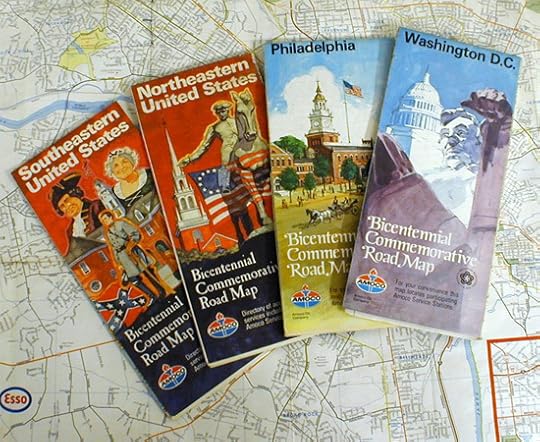
Gas Station Maps
As a young child, I was enamored with the free maps I could pick up at gas stations. Over time I had collected maps for nearly every state and some of the Canadian Provinces.
Along with the early days of the automobile and a generally confusing road system came the need for maps. Oil companies quickly realized that people who knew where they were going often traveled more, and consequently bought more gasoline.
Over time, anyone driving a car soon came to expect free maps whenever they stopped for gas, and companies like Rand McNally, H.M. Gousha, and General Drafting turned out millions to meet demand.
In the early 1970s, when I was first learning the freedom of owning a car, I couldn't imagine a time when these maps would not be an integral part of my life.
Today, as GPS and smartphones give us turn-by-turn instructions on where to go, printed road maps exist as little more than collectibles for people wishing to preserve their memories of a fading era.
Are printed books likely to go through a similar dwindling of popularity?
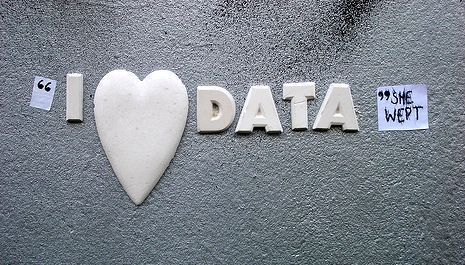
Our Relationship with Information is Changing
As the form and delivery system for accessing information changes, our relationship with information also begins to morph.
If we treat this like other types relationships, we can begin to see where we've come from and where we're going.
Gone are the days when we were simply "flirting" with our data, occasionally glancing at it, hoping it would pay attention to us as well.
In school we had more of a "dating" relationship, lugging books around, hoping they would impart their knowledge even though the parts that got read were few and far between. Much like dating a popular person, we became known by the books under our arms.
Once we started working, we became "married" to a relatively small universe of information that surrounded our job, company, and industry. People who became immersed in their particular universe became recognized as experts and quickly rose to the top.
Today we are beginning to have "affairs" with other exotic forms of information such as social networks and video chatting. All of these new forms of information seem much more alive and vibrant than the book world we had been married to for the past century.
Alone, on some dusty shelf, lie the books we had once been married to. On some level, many of us feel like we were cheating by abandoning our past, never getting closure for a divorce that left us with mixed loyalties haunting us on both a conscious and subconscious level.
If you think this is a crazy analogy, many will argue that its not. If anything, information is the heart and soul of our emotional self. Even though we may not feel it touching us like a finger pressing on our arm, a great piece of literature has a way of caressing our mind, adding fire to our inner rage, sending chills down the length of our spine, and giving us a euphoric high as we join our hero to reach a climactic conclusion.
Books of the past remain the physical manifestation of this kind of experience, and without their presence, a part of us feels lost.
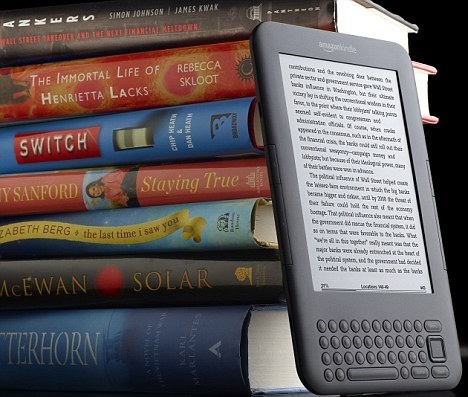
Replacing Books
The transition to other forms of information has been happening for decades. Once we are able to get past the emotion connection we have to physical books, we begin to see how the information world is splintering off into dozens of different categories.
Here is a list of 17 primary categories of information that people turn to on a daily basis. There may be more that I've missed, but as you think through the following media channels, you'll begin to understand how libraries of the future will need to function:
Games – 135 million Americans play video games an hour or more each month. In the U.S. 190 million households will use a next-generation video game console in 2012, of which 148 million will be connected to the Internet. The average gamer is 35 years old and they have been playing games on average for 13 years.
Digital Books – In January, USA Today reported a post-holiday e-book "surge," with 32 of the top 50 titles on its most recent list selling more copies in digital format than in print. Self-published e-books now represent 20-27% of digital book sales.
Audio Books - Audiobooks are the fastest growing sector of the publishing industry. There is currently a shortage of audiobooks worldwide as publishers race to meet demand. Only 0.75% (not even 1%!) of Amazon's book catalog has so far been converted to audio. Last year more than $1 billion worth of audiobooks were sold in the U.S. alone. Over 5,000 public libraries now offer free downloadable audio books.
Newspapers – Online readership of newspapers continues to grow, attracting more than 113 million readers in January 2012. Industry advertising revenues, however, continue to drop and are now at the same level as they were in 1950, when adjusted for inflation.
Magazines – The U.S. magazine industry is comprised of 5,146 businesses publishing a total of 38,000 titles. Time spent reading newspapers or magazines combined is roughly 3.9 hours per week. Nearly half of all magazine consumption takes place with the TV on. The magazine industry is declined 3.5% last year.
Music – According to Billboard's "2011 Music Industry Report," consumers bought 1.27 billion digital tracks last year, which accounted for 50.3% of all music sales. Digital track sales increased 8.5% in 2011. Meanwhile, physical sales declined 5%. According to Apple, there are an estimated 38 million songs in the known music universe.
Photos – Over 250 million photos are uploaded to Facebook every day
Videos – Cisco estimates that over 90% of all Internet content will be video by 2015. Over 100,000 'years' of Youtube video are viewed on Facebook every year. Over 350 million Youtube videos are shared on Twitter every year. Netflix streams 2 billion videos per quarter.
Television – According to the A.C. Nielsen Co., the average American watches more than 4 hours of TV each day, and owns 2.2 televisions. An estimated 41% of our information currently comes from television.
Movies – There are currently over 39,500 movie screens in the U.S. with over 4,500 of them converted to 3D screens. The average American goes to 6 movies per year. However, almost one-third of U.S. broadband Households use the Internet to watch movies on their TV sets, according to Park Associates. That number is growing, with 4% of U.S. households buying a video media receiver, such as Apple TV and Roku, over the 2011 holiday season
Radio – Satellite radio subscribers, currently at 20 million, is projected to reach 35 million by 2020. At the same time, Internet radio is projected to reach 196 million listeners by 2020. These combined equal the same number as terrestrial radio listeners.
Blogs – There are currently over 70 million WordPress blogs and 39 million Tumblr blogs worldwide.
Podcasts – According to Edison Research, an estimated 70 million Americans have listened to a podcast. The podcast audience has migrated from being predominantly "early adopters" to more closely resembling mainstream media consumers.
Apps – There are now over 1.2 million smartphone apps with over 35 billion downloads. Sometime this year the number of apps will exceed the number of books in print – 3.2 million.
Presentations – Leading the charge in this area, SlideShare is the world's largest community for sharing presentations. With 60 million monthly visitors and 130 million pageviews, it is amongst the most visited 200 websites in the world.
Courseware – The OpenCourseware movement has been catching fire with Apple leading the charge. iTunesU currently has over 1,000 Universities participating from 26 countries. Their selection of classes, now exceeding the 500,000 mark, have had over 700 million downloads. They recently announced they were expanding into the K-12 market.
Personal Networks – Whether its LinkedIn, Facebook, Twitter, Google+ or Pinterest, people are becoming increasingly reliant on their personal network for information. There are now over 2.8 billion social media profiles, representing around half of all Internet users worldwide. LinkedIn now has over 147 million members. Facebook has over 1.1 billion members and accounts for 20% of all pageviews on the Internet. Google+ currently has over 90 million users.
Each of these forms of information has a place in future libraries. Whether or not physical books decline or even disappear has little relevance in the overall scheme of future library operations.

The Coming Era of the Library Cloud
In June 2011, Steve Jobs made his final public appearance at a software developer's conference to unveil iCloud; a service that many believe will become his greatest legacy.
As Jobs envisioned it, the entire universe of songs, books, movies, and a variety of other information products would reside in iCloud and could be "pulled down" whenever someone needed to access it.
People would initially purchase the product through iTunes, and Apple would keep a copy of it in iCloud. So each subsequent purchase by other Apple users would be a quick download directly from iCloud.
Whether or not the information universe develops in the cloud like Jobs has envisioned, libraries will each need to develop their own cloud strategy for the future.
As an example, at a recent library event I was speaking at, one librarian mentioned she had just ordered 50 Kindles and 50 Nooks for their library. At the time, she was dealing with the restrictions from publishers that only allowed them to load each digital book on 10 devices. So which devices get the content in the end?
Over time, it's easy to imagine a library with 350 Kindles, 400 iPads, 250 Nooks, 150 Xooms, and a variety of other devices. Keeping track of which content is loaded on each device will become a logistical nightmare. However, having each piece of digital content loaded in the cloud and restricting it to 10 simultaneous downloads will be far more manageable.
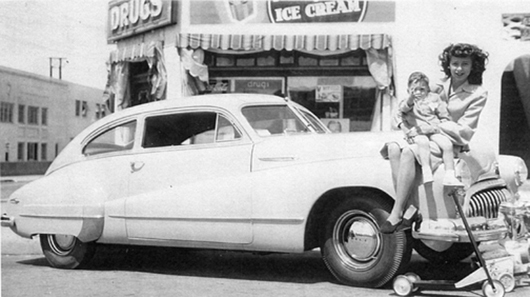
This snapshot in time could have been preserved by your local library.
The Value of the Community Archive
What was your community like in 1950, or for that matter in 1850 or even 1650? What role did your community play during the Civil War? How active was it during the Presidential elections of 1960? How did local people react to the bombing of Pearl Harbor?
We have access to plenty of history books that give us the "official story" of all the major events throughout history. But understanding the intersection of our city, our village, or our community with these earth-changing events has, for the most part, never been captured or preserved. In the future, this will become one of the most valuable functions provided by a community library.
Libraries have always had a mandate to archive the records of their service area, but it has rarely been pursued with more than passing enthusiasm. Archives of city council meetings and local history books made the cut, but few considered the library to be a good photo or video archive.
Over time, many of the newspapers, radio, and television stations will begin to disappear. As these businesses lose their viability, their storerooms of historical broadcast tapes and documents will need to be preserved. More specifically, every radio broadcast, newspaper, and television broadcast will need to be digitized and archived.
With the advent of iCloud and other similar services libraries will want to expand their hosting of original collections, and installing the equipment to digitize the information. The sale of this information to the outside world through an iTunes-like service could become a valuable income stream for libraries in the future.
Final Thoughts
Libraries, much like any living breathing organism, will have to adapt to the complex nature of the ever-changing world of information. As information becomes more sophisticated and complex, so will libraries.
Libraries are here to stay because they have a survival instinct. They have created a mutually dependent relationship with the communities they serve, and most importantly, they know how to adapt to the changing world around them.
I am always impressed with the creative things being done in libraries. As Eleanor Roosevelt once said, "The future belongs to those who believe in the beauty of their dreams." There are a lot of beautiful dreams taking place that will help form tomorrow's libraries.
Author of "Communicating with the Future" – the book that changes everything
February 24, 2012
The 5-Year Pipeline

Five years ago was the beginning of 2007. George Bush was President, Arnold Schwarzenegger was governor of California, Barack Obama wasn't very well known, and Saddam Hussein had just been executed in Iraq.
Five years ago the Dow Jones was on a tear, on track to break 14,000, and some of the big names on Wall Street were Bear Stearns, Lehman Brothers, WaMu, and Wachovia, names that no longer exist.
Some of the hottest job markets were in Florida, Arizona, and Las Vegas, areas that were about to see a mass exodus from jobs evaporating in thin air.
The iPhone had just been introduced, MySpace was the top social networking site, and the world still hadn't heard of the Amazon Kindle, iTunesU, mobile apps, iPad, Hulu, and Twitter.
But 2007 was also the year that today's college graduates decided on which college to attend and what their major would be. This is the stark reality of the 5-year pipeline created by today's existing college and university system. Today's colleges take far too long and are far too expensive. Here's why.
Open Courseware Movement
The idea of Open Courseware started in 1999 when the University of Tübingen in Germany published videos of lectures online. However, the movement didn't really catch on until MIT launched it's OpenCourseWare project in October 2002, followed soon after by similar efforts at Yale, Michigan University, and the University of California Berkeley.
Today, MIT has 2,080 courses available online and they have had over 131 million downloads.
Starting a couple years later in 2004, The Khan Academy now has over 2,800 courses that have had over 123 million downloads.
However, the 8,000-pound gorilla in this space is iTunesU started in 2007. They currently have over 1,000 Universities participating from 26 countries. Their selection of classes, now exceeding the 500,000 mark, have had over 700 million downloads. In addition, they recently announced they were expanding into the K-12 market.
As it stands now, all OpenCourseWare courses are free to anyone wishing to take them. However, the granting of credits is another matter.
Our Overarching Need for Teacherless Education Systems
After my talk at the TEDx Reset Event in Istanbul earlier this month, I had a conversation with a regional manager for Google who attended the event. He told me that Google is very interested in teacherless education because they have been struggling to find ways to educate people in Africa, and very few teachers want to move to Africa.
The notion that "better teachers equal better education" is based on a false premise. There can never be enough good teachers to go around, not if we are educating an entire world of 7 billion people, and certainly not if they all have to be there in person.
If we restrict ourselves to "learning" only when someone is available to "teach," we are destined to remain a woefully ignorant society.
People are learning from the moment they wake up in the morning until they fall asleep at night. And some researchers believe we are learning the most while we're sound asleep.
Yes, great teachers have proven techniques for presenting information in a way that makes it easily understood. And yes, the best teachers have to teach a subject several times before they can figure out all the best ways to teach it. But we now have the technology to take the best of the best and extend it to the far regions of the earth.
Education as a Commodity
Whenever education can be packaged into a repeatable format, it becomes a commodity. Certainly not all education fits into this category, but a remarkable portion of it does.
In 2008, Roger Bohn and James Short, two researchers at the University of California in San Diego, decided to do a study to determine how much information people have entering their brains on a daily basis.
Everyone today is being exposed to vast amounts of information, and their study was intended to quantify the amount of information we are all being immersed in.
But they added a rather interesting twist to the study. Because of the varying forms of information, and the difficulty in comparing video to magazines and newspapers, they decided to convert all information into one standard form of measurement – words.
Based on their final 2009 report, the average person in the U.S. has 100,500 words flowing into their heads on a daily basis. And this number is increasing by 2.6% per year.
So where are all these words coming from? In rough terms, 41% comes from watching television, 27% – computers, 11% – radio, 9% – print media, and smaller amounts from recorded music, movies, games, and other information sources.
As it turns out, the average American spends 11.8 hours every day consuming information. Some of it well structured, but most of it not.
Most educational institutions haven't found a good way to leverage the current data streams flowing into the minds of students, instead simply regarding it as irrelevant.
Whenever the information is incomplete, our minds will fill in the blanks, and often times incorrectly. A recent study done by KnowledgeFactor in Denver showed that roughly 15% of all information in our heads is confidently held misinformation.
Somewhere in the middle of all these information streams is the next, next, next big thing waiting to be mined.
So What's Missing?
Early in 2007 (exactly 5 years ago), I wrote a paper that described all of the components of a fully integrated online learning system. Many pieces of the original architecture I predicted have already begun to take shape. Here is a quick assessment of the pieces that are still missing.
Rapid Courseware-Builder – Several sites are developing courseware builders, but nothing that can be done quickly.
Courseware Standards – Once we develop some base standards around what constitutes a standardized learning module, such as time (30 or 60 minute modules), attributes (learning styles), and taxonomies (categorizations for prerequisites), an entire new industry of course designers will emerge to meet these standards. There is an opportunity here for someone to take the lead.
Modality Agnostic, Language Agnostic – Learning comes in many forms ranging from reading text, to listening to audio, to watching video, to hands-on experiences, and more. The standardized learning module needs to accommodate all modes of sensory input and learning experiences.
Sustainable Paid Model – Education is never free. It requires time, commitment, and understanding. Similarly, a well-functioning online learning system needs some revenue stream to incentivize good content and insure its long-term survivability.
Student-Driven, Industry-Driven Ratings System – So far no systems allow for multiple forms of rating, such as student ratings combined with industry (think IEEE or American Chemical Society) grading of content.
Student Preference Engine (What should I take next?) – Every student's interests and preferences will change over time. A well-designed system will be able to decipher personal whims and integrate those changing desires into a new kind of preference engine that suggests what they will want to learn next.
Alternative Credentialing System – Colleges and Universities currently have a lock on the granting of the all-important college credits. Credits, as they exist today, will be a poor match for the online world currently emerging. For this reason, there is a golden opportunity for someone to reinvent the credit system in a way that will work well in global online learning environment.
Learning Camps – Since a large portion of information requires physical touch-and-feel learning and cannot be conveyed in a digital-only format, a new breed of learning camps will emerge that are closely integrated with the online system.
Eight Things You Won't Find in a Course Delivery College in the Future
Over time we will see colleges split into two different models that will emphasize either course delivery or knowledge creation. Those colleges involved only in course delivery will become very price competitive as online courseware becomes universally distributed. Most will be seeking unique ways to differentiate themselves and assert some new competitive advantage.
Here are a few things you won't find in future colleges that only emphasize course-delivery:
A Physical Campus – Most physical campuses will evolve into a clustering of learning camps and knowledge creation organizations.
Dormitories – Traditional dormitories will be converted into a variety of short-stay residences, longer-stay apartments, or multi-use facilities.
Expensive Textbooks – The days of the expensive physical textbook are numbered.
Credit Hours – An alternative credentialing system will soon emerge.
4-Year Degrees – Traditional 4-year degrees will be replaces with lifetime learning credentials. Masters and PhDs will become junior achievement levels in a much larger system that recognizes far higher levels of accomplishments.
Sports Teams – Colleges in the future won't be able to manage the overhead of today's elaborate collegiate sports competitions. Existing sports programs that are self-sufficient will transition into community-based sports leagues.
Classrooms – While some form of classroom will always exist, the any-time, any-place advantages of online course delivery will make the vast majority of them obsolete.
Teachers – Yes, we will also have a long-term need for teachers, but in the course-delivery college of the future, where courses are delivered online, teachers, trainers, and professors will be replaced with coaches who can assist whenever someone gets stuck.
Unleashing Our True Potential
Teaching requires experts. Learning only requires coaches.
We are shifting from a teaching model to a learning model.
In order to teach a topic, the person in the front of the room has to be an expert on the topic. There simply aren't enough experts to go around. As we move into online learning environments, we will move away from teachers to coaches – people who are experts at helping people learn.
To some this may seem like a subtle distinction, but it will have a profound effect on today's educational systems.
Final Thoughts
Business professionals in the future will require twice as much training as their counterparts today just to be competitive.
As we move into a globally competitive environment, the competition will stiffen, and our need to shift gears will happen at a moment's notice. We will no longer have the time and place luxuries of waiting for education to happen.
If your entire universe of courseware options for training is the 2,000 courses offered by most universities, you will find yourself at a severe disadvantage when competing against someone who was trained through a system like iTunes, with over 500,000 course options currently and millions more in the future.
The transition ahead for colleges and universities will be messy as competing forces on both sides of the change movement begin to form. Moving along the same lines as virtually every other industry of the past, colleges will be forced to become more efficient, doing more for less.
Over time, this transition will offer tremendous benefits to society. In much the same way where ancient libraries had their books chained to the podiums, colleges have tried to chain learning to their campuses. Unleashing these chains of learning will serve as a cathartic release for the entire world.
Author of "Communicating with the Future" – the book that changes everything
February 17, 2012
Rethinking Retail and 18 Examples of Change

What music comes to mind when you try on your new pair of jeans? Does that "music in your head" somehow change when you try on a different brand?
The next time you try on a piece of jewelry, pay very close attention to the emotional experiences that run through your mind as you touch and feel the jewelry.
Even though clothing and jewelry are inanimate objects, they are closely tied to an emotional response, and brand managers today are working overtime to figure out ways to both cultivate and amplify that emotional connection.
One fascinating example of this is Gomus, a Brazil-based music branding company that embeds RFID tags in clothing. When a customer tries on a piece of clothing in the changing room, music will automatically come on that matches the feel or mood of the clothing.
This is just one example of how retail stores of the future are attempting to differentiate themselves from the online world. Here are 18 more examples of how future retail is on the verge of becoming an exciting new frontier for both product designers and consumers alike.
Setting the Stage
A famous 1998 article in Wired Magazine written by Nicholas Negroponte predicted with great accuracy the demise of traditional retail. What he was not able to predict is all of the nuances of how the online world and technology would be integrated and blend together to form unusual experiences that will become part and parcel to virtually every new retail store in the future.
When looking at how retail is evolving, there are several factors that must be considered. Here are a few data points to consider as we dive deeper into this topic.
According to Google, 8 out of 10 consumers research purchases online. But not all make their purchases online. Interestingly enough, only 42% research online and then buy online, while 51% research online and then buy in-store.
According to USA Today, over the past two decades over 75% of all independent bookstores have closed.
Over the past year, Gap Inc., J.C. Penney, Gamestop, and Nordstrom have all opened and closed storefronts on Facebook. The stores' quick failure shows that Facebook doesn't drive commerce and casts doubt on its value for retailers, according to Forrester Research.
A study by Deloitte showed that multi-channel consumers who receive information from more than one source prior to purchase, such as in-store, online, mobile, and/or catalog, will spend 82% more per transaction than a customer who only shops in stores.
E-commerce conversion rates have been hovering around 2-3.5% while brick-and-mortar conversion rates for fashion retailers have been around 20-25% according to Verdict Research.
The concept of "augmented humanity" began to crystallize with the introduction of Siri as part of the iPhone 4S rollout. Tapping into the power of voice response changes the way people interact with their smartphones — and looking ahead, it could reshape the way consumers shop.
Research done by IPSOS OTX shows that out of the 40% of US consumers who own smartphones, 70% use their smartphones while shopping in-store.
18 Driving Forces in Retail
Understanding the current trends is only part of the equation. As we dive into some of the possibilities we begin to see a radically different picture emerge.
Here are 18 examples of companies that are pushing the boundaries of imagination when it comes to future retail.
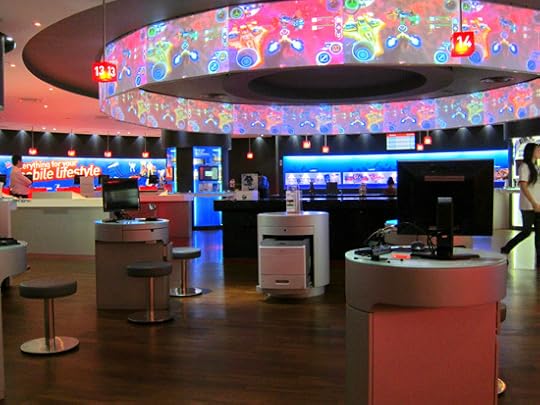
SingTel – Turning store windows into a touchscreen experience
1.) SingTel, a Singapore-based mobile phone service launched their flagship store in Singapore's Comcentre in July 2011. The store's exterior glass walls have embedded interactive digital touchscreens in them, meaning that the store will effectively be open 24 hours a day.

Homeplus – Turning empty walls in a subway into a new shopping experience
2.) Homeplus, Korea's largest discount chain has announced the opening of the world's first virtual store for smartphone users. They launched a series of virtual stores on subway platforms, enabling customers to make purchases using their smartphones while they wait for a train. During the trial period, Homeplus' online sales increased by 130%, with over 10,000 new customers trying the stores.
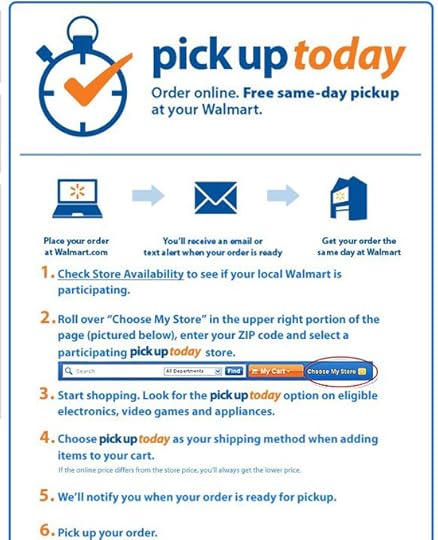
Wal-Mart's "order now, pickup later service"
3.) In March 2011, Walmart launched "Pick Up Today," a service that allows customers to order online and collect their shopping from a local store the same day. This new service offers same-day pick up of online purchases, for free. Walmart began testing the program at 750 stores in 20 markets late last year and will roll it out nationally to all locations by the end of March.

Groupon is rethinking the bargain-hunter's dream experience
4.) Both Groupon and Living Social are testing in-store deals that are delivered directly to a person's smartphone as soon as they enter a store. Eventually this service will become aisle-specific, delivering deals that are only within a few feet of the customer.
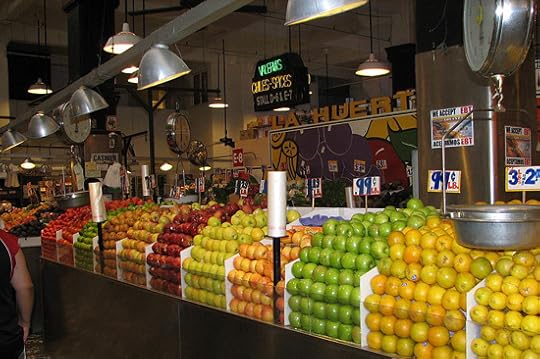
In.gredient's zero-waste, package-free grocery store
5.) Soon to be the newest grocery store in Austin, Texas, the town where Whole Foods was born, will be the country's first zero-waste, package-free grocery store, cleverly named In.gredients. Shoppers at the store will bring their own reusable containers to fill with local and organic groceries ranging from dry bulk and dairy, to wine and household cleaners.
Click here to view the embedded video.
Envisioning a new world for urban agriculture
6.) Taking fresh produce one step further, the visionary thinkers at PlantLab, a Dutch leader in the urban agricultural movement is exploring new ways to grow produce in sunless, rain-less rooms in underground vaults beneath grocery stores.

ThinFilm Smart Tags
7.) ThinFilm Electronics is working with Xerox PARC to develop smart tags in the form of printable plastic labels that will actively monitor food freshness. The multilayer tags will combine a year's worth of battery power, sensors and a small display, and will initially be used to show a temperature record of perishable food and medications. In the future smart tags will be used to trace the lifecycle of a product including point of origin, distance traveled, age, environmental changes, and any degradation of the product's integrity that may have occurred along the way.
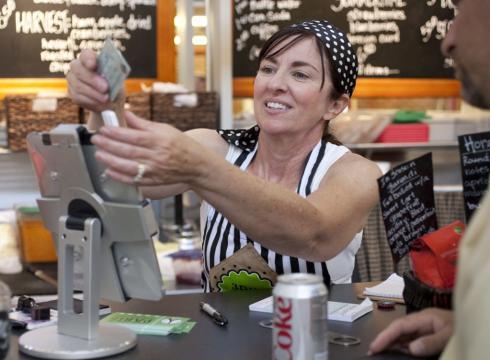
Paperless receipts are all the rage
8.) In August 2011, the New York Times reported on an increase in the popularity of digital, paperless receipts, touting it as a convenient, environmentally friendly alternative to paper receipts. Gone are the days of digging through your purse looking for that crumpled slip of paper. Retailers in the US include Apple, Whole Foods Market, Gap, Sears, and Kmart offer shoppers the option of choosing to receive proof of purchase by email or via password-protected websites.

What could be more appealing than Books and Cookies?
9.) In May 2011, a Santa Monica-based bookstore called Books and Cookies was launched as an educational experience to provide children with literature and tasty treats. The store stocks children's books – available to purchase or read in the child-friendly reading room area – toys, and freshly baked cookies and snacks. The brainchild of Chudney Ross, youngest daughter of singer Diana Ross, the store offers great books and toys for toddlers and tweens, daily events, healthy snacks and drop-dead delicious cookies just a few blocks from the area's famous California shoreline.

Cook and Coffee – Combining classes, product demos, and a great in-store experience
10.) Cook and Coffee is a retail space in Paris that combines classes and demonstrations with their in-store experience. Run by Italian electronic appliance manufacturer De'Longhi, customers can learn the history of coffee from a specialist barista, sample various blends and try out kitchen appliances including espresso makers and food processors. The space is equipped with interactive screens and from September 2010 onwards, consumers have been able to attend no cost cooking workshops, such as how to make custard or pasta.

2theloo – A clean restroom and a new kind of shopping experience
11.) 2theloo (to the loo) is a chain of Dutch restrooms. Each visit to the restroom costs 0.50 euros ($0.68). It seems, that in Europe, restrooms are not considered a public service and you have to pay for them pretty much everywhere.
However, the chain of 'always clean' restroom shops, located in city centers, shopping centers, and train and gas stations, not only offer eco-friendly toilets, including disabled access restrooms and family restrooms, but also shops with toiletry products and sometimes even a coffee shop.
The secret underground shopping experience of Bodega
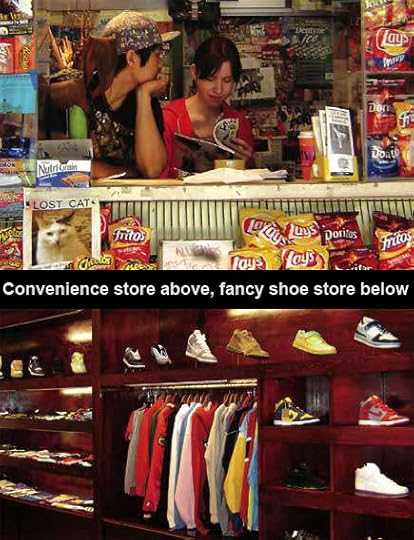
12.) Everyone knows that the hottest businesses are the ones that are impossible to find. Bodega is a Boston shoe store which people truly wouldn't be able to find despite their best efforts because it's hidden under the guise of a convenience store. Shoppers need to enter, and find the Snapple vending machine on one of the walls, and then they have the ability to enter via a trap door and go underground and shop at the exclusive shoe boutique decked in polished hardwood.

MyBestFit's whole-body scanner
13.) MyBestFit is a free service available in a number of U.S. malls. Customers enter a circular whole-body scanner that uses low-power radio waves to record over 200,000 body measurements. It then matches the customer's body type to clothes in its database, such as products from mall staples American Eagle, Old Navy, Eddie Bauer and Talbots. A printout advises customers what and where to buy the clothes that will best match their body.

Intel Labs' Magic Mirror
14.) Intel Labs' Magic Mirror aims to transform the shopping experience using a realistic avatar of the consumer dressed in the latest fashions, showing Intel's research in body tracking and parametric human body model. This technology uses a 3D avatar that tracks a person's movements in real time.
ng Connect's Virtual Personal Stylist
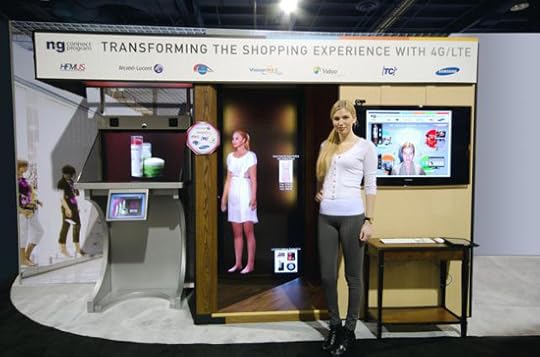
15.) At CES, ng Connect demonstrated its Virtual Personal Stylist, a shopping experience that will bring the personalization and customization of offline and online shopping together. Using a tablet or mobile phone, shoppers in stores will be able to access their avatar via a full-size networked "mirror" where they can "try-on" clothing, make-up and more without time-consuming trips to the changing room.

Pánská Pasáž – Redefining the male shopping experience
16.) Pánská Pasáž is an upscale mall in Prague focusing exclusively on male shoppers. The 800-square-meter venue features 19 luxury shops including Ralph Lauren, famed Austrian tailor Knize, a gourmet food market, a shoe shop, a perfume store for men, a traditional barbershop and a tobacco store.

Some of the fabric pattern possibilities with 3D printed clothing
3D Printing and the Clothing in Our Future
It is important to note that the garment/fashion industry is one of the few remaining industries where mass produced items are still assembled almost entirely by hand. This means that although design may happen in the first world, production is often outsourced to the third world where labor is cheap.
While some of you may not be thrilled with the possibility of wearing plastic garments, 3D printers in the future will have the ability to print cotton, polyester, wool, or any number of other traditional and non-traditional materials. Here are a few examples.

The N12 Bra created with a 3D Printer
17.) The result of a collaboration between Continuum Fashion and the 3D printing experts at Shapeways, the N12 Bra is billed as the "the first completely 3D-printed, ready-to-wear, item of clothing." The high-tech bikini's name is derived from "nylon 12″, the material that's used in the 3D printing process.

One of Hoon Chung's 3D printed shoe designs
18.) Hoon Chung, a student at the London College of Fashion, has designed a collection of 3D-printed shoes that he hopes will rock the fashion world.

Cubify's 3D printer designed for consumers
Another 3D printer that was all the rage at the Consumer Electronics Show in Las Vegas that I attended last month, was Cubify's consumer-targeted desktop printer called Cube that is cheap enough for home use (retails for around $1200).
Once a person's feet are scanned in, the printer can be used to create a custom-fit shoe that is styled and colored to your exact preferences.
Final Thoughts
People are social creatures by nature and while the online world has dealt a temporary setback to traditional retailers, a new breed of unusual stores filled with hyper-individualized experiences is starting to enter the marketplace.
Where many commodity items such as books and music are better delivered in digital form online, other products will find ways to differentiate themselves through instant status-fixes, group learning experiences, relationship building opportunities, and much more.
When it comes to retail, consumers are in control. They vote with their dollar when they decide what to buy, where to buy, when to buy, and how much they're willing or can afford to pay.
In our connected world, where information is fluid and transparent, retailers must become actively engaged in the global conversation. If not, their customers will simply begin the conversations without them.
Physical stores currently still provide the best way to create a high-value relationship with customers and build a branded experience, but this could easily change over time. Although brick and mortar stores are not going away any time soon, the actual value they add to their communities as well as their appearance and interactivity levels plus the variety of products they offer will remain in transition for the foreseeable future.
Author of "Communicating with the Future" – the book that changes everything
____________________________________
ADDITIONAL UPDATES
____________________________________
19.) Starbucks Opens First-Ever Ski-Thru Coffee Shop - A Starbucks located at the Squaw Valley Ski Resort was built into the slopes at an elevation of 8,000 feet, allowing resort-goers to purchase a cup of Joe without ever having to remove their skis or snowboards.

Jewelry designed by Nervous System printed on a 3D printer
20.) Nervous System is a design studio that works at the intersection of science, art, and technology. Their jewelry that was printed on a 3d printer exemplifies the current craze in 3D printer design and is testament to the fact that technology and craft are going a long way in partnership to make beautiful d'objects that wouldn't otherwise exist in nature.
February 10, 2012
Dismantling of our Power Industry Infrastructure

Photo of me demonstrating an unuual thermoelectric generator
with NY Times Correspondent Matthew Wald
On Wednesday I was invited to speak on a panel at the 2012 National Electricity Forum, an event sponsored by the U.S. Department of Energy, in Washington DC.
In the audience were a thousand power industry executives, regulators, and key industry service providers.
The event was kicked off by U.S. Secretary of Energy Steven Chu, a Nobel Prize winning physicist and former director of the Lawrence Berkeley National Laboratory. Our panel took the stage immediately afterward.
Other panelists included Marina Gorbis, Executive Director of the Institute for the Future, John Petersen, President of the Arlington Institute, and our Moderator Matthew Wald, Senior Washington Bureau Correspondent for the NY Times.
As the kickoff speaker on the panel, my message to them noted that the power industry is an industry that is under attack. An attack not being carried out by terrorists or invading armies, rather it is being attacked by emerging new technologies that have been advancing quickly and are currently beginning to boil around the edges.
My advice was that they begin to make transition plans for dismantling the industry, plans that will include dismantling our national grid and replace it with a series of micro grids. But it included much more than that.

Understanding the National Power Grid
During the early years of distributing electricity, Edison's direct current (DC) was the standard for the United States and Edison focused heavily on retaining his patent royalties. DC worked well with incandescent bulbs and motors, which the principal load of that era. DC systems could be directly tied to storage batteries, providing the all-important load-leveling and backup power during interruptions of the generator.
At the time, there were no practical AC motors available. Edison invented the first electric meter to bill customers for the power they used, but this meter only worked with DC. All of these technical issues gave DC a huge advantage. However, progress stalled out because they were not able to transmit DC beyond the 1-2 miles range of the generator.
George Westinghouse
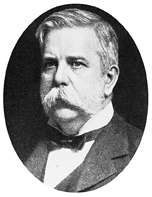
Counter to what most have been led to believe, alternating current (AC) had its origins in Europe before the time of Tesla, but didn't progress very far until it caught the attention of George Westinghouse. Westinghouse put together a team run by William Stanley to explore ways to use AC current. In 1888 Tesla partnered with Westinghouse Electric to commercialize his own particular version of AC, which caught on in a big way.
Creating the 110-Volt Standard
Edison's DC distribution network consisted of lots of generators and lots of wires. There were no transformers to vary the voltage. Instead, the system operated at the same voltage level throughout the network. As an example, a 100-volt light in a home or office was connected to a generator producing 110 volts, with the line lost accounting for the drop in voltage.
The 110-volt standard was adopted because it was convenient for light bulb manufacturers to work with. They could produce a high-resistance carbon filament bulb that could withstand 100 volts, and still yield enough illumination to be economically competitive with gas lighting. At the time it was felt that 100 volts was not likely to present a severe hazard of fatal electric shock.
Edison, the Elephant Slayer
The world's first AC hydroelectric plant began operations in 1889 at the Williamette Falls Station in Oregon City, Oregon, and the same company began work on an even bigger plant at Niagara Falls.
When Edison got wind of this, he set out on a national campaign to warn the world of the dangers of AC power. Through a series of town hall meetings he demonstrated how terrible AC current was by rounding up stray cats and dogs and electrocuting them on stage.
He also tried to popularize the term for being electrocuted as being "Westinghoused".
Years after DC had lost the "war of the currents," in 1903, Edison's film crew made a movie of the electrocution of Topsy, a Coney Island circus elephant which had recently killed three men. A 23 second video of the "Electrocution of Topsy" can be seen here on YouTube.
The Birth of a National Power Grid
With Edison's failure to find a long-range transmission system for DC power, a national AC grid was born.

Even though the "current wars" official ending can be traced to the 1891 International Electro-Technical Exhibition in Frankfurt Germany, some cities continued to use DC well into the 20th century. For example, central Helsinki had a DC network operating until the late 1940s, and Stockholm lost its last remaining DC system in the 1970s.
Since power generation through hydroelectric plants such as the one at Niagara Falls were far away from the population it served, and later coal-fired and oil-fired plants were dirty and noisy, power generation was out-of-sight and out-of-mind for the average consumer. They didn't care where the power came from as long as long as they had power.
For the past century, nations all over the world have invested heavily in building national and international grids, based upon the assumption that local power generation was not possible. This, however, is about to change.

U.S. Energy Secretary Steven Chu
Introducing the Game-Changers
At Wednesday's 2012 National Electricity Forum, U.S. Energy Secretary Steven Chu commented, "If someone invents a cheap, efficient form of storage, it will be a game changer."
Secretary Chu also suggested another game-changer would be, "Breaking down the barriers between utilities so that the variability of generation can be leveled out over a larger area."
Both of these game-changers already exist.
One technology I demonstrated at the Forum, (shown at top) was a demo version of a thermoelectric generator being developed by Phil Watts in Longmont, Colorado. This local power generator works on the temperature differential of water, with a very clever system for routing geothermally cooled water on one side of the chip and solar heated water on the other. His secret ingredient is an unusual nano-fluid that causes the system to operate with great efficiencies when there is only a minor temperature differential, even at night.
Phil's technology is just one of many I've seen that solves the game-changing issue of local generation. You can see his patent application here.
The second company that I talked about at the Forum is the first I've seen that efficiently solves both game-changer problems – local generation and storage.
Since I am under an NDA and not able to discuss this technology in great detail, I will refer all specific questions to the company's attorney, Karl Dakin – (Feel free to arrange a demonstration for yourself).
What I can tell you is this. The company is a startup in south Denver founded by a physicist with a strong entrepreneurial background. He's assembling a formidable team to move the technology forward.
The technology will reside in a box that sits adjacent to every home. A series of boxes can also replace a local substation. Power can be generated for less than 2 cents per kwh. Each unit can produce three times the power needed for the average home, and whatever power is unused can be efficiently stored from one day to the next.
I've looked at hundreds of energy related inventions over the years and none I've seen have the potential of this one. The technology operates silently inside a container without the need for any external power, water, or other inputs. There is no pollution. And the best part is that it serves as a mass energy storage system, efficiently storing power from one day to the next.
I can also point out what this technology is NOT. It is not a Tesla device. It is not a solar, nuclear, geothermal, or fuel cell device. Also, it does not involve zero point energy or any other mystery science.
What's Next?
If we work under the assumption that both game-changing issues have been solved with this technology, the next discussion will center around commercialization, adoption rates, and rethinking the industry.
Even with a near-perfect solution for local power generation and storage, any new entrant will be faced with huge amounts of resistance. Resistance to change is a built-in byproduct of human nature. But couple that with legacy infrastructure, a century worth of reinforcing public policy, and the seemingly infinite resources of public utilities. Calling them a formidable opponent is indeed an understatement.
But the game quickly shifts once a large player forms some sort of alliance with the startup and takes them under their wing. Watch carefully to see who decides to cut this kind of deal.
The Adoption Curve
Assuming that a large player aligns with the startup in the near future, how will the adoption of this technology unfold?
Over time, the national electric grid will be converted to a series of micro grids. Grids could be eliminated completely, but there are advantages to being on some sort of a grid as I will explain later.
Since the power industry in unlikely to be an early adopter, look for local utilities and cities to step up to the plate. Industry standards and long-term visioning will lag several years behind the early adopters.
Transition planning will be difficult with the first few installations. Considering all parts of the equation, at what point will one power source be turned off and the new one be turned on?
Businesses, states, and even countries will vie for manufacturing, distribution, and installation rights. There may even be a series of auctions used to decide the winners. Product manufacturing, even with multiple players working with highly automated plants will take years to make a large dent in the current market.
As a best-case scenario, with optimal adoption rates, it is unlikely that more than 10% of the market can be converted over in less than a decade. However, the 2nd decade will see almost universal adoption.
Working from a Mindset of Scarcity
As a society, we have been conditioned to think that electric power is a scarce commodity. Twenty years ago we also thought information storage was a scarce commodity. Now we don't even bat an eye when we store large photos or videos on our computers.
Over time, the price of power will begin to drop. As we've shown with progressively cheaper storage, usage will dramatically increase.
Rather than setting the thermostat to 62 degrees and freezing during the winter, what if we could set the temperature at a truly comfortable degree and not stress about going broke from it or overconsuming?
Being cost conscious of every kwh we use, we have gone through a period of sealing our houses to the point where they can no longer breath. A tightly sealed house creates a very polluted environment with the natural outgassing and chemical emissions of carpet, furniture, paint, and cooking products getting embedded in every wall. With this in mind, a draftier house can actually be a healthier house, and lower cost energy will radically realign our thinking in this area.
Power Laws of Networks
Information networks are a different breed of animal than power networks …or are they?
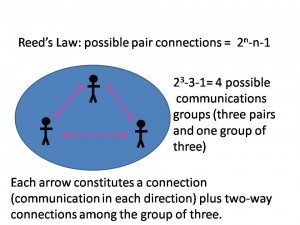
Over the years we have developed a number of "laws" to describe the value of having networks of people connected people. Here are three prominent laws used to describe the change in value as networks went from one-way broadcasts to two-way communication networks.
[image error]
Sarnoff's Law – The value of a broadcast network is directly proportional to the number of viewers.

Metcalfe's Law – The value of a telecommunications network is proportional to the square of the number of users connected to the system
(images – credit UbberNoggin)
Reed's Law - The value of large networks, particularly social networks, will scale exponentially with the size of the network.
When it comes to a networked power grid, we currently have a poor understanding of the value that can be derived from it. It is fairly clear that the value increases dramatically if users are both sending and receiving power. It's also clear that if power is somehow coupled with information it becomes exponentially more valuable.
Final Thoughts
Reinventing the power grid is long overdue. Over the past decade the number inventions has escalated, and caliber of the technology has greatly improved. If the two technologies I've mentioned fail, there are thousands of others quickly lining up to take their place.
Over the next couple decades we will witness the dismantling of the national power grid, both in the U.S. and every other nation on earth. If the U.S. fails to act quickly, several other countries will take the lead and the competitive pressure of other nations cannot be silenced by reinforcing policy decisions or failure to act.
This will be a very difficult transition because most wealthy investors have at least some of their portfolio invested in energy-related securities. This will result in many losers along the way.
Current public policy-driven efforts to deal with climate change issues will disappear, as technology will provide a much better solution.
Transformation of national grids will lead to transformation of the global economy, but it won't solve all the problems. In fact it will create a whole set of new problems, but hopefully a better grade of problems.
Author of "Communicating with the Future" - the book that changes everything
.
.
.
February 2, 2012
2 Billion Jobs to Disappear by 2030
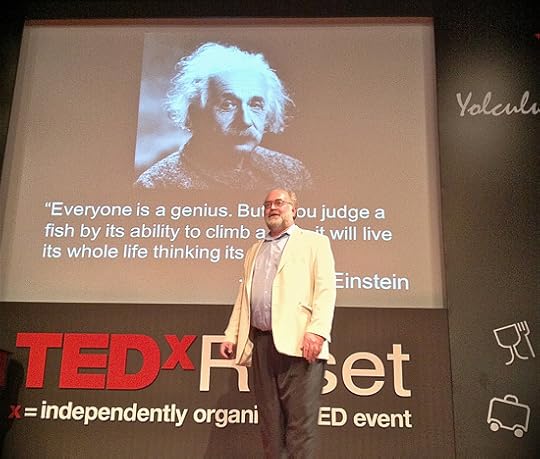
A picture of me speaking at yesterday's TEDxReset in Istanbul.
Yesterday I was honored to be one of the featured speakers at the TEDxReset Conference in Istanbul, Turkey where I predicted that over 2 billion jobs will disappear by 2030. Since my 18-minute talk was about the rapidly shifting nature of colleges and higher education, I didn't have time to explain how and why so many jobs would be going away. Because of all of the questions I received afterwards, I will do that here.
If you haven't been to a TEDx event, it is hard to confer the life-changing nature of something like this. Ali Ustundag and his team pulled off a wonderful event.
The day was filled with an energizing mix of musicians, inspiration, and big thinkers. During the breaks, audience members were eager to hear more and peppered the speakers with countless questions. They were also extremely eager to hear more about the future.
When I brought up the idea of 2 billion jobs disappearing (roughly 50% of all the jobs on the planet) it wasn't intended as a doom and gloom outlook. Rather, it was intended as a wakeup call, letting the world know how quickly things are about to change, and letting academia know that much of the battle ahead will be taking place at their doorstep.
Here is a brief overview of five industries – where the jobs will be going away and the jobs that will likely replace at least some of them – over the coming decades.
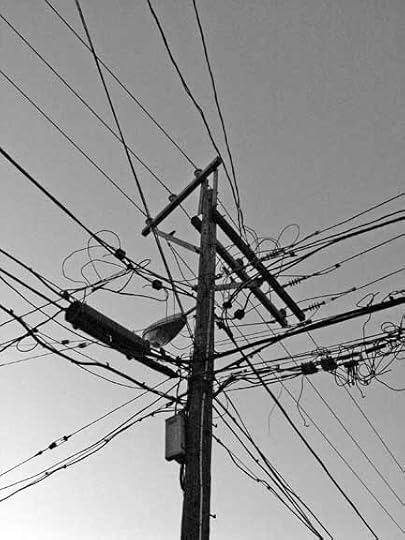
No one will miss the clutter and chaos of power lines.
1.) Power Industry
Until now, the utility companies existed as a safe career path where little more than storm-related outages and an occasional rate increase would cause industry officials to raise their eyebrows.
Yet the public has become increasingly vocal about their concerns over long-term health and environmental issues relating to the current structure and disseminating methods of of the power industry, causing a number of ingenious minds to look for a better way of doing things.
Recently I was introduced to two solutions that seem predestined to start the proverbial row of dominoes to start falling. There are likely many more waiting in the wings, but these two capitalize on existing variances found in nature and are unusually elegant in the way they solve the problem of generating clean power at a low cost.
Both companies have asked me to keep quiet about their technology until they are a bit farther along, but I will at least explain the overarching ramifications.
I should emphasize that both technologies are intended to work inside the current utility company structure, so the changes will happen within the industry itself.
To begin with, these technologies will shift utilities around the world from national grids to micro grids that can be scaled from a single home to entire cities. The dirty power era will finally be over and the power lines that dangle menacingly over our neighborhoods, will begin to come down. All of them.
While the industry will go through a long-term shrinking trend, the immediate shift will cause many new jobs to be created.
Jobs Going Away
Power generation plants will begin to close down.
Coal plants will begin to close down.
Many railroad and transportation workers will no longer be needed.
Even wind farms, natural gas, and bio-fuel generators will begin to close down.
Ethanol plants will be phased out or repurposed.
Utility company engineers, gone.
Line repairmen, gone.
New Jobs Created
Manufacturing power generation units the size of ac units will go into full production.
Installation crews will begin to work around the clock.
The entire national grid will need to be taken down (a 20 year project). Much of it will be recycled and the recycling process alone will employ many thousands of people.
Micro-grid operations will open in every community requiring a new breed of engineers, managers, and regulators.
Many more.

San Francisco–based design team Mike and Maaike's concept car, the ATNMBL (the "autonomobile").
2.) Automobile Transportation – Going Driverless
Over the next 10 years we will see the first wave of autonomous vehicles hit the roads, with some of the first inroads made by vehicles that deliver packages, groceries, and fast-mail envelopes.
The first wave of driverless vehicles will be luxury vehicles that allow you to kick back, listen to music, have a cup of coffee, stop wherever you need to along the way, stay productive in transit with connections to the Internet, make phone calls, and even watch a movie or two, for substantially less than the cost of today's limos.
Driverless technology will initially require a driver, but it will quickly creep into everyday use much as airbags did. First as an expensive option for luxury cars, but eventually it will become a safety feature stipulated by the government.
The greatest benefits of this kind of automation won't be realized until the driver's hands are off the wheel. With over 2 million people involved in car accidents every year in the U.S., it won't take long for legislators to be convinced that driverless cars are a substantially safer and more effective option.
The privilege of driving is about to be redefined.
Jobs Going Away
Taxi and limo drivers, gone.
Bus drivers, gone.
Truck drivers, gone.
Gas stations, parking lots, traffic cops, traffic courts, gone.
Fewer doctors and nurses will be needed to treat injuries.
Pizza (and other food) delivery drivers, gone.
Mail delivery drivers, gone.
FedEx and UPS delivery jobs, gone.
As people shift from owning their own vehicles to a transportation-on-demand system, the total number of vehicles manufactured will also begin to decline.
New Jobs Created
Delivery dispatchers
Traffic monitoring systems, although automated, will require a management team.
Automated traffic designers, architects, and engineers
Driverless "ride experience" people.
Driverless operating system engineers.
Emergency crews for when things go wrong.

Apple is involved in another life changing innovation with iTunes U.
3.) Education
The OpenCourseware Movement took hold in 2001 when MIT started recording all their courses and making them available for free online. They currently have over 2080 courses available that have been downloaded 131 million times.
In 2004 the Khan Academy was started with a clear and concise way of teaching science and math. Today they offer over 2,400 courses that have been downloaded 116 million times.
Now, the 8,000 pound gorilla in the OpenCourseware space is Apple's iTunes U. This platform offers over 500,000 courses from 1,000 universities that have been downloaded over 700 million times. Recently they also started moving into the K-12 space.
All of these courses are free for anyone to take. So how do colleges, that charge steep tuitions, compete with "free"?
As the OpenCourseware Movement has shown us, courses are becoming a commodity. Teachers only need to teach once, record it, and then move on to another topic or something else.
In the middle of all this we are transitioning from a teaching model to a learning model. Why do we need to wait for a teacher to take the stage in the front of the room when we can learn whatever is of interest to us at any moment?
Teaching requires experts. Learning only requires coaches.
With all of the assets in place, we are moving quickly into the new frontier of a teacherless education system.
Jobs Going Away
Teachers.
Trainers.
Professors.
New Jobs Created
Coaches.
Course designers.
Learning camps.
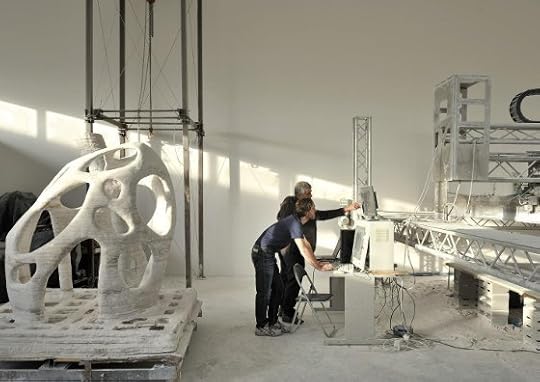
Prototype of a 40′ X 40′ 3D Printer capable of printing a small building
4.) 3D Printers
Unlike a machine shop that starts with a large piece of metal and carves away everything but the final piece, 3D printing is an object creation technology where the shape of the objects are formed through a process of building up layers of material until all of the details are in place.

Chuck Hull in front of stereolithography machine.
The first commercial 3D printer was invented by Charles Hull in 1984, based on a technique called stereolithography.
Three-dimensional printing makes it as cheap to create single items as it is to produce thousands of items and thus undermines economies of scale. It may have as profound an impact on the world as the coming of the factory did during the Henry Ford era.

3D Printed Dress
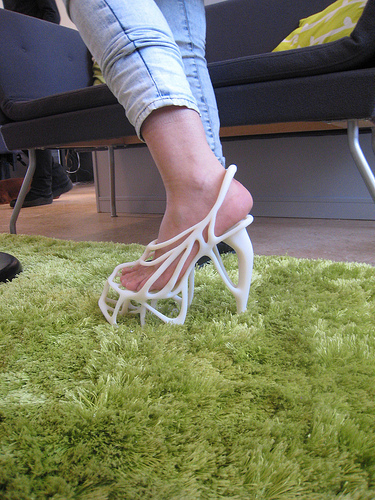
3D Printed Shoes
Jobs Going Away
If we can print our own clothes and they fit perfectly, clothing manufacturers and clothing retailers will quickly go away.
Similarly, if we can print our own shoes, shoe manufacturers and shoe retailers will cease to be relevant.
If we can print construction material, the lumber, rock, drywall, shingle, concrete, and various other construction industries will go away.
New Jobs Created
3D printer design, engineering, and manufacturing.
3D printer repairmen will be in big demand.
Product designers, stylists, and engineers for 3D printers.
3D printer 'Ink' sellers.

Boston Dynamics' BigDog
5.) Bots
We are moving quickly past the robotic vacuum cleaner stage to far more complex machines.
The BigDog robot, shown above, is among the most impressive and potentially useful for troops in the immediate future–it's being developed to act as an autonomous drone assistant that'll carry gear for soldiers across rough battlefield terrain.
Nearly every physical task can conceivably be done by a robot at some point in the future.
Jobs Going Away
Fishing bots will replace fishermen.
Mining bots will replace miners.
Ag bots will replace farmers.
Inspection bots will replace human inspectors.
Warrior drones will replace soldiers.
Robots can pick up building material coming out of the 3D printer and begin building a house with it.
New Jobs Created
Robot designers, engineers, repairmen.
Robot dispatchers.
Robot therapists.
Robot trainers.
Robot fashion designers.
Final Thoughts
In these five industries alone there will be hundreds of millions of jobs disappearing. But many other sectors will also be affected.
Certainly there's a downside to all this. The more technology we rely on, the more breaking points we'll have in our lives.
Driverless drones can deliver people. These people can deliver bombs or illicit drugs as easily as pizza.
Robots that can build building can also destroy buildings.
All of this technology could make us fat, dumb, and lazy, and the problems we thought we were solving become far more complicated.
We are not well-equipped culturally and emotionally to have this much technology entering into our lives. There will be backlashes, "destroy the robots" or "damn the driverless car" campaigns with proposed legislation attempting to limit its influence.
At the same time, most of the jobs getting displaced are the low-level, low-skilled labor positions. Our challenge will be to upgrade our workforce to match the labor demand of the coming era. Although it won't be an easy road ahead it will be one filled with amazing technology and huge potentials as the industries shift.
Author of "Communicating with the Future" - the book that changes everything
.
January 27, 2012
Crowdfunding: 23 Unusual Ways it May be Applied

November 2009 was when Michael Migliozzi and Brian Flatow started a website called BuyaBeerCompany.com who's lofty goal was to buy the ailing century old Pabst Blue Ribbon beer company. In less than two years, working to match the $300 million sale price, the pair attracted over 5 million investors pledging upwards of $280 million, with an average pledge of $40.
The SEC found out about the money raise and put a stop to it in Sept 2011. The problem? They hadn't registered the offering with the SEC and they targeted unaccredited investors. These are two major no-nos in investment circles.
Because no money changed hands, only pledges, the two escaped charges, but the entire incident fueled the interest of some very prominent people who saw the potential for invigorating the cash-strapped startup and small business world where most new jobs get created. The concept of crowdfunding was born.
On November 3, the U.S. House of Representatives overwhelmingly passed H.R. 2930, a crowdfunding bill that will allow startups to offer and sell securities online. The Senate will likely vote on the bill in early 2012.
After eight decades of arguably the most restrictive rules for raising capital in the world, we are standing on the precipice of a new era for funding: crowdfunding. Here are 23 unusual ways in which the crowdfunding revolution could redefine the business to investor relationship.
First a Little Background
On the evening of Monday Jan 23, 2012 DaVinci Institute hosted a packed Night With A Futurist event as three experts took the stage to speak on the topic of crowdfunding. Brian Tsuchiya, Karl Dakin, and Steve Reaser all covered different aspects of the topic, but combined, painted an inspiring picture of how crowdfunding could unfold over the coming months.
Here are some of the highlights:
At the same time the Crowdfunding bill was being voted on in the House of Representatives, Senator Scott Brown of Massachusetts introduced a similar bill in the Senate which was referred to the Committee on Banking, Housing, and Urban Affairs.
There are four significant differences between the House and the Senate Bills so far and more changes may be coming:
The Senate bill only permits the issuance of securities "through a crowdfunding intermediary". Accordingly, startups would not be permitted to raise funds via social media sites like Facebook, Twitter or LinkedIn (as permitted under the House bill).
Under the Senate bill, each investor is limited to investing up to $1,000 per year per company; the House bill permits an amount equal to the lesser of $10,000 or 10 percent of the investor's annual income.
Similar to the House bill, the Senate bill caps the total amount of capital that may be raised during any twelve-month period at $1 million; the House bill, however, raises the cap to $2 million if the issuer provides potential investors with audited financial statements.
Finally, the Senate bill permits some form of registration by the State in which the company is organized and/or "any State in which purchasers of 50 percent or greater of the aggregate amount of the issue are…residents." The House bill preempts State law and, accordingly, there is no State registration requirement.
Opposition groups are forming with the North American Securities Administrators Association (NASAA), a trade group for state regulators lobbying very hard against the House Bill to prevent the preemption of State law and to reduce the maximum investment amount per investor.
The topic of fraud has also been touted by the opposition, and while fraud is a legitimate concern and there probably will be cases of it, that concern is disproportionately small compared to the benefits crowdfunding will ultimately create.
Remember, people had similar concerns about e-commerce when it first debuted, but those fears have since been allayed. Crowd-funding won't replace venture capital, angel investing or bank lending, nor should it. They encompass a substantially different model and mindset for raising funds.
Popular websites like Kickstarter and IndieGoGo have already shown the power, possibilities and vitality of crowdfunding. In these models, people request funds online from strangers to back specific projects such as a new invention, filming for a movie, or a cupcake delivery truck. What makes these allowable and legal under the current regulations is that those who pledge money can only receive perks and products like T-shirts, DVDs, or posters in exchange, not actual equity shares.
Lending websites like Prosper.com are another facet in understanding the funding puzzle. They facilitate person-to-person loans. People ask to borrow money for anything from plastic surgery to starting a company and offer a fixed interest rate in return. But again, equity stakes are not allowed.
Reid Hoffman
Speaking recently at an event titled "Silicon Valley comes to Oxford," Reid Hoffman, the LinkedIn founder and serial investor, said many startups seeking investment money still don't properly think through where they fit in to the markets they aim to penetrate. Incorrect sizing of the commercial opportunity and the company's competitive circumstances are still widespread barriers that fund raising amplifies.
But in asking the right questions, any funding process arguably forces entrepreneurs to think further ahead and arrive at more water-tight justifications for the paths they are planning to take. If more people thought about raising money, more people would be thinking more seriously about the plans that underpin this activity – and that has to be a good thing.
Crowdfunding in Other Countries
Other nations – such as Great Britain, France, Hong Kong, and the Netherlands – already offer equity-based crowdfunding opportunities to investors and startups to help companies get started. Here are four quick examples:
One of the pioneers of crowdfunding in the music industry was the British rock group Marillion. In 1997 American fans underwrote their entire U.S. tour with $60,000 following a highly successful Internet campaign.
The British site A Swarm Of Angels raised the first $50,000 of a $2 million feature film that was distributed free online.
British documentary filmmaker Franny Armstrong raised more than $815,000 to underwrite the film – The Age of Stupid. People who gave 20 quid ($35) got a credit on the film's website; those who gave £5,000 ($9,000) and up got a percentage of the profits.
Another Britain project, My Football Club, tapped into global soccer fervor to raise more than $2.6 million from 53,000 fans in less than four months to purchase a British soccer team.
The Future of Crowdfunding – 23 Unusual Examples
The popularity of the House bill with over 90% voting in favor, and the speed with which it cruised through the process has led many to believe crowdfunding is a done deal.
The blocked Pabst purchase brought to light the massive potential for crowdfunding and changing the rules of business funding options from here on out.
Granted, what the two beer-minded gentlemen were doing may have been a bit over the top, it undeniably proves a point. There is a strong interest for the average American to support ideas they believe in. While raising $300 million on the Internet may be excessive, allowing entrepreneurs to raise a limited about of seed or growth capital through crowdfunding can easily be seen as being very beneficial.
Regardless of the details that are put into the final legislation, entrepreneurs will find a way to work with it. Assuming it passes, crowdfunding will either make a huge difference or relatively little, with the devil-in-the-details being the deciding variable.
While there will be an initial rush to "throw things at the wall to see what sticks," only those who are able to cultivate a loyalist investor following will find the gold at the end of the rainbow.
Investor pitches will likely be much more grassroots and emotional, pulling on the heartstrings of people through cause marketing campaigns, save the city pitches, or "we're all in this together" movements.
The most effective campaigns will spend time developing a target market of likely investors and custom tailor their strategy around reaching that community.
Virtually every trick in the marketing handbook can quickly come into play with these new parameters for business to consumer investor pitches.
Redefining the Company-Investor Relationship
More than anything else, crowdfunding will re-invent the company-investor relationship. Gone are the days of suits meeting suits to hammer out contracts in the boardroom on the 37th floor.
Companies will no longer be judged solely on their office furnishings, polished appearance, or the address of the company. Instead, we are moving into an era of common people doing business with common people.
Those who are most successful at funding their business will have a unique way of rising above the noise, standing out in the crowded din of "pick me, pick me" language surging through the blogosphere.
For this reason I've decided to feature 23 unusual concepts that entrepreneurs might utilize to stand out. Not all of these may fit in the legal category once the final legislation is approved and most will involve a second stage of relationship-building, but marketing the products simultaneously with the investment opportunities will likely create a loyal customer base in the process.
1.) Stage a Positive Protest – Stage a protest in front of the business seeking funding with fake protesters holding signs that read "This company is brilliant" or "These people are too nice." With a little creativity and the right audience, this strategy could be an overnight sensation.
2.) Guest Blogging – This is for the bloggers and freelance writers out there. Thousands of blogs are starving for good content and getting your article posted will be relatively easy. This will be most effective on high traffic blogs that are closely aligned with the target audience of prospective investors.
3.) Product Demonstrations – For some products or services a demonstration done on a street corner or in a building entrance may be an effective way to get people's attention. Offering free food, drinks or snacks can be leveraged to attract a crowd of people who can then be introduced to the investment opportunity.
4.) Online Investor Gambling – This one may be pushing the limits, but is "gambling your way to an investment" still gambling? If it were allowable, a business could create an online gambling site to entertain people as they play for the opportunity to invest in your company combined with some other form of return.
5.) Competitions – Offer a series of prizes to people who can figure out new uses for your product or services. The investment offers will follow once you've collected all the contact information from the top competitors and participants.
6.) Movie Theater Ads – If the business being funded is a movie production company or music recording studio, movie theater ads could be an effective way to reach a very targeted investor group. Combined with an effective phone app, newly converted investors could invest from their theater seat before the feature even begins.
7.) Borrow a Wall - Get a projector and find someone who will allow you to use the side of their building at night. The wall could host projections of your company logo and website information as well as promo videos of how your product works and other teasers.
8.) Invest $10,000 and Date a Supermodel – Sex still sells, and while posting photos of beautiful women on a website may seem sleazy or lazy to some, for the right company, this could be an effective strategy.
9.) High End Hair Salons and Barber Shops – Hair stylists love to talk. With a little motivation in the form of finders fees or commissions, these people could become a good investment funnel.
10.) Grouponing Your Investment – Deal of the day sites like Groupon and Social Living reach huge audiences. With their current business model, these sites take half of the revenue that comes in through the offer. However, thinking more creatively, an offer could be created that would have prospects "buy" a dinner, tour, or show that was combined with and includes a short no cost investor pitch.
11.) Free Chauffeur – Offer free limo rides to people at airports or hotels and pitch them on the investment while they are being driven to their destination. This approach could reach several dozen good prospects a day in a "captive audience" setting.
12.) Legacy Building – Buy a brick with your name on it or Have your name engraved on the wall are common donor strategies for nonprofits. They could also work as investment incentives in the crowdfunding model.
13.) Framed-Art Stock Certificates – Having artistically crafted stock certificates framed and prominently posted on a wall gives investors bragging rights and also generates conversations within their circle of friends.
14.) Affiliate Marketing Investments – Paying a finders fee has been a long standing tradition within the investment community. Working through affiliate networks should be considered an extension of this in the online world and a natural part of its evolution.
15.) Live Animal Marketing – Walking through town with a cow, water buffalo or cloned triceratops on a leash can be a highly effective attention-getter.
16.) Building Lists – Building lists is all about building a community of online followers. Using fishbowls to have people drop in a business card for a free prize or signing up for a free newsletter are just couple of the many effective ways to build lists, but innovative crowdfunders will create many more and ultimately find techniques of quickly generating large lists.
17.) Riding the Ski Lift – Instead of actually going to a ski resort to ski, people sitting next to you in a ski lift become a captive audience until you reach the top.
18.) Free Seminar – A well-orchestrated free seminar can attract large numbers of people who will listen to an inventive investor pitch on a hot topic.
19.) Limited Edition Artwork – One investment model could be structured around 100 people making a $10,000 investment. If each were offered a limited edition piece of artwork, signed by the artist, some of the money would go to the artist with the rest used to fund the business.
20.) Partner Promotion – Invest $10 and get a $10 gift certificate to Nordstroms, Macys, Dillards, or some other high-end department store. You get the investment, they get the customers.
21.) Personalized App Promotion – Create a smartphone app that is custom designed around the business seeking funds and the person buying it. Since people will pay more for something that is "all about them," the app could be priced at $10 or more.
22.) Host a Blood Drive – A blood drive for a cause creates a good will atmosphere for the event sponsor.
23.) Underground Music – If there is a genre of music that your target market listens to, host a concert or benefit with live music to set the stage for brief investor pitches between sets.
Final Thoughts
Yes, you may find some of these ideas too far out to consider reasonable investment tools for crowdfunding, but most will not.
Crowdfunding will usher in a new era of thinking, with the advantage going to those who are the most creative, innovative and passionate.
It certainly won't solve all the problems with funding early stage companies, and it will likely create many more at least initially. But the investment world is overdue for something that will shake it up, and this is exactly that.
Look for many new resistance groups to form as this gains momentum. Even after the legislation is passed, the battle will be far from over.
Author of "Communicating with the Future" – the book that changes everything
.
January 20, 2012
Driverless Cars: A Driving Force Coming to a Future Near You

If you were traveling between Boston and Washington, DC, and had the choice of either flying or riding in a driverless car, which would you choose?
Under good conditions this is an 8.5-hour drive vs. 4-5 hours flying – driving to the airport, wading through security, boarding the flight, landing, and commuting to your destination when you arrive.
Keep in mind that the first wave of driverless vehicles will be luxury vehicles that allow you to kick back, listen to music, have a cup of coffee, stop wherever you need to along the way, stay productive with connections to the Internet, make phone calls, and even watch a movie or two, for roughly the same price.
If you think this vision is far off, think again. Over the next 10 years we will see the first wave of autonomous vehicles hit the roads, with some of the first inroads made with vehicles that deliver packages, groceries, and fast-mail envelopes.
Here are a few thoughts on how this industry will develop.

Driverless concept vehicle
The Complexities of Going Driverless
Over the past few nights we hosted a couple mastermind groups at the DaVinci Institute to discus how the rollout of driverless cars will begin to disrupt life, as we know it, both in the U.S. and around the world. I truly appreciate everyone's input, as this is a complicated subject with multiple driving forces, each with a number of "human" variables that will either speed or slow the introduction of this technology.
But we all agreed, nothing will stop it
While the current technology is good enough to navigate roadways and recognize obstacles, it will need some refinement before it's human-safe, and to push economic viability, the component costs will need to come down.
Driverless technology will initially require a driver, and it will creep into everyday use much as airbags did. First as an expensive option for luxury cars, but eventually it will become a safety feature required by the government.
The greatest benefits of this kind of automation won't be realized until the driver's hands are off the wheel. With over 2 million people are involved in car accidents every year in the U.S., it won't take long for legislators to be convinced that driverless cars are a safer option.
The privilege of driving is about to be redefined.
Many aspects of going driverless are overwhelmingly positive, such as saving lives and giving additional years of mobility to an aging senior population. However, it will also be a very disruptive technology.
At the same time, it will be destroying countless jobs – truck drivers, taxi drivers, bus drivers, limo drivers, traffic cops, parking lot attendants, ambulance drivers, first responders, doctors, and nurses will all see their careers impacted.
But before we get into the "good vs. evil" technology debate, let's look at why this will happen so quickly.

Inside the driverless Personal Rapid Transport vehicle at Heathrow Airport
The Roots of the Driverless Movement
The idea of self-driving cars is almost as old as the car itself. GM had visions of going driverless in its exhibit at the 1939 World's Fair in New York.
In 1959, Walt Disney unveiled his driverless monorail at Disneyland, originally envisioned as a practical form of public transport for the future. However, the monorail came about during a time when America's love affair with the automobile was growing, and even though he offered to pay for a monorail to ease the growing traffic congestion in Los Angeles, his technology never made it past the walls of the Disney's theme parks.
In 2004 and 2005 DARPA sponsored the "Grand Challenge," a competition to produce a driverless vehicle that could pilot itself 132 miles through the Nevada desert with no human intervention. The Stanford team won that competition in 2005 with their modified Volkswagen Touareg named "Stanley."
Building on their success, in 2007 DARPA sponsored the next iteration, the "Urban Challenge," which was won by the Carnegie Mellon team.
In 2008, John Deere introduced a steering assist option for their tractors, capable of turning, shifting gears and seeing through darkness and dust. The tractors were able to follow a row with sub-inch precision in the moonlight, raising and lowering the equipment to match the terrain, at the same time, saving thousands of hours and countless dollars in the process.
In 2008, Google launched their driverless car team. The group was headed up by Sebastian Thrun, the entrepreneurial Stanford professor who won the 2005 DARPA Grand Challenge, and also co-creator of the Google's Street View project. So far, their self-driving car fleet has already racked up over 200,000 driverless miles on highways. Google reports these cars have required intervention by a human co-pilot only about once every 1,000 miles and the goal is to reduce this rate to once in 1,000,000 miles.
In 2009, Heathrow Airport introduced their Personal Rapid Transport system consisting of 21 electric shuttles on a two-and-a-half mile pathway
In 2010 VisLab ran VIAC (VisLab Intercontinental Autonomous Challenge), a 13,000 km test run of autonomous vehicles. In this competition, 4 driverless electric vans successfully drove from Italy to China, arriving at the Shanghai Expo on October 28, 2010. This was the first intercontinental trip ever completed by an autonomous vehicle.
In 2010, Volkswagen sent a driverless Audi TTS to the top of Pike's Peak at close to race speeds.
In 2011 the U.S. Military spent $4.8 billion on flying drones. This has been a rapidly growing budget item in the military's arsenal. With this kind of focused spending, drone technology has improved dramatically over the past decade, but as a technology, the future for drones will go far beyond military uses.
In 2011, with Google lobbying in the background, the Nevada Legislature passed a law to authorize the use of autonomous vehicles, making it the first state where driverless vehicles can be legally operated on public roads.
These represent just a few of the advances, to date, that are driving this technology forward.

Mercedes concept vehicle
Stepping into Our Driverless Future
Recent advances in computing power and networking technologies are improving the viability of both the technology and economics on a daily basis. Today's technology uses GPS to recognize where the cars are on the road. Cameras, lasers, and radar help them keep their distance from other cars and recognize objects like pedestrians. Superfast processors weave all the inputs together, allowing cars to react quickly.
Over time, data spidering systems, like those used by search engines, will be used to log details of every road in the country in real time, report potholes, cracks, or other dangerous conditions immediately when they occur, and build an information highway to serve as the backbone for our real highways.
Here are a few of the companies pushing this technology forward:
Mercedes is equipping its 2013 model S-Class cars with a system that can drive autonomously through city traffic at speeds up to 25 m.p.h.
Buyers of European luxury cars are already choosing from a menu of advanced options. For example, for $1,350, people who purchase BMW's 535i xDrive sedan in the United States can opt for a "driver assistance package" that includes radar to detect vehicles in the car's blind spot. For another $2,600, BMW will install "night vision with pedestrian detection," which uses a forward-facing infrared camera to spot people in the road.
Many car companies including General Motors, Volkswagen, Audi, BMW, and Volvo have begun early testing of driverless car systems.
General Motors has stated that they will have a driverless model ready for final testing by 2015, going on sale officially in 2018.
Several automakers already sell cars with adaptive cruise controls that automatically applies the brakes if traffic slows. BMW plans to extend that idea in its upcoming i3 series of electric cars, whose traffic-jam feature will let the car accelerate, decelerate, and steer by itself at speeds of up to 25 miles per hour—as long as the driver leaves a hand on the wheel.
According to New York's ABI Research, the market for "advanced driver assistance" technologies was $10 billion in 2011, but will grow to a staggering $130 billion by 2016.

Driverless car network
Cars that Talk to Each Other
A major challenge for driverless roadways is for vehicles to safely and reliably communicate with one another. That's where the Google operating system comes into play.
Hidden behind the hype of this technology is Google's plan to come up with an Android-like operating system for all future driverless cars.
Regardless of whether its Google or someone else, creating communication standards and protocols will be the key to making this all work.
That requires getting all the automakers and regulatory agencies to agree on a standard. The National Highway Traffic Safety Administration has begun studying various technologies for vehicle-to-vehicle communication and plans to make a decision by 2013. They project intervehicle communications alone could reduce up to 80 percent of vehicle crashes involving non-impaired drivers.
Click here to view the embedded video.
LIT Motor's new one-person commuter vehicle
Future Power Systems
People tend not to care about the power systems driving vehicles that they don't own. As an example, few people pay attention to fuel efficiency of the airplane they're flying in. They only care that they arrive on time.
This, combined with cost, range, and efficiency factors will mean that the first wave of driverless vehicles will likely be powered with old-fashioned gas engines.
However, electric vehicles using drive-by-wire technology will have many advantages over time. Rapid charging stations, silent engines, and the simple act of a vehicle recharging itself as opposed to the dangers of one that has to "refuel" itself will win over vehicle buyers in the future.
Many other power systems will be experimented with including everything from wireless power, to fuel cells, to natural gas, to biofuels. But in the end, fuel efficiency will prevail.

Google's driverless car
The Promise of Going Driverless
According to the Center for Disease Control, motor vehicle crashes are the leading cause of death among the 5-34 age group in the U.S. More than 2.3 million adult drivers and passengers were treated in emergency departments as the result of being injured in motor vehicle crashes last year.
The lifetime costs of crash-related deaths and injuries among drivers and passengers are over $70 billion annually.
Consider the following problems that would go away:
There were more than 5.5 million car accidents last year in the United States. Nearly 31,000 were fatal, and more than 2 million people were injured.
Motor vehicle crashes are the leading cause of death for children and teenagers.
At any given moment, 812,000 vehicles are being driven by someone using a handheld cell phone in the U.S.
An average of four children ages 14 and under are killed every day in auto accidents. Nearly 500 are injured daily.
While statistics continue to improve, 32 percent of fatal accidents involved alcohol-impaired drivers.
In addition to the known health and accident related issues, there is a tremendous amount of stress involved in driving.
People are not productive when they are driving and the frenetic atmosphere of high traffic situations leaves most commuters drained at the end of a day.
All of these problems will eventually go away.

Driverless taxi
The Downside of this Technology
At the same time, driverless cars will dramatically affect employment around the world.
Over time over 232,000 taxi and limo drivers in the U.S. will lose their jobs.
Over 647,000 bus drivers will be out of work.
Over 125,000 truck drivers will be looking for new careers.
Other jobs affected will include jobs at gas stations, parking lots, car washes, traffic cops, traffic courts, doctors, nurses, pizza delivery, mail delivery, FedEx and UPS jobs, as well as vehicle manufacturing positions.
In the future, the number of vehicles sold will begin to decline.

Inside a future car
Final Thoughts
The reason driverless cars will prove to be so disruptive for the automobile industry is that it will enable on-demand transportation services to replace the need for individual car ownership. Rather than having to conform to the route and timing of today's mass transit systems, people will simply be able to request a vehicle through their smartphones whenever they need it, and a driverless vehicle will show up, on-demand, and take them to wherever they desire to go.
An on-demand transportation system will not significantly reduce the overall number of vehicles on the road at peak times, but will be better at matching the size of the vehicle with the number of people traveling. Since the vehicles will be in continuous operation, there will be significantly less need for parking spaces.
To be sure, this is a very complicated topic. Many other countries will be competing with the U.S. to become global leaders in this multi-pronged emerging industry.
With Google pushing the lobbying effort in Las Vegas, look for them to become the initial showcase for the world.
The military will likely find unusual uses in for these vehicles that have few civilian applications.
The coming years will see the public first embracing the technology and at the same time disdaining the tumultuous effects its having.
In the end, we will be driving towards a far safer and more resilient society, but we'll be traveling down some very bumpy roads along the way.
Author of "Communicating with the Future" – the book that changes everything
.
January 13, 2012
25 Technologies I Didn't See at CES

After spending the past three days scouring the showroom floors at CES (Consumer Electronics Show) in Las Vegas, watching people become overwhelmed by what they saw, I tended to be more underwhelmed by what I didn't see.
Smartphones, tablets, 3D televisions, and supporting peripherals were everywhere. But as the industry was getting sucked towards the gravitational allure of these technologies, many others, with harder problems to solve, haven't been getting enough attention.
It's very easy for the digital world to spot an opportunity, write a few lines of code, and have a new product ready to launch. But going beyond the current capabilities of existing hardware, blazing entirely new trails of thinking, is where the real opportunities lie.
For this reason I thought it would be interesting to talk about "what's missing." For those of you are up to the challenge, here are 25 technologies I'd love to see at future CES events.

AIQ Smart Clothing with soft padding that stiffens upon impact,
monitors heart rate and blood pressure
Smart Clothing
The CES show has a few examples of smart clothing companies like AIQ, but for most exhibitors their so-called smart clothing has little more than pockets for smartphones or space for video nametags.
Here are a few ideas for future smart clothing that would be total game changers:
1.) Mood-Driven Chameleon Wear – Yes, most people will go out of their way to avoid having their clothing overtly display their emotional state. However, using technology to compensate, and make you look good, even though you're fatigued, angry, or depressed would be a welcome addition to most clothing lines.
2.) Organ-View Clothing – As part of our on-going effort to monitor our own biological functions, it may be possible to design a fabric that serves as an optical lens into our inner selves. Think of this as a wearable CAT scan system with variable-adjust focal point settings, zoom powers down to a near-nano scale, and flexible data-capture sensors built-in. The fashion options here will be incredible.
3.) Self-Moving Fabrics – It will no longer be good enough for smart fabrics to merely collect and transmit information, the next generation will have the ability to take action. Dirty clothes will pick up after themselves, snuggly fitting shirts and pants will readjust themselves for maximum comfort, and torn clothing will send themselves out for repair. Beds will make themselves, sheets will change themselves according to a set rotation, and pillows will have the ability to sense pressure points and reform themselves accordingly.
4.) Nano-Netting – Using super strong fibers so small that they are invisible to the human eye, nano-netting will provide a fibrous support structure that is visually non-intrusive but capable of keeping out insects, birds, and other unwanted animals. The density of the netting can be adjusted to match specific requirements. Objects can be suspended in air with seemingly invisible support. Invisible fences, invisible screens, along with invisible cars and windmills will all be possible.

Ford had its Evos concept car on display at CES 2012 turning heads
with style and design, but little true innovation
Transportation
At CES, Ford Motor Company unveiled its first-ever zero emissions, electric passenger vehicle, following in the footsteps of Tesla and Nissan. Plus they jumped on the cloud computing bandwagon with the new Evos Concept Car.
But behind the flashy surfaces, chrome wheels, and tech trimming lies some far bigger opportunities.
5.) Driverless Cars – The next revolution in transportation will be self-driving cars, and the adoption of this technology will change virtually everything in the field of transportation and urban planning. The idea of jumping into a vehicle and having it shuttle you to your destination without anyone "driving" it may sound like pure fantasy to some, but it's far closer than most of us think. Google's self-driving car project has already racked up over 200,000 driverless miles on highways.
6.) Ground-Based Delivery Drones – Before we have driverless passenger cars sold in any sizable quantities, we will see ground-based delivery drones hauling point-to-point cargo. Better to practice without passengers onboard to perfect the technology. Railroads and trucking companies should be worried as this will displace much of their industry.

Parrot officially unveiled the follow-up to its popular quadrocopter at CES – AR Drone 2.0
Flying Drones
I happen to be a big fan of unmanned aerial vehicles (UAVs) and already own an AR Drone.
Unveiled at CES, the new Drone 2.0 features a 720p front-facing camera so that you can capture your flights in HD. There's also a whole raft of new sensors, including an on-board magnetometer so that it can always tell where the pilot is in relation to its flight path, and a new air pressure sensor that allows it to be more stable when hovering.
That said, these drones have very short battery life (10 min max), and so far have little application outside of the hobbyist community.
The world of flying drones will become infinitely more useful when some of the following begin to appear:
7.) Flying-Hovering Monitor Drones – Whenever an accident or disaster happens, the initial first-step should be to "get eyes on the scene." Dispatching a flying drone with video cameras that transmits a live feed back to a central command center will give first responders critical information to formulate an action plan before they arrive.
8.) Video Projector Drones – Once a video projector is added to a flying drone, you suddenly have a marketer's dream tool with the ability to project images on the sides of buildings, on sidewalks, or even on the side of a moving vehicle.
9.) Lighting Drones – We've been trapped into thinking that lighting can only be managed from stationary positions, but that could soon change. Concerts and stage shows with flying spotlights or pyro-burst effects, TV sets, political speeches, and opening night galas can all be enhanced when our lights start flying.
10.) Audio Drones – Drones outfitted with speakers are already being experimented with. Long Range Acoustic Devices (LRAD) are being used as loud hailers to emit warning signals. Audio drones, however, have far more potential in the marketing and entertainment fields. Floating and flying sounds create a far different sensation than stationary speakers. Floating messages over nearby crowds may be the solution to draw attention to a mobile business, a time sensitive special such as hot bread just pulled from the over, or situational conditions such as announcing the sale of umbrellas during the start of a rainstorm.
11.) Delivery Drones - Can you imagine a flying drone with UPS or FedEx on its side? Thinking beyond traditional delivery systems, flying drones could be used to deliver food, packages, water, change out the batteries in your home, remove trash and sewage, and even vacuum the leaves from your front lawn.
Miscellaneous Technologies
As with many new technologies, not all of them fit into easily definable categories. Here are a few more thoughts on what was missing at CES:
12.) Password Eliminator Technology – Even with all our sophisticated security technology being built-in to computer platforms, our best defense against hackers and identity theft remains the lowly password and our ability to remember it… or remember 20 of them.
13.) Smart Dust - In its simplest form, smart dust consists of a sensor combined with a wireless transmitter and some kind of power source. Many are envisioning the power to come from wireless RF signals. Future designs for smart dust will have them detecting everything from moisture content, to soil temperature, to chemical composition.
14.) Smart Contacts - The idea of "smart" contact lenses, the kind that can superimpose information on the wearer's field of view has been around for a while. But contact lenses are also being developed that use embedded sensors and electronics to monitor disease and dispense drugs. Such devices may eventually be able to measure the level of cholesterol or alcohol in your blood and flash up an appropriate warning. The first iteration of smart contact lenses are already on the market, but were not seen at CES.
15.) Automatic Pothole Detector/Reporter – The connected city of the future will see cars automatically reporting and mapping out potholes as soon as they happen. No need to wait until serious damage occurs to your vehicle.
16.) Body Scanner Complete with Instant Clothing Fabricator – Scanners that can create a virtual framework for custom tailored clothing is already in use. But so far no one has developed the equipment to cut and stitch new shirts, jeans, and dresses on the spot.
17.) 3D Food Printers - As we shop for apples in the grocery store, we find ourselves looking for the "perfect apple." Only a small percentage of apples grown on the farm are worthy of making it into the major leagues of food – the fresh produce section of our grocery stores.
But what if we could take all of those bruised and damaged apples and turn them all into "perfect apples" – perfect size, perfect color, perfect crunch when we bite into them, and the perfect sweet juicy flavor and aroma that makes our mouth water every time we think about them.
This is the promise of food printer technology as we move from simply printing ink on paper, to 3D printing of parts and objects, to next generation food printers.
These aren't the artificial food devices that science fiction movies have been promising. Instead, they are devices with the very real potential for turning real apples into perfect apples. More details here.
18.) Wireless Power – The transmission of electrical energy without unsightly power lines has long been the dream of Tesla fans and science fiction writers. However some recent developments at MIT are putting this within reach. Powering electric cars, boats, and farm equipment may not be that far off.
19.) Plant Monitors - Urban agriculture is catching on like wildfire, yet the tech world has glossed over most of the opportunities here. Future plant monitors will give us the ability to "communicate" with our plants and produce far more sophisticated forms of food.
20.) Auquaponics Tech – For those of you not familiar with the term, aquaponics is a sustainable food production system that combines traditional aquaculture (raising aquatic animals such as fish, crayfish, or prawns in tanks) with hydroponics (cultivating plants in water) in a symbiotic environment.

Panasonic at CES
21.) 3D Television Without the Glasses – One thing CES does not have a shortage of is exhibits with televisions in them. And 3D television was there in a big way. But if you're like me and long for the day when holographic scenes jump from the page and appears real and touchable without the glasses, well, you'll just have to wait longer.

Shown here is Life Science's Benchtop Genome Center
21.) Gene Therapy - Gene therapy is the use of DNA as a pharmaceutical agent to treat disease, with the most common form involving DNA that has been encoded with a functional fix to replace a mutated one. Shown above is the Ion Proton™ Sequencer, the first benchtop sequencer to offer fast (under 8 hours), affordable (under $1,000) human genome and human exome sequencing.
On the first day of CES, the X-Prize Foundation announced the Qualcomm Tricorder challenge to build a tool capable of capturing "key health metrics and diagnosing a set of 15 different diseases. The $10 million prize will go to the first person that can create a Star Trek-like medical "tricorder". Sequencing is the first step. Once we have this information, can the StarTrek tricorder be far off?
22.) Disposable Batteries for Smartphones – At CES there was no shortage of battery companies. Virtually any object that needs power has a battery vendor exhibiting several different options. But as of yet, there are no cheap disposable batteries for Smartphones. Yes, it is indeed a bad idea to fill landfills with more batteries, but when the only option is either a $50 rechargeable battery or nothing at all, there is a huge need not currently being filled.
23.) Accomplishment-Based Educational Apps - Much of what happens in today's colleges and universities is based on "symbols of achievement," not actual accomplishments. Students that enter a classroom will typically find themselves immersed in an academic competition, a competition that pits students against each other to produce results that best match the teacher's expectations. Only rarely will the work product of a student in a classroom rise to any notable level of significance. Completing a class is nothing more than a symbol of achievement.
A new generation of apps will soon be developed that allow students to autonomously work their way through an actual accomplishment, and receive credit upon completion. More details here.
24.) Swarm-Bots - Swarm robotics involves the design and operation of multiple robots, or swarms, inspired by the behavior observed in social insects, called swarm intelligence. So far no swarmbots have made their way to CES.
25.) Electron-Based Information Storage – Yes, Moore's Law is still in effect, but we are still a long ways from using electrons as the basis for our storage medium. This one will undoubtedly be an exhibitor's nightmare because nano-sized technology is tough to display.
Final Thoughts
To be sure, there were many impressive technologies on display at CES and one that really caught my eye was a 3D modeling system developed by a Hungarian company – Leonar3Do.
Check out the following video for a glimpse of how this intuitive system is about revolutionize the future of product development.
Click here to view the embedded video.
Leonar3Do is the easiest way I've seen to create and visualize 3D objects in space while sitting at your desktop. Leonar3Do is an integrated software and hardware platform that offers a unique, truly immersive VR experience in the sense that you are able to see and interact with your virtual objects as you create them.
As I bid farewell to CES in 2012, I will ask organizers of the 2012 event to keep up the good work, but also the hope that they will continue to push the envelope and the request that product developers continue to work on disruptive technologies.
We are still in the awkward in-between stages of technology. I'll feel much more comfortable when we get to the other side.
Author of "Communicating with the Future" – the book that changes everything
.
January 6, 2012
Power to the People: The Great Consumer Backlash

On December 29th, Verizon announced it would begin charging a $2 "convenience fee" for any customers paying monthly bills with a credit or debit card via the Internet or telephone.
Within 24 hours, online petitions began to circulate and commenters voiced their condemnation of Verizon's corporate greed. Instantly, their messages started showing up on websites and message boards across the Internet, and even the FCC responded quickly, announcing plans to investigate the charge. A day after the so-called convenience fee was announced, Verizon caved to public and governmental pressure and scrapped the charge.
This type of public outcry is beginning to happen with ever-greater frequency.
Netflix subscribers derailed the company's July 2011 plans to raise prices and spin off its DVD-rental business by overwhelming it with more than 27,000 comments. CEO Reed Hastings instantly moved from media darling to media demon over night.
In October 2011, Bank of America announced a new $5/month charge to use debit cards. In less than a month, more than 300,000 people signed an online petition to stop the planned fee, and over 21,000 customers pledged to close their Bank of America checking accounts. One news anchor even cut up her card on the air. By the end of Oct, the $5 fee was dropped.
These are just a couple recent examples of how consumers are flexing their newfound muscles. But rest assured, the war against consumer injustice is just beginning. We are witnessing the start of a new era – micro-movements. Here's what may be happening in the months ahead.
When David Meets Goliath
In 1983, when Apple was on the verge of launching the Macintosh, Steve Jobs sought out film producer Ridley Scott, who was just coming off the critically acclaimed production of Blade Runner, to produce a SuperBowl commercial that would play up the David and Goliath battle being waged between IBM and Apple.
Using an unprecedented $900,000 budget to produce the commercial, Job's was determined to make a big slash. Even though the Apple Board tried to kill the ad for the Superbowl, through some behind-the-scenes maneuvering, the commercial still ran, and the impact was huge.

The commercial opened with an ominous dark feel of some future time, showing a line of bald genderless people marching in unison through a long tunnel with every movement being monitored by electronic screens. This scene sets the stage for the contrasting image a well-muscled female runner carrying a large hammer while wearing a colorful athletic outfit.
As she is chased by four police-like officers representing the "thought police," she races towards a large screen with an image of Big Brother giving a speech:
"Today, we celebrate the first glorious anniversary of the Information Purification Directives. We have created, for the first time in all history, a garden of pure ideology — where each worker may bloom, secure from the pests purveying contradictory truths. Our Unification of Thoughts is more powerful a weapon than any fleet or army on earth. We are one people, with one will, one resolve, one cause. Our enemies shall talk themselves to death, and we will bury them with their own confusion. We shall prevail!"
As the runner closes in on the screen, she hurls the hammer towards it, at the exact same moment that Big Brother announces, "we shall prevail!" In a flurry of light and smoke, the screen is destroyed, shocking the people watching it.
The commercial concludes with an ominous narrative rising from the hazy, whitish-blue aftermath of the cataclysmic event:
"On January 24th, Apple Computer will introduce Macintosh. And you'll see why 1984 won't be like "1984."
The commercial ends by fading to black and as the Apple logo appears.
After receiving numerous other awards, in 2007 the ad was chosen as the "Best Super Bowl Spot" in the game's 40-year history.
Steve Jobs was a master at leveraging his role as the underdog, always wanting to champion the "little guys" in their battles against the forces of big business.
Big Brother Vs. Big Citizenry
Ever since George Orwell published his 1949 head-turning classic "Nineteen Eighty-Four," people have had a lingering fear of government usurping too much power, and especially in the electronic age, of them monitoring our every movement.
The "1984" paranoia surrounding Big Brother is still alive today, but with one big difference. The little guys now have the tools to fight back.
People power has gone mainstream:
In May 2011, a Chicago jewelry artist accused Urban Outfitters on her blog of copying her designs, her post went viral and the company pulled the items within a day.
When Facebook pushes their transparency plans too far, users scream and Facebook changes their approach.
Coca-Cola released a special 2011 white and silver holiday design for its cans to raise awareness about the plight of polar bears. But the cans closely resembled the silver ones used for Diet Coke and many diehard Coke drinkers felt misled. As a result, they took to the Internet to complain and the company pulled the can design.
On Dec 19th a video showed up on YouTube of a FedEx courier tossing a computer monitor over a backyard fence. In days, the video had millions of views, and began showing up on everything from Good Morning America, to CNN News, to the Late Show with David Letterman. FedEx responded quickly with a YouTube video of its own and a blog post saying that the courier's behavior was "absolutely, positively unacceptable."
Micro-Movements and the Tools of the People
In the past, most governments could use heavy-handed top-down tactics to foil any protest or uprising. But the toolsets used by the people are changing.
The most powerful tools in today's arsenals are transparency and instant communication. Spotting injustice and rubbing the public's nose in it can cause micro-movements to surface and explode in less than a day.
This new trend is all about micro-movements and their ability to self-organize in minutes, not days, and cause the world to change. Micro-movements are an instant checks and balance where other systems fail.
The watchers are watching, so the listeners have to be listening.
Anyone who doesn't respond quickly runs the risk of being burned at the stake of public ridicule.
When it comes to other tools these architects of micro-movement can leverage, in addition to generating instant awareness, they can influence people's political vote, their monetary vote (where they spend their money), and their attention vote (where they spend their time). Going even further, leveraging perhaps the most disruptive tool of all, they can cause people to register a defiance vote, ignore the rules, and simply walk away. This can have severe consequences, but if played right, can quickly garner political backing.
As an example, when housing prices began to plummet and the outstanding mortgages were more than the underlying value of the houses, homeowners simply walked away. Even though it wasn't the result of any well-planned movement, the next one might be.
Given the right circumstances, someone may architect a similar mass exit for the following situations:
As the price of college education begins to drop, the outstanding student loans will begin to seem unreasonable. At this point it wouldn't take a lot of effort to convince large numbers of people to stop paying their student loans.
As frustration over big banks increase, many could be influenced to move to credit unions or "no bank" alternatives.
As credit card companies continue to press for high transaction fees, companies and consumers could be directed toward Dwolla and other low-fee options.
As health insurance companies try to raise prices, virtually every increase could become a new micro-movement with people lining up to change it.
Big Citizenry Going Global
The past 18 months have seen extraordinary outpourings of discontent. BBC writer Paul Mason captured the reasons behind this movement well in his column "Twenty Reasons Why It's Kicking Off Everywhere"
Listen closely as the voice of the people begins to gain momentum. Look for both the technology that supports it to improve, startups to form around the micro-movement industry and spring to life, and political pressure to be felt like never before.
The Arab Spring has set most governments of the world on notice.
On January 1st, probably more as a preemptive strike, the Chinese government ordered the cancellation of what it considered "low brow" programming, dropping many of its most popular TV programs from 126 a week to just 38, according to Xinhua, the state news agency.
Each of China's 34 satellite television channels is now limited to an hour and a half of light entertainment programming between 7.30pm and 10pm. In addition, the regulations now require at least two half-hour news bulletins a night.
Protests are now a daily occurrence in China and officials are responding to each incident differently. But this kind of "people power" will not go away anytime soon, and China will have entirely new kinds of outbreaks to deal with this year.
Economic turmoil is causing uprising throughout Europe, but this time around they will be far more exacting in how the protests are staged.
Even Russia's Vladimir Putin is now receiving unprecedented push-back from his heavy-handed governing authority. No governments will be exempt.
The age of protest has only begun. With new tools coming online daily, and the overarching reach of the awareness extending even further, those who are caught in the crossfire will no longer have the luxury of planning a response. They will need to react quickly, and correctly. If not, they will end up little more than footnoted casualties of the power of the people and the great consumer backlash.
Author of "Communicating with the Future" – the book that changes everything
.
.
Thomas Frey's Blog

- Thomas Frey's profile
- 2 followers

