
Thomas Frey's Blog, page 11
July 28, 2022
Artificial Photosynthesis – Paving the Way for Startling New Forms of Sunless Agriculture
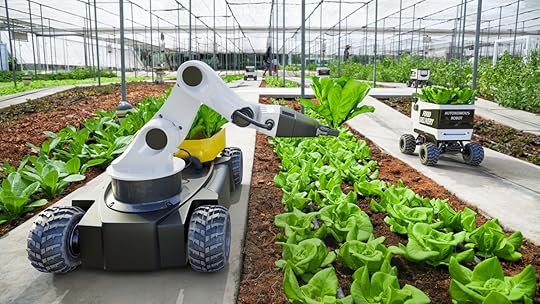
While we won’t ever change the natural process of photosynthesis, we’re rapidly transitioning to an artificial form of photosynthesis that doesn’t require sunlight.
Photosynthesis is responsible directly and indirectly for the oxygen we breathe and the food we eat. It’s a rather inefficient process, with only about 1% of the solar energy ending up in the plant biomass. Plants convert that light energy, along with atmospheric carbon dioxide and water, into chemical energy in the form of glucose that stimulates plant growth, releasing oxygen and water along the way.
With natural photosynthesis, the biochemical reaction and the glucose delivery happen in the same location – in the plant itself.
The Artificial Photosynthesis SequenceFirst, they used an electrocatalytic process in a lab setting to create acetate effluent – the main component of vinegar – combining carbon dioxide (CO2), water, and solar electricity. This process, which is essentially artificial photosynthesis, takes place in an electrolyzer.
Instead of glucose, the plant nourishment produced is carbon in the form of acetate. The acetate is collected and brought to the plant, where it’s absorbed through the root system and metabolized.
The production of acetate replicates many of the benefits of natural photosynthesis. In its basic form, water and carbon dioxide are converted to oxygen and carbon (acetate), with energy (ideally solar) making it all happen.
The team tested the approach on known crops to see if they could be grown with acetate and without sunlight. Black-eyed peas, tomatoes, tobacco, rice, canola, and green peas were all able to utilize carbon from acetate when cultivated in the dark.
The benefits and future implications of breaking the photosynthesis process into these two steps are significant.
Farming Acreage and LocationThis artificial photosynthesis process is estimated to be four times more efficient than sunlight-driven photosynthesis. While we wouldn’t do away with traditional farming completely, traditional farm footprints could be pared back significantly and concentrated in more fertile areas, reducing the need for extended irrigation systems to increasingly drier locations.
Researchers are already exploring how to supercharge traditional farms by adding this new artificial photosynthetic approach.
Food FactoriesWell into the future, we’ll see food-growing factories similar to the indoor cannabis-growing facilities those of us in Denver are used to seeing in the city’s warehouse district. While indoor cannabis operations are incredibly energy-intensive given their need to support natural photosynthesis in an indoor environment with the use of grow lights, artificial photosynthesis-based indoor food farms would use very little energy – practically none to support the growing process.
These multi-floor indoor farms will flourish in areas with inexpensive, nonproductive land. Near the farm factories we’ll find lab factories using solar power to produce the all-important life-giving, photosynthesis-mimicking, carbon-rich acetate effluent.
 Food Security on Earth …
Food from smaller farms in more preferable, secure locations, combined with indoor-grown food, will make the world’s food supply less susceptible to droughts and floods. Food factories could also be strategically located closer to cities and in other areas less suitable for farming but close to the populations that need food.
… And in SpaceThis technology will revolutionize the practice of growing plants in space – whether at the International Space Station or on future voyages well beyond that. We need to take advantage of every cubic inch of our habitable space vehicles, and if we can grow the same amount of food in one-fourth of the space required now, it will be a huge boost to our efforts to push deeper into space.
In fact, the acetate-based plant metabolization process described above recently won a top prize in NASA’s Deep Space Food Challenge that promotes the development of new food technologies suitable for long-duration space missions.
Food QualityWould food grown using this artificial photosynthesis process taste or seem different in any way? There’s no reason to think it would taste different, but it might look different. In natural photosynthesis, naturally present chlorophyll, which gives plants a green coloring, supports the conversion of light to energy.
With light-less, artificial photosynthesis, it’s not clear whether these molecules might lose their green coloring and if the relative dormancy of the chlorophyll might over time lead to a genetic mutation in some plant families so they resemble what we often see today in albino plants or “albinism.” I’m not a botanist, though, and I haven’t seen any research on that question.
Coming Soon to Your Grocer?When will we begin to see food that’s been grown in the dark? Like many innovations, from Tang to Dustbusters, our astronaut corps will be utilizing artificial photosynthesis to grow plants before any farmers on Earth do.
At this time, researchers have only scratched the surface of this technology, and they’ve just recently proven the concept. Perfecting the artificial photosynthesis process will take several more years, and scaling it will be the next hurdle beyond that.
The first widespread use won’t be with massive corporate high-rise farms in the U.S., but in indoor micro-farms in areas of the world where food security is especially threatened, including countries in central and southern Africa.
India will also likely be an early adopter given that nation’s proclivity to capitalize quickly on scientific breakthroughs, such as thorium-based nuclear energy production, as we noted last week.
Translate This PageSelect LanguageAfrikaansAlbanianAmharicArabicArmenianAzerbaijaniBasqueBelarusianBengaliBosnianBulgarianCatalanCebuanoChichewaChinese (Simplified)Chinese (Traditional)CorsicanCroatianCzechDanishDutchEnglishEsperantoEstonianFilipinoFinnishFrenchFrisianGalicianGeorgianGermanGreekGujaratiHaitian CreoleHausaHawaiianHebrewHindiHmongHungarianIcelandicIgboIndonesianIrishItalianJapaneseJavaneseKannadaKazakhKhmerKoreanKurdish (Kurmanji)KyrgyzLaoLatinLatvianLithuanianLuxembourgishMacedonianMalagasyMalayMalayalamMalteseMaoriMarathiMongolianMyanmar (Burmese)NepaliNorwegianPashtoPersianPolishPortuguesePunjabiRomanianRussianSamoanScottish GaelicSerbianSesothoShonaSindhiSinhalaSlovakSlovenianSomaliSpanishSudaneseSwahiliSwedishTajikTamilTeluguThaiTurkishUkrainianUrduUzbekVietnameseWelshXhosaYiddishYorubaZulu
#goog-gt-tt {display:none !important;}
.goog-te-banner-frame {display:none !important;}
.goog-te-menu-value:hover {text-decoration:none !important;}
.goog-text-highlight {background-color:transparent !important;box-shadow:none !important;}
body {top:0 !important;}
#google_translate_element2 {display:none!important;}
function googleTranslateElementInit2() {new google.translate.TranslateElement({pageLanguage: 'en',autoDisplay: false}, 'google_translate_element2');}
function GTranslateGetCurrentLang() {var keyValue = document['cookie'].match('(^|;) ?googtrans=([^;]*)(;|$)');return keyValue ? keyValue[2].split('/')[2] : null;}
function GTranslateFireEvent(element,event){try{if(document.createEventObject){var evt=document.createEventObject();element.fireEvent('on'+event,evt)}else{var evt=document.createEvent('HTMLEvents');evt.initEvent(event,true,true);element.dispatchEvent(evt)}}catch(e){}}
function doGTranslate(lang_pair){if(lang_pair.value)lang_pair=lang_pair.value;if(lang_pair=='')return;var lang=lang_pair.split('|')[1];if(GTranslateGetCurrentLang() == null && lang == lang_pair.split('|')[0])return;var teCombo;var sel=document.getElementsByTagName('select');for(var i=0;i<sel.length;i++)if(/goog-te-combo/.test(sel[i].className)){teCombo=sel[i];break;}if(document.getElementById('google_translate_element2')==null||document.getElementById('google_translate_element2').innerHTML.length==0||teCombo.length==0||teCombo.innerHTML.length==0){setTimeout(function(){doGTranslate(lang_pair)},500)}else{teCombo.value=lang;GTranslateFireEvent(teCombo,'change');GTranslateFireEvent(teCombo,'change')}}
Search for: Recent Posts Artificial Photosynthesis – Paving the Way for Startling New Forms of Sunless Agriculture Thorium Reactors – The Future of Energy How Open Banking Will Redefine Tomorrow’s Transactions Categories Artificial Intelligence Business Trends Future of Agriculture Future of Banking Future of Education Future of Healthcare Future of Transportation Future of Work Future Scenarios Future Trends Futurist Thomas Frey Insights Global Trends Predictions Social Trends Technology Trends Speaking TopicsFuture of Healthcare – “Is Death our only Option?Future of AIFuture of Industries ← Previous Post

The post Artificial Photosynthesis – Paving the Way for Startling New Forms of Sunless Agriculture appeared first on Futurist Speaker.


July 21, 2022
Thorium Reactors – The Future of Energy
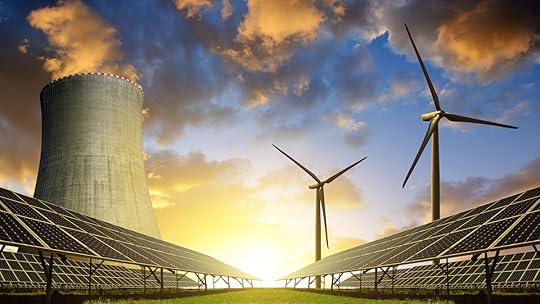
Broadly speaking, the primary energy sources globally fall into three categories: fossil fuels (oil, coal, and natural gas), renewables (wind, solar, geothermal, hydro, biomass), and nuclear.
Our future prosperity depends on our ability to transition from the first category to alternative sources and discover and adopt new processes to safely and efficiently tap them.
We will be up to the task, and the ultimate endpoint will be an amazing new form of nuclear power generation.
But first, let’s look at our options.
Fossil FuelsMore than 78% of the energy we use in the U.S. comes from fossil fuels. For many reasons, we’ll grow less and less dependent on them in the future.
Many oil and natural gas-producing nations have politicized the availability of these resources on the global market, reducing the certainty of availability and causing tremendous price fluctuations. European countries especially are scrambling to reduce this dependence.
Sustainability and climate change concerns related to fossil fuels, especially coal, are adding pressure to transition away from them even before we use them up, or the cost of extracting them becomes prohibitive.
Also, we can’t count on fossil fuels forever. While we technically may never “run out,” oil and gas production has likely peaked or will soon peak, meaning it will become increasingly difficult to retrieve these resources cost-effectively. At some point, economic factors and the increasing price advantage of alternatives will drive fossil fuels to a dwindling fraction of the total market.
RenewablesWe’re making strides with renewable energy production thanks to incremental technology breakthroughs in energy storage and transmission. Renewables account for 12.5% of U.S. energy usage, and this number will continue to creep up, but renewables will never be the dominant energy source for reasons I’ll discuss below.
Renewables, on the surface, appear to be the ideal solution since, by definition, producing renewable energy doesn’t deplete the source. The amount of sunlight, water, wind, thermal energy, and biomaterial isn’t reduced or at least remains extremely plentiful throughout these production processes.
A significant challenge for renewables, though, is the fact that we as a society want invisible energy. We want it to be there when we need it, but we’d rather not see it being generated or transmitted. And as renewables expand, we’ll “see” a lot more of it. That’s why today we’re noting the politicized backlash to encroaching wind and solar farms, for example.
Sure, people are accustomed to seeing a coal-fired power plant if they happen to drive past one on the city’s outskirts. But too many people still wince at fields of wind turbines covering scenic vistas. Soon they’ll also see massive floating turbines offshore of their favorite ocean beaches.
We’re probably less than a generation away from reaching the limit in terms of the omnipresence of renewables infrastructure we’re willing to accept.
NuclearNuclear generation accounts for 8.9% of the energy we use. It recently slipped to third place, following renewables. While transitions in the power industry are slow, in less than 15 years, nuclear will have shifted back into second place, and within a few decades, it will supplant fossil fuels as our primary source of energy.
We currently rely on uranium to fuel our nuclear reaction processes, but over the next decade or two, we’ll follow India’s lead and work towards thorium-based reactor systems. These systems, which utilize thorium and fluoride salts, are more expensive to build, but the advantages of thorium reactors are significant, as I’ll discuss below.
All in all, though, whether a nuclear power plant is uranium or thorium-based, nuclear technology overcomes nearly all the concerns we identified for both fossil fuel and renewable power generation.
 Capacity? Check.
According to the U.S. Department of Energy, nuclear power plants have the highest capacity of all types of power plants – meaning they stay online longer and run more steadily than any other energy production option today.
Efficiency? Check.Thorium reactors have efficiency levels as high as 98% compared to 5% for current uranium-based technologies, placing them well above fossil fuel and renewables systems in this area. The same analysis points out that pound for pound, thorium produces twice as much energy as uranium fission processes.
Geopolitical impact? Check.Uranium reserves are spread across the world. With the understanding that these reserves vary in quality and accessibility, of the top 10 countries with the most reserves, India and Canada lead the way. Several Eastern European countries are in the mix too, along with a few African nations. China rounds out the top ten, and the U.S. stands at #16. It’s not an ideal scenario, but it’s an improvement compared to the location of oil and gas reserves. India, the U.S., Australia, and Canada are estimated to have the highest reserves of thorium. Additionally, we can sleep a bit better since thorium is much more difficult to weaponize.
Infrastructure Footprint? Check.The Department of Energy has determined that a nuclear fission facility that’s typically located on 1 square mile produces the same amount of energy as a windfarm that takes up 360 times more space and a photovoltaic power plant that takes up 75 times more space.
Our scenic vistas and ocean views can mostly remain unspoiled.
Raw Material Depletion? Check.The world has roughly two hundred years’ worth of uranium at current prices and usage rates. But technological advances in efficient use, processing, and reusing of uranium are on the horizon that could extend this significantly. Higher prices will unlock even more of the material.
And then there’s seawater. Seawater contains minute portions of uranium, but there’s enough there to extend this depletion scenario by tens of thousands of years and even longer since seawater-based uranium is continually replenished by runoff from the land. Researchers are working diligently to develop cost-effective ways to capture uranium from seawater. For these reasons, we will likely have plenty of time, even without the transition to thorium.
There’s estimated to be three times more thorium available in the world than uranium. It tends to be found closer to the surface in more dense quantities, making extraction easier and safer, although possibly lending itself to strip mining techniques.
Safety? Check.It’s inaccurate and, frankly, very lazy to simply dismiss the prospects of nuclear power generation because of the incidents at Chernobyl, Fukushima, and Three Mile Island. Yes, Chernobyl and Fukushima were disasters that we should do whatever it takes to ensure they never happen again. As for Three Mile Island, the cause was operator and system error, but there were no health impacts for workers or members of the nearby public and no environmental damage. The same can’t be said for the typical oil refinery explosion.
We’re continuing to see advances in uranium-based nuclear plant coolant and fusion-containing technology. Thorium systems will prove far safer yet, given that the reactions are self-regulating and not self-sustaining.
Environmental Impact. Getting Better.Nuclear plants will never be as environmentally benign as renewables-based energy production. Nuclear waste disposal is a concern, but new innovations are significantly improving this situation too. Thorium systems should resolve this matter even further. Thorium is used up far more efficiently in the reaction process, so waste is minimal compared to uranium systems. What waste remains is radioactive for only 500 years compared to 10,000 years for uranium. There is also speculation that the 500 years can be reduced substantially with a few more advancements.
Closing ThoughtsI haven’t mentioned two future forms of power generation: space-based solar power and nuclear fusion. Both are in development and likely a considerable time away.
As we think through the options, we will have sufficient, safe energy sources far into the future. Except for very specialized uses, fossil fuels will go the way of the dinosaurs from whence they came. Renewables will always be a welcomed niche contributor to our power grids, but we won’t be able to scale them to the extent that they’ll be our dominant source.
Our future is nuclear … in spite of Hollywood and misguided environmental activists who choose to get their science from that world. These phenomena slowed society’s progress in developing and benefitting from nuclear power by decades and ironically perpetuated the proliferation of far more dangerous and polluting energy production in the meantime.
We’ll think more clearly about this very soon.
Translate This PageSelect LanguageAfrikaansAlbanianAmharicArabicArmenianAzerbaijaniBasqueBelarusianBengaliBosnianBulgarianCatalanCebuanoChichewaChinese (Simplified)Chinese (Traditional)CorsicanCroatianCzechDanishDutchEnglishEsperantoEstonianFilipinoFinnishFrenchFrisianGalicianGeorgianGermanGreekGujaratiHaitian CreoleHausaHawaiianHebrewHindiHmongHungarianIcelandicIgboIndonesianIrishItalianJapaneseJavaneseKannadaKazakhKhmerKoreanKurdish (Kurmanji)KyrgyzLaoLatinLatvianLithuanianLuxembourgishMacedonianMalagasyMalayMalayalamMalteseMaoriMarathiMongolianMyanmar (Burmese)NepaliNorwegianPashtoPersianPolishPortuguesePunjabiRomanianRussianSamoanScottish GaelicSerbianSesothoShonaSindhiSinhalaSlovakSlovenianSomaliSpanishSudaneseSwahiliSwedishTajikTamilTeluguThaiTurkishUkrainianUrduUzbekVietnameseWelshXhosaYiddishYorubaZulu
#goog-gt-tt {display:none !important;}
.goog-te-banner-frame {display:none !important;}
.goog-te-menu-value:hover {text-decoration:none !important;}
.goog-text-highlight {background-color:transparent !important;box-shadow:none !important;}
body {top:0 !important;}
#google_translate_element2 {display:none!important;}
function googleTranslateElementInit2() {new google.translate.TranslateElement({pageLanguage: 'en',autoDisplay: false}, 'google_translate_element2');}
function GTranslateGetCurrentLang() {var keyValue = document['cookie'].match('(^|;) ?googtrans=([^;]*)(;|$)');return keyValue ? keyValue[2].split('/')[2] : null;}
function GTranslateFireEvent(element,event){try{if(document.createEventObject){var evt=document.createEventObject();element.fireEvent('on'+event,evt)}else{var evt=document.createEvent('HTMLEvents');evt.initEvent(event,true,true);element.dispatchEvent(evt)}}catch(e){}}
function doGTranslate(lang_pair){if(lang_pair.value)lang_pair=lang_pair.value;if(lang_pair=='')return;var lang=lang_pair.split('|')[1];if(GTranslateGetCurrentLang() == null && lang == lang_pair.split('|')[0])return;var teCombo;var sel=document.getElementsByTagName('select');for(var i=0;i<sel.length;i++)if(/goog-te-combo/.test(sel[i].className)){teCombo=sel[i];break;}if(document.getElementById('google_translate_element2')==null||document.getElementById('google_translate_element2').innerHTML.length==0||teCombo.length==0||teCombo.innerHTML.length==0){setTimeout(function(){doGTranslate(lang_pair)},500)}else{teCombo.value=lang;GTranslateFireEvent(teCombo,'change');GTranslateFireEvent(teCombo,'change')}}
Search for: Recent Posts Thorium Reactors – The Future of Energy How Open Banking Will Redefine Tomorrow’s Transactions Understanding the Long-Term Consequences of Weaponizing Our Financial Systems Categories Artificial Intelligence Business Trends Future of Agriculture Future of Banking Future of Education Future of Healthcare Future of Transportation Future of Work Future Scenarios Future Trends Futurist Thomas Frey Insights Global Trends Predictions Social Trends Technology Trends Speaking TopicsFuture of Healthcare – “Is Death our only Option?Future of AIFuture of Industries ← Previous Post
The post Thorium Reactors – The Future of Energy appeared first on Futurist Speaker.
July 14, 2022
How Open Banking Will Redefine Tomorrow’s Transactions
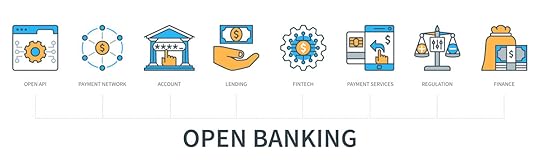
“Open banking” will soon be the backbone of our financial services landscape, driving consumer financial activity as well as financial institution service models. It will provide a level of convenience and value that today’s (and especially yesterday’s) traditional banks and financial services companies can’t even come close to meeting.
Let’s consider these three examples:
1. Applying for a Mortgage
How about a mortgage application process where you don’t have to serve as a middle person to pull together all the necessary financial records?
2. Managing Your Personal FinancesHow would you like to empower personal financial management services to access specific details about your spending history, various asset accounts, loan and credit card balances, insurance policies, and other critical information so that you can get a personalized plan for promoting your long-term financial success?
3. Setting Up Automated PaymentsHow about an automated payment system encompassing all of your finance-related accounts and subscriptions to securely process purchases, payments, and other obligations?
Open banking does all of this and more by creating API-enabling interfaces between banks, financial institutions, and any other third-party providers (TPPs) or financial-related services that a user chooses to loop in.
After all, it can be argued that it’s our data, and we should be able to create the kinds of efficiencies in managing it and obtain the insights that lie within it for our own benefit.
The technology behind this next generation of financial service integration shares financial information electronically between institutions for purposes the customer can authorize and approve – access and integration that can’t be provided solely through a bank.
In other words, open banking offers unparalleled financial data continuity.
Open Bank Data SecurityThe initial reaction to the concept of open banking from many people outside the financial industry is to question the wisdom of creating what appears to be more points of access for more people and systems in more areas of a person’s sensitive financial history. It’s an understandable reaction and it’s right to be cautious and wary.
But we already face those kinds of data security risks every day with each of the dozens of accounts we maintain. Reputable APIs pose no more or less risk … plus open banking doesn’t require access to, or the use of, customer passwords as do the current aggregate systems.

The alternative, current financial aggregator systems are far less secure. They rely on “screen scraping” – a monolithic information-gathering practice that grabs far more user financial data from your accounts than is needed for any particular activity and then stores it, along with your account credentials, i.e., user names and passwords.
This process initially was used as a convenience for financial institutions so they didn’t have to reenter data. But the treasure trove of information that’s swept into those databases makes them ripe for exploitation, theft, and other fraudulent activities.
In contrast, open banking through APIs provides direct access to only the payment and financial account data needed for each task and without accessing the accounts via formal credentials.
Still, open banking security is important. That’s why we need a solid regulatory structure around it to ensure the systems utilize and integrate only approved trustworthy APIs and that the data they’re entrusted with is well-protected. Consumers must be able to maintain ultimate control of, and rights to, their data.
Most observers agree that it’s high time the Consumer Financial Protection Bureau, responsible for consumer financial data matters, gets more active in these matters to provide these assurances. Consumers want open banking. Banks and financial institutions want to offer it.
Open Banking is Over ThereAs this PWC analysis lays out, the UK has made the most headway with open banking, and banks there are required to cooperate with approved Third-Party Providers. The banking industry there began exploring the concept of open banking in 2016, taking a strong consumer service expansion approach.
The EU was working in this area at the same time, focusing on standards for consumer convenience and security to provide a framework for member nations to adopt in their own open banking policies.
But What About Here?By contrast, open banking in the U.S. is still industry-driven, happening in the vacuum of government guidance as noted above. Many banks are working with core providers like FIS, Fiserv, and JHA that have already developed and continue to maintain the necessary, secure API-based infrastructure. Alternatively, banks have the opportunity to incorporate their own API tools on top of that core.
Additionally, industry groups are developing protocols for API security performance. Individual banks are working with core providers and fintechs to implement agreements on APIs and data usage. Millions of Americans are benefitting from these early adoptions of open banking
But public and institutional acceptance in the U.S. will lag behind much of the rest of the world unless a strong regulatory infrastructure is put in place that provides both consumer and institutional confidence to engage.
Outlawing data scraping as a means to access personal financial data.Requiring fintechs and other participants to be authorized to engage in open banking services only after they demonstrate appropriate privacy, security, and liability protection.Prohibiting the use of customer data in ways not authorized by the customer.This seems like a reasonable framework, and I believe we’ll see a similar regulatory structure emerge in the U.S. within a few years – after all, nothing happens quickly in Washington!
Within a decade, the average U.S. citizen will have a far more effective way to utilize their own financial data for personal financial planning, payments management, subscription management, personal loan activity, and to access a wider variety of financial products.
Translate This PageSelect LanguageAfrikaansAlbanianAmharicArabicArmenianAzerbaijaniBasqueBelarusianBengaliBosnianBulgarianCatalanCebuanoChichewaChinese (Simplified)Chinese (Traditional)CorsicanCroatianCzechDanishDutchEnglishEsperantoEstonianFilipinoFinnishFrenchFrisianGalicianGeorgianGermanGreekGujaratiHaitian CreoleHausaHawaiianHebrewHindiHmongHungarianIcelandicIgboIndonesianIrishItalianJapaneseJavaneseKannadaKazakhKhmerKoreanKurdish (Kurmanji)KyrgyzLaoLatinLatvianLithuanianLuxembourgishMacedonianMalagasyMalayMalayalamMalteseMaoriMarathiMongolianMyanmar (Burmese)NepaliNorwegianPashtoPersianPolishPortuguesePunjabiRomanianRussianSamoanScottish GaelicSerbianSesothoShonaSindhiSinhalaSlovakSlovenianSomaliSpanishSudaneseSwahiliSwedishTajikTamilTeluguThaiTurkishUkrainianUrduUzbekVietnameseWelshXhosaYiddishYorubaZulu
#goog-gt-tt {display:none !important;}
.goog-te-banner-frame {display:none !important;}
.goog-te-menu-value:hover {text-decoration:none !important;}
.goog-text-highlight {background-color:transparent !important;box-shadow:none !important;}
body {top:0 !important;}
#google_translate_element2 {display:none!important;}
function googleTranslateElementInit2() {new google.translate.TranslateElement({pageLanguage: 'en',autoDisplay: false}, 'google_translate_element2');}
function GTranslateGetCurrentLang() {var keyValue = document['cookie'].match('(^|;) ?googtrans=([^;]*)(;|$)');return keyValue ? keyValue[2].split('/')[2] : null;}
function GTranslateFireEvent(element,event){try{if(document.createEventObject){var evt=document.createEventObject();element.fireEvent('on'+event,evt)}else{var evt=document.createEvent('HTMLEvents');evt.initEvent(event,true,true);element.dispatchEvent(evt)}}catch(e){}}
function doGTranslate(lang_pair){if(lang_pair.value)lang_pair=lang_pair.value;if(lang_pair=='')return;var lang=lang_pair.split('|')[1];if(GTranslateGetCurrentLang() == null && lang == lang_pair.split('|')[0])return;var teCombo;var sel=document.getElementsByTagName('select');for(var i=0;i<sel.length;i++)if(/goog-te-combo/.test(sel[i].className)){teCombo=sel[i];break;}if(document.getElementById('google_translate_element2')==null||document.getElementById('google_translate_element2').innerHTML.length==0||teCombo.length==0||teCombo.innerHTML.length==0){setTimeout(function(){doGTranslate(lang_pair)},500)}else{teCombo.value=lang;GTranslateFireEvent(teCombo,'change');GTranslateFireEvent(teCombo,'change')}}
Search for: Recent Posts How Open Banking Will Redefine Tomorrow’s Transactions Understanding the Long-Term Consequences of Weaponizing Our Financial Systems Self-Cannibalism and the Extreme Possibilities of Cell Cultured Agriculture Categories Artificial Intelligence Business Trends Future of Agriculture Future of Banking Future of Education Future of Healthcare Future of Transportation Future of Work Future Scenarios Future Trends Futurist Thomas Frey Insights Global Trends Predictions Social Trends Technology Trends Speaking TopicsFuture of Healthcare – “Is Death our only Option?Future of AIFuture of Industries ← Previous Post
The post How Open Banking Will Redefine Tomorrow’s Transactions appeared first on Futurist Speaker.
July 7, 2022
Understanding the Long-Term Consequences of Weaponizing Our Financial Systems

Can the future of war possibly be bloodless?
We certainly seemed to be headed in that direction before Russia apparently dusted off a World War II playbook and sent ground troops into Ukraine earlier this year. The Ukraine Army has been forced to valiantly respond in kind.
The U.S. and other countries have tried to counter Russian aggression by supplying weapons and supplies to Ukraine and waging a de facto financial war against Russia.
On its face, waging a financial war seems less painful than sending U.S. soldiers, sailors, Marines, and airmen to join the fray … but it’s certainly not painless. We can only hope it’s more painful for Russia than it is for us. The jury is still out on that.
Elements of the Financial War against RussiaMost of us silently relish the sight of seizures of Russian oligarch yachts and other property. Granted, the goal of these appropriations isn’t to topple the Russian economy but to put pressure on these supposedly influential people who might be able to restrain Putin. I haven’t seen any evidence that this is working.
Cutting off Russia’s oil revenue hasn’t been a terribly successful strategy either. It seems to be an application of the socioeconomic Golden Rule: “Whoever has the gold rules.” Russia has oil and gas, and countries around the world can’t do without it.
To the extent that countries have marginally reduced their imports of Russian oil and gas, the country has found willing buyers in other nations. And the turmoil and uncertainty in the market have increased world energy prices so Russia is earning more rubles than before for the energy they produce.
Nearly all major U.S. and global companies have disengaged from Russian markets. From Alphabet, to Disney, to McDonalds, several hundred major companies are exiting or suspending operations in Russia. Depending on the sector, this can be a fairly potent economic weapon.
On the one hand, lack of access to consumer goods and entertainment primarily will affect citizens and likely not do much to affect the regime’s decisions – unless those citizens rise up en masse to protest their sudden lack of access to a western lifestyle instead of rallying around the flag, which unfortunately seems to be more the case.
On the other hand, the Russian exodus of international energy companies, which were some of the first to be implemented, will be more impactful as these remove some of the critical expertise and funding that supports energy exploration and capital investments.
Finally, sanctions that prevent Russia from engaging in global banking systems will have an impact down the road and will turn Russia into a more insular country, not as extreme as in North Korea but moving in that direction.
Because of all of these factors, the future of Russia and its economy will be marginalized for the foreseeable future. Any hope of recovery for the country and its standing in the international economic community will depend on who replaces Putin and when.
 But What About the Sanctioners?
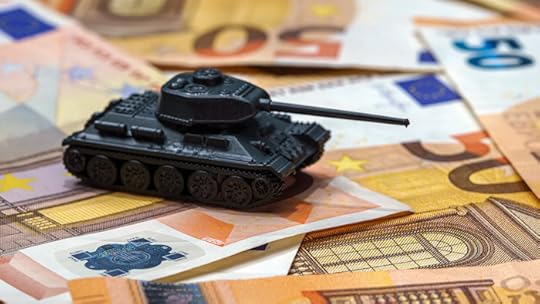
Given the apparently limited impact of sanctions on influencing Russia’s territorial ambitions, we have to ask whether this form of financial warfare is a viable strategy, given the pain, the sanctions are inflicting on the nations who are applying the pressure.
To an arguable extent, the sanctions are cutting into profits for major companies, adding to energy insecurity in many European nations, helping drive consumer energy prices to historic levels, and contributing to inflation. All of this could prove to be the tipping point to send the world into a recession, which could trigger social/political unrest that creates even more uncertainty.
If these Russian sanctions had been imposed in a “normal” time, when economies weren’t recovering from the labor and global supply chain issues stemming from COVID, for example, they might have been far less painful to the inflictors. But that’s not the hand we were dealt. And who’s to say what the new normal will be, for that matter.
The History of Economic WarfareGaining influence and trying to gain an advantage in the international arena through economic means isn’t new.
This fascinating account documents how nations over the last few centuries used economic tools like embargos, blockades, currency devaluations, and other means to gain an economic edge over another. In the 18th and 19th centuries, this even entailed the use of military resources, ships primarily, to secure monopolistic trade routes at the expense of other nations.
This might be the first significant time, though, that sanctions were used on this scale to not only weaken an economy but drive leadership changes or at least changes of heart. We’ll see more attempts like this in the future and we’ll learn from the current experience how to do it even more effectively… maybe!
The Future of WarWhat we see in the destroyed cities and lives in Ukraine seems other-worldly to us. Let’s not get used to it. I can only hope this will be the last time we’ll see this kind of blatant, grind-it-out invasion on this scale. I doubt that Russia is eager to do it again as they’re learning the limits of this strategy.
Instead, bad state actors will take a page not from WWII but further back from the annals of 17th and 18th-century economic warfare in order to subjugate a nation or region. We and they will also learn from the West’s experience with the Russian sanctions, specifically:
Personal sanctions against political and economic leaders don’t have an impact. In fact, wealthy people around the world have been and will continue to plot ways to preserve, hide, and encrypt their wealth to avoid being targeted like the oligarchs in Russia.Broader sanctions like access to financial markets, isolating businesses from international markets and expertise, and engaging in currency wars will be more thoughtfully planned out to predict likely responses and secondary impacts. They will be used more selectively and from a position of strength (which was not the case with regard to oil sanctions on Russia, for example).The retrenchment from globalization to regional/national economies, driven in large part by supply chain challenges but also the concern about being held hostage by resource-rich potential despots, will make many economic sanction tools less effective.The U.S. will emerge as the major active international economic player, meaning the U.S. Dollar will be the world currency of choice for the foreseeable future. This will be true as long as the Western bloc of nations as a whole can outperform China’s economy, which has taken a hit due to its oddly draconian COVID management approach. An internationally accepted cryptocurrency might supplant the U.S. Dollar at some point but that timeframe is slipping given recent turbulence in that market and the challenge of gaining international consensus on a single currency. All of this makes the U.S. a more formidable economic warfare foe in the years ahead.While not the topic of this blog, cyber warfare will become the second leg of our bloodless warfare model, equally as critical as economic weapons.We can only hope that Russia has learned some lessons of their own – namely that bloody infantry and artillery conflicts must once and for all be put in the past. But never say never. The advantage in war always tends to go to those who are willing to do what their opposition is not.
That said, the nature of war is definitely changing. If this approach proves to be successful, and it’s still too early to tell, we will see nations shift to a different kind of arms race – to accumulate global economic and cyber warfare advantage.
However, if war does become more “civilized,” we will have more wars – more frequent and more targeted.
We may not even call them “wars” anymore as we attempt to euphonize these battles with less war-sounding terminology. The immediate goal will be to extend influence as a precursor to extending boundaries.
Translate This PageSelect LanguageAfrikaansAlbanianAmharicArabicArmenianAzerbaijaniBasqueBelarusianBengaliBosnianBulgarianCatalanCebuanoChichewaChinese (Simplified)Chinese (Traditional)CorsicanCroatianCzechDanishDutchEnglishEsperantoEstonianFilipinoFinnishFrenchFrisianGalicianGeorgianGermanGreekGujaratiHaitian CreoleHausaHawaiianHebrewHindiHmongHungarianIcelandicIgboIndonesianIrishItalianJapaneseJavaneseKannadaKazakhKhmerKoreanKurdish (Kurmanji)KyrgyzLaoLatinLatvianLithuanianLuxembourgishMacedonianMalagasyMalayMalayalamMalteseMaoriMarathiMongolianMyanmar (Burmese)NepaliNorwegianPashtoPersianPolishPortuguesePunjabiRomanianRussianSamoanScottish GaelicSerbianSesothoShonaSindhiSinhalaSlovakSlovenianSomaliSpanishSudaneseSwahiliSwedishTajikTamilTeluguThaiTurkishUkrainianUrduUzbekVietnameseWelshXhosaYiddishYorubaZulu
#goog-gt-tt {display:none !important;}
.goog-te-banner-frame {display:none !important;}
.goog-te-menu-value:hover {text-decoration:none !important;}
.goog-text-highlight {background-color:transparent !important;box-shadow:none !important;}
body {top:0 !important;}
#google_translate_element2 {display:none!important;}
function googleTranslateElementInit2() {new google.translate.TranslateElement({pageLanguage: 'en',autoDisplay: false}, 'google_translate_element2');}
function GTranslateGetCurrentLang() {var keyValue = document['cookie'].match('(^|;) ?googtrans=([^;]*)(;|$)');return keyValue ? keyValue[2].split('/')[2] : null;}
function GTranslateFireEvent(element,event){try{if(document.createEventObject){var evt=document.createEventObject();element.fireEvent('on'+event,evt)}else{var evt=document.createEvent('HTMLEvents');evt.initEvent(event,true,true);element.dispatchEvent(evt)}}catch(e){}}
function doGTranslate(lang_pair){if(lang_pair.value)lang_pair=lang_pair.value;if(lang_pair=='')return;var lang=lang_pair.split('|')[1];if(GTranslateGetCurrentLang() == null && lang == lang_pair.split('|')[0])return;var teCombo;var sel=document.getElementsByTagName('select');for(var i=0;i<sel.length;i++)if(/goog-te-combo/.test(sel[i].className)){teCombo=sel[i];break;}if(document.getElementById('google_translate_element2')==null||document.getElementById('google_translate_element2').innerHTML.length==0||teCombo.length==0||teCombo.innerHTML.length==0){setTimeout(function(){doGTranslate(lang_pair)},500)}else{teCombo.value=lang;GTranslateFireEvent(teCombo,'change');GTranslateFireEvent(teCombo,'change')}}
Search for: Recent Posts Understanding the Long-Term Consequences of Weaponizing Our Financial Systems Self-Cannibalism and the Extreme Possibilities of Cell Cultured Agriculture Is a Cashless Society a Good Thing or a Bad Thing? Categories Artificial Intelligence Business Trends Future of Agriculture Future of Banking Future of Education Future of Healthcare Future of Transportation Future of Work Future Scenarios Future Trends Futurist Thomas Frey Insights Global Trends Predictions Social Trends Technology Trends Speaking TopicsFuture of Healthcare – “Is Death our only Option?Future of AIFuture of Industries ← Previous Post
The post Understanding the Long-Term Consequences of Weaponizing Our Financial Systems appeared first on Futurist Speaker.
June 30, 2022
Self-Cannibalism and the Extreme Possibilities of Cell Cultured Agriculture

As an avid researcher, I’m constantly tuned in to progress being made on the stem-cell-derived meat front. We’re still very much on track for widespread production and consumption, given the investments we’re seeing from major players, including individuals and even meat processing companies.
With the outlook for lab-grown, often called slaughter-free meat, wide open, it’s time to take this to a new level and push the envelope of our stem-cell lab programs for the benefit of humankind.
The New Frontier for Lab-Grown Animal ProductsIt all starts with stem cells, and where we get these stem cells from is up to us.
Food animals, exotic animals, yes, we’re on a clear path to stock our refrigerators and our zoos. We can start with platypus cells and grow platypus meat, and we can harvest orangutan, hornet, and bald eagle cells and also grow … orangutan, hornet, and bald eagle meat.
This kind of cellular agriculture opens the door to extreme thinking and extreme possibilities because anything that grows in nature can be grown inside a cell-cultured bioreactor.
Extreme Thinking?Naturally, this raises the question of meat from humans? After all, scientists are already growing human organs from a person’s own stem cells to re-implant and hopefully save lives.
Clearly, this raises more than a few ethical issues, but could we, and should we, grow human meat as an edible food product? The next logical question is, can we grow meat from the stem cells in our own bodies? And would eating that meat be considered a form of self-cannibalism?
What if it was found to be healthier? Or cured certain diseases? Or was proven to extend human longevity?
While this may sound extreme to you today, we will be dealing with an eclectic set of these kinds of issues over the coming years.
At the same time, cell culture bioreactors will also be used to grow non-edible materials, such as lab-grown leather, plastic, and rubber. Think in terms of exotic materials such as tarantula skin seats, hedgehog jackets, and anteater shoes.
If we start with the stem cells of Hollywood celebrities, we could grow designer label leathers and produce high-end accessories like Hugh Jackman purses, Jennifer Aniston furniture, Mark Wahlberg wallets, or Emma Stone vests.
Biological and health considerations aside, are there ethical issues with eating our own stem-cell-based flesh? Should this kind of self-cannibalization be considered illegal? Further, is there any basis to consider it unethical to self-cannibalize like this? Or is it enough to prohibit the pursuit of personal flesh farming based on the “ICK” factor?
Food for thought, if you’ll pardon the pun, but it does raise some interesting personal freedom questions.
What Else is Possible? Blood?Quite possibly, for a variety of objective and subjective reasons, the practice of eating our own stem-cell-based flesh is a bridge too far. So, let’s back off one level.
Will we be able to grow blood, and more specifically, our own blood?
Having extra liters of our own stem-cell-derived blood on hand in case of an emergency could be a good thing, especially if we have a rare blood type. We may see labs in the future that store our stem cells and periodically, produce several fresh liters of our own blood and store it for us for our own personal use.
And since the acceptance of infusions of human blood doesn’t seem to be as person-specific as the consumption of flesh, why not use this process to maintain stocks of blood types in our blood banks? In fact, in the future, the practice of human blood donation will seem somewhat archaic, if not barbaric.
But blood type aside, is all blood equal? Studies have shown that older people who are infused with “young” blood become more resilient and energized. If that’s the case, then what about finding the perfect designer match – stem cells from the blood of a five-year-old Catalonian prodigy who is the descendant of a Nobel Prize winner and lives on the island of Majorca?
Growing blood could be far more than a life-saving function; it will quickly become a vast new industry of life-enhancing possibilities. We no longer will have to confine our transfusion options to those who have donated. Instead, we can begin testing which culture, ethnic type, age group, and genealogical tree a person comes from and make offers for blood derived from that candidate’s stem cells.
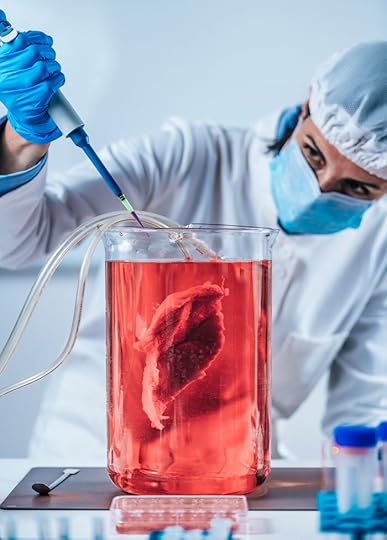
If the idea of stem-cell-derived meat (human or otherwise) or human blood is still too much to fathom, just remember that this stem-cell technology will ultimately be applied in a variety of other situations.
How about growing rhino horns or elephant tusks? Will it be possible to grow an entire vat full of horn or tusk material to put poachers out of business? Or for that matter, how about stem-cell-derived wolf fur, buffalo hide, or whale skin to help preserve those magnificent creatures?
Once again, anything that grows in nature can be grown inside a cell-cultured bioreactor, so we don’t need to confine our thinking to things that have been used in the past. Even growing large volumes of fingernails, teeth, scales, shells, eyelashes, and feathers may have uses we’ve never dreamed of.
Over the coming decade, entrepreneurs will be launching tens of thousands of new businesses based on bioreactor technologies and material science will become the hot new field of study.
Saving the World with Cellular AgricultureIt’s fun and interesting to look at unique micro-applications of food chain innovation from cell-derived processes. But the big focus for the future of stem cell technology in the near term will be on food sources.
At the macro level, cultured meat technology, combined with others like precision fermentation-derived microbial proteins, and good “old-fashioned” plant-based meat products, could fundamentally change our food supply in a way that wouldn’t dramatically affect our consumption experiences but improve our world in many other ways.
In theory, for example, we could obtain all the raw beef we need from the replicable stem cells of one exceptional steer or heifer, cultivated without even harming the animal. Think of all the other animals on all the feed lots and pastures around the world and how we could reuse or re-forest that space.
Then there’s the opportunity to reduce greenhouse gas emissions (CO2 and methane from an animal’s digestive process) and animal waste in our streams and groundwater.
This stem cell-derived food would be healthier for us, without the traces of growth hormones and antibiotics that make their way into our bodies.
Some researchers point out that cultured meat products just don’t taste quite the same as traditionally grown meat. They say they’re missing a “certain something.”
I would suggest that that certain something may very well be the imperfections in our farm-raised animals that we’ve gotten used to and assume to be normal.
← Previous Blog
The post Self-Cannibalism and the Extreme Possibilities of Cell Cultured Agriculture appeared first on Futurist Speaker.
June 23, 2022
Is a Cashless Society a Good Thing or a Bad Thing?

During the 1980s and 90s, I owned a couple of Baskin Robbins stores which were mostly cash businesses during that era. On its way to our commercial bank account, the cash got counted a minimum of seven times: during the customer transaction, at shift changes, at the end of the day, when preparing the deposit, when making the deposit, etc.
Cash is certainly not always “king,” and when you think about it, cash can seem downright archaic.
Cash is still hanging in thereYes, cash may someday go away, and in fact, it’s already close in a few countries around the world, but there’s something to be said about cash being the only survivable form of money in the event of a disaster like a giant solar flare or WWIII.
By “cash,” I mean bills and coins – not checks or debit cards, even though they’re tied directly to cash accounts. Those, in fact, are cashless options.
In many situations, cash may still be the only option for a transaction at our favorite store. Small retailers often don’t want the hassle of accepting credit cards or paying merchant fees that accompany these transactions. Further, in a cashless society, it may be difficult to pay the neighborhood kids running their lemonade stand or throw in $10 at an impromptu pass-the-hat charity event?
Some consider society’s cashless goals to be elitist. Pre-pandemic, an estimated 7% of the U.S. population was “unbanked,” i.e., with no bank accounts and with cash as their only option for daily purchases. In addition, many people are under-banked without access to banking tools like credit cards or online payment apps.
Solutions to some of these challenges are pretty clear. In time, lemonade stand kids will utilize social media-based payment accounts. Crowdfunding apps like GoFundMe and others provide on-the-spot options to support a good cause when the impromptu giving spirit moves us. Stubborn retailers will lose out on business to the point where they’ll need to provide electronic payment options.
The challenge of the unbanked and underbanked population, though, will be the last one solved as we’ll see below.
COVID Propelled the Cashless MigrationWe certainly took a huge step toward a “less-cash” system during the pandemic. In 2020 we were concerned about contact transmission of the virus from currency and coins or any surface for that matter. Much of our commerce shifted to online. Many people began making all of their in-store transactions, no matter how small, with credit or debit cards because it seemed like a safer option.
Cash transactions were still possible, but soon we started seeing posted signs at store checkouts requiring an exact change or stating it might not be possible for the cashier to provide exact change due to coinage shortages. Pocket change was stacking up in containers at home instead of being kept handy in a change purse or pocket.
If it weren’t for the desire to give well-deserved, cash-based service provider tips during this period, few of us would have carried or used any cash at all during much of 2020 and 2021.
 What Will Replace Cash?
A good question to ask is, are we better off without cash? And why?
In 50 years, greenbacks and coinage may indeed be relics and collectors’ items.
Our purchases are certainly tending toward digital money – carried out in a number of forms. What each of our transactions will look like will depend on what’s in our electronic wallet (e.g., a bank account, a crypto account, or a line of credit in either of those denominations) and our preferred method of linking to our accounts (credit cards, debit cards, and online payment apps).
Cryptocurrency will be the e-currency behind an increasing number of these transactions. Crypto’s foundation in distributed ledger technology makes it extremely secure and private. As of now, we’re not quite at the point where we can pay for an ice cream cone with bitcoin, but cryptocurrency debit cards tied to a crypto account are showing great promise for e-commerce and to a growing extent for in-person retail purchases, at this time mostly for high-end items like jewelry, cars, electronics, and some services.
Crypto-based revolving lines of credit in the form of credit cards are also available and soon we’ll be at the point where the distinction between crypto- and fiat currency-based cards will be blurred and we’ll have the option to choose one or the other at the time of purchase.
Online payment apps and mobile device services, like Venmo, PayPal, Apple Pay, and others, will flourish as well. These accounts (either crypto or fiat currency-based) will continue to be tied to an increasing variety of bank accounts and credit card accounts or linked directly to balances we maintain on those apps. Venmo even adds a social media element to the transactions: Spending money with friends is fun!
What About Checks?Checks are one of the earliest forms of cashless transactions in modern times, but their use is rapidly declining. Fewer stores accept checks these days and even fewer Gen Z’ers even know how to write them … or have had to write them! Check fraud recently is way up as well. Most of us write only a handful of checks each year – for unique circumstances and not at all for day-to-day transactions.
Still, checks, or something with a similar look and feel, will always be an option for drawing on an account of any type. There will be significant fees attached to these transactions, though, given the extra steps involved in processing these payments.
Cashless Implications on Criminal BehaviorCash, for all of its inherent inefficiencies, has the benefit of being an anonymous facilitator of commerce. Cash transactions leave no trail except maybe a fingerprint or serial number on a $50 bill. For that reason, going cashless will be bad for the business of crime. Digital footprints are almost always trackable with enough effort, especially when the user creates a vulnerability or is targeted for hacking.

Certain aspects of law enforcement will change dramatically. Rather than patrolling or seeking informants regarding drug trafficking, for example, cyber expert police officers will be safe at their computers uncovering and tracing now-discoverable money flows. “Following the money” to uncover the crime and catch the criminal will be the daily norm.
Learning from Sweden … and what I call the 100% Certainty ConundrumSweden is often held up as a groundbreaking nation when it comes to going cashless. Remarkably, only 1% of the country’s GDP is held in cash, compared to 8% in the U.S. Swedish retailers are allowed to refuse cash for purchases and the country is exploring developing an electronic version of their national currency (e-krona), which is a 1:1 equivalent of the cash version of their krona.
It’s important to know, that the e-krona isn’t a cryptocurrency and it’s not blockchain-based. Citizens can hold their e-krona on a card or in an app.
Recently, though, the seemingly inevitable shift to going completely cashless in Sweden is becoming significantly less inevitable. Like any kind of “all-or-nothing” technology transition, utopia inevitably meets reality, in this case, the unbanked and underbanked, who make up the last few percent of users.
The 100% Certainty Conundrum creates gates to the future in a number of ways. We see it, for example, in the “need” for 100% safety when it comes to self-driving car technology. We may be 99% there, but the technology won’t be fully embraced until that elusive 1% is accounted for (even though human-driver safety rates will never achieve that 100% standard).
In the case of Sweden’s and any other country’s cashless utopia, it won’t happen until we can achieve 100% usability and acceptance of a combination of e-currency and other cashless options. The issue of the unbanked and underbanked, the last 1-2% of the population, must be solved before any government will dare enforce a cash-free system of national commerce.
Keep in mind, that solving the equation for the final 1% becomes exponentially more difficult as we approach zero.
And the onus for a cashless economic system is truly on the government. In the U.S., some small retailers have gotten too far out ahead of the curve on going cash-free and ended up having to reverse course in the face of disgruntled customers and lost sales. Some states and major cities, in fact, have passed laws prohibiting businesses from operating cash-free, citing the concerns of unbanked and underbanked citizens.
For those people who don’t trust banks, and that becomes a much greater percentage during a recession, having cash stocked away in a secret place at home, is a comforting form of security.
For now, that means that in Sweden, Norway, Finland, and other countries, the best we can hope for is going mostly cash-free.
Does that mean we’ll never go completely cash-free? Perhaps! Progress comes in fits, starts, and occasional backward steps. If nothing else, progress is virtually always messy.
Translate This PageSelect LanguageAfrikaansAlbanianAmharicArabicArmenianAzerbaijaniBasqueBelarusianBengaliBosnianBulgarianCatalanCebuanoChichewaChinese (Simplified)Chinese (Traditional)CorsicanCroatianCzechDanishDutchEnglishEsperantoEstonianFilipinoFinnishFrenchFrisianGalicianGeorgianGermanGreekGujaratiHaitian CreoleHausaHawaiianHebrewHindiHmongHungarianIcelandicIgboIndonesianIrishItalianJapaneseJavaneseKannadaKazakhKhmerKoreanKurdish (Kurmanji)KyrgyzLaoLatinLatvianLithuanianLuxembourgishMacedonianMalagasyMalayMalayalamMalteseMaoriMarathiMongolianMyanmar (Burmese)NepaliNorwegianPashtoPersianPolishPortuguesePunjabiRomanianRussianSamoanScottish GaelicSerbianSesothoShonaSindhiSinhalaSlovakSlovenianSomaliSpanishSudaneseSwahiliSwedishTajikTamilTeluguThaiTurkishUkrainianUrduUzbekVietnameseWelshXhosaYiddishYorubaZulu
#goog-gt-tt {display:none !important;}
.goog-te-banner-frame {display:none !important;}
.goog-te-menu-value:hover {text-decoration:none !important;}
.goog-text-highlight {background-color:transparent !important;box-shadow:none !important;}
body {top:0 !important;}
#google_translate_element2 {display:none!important;}
function googleTranslateElementInit2() {new google.translate.TranslateElement({pageLanguage: 'en',autoDisplay: false}, 'google_translate_element2');}
function GTranslateGetCurrentLang() {var keyValue = document['cookie'].match('(^|;) ?googtrans=([^;]*)(;|$)');return keyValue ? keyValue[2].split('/')[2] : null;}
function GTranslateFireEvent(element,event){try{if(document.createEventObject){var evt=document.createEventObject();element.fireEvent('on'+event,evt)}else{var evt=document.createEvent('HTMLEvents');evt.initEvent(event,true,true);element.dispatchEvent(evt)}}catch(e){}}
function doGTranslate(lang_pair){if(lang_pair.value)lang_pair=lang_pair.value;if(lang_pair=='')return;var lang=lang_pair.split('|')[1];if(GTranslateGetCurrentLang() == null && lang == lang_pair.split('|')[0])return;var teCombo;var sel=document.getElementsByTagName('select');for(var i=0;i<sel.length;i++)if(/goog-te-combo/.test(sel[i].className)){teCombo=sel[i];break;}if(document.getElementById('google_translate_element2')==null||document.getElementById('google_translate_element2').innerHTML.length==0||teCombo.length==0||teCombo.innerHTML.length==0){setTimeout(function(){doGTranslate(lang_pair)},500)}else{teCombo.value=lang;GTranslateFireEvent(teCombo,'change');GTranslateFireEvent(teCombo,'change')}}
Search for: Recent Posts Is a Cashless Society a Good Thing or a Bad Thing? The Emerging Crypto Micropayments Industry The Ukraine War is Paving the way for Robotic Warfare in the Future Categories Artificial Intelligence Business Trends Future of Agriculture Future of Banking Future of Education Future of Healthcare Future of Transportation Future of Work Future Scenarios Future Trends Futurist Thomas Frey Insights Global Trends Predictions Social Trends Technology Trends Speaking TopicsFuture of Healthcare – “Is Death our only Option?Future of AIFuture of Industries ← Previous Post
The post Is a Cashless Society a Good Thing or a Bad Thing? appeared first on Futurist Speaker.
June 16, 2022
The Emerging Crypto Micropayments Industry

In 2015, I wrote a column, “Going Beyond Micro-Payments to Nano-Payments” where I talked through some of the possible uses for tiny micropayments far smaller than anything possible today. Like others, I assumed blockchain technology would be the key to getting the transaction costs low enough to support micropayments as low as fractions of a penny.
Micropayments are indeed on the horizon but we’re getting there with a slightly different route than many envisioned. The need is more evident than ever, though.
How often have you clicked a link to an article in a premier journal that seemed like it could be interesting, only to be informed that you’ve run out of “free views” of the articles from that journal? Your only option to read the piece is to agree to their trial offer. If it’s not worth the time, hassle, or future subscription costs, you’ll move on.
But a one-time, digital micropayment of 3 cents, processed through a Blockchain crypto account could give you access to that article and compensate the publisher 2 cents, with 1 cent covering the transaction fee. A win-win solution.
The Cost of TransactionsEarly cryptocurrency enthusiasts were optimistic about the possibility of making these kinds of near-zero-cost transactions using the Bitcoin blockchain. They were confident that blockchain technology would not only enable secure transactions but would allow for cost-effective processing of extremely small-value transactions – micropayments – for purchasing goods and services in minute amounts.
These early micropayment enthusiasts were almost right. We’re not there yet, though, because the cost of a Bitcoin transaction is now almost $2.00, although it’s been as low as 5 cents in the recent past.
Continuing with that example from above, no publisher, of course, will pay $2 to collect 2 cents, so for now, they’ll continue to lure us with introductory offers they’re hoping will transition us into long-term, full-price subscribers. News services will continue to bundle the offerings of multiple publishers and charge a monthly fee that’s anything but “micro.”
So, if high blockchain transaction fees are precluding micropayments, what’s the alternative? As it turns out, some newer distributed ledger technologies have far lower transaction fees and could even get us to the point of fee-less transactions.
How could that change our lives? Here are just a few examples.
Access to ContentThis kind of micropayment system will give us each the opportunity to purchase small experiences and items we wouldn’t otherwise be able to buy – a single journal article for example.
On the other hand, it might also require us to buy something that previously we had access to for free – a limited number of articles in Fortune for example or access to video clips we currently only “purchase” with our time as we wait for the chance to bypass the commercial that precedes it.
But soon we’ll have the opportunity to have ad-free, full access, online experiences no matter what newspaper or journal we click on. Research, browsing, learning, and growing will be easier than ever.
In fact, there’ll be so many content micropayments in this area of our daily lives that the situation could become a nuisance if it’s not handled well. For some, the time cost of authorizing numerous micropayments could outweigh the value as we endlessly click “Approve.” To get around this, we’ll enable broad levels of approvals, so our content consumption can be seamless with no interruptions – either for ads or for authorizations.
and read … not and read. It makes a difference
 Incentivizing Ethics and Morality
As a society, we’ve become very focused on punishing people for bad behavior, but we’re still pretty inept at incentivizing them for doing something good. Unfortunately, peer pressure and societal norms aren’t enough to keep us in line, let alone convince us to be noble and gracious. But if we knew we were receiving micropayments for doing the right thing, we might go about our days in a slightly different manner.
Lots of details would need to be worked out, of course. Who would define good behavior and the amount of cryptocurrency rewarded for that act? How would the behavior be monitored if it’s not happening online? Who would assign the reward or penalty for each deed?
In a metaverse, every step we take and each encounter we have can be monitored and logged to be rewarded or punished with a micropayment receipt or deduction.
But I don’t see people accepting that kind of intrusion in the physical world. What kind of Big Brother system would we have to have that records each time we opened a door for someone, wished a stranger “Good Morning,” bagged our own groceries, or took the time to perform any other social nicety that would make someone else’s day a little better?
Initially, then, we would need to limit this micropayment reward system to things that are verifiable by a third party, ideally online (e.g., voting, filing a tax return, making a charitable contribution, earning an “A,” etc.).
But that’s a good starting point.
Turning Consumers into ProsumersA “prosumer” is a person who both consumes and produces items. Outside of our jobs, we all produce items of value in our everyday lives – but few of us are paid or somehow rewarded for them.
Marketers capture our browsing and clicking records to better understand our preferences and commercial trends in general.Sensor data from smart cars provides information to city planners and others about traffic and road conditions.Data that are generated by the Internet of Things (IoT) appliances and systems in our homes is used by manufacturers to design and make even better IoT-enabled appliances and systems.Our health data has tremendous value that’s not being used by anyone except our own caregivers, even though it could be very useful for medical researchers.If someone has nothing to hide in these and similar areas, why shouldn’t they have the option to sell this self-generated data to those who want it and can use it for good or at least for no harm? The value these institutions place on each separate small glimpse into our lives is minuscule, to be sure, but the value of the sum of those glimpses is potentially large.
It’s a perfect job for a micropayment system.
What if we paid a tenth of a cent for every “like” given to a post on social media, and we receive a similar tenth of a send for when someone “liked” one of our posts?
What if we charged the public a tenth of a cent for every email we received and paid a tenth of a cent for every email we sent out? The number of spam emails we received would drop off precipitously.
The number and types of startup businesses that would be created would be breathtaking!
The Bottom LineA macro system of micropayments will be transformational to our world.
It will give businesses better information to evaluate their goods and services. It will provide more diverse data for health researchers. It will better reward artists and other content producers. It will empower each of us to have the option to benefit from the value we generate automatically in the course of our everyday lives. And we’ll all have the opportunity to be better informed and hopefully even newly exposed to ideas and thoughts we wouldn’t otherwise encounter.
Translate This PageSelect LanguageAfrikaansAlbanianAmharicArabicArmenianAzerbaijaniBasqueBelarusianBengaliBosnianBulgarianCatalanCebuanoChichewaChinese (Simplified)Chinese (Traditional)CorsicanCroatianCzechDanishDutchEnglishEsperantoEstonianFilipinoFinnishFrenchFrisianGalicianGeorgianGermanGreekGujaratiHaitian CreoleHausaHawaiianHebrewHindiHmongHungarianIcelandicIgboIndonesianIrishItalianJapaneseJavaneseKannadaKazakhKhmerKoreanKurdish (Kurmanji)KyrgyzLaoLatinLatvianLithuanianLuxembourgishMacedonianMalagasyMalayMalayalamMalteseMaoriMarathiMongolianMyanmar (Burmese)NepaliNorwegianPashtoPersianPolishPortuguesePunjabiRomanianRussianSamoanScottish GaelicSerbianSesothoShonaSindhiSinhalaSlovakSlovenianSomaliSpanishSudaneseSwahiliSwedishTajikTamilTeluguThaiTurkishUkrainianUrduUzbekVietnameseWelshXhosaYiddishYorubaZulu
#goog-gt-tt {display:none !important;}
.goog-te-banner-frame {display:none !important;}
.goog-te-menu-value:hover {text-decoration:none !important;}
.goog-text-highlight {background-color:transparent !important;box-shadow:none !important;}
body {top:0 !important;}
#google_translate_element2 {display:none!important;}
function googleTranslateElementInit2() {new google.translate.TranslateElement({pageLanguage: 'en',autoDisplay: false}, 'google_translate_element2');}
function GTranslateGetCurrentLang() {var keyValue = document['cookie'].match('(^|;) ?googtrans=([^;]*)(;|$)');return keyValue ? keyValue[2].split('/')[2] : null;}
function GTranslateFireEvent(element,event){try{if(document.createEventObject){var evt=document.createEventObject();element.fireEvent('on'+event,evt)}else{var evt=document.createEvent('HTMLEvents');evt.initEvent(event,true,true);element.dispatchEvent(evt)}}catch(e){}}
function doGTranslate(lang_pair){if(lang_pair.value)lang_pair=lang_pair.value;if(lang_pair=='')return;var lang=lang_pair.split('|')[1];if(GTranslateGetCurrentLang() == null && lang == lang_pair.split('|')[0])return;var teCombo;var sel=document.getElementsByTagName('select');for(var i=0;i<sel.length;i++)if(/goog-te-combo/.test(sel[i].className)){teCombo=sel[i];break;}if(document.getElementById('google_translate_element2')==null||document.getElementById('google_translate_element2').innerHTML.length==0||teCombo.length==0||teCombo.innerHTML.length==0){setTimeout(function(){doGTranslate(lang_pair)},500)}else{teCombo.value=lang;GTranslateFireEvent(teCombo,'change');GTranslateFireEvent(teCombo,'change')}}
Search for: Recent Posts The Emerging Crypto Micropayments Industry The Ukraine War is Paving the way for Robotic Warfare in the Future The Day that Passwords Died (It’s coming soon, really!) Categories Artificial Intelligence Business Trends Future of Agriculture Future of Banking Future of Education Future of Healthcare Future of Transportation Future of Work Future Scenarios Future Trends Futurist Thomas Frey Insights Global Trends Predictions Social Trends Technology Trends Speaking TopicsFuture of Healthcare – “Is Death our only Option?Future of AIFuture of Industries ← Previous Post
The post The Emerging Crypto Micropayments Industry appeared first on Futurist Speaker.
June 9, 2022
The Ukraine War is Paving the way for Robotic Warfare in the Future

Throughout history, nations have sought to achieve a technological military advantage. Strong nations have stayed strong by being the first to develop breakthrough munitions (from fire and gunpowder to nuclear weapons) and munitions delivery systems (from catapults and cannons to B-52s and rockets).
We’ll always have conflict, and we’ll always have nations and revolts as people fight for what they think is right and fair. And we’ll always have despots who tragically send their armies to fight for the sake of dominance and conquest, or out of a sense of paranoia.
While it may not be apparent given what we have seen in the early Russian military tactics, the use of machine-based weapons has steadily been replacing the use of human fighters. But since those initial days in the fight for Kyiv, the skies over Ukraine and the cities across that country are becoming a real-time laboratory for the testing of new UAV (unmanned aerial vehicles) and land-based AMR (autonomous mobile robots) military technology.
Your Tax Dollars Funding Military BreakthroughsIn the last 60 years, many technology breakthroughs had an initial military application – from velcro and duct tape to portable 2-way radios, drones, and digital photography. And we shouldn’t forget that the Department of Defense is credited with developing an information disseminating system that evolved into a precursor to the Internet.
That’s why I make it a point to keep track of what DARPA is up to. The Defense Advanced Research Projects Agency, a relatively small office within the Department of Defense, was established in 1957 after the U.S.S.R. demonstrated technological superiority in the space race. The very clear mission of DARPA is to make sure the U.S. never again falls behind in the technology race when it comes to national defense matters.
Fortunately, DARPA seems to have been granted considerable leeway to pursue imaginative projects, including robots that can fuel themselves by eating plants, robotic infantry mules, and mechanical elephants. That kind of autonomy and license to fail is important because discoveries are hit and miss propositions and innovators shouldn’t be afraid of or be discouraged from, the more than occasional miss.
And when it comes to military robotics, DARPA has furthered UAV technology with advances in onboard radar systems, extended flying time, reduced detectability, and more.
Training Our TroopsOur nation’s military battlefield training, for example at the Army’s National Training Center in Fort Irwin California and the Dugway Proving Grounds in Utah, are preparing our troops to react to UAVs and work alongside and better utilize AMRs in battlefield conditions.
Military leaders are quite outspoken about how advances in robotics and AI, and presumably their military applications, are taking the form of a “weapons race,” primarily with an eye on China.
 Military Robotics History
The concept of military robotics is somewhat imprecise. Technically, it encompasses both UAV and AMR land-based crawling systems.
As we move further up the autonomous food chain, for some, the word “robot” applies to UAVs and AMRs with human operators who are watching local conditions through cameras and taking at least some part in the operations. And when it comes to UAVs there are multiple degrees of automation in that level of robotic autonomy. More rudimentary UAVs are completely person-flown. Newer models autonomously handle many of the navigational details using artificial intelligence, leaving the more complex maneuvering and final weapons engagement to off-site operators.
Other observers take a more literal, science fiction-like perspective to robot UAVs and AMRs, envisioning if not storm troopers, then AMRs and UAVs that not only maneuver to, around, and over the battlefield but make the lethal fire/not fire decisions on their own based on AI programs and machine learning.
Apparently, long-range military planners are not convinced we always need a human in the loop.
State of the Art is In UkraineThe first military flying drones were essentially remote-controlled small planes, developed just prior to World War 2. It would be another 60 years before they were weaponized as the U.S. armed Predator drones with Hellfire missiles were used in the Middle East after 9/11.
With their relatively low cost, today’s simpler UAVs have been described as the offspring of the improvised explosive devices (IEDs) used in wars just a decade ago. They became the weapon of choice for many small countries, and they have made a big difference, often in local conflicts that many of us aren’t even aware of. Their value lies in their lethality and their propaganda effect.
Meanwhile, back on the ground, lethal unmanned AMRs have already been used in the early stages of the conflict between Ukraine and Russia. These looked like miniature tanks (many of them were improvised) and were controlled by handlers similar to how UAVs are managed.
Going Full AutonomousWhat about robot weapons of the most Star Wars kind – those that are fully empowered to seek and destroy, operating independently? The United Nations recently debated the issue of banning these weapons and putting them in the same category as land mines and booby traps. However, they failed to reach a consensus.
The feasibility of these weapons isn’t in doubt. It’s just a question of how well they can do their job and who’s accountable for a disastrous mechanical malfunction or an imperfect AI targeting algorithm. After all, battlefields are messy and they often extend into cities where civilians are present.
There are reports, in fact, that these autonomous flying “killer robots,” technically known as “lethal autonomous weapons systems,” may have already been utilized on more than one battlefield – in 2021 in Libya and earlier this year by the Russian military in Ukraine. In both cases, it wasn’t fully confirmed that the UAVs were operating in a fully autonomous mode, but they had the capability of doing exactly that.
The Future of Robotic WarfareThe genie is out of the bottle, and I don’t think we’re likely to remove or prevent the use of autonomous “killer robots” from future battlefields. Ironically, the major powers will probably be the least likely to use them against each other.
The United Nations will continue to try to outlaw autonomous killer robots, and they may ultimately succeed thanks to the endorsement of major countries. But outlaw nations will use them regardless of whoever signed the latest peace treaty.
The Turkish version of the autonomous UAV sold to armed forces in Libya, the Russian version used in Ukraine, and others will be available in the underworld arms markets relatively cheap. They’ll be snapped up by rogue dictators and generals who will use them against their adversaries, internally or externally, in second and third-level conflicts where there are few neutral observers. The citizens and soldiers of these nations will increasingly be victims of this autonomous, deadly technology.
In the meantime, the major countries will continue to improve the lethality and capabilities of their UAVs and AMRs. These weapons will have greater and greater autonomous capability, to the point where a flip of the switch would make them fully autonomous. Nations will need to have this capability in order to maintain an uneasy deterrent status quo, similar to the nuclear deterrent philosophy.
And just a final thought to keep us humbled and remind us of the stakes of a major war, this quote from Albert Einstein seems appropriate for our time:
“I know not with what weapons World War III will be fought, but World War IV will be fought with sticks and stones.”
Translate This PageSelect LanguageAfrikaansAlbanianAmharicArabicArmenianAzerbaijaniBasqueBelarusianBengaliBosnianBulgarianCatalanCebuanoChichewaChinese (Simplified)Chinese (Traditional)CorsicanCroatianCzechDanishDutchEnglishEsperantoEstonianFilipinoFinnishFrenchFrisianGalicianGeorgianGermanGreekGujaratiHaitian CreoleHausaHawaiianHebrewHindiHmongHungarianIcelandicIgboIndonesianIrishItalianJapaneseJavaneseKannadaKazakhKhmerKoreanKurdish (Kurmanji)KyrgyzLaoLatinLatvianLithuanianLuxembourgishMacedonianMalagasyMalayMalayalamMalteseMaoriMarathiMongolianMyanmar (Burmese)NepaliNorwegianPashtoPersianPolishPortuguesePunjabiRomanianRussianSamoanScottish GaelicSerbianSesothoShonaSindhiSinhalaSlovakSlovenianSomaliSpanishSudaneseSwahiliSwedishTajikTamilTeluguThaiTurkishUkrainianUrduUzbekVietnameseWelshXhosaYiddishYorubaZulu
#goog-gt-tt {display:none !important;}
.goog-te-banner-frame {display:none !important;}
.goog-te-menu-value:hover {text-decoration:none !important;}
.goog-text-highlight {background-color:transparent !important;box-shadow:none !important;}
body {top:0 !important;}
#google_translate_element2 {display:none!important;}
function googleTranslateElementInit2() {new google.translate.TranslateElement({pageLanguage: 'en',autoDisplay: false}, 'google_translate_element2');}
function GTranslateGetCurrentLang() {var keyValue = document['cookie'].match('(^|;) ?googtrans=([^;]*)(;|$)');return keyValue ? keyValue[2].split('/')[2] : null;}
function GTranslateFireEvent(element,event){try{if(document.createEventObject){var evt=document.createEventObject();element.fireEvent('on'+event,evt)}else{var evt=document.createEvent('HTMLEvents');evt.initEvent(event,true,true);element.dispatchEvent(evt)}}catch(e){}}
function doGTranslate(lang_pair){if(lang_pair.value)lang_pair=lang_pair.value;if(lang_pair=='')return;var lang=lang_pair.split('|')[1];if(GTranslateGetCurrentLang() == null && lang == lang_pair.split('|')[0])return;var teCombo;var sel=document.getElementsByTagName('select');for(var i=0;i<sel.length;i++)if(/goog-te-combo/.test(sel[i].className)){teCombo=sel[i];break;}if(document.getElementById('google_translate_element2')==null||document.getElementById('google_translate_element2').innerHTML.length==0||teCombo.length==0||teCombo.innerHTML.length==0){setTimeout(function(){doGTranslate(lang_pair)},500)}else{teCombo.value=lang;GTranslateFireEvent(teCombo,'change');GTranslateFireEvent(teCombo,'change')}}
Search for: Recent Posts The Ukraine War is Paving the way for Robotic Warfare in the Future The Day that Passwords Died (It’s coming soon, really!) Deurbanization Part 2 – Ten New Predictions Categories Artificial Intelligence Business Trends Future of Agriculture Future of Banking Future of Education Future of Healthcare Future of Transportation Future of Work Future Scenarios Future Trends Futurist Thomas Frey Insights Global Trends Predictions Social Trends Technology Trends Speaking TopicsFuture of Healthcare – “Is Death our only Option?Future of AIFuture of Industries ← Previous Post
The post The Ukraine War is Paving the way for Robotic Warfare in the Future appeared first on Futurist Speaker.
June 2, 2022
The Day that Passwords Died (It’s coming soon, really!)

If there was ever a reason to celebrate, it will be the day we no longer need passwords for secure logins and access to websites and apps. For the vast majority of people, passwords have become the bane of their online existence.
Properly utilized, today’s password-based protection is a very sound security measure, especially when paired with two-factor authentication (2FA). It’s just that we don’t properly utilize password protocols, making the whole thing very unsound, not to mention cumbersome.
The Problem with PasswordsMost of us have dozens of password-protected applications and accounts. And most of us create dangerous shortcuts.
Too many of us don’t bother to use any of the terrific password manager programs available that allow us to only have to remember/lookup one complex password. We don’t set up 2FA when we’re given the opportunity. We use the same relatively easy password for multiple minor accounts. We select the “remember my password” option. We use phishable passwords like our own birthday, our partner’s or child’s name, or this password … which is apparently one of the most frequently used: “12345678” possibly second only to “password.”
Our Preference for Ease of UseWe take these chances because we’re in a hurry. It seems like we only want to be safe if it’s convenient. Fortunately, the new passwordless system will accommodate that aspect of human nature.
The new solution will be both secure and simple to use. Logging in to any of your accounts will be as easy as unlocking your phone – whether you use a pin or you’ve opted for facial or fingerprint biometric recognition. In fact, that’s exactly how it will work, when you update your cell phone adding your very own, futuristic “mobile authenticator,” aka multi-device credential, aka sign-in credential, aka passkey.
FIDO to the RescueThe FIDO Alliance has been working for nearly a decade to solve the challenge of moving beyond password-based identity authentication protocols. This inter-industry technology association includes representatives from many of the top companies in financial, healthcare, technology, and online security services. Importantly, FIDO includes Apple, Google, and Microsoft, meaning the new FIDO solution has their blessing and the passwordless authentication standards will work across their respective platforms and browsers.
Behind the ScreenWithout going too deep in the weeds, your smartphone will have a new cryptographically secure token or passkey that’s stored in the cloud (so if you lose or destroy your phone it can sync with your replacement device).
When you try to open a protected website or application, regardless of your operating system, that program will send a prompt to your phone requiring you to verify your identity. But instead of seeing a screen asking for a user name and password, you’ll be asked to authenticate your identity by unlocking the passkey using your phone’s biometric recognition feature or pin number. In other words, it’s as easy as opening your phone.
The phone must be in close proximity to the device the user is using to access the site so the two can sync with a Bluetooth connection.
 Easier, Better Security
The soon-to-be out-of-date password-based security systems require that you know or remember something. By necessity that something” needs to be complex because phishing systems are actively trying to guess your “something.”
The FIDO passkey-based security system on the other hand only requires that you have your cellphone with you and that you have your face or fingerprint with you. I know I tend not to leave home, or the room for that matter, without each of those three things.
Unphishable and More SecureExperts from all walks are putting their reputations on the line touting the security of FIDO’s passwordless solution. They make a strong case.
It will finally be easy for users to comply with state-of-the-art online security protocols.FIDO’s authentication is safer than current passwordless authentication systems that ultimately fall back onto password requirements or are not recoverable with the loss of the device.Since it relies on Bluetooth connectivity, only the person present can complete the authentication.If the device is lost, its passkey can’t be accessed by another person.Since the passkey is in the Cloud, it can be recovered to a new replacement device by secure Bluetooth access and placed onto an already authenticated device.WHEN will this Change Our Lives?The technology and passkey support will be available by next year, according to FIDO. A complete transition for the user will take a bit longer, given that websites and apps will need to be reconfigured from their password-based security protocols. For a while, we’ll have hybrid access depending on the site and the application.
How will this Change Our Lives?But before you know it, we’ll find we’ve eased into a whole new comfortable seamless online experience. We won’t be slowed down by logging in and then re-logging in because we rushed the process the first time.
Additionally:
More than ever, cell phones will be standard take-alongs since they’ll contain the (literal) key into protected areas of the internet.Using the PIN option to open a phone will go away, given that the PIN will be the weak link option for accessing the all-important passkey. Facial recognition and touch ID will the only ways to open phones and access the passkey.Phones will become far more personalized vaults and portals into our world. There will be no more parental or partner snooping.Overall demand for tech support will drop, given that forgotten passwords are the number one source of consumer tech questions.Personal identity and ransomware attacks will drop dramatically.Phishing-derived spam emails will decline significantly.And, last but not least, the FIDO-based system introduced in the next few months won’t be the last word in passwordless authentications. They’ll need to stay one step ahead of cybercriminals who are no doubt already trying to find their way into the system.
Translate This PageSelect LanguageAfrikaansAlbanianAmharicArabicArmenianAzerbaijaniBasqueBelarusianBengaliBosnianBulgarianCatalanCebuanoChichewaChinese (Simplified)Chinese (Traditional)CorsicanCroatianCzechDanishDutchEnglishEsperantoEstonianFilipinoFinnishFrenchFrisianGalicianGeorgianGermanGreekGujaratiHaitian CreoleHausaHawaiianHebrewHindiHmongHungarianIcelandicIgboIndonesianIrishItalianJapaneseJavaneseKannadaKazakhKhmerKoreanKurdish (Kurmanji)KyrgyzLaoLatinLatvianLithuanianLuxembourgishMacedonianMalagasyMalayMalayalamMalteseMaoriMarathiMongolianMyanmar (Burmese)NepaliNorwegianPashtoPersianPolishPortuguesePunjabiRomanianRussianSamoanScottish GaelicSerbianSesothoShonaSindhiSinhalaSlovakSlovenianSomaliSpanishSudaneseSwahiliSwedishTajikTamilTeluguThaiTurkishUkrainianUrduUzbekVietnameseWelshXhosaYiddishYorubaZulu
#goog-gt-tt {display:none !important;}
.goog-te-banner-frame {display:none !important;}
.goog-te-menu-value:hover {text-decoration:none !important;}
.goog-text-highlight {background-color:transparent !important;box-shadow:none !important;}
body {top:0 !important;}
#google_translate_element2 {display:none!important;}
function googleTranslateElementInit2() {new google.translate.TranslateElement({pageLanguage: 'en',autoDisplay: false}, 'google_translate_element2');}
function GTranslateGetCurrentLang() {var keyValue = document['cookie'].match('(^|;) ?googtrans=([^;]*)(;|$)');return keyValue ? keyValue[2].split('/')[2] : null;}
function GTranslateFireEvent(element,event){try{if(document.createEventObject){var evt=document.createEventObject();element.fireEvent('on'+event,evt)}else{var evt=document.createEvent('HTMLEvents');evt.initEvent(event,true,true);element.dispatchEvent(evt)}}catch(e){}}
function doGTranslate(lang_pair){if(lang_pair.value)lang_pair=lang_pair.value;if(lang_pair=='')return;var lang=lang_pair.split('|')[1];if(GTranslateGetCurrentLang() == null && lang == lang_pair.split('|')[0])return;var teCombo;var sel=document.getElementsByTagName('select');for(var i=0;i<sel.length;i++)if(/goog-te-combo/.test(sel[i].className)){teCombo=sel[i];break;}if(document.getElementById('google_translate_element2')==null||document.getElementById('google_translate_element2').innerHTML.length==0||teCombo.length==0||teCombo.innerHTML.length==0){setTimeout(function(){doGTranslate(lang_pair)},500)}else{teCombo.value=lang;GTranslateFireEvent(teCombo,'change');GTranslateFireEvent(teCombo,'change')}}
Search for: Recent Posts The Day that Passwords Died (It’s coming soon, really!) Deurbanization Part 2 – Ten New Predictions The Future of Crypto Ecosystems and their Mainnets Categories Artificial Intelligence Business Trends Future of Agriculture Future of Banking Future of Education Future of Healthcare Future of Transportation Future of Work Future Scenarios Future Trends Futurist Thomas Frey Insights Global Trends Predictions Social Trends Technology Trends Speaking TopicsFuture of Healthcare – “Is Death our only Option?Future of AIFuture of Industries ← Previous Post
The post The Day that Passwords Died (It’s coming soon, really!) appeared first on Futurist Speaker.
May 26, 2022
Deurbanization Part 2 – Ten New Predictions

While some of my columns are global in nature, this one is focused primarily on the U.S. even though many of these trends may be applicable to other areas of the world.
I first wrote about deurbanization in February of last year, when we all were just starting to imagine an end in sight for the pandemic. We observed the tremendous opportunity for employees to move, given the lenient work-from-home and work-anywhere business models companies adopted out of desperation.
Freed from commuting requirements (and with stock market gains in their pockets and housing market gains just waiting to be realized), millions of people were empowered to move and log in to work remotely. A few moved into cities. Far more moved to escape them. Hardly any will be moving back to them.
Prior to the pandemic, 17% of U.S. employees worked remotely full time. During the pandemic, that figure increased to 44%. The number won’t stay that high, but I believe it won’t drop much below 30% moving forward in our new normal, nearly doubling the previous rate.
Many people thought deurbanization was temporary, just a wild pendulum swing that would right itself on the rebound. While I have no doubt it will rebound slightly or at least slow down, the die has been cast and certain trends and impacts won’t be reversed.
As we discussed early last year, deurbanization had the incredibly positive potential of “stirring the pot” from a sociological perspective. Cultures, viewpoints, and resources would flow along with these urban transplants. The former urbanites, in turn, would gain perspectives and sensitivities, along with a 20-point reduction in their blood pressure and 30% larger floor plans.
Before we explore whether that might be happening, let’s look closer at the relocation data.
Who’s moving?According to a Redfin report, San Francisco, Los Angeles, New York, Seattle, and Washington, D.C. were the top metro areas homebuyers chose to leave in January 2022, which was unchanged from the fourth quarter of 2021. That’s based on the net outflow, a measure of how many more Redfin.com home searchers looked to leave a city than move into it.
An analysis of U.S. Census data clearly indicates that remote work opportunities are pulling people out of the downtown areas specifically. We should point out that the relative decline in population in the central urban areas is not completely due to relocation decisions. Declining birth rates in those areas and the slowing of immigration overall are limiting the kind of natural growth big cities historically have experienced.
 Why are they moving?
Motivations are pretty apparent when you consider that each of those five urban centers ranks among the 15 most expensive places to live in the U.S. And four out of the five (Seattle was the exception) rank in the top 10 for worst traffic congestion.
Also, according to a fascinating survey from Move.com, finances, career, and personal/family considerations were among the primary reasons urbanites cited for their recent move, but “politics” and “culture” were commonly mentioned as secondary factors influencing their destination decisions.
For those hoping to “stir the pot” and break down polarization, that’s a bad sign. People tend to be drawn to their tribes and corresponding comfort.
Where are they moving to?Still, even with an increasingly mobile society, people aren’t moving terribly far to save money, avoid traffic, and advance their careers. The Move.com survey found that only 20% of moves in 2021 were to a different state, 43% were within the same city, and 48% were less than 100 miles away.
But with regard to the more adventurous relocators, data from the Move.org survey hints that four cold-weather states are clearly net population losers. Oregon, Pennsylvania, New Jersey, and Illinois – were among the Top Ten states in terms of people leaving but they were outside of the Top Ten in terms of people moving in. Only three states that could be considered “cold weather” states were among the Top 10 for people moving in – Colorado (#5), Washington (#8), and New York (#9).
Ten Predictions for the FutureWhat do all of these trends add up to and how will this affect our future?
1. The decline of the Northeast will continueStates in that region will need to continue to reinvent themselves to compete for residents.
2. There’ll be continued rapid business growth in the South and West and especially in the SouthwestMajor manufacturers especially will shift to these regions to be closer to markets and employees. Their materials and parts suppliers will follow close behind since supply chains in the future will be shorter (a topic to be addressed in a future column) and U.S. companies will choose to work not only with U.S.-based suppliers but those within their region. Blue-collar jobs follow employees and employees follow blue-collar jobs. The cycle will ratchet up.
3. Politics will be homogenized…to a pointMost political maps show Democratic concentrations in urbanized locations and Republican majorities in most rural and ex-urban areas. The outmigration of urbanites won’t be sufficient to turn many districts from blue to red, but political concentrations will be reduced. A politician representing a 55– 45 district will need to take a different approach than if the district had a 65-35 voter split.
4. There’ll be a resurgence in regional train travelPassenger trains will make a comeback across the country and citizens of midsized cities that haven’t seen a passenger train or the inside of a train station in decades will have this option once more.
5. Big cities will embrace touristsThere will be no more ridiculing of people “looking at the tall buildings.” Given the declining populations and diminishing corporate presence, a city’s cultural and event offerings will be more important economic engines than ever before. Folks may not want to live there, but they’ll take a weekend in the Big City to see some shows, watch a professional sporting event, and enjoy some fine dining before slipping out of the city once more to go back home.
6. Cities will struggle to serve those that can’t escapeNot everyone is mobile or can work remotely. Those left behind in the downtowns will struggle as tax bases and services dwindle.
7. We’ll hear more about filteringAs urbanization shifts to counter-urbanization, the gentrification of inner cities will reverse as well, leading to filtering – the transition of existing higher-end housing stock to lower-income properties.
8. Birth rates and family size will increaseWith better access to family-suitable housing, more couples will choose to form families. Many couples that find themselves surrounded by other families will join the club!
9. News and sports coverage will become less coastal-focusedEnough said.
10. Wildfires and hurricanes will take larger human tollsEvery region has its own categories of natural disasters and weather-related risks. But with more people living in the west and south, additional people and developments will be in the path of wildfires and coastal hurricanes, respectively.
The pandemic was a turning point in our history. Its repercussions caused seismic shifts in our society and sent us down some new paths while accelerating other trends already underway.
There’s no reason to think that deurbanization won’t continue, even if at a slower pace for the near term. Eventually, the pendulum will swing back and urban centers will begin to thrive, but the isolation of Covid is still firmly implanted in our memories.
Deurbanization doesn’t necessarily mean the actual population number declines. After all, New York City and San Francisco aren’t shrinking in raw population numbers but few would argue that it’s far more common to hear about people leaving those cities behind. In fact, though, many major cities are facing an actual declining population, including many in the Northeast and Midwest, like Chicago.
These trends will impact and influence our future for years to come.
Translate This PageSelect LanguageAfrikaansAlbanianAmharicArabicArmenianAzerbaijaniBasqueBelarusianBengaliBosnianBulgarianCatalanCebuanoChichewaChinese (Simplified)Chinese (Traditional)CorsicanCroatianCzechDanishDutchEnglishEsperantoEstonianFilipinoFinnishFrenchFrisianGalicianGeorgianGermanGreekGujaratiHaitian CreoleHausaHawaiianHebrewHindiHmongHungarianIcelandicIgboIndonesianIrishItalianJapaneseJavaneseKannadaKazakhKhmerKoreanKurdish (Kurmanji)KyrgyzLaoLatinLatvianLithuanianLuxembourgishMacedonianMalagasyMalayMalayalamMalteseMaoriMarathiMongolianMyanmar (Burmese)NepaliNorwegianPashtoPersianPolishPortuguesePunjabiRomanianRussianSamoanScottish GaelicSerbianSesothoShonaSindhiSinhalaSlovakSlovenianSomaliSpanishSudaneseSwahiliSwedishTajikTamilTeluguThaiTurkishUkrainianUrduUzbekVietnameseWelshXhosaYiddishYorubaZulu
#goog-gt-tt {display:none !important;}
.goog-te-banner-frame {display:none !important;}
.goog-te-menu-value:hover {text-decoration:none !important;}
.goog-text-highlight {background-color:transparent !important;box-shadow:none !important;}
body {top:0 !important;}
#google_translate_element2 {display:none!important;}
function googleTranslateElementInit2() {new google.translate.TranslateElement({pageLanguage: 'en',autoDisplay: false}, 'google_translate_element2');}
function GTranslateGetCurrentLang() {var keyValue = document['cookie'].match('(^|;) ?googtrans=([^;]*)(;|$)');return keyValue ? keyValue[2].split('/')[2] : null;}
function GTranslateFireEvent(element,event){try{if(document.createEventObject){var evt=document.createEventObject();element.fireEvent('on'+event,evt)}else{var evt=document.createEvent('HTMLEvents');evt.initEvent(event,true,true);element.dispatchEvent(evt)}}catch(e){}}
function doGTranslate(lang_pair){if(lang_pair.value)lang_pair=lang_pair.value;if(lang_pair=='')return;var lang=lang_pair.split('|')[1];if(GTranslateGetCurrentLang() == null && lang == lang_pair.split('|')[0])return;var teCombo;var sel=document.getElementsByTagName('select');for(var i=0;i<sel.length;i++)if(/goog-te-combo/.test(sel[i].className)){teCombo=sel[i];break;}if(document.getElementById('google_translate_element2')==null||document.getElementById('google_translate_element2').innerHTML.length==0||teCombo.length==0||teCombo.innerHTML.length==0){setTimeout(function(){doGTranslate(lang_pair)},500)}else{teCombo.value=lang;GTranslateFireEvent(teCombo,'change');GTranslateFireEvent(teCombo,'change')}}
Search for: Recent Posts Deurbanization Part 2 – Ten New Predictions The Future of Crypto Ecosystems and their Mainnets Drone Delivery: A Massive Huge Industry Coming Soon to a Doorstep Near You Categories Artificial Intelligence Business Trends Future of Agriculture Future of Banking Future of Education Future of Healthcare Future of Transportation Future of Work Future Scenarios Future Trends Futurist Thomas Frey Insights Global Trends Predictions Social Trends Technology Trends Speaking TopicsFuture of Healthcare – “Is Death our only Option?Future of AIFuture of Industries ← Previous Post
The post Deurbanization Part 2 – Ten New Predictions appeared first on Futurist Speaker.
Thomas Frey's Blog

- Thomas Frey's profile
- 2 followers

