
Thomas Frey's Blog, page 13
March 9, 2022
Are We Alone? The Fallacies and Misguided Thinking behind the Drake Equation

The Drake equation was formulated in 1961 by Dr. Frank Drake, an astronomer and astrophysicist, for purposes of beginning the process of quantifying the number of civilizations that might exist in the universe.
It’s a very imprecise, back-of-the-envelope equation – I doubt he would disagree – that simply multiplies all the factors he deemed important, that would need to be in place for another civilization to come into existence and survive somewhere else in the universe.
The Drake EquationWhile the Drake equation was intended to be a mathematical formula, it is less a string of numeric values than a series of scientific unknowns and vague generalities.
It reads like this: N = (R∗) (fp) (ne) (fl) (fi) (fc) (L)
where:
N = the number of civilizations in our galaxy with which communication might be possible
R∗ = the average rate of star formation in our Galaxy
fp = the fraction of those stars that have planets
ne = the average number of planets that can potentially support life per star that has planets
fl = the fraction of planets that could support life that actually develop life at some point
fi = the fraction of planets with life that actually go on to develop intelligent life (civilizations)
fc = the fraction of civilizations that develop a technology that releases detectable signs of their existence into space
L = the length of time for which such civilizations release detectable signals into space
Each of those variables has their own level of uncertainty and, therefore, a wide range of values. Multiplying ranges of uncertainties results in an even greater range of uncertainty, to the point where Drake’s colleagues plugged in the most widely accepted values known at that time and came up with a range of between 20 and 50,000,000 civilizations in the universe capable of human-like communications. I should note that 20 is just that, not 20 million.
The Scientific MethodAs with all good applications of the Scientific Method, Drake put his equation out there so other scientists could tweak it – fine-tuning the numbers, discarding or discounting some variables, and adding others. To his credit, Drake had the courage to try to quantify the unquantifiable – he knew he’d be second-guessed and his primary goal was to get the debate started.
Sure enough, scientists today are still pointing out the fallacies and weaknesses of some of the assumptions within Drake’s equation. Others are zeroing in on the degree of unknowns within many of his variables. They claim this makes the calculation worthless – not only for that reason but the fact that the equation doesn’t help us discover the truth and actually find the hypothetical civilizations.
More simply put, my primary question is whether Drake’s equation is even trying to answer the right question.
Naturally, science has marched on over the past 60 years – an eternity when it comes to the evolution of scientific truths – and while it’s possible to zero in more precisely on some of Drake’s variables, it’s clear today that his version of the equation is simply not meaningful.
Thus, other versions of the equation have been proposed … and I’ve taken a crack at it as well.
Is There Anybody Out There?These are the factors I would plug into a formula to help us determine the likelihood that our universe has life forms and civilizations similar to ours:
The total number of planets in the universe (use any estimate, because as we’ll see, it really doesn’t matter). Multiply this times:
I’m sure I’m missing other criteria that could be equally critical to defining the true likelihood of faraway civilizations. It’s a fun exercise, though, and it’s a bit mind-blowing to consider all of the unique conditions on planet Earth that need to stay in alignment to support human life.
But the more variables we come up with, the more we find how unique our planet truly is and the less likely it has been replicated to any degree anywhere else. In fact, I’d dare to say the likelihood of finding another planet with human-like aliens approaches zero very quickly.
 Our False Assumptions
It’s a predictable cliché, as many people are quick to point out, and rather arrogant and myopic of us to assume there are no civilizations in our universe other than our own. And it’s also natural to assume those beings to be far more benevolent and enlightened than we are.
Similarly, many people would reject my conclusions because they’re too quick to equate “life” with “civilization.” After all, NASA found fossilized bacteria on Mars, so it must be true that there’s civilization somewhere else in this universe. That’s as much of a leap as anything Drake calculated.
I’d be more excited about the possibility of other civilizations in our universe if we had found signs of ancient life on Mars that met the criteria for “living things” established by NASA:
Living things need to take in energyLiving things get rid of wasteLiving things grow and developLiving things respond to their environmentLiving things reproduce and pass their traits onto their offspringOver time, living things evolve (change slowly) in response to their environmentI’d be even more convinced about the existence of other civilizations if these life forms were discovered in the ruins of a community or village.
That brings me to my other major reservation about the Drake equation. It’s asking the wrong question.
What’s the Right Question?Recall that Drake’s peers calculated that the number of advanced civilizations in our universe was between 20 and 50,000,000. Rather than be upset by the massively huge range of uncertainty, I would simply focus on the 20.
No matter what Drake’s equation or more refined iterations, including mine, tell us, we’re not going to discover these civilizations by crunching numbers. N=0 is not the final answer. At least not yet.
To me, the existence of other civilizations is a “yes/no” question, not a “how many” question. And if that’s the case, how do we find the answer? By looking for any one of the 20.
We’ll discover them, if there are any, by exploring – in person eventually but looking and listening for now – and trying to be found. And until we get to “yes” fusing any of these methods together, we’ll have to stick with “probably not.”
Taking this one step further, color me skeptical, but when it comes to finding human-like aliens, the number is definitely zero.
Translate This PageSelect LanguageAfrikaansAlbanianAmharicArabicArmenianAzerbaijaniBasqueBelarusianBengaliBosnianBulgarianCatalanCebuanoChichewaChinese (Simplified)Chinese (Traditional)CorsicanCroatianCzechDanishDutchEnglishEsperantoEstonianFilipinoFinnishFrenchFrisianGalicianGeorgianGermanGreekGujaratiHaitian CreoleHausaHawaiianHebrewHindiHmongHungarianIcelandicIgboIndonesianIrishItalianJapaneseJavaneseKannadaKazakhKhmerKoreanKurdish (Kurmanji)KyrgyzLaoLatinLatvianLithuanianLuxembourgishMacedonianMalagasyMalayMalayalamMalteseMaoriMarathiMongolianMyanmar (Burmese)NepaliNorwegianPashtoPersianPolishPortuguesePunjabiRomanianRussianSamoanScottish GaelicSerbianSesothoShonaSindhiSinhalaSlovakSlovenianSomaliSpanishSudaneseSwahiliSwedishTajikTamilTeluguThaiTurkishUkrainianUrduUzbekVietnameseWelshXhosaYiddishYorubaZulu
#goog-gt-tt {display:none !important;}
.goog-te-banner-frame {display:none !important;}
.goog-te-menu-value:hover {text-decoration:none !important;}
.goog-text-highlight {background-color:transparent !important;box-shadow:none !important;}
body {top:0 !important;}
#google_translate_element2 {display:none!important;}
function googleTranslateElementInit2() {new google.translate.TranslateElement({pageLanguage: 'en',autoDisplay: false}, 'google_translate_element2');}
function GTranslateGetCurrentLang() {var keyValue = document['cookie'].match('(^|;) ?googtrans=([^;]*)(;|$)');return keyValue ? keyValue[2].split('/')[2] : null;}
function GTranslateFireEvent(element,event){try{if(document.createEventObject){var evt=document.createEventObject();element.fireEvent('on'+event,evt)}else{var evt=document.createEvent('HTMLEvents');evt.initEvent(event,true,true);element.dispatchEvent(evt)}}catch(e){}}
function doGTranslate(lang_pair){if(lang_pair.value)lang_pair=lang_pair.value;if(lang_pair=='')return;var lang=lang_pair.split('|')[1];if(GTranslateGetCurrentLang() == null && lang == lang_pair.split('|')[0])return;var teCombo;var sel=document.getElementsByTagName('select');for(var i=0;i<sel.length;i++)if(/goog-te-combo/.test(sel[i].className)){teCombo=sel[i];break;}if(document.getElementById('google_translate_element2')==null||document.getElementById('google_translate_element2').innerHTML.length==0||teCombo.length==0||teCombo.innerHTML.length==0){setTimeout(function(){doGTranslate(lang_pair)},500)}else{teCombo.value=lang;GTranslateFireEvent(teCombo,'change');GTranslateFireEvent(teCombo,'change')}}
Search for: Recent Posts Are We Alone? The Fallacies and Misguided Thinking behind the Drake Equation When the Dark Web meets the Metaverse Four Laws for Managing the Laws Categories Artificial Intelligence Business Trends Future of Agriculture Future of Banking Future of Education Future of Healthcare Future of Transportation Future of Work Future Scenarios Future Trends Futurist Thomas Frey Insights Global Trends Predictions Social Trends Technology Trends Speaking TopicsFuture of Healthcare – “Is Death our only Option?Future of AIFuture of Industries
The post Are We Alone? The Fallacies and Misguided Thinking behind the Drake Equation appeared first on Futurist Speaker.


March 2, 2022
When the Dark Web meets the Metaverse

What will you be able to do in the Metaverse that you can’t do in real life? Not much, according to metaverse promoters. And as can be expected these days, there are plenty of people who would like to push the boundaries.
Given the perceived anonymity of the metaverse, it’s understandable that some people are eager to check their inhibitions at the door and engage with others and their surroundings in ways they wouldn’t in the physical universe. It’s not necessarily a bad thing when introverts feel comfortable enough in this alternate reality to open up another side of themselves, for example to be brave, assertive, sensitive, or heroic in ways that they can’t seem to manage in real life.
But, of course, lines can be crossed quite easily, and so far with few repercussions. Some inhibitions, either legally based, morality-grounded, or socially enforced are a good thing, and these checks are currently lacking in the metaverse.
And as the metaverse becomes more and more realistic, so will the trauma that participants experience from the sexual harassment, bullying, stalking, hate speech, exploitation, and assaults they are exposed to there.
The Wild WestWe’re hearing more reports of bad behavior in the metaverse, people treating it as a lawless Wild West with no sheriff around to establish law and order.
And like the Wild West, crimes won’t always be the person-on-person, behavioral kind, but financial as well.
We should all remember that cryptocurrencies came of age as a means of payment for illicit activity in the Dark Web before becoming legitimate and mainstream. Similarly, cybercriminals themselves will increasingly emerge from the anonymity of the Dark Web and into the anonymity of the virtual meta-town to rob a (crypto) bank and otherwise swindle and con law-abiding citizens.
And what did citizens of Wild West towns resort to if there was no sheriff in town 150 years ago? Vigilantism, if they were able to get the upper hand. Not an ideal situation either then or now in the virtual world.
Utopia Meets Reality and Human NatureWhile utopian thinkers like to promote the metaverse as an Eden-like experience and a place to get away from the problems of the real world, it’s more appropriate to go into this experience with your eyes wide open.
Human nature is human nature, and as such it’s imperfect in the best of us and downright evil in the worst of us. We shouldn’t be surprised to realize that as more and more participants journey within this cyberspace, it will evolve to match the real world. That means we’ll need to install the same kinds of limits for avatars that keep human beings in check – including the criminals, perverts, and vigilantes.
Naturally, the metaverse will begin to develop a series of parallel institutions for law enforcement along with the necessary legal/penal system. And the societal “we” will have to be convinced to embrace societal norms, perhaps as touted by thought leaders or metaverse religious leaders.
 Metaverse Laws and Law Enforcement
The metaverse legal system will mirror the real-world legal system.
The Metaverse Code of ConductThe first step in designing the necessary metaverse criminal justice system brings us back to our futurist topic from last week. We eventually will have a blockchain-enabled repository of laws and regulations for personal and commercial conduct in this virtual space. It will mirror in many ways the structure and content of laws in the real world since much of the real world is replicated in the metaverse.
Some aspects of the real world’s code could be discarded in the metaverse code. Others would have to be added. The idealized rules we identified last week for maintaining this code (sunsetting laws, making them readable at an 8th-grade level, etc.) would apply here too. Who would write the codes? Elected metaverse officials perhaps aided by metaverse citizen voting on the most critical matters.
Metaverse Law EnforcementWhen it comes to cybercrimes related to NFTs and financial fraud, currently established real-world law enforcement agencies currently are adding new resources and skillsets to patrol this area of the virtual space. So far so good. This will shift, though, to sanctioned metaverse officers patrolling this space. They’ll be working their metaverse beats day and night, aided by artificial intelligence that helps ferret out anomalous behavior that requires further investigation.
Metaverse CourtsHere we need to make a distinction between metaverse trials that are essentially virtual trials of cases from the real world and metaverse trials held in the comprehensive metaverse for crimes committed in cyberspace. The former is an extension of the remote elements of recent trials during the pandemic.
The latter, though, will be an extension of, ironically, one of the first criminal courts in the Dark Web. This court was actually designed by cybercriminals to adjudicate cyber cases between cybercriminals. While not a metaverse activity per se, this kind of small-claims adjudication system brought complaints between criminals to an impartial judge who would deliver a ruling and establish fines or compensation.
This approach could serve as the basis of addressing certain types of civil matters in the metaverse – an NFT ownership case, for example, between two relatively well-intentioned parties.
But criminals, stalkers, thieves, and assailants would not be likely to agree to this kind of arbitration. Thus, we’ll have elected avatar judges and randomly selected juries of avatar peers to address avatar criminal behavior.
Lockups in the MetaversePunishing the guilty bad actors in the metaverse could be the trickiest element of the future metaverse legal system. Sure, we can detect and delete an avatar and even try to identify the person behind it. But our goal will have to be to sanction that person behind the avatar in hopes that their future avatars behave better.
I don’t see a way to prevent that person, though, from placing new avatars in the metaverse, using new usernames, credentials, networks, and hardware. And until we figure this out, we’ll likely resort to a whack-a-mole approach to punishing bad avatar-actors, deleting them as fast as they emerge.
Meet the New ‘’Verse, Same as the Old Verse’Good conduct. Rules. Consequences. Structure. Punishment. Yes, this all makes the metaverse sound a bit boring and maybe, for some, too much like the real universe from which they’re trying to escape. But if we don’t have this kind of empowered metaverse law enforcement and judicial system, the good citizens will get out of metaverse Dodge and leave it to the marauders and horse thieves!
Translate This PageSelect LanguageAfrikaansAlbanianAmharicArabicArmenianAzerbaijaniBasqueBelarusianBengaliBosnianBulgarianCatalanCebuanoChichewaChinese (Simplified)Chinese (Traditional)CorsicanCroatianCzechDanishDutchEnglishEsperantoEstonianFilipinoFinnishFrenchFrisianGalicianGeorgianGermanGreekGujaratiHaitian CreoleHausaHawaiianHebrewHindiHmongHungarianIcelandicIgboIndonesianIrishItalianJapaneseJavaneseKannadaKazakhKhmerKoreanKurdish (Kurmanji)KyrgyzLaoLatinLatvianLithuanianLuxembourgishMacedonianMalagasyMalayMalayalamMalteseMaoriMarathiMongolianMyanmar (Burmese)NepaliNorwegianPashtoPersianPolishPortuguesePunjabiRomanianRussianSamoanScottish GaelicSerbianSesothoShonaSindhiSinhalaSlovakSlovenianSomaliSpanishSudaneseSwahiliSwedishTajikTamilTeluguThaiTurkishUkrainianUrduUzbekVietnameseWelshXhosaYiddishYorubaZulu
#goog-gt-tt {display:none !important;}
.goog-te-banner-frame {display:none !important;}
.goog-te-menu-value:hover {text-decoration:none !important;}
.goog-text-highlight {background-color:transparent !important;box-shadow:none !important;}
body {top:0 !important;}
#google_translate_element2 {display:none!important;}
function googleTranslateElementInit2() {new google.translate.TranslateElement({pageLanguage: 'en',autoDisplay: false}, 'google_translate_element2');}
function GTranslateGetCurrentLang() {var keyValue = document['cookie'].match('(^|;) ?googtrans=([^;]*)(;|$)');return keyValue ? keyValue[2].split('/')[2] : null;}
function GTranslateFireEvent(element,event){try{if(document.createEventObject){var evt=document.createEventObject();element.fireEvent('on'+event,evt)}else{var evt=document.createEvent('HTMLEvents');evt.initEvent(event,true,true);element.dispatchEvent(evt)}}catch(e){}}
function doGTranslate(lang_pair){if(lang_pair.value)lang_pair=lang_pair.value;if(lang_pair=='')return;var lang=lang_pair.split('|')[1];if(GTranslateGetCurrentLang() == null && lang == lang_pair.split('|')[0])return;var teCombo;var sel=document.getElementsByTagName('select');for(var i=0;i<sel.length;i++)if(/goog-te-combo/.test(sel[i].className)){teCombo=sel[i];break;}if(document.getElementById('google_translate_element2')==null||document.getElementById('google_translate_element2').innerHTML.length==0||teCombo.length==0||teCombo.innerHTML.length==0){setTimeout(function(){doGTranslate(lang_pair)},500)}else{teCombo.value=lang;GTranslateFireEvent(teCombo,'change');GTranslateFireEvent(teCombo,'change')}}
Search for: Recent Posts When the Dark Web meets the Metaverse Four Laws for Managing the Laws Power Beaming Satellites: A technology that can Completely Change the World … and we’re Close! Categories Artificial Intelligence Business Trends Future of Agriculture Future of Banking Future of Education Future of Healthcare Future of Transportation Future of Work Future Scenarios Future Trends Futurist Thomas Frey Insights Global Trends Predictions Social Trends Technology Trends Speaking TopicsFuture of Healthcare – “Is Death our only Option?Future of AIFuture of Industries
The post When the Dark Web meets the Metaverse appeared first on Futurist Speaker.
February 23, 2022
Four Laws for Managing the Laws

By my count, the U.S. currently has more laws than any country at any time in history. Well, that’s not true – the part about “my count.” No one could possibly count all the laws on the books across the U.S.
It’s not surprising, then, that the U.S. has far more prisoners than any country at any time in history. Are people in the U.S. bigger lawbreakers than those in other countries, or do we just provide more laws to break?
In 2015 I wrote this column where I proposed the following four-step approach to correcting the situation. Essentially, “Four Laws for Managing the Laws”:
How to make this transition is another matter. When I wrote the column in 2015 it was clear that this would require a technology solution – massive, computerized databases along with personal apps and AI that could steer every citizen down the straight and narrow. Finally, “ignorance of the law” would truly not be an excuse.
Public Access in the form of a Wikipedia for all the LawsWhat better way to accomplish items 1-3 than with a thorough AI review and scrub of current laws and then AI management of the process going forward? While the tech world seems to be focused on AI bias in most AI-based service offerings, the biases in our human-based systems are running rampant.
Since any government entity will be loath to take on this project, I predict a judicial reform group or some other entity will develop an AI program that will assemble and combine our federal, state, and local codes into one single website – the first step noted above. This will be like a Wikipedia for all the laws, searchable and complete for all federal, state, and local laws.
With that in place and with all of the public scrutiny and site perusals that will follow, it’s just a matter of time until people demand that governments adopt imperatives 2, 3, and 4 as follows.
Integrating the Legal AI algorithm with records from all of our court systems will allow the system to identify archaic laws that haven’t been violated or enforced in 20 years.
AI editing is not ideal, as any copywriter will tell you, but with the right coaching and continual learning, it won’t be long until the Legal AI algorithm will be able to translate the most obtuse legalese into an understandable 8th-grade version.
The AI-based continual review of this website will also be able to identify the laws on the books that are egregiously self-serving and document all the cases. With all this ammunition in place, a special task force can be assembled and empowered to not only shine a light on these abuses but also devise a strategy for correcting the underlying ethical violations.
The Art of Collective CompilationsWe can see one example of how this kind of database could be implemented in a Wiki-type setting. The Center for Law, Science and Innovation at Arizona State University is compiling all of the so-called “soft laws”—principles, best practices, expectations, and recommendations – that have been published around the ethical use and governance of AI itself.
As it stands today, these standards are unenforceable, but the compilation will invariably help guide the activities of companies and individuals around the utilization of AI technology in the absence of government laws and regulations (i.e., “hard laws”) that can’t possibly keep up with the technology advances in this area.
While this wouldn’t be a complete compilation of all the laws, it would be a major compilation nonetheless, putting all of these disparate directives into one accessible database.
 Blockchain Option is a Possibility
Since I put this issue out there seven years ago, the evolution of two technologies has convinced me that this reform is more attainable than ever.
This Legal Code would be a massive document, to put it mildly. It would likely be one of the biggest databases ever created unless we do some serious paring back and editing along the lines of imperatives 2 and 3 respectively. Still, it will be big.
Storage of this single source of all the laws might someday be done on a specially designed blockchain. Currently, the files are too large, but I have no doubt that innovators will overcome that scaling issue in the next few years.
The blockchain would be an ideal repository because documents stored on the blockchain are tamper-resistant, can be widely viewed and shared, and remain decentralized so they’re not subject to manipulation by one or more of today’s bad actors.
New, updated versions of our Legal Code could be uploaded daily or, in the future, instantaneously, as laws are adopted, changed, sunsetted, or repealed.
This is also a Job for the MetaverseI proposed, somewhat tongue-in-cheek at the time, that if I could suggest a fifth imperative of this new legal system it would be that all new laws would be game-tested before they’re implemented.
We’ve got just the place for that – the metaverse, where situations in the “real world” can be replicated and experienced in this parallel, alternate reality.
Sending new laws for a test run in the metaverse is like throwing raw meat into a lion cage. If the new law has flaws, workarounds, or unintended consequences, virtual people and societies will quickly uncover them, and the laws can be modified or scrapped as appropriate.
And speaking of laws in the metaverse, should they parallel laws in the real world? Are there aspects of the metaverse that would require their own laws, legal system, and law enforcement?
That’s a subject for another time – in fact, next week!
Translate This PageSelect LanguageAfrikaansAlbanianAmharicArabicArmenianAzerbaijaniBasqueBelarusianBengaliBosnianBulgarianCatalanCebuanoChichewaChinese (Simplified)Chinese (Traditional)CorsicanCroatianCzechDanishDutchEnglishEsperantoEstonianFilipinoFinnishFrenchFrisianGalicianGeorgianGermanGreekGujaratiHaitian CreoleHausaHawaiianHebrewHindiHmongHungarianIcelandicIgboIndonesianIrishItalianJapaneseJavaneseKannadaKazakhKhmerKoreanKurdish (Kurmanji)KyrgyzLaoLatinLatvianLithuanianLuxembourgishMacedonianMalagasyMalayMalayalamMalteseMaoriMarathiMongolianMyanmar (Burmese)NepaliNorwegianPashtoPersianPolishPortuguesePunjabiRomanianRussianSamoanScottish GaelicSerbianSesothoShonaSindhiSinhalaSlovakSlovenianSomaliSpanishSudaneseSwahiliSwedishTajikTamilTeluguThaiTurkishUkrainianUrduUzbekVietnameseWelshXhosaYiddishYorubaZulu
#goog-gt-tt {display:none !important;}
.goog-te-banner-frame {display:none !important;}
.goog-te-menu-value:hover {text-decoration:none !important;}
.goog-text-highlight {background-color:transparent !important;box-shadow:none !important;}
body {top:0 !important;}
#google_translate_element2 {display:none!important;}
function googleTranslateElementInit2() {new google.translate.TranslateElement({pageLanguage: 'en',autoDisplay: false}, 'google_translate_element2');}
function GTranslateGetCurrentLang() {var keyValue = document['cookie'].match('(^|;) ?googtrans=([^;]*)(;|$)');return keyValue ? keyValue[2].split('/')[2] : null;}
function GTranslateFireEvent(element,event){try{if(document.createEventObject){var evt=document.createEventObject();element.fireEvent('on'+event,evt)}else{var evt=document.createEvent('HTMLEvents');evt.initEvent(event,true,true);element.dispatchEvent(evt)}}catch(e){}}
function doGTranslate(lang_pair){if(lang_pair.value)lang_pair=lang_pair.value;if(lang_pair=='')return;var lang=lang_pair.split('|')[1];if(GTranslateGetCurrentLang() == null && lang == lang_pair.split('|')[0])return;var teCombo;var sel=document.getElementsByTagName('select');for(var i=0;i<sel.length;i++)if(/goog-te-combo/.test(sel[i].className)){teCombo=sel[i];break;}if(document.getElementById('google_translate_element2')==null||document.getElementById('google_translate_element2').innerHTML.length==0||teCombo.length==0||teCombo.innerHTML.length==0){setTimeout(function(){doGTranslate(lang_pair)},500)}else{teCombo.value=lang;GTranslateFireEvent(teCombo,'change');GTranslateFireEvent(teCombo,'change')}}
Search for: Recent Posts Four Laws for Managing the Laws Power Beaming Satellites: A technology that can Completely Change the World … and we’re Close! Nine Unintended Consequences from our Approach to COVID Categories Artificial Intelligence Business Trends Future of Agriculture Future of Banking Future of Education Future of Healthcare Future of Transportation Future of Work Future Scenarios Future Trends Futurist Thomas Frey Insights Global Trends Predictions Social Trends Technology Trends Speaking TopicsFuture of Healthcare – “Is Death our only Option?Future of AIFuture of Industries
The post Four Laws for Managing the Laws appeared first on Futurist Speaker.
February 16, 2022
Power Beaming Satellites: A technology that can Completely Change the World … and we’re Close!

The idea of wireless power was first explored by Nikola Tesla over 120 years ago. We’re probably fortunate that his concepts weren’t fully implemented back then, because his approach relied on oscillators that nearly brought down buildings and were dubbed “earthquake generators.”
Still, there have been a number of innovations surrounding short-range wireless power transmission – for example with cell phone chargers and prosthetics. In a column last summer, we explored the incredible promise of on-the-go electric vehicle charging via a series of roadside or embedded wireless charging stations beaming power at passing vehicles who need to top off their “tanks.”
Thinking much bigger, we also explored the idea of capturing solar power in space with large space-based solar power transfer stations that transmit the power to receiving stations on Earth – or to future installations on the Moon or other planets. This technology promises to be a much more efficient way to solar-power life on Earth compared to solar panels on roofs and the ground that can only capture the minimal solar energy that makes it through the Earth’s atmosphere during peak daylight hours.
Lasers from Deep Space to Low Earth OrbitThe concept is feasible, but before we have power transmission from deep space to earth, in the much nearer future, we’ll see solar power wirelessly transmitted to the low earth orbit (LEO) and the thousands of LEO satellites parked there, 100 miles or more above the earth.
The cube satellites and microsatellites that we rely on for scientific research, weather monitoring, global communication, and other purposes are self-powered – they need that power for maneuvering as well as processing and transmitting data. Until now, they’ve relied for the most part on photovoltaic solar panels and batteries.
But the solar panels attached to satellites are inefficient and they have to be fairly large if they’re to produce significant power. Also, these LEO satellites are often in the Earth’s shadow where they can’t collect solar power. That’s why they carry heavy batteries, which have their own challenges and downsides as we’ll see in a moment.
All in all, much of the design and size of a satellite is a function of its need to obtain and store power. It’s like having a big car that’s all engine with only room to carry one small child. We can do better.
What’s Happening in Low Earth Orbit?There are currently more than 5,000 LEO satellites. Elon Musk plans to add several times that amount for his Starlink communications system, and other organizations are following suit as I described recently.
LEO is not only getting very crowded, there’s also an emerging energy crisis in that region of space. The power demands on LEO satellites are increasing as their functionality becomes more complex. The inefficiencies of solar panels combined with a satellite’s extended time on the dark side of the Earth necessitates even more satellites – “constellations” of satellites in fact, to keep up with the demand for communications and data on Earth.
For that reason, industry experts are endorsing wireless power beaming directly to satellites to increase their efficiency and allow for more continuous operation, presumably less LEO clutter, and smaller, more compact satellites.
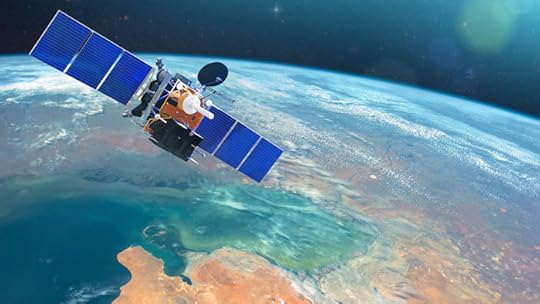 Laser-Powered Satellites
A U.K company called Space Power is working with researchers at Surrey University to develop an “in-orbit wireless power grid.” They see a time when LEO satellites will be battery-free and “laser-powered” thanks to power beamed from a sourcing satellite.
The company points out that batteries and related systems makeup about one-fourth of the entire satellite, not only adding size and weight but heat as well. Because of all that, LEO satellite batteries can’t be very large – they produce typically 150 watts, as much as required by a large lightbulb.
Space Power’s laser power-beaming technology will be a game-changer. It will more than double the efficiency of LEO satellites, compared to the marginal increases we’d get from expanding the surface area of solar arrays or panels. We’d also reduce the need to mine the rare earth metals used in these materials. The group has announced it will have a power beaming prototype by next year and they’ll be in commercial mode by 2025.
The End GameAs noted, this is just the first step for this world- and space-changing technology.
Wireless solar energy transmission from space will eventually provide power for everything on Earth and in space. We’ll have efficient solar collection and then precise and efficient delivery to earthbound power transfer stations that feed as many power grids as we can develop. The world will benefit from clean solar power on a scale that’s hard to imagine. Colonies on the Moon and Mars with their labs, living quarters, and vehicles will be powered this way as well.
But first things first. Before then, we’ll all benefit from having smaller, more efficient LEO satellites powered by solar collectors found even further out in space.
Translate This PageSelect LanguageAfrikaansAlbanianAmharicArabicArmenianAzerbaijaniBasqueBelarusianBengaliBosnianBulgarianCatalanCebuanoChichewaChinese (Simplified)Chinese (Traditional)CorsicanCroatianCzechDanishDutchEnglishEsperantoEstonianFilipinoFinnishFrenchFrisianGalicianGeorgianGermanGreekGujaratiHaitian CreoleHausaHawaiianHebrewHindiHmongHungarianIcelandicIgboIndonesianIrishItalianJapaneseJavaneseKannadaKazakhKhmerKoreanKurdish (Kurmanji)KyrgyzLaoLatinLatvianLithuanianLuxembourgishMacedonianMalagasyMalayMalayalamMalteseMaoriMarathiMongolianMyanmar (Burmese)NepaliNorwegianPashtoPersianPolishPortuguesePunjabiRomanianRussianSamoanScottish GaelicSerbianSesothoShonaSindhiSinhalaSlovakSlovenianSomaliSpanishSudaneseSwahiliSwedishTajikTamilTeluguThaiTurkishUkrainianUrduUzbekVietnameseWelshXhosaYiddishYorubaZulu
#goog-gt-tt {display:none !important;}
.goog-te-banner-frame {display:none !important;}
.goog-te-menu-value:hover {text-decoration:none !important;}
.goog-text-highlight {background-color:transparent !important;box-shadow:none !important;}
body {top:0 !important;}
#google_translate_element2 {display:none!important;}
function googleTranslateElementInit2() {new google.translate.TranslateElement({pageLanguage: 'en',autoDisplay: false}, 'google_translate_element2');}
function GTranslateGetCurrentLang() {var keyValue = document['cookie'].match('(^|;) ?googtrans=([^;]*)(;|$)');return keyValue ? keyValue[2].split('/')[2] : null;}
function GTranslateFireEvent(element,event){try{if(document.createEventObject){var evt=document.createEventObject();element.fireEvent('on'+event,evt)}else{var evt=document.createEvent('HTMLEvents');evt.initEvent(event,true,true);element.dispatchEvent(evt)}}catch(e){}}
function doGTranslate(lang_pair){if(lang_pair.value)lang_pair=lang_pair.value;if(lang_pair=='')return;var lang=lang_pair.split('|')[1];if(GTranslateGetCurrentLang() == null && lang == lang_pair.split('|')[0])return;var teCombo;var sel=document.getElementsByTagName('select');for(var i=0;i<sel.length;i++)if(/goog-te-combo/.test(sel[i].className)){teCombo=sel[i];break;}if(document.getElementById('google_translate_element2')==null||document.getElementById('google_translate_element2').innerHTML.length==0||teCombo.length==0||teCombo.innerHTML.length==0){setTimeout(function(){doGTranslate(lang_pair)},500)}else{teCombo.value=lang;GTranslateFireEvent(teCombo,'change');GTranslateFireEvent(teCombo,'change')}}
Search for: Recent Posts Power Beaming Satellites: A technology that can Completely Change the World … and we’re Close! Nine Unintended Consequences from our Approach to COVID The Impending Collapse of the US Income Tax System Categories Artificial Intelligence Business Trends Future of Agriculture Future of Banking Future of Education Future of Healthcare Future of Transportation Future of Work Future Scenarios Future Trends Futurist Thomas Frey Insights Global Trends Predictions Social Trends Technology Trends Speaking TopicsFuture of Healthcare – “Is Death our only Option?Future of AIFuture of Industries
The post Power Beaming Satellites: A technology that can Completely Change the World … and we’re Close! appeared first on Futurist Speaker.
February 9, 2022
Nine Unintended Consequences from our Approach to COVID

If it feels to you like we’re currently living in a new world with a new version of the future than we envisioned three years ago, you’re not alone … and I think you’re right.
To put it mildly, many things have changed since January 2020 and those changes are propelling us toward new versions of the future. And that’s what makes the study of the future so interesting. The future is constantly evolving; we can’t have certainty about it until we get there.
First a Word on RisksIn the course of our two-year experience with Covid, one thing we’ve learned, or hopefully are in the process of learning, is that there are no risk-free paths to the future. Our journey is one of risk mitigation, not risk elimination.
According to Canadian psychologist and best-selling author Jordan Peteson, “There are no risk-free paths forward. There is only one risk, or another. Pick your poison: that’s the choice life often offers.”
Covid certainly reinforced the lesson of balancing risks – risks related to vaccines themselves, risks related to passing the virus to a susceptible person, risks of remaining unvaccinated, risks to mental health from isolation, and risks to educational development due to extended school-from-home arrangements. I could go on.
In addition to granting us this lesson about minimizing and balancing risks, Covid has triggered some unintended or at least unforeseen consequences, and the list is growing. You can attribute some to the pandemic itself, and in other cases our actions to minimize the impact of the pandemic unexpectedly produced other areas of risk or hardship.
With that said, here are some of the most significant unintended consequences from Covid that are defining our path to the future:
1. The Supply Chain CrisisMany factors are contributing to the current supply chain crisis and product shortages. Covid-induced labor shortages and transportation bottlenecks are the two most critical.
When will supply catch up with demand? Not for several years. And rest assured, it will be a generation or more until business owners have the courage to revert to some of the pre-pandemic models like Lean Manufacturing and Just-In-Time inventory management.
In the meantime, the globalization of our economy will take a giant step backwards as business owners realize that foreign sourcing materials and goods makes them susceptible to geopolitical conflicts, port backups, weather events, and massive cargo ships blocking the Suez Canal. However, we won’t be able to locally source some critical inputs like semiconductors with a snap of the finger. These will happen over an extended period of time.
2. The Great ResignationLate last year we explored root causes and implications of the so-called Great Resignation – the tens of millions of Americans leaving their jobs in the past two years and the troubling situation of simultaneous low unemployment and high job vacancies.
In hindsight, I would add more future implications of the Great Resignation to that list. Employees and labor unions have enhanced clout that may last for generations. To that end, some observers have recast the Great Resignation as the “Great Renegotiation.”
We’ve all seen organized labor’s recent successes with worker strikes at companies like Starbucks, John Deere, and Kroger. Beyond that, there are non-working people holding out – on strike as it were – for the better jobs and better wages they’re confident they’ll find very soon as labor continues to evolve through this transition.
3. K-12 Education CrisisThe Covid-induced situation that probably concerns many people the most is the K-12 education crisis, resulting in several lost years of education for our K-12 students. Yes, the super motivated students with vigilant parents might not be harmed in the long run. But few family situations afforded the resources, time, and fortitude to maintain a high level of self-learning for their kids who were more used to using computers and phones for games, not STEM classes.
Unfortunately, we’ll see an even more rapid decline in the STEM skills of young people in our country. Over the long run this will be to the detriment of these students – especially those from lower-income or recently immigrated families – and the economic strength of the nation.
In the long run, we’ll also see the impacts of stunted emotional development and interpersonal skills with this generation of children. For two years or more, they haven’t been able to have carefree interactions with their peers or benefitted from the institutional discipline of a controlled, in-person learning environment.
 4. Secondary Education Crisis
The K-12 story has similarly been mirrored in the college and university setting, except with bigger people and bigger stakes and risks.
We all know that young adults view their college experience as an opportunity to “find themselves” and prepare for a rewarding career. They’re going to suffer in both regards as they haven’t had the opportunity to learn about themselves within this relatively safe, away-from-home setting.
Scholastically, these college students may have had an easier time with remote course work than K-12 students since they’re generally more comfortable with and possibly more disciplined about remote learning and its tools. The rigor of college instruction, though, as well as the opportunity to learn within a group, has suffered. No doubt academic standards have slipped a bit during this period as well. The motivated college student might not have lost much momentum during the pandemic, but the average student was less likely to become an overachiever.
Unfortunately, the emotional toll of pandemic also was evident in an even more immediate and devastating way for college and university students as suicide rates surpassed those in previous years.
5. Non-Covid Death Rates have MushroomedWe’re all numbingly familiar with the steadily rising tally of Covid victims. As of late January 2022, there were more than 864,000 Covid fatalities in the U.S.
However, there’s another grim statistic called “excess deaths” that counts the number of deaths over a period of time above and beyond what would be expected in a “normal” period. A New York Times report found that the number of excess deaths in the U.S. in 2020 was 356,000 – quite amazing since our stay-at-home and off-the-roads lifestyles offset much of the “normal” number of fatalities.
According to the Centers for Disease Control and Prevention, 25% of the 356,000 excess deaths were attributed to non-Covid illnesses. They were people who chose not to seek medical care for other conditions; people who could not obtain emergency health services; those who succumbed to substance abuse; and people for whom stress exacerbated underlying health conditions.
Clearly future pandemic planning will need to include better non-covid casework for these kinds of vulnerable groups.
6. Declining Birth Rates Decline even FurtherThe fertility rate, defined as the number of children a woman is expected to have over her lifetime, has been in decline for the past 15 years. It’s somewhat surprising that the pandemic didn’t slow that trend, let alone reverse it, even though young adults did not face a high risk of serious illness – 2.4% of Covid deaths were of people between 18 and 40.
Fertility rates for women aged 30-34 (“prime childbearing age”) decreased in the 2020-2021 timeframe, further illustrating the disruptive nature of the pandemic amplifying the already hectic lifestyle most families have balancing career and family demands. This decline, though, was partially offset by an increased fertility rate for younger women, those in the 20-24 age bracket, who may have felt that this downtime was a good time to have a baby. Hopefully the data doesn’t reflect an increase in unintended pregnancies for women in this age group.
The long-term decline in birth rates is concerning for our future, though, and it’s unfortunate that we didn’t see more of a baby bump (pun intended) during this period.
7. Business ClosuresSimilar to how we calculate excess deaths when describing the human toll of the pandemic, we saw 200,000 more businesses fail during the first year of the outbreak than we would otherwise expect (600,000) in a normal year. It’s not surprising that small businesses were impacted the most.
Two-thirds of the 200,000 excess business failures were individual companies. The rest were branches or local establishments of major companies.
The future impact of this is an acceleration of the trend toward shopping, eating, and recreating at businesses owned by national and international chains – in other words fewer locally owned bagel shops, florists, and auto repair garages.
 8. Inflation
Like the Lite beer commercials (Tastes Great! Less Filling!) circa the mid-1970s, there’s more than one opinion about why we’re suddenly experiencing inflation rates similar to what they were in that same timeframe almost 50 years ago. (Supply Chain Disruptions! Labor Costs! Too Much Stimulus!)
One thing we can agree on though, the pandemic and its countless side effects (some mentioned above) are all interrelated and have led to levels of price inflation that only a few experts were predicting in early 2021. But with annual inflation now running above 7%, there’s widespread concern among consumers, business owners, economists, and policymakers.
One year from now we may be closer to traditional levels of inflation, but there are a surprising number of new variables at play, and it will only happen if we ease pandemic restrictions.
When we face another pandemic or widespread natural catastrophe in the future, our economic models will have a better handle on the direct economic impacts from a catastrophe like this. Hopefully we’ll avoid a repeat of this kind of “runaway” inflation.
9. Collapsing Retail StorefrontsCertain changes in retail were already slowly trending prior to 2020, including more online shopping and the use of delivery aps, online ordering, and curbside pickup for restaurant purchases.
We saw a major leap forward in both of these areas in the last two years. The pace of change will settle down and maybe even backtrack a bit temporarily as more people venture out and about. But overall, we can see the future of retail … and it’s not a reversion to widespread boutique browsing or lingering over a family meal at the local eatery.
Disruption and Change ContinuesWhat I’ve mentioned here is only scratching the surface of all the nuanced disruptions that continue to unfold around us. Every business and industry, from banking, to healthcare, insurance, manufacturing, agriculture, and childcare have all had to work through countless challenges associated with covid mandates and restrictions.
We have attempted to solve for “X” while letting the other 25 letters of the variable alphabet run wild. We bought a myopic lens for a peripheral vision party.
Rest assured, the list of unintended consequences will continue to grow. This is far from over. We will likely see the collapse of entire industries, governments, and cultures as we move forward.
The Future is Coming Faster Than EverCovid has been a major turning point in human history. 2019 seems like a generation ago. In the end we will likely find that “doing nothing” may have been the optimal route. But doing nothing is not in our nature.
We’ll need to learn from this experience about ourselves and our society. And we should always remember that even in the darkest times, people of extraordinary character have lived among us, guiding us on pathways to a better future!
Translate This PageSelect LanguageAfrikaansAlbanianAmharicArabicArmenianAzerbaijaniBasqueBelarusianBengaliBosnianBulgarianCatalanCebuanoChichewaChinese (Simplified)Chinese (Traditional)CorsicanCroatianCzechDanishDutchEnglishEsperantoEstonianFilipinoFinnishFrenchFrisianGalicianGeorgianGermanGreekGujaratiHaitian CreoleHausaHawaiianHebrewHindiHmongHungarianIcelandicIgboIndonesianIrishItalianJapaneseJavaneseKannadaKazakhKhmerKoreanKurdish (Kurmanji)KyrgyzLaoLatinLatvianLithuanianLuxembourgishMacedonianMalagasyMalayMalayalamMalteseMaoriMarathiMongolianMyanmar (Burmese)NepaliNorwegianPashtoPersianPolishPortuguesePunjabiRomanianRussianSamoanScottish GaelicSerbianSesothoShonaSindhiSinhalaSlovakSlovenianSomaliSpanishSudaneseSwahiliSwedishTajikTamilTeluguThaiTurkishUkrainianUrduUzbekVietnameseWelshXhosaYiddishYorubaZulu
#goog-gt-tt {display:none !important;}
.goog-te-banner-frame {display:none !important;}
.goog-te-menu-value:hover {text-decoration:none !important;}
.goog-text-highlight {background-color:transparent !important;box-shadow:none !important;}
body {top:0 !important;}
#google_translate_element2 {display:none!important;}
function googleTranslateElementInit2() {new google.translate.TranslateElement({pageLanguage: 'en',autoDisplay: false}, 'google_translate_element2');}
function GTranslateGetCurrentLang() {var keyValue = document['cookie'].match('(^|;) ?googtrans=([^;]*)(;|$)');return keyValue ? keyValue[2].split('/')[2] : null;}
function GTranslateFireEvent(element,event){try{if(document.createEventObject){var evt=document.createEventObject();element.fireEvent('on'+event,evt)}else{var evt=document.createEvent('HTMLEvents');evt.initEvent(event,true,true);element.dispatchEvent(evt)}}catch(e){}}
function doGTranslate(lang_pair){if(lang_pair.value)lang_pair=lang_pair.value;if(lang_pair=='')return;var lang=lang_pair.split('|')[1];if(GTranslateGetCurrentLang() == null && lang == lang_pair.split('|')[0])return;var teCombo;var sel=document.getElementsByTagName('select');for(var i=0;i<sel.length;i++)if(/goog-te-combo/.test(sel[i].className)){teCombo=sel[i];break;}if(document.getElementById('google_translate_element2')==null||document.getElementById('google_translate_element2').innerHTML.length==0||teCombo.length==0||teCombo.innerHTML.length==0){setTimeout(function(){doGTranslate(lang_pair)},500)}else{teCombo.value=lang;GTranslateFireEvent(teCombo,'change');GTranslateFireEvent(teCombo,'change')}}
Search for: Recent Posts Nine Unintended Consequences from our Approach to COVID The Impending Collapse of the US Income Tax System When NFL Football moves into the Metaverse Categories Artificial Intelligence Business Trends Future of Agriculture Future of Banking Future of Education Future of Healthcare Future of Transportation Future of Work Future Scenarios Future Trends Futurist Thomas Frey Insights Global Trends Predictions Social Trends Technology Trends Speaking TopicsFuture of Healthcare – “Is Death our only Option?Future of AIFuture of Industries
The post Nine Unintended Consequences from our Approach to COVID appeared first on Futurist Speaker.
February 2, 2022
The Impending Collapse of the US Income Tax System

The IRS has a lot on their hands right now. The backlog of tax returns they’re facing is staggering thanks to staffing shortages, the need to administer COVID stimulus payments over the past two years and child tax credits more recently, and the fact that 10% of personal returns are filed by paper – in many cases because there’s no other way for filers to submit certain required documentation.
I feel bad for IRS employees, I really do. It must be discouraging to always be behind the curve (or in front of the wave) since it seems that just when backlogs begin to decline, a new filing season opens up.
But their job isn’t going to get any easier in the future. We have an incredibly complicated tax code, and Congress keeps adding to it. That means more errors and more unanswered calls to IRS helplines. Not only that, but we’re on the verge of new reporting complications driven by cryptocurrency and the metaverse.
Taxes will never go away, and this is not about whether effective tax rates will or should go up or down.
Rather, it’s clear to me that in addition to short term fixes to address backlogs, filing errors, the lack of customer/taxpayer support, and the barriers to 100% electronic filing, we are seeing some overarching trends that will invariably cause the collapse of the U.S. income tax system, and by extension, a domino effect of similarly intrusive income tax codes around the globe.
Here are the four future challenges that I expect are keeping Charles Rettig, the current IRS Commissioner, up at night.
1. The Great ResignationThe current labor shortage is working against the IRS in several ways, but I’ll just mention a couple of them.
First, it’s driving up wages in the private sector. According to labor union officials that represent IRS employees, the agency is now competing with the hospitality industry for the same workers in many areas.
Second, it’s a stressful job and it only seems to be getting more stressful every year. And it wasn’t that appealing to begin with. On one hand employees have the stress of working with mountains of paper or dealing nonstop with angry taxpayers on the agency’s helplines. On the other hand, they have the option of doing food service, working for tips, or manning the front desk at a local hotel. It’s understandable that many workers would choose the latter. And IRS managers have little flexibility when it comes to adjusting wages to convince potential workers otherwise.
2. Privacy is taking Center StageOur income tax system is quite intrusive, requiring us to provide a lot of personal and financial information. It’s just a matter of time before a cyberattack exposes some or all of that data.
Concerned observers pointed out last year that the IRS technology systems that store records related to personal and business income filings “are the oldest major technology systems in the federal government.” Imagine the havoc and financial loss if international terrorist groups or state-sponsored hackers decided to go after IRS records.
I should point out, this information is necessarily not locked away at the IRS, either. According to these legal service websites, other entities can legally obtain it from the IRS: courts, state treasury authorities, third-party tax investigators, and the Social Security and Medicare programs can all request and receive a business’ or individual’s tax returns and related documents. That means even more data repositories for hackers to exploit.
What this means is that each of us will become increasingly susceptible to blackmail, extortion, ransomware attacks, slander, hacker fleecing, and fraud.
Taxpayers won’t put up with this kind of vulnerability for much longer. They’ll demand HIPPA-grade privacy systems for tax return information, wherever it’s stored.
But more importantly, they will be questioning the government’s need to have access to this kind of information in the first place.
 3. The Mainstreaming of Cryptocurrency
Cryptocurrency can be used as an investment or a form of payment for services. Just like buying and selling a share of stock or being paid with dollars, De-Fi transactions are legally subject to capital gains taxation and income taxation, respectively.
That’s easier said than done and it won’t get any easier.
By nature, decentralized finance is confidential and protected by blockchain technology – not the kind of system that lends itself to compliant self-reporting. As more economic activity happens in that space, more of our transactions will become invisible. More pieces of the economy will be invisible and unverifiable. Transactions won’t occur with a single nation and of course, we won’t have a common, single worldwide cryptocurrency.
Due to all these complications, most countries will transition away from a traditional self-reporting income tax to some alternate scheme to collect their due. While countries may attempt to force cryptocurrencies to include systems for monitoring taxable events, crypto-leaders will resist with increasing levels of encryption to obscure actual transactions. It becomes a no-win battlefront for old-school politicians.
Any tax system that resides outside of a blockchain-based system will be vulnerable to hacker attacks. For example, a tax system based on a central bank digital currency (CBDC), i.e., a “digital dollar,” will still be susceptible to hackers since this currency is overseen by a public central bank, and tax records will still be stored on their or other government computers, a sure recipe for disaster
4. Income Tax Becomes Increasingly Murky in the MetaverseMoving further still into the future, it would seem that virtually every aspect of our emerging Metaverse will be out of sync with our existing archaic income tax system.
When transactions occur and wealth accumulates in the Metaverse is it “real”? Absolutely. But what country did it happen in? Do citizens of a Metaverse community transition into a citizen of a traditional country? Major parts of our economy will be replicated in the Metaverse, so does it make sense to have a taxing authority in that space as well. I sincerely doubt traditional taxing authorities like the IRS are up to the task!
Simplify and Automate … Please!Once the current, restrictive, return-based income tax system is eliminated, the speed of business will accelerate exponentially. Transactions will occur far faster, priorities will change, and we won’t need an accountant looking over every detail of our lives. Far too much of our economy is dedicated to calculating, monitoring, planning, paying, and avoiding taxes.
Future-proofing the tax system will be a major campaign issue in 2024 and beyond. That debate will include the need to immediately simplify and automate the process. For the IRS – or any new tax system that replaces it – to survive, our government will need to break the habit of automatically turning to the tax code when they want to reward, incentivize, or disincentivize certain behaviors and activities.
One hundred years from now, our descendants will look back at this era and shake their heads at how unnecessarily complex and confusing the IRS house of cards had become. Hopefully, our leaders will transform the system before it collapses under the weight of its own complexity.
Translate This PageSelect LanguageAfrikaansAlbanianAmharicArabicArmenianAzerbaijaniBasqueBelarusianBengaliBosnianBulgarianCatalanCebuanoChichewaChinese (Simplified)Chinese (Traditional)CorsicanCroatianCzechDanishDutchEnglishEsperantoEstonianFilipinoFinnishFrenchFrisianGalicianGeorgianGermanGreekGujaratiHaitian CreoleHausaHawaiianHebrewHindiHmongHungarianIcelandicIgboIndonesianIrishItalianJapaneseJavaneseKannadaKazakhKhmerKoreanKurdish (Kurmanji)KyrgyzLaoLatinLatvianLithuanianLuxembourgishMacedonianMalagasyMalayMalayalamMalteseMaoriMarathiMongolianMyanmar (Burmese)NepaliNorwegianPashtoPersianPolishPortuguesePunjabiRomanianRussianSamoanScottish GaelicSerbianSesothoShonaSindhiSinhalaSlovakSlovenianSomaliSpanishSudaneseSwahiliSwedishTajikTamilTeluguThaiTurkishUkrainianUrduUzbekVietnameseWelshXhosaYiddishYorubaZulu
#goog-gt-tt {display:none !important;}
.goog-te-banner-frame {display:none !important;}
.goog-te-menu-value:hover {text-decoration:none !important;}
.goog-text-highlight {background-color:transparent !important;box-shadow:none !important;}
body {top:0 !important;}
#google_translate_element2 {display:none!important;}
function googleTranslateElementInit2() {new google.translate.TranslateElement({pageLanguage: 'en',autoDisplay: false}, 'google_translate_element2');}
function GTranslateGetCurrentLang() {var keyValue = document['cookie'].match('(^|;) ?googtrans=([^;]*)(;|$)');return keyValue ? keyValue[2].split('/')[2] : null;}
function GTranslateFireEvent(element,event){try{if(document.createEventObject){var evt=document.createEventObject();element.fireEvent('on'+event,evt)}else{var evt=document.createEvent('HTMLEvents');evt.initEvent(event,true,true);element.dispatchEvent(evt)}}catch(e){}}
function doGTranslate(lang_pair){if(lang_pair.value)lang_pair=lang_pair.value;if(lang_pair=='')return;var lang=lang_pair.split('|')[1];if(GTranslateGetCurrentLang() == null && lang == lang_pair.split('|')[0])return;var teCombo;var sel=document.getElementsByTagName('select');for(var i=0;i<sel.length;i++)if(/goog-te-combo/.test(sel[i].className)){teCombo=sel[i];break;}if(document.getElementById('google_translate_element2')==null||document.getElementById('google_translate_element2').innerHTML.length==0||teCombo.length==0||teCombo.innerHTML.length==0){setTimeout(function(){doGTranslate(lang_pair)},500)}else{teCombo.value=lang;GTranslateFireEvent(teCombo,'change');GTranslateFireEvent(teCombo,'change')}}
Search for: Recent Posts The Impending Collapse of the US Income Tax System When NFL Football moves into the Metaverse My Dinner with Leonardo DaVinci – Living Forever in the Metaverse Categories Artificial Intelligence Business Trends Future of Agriculture Future of Banking Future of Education Future of Healthcare Future of Transportation Future of Work Future Scenarios Future Trends Futurist Thomas Frey Insights Global Trends Predictions Social Trends Technology Trends Speaking TopicsFuture of Healthcare – “Is Death our only Option?Future of AIFuture of Industries
The post The Impending Collapse of the US Income Tax System appeared first on Futurist Speaker.
January 26, 2022
When NFL Football moves into the Metaverse

A few years ago, I wrote a column titled, “How Much are the VR Broadcasting Rights Worth for NFL Football?” I described how in the near future we would safely attach several cameras around players’ football helmets, and through virtual reality (VR), viewers could immerse themselves into the action those players experience in conjunction with visual perspectives from around the stadium. With some haptic feedback suits, they would also be able to “feel” the action on the field.
In fact, NFL teams are now using helmet cams in practices and warmups but not during a regular season game. The NFL also occasionally arranges for the camera hat vantage point of officiating team members – especially the back and field judges who face the action from the defensive side of the ball and the umpire who watches the play from the quarterback’s perspective.
However, it’s just a matter of time until we have player helmet-cams being used in regular and post-season NFL game broadcasts. Over the last few decades, the NFL game viewing experience has steadily improved with instant replay, color programming, mics spread across the stadium, multiple camera views, and real-time stats. Soon you will be able to add many other user-enhancing VR features to this list.
The Limits of VRMuch of the fun of watching football games, or other sporting events, concerts, etc. – whether on television or in person – is the social aspect of the experience.
Traditional VR technology tends to isolate the viewer from people in the rest of the viewing location.
Sure, viewers and their friends can all wear the same devices and possibly watch the action from the same perspectives. They can talk to each other out of the sides of their mouth as they view the Hail Mary pass or game-saving tackle (“Oh man, did you SEE that!), but everyone remains locked into their own view and their own micro experiences.
Yes, these VR NFL fans are still in the real world, and yes, they’re looking at vastly new perspectives of the real world.
Another World AltogetherIn contrast, how about groups of friends meeting at the stadium – in the metaverse – where they’re able to not only watch the game but engage with each other, exchange high-fives and razz the fans of the opposing team sitting behind them?
This kind of emerging experience takes VR to a new level. There’s a big difference between interacting in a single-viewer experience (traditional VR) and viewing it virtually as a group in the metaverse – with all the benefits of the point-of-view technology that allows for a much more immersive viewing experience of the event itself.
 Basketball First
Meta, formerly known as Facebook, is already working with the NBA to broadcast NBA games for fans in the metaverse. Based on reported experiences of some users, the technology is in its infancy, but it demonstrates the promise of creating the kind of real-time, personalized, interpersonal experience of being at a game in the best possible seats and among the best possible company.
Future ImplicationsAs this technology advances and finds its way into the NFL experience, we may see a decline in in-person attendance at average in-season games. Team owners who plan ahead, though, won’t be financially affected as they find unusual new ways to monetize the meta-viewing experience.
Competitive teams will still sell lots of actual, in-person $300+ tickets to die-hard fans, along with beers, nachos, and jerseys. But tens of thousands more fans will pay $50 for a meta-virtual second deck seat and proportionately more for seats closer to the field. At halftime, they might buy an official NFL-licensed NFT team jersey. These viewers may see ads during some of the breaks in the action, except for those viewers who bought premium skybox tickets or hold season tickets.
New AnglesAnd when it comes to camera angles, there will be very few limits. Every player, coach, and official will have a helmet/hat cam with an audio microphone, capturing pretty much everything except play-calling in the huddle. Technology will be available to immediately scrub the audio to preserve G-ratings upon request.
We’ll need to get used to player helmet camera views. A few years back when the World Football League was experimenting with helmet cams, after a particularly hard hit, a quarterback’s helmet was knocked off his head, falling to the ground, creating the visual impression for many that the player had been decapitated!
Beyond helmets, though, cameras will also be at both points of the football. Quarterbacks who don’t throw spirals could make this a pretty troubling viewpoint, although gyroscope technology will limit that effect somewhat.
Drones have been used by NFL teams in many ways – except for recording game action. Among the future metaverse football viewing options will be quiet drone cams programmed to follow plays from either the offensive or defensive perspective, key players, or even sideline activity.
“In-Person” vs Viewing EventsMetaverse inhabitants/avatars will have the option of experiencing an NFL game at the metaverse stadium or remotely at their meta-home or in another meta-viewing venue. Fans at the virtual stadium will likely key in on just a few game views to keep their experience more manageable and realistic.
Metaverse viewing parties will be a different story, though, as the presentation mixes these views in accordance with the wishes of the attendees. They’ll be able to watch a play live from the quarterback’s perspective and then the replay from the football cam as the ball soars to the receiver downfield and then from the back judge’s view as they call pass interference. Hosts will hire producers to adeptly switch back and forth among these views as details of the plays evolve both during and after the play.
We’ll see retired players hosting viewing parties in the metaverse, offering running commentary and answering questions. Yes, quite a bit like ESPN’s breakthrough Monday Night Football ManningCast!
Groups will rent out venues in the metaverse to watch the big game as a for-profit venture, to entertain clients, or raise funds for charity.
Adapting the Game to the MetaverseTo prevent all of the unique views and vantage points in a game from being wasted on metaverse fans, and much to the chagrin of NFL purists, the NFL will likely increase the time between plays from 40 to 60 seconds to allow for multiple vantage point replays. Official overseers “in New York” will also take advantage of these perspectives.
Other rule changes and practices will invariably be adopted to optimize the experience for metaverse viewers.
The Expanding Sports MetaverseThis combination of metaverse in-person/avatar viewing and the more expansive metaverse viewing party experiences can and will be replicated in most other sports. Faster-paced, less predictable sports will probably make the best use of it.
But even aficionados of the more gentile, predictable sports like horse racing and golf will want to be there in-person or in-avatar to see first-hand the event’s nuances, like saddling up and club selection as the action unfolds.
Translate This PageSelect LanguageAfrikaansAlbanianAmharicArabicArmenianAzerbaijaniBasqueBelarusianBengaliBosnianBulgarianCatalanCebuanoChichewaChinese (Simplified)Chinese (Traditional)CorsicanCroatianCzechDanishDutchEnglishEsperantoEstonianFilipinoFinnishFrenchFrisianGalicianGeorgianGermanGreekGujaratiHaitian CreoleHausaHawaiianHebrewHindiHmongHungarianIcelandicIgboIndonesianIrishItalianJapaneseJavaneseKannadaKazakhKhmerKoreanKurdish (Kurmanji)KyrgyzLaoLatinLatvianLithuanianLuxembourgishMacedonianMalagasyMalayMalayalamMalteseMaoriMarathiMongolianMyanmar (Burmese)NepaliNorwegianPashtoPersianPolishPortuguesePunjabiRomanianRussianSamoanScottish GaelicSerbianSesothoShonaSindhiSinhalaSlovakSlovenianSomaliSpanishSudaneseSwahiliSwedishTajikTamilTeluguThaiTurkishUkrainianUrduUzbekVietnameseWelshXhosaYiddishYorubaZulu
#goog-gt-tt {display:none !important;}
.goog-te-banner-frame {display:none !important;}
.goog-te-menu-value:hover {text-decoration:none !important;}
.goog-text-highlight {background-color:transparent !important;box-shadow:none !important;}
body {top:0 !important;}
#google_translate_element2 {display:none!important;}
function googleTranslateElementInit2() {new google.translate.TranslateElement({pageLanguage: 'en',autoDisplay: false}, 'google_translate_element2');}
function GTranslateGetCurrentLang() {var keyValue = document['cookie'].match('(^|;) ?googtrans=([^;]*)(;|$)');return keyValue ? keyValue[2].split('/')[2] : null;}
function GTranslateFireEvent(element,event){try{if(document.createEventObject){var evt=document.createEventObject();element.fireEvent('on'+event,evt)}else{var evt=document.createEvent('HTMLEvents');evt.initEvent(event,true,true);element.dispatchEvent(evt)}}catch(e){}}
function doGTranslate(lang_pair){if(lang_pair.value)lang_pair=lang_pair.value;if(lang_pair=='')return;var lang=lang_pair.split('|')[1];if(GTranslateGetCurrentLang() == null && lang == lang_pair.split('|')[0])return;var teCombo;var sel=document.getElementsByTagName('select');for(var i=0;i<sel.length;i++)if(/goog-te-combo/.test(sel[i].className)){teCombo=sel[i];break;}if(document.getElementById('google_translate_element2')==null||document.getElementById('google_translate_element2').innerHTML.length==0||teCombo.length==0||teCombo.innerHTML.length==0){setTimeout(function(){doGTranslate(lang_pair)},500)}else{teCombo.value=lang;GTranslateFireEvent(teCombo,'change');GTranslateFireEvent(teCombo,'change')}}
Search for: Recent Posts When NFL Football moves into the Metaverse My Dinner with Leonardo DaVinci – Living Forever in the Metaverse Should we Gamify Citizenship in the Metaverse? Categories Artificial Intelligence Business Trends Future of Agriculture Future of Banking Future of Education Future of Healthcare Future of Transportation Future of Work Future Scenarios Future Trends Futurist Thomas Frey Insights Global Trends Predictions Social Trends Technology Trends Speaking TopicsFuture of Healthcare – “Is Death our only Option?Future of AIFuture of Industries
The post When NFL Football moves into the Metaverse appeared first on Futurist Speaker.
January 19, 2022
My Dinner with Leonardo DaVinci – Living Forever in the Metaverse

The Metaverse not only gives us the opportunity to explore new places and move across a metaverse landscape, but it will also allow us to move about in metaverse history to experience life in the past and interact with historical figures.
In 2014 I wrote a column about a conversation I envisioned having in 2026 with Adolph Hitler. The setting was a rather nondescript room in a library. It was essentially an AI-powered hologram experience, but I’ve had several conversations lately about how the Metaverse could make it possible for us to take this kind of encounter to a new level – not with holograms but within the metaverse. More on that in a bit, but first let’s see how the hologram-powered experience has actually come to fruition.
Preserving Us with AIThe USC Shoah Foundation has used video databases augmented with AI hologram technology to preserve the memories of holocaust survivors. They’ve compiled a visual historical archive so we and other physical people in future generations can have conversations with these remarkable people through their avatars. The avatar communicates based on a massive database of answers their human subject recorded on video. 60 Minutes did a remarkable story on this project two years ago.
This technology is now a growing business. Famous and average people can record their legacies in this way for all of posterity. After all, each one of us is proud of our stories and accomplishments. We’d like to think these accounts won’t die when we do or with the next generation after us.
No doubt our great-great-grandchildren will be amused if they stumble across our avatar. If you’re a historical figure or a pioneer in your field, your avatar might seem a little more interesting to high school seniors decades from now as they download you to pick your brain.
But this pre-recorded approach to legacy conversations is just the tip of the iceberg.
Meeting in the MetaverseBased on my future experience in talking to Adolph Hitler, I know I never want to run across him again – in the metaverse or anywhere else. But I’d love to talk with Thomas Jefferson, Albert Einstein, and … of course Leonardo DaVinci – the namesake of our organization and an inspiration for futurists for many centuries.
Obviously, it’s too late for historical figures like DaVinci to record 30-40 hours of commentary like those holocaust survivors did for the USC Shoah project. But that doesn’t mean we don’t know a lot about them based on recorded speeches, their own writings, the accounts of others, photographs, and more … depending on their era.
Supercomputers can scour all known sources to pull this information together. AI will recreate the person – their body, their opinions, and their memories – to place an avatar in the metaverse that looks, thinks, and speaks like their former human persona. It will also have their knowledge base – if there are gaps in this database of knowledge, AI will objectively fill them in, based on personality programming. In fact, the avatar can be programmed with additional information so it can talk about nearly any matter outside of its original sphere of knowledge and historic era.
Place this metaverse-derived avatar into the desired metaverse location in the chosen meta-time frame and you have the opportunity to visit with the best and brightest people of every era. These encounters will be pricey, and it will be important to remember that, just like my encounter with Hitler, you may not always be able to control the vibe and flow of the conversation. But that’s what makes it virtually real!
And that leads to my dinner with Leonardo DaVinci in 2032.
My Dinner with DaVinciGiven a range of time and place options, I have chosen to have this encounter circa 1510 in a private dining room setting – quiet, with no distraction except for discrete table service. I planned a simple menu. Based on what I knew of Leonardo’s preferences, we first enjoyed a soup appetizer with bread. I had suspected he might be a vegetarian, so I had instructed my virtual meal planner to prepare a casserole of potatoes and other vegetables, crisp and not overcooked. During dinner, he confided that, in fact, his secret indulgence was a small piece of veal-cooked medium. We had fresh fruit for dessert. A bottle of wine was tableside along with a jug of water, and he helped himself to a bit of both – at the same time in the same goblet as he tended to do.
We met for more than three hours. Leonardo ate very slowly – he claimed it helped with digestion. Early on I was able to talk with him about the inspiration for his work and how he was able to think beyond the bounds of that day’s “common knowledge.” Because of his programming, he was already well aware of how his inventions and famous sketches had been incorporated and improved over time. There wasn’t much I could enlighten him on in that regard.

Between courses, we took slow walks around the grounds, again, for digestive reasons as Leonardo insisted. His human being outlived many of his peers to the ripe age of 68 so I guess he may have been on to something.
The most stimulating part of the evening was comparing notes on the future – not his but ours. He was most interested in my thoughts on the future evolution of spacecraft, space travel, and colonization of the moon and beyond. He proposed outside-the-box ideas and posed mind-boggling questions in the same way he did with his peers more than 500 years before.
My avatar had to keep reminding itself that Leonardo’s avatar was a recent creation, fed with all possible current information. Still, it was jarring to see this man in 16th Century clothing, with grooming to match, talking casually about low-earth orbit satellites and asteroid mining. I could have requested his avatar wear a cardigan sweater or a three-piece suit, but that would have significantly detracted from the experience – one that I had paid handsomely for with ETH cyber currency.
Near the end of our session, I received a polite reminder in my headset that the visit would be ending in five minutes. Would I like to authorize the transfer of more funds for an additional 30 minutes? I was tempted but my avatar was exhausted, overloaded even, so we said our farewells and I offered to host him the next year in a 2033 setting (his avatar was quite booked as you can imagine). I was pleased that he agreed. He promised to dress appropriately, and I promised to have available the best cut of virtual veal that I could arrange.
And What About Us?As noted above, the technology that will make this meta-visit with Leonardo DaVinci a reality ultimately will be available to the average person. Information about us, based on every online interaction we’ve had in and outside the metaverse, will be combined with interview information we choose to share based on advanced methodologies inspired by the Shoah Foundation work. Our avatar will be available to whomever we designate prior to our passing – for family only for example, or we might choose to put it/us out there for anyone to visit with.
In so many ways, the metaverse will not only allow us to travel to far distant places, or backwards or forward in time, but it will also be a place where no one ever has to die.
Translate This PageSelect LanguageAfrikaansAlbanianAmharicArabicArmenianAzerbaijaniBasqueBelarusianBengaliBosnianBulgarianCatalanCebuanoChichewaChinese (Simplified)Chinese (Traditional)CorsicanCroatianCzechDanishDutchEnglishEsperantoEstonianFilipinoFinnishFrenchFrisianGalicianGeorgianGermanGreekGujaratiHaitian CreoleHausaHawaiianHebrewHindiHmongHungarianIcelandicIgboIndonesianIrishItalianJapaneseJavaneseKannadaKazakhKhmerKoreanKurdish (Kurmanji)KyrgyzLaoLatinLatvianLithuanianLuxembourgishMacedonianMalagasyMalayMalayalamMalteseMaoriMarathiMongolianMyanmar (Burmese)NepaliNorwegianPashtoPersianPolishPortuguesePunjabiRomanianRussianSamoanScottish GaelicSerbianSesothoShonaSindhiSinhalaSlovakSlovenianSomaliSpanishSudaneseSwahiliSwedishTajikTamilTeluguThaiTurkishUkrainianUrduUzbekVietnameseWelshXhosaYiddishYorubaZulu
#goog-gt-tt {display:none !important;}
.goog-te-banner-frame {display:none !important;}
.goog-te-menu-value:hover {text-decoration:none !important;}
.goog-text-highlight {background-color:transparent !important;box-shadow:none !important;}
body {top:0 !important;}
#google_translate_element2 {display:none!important;}
function googleTranslateElementInit2() {new google.translate.TranslateElement({pageLanguage: 'en',autoDisplay: false}, 'google_translate_element2');}
function GTranslateGetCurrentLang() {var keyValue = document['cookie'].match('(^|;) ?googtrans=([^;]*)(;|$)');return keyValue ? keyValue[2].split('/')[2] : null;}
function GTranslateFireEvent(element,event){try{if(document.createEventObject){var evt=document.createEventObject();element.fireEvent('on'+event,evt)}else{var evt=document.createEvent('HTMLEvents');evt.initEvent(event,true,true);element.dispatchEvent(evt)}}catch(e){}}
function doGTranslate(lang_pair){if(lang_pair.value)lang_pair=lang_pair.value;if(lang_pair=='')return;var lang=lang_pair.split('|')[1];if(GTranslateGetCurrentLang() == null && lang == lang_pair.split('|')[0])return;var teCombo;var sel=document.getElementsByTagName('select');for(var i=0;i<sel.length;i++)if(/goog-te-combo/.test(sel[i].className)){teCombo=sel[i];break;}if(document.getElementById('google_translate_element2')==null||document.getElementById('google_translate_element2').innerHTML.length==0||teCombo.length==0||teCombo.innerHTML.length==0){setTimeout(function(){doGTranslate(lang_pair)},500)}else{teCombo.value=lang;GTranslateFireEvent(teCombo,'change');GTranslateFireEvent(teCombo,'change')}}
Search for: Recent Posts My Dinner with Leonardo DaVinci – Living Forever in the Metaverse Should we Gamify Citizenship in the Metaverse? Private Space Stations: The Future Portals for Private Space Commerce and Tourism Categories Artificial Intelligence Business Trends Future of Agriculture Future of Banking Future of Education Future of Healthcare Future of Transportation Future of Work Future Scenarios Future Trends Futurist Thomas Frey Insights Global Trends Predictions Social Trends Technology Trends Speaking TopicsFuture of Healthcare – “Is Death our only Option?Future of AIFuture of Industries
The post My Dinner with Leonardo DaVinci – Living Forever in the Metaverse appeared first on Futurist Speaker.
January 12, 2022
Should we Gamify Citizenship in the Metaverse?

Four years ago, I analyzed the benefits, downsides, and challenges related to creating a citizenship rating system that would document a person’s value to society. And we further discussed the topic in a recent podcast interview with Shermon Cruz, Chair of the Association of Professional Futurists.
The idea was that since most human beings tend to be motivated by personalized, objective rankings (FICO scores for example), a universal system that “rewards” us for doing the right thing and “penalizes” us for doing harmful things could make the world a more positive place.
One of the challenges we identified at that time was that there wasn’t a reliable way to capture and account for every personal activity in order to assign it a positive or negative point value. Another limitation was that most governing bodies focused on penalizing people for bad or criminal behavior, but they didn’t have a way to incentivize people for good behavior.
The DAO SolutionToday’s DAOs (Decentralized Autonomous Organizations) provide a model for how we can overcome both of these challenges and accurately quantify a person’s positive citizenship value, so they can be rewarded … or negative citizenship value so they have an incentive to improve.
Much like Santa Claus, DAOs will be able to record if a person has been naughty or nice within that group. And the groups themselves will take the place of traditional governing bodies in many respects, since they replace geography-based communities with metaverse-oriented tribes.
DAO Communities and GovernanceToday’s blockchain-enabled DAOs are formed around aspects of social life, community service, hobbies, gaming, investing, entertainment, art, and other areas of shared interests, including ownership of land in the metaverse. Increasingly, we’ll be relating to peers within our chosen DAOs and less with neighbors in the physical world.
Here’s where things get relevant to our topic. Typically, engaging in a DAO requires an upfront entry fee to buy governance tokens that give the user a vote regarding actions taken by the DAO. DAO members often can earn additional governance tokens for actions they take that provide value to their DAO community – participating in meetings, joining and engaging in workgroups, contributing content, and so on. These governance token rewards are tangible incentives for taking positive actions.
Presumably, a DAO could also be structured and maintained to levy fines for users who damage or undermine the venture.
Since a participant’s activities in these DAOs are recorded on the blockchain, there’s really no reason why user activities can’t be recorded in terms of reward or penalty points. For better or worse, our activity in these niches of the metaverse cannot be hidden or slide under the radar.
One Big DAO MetaverseAs the metaverse continues to replicate more and more areas of our physical world, we’ll see DAOs and pieces of the metaverse merge and link to encompass an even greater slice of this alternate life. Games are already seamlessly linking to cryptocurrency finances, for example.
Ultimately, there will be one system and one login to a comprehensive metaverse. And at that point, it will be very easy to assign participants a comprehensive citizenship score or valuation that reflects their contribution or harm within that new world.
 DAO Citizenship
This kind of global metaverse will attract a wide range of people – from those who are mildly interested to those deeply involved in every nuance of a virtual world’s DAO.
Early on, some may poke around in it for 20 minutes a day. Others may be involved 10 hours a day. And many will lose themselves in that comprehensive DAO completely, right from the start. If a person wants to remain relevant, though it will be increasingly important that they engage in the metaverse – just as being off the IT grid today can make a person seemingly non-existent.
Our engagement in this metaverse will be monitored, and our true selves will become apparent. As with the physical world, we’ll see all types of personalities: hard workers, observers, innovators, leaders, followers, specialists, givers, takers, criminals, saboteurs, and anarchists.
Our personality types will be recorded and transparent, modified automatically over time as new activities are recorded. On a more immediate basis, our deeds will be rewarded or punished using a point system linked to cryptocurrency. The best metaverse citizens may even be able to make a decent living by being very, very good as resources are shifted to them and away from the penalized participants.
Criteria for Gamifying CitizenshipThe standards for an ideal measurement of a person’s contributions to society require that the system it’s based on reflects current realities is objective and is all-knowing. A metaverse-based system meets those criteria.
As I noted in my 2018 column, citizenship algorithms should be adjusted over time, continually redefining what constitutes good and bad behavior based on current needs and situations. Similarly, the relative value of rewards and penalties should be regularly tweaked based on measured supply and demand. The metaverse, with its nearly infinite access to information, can accomplish all this and more.
With regard to the need for objective observation and the transparency of personal actions, blockchain technology will be the “Big Brain” behind the metaverse making all that possible. It will record participants’ activities and interactions and meter out the rankings and the rewards related to that activity.
Citizens of What?One last thought on the future of citizenship. Blockchain, cryptocurrencies, and the Internet itself transcend government-set boundaries. Increasingly each of us will be “living” in one or more DAOs and then ultimately within a comprehensive metaverse.
Our actions in the metaverse will ultimately be as important in evaluating us as a person as anything we do in the physical world today. And the evaluations will be ruthless and not subject to manipulation or coercion, providing a strong incentive to do the right thing among our global peers.
That said, for those who cannot live up to the rigorous demands of an unforgiving rules-based system, we will likely see underground movements and even gorilla groups forming to fight back against the “tyranny of the DAO.”
No, there is no such thing as a perfect system.
Translate This PageSelect LanguageAfrikaansAlbanianAmharicArabicArmenianAzerbaijaniBasqueBelarusianBengaliBosnianBulgarianCatalanCebuanoChichewaChinese (Simplified)Chinese (Traditional)CorsicanCroatianCzechDanishDutchEnglishEsperantoEstonianFilipinoFinnishFrenchFrisianGalicianGeorgianGermanGreekGujaratiHaitian CreoleHausaHawaiianHebrewHindiHmongHungarianIcelandicIgboIndonesianIrishItalianJapaneseJavaneseKannadaKazakhKhmerKoreanKurdish (Kurmanji)KyrgyzLaoLatinLatvianLithuanianLuxembourgishMacedonianMalagasyMalayMalayalamMalteseMaoriMarathiMongolianMyanmar (Burmese)NepaliNorwegianPashtoPersianPolishPortuguesePunjabiRomanianRussianSamoanScottish GaelicSerbianSesothoShonaSindhiSinhalaSlovakSlovenianSomaliSpanishSudaneseSwahiliSwedishTajikTamilTeluguThaiTurkishUkrainianUrduUzbekVietnameseWelshXhosaYiddishYorubaZulu
#goog-gt-tt {display:none !important;}
.goog-te-banner-frame {display:none !important;}
.goog-te-menu-value:hover {text-decoration:none !important;}
.goog-text-highlight {background-color:transparent !important;box-shadow:none !important;}
body {top:0 !important;}
#google_translate_element2 {display:none!important;}
function googleTranslateElementInit2() {new google.translate.TranslateElement({pageLanguage: 'en',autoDisplay: false}, 'google_translate_element2');}
function GTranslateGetCurrentLang() {var keyValue = document['cookie'].match('(^|;) ?googtrans=([^;]*)(;|$)');return keyValue ? keyValue[2].split('/')[2] : null;}
function GTranslateFireEvent(element,event){try{if(document.createEventObject){var evt=document.createEventObject();element.fireEvent('on'+event,evt)}else{var evt=document.createEvent('HTMLEvents');evt.initEvent(event,true,true);element.dispatchEvent(evt)}}catch(e){}}
function doGTranslate(lang_pair){if(lang_pair.value)lang_pair=lang_pair.value;if(lang_pair=='')return;var lang=lang_pair.split('|')[1];if(GTranslateGetCurrentLang() == null && lang == lang_pair.split('|')[0])return;var teCombo;var sel=document.getElementsByTagName('select');for(var i=0;i<sel.length;i++)if(/goog-te-combo/.test(sel[i].className)){teCombo=sel[i];break;}if(document.getElementById('google_translate_element2')==null||document.getElementById('google_translate_element2').innerHTML.length==0||teCombo.length==0||teCombo.innerHTML.length==0){setTimeout(function(){doGTranslate(lang_pair)},500)}else{teCombo.value=lang;GTranslateFireEvent(teCombo,'change');GTranslateFireEvent(teCombo,'change')}}
Search for: Recent Posts Should we Gamify Citizenship in the Metaverse? Private Space Stations: The Future Portals for Private Space Commerce and Tourism Next Up – Decentralized Venture Capital Categories Artificial Intelligence Business Trends Future of Agriculture Future of Banking Future of Education Future of Healthcare Future of Transportation Future of Work Future Scenarios Future Trends Futurist Thomas Frey Insights Global Trends Predictions Social Trends Technology Trends Speaking TopicsFuture of Healthcare – “Is Death our only Option?Future of AIFuture of Industries
The post Should we Gamify Citizenship in the Metaverse? appeared first on Futurist Speaker.
January 5, 2022
Private Space Stations: The Future Portals for Private Space Commerce and Tourism
The future of space research and development is tied to private enterprise – specifically private space stations. Now that government-funded programs have proven basic concepts about getting to and living/working in space, NASA and agencies from other countries will continue to turn many aspects of space station work over to private companies.
The International Space Station (ISS) will be unusable by the end of this decade and at that point NASA and other countries will resort to renting space on privately owned, earth orbiting stations.
NASA is hedging its bets and providing grants to several private companies in hopes of jump starting and accelerating their development of private space stations. No doubt any of these companies will be honored to have NASA as a primary tenant, but they’re setting their sights even higher – literally.
Space Flight Tourism Has BegunWe’ve already broken the public-private barrier with tourist excursions for low-earth, brief or multi-day orbital flights. The Russians have been making their Soyuz vehicle available for ferrying private citizens to the ISS for more than a decade.
Now, in addition to ferrying crews to the ISS for NASA, SpaceX also is using its equipment to provide multi-day orbital flights for private citizens. Late last year, SpaceX hosted four space tourists for a three-day orbiting tour.
Space Destination TourismAxiom Space, one of the companies supported by NASA, is planning to rent out the SpaceX vehicle from Elon Musk’s team to transport company clients to an eight-day literal “around the world” orbital flight cruise aboard the ISS. This represents the second phase of the space tourism industry – to deliver space tourists to orbiting modules and stations. We’re there already of course, but these programs are in their infancy.
When the ISS goes out of commission, we’ll see private space stations take up the slack – both for NASA’s important work and for wealthy space tourists’ once-in-a-lifetime experiences. Axiom has a leg up on this venture, as it’s planning to attach a module to the ISS for several years before detaching it to form the basis of its own private space station.
Orbital VacationsOver time, space station tourists won’t be content to live even for a few days in a lab-like environment – the kind we’re used to seeing on videos from the ISS.
Private, orbiting space stations will be upgraded. They won’t be luxurious at first, but they’ll have slightly upgraded sleeping pods and small common areas for lounging instead of working.
NASA will still have its labs and astronaut quarters on board. The tourists will need to stay in their own area, although some will want to do more than look out the window for days at a time and will volunteer to participate in research after receiving some on-the-ground training before liftoff.
 The Next Frontier
The next step in the space tourism progression is to break beyond the Earth orbit and place space facilities in other locations – orbiting the Earth’s moon or on the moon itself.
We’ll also see space vacations and research destinations in non-planet orbiting space.
Supporting Space CommerceDown the road even further, space workers for commercial ventures will become another category of private citizen astronauts. These workers will be hopping from one private space station to the next as space station entrepreneurs place facilities at ever-more distant waypoints in space. Tasks like asteroid mining will be done by robots, of course, but in some cases, human intervention at the mining location may be needed to keep things progressing. These private space stations will serve as staging areas, regional offices, and warehouses.
Space HighwaysIt’s not too hard to imagine that eventually, along well-established routes to commercial areas in space and to other planets, we’ll see the emergence of additional space structures – hardly space “stations” anymore – with specific functions. Passing vehicles will dock to resupply, make deliveries, make repairs, refresh crews and passengers, and provide almost the same variety of services you’d expect to see along a U.S. interstate highway.
Even further into the future, we’ll see scheduled flights from earth to the larger space communities and then between those locations, similar to the familiar hub and spoke arrangements used by the world’s airlines today. As we scale these operations, space recreation and tourism will be open to far more of Earth’s citizens.
These flights will be even more necessary when people (originally workers on those remote outposts) choose to remain in space-based facilities indefinitely, purchasing or renting accommodations – maybe as retirement destinations.
Will Space Remain International?At this time, the U.S., China, India, Russia, the UK, Japan, the UAE and maybe a few other nations have or conceivably could develop the capability to push into space for tourism or commerce.
But who owns space? Will we see any borders or territorial claims? Back in 1960, the United Nations determined that space was truly wide open. No country could lay claim to any areas or create any borders.
Will today and tomorrow’s nations abide by that? This neutrality principle might be tested as structures emerge on the moon and Mars and as we’re able to easily reach areas of space with valuable resource-laden asteroids. We may also come across some entities that come from other parts of the universe who would beg to differ about that jurisdiction of the UN!
Baby Steps So Far Are an Exciting Promise of What’s to ComeWith these kinds of futuristic images in mind, it’s easy to see that what’s happened in the past decade and what will take place in the next few years are important steps, but they’re still just baby steps.
What needs to and will happen, though, is that as more and more tourist space flights occur on private vehicles and more and more private residents spend a few days at a time on the ISS and later the private space stations, people and investors will be convinced that futuristic, recreational space travel and residency is no longer science fiction but a legitimate, future personal and business opportunity. The Jetsons won’t seem as far fetched as they did 60 years ago.
In 2022, we’ll see a remarkable surge in this direction with more visitors going to space and to the ISS, along with breakthroughs in how to build and integrate structures in space. As long as we don’t see any major catastrophes (unfortunately, they’re almost inevitable and it’s important we keep them in perspective and learn from them when they happen), we’ll see growing confidence in the viability of recreational space travel.
Ten years from now, even if you’re not ready to book a hotel stay near Mars, you should buy a ticket for an Earth orbit trip or make reservations for a once-in-a-lifetime space station vacation. That’s where you’re going to see the greatest shows off Earth.
Translate This PageSelect LanguageAfrikaansAlbanianAmharicArabicArmenianAzerbaijaniBasqueBelarusianBengaliBosnianBulgarianCatalanCebuanoChichewaChinese (Simplified)Chinese (Traditional)CorsicanCroatianCzechDanishDutchEnglishEsperantoEstonianFilipinoFinnishFrenchFrisianGalicianGeorgianGermanGreekGujaratiHaitian CreoleHausaHawaiianHebrewHindiHmongHungarianIcelandicIgboIndonesianIrishItalianJapaneseJavaneseKannadaKazakhKhmerKoreanKurdish (Kurmanji)KyrgyzLaoLatinLatvianLithuanianLuxembourgishMacedonianMalagasyMalayMalayalamMalteseMaoriMarathiMongolianMyanmar (Burmese)NepaliNorwegianPashtoPersianPolishPortuguesePunjabiRomanianRussianSamoanScottish GaelicSerbianSesothoShonaSindhiSinhalaSlovakSlovenianSomaliSpanishSudaneseSwahiliSwedishTajikTamilTeluguThaiTurkishUkrainianUrduUzbekVietnameseWelshXhosaYiddishYorubaZulu
#goog-gt-tt {display:none !important;}
.goog-te-banner-frame {display:none !important;}
.goog-te-menu-value:hover {text-decoration:none !important;}
.goog-text-highlight {background-color:transparent !important;box-shadow:none !important;}
body {top:0 !important;}
#google_translate_element2 {display:none!important;}
function googleTranslateElementInit2() {new google.translate.TranslateElement({pageLanguage: 'en',autoDisplay: false}, 'google_translate_element2');}
function GTranslateGetCurrentLang() {var keyValue = document['cookie'].match('(^|;) ?googtrans=([^;]*)(;|$)');return keyValue ? keyValue[2].split('/')[2] : null;}
function GTranslateFireEvent(element,event){try{if(document.createEventObject){var evt=document.createEventObject();element.fireEvent('on'+event,evt)}else{var evt=document.createEvent('HTMLEvents');evt.initEvent(event,true,true);element.dispatchEvent(evt)}}catch(e){}}
function doGTranslate(lang_pair){if(lang_pair.value)lang_pair=lang_pair.value;if(lang_pair=='')return;var lang=lang_pair.split('|')[1];if(GTranslateGetCurrentLang() == null && lang == lang_pair.split('|')[0])return;var teCombo;var sel=document.getElementsByTagName('select');for(var i=0;i<sel.length;i++)if(/goog-te-combo/.test(sel[i].className)){teCombo=sel[i];break;}if(document.getElementById('google_translate_element2')==null||document.getElementById('google_translate_element2').innerHTML.length==0||teCombo.length==0||teCombo.innerHTML.length==0){setTimeout(function(){doGTranslate(lang_pair)},500)}else{teCombo.value=lang;GTranslateFireEvent(teCombo,'change');GTranslateFireEvent(teCombo,'change')}}
Search for: Recent Posts Private Space Stations: The Future Portals for Private Space Commerce and Tourism Next Up – Decentralized Venture Capital 57 Jobs of the Future Categories Artificial Intelligence Business Trends Future of Agriculture Future of Banking Future of Education Future of Healthcare Future of Transportation Future of Work Future Scenarios Future Trends Futurist Thomas Frey Insights Global Trends Predictions Social Trends Technology Trends Speaking TopicsFuture of Healthcare – “Is Death our only Option?Future of AIFuture of Industries
The post Private Space Stations: The Future Portals for Private Space Commerce and Tourism appeared first on Futurist Speaker.
Thomas Frey's Blog

- Thomas Frey's profile
- 2 followers

