
Thomas Frey's Blog, page 16
August 4, 2021
The Race to Invent the Auto Electric, Auto Recharging Highways of the Future

Several major automakers have recently announced they intend for 100% of their vehicles to be all-electric within the next two decades. That’s terrific and remarkable. Electric vehicle (EV) technology has come a long way. The EVs I’ve driven recently have great acceleration and overall performance.
Limiting Factors – Capacity and Charge TimesAchieving those EV production goals, though, will have to go hand in hand with innovations in charging and battery technology. For the average long-distance driver, if charging their EV isn’t ultimately as easy as pulling into a gasoline filling station, there will still be significant barriers for EV buyers. And this driver will still want to be able to cover 600 miles a day on a cross-country trip … and not spend more than 10-15 minutes in a recharging station, just as we do on today’s interstate fuel stops.
The state of the art is improving rapidly in both of these areas – range and charging speed. Tesla’s top-performing EV gets close to 400 miles per charge. Ford and Chevy models get 300+ and 250+ respectively.
Charge times are also improving, but these same companies still have a long way to go in that regard. Even the fastest DC charging systems, including the proprietary ones from Tesla, can require up to two hours for a full recharge. At that rate, I would estimate that every gas pump, especially along the interstates, will have to be replaced by at least 40 charging stations.
Of course, by 2035 or 2040, we’ll have seen continued improvements in EV battery and charging technology. EV ranges will be greater, and recharging will be faster than today. Charging stations will be much more common, either standalones or right alongside traditional gas stations.
Put Away the NozzleBut we need to think outside the box regarding future technology for charging our EVs. We shouldn’t necessarily settle for the nozzle plug-in approach, the sit-and-wait solution that’s a carryover from auto fueling.
Researchers are exploring some fascinating alternatives to plug and charge. Imagine not having to stop to recharge your EV at all. Recent breakthroughs fall into two categories – EV charging by air and by land.
Other processes will need to be developed or adapted in conjunction with this, including a pretty big one: wireless charging technology for EVs, most likely using electromagnetic transmission.
On-The-Go Electric DeliveryA team in South Korea is designing an energy delivery drone called Nebo that will refuel an EV as it rolls down the road. They liken it to mid-air refueling of a military plane. The system would track the charge level of the vehicle and the location of the vehicle itself. When the charge is low, it would dispatch the Nebo drone – essentially a flying battery – to rendezvous with a car on the move, attach to its chassis, and deliver the charge.
 Road Power
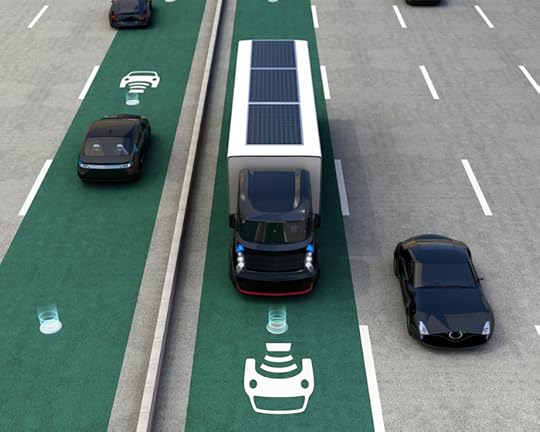
Another approach to powering EVs on the go is to supply the charge from where the rubber meets the road – the surface itself. Several of these systems are under development.
The first utilizes magnetized concrete, or ferrite, produced by the German company, Magment. Ferrite is concrete that contains recycled magnetizable particles. These particles can conduct electricity which can be drawn upon by automobiles driving over it through inductive charging plates on the car. Ferrite concrete reportedly costs the same as standard concrete.
The Indiana Department of Transportation is teaming with Purdue University on ferrite pilot projects and pavement tests. The energy transfer is very efficient, up to 95%, which means that one challenge for the researchers is to make sure the remaining 5% won’t cause harm to the vehicle or the passengers.
Researchers at Cornell University are taking a similar but slightly different tack. They’re exploring how to embed insulated metal plates under the pavement that create alternating electric fields to produce a high-frequency current that can be sent to an EV passing over it. They envision lanes with EV charging strips. This technology could also be deployed above the surface in urban areas, with units attached to stop signs, for example. This would allow nearby EVs to pick up a small charge while they’re stopped.
It’s reasonable to expect, though, that all of these systems would be applied at least initially on interstate routes and highways. Local EV traffic will still get by with ever-improving battery capacity and quicker and quicker recharging technologies.
What Will it Be?I’m pulling for the drone-power delivery system.
At first glance, the road-based technologies seem more practical … until you consider that the changeover would entail tearing up thousands of miles of lanes, and then either repaving them with ferrite or installing the charging plates and then repaving. In either case, given the lane closures or even the construction of adjoining lanes, the transition would be a nightmare with construction closures and slowdowns confronting interstate truck and passenger vehicle travel for many years. The cost would be considerable, to say the least.
The most remarkable future of all, one we should all be striving for, is one that combines Nebo, or either of the road surface charging systems, with self-driving vehicles. In this scenario, we’ll have passenger and manned or unmanned commercial vehicles traveling nonstop, even 24/7, for 365 days a year..
Translate This PageSelect LanguageAfrikaansAlbanianAmharicArabicArmenianAzerbaijaniBasqueBelarusianBengaliBosnianBulgarianCatalanCebuanoChichewaChinese (Simplified)Chinese (Traditional)CorsicanCroatianCzechDanishDutchEnglishEsperantoEstonianFilipinoFinnishFrenchFrisianGalicianGeorgianGermanGreekGujaratiHaitian CreoleHausaHawaiianHebrewHindiHmongHungarianIcelandicIgboIndonesianIrishItalianJapaneseJavaneseKannadaKazakhKhmerKoreanKurdish (Kurmanji)KyrgyzLaoLatinLatvianLithuanianLuxembourgishMacedonianMalagasyMalayMalayalamMalteseMaoriMarathiMongolianMyanmar (Burmese)NepaliNorwegianPashtoPersianPolishPortuguesePunjabiRomanianRussianSamoanScottish GaelicSerbianSesothoShonaSindhiSinhalaSlovakSlovenianSomaliSpanishSudaneseSwahiliSwedishTajikTamilTeluguThaiTurkishUkrainianUrduUzbekVietnameseWelshXhosaYiddishYorubaZulu
#goog-gt-tt {display:none !important;}
.goog-te-banner-frame {display:none !important;}
.goog-te-menu-value:hover {text-decoration:none !important;}
.goog-text-highlight {background-color:transparent !important;box-shadow:none !important;}
body {top:0 !important;}
#google_translate_element2 {display:none!important;}
function googleTranslateElementInit2() {new google.translate.TranslateElement({pageLanguage: 'en',autoDisplay: false}, 'google_translate_element2');}
function GTranslateGetCurrentLang() {var keyValue = document['cookie'].match('(^|;) ?googtrans=([^;]*)(;|$)');return keyValue ? keyValue[2].split('/')[2] : null;}
function GTranslateFireEvent(element,event){try{if(document.createEventObject){var evt=document.createEventObject();element.fireEvent('on'+event,evt)}else{var evt=document.createEvent('HTMLEvents');evt.initEvent(event,true,true);element.dispatchEvent(evt)}}catch(e){}}
function doGTranslate(lang_pair){if(lang_pair.value)lang_pair=lang_pair.value;if(lang_pair=='')return;var lang=lang_pair.split('|')[1];if(GTranslateGetCurrentLang() == null && lang == lang_pair.split('|')[0])return;var teCombo;var sel=document.getElementsByTagName('select');for(var i=0;i<sel.length;i++)if(/goog-te-combo/.test(sel[i].className)){teCombo=sel[i];break;}if(document.getElementById('google_translate_element2')==null||document.getElementById('google_translate_element2').innerHTML.length==0||teCombo.length==0||teCombo.innerHTML.length==0){setTimeout(function(){doGTranslate(lang_pair)},500)}else{teCombo.value=lang;GTranslateFireEvent(teCombo,'change');GTranslateFireEvent(teCombo,'change')}}
Search for: Recent Posts The Race to Invent the Auto Electric, Auto Recharging Highways of the Future Self Watering Soil – The Single Greatest Breakthrough in Agriculture in the Past Century Industrial Meat Growing Facilities Coming to a City Near You Categories Artificial Intelligence Business Trends Future of Agriculture Future of Banking Future of Education Future of Healthcare Future of Transportation Future of Work Future Scenarios Future Trends Futurist Thomas Frey Insights Global Trends Predictions Social Trends Technology Trends Speaking TopicsFuture of Healthcare – “Is Death our only Option?Future of AIFuture of Industries

The post The Race to Invent the Auto Electric, Auto Recharging Highways of the Future appeared first on Futurist Speaker.


July 28, 2021
Self Watering Soil – The Single Greatest Breakthrough in Agriculture in the Past Century
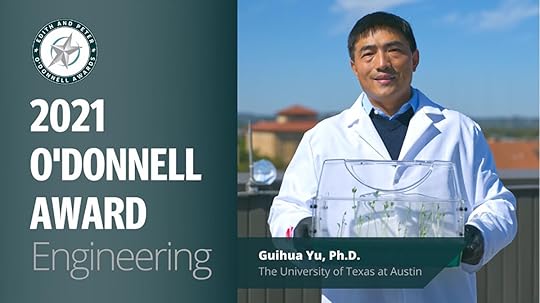
It’s not exactly “self-watering” farming but it’s close. A research team led by Dr. Guihua Yu at the engineering school at the University of Texas in Austin have developed a hydrogel that when mixed with soil captures humidity from the air at night and releases the water during the day to irrigate the soil and promote plant growth.
Amazing HydrogelsHydrogels are not new. These compounds contain water and absorb water incredibly well. They’ve recently been used in things like healthcare, first aid products, and contact lenses. Over the past few years, these UT researchers have been refining many applications for this technology.
Three years ago they reported on their new zinc oxide hydrogel that could remove moisture from the air to minimize localized humidity, by coating an interior wall or window with these materials. Once saturated, hydrogels become opaque and can significantly reduce infrared light transmission when used as a window coating. The materials can even generate small amounts of electricity and serve as an emergency power source similar to the energy from a AA battery.
A year later, Dr. Yu’s engineers spent time exploring how their hydrogel could be used for water generation and filtration. They added a thermal responsive element to the material that causes it to release the absorbed water when the hydrogel is heated – for example by sunlight. At that point they could envision mobile, solar powered water generating systems that seemingly would make water out of thin, moist air.
Next GenerationDr. Yu and his team pushed this technology even further and developed a specific hydrogel that can be mixed with soil to support a self-watering system for plants and crops. Picture a farm or garden in which hydrogel-infused soil collects humidity from the cool, moist night air and then releases that moisture into the soil in the form of liquid water when the sun rises and temperatures heat up.
In one experiment, radishes planted in the hydrogel soil survived and grew over a 14-day period without any ongoing irrigation. However, radishes grown in a side-by-side experiment with untreated soil, didn’t survive more than two days after their irrigation stopped.
Yu’s engineering researchers found that hydrogel soil farming can be very efficient – one gram of the soil mixture can absorb three to four grams of moisture. For some crops, a kilogram or less of the material can irrigate roughly 1 square mile of farmland.
 The Future of Self-Watering
Hydrogels are just the latest example of how we are capturing and using some of nature’s abundant, renewable resources. Wind, solar, and hydropower are now mainstream. Hydrogel-infused soil that captures and uses natural humidity will be mentioned in similar breakthrough lists in less than a decade.
And it’s just in time. We’re losing farmland. Lack of soil is not the only issue; desertification and lack of water is becoming a huge factor. Water scarcity is forcing farmers to compete with cities, water recreation, and even wildlife for these resources.
Extreme weather has been altering rainfall patterns, and one of the effects is increased drought. Hotter weather and the resulting faster evaporation are limiting the amount of water for irrigation – just at a time we need more rain for farming to feed a growing world population.
But water is all around us in the form of vapor and humidity – 50,000 cubic kilometers in fact. If a significant portion of farming can rely on hydrogel soil technology, we won’t have to choose between fish and farms.
And it appears that hydrogels can also be infused with fertilizer and pesticides for slow, controlled release of these substances to further promote healthy, substantial crop yields.
Coming to Fields and Gardens Near YouNow that the concept of hydrogel soil has been proven, commercializing and scaling it will likely take 3-5 years. Once it’s mass produced, except in the most arid environments, we’ll see subsistence and commercial farms spring up around the world without the need for irrigation systems, pumping, and other water supply challenges. We’ll have more farmable land that requires less surface water.
Farmers around the world will rototill hydrogels into the soil in their fields. Small bags will be available at home gardening stores to mix with potting or gardening soil. We’ll apply it to our yards so we can throttle back watering frequency for our lawns.
Predictions for the future will certainly always be filled with headline-grabbing topics like space colonization, self-driving cars, and robotics. But the quality of our future may rely just as much or more on basic scientific breakthroughs like hydrogel soil that efficiently tap into nature and our existing natural resources.
Translate This PageSelect LanguageAfrikaansAlbanianAmharicArabicArmenianAzerbaijaniBasqueBelarusianBengaliBosnianBulgarianCatalanCebuanoChichewaChinese (Simplified)Chinese (Traditional)CorsicanCroatianCzechDanishDutchEnglishEsperantoEstonianFilipinoFinnishFrenchFrisianGalicianGeorgianGermanGreekGujaratiHaitian CreoleHausaHawaiianHebrewHindiHmongHungarianIcelandicIgboIndonesianIrishItalianJapaneseJavaneseKannadaKazakhKhmerKoreanKurdish (Kurmanji)KyrgyzLaoLatinLatvianLithuanianLuxembourgishMacedonianMalagasyMalayMalayalamMalteseMaoriMarathiMongolianMyanmar (Burmese)NepaliNorwegianPashtoPersianPolishPortuguesePunjabiRomanianRussianSamoanScottish GaelicSerbianSesothoShonaSindhiSinhalaSlovakSlovenianSomaliSpanishSudaneseSwahiliSwedishTajikTamilTeluguThaiTurkishUkrainianUrduUzbekVietnameseWelshXhosaYiddishYorubaZulu
#goog-gt-tt {display:none !important;}
.goog-te-banner-frame {display:none !important;}
.goog-te-menu-value:hover {text-decoration:none !important;}
.goog-text-highlight {background-color:transparent !important;box-shadow:none !important;}
body {top:0 !important;}
#google_translate_element2 {display:none!important;}
function googleTranslateElementInit2() {new google.translate.TranslateElement({pageLanguage: 'en',autoDisplay: false}, 'google_translate_element2');}
function GTranslateGetCurrentLang() {var keyValue = document['cookie'].match('(^|;) ?googtrans=([^;]*)(;|$)');return keyValue ? keyValue[2].split('/')[2] : null;}
function GTranslateFireEvent(element,event){try{if(document.createEventObject){var evt=document.createEventObject();element.fireEvent('on'+event,evt)}else{var evt=document.createEvent('HTMLEvents');evt.initEvent(event,true,true);element.dispatchEvent(evt)}}catch(e){}}
function doGTranslate(lang_pair){if(lang_pair.value)lang_pair=lang_pair.value;if(lang_pair=='')return;var lang=lang_pair.split('|')[1];if(GTranslateGetCurrentLang() == null && lang == lang_pair.split('|')[0])return;var teCombo;var sel=document.getElementsByTagName('select');for(var i=0;i<sel.length;i++)if(/goog-te-combo/.test(sel[i].className)){teCombo=sel[i];break;}if(document.getElementById('google_translate_element2')==null||document.getElementById('google_translate_element2').innerHTML.length==0||teCombo.length==0||teCombo.innerHTML.length==0){setTimeout(function(){doGTranslate(lang_pair)},500)}else{teCombo.value=lang;GTranslateFireEvent(teCombo,'change');GTranslateFireEvent(teCombo,'change')}}
Search for: Recent Posts Self Watering Soil – The Single Greatest Breakthrough in Agriculture in the Past Century Industrial Meat Growing Facilities Coming to a City Near You Making Plans to Visit the World’s First Space Hotel Categories Artificial Intelligence Business Trends Future of Agriculture Future of Banking Future of Education Future of Healthcare Future of Transportation Future of Work Future Scenarios Future Trends Futurist Thomas Frey Insights Global Trends Predictions Social Trends Technology Trends Speaking TopicsFuture of Healthcare – “Is Death our only Option?Future of AIFuture of Industries
The post Self Watering Soil – The Single Greatest Breakthrough in Agriculture in the Past Century appeared first on Futurist Speaker.
July 21, 2021
China’s Great Cryptocurrency Brain Drain

Authorities in China are shutting down cryptocurrency mining operations – reducing that country’s production capacity by more than 90%. That number is even more significant when you consider that China has been estimated to be the source of 65-75% of worldwide cryptocurrency mining.
The cryptocurrency mining process requires tremendous networks of computers and, thus, it’s very energy-intensive. If the source of that power is carbon-based, or if the mining pushes other users to carbon-based power sources, the impact on the environment is significant.
Reportedly, that’s the reason China made the decision to shut down this industry, even though many of the country’s provinces that hosted the industry provided an ideal location, thanks to inexpensive energy from renewable sources.
It’s an encouraging sign that an authoritarian country like China is prioritizing local environmental conditions over commerce. And some would say there may be more to the crackdown than ecological concerns.
China’s leaders don’t seem to have a problem with the technology itself since at times the government has been an active supporter of mining and trading activity. In fact, authorities there have indicated the country will introduce a digital yuan controlled by its national bank.
Thus, their concern may also be with the secrecy and anonymity that go with private cryptocurrencies that are outside of the control of the public sector.
Where Will the Mining Go?Regardless of the reasons, much of the cryptocurrency mining industry will migrate from China to other locations around the world. The industry is easily exportable. It doesn’t rely on raw materials, transportation, or access to nearby markets. Other than banks of computers, the primary prerequisites for a profitable crypto-mining operation are uninterrupted energy and low energy prices.
Thus, the cryptocurrency mining industry will move – along with its environmental externalities – to locations that can offer these basic needs.
It’s worth noting that China’s government-owned utility plants that power much of the mining draw significantly from wind, solar, and hydro resources. If mining shifts to locations that rely on relatively more carbon-based energy sources, the net environmental impact on the planet could be increased.
The Secondary Effects – Geographic Labor MigrationIn addition to Central Asia, Eastern Europe, and Northern Europe, U.S. states like Texas and Wyoming will likely pick up a portion of that displaced bitcoin hashrate, or processing power. There will be a massive shift in talent as miners and other crypto enthusiasts leave China in droves.
Society worldwide is mobile. Roots don’t reach very far below the surface as wealthy talented people vote with their feet to pursue new opportunities – even opportunities that may be short-lived and uncertain.
 The Secondary Effects – Professional Labor Transition
In cryptocurrency mining, computers do the hard part. The human skills required are similar to IT network management or dev ops to keep the banks of computers humming along. With more of these opportunities in the West, we’ll see these professionals with these skills not only pulled from other locations but from other industries.
As an aside, the cryptocurrency mining industry also requires experienced electricians to maintain uninterrupted power to the computers and HVAC professionals who monitor and maintain the cool environment these computer banks require.
The days when a person stayed with a single company or even a single industry for their entire career are long gone. Workers will continue to change careers, industries, and employers to follow their passions and interests … and the opportunity for financial reward.
That will be the case with cryptocurrency miners. They’ll seize this short-term opportunity – but not necessarily for a career. With China’s restrictions and the resulting void, there’s more room for new entrants and the personal financial returns could be proportionally higher.
In the long run, though, the future of cryptocurrencies is relatively uncertain. Pricing, a major determinant of profitability, is volatile to say the least. The financial reward payments for successful miners are decreasing and will continue to decrease into the future.
But as we’ve noted, today’s IT workers are less likely to be concerned about the “long run.” That means in the short term at least, we’ll see a shortage of IT talent in the more traditional areas like corporate IT network management as well as the nontraditional areas like NFTs and decentralized finance (defi). We may even face a short-term lag in the evolution of these emerging areas while these IT professionals work in cryptocurrency mining for a year or two.
The Future of WorkThis rush to fill the void of China’s discontinued cryptocurrency mining is another example of workers acting more as free agents than indentured employees. And if today’s COVID-induced worker shortage continues into the future, workers will hold more cards than ever and be more mobile than ever before.
Translate This PageSelect LanguageAfrikaansAlbanianAmharicArabicArmenianAzerbaijaniBasqueBelarusianBengaliBosnianBulgarianCatalanCebuanoChichewaChinese (Simplified)Chinese (Traditional)CorsicanCroatianCzechDanishDutchEnglishEsperantoEstonianFilipinoFinnishFrenchFrisianGalicianGeorgianGermanGreekGujaratiHaitian CreoleHausaHawaiianHebrewHindiHmongHungarianIcelandicIgboIndonesianIrishItalianJapaneseJavaneseKannadaKazakhKhmerKoreanKurdish (Kurmanji)KyrgyzLaoLatinLatvianLithuanianLuxembourgishMacedonianMalagasyMalayMalayalamMalteseMaoriMarathiMongolianMyanmar (Burmese)NepaliNorwegianPashtoPersianPolishPortuguesePunjabiRomanianRussianSamoanScottish GaelicSerbianSesothoShonaSindhiSinhalaSlovakSlovenianSomaliSpanishSudaneseSwahiliSwedishTajikTamilTeluguThaiTurkishUkrainianUrduUzbekVietnameseWelshXhosaYiddishYorubaZulu
#goog-gt-tt {display:none !important;}
.goog-te-banner-frame {display:none !important;}
.goog-te-menu-value:hover {text-decoration:none !important;}
.goog-text-highlight {background-color:transparent !important;box-shadow:none !important;}
body {top:0 !important;}
#google_translate_element2 {display:none!important;}
function googleTranslateElementInit2() {new google.translate.TranslateElement({pageLanguage: 'en',autoDisplay: false}, 'google_translate_element2');}
function GTranslateGetCurrentLang() {var keyValue = document['cookie'].match('(^|;) ?googtrans=([^;]*)(;|$)');return keyValue ? keyValue[2].split('/')[2] : null;}
function GTranslateFireEvent(element,event){try{if(document.createEventObject){var evt=document.createEventObject();element.fireEvent('on'+event,evt)}else{var evt=document.createEvent('HTMLEvents');evt.initEvent(event,true,true);element.dispatchEvent(evt)}}catch(e){}}
function doGTranslate(lang_pair){if(lang_pair.value)lang_pair=lang_pair.value;if(lang_pair=='')return;var lang=lang_pair.split('|')[1];if(GTranslateGetCurrentLang() == null && lang == lang_pair.split('|')[0])return;var teCombo;var sel=document.getElementsByTagName('select');for(var i=0;i<sel.length;i++)if(/goog-te-combo/.test(sel[i].className)){teCombo=sel[i];break;}if(document.getElementById('google_translate_element2')==null||document.getElementById('google_translate_element2').innerHTML.length==0||teCombo.length==0||teCombo.innerHTML.length==0){setTimeout(function(){doGTranslate(lang_pair)},500)}else{teCombo.value=lang;GTranslateFireEvent(teCombo,'change');GTranslateFireEvent(teCombo,'change')}}
Search for: Recent Posts China’s Great Cryptocurrency Brain Drain Industrial Meat Growing Facilities Coming to a City Near You Making Plans to Visit the World’s First Space Hotel Categories Artificial Intelligence Business Trends Future of Agriculture Future of Banking Future of Education Future of Healthcare Future of Transportation Future of Work Future Scenarios Future Trends Futurist Thomas Frey Insights Global Trends Predictions Social Trends Technology Trends Speaking TopicsFuture of Healthcare – “Is Death our only Option?Future of AIFuture of Industries
The post China’s Great Cryptocurrency Brain Drain appeared first on Futurist Speaker.
July 14, 2021
Industrial Meat Growing Facilities Coming to a City Near You
We just can’t get enough meat it seems.
The numbers and trends are staggering. Meat production doubled between 1988 and 2018. By 2050 it will have doubled from 2008 levels to 570 million tons. The average American eats more than 200 pounds of meat annually. That all adds up to a big concern because meat is one of the most inefficient sources of food we can conceive of. Meat production is resource-intensive. Raising animals to kill them takes a lot of water, land, and energy – 75 times more energy than raising corn.
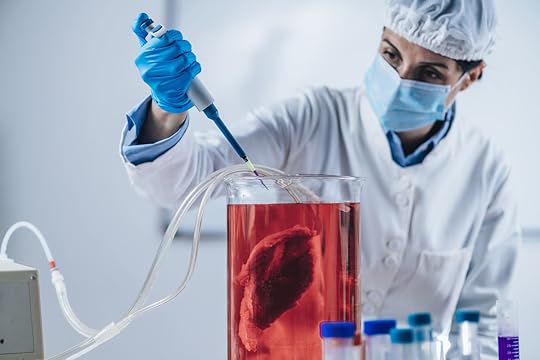
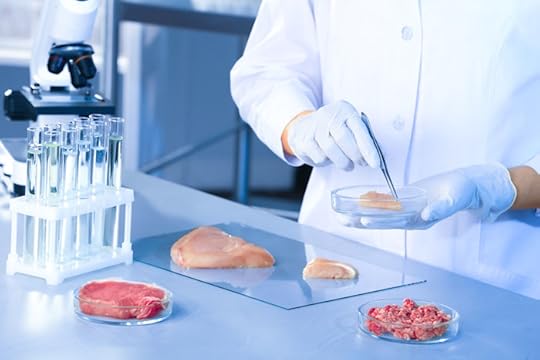
One alternative that could make a dent in these numbers is the recent, rapid proliferation of lab-grown meat. Lab-grown meat, also referred to as “cultured meat” (the industry prefers “clean meat” for understandable reasons), is real meat, not to be confused with plant-based meat. The lab processes being used are continuing to be refined so that the resulting meat has the same texture and cooking properties as traditional meat.
The process begins with animal cells, just like it does with an ultimate living, walking animal. It takes place in a plant-based culture or growth medium that speeds up the process tremendously – 20-times faster, according to one company in the business.
A little over two years ago I shared my thoughts on this topic with FeedInfo News Service. I suggested that the future of lab-grown meat came down to two variables: How does it taste? And how much does it cost?
Passing the TestsIn those two years, there’s been significant progress on both fronts, thanks in large part to breakthroughs from several Israel-based companies. Aleph Farms predicts its soon-to-be-released beef steak product that uses a proprietary growth medium will be priced very competitively with conventionally grown beef and will be even less expensive than plant-based meat.
But what about taste? Another company, SuperMeat, just opened a restaurant featuring its cultured chicken meat. Taste testers and chefs reportedly found it to be “indistinguishable” from conventionally grown chicken.
 Scaling the Prototypes
The ability to scale the cultured meat process is another important test, and we seem well on our way to achieving that imperative as well. Future Meat Technologies, with financial backing from Tyson Foods, Rich’s Products Corp., and others, is capable of producing 1,100 pounds of lab-grown meat per day, roughly 5,000 quarter-pound hamburger patties, for some context. They’re also producing lamb, pork, and chicken.
Aleph’s Co-Founder announced that just one of their BioFarms, or manufacturing plants, will produce “thousands of tonnes of cultivated meat per year.”
Another company, Mosa Meat, has stated that one tissue sample from a cow can yield enough tissue to make 20,000 pounds of meat – or “80,000 quarter pounders.” I’ve noticed that many companies in this industry seem to choose that unit of measure to tout their products and processes!
Normalizing Cultured MeatOnce it hits the markets, the novelty of lab-grown meat will wear off quickly and it will become as mainstream as plant-based meat substitutes. This initial acceptance will come from several demographic groups.
Environmentalists will support it since cultured meat is produced far more sustainably than traditional meat. It uses significantly less water, land, and energy and it produces far less greenhouse gas emissions – although modest levels of CO2 emissions from the “food factories” should be factored into that net benefit equation.
Health-conscious consumers will appreciate the fact that the risk of eating meat from a diseased animal is likely to be lower given the sterile lab conditions in the meat factories. The U.S. Food and Drug Administration hasn’t weighed in yet but they’re studying the process and working with the U.S. Department of Agriculture to prepare to oversee production in the U.S.
And notably, a leading Orthodox Rabbi has stated that lab-grown meat “would not be subject to the rules that apply to the consumption of regular meat,” including pork.
Ultimately, cultured meat won’t replace all traditionally grown meat, but early projections show it could displace over 1/3 of it. It will be highly utilized in the fast-food industry, but probably not in the nation’s finest steakhouses.
Deeper Into the FutureIn that interview two years ago, I made the seemingly outlandish claim that lab-grown meat was just the first step. This same technology will be used for a variety of products. In fact it’s been used for years in regenerative medicine and the production of vaccines.
Now that the economics and scale of this process have been proven, it seems like the sky, indeed, is the limit. We’ll expand quickly beyond beef, pork, and chicken to exotic meat products – ostrich, snake, wombat, penguin, and any threatened species currently protected from slaughter.
We’ll also see health products. Imagine a world where a woman can lab-produce mother’s milk, possibly with a home lab kit. Or how about someone lab-producing their blood or stem cells for upcoming surgeries or donation?
Let’s take it even further. We’ll eventually have cultured animal material for non-edible use – leather jackets, shoes, and other clothing, or lambskin seat covers.
First things first, though. The sale of lab-produced meat will require FDA approval with regard to labeling and possibly other matters. But once it’s in the grocery stores and priced competitively, clean meat will make up a significant portion of the diets for people around the world.
Translate This PageSelect LanguageAfrikaansAlbanianAmharicArabicArmenianAzerbaijaniBasqueBelarusianBengaliBosnianBulgarianCatalanCebuanoChichewaChinese (Simplified)Chinese (Traditional)CorsicanCroatianCzechDanishDutchEnglishEsperantoEstonianFilipinoFinnishFrenchFrisianGalicianGeorgianGermanGreekGujaratiHaitian CreoleHausaHawaiianHebrewHindiHmongHungarianIcelandicIgboIndonesianIrishItalianJapaneseJavaneseKannadaKazakhKhmerKoreanKurdish (Kurmanji)KyrgyzLaoLatinLatvianLithuanianLuxembourgishMacedonianMalagasyMalayMalayalamMalteseMaoriMarathiMongolianMyanmar (Burmese)NepaliNorwegianPashtoPersianPolishPortuguesePunjabiRomanianRussianSamoanScottish GaelicSerbianSesothoShonaSindhiSinhalaSlovakSlovenianSomaliSpanishSudaneseSwahiliSwedishTajikTamilTeluguThaiTurkishUkrainianUrduUzbekVietnameseWelshXhosaYiddishYorubaZulu
#goog-gt-tt {display:none !important;}
.goog-te-banner-frame {display:none !important;}
.goog-te-menu-value:hover {text-decoration:none !important;}
.goog-text-highlight {background-color:transparent !important;box-shadow:none !important;}
body {top:0 !important;}
#google_translate_element2 {display:none!important;}
function googleTranslateElementInit2() {new google.translate.TranslateElement({pageLanguage: 'en',autoDisplay: false}, 'google_translate_element2');}
function GTranslateGetCurrentLang() {var keyValue = document['cookie'].match('(^|;) ?googtrans=([^;]*)(;|$)');return keyValue ? keyValue[2].split('/')[2] : null;}
function GTranslateFireEvent(element,event){try{if(document.createEventObject){var evt=document.createEventObject();element.fireEvent('on'+event,evt)}else{var evt=document.createEvent('HTMLEvents');evt.initEvent(event,true,true);element.dispatchEvent(evt)}}catch(e){}}
function doGTranslate(lang_pair){if(lang_pair.value)lang_pair=lang_pair.value;if(lang_pair=='')return;var lang=lang_pair.split('|')[1];if(GTranslateGetCurrentLang() == null && lang == lang_pair.split('|')[0])return;var teCombo;var sel=document.getElementsByTagName('select');for(var i=0;i<sel.length;i++)if(/goog-te-combo/.test(sel[i].className)){teCombo=sel[i];break;}if(document.getElementById('google_translate_element2')==null||document.getElementById('google_translate_element2').innerHTML.length==0||teCombo.length==0||teCombo.innerHTML.length==0){setTimeout(function(){doGTranslate(lang_pair)},500)}else{teCombo.value=lang;GTranslateFireEvent(teCombo,'change');GTranslateFireEvent(teCombo,'change')}}
Search for: Recent Posts Industrial Meat Growing Facilities Coming to a City Near You Making Plans to Visit the World’s First Space Hotel Should We Move Towards “Rewilding” Our Cities? Categories Artificial Intelligence Business Trends Future of Agriculture Future of Banking Future of Education Future of Healthcare Future of Transportation Future of Work Future Scenarios Future Trends Futurist Thomas Frey Insights Global Trends Predictions Social Trends Technology Trends Speaking TopicsFuture of Healthcare – “Is Death our only Option?Future of AIFuture of Industries
The post Industrial Meat Growing Facilities Coming to a City Near You appeared first on Futurist Speaker.
July 7, 2021
Making Plans to Visit the World’s First Space Hotel

When will we see the first space hotel? Some would say we have the prototype right now at the International Space Station (ISS). Astronauts working there have their own phone booth-sized sleeping quarters with room for their laptops and other personal items. NASA has announced it would sponsor tourist visits to the ISS where they’ll stay in attached modules currently under design and development.
In fact, though, seven space tourists have already traveled to the ISS for one-to-two-week visits, booked through a U.S. company called Space Adventures, which purchases unused seats on Russia’s Soyuz spacecraft. It’s been a decade since the last tourist visit, but a Japanese fashion designer and his photographer have booked a ride for December of this year through that company.
But when we think of space hotels, that’s not really what comes to mind.
Sparking the ImaginationTwo years before mankind set foot on the moon, in somewhat of a public relations campaign, Barron Hilton was talking about his Hilton company placing an Orbiter Hilton in the earth’s orbit and a Lunar Hilton on the moon – or at least under the moon’s surface. The plans were long on imagination and short on solutions. Pesky matters related to water, oxygen, and weightlessness in those environments had yet to be fully explored, let alone solved.
But the imagination was the fun part – and the part the public wanted to hear about. Hilton presented sketches of cocktail lounges and bars in his out-of-this-world properties. He described how guest rooms would seem very similar to those in earthbound Hilton properties. The public loved the idea, and many people wrote to the company asking to make a reservation.
From Imagination to RealityOver the next 50 years, NASA and other national space programs worked steadily to solve those problems related to sustaining life in outer earth orbits. And in the last decade, the private sector companies of space travel pioneers like Elon Musk, Jeff Bezos, and Sir Richard Branson have made major leaps in space transport technology.
Many companies are vying for a piece of the future space tourism industry, promising everything from edge-of-space, sub-orbital flights to extended-stay orbiting hotels.
And in the hotel category, we’re seeing plans for luxurious, modest-sized, four-guest properties like the Aurora Space Station by Orion Span, all the way to the Gateway Foundation’s Voyager Station with room for 400 guests.
The Voyager Station property will have 24 modules rotating slowly like a wheel to provide gravity equivalent to that of the moon – so we can all bounce around like Neil Armstrong and subsequent moonwalkers or so that some of the more athletic can dunk like an NBA All-Star. Orbital Assembly Corporation will handle the space construction for Voyager Station using robots.
 Back to Imagination
The images that Barron Hilton put in our minds in 1967 seem far more realizable today as we envision space hotel vacations. Instead of an ISS, think of these space hotels as earth-orbiting cruise ships.
Similar to an ocean cruise experience, the first matter of business for new arrivals at the orbiting hotel will be a safety drill. Attached to the sides of the core of the structure there will be multi-passenger escape ships. Instead of learning how to put on a water flotation device, guests will learn how to quickly step into and zip up their flight suits. Pilots of these escape pods will always be on board, most serving as crewmembers with other duties on the hotel airship.
The interior will be warm and inviting, a far cry from the sterile walls and halls we saw in 2001: A Space Odyssey. In fact, one scene in that movie took place in the lounge of an Orbiter Hilton hotel – a very appropriate and subtle homage to Barron’s vision and PR prowess.
Guests will be able to sign up to don a space suit and be attached to a 10-foot tether near the slower rotating core area of the structure and go for a spacewalk. I don’t think we’ll see skeet shooting – there’s no stern to safely point away from, and a purposeful or accidental errant shot could be disastrous to the entire structure.
Expansive windows will be everywhere – in guest rooms, the dining room, the cocktail lounge, and even the small half-court gymnasium.
The workout facility will be placed at the outer reaches of the spinning structure, where the gravity will be strongest – although still not as strong as on Earth. Treadmills will come with tethers for people who bounce just a little too much in their running gait. Friends will snap pictures of other guests to document weight-lifting feats that would not be possible for them on Earth.
Day and night will essentially be meaningless given the space cruise ship’s continual orbit and the day-night cycles of less than two hours. It will take a visitor one or two 24-hour days of adjustment until they get used to having breakfast while watching a far-off meteor shower and having an “evening” cocktail while watching the sun rise. This Las Vegas-esque sequence could very easily be reversed the next 24-hour day.
What will this vacation cost? If you have to ask, you probably can’t afford it. Early on, just the trip to the orbiting hotel in one of Branson’s, Bezos’, or Musk’s vehicles will likely be in the six figures. However, with further technology breakthroughs and as new economies emerge, you can expect that this entire trip might be more in line with a three-month, first-class sea cruise.
Remarkable innovation and breakthroughs in space transport and construction are making all of this possible. I’m not convinced the Voyager Station will be checking in guests in 2027 like promoters claimed earlier this year, but it’s amazing to realize that this could happen even before the end of the current decade.
Translate This PageSelect LanguageAfrikaansAlbanianAmharicArabicArmenianAzerbaijaniBasqueBelarusianBengaliBosnianBulgarianCatalanCebuanoChichewaChinese (Simplified)Chinese (Traditional)CorsicanCroatianCzechDanishDutchEnglishEsperantoEstonianFilipinoFinnishFrenchFrisianGalicianGeorgianGermanGreekGujaratiHaitian CreoleHausaHawaiianHebrewHindiHmongHungarianIcelandicIgboIndonesianIrishItalianJapaneseJavaneseKannadaKazakhKhmerKoreanKurdish (Kurmanji)KyrgyzLaoLatinLatvianLithuanianLuxembourgishMacedonianMalagasyMalayMalayalamMalteseMaoriMarathiMongolianMyanmar (Burmese)NepaliNorwegianPashtoPersianPolishPortuguesePunjabiRomanianRussianSamoanScottish GaelicSerbianSesothoShonaSindhiSinhalaSlovakSlovenianSomaliSpanishSudaneseSwahiliSwedishTajikTamilTeluguThaiTurkishUkrainianUrduUzbekVietnameseWelshXhosaYiddishYorubaZulu
#goog-gt-tt {display:none !important;}
.goog-te-banner-frame {display:none !important;}
.goog-te-menu-value:hover {text-decoration:none !important;}
.goog-text-highlight {background-color:transparent !important;box-shadow:none !important;}
body {top:0 !important;}
#google_translate_element2 {display:none!important;}
function googleTranslateElementInit2() {new google.translate.TranslateElement({pageLanguage: 'en',autoDisplay: false}, 'google_translate_element2');}
function GTranslateGetCurrentLang() {var keyValue = document['cookie'].match('(^|;) ?googtrans=([^;]*)(;|$)');return keyValue ? keyValue[2].split('/')[2] : null;}
function GTranslateFireEvent(element,event){try{if(document.createEventObject){var evt=document.createEventObject();element.fireEvent('on'+event,evt)}else{var evt=document.createEvent('HTMLEvents');evt.initEvent(event,true,true);element.dispatchEvent(evt)}}catch(e){}}
function doGTranslate(lang_pair){if(lang_pair.value)lang_pair=lang_pair.value;if(lang_pair=='')return;var lang=lang_pair.split('|')[1];if(GTranslateGetCurrentLang() == null && lang == lang_pair.split('|')[0])return;var teCombo;var sel=document.getElementsByTagName('select');for(var i=0;i<sel.length;i++)if(/goog-te-combo/.test(sel[i].className)){teCombo=sel[i];break;}if(document.getElementById('google_translate_element2')==null||document.getElementById('google_translate_element2').innerHTML.length==0||teCombo.length==0||teCombo.innerHTML.length==0){setTimeout(function(){doGTranslate(lang_pair)},500)}else{teCombo.value=lang;GTranslateFireEvent(teCombo,'change');GTranslateFireEvent(teCombo,'change')}}
Search for: Recent Posts Making Plans to Visit the World’s First Space Hotel Should We Move Towards “Rewilding” Our Cities? The Critical Competency Needed for the Future – The Creative Edge Categories Artificial Intelligence Business Trends Future of Agriculture Future of Banking Future of Education Future of Healthcare Future of Transportation Future of Work Future Scenarios Future Trends Futurist Thomas Frey Insights Global Trends Predictions Social Trends Technology Trends Speaking TopicsFuture of Healthcare – “Is Death our only Option?Future of AIFuture of Industries
The post Making Plans to Visit the World’s First Space Hotel appeared first on Futurist Speaker.
June 30, 2021
Should We Move Towards “Rewilding” Our Cities?

When it comes to outdoor space, we tend to think in terms of urban vs. rural and natural settings vs. city boundaries.
“Natural,” though, is the default, dominant state of our planet. If we leave a suburban household yard alone for a year or two, we don’t get blacktop; we’ll find natural vegetation and maybe some mice and snakes. If we leave a square mile of urban land alone for a decade or two, a factory building doesn’t magically appear. We’ll see the re-emergence of small prairies and groves of trees, along with rabbits and deer.
This was the case in many large neighborhoods in Detroit following the city’s dramatic economic downturn and resident outmigration several decades ago.
What is Rewilding?The rewilding movement is an attempt to shift all areas of our planet closer to their natural, pre-human state. In remote settings, the goal of rewilding is to create interconnected “big wilderness” areas that are kickstarted with the re-introduction of “keystone species,” the plants and animals that help ensure a thriving eco-system complete with large predator animals.
In contrast, urban rewilding takes a more modest tack. It’s the effort to invite nature back into our cities. Instead of large vibrant ecosystems with wolves and bears at the top of the food pyramid, urban rewilding focuses on increasing biodiversity and creating oases of natural space. In place of manicured lawns, urban rewilding encourages the proliferation of natural plants that can, for example, support the pollination needs of butterflies and bees. Patio backyards would be replaced by vegetable gardens.
Often it entails demolishing something manmade first – an unneeded structure, a row of condemned homes, or the concrete lining a river channel. Over time, nature might destroy these anyways, but urban rewilding pushes the process along so nature can flourish.
That’s the defining criteria of appropriate urban rewilding—the light human touch. Yes, there might be planting, watering, and light weeding in the case of a community or rooftop vegetable garden, but whatever is planted should be native to the area.
And since it’s not possible to create a “big wilderness” in the middle of a city or a suburban neighborhood, the reintroduction of carnivores isn’t a goal – urban rewilders happily settle for more birds, beneficial insects, squirrels, an occasional raccoon, and other native species.
 The Benefits of Urban Rewilding
Urban rewilding inserts nature everywhere possible – every street corner, rooftop, backyard, and vacant lot – to provide a better balance between humans and nature. As if being surrounded by nature isn’t enough of a benefit in and of itself, there are many other positives related to urban rewilding for urban residents now and into the future.
HealthStudies show that urban rewilding is good for the body and the mind. Being exposed to, if not surrounded by, nature is mood-enhancing, reduces stress, and increases immunity to certain diseases. Urban gardens also can be a source of natural, fresher produce.
Interpersonal connectionCommunity gardens, walking trails, and natural parks can bring people out of their cocoons and face to face with random neighbors. This kind of interaction with people outside of our normal sphere is healthy, and much needed these days.
Introducing nature to urban childrenThere’s a fascinating account of how inner-city children in Detroit reacted to the natural rewilding that took place following disinvestment and abandonment of properties in the core of the city. At first, there was resistance and resentment. The kids understandably viewed the rewilding encroaching on their neighborhoods as a manifestation of neglect and a sign of urban decay … until they had a chance to explore the areas with the help of naturalist guides. Many developed a lifelong connection to nature at an earlier age than they might otherwise have.
EnvironmentalMother Nature views roads, parking lots, plazas, and rooftops as hostile environments. She does her best to break these down since hard, impervious surfaces radiate heat and add to polluted water runoff that forms urban rivers on the streets and urban lakes in basements. On the other hand, natural surfaces promote rainwater absorption. Urban vegetation also is an environmental plus – drawing down carbon, providing habitats for threatened insects, and attracting pollinator insects.
Is There a Downside to Urban Rewilding?Not everyone agrees, though. There is some public resistance to urban rewilding – mostly centered on the aesthetics of these natural zones. That’s not surprising. Urbanites are conditioned to prefer well-kept, weed-free green space and gleaming outdoor plazas. Many of us view insects as pests and natural growth as weeds. We’re also uncomfortable with the thought of a raccoon in our backyard or a wolf trotting down the street at night on the prowl.
Other critics of urban rewilding point out that urban space is finite. With growing populations, they ask if can we afford to set aside urban land that would otherwise be needed for housing, retail, and other commerce. Further, they point out that rewilding prevents that space from generating any economic activity or property tax revenue.
The issue of losing out on the commercial value of the rewilding space is understandable, but it can be argued that those losses might be partially offset by higher values for land near the rewilded space. Additionally, rewilding can reduce public expenditures related to things like flood management and disaster recovery.
Implications of Urban Rewilding for our FutureOur future is clouded with environmental and health concerns. We need to solve them. There’s room to apply new technology and complex solutions in these areas.
But our quest for progress and answers should never rule out reverting to what was successful in the past. We can take some huge steps forward in solving these challenges by making our earth look just a little bit more like it used to.
That means in the future, we’ll remove vacant construction blight faster than we’ve done in the past. Highrise building rooftops will be designed to promote urban gardening. Plazas will have more trees and flower boxes. City parks will look a bit more wild, with “grass growing a bit mad in places,” as one scholar put it. More and more homeowners will let their yards go natural and it won’t always be due to lazy neglect. We’ll see more community gardens. As long as mankind is living on planet Earth, rewilding will be an important part of meeting our biodiversity and climate goals.
It’s interesting that reverting just a bit to the old way of life and a historic view of land usage would be a futurist topic. But sometimes, Mother Nature is the best engineer, and she knows best. And that’s as true in the future as it has been in the past.
Translate This PageSelect LanguageAfrikaansAlbanianAmharicArabicArmenianAzerbaijaniBasqueBelarusianBengaliBosnianBulgarianCatalanCebuanoChichewaChinese (Simplified)Chinese (Traditional)CorsicanCroatianCzechDanishDutchEnglishEsperantoEstonianFilipinoFinnishFrenchFrisianGalicianGeorgianGermanGreekGujaratiHaitian CreoleHausaHawaiianHebrewHindiHmongHungarianIcelandicIgboIndonesianIrishItalianJapaneseJavaneseKannadaKazakhKhmerKoreanKurdish (Kurmanji)KyrgyzLaoLatinLatvianLithuanianLuxembourgishMacedonianMalagasyMalayMalayalamMalteseMaoriMarathiMongolianMyanmar (Burmese)NepaliNorwegianPashtoPersianPolishPortuguesePunjabiRomanianRussianSamoanScottish GaelicSerbianSesothoShonaSindhiSinhalaSlovakSlovenianSomaliSpanishSudaneseSwahiliSwedishTajikTamilTeluguThaiTurkishUkrainianUrduUzbekVietnameseWelshXhosaYiddishYorubaZulu
#goog-gt-tt {display:none !important;}
.goog-te-banner-frame {display:none !important;}
.goog-te-menu-value:hover {text-decoration:none !important;}
.goog-text-highlight {background-color:transparent !important;box-shadow:none !important;}
body {top:0 !important;}
#google_translate_element2 {display:none!important;}
function googleTranslateElementInit2() {new google.translate.TranslateElement({pageLanguage: 'en',autoDisplay: false}, 'google_translate_element2');}
function GTranslateGetCurrentLang() {var keyValue = document['cookie'].match('(^|;) ?googtrans=([^;]*)(;|$)');return keyValue ? keyValue[2].split('/')[2] : null;}
function GTranslateFireEvent(element,event){try{if(document.createEventObject){var evt=document.createEventObject();element.fireEvent('on'+event,evt)}else{var evt=document.createEvent('HTMLEvents');evt.initEvent(event,true,true);element.dispatchEvent(evt)}}catch(e){}}
function doGTranslate(lang_pair){if(lang_pair.value)lang_pair=lang_pair.value;if(lang_pair=='')return;var lang=lang_pair.split('|')[1];if(GTranslateGetCurrentLang() == null && lang == lang_pair.split('|')[0])return;var teCombo;var sel=document.getElementsByTagName('select');for(var i=0;i<sel.length;i++)if(/goog-te-combo/.test(sel[i].className)){teCombo=sel[i];break;}if(document.getElementById('google_translate_element2')==null||document.getElementById('google_translate_element2').innerHTML.length==0||teCombo.length==0||teCombo.innerHTML.length==0){setTimeout(function(){doGTranslate(lang_pair)},500)}else{teCombo.value=lang;GTranslateFireEvent(teCombo,'change');GTranslateFireEvent(teCombo,'change')}}
Search for: Recent Posts Should We Move Towards “Rewilding” Our Cities? The Critical Competency Needed for the Future – The Creative Edge Decentralized Finance and the Future of Money Categories Artificial Intelligence Business Trends Future of Agriculture Future of Banking Future of Education Future of Healthcare Future of Transportation Future of Work Future Scenarios Future Trends Futurist Thomas Frey Insights Global Trends Predictions Social Trends Technology Trends Speaking TopicsFuture of Healthcare – “Is Death our only Option?Future of AIFuture of Industries
The post Should We Move Towards “Rewilding” Our Cities? appeared first on Futurist Speaker.
June 23, 2021
The Critical Competency Needed for the Future – The Creative Edge

As a Futurist, it’s easy to get caught up in the technology trends and breakthroughs that will mark our future lives – the amazing advances in devices and concepts, from flying taxis to cryptocurrency.
But life is more than code, supercomputers, and the sciences. Healthy and advancing societies must integrate creativity into the mainstream in two fundamental areas: the creative arts and in support of the digital working world.
Keep in mind, the same technology that is automating jobs out of existence is the same technology that will be creating entirely new business and industry.
Since AI doesn’t have the ability to invent something that currently doesn’t exist, we need to focus on our uniquely human strengths, and that’s where creativity comes into play.
Creative ArtsCreative arts can define and unify a culture. Throughout history, the creative arts have brought people together both physically and emotionally. Art, and the creativity behind it, is a unifying force. That’s why oppressive regimes over the course of history often seek to destroy a community’s revered artistic objects when they try to impose their will and authority.
Creative arts can inform and inspire technology. Before most technological breakthroughs occur, there’s usually a necessary phase of imagination and artistic creativity. For example, I have to think that today’s engineers who are deeply immersed in flying car technology were inspired earlier in their lives by artistic renderings of these vehicles.
And on an even more pragmatic front, the creative arts contribute to the economy. The “cultural and creative industries” (CCI) portion of the world economy is poised to rebound after being decimated by pandemic-induced closures. That’s a good thing for a lot of reasons, including economic. The CCI sector is responsible for nearly 30 million jobs worldwide and it’s the most important employer for young people between the ages of 15 and 29 compared to any other sector.
Creativity in the Larger Work EnvironmentNot all of us are artists, but outside of the CCI, there will also be a need for creativity and a creative mindset in most industries and business sectors.
Our focus on technology and our dependence on it may be making our workforce and many jobs less creative. Fortunately, employers seem to be trying to resist this trend, often defining relatively straightforward jobs as “creative.” They understand that employees, probably for reasons of job security and self-esteem, don’t want to invest their time and effort in jobs in which it seems they can easily be replaced by technology.
Additionally, employers value the differentiating edge that human creative skills can contribute to design, service levels, and branding, even in the process of conducting digital tasks and the production of basic products.
As the former Chairman of Sony pointed out recently, “We assume that all products of our competitors have basically the same technology, price, performance, and features. Design is the only thing that differentiates one product from another …” Creativity.
 The Future is Bright for Creative Skills
With that in mind, how will the definition and nature of creativity evolve as we move into the future? How will it be different even 5-10 years from now than it is today?
As noted above, employers will continue to emphasize the creative aspects of the digital-empowered jobs they post. They will encourage employees to bring creative new approaches to their jobs in order to maintain an engaged workforce and in the hopes of delivering differentiation to their competitive products and services.
Additionally, the more digitized the working environment becomes, the more important it will be to combine – some would say temper – objective calculation and machine-informed projections with human intuition and insight. Computers aren’t visionaries. They lack imagination and emotion.
As long as we have problems, we will always have jobs! And there is no shortage of problems! And as long as work teams and our world itself are made up of human beings, this type of managing, planning, and problem-solving will require the creative human touch.
Implications for our Educational SystemIn many ways, technology has made us less dependent on gaining knowledge. For example, we don’t need to learn geography, rules of grammar, or math skills, thanks to apps and features in apps. These advances have been a source of equalization among mankind – a very positive trend.
Since to a large extent, knowledge is no longer just for the privileged but for everyone, and can be stored in devices and not our brains, our education system will need to shift from knowledge-based training (how to do something), to the more creative side of work (when to do it or not, why to do it, and ways to do it even better).
Unfortunately, that necessity is at odds with our current education system. In fact, some experts claim the education system is actually “killing creativity” … at a time we need it the most.
Knowledge is merely the starting point of creativity; but unfortunately, it seems to be the endpoint of our education system. Instead, the future of education instruction should encompass creative explorations of “How can we apply this knowledge?” and “What areas of technology can we apply in order to create solutions to this challenge?”
The Need to Teach CreativityFrom the earliest grades through graduate school, creativity should not simply be tolerated or encouraged, it should be taught along with related key skills like critical thinking, problem-solving, and collaboration.
Creativity doesn’t always come naturally. Some students inherently have more of a knack for it than others, just as some students are math whizzes beginning in first grade.
There’s no arguing that technology like AI, robotics, drones, and ever-faster computers will continue to displace tasks, lessen the workload, and force businesses to rework virtually every conceivable job. But rather than merely responding piece-meal with specialized training programs when this happens, it’s time to go back to the fundamentals and add a fourth “R” to our basic education curriculum. In addition to “readin’, writin’, and rithmetic,” we’ll need to teach and promote “resourcefulness.”
Translate This PageSelect LanguageAfrikaansAlbanianAmharicArabicArmenianAzerbaijaniBasqueBelarusianBengaliBosnianBulgarianCatalanCebuanoChichewaChinese (Simplified)Chinese (Traditional)CorsicanCroatianCzechDanishDutchEnglishEsperantoEstonianFilipinoFinnishFrenchFrisianGalicianGeorgianGermanGreekGujaratiHaitian CreoleHausaHawaiianHebrewHindiHmongHungarianIcelandicIgboIndonesianIrishItalianJapaneseJavaneseKannadaKazakhKhmerKoreanKurdish (Kurmanji)KyrgyzLaoLatinLatvianLithuanianLuxembourgishMacedonianMalagasyMalayMalayalamMalteseMaoriMarathiMongolianMyanmar (Burmese)NepaliNorwegianPashtoPersianPolishPortuguesePunjabiRomanianRussianSamoanScottish GaelicSerbianSesothoShonaSindhiSinhalaSlovakSlovenianSomaliSpanishSudaneseSwahiliSwedishTajikTamilTeluguThaiTurkishUkrainianUrduUzbekVietnameseWelshXhosaYiddishYorubaZulu
#goog-gt-tt {display:none !important;}
.goog-te-banner-frame {display:none !important;}
.goog-te-menu-value:hover {text-decoration:none !important;}
.goog-text-highlight {background-color:transparent !important;box-shadow:none !important;}
body {top:0 !important;}
#google_translate_element2 {display:none!important;}
function googleTranslateElementInit2() {new google.translate.TranslateElement({pageLanguage: 'en',autoDisplay: false}, 'google_translate_element2');}
function GTranslateGetCurrentLang() {var keyValue = document['cookie'].match('(^|;) ?googtrans=([^;]*)(;|$)');return keyValue ? keyValue[2].split('/')[2] : null;}
function GTranslateFireEvent(element,event){try{if(document.createEventObject){var evt=document.createEventObject();element.fireEvent('on'+event,evt)}else{var evt=document.createEvent('HTMLEvents');evt.initEvent(event,true,true);element.dispatchEvent(evt)}}catch(e){}}
function doGTranslate(lang_pair){if(lang_pair.value)lang_pair=lang_pair.value;if(lang_pair=='')return;var lang=lang_pair.split('|')[1];if(GTranslateGetCurrentLang() == null && lang == lang_pair.split('|')[0])return;var teCombo;var sel=document.getElementsByTagName('select');for(var i=0;i<sel.length;i++)if(/goog-te-combo/.test(sel[i].className)){teCombo=sel[i];break;}if(document.getElementById('google_translate_element2')==null||document.getElementById('google_translate_element2').innerHTML.length==0||teCombo.length==0||teCombo.innerHTML.length==0){setTimeout(function(){doGTranslate(lang_pair)},500)}else{teCombo.value=lang;GTranslateFireEvent(teCombo,'change');GTranslateFireEvent(teCombo,'change')}}
Search for: Recent Posts The Critical Competency Needed for the Future – The Creative Edge Decentralized Finance and the Future of Money With the Coming AI-Robot Jobs Armageddon, Why is this Time Different? Categories Artificial Intelligence Business Trends Future of Agriculture Future of Banking Future of Education Future of Healthcare Future of Transportation Future of Work Future Scenarios Future Trends Futurist Thomas Frey Insights Global Trends Predictions Social Trends Technology Trends Speaking TopicsFuture of Healthcare – “Is Death our only Option?Future of AIFuture of Industries
The post The Critical Competency Needed for the Future – The Creative Edge appeared first on Futurist Speaker.
June 17, 2021
Decentralized Finance and the Future of Money

As a society, we’re increasingly resisting expectations that we should abide by established norms and that we should utilize the institutions our parents and grandparents held as sacrosanct. In short, we don’t like middlemen – realtors, stock brokerages, bookkeepers, accountants, and even brick and mortar retail stores. More often than not, there’s an app for much of that.
For years, our financial systems have been centralized. Banking, insurance, securities trading, and other similar services have relied on institutions … and their people who we assume are experts working behind the curtain. We didn’t dream of making any of those kinds of complex transactions outside of these centralized financial systems, or CeFi.
CeFi hasn’t been foolproof of course. Humans make errors and bad decisions. Machines can be incorrectly programmed. Worse, there have been occasions for fraud and more than one nefarious financial institution.
Will CeFi make way for DeFi?Now, thanks to Cloud storage, cryptography, blockchain, and cryptocurrency, it’s possible to bypass banks and lending institutions and move to decentralized finance, or DeFi. DeFi’s cryptocurrency-based applications include lending, insurance, and asset trading – all without the “benefit” of an intermediary financial institution or a centralized clearance system. That also means transactions without the fees, delays, paperwork, consumer protection, and regulations we see today that are often promoted by the CeFi institutions themselves.
The catch with DeFis, though, is that you need to be willing and able to use cryptocurrency. That’s a big “if” today, since people are still having trouble getting their minds around the concept. They’re also noting the risks from cryptocurrency speculation thanks to the tremendous fluctuations in price in those markets. And then there’s their tie to criminal activity, such as ransomware cases. Overall, it’s not a comfortable space for many people.
 How does DeFi Work?
If you can get past those educational and psychological hurdles, the DeFi process is fairly simple.
If you’d like to earn money, offer up your coins on the DeFi platform you feel best about and make them available on your terms. If you need a loan, deposit digital coinage as collateral and then receive the borrowed funds. After you pay off the loan, the collateral is returned to you.
It’s really as easy as point and click on drop-down menus. Interest rates are quite competitive, and the transactions happen immediately.
What’s DeFi Used for Now?We’re all familiar with cryptocurrency and our ability to use it for buy-and-hold investments and money transfers in a variety of situations. We can also increasingly use it to buy everything from cars to fast food – in the U.S. or other countries.
Like cryptocurrency, blockchain-empowered DeFi banking is likely here to stay, and it’s following right behind. The amount of assets deposited as collateral on DeFi platforms has been estimated at $100 billion, up from just $1 billion a year ago.
Much of the DeFi activity is related to borrowing in order to provide assets for additional cryptocurrency speculation. Of course, that kind of leveraging is happening with traditional stock exchanges and other CeFi institutions as well.
DeFi RisksBy design, blockchain, and therefore cryptocurrencies and DeFi, aren’t regulated. Loans and valuations might not be insured. We’ve seen recently in the case of ransomware recovery, that DeFi platforms can be hacked by the good guys by the good guys. And still the bad guys are always eager to prey on novice crypto participants.
The anonymized nature of DeFi apps also means it’s difficult to know exactly who or what is behind that great loan offer on the drop-down menu. Platforms set their own rules and it’s sometimes difficult to shop around to determine the details.
Since the first of the year, it’s estimated that cryptocurrency fraud (55% of which was related to DeFi scams) totaled $432 million worldwide. No doubt there was much more that was not reported. The FTC noted that 7,000 U.S. consumers reported losing more than $80 million in cryptocurrency scams in the six months ending in March of this year.
Implications for the Future of DeFiThe future of DeFi is tied to the future of cryptocurrencies. Without some level of regulation and oversight, most people will continue to steer clear of the whole arena. Of course, any significant centralized oversight will be strenuously opposed by most of those currently engaged licitly or illicitly in that market.
DeFi’s future is also tied to whether the legitimate DeFi platforms sufficiently regulate themselves. If too many platforms get hacked, prove to be scams, or fail to adopt internal controls, the movement will fail.
But if the ongoing record is strong, and the stories turn out to be more positive, DeFi will continue to slowly become more mainstream. And as more and more regular people and traditional businesses get comfortable with cryptocurrency, and as their price fluctuations become more rational, DeFi will assuredly cut into banking industry business.
There are some newer, emerging financial products that could make that happen even faster.
Stablecoin May be the Future of DeFiRecently we’ve seen a new variety of cryptocurrencies gain acceptance. “Stablecoins” are cryptocurrencies tied to an asset like gold or the U.S. dollar. They still offer much of the security and privacy of traditional cryptocurrencies, but their price is more stable.
The third-most widely used DeFi application after Bitcoin and Ethereum is Dai, a stablecoin whose value is tied to the U.S. dollar. Some say a stablecoin cryptocurrency or digital token like Dai could emerge as a widely accepted worldwide currency. It would certainly provide a more stable foundation for De-Fi services than the current industry leaders. Reportedly, Facebook is even working on developing a stablecoin.
We live in an unusually disruptive era. Technology breakthroughs are combining with generalized citizen unrest. Members of younger generations are questioning nearly everything, and creative minds, with the benefit of amazing technology, are happy to offer alternatives.
It seems that the primary question related to DeFi and similar new paradigms is not “Why?,” it’s “Why not?”
Translate This PageSelect LanguageAfrikaansAlbanianAmharicArabicArmenianAzerbaijaniBasqueBelarusianBengaliBosnianBulgarianCatalanCebuanoChichewaChinese (Simplified)Chinese (Traditional)CorsicanCroatianCzechDanishDutchEnglishEsperantoEstonianFilipinoFinnishFrenchFrisianGalicianGeorgianGermanGreekGujaratiHaitian CreoleHausaHawaiianHebrewHindiHmongHungarianIcelandicIgboIndonesianIrishItalianJapaneseJavaneseKannadaKazakhKhmerKoreanKurdish (Kurmanji)KyrgyzLaoLatinLatvianLithuanianLuxembourgishMacedonianMalagasyMalayMalayalamMalteseMaoriMarathiMongolianMyanmar (Burmese)NepaliNorwegianPashtoPersianPolishPortuguesePunjabiRomanianRussianSamoanScottish GaelicSerbianSesothoShonaSindhiSinhalaSlovakSlovenianSomaliSpanishSudaneseSwahiliSwedishTajikTamilTeluguThaiTurkishUkrainianUrduUzbekVietnameseWelshXhosaYiddishYorubaZulu
#goog-gt-tt {display:none !important;}
.goog-te-banner-frame {display:none !important;}
.goog-te-menu-value:hover {text-decoration:none !important;}
.goog-text-highlight {background-color:transparent !important;box-shadow:none !important;}
body {top:0 !important;}
#google_translate_element2 {display:none!important;}
function googleTranslateElementInit2() {new google.translate.TranslateElement({pageLanguage: 'en',autoDisplay: false}, 'google_translate_element2');}
function GTranslateGetCurrentLang() {var keyValue = document['cookie'].match('(^|;) ?googtrans=([^;]*)(;|$)');return keyValue ? keyValue[2].split('/')[2] : null;}
function GTranslateFireEvent(element,event){try{if(document.createEventObject){var evt=document.createEventObject();element.fireEvent('on'+event,evt)}else{var evt=document.createEvent('HTMLEvents');evt.initEvent(event,true,true);element.dispatchEvent(evt)}}catch(e){}}
function doGTranslate(lang_pair){if(lang_pair.value)lang_pair=lang_pair.value;if(lang_pair=='')return;var lang=lang_pair.split('|')[1];if(GTranslateGetCurrentLang() == null && lang == lang_pair.split('|')[0])return;var teCombo;var sel=document.getElementsByTagName('select');for(var i=0;i<sel.length;i++)if(/goog-te-combo/.test(sel[i].className)){teCombo=sel[i];break;}if(document.getElementById('google_translate_element2')==null||document.getElementById('google_translate_element2').innerHTML.length==0||teCombo.length==0||teCombo.innerHTML.length==0){setTimeout(function(){doGTranslate(lang_pair)},500)}else{teCombo.value=lang;GTranslateFireEvent(teCombo,'change');GTranslateFireEvent(teCombo,'change')}}
Search for: Recent Posts Decentralized Finance and the Future of Money With the Coming AI-Robot Jobs Armageddon, Why is this Time Different? The Weaponization of Drones Categories Artificial Intelligence Business Trends Future of Agriculture Future of Banking Future of Education Future of Healthcare Future of Transportation Future of Work Future Scenarios Future Trends Futurist Thomas Frey Insights Global Trends Predictions Social Trends Technology Trends Speaking TopicsFuture of Healthcare – “Is Death our only Option?Future of AIFuture of Industries
The post Decentralized Finance and the Future of Money appeared first on Futurist Speaker.
June 9, 2021
With the Coming AI-Robot Jobs Armageddon, Why is this Time Different?
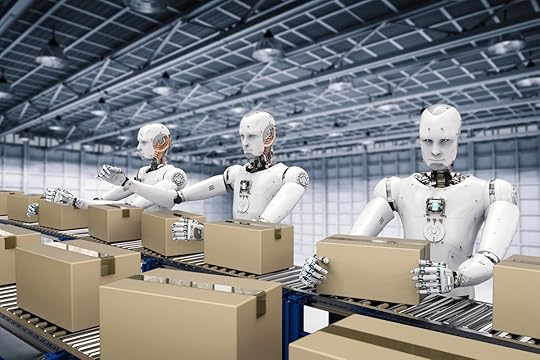 Are computers, robots, and machines automating too many jobs out of existence. Is it accurate to describe the short-term jobs market an “AI-robot jobs Armageddon,” as some have?The future is rarely as comfortable as the status quo. For certain demographic groups, technological innovation and the evolution of ideas can be disruptive, messy, and worse. This is reflected to some extent in the labor market, where currently the average 50-year-old person has held 12 different jobs.The only thing certain is change, and to a large extent, change is driven by technology advances.A Historical Perspective on the FutureIn 1964, an open letter was drafted and sent to President Johnson, warning him of the coming Triple Revolution. The letter was composed and signed by 35 members of the “Ad Hoc Committee on the Triple Revolution,” which included luminaries like Nobel Chemist, Linus Pauling; civil rights activist, Tom Hayden; and Swedish Nobel Economist, Gunnar Myrdal.The letter focused on three revolutions that seemingly were taking place at the time:Cybernation Revolution – increasing automationWeaponry Revolution – mutually assured destructionHuman Rights Revolution – growing civil unrestWhile the letter addressed all three issues, it focused primarily on the Cybernation Revolution. The authors predicted that machines and automation would cause massive new unemployment as jobs shifted significantly. They stated:“A new era of production has begun. Its principles of organization are as different from those of the industrial era as those of the industrial era were different from the agricultural. The cybernation revolution has been brought about by the combination of the computer and the automated self-regulating machine. This results in a system of almost unlimited productive capacity which requires progressively less human labor. Cybernation is already reorganizing the economic and social system to meet its own needs.”Of particular interest to me was the work of one of the signers, Robert Theobald, a futurist who had written extensively on the economics of abundance and his advocacy of a Basic Income Guarantee.These are the same topics being discussed by those today who fear massive technological unemployment in the years ahead.Were They Right?This warning from more than 50 years ago still seems to haunt us. Computers obviously have dramatically changed the jobs landscape, as well as the skills required to perform those jobs. And the degree to which this is happening is speeding up, along with the concern about technology-driven unemployment.Additional factors are at play as well. The pandemic accelerated change trends in many areas of our lives – from healthcare to work environments to shopping … to the jobs market.Post-COVID hiring has been slower than many expected. There are many possible reasons for this, but I would suggest that during the past 12 months, our economy has undergone decades-worth of automation innovation. During that same time, we’ve also experienced a decade’s worth of people reconsidering their job futures – for example, getting serious about long-term careers and, in many cases, shifting away from retail and other front-line jobs. Those are the jobs most amenable to automation, according to economists.And even manufacturing, the epitome of automation, seems to have taken another major leap recently in that direction. The sector has recovered strongly from the pandemic while only bringing back 60% of the workers that were lost.
  What the Numbers Show
In the past, researchers typically suggested that major steps in automation within an industry rarely led to mass lay-offs. Instead, they would suggest automation was spurring job retraining, retirements, and shifts to service-related industries.
And when you get past the anecdotal information and dig into the numbers, a similar situation is evident today. A recent MIT study found a fairly significant relationship between the deployment of robots and the jobs that they displaced.
According to their analysis, in any given metropolitan location, each robot that was added to the workplace replaced 6.6 jobs within that region. The impact is ameliorated a bit in that the resulting efficiencies and reduced cost of goods benefitted employment in other industries and locations. Thus, the net national effect of the deployment of one robot was the loss of 3.3 jobs.
It’s not surprising that the researchers found that this impact was borne disproportionately by blue collar workers – low-skilled and especially middle-skill workers, suggesting that technology breakthroughs were contributing to income inequality.
It all adds up to a lot of jobsOn a global level, the jobs impact of technology automation is pretty staggering.
Oxford Economics predicts that, thanks to improved robotic technology, better AI, and lower costs for both, robotic automation will cause the loss of 20 million jobs globally by 2030 – including 12.5 million in China, two million in the EU, and 1.5 million in the U.S. In contrast to the MIT study, though, they’re basing this on an estimate that the displacement effect to date has only been around 1.6 workers per robot.
They point out that at this macro level, the impact will be disproportionately more severe not just on blue collar workers but less advanced countries overall.
But here’s where they were wrongIf you paid close attention to the doom and gloom of the economist’s predictions above, the thing most noticeably absent was predictions about new job creation.
The same technologies that are used to automate jobs out of existence are the same technologies that will be creating the jobs and industries of the future.
Let me say that again. The same technologies that are used to automate jobs out of existence are the same technologies that will be creating the jobs and industries of the future.
The job market is constantly changing. In fact many of the jobs people perform today did not even exist 10 years ago, and most of the jobs that did exist, require a new vocabulary, additional skills, and new forms of understanding.
So if we ask the question – “Is this time truly different?” – the answer is always “yes.”
Every wave of innovation brings with it new demands, new standards, new policies, and a need for new skills.
But perhaps the more salient question we should be asking – “At what point do we start to exceed our human ability to adapt?”
Countless times in the past, people have predicted jobs disappearing, but virtually none have registered more than a ripple effect on the job creation engine, a job creation engine that is being driven by a series of complex self-organizing systems.
Self-organizing systems tend to develop around a series of human management processes where complex systems with many moving parts orient around human need as a core driver to both self-correct and reorganize to build a more stable, pulsing state of operation.
Today’s teachers, coaches and vocational guides should be steering young people towards jobs and careers both in and with these technologies, and that’s where new learning technologies come into play.
In 1984, educational psychologist Benjamin Bloom found that he could take an average student scoring in the 70th percentile range in school and move them into a setting with one-on-one tutoring coupled with a mastery learning process and they would suddenly score in the 98th percentile range.
Bloom’s process led to a huge improvement in student performance. And his results were replicated numerous times by several different researchers.
Going from a 70th percentile to 98th percentile student was a two sigma improvement. This meant that his students performed two standard deviations better than students who learned through conventional instructional methods.
In his papers, Bloom asked the very pragmatic question, “How do we achieve these results in a more practical, more scalable way than one-on-one tutoring?”
Until now, there has really been no practical way of offering one-on-one tutoring for the masses. However, AI and an assortment of other emerging technologies is about to change all that.
 The unwritten human mandateThe human race has an unwritten mandate to pass our rapidly growing base of knowledge and information on from one generation to the next.Our base of knowledge is growing rapidly. Before 1900, it’s estimated that human knowledge doubled every century. However, the doubling of information has speeded up considerably, and the latest research now shows our base of human knowledge doubling every 12 hours.Think of all the blog posts, podcasts, video recordings, papers being written, social media posts, and surveillance camera records being added to the information universe. It’s truly a staggering amount of information being added every minute of every day.That said, the tools we have today for passing knowledge from one generation to the next are simply not up to the task. In their present form, libraries are not good enough, schools are not fast enough, and technology still has a poor interface for the human mind. But changes are happening very quickly!With the base of human knowledge doubling every 12 hours, no it’s not possible to increase our mental sphere to a point where we’re actually absorbing all this information. But we can improve our interface with it, to the point where it is as seamless and as invisible as possible.Even though it’s outside our present cognitive abilities, we’ll be able to interact with it as though it is. People will be able to ask us a question and we’ll be able to quickly think our way through to an answer.Our minds will be able to surf the compendiums of the Internet to find the answers.We will no longer need to have all of our most important data committed to memory. Instead, our minds will have a seamless interface with the knowledge universe, we’ll train our minds to know where to look, and the answers to all our questions will only be a few seconds away.Final ThoughtsYoung people today will be our future designers, craftsmen, engineers, architects, doctors, dentists, scientists, researchers, politicians, lawyers, retailers, and future business leaders. They will be inheriting a world filled with problems – aging infrastructure, crumbling systems, corrupt governments, radically disruptive technology, ethical dilemmas, and a host of seemingly impossible situations.At the same time, they will be using tools, systems, and techniques that will enable them to be exponentially more capable, productive, and accomplished.We are on the verge of making the transition from the here-and-now to what-comes-next, and that’s where it gets interesting.Robots are coming. They’re coming with or without our blessing, and in shapes and forms we can’t even imagine.But they also come with limits, limits that we will soon discover along the way. Translate This Page
Select LanguageAfrikaansAlbanianAmharicArabicArmenianAzerbaijaniBasqueBelarusianBengaliBosnianBulgarianCatalanCebuanoChichewaChinese (Simplified)Chinese (Traditional)CorsicanCroatianCzechDanishDutchEnglishEsperantoEstonianFilipinoFinnishFrenchFrisianGalicianGeorgianGermanGreekGujaratiHaitian CreoleHausaHawaiianHebrewHindiHmongHungarianIcelandicIgboIndonesianIrishItalianJapaneseJavaneseKannadaKazakhKhmerKoreanKurdish (Kurmanji)KyrgyzLaoLatinLatvianLithuanianLuxembourgishMacedonianMalagasyMalayMalayalamMalteseMaoriMarathiMongolianMyanmar (Burmese)NepaliNorwegianPashtoPersianPolishPortuguesePunjabiRomanianRussianSamoanScottish GaelicSerbianSesothoShonaSindhiSinhalaSlovakSlovenianSomaliSpanishSudaneseSwahiliSwedishTajikTamilTeluguThaiTurkishUkrainianUrduUzbekVietnameseWelshXhosaYiddishYorubaZulu
#goog-gt-tt {display:none !important;}
.goog-te-banner-frame {display:none !important;}
.goog-te-menu-value:hover {text-decoration:none !important;}
.goog-text-highlight {background-color:transparent !important;box-shadow:none !important;}
body {top:0 !important;}
#google_translate_element2 {display:none!important;}
function googleTranslateElementInit2() {new google.translate.TranslateElement({pageLanguage: 'en',autoDisplay: false}, 'google_translate_element2');}
function GTranslateGetCurrentLang() {var keyValue = document['cookie'].match('(^|;) ?googtrans=([^;]*)(;|$)');return keyValue ? keyValue[2].split('/')[2] : null;}
function GTranslateFireEvent(element,event){try{if(document.createEventObject){var evt=document.createEventObject();element.fireEvent('on'+event,evt)}else{var evt=document.createEvent('HTMLEvents');evt.initEvent(event,true,true);element.dispatchEvent(evt)}}catch(e){}}
function doGTranslate(lang_pair){if(lang_pair.value)lang_pair=lang_pair.value;if(lang_pair=='')return;var lang=lang_pair.split('|')[1];if(GTranslateGetCurrentLang() == null && lang == lang_pair.split('|')[0])return;var teCombo;var sel=document.getElementsByTagName('select');for(var i=0;i<sel.length;i++)if(/goog-te-combo/.test(sel[i].className)){teCombo=sel[i];break;}if(document.getElementById('google_translate_element2')==null||document.getElementById('google_translate_element2').innerHTML.length==0||teCombo.length==0||teCombo.innerHTML.length==0){setTimeout(function(){doGTranslate(lang_pair)},500)}else{teCombo.value=lang;GTranslateFireEvent(teCombo,'change');GTranslateFireEvent(teCombo,'change')}}
Search for: Recent Posts With the Coming AI-Robot Jobs Armageddon, Why is this Time Different? The Weaponization of Drones The Third Thumb Project – Setting the Stage for Next Generation Humans Categories Artificial Intelligence Business Trends Future of Agriculture Future of Banking Future of Education Future of Healthcare Future of Transportation Future of Work Future Scenarios Future Trends Futurist Thomas Frey Insights Global Trends Predictions Social Trends Technology Trends Speaking TopicsFuture of Healthcare – “Is Death our only Option?Future of AIFuture of Industries
The post With the Coming AI-Robot Jobs Armageddon, Why is this Time Different? appeared first on Futurist Speaker.
June 3, 2021
The Weaponization of Drones
There’s no question our skies are getting crowded. In addition to their use by recreational hobbyists, drones are supporting farming, construction, real estate, deliveries, and nearly every other major industry. They’re also being used for more nefarious purposes like smuggling and illegal surveillance.
A few nights ago, I had a dream about a security drone that dropped out of the ceiling of a store and proceeded to attack a gunman with disruptive flashing lights and noise. This started me thinking about all the ways drones may be used in future security systems.
We’re Moving Toward Civilian Drone WeaponizationTwo trends are coming together that seem to indicate that in the future, law enforcement drones won’t just be used for search and rescue or crowd monitoring.
First law enforcement and private security are increasingly using drones in threat situations to find and track suspects engaged or suspected in a crime. In some cases, drone dispatching is so fast and automated, that it can have a deterrent effect on a crime in progress.
Second, the armed forces have rapidly militarized the use of drones – for nearly two decades they’ve been used in the Middle East to destroy terrorist targets for example.
Put those trends together and how long will it be before we have the weaponization of drones for domestic law enforcement and private security?
It’s not a huge leap from the today’s world of armed police officers and security professionals to a point where those same officers and guards use drones more proactively – and lethally, perhaps arming them with a gun, taser, laser, or large speakers that emits sonic bursts.
The Current Use of Drones by Law EnforcementDrones quickly have built a track record of saving lives thanks to their ability to respond to scenes quickly and do methodical airborne searches at lower altitudes than planes or helicopters. Law enforcement drones are accompanied by optical and thermal sensors, spotlights, video cameras, and loudspeakers. Police drones and their operators have saved hundreds of lives.
Over the past decade, several states have considered authorizing police forces to use lethal weapon-armed drones, while others have proposed limiting them to non-lethal weapons like rubber bullets, tasers, or tear gas. Most major police departments around the country, though, haven’t taken steps to arm their drone fleet with lethal or nonlethal weaponry.
In recent mass shooting events, though, it would seem that even nonlethal drone weapons might be advantageous if only to slow down or distract the assailant. The challenge, of course, would be the cost of deploying them in advance in indoor settings, like in the store ceiling in my dream.
 Law Enforcement Trying to Keep Up
Drones with greater range are becoming more commonplace and inexpensive, putting law enforcement, especially federal groups, on the defensive. Environmental organizations have demonstrated how easy it may be to infiltrate the airspace of a nuclear facility using a commonly available hobby drone.
Drones as personal weaponsThis also raises the question of whether in the U.S., a citizen’s “right to bear arms” includes the right to own a drone that is armed?
In 2019, the Federal Aviation Administration said “no,” in no uncertain terms. The FAA specifically called out the illegality of drones armed with “attached guns, bombs, fireworks, flamethrowers, and other dangerous items.”
Violators are subject to a $25,000 fine. Apparently, word has not gotten around, though, and many of these weaponry/drone hobbyists are posting videos on social media of their creations in action.
Drone DefenseGiven the potential for this kind of drone lethality or criminal mischief, drone detection is a thriving industry as well. Installations such as power plants, refineries, airports, and military bases have drone detection systems to notify security teams of an unauthorized drone in the vicinity.
A California company now offers a Cloud-based drone detection service that not only will spot a suspicious drone that enters a defined airspace, but it performs a risk assessment of the drone’s possible intentions. If the facility is authorized, the company’s other products can bring down the drone, not with an air-to-air missile, but with a “surgical mitigation” technology that safely brings the drone to earth.
Like most of today’s emerging technology, drones can be used for good and for evil – and there’s some shades of gray in between.
Translate This PageSelect LanguageAfrikaansAlbanianAmharicArabicArmenianAzerbaijaniBasqueBelarusianBengaliBosnianBulgarianCatalanCebuanoChichewaChinese (Simplified)Chinese (Traditional)CorsicanCroatianCzechDanishDutchEnglishEsperantoEstonianFilipinoFinnishFrenchFrisianGalicianGeorgianGermanGreekGujaratiHaitian CreoleHausaHawaiianHebrewHindiHmongHungarianIcelandicIgboIndonesianIrishItalianJapaneseJavaneseKannadaKazakhKhmerKoreanKurdish (Kurmanji)KyrgyzLaoLatinLatvianLithuanianLuxembourgishMacedonianMalagasyMalayMalayalamMalteseMaoriMarathiMongolianMyanmar (Burmese)NepaliNorwegianPashtoPersianPolishPortuguesePunjabiRomanianRussianSamoanScottish GaelicSerbianSesothoShonaSindhiSinhalaSlovakSlovenianSomaliSpanishSudaneseSwahiliSwedishTajikTamilTeluguThaiTurkishUkrainianUrduUzbekVietnameseWelshXhosaYiddishYorubaZulu
#goog-gt-tt {display:none !important;}
.goog-te-banner-frame {display:none !important;}
.goog-te-menu-value:hover {text-decoration:none !important;}
.goog-text-highlight {background-color:transparent !important;box-shadow:none !important;}
body {top:0 !important;}
#google_translate_element2 {display:none!important;}
function googleTranslateElementInit2() {new google.translate.TranslateElement({pageLanguage: 'en',autoDisplay: false}, 'google_translate_element2');}
function GTranslateGetCurrentLang() {var keyValue = document['cookie'].match('(^|;) ?googtrans=([^;]*)(;|$)');return keyValue ? keyValue[2].split('/')[2] : null;}
function GTranslateFireEvent(element,event){try{if(document.createEventObject){var evt=document.createEventObject();element.fireEvent('on'+event,evt)}else{var evt=document.createEvent('HTMLEvents');evt.initEvent(event,true,true);element.dispatchEvent(evt)}}catch(e){}}
function doGTranslate(lang_pair){if(lang_pair.value)lang_pair=lang_pair.value;if(lang_pair=='')return;var lang=lang_pair.split('|')[1];if(GTranslateGetCurrentLang() == null && lang == lang_pair.split('|')[0])return;var teCombo;var sel=document.getElementsByTagName('select');for(var i=0;i<sel.length;i++)if(/goog-te-combo/.test(sel[i].className)){teCombo=sel[i];break;}if(document.getElementById('google_translate_element2')==null||document.getElementById('google_translate_element2').innerHTML.length==0||teCombo.length==0||teCombo.innerHTML.length==0){setTimeout(function(){doGTranslate(lang_pair)},500)}else{teCombo.value=lang;GTranslateFireEvent(teCombo,'change');GTranslateFireEvent(teCombo,'change')}}
Search for: Recent Posts The Weaponization of Drones The Third Thumb Project – Setting the Stage for Next Generation Humans Space Based Solar Power is about to Transform Life on Planet Earth Categories Artificial Intelligence Business Trends Future of Agriculture Future of Banking Future of Education Future of Healthcare Future of Transportation Future of Work Future Scenarios Future Trends Futurist Thomas Frey Insights Global Trends Predictions Social Trends Technology Trends Speaking TopicsFuture of Healthcare – “Is Death our only Option?Future of AIFuture of Industries
The post The Weaponization of Drones appeared first on Futurist Speaker.
Thomas Frey's Blog

- Thomas Frey's profile
- 2 followers

