
Thomas Frey's Blog, page 15
October 13, 2021
The Race to Find the Killer App for Quantum Computing

Our world is complex, and the state of matter surrounding us is rarely as clear-cut as we tend to think.
Physical matter, nature, choices, etc. are not always definitive with respect to location, amounts, accuracy, and certainty. Situations are not always reducible to the 1’s and 0’s used by our classical computing systems.
No, our world is quantum. Quantum physics is a scientific term that accounts for the fact that at atomic levels, matter can simultaneously be in different places and states, a principle called superposition. This science also acknowledges the fact that measuring multiple components is not a simple exercise since they may not be independent of each other. They can be in a state scientists refer to as entanglement.
Classical computers manipulate ones and zeroes to crunch through operations, but quantum computers use quantum bits or qubits. Just like classical computers, quantum computers use ones and zeros, but qubits have a third state called “superposition” that allows them to represent a one or a zero at the same time. Instead of analyzing a one or a zero sequentially, superposition allows two qubits in superposition to represent four scenarios at the same time. Therefore, the time it takes to crunch a data set is significantly reduced.
Quantum computing takes things well beyond today’s supercomputers even – thanks to its ability to perform multiple tasks and consider alternatives simultaneously.
New CapacitiesWill it rain tomorrow? That’s a job fit for a relatively straightforward computer calculation based on a handful of variables: weather fronts in the area, current conditions, the jet stream, etc. Conventional computing can do a decent job of informing meteorologists as they come up with a fairly reliable 24-hour forecast.
But what’s the outlook for environmental conditions in Kansas in 2023 that could affect the wheat harvest? Clearly, calculating a somewhat precise answer to this important question requires that we consider significantly more variables, weather-related and others. This kind of extremely thorough analysis would quickly be too much for conventional computing to handle in a reasonable period of time.
That’s the power of quantum computing – it doesn’t necessarily give us new and better answers and capabilities, it gives us new and better answers faster, to the point where we can ask questions that weren’t worthwhile asking before. It gives us capabilities we never dreamed of in critical industries from aviation to healthcare.
Until recently, quantum computing was more of a theoretical than an applied technology. That’s changing and it will revolutionize how we analyze and do things in the very near future.
IonQ is the first quantum computing hardware company to go public, and it went public via a special purpose acquisition company (SPAC). It’s promising to team up with companies in a variety of industries to give them an informational edge and to empower major leaps forward in technological capabilities.
 In Search of the “Killer App”
Most of the futuristic concepts I’ve explored recently will be further advanced through the use of quantum computing. We’re going to see a faster pace for nearly all of these breakthroughs, thanks to complex questions and deal with uncertainties and probabilities, crunching massive amounts of data in a far more efficient way.
Traditional computers are better at some tasks than quantum computers, such as email, spreadsheets, and desktop publishing to name a few. The intent of quantum computers is to be a different tool to solve different kinds of problems, not to replace classical computers.
While no one has yet identified the “killer app” for quantum computing, meaning the application that will return the greatest return on investment, here are eight likely candidates:
1. Virtually Unbreakable EncryptionIn a few years, quantum computers might be so powerful that they could crack any password. That’s why it’s imperative that researchers start investing into new, quantum-safe cryptography. Quantum technology is a double-edged sword, however, in the sense that it won’t only crack every password, but also be able to generate new, unhackable cryptographic keys.
HealthcareThanks to quantum computing, we’ll see more precise and individualized cancer treatments, with therapies that better target radiation application. Quantum computing will also quickly bring us to the point of having customized pharmaceuticals based on a person’s genomes and other personal health characteristics.
Automated Transportation FlowIn addition to spurring technological breakthroughs in self-driving trucks, cars, boats, and planes, quantum computing will be critical to optimizing traffic flow in these automated grids of the future. In the meantime, it will help route human-driven vehicles more efficiently.
Weather ForecastingAs described earlier, long-term weather forecasting will be improved by quantum computing that can digest and process far more data more efficiently than the best of today’s supercomputers. The benefits will be huge and extend well beyond personal planning and comfort. Much of our economy is weather-affected – farming, transportation, and infrastructure construction to name a few. When we have better information, we can make better decisions in those areas and make better use of resources.
Investment portfoliosFinance was one of the earliest domains to embrace Big Data. And much of the science behind the pricing of complex assets, such as stock options, involves intensively complex calculations. When Goldman Sachs, for example, prices derivatives it applies an extremely computing-intensive calculation known as a Monte Carlo simulation, which makes projections based on simulated market movements. Computing speed has long been a source of advantage in financial markets, where hedge funds vie to get millisecond advantages in obtaining price information. Quantum algorithms can increase speed for an important set of financial calculations.
Artificial IntelligenceThe goal of AI is to enable machines to mimic human behavior, which means mimicking the neural network – yes, the brain. Duplicating a human brain is one of the most complex machine learning challenges I can imagine. Quantum computing will help us make great strides in that direction, but even this breakthrough may not be enough to program a machine to “think” like a person.
Quantum Autonomous TransportationBillions of dollars are being invested in autonomous vehicles. The aim is to make vehicles so smart that they’re fit for busy roads anywhere on Earth. Although there is a lot of talent working to train AI algorithms to learn how to drive, accidents are still a problem. Quantum AI, which might be a lot faster and more powerful than current methods, may help solve this problem.
Drug DevelopmentComputational simulations of drug molecules are essential since they cut costs and time, sometimes dramatically. Today, this type of simulation is only possible with relatively small molecules though. If, however, companies are interested in proteins, which often have thousands of constituents, they need to manufacture them and test their properties in real life because today’s computing resources are not sufficient to make an accurate simulation. Quantum simulations could dramatically reduce the costs of development and help bring drugs to the market substantially faster.
The opportunity for quantum computing to solve large-scale complex problems faster and cheaper has encouraged billions of dollars of investment in recent years. The biggest opportunity may be in finding more new applications that benefit from the solutions offered through quantum.
And that leads me to wonder what the next computing innovation will look like and what will inspire it … just like quantum physics-inspired quantum computing.
Translate This PageSelect LanguageAfrikaansAlbanianAmharicArabicArmenianAzerbaijaniBasqueBelarusianBengaliBosnianBulgarianCatalanCebuanoChichewaChinese (Simplified)Chinese (Traditional)CorsicanCroatianCzechDanishDutchEnglishEsperantoEstonianFilipinoFinnishFrenchFrisianGalicianGeorgianGermanGreekGujaratiHaitian CreoleHausaHawaiianHebrewHindiHmongHungarianIcelandicIgboIndonesianIrishItalianJapaneseJavaneseKannadaKazakhKhmerKoreanKurdish (Kurmanji)KyrgyzLaoLatinLatvianLithuanianLuxembourgishMacedonianMalagasyMalayMalayalamMalteseMaoriMarathiMongolianMyanmar (Burmese)NepaliNorwegianPashtoPersianPolishPortuguesePunjabiRomanianRussianSamoanScottish GaelicSerbianSesothoShonaSindhiSinhalaSlovakSlovenianSomaliSpanishSudaneseSwahiliSwedishTajikTamilTeluguThaiTurkishUkrainianUrduUzbekVietnameseWelshXhosaYiddishYorubaZulu
#goog-gt-tt {display:none !important;}
.goog-te-banner-frame {display:none !important;}
.goog-te-menu-value:hover {text-decoration:none !important;}
.goog-text-highlight {background-color:transparent !important;box-shadow:none !important;}
body {top:0 !important;}
#google_translate_element2 {display:none!important;}
function googleTranslateElementInit2() {new google.translate.TranslateElement({pageLanguage: 'en',autoDisplay: false}, 'google_translate_element2');}
function GTranslateGetCurrentLang() {var keyValue = document['cookie'].match('(^|;) ?googtrans=([^;]*)(;|$)');return keyValue ? keyValue[2].split('/')[2] : null;}
function GTranslateFireEvent(element,event){try{if(document.createEventObject){var evt=document.createEventObject();element.fireEvent('on'+event,evt)}else{var evt=document.createEvent('HTMLEvents');evt.initEvent(event,true,true);element.dispatchEvent(evt)}}catch(e){}}
function doGTranslate(lang_pair){if(lang_pair.value)lang_pair=lang_pair.value;if(lang_pair=='')return;var lang=lang_pair.split('|')[1];if(GTranslateGetCurrentLang() == null && lang == lang_pair.split('|')[0])return;var teCombo;var sel=document.getElementsByTagName('select');for(var i=0;i<sel.length;i++)if(/goog-te-combo/.test(sel[i].className)){teCombo=sel[i];break;}if(document.getElementById('google_translate_element2')==null||document.getElementById('google_translate_element2').innerHTML.length==0||teCombo.length==0||teCombo.innerHTML.length==0){setTimeout(function(){doGTranslate(lang_pair)},500)}else{teCombo.value=lang;GTranslateFireEvent(teCombo,'change');GTranslateFireEvent(teCombo,'change')}}
Search for: Recent Posts Play to Earn Gaming is Creating a Whole New Breed of Unicorn Startups The Race to Find the Killer App for Quantum Computing Twelve Technologies Destined to Change Our Future Categories Artificial Intelligence Business Trends Future of Agriculture Future of Banking Future of Education Future of Healthcare Future of Transportation Future of Work Future Scenarios Future Trends Futurist Thomas Frey Insights Global Trends Predictions Social Trends Technology Trends Speaking TopicsFuture of Healthcare – “Is Death our only Option?Future of AIFuture of Industries

The post The Race to Find the Killer App for Quantum Computing appeared first on Futurist Speaker.


October 6, 2021
Twelve Technologies Destined to Change Our Future

If you ask ten different people what were the most important inventions in all history, you’ll likely get ten different answers.
Here’s one pretty good list from National Geographic that would be hard to argue with:
Printing pressLight bulbAirplanePersonal computerVaccinesAutomobileClockTelephoneRefrigerationCameraHere’s another that includes several of the same items plus the nail and the compass, and it even goes a bit further back in time to give credit to the inventor of the wheel – a very good addition. And here’s one more, this one remembering to include the gas-powered tractor and anesthesia. Good catch.
Now, I’m not saying it’s easier to be a historian than a futurist, but it’s probably less complicated to look backward at one’s leisure to acknowledge breakthrough technologies than it is to predict new ones at a time when so many technologies are on the cusp.
Debates about the significance of historical breakthroughs are academic exercises or something one does with friends over a glass of wine.
But consideration of the merits and ultimate utility of pending and future breakthroughs takes place in boardrooms with billions of dollars on the line. After all, things that seem destined to be extraordinary and ultimately commonplace may prove to be a bust. Supersonic transport comes to mind, even though it’s probably too early to give up on that.
But I don’t mind going out on a limb in predicting what the most significant emerging technologies will be over the next ten years. These are the twelve I’m watching, and I think you should be as well:
1. Autonomous TransportationI’ve become convinced that autonomous transportation will be the most disruptive technology in all of history. On this topic, most people right away think of cars and trucks as a first step. In fact, those may be the last autonomous vehicles to be fully developed and embraced due to the relatively complex and unpredictable environment they’ll be operating in.
But we’ve already come a long way in other modes of transportation. Unmanned rockets are delivering satellites to space orbit and supplies to the international space station. Soon we’ll see unmanned cargo ships plying the oceans. Submarines will follow shortly. Commercial jets are nearly autonomous now and under computerized control for much of each journey.
And, yes, eventually we’ll see wide-spread autonomous, dry land transportation – especially once we get past the mindset that perfect safety is the only acceptable option.
Add all of this together and not only will transportation be turned on its head, but we’ll also have massive redesign of our buildings, airports, seaports, highways, and cities themselves to accommodate it.
2. Artificial IntelligenceAI certainly isn’t an emerging technology, but what will be new is the extent it will be a part of nearly every other emerging technology. AI is the basis of computer learning. Faster computers with access to more data will enhance nearly every aspect of our lives: transportation, healthcare, business, national security, entertainment, and more.
We’ll begin to view AI as a commodity – almost like a utility – that’s delivered into every home, office, device, car, and highway in our world.
3. BlockchainBlockchain technology will soon become an element of our behind-the-scenes infrastructure for nearly every kind of transaction (defined in the broadest sense) that requires the secure transfer and maintenance of assets or information. It’s hard to imagine any industry that won’t be impacted as they strive to becoming more secure and efficient. If an industry relies on contracts, financial transactions, personal identification information, or asset management, for example, blockchain technology will be working in the background.
Is blockchain the final word in IT security? Unfortunately no. Blockchain can be hacked, but it’s not worth losing sleep over. As long as we rely on technology, i.e., computers and the internet, we’ll have cyber thieves. We need to accept that we’ll always be in a cycle of smart people developing secure systems that other smart people quickly learn to exploit. But, we’re continually raising the bar in the process.
 4. Cryptocurrency
Cryptocurrency is one of the primary applications and earliest adopters of blockchain technology. Soon, you won’t need to understand blockchain to use cryptocurrency; it will be as easy and natural and using a credit card. The currency behind it, though, will be blockchain-based. Bitcoin was the first, but the emerging crypto economy is now valued at over $2 trillion. This means over $2T in economic expansion, with no governmental strings attached, and we’re just getting started.
Regulators will eventually accede to this inevitability and implement buffers and guideposts to prevent the kind of valuation volatility and scams that have caused most people to stay away from engaging in cryptocurrency. Increasingly, nations will transform their currencies to digital, doing away with pesky paper and even peskier coinage. Our personal cryptocurrency wallets will typically have a variety of currencies at our disposal.
5. CRISPRThat’s “clustered regularly interspersed short palindromic repeats,” by the way, the emerging science of genetic manipulation using DNA splicing. We looked at this several weeks ago in the context of de-extincting a version of a Woolly Mammoth by splicing its preserved DNA into an Asian elephant.
That’s just the tip of the CRISPR iceberg, though. The emerging CRISPR toolset will expand our capabilities to customize embryos to optimize human beings in many ways. In just a few years, a pregnant woman will have the option of going to a geneticist to discuss certain “enhancement options” for her unborn child. They’ll also be able to remove problematic genes in order to reduce the likelihood of certain diseases and physical conditions.
6. MetaverseThis is one of the most fascinating advances I’ve had the opportunity to explore in a long time. The metaverse is essentially Internet 3.0, maybe even 10.0, based on an increasingly robust infrastructure that can support the presence of an alternate reality we can experience for ourselves. We see bits and pieces of it now, with concerts, online gaming, and virtual offices.
But ultimately, we’ll have metaverses that are as real and expansive as any Matrix or Ready Player One scenario. It’s not a stretch to say that in the future, we’ll be taking virtual vacations in the metaverse – spending a week’s salary with a metaverse agency to experience an African safari or an Alaskan cruise, enjoying the sights and sounds and the company of our fellow travelers.
7. Touchable Mixed RealityThis is an evolutionary development with metaverse implications. First, there was virtual reality (VR) – a virtual world, complete with sights and sounds (and only sights and sounds) experienced with the specialized headset. Next was augmented reality (AR) – in which we experienced the real world with virtual objects overlaying them (e.g., Pokémon Go). The next step is mixed reality (MR) – in which real and virtual worlds are combined. MR allows us to overlay physical items into the virtual environment.
MR will be a gamechanger in … well, games of course, and also in numerous entertainment and learning environments from engineering to medicine.
 8. Living Robots
Despite the name, this innovation isn’t as creepy or eyebrow-raising as it sounds. While this phrase may conjure up the image of human clones, remember that a “robot” is simply a controlled, programmable machine that can carry out a complex task.
But instead of metal casings and hard-wired circuitry, they’re made with biological tissue. The earliest versions of living robots can best be characterized as “programmable organisms,” blobs of tissue made from biological stem cells that are manipulated and shaped to be living organisms that perform tasks. Initially, we’ll program them, for example, to deliver medicine within a human body or clean up radioactive waste in hazardous sites. Beyond that, though, who knows!
9. Hyper-individualized EducationEducation is a $2 trillion annual business that operates in much the same way it did 200 years ago with large classrooms filled with students who are all taught the same way and, for the most part, the same thing. But classroom technology has been advancing rapidly, especially during the pandemic.
Ultimately, we’ll have massive databases of teachable material from which students and their advisers can craft a unique curriculum and even a unique degree. The material will be delivered in a way that the student can best relate to. Lectures. Virtual field trips. Group discussions (see metaverse discussion above). One-on-one tutorials with an AI teacher bot.
Degrees will be obtained more quickly, and graduates will have a much better-defined specialty that will minimize the time spent by their first employer in on-the-job training.
10. Hyper-individualized MedicineThis is also known as personalized medicine. Doctors in the near future will collaborate with us on prevention, diagnosis, and treatment options based on our own unique genomic profile. With the benefit of this information, they’ll know what conditions we’re susceptible to and that must be monitored closely. And when a condition presents itself, they’ll know which drugs or other treatments will be effective, ineffective, or even harmful.
We’ve seen some early successes with personalized medicine with oncology therapies, and it will ultimately extend significantly beyond that.
11. Internet for EveryoneWith communication satellites filling our low-Earth orbit, people in more and more of the far corners of the Earth will have access to information through the internet. As long as local regimes don’t try to limit citizen access, information will be more widespread and transferrable – for better or worse, but hopefully more for the better.
Who knows how many 21st century potential Einsteins and Mozarts will emerge when there is greater exposure to information and ideas? With a truly World Wide Web, we’ll see tremendous growth in global GDP, and maybe as I call it, in GNK – global net knowledge that will drive mankind’s progress forward, bringing light and enlightenment where it’s needed most.
12. Lab Grown EverythingWhile lab-grown meats have gotten all the attention, we’ll soon have similar processes for lab-growing construction material, fabrication materials, and much more. Our labs will make tremendous progress in speed-growing natural materials that have the same cellular structure as the “real” items that have previously only been grown at the rate of nature.
This will be a huge ecological and social win as we no longer will need to mine diamonds, clear cut forests, or maintain massive cattle feedlots, for example. We’ll also have new sources for medical and health products like breast milk, nutraceuticals, ointments, and more. This will cause short-term employment issues for sure, but once the science is worked out, the labs will essentially become factories and the workers there won’t need PhDs.
100 Years from NowI can’t imagine a more fantastic future than if these technologies come to fruition and play out fully! And if this blog is somehow discoverable in 100 years, I hope another futurist will see it and chuckle about our simplicity or, even better, note how we identified 2021 trends that did indeed shape the world they’re living in.
Translate This PageSelect LanguageAfrikaansAlbanianAmharicArabicArmenianAzerbaijaniBasqueBelarusianBengaliBosnianBulgarianCatalanCebuanoChichewaChinese (Simplified)Chinese (Traditional)CorsicanCroatianCzechDanishDutchEnglishEsperantoEstonianFilipinoFinnishFrenchFrisianGalicianGeorgianGermanGreekGujaratiHaitian CreoleHausaHawaiianHebrewHindiHmongHungarianIcelandicIgboIndonesianIrishItalianJapaneseJavaneseKannadaKazakhKhmerKoreanKurdish (Kurmanji)KyrgyzLaoLatinLatvianLithuanianLuxembourgishMacedonianMalagasyMalayMalayalamMalteseMaoriMarathiMongolianMyanmar (Burmese)NepaliNorwegianPashtoPersianPolishPortuguesePunjabiRomanianRussianSamoanScottish GaelicSerbianSesothoShonaSindhiSinhalaSlovakSlovenianSomaliSpanishSudaneseSwahiliSwedishTajikTamilTeluguThaiTurkishUkrainianUrduUzbekVietnameseWelshXhosaYiddishYorubaZulu
#goog-gt-tt {display:none !important;}
.goog-te-banner-frame {display:none !important;}
.goog-te-menu-value:hover {text-decoration:none !important;}
.goog-text-highlight {background-color:transparent !important;box-shadow:none !important;}
body {top:0 !important;}
#google_translate_element2 {display:none!important;}
function googleTranslateElementInit2() {new google.translate.TranslateElement({pageLanguage: 'en',autoDisplay: false}, 'google_translate_element2');}
function GTranslateGetCurrentLang() {var keyValue = document['cookie'].match('(^|;) ?googtrans=([^;]*)(;|$)');return keyValue ? keyValue[2].split('/')[2] : null;}
function GTranslateFireEvent(element,event){try{if(document.createEventObject){var evt=document.createEventObject();element.fireEvent('on'+event,evt)}else{var evt=document.createEvent('HTMLEvents');evt.initEvent(event,true,true);element.dispatchEvent(evt)}}catch(e){}}
function doGTranslate(lang_pair){if(lang_pair.value)lang_pair=lang_pair.value;if(lang_pair=='')return;var lang=lang_pair.split('|')[1];if(GTranslateGetCurrentLang() == null && lang == lang_pair.split('|')[0])return;var teCombo;var sel=document.getElementsByTagName('select');for(var i=0;i<sel.length;i++)if(/goog-te-combo/.test(sel[i].className)){teCombo=sel[i];break;}if(document.getElementById('google_translate_element2')==null||document.getElementById('google_translate_element2').innerHTML.length==0||teCombo.length==0||teCombo.innerHTML.length==0){setTimeout(function(){doGTranslate(lang_pair)},500)}else{teCombo.value=lang;GTranslateFireEvent(teCombo,'change');GTranslateFireEvent(teCombo,'change')}}
Search for: Recent Posts Play to Earn Gaming is Creating a Whole New Breed of Unicorn Startups The Race to Find the Killer App for Quantum Computing Twelve Technologies Destined to Change Our Future Categories Artificial Intelligence Business Trends Future of Agriculture Future of Banking Future of Education Future of Healthcare Future of Transportation Future of Work Future Scenarios Future Trends Futurist Thomas Frey Insights Global Trends Predictions Social Trends Technology Trends Speaking TopicsFuture of Healthcare – “Is Death our only Option?Future of AIFuture of Industries
The post Twelve Technologies Destined to Change Our Future appeared first on Futurist Speaker.
September 29, 2021
Introducing the New and Improved Woolly Mammoth… Well, Sort Of

Over the last few weeks, there have been a number of news articles about the plans of tech entrepreneur Ben Lamm and Harvard geneticist George Church to revive the Woolly Mammoth. They recently received $15 million in investment money from the billionaire Winklevoss twins and other investors. That’s not a lot of money by today’s standards, and we can only assume it’s seed money.
In 2013, I wrote a column titled Should We Revive Extinct Species? where I raised some of the basic “de-extinction” questions and talked about Stuart Brand’s work in this area. By the way, Brand’s TED Talk on this topic, which is part of the column, is quite fascinating.
Before we get too deep into the ramifications of this endeavor, and the possible motivations, we should be clear that this is not DNA reanimation or “Jurassic Park”-style cloning. Church is refining a DNA altering process based on gene editing. It’s a process that involves CRISPR-Cas9 (“clustered regularly interspersed short palindromic repeats”), in which DNA recovered from an extinct species is spliced into a similar animal living today.
In this case, the CRISPR-Cas9 process will use recovered Woolly Mammoth DNA found in a frozen state and incorporate it into an Asian elephant, Woolly’s closest surviving relative. The new animal will represent a new species and they’ve already named it a “mammophant.”
This beast will have many of the Woolly Mammoth’s physical features and behaviors as well as some features of the Asian elephant. Embryos will be gestated in an artificial womb grown from stem cells.
Underlying MotivationsI should point out that Lamm and Church are not the only ones proposing to create a mammophant. They’re simply the first to receive funding, so the race is on! Others may indeed beat them to the finish line.
CRISPR is unlocking a vast new world of possibilities and each of these researchers are quick to point out that their motivations are ecological. They rationalize that if mammophants are roaming the Arctic tundra as their Woolly Mammoth ancestors did, their digestive activity will spur grasslands and plant life that will absorb more carbon from the atmosphere.
That certainly might make what is essentially a risky science project more palatable to the general public and governments, not to mention investors, but this justification seems to be a stretch. Is this really a cost-effective, scalable strategy that can make a difference to our environmental issues? Probably not. But should that matter? Are there other values in developing a mammophant? Perhaps!
However, the overarching motivation for launching this project is “being first.” First to develop a new species, first to reverse the collapse of an extinct species – well, sort of, and first to win a Nobel Prize for blazing this new trail.
 The Value of the Scientific Process
Who knows what other kinds of unanticipated beneficial breakthroughs and advances might come from CRISPR research once we head down this path? This technology is all about preserving existing species and introducing new ones, but recent history is replete with accounts of scientists, who while pushing boundaries, stumbled upon unrelated and unexpected discoveries that have resulted in tremendous health and science benefits.
Penicillin unexpectedly emerged during experiments with bacteria. X-rays were discovered during cathode ray experiments. Microwave technology was discovered by chance thanks to a melting chocolate bar in the vicinity of a new form of vacuum tube that was being analyzed for use in radar technology.
Similarly, as scientists continue to explore the CRISPR approach to de-extinction other good things can happen along the way. There’s nearly always a benefit to pushing scientific envelopes to see where they lead, whether on that path or on the inevitable detours … as long as certain ethical and safety checkpoints are in place. In other words, if it’s “right” and if it’s “smart?”
The Ethical SideI’m much more of a futurist than an ethicist, but in so many areas, I really need to be both. Most of the objections I’ve seen regarding this technology are based on vague concerns about ethics, which needs to become far more rigorously defined. Yes, we SHOULD ask questions … like the standard can-we-should-we question, and whether it’s right to disrupt the natural course of extinction to re-introduce a “better version” of the species?
Similar ethical issues might probe into religious objections. An appropriate ethical analysis might explore relative costs and benefits and set thresholds and apply rationales regarding what species we should try to create or re-create based on the possible level of public good we might expect.
I should also point out that we cannot, in good conscience, simply revive one animal, but will instead need a mated pair, and very likely several mated pairs, to ensure their survival.
Biologist Paul Ehrlich, a brilliant man who tends to see the glass as half empty on many topics, has suggested one interesting ethical dilemma about de-extinction. He points out that if we can routinely bring a species “back to life,” mankind will have less of an imperative to preserve it in the first place.
Safety ConsiderationsOn the other hand, the safety checkpoint has to do with unintended natural consequences, the Jurassic Park scenarios, or impacts that are far more subtle.
Should we really be picking a fight with Mother Nature? And is there really such a thing as Mother Nature? Might she push back in ways we hadn’t considered? Will mammophants wipe out any other beneficial plants or animals? Will a new species also introduce new diseases? Is there an unknown risk in turning back the clock on one species? Or do we create an entirely new clock with the introduction of a new and improved species?
Is the tundra that supported the Woolly Mammoth thousands of years ago still a suitable home for a mammophant? What about the people, plants, and animals currently found there? Will they be okay with a new species that may go on rampages and crush their houses?
After all, the Earth and its ecosystems are fragile. We’re learning hard lessons that it’s easy to damage our world. And we tend to give short shrift to the principle of “climate geoengineering,” the situations where small seemingly self-contained man-made ecological or climate modifications in one part of the world can cascade into larger effects in other corners of the globe.
All of these issues and more will have to be explored and accounted for by independent scientists before we go too much further. We certainly can’t take the word of those with a financial stake in the matter.
Will We Have Mammophants?But even with incomplete information and in spite of all the what-ifs …” – as exemplified in this piece, which points out concerns ranging from animal anatomy to socializing baby mammophants – we will indeed see a new version of the Woolly Mammoth sometime over the next decade.
Sponsors of the research will craft many justifications – ecological and others. But in the end, we’ll make these magnificent animals simply because we can, and because this endeavor will inform our evolving world of science in new areas so that critical work regarding species preservation can move forward.
Yes, there will be safeguards, but not everyone will be comfortable with them. From all outward appearances, the downsides of reintroducing the Woolly Mammoth 2.0 will be minor and mostly hypothetical.
And who knows what incredible processes and capabilities scientists will discover along the way. They simply need to keep their peripheral vision intact as they survey the opportunity landscape.
Translate This PageSelect LanguageAfrikaansAlbanianAmharicArabicArmenianAzerbaijaniBasqueBelarusianBengaliBosnianBulgarianCatalanCebuanoChichewaChinese (Simplified)Chinese (Traditional)CorsicanCroatianCzechDanishDutchEnglishEsperantoEstonianFilipinoFinnishFrenchFrisianGalicianGeorgianGermanGreekGujaratiHaitian CreoleHausaHawaiianHebrewHindiHmongHungarianIcelandicIgboIndonesianIrishItalianJapaneseJavaneseKannadaKazakhKhmerKoreanKurdish (Kurmanji)KyrgyzLaoLatinLatvianLithuanianLuxembourgishMacedonianMalagasyMalayMalayalamMalteseMaoriMarathiMongolianMyanmar (Burmese)NepaliNorwegianPashtoPersianPolishPortuguesePunjabiRomanianRussianSamoanScottish GaelicSerbianSesothoShonaSindhiSinhalaSlovakSlovenianSomaliSpanishSudaneseSwahiliSwedishTajikTamilTeluguThaiTurkishUkrainianUrduUzbekVietnameseWelshXhosaYiddishYorubaZulu
#goog-gt-tt {display:none !important;}
.goog-te-banner-frame {display:none !important;}
.goog-te-menu-value:hover {text-decoration:none !important;}
.goog-text-highlight {background-color:transparent !important;box-shadow:none !important;}
body {top:0 !important;}
#google_translate_element2 {display:none!important;}
function googleTranslateElementInit2() {new google.translate.TranslateElement({pageLanguage: 'en',autoDisplay: false}, 'google_translate_element2');}
function GTranslateGetCurrentLang() {var keyValue = document['cookie'].match('(^|;) ?googtrans=([^;]*)(;|$)');return keyValue ? keyValue[2].split('/')[2] : null;}
function GTranslateFireEvent(element,event){try{if(document.createEventObject){var evt=document.createEventObject();element.fireEvent('on'+event,evt)}else{var evt=document.createEvent('HTMLEvents');evt.initEvent(event,true,true);element.dispatchEvent(evt)}}catch(e){}}
function doGTranslate(lang_pair){if(lang_pair.value)lang_pair=lang_pair.value;if(lang_pair=='')return;var lang=lang_pair.split('|')[1];if(GTranslateGetCurrentLang() == null && lang == lang_pair.split('|')[0])return;var teCombo;var sel=document.getElementsByTagName('select');for(var i=0;i<sel.length;i++)if(/goog-te-combo/.test(sel[i].className)){teCombo=sel[i];break;}if(document.getElementById('google_translate_element2')==null||document.getElementById('google_translate_element2').innerHTML.length==0||teCombo.length==0||teCombo.innerHTML.length==0){setTimeout(function(){doGTranslate(lang_pair)},500)}else{teCombo.value=lang;GTranslateFireEvent(teCombo,'change');GTranslateFireEvent(teCombo,'change')}}
Search for: Recent Posts Introducing the New and Improved Woolly Mammoth… Well, Sort Of The Future of Asteroid Mining The History of the Metaverse Categories Artificial Intelligence Business Trends Future of Agriculture Future of Banking Future of Education Future of Healthcare Future of Transportation Future of Work Future Scenarios Future Trends Futurist Thomas Frey Insights Global Trends Predictions Social Trends Technology Trends Speaking TopicsFuture of Healthcare – “Is Death our only Option?Future of AIFuture of Industries
The post Introducing the New and Improved Woolly Mammoth… Well, Sort Of appeared first on Futurist Speaker.
September 22, 2021
The Future of Asteroid Mining

Never say never. That’s one principle of futurism that proves itself time and time again.
Driverless vehicles. Citizen travel in space. Robots. Global currencies. Alternate universes. Mars exploration. At some point in history, each seemed like a pipe dream, if not bizarre … until really smart people methodically made the necessary breakthroughs to make them a reality.
We’re also making incremental progress in many other areas so that they don’t seem as far-fetched as they did even a decade ago. Manned missions to Mars. Electrified interstate highways. Colonization of the Moon. We’ll ultimately put these into the “Win” column, too. Each one is progressing on its own terms and its own time frame – moving inexorably toward the day that it’s front-page news and then quickly a normal way of life. Smart and creative people are steadily working to pull “outside the box” ideas closer to the box borders.
Add another moonshot to this list of ultimate breakthroughs: asteroid mining. We have a long way to go, but it will happen.
Asteroid miningWhy mine asteroids? In the words of Depression-era bank robber Willie Sutton, “Because that’s where the money is.” And according to NASA, “the money” equates to $100 million for every person on Earth in the form of gold, iridium, silver, osmium, palladium, platinum, nickel, aluminum, and other materials.
Asteroids are the “leftovers” from the formation of our solar system and its planets, so they can be expected to have many of the same components. The majority are in the asteroid belt found in orbit around the sun between Mars and Jupiter.
One sure sign that asteroid mining has shifted from science fiction to serious business when companies are being formed around the processes and governments are looking at regulating how to authorize ownership of these interplanetary resources. U.S. government policies seem to consider asteroid resources to be fair game to whoever can exploit them, much like ocean resources that lie outside the coastal boundaries of any country.
How Much?It’s estimated that there are 150 million asteroids in our close-in solar system but not all are of the metallic type that would be especially rich in these minerals and ores, either to transport back to Earth or to be used in space construction.
Some of the ones with the most potential could nearly pay for the entire industry investment. The 16 Psyche asteroid discovered in 1852 has an approximate diameter of 140 miles – and an estimated $700 quintillion (one quintillion is equal to one million trillions) in iron, nickel, gold, and other ores. NASA is planning a fly-by to check it out in more detail.
At this point, 16 Psyche may be an outlier, but many other asteroids have been identified containing similar element deposits valued in the easier-to-digest billions of dollars.
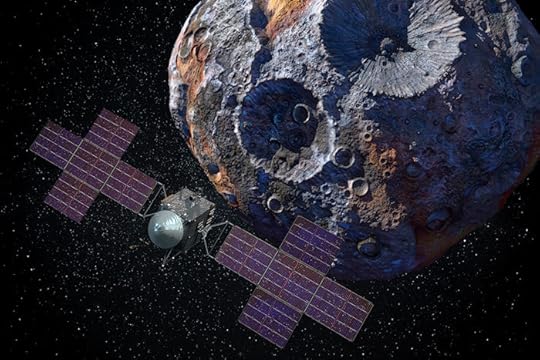 We May Not Have a Choice
Asteroid mining would be incredibly expensive, but at some point, the cost of obtaining these rapidly depleting materials on Earth will be greater than the recovery costs related to space mining. That’s when asteroid mining will shift from a theory to a necessity if we want to maintain our way of life.
This kind of earth-based depletions are a real possibility according to this analysis from the World Economic Forum. Interestingly, the article from just four years ago doesn’t mention asteroid mining as a solution – it focuses on other types of breakthroughs like synthesizing the declining elements, developing alternative technologies that don’t rely on those elements, and recycling efforts. Also, when pointing out the environmental damage and social impacts of mining these items on Earth (especially from gold mining), it doesn’t mention that these would be mitigated with space mining.
What Will Asteroid Mining Look Like?Forget the image of astronauts wielding pickaxes. We will see mining machine space vehicles drop down on the surface of asteroids that have been identified as likely sources. They’ll drill, scoop, and collect material. In fact, this basic mining technology has been proven. Both the U.S. and Japan have landed probes onto asteroids, collected surface material, and departed again.
On major source asteroids, robots will do the dirty work and load these transports, sitting idle between transports. The transports will deliver the mined or intact material to moon-based or other mid and low-orbit automated processing plants where the materials will be refined. The purified elements will be shipped to Earth or used in space construction. The byproducts will be compacted into small asteroids using a safe binding agent and then delivered back to deep space in a precise location.
In subsequent generations of the technology, some level of refining or smelting will even happen on the surface of major, high-yield asteroids. And while it sounds a bit concerning, we’ll also use evolving technology to steer asteroids closer to earth orbit where mining and materials transport is more efficient.
Sounds simple, right? No, of course not. Scaling this landing-retrieving-returning-processing into major levels of production seems pretty impossible. But that’s because we’re looking at asteroid mining through the eyes of practicality, based on what’s possible today. But as we mentioned above, breakthroughs are really the sum of solutions to incremental challenges.
And numbers like “quintillions” are powerful motivators, as is the competition to be the first trillionaire!
Translate This PageSelect LanguageAfrikaansAlbanianAmharicArabicArmenianAzerbaijaniBasqueBelarusianBengaliBosnianBulgarianCatalanCebuanoChichewaChinese (Simplified)Chinese (Traditional)CorsicanCroatianCzechDanishDutchEnglishEsperantoEstonianFilipinoFinnishFrenchFrisianGalicianGeorgianGermanGreekGujaratiHaitian CreoleHausaHawaiianHebrewHindiHmongHungarianIcelandicIgboIndonesianIrishItalianJapaneseJavaneseKannadaKazakhKhmerKoreanKurdish (Kurmanji)KyrgyzLaoLatinLatvianLithuanianLuxembourgishMacedonianMalagasyMalayMalayalamMalteseMaoriMarathiMongolianMyanmar (Burmese)NepaliNorwegianPashtoPersianPolishPortuguesePunjabiRomanianRussianSamoanScottish GaelicSerbianSesothoShonaSindhiSinhalaSlovakSlovenianSomaliSpanishSudaneseSwahiliSwedishTajikTamilTeluguThaiTurkishUkrainianUrduUzbekVietnameseWelshXhosaYiddishYorubaZulu
#goog-gt-tt {display:none !important;}
.goog-te-banner-frame {display:none !important;}
.goog-te-menu-value:hover {text-decoration:none !important;}
.goog-text-highlight {background-color:transparent !important;box-shadow:none !important;}
body {top:0 !important;}
#google_translate_element2 {display:none!important;}
function googleTranslateElementInit2() {new google.translate.TranslateElement({pageLanguage: 'en',autoDisplay: false}, 'google_translate_element2');}
function GTranslateGetCurrentLang() {var keyValue = document['cookie'].match('(^|;) ?googtrans=([^;]*)(;|$)');return keyValue ? keyValue[2].split('/')[2] : null;}
function GTranslateFireEvent(element,event){try{if(document.createEventObject){var evt=document.createEventObject();element.fireEvent('on'+event,evt)}else{var evt=document.createEvent('HTMLEvents');evt.initEvent(event,true,true);element.dispatchEvent(evt)}}catch(e){}}
function doGTranslate(lang_pair){if(lang_pair.value)lang_pair=lang_pair.value;if(lang_pair=='')return;var lang=lang_pair.split('|')[1];if(GTranslateGetCurrentLang() == null && lang == lang_pair.split('|')[0])return;var teCombo;var sel=document.getElementsByTagName('select');for(var i=0;i<sel.length;i++)if(/goog-te-combo/.test(sel[i].className)){teCombo=sel[i];break;}if(document.getElementById('google_translate_element2')==null||document.getElementById('google_translate_element2').innerHTML.length==0||teCombo.length==0||teCombo.innerHTML.length==0){setTimeout(function(){doGTranslate(lang_pair)},500)}else{teCombo.value=lang;GTranslateFireEvent(teCombo,'change');GTranslateFireEvent(teCombo,'change')}}
Search for: Recent Posts The Future of Asteroid Mining The History of the Metaverse 3 Secret Applications that will Cement NFTs Role in the Future Categories Artificial Intelligence Business Trends Future of Agriculture Future of Banking Future of Education Future of Healthcare Future of Transportation Future of Work Future Scenarios Future Trends Futurist Thomas Frey Insights Global Trends Predictions Social Trends Technology Trends Speaking TopicsFuture of Healthcare – “Is Death our only Option?Future of AIFuture of Industries
The post The Future of Asteroid Mining appeared first on Futurist Speaker.
September 15, 2021
The History of the Metaverse
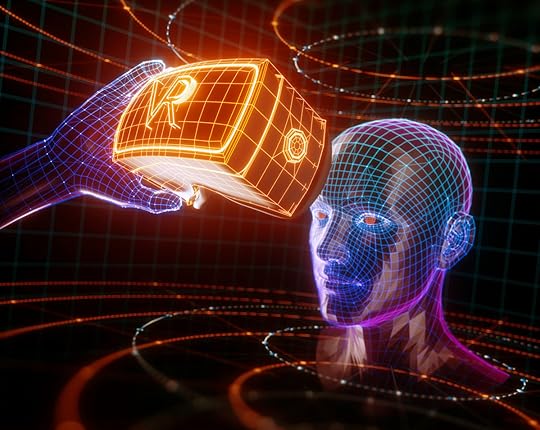
The metaverse is the collective assortment of byte-based alternatives to features of the physical, atomized world. The metaverse is in our future with or without our permission. We’ve taken too many steps in that direction already to stop it.
And as we noted just a few weeks ago, while many people think of the metaverse as some version of the dystopian movie, Ready Player One, the bulk of the metaverse will have far more utilitarian value.
To understand where all of this is headed, it’s instructive to look back and put in context the significant steps we’ve already taken down the virtual metaverse road.
History and future are one continuum with no beginning or endpoints. At any given time, we can see how today’s breakthroughs and future trends are building on top of the framework of previous discoveries. Whether we knew it at the time, the historical steps I’ll lay out below were critical in the formation and future of the metaverse. It’s very clear in hindsight.
So, let’s look back 40 years or so to get a fresh perspective on this metaverse trajectory. I selected 1991 as a beginning point, the advent of the internet. But we could just as easily establish a similar timeline that leads up to that important breakthrough, too.
Why are these milestones considered elemental to the emergence of the metaverse? Each one adds an element of structure, capability, and, yes, reality within that virtual, parallel world – a metaverse many would consider safer and more democratic than our physical universe.
Brief History of the Metaverse1991 – Birth of the InternetOn the 6th of August 1991, Tim Berners-Lee posted the very first public invitation for collaboration on the WorldWideWeb. This is the date the Internet was born.
1992 – Snow CrashThe very next year, science fiction writer Neal Stephenson coined the term “metaverse” in his 1992 novel Snow Crash, where humans, as avatars, interact with each other and software agents, in a three-dimensional virtual space that uses the metaphor of the real world.
1993 – Proof of WorkThe term and concept were introduced in the context of computer security as a way to prevent email spamming. Later, proof work became one of the primary techniques for verifying and legitimizing transactions on a blockchain, specifically – cyber currency mining based on computer power.
1998 – B-MoneyComputer engineer Wei Dei revealed his concept for b-money, a decentralized, distributed cryptocurrency. It never came to pass but some of the concepts are very similar to those in Bitcoin, which emerged years later. One element was the use of Proof of Stake, an alternative mining algorithm that relies on the developer’s current holdings of the cryptocurrency rather than raw computing power.
2002 – Digital TwinsThe concept and model of the digital twin – the digital counterpart of a physical object – was publicly introduced in 2002 by Michael Grieves, then of the University of Michigan, at a Society of Manufacturing Engineers conference. Grieves proposed the digital twin as the conceptual model underlying product lifecycle management.
2003 – Second LifeSecond Life is the online virtual world, developed by Philip Rosedale and his team at Linden Lab in 2003. It was very much a precursor to the Metaverse worlds being developed today. One of the biggest problems Second Life users faced was low bandwidths and high “res” times making it a less-than-optimal experience. But even today, Second Life has an active user base of a million people, each spending over four hours a day in this virtual world.
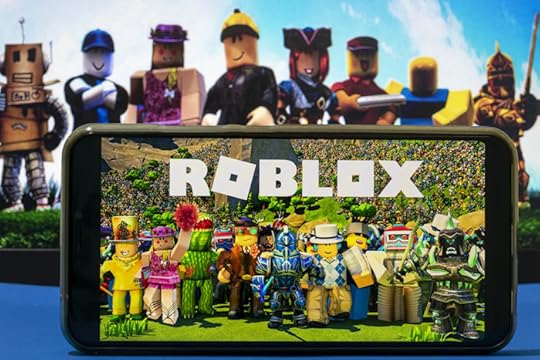 2006 – Roblox
This online platform was introduced that allowed users to create and play games developed by other users. During the 2020 pandemic, it became a significant source of interaction for young people, and it became the third-highest-grossing game that year.
2009 – BitcoinOn the 3rd of January in 2009, the bitcoin network came into existence with its mysterious founder, Satoshi Nakamoto, mining the genesis block of bitcoin (block number 0), which yielded a reward of 50 bitcoins. This was the day Bitcoin was born.
2009 – BlockchainAlong with the invention of Bitcoin, Satoshi Nakamoto also invented blockchain to serve as the public transaction ledger for Bitcoin. Even though others have claimed to have invented the concept of blockchain earlier, the same day that Bitcoin was launched is the same day that a usable form of Blockchain was born.
2010 – Play-to-Earn TechnologyGacha games had grown popular in Japan by the early 2010s, based on the capsule toy vending machine concept, with the earliest known system being in MapleStory. Players would earn currency that they could use to participate in a random draw from a set of items based on pre-determined rarities, often with the goal to collect all of a one set of items to gain a powerful in-game reward.
2011 – Ready Player OneThis novel by Ernest Cline introduced many young people to the concept of a virtual reality world. The Steven Spielberg adaptation in 2018 made the idea even more vivid and the interest more widespread.
2012 – NFTsAn NFT or “Nifty” is a Non-Fungible Token, representing a unique item instead of fungible tokens, which are mutually interchangeable, such as cryptocurrencies like Bitcoin. The concept of NFTs has been with us since December 2012 with the creation of “Colored Coins,” in which additional information is incorporated onto a bitcoin so that it is no longer fungible but unique. This, interestingly enough, was a project spearheaded by a young Vitalik Buterin as he worked on improvements for the Bitcoin blockchain.
2014 – Vitalik ButerinThe Thiel Fellowship – In 1999, Peter Thiel’s company Confinity merged with Elon Musk’s company X.com to form PayPal. Three years later, eBay bought PayPal for $1.5 billion, making both Musk and Thiel very wealthy. In 2010, Peter Thiel announced the formation of the Thiel Fellowship, offering $100,000 grants for students under the age of 22 to leave school and pursue other work. In 2014, one of the recipients of this grant was 20-year-old Vitalik Buterin, the co-creator of Ethereum.
2015 – EthereumIn July of 2015, Vitalik Buterin and Gavin Wood launched the Ethereum Network, along with the ethereum blockchain.
2015 – DecentralandThe first iteration of this virtual reality platform was introduced in 2015. It allocated “land” via a proof of work algorithm. The 2021 boom in NFTs has led to sales of some of the game’s real estate plots for more than $100,000.
2015 – Smart ContractsSmart contracts were first proposed in the early 1990s by Nick Szabo, who coined the term to refer to “a set of promises, specified in digital form, including protocols within which the parties perform on these promises.” Since the 2015 launch of the Ethereum blockchain, the term “smart contract” has been more specifically applied toward the notion of general-purpose computation that takes place on a blockchain or distributed ledger.
2016 – Pokémon GOPokémon Go was the first game to overlay a virtual world onto the real world. It uses mobile devices with GPS to locate, capture, train, and battle virtual creatures, called Pokémon, which appear as if they are in the player’s real-world location.
2016 – The DAO – Decentralized Autonomous OrganizationsThe company named The DAO was launched through a crowdfunded token sale in May 2016, setting the record for the largest crowdfunding campaign in history at that time. It was meant to be an alternative venture capital fund, created on Ethereum’s blockchain, that would serve as a decentralized funding model. In June 2016, users exploited a vulnerability in The DAO code which enabled them to siphon off one-third of DAO’s funds into a subsidiary account. This led to the death of The DAO as a company. But the concept of decentralized autonomous organizations (DAOs) lives on, yet substantially improved by lessons learned from The DAO experience. Moving forward, each DAO will serve as an essential ingredient for future metaverse companies that are governed collectively by participants in the organization, with rules and financial transactions recorded on the blockchain. DAOs, for example, have been formed around joint ownership of NFTs.
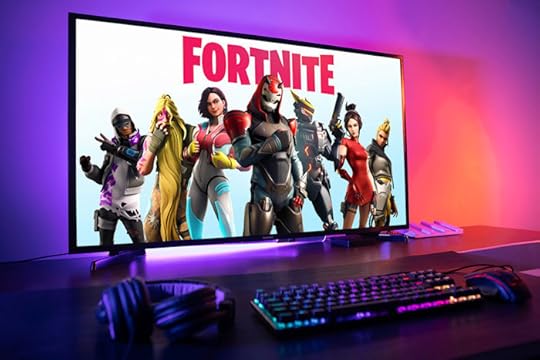 2017 – Fortnite
This multiplayer video game was a huge success upon its release, and it introduced many people to the look and feel of the metaverse and cryptocurrency. Fortnite user base totals 350 million.
2018 – Dai StablecoinThe Dai Stablecoin was introduced to add a new element to the volatile crypto universe. In contrast to cryptocurrencies that aren’t anchored to any fiat currency or are only anchored to other cryptocurrencies, the centralized Dai Stablecoin was pegged to the U.S. dollar, making it far less volatile and more reliable cryptocurrency for decentralized finance (DeFi). Today, blockchain-based banking services are available on a number of similar platforms for cryptocurrency borrowing, lending, and investing. For now, they’re largely unregulated by our traditional institutions, and users seem just fine with that, for the most part.
2018 – Decentralized Exchanges (DEX)Cyber currency exchanges took a major PR hit when Bancor lost $13.5 million to hackers. Although their legal/regulatory foundation remains a little uncertain, DEXes continue to serve as a way for people to sell and trade their cyber currency assets person-to-person based on smart contracts, rather than through a centralized exchange.
2018 – Axie InfinityThe popular NFT virtual reality game, Axie Infinity, based on a mythical world of animal husbandry, was introduced this year. By mid-2021 it had the highest combined value of NFTs of all play-to-earn game platforms.
2020 – COVIDWhen COVID exploded on the scene in 2020, people around the world found themselves being quarantined with few options to dedicate their time and energy to. For this reason, the metaverse quickly became the go-to place for a growing number of young people, gamers, and those wanting to make money in the online world. In our polarized world, the metaverse has taken on a tone of rebelling against current institutions – the more ingrained they are more they’re at risk. This is pushing people to the underground economies and worlds of the metaverse, setting up a “perfect storm” for Metaverse growth.
2020 – Decentralized Apps (Dapps)The value of the tokens on the six major blockchain platforms surpassed $2 billion. The movement to cut out the middleman continues, as open-source, transparent applications continue to emerge to enable gaming, DEXes, DeFi, and other acronymized uses. While many people refer to dapps as an emerging trend, the first dapp was actually the Bitcoin app more than a decade ago.
2020 – First Concert in the MetaverseIn April 2020, Travis Scott and Marshmello performed in the video game, Fortnite to just under 30 million people.
2020 – SolanaAlso in April, the Solana blockchain dapp was introduced. In contrast to Ethereum, this dapp’s cryptocurrency, called a SOL, is mined based on the alternate proof of stake (POS) algorithm. Further, issues related to block ownership were clarified and simplified in Solana, with a new consensus tool known as “proof of history” that inserts timestamps into its blockchain.
2020 – Alien WorldsThis wildly popular dapp was created with a multi-metaverse interplanetary scenario that had NFT characters interacting in a decentralized autonomous organization to mine tokens and perform other tasks. By 2021 Alien Worlds had more than 2.5 million users, but its significance goes beyond that – the game has been built around critical lessons for teaching people about the principles of cryptocurrency and crypto-mining.
To the FutureThe evolution of various kinds of enabling technology and new features in the metaverse over the last few years has been incredible. But not as amazing as it will be beyond 2021.
In fact, in the future, there will be few if any aspects of society – including government, business, churches, entertainment, dating, politics, and even war – that will remain unchanged with the evolving Metaverse. It will have an especially profound effect on the way we educate ourselves and our children in the years ahead.
Translate This PageSelect LanguageAfrikaansAlbanianAmharicArabicArmenianAzerbaijaniBasqueBelarusianBengaliBosnianBulgarianCatalanCebuanoChichewaChinese (Simplified)Chinese (Traditional)CorsicanCroatianCzechDanishDutchEnglishEsperantoEstonianFilipinoFinnishFrenchFrisianGalicianGeorgianGermanGreekGujaratiHaitian CreoleHausaHawaiianHebrewHindiHmongHungarianIcelandicIgboIndonesianIrishItalianJapaneseJavaneseKannadaKazakhKhmerKoreanKurdish (Kurmanji)KyrgyzLaoLatinLatvianLithuanianLuxembourgishMacedonianMalagasyMalayMalayalamMalteseMaoriMarathiMongolianMyanmar (Burmese)NepaliNorwegianPashtoPersianPolishPortuguesePunjabiRomanianRussianSamoanScottish GaelicSerbianSesothoShonaSindhiSinhalaSlovakSlovenianSomaliSpanishSudaneseSwahiliSwedishTajikTamilTeluguThaiTurkishUkrainianUrduUzbekVietnameseWelshXhosaYiddishYorubaZulu
#goog-gt-tt {display:none !important;}
.goog-te-banner-frame {display:none !important;}
.goog-te-menu-value:hover {text-decoration:none !important;}
.goog-text-highlight {background-color:transparent !important;box-shadow:none !important;}
body {top:0 !important;}
#google_translate_element2 {display:none!important;}
function googleTranslateElementInit2() {new google.translate.TranslateElement({pageLanguage: 'en',autoDisplay: false}, 'google_translate_element2');}
function GTranslateGetCurrentLang() {var keyValue = document['cookie'].match('(^|;) ?googtrans=([^;]*)(;|$)');return keyValue ? keyValue[2].split('/')[2] : null;}
function GTranslateFireEvent(element,event){try{if(document.createEventObject){var evt=document.createEventObject();element.fireEvent('on'+event,evt)}else{var evt=document.createEvent('HTMLEvents');evt.initEvent(event,true,true);element.dispatchEvent(evt)}}catch(e){}}
function doGTranslate(lang_pair){if(lang_pair.value)lang_pair=lang_pair.value;if(lang_pair=='')return;var lang=lang_pair.split('|')[1];if(GTranslateGetCurrentLang() == null && lang == lang_pair.split('|')[0])return;var teCombo;var sel=document.getElementsByTagName('select');for(var i=0;i<sel.length;i++)if(/goog-te-combo/.test(sel[i].className)){teCombo=sel[i];break;}if(document.getElementById('google_translate_element2')==null||document.getElementById('google_translate_element2').innerHTML.length==0||teCombo.length==0||teCombo.innerHTML.length==0){setTimeout(function(){doGTranslate(lang_pair)},500)}else{teCombo.value=lang;GTranslateFireEvent(teCombo,'change');GTranslateFireEvent(teCombo,'change')}}
Search for: Recent Posts The History of the Metaverse 3 Secret Applications that will Cement NFTs Role in the Future Will We Be Living in the Metaverse? Categories Artificial Intelligence Business Trends Future of Agriculture Future of Banking Future of Education Future of Healthcare Future of Transportation Future of Work Future Scenarios Future Trends Futurist Thomas Frey Insights Global Trends Predictions Social Trends Technology Trends Speaking TopicsFuture of Healthcare – “Is Death our only Option?Future of AIFuture of Industries
The post The History of the Metaverse appeared first on Futurist Speaker.
September 9, 2021
3 Secret Applications that will Cement NFTs Role in the Future

We looked at Non-Fungible Tokens, or NFTs earlier this year in the context of their place in the art world. That raised a lot of questions for some readers so it’s time to look at the bigger picture, if you’ll pardon the pun. NFTs are increasingly showing up in other areas of the creative arts and leisure, but I see their basic technology and applications extending far beyond that.
As a refresher, an NFT is a tool that effectively grants uniqueness to a digital item. When you “tokenize” an asset of some kind using blockchain technology, most commonly Ethereum, you immediately grant it a certified, one-of-a-kind status. That, in turn, bestows ownership value within the supply-and-demand-driven marketplace.
If an artist tokenizes their work, they can sell that NFT on the marketplace. Since the work itself isn’t tokenized on the blockchain, a digital file of an image, for example, can still be copied by others for visual enjoyment, but there will only be one owner with the “papers” to prove that ownership and any rights accorded them in the NFT offering.
The numbersNFTs are making the news on a minute-by-minute basis. They’re becoming an integral part of the metaverse. Their total market value quadrupled in 2021 to nearly $250 million. The average price grew from $142 in October 2020 to $4,000 in February of this year.
Is it a fad? Perhaps. Part of the force driving the NFT market is speculation, which is going hand-in-hand with the novelty and bragging rights of owning something with this kind of pedigree.
Is there an NFT bubble? Possibly, but that doesn’t mean they’re going away. If there’s a bubble, it will burst at some point. New points of price equilibrium will emerge with less fluctuation as NFT products become normalized and buyers, sellers, and markets get a little more rational.
What does the future look like for NFTs? Their growth will be astounding because we’ll continue to apply this method of documenting ownership to situations well beyond the arts.
Movie StarsOne development recently caught my eye. Larva Labs, developer of the CyberPunk family of ten thousand crypto-figure characters, has signed on with Hollywood talent agency UTA to integrate those characters into films, television, video games, and other projects. Each character is an NFT, privately owned via a documented blockchain process.
It’s important to note that depending on the structure of the NFT, the arrangement doesn’t always grant exclusive reproduction, licensing, or copywriting rights. That must be the case here, but I doubt that the CyberPunk NFT owners are complaining, given what the exposure will do to the price of their NFTs!
DiversionsFor some, NFTs will support new hobbies or new versions of old hobbies.
Hobbyists will build one-of-a-kind digital clothes closets with fashion items from handbags to dresses to sneakers. Collectors will also be drawn to the trading card aspect of NFTs, for example taco-themed GIF files from Taco Bell and digital collectibles endorsed by the major sports leagues. The NBA has been especially active in this area.
Have you ever wanted to get into horse racing? Zed Run is a company that sells NFT horses. Their owners enter them in races on the company platform where they vie for prize money. The equine NFTs are bought, sold, and presumably bred, just like in the real world.
How about owning a mansion on Mars? An artist and an architect have teamed up to create that digital home and the ability to experience it in virtual reality. They sold the NFT for $500,000.
GamingFor many, gaming is more than a hobby and for some, even more than a passion. That describes some hardcore gamers. A major aspect of online metaverse gaming is collecting things – tokens, weapons, property, etc. – whether they’re purchased or earned. The ability to make in-game purchases of these kinds of supportive assets has been an integral part of most online games.
What’s new, though, is the ability to purchase those assets in the form of an NFT.
Why does that matter? These NFTs will be preserved, even when the game shuts down. They can be used, re-sold, or traded since they’re truly owned by the player outside of the particular game. An NFT-based asset might even cross over into other games or be swapped out for equivalent assets in those other games.
But beyond art, hobbies, and gaming, will we see NFT technology used for more serious matters?
 Other Future Applications
Recall the logic of the value of NFTs. They document the pedigree of digital assets and their undisputed ownership. More and more of our world and our products are digital. That means more and more items in our world can be digitally right-click copied, i.e., counterfeited.
In the future, NFTs will be an option to protect any item that 1) has perceived value, 2) is or can be stored digitally, 3) can be re-sold or transferred, and 4) might otherwise be copied or counterfeited.
Here are three secret applications that will cement NFT’s role in our future.
Event tickets – Event organizers will sell NFTs, not tickets. The purchaser can resell them if they choose and organizers can be confident their NFT won’t be counterfeited.Asset ownership documentation – In the future, titles to homes and vehicles will be tied to NFTs. Sales processes will be streamlined since title searches will be simplified, to say the least.Cybersecurity – Blockchain security is not 100% invulnerable to crypto-criminals, but assets secured in that way certainly are not the low-hanging fruit that criminals tend to go for first. To the extent that anyone’s important assets are locked within an NFT, they might sleep a little better at night.No, NFTs are not going away. They’ll become mainstream in their application to business processes and our personal downtime, and they’ll serve as a new category of assets for the average person to invest in.
Translate This PageSelect LanguageAfrikaansAlbanianAmharicArabicArmenianAzerbaijaniBasqueBelarusianBengaliBosnianBulgarianCatalanCebuanoChichewaChinese (Simplified)Chinese (Traditional)CorsicanCroatianCzechDanishDutchEnglishEsperantoEstonianFilipinoFinnishFrenchFrisianGalicianGeorgianGermanGreekGujaratiHaitian CreoleHausaHawaiianHebrewHindiHmongHungarianIcelandicIgboIndonesianIrishItalianJapaneseJavaneseKannadaKazakhKhmerKoreanKurdish (Kurmanji)KyrgyzLaoLatinLatvianLithuanianLuxembourgishMacedonianMalagasyMalayMalayalamMalteseMaoriMarathiMongolianMyanmar (Burmese)NepaliNorwegianPashtoPersianPolishPortuguesePunjabiRomanianRussianSamoanScottish GaelicSerbianSesothoShonaSindhiSinhalaSlovakSlovenianSomaliSpanishSudaneseSwahiliSwedishTajikTamilTeluguThaiTurkishUkrainianUrduUzbekVietnameseWelshXhosaYiddishYorubaZulu
#goog-gt-tt {display:none !important;}
.goog-te-banner-frame {display:none !important;}
.goog-te-menu-value:hover {text-decoration:none !important;}
.goog-text-highlight {background-color:transparent !important;box-shadow:none !important;}
body {top:0 !important;}
#google_translate_element2 {display:none!important;}
function googleTranslateElementInit2() {new google.translate.TranslateElement({pageLanguage: 'en',autoDisplay: false}, 'google_translate_element2');}
function GTranslateGetCurrentLang() {var keyValue = document['cookie'].match('(^|;) ?googtrans=([^;]*)(;|$)');return keyValue ? keyValue[2].split('/')[2] : null;}
function GTranslateFireEvent(element,event){try{if(document.createEventObject){var evt=document.createEventObject();element.fireEvent('on'+event,evt)}else{var evt=document.createEvent('HTMLEvents');evt.initEvent(event,true,true);element.dispatchEvent(evt)}}catch(e){}}
function doGTranslate(lang_pair){if(lang_pair.value)lang_pair=lang_pair.value;if(lang_pair=='')return;var lang=lang_pair.split('|')[1];if(GTranslateGetCurrentLang() == null && lang == lang_pair.split('|')[0])return;var teCombo;var sel=document.getElementsByTagName('select');for(var i=0;i<sel.length;i++)if(/goog-te-combo/.test(sel[i].className)){teCombo=sel[i];break;}if(document.getElementById('google_translate_element2')==null||document.getElementById('google_translate_element2').innerHTML.length==0||teCombo.length==0||teCombo.innerHTML.length==0){setTimeout(function(){doGTranslate(lang_pair)},500)}else{teCombo.value=lang;GTranslateFireEvent(teCombo,'change');GTranslateFireEvent(teCombo,'change')}}
Search for: Recent Posts 3 Secret Applications that will Cement NFTs Role in the Future Will We Be Living in the Metaverse? Our Lab Grown Future Categories Artificial Intelligence Business Trends Future of Agriculture Future of Banking Future of Education Future of Healthcare Future of Transportation Future of Work Future Scenarios Future Trends Futurist Thomas Frey Insights Global Trends Predictions Social Trends Technology Trends Speaking TopicsFuture of Healthcare – “Is Death our only Option?Future of AIFuture of Industries
The post 3 Secret Applications that will Cement NFTs Role in the Future appeared first on Futurist Speaker.
September 1, 2021
Will We Be Living in the Metaverse?
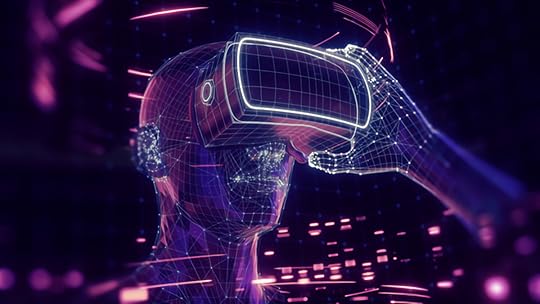
If you’ve been zoning out or raising your eyebrows when you hear references to the “metaverse,” it’s time to pay attention. It’s here. Well, at least pieces of it. As we speak, worlds are being created in cyberspace. They’re also being created or augmented literally before our eyes in the “real” world.
What’s the Metaverse?How do we perceive the world? Through our senses, including our eyes. But that’s this world, this planet Earth, complete with people and objects made of atoms. We see the Earth-based world with our eyes. Now take a massive leap. What if there was another place, other than our atom-based world, say a byte-based world we could experience using augmented senses?
That’s a step into the metaverse. And there are many locations to choose from once you’re there.
At its most radical, one spot in the metaverse may look like a completely new cyberworld. Think The Matrix or the novel Ready Player One. The latest iteration of those may be the games Alien Worlds, Axie Infinity, or The Sandbox in which players navigate multi-planet worlds and experience all the drama and conflict across those planets that you can imagine.
A less extreme manifestation of the metaverse would be a scenario where the augmented reality is superimposed onto the real, atom-based world. Participants would share this augmented environment, meaning everyone with the correct virtual reality tools would see and experience the same augmented reality while they navigated the real world together. Pokemon GO is leading people’s thinking in this direction.
ChallengesExperts point out that technology has a long way to go before we can truly achieve a metaverse state of things with no limits or barriers. For example, there are the challenging issues of the internet infrastructure, the feasibility of having large numbers of participants interacting with each other in real-time, language barriers, and latency issues.
Some experts feel that constraints like these and others will limit the metaverse to the gaming world, where it already has a foothold and an avid clientele. Others question whether the average person will sign on, given that they’re already mistrustful of high-tech business models that simply mine and sell user data.
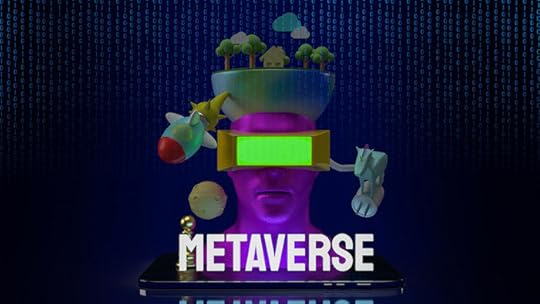 More Than a Game
Time will tell if the metaverse creators will overcome these hurdles. Will the experiences become a normal part of our lives, rather than just a game-driven diversion? I don’t think we’ll see one, single parallel universe/metaverse that everybody is a part of, in spite of the science fiction scenarios that are so intriguing.
Rather, we’ll be applying metaverse principles and technology on a more achievable scale that will improve our lives in a number of areas. After all, the metaverse at its highest and most noble level is a space where people can interact in real-time in a created or enhanced environment.
Yes, I think there’s a market for that!
Is it a COVID Thing?There’s no doubt that people’s interest in metaverse technology was accelerated by the pandemic. We didn’t hear of too many hardcore gamers complaining about isolation or a lack of human interaction. No, it was those of us who relied on real-world encounters for stimulation and sustenance who felt the isolation the worst.
Unfortunately, pandemics (COVID variants and others) will be on our mind and in the news for the foreseeable future. This is bound to drive even more interest in offering technology that enables us to live interactive lives in “safer” environments.
Coming Soon to the Metaverse Around You!If there’s one thing we should have learned in the last 50 years, it’s to never underestimate and casually dismiss fads – especially technology-based fads. This is another one of those times.
One obvious metaverse application will be in entertainment. Instead of listening to a concert in person or even online, we’ll enjoy a shared experience as our avatars are elbow-to-elbow with our friends and all the other attendees that bought their ticket and showed up in this metaverse concert venue.
What about office work? Thanks to the metaverse, office work-from-home will be a thing of the past. No, we won’t necessarily be back in the physical office; we’ll be working and meeting in a metaverse-enabled shared space, elbow-to-elbow this time with our co-workers or potential clients.
What about Grandpa?As with any breakthrough technologies and sea change concepts (e.g., internet and cryptocurrency), as metaverse applications like these become mainstream, some people may be left behind. That may be thanks to their own stubbornness, but in most other cases it will be due to an inability to learn to navigate or to even fathom such a drastic leap from the norm.
The challenge for metaverse developers and the industries that will offer services using the technology is to get past this hesitancy by making the applications as user-friendly as possible. Remember teaching your parents, grandparents, or great-grandparents how to: get on the internet, download an app, or send an email? And more recently how to navigate a Zoom call? With a little instruction and logical interfaces, most everyone will quickly master them.
If designers do their job well, before we know it, the vast majority of us will be in the metaverse – not necessarily gaming 20 hours a day, but occasionally and regularly interacting in virtual spaces “face-to-face” in real time.
In fact, experiencing certain aspects of our lives within the metaverse will be far easier than gaming in the metaverse. It will be natural communication, friendly discussions, business meetings, topical interactions, and so much more.
Translate This PageSelect LanguageAfrikaansAlbanianAmharicArabicArmenianAzerbaijaniBasqueBelarusianBengaliBosnianBulgarianCatalanCebuanoChichewaChinese (Simplified)Chinese (Traditional)CorsicanCroatianCzechDanishDutchEnglishEsperantoEstonianFilipinoFinnishFrenchFrisianGalicianGeorgianGermanGreekGujaratiHaitian CreoleHausaHawaiianHebrewHindiHmongHungarianIcelandicIgboIndonesianIrishItalianJapaneseJavaneseKannadaKazakhKhmerKoreanKurdish (Kurmanji)KyrgyzLaoLatinLatvianLithuanianLuxembourgishMacedonianMalagasyMalayMalayalamMalteseMaoriMarathiMongolianMyanmar (Burmese)NepaliNorwegianPashtoPersianPolishPortuguesePunjabiRomanianRussianSamoanScottish GaelicSerbianSesothoShonaSindhiSinhalaSlovakSlovenianSomaliSpanishSudaneseSwahiliSwedishTajikTamilTeluguThaiTurkishUkrainianUrduUzbekVietnameseWelshXhosaYiddishYorubaZulu
#goog-gt-tt {display:none !important;}
.goog-te-banner-frame {display:none !important;}
.goog-te-menu-value:hover {text-decoration:none !important;}
.goog-text-highlight {background-color:transparent !important;box-shadow:none !important;}
body {top:0 !important;}
#google_translate_element2 {display:none!important;}
function googleTranslateElementInit2() {new google.translate.TranslateElement({pageLanguage: 'en',autoDisplay: false}, 'google_translate_element2');}
function GTranslateGetCurrentLang() {var keyValue = document['cookie'].match('(^|;) ?googtrans=([^;]*)(;|$)');return keyValue ? keyValue[2].split('/')[2] : null;}
function GTranslateFireEvent(element,event){try{if(document.createEventObject){var evt=document.createEventObject();element.fireEvent('on'+event,evt)}else{var evt=document.createEvent('HTMLEvents');evt.initEvent(event,true,true);element.dispatchEvent(evt)}}catch(e){}}
function doGTranslate(lang_pair){if(lang_pair.value)lang_pair=lang_pair.value;if(lang_pair=='')return;var lang=lang_pair.split('|')[1];if(GTranslateGetCurrentLang() == null && lang == lang_pair.split('|')[0])return;var teCombo;var sel=document.getElementsByTagName('select');for(var i=0;i<sel.length;i++)if(/goog-te-combo/.test(sel[i].className)){teCombo=sel[i];break;}if(document.getElementById('google_translate_element2')==null||document.getElementById('google_translate_element2').innerHTML.length==0||teCombo.length==0||teCombo.innerHTML.length==0){setTimeout(function(){doGTranslate(lang_pair)},500)}else{teCombo.value=lang;GTranslateFireEvent(teCombo,'change');GTranslateFireEvent(teCombo,'change')}}
Search for: Recent Posts Will We Be Living in the Metaverse? Our Lab Grown Future Ghost Kitchens – Rewriting the rules for the global food industry Categories Artificial Intelligence Business Trends Future of Agriculture Future of Banking Future of Education Future of Healthcare Future of Transportation Future of Work Future Scenarios Future Trends Futurist Thomas Frey Insights Global Trends Predictions Social Trends Technology Trends Speaking TopicsFuture of Healthcare – “Is Death our only Option?Future of AIFuture of Industries
The post Will We Be Living in the Metaverse? appeared first on Futurist Speaker.
August 25, 2021
Our Lab Grown Future
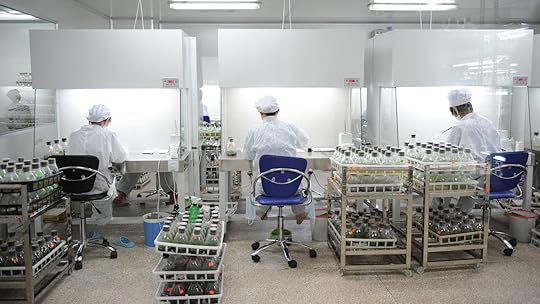
I’ve previously written about lab-grown meat. And as we hinted at in that piece, we should think far more expansively about these kinds of lab processes. In fact, I can see incredible breakthroughs in the not-too-distant future with the first lab-grown house – most, if not all, of it will be made with materials grown in a lab.
Lab-Grown vs. 3D PrintingLab-grown material is natural material that’s differently produced or manufactured. This distinguishes it from another form of lab production – 3D printing, also known as additive manufacturing, that reformats materials and uses it to build objects. It doesn’t, however, “grow” them.
3D printing is impressive on its own merits. This amazing technology can even utilize cellular material – including lab-grown cellular material – as the “ink.” In fact, meat products can be formulated in a 3D printing process, but, again, the process itself doesn’t produce a lot of meat out of a little material. In other words, it’s not lab-growing meat.
The ProcessesLab-growing is the process of creating material that has the same cellular structure as the naturally occurring material. This is done by mimicking the natural formation process (let’s call that “nature-grown”) within a far shorter time span. It helps to understand the lab-grown phenomena by describing what it’s NOT.
We’ll briefly look at five lab-grow items that we’re already producing, or at least are well within the range of possibility – beef, wood, milk, apples, and diamonds.
BeefAs noted, lab-grown meat is a real thing. But are scientists growing cows in their labs? No, these aren’t test-tube cows, with in vitro origins that mature into embryos and then develop at the same pace as naturally conceived cows. We’ve been there and done that. Rather, this is test-tube beef that has the same cellular material as Bessie, but it’s obtained without the messy slaughtering aspect and the environmental impact of grazing and methane emission.
WoodSimilarly, researchers are not lab-growing trees. Instead, they’re producing lab-grown lumber – in shapes and sizes that make them usable with little waste. The biomaterial can even be used to 3D print a chair or coffee table. And lab-grown wood material is environmentally preferable since it leaves the nature-grown trees upright and intact.
MilkLabs are manufacturing dairy products as well, but in this case, they’re not producing a gallon of milk from a milk molecule. Instead, the process utilizes fermentation of living microbes to produce dairy proteins that can be used to make those dairy products.
ApplesThe science behind lab-grown fruit and vegetable products is lagging just a bit. Researchers are perfecting a cell cultivation process that produces plant biomass that tastes like, and even exceeds the nutritional properties of, the natural-grown product from which the cells were obtained. Again, the researchers aren’t growing apples, they’re growing apple material or apple biomass. Applesauce as it were.
Diamonds?Diamonds are simply carbon that over a very long time has been transformed due to tremendous heat and pressure deep within the earth. Labs can replicate this process in 2-6 weeks, transforming pure carbon to diamonds using a process that mimics those natural, extreme high pressure, high temperature (HPHT) atmospheric conditions.
Diamonds can also be lab-produced using a newer approach called chemical vapor deposition (CVD). With CVD, a carbon seed is placed in a vacuum chamber and subjected to superheated carbon-based gases that deposit layers onto the seed.
In either case, these aren’t fake diamonds – they’re not cubic zirconium or paste. They’re the same carbon-based material as nature-grown diamonds with the same chemical, physical, and visual characteristics.
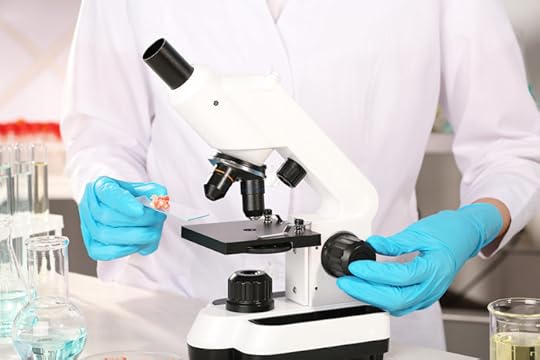 Our Lab-Grown Future
As we discussed in the context of lab-grown meat earlier this year, there will always be a market for “the real thing,” whether it’s a sirloin steak, a crisp apple, or a core of the earth diamond. But lab processes, the high-profile ones we mentioned above as well as the lab production of important staples like flour, have the potential to economically serve the world’s population and at the same time tread a little more lightly on the natural environment.
Many of the items we’ll own or see will be lab-grown. To the extent that we can mimic and speed up natural processes to produce these things, we will. That’s human nature. And we’re just at the beginning.
The Future of the Food We EatThe list could be endless, but soon we’ll be scaling up lab processes to produce meat, cheese, dairy, grain, fish fillets, bread, ice cream, flour, butter, fruit, vegetable, spices, rice, and so many more food items.
The Future of the Materials We UseSimilarly, we’ll have access to lab-produced, less expensive formulations of leather, wood, glass, clothing, crystals, gels, diamonds, seaweed, cardboard, and plastics. The list is limited only by one’s imagination and a scientist’s eureka moment.
The Future of the Medical Products We Rely OnFor many, the most exciting applications of these various lab-growing processes will be in the medical field. In the future, we’ll have an alternative source for blood and organs that are lab-manufactured from stem cells. We’ll also have lab-produced, breast milk, nutraceuticals, lotions, energy drinks, ointments, balms, and more.
As with many areas of progress, there will be tradeoffs and short-term disruptions. In exchange for this degree of eco-friendly agriculture production, for example, we’ll see fewer farming and agriculture jobs. New industries and job fields will emerge, though, as the technical, scientific, discovery stage of these breakthroughs is replaced by scaled up mass production.
Science will march on … and the rest of us had better keep up.
Translate This PageSelect LanguageAfrikaansAlbanianAmharicArabicArmenianAzerbaijaniBasqueBelarusianBengaliBosnianBulgarianCatalanCebuanoChichewaChinese (Simplified)Chinese (Traditional)CorsicanCroatianCzechDanishDutchEnglishEsperantoEstonianFilipinoFinnishFrenchFrisianGalicianGeorgianGermanGreekGujaratiHaitian CreoleHausaHawaiianHebrewHindiHmongHungarianIcelandicIgboIndonesianIrishItalianJapaneseJavaneseKannadaKazakhKhmerKoreanKurdish (Kurmanji)KyrgyzLaoLatinLatvianLithuanianLuxembourgishMacedonianMalagasyMalayMalayalamMalteseMaoriMarathiMongolianMyanmar (Burmese)NepaliNorwegianPashtoPersianPolishPortuguesePunjabiRomanianRussianSamoanScottish GaelicSerbianSesothoShonaSindhiSinhalaSlovakSlovenianSomaliSpanishSudaneseSwahiliSwedishTajikTamilTeluguThaiTurkishUkrainianUrduUzbekVietnameseWelshXhosaYiddishYorubaZulu
#goog-gt-tt {display:none !important;}
.goog-te-banner-frame {display:none !important;}
.goog-te-menu-value:hover {text-decoration:none !important;}
.goog-text-highlight {background-color:transparent !important;box-shadow:none !important;}
body {top:0 !important;}
#google_translate_element2 {display:none!important;}
function googleTranslateElementInit2() {new google.translate.TranslateElement({pageLanguage: 'en',autoDisplay: false}, 'google_translate_element2');}
function GTranslateGetCurrentLang() {var keyValue = document['cookie'].match('(^|;) ?googtrans=([^;]*)(;|$)');return keyValue ? keyValue[2].split('/')[2] : null;}
function GTranslateFireEvent(element,event){try{if(document.createEventObject){var evt=document.createEventObject();element.fireEvent('on'+event,evt)}else{var evt=document.createEvent('HTMLEvents');evt.initEvent(event,true,true);element.dispatchEvent(evt)}}catch(e){}}
function doGTranslate(lang_pair){if(lang_pair.value)lang_pair=lang_pair.value;if(lang_pair=='')return;var lang=lang_pair.split('|')[1];if(GTranslateGetCurrentLang() == null && lang == lang_pair.split('|')[0])return;var teCombo;var sel=document.getElementsByTagName('select');for(var i=0;i<sel.length;i++)if(/goog-te-combo/.test(sel[i].className)){teCombo=sel[i];break;}if(document.getElementById('google_translate_element2')==null||document.getElementById('google_translate_element2').innerHTML.length==0||teCombo.length==0||teCombo.innerHTML.length==0){setTimeout(function(){doGTranslate(lang_pair)},500)}else{teCombo.value=lang;GTranslateFireEvent(teCombo,'change');GTranslateFireEvent(teCombo,'change')}}
Search for: Recent Posts Our Lab Grown Future Ghost Kitchens – Rewriting the rules for the global food industry 16 Startling Predictions about the Future of Banking and Future of Cryptocurrency Categories Artificial Intelligence Business Trends Future of Agriculture Future of Banking Future of Education Future of Healthcare Future of Transportation Future of Work Future Scenarios Future Trends Futurist Thomas Frey Insights Global Trends Predictions Social Trends Technology Trends Speaking TopicsFuture of Healthcare – “Is Death our only Option?Future of AIFuture of Industries
The post Our Lab Grown Future appeared first on Futurist Speaker.
August 18, 2021
Ghost Kitchens – Rewriting the rules for the global food industry

At first glance, the emergence of “ghost kitchens” may not seem to be an earth-shattering trend. Other equally foreboding terms for this industry include “dark kitchens” and “shadow kitchens.”
But there’s nothing nefarious or creepy about them. Ghost kitchens are simply industrial kitchens that prepare food for delivery on behalf of a restaurant or a restaurant brand. They tend to be located near their customers and are served by shared driver delivery systems or the more common companies like UberEats or DoorDash.
There are several different models. In some cases, restaurants rent out a portion of their underutilized kitchen space to other food preparers. In other scenarios, the kitchens are found within shared commercial warehouse-like space, a “commissary concept” similar to the WeWork and Regus model for office space.
An alternative approach calls for establishing a ghost kitchen facility to support the delivery service of a single brand. Reef Kitchens, for example, just announced it would host 700 ghost kitchens for Wendy’s at its facilities in North America and the U.K. Most major chains are doing the same or plan to follow suit, from Wingstop to Five Guys.
Another ghost kitchen company, Kitchen United, is taking a slightly different approach by placing ghost kitchens in more visible spaces in grocery stores, complete with kiosks or apps that allow shoppers to order takeout meals or have them delivered. The company recently announced a partnership with Kroger. Ghost Kitchen Brands has a similar arrangement with Walmart.
Why Ghosting?Whatever the approach, the logic is clear. Consumers want their prepared food delivered. The average full-service restaurant is maintaining two food service models under one roof – one for their dine-in customers and one for their take-out or delivery customers. The latter used to be a sideline, an add-on anomaly; now that takeout and delivery is far more common, or even dominant in some restaurants, trying to do both from a single facility can be disruptive and inefficient.
The ghost kitchen phenomenon will be the norm very shortly. But it’s interesting to step back and consider what this trend says about us and our future.
What Do Ghost Kitchens Say about the Evolution of Change?Lest anyone assume ghost kitchens are entirely a COVID-driven phenomena, the practice was in place and steadily growing several years prior to the restaurant industry upheaval of 2020. Then, in the midst of COVID, 60% of U.S. consumers reported ordering delivery or pickup at least once per week. Keep in mind, that’s call-ahead or app ordering, not drive-through service.
There’s no question the dramatic growth in ghost kitchens is an outgrowth of COVID. During 2020, out of necessity, we were eating more from home. And out of necessity, in order to survive, many restaurants relied on takeout and delivery. Some even thrived with this model and don’t see the need now to go back to offering on-premise dining.
From the delivery side of this model, services like DoorDash and UberEats were a godsend for individuals who were necessarily shut-in during 2020 and pleasant convenience for many others.
COVID is having a lasting, long-term impact on the trajectory of many aspects of our future – from healthcare, to politics, to work, and now to leisure activity. The emergence of ghost kitchens is another example of how COVID has dramatically accelerated some trends, like working from home, which we explored earlier this year.
Change is inevitable, and a crisis inevitably accelerates change.
 What Do Ghost Kitchens Say about Consumers?
The shift to food delivery is an indication that we increasingly value time and convenience over experiences. Yes, there will always be an opportunity for an enjoyable sit-down experience in a more toney and pricey restaurant. And trips to faster-food restaurant chain establishments will continue to be valued as a family outing and an opportunity for everyone to unplug and socialize. But those instances will never rebound to their pre-pandemic peak.
Related to that, ghost kitchens also are an indication that we are becoming increasingly reliant on and comfortable with mobile technology and service apps. Many people resist learning these tools until they have to. And recently an older generation – just to generalize – had to and they came to love it.
One recent trend, though, that may be mildly disrupted by ghost kitchens is the loss of niche, single-location, family-owned restaurants. If these establishments continue to rely on street-front space and foot traffic, they’ll be in trouble, and they will decline. But if they pool resources with others to share common kitchen space, the economies may be enough for some of them to survive – at least as the provider of a delivered product.
What Do Ghost Kitchens Say about the Job Market?Like most retail industries, restaurants are having difficulty fully staffing up. Whether people have left those niches of the job market or are just waiting out these uncertain times, retailers, including restaurants, will need to replace employees with apps and downsizing arrangements that define the ghost kitchen model.
The human element of food preparation and meal delivery remains … for now. Until they’re automated as well, jobs in both areas will shift to independent contract arrangements.
Five Additional Future Implications of Ghost KitchensTeens and less-educated workers will bear the brunt of the loss of restaurant labor-intensive jobs – functions like wait-staffing, busing, and hosting.Consumers will continue to have access to wonderful, varied food thanks to ghost kitchens, but they’ll lose out on some opportunities for memorable dining out experiences.As restaurants close their street-front locations and consolidate kitchens, commercial property will be even more devalued, with the kind of vacant and empty storefronts like we’ve already seen with malls and movie theaters.Some restaurants will thrive. They’ll be able to focus on product and food innovation without worrying about all the overhead costs and facility maintenance headaches.The economies that restaurants can achieve by reducing their footprint and sharing space will be offset by delivery charges. Consumers won’t come out ahead.And last, in some way, somehow, Amazon will try to find a way to corner the ghost kitchen industry and then tie it to a resurrected Amazon Restaurants program!
Translate This PageSelect LanguageAfrikaansAlbanianAmharicArabicArmenianAzerbaijaniBasqueBelarusianBengaliBosnianBulgarianCatalanCebuanoChichewaChinese (Simplified)Chinese (Traditional)CorsicanCroatianCzechDanishDutchEnglishEsperantoEstonianFilipinoFinnishFrenchFrisianGalicianGeorgianGermanGreekGujaratiHaitian CreoleHausaHawaiianHebrewHindiHmongHungarianIcelandicIgboIndonesianIrishItalianJapaneseJavaneseKannadaKazakhKhmerKoreanKurdish (Kurmanji)KyrgyzLaoLatinLatvianLithuanianLuxembourgishMacedonianMalagasyMalayMalayalamMalteseMaoriMarathiMongolianMyanmar (Burmese)NepaliNorwegianPashtoPersianPolishPortuguesePunjabiRomanianRussianSamoanScottish GaelicSerbianSesothoShonaSindhiSinhalaSlovakSlovenianSomaliSpanishSudaneseSwahiliSwedishTajikTamilTeluguThaiTurkishUkrainianUrduUzbekVietnameseWelshXhosaYiddishYorubaZulu
#goog-gt-tt {display:none !important;}
.goog-te-banner-frame {display:none !important;}
.goog-te-menu-value:hover {text-decoration:none !important;}
.goog-text-highlight {background-color:transparent !important;box-shadow:none !important;}
body {top:0 !important;}
#google_translate_element2 {display:none!important;}
function googleTranslateElementInit2() {new google.translate.TranslateElement({pageLanguage: 'en',autoDisplay: false}, 'google_translate_element2');}
function GTranslateGetCurrentLang() {var keyValue = document['cookie'].match('(^|;) ?googtrans=([^;]*)(;|$)');return keyValue ? keyValue[2].split('/')[2] : null;}
function GTranslateFireEvent(element,event){try{if(document.createEventObject){var evt=document.createEventObject();element.fireEvent('on'+event,evt)}else{var evt=document.createEvent('HTMLEvents');evt.initEvent(event,true,true);element.dispatchEvent(evt)}}catch(e){}}
function doGTranslate(lang_pair){if(lang_pair.value)lang_pair=lang_pair.value;if(lang_pair=='')return;var lang=lang_pair.split('|')[1];if(GTranslateGetCurrentLang() == null && lang == lang_pair.split('|')[0])return;var teCombo;var sel=document.getElementsByTagName('select');for(var i=0;i<sel.length;i++)if(/goog-te-combo/.test(sel[i].className)){teCombo=sel[i];break;}if(document.getElementById('google_translate_element2')==null||document.getElementById('google_translate_element2').innerHTML.length==0||teCombo.length==0||teCombo.innerHTML.length==0){setTimeout(function(){doGTranslate(lang_pair)},500)}else{teCombo.value=lang;GTranslateFireEvent(teCombo,'change');GTranslateFireEvent(teCombo,'change')}}
Search for: Recent Posts Ghost Kitchens – Rewriting the rules for the global food industry 16 Startling Predictions about the Future of Banking and Future of Cryptocurrency The Race to Invent the Auto Electric, Auto Recharging Highways of the Future Categories Artificial Intelligence Business Trends Future of Agriculture Future of Banking Future of Education Future of Healthcare Future of Transportation Future of Work Future Scenarios Future Trends Futurist Thomas Frey Insights Global Trends Predictions Social Trends Technology Trends Speaking TopicsFuture of Healthcare – “Is Death our only Option?Future of AIFuture of Industries
The post Ghost Kitchens – Rewriting the rules for the global food industry appeared first on Futurist Speaker.
August 11, 2021
16 Startling Predictions about the Future of Banking and Future of Cryptocurrency

We’re seeing a lot of predictions about the future of cryptocurrency, but most of them have to do with their price, finding ways to mine them using less energy, and the possibility of taxing and regulating various types of cryptocurrency transactions.
All the while, most people are on the sidelines, still in the dark about the nature of cryptocurrency and the mechanics of blockchain technology that make it possible. They may be assuming they’ll never have to really grasp these concepts because they believe and even hope that cryptocurrencies won’t last, that they’ll fail under the weight of all this confusion and instability. These doubters are sadly mistaken.
A big source of their confusion no doubt is that the terms and concepts of “blockchain” and “cryptocurrency” are often and mistakenly used interchangeably. It’s important to understand that blockchain is the enabler for the formation of secure digital currencies, but it’s also a technology that can be built upon and used to underpin other secure financial transactions like purchases and loans.
What is currency?According to Economics 101, a currency must serve two functions: to store value and serve as a medium of exchange. With regard to cryptocurrency, that first standard has been proven. Granted, cryptocurrencies can fluctuate dramatically in value based on a number of factors, but you can buy, hold, and sell cryptocurrency. They have a market-based value.
The concept of cryptocurrencies as a medium of exchange has been slower to develop. In the last year, though, we’ve seen a tipping point in that regard. More and more companies and institutions are accepting cryptocurrency for purchases and financial transactions.
That’s due in part to the fact that financial institutions are enabling customers to make crypto-based transactions without necessarily having to master all the details – like maintaining crypto wallets and managing Bitcoin keys. As one astute analyst describes, it’s the difference between BlockFi (financial transactions that are based on blockchain but that are centralized and managed) and DeFi, or decentralized finance (financial services and transactions that are analogous to the currently unregulated and more anonymized cryptofinance we all think of).
The Normalization of CryptocurrencyI see DeFi and BlockFi as the mainstreaming of cryptocurrency/blockchain-based transactions. Average people don’t have to necessarily understand things like cryptocurrency mining or blockchain ledgers to participate and benefit.
And along with this mainstreaming, we’re on the verge of at least partially transitioning from fiat currency (which is backed by a trust in governing entities) to cryptocurrency (which is backed by the trust in security and trust in blockchain technology).
Just like the credit card industry has settled into a handful of dominant companies (Visa, Master Card, etc.), the market will end up supporting a limited number of cryptocurrencies that reach mainstream status (Bitcoin, Dogecoin, Ethereum, etc.).
Blockchain will be normalized in similar ways. Currently the technology is powering secure financial products like savings accounts and loans outside of the traditional financial world. But traditional institutions like banks and savings & loans will increasingly embrace blockchain as the underpinning of their own processes as well.
 Digital Dollar
What about the idea of government-backed, blockchain secured, digitized currencies, known as central bank digital currency or stablecoin? We’ll still see a “crypto dollar,” a digital, blockchain-enabled dollar that’s tied in some way to the U.S. dollar. But given that stablecoins are still subject to a relatively larger amount of central bank control, they’ll ultimately lose out in day-to-day transactions and personal financial services to the non-government-endorsed cryptocurrencies.
The decentralized, anonymized nature of the major cryptocurrencies will prevail.
Here’s how I see the relationship between consumers, blockchain, cryptocurrencies, and financial institutions like banks play out over the next 15 years.
Many people, especially in the older generation, will remain confused by cryptocurrency. They’ll stick to national currencies, giving traditional banking a bit of staying power. Increasingly, though, these people will miss out on investment opportunities and efficient financial services. It may become harder and harder for them to find retailers that accept their dollar-based credit cards without adding a surcharge.Within 3-5 years, most major retailers like Amazon, Walmart, Home Depot, and Costco will begin directly accepting cryptocurrencies as payment. When these “Big Four” and others take that step, there will be no turning back on cryptocurrency.Within 3-5 years, mainstream banks will offer a number of cryptocurrency services, including exchanges, savings accounts, and payment accounts. They’ll structure these as much as possible to make the “new” feel like the comfortable “old” currency systems.By 2030, major credit cards like Visa and Mastercard will fully support and back multiple crypto currencies. Visa has already taken major steps in this direction.By 2030, most banks will be working with both digitized fiat currencies and cryptocurrencies.By 2030, blockchain-based credit approval processes will make traditional credit bureaus irrelevant.By 2030, most banks will offer the option of cryptocurrency loans for houses, cars, and other purchases. For people trying to buy a home with either a crypto or traditional loan, whichever one comes through the quickest, offering the best deal, will win. By their nature, crypto will prevail in those scenarios.By 2030, the majority of home sales will use blockchain technology to secure titles.By 2030, the majority of all loans worldwide will use blockchain technology to secure transactions.By 2030-2035, 25% of banks in business today will fail or be absorbed. The losers will be the ones that resist crypto-banking and other blockchain-based transactions.By 2035, 25% of national central banks around the world will fail. Regional economic blocs will form around some of the surviving stablecoin currencies.By 2035, banks will earn the majority of their income from cryptocurrency and blockchain-based services.By 2035, 25% of all money lent to individuals will be cryptocurrency loans.By 2035, one cryptocurrency (likely Bitcoin) will emerge as the world’s first global currency, supplanting the U.S. Dollar – even in its digital, stablecoin form – as the default currency for international trades and purchases.By 2035, most cryptocurrencies will fade away. Less than 10 dominant cryptocurrencies will remain, even though there will be hundreds, if not thousands, of special use.Because of the alternative playing field on which cryptocurrencies operate, by 2035, most countries will transition away from a national income-tax to a national sales-tax or some alternate taxation scheme as the primary form of taxation.Naturally, any number of issues could arise that may derail these predictions, but from my vantage point, the decentralized nature of cryptocurrencies will prevail.
Plan accordingly.
Translate This PageSelect LanguageAfrikaansAlbanianAmharicArabicArmenianAzerbaijaniBasqueBelarusianBengaliBosnianBulgarianCatalanCebuanoChichewaChinese (Simplified)Chinese (Traditional)CorsicanCroatianCzechDanishDutchEnglishEsperantoEstonianFilipinoFinnishFrenchFrisianGalicianGeorgianGermanGreekGujaratiHaitian CreoleHausaHawaiianHebrewHindiHmongHungarianIcelandicIgboIndonesianIrishItalianJapaneseJavaneseKannadaKazakhKhmerKoreanKurdish (Kurmanji)KyrgyzLaoLatinLatvianLithuanianLuxembourgishMacedonianMalagasyMalayMalayalamMalteseMaoriMarathiMongolianMyanmar (Burmese)NepaliNorwegianPashtoPersianPolishPortuguesePunjabiRomanianRussianSamoanScottish GaelicSerbianSesothoShonaSindhiSinhalaSlovakSlovenianSomaliSpanishSudaneseSwahiliSwedishTajikTamilTeluguThaiTurkishUkrainianUrduUzbekVietnameseWelshXhosaYiddishYorubaZulu
#goog-gt-tt {display:none !important;}
.goog-te-banner-frame {display:none !important;}
.goog-te-menu-value:hover {text-decoration:none !important;}
.goog-text-highlight {background-color:transparent !important;box-shadow:none !important;}
body {top:0 !important;}
#google_translate_element2 {display:none!important;}
function googleTranslateElementInit2() {new google.translate.TranslateElement({pageLanguage: 'en',autoDisplay: false}, 'google_translate_element2');}
function GTranslateGetCurrentLang() {var keyValue = document['cookie'].match('(^|;) ?googtrans=([^;]*)(;|$)');return keyValue ? keyValue[2].split('/')[2] : null;}
function GTranslateFireEvent(element,event){try{if(document.createEventObject){var evt=document.createEventObject();element.fireEvent('on'+event,evt)}else{var evt=document.createEvent('HTMLEvents');evt.initEvent(event,true,true);element.dispatchEvent(evt)}}catch(e){}}
function doGTranslate(lang_pair){if(lang_pair.value)lang_pair=lang_pair.value;if(lang_pair=='')return;var lang=lang_pair.split('|')[1];if(GTranslateGetCurrentLang() == null && lang == lang_pair.split('|')[0])return;var teCombo;var sel=document.getElementsByTagName('select');for(var i=0;i<sel.length;i++)if(/goog-te-combo/.test(sel[i].className)){teCombo=sel[i];break;}if(document.getElementById('google_translate_element2')==null||document.getElementById('google_translate_element2').innerHTML.length==0||teCombo.length==0||teCombo.innerHTML.length==0){setTimeout(function(){doGTranslate(lang_pair)},500)}else{teCombo.value=lang;GTranslateFireEvent(teCombo,'change');GTranslateFireEvent(teCombo,'change')}}
Search for: Recent Posts 16 Startling Predictions about the Future of Banking and Future of Cryptocurrency The Race to Invent the Auto Electric, Auto Recharging Highways of the Future Self Watering Soil – The Single Greatest Breakthrough in Agriculture in the Past Century Categories Artificial Intelligence Business Trends Future of Agriculture Future of Banking Future of Education Future of Healthcare Future of Transportation Future of Work Future Scenarios Future Trends Futurist Thomas Frey Insights Global Trends Predictions Social Trends Technology Trends Speaking TopicsFuture of Healthcare – “Is Death our only Option?Future of AIFuture of Industries
The post 16 Startling Predictions about the Future of Banking and Future of Cryptocurrency appeared first on Futurist Speaker.
Thomas Frey's Blog

- Thomas Frey's profile
- 2 followers

