
Thomas Frey's Blog, page 19
January 6, 2021
The Coming Era of Super Employment

Pandemic or no, technology and innovation keep marching along. That will be the key to personal financial and national macro-economic progress. Take television technology … please!
Twenty-five years ago, a 32-inch television was massive and ridiculously heavy, bulky enough to be considered a piece of furniture. Today that same screen size seems too small even for a bedroom. We can buy an inconceivably gigantic 75-inch screen for less than $1,000 and then hang it on the wall, taking up no floor space.
What will it be like to watch television at home 25 years from now? Will it still be an appliance found on or along the wall? Will it be a projected image? Or maybe digital wallpaper?
And then there’s the viewing experience itself. At what point will home television become three dimensional in space, like a hologram? Will it have touchscreen capabilities like our cellphones? Will we be able to stretch or shrink the image, rotate it, alter the background music to match our mood, or change the point-of-view perspective?
What are the limits to customized viewing experiences? How about editing the characters in a television movie so they look like ourselves? Or selecting alternate endings and divergent plots just like we do now with some interactive dinner theater presentations?
Our Demand-Driven Economy
The point here is that there seemingly will be no end to innovation in television technology. In turn, this innovation will drive demand for new television entertainment systems.
The same can be said about everything from smartphones to automobiles. Most of us upgrade these and similar products fairly frequently, chasing innovation and new features that we never knew we needed but suddenly can’t do without.
Innovation – The Ultimate Job Creator
So, let’s take it a step further. Innovation drives demand … and demand drives business activity and job creation.
That’s why, contrary to what many people are leading us to believe, we’re entering an era of super employment driven in large part by our shortened attention spans, our tendency to be bored with last year’s models, and our desire to be seen on the cutting edge in all things. The first to get the iPhone XX. Eager to demonstrate our devotion to earth stewardship by buying the latest model electric car.
Powered by AI
Much of the future innovation in consumer products will be driven by artificial intelligence – not only in features but production processes. Machines are getting smarter and can take over repetitive, time-consuming tasks. Human beings will be able to “upscale” their jobs to contribute higher-level value related to production innovation and strategy – the kinds of functions that machines can’t as easily replicate.
Repetitive tasks will be “outsourced” to AI solutions, allowing the human workforce to be creative and somewhat more independent. Prospective employees will have more choices than ever, and the freelance world will provide an alluring alternative to traditional employment. Even with COVID behind us, “working from home” will continue to be the case for many people and that will increasingly feed into a “working for myself” mindset.
Employment skills upgrades
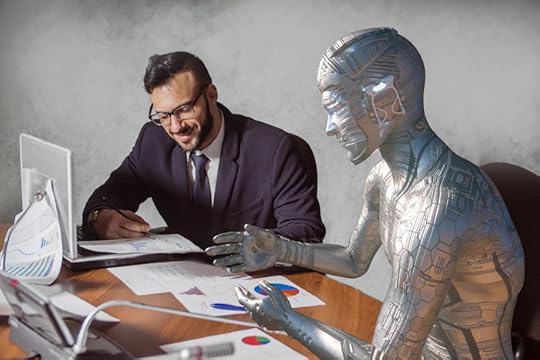
It’s important that employees realize technology will not so much replace human jobs as it will upscale human jobs. The people who are only comfortable in, or who prefer, a more machine-like work role will need to expand their horizons. Schools will need to instill this mindset.
It’s equally important, though, that tomorrow’s workers realize that not everyone will be expected to be a computer programmer. However, they will need to embrace an almost supervisory role when it comes to machine work processes. Fortunately, innovation not only creates new capabilities and efficiencies, but it can make technical jobs less technical.
Micro-industries and jobs
Over the coming two decades, we’ll witness an unprecedented wave of innovation and creativity driven by new tools of production. And during that time, we’ll also see an explosion of tens of thousands of new micro-industries that will employ hundreds of thousands of people.
Thanks to a wide array of emerging technologies, there will be an assortment of innovative “playgrounds” for thinkers, inventors, and entrepreneurs that will spring to life. They’ll launch micro-industries that range from manufacturing, data management, system design, advising, coaching, monitoring, assembling, disassembling, and reinventing business in unique and different ways.
With the help of thousands of collaborators, micro-industries will spring to life around niches far too small for existing industries to care about. But it’s within these incremental advances that great opportunities take root. That’s always been the case. We rely on startups to develop new processes or products that ultimately are absorbed into a larger enterprise.
Hang on tight and ride the wave
As noted at the outset, we won’t run out of innovation – and it’s not just televisions and cars. A simple coffee mug can be redesigned in a dozen ways. The same holds true for many other consumer and commercial products.
We’re entering an unusually creative period of human history. Those who embrace this kind of change will prosper, and companies that study and embrace this fluid “jobscape” will build flourishing enterprises. Our leaders and government policies should remove all possible roadblocks that might inhibit this.
Then over time, but sooner than you think, we’ll find ourselves with far more jobs than we’re able to fill – an era of super employment.
Translate This Page
Select LanguageAfrikaansAlbanianAmharicArabicArmenianAzerbaijaniBasqueBelarusianBengaliBosnianBulgarianCatalanCebuanoChichewaChinese (Simplified)Chinese (Traditional)CorsicanCroatianCzechDanishDutchEnglishEsperantoEstonianFilipinoFinnishFrenchFrisianGalicianGeorgianGermanGreekGujaratiHaitian CreoleHausaHawaiianHebrewHindiHmongHungarianIcelandicIgboIndonesianIrishItalianJapaneseJavaneseKannadaKazakhKhmerKoreanKurdish (Kurmanji)KyrgyzLaoLatinLatvianLithuanianLuxembourgishMacedonianMalagasyMalayMalayalamMalteseMaoriMarathiMongolianMyanmar (Burmese)NepaliNorwegianPashtoPersianPolishPortuguesePunjabiRomanianRussianSamoanScottish GaelicSerbianSesothoShonaSindhiSinhalaSlovakSlovenianSomaliSpanishSudaneseSwahiliSwedishTajikTamilTeluguThaiTurkishUkrainianUrduUzbekVietnameseWelshXhosaYiddishYorubaZulu
#goog-gt-tt {display:none !important;}
.goog-te-banner-frame {display:none !important;}
.goog-te-menu-value:hover {text-decoration:none !important;}
.goog-text-highlight {background-color:transparent !important;box-shadow:none !important;}
body {top:0 !important;}
#google_translate_element2 {display:none!important;}
function googleTranslateElementInit2() {new google.translate.TranslateElement({pageLanguage: 'en',autoDisplay: false}, 'google_translate_element2');}
function GTranslateGetCurrentLang() {var keyValue = document['cookie'].match('(^|;) ?googtrans=([^;]*)(;|$)');return keyValue ? keyValue[2].split('/')[2] : null;}
function GTranslateFireEvent(element,event){try{if(document.createEventObject){var evt=document.createEventObject();element.fireEvent('on'+event,evt)}else{var evt=document.createEvent('HTMLEvents');evt.initEvent(event,true,true);element.dispatchEvent(evt)}}catch(e){}}
function doGTranslate(lang_pair){if(lang_pair.value)lang_pair=lang_pair.value;if(lang_pair=='')return;var lang=lang_pair.split('|')[1];if(GTranslateGetCurrentLang() == null && lang == lang_pair.split('|')[0])return;var teCombo;var sel=document.getElementsByTagName('select');for(var i=0;i<sel.length;i++)if(/goog-te-combo/.test(sel[i].className)){teCombo=sel[i];break;}if(document.getElementById('google_translate_element2')==null||document.getElementById('google_translate_element2').innerHTML.length==0||teCombo.length==0||teCombo.innerHTML.length==0){setTimeout(function(){doGTranslate(lang_pair)},500)}else{teCombo.value=lang;GTranslateFireEvent(teCombo,'change');GTranslateFireEvent(teCombo,'change')}}
Search for:
Recent Posts
The Coming Era of Super Employment
2021 will be the Year of Recalibration!
Creating the Every-Human Database and the God Globe
Categories
Artificial Intelligence
Business Trends
Future of Agriculture
Future of Banking
Future of Education
Future of Healthcare
Future of Transportation
Future of Work
Future Scenarios
Future Trends
Futurist Thomas Frey Insights
Global Trends
Predictions
Social Trends
Technology Trends
Speaking TopicsFuture of Healthcare – “Is Death our only Option?
Future of AI
Future of Industries
The post The Coming Era of Super Employment appeared first on Futurist Speaker.


December 30, 2020
2021 will be the Year of Recalibration!

\When we think about the years ahead, there’s the future and then there’s the future future. Let’s talk about the immediate future first.
Recalibration is the Word
2021 will be a year of recalibration. As we’re gradually able to put the worst elements of 2020 behind us, it’s going to become clearer to all of us how far we’ve strayed from our habits, dependencies, and routines of the past, and not just in our daily tasks but in our entire way of thinking.
In just one year, our idea of “normal” has been run through a wood chipper and is unrecognizable in so many areas: our health, our government, our professional lives, our activities, our families, and our priorities.
As we move past the 2020 crisis mentality, 2021 will be a year of adjusting the dials, flipping the switches, and recalibrating our lives. But it’s not something we can simply press a button and regain our sense of normalcy. The first order of business will be to break our reactive habits that have built up over the past 10 months.
Covid is forcing us to change; so drifting back into our previous, comfortable state of normal will not be possible. We’ll often refer back to the “good old days” of 2019, 2015, or whatever year in the past we felt was most ideal, but that past was never as good as we recall, and we also have the opportunity to redirect ourselves, along with the rest of humanity, towards a far better future.

Choosing a Future Direction
In many areas, though, 2021 will be an opportunity to “futurize” our way towards new and improved ways of doing business, because we are wiser and better for having endured the shared crises of this past year.
COVID and other events made 2020 a clear demarcation point. We were laid bare and personally vulnerable. In that state, it somehow feels okay to question our assumptions, experiment, try new things, and raise the bar on everything we think is ordinary.
The Future Future
Even our definition of the “future” will change in 2021. As our year progressed, fewer and fewer people were able to look past the immediate post-COVID future. “I can’t wait till we’re back to normal,” was a phrase I heard again and again.
But as time in 2021 marches on, even those of us working as professional futurists will be working to recalibrate our collective perspectives on longer-term thinking. The rate of change, the speed with which we measure the number of moving parts currently in motion, has shifted into another gear.
In these situations, changes that were already underway have been turbocharged due to 2020 events. In other cases, entirely new forms of change had their genesis in the chaos of 2020. Let’s look at some examples.
Recalibrations set to accelerate in 2021
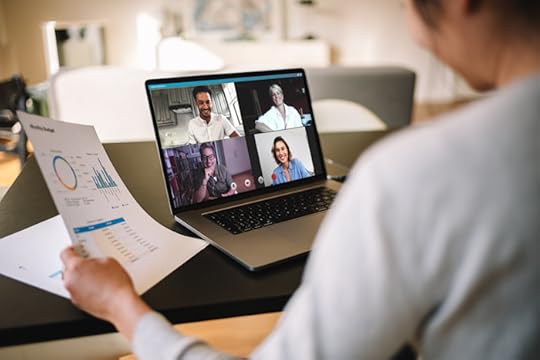
One of the most obvious recalibrations to date has been the office workplace. Work-from-home was not unheard of before 2020, but it was a relatively big deal for a company to give certain teams the opportunity to work from home 1-2 days a week. Now companies like MasterCard, Intuit, Shopify, Siemens, and others seem committed to a predominantly work-from-home arrangement for a majority of their people. This recalibration will continue long into the future.
Along with this, our priorities change. Stemming from the work-from-home transition, we’re seeing a shift in personal priorities. Lives won’t be organized around work – it will be quite the opposite with work taking a second seat to personal commitments and pleasure. As this happens, people begin to realize they are more than just the sum total of their job, position, and title. Over time, this will lead to a deeper sense of purpose in other areas.
From a management standpoint, companies are now focused on outcomes. By focusing on outcomes, employers help people make time count, instead of simply counting time. That type of trust and empowerment actually makes staffers far more productive.
Also on the workplace front, we’ll see less corporate travel. We’ve learned we can be efficient and effective with virtual meetings. Even if employees go back to the office, they’ll continue to connect with out-of-town clients and customers virtually rather than face-to-face.
However, conferences and off-site retreats, for the most part, will resume and take place in person because none of us ever got used to day-long virtual sessions or online happy hours this year. The overall decline in business travel will be a long-term recalibration, much to the chagrin of the airline and hospitality industries.
Last, consider the recent, rapid decline of the oil and gas industry due to dramatic worldwide declines in demand. Yes, we were already moving steadily toward battery-powered cars and alternative energy sources, but this trend has significantly accelerated due to the cascading events of 2020. As a result, the worldwide economic collapse triggered global oil and gas industry retrenchments. As an industry, it clearly sees the handwriting on the wall with the end date of its energy reign looming in the distance. This recalibration will continue over the coming years.
Finally, we’ll put a greater emphasis on health and wellness, both from a personal and employer perspective. Flu and cold season will now be flu, cold, and COVID season as new variants of these viruses appear and reappear every year. Masks will become a fashion industry standard, and far more common during the Fall and Winter months. Family leave policies will be more liberal and generous, especially if companies want to keep mothers in their workforce. This will be a long-term recalibration.
Let’s Get on With It
So yes, let’s all get on with life as soon as we can in 2021, not fixated on going back to the way we were, but looking to the future with a clean slate and a desire to be and do things better. And those of us working as futurists can once again refocus on the future future and emerging technology trends like AI, robots, and flying drones!
Here’s to a successful and healthy year ahead!
Translate This Page
Select LanguageAfrikaansAlbanianAmharicArabicArmenianAzerbaijaniBasqueBelarusianBengaliBosnianBulgarianCatalanCebuanoChichewaChinese (Simplified)Chinese (Traditional)CorsicanCroatianCzechDanishDutchEnglishEsperantoEstonianFilipinoFinnishFrenchFrisianGalicianGeorgianGermanGreekGujaratiHaitian CreoleHausaHawaiianHebrewHindiHmongHungarianIcelandicIgboIndonesianIrishItalianJapaneseJavaneseKannadaKazakhKhmerKoreanKurdish (Kurmanji)KyrgyzLaoLatinLatvianLithuanianLuxembourgishMacedonianMalagasyMalayMalayalamMalteseMaoriMarathiMongolianMyanmar (Burmese)NepaliNorwegianPashtoPersianPolishPortuguesePunjabiRomanianRussianSamoanScottish GaelicSerbianSesothoShonaSindhiSinhalaSlovakSlovenianSomaliSpanishSudaneseSwahiliSwedishTajikTamilTeluguThaiTurkishUkrainianUrduUzbekVietnameseWelshXhosaYiddishYorubaZulu
#goog-gt-tt {display:none !important;}
.goog-te-banner-frame {display:none !important;}
.goog-te-menu-value:hover {text-decoration:none !important;}
.goog-text-highlight {background-color:transparent !important;box-shadow:none !important;}
body {top:0 !important;}
#google_translate_element2 {display:none!important;}
function googleTranslateElementInit2() {new google.translate.TranslateElement({pageLanguage: 'en',autoDisplay: false}, 'google_translate_element2');}
function GTranslateGetCurrentLang() {var keyValue = document['cookie'].match('(^|;) ?googtrans=([^;]*)(;|$)');return keyValue ? keyValue[2].split('/')[2] : null;}
function GTranslateFireEvent(element,event){try{if(document.createEventObject){var evt=document.createEventObject();element.fireEvent('on'+event,evt)}else{var evt=document.createEvent('HTMLEvents');evt.initEvent(event,true,true);element.dispatchEvent(evt)}}catch(e){}}
function doGTranslate(lang_pair){if(lang_pair.value)lang_pair=lang_pair.value;if(lang_pair=='')return;var lang=lang_pair.split('|')[1];if(GTranslateGetCurrentLang() == null && lang == lang_pair.split('|')[0])return;var teCombo;var sel=document.getElementsByTagName('select');for(var i=0;i<sel.length;i++)if(/goog-te-combo/.test(sel[i].className)){teCombo=sel[i];break;}if(document.getElementById('google_translate_element2')==null||document.getElementById('google_translate_element2').innerHTML.length==0||teCombo.length==0||teCombo.innerHTML.length==0){setTimeout(function(){doGTranslate(lang_pair)},500)}else{teCombo.value=lang;GTranslateFireEvent(teCombo,'change');GTranslateFireEvent(teCombo,'change')}}
Search for:
Recent Posts
2021 will be the Year of Recalibration!
Creating the Every-Human Database and the God Globe
Ten History-Altering Breakthroughs in 2020
Categories
Artificial Intelligence
Business Trends
Future of Agriculture
Future of Banking
Future of Education
Future of Healthcare
Future of Transportation
Future of Work
Future Scenarios
Future Trends
Futurist Thomas Frey Insights
Global Trends
Predictions
Social Trends
Technology Trends
Speaking TopicsFuture of Healthcare – “Is Death our only Option?
Future of AI
Future of Industries
The post 2021 will be the Year of Recalibration! appeared first on Futurist Speaker.
December 23, 2020
Creating the Every-Human Database and the God Globe

I recently read an article in which the author concluded that Facebook knows as much or more about many of the people who are not on Facebook as those that are. In fact, Facebook’s ability to track the online activity of non-Facebook Internet users has been under scrutiny for several years.
This made me wonder if Facebook was in a position to develop a database of every person on earth – or at least those connected, however minimally, to the Internet. It seems possible, but if it’s not Facebook, it’s inevitable that someone else will. That raises a lot of questions and hypotheticals about how that information might be used for better or worse.
Tracking population numbers
Who’s living and who isn’t? When someone dies or is born, the Every-Human Database will pick up on that posted news and adjust the numbers accordingly. What about the people that aren’t connected? Smart algorithms will be more than capable of augmenting the reported data with a very accurate estimate of the number and likely location of disconnected people – if not their actual names.
The Whole Earth Genealogy Project
I explored this genealogy concept a few years back, and it seems more on track than ever as we discuss the Every-Human Database.
To date, genealogies and family trees have been informed mostly by written records: census information, immigration documentation, birth records, etc. Let’s augment those with social media-based biographical information as well as the personal DNA information that more and more people are willingly giving up on sites like Ancestry and My Heritage.
Think about it. We can combine official records, the familial relationships we volunteer on social media, and DNA records to create an incredibly robust database of family trees – or even one humanity tree!
Imagine knowing how everyone is related if we just go back far enough in time. This genealogy element of the Every-Human Database would be extremely valuable for tracking hereditary diseases, for example, as well as discovering black sheep in your family history. I know I would get lost in that kind of program for hours.
Biometric recognition
As we cede more and more personal privacy for the possible better, there’s one more area that comes into play: Personal recognizance.
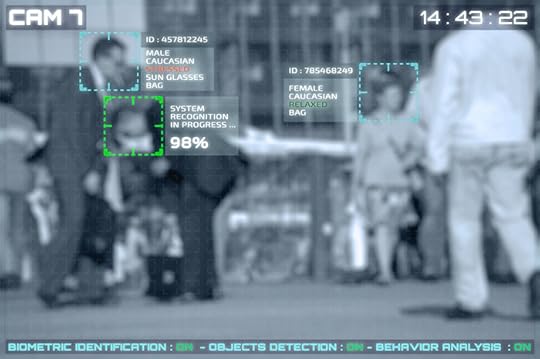
Fingerprints. Voices. DNA. Retinas. We’ve come a long way in our ability to definitively identify a person. I predict at least one future addition to that list: Heat signatures. Just like a rocket or a missile can be identified by its vapor trail, I believe we all have unique heat signatures or auras that travel with us.
But this biometric recognition technique would be very different from the others in that it wouldn’t necessarily require physical contact or extremely close physical proximity. Thus, not only could it be used to positively identify us, but it could also be used to remotely track us. Carry this through to the logical futuristic extreme, and I wonder how long will it be before people can be tracked from satellites?
Sound far-fetched? Consider that Google Earth can capture a reasonable picture of an item ½ meter large. And if that technology is available for commercial use, imagine what’s being employed by military and intelligence organizations.
It’s all the more information for our Every-Human Database!
Creating the “God Globe”
There’s another futuristic vision I’ve been cultivating for a while and it’s an extension of the Every-Human Database. This mega-computer, or “God Globe” would include all of that human being information we’ve covered so far as well as data from all other sources, such as medical research, satellite imagery, news outlets, the Internet of Things, and so, so, so much more. Then we add an interventional element.
Call it a master console or a command center. I see this God Globe as a force programmed to preserve our world – predicting and solving problems before they occur. Pointing out solutions to emerging challenges. Identifying evil before it’s manifest.
Since I’m a sci-fi fan, I tend to picture the God Globe as a giant, spherical, suspended display with muted lights pulsing and flashing. Along with just a slight hum. This mega-brain is continually exploring the world’s data looking for trends and anomalies. It uses its power only for good, to solve problems before they occur. Until it’s co-opted by a dark force of course!

The Future is nearer than you think
If you still have doubts about the universality and sheer magnitude of data – personal and otherwise – that’s available for use or abuse, consider these facts from this impressive compilation from the software company TechJury:
Google gets over 3.5 billion searches daily
WhatsApp users exchange up to 65 billion messages daily
80-90% of the data we generate today is unstructured
In 2020, there was only around 40 trillion gigabytes of data (40 zettabytes)
2012, only 0.5% of all data was analyzed
Internet users generate about 2.5 quintillion bytes of data each day
In 2019, internet users spent 1.2 billion years online
Social media accounts for 33% of the total time spent online
In 2019, there were 2.3 billion active Facebook users
Twitter users send over half a million tweets every minute
By 2020, every person generated 1.7 megabytes a second
The number of IoT devices could rise to 41.6 billion by 2025
Closing
Don’t get me wrong. I’m not an advocate for intrusive invasion of personal space and access of private information. It’s just that we’re already on that path – we’re volunteering most of what makes up Big Data just by agreeing to connect to the Internet – actively or passively. All of that information WILL be collected. So maybe we need to get ahead of this trend and make sure the information is used for good, not evil. And not just for marketing.
Translate This Page
Select LanguageAfrikaansAlbanianAmharicArabicArmenianAzerbaijaniBasqueBelarusianBengaliBosnianBulgarianCatalanCebuanoChichewaChinese (Simplified)Chinese (Traditional)CorsicanCroatianCzechDanishDutchEnglishEsperantoEstonianFilipinoFinnishFrenchFrisianGalicianGeorgianGermanGreekGujaratiHaitian CreoleHausaHawaiianHebrewHindiHmongHungarianIcelandicIgboIndonesianIrishItalianJapaneseJavaneseKannadaKazakhKhmerKoreanKurdish (Kurmanji)KyrgyzLaoLatinLatvianLithuanianLuxembourgishMacedonianMalagasyMalayMalayalamMalteseMaoriMarathiMongolianMyanmar (Burmese)NepaliNorwegianPashtoPersianPolishPortuguesePunjabiRomanianRussianSamoanScottish GaelicSerbianSesothoShonaSindhiSinhalaSlovakSlovenianSomaliSpanishSudaneseSwahiliSwedishTajikTamilTeluguThaiTurkishUkrainianUrduUzbekVietnameseWelshXhosaYiddishYorubaZulu
#goog-gt-tt {display:none !important;}
.goog-te-banner-frame {display:none !important;}
.goog-te-menu-value:hover {text-decoration:none !important;}
.goog-text-highlight {background-color:transparent !important;box-shadow:none !important;}
body {top:0 !important;}
#google_translate_element2 {display:none!important;}
function googleTranslateElementInit2() {new google.translate.TranslateElement({pageLanguage: 'en',autoDisplay: false}, 'google_translate_element2');}
function GTranslateGetCurrentLang() {var keyValue = document['cookie'].match('(^|;) ?googtrans=([^;]*)(;|$)');return keyValue ? keyValue[2].split('/')[2] : null;}
function GTranslateFireEvent(element,event){try{if(document.createEventObject){var evt=document.createEventObject();element.fireEvent('on'+event,evt)}else{var evt=document.createEvent('HTMLEvents');evt.initEvent(event,true,true);element.dispatchEvent(evt)}}catch(e){}}
function doGTranslate(lang_pair){if(lang_pair.value)lang_pair=lang_pair.value;if(lang_pair=='')return;var lang=lang_pair.split('|')[1];if(GTranslateGetCurrentLang() == null && lang == lang_pair.split('|')[0])return;var teCombo;var sel=document.getElementsByTagName('select');for(var i=0;i<sel.length;i++)if(/goog-te-combo/.test(sel[i].className)){teCombo=sel[i];break;}if(document.getElementById('google_translate_element2')==null||document.getElementById('google_translate_element2').innerHTML.length==0||teCombo.length==0||teCombo.innerHTML.length==0){setTimeout(function(){doGTranslate(lang_pair)},500)}else{teCombo.value=lang;GTranslateFireEvent(teCombo,'change');GTranslateFireEvent(teCombo,'change')}}
Search for:
Recent Posts
Creating the Every-Human Database and the God Globe
Ten History-Altering Breakthroughs in 2020
Cultured Meats May be the Key to Pandemic-Proofing Our Future
Categories
Artificial Intelligence
Business Trends
Future of Agriculture
Future of Banking
Future of Education
Future of Healthcare
Future of Transportation
Future of Work
Future Scenarios
Future Trends
Futurist Thomas Frey Insights
Global Trends
Predictions
Social Trends
Technology Trends
Speaking TopicsFuture of Healthcare – “Is Death our only Option?
Future of AI
Future of Industries
The post Creating the Every-Human Database and the God Globe appeared first on Futurist Speaker.
December 17, 2020
Ten History-Altering Breakthroughs in 2020

In 2020, every day is a blur. We roll out of bed, grab a cup of coffee, try to make sure we’re presentable from the waist up, and check the schedule for our first Zoom call. And then we realize it’s Saturday.
Similar to our days, truth is a blur. The truth from China Daily, BBC, or Al Jazeera is seldom the same as the truth from NBC, The Times of India, Reuters, The Financial Times, The Wall Street Journal, Kyodo News, or Newsweek.
Often while presenting conflicting data, rival camps continue to argue about truth to the point that a growing number of people have stopped watching and reading the news and perusing social media altogether.
That’s unfortunate. Because while we’ve been preoccupied or looking the other way, quietly and below the radar, some significant, potentially history-altering breakthroughs and developments occurred in 2020. Here are ten accomplishments and trends that caught my eye this year … when I wasn’t completely distracted.
1. Scientists created the world’s first room-temperature superconductive material
Superconductivity supports technologies ranging from healthcare to transportation. Superconductive materials will be critical in dramatically improving the efficiency of electricity transmission. One of the challenges, though, is that the materials used to-date only maintain their characteristics in an environment of -140 degrees Celsius. This year, scientists at the University of Rochester produced a superconductive material that functions at room temperature. There’s one catch, though. The room-temperature material was only superconductive at extremely high pressure: 39 million pounds per square inch. One challenge solved, one more to go.
2. Scientists reversed the human aging process at the cellular level
United Nations data indicates that worldwide life expectancy continues to inch up, but the rate of increase is declining. In a promising development, though, when Scientists at Tel Aviv University exposed elderly volunteers to pure oxygen in high-pressure chambers, they produced two kinds of cellular changes that could slow the aging process. First, the exposure restored the length and structure of chromosomes. Second, it reduced the number of senescent cells that preclude the regeneration of normal cells.
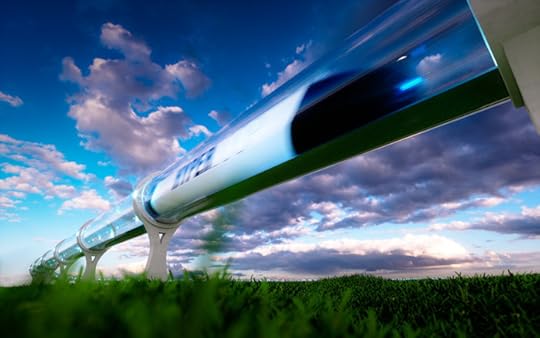
3. Hyper-Tube train transport exceeded 1,000 km/hr speeds
Today’s jet aircraft typically travel at around 1,000 km/hr. A South Korean research institute recently reached that speed with their 1:17 scale rail transportation model, which relies on tube travel in a near-zero pressure vacuum. They hope to be doing full scale tests in 2022 with deployment in 2024. Elon Musk’s Hyperloop is expected to achieve similar or faster speeds.
4. Lab-grown meat was approved for consumption and sale
Since cattle farms account for 27% of human-based methane emissions, researchers are hoping that cultured meat can make a major dent in reducing environmental damage. Recently, cultured chicken meat grown from biopsied cells and nurtured in nutrients in the confines of a bioreactor, was approved for sale and consumption by the Singapore Food Agency. The U.S. based company that produced the product, which is mixed with a plant-based meat substitute, is one of many firms around the world with similar emerging products.
5. A synthetic “DNA disc” for data storage could be on the horizon
This one is not a breakthrough, yet, but it’s exciting and amazing nonetheless. The European Commission is financing a project with a French research lab to develop a synthetic DNA disc for data storage. One gram of DNA is capable of holding 455 exabytes of information – an amount not much less that the volume of data that will be generated daily worldwide in just a few years. The lab expects to develop proof of concept within three years.
6. Robo-taxis are on the streets
A Chinese company has introduced its fully driverless fleet of robo-taxis. Their 25 modified Fiat Chrysler minivans have been approved by the city of Shenzhen to operate there with no locational restrictions and no requirements for a backup driver or remote control.
7. China joined the U.S. in the “quantum supremacy” club
Since quantum computers can perform more tasks simultaneously than traditional supercomputers, quantum supremacy is achieved when a quantum computer performs a task that can’t be reasonably replicated by a supercomputer. China researchers recently announced their quantum computer had performed a task in 200 seconds that would have taken a supercomputer 2.5 billion years. Google was the first member of the quantum supremacy club last year when its quantum computer performed a task in 200 seconds that would have taken 10,000 years with a traditional computer.
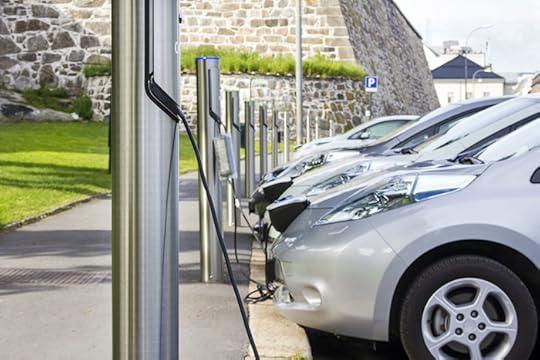
8. Sales of electric cars in China exceeded sales of traditional cars
According to the Chinese Association of Automobile Manufacturers, the combined sales of battery electric, plug-in hybrid, and fuel cell electric cars has outpaced the sale of other vehicles in that country. The electric car sales were led by Chinese carmaker BYD, followed by those from a joint venture with GM and SAIC.
9. South Korea is planning for drone human transport traffic
Forget about robo-taxi automobiles, how about taxi drones? Given the recent demonstration in South Korea of an unmanned taxi drone produced by a Chinese company, South Korea is developing an air traffic control system to manage passenger and freight delivery drones. The Chinese taxi drone that was unveiled can carry 485 pounds and travel at 80 miles per hour.
10. The future of air travel is electric
And along those same lines, electric unmanned aerial vehicles (UAVs) now outnumber electric cars in the U.S. They’re typically used for mapping, photography, and public safety, but as battery technology progresses, electric manned air travel will continue to evolve, as demonstrated by the preceding story.
What should all of this tell us? For one thing, in spite of the day-to-day challenges we face, science and scientists are marching on for the betterment of mankind and our individual lives. Our future is bright, and it will continue to become brighter. Let’s all try to keep that in mind!
Translate This Page
Select LanguageAfrikaansAlbanianAmharicArabicArmenianAzerbaijaniBasqueBelarusianBengaliBosnianBulgarianCatalanCebuanoChichewaChinese (Simplified)Chinese (Traditional)CorsicanCroatianCzechDanishDutchEnglishEsperantoEstonianFilipinoFinnishFrenchFrisianGalicianGeorgianGermanGreekGujaratiHaitian CreoleHausaHawaiianHebrewHindiHmongHungarianIcelandicIgboIndonesianIrishItalianJapaneseJavaneseKannadaKazakhKhmerKoreanKurdish (Kurmanji)KyrgyzLaoLatinLatvianLithuanianLuxembourgishMacedonianMalagasyMalayMalayalamMalteseMaoriMarathiMongolianMyanmar (Burmese)NepaliNorwegianPashtoPersianPolishPortuguesePunjabiRomanianRussianSamoanScottish GaelicSerbianSesothoShonaSindhiSinhalaSlovakSlovenianSomaliSpanishSudaneseSwahiliSwedishTajikTamilTeluguThaiTurkishUkrainianUrduUzbekVietnameseWelshXhosaYiddishYorubaZulu
#goog-gt-tt {display:none !important;}
.goog-te-banner-frame {display:none !important;}
.goog-te-menu-value:hover {text-decoration:none !important;}
.goog-text-highlight {background-color:transparent !important;box-shadow:none !important;}
body {top:0 !important;}
#google_translate_element2 {display:none!important;}
function googleTranslateElementInit2() {new google.translate.TranslateElement({pageLanguage: 'en',autoDisplay: false}, 'google_translate_element2');}
function GTranslateGetCurrentLang() {var keyValue = document['cookie'].match('(^|;) ?googtrans=([^;]*)(;|$)');return keyValue ? keyValue[2].split('/')[2] : null;}
function GTranslateFireEvent(element,event){try{if(document.createEventObject){var evt=document.createEventObject();element.fireEvent('on'+event,evt)}else{var evt=document.createEvent('HTMLEvents');evt.initEvent(event,true,true);element.dispatchEvent(evt)}}catch(e){}}
function doGTranslate(lang_pair){if(lang_pair.value)lang_pair=lang_pair.value;if(lang_pair=='')return;var lang=lang_pair.split('|')[1];if(GTranslateGetCurrentLang() == null && lang == lang_pair.split('|')[0])return;var teCombo;var sel=document.getElementsByTagName('select');for(var i=0;i<sel.length;i++)if(/goog-te-combo/.test(sel[i].className)){teCombo=sel[i];break;}if(document.getElementById('google_translate_element2')==null||document.getElementById('google_translate_element2').innerHTML.length==0||teCombo.length==0||teCombo.innerHTML.length==0){setTimeout(function(){doGTranslate(lang_pair)},500)}else{teCombo.value=lang;GTranslateFireEvent(teCombo,'change');GTranslateFireEvent(teCombo,'change')}}
Search for:
Recent Posts
Ten History-Altering Breakthroughs in 2020
Cultured Meats May be the Key to Pandemic-Proofing Our Future
Elon Musk on Track to become the World’s First Trillionaire
Categories
Artificial Intelligence
Business Trends
Future of Agriculture
Future of Banking
Future of Education
Future of Healthcare
Future of Transportation
Future of Work
Future Scenarios
Future Trends
Futurist Thomas Frey Insights
Global Trends
Predictions
Social Trends
Technology Trends
Speaking TopicsFuture of Healthcare – “Is Death our only Option?
Future of AI
Future of Industries
The post Ten History-Altering Breakthroughs in 2020 appeared first on Futurist Speaker.
December 9, 2020
Cultured Meats May be the Key to Pandemic-Proofing Our Future
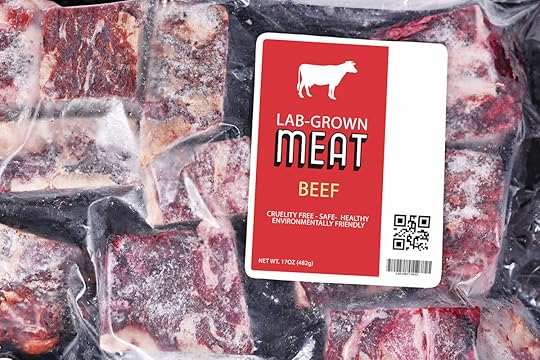
In 2017, I wrote a column titled “The Coming Meat Wars – 17 Mind-Blowing Predictions.” My second prediction on the list was that cultured meats would be available in grocery stores by 2020.
That’s about to happen. Cultured chicken, in the form of nuggets, will soon be available in a Singapore restaurant after the meat product passed a safety review by the Singapore Food Agency. The U.S. company that’s producing it is called Eat Just, Inc. and their product is called GOOD Meat. Similar pioneering work is being done by this company and others to grow fish, beef, and other meat products.
What is Cultured Meat?
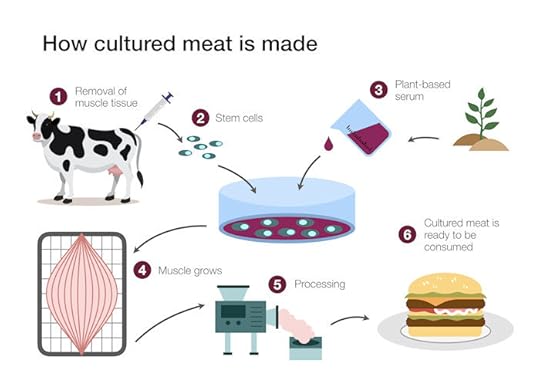
Not to be confused with plant-based meat substitutes, cultured meat is grown from cells obtained via biopsies from live animals. The cells are immersed in plant-based nutrients so they can grow in a fashion similar to the way animals put on weight, but in the confines of a bioreactor.
These cells multiply very quickly until the specimen has grown sufficiently, to a point where they can be harvested, and eventually find a place on our dinner-tables.
I should point out that growing cultured meat is actually faster than growing a cow, pig, or chicken.
Cultured meat production relies on the same science and technology that’s being studied for restoring or replacing human cells or even organs in the world of regenerative medicine.
Benefits of Cultured Meats
Current cultured meat technology and its production processes are still rather pricey and they’re not sufficiently scalable to make a dent in our consumption of traditional, slaughtered meat just yet. But that day may not be as far off as many people think.
A Dutch company, Mosa Meat, led by famed researcher Mark Post and his team of food scientists, is making impressive strides in using a newer, less expensive form of growth factors in making its cultured beef products. The company believes they can achieve “price parity” with traditional meat by 2026.
The potential benefits of cultured meat are huge. First and foremost, there’s the reduction in greenhouse gasses. Enteric fermentation – yes, you know what I mean – within farm animals (especially cows) accounts for 27% of the human-based methane emissions into the environment – a total of 90 million metric tons each year. Also, most industrial-sized cattle farmland can be converted to crops.
Meat cells, grown in this fashion, are essentially purified to deliver a healthier meat product with fewer of the additives or residual steroids and hormones found in slaughterhouse animals. And if the squalor of an animal’s life on the farm, or the thought of killing animals for food is a concern, those elements are, for the most part, eliminated as well.
Cultured Meat as a Pandemic Preventer
So far, most industry observers aren’t picking up on one additional benefit that really jumped out at me recently. As we search for ways to pandemic-proof our world, we need to clean up the world’s meat supply.
Nipah, HIV/AIDS, SARS, MERS, Ebola, Zika, and now COVID-19 … it’s very likely that each of these was caused initially by animal-to-human contact and ingestion. These situations are often traced to bats, but also to other animals. Pigs or camels can also serve as a middle mammal in the transference to humans. We can only hope that those people who choose to eat these exotic meat products will be just as eager to “experiment” with cultured meat.
With regard to controlling our exposure to threats from the meat supply, we have four basic options:
Prohibit the sale of raw meat that hasn’t been irradiated, cleansed with UV lighting, or undergone similar measures.
Transition to cultured meats.
Transition to plant-based meat substitutes.
Stop eating meat altogether.
Cultured Meat is Here to Stay
It’s just in its infancy now, but I predict that cultured meat will become a dynamic new
industry over the coming decade. Just ask Bill Gates, Richard Branson, and Tyson
Foods, who are investors in the cultured meat company Memphis Meats, which seems
to prefer the term, “cell-based meat” which it “harvests from cells instead of animals.”
Another positive sign that the cultured meat industry is in it for the long haul is the
formation last year of their Washington, DC-based lobbying group, the Alliance for Meat,
Poultry, and Seafood Innovation. Their advocates will spend time dealing with federal
regulators – especially the FDA and the USDA who oversee the cultured meat process
and the finished product side of things respectively. Presumably, these lobbyists will
also pitch the pandemic prevention angle.
Similar Future Innovations
It’ll be interesting to see how many of my other similar 2017 predictions will come true.
For example:
The same process for growing meats will be used to grow ‘mother’s milk’ for children and ‘human blood’ to give us an inexhaustible supply of clean blood.
Cultured blood will cause today’s blood bank industry to disappear. Cultured baby’s blood, or ‘young blood’ with its anti-aging properties, will pave the way for a variety of “cultured” anti-aging products.
Early uses of these cultured product-technologies will be to grow non-edible materials, like leathers, for the creation of designer purses, belts, gloves, and other accessories.
Rather than competing head to head with the existing industry, there is a golden opportunity to open up new markets with unusual meats like wombat meat, penguin meat, or bumblebee meat.
Over time we will even develop cultured meats from extinct animal species like saber tooth tigers, woolly mammoths, and dodo birds. There will be a certain mystique to eating the meat of animals that no longer exist.
Before long we will see cultured hair cells to regrow our hair and cultured skin cells to remove our wrinkles. The fountain of youth will be springing to life in a way we never anticipated.
I’m scanning the media every day to find good news to report on these fronts as well!
For most people the answer centers around two key questions. How does it taste, and how much does it cost?
Will there be cultured meats in your future?
Translate This Page
Select LanguageAfrikaansAlbanianAmharicArabicArmenianAzerbaijaniBasqueBelarusianBengaliBosnianBulgarianCatalanCebuanoChichewaChinese (Simplified)Chinese (Traditional)CorsicanCroatianCzechDanishDutchEnglishEsperantoEstonianFilipinoFinnishFrenchFrisianGalicianGeorgianGermanGreekGujaratiHaitian CreoleHausaHawaiianHebrewHindiHmongHungarianIcelandicIgboIndonesianIrishItalianJapaneseJavaneseKannadaKazakhKhmerKoreanKurdish (Kurmanji)KyrgyzLaoLatinLatvianLithuanianLuxembourgishMacedonianMalagasyMalayMalayalamMalteseMaoriMarathiMongolianMyanmar (Burmese)NepaliNorwegianPashtoPersianPolishPortuguesePunjabiRomanianRussianSamoanScottish GaelicSerbianSesothoShonaSindhiSinhalaSlovakSlovenianSomaliSpanishSudaneseSwahiliSwedishTajikTamilTeluguThaiTurkishUkrainianUrduUzbekVietnameseWelshXhosaYiddishYorubaZulu
#goog-gt-tt {display:none !important;}
.goog-te-banner-frame {display:none !important;}
.goog-te-menu-value:hover {text-decoration:none !important;}
.goog-text-highlight {background-color:transparent !important;box-shadow:none !important;}
body {top:0 !important;}
#google_translate_element2 {display:none!important;}
function googleTranslateElementInit2() {new google.translate.TranslateElement({pageLanguage: 'en',autoDisplay: false}, 'google_translate_element2');}
function GTranslateGetCurrentLang() {var keyValue = document['cookie'].match('(^|;) ?googtrans=([^;]*)(;|$)');return keyValue ? keyValue[2].split('/')[2] : null;}
function GTranslateFireEvent(element,event){try{if(document.createEventObject){var evt=document.createEventObject();element.fireEvent('on'+event,evt)}else{var evt=document.createEvent('HTMLEvents');evt.initEvent(event,true,true);element.dispatchEvent(evt)}}catch(e){}}
function doGTranslate(lang_pair){if(lang_pair.value)lang_pair=lang_pair.value;if(lang_pair=='')return;var lang=lang_pair.split('|')[1];if(GTranslateGetCurrentLang() == null && lang == lang_pair.split('|')[0])return;var teCombo;var sel=document.getElementsByTagName('select');for(var i=0;i<sel.length;i++)if(/goog-te-combo/.test(sel[i].className)){teCombo=sel[i];break;}if(document.getElementById('google_translate_element2')==null||document.getElementById('google_translate_element2').innerHTML.length==0||teCombo.length==0||teCombo.innerHTML.length==0){setTimeout(function(){doGTranslate(lang_pair)},500)}else{teCombo.value=lang;GTranslateFireEvent(teCombo,'change');GTranslateFireEvent(teCombo,'change')}}
Search for:
Recent Posts
Cultured Meats May be the Key to Pandemic-Proofing Our Future
Elon Musk on Track to become the World’s First Trillionaire
Our Future is being formed around one simple question, “what’s missing?”
Categories
Artificial Intelligence
Business Trends
Future of Agriculture
Future of Banking
Future of Education
Future of Healthcare
Future of Transportation
Future of Work
Future Scenarios
Future Trends
Futurist Thomas Frey Insights
Global Trends
Predictions
Social Trends
Technology Trends
Speaking TopicsFuture of Healthcare – “Is Death our only Option?
Future of AI
Future of Industries
The post Cultured Meats May be the Key to Pandemic-Proofing Our Future appeared first on Futurist Speaker.
December 3, 2020
Elon Musk on Track to become the World’s First Trillionaire

In 2014, I wrote a column entitled, “What Industries will produce the First Trillionaires?” and over 40,000 people stopped by to read about the 18 possible industries that, at the time, seemed to be the most likely candidates.
Our perspective sure has changed over the last six years. At this point, it’s not so much
what industries will produce the first trillionaire, rather; who’s the greatest multitasking entrepreneur able to run the most businesses simultaneously?
Six years ago, it didn’t seem reasonable to expect that any one person would be able to run multiple billion-dollar enterprises across several industries simultaneously. At this point, though, I’d say that’s probably the only way to generate that kind of mega-wealth.
The Personal Wealth Contest
First things first. Who will be the first trillionaire? It’s turning into a competition between Elon Musk and Jeff Bezos.
As of the day of this writing, Jeff Bezos is in the lead – he’s the richest person in the world with $187 billion. Elon Musk blew past Bill Gates earlier this year to reach the #2 position and he now stands at $142 billion. Momentum seems to be on Elon Musk’s side given that he’s increased his wealth by $115 billion since the first of the year, compared to Jeff Bezos’ $72 billion.
For daily updates on this horse race be sure to bookmark the Bloomberg Billionaires
Index.
The Portfolios
From my perspective, I’m betting on Elon Musk, because he’s blazing new trails unlike anyone in all history. Let’s look at his portfolio:
Aerospace – SpaceX
Telecom – Starlink
Transportation – Tesla
Energy – Tesla Solar Roof
Liquor – Tesla Tequila
AI and implantable brain-machine interfaces – Creating the 10 second brain interface
Mass transit – Hyperloop and tunnel cars
Tunneling – The Boring Company
Microgrids – Powerpack Platform
Flamethrowers – A product of The Boring Company

Jeff Bezos’ holdings are perhaps even more impressive, and his business interests are very diverse. Here are a few of the companies he’s launched, purchased, and operating:
Retail – Amazon, Whole Foods, Zappos, Woot, Goodreads, Audible
Aerospace – Blue Origin
Smart Devices – Alexa
Video Streaming – Twitch
Robotics – Kiva Systems, Rethink Robotics
Publications – Business Insider, The Washington Post
Others – Souq, Quidsi, Elemental Tech, Annapurna Labs, IMDB
While Jeff Bezos’ primary focus, Amazon, seems zeroed in on gobbling up retail and
even pharmaceutical services, they don’t seem to have quite the explosive potential of Musk’s trailblazing companies.
Elon Musk has a crazy level of urgency surrounding every one of his projects. Virtually all of his leadership team is focused on pushing, pushing, pushing to make things happen in unreasonably short periods of time. In addition, his passion for “moonshots” involving entirely new industries seems to offer a greater upside and better prospects
for exponential payback and wealth.
Plus, I can’t help but pull for a visionary futurist entrepreneur like Musk who’s also a capitalist willing to invest in cutting edge ideas related to electric vehicles, space travel, solar power, and smart micro-grids to name just a few.
Everything he touches seems to have billion dollar potential. These include:
Tesla cars
I have no doubt that Tesla will continue to improve battery technology to allow for longer
automobile trips without recharging. At the same time, we can expect to see gains in all
aspects of electric vehicle technology and battery production to make the cars more
affordable. And as all of that evolves, the company will move into related markets,
making serious inroads into other vehicle segments like pickup trucks, semi-trucks,
microbuses, and micro-taxis.
SpaceX
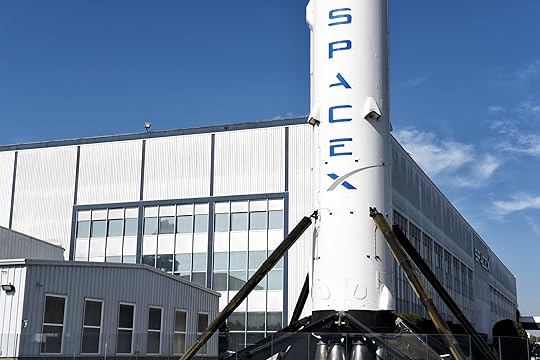
Now that SpaceX has proven the viability of its Starship transport system, that
technology will be further developed for more types of commercial use – retrieving and
delivering satellites for example in support of its Starlink Internet access service. Then
there’s space tourism – trips around the moon in the very near future and ultimately
delivering people to space hotels, the moon, and Mars for incredible experiences.
Starlink
Starlink is a satellite Internet constellation being constructed by SpaceX that is designed to provide Internet access all over the world. It will effectively be the world’s first global telecom company. While Amazon, Samsung, and others will be competing for this space, Starlink’s 12,000 satellites will be the first and most pervasive.
Tesla Solar Roof
Tesla Solar Roofs have been on the market since the first of this year, fulfilling Elon
Musk’s promise of an energy-generating roof that’s also attractive and durable. The
solar cells are embedded in the roof itself, rather than on mounted panels. They’re
pricey, but tax incentives can take away a little of the sting. I see this as another
example of a market-busting innovation that will come down in price as technology and
production processes improve. The company is partnering with Mississippi Power to
install Tesla Solar Roofs throughout a new housing community – work that will begin in
2021.
Tesla Microgrids
While still a bit under the radar, Tesla has already created over 120 operational microgrids around the world. Microgrids are small regional power grids, and in Tesla’s case, they’re being designed to merge Solar Roofs with Tesla’s Powerpack platforms, Powerwalls, and electric cars to form an entirely new ecosystem for power generation, that involves buying, selling, trading, storing, and distributing electricity throughout a community. Using bi-directional charging networks, power flows to where it’s needed, and stored efficiently when it’s not. They expect to have over 1,000 microgrids throughout the world very soon.
Neuralink
Neuralink Corporation is a neurotechnology company to develop implantable brain–machine interfaces. While the company has been aiming to make devices to treat serious brain diseases in the short-term, their eventual goal is to enhance the human mind, sometimes called transhumanism.
To be sure, we’re probably only scratching the surface of all the ventures Musk and Bezos has queued up in their heads, but the entire world will be paying close attention to all their tweets and press releases.
In less than a decade, will Elon Musk be the first trillionaire, and the richest person on earth? There’s a good chance he will. Then again, setbacks and economic and market conditions might wreak havoc with his innovations. But I certainly admire his courage and audacity as he continually strives to deliver giant leaps for mankind.
Translate This Page
Select LanguageAfrikaansAlbanianAmharicArabicArmenianAzerbaijaniBasqueBelarusianBengaliBosnianBulgarianCatalanCebuanoChichewaChinese (Simplified)Chinese (Traditional)CorsicanCroatianCzechDanishDutchEnglishEsperantoEstonianFilipinoFinnishFrenchFrisianGalicianGeorgianGermanGreekGujaratiHaitian CreoleHausaHawaiianHebrewHindiHmongHungarianIcelandicIgboIndonesianIrishItalianJapaneseJavaneseKannadaKazakhKhmerKoreanKurdish (Kurmanji)KyrgyzLaoLatinLatvianLithuanianLuxembourgishMacedonianMalagasyMalayMalayalamMalteseMaoriMarathiMongolianMyanmar (Burmese)NepaliNorwegianPashtoPersianPolishPortuguesePunjabiRomanianRussianSamoanScottish GaelicSerbianSesothoShonaSindhiSinhalaSlovakSlovenianSomaliSpanishSudaneseSwahiliSwedishTajikTamilTeluguThaiTurkishUkrainianUrduUzbekVietnameseWelshXhosaYiddishYorubaZulu
#goog-gt-tt {display:none !important;}
.goog-te-banner-frame {display:none !important;}
.goog-te-menu-value:hover {text-decoration:none !important;}
.goog-text-highlight {background-color:transparent !important;box-shadow:none !important;}
body {top:0 !important;}
#google_translate_element2 {display:none!important;}
Search for:
Recent Posts
Elon Musk on Track to become the World’s First Trillionaire
Our Future is being formed around one simple question, “what’s missing?”
Robotic Advances: COVID-Spurred and Otherwise
Categories
Artificial Intelligence
Business Trends
Future of Agriculture
Future of Banking
Future of Education
Future of Healthcare
Future of Transportation
Future of Work
Future Scenarios
Future Trends
Futurist Thomas Frey Insights
Global Trends
Predictions
Social Trends
Technology Trends
Speaking TopicsFuture of Healthcare – “Is Death our only Option?
Future of AI
Future of Industries
The post Elon Musk on Track to become the World’s First Trillionaire appeared first on Futurist Speaker.
November 25, 2020
Our Future is being formed around one simple question, “what’s missing?”

There’s nothing better than having a moment of brilliance that hits you and you think, ‘YES’!
In my world, we often spend time talking about epiphanies. That’s because every new product and business starts with an epiphany, so it’s in our best interest to create more epiphanies.
Taking that one step further, our future is being defined and created by epiphanies that happen inside the minds of cutting-edge startups, and many of these entrepreneurs start by asking one simple question, “what’s missing.”
Whenever we can identify one of these missing opportunities, we gain massive insights into the world ahead.
Have all the good invention ideas been taken? It seems like every week we hear about a cool new tool, product, or feature to enhance our everyday lives. The inventor in us says, “Oh man, I wish I’d thought of that!”
Is there anything left for us to contribute for the betterment of mankind? What problems are still unsolved? What life enhancements have we not thought of and addressed? “What’s missing?”
The short answer: A lot.
By combining a little imagination with some wishful thinking, it’s not hard to come up with a list of what’s missing in our lives. You know, the kinds of things that once we have them, we’ll wonder how we ever did without them. Such as:
1. Virtual friend/confidant
While we do have virtual sources of information, and we can ask an online avatar “What’s the weather look like for tomorrow?” or “Where’s the closest falafel restaurant?,” we still don’t have a trusted online soulmate who knows us well who can provide an objective and informed opinion on important life choices or a virtual friend who will understand and keep our deepest and darkest secrets.
2. A new model for home ownership
We seem to be stuck in a housing model where we’re either homeowners or home lessors. That means we’re confined to the inherent trade-off between permanence and transience, stability and uncertainty, asset growth and continued disbursements. Is there another way to deed or bestow home ownership – perhaps an earned model rather than a cash-based one?
3. Better-than-natural food
“Natural” is good but it’s one-size-fits-all. One way to improve our food supply might be to customize it to a person’s unique situation and needs – their metabolism, unique deficiencies, and even health goals. Adding or subtracting certain ingredients and components in an otherwise natural food product may make it less “natural,” but since nature has never been human-centric, maybe that’s not a bad thing.
4. Gig degrees or certifications
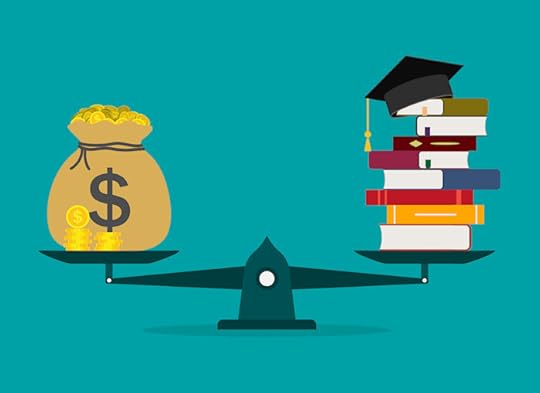
Most people working in a gig arrangement probably never graduated from college or high school with the goal of becoming a gig worker. And when they settle into that space, there’s a lot of learning on the fly – everything from writing contracts, to pricing services, negotiating deals, networking relationships, accounting, tax issues, and career planning. There should be a place to learn these skills and maybe even a certification to verify your achievement.
5. Movies in the round
It’s been a while since the latest movie theater innovations. Surround-sound and 3-D movies are so last decade. How about movies filmed and projected in a holographic format? With the action happening in the center of the 360-degree theater, every seat would offer a unique perspective on the film – and a strong incentive to see it more than once.
6. Downloadable personalities
Devices that talk to us lack personality. If you had the ability to create a new “personality,” with some new personality-builder software, what features would you want it to have? And what type of devices would you want to download it into? Adding a personality or two to a computer or robot is only one possibilities. But what if you could download personalities onto your refrigerator, your car, your bathroom mirror, or the front door of your house?
7. Arguing ShoesImagine an advertisement for a product called – Arguing Shoes: “Our research has shown that most children today think of their feet as an extension of their own personality, and a source of entertainment. For this reason we have created the world’s first talking shoes. But after extensive testing we found that just talking to their feet didn’t exactly excite kids. So we spent time designing shoes that not only talk, and carry on a conversation with each other, but also argue with each other. For whatever reason, kids just love watching shoes that are constantly arguing and bickering with each other. To make it even more interesting, our shoes not only argue with each other, we’ve designed them to pick a fight with any other shoes within earshot. This will create hilarious situations in shopping malls, movie theaters and schools, entertaining children everywhere!”
8. Food-casting sensors and transmitters
Over time, sensors embedded in our clothing or even under the skin will monitor food intake and its effect on our metabolism and start creating guidelines for our next meal. As we enter a restaurant, our food-caster will notify them of our dos and don’t to keep our diet on track. Order a double-cheeseburger and the transmitter will know to rewrite your online with a plant-based meat substitute instead!

9. Plant or animal communicator
With prototypes of natural language translators already in existence for humans, the next step will be technology that bridges the communication gap between humans, and plants and animals.
10. Gamified ethics and reward-based morality
In case doing the right thing for the sake of doing the right thing isn’t good enough, we could gamify our interaction with people and the world around us. Points for voting, donating, complementing, listening, and mentoring, for example, could be exchanged for discounts and products from participating vendors.
11. Trainable, mood-sensing music services
Let’s add an AI mood detection and cognitive task monitoring element to music streaming services. As a service it would not only learn our favorite genres and artists, but also detect our mood and state of mind to deliver the right selections to improve performance, or find a peaceful zen-way relax.
12. Gravity-suit-based sports
As technology evolves, jet-pack, gravity-defying, flying suits could add a third dimension to nearly any field-based sport, much like Quidditch in the Harry Potter series. For more inspiration check out Quidditch Through the Ages.
13. Global DNA animal library
Similar, in some respects, to the Svalbard Global Seed Vault in Norway, this library would preserve the actual DNA of all animals.
14. Perpetual self-filling canteen
In a world where people continually die from lack of hydration, one of the most-needed devices is a handheld canteen that is constantly extracting moisture from the air.
15. Billion-person genealogy project
The genealogical industry currently exists as a million fragmented efforts happening simultaneously. While the dominant players, like Ancestry.com, have multiple websites with hundreds of millions of genealogies, there is still a much bigger opportunity waiting to happen.
16. Global election
When will we see the first global election with over a billion people voting from over 100 different countries? Will they be voting for a person, or voting on an issue? If it’s a person, what position will that person be running for? And, if it’s an issue, what issue will be so compelling that everyone wants to vote on it?
17. Instant sleep
A workaholic’s dream. People who need to finish an important project, but are feeling exhausted, could simply walk into the instant-sleep chamber. Voila! In a few seconds they could walk back out, fully rejuvenated and raring to go. Is this possible?
18. Dream recorder
How often have you forgotten your dreams the next morning? Is it possible to create a “hit-play-to-record” device that would allow you to visually archive your dreams?
It’s easy to look around us and see what exists today, but the true visionaries are looking for what’s missing.
The voids and empty spaces around us will have people stampeding to fill these vacuums once they can be defined and understood.
People who blaze these new trails will create entire new industries, and the job-generating opportunities that go along with them.
I’m sure as you considered these possibilities, you probably saw what you believe are insurmountable challenges and Illogical leaps. But that’s where epiphanies come in. Emerging ideas are happening amidst a very fluid landscape and as technology changes, so does the outlook for “what’s missing?”
Best advice is to think incrementally, in stages. Figure out one challenge, then the
next, and pretty soon it all adds up to the Next Big Thing.
And voilà – one more item in our lives that’s not missing any more.
Translate This Page
Select LanguageAfrikaansAlbanianAmharicArabicArmenianAzerbaijaniBasqueBelarusianBengaliBosnianBulgarianCatalanCebuanoChichewaChinese (Simplified)Chinese (Traditional)CorsicanCroatianCzechDanishDutchEnglishEsperantoEstonianFilipinoFinnishFrenchFrisianGalicianGeorgianGermanGreekGujaratiHaitian CreoleHausaHawaiianHebrewHindiHmongHungarianIcelandicIgboIndonesianIrishItalianJapaneseJavaneseKannadaKazakhKhmerKoreanKurdish (Kurmanji)KyrgyzLaoLatinLatvianLithuanianLuxembourgishMacedonianMalagasyMalayMalayalamMalteseMaoriMarathiMongolianMyanmar (Burmese)NepaliNorwegianPashtoPersianPolishPortuguesePunjabiRomanianRussianSamoanScottish GaelicSerbianSesothoShonaSindhiSinhalaSlovakSlovenianSomaliSpanishSudaneseSwahiliSwedishTajikTamilTeluguThaiTurkishUkrainianUrduUzbekVietnameseWelshXhosaYiddishYorubaZulu
#goog-gt-tt {display:none !important;}
.goog-te-banner-frame {display:none !important;}
.goog-te-menu-value:hover {text-decoration:none !important;}
.goog-text-highlight {background-color:transparent !important;box-shadow:none !important;}
body {top:0 !important;}
#google_translate_element2 {display:none!important;}
Search for:
Recent Posts
Our Future is being formed around one simple question, “what’s missing?”
Robotic Advances: COVID-Spurred and Otherwise
Building a More Valuable Human
Categories
Artificial Intelligence
Business Trends
Future of Agriculture
Future of Banking
Future of Education
Future of Healthcare
Future of Transportation
Future of Work
Future Scenarios
Future Trends
Futurist Thomas Frey Insights
Global Trends
Predictions
Social Trends
Technology Trends
Speaking TopicsFuture of Healthcare – “Is Death our only Option?
Future of AI
Future of Industries
By Futurist Thomas Frey, author of 'Epiphany Z – 8 Radical Visions Transforming Your Future'
The post Our Future is being formed around one simple question, “what’s missing?” appeared first on Futurist Speaker.
November 19, 2020
Robotic Advances: COVID-Spurred and Otherwise
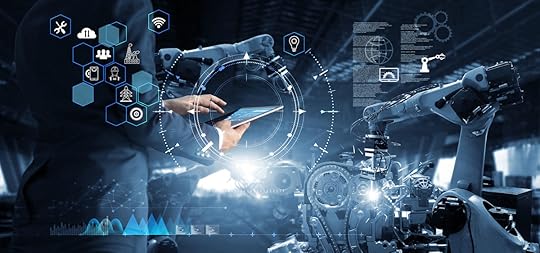
It’s not surprising that the COVID pandemic has gotten us all thinking about technology that can take the human element out of day-to-day “personal” interactions. There have been some very interesting, new adaptations of existing Artificial Intelligence (AI) technologies, not the least of which is the introduction of robotic baristas and bartenders
There’s even robotic COVID testing. No thanks on that one for me, by the way. It already feels like that swab is going somewhere no human should ever venture. But if robots can be used in heart surgery, I suppose we can trust them with nasal swabs.
Cobots (collaborative robots, designed to perform functions alongside human beings) are supporting the COVID fight in other ways too – like decontaminating healthcare and travel facilities and performing temperature screenings. They’re also taking on more roles on factory floors, allowing for fewer workers in close proximity.
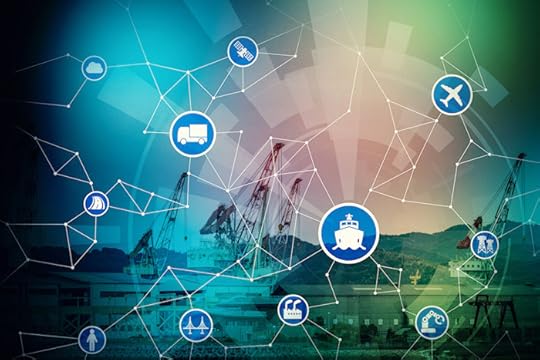
Another fascinating area of AI that’s evolving throughout this period is autonomous (i.e. driverless) transportation and shipping in all of its manifestations – land, rail, air, and sea. As we’ll see below, in some cases these advances can be attributed to COVID-driven applications. In other cases, they’re a continuation of the steady progress that’s been underway for many years.
One if by road
Demand for ride-hailing services plummeted during the pandemic, with Uber and Lyft ridership down between 70% and 80% this past summer. After all, these services still can’t remove the human element of sharing proximity with a driver whose hygiene and health are unknowns. No doubt that was an impetus for Uber’s exploration of autonomous driving through its Advanced Technology Group. But given its dire financial situation, it’s not surprising that Uber reportedly plans to sell that division.
Has COVID in fact spurred the technology related to autonomous road vehicles? It’s hard to make that case. The time horizon, if anything, continues to push further out.
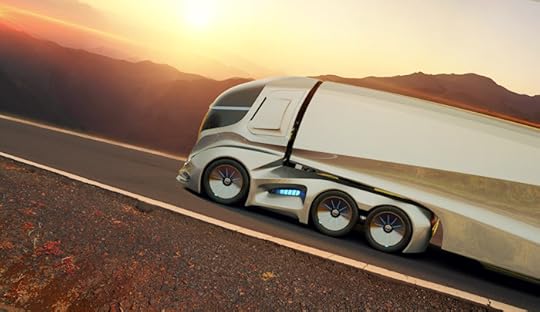
Experts optimistically say we’ll see the earliest commercial use of autonomous trucks in 2021.
Interestingly, autonomous cars seem to be a bit further off, with testing likely to continue for the next couple of years.
Two if by rail
Autonomous rail transportation systems by their nature are much easier to manage since movement is limited to forward and backward along a defined track. It’s no wonder we’ve already seen these autonomous systems in place for many years in small, self-contained areas such as the airport terminal connection “trains.”
Autonomous mass rail transit through cities is not far behind and long-distance rail will follow shortly thereafter.
Have these autonomous rail trendlines been accelerated by COVID? Again, likely not since they don’t ease any COVID spread concerns except for the safety of the driver/conductor who is often well-separated from the subway/metro passengers anyway. And in the case of autonomous long-distance rail transportation, the public, in general, isn’t ready for driverless Amtrak, so all the focus has been on freight transportation, which generally is done with a very small crew on board.
Three if by air
When it comes to air flights, it’s very important to distinguish between self-flying aircraft with pilots on board and autonomous, unmanned aircraft. “Autopilot” has been around for a long time, even as it’s getting more and more sophisticated.
Other breakthroughs in autonomous air traffic, however, have been very apparent recently as we see new COVID-related applications for fixed-wing and rotor drone technology. During the pandemic, drones have been put to use around the world to apply disinfectants in large areas, surveil for distancing compliance, deliver emergency medical supplies, and even detect the virus – albeit from an uncomfortably close range of 10 meters. Retailers are utilizing drones more and more as the last link connecting the supply chain to the consumer as more and more people avoid crowds and order online.
Four if by sea
Similar to air travel, the story is mixed along the same delineation between advances in auto-piloting vs autonomous ship captaining. It’s doubtful we’ll see public acceptance of autonomous passenger ships anytime soon, but there have been tremendous strides bringing us closer to autonomous cargo shipping. Some of the most exciting innovations include:
Shipping companies have been testing a collision-avoidance system by Orca AI to supplement existing radar systems with better proactive warnings and corrective guidance.
A Norwegian chemical company is developing an electric, autonomous container ship for use in a limited region off the coast of that country.
Next year, IBM and ProMare, a non-profit ocean research organization, will send the solar-powered Mayflower Autonomous Ship across the Atlantic with self-contained AI and navigational equipment … and no crew.
How Soon?
We’re all anxious to see autonomous transportation expand beyond the small incremental steps we’re seeing now. It seems like we’ve been hearing that self-driving cars will be commonplace “in a few years” for a few decades now. COVID has pushed what technology we have into new applications. But it has not dramatically driven the development of the underlying technology.
Regardless, as autonomous transportation systems improve, they’ll be incorporated into more and more vehicles of all types. Like it or not, autonomous transport and shipping will increase. But they’ll need to be part of a larger, interconnected network of manned, unmanned, automated, and autonomous systems on land, in the air, and on the seas.
And the average person will need to embrace the fact that autonomous, AI-driven transportation systems can be safer than those with human drivers and captains.
Translate This Page
Select LanguageAfrikaansAlbanianAmharicArabicArmenianAzerbaijaniBasqueBelarusianBengaliBosnianBulgarianCatalanCebuanoChichewaChinese (Simplified)Chinese (Traditional)CorsicanCroatianCzechDanishDutchEnglishEsperantoEstonianFilipinoFinnishFrenchFrisianGalicianGeorgianGermanGreekGujaratiHaitian CreoleHausaHawaiianHebrewHindiHmongHungarianIcelandicIgboIndonesianIrishItalianJapaneseJavaneseKannadaKazakhKhmerKoreanKurdish (Kurmanji)KyrgyzLaoLatinLatvianLithuanianLuxembourgishMacedonianMalagasyMalayMalayalamMalteseMaoriMarathiMongolianMyanmar (Burmese)NepaliNorwegianPashtoPersianPolishPortuguesePunjabiRomanianRussianSamoanScottish GaelicSerbianSesothoShonaSindhiSinhalaSlovakSlovenianSomaliSpanishSudaneseSwahiliSwedishTajikTamilTeluguThaiTurkishUkrainianUrduUzbekVietnameseWelshXhosaYiddishYorubaZulu
#goog-gt-tt {display:none !important;}
.goog-te-banner-frame {display:none !important;}
.goog-te-menu-value:hover {text-decoration:none !important;}
.goog-text-highlight {background-color:transparent !important;box-shadow:none !important;}
body {top:0 !important;}
#google_translate_element2 {display:none!important;}
Search for:
Recent Posts
Robotic Advances: COVID-Spurred and Otherwise
Building a More Valuable Human
Will AI replace humans?
Categories
Artificial Intelligence
Business Trends
Future of Agriculture
Future of Banking
Future of Education
Future of Healthcare
Future of Transportation
Future of Work
Future Scenarios
Future Trends
Futurist Thomas Frey Insights
Global Trends
Predictions
Social Trends
Technology Trends
Speaking TopicsFuture of Healthcare – “Is Death our only Option?
Future of AI
Future of Industries
By Futurist Thomas Frey, author of 'Epiphany Z – 8 Radical Visions Transforming Your Future'
The post Robotic Advances: COVID-Spurred and Otherwise appeared first on Futurist Speaker.
November 12, 2020
Building a More Valuable Human
Building a More Valuable Human
How do we build a more valuable human?
That’s essentially what education is all about. Each of us has only one body and one mind, and whatever we do to increase our skills and capabilities will make each of us more valuable on the world stage.
So how do we calculate the value of someone’s life?
For some of us this is a very disconcerting question because it attempts to put a monetary value on a person, something we prefer to value in far different ways.
But that is exactly what governments and businesses find themselves doing on a daily basis. Every time an insurance company calculates their premiums, militaries plan their budget, or juries calculate an award in a product liability case, the value of human life is a central part of their decisions.
In fact, we make value judgments about people all the time. On a subconscious level we are placing an emotional value on every personal decision, object, place, or thing. The little voice in our head is constantly saying things like:
This style of clothing will make me look more important, and therefore more valuable
If I take this training, my boss will find me to be more useful and my salary will go up
When the mayor died, his estate was worth millions. He must have been a very important person
As a single mother raising 7 children, she left a tremendous legacy
Much like adding an adjustment for inflation, cost of living increase, or adding a premium for brand name anything, we are constantly readjusting the value filters in our minds.
To some, the difference in value between a homeless person in Africa and the CEO of a major corporation may be well over $1 billion. To others, these are people that should be considered equal in value.
Seven global shifts are currently underway causing the underlying value of human life to move up the exponential growth curve, and along with it, a massive reassessment of corporate decision-making is about to begin.
Past Human Life Calculations
To set the stage, in 1977 there was a televised debate about the value of human life between the late Nobel Economist Milton Friedman and an aspiring young filmmaker Michael Moore.
At the time, Ford motor company was dealing with a series of well publicized car accidents where a ford Pinto was hit from behind, causing the gas tank to explode, resulting in the death of the people inside the car.
In this exchange Moore objects to a decision that was made by Ford Motor Company in the 1970s, based on a typical cost-benefits analysis, to not spend an additional $13 per car to change the design of the Ford Pinto gas tank in a way that would reduce the likelihood of gas-tank explosions.
Friedman contended that Moore’s complaint merely was over the low value of $200,000 per life lost, not over the principle that the value of human life has a finite upper limit. Moore seemed to agree with that principle, but he objected to the idea that some executive at Ford could casually decide the fate of Pinto buyers, and that the value of avoiding a horrible death or injury from a burning Pinto was as low as the company had assumed in its formal risk analysis.
Moore assumed that most Pinto owners would have gladly paid the extra $13 to fix the gas-tank problem. But business decisions like this are far more complicated than that with literally thousands of tradeoff decisions like this being made on the design of every vehicle, where 100% safety can never be guaranteed, and cost savings is always a significant factor.
However, a cost-benefits analysis like this would have looked dramatically different if the value of a human life were to shift from $200,000 to as high as $2 billion sometime in the future.
If you’re wondering how much your life is worth today, you’re not alone. We now have the ability to quantify the value of human life with far greater accuracy.
For this reason I’d like to draw your attention to seven factors that will drive “value-of-life” calculations like this through the roof in the future. Let’s start with declining birth rates.
Seven Global Shifts
1. Declining Birth Rates
In his August 12th appearance at the World Artificial Intelligence Conference in
Shanghai, Elon Musk emphatically stated, “I think the biggest problem the world will face over the next 20 years is population collapse!” And he emphasized the word “collapse!”
At today’s birth rates, over 20 countries will lose half their population by 2100. This includes Korea, Italy, Japan, Poland, Portugal, Spain, Thailand, and several more. China’s population will fall from 1.4 billion people today to 730 million in 80 years.
As birth rates decline, each child becomes more precious, and the value of each life rises.
It is the children and grandchildren of today’s young people that will determine the fate of our world, and those kids are being born primarily in Africa and parts of Asia. Pay close attention to these six countries: Nigeria, Congo, Tanzania, Ethiopia, Angola, and Pakistan. The future of our planet is happening inside these countries.
While fertility rates around the world are plummeting, over half of all the new babies born in the world are being born in these countries.
According to Pew Research, these six countries are projected to account for over half of the world’s population growth through the end of this century.
At the same time, very little money is being invested in educating this future half of the planet. According to the UN, roughly 69 million new teachers are needed.
In Africa, where they have the fastest growing school-age population, over 20% of all children do not attend any school whatsoever.
It’s important to understand that as humans we have a mandate to pass our learning from one generation to the next. But very little of this learning is currently reaching remote regions of the world.
For this reason we are on the verge of an education explosion unlike anything we’ve ever imagined!
2. Improving Global Connectedness
Much of our value to society is being formed around relationships.
The only way the human race will survive is by people forming relationships and having children. Yet there are powerfully few schools that do a good job preparing students even though there have been countless books written on this topic.
In the 1990s, British anthropologist Robin Dunbar claimed that the number of people you can manage strong relationships with was around 150. This became known as the Dunbar Number. However, social media has changed his entire theory.
Social media relationships, something that never even existed 20 years ago, now consumes the vast majority of our relationship-building time. And our expectations surrounding a “good” relationship has vastly changed over the past two decades.
Our ability to connect digitally has done more than just change how we find the perfect romance, it’s changed how we network, form business deals, and sell a product. Keep in mind, it wasn’t all that long ago when most relationships began with a smile and a handshake, rather than a click or a swipe.
With each new connection, the value of our influence along with our value as an individual grows along a similar exponential growth curve.
3. Improving Our Base of Skills
A skilled laborer is more valuable than an unskilled one, and a multi-skilled individual is even more treasured.
Over time, our ability to accurately assess macro and micro skills will add to the growing body of evidence that the value of human life is indeed snowballing.
Counter to fatalist thinking that automation will cause large numbers of people to be unemployed, automation is simply readjusting our capabilities. By 2030, with the help of automation, the average person will be able to accomplish exponentially more in their lifetime than their counterpart today.
4. Increasing Life Expectancy
Life expectancy is currently increasing by two years every decade, and there are few signs that it’s slowing down. Average life spans around the world are now double what they were 200 years ago.
Many times in the past, experts have predicted the increase in life expectancy would slow down and may even reverse, but they have repeatedly been proven wrong.
So will aging increase …forever? Is there a limit to how long we can survive into old age?
With improved diets, lifestyles, and healthcare advances particularly in such areas of gene therapy, stem cells, CRISPR, and radical life extension research, having people reach the age of 250 with an active lifestyle becomes increasingly probable.
Most experts have concluded that there really are no hard ceilings that will prevent us from living indefinitely.
In Great Britain, as an example, the Office for National Statistics predicted in 2010 that nearly one-in-five people will live to see their 100th birthday.
As the producing/consuming years of human life grows, so does its overall value.

5. Increased Options for Creating Wealth
Building wealth is becoming increasingly easy to understand. With literally millions of books, apps, and tools designed to help guide our thinking, it no longer requires luck, genius, or special connections.
The growing number of tools at our disposal, such as artificial intelligence, blockchain, cryptocurrency, and advisor networks are making this information available to literally everyone on the planet.
In addition to physical wealth, we have created numerous ways to accrue less tangible forms of wealth such as property rights, digital assets, and intellectual property.
So far, we are only scratching the surface of what’s possible. In the future we will uncover exponentially greater options.
6. Decreasing Poverty Rates
At the same time that global wealth is increasing, extreme poverty is dropping.
The World Bank has established a set of goals including the goal to end extreme poverty and promote shared prosperity. Extreme poverty has been steadily declining.
While extreme poverty is expected to rise in 2020 for the first time in over 20 years as a result of the COVID-19 pandemic, the overarching trend will be to compensate for this momentary blip, and continue to decline.
We still have a long way to go to create what many believe to be an equitable distribution of wealth around the world, but it’s moving in the right direction.
Along with decreasing poverty comes increasing purchase power among even the poorest of the poor.
7. Accelerating Sense of Preciousness in Children
Most families today are fine with only one or two children. Dropping from families with 6-10 kids just 50 years ago to less than two today, the amount of time and attention dedicated to each child increases.
From an investment standpoint, parents today are willing to pull out all the stops. They view everything from better daycare, to better clothes, athletic programs, travel, and technology as worthy investments in their children’s future.
Final Thoughts
These seven major trend lines, combined with dozens more, will be causing us to continually rethink how we value human life.
As the value of people climbs into the stratosphere, it will have huge implications on everything from product liability cases, to life insurance, to the way we value ourselves.
If our personal life-value grows to $2 billion, will we rethink our decision to buy a $200 couch, sleep on a $50 bed, or buy $19 shoes?
Will a better bed cause us to be better rested, extra alert, and more valuable in the future?
People in the future will view themselves as being in a constant state of improvement.
This means that over the coming decades we will become exponentially more fixable – trainable, repairable, improvable, and even re-inventable.
It will no longer be about who we are today, but who we have the potential to become in the future.
Translate This Page
Select LanguageAfrikaansAlbanianAmharicArabicArmenianAzerbaijaniBasqueBelarusianBengaliBosnianBulgarianCatalanCebuanoChichewaChinese (Simplified)Chinese (Traditional)CorsicanCroatianCzechDanishDutchEnglishEsperantoEstonianFilipinoFinnishFrenchFrisianGalicianGeorgianGermanGreekGujaratiHaitian CreoleHausaHawaiianHebrewHindiHmongHungarianIcelandicIgboIndonesianIrishItalianJapaneseJavaneseKannadaKazakhKhmerKoreanKurdish (Kurmanji)KyrgyzLaoLatinLatvianLithuanianLuxembourgishMacedonianMalagasyMalayMalayalamMalteseMaoriMarathiMongolianMyanmar (Burmese)NepaliNorwegianPashtoPersianPolishPortuguesePunjabiRomanianRussianSamoanScottish GaelicSerbianSesothoShonaSindhiSinhalaSlovakSlovenianSomaliSpanishSudaneseSwahiliSwedishTajikTamilTeluguThaiTurkishUkrainianUrduUzbekVietnameseWelshXhosaYiddishYorubaZulu
#goog-gt-tt {display:none !important;}
.goog-te-banner-frame {display:none !important;}
.goog-te-menu-value:hover {text-decoration:none !important;}
.goog-text-highlight {background-color:transparent !important;box-shadow:none !important;}
body {top:0 !important;}
#google_translate_element2 {display:none!important;}
Search for:
Recent Posts
Building a More Valuable Human
Will AI replace humans?
Our Urgent Need for Global Authorities
Categories
Artificial Intelligence
Business Trends
Future of Agriculture
Future of Banking
Future of Education
Future of Healthcare
Future of Transportation
Future of Work
Future Scenarios
Future Trends
Futurist Thomas Frey Insights
Global Trends
Predictions
Social Trends
Technology Trends
Speaking TopicsFuture of Healthcare – “Is Death our only Option?
Future of AI
Future of Industries
By Futurist Thomas Frey, author of 'Epiphany Z – 8 Radical Visions Transforming Your Future'
The post Building a More Valuable Human appeared first on Futurist Speaker.
October 29, 2020
Will AI replace humans?
Will AI replace humans?

Elon Musk has given us nightmarish warnings about how AI could become “an immortal dictator from which we would never escape.”
And now we hear about GPT-3, created by OpenAI, a research business co-founded by Elon Musk. Since GPT-3 has been described as one of the most important and useful advances in AI in many years, does that mean we’re nearing the tipping point where Musk’s prediction will come to pass?
What is GPT-3?
GPT-3 stands for Generative Pre-trained Transformer 3 – the third generation of this tool.
It’s a “language prediction tool” whose algorithms can find answers to questions based on context, semantics and an incredible database of content: 570gb filtered data from CommonCrawl (45TB of compressed plaintext) derived from massive Internet datasets, including Wikipedia. Its power comes not only from its algorithms and database, but reportedly the largest neural network created to date.
When GPT-3 is confronted with a question or a request, it mulls likely answers, weighs the probabilities of the correctness of each one, and then delivers the output that it predicts will most likely be correct.
The context for GPT-3
GPT-3 is certainly a major step forward when it comes to the creation of content. When you read some of the answers it has offered, it can sound almost professorial. Even HAL-like.
The more complex the task, though, the less likely GPT-3 is to produce a cogent and on-point answer or content product. That’s not to say it won’t get better and better in subsequent versions, though.
Just in terms of capacity, the overall GPT language prediction model program still has quite a ways to go before it can match the human brain. GPT-3 has 175 billion parameters (i.e., synapses), while the human brain has between 100 and 1,000 trillion. But, again, given enough time, anything can and will be scaled.
Will AI replace humans?
That’s the million-dollar question for sure. And my short answer is “No.”
While AI will indeed displace tasks performed by some workers, forcing many jobs to be redefined, it won’t replace entire jobs. At the same time, it will give entrepreneurs an entirely new set of tools for creating countless new businesses with countless new jobs.
Regardless of scaling, there is a somewhat amorphous barrier that cannot be crossed.
Some would consider it a spiritual barrier – for example, a “soul” – that cannot be replicated in an AI construct. Others would say there’s a barrier between being “machine-smart” and the concepts of “wisdom,” “sense,” or “intuition” – things that cannot be captured or encompassed in bits and bytes.
I see this barrier to some extent in terms of consciousness and self-awareness. AI can mimic a human essence (some of GPT-3 essays certainly seem like the work of a clever, self-aware being) but that’s programmed consciousness, not true consciousness.
At this point, AI cannot:
Understand what it feels like to have sore muscles
Wake up in the middle of the night from a reoccurring nightmare
Smell the deliciousness of fresh baked bread
Feel the emotional pain of losing a loved one
Envision something that doesn’t exist
Taste the difference between two glasses of wine
Appreciate the subtleties of a Michelangelo painting
Comprehend the mental challenges associated with going on a diet
Another way of looking at this uncrossable barrier is the fact that humans are the original version. We created the tools that created AI. AI still has not been able to create a human being and therefore cannot replace a human being.
AI will, though, become much more human-like over time. In some scenarios, it will disagree with us, chide us, nag us, joke with us, and come across as the annoying smarter “friend” in the room. We’ll may just have to live with it, and perhaps even embrace it, as an extension of ourselves.
The Place for AI
By its nature, AI decisions cannot be influenced by emotion. Many would say that’s an asset, and in a lot of use-cases it is, such as reading an MRI or forecasting economic conditions. But when it comes to other decisions or tasks, emotion and even morality certainly will be a crucial element in our decision-making process.
To Elon’s point at the top of this piece, AI certainly has the potential to become an unwelcome “dictator” in our lives, but only if we let it circumvent normal fail-safe measures, and rely on it excessively in areas where human sensibilities should also weigh in.
AI will continue to take on new, and increasingly complex tasks for us. GPT-3 was a major leap in that direction, into some realms we thought could only be handled well by humans.
As such, it may be a threat to the livelihoods of mathematicians, translators, and copywriters, but talented people will always have a way of redefining their role!
Translate This Page
Select LanguageAfrikaansAlbanianAmharicArabicArmenianAzerbaijaniBasqueBelarusianBengaliBosnianBulgarianCatalanCebuanoChichewaChinese (Simplified)Chinese (Traditional)CorsicanCroatianCzechDanishDutchEnglishEsperantoEstonianFilipinoFinnishFrenchFrisianGalicianGeorgianGermanGreekGujaratiHaitian CreoleHausaHawaiianHebrewHindiHmongHungarianIcelandicIgboIndonesianIrishItalianJapaneseJavaneseKannadaKazakhKhmerKoreanKurdish (Kurmanji)KyrgyzLaoLatinLatvianLithuanianLuxembourgishMacedonianMalagasyMalayMalayalamMalteseMaoriMarathiMongolianMyanmar (Burmese)NepaliNorwegianPashtoPersianPolishPortuguesePunjabiRomanianRussianSamoanScottish GaelicSerbianSesothoShonaSindhiSinhalaSlovakSlovenianSomaliSpanishSudaneseSwahiliSwedishTajikTamilTeluguThaiTurkishUkrainianUrduUzbekVietnameseWelshXhosaYiddishYorubaZulu
#goog-gt-tt {display:none !important;}
.goog-te-banner-frame {display:none !important;}
.goog-te-menu-value:hover {text-decoration:none !important;}
.goog-text-highlight {background-color:transparent !important;box-shadow:none !important;}
body {top:0 !important;}
#google_translate_element2 {display:none!important;}
Search for:
Recent Posts
Will AI replace humans?
Our Urgent Need for Global Authorities
The Power of Being First
Categories
Artificial Intelligence
Business Trends
Future of Agriculture
Future of Banking
Future of Education
Future of Healthcare
Future of Transportation
Future of Work
Future Scenarios
Future Trends
Futurist Thomas Frey Insights
Global Trends
Predictions
Social Trends
Technology Trends
Speaking TopicsFuture of Healthcare – “Is Death our only Option?
Future of AI
Future of Industries
By Futurist Thomas Frey, author of 'Epiphany Z – 8 Radical Visions Transforming Your Future'
The post Will AI replace humans? appeared first on Futurist Speaker.
Thomas Frey's Blog

- Thomas Frey's profile
- 2 followers

