
Thomas Frey's Blog, page 18
March 18, 2021
Non Fungible Tokens Create a Hot New Market for Digital Art

Investors seem starved for investment/gambling opportunities. The stock market is at record heights. Meme stocks are routinely sent soaring thanks to social media-generated hype. Cryptocurrencies are trading at record highs as well.
What’s the common element? None of these valuations, and only some of these phenomena, are completely understood.
Now we can add one more to the mix: “non-fungible tokens,” or NFTs. The concept itself can be explained, but that doesn’t make the phenomenon any more explainable.
NFTs are a piece of code on a blockchain. Nearly any kind of property can be tokenized in this way, including real property like land, a classic car, or a pair of sneakers, as well as intellectual property (IP) like a song, a video clip, an image, or an historic Tweet.
The big news these days has been about NFTs that are tied to digital art pieces, a development we’ll try to get our hands around in this article.
What do You Own?Digital art NFT holders own something … but what? That’s where things get a little fuzzy. Some describe the NFT ownership as having a stake in the art piece itself. In some instances that’s true, but not usually.
In most cases, holding an NFT shouldn’t be confused with having a certificate of ownership in the intellectual property. NFTs are sometimes described as certificates of sponsorship or certificates of appreciation. I also think of digital art NFTs as bragging rights – a way to express the fact that you’re familiar with, and appreciate the work of, a certain new-age, obscure artist.
The intellectual property asset and the NFT co-exist independently. NFTs are assets and can be bought and sold in their own right using cryptocurrency, most often Ethereum. Thus, they have a monetary value that’s based on the market’s supply and demand for that NFT, which in turn can be influenced by social media.
 Support Your Digital Artist
By nature, digital art is legally copyable. Whether it’s created in a jpeg, a pdf, or another program, once it’s put out on the Internet, anyone can download it free of charge if it’s not copyright protected in some way as in the case of some stock image outlets. And the downloaded version is as high quality as the original.
But now the average digital artist finally has another significant forum to monetize their art – and they don’t even have to give up ownership of the piece to do it! They benefit from the sale of an original NFT and then arrange to receive ongoing royalties in the form of a small percentage of each subsequent transaction for that NFT.
The Environmental ImpactTo put it mildly, blockchain technology – the dispersed servers running these underlying software programs – requires a lot of electricity. A single Ethereum transaction can use as much electricity as a typical household uses in one day, according to one estimate. Some environmental watchdogs are saying that a single popular NFT could, in just a few months, add hundreds of tons of carbon to the atmosphere, and significantly contribute to pollution.
Experts are working to create more efficient blockchain programs, but until they do, the impact on electricity production and consumption from NFT transactions could prevent us from reaching global climate goals.
Other Future-Related IssuesDigital art may be one of the most significant art forms of the future. It’s a fantastic medium and people can create some truly incredible images using tech art tools. And if digital art is an artform of the future, does that mean NFTs represent the future of art ownership?
As we noted above, owning an NFT connected to an image doesn’t give a person any special rights to use that underlying image in any way for personal gain. For example, only the photographer can authorize or sell the rights for their work to Shutterstock and only the digital artist can authorize a corporation to use their creation in a marketing campaign.
Further, owning an NFT doesn’t come with the psychic satisfaction of saying “this art piece is mine.” There’s only the satisfaction of supporting the artist, making a statement about yourself, or speculating on it as investment.
I like the analogy of being an art patron, though. In the Middle Ages and the Renaissance, patrons would commission work from a favorite artist. But patronage also included supporting the artist financially in other ways – providing a studio for example or introducing them to others. I see a parallel patron-like benefit to the purchase of NFTs. This supportive arrangement could offer the same or even more psychic benefit as the purchase of the asset itself.
NFTs are here to stay. They’ll prove to be no more a fad than bitcoins and blockchain technology. For some, NFTs will always just be a speculative investment, at least until too many bubbles burst on them. In the broader sense, though, NFTs give artists and the average creative person the opportunity to monetize things they otherwise couldn’t. And best of all, it will spur art appreciation and new interpretations of art.
Translate This PageSelect LanguageAfrikaansAlbanianAmharicArabicArmenianAzerbaijaniBasqueBelarusianBengaliBosnianBulgarianCatalanCebuanoChichewaChinese (Simplified)Chinese (Traditional)CorsicanCroatianCzechDanishDutchEnglishEsperantoEstonianFilipinoFinnishFrenchFrisianGalicianGeorgianGermanGreekGujaratiHaitian CreoleHausaHawaiianHebrewHindiHmongHungarianIcelandicIgboIndonesianIrishItalianJapaneseJavaneseKannadaKazakhKhmerKoreanKurdish (Kurmanji)KyrgyzLaoLatinLatvianLithuanianLuxembourgishMacedonianMalagasyMalayMalayalamMalteseMaoriMarathiMongolianMyanmar (Burmese)NepaliNorwegianPashtoPersianPolishPortuguesePunjabiRomanianRussianSamoanScottish GaelicSerbianSesothoShonaSindhiSinhalaSlovakSlovenianSomaliSpanishSudaneseSwahiliSwedishTajikTamilTeluguThaiTurkishUkrainianUrduUzbekVietnameseWelshXhosaYiddishYorubaZulu
#goog-gt-tt {display:none !important;}
.goog-te-banner-frame {display:none !important;}
.goog-te-menu-value:hover {text-decoration:none !important;}
.goog-text-highlight {background-color:transparent !important;box-shadow:none !important;}
body {top:0 !important;}
#google_translate_element2 {display:none!important;}
function googleTranslateElementInit2() {new google.translate.TranslateElement({pageLanguage: 'en',autoDisplay: false}, 'google_translate_element2');}
function GTranslateGetCurrentLang() {var keyValue = document['cookie'].match('(^|;) ?googtrans=([^;]*)(;|$)');return keyValue ? keyValue[2].split('/')[2] : null;}
function GTranslateFireEvent(element,event){try{if(document.createEventObject){var evt=document.createEventObject();element.fireEvent('on'+event,evt)}else{var evt=document.createEvent('HTMLEvents');evt.initEvent(event,true,true);element.dispatchEvent(evt)}}catch(e){}}
function doGTranslate(lang_pair){if(lang_pair.value)lang_pair=lang_pair.value;if(lang_pair=='')return;var lang=lang_pair.split('|')[1];if(GTranslateGetCurrentLang() == null && lang == lang_pair.split('|')[0])return;var teCombo;var sel=document.getElementsByTagName('select');for(var i=0;i<sel.length;i++)if(/goog-te-combo/.test(sel[i].className)){teCombo=sel[i];break;}if(document.getElementById('google_translate_element2')==null||document.getElementById('google_translate_element2').innerHTML.length==0||teCombo.length==0||teCombo.innerHTML.length==0){setTimeout(function(){doGTranslate(lang_pair)},500)}else{teCombo.value=lang;GTranslateFireEvent(teCombo,'change');GTranslateFireEvent(teCombo,'change')}}
Search for: Recent Posts Non Fungible Tokens Create a Hot New Market for Digital Art Eight Human versus Machine Competitions: Where are we Heading? From Designer Babies to Super Humans Categories Artificial Intelligence Business Trends Future of Agriculture Future of Banking Future of Education Future of Healthcare Future of Transportation Future of Work Future Scenarios Future Trends Futurist Thomas Frey Insights Global Trends Predictions Social Trends Technology Trends Speaking TopicsFuture of Healthcare – “Is Death our only Option?Future of AIFuture of Industries

The post Non Fungible Tokens Create a Hot New Market for Digital Art appeared first on Futurist Speaker.


March 11, 2021
Eight Human versus Machine Competitions: Where are we Heading?

How do we evaluate and communicate the evolving capabilities of artificial intelligence (AI)? One way to do it is by describing how closely AI matches up with “real” human intelligence.
We can’t seem to get enough of creating “head-to-head” human matchups with AI in games. Pitting our human champions against AI makes for great headlines and human-interest stories because it illustrates the capabilities of AI in ways that most people can easily relate to.
In the last 75 years, we’ve had some memorable moments where computers with increasingly sophisticated AI prevailed in some very complex games, humbling world champions in the process.
1. Tic-Tac-Toe, 1952In his Ph.D. dissertation on Human-Computer Interaction, University of Cambridge doctoral candidate A.S. Douglas programmed a room-sized EMPSAC computer mainframe to flawlessly compete in the game of “Noughts and Crosses.” There’s no record of the name of its first human “victim,” but whoever it was, they had to enter their move using digital telephonic technology.
2. Backgammon, 1979A world-class chess player and AI/computer science instructor at Carnegie Mellon University, Hans Berliner was focused on developing an AI chess program. As an interim step, though, he devised BKG 9.8, a backgammon program that defeated Luigi Villa, the world champion, by a score of 7-1.
This was the first time a computer defeated a world champion in any gaming competition. Two years later, Berliner predicted that a chess AI program would defeat the world chess champion by 1990. He was off by just seven years.
3. Checkers, 1994Marion Tinsley was a Ph.D. mathematician and university math professor at Florida A&M and Florida State … as well as the former Checkers world champion. In 1992, he initially defeated Chinook, a checkers AI program devised by researchers at Alberta University in Canada.
Two years later, they matched up again, but Dr. Tinsley withdrew after several games for health reasons. He was diagnosed with cancer shortly thereafter. Given those circumstances, it’s a bit callous to call this a loss but regardless, Chinook continued to improve from that point on. It ultimately was perfected, meaning that as long as the human player made no mistakes, every match would end in a draw.
4. Chess, 1997For many of us, chess was long considered the epitome of gaming intellect and strategy. International championships were covered by mainstream media. World champs like Boris Spassky, Anatoly Karpov, and Bobby Fischer were household names.
Computer scientists, including Hans Berliner of backgammon programming fame, had worked on chess-playing computer programs since the 1950s. In 1989, IBM assembled an all-star team to develop its AI chess program, known as Deep Blue. In its first matchup with the world champion in 1996, Garry Kasparov prevailed. But in their second match a year later, Deep Blue came out on top in their six-game match 2-1 with three draws.
5. Scrabble, 2007In 2007, the AI Scrabble program, Quackle, defeated former Scrabble World champion, David Boys. To qualify to play Boys, Quackle had to defeat another AI Scrabble program, Maven. At the time, and subsequently, Quackle was used by the media during world-class Scrabble tournaments to describe possible plays confronting the competitors.
6. Jeopardy, 2011Two of Jeopardy’s most successful contestants to date, Ken Jennings and Brad Rutter, agreed to play a three-game exhibition match against IBM’s Watson – a room-sized computer housed in another location due to its noisy operations and need for a cool environment. The humans had their moments, but in the end, Watson was victorious in spite of the fact that Jeopardy “answers” are known for their subtlety and wordplay.
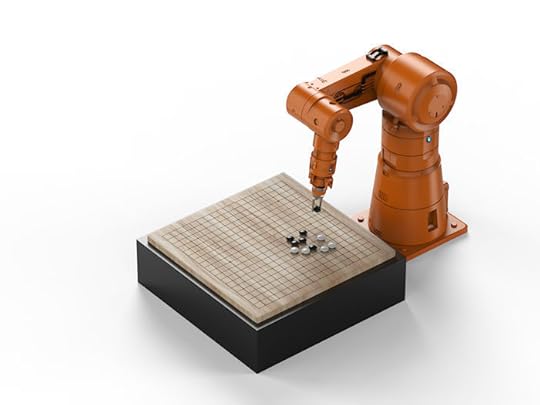 7. Go, 2016
While its rules are simple, the Chinese game of Go is extremely complex. It’s said that the number of possible moves in a game is greater than the number of atoms in the universe. Contributing to the complexity is the fact that as a Go game progresses, the number of stones and possible moves on the board increases rather than decreases, as in the case of board games like checkers, chess, Scrabble, and others. In spite of these hurdles, in 2016, DeepMind, a UK company purchased by Google two years earlier, defeated Go world champion Lee Sodol in a five-game match.
8. Texas Hold ‘Em, 2017One year later, the Libratus AI system took on four of the world’s top poker players over a three-week period in “Heads-Up No-Limit Texas Hold ‘Em” … and beat them soundly. Developed by researchers at Carnegie Mellon University, Libratus represented a major step forward in AI learning in an environment of imperfect-information game solving and which requires players to take a long-term strategy vs. seizing on short-term wins and losses.
Why do It?AI is proving its capabilities more and more each year in the sciences, military, transportation, and business functions like Human Resources and e-commerce. One would think we’ve gone beyond the day when we ask AI to “prove” itself to us by beating us in board or computer games.
However, these exhibitions serve an important purpose. They define the capabilities, and hint at the possible perils of machine thinking and AI decision-making in ways the average person can relate to.
Knowing that AI is powering stock picks and selecting job candidates might be uninspiring to many. But when Ken Jennings, tongue-in-cheek, appends the comment, “I, for one, welcome our new computer overlords” to his Final Jeopardy answer during the Watson exhibition; it put AI into a relatable context for us all.
Beyond GamesThat’s why AI developers will and should continue to conduct these kinds of real-life demonstrations. I wrote last year about a recent demonstration of the human-like capabilities of the GPT-3 language prediction tool. This AI program made headlines by drafting essays that read and sounded almost human-like.
But as we said at the time, AI has a long way to go. GPT-3 requires inputs and prompts. It’s a language predictor that determines, usually correctly, the thought or statement that should logically come next given what it’s presented with.
And like all AI, GPT-3 is an example of GOFAI, “good old-fashioned artificial intelligence.” We haven’t progressed much beyond these systems that are based on programmed learning and representational information about the world, rather than intelligently perceived information – wisdom that’s accumulated just like the human brain would gather and process it.
In that sense, AI will still remain artificial until it can defeat a human being in the Game of Life – and I don’t mean the Hasbro version!
Translate This PageSelect LanguageAfrikaansAlbanianAmharicArabicArmenianAzerbaijaniBasqueBelarusianBengaliBosnianBulgarianCatalanCebuanoChichewaChinese (Simplified)Chinese (Traditional)CorsicanCroatianCzechDanishDutchEnglishEsperantoEstonianFilipinoFinnishFrenchFrisianGalicianGeorgianGermanGreekGujaratiHaitian CreoleHausaHawaiianHebrewHindiHmongHungarianIcelandicIgboIndonesianIrishItalianJapaneseJavaneseKannadaKazakhKhmerKoreanKurdish (Kurmanji)KyrgyzLaoLatinLatvianLithuanianLuxembourgishMacedonianMalagasyMalayMalayalamMalteseMaoriMarathiMongolianMyanmar (Burmese)NepaliNorwegianPashtoPersianPolishPortuguesePunjabiRomanianRussianSamoanScottish GaelicSerbianSesothoShonaSindhiSinhalaSlovakSlovenianSomaliSpanishSudaneseSwahiliSwedishTajikTamilTeluguThaiTurkishUkrainianUrduUzbekVietnameseWelshXhosaYiddishYorubaZulu
#goog-gt-tt {display:none !important;}
.goog-te-banner-frame {display:none !important;}
.goog-te-menu-value:hover {text-decoration:none !important;}
.goog-text-highlight {background-color:transparent !important;box-shadow:none !important;}
body {top:0 !important;}
#google_translate_element2 {display:none!important;}
function googleTranslateElementInit2() {new google.translate.TranslateElement({pageLanguage: 'en',autoDisplay: false}, 'google_translate_element2');}
function GTranslateGetCurrentLang() {var keyValue = document['cookie'].match('(^|;) ?googtrans=([^;]*)(;|$)');return keyValue ? keyValue[2].split('/')[2] : null;}
function GTranslateFireEvent(element,event){try{if(document.createEventObject){var evt=document.createEventObject();element.fireEvent('on'+event,evt)}else{var evt=document.createEvent('HTMLEvents');evt.initEvent(event,true,true);element.dispatchEvent(evt)}}catch(e){}}
function doGTranslate(lang_pair){if(lang_pair.value)lang_pair=lang_pair.value;if(lang_pair=='')return;var lang=lang_pair.split('|')[1];if(GTranslateGetCurrentLang() == null && lang == lang_pair.split('|')[0])return;var teCombo;var sel=document.getElementsByTagName('select');for(var i=0;i<sel.length;i++)if(/goog-te-combo/.test(sel[i].className)){teCombo=sel[i];break;}if(document.getElementById('google_translate_element2')==null||document.getElementById('google_translate_element2').innerHTML.length==0||teCombo.length==0||teCombo.innerHTML.length==0){setTimeout(function(){doGTranslate(lang_pair)},500)}else{teCombo.value=lang;GTranslateFireEvent(teCombo,'change');GTranslateFireEvent(teCombo,'change')}}
Search for: Recent Posts Eight Human versus Machine Competitions: Where are we Heading? From Designer Babies to Super Humans Rethinking the Future of Economic Development in a Work-from-Home World Categories Artificial Intelligence Business Trends Future of Agriculture Future of Banking Future of Education Future of Healthcare Future of Transportation Future of Work Future Scenarios Future Trends Futurist Thomas Frey Insights Global Trends Predictions Social Trends Technology Trends Speaking TopicsFuture of Healthcare – “Is Death our only Option?Future of AIFuture of Industries
The post Eight Human versus Machine Competitions: Where are we Heading? appeared first on Futurist Speaker.
March 4, 2021
The Looming Battlefield: Certifications Versus College Degrees

The future of post-high school education is shifting, and COVID is exposing the problems with the traditional model of a college education.
The Financial Burden of Traditional CollegesAccording to a survey from U.S. News & World Report, the annual cost of tuition at a private college in the U.S. is more than $41,000. It’s just over $11,000 for in-state public colleges and nearly $27,000 for out-of-state public colleges.
The subsequent student loan numbers are staggering. Americans have racked up a total of $1.53 trillion in student loan debt. One in four American adults are carrying student loans and they owed more than $37,000 on average upon graduation. These loans are being paid off over nearly 20 years – nearly half the length of a career – in spite of the normal 10-year loan term.
It’s no wonder that from 2011 to 2019, college enrollment declined 11%. COVID is driving that trend even lower, at least in the short term. The number of 2020 high school graduates enrolling in college this year is down by 21%.
The Certification Squeeze for CollegesCost and COVID are two fundamental issues affecting college enrollment, but there’s a third element as well. The world’s demand for workers with unique, focused technical, tangible skills is driving the proliferation of professional certifications and a whole new education-based industry.
Certification in lieu of a college education has long been stigmatized. It was seen as an alternative career path – to an auto repair, construction, or hairstyling career – for those who couldn’t afford or qualify for college. In reality, certifications are now the fast-track path to good careers in IT, medical, and other fields.
Colleges are getting in on the action, too, sponsoring certificate programs in specific fields.
The Certification Model of Career PreparationFew of us go to a restaurant, order several entrees, and then decide which one we really like after we sample each one. And few restaurants require us to order greens and vegetables, just so they can be certain we have a “well-rounded” meal.
In a way, though, that’s been the model for many four-year college programs. In some cases, students can’t even begin to focus on the classes relevant to their majors and anticipated careers until they take a variety of off-topic prerequisite courses to ensure they receive a “well-rounded education.”
In contrast, certification programs immediately zero in on training that’s relevant to careers and the job market. A certification curriculum is typically designed and taught by people with experience in that field and it can be modified over time to reflect new skills, technology, and expectations.
Certification pathways include a condensed series of classes and modules, based on specific standards. The certificate itself is proof that the graduate is very likely to provide value in that area for an employer from day one.
 High Schoolers Have Options
As rigorous, accredited certification programs evolve in areas ranging from Certified Cloud Security Professional (CCSP) to AWS Certified Solutions Architect and yes, to construction, high school students are recognizing this attractive path to highly respected fields that require a fraction of the cost and time compared to college degrees.
Certifications aren’t inexpensive – but they’re still approximately five times cheaper than a college degree, and they can be earned in a matter of weeks or months rather than years. Certifications are also attractive to mid-career professionals who want to boost their skills and earnings.
Technical schools, vocational schools, and certification training centers are emerging across the country and online. Colleges have noted this competition, and many, especially community colleges, are branching out into this area, often in collaboration with local employers.
The Business PerspectiveThe certification approach is based on the understanding that companies hire for skills, not for degrees. That’s especially true for IT-related certifications and those for healthcare and healthcare support. Time horizons are changing, and businesses increasingly want their new hires to be productive resources right away.
We’ll continue to see a trend toward businesses and industry groups supporting, allying with, or even managing their own certification centers that zero in on those skills they need badly as they compete globally.
The Future of Post-High School EducationLiberal Arts college programs are probably the most in jeopardy. After all, how do you quantify the value of delivering “skilled generalists” into the working world? No doubt these college grads are wiser in many ways for the experience and possibly better-informed and more well-rounded citizens. But upon graduation, their real training will have to be done by their first employer.
We’ll see fewer and fewer young people of average financial means enroll in colleges just to “find themselves” and explore their “paths forward.” There’s a need for this process in academia, but community colleges will prove to be a far more economical home for that as well as for certification-related training. In that way, community colleges also will continue to level the playing field for members of disadvantaged economic or demographic groups.
Four-year college programs won’t go away, of course. They’ll be more rigorous, though, offering more areas of technical training that are focused from the first day on preparing students for graduate degrees in areas like engineering, law, medicine, and other sciences.
Our System of Education Needs to Keep UpTimes are changing and our post-high school education systems are struggling to adjust. As we’ve described above, professional fields will continue to require new, specialized skills. Employers will insist on immediate value from new graduates.
Accreditations and high-level personalized learning will fill that need, but traditional colleges will need to continue to shift in that direction as well. Our colleges used to be able to count on a steady flow of high school graduates to support their steadily increasing budgets. Colleges relied on the parental and societal mindset and bias that there were only two paths for high school graduates – and the “smart” kids automatically went the four-year college route as if it simply represented grades 13-16.
Accredited training and certifications will in fact be the “smarter” route for many young people in the future.
Translate This PageSelect LanguageAfrikaansAlbanianAmharicArabicArmenianAzerbaijaniBasqueBelarusianBengaliBosnianBulgarianCatalanCebuanoChichewaChinese (Simplified)Chinese (Traditional)CorsicanCroatianCzechDanishDutchEnglishEsperantoEstonianFilipinoFinnishFrenchFrisianGalicianGeorgianGermanGreekGujaratiHaitian CreoleHausaHawaiianHebrewHindiHmongHungarianIcelandicIgboIndonesianIrishItalianJapaneseJavaneseKannadaKazakhKhmerKoreanKurdish (Kurmanji)KyrgyzLaoLatinLatvianLithuanianLuxembourgishMacedonianMalagasyMalayMalayalamMalteseMaoriMarathiMongolianMyanmar (Burmese)NepaliNorwegianPashtoPersianPolishPortuguesePunjabiRomanianRussianSamoanScottish GaelicSerbianSesothoShonaSindhiSinhalaSlovakSlovenianSomaliSpanishSudaneseSwahiliSwedishTajikTamilTeluguThaiTurkishUkrainianUrduUzbekVietnameseWelshXhosaYiddishYorubaZulu
#goog-gt-tt {display:none !important;}
.goog-te-banner-frame {display:none !important;}
.goog-te-menu-value:hover {text-decoration:none !important;}
.goog-text-highlight {background-color:transparent !important;box-shadow:none !important;}
body {top:0 !important;}
#google_translate_element2 {display:none!important;}
function googleTranslateElementInit2() {new google.translate.TranslateElement({pageLanguage: 'en',autoDisplay: false}, 'google_translate_element2');}
function GTranslateGetCurrentLang() {var keyValue = document['cookie'].match('(^|;) ?googtrans=([^;]*)(;|$)');return keyValue ? keyValue[2].split('/')[2] : null;}
function GTranslateFireEvent(element,event){try{if(document.createEventObject){var evt=document.createEventObject();element.fireEvent('on'+event,evt)}else{var evt=document.createEvent('HTMLEvents');evt.initEvent(event,true,true);element.dispatchEvent(evt)}}catch(e){}}
function doGTranslate(lang_pair){if(lang_pair.value)lang_pair=lang_pair.value;if(lang_pair=='')return;var lang=lang_pair.split('|')[1];if(GTranslateGetCurrentLang() == null && lang == lang_pair.split('|')[0])return;var teCombo;var sel=document.getElementsByTagName('select');for(var i=0;i<sel.length;i++)if(/goog-te-combo/.test(sel[i].className)){teCombo=sel[i];break;}if(document.getElementById('google_translate_element2')==null||document.getElementById('google_translate_element2').innerHTML.length==0||teCombo.length==0||teCombo.innerHTML.length==0){setTimeout(function(){doGTranslate(lang_pair)},500)}else{teCombo.value=lang;GTranslateFireEvent(teCombo,'change');GTranslateFireEvent(teCombo,'change')}}
Search for: Recent Posts The Looming Battlefield: Certifications Versus College Degrees From Designer Babies to Super Humans Rethinking the Future of Economic Development in a Work-from-Home World Categories Artificial Intelligence Business Trends Future of Agriculture Future of Banking Future of Education Future of Healthcare Future of Transportation Future of Work Future Scenarios Future Trends Futurist Thomas Frey Insights Global Trends Predictions Social Trends Technology Trends Speaking TopicsFuture of Healthcare – “Is Death our only Option?Future of AIFuture of Industries
The post The Looming Battlefield: Certifications Versus College Degrees appeared first on Futurist Speaker.
February 25, 2021
From Designer Babies to Super Humans

In just a few years, pregnant women will have the option of going to a geneticist to discuss certain “enhancement options” for their unborn child.
With CRISPR, scientists are making tremendous strides toward being able to “edit” an embryo to remove problematic genes, thereby reducing the likelihood of certain diseases and physical anomalies.
However, it also makes sense to take this further, to the point of designing “super babies.”
While most people think about “designer babies” through the lens of an appearance checklist, where we mark yes or no to attributes like dimples, freckles, and great teeth, the full range of options will be far more complex.
We’ll be able to improve and expand on certain capabilities to the point where skilled geneticists will craft human lives that are not only healthy and strong but fine-tuned according to a menu of “enhancement opportunities.”
So not only will they have the hair color, lip shape, lash length, and ear shape we’ve requested, they’ll also be bigger, stronger, more durable humans, intensely bright, physically efficient, with greater life expectancy, super-resilient, super confident, and just plain super.
The Future Phases of Genetic EngineeringUndoubtedly, in vitro enhancements will unfold in phases. Here are a few examples of how this could play out.
In Phase 1, the focus will be on hereditary issues and the elimination of problematic disease-prone genes prior to birth.
In Phase 2, CRISPR techniques will be applied to genetic traits like eye color, finger length, neck length, eyebrow curve, and jowl lines.
Moving to Phase 3, prospective parents will be able to pursue neural and musculature options for their baby. They’ll be able to set parameters and choose relative values for things like hot-cold sensitivity, light sensitivity, skin sensitivity, hip deviation, wrist deviation, and foot deviation.
In Phase 4, advanced techniques will be employed to custom design thought processes and proclivities. Parents will instruct their geneticist on emotional variables – things like the ideal balance between thinking vs. feeling, introversion vs. extroversion, intuiting vs. exploring. Would they like to see their child grow up to be an artist? An engineer? A public servant? A humanitarian? A military officer? Over time, there will be formulas for each of these options.
Moving Towards a World of SuperhumansWhat is the lifetime value of a superhuman? Few people truly understand how powerful this question is!
While we still don’t know how to quantify a superhuman or the incremental advancements that will separate a stage one superhuman, from stages two, three, and four, the idea of giving birth to a superhuman is both intriguing and scary all at the same time.
The reason I’m asking about the lifetime value of a superhuman is that it changes how we think about human life and how we make the transition to what comes next.
The lifetime value of superhumans may indeed be 100 times greater than an average person today. One superhuman, on average, may add as much as $500 million to the global economy.
In some of the early phases, research groups will likely pay young mothers to have their babies genetically enhanced. In fact, they may even pay them to spend the nine months at a luxury resort, plus a salary, plus a bonus once the baby is born, just so they can monitor the entire fetal development.
Young women today, who may fret over the looming burden and responsibilities that come with a young child, may see it as the single greatest turning point in their life. One super baby pregnancy could lead to a stable home, guaranteed income, and a complete support staff to ensure the best possible outcome.
If this proves successful, countries around the world will likely start paying moms to have super babies, as countries compete with other countries to have the most super babies. The return-on-investment will simply be too compelling to overlook.
 Public Tolerance for Genetic Engineering
Polling over the last few years indicates that most, but not all, Americans draw the
genetic engineering line at the point where reducing serious health risks fades into
genetic augmentation in areas related to intelligence, athleticism, and physical features.
We’re a little more divided when it comes to eliminating nonfatal diseases.
In spite of the polls, we can probably assume a move towards genetic enhancements as soon as it’s possible.
The recent college entry scandals demonstrate that many parents will skirt the rule of
laws to give their children a head start. It’s only a matter of time until those who can afford it, will give their unborn children this kind of genetic edge in life, augmenting both intelligence and athleticism.
The idea of giving birth to an entire generation of super babies is both intriguing and scary at the same time.
Superbabies will grow up to become our future business leaders, politicians, strategists, entrepreneurs, designers, planners, and philosophers.
With one superhuman valued at $500 million, their access to training, healthcare, law enforcement protection, food sustenance, and general opportunities will put them in a tier of their own.
Geopolitically, wealthier nations and those whose scientists crack the genetic
techniques first will want to have a higher percentage of smarter and healthier citizens. This will perpetuate even greater genetic breakthroughs, more and better superhumans, and a rapidly growing gulf between the “have” and the “have-nots.”
As countries compete for global influence, they will incentivize prospective moms to give birth to superhumans. Unfortunately, this may mean, in some locations, they may also compel them to step into the geneticist’s office.
Over time, some countries may decide to preserve their superhuman assets at all costs. This, in turn, will lower the relative value of normal humans and shift many aspects of
public policy.
Will we be okay to have a multi-tiered society with different rules for equality and
fairness? Or will we ensure that genetic editing is available to all? And if that’s the case, how will this affect our social structures?
How will non-supers compete in sports, compete for jobs, politics, and other aspects of life?
This may sound like the stuff of sci-fi movies, but it’s right around the corner.
Will superhumans require different laws, policies, and standards? Do they require different foods, neighborhoods, life insurance, different protections?
Is CRISPR simply a logical stepping stone to the singularity? Time will tell!
Translate This PageSelect LanguageAfrikaansAlbanianAmharicArabicArmenianAzerbaijaniBasqueBelarusianBengaliBosnianBulgarianCatalanCebuanoChichewaChinese (Simplified)Chinese (Traditional)CorsicanCroatianCzechDanishDutchEnglishEsperantoEstonianFilipinoFinnishFrenchFrisianGalicianGeorgianGermanGreekGujaratiHaitian CreoleHausaHawaiianHebrewHindiHmongHungarianIcelandicIgboIndonesianIrishItalianJapaneseJavaneseKannadaKazakhKhmerKoreanKurdish (Kurmanji)KyrgyzLaoLatinLatvianLithuanianLuxembourgishMacedonianMalagasyMalayMalayalamMalteseMaoriMarathiMongolianMyanmar (Burmese)NepaliNorwegianPashtoPersianPolishPortuguesePunjabiRomanianRussianSamoanScottish GaelicSerbianSesothoShonaSindhiSinhalaSlovakSlovenianSomaliSpanishSudaneseSwahiliSwedishTajikTamilTeluguThaiTurkishUkrainianUrduUzbekVietnameseWelshXhosaYiddishYorubaZulu
#goog-gt-tt {display:none !important;}
.goog-te-banner-frame {display:none !important;}
.goog-te-menu-value:hover {text-decoration:none !important;}
.goog-text-highlight {background-color:transparent !important;box-shadow:none !important;}
body {top:0 !important;}
#google_translate_element2 {display:none!important;}
function googleTranslateElementInit2() {new google.translate.TranslateElement({pageLanguage: 'en',autoDisplay: false}, 'google_translate_element2');}
function GTranslateGetCurrentLang() {var keyValue = document['cookie'].match('(^|;) ?googtrans=([^;]*)(;|$)');return keyValue ? keyValue[2].split('/')[2] : null;}
function GTranslateFireEvent(element,event){try{if(document.createEventObject){var evt=document.createEventObject();element.fireEvent('on'+event,evt)}else{var evt=document.createEvent('HTMLEvents');evt.initEvent(event,true,true);element.dispatchEvent(evt)}}catch(e){}}
function doGTranslate(lang_pair){if(lang_pair.value)lang_pair=lang_pair.value;if(lang_pair=='')return;var lang=lang_pair.split('|')[1];if(GTranslateGetCurrentLang() == null && lang == lang_pair.split('|')[0])return;var teCombo;var sel=document.getElementsByTagName('select');for(var i=0;i<sel.length;i++)if(/goog-te-combo/.test(sel[i].className)){teCombo=sel[i];break;}if(document.getElementById('google_translate_element2')==null||document.getElementById('google_translate_element2').innerHTML.length==0||teCombo.length==0||teCombo.innerHTML.length==0){setTimeout(function(){doGTranslate(lang_pair)},500)}else{teCombo.value=lang;GTranslateFireEvent(teCombo,'change');GTranslateFireEvent(teCombo,'change')}}
Search for: Recent Posts From Designer Babies to Super Humans Rethinking the Future of Economic Development in a Work-from-Home World Urban Drone Air Ports: Here’s what to Expect! Categories Artificial Intelligence Business Trends Future of Agriculture Future of Banking Future of Education Future of Healthcare Future of Transportation Future of Work Future Scenarios Future Trends Futurist Thomas Frey Insights Global Trends Predictions Social Trends Technology Trends Speaking TopicsFuture of Healthcare – “Is Death our only Option?Future of AIFuture of Industries
The post From Designer Babies to Super Humans appeared first on Futurist Speaker.
February 18, 2021
Rethinking the Future of Economic Development in a Work-from-Home World

COVID-19 has accelerated many trends – including the work-from-home movement that was already inching along pre-pandemic. As a result, and as we discussed recently, there will continue to be significant de-urbanization with out-migration from mega-cities like New York to second-tier cities like Nashville and even smaller communities like Boise.
This will cause urban and regional Economic Development officials to shift, or at least expand, their growth strategies in important ways.
Traditional Economic DevelopmentFor years, municipal economic development has been company-focused. It was centered solely around attracting new companies and helping small, local companies get bigger. Jobs would follow. Economic Development teams used tax credits, zoning, permitting, property tax abatements, workforce training, and other tools in their arsenals to help companies make the right decision.
Who can forget the drama of 2017 when Amazon received proposals from more than 200 cities in North America to be the site of its second headquarters?
This approach isn’t going away, but it will no longer be the sole focus of local economic development efforts.
A More Recent Perspective on Economic DevelopmentFast forward to December 2020 when Oracle announced it had changed its corporate headquarters from the Bay Area to Austin, where it already had a significant presence.
“Change” … not relocate. It’s not clear if any employees will be moving, and the company announced at the same time that work-from-home arrangements for the majority of its teams would be the norm for the foreseeable future.
The head of Austin’s Chamber of Commerce noted at the time that he didn’t learn about the “change” until it was announced by Oracle. The Governor noted that the state had provided no economic incentives.
Since Oracle’s employees already had shifted to a remote work environment, this is essentially a paper transaction … one with major tax-savings implications for the company.
Future Economic DevelopmentNo doubt there will be more Oracle and even Amazon scenarios in the future. Economic Development teams will continue to compete, and companies will continue to look for ideal situations and take advantage of the offers.
But there will be a new twist. Increasingly, the Economic Development teams will also compete for people – specifically work-from-home corporate employees, executives, and entrepreneurs.

Here’s how they’ll do it:
Investing in Digital InfrastructureInstead of only investing in traditional infrastructures like roads, sewers, and industrial parks to attract businesses, development teams will also invest in public-private partnerships to develop IT infrastructure to support universal Cloud access, fiber, and 5G telecommunication for individuals. This will – or should – be a local government priority in any case, given what we learned about the disparate wireless technology access that put some students and families at a significant disadvantage during the pandemic.
Larger cities may already have extensive high-speed Internet availability, but their city planners will ensure there are no gaps. Smaller cities and rural areas will have further to go to compete in this area.
Investing in SchoolsWork-from-home employees searching for a new home will also be sensitive to education opportunities for their children. School districts will step up their game to provide documentation of their high-quality education, especially in the STEM areas important to these employees. Private tutor networks will also become a hot issue in the future.
Investing in Lifestyle AmenitiesA transplant exploring alternatives to New York or Los Angeles won’t necessarily expect to find the level of arts, cafes, fine dining, and other lifestyle-related features they’re used to. But these differentiators will certainly catch their attention as they look for a less expensive home city to work from. As cities compete for these individuals, they’ll create their own style of upscale dining, arts, entertainment, and cultural districts to help entice and retain them.
Keeping an Eye on the Cost of LivingSince the high cost of living in mega-cities is a big reason many work-from-home employees choose to relocate, cities and regions will evaluate one of the major living expenses they have some control over – the cost of housing. They’ll pay more attention than ever to zoning and permitting to ensure they have the right mix of houses at the right price points.
Recruiting VIPs – ExecutivesAs implied above, not all work from home recruits are equal. Attracting top executives will be relatively more important since they’re likely to bring a bit of the corporate presence with them – possibly leadership teams, business functions like conferences, new hiring authority, and so on. Their relocation may trigger future corporate growth in that area as well. Oracle, for example, stated that although few if any employees would be asked to relocate to Austin, new corporate hires most likely will be based in that region.
That’s why recruiting these executives deserves a special focus. Cities may go so far as to try to build rapport with these executives on an individual basis and incentivize these individuals in the same ways they used to court them when they were doing site visits for a company relocation. Now when they come to visit, they’ll be checking out residential real estate, but they still may find concert tickets and lift passes waiting for them at their hotel.
 The Other VIPs – Entrepreneurs
Chattanooga has used financial incentives to convince entrepreneurs to relocate to their city and build their businesses there. These so-called “soft landing programs” targeting people rather than existing companies will be an important part of many cities’ economic development strategies as well.
Creating a startup culture with a supportive ecosystem, mentor networks, accelerators, and access to funding are all essential ingredients for developing a hotbed of startup activity.
Collaborating with Vacation and Tourism BoardsMany of the features that make an urban area or region attractive to a tourist are the same things that will appeal to a corporate executive, an entrepreneur, or a work-from-home engineer. They include climate, recreation opportunities, and eclectic dining and entertainment opportunities. Thus, moving forward, tourism outreach will most likely include a “You may even want to live here…” message.
Local Team EffortIn order to accomplish all of this, we’ll see local economic development boards expand their programs, bringing in representatives from residential real estate, recreation, education, city planning, tourism, and other specialists. This will help ensure everyone with a stake in attracting these sought-after workers is pulling in the same direction to make their city or region the residential location of choice.
Economic Development groups are typically evaluated on how many jobs they bring to the city. A new metric will need to include their success in attracting key individuals as well.
Translate This PageSelect LanguageAfrikaansAlbanianAmharicArabicArmenianAzerbaijaniBasqueBelarusianBengaliBosnianBulgarianCatalanCebuanoChichewaChinese (Simplified)Chinese (Traditional)CorsicanCroatianCzechDanishDutchEnglishEsperantoEstonianFilipinoFinnishFrenchFrisianGalicianGeorgianGermanGreekGujaratiHaitian CreoleHausaHawaiianHebrewHindiHmongHungarianIcelandicIgboIndonesianIrishItalianJapaneseJavaneseKannadaKazakhKhmerKoreanKurdish (Kurmanji)KyrgyzLaoLatinLatvianLithuanianLuxembourgishMacedonianMalagasyMalayMalayalamMalteseMaoriMarathiMongolianMyanmar (Burmese)NepaliNorwegianPashtoPersianPolishPortuguesePunjabiRomanianRussianSamoanScottish GaelicSerbianSesothoShonaSindhiSinhalaSlovakSlovenianSomaliSpanishSudaneseSwahiliSwedishTajikTamilTeluguThaiTurkishUkrainianUrduUzbekVietnameseWelshXhosaYiddishYorubaZulu
#goog-gt-tt {display:none !important;}
.goog-te-banner-frame {display:none !important;}
.goog-te-menu-value:hover {text-decoration:none !important;}
.goog-text-highlight {background-color:transparent !important;box-shadow:none !important;}
body {top:0 !important;}
#google_translate_element2 {display:none!important;}
function googleTranslateElementInit2() {new google.translate.TranslateElement({pageLanguage: 'en',autoDisplay: false}, 'google_translate_element2');}
function GTranslateGetCurrentLang() {var keyValue = document['cookie'].match('(^|;) ?googtrans=([^;]*)(;|$)');return keyValue ? keyValue[2].split('/')[2] : null;}
function GTranslateFireEvent(element,event){try{if(document.createEventObject){var evt=document.createEventObject();element.fireEvent('on'+event,evt)}else{var evt=document.createEvent('HTMLEvents');evt.initEvent(event,true,true);element.dispatchEvent(evt)}}catch(e){}}
function doGTranslate(lang_pair){if(lang_pair.value)lang_pair=lang_pair.value;if(lang_pair=='')return;var lang=lang_pair.split('|')[1];if(GTranslateGetCurrentLang() == null && lang == lang_pair.split('|')[0])return;var teCombo;var sel=document.getElementsByTagName('select');for(var i=0;i<sel.length;i++)if(/goog-te-combo/.test(sel[i].className)){teCombo=sel[i];break;}if(document.getElementById('google_translate_element2')==null||document.getElementById('google_translate_element2').innerHTML.length==0||teCombo.length==0||teCombo.innerHTML.length==0){setTimeout(function(){doGTranslate(lang_pair)},500)}else{teCombo.value=lang;GTranslateFireEvent(teCombo,'change');GTranslateFireEvent(teCombo,'change')}}
Search for: Recent Posts Rethinking the Future of Economic Development in a Work-from-Home World Urban Drone Air Ports: Here’s what to Expect! Deurbanization – How Will this New Trend Affect You in the Future Categories Artificial Intelligence Business Trends Future of Agriculture Future of Banking Future of Education Future of Healthcare Future of Transportation Future of Work Future Scenarios Future Trends Futurist Thomas Frey Insights Global Trends Predictions Social Trends Technology Trends Speaking TopicsFuture of Healthcare – “Is Death our only Option?Future of AIFuture of Industries
The post Rethinking the Future of Economic Development in a Work-from-Home World appeared first on Futurist Speaker.
February 11, 2021
Urban Drone Air Ports: Here’s what to Expect!

The now-familiar models of commercial drones first came on the scene15 years ago. It wasn’t too long until aeronautical entrepreneurs shifted their sights to scaling the technology to make these vehicles large and powerful enough to transport people over short distances.
Today, we’re quite a bit further along in that area than many people are aware. Prototypes are already flying and China seems to be taking the lead in the field.
And now that the drone passenger technology seems well in hand, futurists and city transportation planners are studying the logistics and implications of localized drone commuter and taxi systems, along with the land-based infrastructure that will support it.
Back to the CityBack in the late 1960s, as passenger jet aircraft were quickly replacing propeller-based commercial fleets across the country, municipalities moved airports outside the city limits so that they could provide adequate room for runways and terminals.
Ten years from now, it’ll be just the opposite, passenger drone systems will spur the development of central city mini airports. Lots of them.
Baby Steps – Drone Commuting and Drone PortsThe first stage of passenger drone commercial transportation will be to provide service between fixed points along specific corridors – such as from a central city hub to a nearby suburb, or between the central city locations of two nearby cities. This will essentially serve as an alternative to automobile or mass transit travel between those two points.
At either end of those flights will be “airports for flying cars” envisioned by Urban-Air Port to support a “highway in the sky” system – in this case, commercial air taxi or “flying car service” between cities in the UK.
If you look closely at the artist’s renderings of their drone airport, it’s reminiscent of a small general aviation terminal. However, in real life, it may look more like the lift lines on a January weekend in Vail!
This back-and-forth commuter transportation model with its terminal facilities provides proof of concept for the subsequent generation of passenger drone commercial service – drone taxis, and all the surface structures that we’ll need to support them.
But before we go into that, let’s take a moment to think through the terminology. Will they be called “mini airports,” “air taxi ports,” or “droneports?” We can do better than “flying car airports,” when we’re referring to these high-volume mass transit systems. In all likelihood, someone like Elon Musk will come up with a name like “giga-ports” and it’ll catch on. But for this column let’s stick with “droneports” to get more familiar with the concept!
 Giant Leaps – Drone Taxis and Drone Depots
Compared to drone commuting, there will be no regular routes between endpoints for drone taxis, just travel between a fixed set of departure/destination sites, or what I call “drone depots.” Think of drone depots in terms of today’s auto-based taxi stands. The difference is that drone taxis will only pick up and drop off at one of those depot locations – there will be no stopping at a point in between.
And unlike the commuter drone ports envisioned in the Coventry image, drone depots for taxi service will be less extensive. Since urban land is limited and expensive, they’ll resemble today’s helipads with minimal accompanying building infrastructure – just enough to keep the passengers out of the elements while they wait.
As an aside, large companies will maintain or contract with a fleet of passenger drones, analogous to today’s private company car services. Their drone depots will be in private locations, somewhere on their campuses or on top of their buildings.
In contrast, public drone depots will take over portions of parking lots, for example. They’ll be strategically scattered throughout the city adjacent to light rail stations, office parks, medical centers, and art districts. As demand increases, each location will have more and more pads.
What will our future drone taxi experience be like? Will passengers simply queue up in the “lift line,” enter the next available vehicle, select a destination from the fixed list, pay, sit down, and buckle up? As with today’s surface taxis, drone taxi passengers will indicate if they’re willing to share a drone or not. Pricing will likely vary based on that decision.
With passengers in place, a central navigation operating system will plan the route and
sequence the drone into the airspace, and it will safely and efficiently fly to the requested destination(s). Upon arrival, passengers will exit, and others will board. With no driver fatigue or bio-breaks to account for, a drone could conceivably operate 24/7 except in the worst of weather or for periodic scheduled maintenance. During their limited time on the ground, the drones will take advantage of automated, rapid energy charging.
Drone taxi services will grow over time, but the number will still be small. I don’t see how drone taxi services can operate in the same way as automobile taxis do, with pick up and drop off at any conceivable address.
Walmart or Amazon may find a way to do this for home-based package deliveries, but it will be more difficult to fit all those larger drone taxis into our urban skies traveling to tens of thousands of locations in a city. In the distant future’s three-dimensional, Jetson’s-type cities, though, it might be feasible.
What Does This Mean for Flying Cars?Can we now check “flying cars” off the “finally-here list” of future inventions? Yes, even though drone commuters and drone taxis don’t exactly match everyone’s past vision of an aero car in every driveway.
Drone taxis are quickly morphing into the prototype for personal flying cars, which will certainly need to be self-flying. In reality, we’re still several years away from that, as most people today still struggle with the idea of riding in a self-driving car.
Translate This PageSelect LanguageAfrikaansAlbanianAmharicArabicArmenianAzerbaijaniBasqueBelarusianBengaliBosnianBulgarianCatalanCebuanoChichewaChinese (Simplified)Chinese (Traditional)CorsicanCroatianCzechDanishDutchEnglishEsperantoEstonianFilipinoFinnishFrenchFrisianGalicianGeorgianGermanGreekGujaratiHaitian CreoleHausaHawaiianHebrewHindiHmongHungarianIcelandicIgboIndonesianIrishItalianJapaneseJavaneseKannadaKazakhKhmerKoreanKurdish (Kurmanji)KyrgyzLaoLatinLatvianLithuanianLuxembourgishMacedonianMalagasyMalayMalayalamMalteseMaoriMarathiMongolianMyanmar (Burmese)NepaliNorwegianPashtoPersianPolishPortuguesePunjabiRomanianRussianSamoanScottish GaelicSerbianSesothoShonaSindhiSinhalaSlovakSlovenianSomaliSpanishSudaneseSwahiliSwedishTajikTamilTeluguThaiTurkishUkrainianUrduUzbekVietnameseWelshXhosaYiddishYorubaZulu
#goog-gt-tt {display:none !important;}
.goog-te-banner-frame {display:none !important;}
.goog-te-menu-value:hover {text-decoration:none !important;}
.goog-text-highlight {background-color:transparent !important;box-shadow:none !important;}
body {top:0 !important;}
#google_translate_element2 {display:none!important;}
function googleTranslateElementInit2() {new google.translate.TranslateElement({pageLanguage: 'en',autoDisplay: false}, 'google_translate_element2');}
function GTranslateGetCurrentLang() {var keyValue = document['cookie'].match('(^|;) ?googtrans=([^;]*)(;|$)');return keyValue ? keyValue[2].split('/')[2] : null;}
function GTranslateFireEvent(element,event){try{if(document.createEventObject){var evt=document.createEventObject();element.fireEvent('on'+event,evt)}else{var evt=document.createEvent('HTMLEvents');evt.initEvent(event,true,true);element.dispatchEvent(evt)}}catch(e){}}
function doGTranslate(lang_pair){if(lang_pair.value)lang_pair=lang_pair.value;if(lang_pair=='')return;var lang=lang_pair.split('|')[1];if(GTranslateGetCurrentLang() == null && lang == lang_pair.split('|')[0])return;var teCombo;var sel=document.getElementsByTagName('select');for(var i=0;i<sel.length;i++)if(/goog-te-combo/.test(sel[i].className)){teCombo=sel[i];break;}if(document.getElementById('google_translate_element2')==null||document.getElementById('google_translate_element2').innerHTML.length==0||teCombo.length==0||teCombo.innerHTML.length==0){setTimeout(function(){doGTranslate(lang_pair)},500)}else{teCombo.value=lang;GTranslateFireEvent(teCombo,'change');GTranslateFireEvent(teCombo,'change')}}
Search for: Recent Posts Urban Drone Air Ports: Here’s what to Expect! Deurbanization – How Will this New Trend Affect You in the Future What Comes After Social Media? 2030 and Beyond Categories Artificial Intelligence Business Trends Future of Agriculture Future of Banking Future of Education Future of Healthcare Future of Transportation Future of Work Future Scenarios Future Trends Futurist Thomas Frey Insights Global Trends Predictions Social Trends Technology Trends Speaking TopicsFuture of Healthcare – “Is Death our only Option?Future of AIFuture of Industries
The post Urban Drone Air Ports: Here’s what to Expect! appeared first on Futurist Speaker.
February 4, 2021
Deurbanization – How Will this New Trend Affect You in the Future

The longstanding trend towards urbanization – urban areas growing faster than non-urban areas – was proceeding unabated until it turned on a dime in 2020 due to the
COVID epidemic. The trend for the foreseeable future is now in exactly the opposite direction – deurbanization.
Those who doubt this – primarily commercial real estate property holders – are left to rebut it only by saying things along the lines of: “People have predicted the decline of cities in the past, but the lure of city life always proves too strong.”
I don’t think that will bear out this time because technology is the difference-maker.
Regardless, the short-term data supports the current reality of de-urbanization. Full service and self-service moving companies report that household move volume in 2020 was heaviest out of New York and California and into Idaho, North Carolina, and Maine.
And if people weren’t making interstate transitions, they were moving to nearby suburbs. This was especially apparent in New York City and all three of Texas’ major
cities, according to national realtor data found in that same report.
The trend is continuing. According to the real estate website Zillow, residents of Los Angeles and New York City are still pursuing housing availability primarily in Boise, Phoenix, and Atlanta.
It’s driven by work-from-homeUntil recently, work-from-home was viewed as a perk or an exception. It’s been the norm for nearly a year now, and many service companies have indicated it will be available for a sizable portion of their workforce for the foreseeable future.
And why not? Communication and information technology strongly support it. Many workers really like it. And many more will like it once they don’t have to balance work with monitoring their children’s homeschooling.
Trends vs. future implicationsTrends are easy to observe and somewhat easy to predict until things like a pandemic happen. But assuming de-urbanization is not a passing fad, what does this mean for our future? How will society change? What could a less dense (from the spatial perspective!) population mean for our economy, environment, political dynamic, and much more?
That’s where the futurist in me kicks in. Here’s what I see as the long-term implications of deurbanization:
Broadened perspectivesOne of the benefits of de-urbanization is the economic “sprinkling effect,” in which higher-income workers move to outlying locations and support their local economies and tax bases.
I would take that a step further and predict that these transplants will also sprinkle other positive things – like ideas and diversity. This isn’t to say they won’t learn or benefit from the ideas and lifestyles of the long-time residents of their new hometowns as well.
I’m pretty certain that a transplant moving from downtown Seattle to Boise will encounter more people with a wider range of viewpoints in their new hometown. Granted, the differences might not be as pronounced as when the relocation is from Manhattan to the Hamptons.
Tribalism fades as people are exposed to more lifestyles and new ways of thinking. While you can certainly find diverse viewpoints within a major city, in an urban setting you may also be less likely to “have to” engage with “others” since your own tribe is so readily nearby.
Weakened geography-based political densitiesPolitical affiliations vary dramatically when you compare major urban centers to the suburbs and then to rural America. Regional differences mute this somewhat (e.g., Houston vote tallies will look different from those in Los Angeles), but relatively speaking there is a measurable difference.
De-urbanization will diffuse those geographic voting densities, if only by degree. We’ll have less-polarized districts – even states. The red-blue congressional district maps on election night will be somewhat more blended. The further implication? A shift toward the center by our leaders who must appease a more diverse body of constituents.
 An increased environmental impact
Environmental issues are a national challenge. Unfortunately, a shift to the suburban areas to experience rural life will not help on that front.
City-dwellers who used to count on mass transit will drive more. They’ll live in larger homes with a bigger footprint. The energy needed to heat and cool these homes will be significantly more than it was for their smaller city dwellings and apartments.
This will move us one step back in achieving our pollution abatement goals. We’ll need to adopt more significant, dramatic emission reduction policies if we’re going to reduce emissions to the level most experts call for.
Improved corporate efficienciesToday’s news is full of accounts of tech and other companies in B2B industries who had strong years in 2020, despite the pandemic. That’s due in part to the efficiencies they implemented during that period, including maintaining smaller inventories and benefitting from more productive people working from home.
This employee productivity was enhanced thanks to the absence of commuting snags, fewer work-related distractions, more tightly run meetings, and a dramatic reduction in travel. No doubt some of those practices will continue to some degree post-pandemic, even in office settings, as travel and meetings will need to pass an “essentialness” test. And home-based employee productivity will soar even higher in the months and years ahead, when their children are back in school.
There’s one other corporate trend that will enable de-urbanization, instead of just reacting to it. Companies will continue to move away from major high-rise headquarters in Tier 1 cities and shift to multiple regional offices and campuses in Tier 2 locations.
Diffusion of the artsSome have argued that de-urbanization will lead to a loss of cultural vibrancy – as they presumably focus only on the loss of vibrancy for residents who remain behind in big cities. That strikes me as somewhat elitist, and I would encourage those observers to think about the other side of this zero-sum tradeoff.
When it comes to culture and the arts, a Dallas socialite’s loss is an Omahan’s gain. What could possibly be wrong with urban transplants bringing additional resources and artistic expertise to support the arts in smaller cities and rural areas? In the future, the arts will flourish – for many more people.
De-Urbanization is De-HomogenizationThe common theme in all of this is that voluntary de-urbanization will stir the pot. It’s like knocking over the Monopoly board once someone has accumulated most of the money and properties. “Whoops! Now we have to start over!” De-urbanization isn’t as dramatic as that of course, but it is a small step in an invigorating new direction.
COVID is a horrible disease. If a family member, friend, or loved one of yours suffered or lost their life because of it, no one can expect you to consider any silver lining.
But COVID has triggered macro-level changes in our world – multiple distinct adjustments that will play out and forever change the trajectory of certain trends into our future.
De-urbanization will be one of those changes for the better – right along with 2020’s other positive divergences in healthcare, pharmaceutical research, corporate social responsibility, are others.
Translate This PageSelect LanguageAfrikaansAlbanianAmharicArabicArmenianAzerbaijaniBasqueBelarusianBengaliBosnianBulgarianCatalanCebuanoChichewaChinese (Simplified)Chinese (Traditional)CorsicanCroatianCzechDanishDutchEnglishEsperantoEstonianFilipinoFinnishFrenchFrisianGalicianGeorgianGermanGreekGujaratiHaitian CreoleHausaHawaiianHebrewHindiHmongHungarianIcelandicIgboIndonesianIrishItalianJapaneseJavaneseKannadaKazakhKhmerKoreanKurdish (Kurmanji)KyrgyzLaoLatinLatvianLithuanianLuxembourgishMacedonianMalagasyMalayMalayalamMalteseMaoriMarathiMongolianMyanmar (Burmese)NepaliNorwegianPashtoPersianPolishPortuguesePunjabiRomanianRussianSamoanScottish GaelicSerbianSesothoShonaSindhiSinhalaSlovakSlovenianSomaliSpanishSudaneseSwahiliSwedishTajikTamilTeluguThaiTurkishUkrainianUrduUzbekVietnameseWelshXhosaYiddishYorubaZulu
#goog-gt-tt {display:none !important;}
.goog-te-banner-frame {display:none !important;}
.goog-te-menu-value:hover {text-decoration:none !important;}
.goog-text-highlight {background-color:transparent !important;box-shadow:none !important;}
body {top:0 !important;}
#google_translate_element2 {display:none!important;}
function googleTranslateElementInit2() {new google.translate.TranslateElement({pageLanguage: 'en',autoDisplay: false}, 'google_translate_element2');}
function GTranslateGetCurrentLang() {var keyValue = document['cookie'].match('(^|;) ?googtrans=([^;]*)(;|$)');return keyValue ? keyValue[2].split('/')[2] : null;}
function GTranslateFireEvent(element,event){try{if(document.createEventObject){var evt=document.createEventObject();element.fireEvent('on'+event,evt)}else{var evt=document.createEvent('HTMLEvents');evt.initEvent(event,true,true);element.dispatchEvent(evt)}}catch(e){}}
function doGTranslate(lang_pair){if(lang_pair.value)lang_pair=lang_pair.value;if(lang_pair=='')return;var lang=lang_pair.split('|')[1];if(GTranslateGetCurrentLang() == null && lang == lang_pair.split('|')[0])return;var teCombo;var sel=document.getElementsByTagName('select');for(var i=0;i<sel.length;i++)if(/goog-te-combo/.test(sel[i].className)){teCombo=sel[i];break;}if(document.getElementById('google_translate_element2')==null||document.getElementById('google_translate_element2').innerHTML.length==0||teCombo.length==0||teCombo.innerHTML.length==0){setTimeout(function(){doGTranslate(lang_pair)},500)}else{teCombo.value=lang;GTranslateFireEvent(teCombo,'change');GTranslateFireEvent(teCombo,'change')}}
Search for: Recent Posts Deurbanization – How Will this New Trend Affect You in the Future What Comes After Social Media? 2030 and Beyond Housing Industry Disconnect – Today’s housing will be a poor fit for tomorrow’s customers. Categories Artificial Intelligence Business Trends Future of Agriculture Future of Banking Future of Education Future of Healthcare Future of Transportation Future of Work Future Scenarios Future Trends Futurist Thomas Frey Insights Global Trends Predictions Social Trends Technology Trends Speaking TopicsFuture of Healthcare – “Is Death our only Option?Future of AIFuture of Industries
The post Deurbanization – How Will this New Trend Affect You in the Future appeared first on Futurist Speaker.
January 28, 2021
What Comes After Social Media? 2030 and Beyond

Can you imagine a future without social media? It’s probably just as hard for us to do that as it would have been for people 25 years ago to imagine a technology that would allow us to easily share information with the world.
Modern social media began in 2003 with the business-centric site LinkedIn, followed the next year by “thefacebook.com.” We’ve come a long way since then. As of 2019, there were 3.5 billion active social media users, representing 45% of the world’s population, who are online for an average of three hours a day.
What’s behind the screen?These days, though, we’re seeing a perilous side of social media. More than ever, it’s being used to influence, rather than inform or entertain. We’re all too willing, though, to share information about ourselves – and not just by posting, but by offering up the behavioral information that can be gleaned from our engagement with various platforms. Screen time. Hover time. Friends. Likes. Clicks. Shares. Purchases. This data is a gold mine to advertisers so they can more cleverly personalize their online pitches right back at us – on social media. You can learn more about all of this in the fascinating film, The
Social Dilemma.
But enough with history and current events. What about the future of social media sites and platforms? Given that social media has become so institutionalized in our lives, it’s not going away. It’s also become a critical element of advertising. That’s why today’s Mad Men won’t let social media go away either, nor will the organizations that want to sell, sell, sell.
Predictions for the future of social mediaFirst, new sites with new features will keep emerging. When one becomes mainstream, others will come along to fill an edgy niche. When one begins to aggressively supervise the posted content, others will emerge in the fringes.
Since many of these companies have decided to become the arbiter of acceptable content on their platform, they’ve opened themselves up to thousands of potential lawsuits by those who have been offended, in every language, every religion, every nationality, every cause, in the world. This is what I refer to as the “death by a thousand paper cuts” scenario.
Keep in mind, the speed with which a company can scale up, is also the speed with which it can be dismantled…. maybe even faster.
Second, more and more sites will form around people with shared interests, values, and lifestyles. And yes, politics. They’ll increasingly serve as homes and clubs, rather than the broad-topic, world-wide forums we’ve gotten used to. Thus, social media will divide, isolate, and compartmentalize us as a society even more. Social media becomes just the opposite, anti-social media.
Related to that, is the prediction that there will be increasing pressure for people to dominate a social media site, just like they would a club. In a way, sites will increasingly serve as a jumping off point for personal fame and fortune. They’ll be formed for that exact purpose. An online resume won’t be enough to land your next job. You’ll need an entire media channel to explain who you are.
That leads to the following major trend that perfectly captures the future linkage between social media and advertising, taking it out into the open for all to see.
 The social media advertising connection takes over
The biggest developments in social media will be driven by changes in advertising in combination with artificial intelligence-powered virtual reality (VR). The two were made for each other, as described in this fascinating article from an advertising industry insider.
In a nutshell, he describes how ten years from now we’ll be experiencing social media through virtual reality, such as augmented reality glasses. The lines between real life and social media will blur. And within that experience, we’ll be more inundated than ever with advertising-related intrusions.
We’ve all opened a website and within seconds seen a photo avatar customer service representative with a dialog box. She says something along the lines of, “Welcome, are you looking to purchase one of our products today? Let me know if you have any questions.” Put that experience on steroids in the not-to-distant future.
The new friend scenarioYou’re walking through the city.
The President of Future Motor Company pops into your field of VR eyeglass vision and says, “Hi Winston, we noticed that you’re coming up on our Auto City car lot on 12th Street. Now I know you bought your last car from Funday Motor America three years ago. But you’ve paid it off, and we see that you’ve been looking at EV options online. Our lot on 12th just got a shipment of seven plug-in hybrids this morning, including two SUV models similar to yours. Why don’t you come in for a quick test drive? Melissa’s at the first desk and she has all your information.”
Other types of social media-driven, pseudo-visual interactions will be less intrusive and more pleasant. But they’ll be equally life changing. Within your social media platform, you’ll have the opportunity to create or find an intriguing social media avatar – a hologram – to be a social media VR friend. Someone with whom you can slip on the VR glasses and share a hug, a cup of tea, or a glass of wine.
Will big brother advertisers continue to eavesdrop on these types of conversations? Or will the entire industry be replaced by something we haven’t seen yet? I give it 8-10 years.
Translate This PageSelect LanguageAfrikaansAlbanianAmharicArabicArmenianAzerbaijaniBasqueBelarusianBengaliBosnianBulgarianCatalanCebuanoChichewaChinese (Simplified)Chinese (Traditional)CorsicanCroatianCzechDanishDutchEnglishEsperantoEstonianFilipinoFinnishFrenchFrisianGalicianGeorgianGermanGreekGujaratiHaitian CreoleHausaHawaiianHebrewHindiHmongHungarianIcelandicIgboIndonesianIrishItalianJapaneseJavaneseKannadaKazakhKhmerKoreanKurdish (Kurmanji)KyrgyzLaoLatinLatvianLithuanianLuxembourgishMacedonianMalagasyMalayMalayalamMalteseMaoriMarathiMongolianMyanmar (Burmese)NepaliNorwegianPashtoPersianPolishPortuguesePunjabiRomanianRussianSamoanScottish GaelicSerbianSesothoShonaSindhiSinhalaSlovakSlovenianSomaliSpanishSudaneseSwahiliSwedishTajikTamilTeluguThaiTurkishUkrainianUrduUzbekVietnameseWelshXhosaYiddishYorubaZulu
#goog-gt-tt {display:none !important;}
.goog-te-banner-frame {display:none !important;}
.goog-te-menu-value:hover {text-decoration:none !important;}
.goog-text-highlight {background-color:transparent !important;box-shadow:none !important;}
body {top:0 !important;}
#google_translate_element2 {display:none!important;}
function googleTranslateElementInit2() {new google.translate.TranslateElement({pageLanguage: 'en',autoDisplay: false}, 'google_translate_element2');}
function GTranslateGetCurrentLang() {var keyValue = document['cookie'].match('(^|;) ?googtrans=([^;]*)(;|$)');return keyValue ? keyValue[2].split('/')[2] : null;}
function GTranslateFireEvent(element,event){try{if(document.createEventObject){var evt=document.createEventObject();element.fireEvent('on'+event,evt)}else{var evt=document.createEvent('HTMLEvents');evt.initEvent(event,true,true);element.dispatchEvent(evt)}}catch(e){}}
function doGTranslate(lang_pair){if(lang_pair.value)lang_pair=lang_pair.value;if(lang_pair=='')return;var lang=lang_pair.split('|')[1];if(GTranslateGetCurrentLang() == null && lang == lang_pair.split('|')[0])return;var teCombo;var sel=document.getElementsByTagName('select');for(var i=0;i<sel.length;i++)if(/goog-te-combo/.test(sel[i].className)){teCombo=sel[i];break;}if(document.getElementById('google_translate_element2')==null||document.getElementById('google_translate_element2').innerHTML.length==0||teCombo.length==0||teCombo.innerHTML.length==0){setTimeout(function(){doGTranslate(lang_pair)},500)}else{teCombo.value=lang;GTranslateFireEvent(teCombo,'change');GTranslateFireEvent(teCombo,'change')}}
Search for: Recent Posts What Comes After Social Media? 2030 and Beyond Housing Industry Disconnect – Today’s housing will be a poor fit for tomorrow’s customers. 15 Global Challenges – Changing Times, Changing Priorities Categories Artificial Intelligence Business Trends Future of Agriculture Future of Banking Future of Education Future of Healthcare Future of Transportation Future of Work Future Scenarios Future Trends Futurist Thomas Frey Insights Global Trends Predictions Social Trends Technology Trends Speaking TopicsFuture of Healthcare – “Is Death our only Option?Future of AIFuture of Industries
The post What Comes After Social Media? 2030 and Beyond appeared first on Futurist Speaker.
January 20, 2021
Housing Industry Disconnect – Today’s housing will be a poor fit for tomorrow’s customers.
 It’s difficult to plan for the future when certain industries, like housing, insist on living in the past.Three years ago, I was in a car accident. My knee has been giving me problems ever since and, at times, it’s a bit challenging to walk. Recently, my wife had an accident and broke her foot in two places. She was confined to a wheelchair for six weeks and will be facing four more weeks of therapy before she can try some light walking.Even before her accident, we had been spending time looking at ranch style homes that would be easier for us to navigate as we grew older. Our needs and preferences are changing. We simply wanted a home where we could live comfortably and safely over the coming years.During this process, I’ve been appalled at how out of sync builders are with the changing demographics of the country. My wife and I are getting older … and we’re not the only ones.There’s no arguing with the numbersLet’s look at the data.According to AARP, 10,000 U.S. Baby Boomers turn 65 every day. This is a long-term trend that’s expected to continue well past the 2030s.According to the CDC, one out of every four adults in the U.S. has a disability, including an impairment of their vision, hearing, mobility, or cognition. This proportion grows with age, with 40 percent of people over 65 living with some kind of disability.According to the CDC, 39.6 percent of the U.S. adult population have obesity issues, which will eventually translate into mobility issues.Not only is our population aging, it’s also living longer. Here’s more from the U.S. Census Bureau:The number of 65 and older Americans is projected to more than double from 40.3 million in 2010 to 85.7 million in 2050.Our current average life expectancy is 78.6, and if you reach 65, there’s an even chance you’ll live to 85 or beyond.Accessible HomesIn spite of these very clear trends regarding the number of people with possible housing accessibility challenges, I was told at one housing development we visited that if I wanted an elevator built into our home, I would need a doctor’s authorization, even though I was more than willing to pay for it.It really shouldn’t be a surprise or a significant “a-ha moment” for builders to understand that older people simply don’t want to navigate steps – indoors or outdoors. Even if they’re navigable today, steps will eventually become an impediment as life moves on.In general, houses continue to be built “up,” not across. There are far too many steps, tri-level, quad-level, and even three-story homes that don’t work well for a growing proportion of our population. Even ranch-style houses often have an excessive number of outdoor steps, which defeats a fundamental purpose of this design.Here are some other residential construction industry decisions that don’t make sense given our clear demographic trends:
  Short-Sighted Houses
Virtually no cities currently have a 100-year building code. Homes are not built to last. Ironically, some economists say that’s a good thing. To them, cheaper, less durable housing discourages people from using homes as a long-term strategy for building wealth and, as a result, workers are less tied to a location and more inclined to pursue employment in high-demand locations.
Repair and maintenance become a huge budgeting issue over time, especially for those who retire and want to enjoy the next 25 years of their lives in a house that won’t fall apart?
More and more the phrase “affordable housing” is being equated with “future slums.” As soon as repair and maintenance costs begin to exceed the homeowner’s ability to pay for them, the entire community moves into a downward spiral.
And being saddled with an onerous mortgage process that demands 300-400 pages of closing documents and tens of thousands of dollars of processing costs for every transaction, makes the idea of moving a scary proposition for everyone involved.
Multi-Generation ArrangementsDevelopers and homebuilders also seem to have their heads in the sand when it comes to the growing trend of multiple generations of a family living under one roof. Adult children, and their families, are commonly found living with parents. Elderly parents often prefer living with their children rather than in long-term care facilities.
The idea of remodeling a home also becomes a daunting proposition. Even the idea of remodeling a basement or adding an addition leaves homeowners fighting through layers of complexity as city codes and inspections, as well as homeowner associations, can drag a simple remodel into months of hair-pulling anxiety.
The real estate industry understands this, let’s hope home builders get the message soon.
Style and ComfortBeyond the access and mobility issues above, “mainstream” houses don’t have handicap-friendly features – bathrooms, kitchens, or appliances – suitable for those with physical limitations.
Like me, you’ve probably been assigned a “handicapped” room at a hotel when you’ve arrived late in the evening. Sparse furniture and a bathroom with one drain in the middle of the floor because there are no shower barriers. It’s pretty spartan and depressing.
Handicapped-enabled housing doesn’t have to be like that. Given the right parameters, architects can easily design and equip a home with creative features that make it practical and attractive for both able-bodied and impaired people.
Future Proofing our HomesYes, I understand that housing is a data-driven industry, and developers are closely monitoring what’s selling and how fast. But the needs of today are radically different from the needs of tomorrow. And over time we will find our communities saddled with all the wrong inventory.
We need a future where people with age-related limitations aren’t treated like the rare exception in the mainstream housing market.
This demographic will be less and less the exception as we move into the future.
It’s time to be creative with home design and construction so we have a future where even though someone can’t easily navigate a staircase or climb into a shower, they’re not relegated to retirement homes and assisted living centers.
Translate This PageSelect LanguageAfrikaansAlbanianAmharicArabicArmenianAzerbaijaniBasqueBelarusianBengaliBosnianBulgarianCatalanCebuanoChichewaChinese (Simplified)Chinese (Traditional)CorsicanCroatianCzechDanishDutchEnglishEsperantoEstonianFilipinoFinnishFrenchFrisianGalicianGeorgianGermanGreekGujaratiHaitian CreoleHausaHawaiianHebrewHindiHmongHungarianIcelandicIgboIndonesianIrishItalianJapaneseJavaneseKannadaKazakhKhmerKoreanKurdish (Kurmanji)KyrgyzLaoLatinLatvianLithuanianLuxembourgishMacedonianMalagasyMalayMalayalamMalteseMaoriMarathiMongolianMyanmar (Burmese)NepaliNorwegianPashtoPersianPolishPortuguesePunjabiRomanianRussianSamoanScottish GaelicSerbianSesothoShonaSindhiSinhalaSlovakSlovenianSomaliSpanishSudaneseSwahiliSwedishTajikTamilTeluguThaiTurkishUkrainianUrduUzbekVietnameseWelshXhosaYiddishYorubaZulu
#goog-gt-tt {display:none !important;}
.goog-te-banner-frame {display:none !important;}
.goog-te-menu-value:hover {text-decoration:none !important;}
.goog-text-highlight {background-color:transparent !important;box-shadow:none !important;}
body {top:0 !important;}
#google_translate_element2 {display:none!important;}
function googleTranslateElementInit2() {new google.translate.TranslateElement({pageLanguage: 'en',autoDisplay: false}, 'google_translate_element2');}
function GTranslateGetCurrentLang() {var keyValue = document['cookie'].match('(^|;) ?googtrans=([^;]*)(;|$)');return keyValue ? keyValue[2].split('/')[2] : null;}
function GTranslateFireEvent(element,event){try{if(document.createEventObject){var evt=document.createEventObject();element.fireEvent('on'+event,evt)}else{var evt=document.createEvent('HTMLEvents');evt.initEvent(event,true,true);element.dispatchEvent(evt)}}catch(e){}}
function doGTranslate(lang_pair){if(lang_pair.value)lang_pair=lang_pair.value;if(lang_pair=='')return;var lang=lang_pair.split('|')[1];if(GTranslateGetCurrentLang() == null && lang == lang_pair.split('|')[0])return;var teCombo;var sel=document.getElementsByTagName('select');for(var i=0;i<sel.length;i++)if(/goog-te-combo/.test(sel[i].className)){teCombo=sel[i];break;}if(document.getElementById('google_translate_element2')==null||document.getElementById('google_translate_element2').innerHTML.length==0||teCombo.length==0||teCombo.innerHTML.length==0){setTimeout(function(){doGTranslate(lang_pair)},500)}else{teCombo.value=lang;GTranslateFireEvent(teCombo,'change');GTranslateFireEvent(teCombo,'change')}}
Search for: Recent Posts Housing Industry Disconnect – Today’s housing will be a poor fit for tomorrow’s customers. 15 Global Challenges – Changing Times, Changing Priorities The Coming Era of Super Employment Categories Artificial Intelligence Business Trends Future of Agriculture Future of Banking Future of Education Future of Healthcare Future of Transportation Future of Work Future Scenarios Future Trends Futurist Thomas Frey Insights Global Trends Predictions Social Trends Technology Trends Speaking TopicsFuture of Healthcare – “Is Death our only Option?Future of AIFuture of Industries
The post Housing Industry Disconnect – Today’s housing will be a poor fit for tomorrow’s customers. appeared first on Futurist Speaker.
January 14, 2021
15 Global Challenges – Changing Times, Changing Priorities
 It’s a funny thing about the future. As much as we’d like to think otherwise, changing the future is hard, and changing the past is even harder.
Yet we can predict it, and as time moves forward and the future gets closer, our predictions and visions of the future become framed by reality, and we become more realistic about the impact we’ve had.
That’s why I’ve always been mesmerized by past predictions, including ones that don’t even come close. Hindsight is 20-20, but future predictions are always challenging.
Predicting the Distant FutureIn 1930, F.E. Smith, a British politician and contemporary of Winston Churchill, was bold enough to publicly describe his vision of the world and mankind 100 years into the future. In some ways his thoughts about 2030 appear to be on the right track – for example, regarding the prevalence of synthetic meat. In others he was farther off, saying, for example, that future wars would be fought primarily by unmanned tanks and that life expectancy would be increased to an average of 150 years.
Hmmm, 2030 is still not here so maybe he was closer to reality than we originally thought.
This points out the challenges futurists face as well as our dueling approach to futurism. Is the future an extrapolation of current trends, as evidenced by Smith’s miscalculations, or will our future be fortunate enough to benefit from technology breakthroughs and entirely new paradigms? In other words, are we just going to get better at the things we already do, or are we going to produce entirely new and better things?
“Improving” our FutureOur future will be a reflection of both:
The continuation of current trendsA number of sea changes that will fundamentally change our world and our livesPersonally, I tend to focus on the latter, where we step out of our comfort zones to imagine dramatic breakthroughs that are, by their nature, far more difficult to predict.
However, we can’t bank on breakthroughs to magically solve our problems. We simply can’t dream our challenges away.
Yes, we all want to make a difference but with a wide mixture of talents, desires, and motivations that we bring to the table, we find ourselves needing a way to set priorities and focus our energies.
That’s precisely the reason the Millennium Project was formed.
 Futurism’s Role in Problem-Solving
The Millennium Project was cofounded by Jerome Glenn and Elizabeth Florescu in 1996 by tapping into the minds of experts from around the world. By last count, the number of experts involved has increased to over 4,000. Their goal was to put us on the path towards a better future.
Through a series of ongoing surveys and discussions, the group settled on 15 global challenges that were clearly evident but not being properly addressed.
World population is growing; food, water, education, housing, and medical care must grow rapidly to keep up.Fresh water is becoming scarce in localized areas of the world.The gap in living standards between the rich and poor promises to become more extreme and divisive.The threat of new and re-emerging diseases and immune micro organisms is growing.Capacity to decide is diminishing (as issues become more global andcomplex under conditions of increasing uncertainty and risk).Terrorism is increasingly destructive, proliferating, and difficult to prevent.Population growth and economic growth are interacting adversely with
environmental quality and natural resources.The status of women is changing.Religious, ethnic, and racial conflicts are increasingly severe.Information technology offers both promise and peril.Organized crime groups are becoming sophisticated global enterprises.Economic growth is bringing both promising and threatening consequences.Nuclear power plants around the world are aging.The HIV epidemic will continue to spread.Work, unemployment, leisure, and underemployment are changing.Understanding the World in 1996
What was it like living in 1996, and why did these issues rise to top of mind for these critical thinkers?
To begin with, the Internet was just getting started, with only 100,000 crude websites in existence compared to well over a billion today. Here’s a few other notable things that happened that year:
45 million people are actively using the Internet, 30 million of which live in North America.World population reaches 4.4 billion and is growing rapidly.EBay became one of the early dot com success stories, as it launches its online auction and shopping website.An outbreak of “mad cow” had the world on edge.The Summer Olympics took place in Atlanta, Georgia.Fox News Channel makes its debut.Bill Clinton defeated Bob Dole to win reelection as US President.Pokemon makes its first appearance and becomes an instant hit.Amazon launched two years earlier in 1994.Mark Zuckerberg was 8 years old.Google wouldn’t be launched until 1998.Apple announced that it would be acquiring NeXT, and that Steve Jobs would be returning to the company.As we begin to get a sense of life in 1996, we can begin to understand why these became the top issues of the day.
We can also understand why a list like this needs constant updating.
 The 15 Global Challenges of 2020
Over the past 25 years, we’ve grown far more sophisticated in our thinking. The growing presence of the Internet has increased our awareness of the world around us, and the Millennium Project’s list of today’s 15 Global Challenges has morphed into the following questions.
How can sustainable development be achieved for all while addressing global climate change?How can everyone have sufficient clean water without conflict?How can population growth and resources be brought into balance?How can genuine democracy emerge from authoritarian regimes?How can decision-making be enhanced by integrating improved global foresight during unprecedented accelerating change?How can the global convergence of information and communications technologies work for everyone?How can ethical market economies be encouraged to help reduce the gap between rich and poor?How can the threat of new and reemerging diseases and immune micro-organisms be reduced?How can education make humanity more intelligent, knowledgeable, and wise enough to address its global challenges?How can shared values and new security strategies reduce ethnic conflicts, terrorism, and the use of weapons of mass destruction?How can the changing status of women help improve the human condition?How can transnational organized crime networks be stopped from becoming more powerful and sophisticated global enterprises?How can growing energy demands be met safely and efficiently?How can scientific and technological breakthroughs be accelerated to improve the human condition?How can ethical considerations become more routinely incorporated into global decisions?Keep in mind, each of the Global Challenges are transnational in nature and will require a trans institutional solution. Because of this, they cannot be addressed by a single government, or a single institution acting on its own.
Each of the Global Challenges will require a group effort, formed around collaborative actions between governments, international organizations, corporations, universities, NGOs, and creative individuals.
Setting PrioritiesWe all want a “better future” than the one we’re currently living through. So how do we get there?
Every time the Millennium Project Team publishes their “State of the Future” report, it serves as an overview of our present global situation and helps establish priorities.
It gives us something to focus our attention on. It gives us a reason to form relationships, join forces and combine efforts because these are massive huge problems requiring massive huge solutions.
For this reason, we need to roll up our sleeves and do the hard work needed to change the trajectory of these important worldwide challenges.
Translate This PageSelect LanguageAfrikaansAlbanianAmharicArabicArmenianAzerbaijaniBasqueBelarusianBengaliBosnianBulgarianCatalanCebuanoChichewaChinese (Simplified)Chinese (Traditional)CorsicanCroatianCzechDanishDutchEnglishEsperantoEstonianFilipinoFinnishFrenchFrisianGalicianGeorgianGermanGreekGujaratiHaitian CreoleHausaHawaiianHebrewHindiHmongHungarianIcelandicIgboIndonesianIrishItalianJapaneseJavaneseKannadaKazakhKhmerKoreanKurdish (Kurmanji)KyrgyzLaoLatinLatvianLithuanianLuxembourgishMacedonianMalagasyMalayMalayalamMalteseMaoriMarathiMongolianMyanmar (Burmese)NepaliNorwegianPashtoPersianPolishPortuguesePunjabiRomanianRussianSamoanScottish GaelicSerbianSesothoShonaSindhiSinhalaSlovakSlovenianSomaliSpanishSudaneseSwahiliSwedishTajikTamilTeluguThaiTurkishUkrainianUrduUzbekVietnameseWelshXhosaYiddishYorubaZulu
#goog-gt-tt {display:none !important;}
.goog-te-banner-frame {display:none !important;}
.goog-te-menu-value:hover {text-decoration:none !important;}
.goog-text-highlight {background-color:transparent !important;box-shadow:none !important;}
body {top:0 !important;}
#google_translate_element2 {display:none!important;}
function googleTranslateElementInit2() {new google.translate.TranslateElement({pageLanguage: 'en',autoDisplay: false}, 'google_translate_element2');}
function GTranslateGetCurrentLang() {var keyValue = document['cookie'].match('(^|;) ?googtrans=([^;]*)(;|$)');return keyValue ? keyValue[2].split('/')[2] : null;}
function GTranslateFireEvent(element,event){try{if(document.createEventObject){var evt=document.createEventObject();element.fireEvent('on'+event,evt)}else{var evt=document.createEvent('HTMLEvents');evt.initEvent(event,true,true);element.dispatchEvent(evt)}}catch(e){}}
function doGTranslate(lang_pair){if(lang_pair.value)lang_pair=lang_pair.value;if(lang_pair=='')return;var lang=lang_pair.split('|')[1];if(GTranslateGetCurrentLang() == null && lang == lang_pair.split('|')[0])return;var teCombo;var sel=document.getElementsByTagName('select');for(var i=0;i<sel.length;i++)if(/goog-te-combo/.test(sel[i].className)){teCombo=sel[i];break;}if(document.getElementById('google_translate_element2')==null||document.getElementById('google_translate_element2').innerHTML.length==0||teCombo.length==0||teCombo.innerHTML.length==0){setTimeout(function(){doGTranslate(lang_pair)},500)}else{teCombo.value=lang;GTranslateFireEvent(teCombo,'change');GTranslateFireEvent(teCombo,'change')}}
Search for: Recent Posts 15 Global Challenges – Changing Times, Changing Priorities The Coming Era of Super Employment 2021 will be the Year of Recalibration! Categories Artificial Intelligence Business Trends Future of Agriculture Future of Banking Future of Education Future of Healthcare Future of Transportation Future of Work Future Scenarios Future Trends Futurist Thomas Frey Insights Global Trends Predictions Social Trends Technology Trends Speaking TopicsFuture of Healthcare – “Is Death our only Option?Future of AIFuture of Industries
The post 15 Global Challenges – Changing Times, Changing Priorities appeared first on Futurist Speaker.
Thomas Frey's Blog

- Thomas Frey's profile
- 2 followers

