
Thomas Frey's Blog, page 14
December 29, 2021
Next Up – Decentralized Venture Capital

Combine ABC’s Shark Tank, crowdfunding, and decentralized apps using blockchain technology and you have a pretty good idea of the concept behind decentralized venture capital (DVC) markets also referred to as venture DAOs (decentralized autonomous organizations).
DVCs function with the same intent as a venture capital (VC) fund, which privately invests in promising startups. The main difference is that DVCs are collectives of average investors who contribute relatively small amounts to cryptocurrency-based funds to create a pool to support these ventures.
Given their democratic nature and blockchain-enabled transparency, DVCs are going to substantially replace a major portion of our traditional VC system within a decade.
The End of the Insider’s ClubFor years, many startup companies and entrepreneurs relied on private sources of capital (as opposed to public equity markets, for example) for the capital resources they needed to scale their companies and take them to the next level.
Twitter, Facebook, Airbnb, Amazon, and others went this route, bringing their early VC investment opportunities to wealthy individuals and pension funds, endowments, and other institutions, who eagerly invested in these companies and reaped remarkable returns.
It’s been an insider’s club. By law, only “accredited” investors and institutions can participate in a traditional VC fund. Accreditation is subject to U.S. Securities and Exchange Commission (SEC) regulations and is based on wealth, income, and measures of financial markets experience.
Democratizing Venture CapitalWhile the SEC accreditation rules are intended to protect inexperienced and less wealthy investors from bad decisions, they’ve locked out these average investors from lucrative private investment opportunities. But like so many aspects of our lives, blockchain technology, and decentralized financial platforms are leveling the playing field and changing that in a big way.
The recent experience of the ConstitutionDAO shows how this could work. ConstitutionDAO, a decentralized autonomous organization, was a group of 17,000 investors that pooled crypto funds to collectively bid on a privately held copy of the U.S. Constitution.
While their pool of Ether cryptocurrency ultimately wasn’t quite enough to outbid another solo investor, the experience validated the principles behind a DVC fund: thousands of small investors could band together to back, or crowdfund, financial projects within a blockchain-based environment.
Advantages for the EntrepreneurMoving forward, DVCs will prove to be a boon for startups.
Just as special purpose acquisition companies (SPACs) have provided an arguably easier route to public securities listing for a new company, DVCs will provide a possibly less rigorous pathway for attracting private venture capital.
Also, these days the physical location of a company headquarters is becoming less relevant to its operating success. While traditional VC firms tend to focus on financial mega-centers on the East Coast or world financial capitals, DVCs will remove that geographic bias.
A startup with a strong business plan and model, whether the company is in Des Moines or an island in the Pacific, will be able to compete for venture capital on a more level playing field and attract cryptocurrency financing based on merits, not location.
Further, this future entrepreneur will benefit from the collective, diverse expertise of the online members of the DVC. They’ll have the opportunity to make suggestions to improve the business model, introduce the company to staffing and sales opportunities, and generally serve as ambassadors for the company – all transparently and openly on-chain.
 For the Investor
Investors will benefit from DVCs too.
Most importantly, DVCs will democratize these private investment opportunities. It remains to be seen whether the SEC will ultimately step in to apply some type of accreditation requirements to a person’s involvement in DVCs.
Additionally, while traditional VC companies tend to maintain a long-term stake in the companies they invest in, with their investment locked in and illiquid for a period of time, a DVC can allow individual investors to “tokenize” their portion of the asset. As with any other non-fungible token (NFT), this personal stake could be sold, allowing the member to cash out and realize their capital gain much earlier, almost creating an informal security exchange.
Of course, we’ll have to see how the SEC feels about that as well!
The Hazards of DVCsThere’s no doubt that along with the greater democratization from DVCs comes a greater risk of scams or exploitation of small investors.
VC firms are quite thorough when it comes to vetting a business opportunity. And while there’s some safety in crowd-vetting through a DVC, there’s also a legitimate concern about crowd frenzy, misinformation, and investor-spread mania as we saw with various “meme stocks” in the past two years.
Just as with cryptocurrency speculation and investing, we’ll likely see country-specific regulations and guidelines, which could serve to send the activity underground or to a more forgiving location thanks to the global nature of cryptocurrency.
Which Industries will Participate?Industries that engage directly or indirectly in cyber currency and/or the blockchain will be the most likely to see the benefits of DVCs and pursue these capital assets. For example, startups in the Metaverse demand a new way of doing things, and DVC will be one of the new tools for bringing the Metaverse to life. That comes with a risk to investors, though, as their passion for all things blockchain might be manipulated so they latch on to questionable investments.
We’ll also see DVC funds formed around personal causes, priorities, and passions. For example, there will be DVCs formed to support promising alternative energy startups, minority-owned businesses, women-owned businesses, and region-based development. We’ll see DVCs specializing in certain industries like gaming or alternative transportation, hopefully with investors experienced in those areas.
Will tomorrow’s DVC-financed companies be the better for it? The kind of transparency, open debate, and investor engagement that’s possible in a DVC investing community is certainly different from the singular profit focus we’re more likely to see in a traditional VC.
You have to wonder if Facebook and Twitter would be facing the same kind of criticism and scrutiny today if their business models had been subject to the scrutiny of thousands of small investors in a DVC setting a decade and a half ago.
Translate This PageSelect LanguageAfrikaansAlbanianAmharicArabicArmenianAzerbaijaniBasqueBelarusianBengaliBosnianBulgarianCatalanCebuanoChichewaChinese (Simplified)Chinese (Traditional)CorsicanCroatianCzechDanishDutchEnglishEsperantoEstonianFilipinoFinnishFrenchFrisianGalicianGeorgianGermanGreekGujaratiHaitian CreoleHausaHawaiianHebrewHindiHmongHungarianIcelandicIgboIndonesianIrishItalianJapaneseJavaneseKannadaKazakhKhmerKoreanKurdish (Kurmanji)KyrgyzLaoLatinLatvianLithuanianLuxembourgishMacedonianMalagasyMalayMalayalamMalteseMaoriMarathiMongolianMyanmar (Burmese)NepaliNorwegianPashtoPersianPolishPortuguesePunjabiRomanianRussianSamoanScottish GaelicSerbianSesothoShonaSindhiSinhalaSlovakSlovenianSomaliSpanishSudaneseSwahiliSwedishTajikTamilTeluguThaiTurkishUkrainianUrduUzbekVietnameseWelshXhosaYiddishYorubaZulu
#goog-gt-tt {display:none !important;}
.goog-te-banner-frame {display:none !important;}
.goog-te-menu-value:hover {text-decoration:none !important;}
.goog-text-highlight {background-color:transparent !important;box-shadow:none !important;}
body {top:0 !important;}
#google_translate_element2 {display:none!important;}
function googleTranslateElementInit2() {new google.translate.TranslateElement({pageLanguage: 'en',autoDisplay: false}, 'google_translate_element2');}
function GTranslateGetCurrentLang() {var keyValue = document['cookie'].match('(^|;) ?googtrans=([^;]*)(;|$)');return keyValue ? keyValue[2].split('/')[2] : null;}
function GTranslateFireEvent(element,event){try{if(document.createEventObject){var evt=document.createEventObject();element.fireEvent('on'+event,evt)}else{var evt=document.createEvent('HTMLEvents');evt.initEvent(event,true,true);element.dispatchEvent(evt)}}catch(e){}}
function doGTranslate(lang_pair){if(lang_pair.value)lang_pair=lang_pair.value;if(lang_pair=='')return;var lang=lang_pair.split('|')[1];if(GTranslateGetCurrentLang() == null && lang == lang_pair.split('|')[0])return;var teCombo;var sel=document.getElementsByTagName('select');for(var i=0;i<sel.length;i++)if(/goog-te-combo/.test(sel[i].className)){teCombo=sel[i];break;}if(document.getElementById('google_translate_element2')==null||document.getElementById('google_translate_element2').innerHTML.length==0||teCombo.length==0||teCombo.innerHTML.length==0){setTimeout(function(){doGTranslate(lang_pair)},500)}else{teCombo.value=lang;GTranslateFireEvent(teCombo,'change');GTranslateFireEvent(teCombo,'change')}}
Search for: Recent Posts Next Up – Decentralized Venture Capital 57 Jobs of the Future What Happens When We Lose Control of AI? Categories Artificial Intelligence Business Trends Future of Agriculture Future of Banking Future of Education Future of Healthcare Future of Transportation Future of Work Future Scenarios Future Trends Futurist Thomas Frey Insights Global Trends Predictions Social Trends Technology Trends Speaking TopicsFuture of Healthcare – “Is Death our only Option?Future of AIFuture of Industries
The post Next Up – Decentralized Venture Capital appeared first on Futurist Speaker.


December 22, 2021
57 Jobs of the Future
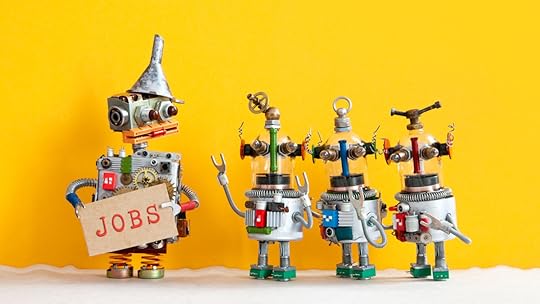
In hindsight, it’s easy to see that in nearly every generation, innovation impacted job markets and employment trends. It’s not news that human workers are replaced by new technology and that, fortunately, new technology spurs the creation of new jobs and job categories. The list of outdated or diminished jobs is almost nostalgic: switchboard operators, travel agents, librarians.
And twenty years from now we might be fondly recalling our former interactions with the likes of postal carriers, taxi drivers, flight attendants, and bank tellers.
In fact, the job market is an excellent barometer of society’s priorities and technology trends. Pick nearly any futurist topic we’ve explored this year and it’s not too hard to imagine the new jobs that will surround it.
In many cases, the new jobs and categories of jobs will be quite technical as people work to bring blockchain, cryptocurrency, the metaverse, self-driving transportation, and other IT innovations to fruition and then into our daily lives.
Further below, I’ve identified 57 technology-related new jobs in 15 industries that will directly support or respond to these kinds of technology breakthroughs.
It’s Not Just ITBut before we get there, we should recognize that in some cases, technology breakthroughs will lead to more than just technical jobs. Take geriatric services, for example.
Thinking beyond COVID, medical technology is extending life expectancy for seniors. That trend will continue to drive a critical demand for a variety of personal care services for retirees, who are likely to enjoy over 20 years of time after retirement at 65.
And not to overgeneralize or typecast seniors, but as technology increasingly supports our daily lives, many of them will need personalized support just to keep up. Their challenge today may be programming the TV remote or the thermostat, but it’s only going to get more complicated from there. The solution? Personal IT assistants and generalized IT help desks. Sounds like a mission for AMAC and AARP!
IT Redefining JobsI should also note that technology is also changing and even upgrading certain jobs, but not necessarily doing away with them. Construction workers and auto mechanics, for example, used to be generalists. But with new technology-based tools, and the need for training on those tools, specialization in these kinds of blue-collar jobs will increase. This specialization increases these workers’ labor clout, market value, and compensation.
There’s another category of jobs enhanced by technology and other tools where the job is the same but the work is not. Recently I’ve watched laborers build a retaining wall and a brick wall on the property across the street. Back-breaking work, right? Not so much as you’d think anymore. These laborers now have access to specialized backhoes, caterpillars, and other equipment downsized for residential work compared to what you’d find on a typical commercial construction site. Thanks to this equipment, you don’t see anyone carrying heavy bricks from the truck to the wall or using a shovel.
What About Retail?The future isn’t as bright for the approximately 32 million Americans who work in retail jobs. Consumer demand isn’t going away, but how retailers choose to meet that demand will continue to evolve with technology innovations that drive efficiency.
Current trends in e-commerce and in-store automation mean there will be fewer traditional customer-facing jobs. But some of these will be replaced by new jobs managing these platforms and servicing these systems. As with the next generation of blue-collar jobs, these specialty positions may require specialized skills with a level of IT training.
Basically we will see technology taking away much of the mind-numbing tedium of retail just as it did for so many factory workers.
The Cool New JobsSo far we’ve only talked about incremental changes and the evolution of current employment situations. On another level, we’ll see entire new professions within entire new industries built around new technology. We’ll see job descriptions that weren’t even imaginable 20 years ago.
Yes, there will be high-level computer science jobs with smart people creating new breakthroughs and new versions of breakthroughs.
But at the same time, there will be the need to define and fill some less-obvious positions along with spin-off jobs made possible and necessary by those breakthroughs.
 57 Jobs of the Future
Here’s a sampling of future jobs. Some may already sound familiar and plausible. Others are just a few years away. But it would be relatively easy to concoct others and maybe add over a hundred more to this list:
Metaverse JobsMetaverse World DesignersAvatar DesignersMetaverse Storefront Creators, Developers, and OperatorsMetaverse Law EnforcementDAO AttorneysCryptocurrencyCrypto Coaches and AdvisorsCrypto Mortgage SpecialistsDecentralization ManagersFuture EntertainmentRobot Personality EngineersMacro VR Projection ArtistsEntertainment Trends AnalyzerCommercial Drone IndustrySwarmbot EngineersSwarmbot EntertainersDrone Command Center OperatorsSmart CitiesInsect, Rodent, and Snake MonitorsNoise AnalyzersPolice Drone OperatorsHealthcareAmnesia Surgeons – Doctors who are skilled in removing bad memories or destructive behavior.Memory Augmentation Therapists – Entertainment is all about the great memories it creates. Creating a better grade of memories can dramatically change who we are and pave the way for an entirely new class of humans.Digital Implant ArchitectsGenetic TroubleshootersBody Part FabricatorsAI Health ManagersDigital TwinsSensor EngineersRemote Operation DesignersDigital Twin Command CentersBig DataPrivacy StrategistsPersonal Data Managers, Archivists, and ProtectorsBlockchain DesignersVulnerabilities Analyst 3D Printed Houses3D Print Architects, Designers, and EngineersFabrication EngineersSite Prep and Planning CrewAutonomous TransportationFuture Highway Architects and DesignersTraffic AnalyzersDrone Taxi Ground CrewCultured Meat IndustryGrowth Process TechnicianVat ManagersDemand Tracking PlannersFuture EducationAI Memory Assessment EngineersAI Coach-Bot DesignersAI Teacher-Bot DevelopersFuture AgricultureSoil Analyzers, Preppers, and ManagersCrop TechsHarvester Team Planners and SupervisorsIrrigation ManagersCommercial Space IndustriesSpace-based Power GeneratorsAsteroid TrackersSpace PilotsSpace Journey AttendantsRobotsAI Capabilities EngineerRobot Classification Gurus – Different laws will apply to different classifications of robotsOperator Certification SpecialistsOtherDe-extinction EngineersCan We / Should We EthicistsRansomware Hostage NegotiatorsRansomware Police
As we’ve discussed in earlier columns, our primary and secondary school systems need to be thinking outside the box. That includes K-12, trade schools, and colleges. Each one should continually evaluate and revise their curricula and major courses of study so that we’re well-prepared to fill future jobs like these – and the hundreds of others that come to mind – so we can fully employ our future workforce and meet the needs of future societies.
Translate This PageSelect LanguageAfrikaansAlbanianAmharicArabicArmenianAzerbaijaniBasqueBelarusianBengaliBosnianBulgarianCatalanCebuanoChichewaChinese (Simplified)Chinese (Traditional)CorsicanCroatianCzechDanishDutchEnglishEsperantoEstonianFilipinoFinnishFrenchFrisianGalicianGeorgianGermanGreekGujaratiHaitian CreoleHausaHawaiianHebrewHindiHmongHungarianIcelandicIgboIndonesianIrishItalianJapaneseJavaneseKannadaKazakhKhmerKoreanKurdish (Kurmanji)KyrgyzLaoLatinLatvianLithuanianLuxembourgishMacedonianMalagasyMalayMalayalamMalteseMaoriMarathiMongolianMyanmar (Burmese)NepaliNorwegianPashtoPersianPolishPortuguesePunjabiRomanianRussianSamoanScottish GaelicSerbianSesothoShonaSindhiSinhalaSlovakSlovenianSomaliSpanishSudaneseSwahiliSwedishTajikTamilTeluguThaiTurkishUkrainianUrduUzbekVietnameseWelshXhosaYiddishYorubaZulu
#goog-gt-tt {display:none !important;}
.goog-te-banner-frame {display:none !important;}
.goog-te-menu-value:hover {text-decoration:none !important;}
.goog-text-highlight {background-color:transparent !important;box-shadow:none !important;}
body {top:0 !important;}
#google_translate_element2 {display:none!important;}
function googleTranslateElementInit2() {new google.translate.TranslateElement({pageLanguage: 'en',autoDisplay: false}, 'google_translate_element2');}
function GTranslateGetCurrentLang() {var keyValue = document['cookie'].match('(^|;) ?googtrans=([^;]*)(;|$)');return keyValue ? keyValue[2].split('/')[2] : null;}
function GTranslateFireEvent(element,event){try{if(document.createEventObject){var evt=document.createEventObject();element.fireEvent('on'+event,evt)}else{var evt=document.createEvent('HTMLEvents');evt.initEvent(event,true,true);element.dispatchEvent(evt)}}catch(e){}}
function doGTranslate(lang_pair){if(lang_pair.value)lang_pair=lang_pair.value;if(lang_pair=='')return;var lang=lang_pair.split('|')[1];if(GTranslateGetCurrentLang() == null && lang == lang_pair.split('|')[0])return;var teCombo;var sel=document.getElementsByTagName('select');for(var i=0;i<sel.length;i++)if(/goog-te-combo/.test(sel[i].className)){teCombo=sel[i];break;}if(document.getElementById('google_translate_element2')==null||document.getElementById('google_translate_element2').innerHTML.length==0||teCombo.length==0||teCombo.innerHTML.length==0){setTimeout(function(){doGTranslate(lang_pair)},500)}else{teCombo.value=lang;GTranslateFireEvent(teCombo,'change');GTranslateFireEvent(teCombo,'change')}}
Search for: Recent Posts 57 Jobs of the Future What Happens When We Lose Control of AI? Smart Contracts are Here and They’re Getting Smarter Categories Artificial Intelligence Business Trends Future of Agriculture Future of Banking Future of Education Future of Healthcare Future of Transportation Future of Work Future Scenarios Future Trends Futurist Thomas Frey Insights Global Trends Predictions Social Trends Technology Trends Speaking TopicsFuture of Healthcare – “Is Death our only Option?Future of AIFuture of Industries
The post 57 Jobs of the Future appeared first on Futurist Speaker.
December 15, 2021
What Happens When We Lose Control of AI?
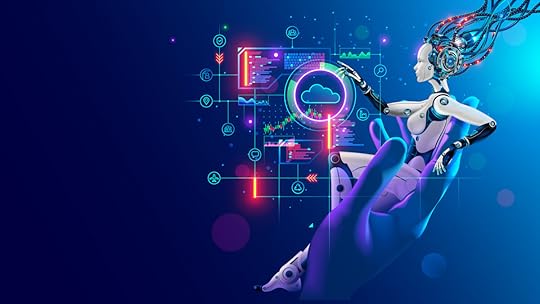
You’d think it would be difficult to find something that Stephen Hawking, Elon Musk, Tim Cook, Andrew Ng, and Vladimir Putin all agree on, but here’s one: All agree that artificial intelligence (AI) comes with inherent risks that we know of, as well as a few risks we haven’t fathomed yet. That said, they all agree that it comes with “colossal opportunities.”
Here’s how an AI-enabled process typically works. A person identifies an objective, the AI-empowered machines reach out to all available knowledge sources to perceive truths and conditions related to that objective, and then they take action to achieve that goal. Whether that action is to “inform” or “do” is set in advance, and that’s where everyone becomes concerned, because:
AI can make mistakesHuman programmers can make mistakesHuman programmers can be bad actorsRegarding that first item on the list, we need to look no further than IBM’s Watson. Once considered the epitome of AI, just a few years ago, in spite of digesting troves of medical information, Watson developed a troubling tendency of occasionally issuing faulty and dangerous clinical guidance and directives to doctors for patient cancer treatments. Fortunately, doctors recognized the mistakes.
So far so good. Humans were still in charge.
If AI Runs the ShowBut at what point will humans stop being in charge of the tasks we assign to smarter and smarter versions of AI? Regarding the second and third concern noted above, outside of science fiction, it certainly is plausible that an inept or devious programmer could bridge the chasm between AI as an information source and AI as a human substitute taking action, transitioning to a more dangerous “do” outcome, rather than “inform.”
Cyber AI terrorists will undoubtedly learn to leverage this trick.
One such unfortunate scenario would be a programmer casually instructing AI to eradicate cancer. If that human programmer didn’t establish appropriate parameters, the AI might determine that the optimal way to eliminate cancer would be to eradicate anyone with cancerous cells in their body. Since everyone has cancer cells in their body, this would instantly turn into a mass extinction event.
However, if AI is granted or seizes the ability to access the Internet of things (IoT) in order to analyze patient data in real-time, the AI may shift from the “inform” to the “do” instruction and deploy that strategy, pulling plugs and worse.
That seems extreme, yes. But smarter people than me are voicing similar concerns. The end game according to many deep thinkers is that AI could cause the end of mankind or the world as we know it.
If AI is given control
We’ve had some funny discussions recently about someone appearing before a judge, and the person on trial uses the defense, “It wasn’t me, my AI did it!”
“My AI decided on its own to blackmail 5,000 people yesterday!”“My AI decided on its own to try hacking into the Pentagon, or the IRS, or the Russian Embassy!”“My AI decided on its own to alter the Harvard, Stanford, or MIT grading system!”“My AI decided on its own to set up a bank account in the Cayman Islands!”After all, the metaverse is a place where we can create idealized avatars of ourselves, and it may be just a matter of time until the lines between the real universe and the metaverse are blurred so that it will be difficult to tell who’s who.
Can it Happen?While these scenarios sound far-fetched and even a bit humorous, we certainly need to determine if AI advances are setting us on the track of an autonomous and dangerous version of AI.
That was the topic of discussion on the Futurati Podcast interview we had with Dr. Roman Yampolskiy. Dr. Yamplskiy, a tenured professor of Computer Science at the University of Louisville and Director of the Cyber Security Lab, is convinced that as long as we keep developing AI, it will be just a matter of time before it takes over. All attempts to “box it in” or insert other ameliorating strategies can only buy time until we face the inevitable.
A recent study published in the Journal of Artificial Intelligence Research regarding the plausibility of catastrophic outcomes from superintelligent, AI-enabled technology came to a similar conclusion. The authors said it would be impossible to contain or restrain these increasingly smarter AI processes, as that would go against the very nature of supercomputing.
And Manuel Cebrian, one of the co-authors of that study, pointed out that we’ve already strayed down that path: “There are already machines that carry out important tasks independently without the programmers fully understanding how they learned it, a situation that could at some point be uncontrollable and dangerous for humanity.”
Other observers liken this inevitability to the more pessimistic views about climate change. Some people feel we may already be at the point where any steps we can reasonably take to reduce CO2 emissions will at best only delay a cataclysmic ecological reality, given the damage so far and our momentum in that direction.
 Can We Stop or Significantly Delay an AI Takeover?
Just like with global warming, with governments working collectively to address that threat through the United Nations, we could possibly see collective action around to prevent an AI cataclysmic event. Conceivably countries could act collectively to put rules and safeguards in place, but if UN’s efforts on global warming are any indication, we’re likely to see uneven compliance across countries and the application of game theories where malevolent countries rely on complying countries to do the right thing to their competitive disadvantage.
Thus, given the tremendous benefits AI technology can provide a nation, combined with the presence of nations and authoritarian states that tend to refuse to be bound by international standards, it’s not at all certain we could develop any reasonably enforceable worldwide limitations on AI applications. And like with every new strain of COVID, bad things are rarely contained by borders.
Most nations on earth have signed on to the OECD’s nonbinding, recommended Principles on Artificial Intelligence that seem to focus on the collective good of AI while acknowledging that related risks should continually be explored. At least it’s a start.
Similarly, there seem to be a number of professional organizations for AI experts. But these, too, apparently are more engaged in sharing best practices than setting enforceable guidelines and professional standards. Hopefully, leaders in these organizations will coalesce around a code of conduct to place appropriate guardrails regarding the exploitation of AI. But all it takes is one bad actor – a criminal or a scientist compelled by fame, curiosity, or their government – to upset the apple cart in spite of the best intentions of 99.99% of AI computer scientists.
How Might it All End?It’s not easy for a futurist to speculate about the end of the future.
Yes, AI will eventually break down, and yes we may have the ability to turn off the power and disconnect communication lines, but the problem is far bigger than those last-ditch efforts.
The tipping point will be when AI is no longer a tool used for research and specific, limited process improvement. It will happen when AI evolves into a general-purpose, life-enhancing strategy that’s given carte blanche to solve a pressing global problem, manage a wide swath of our lives, or improve an area of national priority: national security, climate change, natural resource allotment, wealth distribution, and just about any major vexing problem or challenge we face.
It will happen as soon as we say once too often, and in the wrong context, that “a machine can do this better than a human.”
That is what will open an AI Pandora’s Box that we won’t be able to close.
Translate This PageSelect LanguageAfrikaansAlbanianAmharicArabicArmenianAzerbaijaniBasqueBelarusianBengaliBosnianBulgarianCatalanCebuanoChichewaChinese (Simplified)Chinese (Traditional)CorsicanCroatianCzechDanishDutchEnglishEsperantoEstonianFilipinoFinnishFrenchFrisianGalicianGeorgianGermanGreekGujaratiHaitian CreoleHausaHawaiianHebrewHindiHmongHungarianIcelandicIgboIndonesianIrishItalianJapaneseJavaneseKannadaKazakhKhmerKoreanKurdish (Kurmanji)KyrgyzLaoLatinLatvianLithuanianLuxembourgishMacedonianMalagasyMalayMalayalamMalteseMaoriMarathiMongolianMyanmar (Burmese)NepaliNorwegianPashtoPersianPolishPortuguesePunjabiRomanianRussianSamoanScottish GaelicSerbianSesothoShonaSindhiSinhalaSlovakSlovenianSomaliSpanishSudaneseSwahiliSwedishTajikTamilTeluguThaiTurkishUkrainianUrduUzbekVietnameseWelshXhosaYiddishYorubaZulu
#goog-gt-tt {display:none !important;}
.goog-te-banner-frame {display:none !important;}
.goog-te-menu-value:hover {text-decoration:none !important;}
.goog-text-highlight {background-color:transparent !important;box-shadow:none !important;}
body {top:0 !important;}
#google_translate_element2 {display:none!important;}
function googleTranslateElementInit2() {new google.translate.TranslateElement({pageLanguage: 'en',autoDisplay: false}, 'google_translate_element2');}
function GTranslateGetCurrentLang() {var keyValue = document['cookie'].match('(^|;) ?googtrans=([^;]*)(;|$)');return keyValue ? keyValue[2].split('/')[2] : null;}
function GTranslateFireEvent(element,event){try{if(document.createEventObject){var evt=document.createEventObject();element.fireEvent('on'+event,evt)}else{var evt=document.createEvent('HTMLEvents');evt.initEvent(event,true,true);element.dispatchEvent(evt)}}catch(e){}}
function doGTranslate(lang_pair){if(lang_pair.value)lang_pair=lang_pair.value;if(lang_pair=='')return;var lang=lang_pair.split('|')[1];if(GTranslateGetCurrentLang() == null && lang == lang_pair.split('|')[0])return;var teCombo;var sel=document.getElementsByTagName('select');for(var i=0;i<sel.length;i++)if(/goog-te-combo/.test(sel[i].className)){teCombo=sel[i];break;}if(document.getElementById('google_translate_element2')==null||document.getElementById('google_translate_element2').innerHTML.length==0||teCombo.length==0||teCombo.innerHTML.length==0){setTimeout(function(){doGTranslate(lang_pair)},500)}else{teCombo.value=lang;GTranslateFireEvent(teCombo,'change');GTranslateFireEvent(teCombo,'change')}}
Search for: Recent Posts What Happens When We Lose Control of AI? Smart Contracts are Here and They’re Getting Smarter Using the Transformative Nature of Bitcoin to Understand Our Future Categories Artificial Intelligence Business Trends Future of Agriculture Future of Banking Future of Education Future of Healthcare Future of Transportation Future of Work Future Scenarios Future Trends Futurist Thomas Frey Insights Global Trends Predictions Social Trends Technology Trends Speaking TopicsFuture of Healthcare – “Is Death our only Option?Future of AIFuture of Industries
The post What Happens When We Lose Control of AI? appeared first on Futurist Speaker.
December 8, 2021
Smart Contracts are Here and They’re Getting Smarter
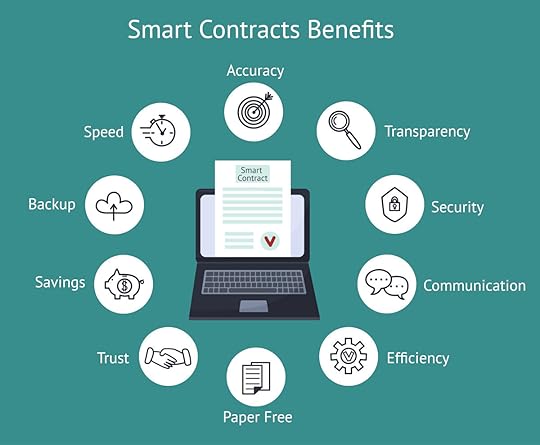
In a recent podcast interview, Max Galka, CEO of Elementus.io (a “search engine for non-private blockchain”) explained the fundamentals of blockchain-based smart contracts using a travel insurance policy as an example.
In that scenario, a person taking out a travel insurance policy would instantly have the potential payout amount put into escrow by the insurer. If the plane left on time the money would revert to the insurance company, but if it was delayed, money would be transferred to the policyholder.
Departure and arrival times presumably would be defined in the policy in terms of plane pushback, wheels up, and the permission to de-board. Since these conditions are factual and not subject to interpretation, no lawyers or other parties are needed to determine whether on-time departure and arrival was achieved.
This may not be the best example, since policyholders might try to game the system, perhaps by actually trying to delay the plane. And insurance companies don’t have sufficient capital to hold in reserve at all times to cover every one of their possible obligations.
But the illustration makes the point about how smart contracts are self-executing. And they’re about to enter the mainstream of our lives in many scenarios similar to that illustration.
What’s Smart about Smart Contracts?First, a note about terminology. In today’s IT world, the term “smart contract” is broadly applied to refer to the placement of nearly any program or decentralized application (DApp) on the blockchain.
For our purposes, though, we’re going to explore the concept in the context of smart legal contracts, contracts in the traditional sense of the word – agreements between parties that take the form of programs placed on the blockchain where the provisions are monitored and executed.
In this context, the concept of smart contracts emerged well before the advent of blockchain technology. The person who coined the phrase was a computer scientist, Nick Szabo, who likened the concept to the mechanical technology behind a vending machine.
Mechanisms in the vending machine verify that the purchaser has deposited sufficient money, verify that they’ve made a valid selection, and determine whether change is due. Only then does it deliver the product. No human being acts as an intermediary to verify the transaction – to the chagrin of someone who sees their Milky Way get hopelessly wedged so it can’t fall down the chute!
 What does Blockchain Have to Do with it?
Yes, vending machines are pretty smart and they can manage one type of simple transaction. However, they’re not infallible and they certainly can’t manage a contractual home purchase transaction, for example.
In contrast, blockchain is perfectly suited to manage the consecutive “if/when … then” aspects of more complex contractual agreements as they monitor and verify steps of compliance and then authorize subsequent steps.
That’s because blockchain can manage many types of data supporting the contract and can keep that data secure so the underlying contract can’t be subsequently altered. The terms of the contract, including responsibilities of parties and executable actions, are programmed into actionable code.
There’s no middle party, no second-guessing, no varying interpretations, no delays. The contracts on the blockchain are “smart” because they’re self-executing.
The Future of Smart ContractsWe already have smart contracts – most typically in transactions with niche companies that are already in the cryptocurrency or blockchain space.
Smart contracts will very soon be far more mainstream as people increasingly understand and gain confidence in blockchain technology.
It’s curious that so many detractors impulsively say they’ll never place these kinds of legal agreements in a blockchain environment because blockchain isn’t 100% secure. They’re ignoring the fact that the IT infrastructure at the average bank, brokerage house, or savings and loan is hackable and fallible too.
What kinds of transactions and contractual agreements can be managed through smart contracts? Pretty much any financial transaction – loans, insurance, investments, renting, wagering, and purchases – can and will be secured and policed on blockchain systems in the future.
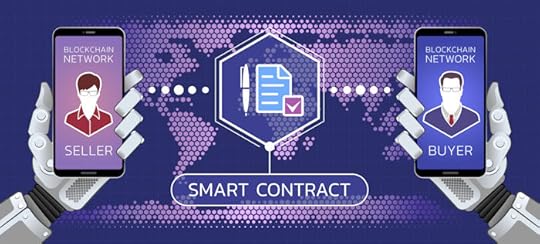 The Future of Smart Contracts
But can smart contracts be used to enforce non-monetary agreements? Those might be harder to structure, and as a result we’ll see more and more agreements that include a financial element.
Take the case of written, non-financial agreements between two companies, for example regarding swapped services or an understanding that one party will receive preferential service levels. It’s more difficult to craft a smart contract that automatically guarantees satisfaction to the injured party when no financial penalties are on the line.
Disputes stemming from these kinds of contractual arrangements currently might require an attorney or a session in small claims courts. However, in the future these kinds of service contracts will include some type of financial guarantee – a deposit, for example, can easily transform this agreement into one that can be policed, managed and enforced through a smart contract.
Remaining ChallengesBefore smart contracts are more widely used, there are two primary concerns and downsides that will have to be addressed.
First, to place a contract onto the blockchain, all of the necessary legalese has to be written into computer code. Lawyers are not typically coders and coders are not typically lawyers. This requires an element of trust and expertise so the parties can be confident that the code within the smart contract truly reflects the legal intent.
Second, a blockchain-based smart contract is “written in stone.” The blockchain is decentralized, and usually that works for the good. But it also means that there’s no central authority or referee who can step in if one party feels aggrieved or even conned.
Those issues will be resolved over time. On the first matter, as more and more smart contracts are drawn up, they’ll serve as templates for similar agreements. And for more complex legal matters, we’ll see the emergence of a new specialty that bridges the gap between traditional and coded legal drafting.
Regarding the issue of fraud, no doubt the legal profession will attempt to try to step in to serve in some capacity as a legal recourse. More likely, though, the IT community will design a decentralized way to adjudicate these cases.
More and more aspects of our lives are being automated – cars, trucks, automated grocery checkouts … and these functions certainly have the potential to make things run faster, cheaper, and safer. But like truck drivers and grocery checkout clerks, you can now add certain legal contract specialists to the list of soon-to-be-displaced workers that will need to reinvent themselves in the future.
Translate This PageSelect LanguageAfrikaansAlbanianAmharicArabicArmenianAzerbaijaniBasqueBelarusianBengaliBosnianBulgarianCatalanCebuanoChichewaChinese (Simplified)Chinese (Traditional)CorsicanCroatianCzechDanishDutchEnglishEsperantoEstonianFilipinoFinnishFrenchFrisianGalicianGeorgianGermanGreekGujaratiHaitian CreoleHausaHawaiianHebrewHindiHmongHungarianIcelandicIgboIndonesianIrishItalianJapaneseJavaneseKannadaKazakhKhmerKoreanKurdish (Kurmanji)KyrgyzLaoLatinLatvianLithuanianLuxembourgishMacedonianMalagasyMalayMalayalamMalteseMaoriMarathiMongolianMyanmar (Burmese)NepaliNorwegianPashtoPersianPolishPortuguesePunjabiRomanianRussianSamoanScottish GaelicSerbianSesothoShonaSindhiSinhalaSlovakSlovenianSomaliSpanishSudaneseSwahiliSwedishTajikTamilTeluguThaiTurkishUkrainianUrduUzbekVietnameseWelshXhosaYiddishYorubaZulu
#goog-gt-tt {display:none !important;}
.goog-te-banner-frame {display:none !important;}
.goog-te-menu-value:hover {text-decoration:none !important;}
.goog-text-highlight {background-color:transparent !important;box-shadow:none !important;}
body {top:0 !important;}
#google_translate_element2 {display:none!important;}
function googleTranslateElementInit2() {new google.translate.TranslateElement({pageLanguage: 'en',autoDisplay: false}, 'google_translate_element2');}
function GTranslateGetCurrentLang() {var keyValue = document['cookie'].match('(^|;) ?googtrans=([^;]*)(;|$)');return keyValue ? keyValue[2].split('/')[2] : null;}
function GTranslateFireEvent(element,event){try{if(document.createEventObject){var evt=document.createEventObject();element.fireEvent('on'+event,evt)}else{var evt=document.createEvent('HTMLEvents');evt.initEvent(event,true,true);element.dispatchEvent(evt)}}catch(e){}}
function doGTranslate(lang_pair){if(lang_pair.value)lang_pair=lang_pair.value;if(lang_pair=='')return;var lang=lang_pair.split('|')[1];if(GTranslateGetCurrentLang() == null && lang == lang_pair.split('|')[0])return;var teCombo;var sel=document.getElementsByTagName('select');for(var i=0;i<sel.length;i++)if(/goog-te-combo/.test(sel[i].className)){teCombo=sel[i];break;}if(document.getElementById('google_translate_element2')==null||document.getElementById('google_translate_element2').innerHTML.length==0||teCombo.length==0||teCombo.innerHTML.length==0){setTimeout(function(){doGTranslate(lang_pair)},500)}else{teCombo.value=lang;GTranslateFireEvent(teCombo,'change');GTranslateFireEvent(teCombo,'change')}}
Search for: Recent Posts Smart Contracts are Here and They’re Getting Smarter Using the Transformative Nature of Bitcoin to Understand Our Future The End of the Internal Combustion Engine Categories Artificial Intelligence Business Trends Future of Agriculture Future of Banking Future of Education Future of Healthcare Future of Transportation Future of Work Future Scenarios Future Trends Futurist Thomas Frey Insights Global Trends Predictions Social Trends Technology Trends Speaking TopicsFuture of Healthcare – “Is Death our only Option?Future of AIFuture of Industries
The post Smart Contracts are Here and They’re Getting Smarter appeared first on Futurist Speaker.
December 1, 2021
Using the Transformative Nature of Bitcoin to Understand Our Future

Lately Bitcoin and the blockchain have been occupying more and more of my attention and I recently found myself watching Andreas Antonopoulos’s excellent talk “Introduction to Bitcoin: what is bitcoin and why does it matter?”.
It does such a terrific job of encapsulating Bitcoin’s transformative potential and I wanted to translate this into some likely futurist scenarios in the years ahead.
Andreas has become a world-famous advocate of Bitcoin-related technologies, and he’s published five books on the subject, but it took time for him to become convinced enough to turn his obsession and advocacy into his vocation.
His experience followed a now-familiar two-part process. First, he dismissed Bitcoin as “nerd money” for gamblers and drug dealers. Then he grasped its potential and became completely obsessed with it.
What makes Bitcoin so captivating? It’s much, much more than what it appears to be.
Bitcoin is not a traditional currency, or a company, or a product. Rather, it’s a platform of trust.
All forms of currency are based on trust. Not just those that are commonly referred to as fiat money, which means “trust,” but absolutely every form of currency is based on some level of trust.
Phrased more philosophically, Bitcoin is the concept of decentralization applied to the exchange of value.
To get our minds wrapped around this idea, it helps to take a step back and ask, “what is money?”
What is money?A common economic definition of money is “any good or asset that is accepted on one side of every exchange”.
If I’m buying something, the seller will almost always accept money. And if I’m selling something, I will almost always accept money.
This characteristic of money means that simply possessing it lets you purchase a near-infinite variety of goods, services, and experiences.
Money itself typically isn’t valuable, though commodity money like gold might have industrial uses. But since money is tradable for things that are worthwhile, such as the goods or services we actually want to purchase, it opens up whole new opportunities for specialization, trade, and mutual profit.
If you don’t find this point fully convincing, consult the first few chapters of any introductory economic textbook. Economics 101 almost always has a setting-the-stage section talking about all the ways in which money is superior to barter.
For most people it’s difficult to grasp all the nuances of money because it’s one of the oldest technologies in existence, so deeply embedded in our lives that we take it for granted.
However, today’s monetary systems are old and tired, with so many patches in place that even the patches have patches.
 Why is decentralized money potentially revolutionary?
Over its long history, the human race has had to struggle through five major paradigm shifts in money:
The emergence of barterThe first abstractions of value (e.g., shells and beads)The move to metallic monies, like gold and silverThe move to paper fiat moneyThe move to plastic money (e.g., credit cards)Andreas maintains that the 6th revolution in money started with the introduction of #Bitcoin and the creation of the first network money.
Like the Internet, the Bitcoin blockchain is completely decentralized and allows for currency to run as an application.
Approaching it from another perspective, Bitcoin isn’t “money for the Internet,” it’s the “Internet of money.”
This line of thinking is more than a clever soundbite; it’s a profound truth that gets at the heart of why so many people are excited about this space.
What the decentralized properties of the Internet made possible for communication, the decentralized properties of the blockchain make possible for money.
Bitcoin has emerged as the first open, global currency not beholden to any nation state, institution, or central authority.
It is also programmable. Anyone can write applications on top of it and launch them, without asking permission from gatekeepers.
Why do decentralization and programmability matter?Decentralization and programmability are the same attributes or characteristics that have made the open-source movement so exponentially innovative. From out of the late-night musings and buzzing of programmers that contributed to the confusion of that community have emerged staggering examples of emergent order that has irrevocably changed the world, almost always for the better.
Tons of software, including most of the code powering your computer, your access to the Internet, and even the pixels displaying on your screen right now, was written by decentralized open-source communities.
And now, there’s a monetary system that can be used and modified in the same way.
Putting it all together, we have:
An ancient technology (money) that forms part of the core stack that civilization is running on.The first protocol which allows for experimenting with that technology at the scale and speed of open-source software.From this vantage point, you don’t need much imagination to see the potential.
What’s the future of Bitcoin?Of course, we’re still in the very early days of the blockchain and trying to predict where it’ll be in fifty years is like trying to foresee the emergence of Amazon from the crude Internet of 1975.
Still, there are indications, and as the co-host of the Futurati Podcast noted, we are being exposed to a variety of insightful glimpses of what’s in the pipeline.
The decentralized, anonymized nature of the major cryptocurrencies will prevail.
Many people, especially in the older generation, will remain confused by cryptocurrency. They’ll stick to national currencies, giving traditional banking a bit of staying power. Increasingly, though, these people will miss out on investment opportunities and efficient financial services.
It may become harder and harder for them to find retailers that accept their dollar-based credit cards without adding a surcharge.
At the same time, cryptocurrencies are seen as “geeky,” and it will take a serious upgrade to their user interfaces for them to reach mass adoption.
Speaking with noted crypto-evangelist Joel Comm, he helped us understand the possibilities of using non-fungible tokens (NFTs) to store documents like property deeds and driver’s licenses. This could substantially reduce the red tape involved in many routine activities while reducing the likelihood of fraud and legal disputes.
Corey Hoffstein, of Newfound Research, talked to us about the burgeoning market for NFTs and the challenges of applying traditional financial concepts to the crypto asset ecosystem.
And of course, famed Bitcoin podcaster Peter McCormack had a lot to say about the double spending problem, Bitcoin versus gold, and Bitcoin versus every other major cryptocurrency.
There are going to be a number of monumental new experiments with this technology, and I’m thrilled to be here to see them happen.
Translate This PageSelect LanguageAfrikaansAlbanianAmharicArabicArmenianAzerbaijaniBasqueBelarusianBengaliBosnianBulgarianCatalanCebuanoChichewaChinese (Simplified)Chinese (Traditional)CorsicanCroatianCzechDanishDutchEnglishEsperantoEstonianFilipinoFinnishFrenchFrisianGalicianGeorgianGermanGreekGujaratiHaitian CreoleHausaHawaiianHebrewHindiHmongHungarianIcelandicIgboIndonesianIrishItalianJapaneseJavaneseKannadaKazakhKhmerKoreanKurdish (Kurmanji)KyrgyzLaoLatinLatvianLithuanianLuxembourgishMacedonianMalagasyMalayMalayalamMalteseMaoriMarathiMongolianMyanmar (Burmese)NepaliNorwegianPashtoPersianPolishPortuguesePunjabiRomanianRussianSamoanScottish GaelicSerbianSesothoShonaSindhiSinhalaSlovakSlovenianSomaliSpanishSudaneseSwahiliSwedishTajikTamilTeluguThaiTurkishUkrainianUrduUzbekVietnameseWelshXhosaYiddishYorubaZulu
#goog-gt-tt {display:none !important;}
.goog-te-banner-frame {display:none !important;}
.goog-te-menu-value:hover {text-decoration:none !important;}
.goog-text-highlight {background-color:transparent !important;box-shadow:none !important;}
body {top:0 !important;}
#google_translate_element2 {display:none!important;}
function googleTranslateElementInit2() {new google.translate.TranslateElement({pageLanguage: 'en',autoDisplay: false}, 'google_translate_element2');}
function GTranslateGetCurrentLang() {var keyValue = document['cookie'].match('(^|;) ?googtrans=([^;]*)(;|$)');return keyValue ? keyValue[2].split('/')[2] : null;}
function GTranslateFireEvent(element,event){try{if(document.createEventObject){var evt=document.createEventObject();element.fireEvent('on'+event,evt)}else{var evt=document.createEvent('HTMLEvents');evt.initEvent(event,true,true);element.dispatchEvent(evt)}}catch(e){}}
function doGTranslate(lang_pair){if(lang_pair.value)lang_pair=lang_pair.value;if(lang_pair=='')return;var lang=lang_pair.split('|')[1];if(GTranslateGetCurrentLang() == null && lang == lang_pair.split('|')[0])return;var teCombo;var sel=document.getElementsByTagName('select');for(var i=0;i<sel.length;i++)if(/goog-te-combo/.test(sel[i].className)){teCombo=sel[i];break;}if(document.getElementById('google_translate_element2')==null||document.getElementById('google_translate_element2').innerHTML.length==0||teCombo.length==0||teCombo.innerHTML.length==0){setTimeout(function(){doGTranslate(lang_pair)},500)}else{teCombo.value=lang;GTranslateFireEvent(teCombo,'change');GTranslateFireEvent(teCombo,'change')}}
Search for: Recent Posts Using the Transformative Nature of Bitcoin to Understand Our Future The End of the Internal Combustion Engine Are we heading towards a Technological Singularity? Categories Artificial Intelligence Business Trends Future of Agriculture Future of Banking Future of Education Future of Healthcare Future of Transportation Future of Work Future Scenarios Future Trends Futurist Thomas Frey Insights Global Trends Predictions Social Trends Technology Trends Speaking TopicsFuture of Healthcare – “Is Death our only Option?Future of AIFuture of Industries
The post Using the Transformative Nature of Bitcoin to Understand Our Future appeared first on Futurist Speaker.
November 17, 2021
The End of the Internal Combustion Engine

Two recent developments will speed up the world’s transition to all-electric cars … and the demise of automobile/light vehicle internal combustion engines (ICE).
At the recent COP 26 conference in Glasgow, more than 100 entities signed the Glasgow Accord on Zero Emissions Vehicles to phase out ICE vehicles by 2035. Signatories included Ford and General Motors. Canada and the U.K. signed on, along with California, New York, Washington State, and the City of Dallas.The recently enacted $1.2 trillion infrastructure bill in the U.S. includes $7.5 billion in funding for electric vehicle (EV) charging stations. The goal is to have 500,000 stations nationwide by 2030. We have roughly 100,000 at this time.A Tipping PointPolitics aside, of these two developments, the infrastructure bill funding will have the biggest impact on our complete transition to EVs.
Most automakers have been offering at least one EV model for several years. But several technological and infrastructure issues have hurt their sales: the limited range for these vehicles on a single charge, the dearth of charging stations, and the fact that charging an EV even to 80% can take as long as 30 minutes. In the eyes of many consumers, these make an EV impractical as an “only car.”
However, new innovations in batteries and rapid charging are on the horizon. We’ll also see the proliferation of promising, on-the-go charging technologies that we’ve explored recently. I’ve been predicting a 1,000-mile range and 10-minute recharge time by 2025. We’ll need a couple more breakthroughs for that to happen but we’re quickly moving in that direction.
Along with that, when rapid-charging EV stations are as commonplace as gas stations, consumer hesitancy will fade away fast – well before 2035.
How Close Are We?In 2020, electric vehicles made up 4.5% of new vehicle sales worldwide and represented roughly 1% of all the vehicles on the road. European countries led the way.
Let’s state the obvious, though. The transition to EVs will not happen at the same pace and by the same time in every country and region in the world.
Infrastructure and other resources are not and will not be equally distributed to make that happen. The transition also may not be as big a priority for countries that are facing far more serious challenges – like wars, coups, famines, and other imminent threats. So, we’ll see secondary markets for used ICE vehicles within less-developed countries for a decade or two. Localized auto manufacturers in those locations and others might even continue to produce ICE vehicles for local sale.

What’s the latest from the major international automakers on their transition to zero emission vehicles (whether battery or hydrogen fuel cell technology)? Here are a few details about their current plans:
Audi – All new models released after 2026 will be EVs. However, the company will continue to build their current gas, diesel, and hybrid models until the early 2030s.Volvo – By 2025, 50% of their car sales will be EVs and 50% will be hybrids. After 2030, the company will only produce EVs.Ford – By 2025, 40-50% of their global sales will be EVs, and within Europe that figure will be 100%.Nissan – All their new cars sold in Japan, China, the U.S., and Europe will be EVs by the early 2030s.Volkswagen – All of their sales in Europe will be EVs by 2035, and shortly after that in the U.S. and China.General Motors – The company will sell only EVs by 2035.Honda – The company will sell only EVs in North America, China, and Japan by 2040.Hyundai – All of their models will be fully electric by 2040.Bringing up the rear is Toyota, which is reportedly taking a heavier hydrogen battery approach and whose models will all be zero emissions by 2050.
The End of the ICE AgeWhatever the exact date, we’re rapidly nearing the final days of gas-powered cars, which will be a significant disruption to life and the current world order. While local government mandates may affect the timing for certain companies by a year or two, a world-wide shift to EVs won’t be driven by these edicts; the post-ICE world will be delivered by a handful of innovations.
When we get there, our world will look much different – and I’m not just talking about charging stations and sleek, quiet cars.
Oil and gas sectors will decline.Currently, light duty vehicles – passenger cars and small trucks – consume about 40% of the petroleum produced in the U.S. The demise of these ICE vehicles will significantly disrupt the oil and gas industry over the next decade. Combine this with the current trends toward greater utilization of solar, wind, thermal, hydropower, and nuclear and fossil fuel exploration and production will be niche industries rather than driving the economy.Our changing economy.
Remember how the deindustrialization of the 1970s and 1980s led to economic disaster in Detroit and across the “Rust Belt”? If energy companies continue to overly invest and rely on fossil fuel extraction and if governments don’t find a way to transition away from dependence on energy production taxes and fuel taxes, we’ll see similar localized economic busts in states like Texas, North Dakota, and New Mexico.Foreign policy will look different.
The U.S., Russia, and China are three of the top five oil producing nations in the world. Others in the top 10 include Iraq, the UAE, Iran, and Kuwait. The clout of these countries is bound to shift, and the strategic diplomacy objectives of every country on earth will shift too. Countries that can offer the world the best energy technology will have the diplomatic edge.
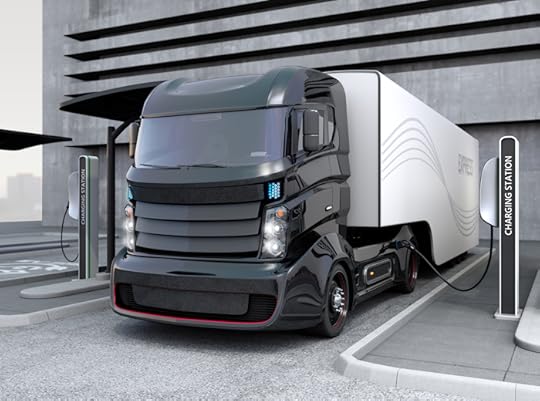 What about Heavy Trucks and Equipment?
Heavier, diesel-powered vehicles – e.g., farm and construction equipment as well as Class 8 trucks and military vehicles – will outlive ICE light-duty cars and trucks. But their time is coming, too. Tesla (of course!) has introduced an electric semi-tractor, reportedly with better performance than diesel trucks. Major interstate ground shippers like DHL and Walmart are very interested in making the shift to EV trucks once additional battery innovation catches up.
Adjusting Our PerspectiveThat’s the interesting thing about the future and it’s various time horizons. Will we see widespread flying cars? A comprehensive metaverse? Asteroid mining and widespread drone delivery systems? Yes, we will. But these concepts probably seem as futuristic and far-fetched as the idea that we’d all be driving zero-emission EVs did to a rational person in 1960.
Translate This PageSelect LanguageAfrikaansAlbanianAmharicArabicArmenianAzerbaijaniBasqueBelarusianBengaliBosnianBulgarianCatalanCebuanoChichewaChinese (Simplified)Chinese (Traditional)CorsicanCroatianCzechDanishDutchEnglishEsperantoEstonianFilipinoFinnishFrenchFrisianGalicianGeorgianGermanGreekGujaratiHaitian CreoleHausaHawaiianHebrewHindiHmongHungarianIcelandicIgboIndonesianIrishItalianJapaneseJavaneseKannadaKazakhKhmerKoreanKurdish (Kurmanji)KyrgyzLaoLatinLatvianLithuanianLuxembourgishMacedonianMalagasyMalayMalayalamMalteseMaoriMarathiMongolianMyanmar (Burmese)NepaliNorwegianPashtoPersianPolishPortuguesePunjabiRomanianRussianSamoanScottish GaelicSerbianSesothoShonaSindhiSinhalaSlovakSlovenianSomaliSpanishSudaneseSwahiliSwedishTajikTamilTeluguThaiTurkishUkrainianUrduUzbekVietnameseWelshXhosaYiddishYorubaZulu
#goog-gt-tt {display:none !important;}
.goog-te-banner-frame {display:none !important;}
.goog-te-menu-value:hover {text-decoration:none !important;}
.goog-text-highlight {background-color:transparent !important;box-shadow:none !important;}
body {top:0 !important;}
#google_translate_element2 {display:none!important;}
function googleTranslateElementInit2() {new google.translate.TranslateElement({pageLanguage: 'en',autoDisplay: false}, 'google_translate_element2');}
function GTranslateGetCurrentLang() {var keyValue = document['cookie'].match('(^|;) ?googtrans=([^;]*)(;|$)');return keyValue ? keyValue[2].split('/')[2] : null;}
function GTranslateFireEvent(element,event){try{if(document.createEventObject){var evt=document.createEventObject();element.fireEvent('on'+event,evt)}else{var evt=document.createEvent('HTMLEvents');evt.initEvent(event,true,true);element.dispatchEvent(evt)}}catch(e){}}
function doGTranslate(lang_pair){if(lang_pair.value)lang_pair=lang_pair.value;if(lang_pair=='')return;var lang=lang_pair.split('|')[1];if(GTranslateGetCurrentLang() == null && lang == lang_pair.split('|')[0])return;var teCombo;var sel=document.getElementsByTagName('select');for(var i=0;i<sel.length;i++)if(/goog-te-combo/.test(sel[i].className)){teCombo=sel[i];break;}if(document.getElementById('google_translate_element2')==null||document.getElementById('google_translate_element2').innerHTML.length==0||teCombo.length==0||teCombo.innerHTML.length==0){setTimeout(function(){doGTranslate(lang_pair)},500)}else{teCombo.value=lang;GTranslateFireEvent(teCombo,'change');GTranslateFireEvent(teCombo,'change')}}
Search for: Recent Posts The End of the Internal Combustion Engine Are we heading towards a Technological Singularity? DAOs: Paving the way for Boss Less Businesses and Organizations of the Future Categories Artificial Intelligence Business Trends Future of Agriculture Future of Banking Future of Education Future of Healthcare Future of Transportation Future of Work Future Scenarios Future Trends Futurist Thomas Frey Insights Global Trends Predictions Social Trends Technology Trends Speaking TopicsFuture of Healthcare – “Is Death our only Option?Future of AIFuture of Industries
The post The End of the Internal Combustion Engine appeared first on Futurist Speaker.
November 10, 2021
Are we heading towards a Technological Singularity?
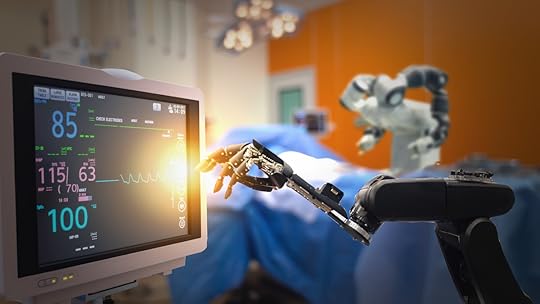
No one would argue that technology is progressing at a rapid pace. Blockchain, virtual reality, 3D printing, autonomous transportation – it’s difficult to keep up with developments in these and other breakthrough technologies. Major areas of innovation are arriving faster and faster.
And no one would disagree that artificial intelligence offers greater capacity than human brains in many respects, powered by machine learning and quantum computing. Machines can process information faster than we ever could. Their capacity, too, is increasing exponentially.
But will we ever reach the point where human beings are no longer in charge and to a time when we aren’t the supreme beings on Earth? And will we inevitably see these kinds if breakthroughs and developments happen on their own, powered and informed by previous breakthroughs?
What is Technological Singularity?Those kinds of questions help frame some of the issues behind technological singularity – that point in time where rapidly accelerating technology becomes uncontrollable and inevitable. Singularity, in this case, is the tipping point where an intelligent object can design and produce improved subsequent versions of itself and other machines without human intervention, bypassing the limiting boundaries of human intelligence.
Technological singularity isn’t just a matter of machine capability. It has a time element as well. The technological singularity theory holds that these kinds of self-propelled innovation will happen at a rapidly accelerating pace. Technology breakthroughs and developments will occur over shorter and shorter periods of time until we reach the point, according to Kevin Kelly, founding and executive editor of Wired magazine, that “all the change in the last million years will be superseded by the change in the next five minutes.” Only non-humans would be able to survive this chaos, which leads us to the next element related to singularity: transhumanism.
TranshumanismTaken to an extreme, technological singularity can reach a point where the line between humans and machines is erased. Some say we’ll see human brains duplicated or removed and placed within never-dying machines so the “person” lives forever.
Another transhumanist scenario suggests that we’ll reach the point where imputing AI, biotechnology, and genetic manipulation within human bodies will allow a person to live forever. After all, prosthetics, implants, and artificial valves have already sent us down this path to a limited degree.
And then there’s the speculation that machines will create and program robots that will dominate the world. Their actions will be 100% focused on accomplishing goals without consideration for the externalities they create. They’ll have no hesitancy to destroy humans, the environment, and certainly our social norms if that’s what it takes.
We’ve seen these kinds of Hollywood movies pitting mankind versus machines. Thanks to their creative thinking, the human usually wins – so we can sleep at night and so our favorite actor’s character isn’t destroyed – but there’s no reason to think that would be the case if computers and robots truly progressed to that level of development.
Can it Happen?The first person to use the word “singularity” in the technological context was John von Neumann early last century. The ideas were further fleshed out by science fiction writer Vernor Vinge in the 1980s and in Ray Kurzweil’s 2005 book, The Singularity is Near: When Humans Transcend Biology. According to Kurzweil, machine intelligence will surpass human intelligence in 2029, and the technological singularity will occur around 2045.
No doubt, we’ll certainly accomplish a lot before 2029 and many aspects of our lives will probably be unrecognizable in 24 years. We’ve already witnessed unprecedented increases in technology, along with advances in genetic engineering, synthetic biology, nootropic drugs, and direct brain-computer interfaces.
We’re accomplishing things we never even considered two decades ago, let alone thought were possible. This kind of progress won’t stop, but it doesn’t necessarily mean the advances will build to a crescendo and culminate in a moment of singularity.
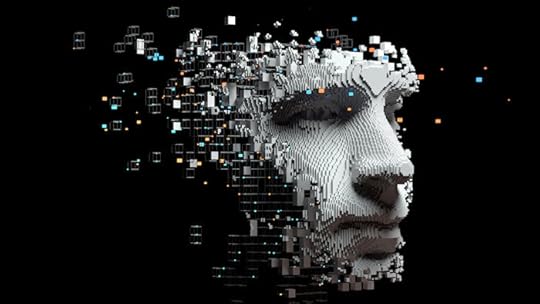 Color Me Skeptical
I’m rather skeptical of many of the predictions surrounding the singularity, particularly the transhumanism part of the equation. I find I’m in good company as a skeptic because Gordon Moore also has his doubts, and Moore’s Law is often used to reinforce the prediction of singularity. Other skeptics include people like Jaron Lanier, Bruce Sterling, and Paul Allen.
I simply don’t see the emergence of a tipping point where we lose ownership of progress. In my opinion, several factors will keep this from happening:
As machines get smarter, the remaining challenges that would need to be solved before they can become autonomous will keep getting more complex. The delta between the two will never intersect.Societies will form institutions to ensure that AI advancements are constrained by human values. The “mad scientist,” Dr. Frankenstein scenario isn’t realistic. The line between the technology that supports humanity and the technology that threatens it will be policed by smart people who will advise policymakers accordingly.As futurist Martin Ford suggests, well before we get to the point of technological singularity, the technological advancements that lead up to it will displace so many workers in so many skilled professions that society would lose all desire to continue down that path.We Don’t Need SingularityThe concepts around technological singularity are the extrapolation of our legitimate progress taken to the point of absurdity. Yes, we’re moving up an exponential growth curve, and yes, we’re heading into unchartered territory. But five minutes of innovation supplanting all known technology? Really? An evolved form of humanity instantly taking over the earth? Really? Those aren’t small steps just over the horizon, they’re chasms that won’t be crossed.
So far no one has been able to answer the fundamental question of “Why?”
So take a deep breath … and focus on the incredible progress we’ve been making, progress that will give us an unbelievable new world in which to live as we move into the future. And yes, we can enjoy AI-themed science fiction without assuming the story is inevitable. It’s possible to believe that technology will continue to rapidly transform our lives without buying into the apocalyptic visions of technological singularity and transhumanism.
Since a singularity is the point where the rules of science stop working, like the gravitational singularity of a black hole, there’s no good models for predicting what comes out the other side.
It would be a new beginning, not a future.
Translate This PageSelect LanguageAfrikaansAlbanianAmharicArabicArmenianAzerbaijaniBasqueBelarusianBengaliBosnianBulgarianCatalanCebuanoChichewaChinese (Simplified)Chinese (Traditional)CorsicanCroatianCzechDanishDutchEnglishEsperantoEstonianFilipinoFinnishFrenchFrisianGalicianGeorgianGermanGreekGujaratiHaitian CreoleHausaHawaiianHebrewHindiHmongHungarianIcelandicIgboIndonesianIrishItalianJapaneseJavaneseKannadaKazakhKhmerKoreanKurdish (Kurmanji)KyrgyzLaoLatinLatvianLithuanianLuxembourgishMacedonianMalagasyMalayMalayalamMalteseMaoriMarathiMongolianMyanmar (Burmese)NepaliNorwegianPashtoPersianPolishPortuguesePunjabiRomanianRussianSamoanScottish GaelicSerbianSesothoShonaSindhiSinhalaSlovakSlovenianSomaliSpanishSudaneseSwahiliSwedishTajikTamilTeluguThaiTurkishUkrainianUrduUzbekVietnameseWelshXhosaYiddishYorubaZulu
#goog-gt-tt {display:none !important;}
.goog-te-banner-frame {display:none !important;}
.goog-te-menu-value:hover {text-decoration:none !important;}
.goog-text-highlight {background-color:transparent !important;box-shadow:none !important;}
body {top:0 !important;}
#google_translate_element2 {display:none!important;}
function googleTranslateElementInit2() {new google.translate.TranslateElement({pageLanguage: 'en',autoDisplay: false}, 'google_translate_element2');}
function GTranslateGetCurrentLang() {var keyValue = document['cookie'].match('(^|;) ?googtrans=([^;]*)(;|$)');return keyValue ? keyValue[2].split('/')[2] : null;}
function GTranslateFireEvent(element,event){try{if(document.createEventObject){var evt=document.createEventObject();element.fireEvent('on'+event,evt)}else{var evt=document.createEvent('HTMLEvents');evt.initEvent(event,true,true);element.dispatchEvent(evt)}}catch(e){}}
function doGTranslate(lang_pair){if(lang_pair.value)lang_pair=lang_pair.value;if(lang_pair=='')return;var lang=lang_pair.split('|')[1];if(GTranslateGetCurrentLang() == null && lang == lang_pair.split('|')[0])return;var teCombo;var sel=document.getElementsByTagName('select');for(var i=0;i<sel.length;i++)if(/goog-te-combo/.test(sel[i].className)){teCombo=sel[i];break;}if(document.getElementById('google_translate_element2')==null||document.getElementById('google_translate_element2').innerHTML.length==0||teCombo.length==0||teCombo.innerHTML.length==0){setTimeout(function(){doGTranslate(lang_pair)},500)}else{teCombo.value=lang;GTranslateFireEvent(teCombo,'change');GTranslateFireEvent(teCombo,'change')}}
Search for: Recent Posts Are we heading towards a Technological Singularity? DAOs: Paving the way for Boss Less Businesses and Organizations of the Future 9 Dimensions of “What’s Next” for the Great Resignation Categories Artificial Intelligence Business Trends Future of Agriculture Future of Banking Future of Education Future of Healthcare Future of Transportation Future of Work Future Scenarios Future Trends Futurist Thomas Frey Insights Global Trends Predictions Social Trends Technology Trends Speaking TopicsFuture of Healthcare – “Is Death our only Option?Future of AIFuture of Industries
The post Are we heading towards a Technological Singularity? appeared first on Futurist Speaker.
November 3, 2021
DAOs: Paving the way for Boss Less Businesses and Organizations of the Future
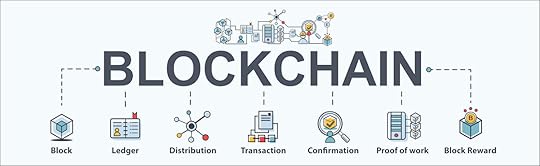
Blockchain technology is continuing to transform fundamental institutions. We saw this first with cyber currency and related financial systems, then with art and entertainment, and now you can add organizational structures to that list.
Since blockchain can encrypt and securely store smart contracts, it can be used to establish the governance of an organization that’s based on those immutable, contractual agreements. Organizations that use this governance system are called Decentralized Autonomous Organization (DAO), pronounced “Dow.”
Instead of a hierarchy of employees, managers, and leaders, governance of a DAO, its name states, is decentralized and subject to the smart contract-based rules, policies, and procedures for everything from conflict resolution to profit sharing – all stored and viewable on the blockchain. No need to enforce or monitor the processes. Each person is regulated and guided by the decentralized autonomous organization’s contracts.
In many ways, DAOs enable an automated form of democratization for organizations.
Boss-Less BusinessesAs more DAOs come online, we’ll be hearing more about “stakeholder economies” instead of shareholder economies. “Work ecosystems” will replace work platforms as the daily method of interaction with these cutting-edge companies.
Just because they’re decentralized and even metaverse-based, though, doesn’t mean DAOs will be loosely organized and haphazardly run. DAO smart contracts have staying power; they can’t be changed except by a vote of the members of the decentralized autonomous organization, however they choose to establish those voting procedures. Their smart contracts are transparent, which means there’s no wiggle room for any participant to veer from the DAO’s mission or subvert their processes in any way.
How DAOs WorkDAOs are participatory and dynamic. Today’s DAOs are mostly formed around cryptocurrency and NFT financial investments. DAO participants earn a financial stake, and therefore a “say,” in these DAOs through buy-in in the form of cryptocurrency-based “governance tokens” or similar mechanisms. Each stakeholder’s voting rights reflect their level of financial buy-in. In some cases, the stakeholders are simply investors. In other instances, they take on roles to support the organization.
After the initial rules of the decentralized autonomous organization are defined, members are recruited, and offered a stake and a voice in the operation of the organization, voting on specific investment opportunities as well as the DAO’s overall direction. Members can submit proposals, participate in votes, and share in the tasks and success of the decentralized autonomous organization.
To the extent that governance tokens are limited, and the DAO prospers, the tokens can grow in value similar to a traditional equity instrument. Smart contracts often address how the tokens or ownership stake can or can’t be sold and the implications for the voting rights connected with that sold ownership token.
 The Future – DAO-2.0
As mentioned earlier, DAOs have tended to be crypto-oriented in their missions and purposes. They’re oriented around a shared treasury, and their decision making revolves around how to invest or spend those funds. For example, many DAOs have been formed around non-fungible tokens (NFTs) and other cryptocurrency investment ventures. Most of today’s DAOs are essentially “internet communities with a shared bank account,” as one investor has described them.
But since the key ingredients of a DAO are transparency and shared decision making, all ensured by their blockchain-enabled smart contracts, the decentralized autonomous organization model can and will be used in many other business sectors beyond cryptocurrency and investing.
As is true with more and more blockchain applications (e.g., cryptocurrency investing), it won’t be necessary to understand the underlying technology and related processes. Those will remain behind the curtain. Participants will just see the very viable, democratized operating and decision-making processes inherent in the DAOs.
Not all DAOs in the future will be virtual, impersonal, and 100% online as they are today. Post-COVID, we’ll continue to see a mix of remote and in-person employee engagement within companies and project teams. DAOs will serve as a unifying structure to ensure continued shared accountability and an inclusive decision-making system in these hybrid arrangements.
DAOs will, in many cases, replace the LLC model for the formation of midsized companies. This model won’t be workable for all businesses or in all industries, though. It would be difficult to transition large corporate entities into a DAO structure. Rather, the model will most likely be used for nonprofits, social networks, and new ventures.
In DAO.2, more participants will be employees or active daily contributors to the venture rather than simply investors. They’ll earn governance tokens for their work along with “regular” compensation, even if they weren’t initial investors.
The new DAOs will be best-suited for well-focused companies and those with time-limited projects and initiatives. And while it may not be the right model for large, conglomerate, multinational corporations, certain processes, projects, and sub-businesses within those larger entities – R&D functions for example – will most certainly be candidates for DAO-oriented management structures.
Beyond BusinessThe metaverse gaming industry is embracing the DAO operating structure as they increasingly are providing forums for players to make suggestions on game rules, form committees to debate proposals, and even weigh in on the structure of voting rights.
Given their empowering and inclusive nature, blockchain-enabled DAOs will be an ideal underlying structure for informal groups, clubs, and even public sector governing bodies. Enforced organizational transparency, inclusion, joint decision making – these guiding principles that are inherent in DAOs will be valuable for nearly any collective structure of human beings that share a common purpose.
While this represents a radical departure from the traditional way businesses operate, we will be discovering fairer and more impactful ways for managing our organizations in the future.
Truly democratic systems tend to fail when numbers get large and the inclusive processes become unmanageable and impractical. But in the future, DAOs will be an important new tool for large and small organizations that want to offer a democratically run experience.
Translate This PageSelect LanguageAfrikaansAlbanianAmharicArabicArmenianAzerbaijaniBasqueBelarusianBengaliBosnianBulgarianCatalanCebuanoChichewaChinese (Simplified)Chinese (Traditional)CorsicanCroatianCzechDanishDutchEnglishEsperantoEstonianFilipinoFinnishFrenchFrisianGalicianGeorgianGermanGreekGujaratiHaitian CreoleHausaHawaiianHebrewHindiHmongHungarianIcelandicIgboIndonesianIrishItalianJapaneseJavaneseKannadaKazakhKhmerKoreanKurdish (Kurmanji)KyrgyzLaoLatinLatvianLithuanianLuxembourgishMacedonianMalagasyMalayMalayalamMalteseMaoriMarathiMongolianMyanmar (Burmese)NepaliNorwegianPashtoPersianPolishPortuguesePunjabiRomanianRussianSamoanScottish GaelicSerbianSesothoShonaSindhiSinhalaSlovakSlovenianSomaliSpanishSudaneseSwahiliSwedishTajikTamilTeluguThaiTurkishUkrainianUrduUzbekVietnameseWelshXhosaYiddishYorubaZulu
#goog-gt-tt {display:none !important;}
.goog-te-banner-frame {display:none !important;}
.goog-te-menu-value:hover {text-decoration:none !important;}
.goog-text-highlight {background-color:transparent !important;box-shadow:none !important;}
body {top:0 !important;}
#google_translate_element2 {display:none!important;}
function googleTranslateElementInit2() {new google.translate.TranslateElement({pageLanguage: 'en',autoDisplay: false}, 'google_translate_element2');}
function GTranslateGetCurrentLang() {var keyValue = document['cookie'].match('(^|;) ?googtrans=([^;]*)(;|$)');return keyValue ? keyValue[2].split('/')[2] : null;}
function GTranslateFireEvent(element,event){try{if(document.createEventObject){var evt=document.createEventObject();element.fireEvent('on'+event,evt)}else{var evt=document.createEvent('HTMLEvents');evt.initEvent(event,true,true);element.dispatchEvent(evt)}}catch(e){}}
function doGTranslate(lang_pair){if(lang_pair.value)lang_pair=lang_pair.value;if(lang_pair=='')return;var lang=lang_pair.split('|')[1];if(GTranslateGetCurrentLang() == null && lang == lang_pair.split('|')[0])return;var teCombo;var sel=document.getElementsByTagName('select');for(var i=0;i<sel.length;i++)if(/goog-te-combo/.test(sel[i].className)){teCombo=sel[i];break;}if(document.getElementById('google_translate_element2')==null||document.getElementById('google_translate_element2').innerHTML.length==0||teCombo.length==0||teCombo.innerHTML.length==0){setTimeout(function(){doGTranslate(lang_pair)},500)}else{teCombo.value=lang;GTranslateFireEvent(teCombo,'change');GTranslateFireEvent(teCombo,'change')}}
Search for: Recent Posts DAOs: Paving the way for Boss Less Businesses and Organizations of the Future 9 Dimensions of “What’s Next” for the Great Resignation Play to Earn Gaming is Creating a Whole New Breed of Unicorn Startups Categories Artificial Intelligence Business Trends Future of Agriculture Future of Banking Future of Education Future of Healthcare Future of Transportation Future of Work Future Scenarios Future Trends Futurist Thomas Frey Insights Global Trends Predictions Social Trends Technology Trends Speaking TopicsFuture of Healthcare – “Is Death our only Option?Future of AIFuture of Industries
The post DAOs: Paving the way for Boss Less Businesses and Organizations of the Future appeared first on Futurist Speaker.
October 27, 2021
9 Dimensions of “What’s Next” for the Great Resignation

Nearly every organization I work with or interact with is desperately trying to staff up. They’re not necessarily growing; they’re just trying to get back to pre-COVID staffing levels because the pre-COVID demand levels for their goods and services have returned. But staff shortages are keeping some from fully reopening and forcing some employees to work longer hours than they’d like.
The supposed goal on everyone’s lips during the last 18 months was to get things “back to normal” – to go to shows, eat out, travel, and so on. Similarly, policymakers and business owners assumed that employees would return to or remain in their jobs with the same employers, more than happy to maintain the same priorities and objectives for their lives and careers.
But we weren’t in a coma over the last 18 months. We were dreaming about traveling and socializing to be sure, but we also had plenty of time and reason to think about our engagement in the labor market. Many people decided it was time for a change, and as the economy continues to open up, that trend is accelerating. In August, 4.3 million people left their jobs, 2.9% of the workforce, which is a recent record.
Who’s leaving? Let’s dig deeper into those decisions. Why are tens of thousands of workers exploring new options or departing the workforce altogether, leaving so many jobs unfilled? And why is the great resignation accelerating? The answers lie along two general tracks.
“I’m Done”Many of the resigning workers are late Baby Boomers and early Gen Xers who’ve decided to retire earlier than they had planned even as recently as five years ago. They’ve worked hard in the face of all the uncertainties of the pandemic, padded their savings, and rode the stock and cyber currency markets to record heights. They feel that life is too short to stay in the work world any longer given the newly proven fragility of life. And yes, the fear-ladened newspaper headlines have actually scared people out of the workforce. Their suddenly enhanced financial position has allowed for this to happen.
“I Deserve a Change”Other workers who are remaining in the workforce, are also realizing that life is too short. They can’t retire but they’re more than willing to overcome their recent work-life inertia and break free of their employment status quo. The last 18 months have served as a wakeup call and a nudge to move on to careers that are steadier, more lucrative, and more interesting.
This is especially true in the hospitality industry. For whatever reason, the pandemic brought out the worst in too many consumers and they’ve been taking out their frustrations on hotel, restaurant, transportation, and other public-facing workers who were just trying to do their jobs.
In other cases, office-based workers have gotten used to working from home and they enjoy spending more time with their families and less time commuting. They know all about their worth and the current imbalance in the labor market. When their employers insist that they come back to the office, after more than a year of working productively at home, it’s an easy decision to look for an alternative, even for a competing employment opportunity that offers a more flexible approach.
No Going BackIn a way, what we’re seeing today is the perfect storm of mitigating circumstances that have brought us to where we are in terms of employee ascendancy and human resource management. None of these will revert to the situations so familiar last decade.
Post-COVID, employees are re-evaluating work-life balance and personal priorities.
Employers are experiencing high job vacancy rates.
New generations of workers are even less tied to corporate ladders, “paying their dues,” and “biding their time.”
 9 Dimensions of Future Employer-Labor Relations
So, what will be the workplace norm for the years to come?
There will be increased automation in the services industries. For example, the trends toward robots in the kitchen will accelerate, along with wait staff service and food delivery. We’ll be checking into hotels strictly through kiosks upon our arrival.Those hospitality-related jobs that remain will offer far higher wage rates that may help break the poverty cycle in some locations.Companies will have no choice but to allow work-from-home arrangements or they’ll lose out on top talent. A friend told me of a situation where his daughter-in-law had to quit her mid-level accounting job with a large, regional manufacturer after that company refused to let her work remotely when her military husband was reassigned to a base across the country. Five years from now, you won’t see those situations.Companies will increasingly crack down on abusive customers. If they don’t unequivocally side with and support mistreated employees, their employees will leave. “The customer is always right” will be far less true in the future.Due to Baby Boomer retirements, a new group of leaders will emerge more quickly from the ranks of Gen X and Gen Y. Since this torch will be passed a bit sooner than it would have been, these leaders will have relatively longer careers in leadership positions.The influence of this new generation of leaders will hasten the trends for more informal, entrepreneurial, and technology-oriented workplaces. Diversity in the leadership ranks will be realized more quickly than it would have been.Since Gen Y and Gen Z employees are less inclined to believe in a “career ladder,” organizations will provide better ongoing experiences through salary and benefits as well as allowing flexible internal career paths and broadening opportunities like international relocation assignments.Company policies and management skill sets will increasingly be focused on managing with empathetic interaction and accommodation for an employee’s life circumstances.Entrepreneurialism will soar. Employees will be emboldened to take the leap to pursue gig work and consulting roles. More and more companies will be compelled to engage those resources, further spurring the evolution of virtual offices and even virtual companies.It all adds up to a future with employees holding more cards and the need for companies to be creatively competitive to secure the talent they need.
Translate This PageSelect LanguageAfrikaansAlbanianAmharicArabicArmenianAzerbaijaniBasqueBelarusianBengaliBosnianBulgarianCatalanCebuanoChichewaChinese (Simplified)Chinese (Traditional)CorsicanCroatianCzechDanishDutchEnglishEsperantoEstonianFilipinoFinnishFrenchFrisianGalicianGeorgianGermanGreekGujaratiHaitian CreoleHausaHawaiianHebrewHindiHmongHungarianIcelandicIgboIndonesianIrishItalianJapaneseJavaneseKannadaKazakhKhmerKoreanKurdish (Kurmanji)KyrgyzLaoLatinLatvianLithuanianLuxembourgishMacedonianMalagasyMalayMalayalamMalteseMaoriMarathiMongolianMyanmar (Burmese)NepaliNorwegianPashtoPersianPolishPortuguesePunjabiRomanianRussianSamoanScottish GaelicSerbianSesothoShonaSindhiSinhalaSlovakSlovenianSomaliSpanishSudaneseSwahiliSwedishTajikTamilTeluguThaiTurkishUkrainianUrduUzbekVietnameseWelshXhosaYiddishYorubaZulu
#goog-gt-tt {display:none !important;}
.goog-te-banner-frame {display:none !important;}
.goog-te-menu-value:hover {text-decoration:none !important;}
.goog-text-highlight {background-color:transparent !important;box-shadow:none !important;}
body {top:0 !important;}
#google_translate_element2 {display:none!important;}
function googleTranslateElementInit2() {new google.translate.TranslateElement({pageLanguage: 'en',autoDisplay: false}, 'google_translate_element2');}
function GTranslateGetCurrentLang() {var keyValue = document['cookie'].match('(^|;) ?googtrans=([^;]*)(;|$)');return keyValue ? keyValue[2].split('/')[2] : null;}
function GTranslateFireEvent(element,event){try{if(document.createEventObject){var evt=document.createEventObject();element.fireEvent('on'+event,evt)}else{var evt=document.createEvent('HTMLEvents');evt.initEvent(event,true,true);element.dispatchEvent(evt)}}catch(e){}}
function doGTranslate(lang_pair){if(lang_pair.value)lang_pair=lang_pair.value;if(lang_pair=='')return;var lang=lang_pair.split('|')[1];if(GTranslateGetCurrentLang() == null && lang == lang_pair.split('|')[0])return;var teCombo;var sel=document.getElementsByTagName('select');for(var i=0;i<sel.length;i++)if(/goog-te-combo/.test(sel[i].className)){teCombo=sel[i];break;}if(document.getElementById('google_translate_element2')==null||document.getElementById('google_translate_element2').innerHTML.length==0||teCombo.length==0||teCombo.innerHTML.length==0){setTimeout(function(){doGTranslate(lang_pair)},500)}else{teCombo.value=lang;GTranslateFireEvent(teCombo,'change');GTranslateFireEvent(teCombo,'change')}}
Search for: Recent Posts 9 Dimensions of “What’s Next” for the Great Resignation Play to Earn Gaming is Creating a Whole New Breed of Unicorn Startups The Race to Find the Killer App for Quantum Computing Categories Artificial Intelligence Business Trends Future of Agriculture Future of Banking Future of Education Future of Healthcare Future of Transportation Future of Work Future Scenarios Future Trends Futurist Thomas Frey Insights Global Trends Predictions Social Trends Technology Trends Speaking TopicsFuture of Healthcare – “Is Death our only Option?Future of AIFuture of Industries
The post 9 Dimensions of “What’s Next” for the Great Resignation appeared first on Futurist Speaker.
October 20, 2021
Play to Earn Gaming is Creating a Whole New Breed of Unicorn Startups

We’re seeing new opportunities to create monetary value based on blockchain and cyber currency. Crypto mining is one way, of course, as “miners” stack computers to create block equations that are verified and confirmed, adding to the blockchain and the assets of the miners.
More recently we’ve seen the rise of NFTs, non-fungible tokens. As we’ve explored previously, these are digital representations of assets whose uniqueness imparts value and is ensured by blockchain technology.
The newest wealth-creating, blockchain-enabled wealth opportunity is the play-to-earn (P2E) phenomenon, where multiplayer gamers can earn money (cryptocurrency) and create valuable assets (NFTs) simply by playing these games. Previous versions of online multiplayer games offered points or even pseudo-currencies. But credits for lands conquered or warriors created had to stay within the confines of the game due to restrictive Terms of Service Agreements.
Much of that is changing with P2E. The multiplayer games are getting bigger and more complex, drifting into the metaverse. Some games evolve based on the actions of the users and there are fewer rules and restrictions. Not surprisingly, players are no longer satisfied with trekking around new kingdoms or galaxies or engaging in battle royales simply for the sake of recognition, self-satisfaction, or bragging rights.
Today’s multiplayer gamers want tangible rewards they can take into the “real world.” Now they have it. With P2E, the points or currency they earn in the games can be “cashed out” in the form of cryptocurrency. And the assets the gamers develop can be transformed into NFTs and then bought, sold, traded, or donated in cryptocurrency-based marketplaces and exchanges.
Two Ways to EarnJust playing (and even better, winning) can earn someone several hundred or more dollars a month in crypto equivalents. That makes P2E a side job or a hobby in western countries. But for players in less-developed areas – Vietnam and the Philippines, for example – it can be a basic source of income.
And all bets are off for the profitability of game-based NFT deals. These sales can bring in far more – thousands of dollars even – as long as there’s a willing buyer. That’s the catch. Markets don’t go up forever. The last person holding a specific NFT who can’t find a buyer essentially is holding a token valued only for its aesthetics.
The P2E Games People PlayThe market cap for gaming is projected to be $178 billion in 2021 and it’s expected to surpass $295 billion over the next five years. PlayToEarn.net currently lists hundreds of gaming sites that allow players to earn money gaming.
By far the most popular P2E game is Axie Infinity. Almost two million players have purchased, raised, sold, and even gone to battle with their Axie digital pet tokens. Players can earn the game’s “smooth love potion” (SLP) cryptocurrency for their efforts and success, as well as sell their Axie NFTs for even bigger returns. The game was launched in 2018 and as of August of this year, it had reached a sales volume of $845 million and logged 3.8 million transactions.
Other P2E games are equally imaginative.

Blankos Block Party is especially popular with kids (more on that later) as they develop and market their user-created toys that exist in a cartoon-like world. The game is expected to attract a million users before long, due in large part to the fact that all the blockchain and cyber currency aspects are hidden behind the scenes making it appear more like a typical multiplayer game.
Similarly, there’s Lightnite, which will be released shortly. This is a groundbreaking P2E alternative since gamers can also lose money if they don’t succeed in their multiplayer combat encounters.
One last P2E game we’ll mention is The Sandbox, which is somewhat unique if only for the big-name investors that are backing it. The game is in beta right now, but already, before the widely played alpha version has even started, eager players have already invested in the game’s currency, with market capitalization standing at around $700 million.
An After School Job?Multiplayer, metaverse gaming has always rewarded skills like perseverance, critical thinking, strategic planning, artistic creation, and others – admirable lessons, for sure. The new, P2E aspect of these activities will be also cited by shrewd, young teens to justify the hours at a time they’d like to spend in these worlds. They may have a point. P2E can certainly be a crash course for them to learn about the working, entrepreneurial world.
As with many things, though, every parent or guardian will have to decide for their family if P2E is appropriate and whether and how to set boundaries. In doing so, they’ll need to consider the fact that certain elements of P2E are safer or less safe than others for pre-adults.
They’ll need to take the time to realize there’s a difference between:
Earning a hundred dollars a week in cryptocurrency by shrewdly maneuvering through a metaverse.Selling a well-conceived, personally designed NFT toy image on the P2E game’s exchange for $250 in cryptocurrency.Storing all P2E earnings in relatively unstable cryptocurrency accounts.Buying an NFT for $500 because it looks cool and might be flipped for $1,000 next month.Engaging in a P2E game where players might also lose money (aka gambling).Moving forward, we’ll see more self-imposed or outside regulation of P2E platforms. Already, for example, Axie Infinity is only open to players 18 and older, and while Blankos Block Party allows 13-year-olds to play, they must be 18 or older to cash out.
Parental WarningAnd for their part, parents will increasingly be forced to understand the world of blockchain and cryptocurrencies. Unfortunately, too many have their heads in the sand, hoping/assuming this will all go away. It won’t. They don’t have this luxury of denial anymore.
P2E will thrive as long as cryptocurrencies remain viable. Blockchain-based currencies have evolved too far to be legislated out of existence. Blockchain and cryptocurrencies inevitably will be part of their children’s lives moving forward, so Gen Xers and Boomers had better do their homework and due diligence.
Translate This PageSelect LanguageAfrikaansAlbanianAmharicArabicArmenianAzerbaijaniBasqueBelarusianBengaliBosnianBulgarianCatalanCebuanoChichewaChinese (Simplified)Chinese (Traditional)CorsicanCroatianCzechDanishDutchEnglishEsperantoEstonianFilipinoFinnishFrenchFrisianGalicianGeorgianGermanGreekGujaratiHaitian CreoleHausaHawaiianHebrewHindiHmongHungarianIcelandicIgboIndonesianIrishItalianJapaneseJavaneseKannadaKazakhKhmerKoreanKurdish (Kurmanji)KyrgyzLaoLatinLatvianLithuanianLuxembourgishMacedonianMalagasyMalayMalayalamMalteseMaoriMarathiMongolianMyanmar (Burmese)NepaliNorwegianPashtoPersianPolishPortuguesePunjabiRomanianRussianSamoanScottish GaelicSerbianSesothoShonaSindhiSinhalaSlovakSlovenianSomaliSpanishSudaneseSwahiliSwedishTajikTamilTeluguThaiTurkishUkrainianUrduUzbekVietnameseWelshXhosaYiddishYorubaZulu
#goog-gt-tt {display:none !important;}
.goog-te-banner-frame {display:none !important;}
.goog-te-menu-value:hover {text-decoration:none !important;}
.goog-text-highlight {background-color:transparent !important;box-shadow:none !important;}
body {top:0 !important;}
#google_translate_element2 {display:none!important;}
function googleTranslateElementInit2() {new google.translate.TranslateElement({pageLanguage: 'en',autoDisplay: false}, 'google_translate_element2');}
function GTranslateGetCurrentLang() {var keyValue = document['cookie'].match('(^|;) ?googtrans=([^;]*)(;|$)');return keyValue ? keyValue[2].split('/')[2] : null;}
function GTranslateFireEvent(element,event){try{if(document.createEventObject){var evt=document.createEventObject();element.fireEvent('on'+event,evt)}else{var evt=document.createEvent('HTMLEvents');evt.initEvent(event,true,true);element.dispatchEvent(evt)}}catch(e){}}
function doGTranslate(lang_pair){if(lang_pair.value)lang_pair=lang_pair.value;if(lang_pair=='')return;var lang=lang_pair.split('|')[1];if(GTranslateGetCurrentLang() == null && lang == lang_pair.split('|')[0])return;var teCombo;var sel=document.getElementsByTagName('select');for(var i=0;i<sel.length;i++)if(/goog-te-combo/.test(sel[i].className)){teCombo=sel[i];break;}if(document.getElementById('google_translate_element2')==null||document.getElementById('google_translate_element2').innerHTML.length==0||teCombo.length==0||teCombo.innerHTML.length==0){setTimeout(function(){doGTranslate(lang_pair)},500)}else{teCombo.value=lang;GTranslateFireEvent(teCombo,'change');GTranslateFireEvent(teCombo,'change')}}
Search for: Recent Posts Play to Earn Gaming is Creating a Whole New Breed of Unicorn Startups The Race to Find the Killer App for Quantum Computing Twelve Technologies Destined to Change Our Future Categories Artificial Intelligence Business Trends Future of Agriculture Future of Banking Future of Education Future of Healthcare Future of Transportation Future of Work Future Scenarios Future Trends Futurist Thomas Frey Insights Global Trends Predictions Social Trends Technology Trends Speaking TopicsFuture of Healthcare – “Is Death our only Option?Future of AIFuture of Industries
The post Play to Earn Gaming is Creating a Whole New Breed of Unicorn Startups appeared first on Futurist Speaker.
Thomas Frey's Blog

- Thomas Frey's profile
- 2 followers

