
Thomas Frey's Blog, page 23
March 26, 2020
How the Coronavirus has Altered the Course of Human History
How the Coronavirus has Altered the Course of Human History
 A couple days ago I was contacted by Anastasia Levchenko. Chief Correspondent for the Sputnik News Agency based in Italy. She asked if I could answer a series of interview questions about the changing state of the world as a result of the coronavirus.
She specifically asked me to give a futurist perspective on the issues.
Never before in history have we seen the dashboard of life having so many knobs twisted, levers pulled, buttons pressed, and dials tweaked than we had in the first few months of 2020.
For this reason every macro trend we can identify will have countless micro trends associated with it. Every convincing scenario we sketch out will have countless nuanced versions that have similar rings of truth.
Throughout everything, technology will progress, our challenges will still be there, and every problem will still have an opportunity to solve it.
Every lifetime is still amazingly short so it will be up to us to make the most of the years we have to work with.
1. In your opinion, how will the coronavirus emergency that the whole world is experiencing change the concept of leadership?
Every day another 26,000 people die of cancer. Why isn’t that making headlines?
The reason I’m asking this is because good leadership is about perspective and priorities.
Statistics show that every year 730,000 people die of Malaria, 887,000 from Hepatitis B, 1.1 million for Tuberculosis, and 9.6 million from cancer. So how should our leaders be setting their priorities today?
We’ve just hit a giant reset button on all of humanity, but it’s largely being driven by our current state of fear and panic. It’s inconceivable to think that leaders won’t be severely criticized for bad decisions after things die down.
That said, I’m not sure it’s even possible to make good decisions in our present situation.
We’ve gone from “ignorance is bliss” to an era where “we know we have a problem but we don’t know what to do about it.”
Ratchet forward a few more years and we reach a time where we “know we have a problem AND we’ll know how to fix it!”
In spite of all our advances, we still only know enough to be dangerous.
Future leadership will be far more data driven with exponentially more data points to determine both perspectives and priorities.
A great crisis is where great leaders are born!
The recent wave of layoffs and unpaid vacations will force companies and factories to be more efficient when it is all over. Many business operations are seeing much more efficient operations during the crisis and now realize they can get by with far fewer employees and as a result cut back.
At the same time, many are using this time to launch new products, new businesses, and new services. Anyone who had been waiting for the right time to launch their “side hustle” understands that now is the right time.
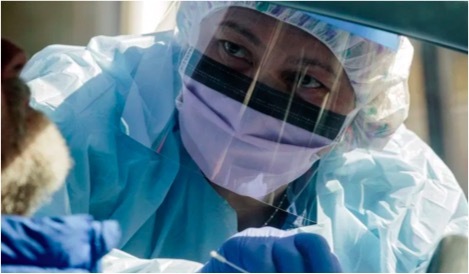
The need for safety is giving rise to a whole new set of protocols!
2. How will it change the defense systems of various countries? Will states prioritize more preparedness for biological weapons use and preparedness for pandemics?
The age of heavy guns and hardware is ending, and bio, cyber, and mind wars are just beginning. The concept of imminent risk and menacing danger is being reframed around non-intuitive, non-visible, and non-obvious threats.
Most countries will amp up their AI detection networks designed around making invisible threats visible. Every border crossing, international terminal, and port of entry will have growing levels of sensor, video, and audio detection with and an explosion of drone fleets and swarm plans to add coverage
Border walls will become simultaneously visual and physical, audibly acoustic, digitally obvious, aromatically distinct, and tactically discernible. The goal will be that no germ, virus, bacteria, fungi, or protozoa will have the power to cross undetected.
At the same time, with Europe taking the lead on the “right to be forgotten,” we’ll soon see a number of similar type causes, driven by tech innovation, like the “right to be digitally invisible,” the “right to be physically invisible,” and the “right to be totally undetectable.”
Anyone crossing a border should expect the equivalent of a full cavity search, done imperceptibly, for the most part, with remote scanners, swarmbots, and AI networks.
The job of being a spy just got exponentially more sophisticated.
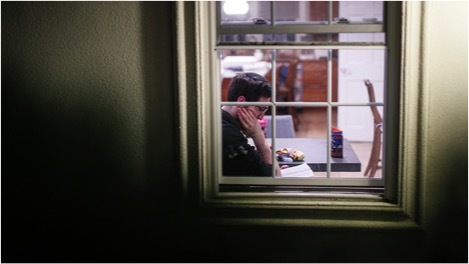
Working at home has never been so isolating and liberating at the same time!
3. Talking about work culture and management culture – how will they be impacted by Covid-19? Will more and more people opt for working remotely, feeling more secure this way? Will it become a new normal?
This is such a unique period in history because the normal s-curve adoption rates in many areas of tech have been replaced with a straight vertical line. Anyone who can possibly work from home has been forced to learn all the tools and apps necessary to become functional in that type of environment.
Workers have had to learn on-demand food delivery apps like Uber Eats, GrubHub, Caviar, and Doordash; grocery delivery apps like Instacart, Peapod, and AmazonFresh; and supply delivery apps like Dolly, Amazon, UPS, and Postmates.
4. What about our daily routines and lifestyles – when the pandemic is over, how are they going to change in general? Are we going to travel less and feel more insecure in the globalized world? Which consequences may it bring?
For people all over the planet, the COVID-19 crisis is a deeply personal experience.
Some are watching every newscast waiting for the next update. Others are scrambling to reengineer their own career path to take advantage of emerging opportunities. Many are living in a state of fear, not knowing where their next meal will come from or who will take care of their children.
Every newscast is building on the fear and panic, driving many into a state of depression, anger, and hopelessness. Savvy politicians are trying to reposition their agenda to take advantage of it. No one is being left unscathed.
This is a pandemic that will never end. It will leave deep scars on both the social and business fabric of society. For many industries, like those working in travel and vacation businesses, the recovery will take years, maybe decades.
The entire world is now much more aware of itself than ever in the past. The crisis becomes the common thread we all share, and we feel comfortable sharing our own personal experiences with online acquaintances on the other side of the world.
For most of us, if we’re not in survival mode, we’re keeping a close eye on how close we’re getting to it. We’re constantly looking for signs of hope, a light at the end of the tunnel, and random acts of kindness to give us the inspiration to move forward.
Many older workers, still clinging to the social moorings of their past will decide to permanently retire.
While there are many scenarios we can envision for how the coming years will unfold, and how this brief moment in time will permanently alter the course of history, here are a few trend lines that make sense to me.
This will go down in the history books as the most expensive crisis in all history. Every country is having to engineer a bailout package to save their businesses and put food on the table for the average worker. Over the coming month, inflation will raise its ugly head as the infusion of new capital begins to create a whole new set of problems.
Governments will vow to be more digital, more prepared, and more crisis-ready. At the same time, they will attempt to take back much of the power and control they’ve lost to multinational corporations. They will also vow to never let a single disease shut down the world ever again.
COVID-19 has been both a unifying force and a divider of worlds. Even as people are becoming more open and conversant with our remotest regions of the planet, wealthy people are becoming more entrenched and determined to protect their assets.
The healthcare industry should be prepared for some radical overhauls. They were neither prepared nor capable of managing the myriad of problems that arose. The healthcare system has been a failure for victims of heart disease, cancer, diabetes, meningitis, malaria, and a variety of other diseases. We have now reached the breaking point. While the individual healthcare workers have performed extraordinarily well, it has pointed out some deep-seated flaws in healthcare systems all over the world. Both governments and its citizens will demand more.
Every movie, television show, book, game, comic book, and research study produced before COVID-19 will suddenly feel dated.
The airline industry will soon be transformed from the cattle car experience of hauling large numbers of people in cramped spaces around the world to something a bit more humane. It will take a long time to rebuild the industry to the traffic levels of the pre-2020 glory years.
Our great study-at-home experiment will change education forever. Virtually every parent and child in the world has gotten a taste of what homeschooling is all about, and many will not want to go back to the same government-run schools. This, combined with emerging technology that will make education far more hyper-individualized, and we suddenly have the “perfect storm” for education to be transformed
Dealing with a common enemy is a great unifying force. It’s much harder for people from another country, race, religion, or culture to be viewed as a threat when you’ve both endured the trying times of a global crisis.
Cocooning is about to become a new social norm. There’s something very therapeutic about being able to hit the “pause button” on all the stresses of daily life and cuddle up in your own cocoon.
The unintended consequences will be huge. In much the same way a magician uses sleight-of-hand movements to distract us from what’s really going on, we will see countless books written on being blindsided by the unintended consequences resulting from the fixes, patches, and corrections engineered by our politicians.

What other things are we not prepared for?
Final Thoughts
To paraphrase a famous quote, COVID-19 is a paradox, wrapped in a mystery, inside an enigma.
Just when we think we understand the new rules of the game, they shift, grow bigger, or simply disappear.
Many times people refrain from major changes in their lives because they are afraid, and don’t think they can deal with it well. But in times of crisis, like now, when we have no choice, we suddenly do things we were afraid of in the past and realize that it is not that bad.
Despite all our progress and technological advancements, we are still very vulnerable. This time it was a pandemic, but next time it may be a massive solar flare, a giant EMP blast, an asteroid hitting the earth, or an unexplainable cooling of the core.
We all live in countries with aging systems, standards, and processes. Businesses with borderless economies are being taxed through a system that very much cares about borders.
Electric cars are wiping out money coming from gas tax. Cities that are heavily dependent on sales tax from car sales will soon have massive budget problems.
If technology progresses the way I’ve predicted, we are on the verge of an explosive transformation. Buckle your seatbelts, it’s going to be a rough ride!
As always, please take a few moments to consider the implications of these changes and let me know your thoughts.
Translate This Page
Select LanguageAfrikaansAlbanianAmharicArabicArmenianAzerbaijaniBasqueBelarusianBengaliBosnianBulgarianCatalanCebuanoChichewaChinese (Simplified)Chinese (Traditional)CorsicanCroatianCzechDanishDutchEnglishEsperantoEstonianFilipinoFinnishFrenchFrisianGalicianGeorgianGermanGreekGujaratiHaitian CreoleHausaHawaiianHebrewHindiHmongHungarianIcelandicIgboIndonesianIrishItalianJapaneseJavaneseKannadaKazakhKhmerKoreanKurdish (Kurmanji)KyrgyzLaoLatinLatvianLithuanianLuxembourgishMacedonianMalagasyMalayMalayalamMalteseMaoriMarathiMongolianMyanmar (Burmese)NepaliNorwegianPashtoPersianPolishPortuguesePunjabiRomanianRussianSamoanScottish GaelicSerbianSesothoShonaSindhiSinhalaSlovakSlovenianSomaliSpanishSudaneseSwahiliSwedishTajikTamilTeluguThaiTurkishUkrainianUrduUzbekVietnameseWelshXhosaYiddishYorubaZulu
#goog-gt-tt {display:none !important;}
.goog-te-banner-frame {display:none !important;}
.goog-te-menu-value:hover {text-decoration:none !important;}
.goog-text-highlight {background-color:transparent !important;box-shadow:none !important;}
body {top:0 !important;}
#google_translate_element2 {display:none!important;}
Search for:
Recent Posts
How the Coronavirus has Altered the Course of Human History
19 Startling Covid Trends and 19 Golden Covid Opportunities Emerging from the Chaos
Coping with the Exponential Speed of Panic
Categories
Artificial Intelligence
Business Trends
Future of Agriculture
Future of Banking
Future of Education
Future of Healthcare
Future of Transportation
Future of Work
Future Scenarios
Future Trends
Futurist Thomas Frey Insights
Global Trends
Predictions
Social Trends
Technology Trends
Speaking TopicsFuture of Healthcare – “Is Death our only Option?
Future of AI
Future of Industries
By Futurist Thomas Frey, author of 'Epiphany Z – 8 Radical Visions Transforming Your Future'

The post How the Coronavirus has Altered the Course of Human History appeared first on Futurist Speaker.


March 20, 2020
19 Startling Covid Trends and 19 Golden Covid Opportunities Emerging from the Chaos
19 Startling Covid Trends and 19 Golden Covid Opportunities Emerging from the Chaos
 As Chicago Mayor Rahm Emanuel once said, “You should never let a serious crisis go to waste!”
We’re entering unprecedented times, and yes, the coronavirus will go down in the history books as the most expensive crisis in all history…. so far! Perhaps WWI and WWII were more expensive, but we’re not done yet!
We are witnessing the black swan of all black swans.
As a futurist, I view my role as being a diligent observer, an analyzer of trends, and researcher of signals in uncovering important shifts amidst the chaos.
I’ve been watching the coronavirus as it moves around the world, as public health officials have put together a patchwork of quarantines, travel bans, and social isolation measures. The disruption in events, travel, manufacturing, and trade has had a range of unintended consequences — not all of them good, and certainly not all of them bad.
Ironically, we’re about to discover we’ve never been more emotionally connected while being so physically distant.
Here are 19 of the COVID-19 trend-lines we’re currently watching.
1. Most expensive crisis in all history.
No, we’re nowhere close to putting together a final tally for this but rest assured it will be massive. It is both global in nature and massively debilitating to close so many businesses all at once.
2. Rewriting the rulebook for dealing with future crises.
We now have a new rulebook in place for dealing with future contagions. At the same time, setting the stage for future problems. Even though 887,000 people die each year from Hepatitis B, and 730,000 die from Malaria, and 450,000 from the Rotavirus, every new virus will prompt a similar groan as people say, “Here-we-go-again!”
3. Hitting a giant reset button for planet earth.
We are now in the “pause” phase of effectively resetting life on planet earth. The implications of this “reset” will be felt for years to come as people begin to ask, “what things have changed, and what things remain the same?”
4. The economic pandemic will be far more painful than the virus pandemic.
To be sure, the coronavirus is more economically contagious than it is medically contagious. Death rates from a bad economy can easily make virus death rates look like a walk in the park. Bankruptcies, homelessness, suicides, scammer-campaigns, burglaries, petty theft, and other criminal activity will skyrocket.
One person’s spending is another person’s income. That’s how an economy works and what our $87 trillion global economy is all about. The domino effect fallout that happens when one segment of society stops spending is quickly multiplied, affecting people in every other country.
5. Shaking hands has suddenly become a symbol for “you’re an idiot.”
One of our most sacred business practices, of “sealing a deal with a handshake,” has been permanently tarnished.
6. Sweeping new powers for elected officials.
If you haven’t been paying attention, our wings of independence as workers and businesses have been permanently clipped. This is the first time in history governments have told private business to close. They are now exerting far more power and control than anytime in history.

Your reality is being reimagined as you’re reading this!
7. The biggest job transition in all history.
Business interruptions are extremely messy, and layoffs are mounting. Some will view this as a great time to switch careers, while others will think about starting their own business. In general, companies launched during a downturn tend to be far more durable and resilient than those started in better economies. I think it’s safe to say that this round of job losses followed by reemployment trends will be far different than anything in the past.
8. Handicapped by the hiring process.
With HR departments mushrooming in size and countless new hiring laws taking effect over the past decade, most businesses are gun-shy about streamlining the process. This will be an ongoing impediment during a time of recovery.
9. Our increasing awareness of the world means we may have to play by someone else’s rules.
Once China got their teams focused on dealing with the coronavirus, they formulated a game-plan that would be replayed in every other country around the world. If the virus had started in Japan, Brazil, or India, we might be taking a radically different approach.
10. The coming reinvention of healthcare.
Just as the bubonic plague ushered in an era of labor reforms and improvements in medicine in the Middle Ages, the coronavirus will force a number of major improvements in healthcare. Since it’s still too early to accurately predict how post-coronavirus healthcare will differ from pre-coronavirus healthcare, this is an area I’m monitoring closely.
11. The entire airline industry is about to be reborn as something new.
For most companies moving forward, travel expenses will be dramatically lower. Once businesses realize they can survive with a lot fewer face-to-face interactions, any proposed travel expenses will receive far more scrutiny. Keep in mind, the original sales pitch for video conferencing was based on dramatic travel savings.
12. Education is about to undergo radical changes.
We are now seeing the digital classroom being implemented on a global scale. Every teacher that has resisted this approach in the past is being told to get over it because there are no other options. Remote and digital education is certainly not new. Programs like Khan Academy have been around for more than a decade. How long before we are constantly switching between digital and physical classrooms? As Peter Diamandis likes to say, this will be the perfect time to digitize, dematerialize, demonetize and democratize education.
13. Transformation of retail.
Large stores like Walmart, Target, and Costco have become panic zone central as shelves are wiped clean by people going into survival mode. On the other side of the equation, are stores that are either ghost towns or closed completely. Moving forward, traditional retail storefronts will be even more challenged in competing with their online counterparts.
14. Delivery business’s opportunity to shine.
Within just the past few weeks, virtually everyone in the country has had to learn how to use some new delivery app. Companies like DoorDash, Grubhub, Instacart, and Uber Eats are getting swamped with orders. Delivery people are in huge demand, and the entire delivery industry is one of the few bright spots in the freelance and employment world.
15. Rethinking storytelling on a global scale.
From here on out, all of Hollywood’s movie and television scripts will be separated into pre-corona and post-corona era material. Handshakes, hugs, and personal meetings are out. Washing hands, wearing masks, and buying toilet paper are in. And our lexicon is changing to include phrases like “flattening the cure,” “social distancing,” “self-quarantining,” and “shelter in place.”
16. Coming age of flexibility, adaptability, and resilience.
As we dip into survival mode, we will all need to hone our skills in the area of flexibility, adaptability, and resilience. No, they’re not easy to teach nor easy to learn! Future employers will prioritize them as some of the key skill sets their hiring for.
17. The coming baby boom.
Brace yourself for an explosion of Christmas and New Years babies. Many of us have wondered what we will call those who follow Gen-Z, and now it is clear that they’ll be called the Corona Generation.
18. Cocoon of isolation and the loneliness epidemic.
Virtual friends are not a substitute for human contact. While the implementation of social distancing is crucial to preventing the coronavirus pandemic from spreading, the practice is also causing a “social recession,” a collapse in social contact that especially affects populations who are most susceptible to loneliness and isolation. The elderly are particularly vulnerable to loneliness at a time where the CDC is basically placing seniors in solitary confinement. Even a week in solitary will cause muscles to atrophy and many to lose their health and mobility.
19. The unintended consequences of COVID-19 will be epic.
When dystopian thinking and transformational thinking collide, great things can happen.
We are about to enter the most innovative period in all history. When people have time to think and reflect, they also have time to innovate. Millions of new businesses will be created, millions of new products launched, millions of new services transformed.
But for those who cannot adapt to the new realities of life, the COVID-19 downside will manifest itself in many stress-related ways including a ramp up in things like domestic violence, child abuse, suicides, drugs, alcohol, and spousal abuse. We may also see protests, riots, and fighting, but it doesn’t have to be that way.

Stop focusing on what you can’t do and reimagine a world of possibilities!
19 Silver Linings and the New Age of Opportunity
Take a deep breath. Now exhale. Do it again, maybe 200 times.
This is a once-in-a-lifetime opportunity. We’re all in this together. The entire world has been put on hold, so stop focusing on what you can’t do and instead, think of your life as a blank slate and start imagining how you can create the life you’ve always wanted.
Just do nothing. Imagine what it feels like to do nothing.
Catch up on your sleep.
Reintroduce yourself to your family.
Learn to be a good parent. Listen to your children. Calm their fears. They will love you forever if you seriously listen to what they have to say. Meaningful conversations are a fine art and practice makes perfect.
Learn to cook. Stop complaining about the restaurants you can’t go to anyway, and do it yourself.
Plan your next vacation. Spin the globe and see where it will take you.
A time for introspection. Learn to meditate, or yoga, or just sit quietly and listen to the sounds of life.
Go on a hike. While most gyms are closed, this is a great time to improve yourself physically and emotionally.
Volunteer to help a friend, or a nonprofit, or a community group.
Take an online course, or two, or twelve.
Take up gardening.
Create an online business.
Launch a movement, a cause, and learn the tools for making it happen.
Pick up a new hobby.
Write the book you’ve always wanted to write.
Write a movie script, a Broadway play, lyrics for a song, a business plan, or your own memoirs. But whatever niche you choose, just keep writing.
Create your own channel. Whether it’s a YouTube channel, TikTok channel, Instagram channel, Patreon channel or something else, your legacy is calling you.
Make a conscious effort to become the person you’ve always wanted to be.
Plan something big. Don’t let the walls that held you captive in the past determine the freedom you have to work with in the future.

This is a golden opportunity to reinvent yourself. How will the “new you” be different from the “old you?”
Final Thoughts
As a kid growing up in the 60s and 70s virtually everyone knew about quicksand. For filmmakers it was the perfect recipe for excitement. Create a pool of water, thicken it with oatmeal, and add pieces of floating cork
Viewers were instantly gripped by the panic of “we’re sinking!” Can our heroes possibly escape this life-threatening situation before it’s too late?
Nearly every movie and television show during my childhood had a scene where someone important ran into quicksand, and we all got to know the rules for surviving it quite well.
But quicksand is far less of a threat than we were led to believe. Studies have found it is impossible to be completely submerged in quicksand because humans are less dense than quicksand and a person will only sink to their waist or chest before they begin to float.
For most kids, quicksand was a source of ongoing nightmares because it occupied a disproportionate chuck of our brain power.
Quicksand is an interesting analogy for what the coronavirus hysteria has been feeling like. But it doesn’t have to be that way.
We are entering the golden age of opportunity. This will become a turning point in everyone’s lives.
COVID-19 will accelerate our digital lives, so we should begin to think in terms of unlimited possibilities. It’s offering us time to seriously reinvent every aspect of modern living.
It’s our time to help those in need, connect with old friends, forge new relationships, and clean up old to-do lists.
Knowing this, how will you use this opportunity to change your life and the lives of others?
Translate This Page
Select LanguageAfrikaansAlbanianAmharicArabicArmenianAzerbaijaniBasqueBelarusianBengaliBosnianBulgarianCatalanCebuanoChichewaChinese (Simplified)Chinese (Traditional)CorsicanCroatianCzechDanishDutchEnglishEsperantoEstonianFilipinoFinnishFrenchFrisianGalicianGeorgianGermanGreekGujaratiHaitian CreoleHausaHawaiianHebrewHindiHmongHungarianIcelandicIgboIndonesianIrishItalianJapaneseJavaneseKannadaKazakhKhmerKoreanKurdish (Kurmanji)KyrgyzLaoLatinLatvianLithuanianLuxembourgishMacedonianMalagasyMalayMalayalamMalteseMaoriMarathiMongolianMyanmar (Burmese)NepaliNorwegianPashtoPersianPolishPortuguesePunjabiRomanianRussianSamoanScottish GaelicSerbianSesothoShonaSindhiSinhalaSlovakSlovenianSomaliSpanishSudaneseSwahiliSwedishTajikTamilTeluguThaiTurkishUkrainianUrduUzbekVietnameseWelshXhosaYiddishYorubaZulu
#goog-gt-tt {display:none !important;}
.goog-te-banner-frame {display:none !important;}
.goog-te-menu-value:hover {text-decoration:none !important;}
.goog-text-highlight {background-color:transparent !important;box-shadow:none !important;}
body {top:0 !important;}
#google_translate_element2 {display:none!important;}
Search for:
Recent Posts
19 Startling Covid Trends and 19 Golden Covid Opportunities Emerging from the Chaos
Coping with the Exponential Speed of Panic
The Fear of Doing Nothing: Our overarching fear of getting caught with our pants down in an age of hyper-awareness
Categories
Artificial Intelligence
Business Trends
Future of Agriculture
Future of Banking
Future of Education
Future of Healthcare
Future of Transportation
Future of Work
Future Scenarios
Future Trends
Futurist Thomas Frey Insights
Global Trends
Predictions
Social Trends
Technology Trends
Speaking TopicsFuture of Healthcare – “Is Death our only Option?
Future of AI
Future of Industries
By Futurist Thomas Frey, author of 'Epiphany Z – 8 Radical Visions Transforming Your Future'
The post 19 Startling Covid Trends and 19 Golden Covid Opportunities Emerging from the Chaos appeared first on Futurist Speaker.
March 13, 2020
Coping with the Exponential Speed of Panic
Coping with the Exponential Speed of Panic

How do we stop the panic?
Whether you think the coronavirus is a festering pandemic or an overhyped version of the common flu, there are many things we can learn from how the world is responding to the news of the coronavirus and what indicators may signal a permanent global shift.
While Warren Buffet said, “The market collapse in the fall of 2008 was much more scary, by far, than anything that’s happened here,” it’s too early to understand the full impact and both short and long term impacts.
Several factors make this different than past crises including our heightened levels of awareness, the speed with which companies and countries are reacting to it, and the long term effects that will permanently change humanity.
The good news is that the speed used to form a panic, is the same speed with which it can be dismantled!
Please don’t misread this as trying to brush off the dangers of our quickly escalating pandemic. Rather, the goal should be to find a way to recalibrate our response in a method that will cause the least amount of damage.
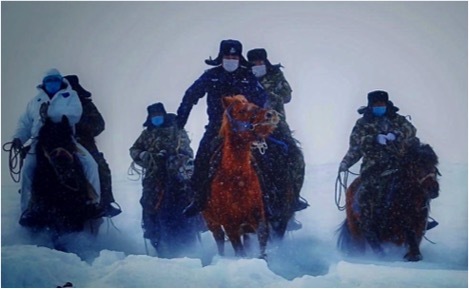
Every bad decision sets a precedent for more bad decisions as they charge forward!
The Speed of Panic
As we move into a world where the accelerating speed of bad news can be measured in exponential adoption curves, and the speed of panic is even greater than the risk of coronavirus itself, we are faced with some very hard choices.
Everything is a balancing act. Is the risk of alarming people greater than the risk of not informing them? Is the risk of destroying the economy greater than the risk of being under-protected? How can anyone know if they’ve struck the right balance in protecting employees at the same time trying to protect the companies and jobs they’re depending on?
Most crises in the past have followed a similar pattern. As our level of awareness grows, an accelerating problem leads to accelerating panic, and that leads to an accelerating financial crisis, followed by massive layoffs, and a huge number of bankruptcies. This is a lose, lose, lose, lose pattern that has been repeated time and again throughout history.
The truth is, this is on a scale unlike anything we’ve seen in the past. This is the first time we’ve had to deal with anything globally, simultaneously, and exponentially all at once. Our digital landscape has become far more pervasive, faster, and reliable than ever before, making it a particularly unique challenge to contend with.
While most feel the need to err on the side of caution, the unintended consequences of every drastic action is beginning to feel like we’re all crew members aboard the ill-fated Titanic with no lifeboats.
Yes, our hearts go out for everyone affected by COVID-19 today, but it’s still a long ways from being our biggest problem.
Biggest Death Risks (2016 data)*
It is highly unlikely that the risk of death from COVID-19 will even break into the top 15 leading causes of death this year:
Cardiovascular disease – 17.65 million
Diabetes, Blood and Endocrine disease- 10.4 million
Cancer – 9.6 million
Smoking – 7.1 million
Respiratory diseases and infections – 6.5 million
High blood pressure – 6.5 million
Air pollution – 4.9 million
Obesity – 4.7 million
Driving fatalities – 1.24 million
HIV/AIDS – 942,000
Suicide – 800,000
Influenza – 650,000
Malaria – 620,000
Homicides – 464,000
Medical errors – 440,000
* Sources: UNODC, WHO, the Global Health Data Exchange of the Institute for Health Metrics and Evaluation (IHME)

This is Carcavelos, Portugal after closing schools due to the Coronavirus!
Social distancing is counter-intuitive to our need to socialize!
Understanding Exponential Growth Curves
In the startup world, it’s every entrepreneur’s dream to unleash a super scaleable product and have it go viral. But there’s little concern for the back end of the curve in the consumer products world.
However, in just two weeks people in Italy went from saying “It won’t hit here!” to having the whole country locked down. Yes, this is an incredible teaching moment about what exponential change feels like, but this is different.
While it’s a great case study in accelerating growth strategies, it’s important to differentiate how the exponential curve of panic is far different from growth curves of the disease itself.
Every country in the world has now pushed the panic button.
Decisions affecting literally billions of people are being made in the heat of the moment with little to no understanding of how to find a way back to normal.
Shutting down the economic engines of society does little to solve the problem; it simply compounds the issues.
Any decision made without resistance will be done in haste, without consideration of consequences or repercussions.
Resistance is a powerful tool. It forces well-meaning people to refine their intentions, deliberate over possible outcomes, and be held accountable for shallow thinking and ill-suited arguments.
Final Thoughts
This period of time represents a significant turning point in human history, and understanding the full impact of everything that’s changed will take months, maybe years.
Very likely we will be rethinking personal space in light of “social distancing.” But it could work just the opposite, creating a stronger need for intimacy where we crave human touch and social contact.
We may see the proliferation of businesses helping you “pandemic-proof” your life.
With massive layoffs coming from drowning businesses, we may see coaches offering ways to “bankrupt your way to health and happiness.”
Throughout this process we will be searching for the “new normal.” Is extreme complexity the new simplicity? How does our changing need for personal space change the human interface? Where are the opportunities?
I’d love to hear your thoughts. What am I missing, overlooking, or not paying attention to? Take a few moments and let me know what you’re thinking.
Translate This Page
Select LanguageAfrikaansAlbanianAmharicArabicArmenianAzerbaijaniBasqueBelarusianBengaliBosnianBulgarianCatalanCebuanoChichewaChinese (Simplified)Chinese (Traditional)CorsicanCroatianCzechDanishDutchEnglishEsperantoEstonianFilipinoFinnishFrenchFrisianGalicianGeorgianGermanGreekGujaratiHaitian CreoleHausaHawaiianHebrewHindiHmongHungarianIcelandicIgboIndonesianIrishItalianJapaneseJavaneseKannadaKazakhKhmerKoreanKurdish (Kurmanji)KyrgyzLaoLatinLatvianLithuanianLuxembourgishMacedonianMalagasyMalayMalayalamMalteseMaoriMarathiMongolianMyanmar (Burmese)NepaliNorwegianPashtoPersianPolishPortuguesePunjabiRomanianRussianSamoanScottish GaelicSerbianSesothoShonaSindhiSinhalaSlovakSlovenianSomaliSpanishSudaneseSwahiliSwedishTajikTamilTeluguThaiTurkishUkrainianUrduUzbekVietnameseWelshXhosaYiddishYorubaZulu
#goog-gt-tt {display:none !important;}
.goog-te-banner-frame {display:none !important;}
.goog-te-menu-value:hover {text-decoration:none !important;}
.goog-text-highlight {background-color:transparent !important;box-shadow:none !important;}
body {top:0 !important;}
#google_translate_element2 {display:none!important;}
Search for:
Recent Posts
Coping with the Exponential Speed of Panic
The Fear of Doing Nothing: Our overarching fear of getting caught with our pants down in an age of hyper-awareness
Podcast College
Categories
Artificial Intelligence
Business Trends
Future of Agriculture
Future of Banking
Future of Education
Future of Healthcare
Future of Transportation
Future of Work
Future Scenarios
Future Trends
Futurist Thomas Frey Insights
Global Trends
Predictions
Social Trends
Technology Trends
Speaking TopicsFuture of Healthcare – “Is Death our only Option?
Future of AI
Future of Industries
By Futurist Thomas Frey, author of 'Epiphany Z – 8 Radical Visions Transforming Your Future'
The post Coping with the Exponential Speed of Panic appeared first on Futurist Speaker.
February 28, 2020
The Fear of Doing Nothing: Our overarching fear of getting caught with our pants down in an age of hyper-awareness
The Fear of Doing Nothing: Our overarching fear of getting caught with our pants down in an age of hyper-awareness
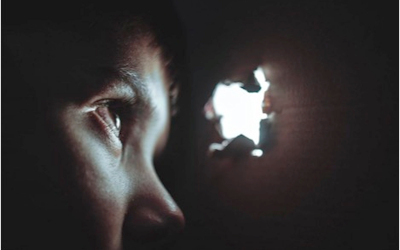
Are our leaders making good decisions about managing the coronavirus?
In 1998-1999, the world was being gripped by fear. It wasn’t the fear of war, famine, uprisings, or a coronavirus-like pandemic, instead there was a growing anxiety over Y2K.
Today, we tend to laugh at how the world was festering over something as trivial as the time clock limitations built into our computer hardware and operating systems, but at the time, it was anything but trivial.
The news media was very complicit in this fear-mongering, with disaster scenarios being played out on the six o’clock news and being repeated by politicians who didn’t want to be viewed as do-nothing officials.
That was only twenty years ago. Today we’re seeing a similar set of challenges unfold surrounding the coronavirus. And virtually every elected official is being gripped by the “fear of doing nothing.”
History has a way of treating officials harshly for making bad decisions, and no one wanted to risk having their legacy ruined because “they did nothing.”
As a result, any work order that came across a manager’s desk saying it would make their system “Y2K-ready” or “Y2K-compliant” was instantly rubber-stamped and given the green light.
To be sure, there were a lot of snake oil salesmen hovering around the tech world at this time, but very few wanted to risk being caught with their pants down.
Few people realize this but all the money corporations freed up to ensure they were Y2K compliant is what fueled the economic boom of the late nineties. This is the money that drove Silicon Valley through the first boom and bust bubble of Internet 1.0.
While Federal Reserve Board chairman, Alan Greenspan referred to it as “irrational exuberance,” the available money floating around the tech world was truly staggering.

We are now caught up in global fear mongering with no end in sight!
The Fear of Doing Nothing
Today’s headlines were dominated by Japan’s Prime Minister Shinzo Abe ordering all schools to be closed in Japan for the next month, even though it doesn’t affect kids.
Virtually every headline is about how fast-moving and dangerous the coronavirus is, even though the basis for these claims seem flimsy at best. So far the coronavirus has killed 2,814 people, while a recent study shows the flu kills 291,000-646,000 annually.
Yes, the death rate for coronavirus is estimated at 2% while the flu is only 0.1%, but the fear being generated appears to be far more devastating than the disease itself.
The latest wave of headlines is being dominated by public officials wanting to “do something,” and the only safe thing to do is to restrict travel and have people avoid other people.
Unlike Y2K, the fallout from the fear surrounding the coronavirus doesn’t seem to come with any type of silver lining, at least not yet.
Complicating things further, there doesn’t seem to be any reliable source of truth about the outbreak.
Information coming from the U.S. government is a mixed bag. The CDC has situational updates that are noteworthy, but not particularly useful, and the CDC states its assessment in rather ambiguous terms: “It’s important to note that current global circumstances suggest it is likely that this virus will cause a pandemic. In that case, the risk assessment will be different.”
For medical advice, the CDC’s says you should wash your hands with soap and water, and to not go near people who are infected. One important factoid is that hand sanitizers are most likely not strong enough to replace thorough hand washing as a preventative measure. So slathering your hands with Purell, in all likelihood, is a giant a waste of time and money.
While all this is interesting, the fact remains that millions of businesses are going bankrupt and people’s lives are being destroyed by the news media’s constant push to sensationalize headlines and drive the number of pageviews.
Global Businesses Collapsing
Most of the world relies on Chinese manufacturing for the products they buy. With over 604 million products sold on Amazon and over 46 million sold at Walmart, a huge percentage of them are made in China.
Millions of companies across China are now in a race against the clock to stay afloat.
A survey of small- and medium-sized Chinese companies conducted over the past month showed that only a third of them had enough cash to cover fixed expenses for one month, with another third would be running out within two months.
With the coronavirus dominating headlines, only 30% of them have managed to resume operations due to a complicated local government approval procedure as well as a lack of employees and financing.

China remains the manufacturing engine for the world!
While the Chinese government has cut interest rates, ordered banks to boost lending and loosened criteria for companies to restart their operations, many of the nation’s private businesses say they’ve been unable to access the funding they need to meet upcoming deadlines for debt and salary payments. Without more financial support or a sudden rebound in China’s economy, many will have to shut down for good.
Despite accounting for 60% of the economy and 80% of jobs in China, private businesses have long struggled to tap into the funding they need to expand and contract during the normal boom and bust cycles. About two-thirds of the country’s 80 million small businesses, including many mom-and-pop shops, lacked access to loans in 2018.
Since the outbreak, the support from China’s banking giants has been piecemeal, mostly earmarked for directly combating the virus.
Many of China’s businesses were already grasping for lifelines before the virus hit, because of the trade war and a lending crackdown that sent economic growth to a three-decade low last year.
Those most at risk are the labor-intensive catering and restaurant industries, travel agencies, airlines, hotels and shopping malls.

Airports have turned into scenes straight out of the zombie apocalypse!
Killing the Travel and Tourism Industries
The global response so far has been isolation, isolation, and even more isolation.
The only known prevention for coronavirus has been to isolate people from any contact with other people. Except, even that is no longer good enough.
U.S. health authorities said they’ve identified the first case of coronavirus that doesn’t have known ties to an existing outbreak, a worrying signal that the virus is circulating in the U.S. despite all the precautions.
The hospital where the patient is being treated at UC Davis in California is described as one of the more serious cases of infection so far in the U.S.
The U.S. Centers for Disease Control said the patient doesn’t appear to have traveled to China or been exposed to another known case of the coronavirus. Health authorities are increasingly concerned about what’s known as community spread, where the virus begins circulating freely among people outside of quarantines or known contacts with other patients.
“At this time, the patient’s exposure is unknown,” the CDC said in a statement. “It’s possible this could be an instance of community spread of Covid-19.”
In the meantime, the fear is causing the travel and tourism industries to collapse.
France has seen a 30-40% drop in tourists.
More than 40,000 hotel bookings on the Indonesian island of Bali have been canceled.
China has experienced a 70% drop in tourists over last year.
Facebook cancelled their 5,000 person Global Marketing Summit scheduled for March in San Francisco.
The Tokyo Marathon has been reduced to elite runners only, cancelling the race for 38,000 other runners.
North Korea has canceled its Pyongyang Marathon scheduled for April.
Mobile World Conference canceled its February event in Barcelona.
British rapper Stormzy postponed concerts in Japan, China, and South Korea as part of his world tour.
Dalai Lama, the Buddhist spiritual leader announced he would postpone all ordination ceremonies for new monks and cancel all his public duties until further notice.
Fashion weeks in Beijing and Shanghai, both set to take place at the end of March, have been postponed.
Venice, Italy canceled its carnival, one of the most popular in the world.
The Saudi government announced it is temporarily banning foreign pilgrims from entering the country, which is home to the Muslim holy cities of Mecca and Medina.
At risk are massive failures in airlines, cruise ships, theme parks, hotels, trains, conferences, conventions, and much more.

Have we reached a crossroads in human existence?
151,600
151,600 is the number of people that die every day in the world.
Some die from old age, infectious disease, car accidents, cancer, childbirth, heart attacks, suicide, gunshots, or any of dozens of different causes. The ending of human life is a sobering reality, happening relentlessly, every second of every day.
Whenever I get lulled into a false sense of “this will never happen to me,” I realize this same number begins its countdown every morning of every day. There are no exceptions.
“What’s the role of our healthcare and governmental systems in this number?”
Is it simply to rearrange the dead, to change the order of how and when some of us will die?
Every baby that’s born into this world comes with an expiration date. We don’t know when anyone will die, but so far, no one has managed to live forever.
As a society, we grieve all of our losses but we abhor premature deaths, all of the ones that could have been prevented. We go out of our way to guard against disease, mending wounds after an accident, and protecting against those who wish us harm.
In the future it will no longer be good enough to just be healthy. We will demand ways to be physically stronger, more alert, super resilient, exceptionally durable, intellectually brilliant, and so much more.
Final Thoughts
I normally don’t go off on a rant, but every approach to the coronavirus I’m seeing seems wrong on so many levels.
It’s Y2K all over again but with a demented twist.
So we isolate people for a while… and then what? Every day we’re hearing about new cancellations and postponements… and then what? We’re on the verge of destroying our global economy… and then what?
Are we really waiting for someone to discover a cure? The healthcare industry has a terrible track record when it comes to finding cures. They are far more motivated to find a solution for the symptoms rather than the disease itself, but maybe this time will be different.
Furthermore, isolation does not work. It goes against human nature. Instead of separating people from people we need to start working together and ask the tough questions.
If we have an outbreak of the coronavirus in a large prison, how do we manage that? If we have an outbreak in a refugee camp, how do we manage that? If we have a massive outbreak among the 1.2 billion people that live in Africa, how do we manage that?
Recently, Harvard epidemiology professor Marc Lipsitch stated, “I think the likely outcome is that it will ultimately not be containable.”
Lipsitch goes on to predict that within the coming year, anywhere from 40 to 70 percent of people around the world will be infected with the virus that causes COVID-19. But, he clarifies emphatically, this does not mean that all will have severe illnesses.
It seems inevitable that we will all come into contact with it. But today’s fear about the coronavirus is exponentially worse than the disease itself. Why do we have no checks and balance systems for the hysteria being created?
That said, I’d love to hear your thoughts.
Translate This Page
Select LanguageAfrikaansAlbanianAmharicArabicArmenianAzerbaijaniBasqueBelarusianBengaliBosnianBulgarianCatalanCebuanoChichewaChinese (Simplified)Chinese (Traditional)CorsicanCroatianCzechDanishDutchEnglishEsperantoEstonianFilipinoFinnishFrenchFrisianGalicianGeorgianGermanGreekGujaratiHaitian CreoleHausaHawaiianHebrewHindiHmongHungarianIcelandicIgboIndonesianIrishItalianJapaneseJavaneseKannadaKazakhKhmerKoreanKurdish (Kurmanji)KyrgyzLaoLatinLatvianLithuanianLuxembourgishMacedonianMalagasyMalayMalayalamMalteseMaoriMarathiMongolianMyanmar (Burmese)NepaliNorwegianPashtoPersianPolishPortuguesePunjabiRomanianRussianSamoanScottish GaelicSerbianSesothoShonaSindhiSinhalaSlovakSlovenianSomaliSpanishSudaneseSwahiliSwedishTajikTamilTeluguThaiTurkishUkrainianUrduUzbekVietnameseWelshXhosaYiddishYorubaZulu
#goog-gt-tt {display:none !important;}
.goog-te-banner-frame {display:none !important;}
.goog-te-menu-value:hover {text-decoration:none !important;}
.goog-text-highlight {background-color:transparent !important;box-shadow:none !important;}
body {top:0 !important;}
#google_translate_element2 {display:none!important;}
Search for:
Recent Posts
The Fear of Doing Nothing: Our overarching fear of getting caught with our pants down in an age of hyper-awareness
Podcast College
How many Einsteins and Mozarts are born in every million people? Can there be more? Should there be more?
Categories
Artificial Intelligence
Business Trends
Future of Agriculture
Future of Banking
Future of Education
Future of Healthcare
Future of Transportation
Future of Work
Future Scenarios
Future Trends
Futurist Thomas Frey Insights
Global Trends
Predictions
Social Trends
Technology Trends
Speaking TopicsFuture of Healthcare – “Is Death our only Option?
Future of AI
Future of Industries
By Futurist Thomas Frey, author of 'Epiphany Z – 8 Radical Visions Transforming Your Future'
The post The Fear of Doing Nothing: Our overarching fear of getting caught with our pants down in an age of hyper-awareness appeared first on Futurist Speaker.
February 20, 2020
Podcast College
Podcast College

Podcast College has the potential to short circuit the path to a newer you!
What if getting a college degree involved little more than listening to podcasts and taking tests?
Podcasts can be squeezed into every crack in every day, like riding in a car, working out at the gym, going on a bike ride, or waiting at the doctors office. Most college classes cannot!
Colleges and higher ed are about to be transformed and it is in this transformation where amazing new opportunities will spring to life.
At the moment, we don’t know if the disruption will come from AI, videos, podcasts, mentor networks, or something else. But ten years from now, the process for getting a college degree, learning new skills, or simply brushing up on your latest hobby techniques will look vastly different than it does today.
We all have our own idea of what success should look like. But our notion that college degrees are a must-have component of success is quickly eroding.
For teenagers, their heroes are people who have launched their own video games, started a band, filmed a rockumentary, created a mobile app, written a graphic novel, or won a major video game tournament. To them, the accolades and notoriety that come with this kind of experience far outweighs the tedium involved in credentialing new skills.
For others, nothing resonates quite like being involved in an authentic accomplishment-based learning experience where meaningful work is making a meaningful impact.
Experience trumps diplomas every day of the week.
That said, we still have a need for credentialing.
Our Mandate for Humanity
One of our underlying mandates has been the transfer of knowledge from one generation to the next. And no, we’ve never been very good at it.
History is filled with stories of invading armies determined to wipe out every possible remnant of ancestral tribes, races, cultures, and ethnicities, and in doing so, many of the inventions, discoveries, and research projects that have brought us to this wobbly point in history have been lost along the way.
Every time there has been a burning of books, destruction of libraries and museums, or dismantling of schools, our ancestors have been forced to relearn, rediscover, and reinvent each of these pillars of accomplishment one sand pebble at a time.
Simply put, it is our ability to look back at everything we’ve learned, discovered, invented, and imagined in the past that helps jumpstart every new generation of young people by placing the starting blocks on a much higher plain of understanding. At least that’s the way it’s supposed to work.
Over the years we’ve developed a number of tools for doing this including libraries, books, museums, colleges, and more recently countless forms of digital archive sites including YouTube, Facebook, LinkedIn, and Instagram.
Until recently, the greatest responsibility for this generational transfer of knowledge has fallen on colleges.
In much the same way books have evolved into a convenient way of packaging information, college courses have become the default form of packaging learning units.
Yet, anyone who’s written a book knows how onerous and demanding the process can be. And creating a curriculum for a college course is equally demanding.
Of course we’ve seen a number of shortcut processes come out of the woodwork, but for truly meaningful books and courses, it’s still a painful process.
More recently, however, the online digital world has given us a completely new set of tools to work with, and the reinvention of learning processes will send shockwaves of disruption through our existing school systems.

Listening to a podcast becomes an intensely personal experience!
Enter the Podcast Universe
At the DaVinci Institute, we hosted our first Podcast Bootcamp in 2005, shortly after podcasting itself was invented.
Podcasting was first created in 2004 by former MTV video jockey Adam Curry and software developer Dave Winer. Curry wrote a program called iPodder that enabled him to automatically download Internet radio broadcasts to his iPod. Several developers improved upon his idea, and podcasting was officially born. Curry now hosts a show called The Daily Source Code, which is still one of the most popular podcasts on the Internet.
The name itself came from the idea of loading audio files onto an Apple iPod.
I remember how our Podcast Bootcamp turned into a bit of a geek-fest because the whole process of recording and loading audio files online was still in the prehistoric, cutting-edge early years.
Today, most of the rough edges are gone and podcasting itself has become a massively fast growing and hugely popular medium.
Currently there are over 850,000 podcasts featuring over 30 million episodes. And these numbers are moving up a steep growth curve with projections that we’ll break the million podcast barrier later this year.
51% of people in the US have listened to podcasts, and the audiences are split into 56% men and 44% women.
Most of the growth in podcasting started in 2014, with 157% growth since then, when smartphones started to become more podcast-friendly.
Right now, podcasting is free from government regulation. Podcasters don’t need to buy a license to broadcast their programming, as radio stations do, and they don’t need to conform to the Federal Communication Commission’s broadcast decency regulations. That means anything goes — from four-letter words to sexually explicit content. Copyright law does apply to podcasting, though. Podcasters can copyright or license their work, and Creative Commons is just one online resource for copyrights and licenses.
Testing will be a key component of every future learning system!
Inventing Podcast College
What if college lectures, with a single professor discussing a topic, were replaced with 2, 3, or 4 very bright people discussing the same subject matter on a podcast?
Podcast courses already exist, and many colleges already have their own podcast course offerings, but so far no one has managed to pull together an organically scalable YouTube-for-podcast-courses site with testing and revenue sharing that offers legitimate credentialing for next generation learners.
Here are some of the components that could make it a rapidly scalable online service:
Audio and Video
Since there are no one-size-fits-all forms of learning, podcasts will include both audio and video.
AI-Driven Recommendation Engine
Finding good podcasts is easy. But finding great ones is hard. Over time an AI recommendation engine will learn your interests, quirkiness, idiosyncrasies, and personal preferences.
Industry-Driven Certification Standards
Every profession, personal skill, or area of learning has logical points where experts in that field would consider the necessary learning to be sufficiently complete. But every profession or skill is different.
Instant Language Translatio
Switching from French to English to Mandarin should be automatic based on your profile.
Official Record Keeping System
Building a system with impeccable integrity means that the system for archiving the accomplishments of every participant must be secure, private, and managed by an organization with impeccable credentials. While many people will think that a government-run archive is the best solution, the best possible record-keeping system will be one that transcends governmental boundary lines.
Participative Wealth Pricing
The revenue stream generated by each courseware unit will be divided between the courseware producer, distribution company, transaction company, system operations company, and the official record keeping system. Maybe more. Courseware prices need to be kept low to make courseware accessible to anyone interested in learning.
Multi-Dimensional Tagging Engine
Tagging will help train the AI. Much of the system usability will be driven by multi-dimensional tagging engines that will include:
Personal Rating Tags
Upon completion, each student will be asked to rate the pod-course. Courses will be graded on accuracy, quality of the learning experience, ease of use, and overall effectiveness.
Quality Assessment
Listeners will up-vote and down-vote podcasts so the best-of-the-best will rise to the top.
Truth Assessment
Virtually every aspect of society has their own version of the ‘truth’ – religious truths, scientific truths, legal truths, etc. For this reason, individual groups will place their tags of approval or disapproval on courses. For example, organizations like the American Chemical Society, People for the Ethical Treatment of Animals, Focus on the Family, American Civil Liberties Union, National Rifle Association, National Education Association, or the Catholic Church can all review the new courseware that is being introduced and make a determination as to whether or not it meets their criteria.
Taxonomy Tags
Invariably, courseware topics will be understood differently by every student. For this reason, allowing students to place descriptor tags on all completed courses will create the necessary taxonomy markers so an AI recommendation engine can find it.
Prerequisite & Post-Requisite Tags
Knowledge builds on knowledge. As an example, students cannot study literature until they know how to read, and they cannot study computer programming until they know math and algebra. So courses have to happen sequentially, and it becomes imperative to develop a system for sequencing courses based on the order of which learning must take place.
Comment Tags
Comment sections will allow students to voice their own thoughts on each course.

Podcast college has the potential to become the most liberating shift in learning in all history!
Launching the Business of “You”
How many traditional schools are currently prepping students to be “freelancer-ready?” In a word – none. It’s simply not happening.
Instead, the hard transition from student grunt to skilled worker is occurring in radically different ways – through friends, through trial and error, and through existing project teams.
Mentorship is quickly becoming the new classroom.
When LinkedIn founder Reid Hoffman said, “You need to think and act like you’re running a start-up of ‘you’,” he’s referring to your own career.
Every new free agent that enters the project-to-project job world quickly realizes that their growing lists of questions simply don’t have textbook answers. They have to find their own answers, and the quickest way is through peer groups and mentors.
Living in the U.S., the country with the highest educated waitresses and bartenders in the world, an increasingly vocal underground feels they’ve been lied to. Academic credentials no longer live up to the promise implied with every new student loan that’s being applied for.
That’s one of the reasons coworking is becoming so trendy; they’re looking for a better network.

Your next career move may only be a few podcasts away!
Final Thoughts
The best schooling occurs when you have a project where you can instantly apply the things you learned.
Writing a book, receiving a patent, or starting a business are all noteworthy symbols of achievement in today’s world. But being the author of a book that sells 50,000 copies, or inventing a product that a million people buy, or building a business that grosses over $10 million in annual sales are all significant accomplishments far more meaningful than their academic equivalents.
Most of what happens in today’s universities is based on “symbols of achievement,” not actual accomplishments.
Academic competitions pit students against each other to produce results that best match their teacher’s expectations. Only rarely will they produce anything noteworthy.
Completing a class is nothing more than a symbol of achievement. Similarly, completing many classes and receiving a diploma is noteworthy, but still only a distant cousin to a real accomplishment.
No, this doesn’t mean that classroom training has no value. But, what we achieve in a classroom is at least one level of abstraction removed from a real-world accomplishment.
In the business world, it’s only an accomplishment if someone is willing to pay for it.
The global marketplace is not looking for people who have learned how to be great students. It wants results.
Podcast College has the potential to short circuit the path to a newer you!
Translate This Page
Select LanguageAfrikaansAlbanianAmharicArabicArmenianAzerbaijaniBasqueBelarusianBengaliBosnianBulgarianCatalanCebuanoChichewaChinese (Simplified)Chinese (Traditional)CorsicanCroatianCzechDanishDutchEnglishEsperantoEstonianFilipinoFinnishFrenchFrisianGalicianGeorgianGermanGreekGujaratiHaitian CreoleHausaHawaiianHebrewHindiHmongHungarianIcelandicIgboIndonesianIrishItalianJapaneseJavaneseKannadaKazakhKhmerKoreanKurdish (Kurmanji)KyrgyzLaoLatinLatvianLithuanianLuxembourgishMacedonianMalagasyMalayMalayalamMalteseMaoriMarathiMongolianMyanmar (Burmese)NepaliNorwegianPashtoPersianPolishPortuguesePunjabiRomanianRussianSamoanScottish GaelicSerbianSesothoShonaSindhiSinhalaSlovakSlovenianSomaliSpanishSudaneseSwahiliSwedishTajikTamilTeluguThaiTurkishUkrainianUrduUzbekVietnameseWelshXhosaYiddishYorubaZulu
#goog-gt-tt {display:none !important;}
.goog-te-banner-frame {display:none !important;}
.goog-te-menu-value:hover {text-decoration:none !important;}
.goog-text-highlight {background-color:transparent !important;box-shadow:none !important;}
body {top:0 !important;}
#google_translate_element2 {display:none!important;}
Search for:
Recent Posts
Podcast College
How many Einsteins and Mozarts are born in every million people? Can there be more? Should there be more?
Disrupting Transactions: 7 Examples of AI Driven Smart Transactions that will Mess with your Mind
Categories
Artificial Intelligence
Business Trends
Future of Agriculture
Future of Banking
Future of Education
Future of Healthcare
Future of Transportation
Future of Work
Future Scenarios
Future Trends
Futurist Thomas Frey Insights
Global Trends
Predictions
Social Trends
Technology Trends
Speaking TopicsFuture of Healthcare – “Is Death our only Option?
Future of AI
Future of Industries
By Futurist Thomas Frey, author of 'Epiphany Z – 8 Radical Visions Transforming Your Future'
The post Podcast College appeared first on Futurist Speaker.
February 14, 2020
How many Einsteins and Mozarts are born in every million people? Can there be more? Should there be more?
How many Einsteins and Mozarts are born in every million people? Can there be more? Should there be more?
 The world is currently undergoing a massive demographic shift, with over half of all new born babies born in six countries – Angola, Congo, Ethiopia, Nigeria, Tanzania, and Pakistan.
First world countries, with their ambitious lifestyles are far less interested in the labor intensive, burdensome, and expensive path of child-rearing, and with easy access to birth control, it often becomes an obvious no!
Modern pressures on highways, power, water, and waste reinforce a belief that population growth is a problem. Blamed for crowded restaurants, brownouts, urban sprawl and other irritants of modern life, the popular refrain is that we have too many people with too few resources.
While some of us may conjure up images of huge populations of starving people left to fend for themselves in the squalors of war-torn villages, the true human potential is a radically different story.
Every problem we face today has a potential solution ready to percolate to the top in the mind of a soon-to-be-born child somewhere in the world. Location shouldn’t matter.

The future of the world rests in the minds of our baby Einstein’s!
Asking the toughest of tough questions
If we step back and take a macro view of our world and the myriad of trends fashioning it, I find the most interesting questions coming from the following unanswerable questions that no one seems to be asking.
1. How many Einstein and Mozart-level geniuses are currently being born in the midst of every million newborns?
This is a question we should be asking every day? But we don’t even have a well-accepted definition for what constitutes a genius. Every modern-day Picasso, Galileo, Beethoven, Van Gogh, Archimedes, and DaVinci will require a radically different measuring stick to assess the depth and value of their true talent.
2. How many genius-level babies have been born throughout history?
Sadly, we have no existing way of measuring genius-potential when a baby is born. Realistically, we should be tracking it back to the point of conception since many factors surrounding a pregnancy will also determine later life potential.
3. With the right set of circumstances, could we raise the percentage of genius births to as high as 20%, 30% or even 50%?
Since much of our potential in life stems from the struggles, setbacks, and rigors of our upbringing, it’s hard to imagine creating a set of optimal circumstances and what those results might look like.
4. Could every single live birth produce a true genius with the right stimulation, training, and effort?
Is every baby conceived with genius potential, and everything that happens in life simply a subtraction process from day-one perfection? In a perfect world, how close could we come to 100%?
5. Wouldn’t our first step be to create geniuses who can first answer these questions, before we can raise the bar for the rest of humanity?
If there are people currently working on this set of problems, I’m not aware of them. Somewhere in this line of thinking would appear to be an approach that can unlock an elevated plateau for all humanity. Shouldn’t this be our top priority for the entire world?
6. How many answers lie in the vast number of children that are currently not being born?
How many cures for cancer, hemorrhagic fever, diabetes, meningitis, rabies, smallpox, plague, HIV/AIDS, cholera, tuberculosis, and ebola never got discovered because the people with answers were never born?
7. Will the enormous value of the few outweigh the problems of the many?
Are people the problem or the solution? Can we create better and more consistent geniuses in smaller batches? It’s easy to get trapped into using the age-old top-down approach to thinking this through. But I’m fairly certain that we will never find the answers simply by having someone crown themselves king and demanding we see the world through their eyes.
8. Are we even smart enough to ask the right questions?
That’s an easy no! This set of questions is simply a starting point for far more sophisticated questions that are sure to follow. The real goal should be finding the right questions before we even think about answers!
9. Will emerging technologies like AI and quantum computing enable us to achieve better answers?
Over the coming years we will undoubtedly be working with promising technologies capable of boosting our genius-quotient. One question I love to ask is, “How will the world change when we can focus a million times more computing power on a particular problem?”
10. Do we live in an overpopulated world or an under-populated universe?
As humans, do we have a mandate to colonize other worlds? Many people believe this to be true. The number of humans that currently live in other corners of the universe equals zero. Different gravities, food supplies, atmospheric compositions, radiation levels, and a myriad of other conditions means that we will never encounter other “humans” as we explore the universe, and the likelihood of encountering “human-like” beings is extremely remote. Are we then destined to become the colonizers of new worlds, and who are the geniuses that will take us there?
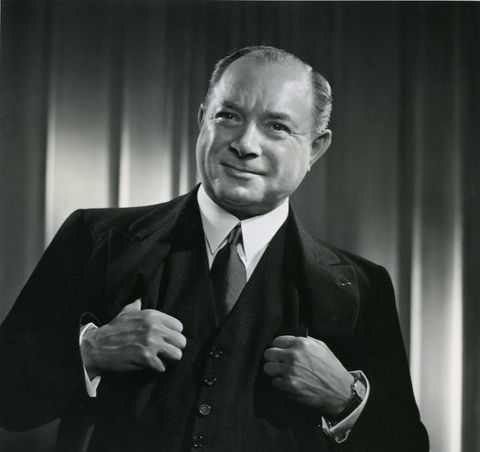
David Sarnoff, the “Robber Baron” CEO of RCA
The David Sarnoff Story
Born in 1891, David Sarnoff, best know for his years as the heavy-handed CEO of RCA left a trail of technological carnage in his wake as he went to great lengths to cement his grasp on power in the broadcast industry.
While the famed TV inventor, Philo Farnsworth patented his first television in 1927, it would be decades of court battles with Sarnoff and RCA that delayed the introduction of television for over 25 years. At one point Sarnoff even claimed he was the inventor of television, reducing Farnsworth to a fraction of his boyhood genius in the process.
A similar story unfolded when Edwin Armstrong invented FM radio and pitched it to Sarnoff in 1948. After seven years of exhaustive court battles, Armstrong simply gave up and jumped out of his 13th floor apartment, committing suicide in 1954.
Sarnoff was a ruthless businessman and master manipulator who would go to great lengths to preserve his base of power. To be sure, every industry has a puppet-master like David Sarnoff controlling the agenda. The question we should all be asking is, “Who is the David Sarnoff of EdTech, FinTech, and HealthTech, preventing our emerging young geniuses from rising to the top?”
Clearly we have many in Africa, Asia, South America and the rest of the world who are more interested in exploiting talented people rather than letting their genius, ingenuity, and brilliance rise to the top.
History shows we’ve done a terrible job of protecting our most talented thinkers.
In this context, Sarnoff is an all-too-real symbol of the extreme challenges that will need to be overcome to achieve the optimal genius density we’ll need in the future.

Picasso in his Paris studio!
Final Thoughts
Counter to our historic approaches, relying on serendipity is not a good plan. Doing nothing is also not an option!
The survival of the human species is dependent upon our ability to preserve the best and the brightest.
Behind every advancement, new threats are lurking. Our challenges ahead will be far more demanding. Abilities of the past are no longer sufficient to solve the problems of the future. Global catastrophes are poised and waiting to make their appearance.
Extreme problems require extreme solutions.
We’ve all heard the stories and seen the movies of how famines, mounting deaths, social collapse, and mass migrations will ignite elevated forms of global conflict as civilizations crumbles.
We can no longer allow warlords, drug-lords, and human traffickers to reduce our polymaths and prodigies to soldiers, slaves, and servants. Nor can we let the David Sarnoffs, Joseph Stalins, Adolph Hitlers, Pol Pots, and Genghis Khans maim, kill, and destroy the billions of young men and women who should be filling our history books instead of them.
In much the same way that we can’t pay more bills with less money, we can’t solve greater problems with less talent. A planet with a shrinking population will suffer from entirely new kinds of problems, such as ghost town syndrome, neighborhood collapse disorder, community fragmentation, and social panic leading to fractured economies and large-scale financial failures.
We no longer have the luxury of allowing only a tiny fraction of our offspring to fight the one-in-a-billion odds to maybe find a seat on the world stage of thinkers, designers, and influencers.
If we get past the not-so-enlightened thinking that “people are the problem,” and move into a more realistic view that “people are the solution,” we can begin having more meaningful conversations.
And yes, many of our future scientists, engineers, entrepreneurs, and world leaders are being born in Angola, Congo, Ethiopia, Nigeria, Tanzania, and Pakistan.
Systems of the past are simply not good enough for the future. So the question remains, “how do we build the durable, survivable, sustainable structures needed in the future?”
As always, I’d love to hear your thoughts on this topic.
Translate This Page
Select LanguageAfrikaansAlbanianAmharicArabicArmenianAzerbaijaniBasqueBelarusianBengaliBosnianBulgarianCatalanCebuanoChichewaChinese (Simplified)Chinese (Traditional)CorsicanCroatianCzechDanishDutchEnglishEsperantoEstonianFilipinoFinnishFrenchFrisianGalicianGeorgianGermanGreekGujaratiHaitian CreoleHausaHawaiianHebrewHindiHmongHungarianIcelandicIgboIndonesianIrishItalianJapaneseJavaneseKannadaKazakhKhmerKoreanKurdish (Kurmanji)KyrgyzLaoLatinLatvianLithuanianLuxembourgishMacedonianMalagasyMalayMalayalamMalteseMaoriMarathiMongolianMyanmar (Burmese)NepaliNorwegianPashtoPersianPolishPortuguesePunjabiRomanianRussianSamoanScottish GaelicSerbianSesothoShonaSindhiSinhalaSlovakSlovenianSomaliSpanishSudaneseSwahiliSwedishTajikTamilTeluguThaiTurkishUkrainianUrduUzbekVietnameseWelshXhosaYiddishYorubaZulu
#goog-gt-tt {display:none !important;}
.goog-te-banner-frame {display:none !important;}
.goog-te-menu-value:hover {text-decoration:none !important;}
.goog-text-highlight {background-color:transparent !important;box-shadow:none !important;}
body {top:0 !important;}
#google_translate_element2 {display:none!important;}
Search for:
Recent Posts
How many Einsteins and Mozarts are born in every million people? Can there be more? Should there be more?
Disrupting Transactions: 7 Examples of AI Driven Smart Transactions that will Mess with your Mind
Backcasting Our Way to a Better Future: 8 Eye-Opening Scenarios
Categories
Artificial Intelligence
Business Trends
Future of Agriculture
Future of Banking
Future of Education
Future of Healthcare
Future of Transportation
Future of Work
Future Scenarios
Future Trends
Futurist Thomas Frey Insights
Global Trends
Predictions
Social Trends
Technology Trends
Speaking TopicsFuture of Healthcare – “Is Death our only Option?
Future of AI
Future of Industries
By Futurist Thomas Frey, author of 'Epiphany Z – 8 Radical Visions Transforming Your Future'
The post How many Einsteins and Mozarts are born in every million people? Can there be more? Should there be more? appeared first on Futurist Speaker.
February 5, 2020
Disrupting Transactions: 7 Examples of AI Driven Smart Transactions that will Mess with your Mind
Disrupting Transactions: 7 Examples of AI Driven Smart Transactions that will Mess with your Mind

Our lives are immersed in transactions that we simply take for granted.
The banking world is in trouble.
Our entire world is primarily built around one central activity – transacting payments. Today we’re seeing an emerging breed of non-bank companies coming out of the woodwork, maneuvering quickly, to reinvent transactions in ways we find hard to imagine.
Whenever I purchase a loaf of bread, pack of gum, or gallon of milk, I’m performing a transaction.
A transaction causes a change in ownership. It also creates a change in your bank balance, your personal net worth, and the data profile associated with your personal identity.
While we tend to overlook the significance of a transaction, entire industries have been constructed around them. In fact, most of the world’s entire labor force is somehow tied to the cause and effect relationship we have with transactions.
Each time I make a purchase on Amazon, it’s based on a transaction. Amazon wouldn’t exist without them.
When I click on a Google ad, every click forms a new transaction. Google also wouldn’t exist without transactions.
In fact, the same holds true for Apple, Microsoft, Facebook, General Motors, Coca Cola, Pizza Hut, Procter & Gambles, Best Buy, Red Lobster, Dress Barn, and Forever 21.
Every paycheck, stock purchase, trade, commission, subscription, fine, toll, membership, and gift card swipe all involve transactions. Even most free things require transactions because people are trading personal information for what’s behind door number three.
Most people today would find it impossible to live a “no transaction” lifestyle. Only those coming from a minimalist setting, living off the land and sea, making their own clothing, building their own homes, and treating their own diseases could even come close.
Our lives are immersed in transactions and we simply take them for granted. At the same time, we rely on the banking industry to safely and securely manage our transactions.
Regulating Transactions
Governments are responsible for all our systems. Since transactions are part of our systems designed for public commerce, government’s are responsible for ensuring everything is happening as it should.
But governments have also decided to make every transaction a tax point decision. Is this deductible or is this not? And with literally trillions of transactions happening every day, the intrusiveness of this system becomes quite onerous.
Even though technology has become the “great complexity-enabler,” anything involving a piece of human decision-making, no matter how small, places an untold burden on the flow of commerce.
Human decision-making, in this context, becomes the friction that slows the speed and fluidity of society. At the same time we’re on the verge of automating the entire process in ways that are seamless, painless, and invisible to the end user.
With this in mind, any entrepreneur wanting to disrupt the transaction industry should first consider which transaction types and industry characteristics to attack first.
Anatomy of a Transaction
While we don’t consciously think about it, every transaction is packaged with a bundle of attributes and characteristics that govern the overall nature of this seemingly insignificant activity.
Merchants pay close attention to things like cost, speed, and risk. Consumers pay more attention to security, transparency, and convenience.
Simply put, the distance between what you want, and when you get it, is a simple transaction. But it is the flavor and characteristics of these transactions that determine whether or not they will ever happen.
For this reason, it’s important to break the cause-and-effect relationship of a transaction into primary and secondary results.
Uber has mastered the “no click” payment system where the transaction is agreed to before the service is performed, and it’s finalized when a passenger simply opens the door and walks away.
Spotify has designed its entire operation around complex algorithms that track every song you play and credit the artist with a micropayment proportional to the entire song catalog you listen to each month.
Next generation transactions will be even more disruptive.
Here’s a quick look at transaction types and some of the most relevant characteristics to help illustrate an approach to uncovering where the current industry vulnerabilities are possibly hiding.
Transaction Types
In-store vs. online purchase
Voice commerce (i.e. Alexa, Google. etc.)
Online or live auctions
Barter or trade
Rental or lease
Purchase of services
Subscription or membership
Donation
Investment in a stock or bonds
Mortgage, loan, or lease payment
Refund or exchange
Voided transactions
Applying for credit
Savings
Single vs. double click
Transaction Characteristics
Speed – Conversion before distraction
Cost – Who pays and how much
Privacy and Security – Validation and awareness process
Convenience – Ease of use
Transparency – Knowing your balance before and after
Size – Macro, micro, or nano scale
Friction Level – Number of decision points
Taxable vs. Non-Taxable

We no longer need to touch buttons to perform a transaction
Seven Shocking AI Managed Smart Transactions
With this in mind, let’s think through some possible ways a disruptive entrepreneur might approach rewriting the rules of transactions.
1. Complex Purchase Scenario
With the combination of AI and nano payments, it may indeed be possible to devise some truly exotic transactions.
Let’s suppose you want purchase a new $5,000 bedroom set for your home and the deal you cut is to trade for:
One 5-star review on Google (Value $100)
6 posts on Facebook (Value $600)
1 post on LinkedIn (Value $100)
One lawn-scaping service valued at $400 (store owner’s yard)
A mint condition Spiderman #6 comic book valued at $3,600
Two unused $100 gift cards
Since the AI is aware of all the purchaser’s possessions, it recommended this no-cash arrangement as a win-win for both buyer and seller.
After reaching the initial agreement, the next step is to iron out what portion of the transaction is subject to sales tax and who is on-the-hook for that piece of the equation.
The AI determined $1,200 of the buyer payment is being done in services, so that portion isn’t subject to sale tax. It also determined that $500 of the sales price was allocated to delivery and setup, also not subject to sales tax.
That meant the remaining $3,300 is subject to 10% sales tax, or $330. To handle this, the buyer agrees to pay $130 cash and do two Instagram posts, each valued at $100.
Both buyer and seller are happy, and the taxing authorities are left with a super complicated money trail that can only be audited with next generation AI auditing software.
2. Saving for Retirement Scenario
It’s entirely possible for a frugal saver to impose a savings-tax on themselves simply by asking the AI to add an additional 2%-3% on every purchase, and place it into a retirement account that grows with their spending.
The logic here is to make the pain threshold extremely low, so the amount squirreled away is nearly invisible to the user.
Savings today requires a conscious effort. As I mentioned earlier, any action requiring human involvement creates friction so it’s far less likely to happen. By automating the process and making it invisible and painless, we will likely see many more people start to amass significant savings over the course of their careers.
3. Pizza Drone Scenario
Imagine watching television in 2040 and an extreme pizza commercial comes on. The experience is so intense that within seconds your taste buds become engaged, your mouth starts watering, and you finally utter the word “yes!”
That’s all it takes, one simple word.
The voice commerce system for your home is instantly engaged, and since it already knows what kind of pizza you like, an order is placed.
Ten seconds later a delivery drone docks with your house, a steaming hot pizza is removed, and you’ve already consumed half of it before you realize what you paid for it.
Marketing people have long tried to combine the marketing moment with the buying moment. The easier it is to buy after seeing an ad, the higher the conversion rate.
But in this scenario, the marketing moment is combined with the buying moment, followed by an abnormally fast fulfillment moment.
The entire transaction happens in the blink of an eye. As we analyze all the advances in technology necessary to make this happen, we begin to see the incredible potential behind the idea of “building a better transaction.”
4. The 1,000 Revenue Stream Lifestyle
In the future people will have the job title of an “impressionist.”
In this scenario, anyone who works as an impressionist will start their day by dressing themselves in video clothing where every surface area has a direct feed that fills it with ads and commercials for many different companies, so it’s constantly changing.
The job of the impressionist is to get people to notice them, but people watching the ads is only part of the equation.
Video clothing also has to track the viewers so it is “looking out” as much as the viewing public is “looking in.”
Every time two eyeballs are focused on a logo or marketing slogan, it tallies an impression.
With each impression worth a few cents, the goal of the impressionist is to accumulate as many impressions as possible in a given day. Generally the larger the crowd the better, but the impressionist’s goal will be to stay visible at all times.
Inside this data driven video feed, there could be as many as 1,000 different companies running their messages, the wearer could be earning income from as many as 1,000 businesses per day.
5. Seasonal Cash Flow Loans and Mortgages
Virtually every business has its own seasonality. Some are busy around the holidays, others have a peak time during the summer, and still others formulate their business models around key events.
Until now, the banking world hasn’t cared about anyone’s seasonal cash flow issues. Every mortgage and loan payment follows the same relentless monthly pace, and it’s up to the borrower to figure out how to make the payments.
However, with a self-organizing AI smart transaction, mortgages and loans could be synced to a borrower’s specific situation, less some months and more at other times, with payments automatically adjusted to match the company’s cash flow.
Over time, borrowers would still pay the full amount, but it would be at a pace that meshes far better with a business’s ability to pay.
6. Fractal Transactions
A fractal transaction is simply an automated point of money distribution. Money flows into the transaction, from one or more sources, and instantly leaves the transaction, automatically distributing money to one or more recipients. While this doesn’t sound like anything earthshaking, it truly is. Fractal transactions are destined to crack open countless new veins for business strategists to mine.
To begin with, fractal transactions remove the bottlenecks. When a purchase is made, money flows into a transaction and is distributed instantly. There is no waiting for someone to write a check, authorize payments, or money to clear the bank. It removes the bottlenecks and has the potential to dramatically speed up the flow of money.
In its simplest form a fractal transaction involves a product or service. Let’s take for example a manufacturer who creates a widget. When an end customer sees the widget on a retail store shelf and purchases it, money flows into the transaction and is instantly split between the retail store and the manufacturer.
The amount paid to the manufacturer can either be a fixed amount or a percentage, or it can be a percentage with a fixed amount minimum.
The amount paid to the retail store can either be a single payment, or a piece of it can be peeled off as a commission for a sales clerk. In this example the options are still relatively simple, but there are far more complex decision points that can be engineered into the transaction.
Using an Amazon scenario, when a customer buys a product from Amazon.com. Money paid for the book is instantly divided four ways in a prearranged split between the author, publisher, Amazon, and the shipping company. Additional recipients may be a co-author, a referring website, or a warehouse worker filling the order.
7. Gamification-Style Work Projects
Gamification is driven by data, and gamification also uses data to motivate performance. In the past, most business was transacted through face-to-face meetings or via memos sent around the office. In the future, businesses will find new ways to leverage both data and people in a far more distributed manner.
In general, a person that comes into contact with 1,000 people on a daily basis is more valuable than someone who only comes into contact with 5.
A person speaking from a stage with a microphone is more valuable than someone talking one-on-one.
A writer that posts a column that is seen by 10,000 people is more valuable than a column read by 12 people.
Anyone with movie star good looks, stylish clothes, charming smile, affable mannerisms, and engaging banter is more valuable than someone who lacks these qualities.
Even a crazy person that can draw a crowd by juggling chainsaws on a street corner is more valuable than most of us from an attention-gathering perspective.
Every one of us has a mixture of qualities that can potentially be monetized. With cameras and microphones becoming increasingly pervasive, things that we did freely in the past may soon be gamified with incentives. Here are just a few things people may be willing to pay for:
Fly a drone over a crowd with a promotional message on it.
Recommend a company on NextDoor – law firm, accounting firm, insurance agent, or spa.
Take a survey or poll and make money from recruiting others to do so as well.
Begin a whisper campaign. (“I don’t know this for certain, but these are the rumors I’ve been hearing…”)
Create a video around a specific goal, topic, or opportunity and get money for every download and impression.
Get paid to mention products, political candidates, brand names, company names, and more on social media.
Take photos of problem areas in a city, in a business, on a highway, or even on a playground.
Wear clothes, shoes, and accessories with visible QR codes that are clickable, meaning someone can hold up a smartphone, get the information about the product, and purchase it online.
Naturally only those things that someone wishes to offer money for will result in an income stream, but over time, the list will grow exponentially.
With driverless technology, our expectations will dramatically change!

What’s it worth to empower the world through micro-actions?
Final Thoughts
As our ability to monitor, collect, and parse data improves, so does the likelihood that we can assign value to every portion of the value chain and help a new breed of entrepreneurs reinvent business as we know it.
For instance, both companies and individuals are willing to pay for things like impressions, endorsements, approvals, referrals, opinions, recommendations, branding moments, and thousands of other forms of influence.
In the past, companies would hire people for full-time jobs or short term projects, but in the future the tasks may be reduced to a single action taking no more than a second or two to complete.
Simple tiny actions like – drop this from a bridge, talk to this person, hand this to her, or throw that Frisbee – may have sufficient value to cause someone to be willing to pay for that action.
Is this the type of world we’re moving towards? It all becomes possible when someone starts to rethink that seemingly insignificant thing we call a transaction.
As always, I’d love to hear your thoughts on this topic.
Translate This Page
Select LanguageAfrikaansAlbanianAmharicArabicArmenianAzerbaijaniBasqueBelarusianBengaliBosnianBulgarianCatalanCebuanoChichewaChinese (Simplified)Chinese (Traditional)CorsicanCroatianCzechDanishDutchEnglishEsperantoEstonianFilipinoFinnishFrenchFrisianGalicianGeorgianGermanGreekGujaratiHaitian CreoleHausaHawaiianHebrewHindiHmongHungarianIcelandicIgboIndonesianIrishItalianJapaneseJavaneseKannadaKazakhKhmerKoreanKurdish (Kurmanji)KyrgyzLaoLatinLatvianLithuanianLuxembourgishMacedonianMalagasyMalayMalayalamMalteseMaoriMarathiMongolianMyanmar (Burmese)NepaliNorwegianPashtoPersianPolishPortuguesePunjabiRomanianRussianSamoanScottish GaelicSerbianSesothoShonaSindhiSinhalaSlovakSlovenianSomaliSpanishSudaneseSwahiliSwedishTajikTamilTeluguThaiTurkishUkrainianUrduUzbekVietnameseWelshXhosaYiddishYorubaZulu
#goog-gt-tt {display:none !important;}
.goog-te-banner-frame {display:none !important;}
.goog-te-menu-value:hover {text-decoration:none !important;}
.goog-text-highlight {background-color:transparent !important;box-shadow:none !important;}
body {top:0 !important;}
#google_translate_element2 {display:none!important;}
Search for:
Recent Posts
Disrupting Transactions: 7 Examples of AI Driven Smart Transactions that will Mess with your Mind
Backcasting Our Way to a Better Future: 8 Eye-Opening Scenarios
Autonomous Car Privacy – 8 Scenarios to Explain the Enormous Complexity of this Issue
Categories
Artificial Intelligence
Business Trends
Future of Agriculture
Future of Banking
Future of Education
Future of Healthcare
Future of Transportation
Future of Work
Future Scenarios
Future Trends
Futurist Thomas Frey Insights
Global Trends
Predictions
Social Trends
Technology Trends
Speaking TopicsFuture of Healthcare – “Is Death our only Option?
Future of AI
Future of Industries
By Futurist Thomas Frey, author of 'Epiphany Z – 8 Radical Visions Transforming Your Future'
The post Disrupting Transactions: 7 Examples of AI Driven Smart Transactions that will Mess with your Mind appeared first on Futurist Speaker.
January 9, 2020
Backcasting Our Way to a Better Future: 8 Eye-Opening Scenarios
Backcasting Our Way to a Better Future: 8 Eye-Opening Scenarios

Do you understand the future well enough to make bold decisions?
How much control do we have over our future?
As I have discussed in previous columns, the internal steering wheel that our subconscious relies on to guide us through our daily lives is our inner vision of the future.
Tucked away, deep in our cranial cavities, is our own personal vision of what the future holds. While we’re not conscious of its role and how it works, our inner vision determines every action we will take today.
If I see a new television, that television may or may not have the ability to alter my inner vision. If it does, I will incorporate that TV into my new visions of the future, and make the purchase.
Similarly, every vacation brochure, restaurant ad, or toy commercial will cause our inner vision to give a quick thumbs up or thumbs down, sending signals to our conscious level decision making mechanisms to take action.
As a futurist, my role is to help people rethink their inner vision of what the future holds, and as a result, most will change the way they currently make decisions.
One of the tools I like to work with is called backcasting.
Backcasting
Unlike forecasting, which tries to predict where we are headed under current conditions, backcasting is a technique that starts in the future and works backwards.
Ideas are like pixels floating in space. With only a few, they look like random dots on a thousand mile canvas. But with the right lens these ideas can begin to form recognizable patterns, turning random dots into a clear vision of what’s coming next.
The clarity of our future vision is directly related to the number of idea fragments we manage to piece together.
Once these ideas reach critical mass, that’s when the fun begins. Idea pixels, properly arranged, can be used to create a working model of the world to come, along with a roadmap for both business and personal strategies.
But here’s the most amazing part. Those with the clearest vision of the future will naturally rise to the top, becoming critical influencers, industry leaders, and voices of authority.
The future favors the bold! Do you understand the future well enough to act boldly?
Here are a few backcasting scenarios specifically designed to help you start connecting the dots and add to your own understanding of what the future holds.
Eight Backcasting Scenarios

The clarity of our future vision is directly tied to the number of idea fragments we to piece together!
Backcasting is an often used forecasting technique that starts with defining a potential future and then working backwards to identify technologies, policies, and operational plans needed to build a path between the present and the future.
With backcasting, a successful outcome is imagined and the question is asked: “what do we need to do today to reach that vision of the future?”
Backcasting scenarios are a bit of a jigsaw puzzle that we assemble, piece-by-piece, to build a clearer vision of the future.
Here are eight future scenarios that will help you grasp the mindset needed to develop your own backcasting methodologies along with a series of lead-in questions to stimulate discussion.
Scenario #1
Newspaper headline reads: “New gravity-controlling technology demonstrated, reduces gravity by as much as 50%”
Newton’s laws of gravity provide us with a description of how the forces of gravity affect us, but not what gravity is. Even today, gravity remains a mysterious force, whose nature and attributes have confounded researchers for centuries.
Anti-gravity has been an ongoing theme among science fiction writers ever since H.G. Wells talked about the gravity blocking substance “Cavorite” in his book The First Men in the Moon, but even as researchers have made some inroads, the field of gravity remains poorly understood.
Questions:
If someone actually invents a gravity-reducing technology, what is the best way to demonstrate it?
What are some of the ways a gravity reducing technology will be used in business and industry? Also, what are the potential abuses?
How long before we see headlines like this?
Scenario #2
Newspaper headline reads: “First hurricane ever controlled by humans!”
Mankind has been employing various techniques for controlling the weather ever since we first set foot on the earth. Every time we wear clothing, build houses, or put a roof over our heads, we do it to control the weather on a micro-scale.
However, controlling the weather on a macro-scale, such as the weather over a city or an entire country, is still a ways off.
A number of people have already filed patents on technologies they claim will mitigate the impact and damage associated with hurricanes, including one with Bill Gates’ name on it.
Questions:
How long before we have the ability to control an entire hurricane?
What are the likely technologies needed to make this happen?
What methods would we use to test and validate the effectiveness of the system or technology being used?
Scenario #3
Newspaper headline reads: “Doctor visits declined 20% over the past year.”
Every industry has its own set of gatekeepers and the medical profession is no exception. At the same time, disruptive entrepreneurs are working overtime to circumvent the status quo.
Many startups are focusing on the concept of “our empowered self” – self-diagnostics, self-monitoring, self-treatment, and more generally, self-aware healthcare.
Questions:
With humans living longer, and enjoying a more sedentary lifestyle, is it realistic to think our relationship with healthcare professionals will decline?
What are the technologies most likely to make this happen?
Will the current healthcare debate in the U.S. congress be rendered moot with future technologies?
How long before we actually see this headline?
Scenario #4
Newspaper headline reads: “Wireless power used to light up invisible light bulbs in the middle of a room”
Binary power is a term used to describe two otherwise harmless beams of energy intersecting at some point in space, creating a source of power. Think in terms of two invisible beams intersecting in a room and the point at which they intersect is a glowing point of light.
This technology could also be used to beam energy to moving vehicles – cars on the road, planes in the air, and flying drones everywhere. Keep in mind the first demonstrations of wireless power happened well over 100 years ago.
Questions:
Will having users link to wireless power networks in the future be similar to linking to Wi-Fi networks today?
Can we make wireless power safe and easy to use, so it’s not harmful to birds, animals, and insects?
How long before we can eliminate the power lines into houses altogether?
Scenario #5
Newspaper headline reads: “10,000 tiny flying swarmbots perform flawlessly together”
Groups of flying drones that move like a flock of birds, school of fish, or swarm of bees have become known as swarmbots. They have become the subject of much fantasy and speculation.
“Flying swarmbots will someday serve as our clothing, flying into ‘clothing formation’ on command, reconfiguring themselves according to our fashion moods, changing color on a whim. Once we step out of the shower in the morning, the swarmbots will dry our skin, fix our hair, and take their place as part of our ever-changing wardrobe.”
Questions:
Is swarmbots clothing a realistic scenario?
What are some of the likely ways this type of technology will be abused?
How long before average people own their own swarmbots?
Scenario #6
Newspaper headline reads: “Mary Williams (generic name) is the first person to live past the age of 200.”
Life expectancy is getting longer, but the usefulness of the human body has traditionally maxed out somewhere around 120. If we manage to break through the 120-barrier, can we also maintain a good quality of life past that age?
Many researchers believe so and are working on exactly those issues.
Questions:
Is it possible to alter the body chemistry and cure age-related illnesses so we can begin experiencing radical life extensions?
Is it conceivable to eliminate death completely?
How long before we hear about people living past the age of 200?
Scenario #7
Newspaper headline reads: “3D printing construction methods become the new industry standard.”
Using 3D printers to print small objects is easy, but our ability to print something as big as a house will force people to rethink the entire housing industry.
Currently several companies are developing equipment to rapidly 3D print houses. We are also seeing 3D printing used to create bridges, commercial buildings, highways, and even islands.
Questions:
How long before an entire house can be “printed” within a single day?
Will it also be possible to print the windows, cabinets, sinks, toilets, and other fixtures?
When will we be able to grind up an existing house, reuse the material, and reprint it in the same location?
Scenario #8
Newspaper headline reads: “First highway in the U.S. to be designated as driverless cars only”
Driverless technology will be implemented in the auto industry in baby steps, first with driverless features and later with totally hands-off navigation systems. Over time the number of driverless vehicles will grow, primarily driven by the aging baby boom generation not wanting to lose their freedom.
As the number of driverless vehicles increases, the difficulties of managing half-driver, half-driverless traffic systems will eventually give way to driverless-only highways where cars can drive closer together at much faster speeds.
How long before we see our first driverless-only highway?
Questions:
What effect will driverless cars have on driver jobs – bus drivers, limo drivers, taxi drivers, etc.?
How will this affect car ownership, traffic accidents, traffic courts, and parking lots?
What effect will driverless cars have on the auto insurance industry?
Who are the winners and losers in this scenario?
With driverless technology, our expectations will dramatically change!

The more personalized driverless vehicles get, the more conveniences they’ll offer!
Final Thoughts
Humans use a fascinating set of metrics for making decisions, and while few of us are aware of it, one of our primary tools is our vision of the future.
Similar in some respects to a movie projector flashing images of the future on the back side of our brains, our process for making decisions today involves a quick scan of our perceived future to ensure we’re making a good decision.
Human biology employs any number of internal checks and balances, and this happens to be one of them.
People make decisions today based on their understanding of what the future holds. In fact, our vision of the future permeates virtually every decision we make in our lives. So
if we change our vision of the future, we actually change the way we make decisions, today.
That said, I’d love to hear your thoughts on this. Is backcasting something you’ve used in the past? Were any of these examples helpful? Let us know if you’d like to discuss this further.
Translate This Page
Select LanguageAfrikaansAlbanianAmharicArabicArmenianAzerbaijaniBasqueBelarusianBengaliBosnianBulgarianCatalanCebuanoChichewaChinese (Simplified)Chinese (Traditional)CorsicanCroatianCzechDanishDutchEnglishEsperantoEstonianFilipinoFinnishFrenchFrisianGalicianGeorgianGermanGreekGujaratiHaitian CreoleHausaHawaiianHebrewHindiHmongHungarianIcelandicIgboIndonesianIrishItalianJapaneseJavaneseKannadaKazakhKhmerKoreanKurdish (Kurmanji)KyrgyzLaoLatinLatvianLithuanianLuxembourgishMacedonianMalagasyMalayMalayalamMalteseMaoriMarathiMongolianMyanmar (Burmese)NepaliNorwegianPashtoPersianPolishPortuguesePunjabiRomanianRussianSamoanScottish GaelicSerbianSesothoShonaSindhiSinhalaSlovakSlovenianSomaliSpanishSudaneseSwahiliSwedishTajikTamilTeluguThaiTurkishUkrainianUrduUzbekVietnameseWelshXhosaYiddishYorubaZulu
#goog-gt-tt {display:none !important;}
.goog-te-banner-frame {display:none !important;}
.goog-te-menu-value:hover {text-decoration:none !important;}
.goog-text-highlight {background-color:transparent !important;box-shadow:none !important;}
body {top:0 !important;}
#google_translate_element2 {display:none!important;}
Search for:
Recent Posts
Backcasting Our Way to a Better Future: 8 Eye-Opening Scenarios
Autonomous Car Privacy – 8 Scenarios to Explain the Enormous Complexity of this Issue
A Journey Inside the Mind of Futurist Thomas Frey
Categories
Artificial Intelligence
Business Trends
Future of Agriculture
Future of Banking
Future of Education
Future of Healthcare
Future of Transportation
Future of Work
Future Scenarios
Future Trends
Futurist Thomas Frey Insights
Global Trends
Predictions
Social Trends
Technology Trends
Speaking TopicsFuture of Healthcare – “Is Death our only Option?
Future of AI
Future of Industries
By Futurist Thomas Frey, author of 'Epiphany Z – 8 Radical Visions Transforming Your Future'
The post Backcasting Our Way to a Better Future: 8 Eye-Opening Scenarios appeared first on Futurist Speaker.
December 19, 2019
Autonomous Car Privacy – 8 Scenarios to Explain the Enormous Complexity of this Issue
Autonomous Car Privacy – 8 Scenarios to Explain the Enormous Complexity of this Issue
When we stop owning our own vehicles, we’ll be forced to adopt whole new mindset!
Over the coming years the conversations about privacy in driverless vehicles will become a delicate balancing act between privacy, security, and convenience.
Let’s consider a typical morning commute in 2030.
After summoning a car, it arrives quickly, recognizes you, and opens the door. “Good morning Mr. Johnson, where are we heading off to today?”
With facial recognition it already knows your most common destinations, and the stops you like to make along the way. But today is different.
“I’d like to pick up Mr. Norbert from Doggy Daycare and take him to my sister’s house in North Willows.” (Mr. Norbert is the cocker spaniel that he hates leaving at home while he’s gone. The sister’s house is already a known destination.)
“Would you like to stop for your regular cup of coffee before going to Doggy Daycare? I see a Tim Hortons along the way, would you like to stop there?”
“Yes, that would be nice.” (In this situation, Tim Hortons was suggested because the company paid extra to get premium placement on the car’s recommendation engine.)
“Would you also like to purchase a doggie mat for the backseat as well?”
“No he’ll be fine sitting on my lap.” (Since the car is already aware of Mr. Norbert’s bladder problems, sensors under the floor mats and seats are given a “monitor closely” alert.)
“Very well, will you be planning any trips this weekend?”
“Perhaps, I was thinking about taking Sally to the Fire House Bistro on Saturday evening.”
“Would you like me to make reservations for you at the Fire House Bistro on Saturday?”
“Yes, that’ll work. Let’s set the arrival time at 6:30 pm.”
“Very well, I’ll contact them now.” Two minutes go by. “The only times available for the Fire House Bistro on Saturday are earlier than 5:30 pm or after 8:00 pm. Would you like me to reserve one of those time-slots?”
“No, see if you can get a 6:30 pm reservation at the Capitol Club? And also, make it a reservation for four because we’d like to take our grandkids Jonathan and Beverly along.”
“Very well, I’ll contact them now.” Two minutes go by. “Good news, I was able to make a 6:30 pm reservation at the Capitol Club on Saturday for a party of four. Will you be needing car seats for your grandchildren?”
“Yes, I’ll need one carseat for Beverly.” (Once again, this request triggers a sensor alert for possible spillage and other messes.)
After stopping to grab a cup of coffee at Tim Hortons, we drive by a grocery store and a list of sale items appear on my screen. With a few taps, he adds them to his grocery list and a delivery service will drop them off this evening.
Just like every morning, my regularly scheduled conference call comes up and he finds himself part of discussion about next generation security systems for the office.
In this age of self-driving cars, an era when much of the minutiae of daily life is relegated to a machine, we can be as busy or as relaxed as we want to be. But overall, they’ll free up people’s time and attention to focus on other matters while they’re moving from one place to the next.
But there can also be a darker side to all this if you’re concerned about privacy. So let’s take a closer look at the privacy side of the equation.
In a driverless vehicle, privacy becomes a delicate balancing act with security and convenience!
Competing Interests
Every trip we make in the future will have multiple parties interested in tracking our activities inside an autonomous vehicle.
Vehicle Owners – The company that owns the cars will want to know about any situation that could possibly compromise the ongoing operation of the vehicle. The list of possible “cleanup & repair” triggers will get more complicated over time:
Spillage and trash
Contagious diseases
Known criminals
Handicap people
Illegal activities
Terrorist activities
Governments – Since autonomous vehicles will be classified as “public transportation,” governments have an obligation to provide safe and efficient transportation while mitigating danger, and stopping harmful activities before they happen:
Known criminals
Handicap people
Illegal activities
Hackers
Hijackers
Terrorist activities
Passengers – Anyone riding in an autonomous car will want a safe and inexpensive form of transportation:
Convenient
Safe and secure
Reliable
Comfortable
Easy to enter & exit
Advertisers – Having access to a captive audience is worth its weight in gold, however, it’s a delicate balance between being too intrusive and not enough. Contrary to what most people think, advertisers are not interested in spamming the world with ads. Rather, most are interested in specifically targeting only those people who will be interested in their products or services.
Loyalty Programs – Passenger rewards for being a frequent traveler will become a hot topic in the future. For this reason, having an automated system for logging trips and calculating mileage will become a critical feature.
AI Operating System Companies – The heart and soul of every autonomous vehicle operation will be an AI operating system that becomes increasingly anticipatory over time. Having the right cars in the right parts of the city at the right time will prove to be the first benchmark for performance. Beyond that, every AI operating system will get to know their passengers quite intimately, offering movies, games, music, recommending products, goods, and services, making accommodations for changes in jobs, lifestyles, and even working with quirky new passenger demands.
With driverless technology, our expectations will dramatically change!
Eight Scenarios
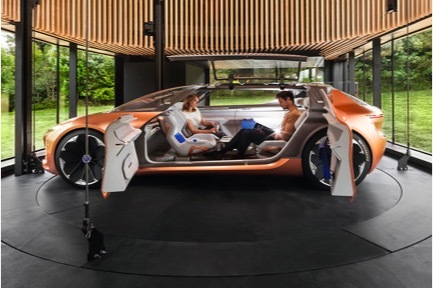
Surveillance inside a vehicle will take many forms – visual surveillance with cameras, audio surveillance through microphones, GPS, sensors, air quality monitors, and much more.
As fleet owners offer customers a smooth, clean, comfortable ride from point A to point B, there are a staggering number of things that can go wrong along the way.
Whenever serious problems are detected, vehicles will be taken out of service until the problem has been resolved. However, any time a vehicle is removed from operation – either for cleanup, repair, spills, contagions, police activity, or any number of situations – expenses start mounting.
At the same time companies want to monitor what’s happening inside their cars, customers have many reasons why they don’t want anyone watching them.
Here are a few quick scenarios to highlight the size and scope of issues these companies will be dealing with.
1. Terrorist Scenarios
Autonomous vehicle companies will quickly become targets for hackers, hijackers, and any number of devious minded schemers. All parties involved – governments, passengers, and vehicle owners – will want to minimize these kinds of problems. When it comes to terrorist scenarios, problems will range from bombs, to poison, toxic cars, infectious diseases, spying on conversations, and more.
2. Divorce Scenarios
Many of those going through a divorce tend to have heightened levels of paranoia. With many worried that their qualifications and worthiness of being a parent will be called into question, many recently divorced people will want to travel incognito with their messy, unruly kids, dogs, and toys.
3. Celebrity Scenarios
At a certain point, fame becomes the arch enemy of being seen in public, and many will worry about word getting out at the driverless command center about their whereabouts. Paparazzi, stalkers, and even autograph junkies become a problem for those who just want a peaceful trip across town. These types of problems are quickly exacerbated when viral media stars and rapidly unfolding news stories focus a huge spotlight on anything they do.
4. Business Exec on Phone Scenarios
Many business executives routinely have phone conversations that, if overheard by those in competing businesses, could jeopardize the long-term competitiveness of their own company. Corporate espionage is alive and well, and operating at far more sophisticated levels than ever before.
5. Pets and Support Animal Scenarios
As the number of people living with pets continues to climb, pet owners increasingly expect their pets will be as welcome as they are wherever they go. With pets ranging from potbelly pigs, to chickens, dogs, cats, snakes, rats, miniature horses, parrots, and iguanas, the overall messiness of animals enclosed in tiny mobile spaces becomes a significant issue. Fleet operators will insist on specific “rider insurance policies” that will kick in whenever an animal is onboard.
6. Contagious Disease Scenarios
No one wants to contract a virus, infections, lice, allergens, or any other kind of transmittable illness inside a driverless vehicle. For this reason, fleet owners will have air quality monitors that continuously sniff and test air particles for anything remotely dangerous.
7. Messy Kid Scenarios
Even though you may love kids, few passengers want to climb into a car where an explosive diaper has been changed, a 32 ounce Big Gulp has been spilled, projectile vomiting is coating the seat-backs, or magic markers have turned the interior into a Picasso-wanna-be.
8. Wealthy People Scenarios
While rich people are willing to pay for absolute privacy, where all cameras, sensors, and recording devices are turned off, things will still go wrong, and fleet owners (and police) will want to know who is responsible. What if passengers get into a fight, blood everywhere, someone dies, or is thrown from the vehicle, how are these issues resolved?

The more personalized driverless vehicles get, the more conveniences they’ll offer!
Final Thoughts
When it comes to self-driving cars, the price of convenience is surveillance.
Massive amounts of data will be collected, as a natural extension of a driverless car’s functionality. These cars will rely on high-tech cameras, both internal and external, along with ultra-precise GPS data. This means cars will collect reams of information about the people they transport around, similar to the data Uber has amassed about its customers’ habits, but down to a level of detail that’s far more granular.
For self-driving cars to work, an enormous amount of data has to flow through their onboard sensor networks to be able to keep track of every car, person, or animal on the road.
The more personalized these vehicles get, and the more conveniences they offer, the more data they’ll have to incorporate into their operation. The future I described might be a few years away, but there’s no reason to believe it’s too far-fetched.
That said, I’d love to hear your thoughts on this topic.
Translate This Page
Select LanguageAfrikaansAlbanianAmharicArabicArmenianAzerbaijaniBasqueBelarusianBengaliBosnianBulgarianCatalanCebuanoChichewaChinese (Simplified)Chinese (Traditional)CorsicanCroatianCzechDanishDutchEnglishEsperantoEstonianFilipinoFinnishFrenchFrisianGalicianGeorgianGermanGreekGujaratiHaitian CreoleHausaHawaiianHebrewHindiHmongHungarianIcelandicIgboIndonesianIrishItalianJapaneseJavaneseKannadaKazakhKhmerKoreanKurdish (Kurmanji)KyrgyzLaoLatinLatvianLithuanianLuxembourgishMacedonianMalagasyMalayMalayalamMalteseMaoriMarathiMongolianMyanmar (Burmese)NepaliNorwegianPashtoPersianPolishPortuguesePunjabiRomanianRussianSamoanScottish GaelicSerbianSesothoShonaSindhiSinhalaSlovakSlovenianSomaliSpanishSudaneseSwahiliSwedishTajikTamilTeluguThaiTurkishUkrainianUrduUzbekVietnameseWelshXhosaYiddishYorubaZulu
#goog-gt-tt {display:none !important;}
.goog-te-banner-frame {display:none !important;}
.goog-te-menu-value:hover {text-decoration:none !important;}
.goog-text-highlight {background-color:transparent !important;box-shadow:none !important;}
body {top:0 !important;}
#google_translate_element2 {display:none!important;}
Search for:
Recent Posts
Autonomous Car Privacy – 8 Scenarios to Explain the Enormous Complexity of this Issue
A Journey Inside the Mind of Futurist Thomas Frey
99 Unanswerable Questions and the Unintended Consequences of the Future We’re Creating
Categories
Artificial Intelligence
Business Trends
Future of Agriculture
Future of Banking
Future of Education
Future of Healthcare
Future of Transportation
Future of Work
Future Scenarios
Future Trends
Futurist Thomas Frey Insights
Global Trends
Predictions
Social Trends
Technology Trends
Speaking TopicsFuture of Healthcare – “Is Death our only Option?
Future of AI
Future of Industries
By Futurist Thomas Frey, author of 'Epiphany Z – 8 Radical Visions Transforming Your Future'
The post Autonomous Car Privacy – 8 Scenarios to Explain the Enormous Complexity of this Issue appeared first on Futurist Speaker.
November 21, 2019
A Journey Inside the Mind of Futurist Thomas Frey
Archives
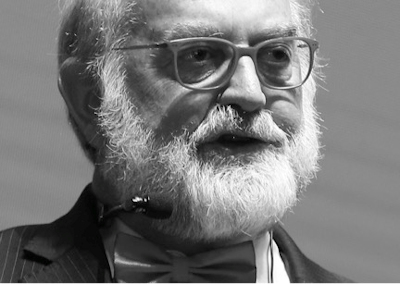 For me, every day is a remarkable new adventure waiting to reveal itself. Whenever possible, I try to let my curiosity kick in. Will people in the future be doing the same things I’m doing today? If so, what things will change and what will remain the same?
If I ask the same question seven days in a row, I’ll invariably be taken down seven different paths.
For me, making the transition from sleeping to mindful-awareness is a blurry one. Dreams often feel more real than my reality, and the foggy moments where I drift in and out of conscious awareness, are often the most productive times of the day.
I’ve grown to detest alarm clocks because they have a way of depriving me of those dangling gems filled with ideas, patiently waiting for me to harvest their treasures. In much the same way urgent deadlines, stressful projects, and demanding timeframes tend to disrupt my state of flow, any artificial form of disruption like alarm clocks is a sure fired IQ-dropper!
Even before I get out of bed, my curious nature starts to take hold and questions will begin to form. “Will people in the future still sleep on beds?”
As soon as one question takes shape, a new one is already rising from the murky ashes. So what kind of technology will replace beds?
How will we define our perfect sleep experience in the future?
Will we float in the air?
Will future people still need to sleep?
Will someone invent instant sleep?
After pausing to consider the sleep issue, a few more questions begin to crystalize:
Will we someday have our own hyper-individualized music playing in our heads, the right music, at the right time, at the right volume, every minute of every day, to enhance our state of mind?
But if we start surrounding ourselves with this kind of perfection, won’t we start expecting life to be perfect, how will we deal with disasters and identify opportunities?
If we strive for a life without stress, how will we cope with stress when it eventually happens, and yes, it will always happen?
Squirrel! Did I just hear a ding coming from my squirrel inbox?
Every once in a while I get stuck in a contemplative mode and stall-out with a moment of introspection:
Why am I, me, and why am I here at this moment in time?
Do I have a greater purpose than to ask if I have a greater purpose?
Why does God need humans?
A description is not an explanation, so why do we keep missing the “why?”
Some questions were never meant to be answered. As I mentally peer into the abyss, more questions start to percolate. I’m sensing a pensive inquisition coming so I head to the shower:
Is there a faster way to get ready in the morning?
How much time would I save if I invented the “instant shower of the future?” There simply has to be a more automated shower coming in the future? Maybe a “human car wash” device that soaps, lathers, scrubs, shakes, and dries all in under 60 seconds.
Will it be possible to have swarmbots clean me in the future?
How many swarmbots are in the ideal swarm?

It helps to build frames around our understanding of the future!
Finding Focus
Wow, suddenly the whole swarmbot thing got stuck in my head. I start imagining a swarm of 10,000 tiny flying bots that digs under my covers and root me out of bed, and flying me into the shower:
Since swarmbots will be able to dial-in the perfect spray and water temperature, how long before I can finish my “future shower” in less than a minute? What if I just want to be entertained with my steamy moments in the shower?
Standing in front of my mirror, the swarm will dry me off, fix my hair, shave me, and then assemble themselves as my clothing.
They’ll scan my mood sensors and instantly know what color and fashion matches my mood each day.
How much will a swarm like this cost, and how will I go about programming it to mesh with my thinking
Now is not the time for answers, I’m in the midst of a rapid-fire question-binge. Swarmbots are both creepy and fascinating at the same time, and I needed to stay on this line of questioning:
Are we going to have swarmbot dealerships in the future?
How will we rate the quality, functionality, and usefulness of a swarm?
Will we have the ability to talk back and forth to our swarms, or will it be a mind control thing?
Will each swarm have a “queenbot” that’s in charge of the others?
I think a queenbot just flew into my brain as each new question was expressing itself in a buzzy form of swarm-play. I was imagining a queenbot dressed in royal clothing issuing buzzy commands to the other swarming bots.
How many moving parts will an individual swarmbot have?
Will the swarmbots of 2080 be dramatically better than the swarmbots of 2050? How will they change over time?
Suddenly I began to imagine what it’d be like going to a swarm dealership in 2050 and having a slick-talking salesman pulling up 3D projections of tiny bots and explaining the value of the 25,000 year batteries, shell-morphing surface technology to stop bullets and lasers, and health-fixing processes designed to fly internally on the host and extract bad cells and viruses before they take root.
How long before my swarm will be able to fly me to where I want to go, like superman, whisking me away in a spectacular fashion?
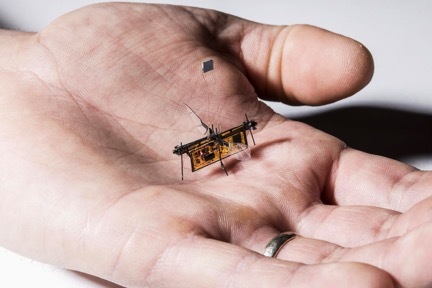
Early stage micro drones will seem awkwardly huge compared to later designs!
Digging Deeper
Closing my eyes, I tried to dig deeper. I felt an overwhelming need to ‘become one with the swarm. I started to think through some of the technical specs, who would develop the operating system, and the overarching business model. Would I own them, rent them, or just summon them when I needed them?
How do I communicate with my swarm? Do I talk to it, gesture, point, wave, whisper, snap my fingers, or do they just know what I’m thinking? Mind controlled swarms would be sooo cool!
Can I use my swarm to help someone who is injured along the road?
Does my swarm have surge capability meaning that the number of bots in the swarm would multiply if needed?
Would my swarm have the ability to “borrow” from nearby swarms in an emergency?
It occurred to me that these swarms would become some sort of super-extension of our body, our desires, and our personality. The same swarm used to help someone who was injured could also be used to bully, intimidate, steal, or hurt someone else.
Will swarms be preprogrammed to shield our privacy, our patterns, our frailties, and our most intimate moments?
If I see a friend getting bullied by someone else’s swarm, can I use my swarm to intervene?
Will we have teenagers forming gangs with their swarms, using them to protect their turf and swarmbot takedowns?
Can a silent “midnight swarm” be used to hurt, harm, or steal from someone else?
Most swarm research will likely be funded by the military. Since swarmbots do pose an obvious risk to national security, research dollars in this area will likely explode over the next decade.
How long before we see our first soldier swarms?
Will we also see sniper swarms, assassin swarms, decoy swarms, and bomb-dropping swarms?
Will defensive swarms have the ability to EMP-blast other swarms out of the air?
How long before we see countries signing ‘swarm disarmament treaties?’
Suddenly I had a vision that the robots we had imagined for our future will instead be swarms. Our thinking about delivery bots will likely be replaced by delivery swarms.
Will swarms replace smartphones?
Will swarms be able to talk to each other? Can one swarm “jam” the operation of another swarm?
How fast can swarms fly? I’m thinking they may be here one moment and gone the next.
How young can a child be before he or she owns, uses, and is protected by their own personal swarm?
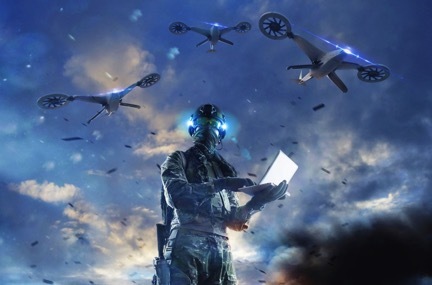
How long before special ops soldiers can deploy their own swarms?
Final Thoughts
I often get asked how I think about the future, and what kinds of tools I use to bridge the gap between today and tomorrow. What I’ve described is one of many.
This “stream of consciousness approach” works fine for me but may not lend itself well to those who struggle with letting their imaginations loose.
For this reason I’ve developed an interactive strategy discussion process specifically designed to work with executive teams, board of directors, governmental groups, and a variety of other teams to help them work through everything from next-gen planning sessions to strategy discussions that may decide the fate of their industry.
If this is of interest to you, please click here, fill out the form and let’s schedule a time to talk. I’d love to hear more about what you’re working on.
Translate This Page
Select LanguageAfrikaansAlbanianAmharicArabicArmenianAzerbaijaniBasqueBelarusianBengaliBosnianBulgarianCatalanCebuanoChichewaChinese (Simplified)Chinese (Traditional)CorsicanCroatianCzechDanishDutchEnglishEsperantoEstonianFilipinoFinnishFrenchFrisianGalicianGeorgianGermanGreekGujaratiHaitian CreoleHausaHawaiianHebrewHindiHmongHungarianIcelandicIgboIndonesianIrishItalianJapaneseJavaneseKannadaKazakhKhmerKoreanKurdish (Kurmanji)KyrgyzLaoLatinLatvianLithuanianLuxembourgishMacedonianMalagasyMalayMalayalamMalteseMaoriMarathiMongolianMyanmar (Burmese)NepaliNorwegianPashtoPersianPolishPortuguesePunjabiRomanianRussianSamoanScottish GaelicSerbianSesothoShonaSindhiSinhalaSlovakSlovenianSomaliSpanishSudaneseSwahiliSwedishTajikTamilTeluguThaiTurkishUkrainianUrduUzbekVietnameseWelshXhosaYiddishYorubaZulu
#goog-gt-tt {display:none !important;}
.goog-te-banner-frame {display:none !important;}
.goog-te-menu-value:hover {text-decoration:none !important;}
.goog-text-highlight {background-color:transparent !important;box-shadow:none !important;}
body {top:0 !important;}
#google_translate_element2 {display:none!important;}
Search for:
Recent Posts
A Journey Inside the Mind of Futurist Thomas Frey
99 Unanswerable Questions and the Unintended Consequences of the Future We’re Creating
32 Future Accomplishments that will give you more Status and Influence than a College Degree
Categories
Artificial Intelligence
Business Trends
Future of Agriculture
Future of Banking
Future of Education
Future of Healthcare
Future of Transportation
Future of Work
Future Scenarios
Future Trends
Futurist Thomas Frey Insights
Global Trends
Predictions
Social Trends
Technology Trends
Speaking TopicsFuture of Healthcare – “Is Death our only Option?
Future of AI
Future of Industries
By Futurist Thomas Frey, author of 'Epiphany Z – 8 Radical Visions Transforming Your Future'
The post A Journey Inside the Mind of Futurist Thomas Frey appeared first on Futurist Speaker.
Thomas Frey's Blog

- Thomas Frey's profile
- 2 followers

