
Thomas Frey's Blog, page 26
February 18, 2019
The 2,000-Year Test
Don't Get Blindsided By The Future
GOOGLE'S TOP RATED FUTURIST SPEAKER
Book Thomas

A couple years ago my wife and I visited the beautiful Spanish city of Segovia located in the center of Spain about an hour northwest of Madrid.
At the heart of the city, nestled close to its historic shopping district, are the iconic aqueducts built during the Roman Empire nearly 2,000 years. Although the exact dates of construction cannot be confirmed, the latest evidence would suggest a start date of roughly 112 AD.
The Segovian Aqueduct has long intrigued me because it represents a rare piece of history from the distant past.
While there are a few dozen structures older than the aqueducts with the best known being the Egyptian pyramids, the Greek Parthenon, and the Roman Coliseums, there are indeed several that are much older.
The little known Cairn of Barnenez in France is widely considered to be the oldest man-made structure on planet earth, estimated to have been built in 4800 BC.
Two others, the Tumulus of Bougon and the Tumulus of St. Michel were also built in France in that era. All three were tombs or burial sites with very little known about their actual origin.
Wikipedia has a listing of 106 ancient structures that were built before the BC age ended. To be sure, none exist in any usable form other than a tourist attraction or center of archeological research.
The one exception may be Stonehenge. Since we have no idea what its function or purpose was, it may be working fine and we just don’t know it. (We love to joke about Stonehenge.)
However, it brings up an interesting question about how much of our society today will still exist 2,000 years from now.
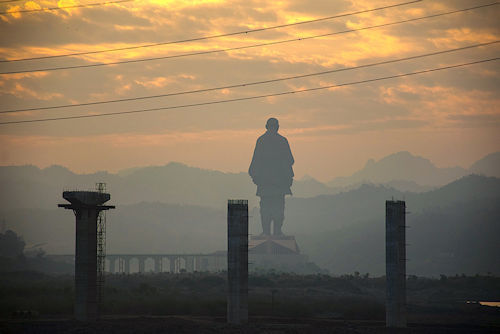
India’s Statue of Unity
The 2,000-year test
If we look around the world, what buildings, structures, sculptures, or artifacts of our world will still be present in the year 4,000?
When it comes to famous buildings, will we still have:
Taj Mahal in India
Angkor Wat in Cambodia
Sydney Opera House
Eiffel Tower in Paris
Singjiang Hotel in China
St. Basil’s Cathedral in Moscow
Lotus Temple in New Delhi
Hagia Sophia in Istanbul
Guggenheim in New York
Capital Building in Washington D.C.
When it comes to iconic works of art, will we still have:
Mount Rushmore in South Dakota
Michelangelo’s “David” in Florence
“Rapa Nui” on Easter Island
Petra in Jordan
The Arch in St Louis
India’s giant Statue of Unity
Statue of Liberty in New York
“Terracotta Army” in China
Machu Picchu in Peru
“The Bean” in Chicago
If we think about infrastructure, will we still have:
The Great Wall of China
The Panama Canal
The “Chunnel” between France and the U.K.
The Golden Gate Bridge in San Francisco
Palm Island in Dubai
Three Gorges Dam in China
Marmaray Tunnel in Turkey
Skytree in Tokyo
Eisenhower Tunnel in Colorado
Guri Dam in Venezuela
The Long Now Foundation
The Long Now Foundation, formed in 1996, is a San Francisco non-profit organization pushing the idea of very long-term thinking and planning. Founded by Steward Brand and Danny Hillis in 1996, it aims to provide a counterpoint to today’s “faster/cheaper” mindset and promote “slower/better” thinking. As a Foundation, it hopes to create a long vision framework for operating over the next 10,000 years.
According to Steward Brand, “Civilization is revving itself into a pathologically short attention span. The trend might be coming from the acceleration of technology, the short-horizon perspective of market-driven economics, the next-election perspective of democracies, or the distractions of personal multi-tasking. All are on the increase. Some sort of balancing corrective to the short-sightedness is needed – some mechanism or myth which encourages the long view and the taking of long-term responsibility, where ‘long-term’ is measured at least in centuries. Long Now proposes both a mechanism and a myth.”
The Foundation has several ongoing projects, including the Clock of the Long Now, also called the 10,000-year clock. This mechanical clock, which is under construction, is designed to keep accurate time for 10,000 years. The manufacture and site construction of the first full-scale prototype clock has been funded with $42 million from Jeff Bezos’ Bezos Expeditions, and is being built on land which Bezos owns in Texas.
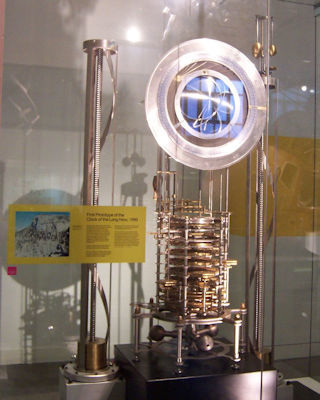
The 10,000-year clock.
But human nature shows a different side
Human nature is often a disturbing thing to witness.
One of the tactics used by leaders throughout history has been to destroy all records of the past as a form of cultural cleansing. So no thinking about the future or the past. Here are a few examples:
363 AD – The Royal Library of Antioch, once the cultural capital of the ancient world, was destroyed in 363 by Christian Emperor Jovian, who was convinced that the library was densely stocked with “unholy” literature.
1,200 – Nalanda was a large Buddhist monastery in the ancient kingdom of Magadha, and one of the largest repositories of Buddhist knowledge in the world. Sadly, the whole complex was destroyed by a Turkic military general of Qutub al-Din Aybak, the founder of the Turkic dominion in the northwest of India.
1258 – The House of Wisdom was a major intellectual hub during the Islamic Golden Age, but it was sadly destroyed in 1258 when Mongols invaded Baghdad.
1937-1945 – During WWII, Japanese military forces destroyed or partly destroyed numerous Chinese libraries including:
National University of Tsing Hua, Peking (lost 200,000 of 350,000 books)
University Nan-k’ai, T’ien-chin (totally destroyed, 224,000 books lost)
Institute of Technology of He-pei, T’ien-chin (completely destroyed)
Medical College of He-pei, Pao-ting (completely destroyed)
Agricultural College of He-pei, Pao-ting (completely destroyed)
University Ta Hsia, Shanghai (completely destroyed)
University Kuang Hua, Shanghai (completely destroyed)
National University of Hunan (completely destroyed)

Will our time systems still be the same 2,000 years from now?
Final Thoughts
Thinking through the artifacts that will continue for the next 2,000, my initial thoughts focused on tombstones. I have serious doubts that cemeteries will survive, but the tombstones themselves are rather impervious to environmental degradation.
This is also true for anything underground such as tunnels and caves. Once something is removed from extreme temperatures and extreme weather, overall deterioration slows considerably.
Will we still have airports, railroad lines, highways, power lines, waterlines, or landfills?
Drilling deeper, will any of our systems survive? Will we still use electricity, paper currency, the 24-hour clock, the metric system, or the Gregorian calendar?
Technology is quickly outdating every new format for information. We’ve gone from 4-track, to 8-track, to the old 8” disks, to 5.25” disks, followed by 3.5” disks, thumb drives, remote backups, and whatever comes next.
Translate This Page
Select LanguageAfrikaansAlbanianAmharicArabicArmenianAzerbaijaniBasqueBelarusianBengaliBosnianBulgarianCatalanCebuanoChichewaChinese (Simplified)Chinese (Traditional)CorsicanCroatianCzechDanishDutchEnglishEsperantoEstonianFilipinoFinnishFrenchFrisianGalicianGeorgianGermanGreekGujaratiHaitian CreoleHausaHawaiianHebrewHindiHmongHungarianIcelandicIgboIndonesianIrishItalianJapaneseJavaneseKannadaKazakhKhmerKoreanKurdish (Kurmanji)KyrgyzLaoLatinLatvianLithuanianLuxembourgishMacedonianMalagasyMalayMalayalamMalteseMaoriMarathiMongolianMyanmar (Burmese)NepaliNorwegianPashtoPersianPolishPortuguesePunjabiRomanianRussianSamoanScottish GaelicSerbianSesothoShonaSindhiSinhalaSlovakSlovenianSomaliSpanishSudaneseSwahiliSwedishTajikTamilTeluguThaiTurkishUkrainianUrduUzbekVietnameseWelshXhosaYiddishYorubaZulu
#goog-gt-tt {display:none !important;}
.goog-te-banner-frame {display:none !important;}
.goog-te-menu-value:hover {text-decoration:none !important;}
.goog-text-highlight {background-color:transparent !important;box-shadow:none !important;}
body {top:0 !important;}
#google_translate_element2 {display:none!important;}
Search for:
.et_bloom .et_bloom_optin_2 .et_bloom_form_content { background-color: #ffffff !important; } .et_bloom .et_bloom_optin_2 .et_bloom_form_container .et_bloom_form_header { background-color: #dd4242 !important; } .et_bloom .et_bloom_optin_2 .et_bloom_form_content button { background-color: #3b3b3b !important; } .et_bloom .et_bloom_optin_2 .et_bloom_form_content .et_bloom_fields i { color: #3b3b3b !important; } .et_bloom .et_bloom_optin_2 .et_bloom_form_content .et_bloom_custom_field_radio i:before { background: #3b3b3b !important; } .et_bloom .et_bloom_optin_2 .et_bloom_form_content button { background-color: #3b3b3b !important; } .et_bloom .et_bloom_optin_2 .et_bloom_form_container h2, .et_bloom .et_bloom_optin_2 .et_bloom_form_container h2 span, .et_bloom .et_bloom_optin_2 .et_bloom_form_container h2 strong { font-family: "Open Sans", Helvetica, Arial, Lucida, sans-serif; }.et_bloom .et_bloom_optin_2 .et_bloom_form_container p, .et_bloom .et_bloom_optin_2 .et_bloom_form_container p span, .et_bloom .et_bloom_optin_2 .et_bloom_form_container p strong, .et_bloom .et_bloom_optin_2 .et_bloom_form_container form input, .et_bloom .et_bloom_optin_2 .et_bloom_form_container form button span { font-family: "Open Sans", Helvetica, Arial, Lucida, sans-serif; }

Subscribe To Our Newsletter
Join our mailing list to receive the latest news and updates from Thomas Frey.
SUBSCRIBE!
You have Successfully Subscribed!
Recent Posts
The 2,000-Year Test
34 Looming Issues between Artificial Intelligence and Intellectual Property
How long before we reach peak ecommerce?
Categories
Artificial Intelligence
Business Trends
Future of Banking
Future of Education
Future of Healthcare
Future of Transportation
Future of Work
Future Scenarios
Future Trends
Futurist Thomas Frey Insights
Global Trends
Predictions
Social Trends
Technology Trends
Speaking TopicsFuture of Healthcare – “Is Death our only Option?
Future of AI
Future of Industries
By Futurist Thomas Frey, author of 'Epiphany Z – 8 Radical Visions Transforming Your Future'
The post The 2,000-Year Test appeared first on Futurist Speaker.


February 12, 2019
34 Looming Issues between Artificial Intelligence and Intellectual Property
Don't Get Blindsided By The Future
GOOGLE'S TOP RATED FUTURIST SPEAKER
Book Thomas

The main purpose of intellectual property law is to encourage and protect human ingenuity.
For this reason, intellectual property has become a continually evolving form of public policy where the rights associated with human creativity necessarily have to change along with our “tools of creation.”
However, as we enter the age of artificial intelligence, we have moved from an era of change to an era of disruption, where we now face some challenging times ahead.
It occurred to me that we will soon be able to create 3D images of any person from online photos. AI systems will be able to scan online photos of any individual and use the two dimensional information to auto-generate three digital models.
Thinking through this, these 3D models can take the form of holograms, videos, mixed reality, animations, physical sculptures, and even future algorithms for human cloning.
Making a statue will be as simple as feeding the digital model into a 3D printer to produce a physical sculpture.
Over time these models will become more lifelike and can be inserted into a variety of scenes such as playing sports, fighting battles, or something gruesome like killing people or animals.
The potential for fake news is off the charts.
That’s right, any person will run the risk of having their life turned upside down by a set of compelling images that leave all remnants of truth far behind.
The art world is filled with colorful people who are often rewarded for pushing the limits and creating shock value to sell whatever they’re selling. This could become an enormously problematic issue.
Who owns the copyright of a photograph?
The wildlife photographer who snaps the photo can claim ownership when a website publishes the photo without his permission. Under U.S. law, the copyright of a photograph is the property of the person who presses the shutter on the camera — not the person who owns the camera, and not even the person in the photo.
Yet, you can’t use someone’s likeness for commercial purposes without their express permission. This means you can’t take a picture in a public place with recognizable faces and sell it to General Motors, Pizza Hut or a stock photo company. But you can sell them to news organizations or use them for art.
This naturally brings up questions about whether or not you actually own your own likeness, and can control your own legacy?
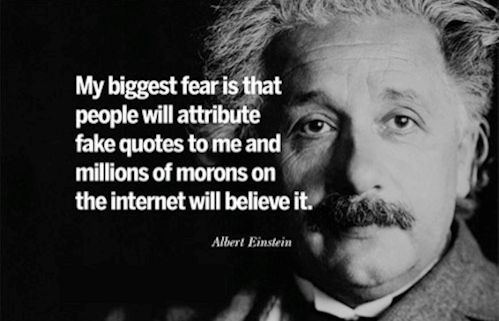
Do you own your likeness?
In the U.S. a person can be sued for using someone else’s name, likeness, or personal attributes without permission.
The right of publicity, often called personality rights, is the right of an individual to control the commercial use of his or her name, image, likeness, or other undeniable aspects of their identity. Since it’s considered a property right, it can survive the death of the individual.
However, as new technology comes into play, and images of ourselves become more pervasive, we run the risk of facing an entire new set of never-before-confronted intellectual property issues.
Here are the questions creative people will be asking:
If I alter the likeness by 10%-15%, will that be sufficient to claim it’s a non-descript person?
Will it be possible to create software that can certify that a likeness has been sufficiently altered to pass the test?
Unchartered Territory for Both AI and IP
At the forefront of this transition are a number of emerging technologies, and rest assured, I’m just scratching the surface of challenging issues ahead. The technologies listed below are just a few that come to mind, and yes there will be many more to come.
While many of the issues listed below are not specifically directed towards AI, the overall pervasiveness of future AI will make it a contributing factor.
Driverless Technologies
Within ten years it will be common to hale a driverless car on our smartphones, much like we do with Uber and Lyft today. But the data surrounding both the transaction and inside-the-car activities have great value.
1. Can autonomous car companies sell photos of occupants, announce when famous people will be arriving somewhere, or monitor if riders may be doing something illegal?
2. How much data surrounding the trip can car companies collect? (i.e. ages of occupants, music listened to on the trip, hair colors, eye colors, style of clothing, heart rates, and how many times riders use words like “totally” and “sweet”).
3. Will riders automatically waive their rights to avoid advertisements? Do they have the right to ride in an ad-free environment?
4. With competition coming on many fronts, how much of the “ride experience” will car companies be able to protect? Will they be able to patent, copyright, or trademark the level of privacy, its sound, texture, smell, taste, or harmonic vibration of the ride?
Future Search Engines
In the grand scheme of things, search engines are still a prehistoric technology. Quantum computing will soon enable us to define, test, and search for a variety of new physical and digital attributes. These include attributes like smells, tastes, barometric pressure, harmonic vibration, reflectivity, textures, and specific gravity.
5. When it comes to definable sensory creations like tastes and smells, will we soon be able to protect them with patents, trademarks, copyrights, or something else?
6. Can other definable attributes like harmonic vibration, reflectivity, and textures also be trademarked in a form similar to “sonic branding?”
7. How long will it be before we create “attribute scanners” to log our daily experiences in a way that will also make them searchable?
8. When will we see an artificial nose more accurate than a bloodhound? How long before someone creates the periodic table of smells?
Sensor Networks
Over a trillion sensors are predicted to be collecting and distributing information over the next decade.
9. Do we have the right to control, monitor, and delete data collected from our personal sensors? (i.e. When we buy sensor-infused clothing in the future, it may already come with a built-in data distribution network that we automatically agree to with the purchase.)
10. More data means more definition. Will we soon be able to trademark our signature personality traits like our dance moves, hand gestures, ear wiggle, or laugh?
11. Once we start tagging valuable objects, vehicles, and devices that we own, how will we prevent our “ownership network” from being hacked, monitored, or outright stolen from us?
12. What exactly will ownership mean in an era where physical products are replaced by digital ones and our ability to share, distribute, assign, and license are just a tiny fragment of the options available through our constantly morphing digital rights?
Internet of Things
As I like to say, the Internet of Things is all about “devices talking to devices, talking trash about other devices, spreading rumors and lies about other devices.” Naturally this leaves us with a few questions.
13. When we own a smart refrigerator, do our health and life insurance companies have the right to monitor our diets and feed the data into their latest actuarial tables?
14. If we use “mood-casters” to interface with the buildings around us, can the meta-data surrounding our attitudes and temperaments be scraped, used, and repurposed by building owners and neighboring occupants?
15. Will my IoT devices become searchable? Yes, being able to search the contents of my refrigerator while I’m at the grocery store may be convenient, but it also has the potential for being hi-jacked by marketing companies, headhunters, and political adversaries.
16. Does my IoT pot have the right to call my IoT kettle black?

3D Scanning & Printing
With changes happening almost on a minute-by-minute basis, the 3D printing industry is on the verge of becoming one of the largest industries on the planet.
17. Who owns the rights to our digitally scanned bodies? Who else can and will have access to them?
18. Will someone who wants to buy me a pair of hyper-personalized shoes as a present have access to my foot-scans? Will this type of permission also give access to other marketing companies?
19. When I grow older and 3D printed organs, body parts, and entire replacement bodies become available, will I be buying or licensing the replacement body parts? Can they be repossessed for lack of payment?
20. Having doctors monitor our replacement body parts remotely may sound convenient, but who will have access to the data? And will there be an off switch?
Contour Crafting
Created as a large-scale form of 3D printing, contour crafting is now viewed as a disruptive technology poised to revamp the entire construction industry.
21. What features in a printed house will be patentable? Printed cabinets? Printed insulation? Artistic walls? Printed solar roofs?
22. What tools will designers use to protect unique features such as lighting and audio configurations, elevator styles, sensor networks, and the operational characteristics of appliances?
Flying, Driving, Swimming, Crawling Drones
While flying drones are constantly in the news, drones are robotic vehicles with far more capabilities than simply flying. They can also roll along the ground, stick to the side of a building, float in a river, dive under water, jump onto a building, climb a tree, or attach themselves like parasites to the sides of trains, ships, and airplanes. Future drones will be designed with a wide range of complex capabilities, and these capabilities will dramatically change our understanding of privacy, personal space, and proximity-based rights.
23. Who owns information collected by drones, and who else will have access?
24. Does an open window somehow mean that it’s a public place and drones can fly in? Where do property lines begin and end? Where does personal space end and public space begin?
25. Will people have the right to “shoot down” or otherwise destroy unlicensed or “trespassing” drones?
26. What are the legal privacy barriers that will protect people from drones with cameras and audio scanning capabilities as well as drones equipped with a variety of other types of sensors? Should we have a Drone Bill of Rights?
Virtual & Augmented Reality
Both VR and AR are Internet-sized opportunities on the verge of exploding around us.
27. Do “real world” augmented reality game designers have the right to include the general public as unwitting participants in their games?
28. Who owns the “reaction data” in VR simulations? How a person reacts to specific situations can be incredibly valuable data.
29. Will VR experiences be patentable, copyrightable, or protectable in any way?
30. What is the proper term for a VR creation – a video, a game, a simulation, an experience, or something else?
Artificial Intelligence
With A.I. we stand on the brink of a technological revolution that will fundamentally alter the way we live, work, and relate to one another. Microsoft even claims to have breakthrough A.I. technology for reprogramming cells back to a healthy state, and has announced they will be able to cure cancer in less than 10 years.
31. Will AI systems replace our need for human drivers, musicians, and doctors?
32. Can we reprogram our cells to cure most major diseases as Microsoft and others have proposed?
33. Will we “buy” the cure or just “license” it? Can we “gift” it to others?
34. Can an A.I. “entity” be copyrighted, trademarked, licensed, or sold?
Final Thoughts
Thomas Edison had enough clout to get Nikola Tesla eliminated from most history books. How many other people has this happened to?
Will people in the future have their legacy destroyed by historical revisionists with thousands of new tools like VR, AR, life-distorting videos?
How do we manage our own legacy if everything about us can be changed after we die?
Since dead people make great scapegoats, how do we protect the luminaries and past giants in our fields from having their accomplishments raided and reattributed to the living? If you don’t think this will become a problem, you haven’t been paying attention.
Yes, blockchain may be a solution, but only if it can be implemented fast enough.
While we will likely have a bright future ahead, our challenges should never be underestimated.
Translate This Page
Select LanguageAfrikaansAlbanianAmharicArabicArmenianAzerbaijaniBasqueBelarusianBengaliBosnianBulgarianCatalanCebuanoChichewaChinese (Simplified)Chinese (Traditional)CorsicanCroatianCzechDanishDutchEnglishEsperantoEstonianFilipinoFinnishFrenchFrisianGalicianGeorgianGermanGreekGujaratiHaitian CreoleHausaHawaiianHebrewHindiHmongHungarianIcelandicIgboIndonesianIrishItalianJapaneseJavaneseKannadaKazakhKhmerKoreanKurdish (Kurmanji)KyrgyzLaoLatinLatvianLithuanianLuxembourgishMacedonianMalagasyMalayMalayalamMalteseMaoriMarathiMongolianMyanmar (Burmese)NepaliNorwegianPashtoPersianPolishPortuguesePunjabiRomanianRussianSamoanScottish GaelicSerbianSesothoShonaSindhiSinhalaSlovakSlovenianSomaliSpanishSudaneseSwahiliSwedishTajikTamilTeluguThaiTurkishUkrainianUrduUzbekVietnameseWelshXhosaYiddishYorubaZulu
#goog-gt-tt {display:none !important;}
.goog-te-banner-frame {display:none !important;}
.goog-te-menu-value:hover {text-decoration:none !important;}
.goog-text-highlight {background-color:transparent !important;box-shadow:none !important;}
body {top:0 !important;}
#google_translate_element2 {display:none!important;}
Search for:
.et_bloom .et_bloom_optin_2 .et_bloom_form_content { background-color: #ffffff !important; } .et_bloom .et_bloom_optin_2 .et_bloom_form_container .et_bloom_form_header { background-color: #dd4242 !important; } .et_bloom .et_bloom_optin_2 .et_bloom_form_content button { background-color: #3b3b3b !important; } .et_bloom .et_bloom_optin_2 .et_bloom_form_content .et_bloom_fields i { color: #3b3b3b !important; } .et_bloom .et_bloom_optin_2 .et_bloom_form_content .et_bloom_custom_field_radio i:before { background: #3b3b3b !important; } .et_bloom .et_bloom_optin_2 .et_bloom_form_content button { background-color: #3b3b3b !important; } .et_bloom .et_bloom_optin_2 .et_bloom_form_container h2, .et_bloom .et_bloom_optin_2 .et_bloom_form_container h2 span, .et_bloom .et_bloom_optin_2 .et_bloom_form_container h2 strong { font-family: "Open Sans", Helvetica, Arial, Lucida, sans-serif; }.et_bloom .et_bloom_optin_2 .et_bloom_form_container p, .et_bloom .et_bloom_optin_2 .et_bloom_form_container p span, .et_bloom .et_bloom_optin_2 .et_bloom_form_container p strong, .et_bloom .et_bloom_optin_2 .et_bloom_form_container form input, .et_bloom .et_bloom_optin_2 .et_bloom_form_container form button span { font-family: "Open Sans", Helvetica, Arial, Lucida, sans-serif; }
Subscribe To Our Newsletter
Join our mailing list to receive the latest news and updates from Thomas Frey.
SUBSCRIBE!
You have Successfully Subscribed!
Recent Posts
34 Looming Issues between Artificial Intelligence and Intellectual Property
How long before we reach peak ecommerce?
Five Scenarios for a Techno-Apocalypse
Categories
Artificial Intelligence
Business Trends
Future of Banking
Future of Education
Future of Healthcare
Future of Transportation
Future of Work
Future Scenarios
Future Trends
Futurist Thomas Frey Insights
Global Trends
Predictions
Social Trends
Technology Trends
Speaking TopicsFuture of Healthcare – “Is Death our only Option?
Future of AI
Future of Industries
By Futurist Thomas Frey, author of 'Epiphany Z – 8 Radical Visions Transforming Your Future'
The post 34 Looming Issues between Artificial Intelligence and Intellectual Property appeared first on Futurist Speaker.
January 30, 2019
How long before we reach peak ecommerce?
Don't Get Blindsided By The Future
GOOGLE'S TOP RATED FUTURIST SPEAKER
Book Thomas
 Retail is rapidly evolving and many of yesterday’s storefronts no longer exist. Gone are the Woolco’s, Radio Shacks, Gottschalks, Casual Corners, Ben Franklins, Mervyn’s, Montgomery Wards, and Miller Outposts of a bygone era.
While we still have some people predicting the death of traditional bricks and mortar storefronts. The reality is much different.
Physical stores are hardly going away. Retailers like Apple, Costco, Nordstrom, TJX, Dollar General, H&M, Ulta, Dollar Tree, Aldi, and Sephora are not only thriving, but plan to open thousands of new stores over the coming years.
Yes, ecommerce is making inroads, but it has taken roughly 25 years for ecommerce to reach 10% of retail sales in the U.S. At the same time, 16.4% of total retail sales in the U.K. came from the Internet
The retail industry continues to grow. Even in physical stores, overall sales continue to grow, albeit at a far slower rate than online shopping.
However, the changes happening in retail are far more nuanced than something we can derive from a single statistic. The percentage of e-commerce sales varies tremendously by product category, from around 2% for groceries to more than 20% for apparel to the overwhelming majority of sales in categories where products can be digitally delivered, like music, books, and games.
In the late 1990s, many were predicting the demise of physical stores altogether. Even today, many are still thinking in terms of a “retail apocalypse.”
What’s more likely is that sometime in the future we will hit “peak ecommerce.” That means we reach the maximum percentage of online sales, what some might describe as a hidden barrier, that can’t be crossed.
For me, peak ecommerce is a useful working theory because it begs the questions – how long until we reach it, and how high will it go?
Is there such a thing as peak ecommerce?
Let’s start by asking what it’d look like to have 100% of our retail purchases in the U.S. done online.
Ten times as many delivery vehicles
No malls, shopping centers, or retail stores of any kind
No restaurants, coffee shops, bars, or nightclubs
With grocery delivery, no personal selection of fruits, vegetables, flowers, or meat
No beauty salons, nail shops, dog grooming, bike rental, banks, or fitness places
No movie theaters, escape rooms, yoga classes, trampoline parks, health spas, dance studios, martial arts training, sensory deprivation tanks, or game salons
No local sales tax for cities and local communities
Very few places left to go and do things
A complete reworking of all traffic patterns
Most of us would agree that this is not a likely scenario.
Yes, there may be scenarios where we still have stores, restaurants, and shops and every purchase is made through a personal device, but making a payment online is not the same as making the entire purchase online devoid of any retail experience.
If we consider the social nature of shopping and the number of places we frequent on a daily, even monthly basis, it becomes hard to imagine a world without markets.
For these reasons, and more that I’ll explain below, I would be hard pressed to find an argument for ecommerce to ever go above 30%, and it may indeed top out somewhere below 20%.
That said, retail is a brutally competitive marketplace that is not well described by a single data point.
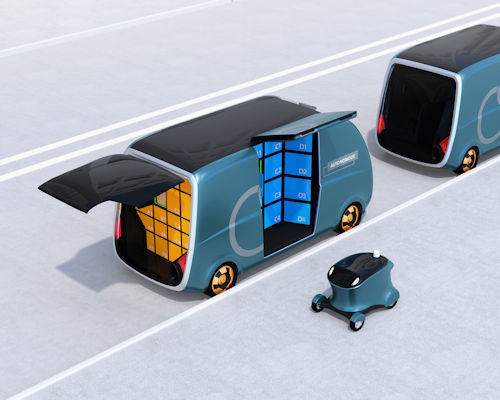
How much will automated delivery affect your desire to purchase products online?
Are we facing a retail apocalypse?
There are still many who believe that most shopping will ultimately be done online, that commercial districts with brick-and-mortar stores are doomed, and that anyone who doesn’t agree with them is a relic of the past.
On the other end of the spectrum are the physical store cheerleaders that acknowledge the retail climate is changing, think traditional retail will pull through because, retail itself is still growing and after all the hype, even now, ecommerce only represents a meager 10% of all retail.
Neither of these are safe assumptions in our rapidly changing world. Every aspect of the buying-selling process is getting rethought, experimented with, tweaked, reengineered, and reimagined.
Our next generation retail pioneers are already in the process of dissecting and reassembling concepts of ownership, first impressions, product placement, purchasing environments, payment schemes, product lifecycles, delivery methods, the human-product relationship, and even the value and nature of possession.
No one-size-fits-all formula
In the past, consumers had relatively few options for finding and purchasing an item. Storefronts, catalogs, mail-order, tradeshows, and traveling salesmen accounted for most of our options.
Today, Amazon alone has roughly 1.8 million sellers adding another 1.3 million new products every day. Around 50% of all sales on Amazon marketplaces come from third-party sellers. This means people spot a product on Facebook, Twitter, Instagram or LinkedIn before making it to the purchase page on Amazon.
If you happen to be an inventor and develop a new product, does this mean you should focus on Amazon as your primary channel of distribution? Not necessarily.
Amazon still lacks the intimacy of talking to a sales person, having a product demo happen in front of you, feeling the fabric, tasting the food, smelling the fragrances, laying down on a mattress, having a person help you understand your choices, and personally testing the results.
By its very nature, retail will forever be a fragmented multi-option, multi-channel industry where the true innovators are constantly rewriting the rules of engagement.
Are shopping malls dying?
Even though regional malls, and their department store anchors, have been on the decline for more than two decades, the shopping mall industry is still quite viable.
The first threat to malls came in the form of big-box stores and discount mass merchandisers. The latest wave of disruption has come primarily from a surge of off-price and dollar stores. So while it’s easy to point the finger at online shopping, it’s only a piece of a much larger equation. At the same time, due to a surge in popularity, malls had gone through a rapid over-building phase and a correction of some kind was inevitable.
With shifting demographics and traffic patterns, many older malls lost the “relevance” battle to new malls. As a general rule, a newer mall with more desirable tenants will always win over an older mall that still appeals to yesterday’s trendsetters.
Finally, A-list malls are doing very well. This includes a group of 270 or so malls that represent about 20% of all locations, but they generate roughly 75% of total mall revenue. For the most part, these malls are unaffected by the closure of anchor tenants, and any specialty shop vacancies are quickly snatched up.
This is not to say that malls won’t die a painful death or be radically transformed. Rather, our need for finding an endpoint seldom matches with the reality of what’s happening in the trenches. More than likely, malls will still exist in one form or another even a thousand years from now, but consumers will interact with them in radically different ways.

How will ecommerce change in the future?
Twelve forms of future retail that haven’t arrived yet
So what comes next? How will retail morph and transition over the next decade or two? Here are a few options that may be added to the list:
1. Driverless mobile shopping
The number one challenge of traditional retail has always been driving customers to the store. As we move into a highly mobile marketplace, businesses can drive to where the customers already are.
2. Retail as a service
In this scenario, products are not purchased, but simply used for a time and returned. This already exist on some levels but may be expanded in unusual ways.
3. Slashcasters
Taking the “blue light special” to the next level, Slashcasters are a new breed of pitchmen geared to entertain audiences at retail showcases. Slashcaster events will be framed around our growing need for unique one-of-a–kind entertainment designed specifically to create an over-the-top shopping experience.
4. Hyper-individualized come-to-your-home customized products
With this kind of personalized shopping, your private team of professionals will show up at your door to step you through every detail of specialty products ranging from clothing, to shoes, to makeovers.
5. Experts shops
People love to talk to the experts and find answers for those nagging questions that create a cloud of uncertainty around most consumer products. The Apple Stores are a perfect example of an “experts shop” because each of their employees is an expert on the products they sell.
6. Maker districts
Where customers witness the making of products being sold. A maker district can best be described as a cross between an artist colony, farmers market, woodworking shop, music festival, bakery, brewpub, and brainstorming session all happening in the same space. It’s all that and more.
7. Model-driven click-to-buy
Imagine an engaging model working as a human billboard, wearing a 4K video t-shirt, where the t-shirt is looking at the audience as much as the audience is looking at him or her. The model’s primary objective is to garner impressions and sell products, as many as possible.
8. Mystery-driven experience shops/
Most people are already shopping for surprises, so in this type of discovery-your-own-adventure shops, participants are treated to a sprinkling of breadcrumb experiences that will help lead them to the ultimate and final pieces of the puzzle.
9. Certified one-of-kind shops
Every item for purchase is guaranteed to be original, one-of-a-kind merchandise.
10. Mobile mall
Set up as a large open-space building, every morning dozens, maybe hundreds, of mobile vendors show up and set up shop in new and different configurations. Mobile malls are similar in many ways to the Docking Shops.
11. Docking shops
Docking shops will be designed so mobile businesses can “dock” and expand into a larger commons area. First envisioned for rural communities where the customer base is too low to warrant a permanent location, a one-day-a-week storefront in five or six communities might be a perfect arrangement.
12. No-Inventory demo shops
One of the major expenses in traditional retail has been managing inventories and shelf space. Look for a new breed of retails shops that carry no inventory, only product demonstration stations with the ability to order on the spot (to receive a discount).
Final Thoughts
How long before we reach peak ecommerce? After studying consumer dynamics and examining our human need for social interactions, it looks to me like we will reach peak ecommerce by 2030 and peak somewhere around 20%.
At the same time, much our current retail environment will transition to experience-based products with a heavy emphasis on shared connections.
Naturally, when it comes to retail, consumers are in control. They decide what to buy, where to buy, when to buy, and how much they’re willing to pay.
In a connected world, where information is fluid and transparent, retailers become actively engaged in the global conversation. If not, their customers will begin the conversations without them.
Physical stores still provide the best way to create a high-value relationship with customers and build a branded experience.
Bricks and mortar stores are not going away any time soon, but the value they add to their communities and the variety of products they offer will remain in transition for the foreseeable future.
Translate This Page
Select LanguageAfrikaansAlbanianAmharicArabicArmenianAzerbaijaniBasqueBelarusianBengaliBosnianBulgarianCatalanCebuanoChichewaChinese (Simplified)Chinese (Traditional)CorsicanCroatianCzechDanishDutchEnglishEsperantoEstonianFilipinoFinnishFrenchFrisianGalicianGeorgianGermanGreekGujaratiHaitian CreoleHausaHawaiianHebrewHindiHmongHungarianIcelandicIgboIndonesianIrishItalianJapaneseJavaneseKannadaKazakhKhmerKoreanKurdish (Kurmanji)KyrgyzLaoLatinLatvianLithuanianLuxembourgishMacedonianMalagasyMalayMalayalamMalteseMaoriMarathiMongolianMyanmar (Burmese)NepaliNorwegianPashtoPersianPolishPortuguesePunjabiRomanianRussianSamoanScottish GaelicSerbianSesothoShonaSindhiSinhalaSlovakSlovenianSomaliSpanishSudaneseSwahiliSwedishTajikTamilTeluguThaiTurkishUkrainianUrduUzbekVietnameseWelshXhosaYiddishYorubaZulu
#goog-gt-tt {display:none !important;}
.goog-te-banner-frame {display:none !important;}
.goog-te-menu-value:hover {text-decoration:none !important;}
.goog-text-highlight {background-color:transparent !important;box-shadow:none !important;}
body {top:0 !important;}
#google_translate_element2 {display:none!important;}
Search for:
.et_bloom .et_bloom_optin_2 .et_bloom_form_content { background-color: #ffffff !important; } .et_bloom .et_bloom_optin_2 .et_bloom_form_container .et_bloom_form_header { background-color: #dd4242 !important; } .et_bloom .et_bloom_optin_2 .et_bloom_form_content button { background-color: #3b3b3b !important; } .et_bloom .et_bloom_optin_2 .et_bloom_form_content .et_bloom_fields i { color: #3b3b3b !important; } .et_bloom .et_bloom_optin_2 .et_bloom_form_content .et_bloom_custom_field_radio i:before { background: #3b3b3b !important; } .et_bloom .et_bloom_optin_2 .et_bloom_form_content button { background-color: #3b3b3b !important; } .et_bloom .et_bloom_optin_2 .et_bloom_form_container h2, .et_bloom .et_bloom_optin_2 .et_bloom_form_container h2 span, .et_bloom .et_bloom_optin_2 .et_bloom_form_container h2 strong { font-family: "Open Sans", Helvetica, Arial, Lucida, sans-serif; }.et_bloom .et_bloom_optin_2 .et_bloom_form_container p, .et_bloom .et_bloom_optin_2 .et_bloom_form_container p span, .et_bloom .et_bloom_optin_2 .et_bloom_form_container p strong, .et_bloom .et_bloom_optin_2 .et_bloom_form_container form input, .et_bloom .et_bloom_optin_2 .et_bloom_form_container form button span { font-family: "Open Sans", Helvetica, Arial, Lucida, sans-serif; }
Subscribe To Our Newsletter
Join our mailing list to receive the latest news and updates from Thomas Frey.
SUBSCRIBE!
You have Successfully Subscribed!
Recent Posts
How long before we reach peak ecommerce?
Five Scenarios for a Techno-Apocalypse
The Power of Predictions: Fine Art of Creating Viral Predictions
Categories
Artificial Intelligence
Business Trends
Future of Banking
Future of Education
Future of Healthcare
Future of Transportation
Future of Work
Future Scenarios
Future Trends
Futurist Thomas Frey Insights
Global Trends
Predictions
Social Trends
Technology Trends
Speaking TopicsFuture of Healthcare – “Is Death our only Option?
Future of AI
Future of Industries
By Futurist Thomas Frey, author of 'Epiphany Z – 8 Radical Visions Transforming Your Future'
The post How long before we reach peak ecommerce? appeared first on Futurist Speaker.
January 22, 2019
Five Scenarios for a Techno-Apocalypse
Don't Get Blindsided By The Future
GOOGLE'S TOP RATED FUTURIST SPEAKER
Book Thomas
 Over the past couple decades we’ve seen a number of spectacular tech failures. It’s easy to list things like MySpace, Google Glass, Pebble Watch, TiVo, Iridium, Napster, and even AOL as major business failures, but in each case it was a matter of failing forward. Each of these products influenced the next generation of technology and paved the way for far better efforts that followed.
Few people remember that the Panama Canal started out as a world-cringing disaster, with the French Company spending over $287 million and causing more than 20,000 deaths, before throwing in the towel and filing for bankruptcy. Again, this set the stage for a far more successful effort led by the U.S. that followed.
But what happens when we no longer fail forward? Or what if there are too many failures all at once?
We are more dependent on technology today, than ever before in history. And it’s rather obvious, as this trend continues, that we will use more technology in the future than we do today.
As our reliance on technology increases, we are finding a parallel increase in the number of possible breaking points associated with it. So more things can go wrong.
Technology today is light-years ahead of any policy or laws designed to govern it. This means that we can’t rely on government to protect us.
Along with potential catastrophes, we are extending far beyond the safety nets of any well-governed society. This makes some form of impending disaster a near certainty.
Even though our ability to auto-manage and auto-govern our actions will improve, the error potential will grow even faster.
So what will a techno-disaster look like, and will it rise to the level of a “techno-apocalypse?” Perhaps!
Are we destined to face a techno-apocalypse?
Modern society is fixated on the concept of progress, where all tech advancements are first viewed through a positive lens even though the balance scale of plusses and minuses may tilt more in a harmful direction. This kind of tech-blindness may be helpful at times, but will likely mask the downside lurking behind the glad-handers and well-wishers.
Our ability to sense and monitor change should reduce the risk of things like global pandemics, ecological collapses, nuclear wars, major asteroid impacts, and climate change. But, in my mind, the greatest risk we face will be deviant human behavior. Only this time it will be turbo-charged with technology.
These deranged individuals will transition from criminals to super criminals over night! Naturally this opens the door for things like:
A large data-destroying viruses unleashed on today’s businesses.
The odds of being threatened and blackmailed online will rise to nearly 100%.
Major governmental systems will be disabled or destroyed.
And we still run the risk of disasters beyond our control such as:
A large solar flare, with its associated EMP blast, that could bomb us back into the stone ages.
Even with countless system to protect against it, the biggest problem will be loss of control over our own money and wealth. As safety and peace of mind erode, we run the risk of deteriorating into a survivalist society where all semblance of trust is broken and we only care about ourselves and our families.

Five Scenarios
For me, it’s far easier to understand something when it’s framed out in short scenarios. Scenarios, in this context, are brief cause-and-effect stories about one possible version of the future.
To set the stage, these five scenarios focus on devious people causing failures at key inflection points. One failure will often cause a cascade effect that grows far beyond the initial problem.
1. Extreme Privacy Failure
While radical transparency advocates live happily in a false meme world, thinking that if we all know everything about everyone that we will create a much safer society. However, nothing could be further from the truth.
When we know everything about our neighbor, it means we also know their credit card numbers, bank account number, and passwords. When this happens, we quickly lose our ability to “own things,” and ownership is a foundational right that the modern world is based on.
So when Cambridge Analytica used their psychometric scientists to rummage through people’s personal computers via their accounts on Facebook, they not only uncovered incriminating data, but also stealable assets and re-assignable forms of personal wealth.
For those truly intent on creating a new world order, perhaps using a Marxist form of wealth distribution, it becomes easy to imagine a backdoor approach like this to rewrite the “ownership code of humanity” which would lead to a very chaotic and dysfunctional world ahead.
2. Global Airport System Collapse
The busiest airports in the world are Atlanta, Beijing, Dubai, and Tokyo. If a series of well-orchestrated tech incidents were planned at any of these airports, it would cause a huge ripple affect across the entire global air transportation network. Whether it starts as waterhole attacks that alters traffic control systems, some form of Gatwick-like drone chaos, or a series of well-placed explosives, the shutdown of a single airport will have serious implications.
A confrontation like this could rise to techno-apocalypse level if the disruption is not easily remedied and if it has the potential to be duplicated quickly across multiple airports.
Air transportation is a complex global system based on multiple dependencies. Even though it’s by far the safest of all forms of transportation, at its core is a system based on trust. As you might imagine, trust is a hard thing to quantify and even harder to rebuild once its lost.
3. Dismantling a Major Tech Company
The world has become very dependent upon a few key companies like Google, Amazon, Apple, Microsoft, and Alibaba, to name a few. It’s entirely possible for a well-focused effort, using an array of sabotage tactics to both disable and destroy one of these linchpin companies.
We live in a world where virtually anyone is blackmailable. Since we all care about someone or something, the right threats made by the right entities, at the right time, can make nearly anyone vulnerable. This is especially true for corporate executives where great power can leave them exposed in unfortunate ways.
By focusing on uniquely positioned individuals and nuanced impact points, radical groups can start dismantling the digital services we’ve all become very dependent on, without anyone noticing until its too late.
4. Dark Web Militia
Most of the major problems in the world today can be traced back to a few key decision-makers who are very wealthy and powerful. This is true for most of the world’s pollution problems, destruction of the rainforests, human trafficking, organized crime, and much more.
Using the dark web to recruit an army of super hackers, the Dark Web Militia could launch a series of relentless cyber attack on these folks.
Recruiting people for this cause will be relatively easy because they can remain anonymous and the organization’s goals are easy to rally behind. Using a promo campaign filled with righteous anger, vilifying each of these individuals to a point where they no longer seem human, a series of attacks gets staged to destroy the lives of each of these so-called bad actors.
In this situation, the unintended consequences of ruining these people’s lives becomes a Pyric victory. In addition to taking down the culprits, a number of significant businesses will collapse, forcing countless jobs lost, and the collateral damage will end up being far worse than the original problem they were attempting to solve.
5. Fort Peck Incident
Twenty years ago I published a disaster scenario about a team of terrorists that blew up the huge rolled earth dam in Ft. Peck, Montana. As it collapses, the dam’s 23 billion cubic meters of water begins to barrel through the Missouri river valley, quickly overloading its capacity, setting the stage for it to wipe out five more major dams downstream.
In just a day and a half, a massive wall of water will leave an unbelievable trail of destruction over three thousand miles long as it rips through the center of the United States. Not only is there damage, but the country is also literally cut in half with virtually no ground transportation, data lines, or power lines remaining between the two halves. This trail of devastation will leave over 15 million people homeless and thousands missing and presumed dead. Major power plants will have been destroyed, and restoring power to the whole country will be a long time in coming.
With this single act of destruction, nearly every person on the face of the earth is somehow affected. Five Federal Reserve banks will be destroyed. Thousands of major companies will have been demolished. The stock market, domestic and international, will be thrown into total turmoil. Many insurance companies will simply fold up because the losses are too great. World food supply systems are thrown into disarray, and critical water supplies, sewer systems, and a number of other essential services we take for granted will take years to repair.

Will a techno-apocalypse be this dismal?
Final Thoughts
Most theories on the techno-apocalypse tend to be based on some form of the singularity.
The technological singularity, based on the theory that exponential advancements will lead to the creation of an artificial super-intelligence, will abruptly trigger runaway tech advancements, resulting in unfathomable changes to humanity.
According to this theory, a rapidly upgrading intelligent agent, such as a computer running software-based artificial general intelligence, will enter a “runaway reaction” of self-improvement cycles, with each new and more intelligent generation upgrading even more frequently, causing an intelligence explosion, resulting in a powerful super-intelligence that will, qualitatively, far surpass all human intelligence.
The idea of a “singularity” was first mentioned in the 1950s by John von Neumann, an early computer scientist, polymath, and physicist. Over time the idea of a singularity was repeatedly mentioned by some of the world’s top scientists including a book titled “The Singularity is Near” written by Google’s Director of Engineering, Ray Kurzweil.
More recently, a number of leading thinkers including Stephen Hawking, Bill Gates, and Elon Musk have issued dire warning about the consequences of the singularity with a general AI shedding the bonds of human control and essentially destroying humanity.
As I read through these scenarios and their accompanying warning, I’m still left with the fundamental question of “Why?”
Even though we, as humans, represent an infinitesimally small life-force in the universe, we still have some overarching forms of logic at play, and having AIs imbued with things like motivation, purpose, and intentions still doesn’t make sense to me.
Yes, I understand how the creation of a super A.I. technology can lead to one of us triggering the “mother of all mistakes.” But when technology takes over, then what?
As always, your comments and feedback are encouraged. Please let me know your thoughts.
Translate This Page
Select LanguageAfrikaansAlbanianAmharicArabicArmenianAzerbaijaniBasqueBelarusianBengaliBosnianBulgarianCatalanCebuanoChichewaChinese (Simplified)Chinese (Traditional)CorsicanCroatianCzechDanishDutchEnglishEsperantoEstonianFilipinoFinnishFrenchFrisianGalicianGeorgianGermanGreekGujaratiHaitian CreoleHausaHawaiianHebrewHindiHmongHungarianIcelandicIgboIndonesianIrishItalianJapaneseJavaneseKannadaKazakhKhmerKoreanKurdish (Kurmanji)KyrgyzLaoLatinLatvianLithuanianLuxembourgishMacedonianMalagasyMalayMalayalamMalteseMaoriMarathiMongolianMyanmar (Burmese)NepaliNorwegianPashtoPersianPolishPortuguesePunjabiRomanianRussianSamoanScottish GaelicSerbianSesothoShonaSindhiSinhalaSlovakSlovenianSomaliSpanishSudaneseSwahiliSwedishTajikTamilTeluguThaiTurkishUkrainianUrduUzbekVietnameseWelshXhosaYiddishYorubaZulu
#goog-gt-tt {display:none !important;}
.goog-te-banner-frame {display:none !important;}
.goog-te-menu-value:hover {text-decoration:none !important;}
.goog-text-highlight {background-color:transparent !important;box-shadow:none !important;}
body {top:0 !important;}
#google_translate_element2 {display:none!important;}
Search for:
.et_bloom .et_bloom_optin_2 .et_bloom_form_content { background-color: #ffffff !important; } .et_bloom .et_bloom_optin_2 .et_bloom_form_container .et_bloom_form_header { background-color: #dd4242 !important; } .et_bloom .et_bloom_optin_2 .et_bloom_form_content button { background-color: #3b3b3b !important; } .et_bloom .et_bloom_optin_2 .et_bloom_form_content .et_bloom_fields i { color: #3b3b3b !important; } .et_bloom .et_bloom_optin_2 .et_bloom_form_content .et_bloom_custom_field_radio i:before { background: #3b3b3b !important; } .et_bloom .et_bloom_optin_2 .et_bloom_form_content button { background-color: #3b3b3b !important; } .et_bloom .et_bloom_optin_2 .et_bloom_form_container h2, .et_bloom .et_bloom_optin_2 .et_bloom_form_container h2 span, .et_bloom .et_bloom_optin_2 .et_bloom_form_container h2 strong { font-family: "Open Sans", Helvetica, Arial, Lucida, sans-serif; }.et_bloom .et_bloom_optin_2 .et_bloom_form_container p, .et_bloom .et_bloom_optin_2 .et_bloom_form_container p span, .et_bloom .et_bloom_optin_2 .et_bloom_form_container p strong, .et_bloom .et_bloom_optin_2 .et_bloom_form_container form input, .et_bloom .et_bloom_optin_2 .et_bloom_form_container form button span { font-family: "Open Sans", Helvetica, Arial, Lucida, sans-serif; }
Subscribe To Our Newsletter
Join our mailing list to receive the latest news and updates from Thomas Frey.
SUBSCRIBE!
You have Successfully Subscribed!
Recent Posts
Five Scenarios for a Techno-Apocalypse
The Power of Predictions: Fine Art of Creating Viral Predictions
The Coming Driverless Mobile Office Era: Seventeen Mind-Bending Examples
Categories
Artificial Intelligence
Business Trends
Future of Banking
Future of Education
Future of Healthcare
Future of Transportation
Future of Work
Future Scenarios
Future Trends
Futurist Thomas Frey Insights
Global Trends
Predictions
Social Trends
Technology Trends
Speaking TopicsFuture of Healthcare – “Is Death our only Option?
Future of AI
Future of Industries
By Futurist Thomas Frey, author of 'Epiphany Z – 8 Radical Visions Transforming Your Future'
The post Five Scenarios for a Techno-Apocalypse appeared first on Futurist Speaker.
December 31, 2018
The Power of Predictions: Fine Art of Creating Viral Predictions
Don't Get Blindsided By The Future
GOOGLE'S TOP RATED FUTURIST SPEAKER
Book Thomas
 When is the last time you made a prediction that people paid attention to?
Like many things in life, there are a number of methods and techniques that can be used, but the thought processes involved in making predictions are not always as straightforward as we might imagine, and to be sure, creating a viral one includes a huge degree of luck.
For this reason I’d like to step you through my latest lightening-strike of imagination to give you some insights into this mystical science.
In 2018 ecommerce finally reach the 10 percent mark. It has taken ecommerce a full 25 years to build enough momentum for 10 percent of all retail customers in the U.S. to make the transition to online sales.
This is a very important data point because it speaks to the heart of our human ability to adapt to a new way of doing business.
Granted, it is only a data set of one, but it opens the door for talented observers to speculate on the “25-year rule of human behavior” that has the potential to better refine our understanding of the changes at hand.
Does this mean that it will take 25 years for 10% of all travel to transition to autonomous vehicles? Perhaps. But let’s dive a little deeper into this topic.
The Fine Art of Creating a Viral Prediction
One of the key features of a viral prediction is its “surprise factor.” So if I predicted “by 2040 only 10% of the cars on the road would be driverless,” this would indeed surprise many of the autonomous transportation enthusiasts because it would be far lower that they’re expecting.
With driverless cars having a rather blurry beginning date, 2040 fits closely to the auspicious 25-year rule. Also, 2040 ends up being a milestone date that’s easily remembered.
However, “10% of the cars on the road” is far different than total commuter traffic. Doing a hardware prediction about total vehicles on the road is quite different than predicting commuter miles and trips. By adding a second half to the prediction, we can spice it up even more, and make it far more intriguing.
PREDICTION:
“By 2040, only 10% of the cars on the road will be driverless, but at the same time, 10% of all cars will handle 90% of all passenger miles.”
This kind of prediction has what I call, a double surprise factor, and it brings with it a level of complexity that begs for more detail and discussion.
Many people have a strong loyalty to their cars and will have a hard time making the transition to go “carless.” For this reason, it can be argued that the vast majority of cars will have transitioned into the category of hobbyist vehicles that are only driven once a month or even less.
Today’s “just in case” mindset of having a car in the garage just-in-case we need to go somewhere will be replaced with “just in an extreme case” attitude that will keep a car in their garage in case the national system breaks down, or they need to “sneak away” for an old-fashioned drive in the country, or we get attacked by aliens.
Whatever the reason, many people will have a hard time parting with their “first love.”
Throughout the prediction and the surrounding discussion, each of the elements, and its supporting data, needs to maintain an overarching “ring of truth.” While it may insult your intelligence initially, after thinking about it, you mentally say, “ok that makes sense,” or “hmmm, I’ll need to think about that,” or it at least gets a qualified “maybe.”
Follow-On Predictions
A follow-on prediction is one that is derived from the first one.
The prediction I made above will naturally lead to a number of follow-on predictions:
By 2040, as driverless cars handle 90% of all commuter miles, they will reduce the number of accidents and injuries to less than 10% of what we have today.
By 2040, individual car sales will plummet to less than 10% of what they are today.
By 2040, over 90% of all dealerships will have gone out of business, over 90% of car loans will have disappeared, and over 90% of privately owned cars will have switched to “hobbyist” level insurance.
Each of these follow-on predictions becomes a logical extension of the original, but they also demand the same level of scrutiny given to other forecasts.
Dealing with Objections
Predictions are an imperfect art form. On one hand they force a listener to think about an event in the future that they may never considered otherwise. It also forces them to draw their own conclusion.
Yet virtually every prediction will be wrong on some level. It may be the wrong time frame, too broadly defined circumstances, different age group, or incomplete data set. But even if every aspect of a prediction is described perfectly, when it finally happens, it somehow feels different.
For these and a number of other reasons, predictions have become a lightning rod for objection and criticism. That comes with the territory.
I should note, that is you receive no criticism; the prediction hasn’t stirred up enough emotion and can’t possibly go viral.
I always consider the best objections to be ones that come from highly articulate people that raise issues that I haven’t considered, and build an entire discussion thread around their key arguments.
Five Viral Predictions
Over the past decade I’ve made a number of predictions that have gone viral and, in some respects, have become a modern day meme. I have also written several columns that have gone viral and created many viral social media posts that have lit up the likes of Facebook, Twitter, and LinkedIn.
That said, here are five predictions that have gone sufficiently viral to cause them to spread around the world.
Prediction #1:
“By 2030 the largest company on the Internet will be an education-based company that we haven’t heard of yet!”
I first made this prediction in 2014, but it went viral after an interview with Business Insider early in 2016 and later became the focus of a World Economic Forum video that went viral on Facebook and YouTube.
Prediction #2:
“Cryptocurrency is very much here to stay and is going to displace 25% of national currencies by 2030.”
This is a prediction I made during a 2018 interview with Time’s Money Magazine. It first captured the imagination of people inside the Crypto world, but quickly spread to hundreds of other publications.
Prediction #3:
“By 2030 over 2 billion jobs will disappear!”
I made this prediction at TEDx Reset in 2012 in Istanbul and have been quoted on this in newspapers, magazines, and TV stations literally all over the world ever since.
Prediction #4:
“We will reach the first billion drones in the world by 2030!”
I originally made the prediction in 2014, but it went viral after my talk at the World of Drones Congress in Brisbane, Australia in 2017 where several Australian publications mentioned it.
Prediction #5:
“The reunification of North and South Korea will happen by 2020!”
This came about because of an interview I did in 2013 with Korea’s Chosun Newspaper, one of the most influential Korean-language daily newspapers in South Korea. Later it became part of a 1-hour show on KBS where I was the featured guest. Now, after the meeting of the Presidents in Singapore and the removal of landmines along the DMZ, this has gone viral once again in Korea and many feel it may indeed be possible.
Some feel the progress that has already been made is enough to call it a “win.” But I’m still hoping for a complete German-like reunification.
Key Ingredients of a Viral Prediction
As you will note, there are a few common elements that will increase the likelihood of a prediction going viral.
Relevant Hot Topic – Jobs, drones, and cryptocurrency are all timely, newsworthy, and meaningful to the masses.
Memorable Date – 2030 is far more memorable than 2028.
Quantifiable Event – Words like some, more, or decreasing do not have the same affect as “2 billion” or “25%.”
Ring of Truth – Yes, the ring of truth is quite different than actual truth, but in our mind it somehow passes unscathed through the various skeptic filters we have in place.
The Surprise Factor – It’s always hard to describe things that people will find surprising or unexpected, but it’s a critically important component of a viral prediction.
Legitimizing Forces – Some people have their own huge social media followings, but it’s far better to have an unbiased third party media person voice your prediction.
Since most aspects of our lives are filled with some degree of luck, we also shouldn’t underestimate the sheer value of saying the right thing in the right place at the right time.
The Power of Prediction
The future is constantly being formed in the minds of people around us. Each person’s understanding of what the future holds will influence the decisions they make today. As we alter someone’s vision of the future, we alter the way they make decisions today. My goal has always been to help individuals and organizations make better, more informed decisions about the future.
If I make the prediction that “By 2030 over 90% of all crimes will be solved through A.I., data collection, and other forms of surveillance,” a forecast like that causes several things to happen.
First, you have to decide if you agree that a certain percent of crimes will be solved that way. If so, it forces you to think about how fast the surveillance industry is growing, how invasive this might be, and whether privacy concerns might start to shift current trends in the other direction.
More importantly, it forces you to consider the bigger picture, and whether this is a desirable future. If it reaches 90%, how many police, judges, and lawyers will be out of a job? Will this create a fairer justice system, a safer society, or a far scarier place to live?

The more we think about the future, the more we expand our understanding of it
Final Thoughts
Are you changing as fast as the world is? Change is inevitable, but how you deal with change can vary greatly. In a world that never stops changing, great leaders can never stop learning. How do you push yourself as an individual to keep growing and evolving? Does your company push you in the same manner?
The future, as a whole, is unknowable, and this is a good thing. Our involvement in the game of life is based on our notion that we as individuals can make a difference. If we somehow remove the mystery of what results our actions will have, we also dismantle our individual drives and motivations for moving forward. That said, the future can be forecast in degrees of probability. By improving our understanding of what the future holds, we dramatically improve the probability with which we can predict the future.
Futurists come from a wide range of backgrounds and perspectives. What we have in common is well-researched big-picture-thinking, strong pattern recognition, and innate curiosity. Ideas that are routine in one industry can be revolutionary when they migrate to another, especially when they challenge assumptions and rewrite common knowledge among the rank and file.
Discoveries and predictions are closely related. French novelist Marcel Proust once said, “The real act of discovery consists not in finding new lands but in seeing with new eyes.” The most successful companies don’t just out-compete their rivals; they redefine the terms of competition by embracing one-of-a-kind ideas in a world heavily steeped in stealing old ideas rather than blazing new trails.
Our ability to tap into and leverage the power of the future is directly tied to the number of times we think about it. The more we think about the future, the more we expand our understanding of it. And the more we understand the future, the easier it becomes for us to interact with it.
Translate This Page
Select LanguageAfrikaansAlbanianAmharicArabicArmenianAzerbaijaniBasqueBelarusianBengaliBosnianBulgarianCatalanCebuanoChichewaChinese (Simplified)Chinese (Traditional)CorsicanCroatianCzechDanishDutchEnglishEsperantoEstonianFilipinoFinnishFrenchFrisianGalicianGeorgianGermanGreekGujaratiHaitian CreoleHausaHawaiianHebrewHindiHmongHungarianIcelandicIgboIndonesianIrishItalianJapaneseJavaneseKannadaKazakhKhmerKoreanKurdish (Kurmanji)KyrgyzLaoLatinLatvianLithuanianLuxembourgishMacedonianMalagasyMalayMalayalamMalteseMaoriMarathiMongolianMyanmar (Burmese)NepaliNorwegianPashtoPersianPolishPortuguesePunjabiRomanianRussianSamoanScottish GaelicSerbianSesothoShonaSindhiSinhalaSlovakSlovenianSomaliSpanishSudaneseSwahiliSwedishTajikTamilTeluguThaiTurkishUkrainianUrduUzbekVietnameseWelshXhosaYiddishYorubaZulu
#goog-gt-tt {display:none !important;}
.goog-te-banner-frame {display:none !important;}
.goog-te-menu-value:hover {text-decoration:none !important;}
.goog-text-highlight {background-color:transparent !important;box-shadow:none !important;}
body {top:0 !important;}
#google_translate_element2 {display:none!important;}
Search for:
.et_bloom .et_bloom_optin_2 .et_bloom_form_content { background-color: #ffffff !important; } .et_bloom .et_bloom_optin_2 .et_bloom_form_container .et_bloom_form_header { background-color: #dd4242 !important; } .et_bloom .et_bloom_optin_2 .et_bloom_form_content button { background-color: #3b3b3b !important; } .et_bloom .et_bloom_optin_2 .et_bloom_form_content .et_bloom_fields i { color: #3b3b3b !important; } .et_bloom .et_bloom_optin_2 .et_bloom_form_content .et_bloom_custom_field_radio i:before { background: #3b3b3b !important; } .et_bloom .et_bloom_optin_2 .et_bloom_form_content button { background-color: #3b3b3b !important; } .et_bloom .et_bloom_optin_2 .et_bloom_form_container h2, .et_bloom .et_bloom_optin_2 .et_bloom_form_container h2 span, .et_bloom .et_bloom_optin_2 .et_bloom_form_container h2 strong { font-family: "Open Sans", Helvetica, Arial, Lucida, sans-serif; }.et_bloom .et_bloom_optin_2 .et_bloom_form_container p, .et_bloom .et_bloom_optin_2 .et_bloom_form_container p span, .et_bloom .et_bloom_optin_2 .et_bloom_form_container p strong, .et_bloom .et_bloom_optin_2 .et_bloom_form_container form input, .et_bloom .et_bloom_optin_2 .et_bloom_form_container form button span { font-family: "Open Sans", Helvetica, Arial, Lucida, sans-serif; }
Subscribe To Our Newsletter
Join our mailing list to receive the latest news and updates from Thomas Frey.
SUBSCRIBE!
You have Successfully Subscribed!
Recent Posts
The Power of Predictions: Fine Art of Creating Viral Predictions
The Coming Driverless Mobile Office Era: Seventeen Mind-Bending Examples
Approaching the “empty pockets” lifestyle
Categories
Artificial Intelligence
Business Trends
Future of Banking
Future of Education
Future of Healthcare
Future of Transportation
Future of Work
Future Scenarios
Future Trends
Futurist Thomas Frey Insights
Global Trends
Predictions
Social Trends
Technology Trends
Speaking TopicsFuture of Healthcare – “Is Death our only Option?
Future of AI
Future of Industries
By Futurist Thomas Frey, author of 'Epiphany Z – 8 Radical Visions Transforming Your Future'
The post The Power of Predictions: Fine Art of Creating Viral Predictions appeared first on Futurist Speaker.
December 18, 2018
The Coming Driverless Mobile Office Era: Seventeen Mind-Bending Examples
Don't Get Blindsided By The Future
GOOGLE'S TOP RATED FUTURIST SPEAKER
Book Thomas
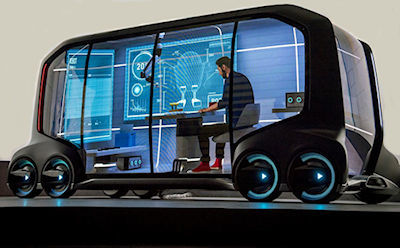 Coworking spaces like WeWork may soon have a new kid on the block to worry about.
Driverless technology will invariably open the door to a whole new era of non-commuting vehicles, and one of the earliest examples we’ll see will be the driverless mobile office.
If you can imagine having an “office” pull up in your driveway, somewhere in the range of an 8’ X 12’ space, or perhaps an 8’ X 24’ conference room, with dimmable windows, projectors, sound systems, 5G-enabled, with flexible, reconfigurable furniture that is perfect for both working alone and hosting meetings, you’ll get the picture.
Executives need only Wi-Fi in, plug in their calendars, and the entire day can be managed from their mobile office, picking up people for each new meeting, and dropping them off before the next meeting begins.
Rather than working from the isolation of home or a single office, mobile offices will add exotic new dimensions to every workday. But they can be far more than just offices.
Mobile offices can also be working laboratories, tattoo parlors, manufacturing operations, arbitration courts, zoning resolution stations, police command centers, mobile ERs, fertility clinics, or pawn shops. Some will be owned by businesses while others will be part of a fleet and leased on a per-use basis.
Most importantly, these vehicles can operate as moving billboards wrapped with giant branding and marketing messages emblazoned on every available surface.
Turning Every Day into a Mobile Work Day
New products require new approaches to doing business. Sometimes it’s a different way of approaching sales, branding, manufacturing, marketing, or finding new vendors. In each of these situations, businesses need to develop fresh thinking and form new relationships. What better way to tackle these new demands than to turn each day into a dynamic mobile experience where forward progress is not only a motto, but also a common way of doing business?
Here are seventeen scenarios designed to explode your thinking and help you reimagine your entire business strategy:
1. New Housing Development Office
A young couple has just put down a deposit for a semi custom home and your job is to show and upsell possible upgrades for the soon-to-be-constructed home. With a complete showroom filled with everything from countertops, to exterior rock and brick, and elaborate audio/visual displays, you pick up the couple, travel to the construction site, and accompany them to other homes under construction, allowing them to touch and feel the difference of every decision.
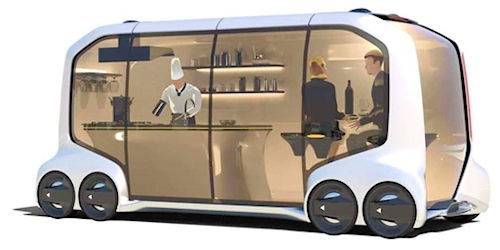
Will there be a driverless mobile cooking school in your future?
2. Cooking School
Every morning the cooking school travels around town picking up its students, with unique tastings, conversations, and learning moments happening in between each stop. Once everyone is in place, the experience starts with a stop at a local garden where fresh herbs and vegetables are picked and added to the ingredient list. The mobile kitchen is designed to make virtually any type of food and the on-board chef(s) are always quick to improvise and match the type of training to the audience they’re working with. And the ever-changing views outside will make it a fascinating experience to remember.
3. The Investment Pitch Office
Investors, sitting in distant offices surrounded by fellow investors, often lose perspective on the true nature of startups and the type of working laboratory needed for newbies to succeed. By forcing the investors to meet directly with the entrepreneurs on their home turf, they will have a far better appreciation for the time and effort being exerted by the startup team, and the nuanced “little things” that can make a huge difference in the overall success formula.
4. Speed Dating
When was the last time you stepped out of your house r local coffee shop to go on a speed date? Never, right? In the very near future, the cure for loneliness is only a few clicks away. And next-gen AI will connect you with people you may actually care about meeting. Each 5 minute speed date, where you are literally speeding around town during the encounter, can lead to as much or as little as you want to have happen.
5. The Click-on-Me Marketing Model
Over the next few years a large percentage of consumers will be wearing smart glasses. In this era, many forms of retail will transform into more of a performance art as location and real estate take a back seat to product models who spend their day trying to get people to “click and buy” whatever they’re pitching. People who are good at attracting attention will naturally be drawn to this line of work, as every new day will have them searching the next great location. As models, each of whom will become intimately attached to their products, will be constantly refining their approach, using various forms of music, percussion, dance, rhythmic chanting, mime, and comedic gesturing to gain both the trust and respect of their audiences they find themselves performing for. Naturally, they will learn new techniques from each other as they travel from one stop to the next.
6. The Experiential Classroom
For both kids and adults, the amount of learning we take away from any experience is directly proportional to the number of micro learning moments our mind is actively exposed to. When we switch from a static classroom to an ever-changing backdrop, our minds are naturally switched into a high level of alertness. However, the highest value learning happens when attentiveness, place, emotion, technique, and demonstration all intersect into one super memorable moment. While a mobile classroom does not instantly make all these things happen, it does improve the likelihood it will.
7. Group Coaching
As most coaches know, the value of their advise improves exponentially when a third party can directly validate a key point with a personal experience. In today’s world, where the irregular cadence of everyday business makes group coaching problematic, placing it into an AI-managed join-on-the-fly process, where every pickup and drop-off schedule can be synced to fit with your timetable, the true value of involvement will become far more spontaneous and potentially far more therapeutic as the best coaches learn to ride the wave of each and every transition.
8. Mobile Chiropractor Office
Doctors, dentists, and chiropractors all get bored being inside the same walls day-in and day-out. For chiropractors, making house calls may be the best marketing tool ever, especially for people who have severe mobility issues, or recent back issues. This could also be true for physical therapists, trainers/coaches, and massage therapists.
9. Mobile Retreat
As mobile offices and mobile events gain traction, we will also be reinventing other kinds of opportunities that are not intuitively obvious. Taking people out of their normal office setting, and grouping them with others, who they would not normally meet, has been gaining acceptance as a proven model for experiential learning. However, by adding a mobile component, where every destiny and learning experience becomes part of each day’s soon-to-be-revealed mystery, has the potential for adding excitement and involvement that is currently missing in today’s business retreats.
10. Mobile Dentistry
The idea of performing a root canal on a squeamish patient while traveling down a bumpy, pot-hole infested stretch of highway does not instill confidence in most would-be dental customers. But the actual dental work would be much more refined that that. Making stops at each new client, as a way of insuring a full schedule without the dreadful waiting room experience, and having the actual finely detailed dental work performed in a stationary vehicle, makes sense. But between those times the operation would be fully mobile.
11. Industrial Training
Every existing industry will be introducing new tools, techniques, software, procedures, and policies over the coming years, and managing the ongoing training and education side of the business will become far more challenging as the rate of change accelerates. For this reason a number of mobile training services will begin offering “we’ll-come-to-you” instruction and training packages designed specifically to match the needs of particular businesses.
12. 12-Step Meetings
Those who frequent a local 12-step meeting like AA, NA, MA, or GA can finally emerge from the basements and backrooms and feel like they’re reintegrating with society. And transportation issues will no longer be an acceptable excuse for not being there. In fact, a drive through the problem areas of a city may garner additional recruits and may make the groups themselves less introspective and more proactive.
13. Mobile Gaming Salon
In just a few years, the stereotypical basement-dwelling game fanatic will be a thing of the past. In addition, games themselves will transition from today’s couch potato button-pushing marathon to more of an aerobic workout. At the same time, the advent of mobile salons will open the door to location-specific gaming experiences that are tied to hyper-local cultures and the neighborhood people and street-level architecture that exemplify them. Mobile gaming will open the doors to radical new game designs, business models, tournament play, and entirely new entertainment styles.
14. Personalized Retail-Manufacturing Shop
As we move into the era of hyper-individualized products and services, we will begin to see a wide variety of both mobile retail and mobile manufacturing operations spring up. Whether its shoes, guitars, dinnerware, candles, sweaters, or smart home devices, customers will have the option of sorting through styles, materials, colors, and features before hitting the purchase button. Some items will require a body scan, others will need installation, and still others will involve training. But whatever the product or service demands, having a mobile team arrive in style will make you feel like you’re part of the process.
15. Group Therapy/Counseling Center
– 90% of what happens in life, happens from just showing up. And when the “showing up” part has been reduced to walking out your front door and stepping into a session, it’s hard to find a valid excuse to say “no.” Group therapy has long been the social “push” to both correct your thinking and adjust your approach to the issues you’re dealing with.
16. The Volunteer Center
If you’re the volunteering type, every day begins with you checking alert messages about possible topics or events where you can join forces with other like-minded volunteers to tackle the project of the day. As soon as you click “ok,” you will receive an ETA for the mobile volunteer office that will pick you up and whisk you off to the job site. But in this setting, you’ll be able to meet the other volunteers beforehand and learn about the challenges ahead before you arrive.
17. Mobile Daycare
Young people who have to wrestle through the demands of getting themselves and their kids ready each morning, before making the commute to a daycare center and then to work, know all too well the taxing nature of this morning ritual. However, if the “daycare comes to you,” suddenly the 8-10 phase changes you make each morning, suddenly seem far more doable. Mobile daycare also opens the door for more road trips and adventures for the kids. Childhood never seemed more exciting!
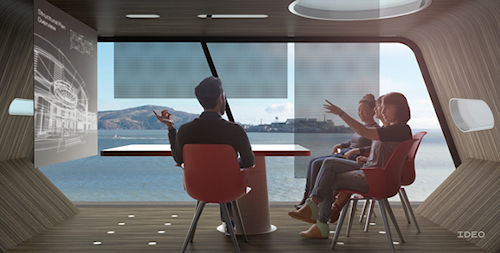
The options are as limitless as our imagination
Final Thoughts
The key thing to remember is that even though driverless technology will make our roads and highways operate far more efficiently, it doesn’t mean less traffic. In fact, just the opposite.
Autonomous vehicles will unleash new thinking for all kinds of non-commuting and utilitarian vehicles that currently don’t exist.
Naturally the true spectrum of opportunity will depend on pricing. But keep in mind, as the labor cost associated with driving disappears, and rather than spending a boatload on an expensive office in the high rent district, the mobile office may indeed be more affordable than you first think.
The original idea of having a traveling office was to give people slightly more control in their lives, and an ever-changing backdrop to lighten the tedium of business. With this arrangement, owners can run their business as many hours as they want, and simply park it when they’re done.
In the past, businesses had set hours, and storefront operations were very rigid and inflexible. But mobile businesses don’t require either the real estate investment or the staffing necessary to cover the hours the business community expects of them. Everything about mobile offices has a way altering traditional thinking.
Translate This Page
Select LanguageAfrikaansAlbanianAmharicArabicArmenianAzerbaijaniBasqueBelarusianBengaliBosnianBulgarianCatalanCebuanoChichewaChinese (Simplified)Chinese (Traditional)CorsicanCroatianCzechDanishDutchEnglishEsperantoEstonianFilipinoFinnishFrenchFrisianGalicianGeorgianGermanGreekGujaratiHaitian CreoleHausaHawaiianHebrewHindiHmongHungarianIcelandicIgboIndonesianIrishItalianJapaneseJavaneseKannadaKazakhKhmerKoreanKurdish (Kurmanji)KyrgyzLaoLatinLatvianLithuanianLuxembourgishMacedonianMalagasyMalayMalayalamMalteseMaoriMarathiMongolianMyanmar (Burmese)NepaliNorwegianPashtoPersianPolishPortuguesePunjabiRomanianRussianSamoanScottish GaelicSerbianSesothoShonaSindhiSinhalaSlovakSlovenianSomaliSpanishSudaneseSwahiliSwedishTajikTamilTeluguThaiTurkishUkrainianUrduUzbekVietnameseWelshXhosaYiddishYorubaZulu
#goog-gt-tt {display:none !important;}
.goog-te-banner-frame {display:none !important;}
.goog-te-menu-value:hover {text-decoration:none !important;}
.goog-text-highlight {background-color:transparent !important;box-shadow:none !important;}
body {top:0 !important;}
#google_translate_element2 {display:none!important;}
Search for:
.et_bloom .et_bloom_optin_2 .et_bloom_form_content { background-color: #ffffff !important; } .et_bloom .et_bloom_optin_2 .et_bloom_form_container .et_bloom_form_header { background-color: #dd4242 !important; } .et_bloom .et_bloom_optin_2 .et_bloom_form_content button { background-color: #3b3b3b !important; } .et_bloom .et_bloom_optin_2 .et_bloom_form_content .et_bloom_fields i { color: #3b3b3b !important; } .et_bloom .et_bloom_optin_2 .et_bloom_form_content .et_bloom_custom_field_radio i:before { background: #3b3b3b !important; } .et_bloom .et_bloom_optin_2 .et_bloom_form_content button { background-color: #3b3b3b !important; } .et_bloom .et_bloom_optin_2 .et_bloom_form_container h2, .et_bloom .et_bloom_optin_2 .et_bloom_form_container h2 span, .et_bloom .et_bloom_optin_2 .et_bloom_form_container h2 strong { font-family: "Open Sans", Helvetica, Arial, Lucida, sans-serif; }.et_bloom .et_bloom_optin_2 .et_bloom_form_container p, .et_bloom .et_bloom_optin_2 .et_bloom_form_container p span, .et_bloom .et_bloom_optin_2 .et_bloom_form_container p strong, .et_bloom .et_bloom_optin_2 .et_bloom_form_container form input, .et_bloom .et_bloom_optin_2 .et_bloom_form_container form button span { font-family: "Open Sans", Helvetica, Arial, Lucida, sans-serif; }
Subscribe To Our Newsletter
Join our mailing list to receive the latest news and updates from Thomas Frey.
SUBSCRIBE!
You have Successfully Subscribed!
Recent Posts
The Coming Driverless Mobile Office Era: Seventeen Mind-Bending Examples
Approaching the “empty pockets” lifestyle
Driverless cars, the hardest design problem yet to be solved is one that you’ll never guess
Categories
Artificial Intelligence
Business Trends
Future of Banking
Future of Education
Future of Healthcare
Future of Transportation
Future of Work
Future Scenarios
Future Trends
Futurist Thomas Frey Insights
Global Trends
Predictions
Social Trends
Technology Trends
Speaking TopicsFuture of Healthcare – “Is Death our only Option?
Future of AI
Future of Industries
By Futurist Thomas Frey, author of 'Epiphany Z – 8 Radical Visions Transforming Your Future'
The post The Coming Driverless Mobile Office Era: Seventeen Mind-Bending Examples appeared first on Futurist Speaker.
December 9, 2018
Approaching the “empty pockets” lifestyle
Don't Get Blindsided By The Future
GOOGLE'S TOP RATED FUTURIST SPEAKER
Book Thomas
 Throughout history people have been burdened by all the things they’ve had to carry with them, typically in their pockets, wallets, or purses.
In the past, leaving the house was a checklist exercise for remembering all the things to take along, and yes, most of us had our pockets and purses filled with just-in-case stuff. But the true burden was complying with the increasing demands of business and government. We lived in constant fear of losing out for not having the right items in the right place at the right time.
Fifty years ago, every train, ship, and airline required a paper ticket. Every concert, movie theater, and Broadway show required the same type of paper tickets.
If a cop pulled us over we needed a drivers license, proof of insurance, car registration, and perhaps a few random things that the police officer felt necessary to take a look at.
Most guys carried a pliers, pocketknife, and keys. The plier was to fix things. The pocketknife was for security, but became much more of a tool than a source of protection. Keys were for opening doors or anything with a lock on it.
Various types of wallets and purses became the natural storage place for everything important like IDs, money, credit cards, makeup, and kids photos.
More recently, the most important item of all has become our smartphones.
Our phones have replaced the need for most of these items, but very few of us have taken it to the logical extreme of replacing all of our other items.
Which items will disappear next?
Which item do you carry that you’re anxious to get rid of?
Most of us have some combination of cash, keys, and wallet/purse near us at all times. I don’t see the purse going away anytime soon because it serves more as a fashion accessory than a useful tool, but wallets are not nearly as indispensable as they once were.
Phones are replacing cash, but not in all situations. Putting money in collection plates, gifts to charities, street performers, or homeless people are all challenging situations that don’t have obvious solutions, yet.
That said, China has been leading the world with its effort to eliminate cash, instead using Alipay and Tencent’s WeChat Pay. In major cities, tip jars, donation plates, and gratuity hats used to collect money for street buskers have been replaced with easy-to-use QR codes where simply aiming a phone and clicking a button will remit payment.
When it comes to keys, we’re seeing key fobs and digital keypads replace many of the traditional key locks on our homes, offices, and cars. In fact, it’s hard to come up with a compelling reason why any of us should still be using keys 10 years from now.
The locksmith industry has been quick to adapt to the ever-changing demands of the marketplace, yet there has been no overarching urgency for businesses to make the change.
Our need to lock and secure cars, doors, houses, and offices is not going away, but the way we lock something, either by waving a hand, biometric scan, or voice command, is transitioning to interactive systems that don’t require keys.
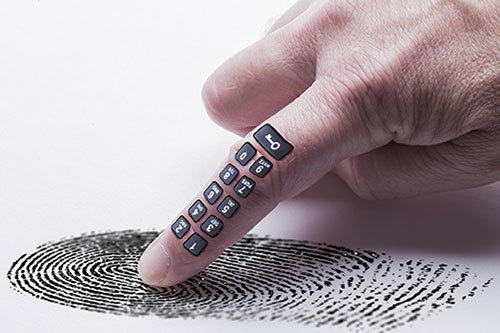
Going from Physical to Digital IDs
One of the mainstays of our wallet or purse has always been some form of required identification. This often takes the form of a driver’s license, passport, or ID card.
However, we are quickly moving past the era of showing some form of physical proof of who we are. With rapidly improving biometrics, voice recognition, and even body movement analyzers, the need to produce an ID is falling by the wayside.
The emerging digital identity industry is based on the belief that every individual is unique and different. As Dr. Seuss so aptly put it, “Today you are You, that is truer than true. There is no one alive who is Youer than You.”
Naturally, all of the sites that store personal biometric data will need to be accessible around the world, and permissions for country-to-country access still need to be worked out, but it’s very doable and this type of the technology is already being implemented.
We are only a few years from automating every border entry, custom station, airport TSA, and military checkpoint.
Perhaps the biggest drawback to this is the sheer number of jobs that will be eliminated. Countless millions around the world earn a living staring thoughtlessly at one ID after another, and even though it’s the epitome of meaningless work, it’s still a paycheck.
In my view, our ability to advance the human race is being needlessly throttled by mind numbing jobs like this that hold little importance.
The Invisible Smartphone
As we work our way down the list, it’s easy to see how smartphones start replacing the last few items we still carry with us. But is it possible to automate the smartphone itself out of existence?
Before the introduction of the iPhone in 2007, phones had been getting smaller and several startups had introduced wearable phones in the form of jewelry, gloves, and even imbedded tattoos.
However, the iPhone added a huge number of tools and capabilities that couldn’t be duplicated in phone-only technology.
Adding cameras, videos, music, GPS, email, texting, social networking, mobile apps, and impressive amounts of storage had a way of rewriting how we interacted with these devices, and our expectations changed, again, and again, and again.
While we will invariably see the smartphone evolve in many ways, I have a hard time imagining a way to completely dematerialize the smartphone into something without any physical form.
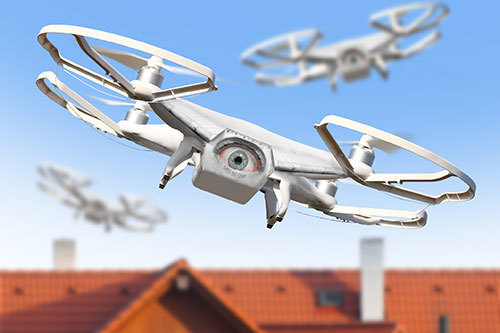
Final Thoughts
One by one, the physical items we carry with us are beginning to disappear.
Once we say goodbye to our cash, keys, and IDs we will begin to get a taste of the true nature of technological freedom.
If we truly desire a life free of any physical encumbrances, I’d like to retell my now-infamous swarmbot scenario:
“Imagine stepping out of the shower in the morning, and rather than reaching for a towel, a swarm of ten thousand flying micro drones will surround you and begin to dry you off.
A few seconds after drying your skin, the same swarm will begin to attend to other morning prep duties such as shaving, applying makeup, drying and fixing your hair, adding lotions, deodorant, and powder where necessary, and completing everything in mere seconds.
Once the face-prep is finished, the swarm will assemble itself as your clothing, rearranging itself into the color, style, and fashion most appropriate for your mood and the day ahead.
The swarm will be in constant communication with you, anticipating your needs, responding to voice commands, replying when necessary through your-ears-only voices or your-eyes-only projections.
The swarm will handle many duties, simultaneously serving as body armor to protect you from injury, adjusting temperatures to keep you warm or cool, constantly communicating with the rest of the world-wide swarm network, attending to every bodily function, keeping you fit and trim in the process.
Downloadable swarm apps will give you as many capabilities as you desire, with brilliant new competencies added on a daily basis.
These same bots will also serve as your short-range transportation system. Much like a scene from a Superman comic book, the swarm will physically lift your body and fly you to where ever you want to go.
If this sounds like science fiction, it’s because the scenario leapfrogged 10-15 generations of swarm development. At the same time, we are quickly moving into unchartered territory, and swarmbots like this will soon have capabilities far beyond anything we can imagine.”
As with all technology, there will be unintended consequences, and people with devious minds will figure out ways to use this kind of tech for evil purposes.
Yes, on some level we will have bad swarms fighting good swarms, and swarm hackers plotting to corrupt even our most advanced technologies. But still, on balance, the forces of those with good intentions will outweigh those with criminal intent.
As always, I remain optimistic about the amazing future unfolding around us. Personally I can’t wait to have my own personal swarm, and the empty pockets that epitomize this level of advancement.
Translate This Page
Select LanguageAfrikaansAlbanianAmharicArabicArmenianAzerbaijaniBasqueBelarusianBengaliBosnianBulgarianCatalanCebuanoChichewaChinese (Simplified)Chinese (Traditional)CorsicanCroatianCzechDanishDutchEnglishEsperantoEstonianFilipinoFinnishFrenchFrisianGalicianGeorgianGermanGreekGujaratiHaitian CreoleHausaHawaiianHebrewHindiHmongHungarianIcelandicIgboIndonesianIrishItalianJapaneseJavaneseKannadaKazakhKhmerKoreanKurdish (Kurmanji)KyrgyzLaoLatinLatvianLithuanianLuxembourgishMacedonianMalagasyMalayMalayalamMalteseMaoriMarathiMongolianMyanmar (Burmese)NepaliNorwegianPashtoPersianPolishPortuguesePunjabiRomanianRussianSamoanScottish GaelicSerbianSesothoShonaSindhiSinhalaSlovakSlovenianSomaliSpanishSudaneseSwahiliSwedishTajikTamilTeluguThaiTurkishUkrainianUrduUzbekVietnameseWelshXhosaYiddishYorubaZulu
#goog-gt-tt {display:none !important;}
.goog-te-banner-frame {display:none !important;}
.goog-te-menu-value:hover {text-decoration:none !important;}
.goog-text-highlight {background-color:transparent !important;box-shadow:none !important;}
body {top:0 !important;}
#google_translate_element2 {display:none!important;}
Search for:
.et_bloom .et_bloom_optin_2 .et_bloom_form_content { background-color: #ffffff !important; } .et_bloom .et_bloom_optin_2 .et_bloom_form_container .et_bloom_form_header { background-color: #dd4242 !important; } .et_bloom .et_bloom_optin_2 .et_bloom_form_content button { background-color: #3b3b3b !important; } .et_bloom .et_bloom_optin_2 .et_bloom_form_content .et_bloom_fields i { color: #3b3b3b !important; } .et_bloom .et_bloom_optin_2 .et_bloom_form_content .et_bloom_custom_field_radio i:before { background: #3b3b3b !important; } .et_bloom .et_bloom_optin_2 .et_bloom_form_content button { background-color: #3b3b3b !important; } .et_bloom .et_bloom_optin_2 .et_bloom_form_container h2, .et_bloom .et_bloom_optin_2 .et_bloom_form_container h2 span, .et_bloom .et_bloom_optin_2 .et_bloom_form_container h2 strong { font-family: "Open Sans", Helvetica, Arial, Lucida, sans-serif; }.et_bloom .et_bloom_optin_2 .et_bloom_form_container p, .et_bloom .et_bloom_optin_2 .et_bloom_form_container p span, .et_bloom .et_bloom_optin_2 .et_bloom_form_container p strong, .et_bloom .et_bloom_optin_2 .et_bloom_form_container form input, .et_bloom .et_bloom_optin_2 .et_bloom_form_container form button span { font-family: "Open Sans", Helvetica, Arial, Lucida, sans-serif; }
Subscribe To Our Newsletter
Join our mailing list to receive the latest news and updates from Thomas Frey.
SUBSCRIBE!
You have Successfully Subscribed!
Recent Posts
Approaching the “empty pockets” lifestyle
Driverless cars, the hardest design problem yet to be solved is one that you’ll never guess
The Inner Vision Theory: Three surprising ways it controls your future
Categories
Artificial Intelligence
Business Trends
Future of Banking
Future of Education
Future of Healthcare
Future of Transportation
Future of Work
Future Scenarios
Future Trends
Futurist Thomas Frey Insights
Global Trends
Predictions
Social Trends
Technology Trends
Speaking TopicsFuture of Healthcare – “Is Death our only Option?
Future of AI
Future of Industries
The post Approaching the “empty pockets” lifestyle appeared first on Futurist Speaker.
December 2, 2018
Driverless cars, the hardest design problem yet to be solved is one that you’ll never guess
Don't Get Blindsided By The Future
GOOGLE'S TOP RATED FUTURIST SPEAKER
Book Thomas
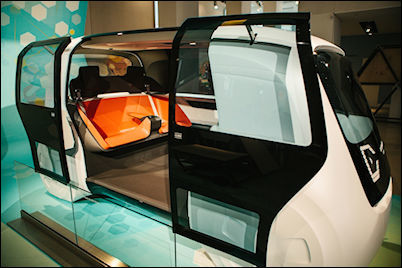 For car designers, the rapidly approaching driverless era is giving them an entirely new set of design challenges to deal with.
Over the past 120 years, cars have been designed around the operational side of the vehicle, primarily driving. As car dealerships began to spring up around the world, the relationship between the buyer and salesman turned cars into a status symbol, and design features and the overall appearance of the car quickly rose in importance.
Today, however, the entire automobile industry is in the midst of a major transition. As a mature industry that touches the lives of billions of people around the planet, changing from driver to no-driver vehicles will cause massive ripple effects to sub-industries, service industries, and even tangential support industries that have no direct connections to any part of the automotive world.
Car ownership will change. Land use policies will change. The way cars are sold, services, cleaned, paid for, and maintained will also change.
Virtually every job related to the automotive industry will be affected in some way. Parking lots, garages, traffic cops, traffic courts, gas stations, tire shops, emissions testing, drivers licenses, traffic cones, weigh stations, guardrails, stoplights, and DUIs will all begin to disappear.
With very few actual use case studies to guide our thinking, car designers are doing their best to guess at how people will interact with the cars, van, trucks, and buses of the future.
To make matters even more challenging, the way people interact with the cars of the future will continually change along with the changing ratio of drivers-vs-no-drivers on the road.
As the number of driverless vehicles reaches 5%, 10%, 20%, and 50% we will begin to see a number of usability shifts take place, as both comfort and convenience improve and as we develop higher levels of trust in both the vehicles and the overall system.
Ease of ingress and egress will become hugely important, as the operators of driverless fleets will want to maximize the efficiency of each transaction.
But the greatest design challenge of all will be the car seats for children.
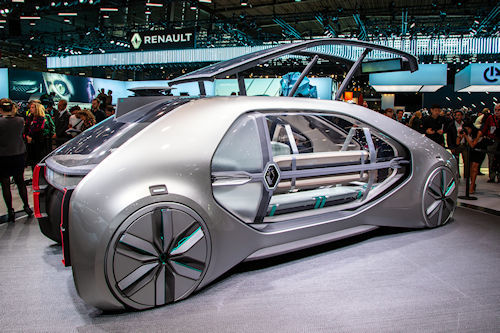
The Great Car Seat Design Challenge
For parents, the safety of their children takes priority over virtually every aspect of their life.
The elaborate process of strapping kids into their seat and buckling each of them into a five-point harness has become a routine way of life for moms and dads everywhere.
And most parents are willing to pay extra for kid-friendly cars and extra safe car seats.
As individual car ownership starts to dwindle and disappear, both from a system operation and car design standpoint, the primary challenge will be to have the right number of cars with the right number of car seats in the right place at the right time.
But even if fleet owners can figure that out, car seats have major cleanliness issues.
Let’s face it. Kids are messy, dirty, get sick, throw up, toss things, and find ways to turn a perfectly clean vehicle into a waste management problem in a matter of seconds.
Parents won’t want to carry a car seat with them because they’re heavy, hard to strap in, and will have to be dealt with whenever they get to where they’re going.
Fleet owners will not want to ignore kids because it represents a significant percentage of the marketplace, and they will have similar design issues dealing with pets, service animals, handicap people, elderly, and politicians.
What if a daycare center needs a vehicle with six car seats? What if a dog trainer has to pick up four dogs? What if an assisted care center has three people in wheelchairs that want to travel together?
Dealing with the Cleanliness Issue
In the past, the onus of a clean vehicle has always rested on the shoulders of the driver. But no driver means no one to clean the vehicle.
Designing a self-cleaning car is a far different challenge than designing a self driving car.
It sounds easy to have robotic arms pop out of the floor that will quickly vacuum, wipe down, and disinfect all the surfaces. However, this is an extremely complicated set of tasks.
What if the departing passengers left something behind? Perhaps it’s a purse, phone, or set of keys. More likely it will be a half drank bottle of water, candy wrapper, or piece of trash. How does the robot know if the items are valuable or not, and how will it respond to each new situation?
None of these are insignificant issues, and the artificial intelligence incorporated into an operational system like this will take years to perfect.
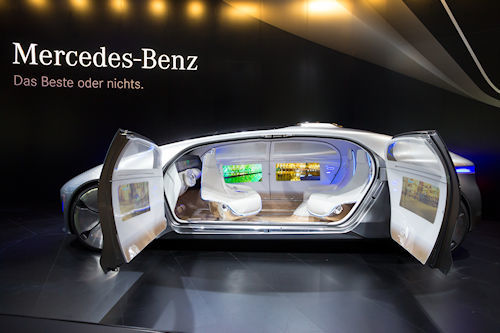
Possible Solutions
It may be possible to design car seats that simply “flip out” of the existing seats. Push one button and the car seat appears. Yes, this will be a massive design challenge but it is indeed possible.
With front and rear-facing passenger seats, it will be easy to have the same option for child car seats.
Universal harnesses can also be adjustable to accommodate any size child.
In this scenario, picky parents need only add a clean liner before strapping their child into the seat, but most will probably skip the liner step.
Large vehicles will allow for 5-6 car seats for large families. Some will even come with a diaper-changing table in the center.
The biggest challenge will be in the early adoption stages of driverless technology when accident rates and human injuries are still high. Once vehicle safety starts to improve, this will become less of an issue.
Final Thoughts
As I’ve said many times, driverless technology will be the most disruptive technology in all history. And it will also come with it’s own complicated set of design issues.
Fleet privacy will become a huge issue. Is it ok to have cameras monitoring the inside of the car 24/7? Fleet owners will argue that it’s necessary to prevent vandalism and to know when the car is dirty. Riders will hate the idea of being spied on.
Business people, who would rather not deal with anything left behind by kids, pets, or the elderly will have the option of ordering higher-priced, but more business-friendly vehicles.
In fact, fleet owners will face constant challenges to have the right style and selection of vehicles to meet the ever-changing demands of their customer base.
In general, adoption rates will depend heavily upon pricing, which in turn will be determined by market forces and the overall level of competition between fleet owners.
Autonomous vehicles will pave the way for an exciting new wave of transportation, but it will take several iterations of change before we truly understand the challenges and opportunities that lie ahead.
Translate This Page
Select LanguageAfrikaansAlbanianAmharicArabicArmenianAzerbaijaniBasqueBelarusianBengaliBosnianBulgarianCatalanCebuanoChichewaChinese (Simplified)Chinese (Traditional)CorsicanCroatianCzechDanishDutchEnglishEsperantoEstonianFilipinoFinnishFrenchFrisianGalicianGeorgianGermanGreekGujaratiHaitian CreoleHausaHawaiianHebrewHindiHmongHungarianIcelandicIgboIndonesianIrishItalianJapaneseJavaneseKannadaKazakhKhmerKoreanKurdish (Kurmanji)KyrgyzLaoLatinLatvianLithuanianLuxembourgishMacedonianMalagasyMalayMalayalamMalteseMaoriMarathiMongolianMyanmar (Burmese)NepaliNorwegianPashtoPersianPolishPortuguesePunjabiRomanianRussianSamoanScottish GaelicSerbianSesothoShonaSindhiSinhalaSlovakSlovenianSomaliSpanishSudaneseSwahiliSwedishTajikTamilTeluguThaiTurkishUkrainianUrduUzbekVietnameseWelshXhosaYiddishYorubaZulu
#goog-gt-tt {display:none !important;}
.goog-te-banner-frame {display:none !important;}
.goog-te-menu-value:hover {text-decoration:none !important;}
.goog-text-highlight {background-color:transparent !important;box-shadow:none !important;}
body {top:0 !important;}
#google_translate_element2 {display:none!important;}
Search for:
.et_bloom .et_bloom_optin_2 .et_bloom_form_content { background-color: #ffffff !important; } .et_bloom .et_bloom_optin_2 .et_bloom_form_container .et_bloom_form_header { background-color: #dd4242 !important; } .et_bloom .et_bloom_optin_2 .et_bloom_form_content button { background-color: #3b3b3b !important; } .et_bloom .et_bloom_optin_2 .et_bloom_form_content .et_bloom_fields i { color: #3b3b3b !important; } .et_bloom .et_bloom_optin_2 .et_bloom_form_content .et_bloom_custom_field_radio i:before { background: #3b3b3b !important; } .et_bloom .et_bloom_optin_2 .et_bloom_form_content button { background-color: #3b3b3b !important; } .et_bloom .et_bloom_optin_2 .et_bloom_form_container h2, .et_bloom .et_bloom_optin_2 .et_bloom_form_container h2 span, .et_bloom .et_bloom_optin_2 .et_bloom_form_container h2 strong { font-family: "Open Sans", Helvetica, Arial, Lucida, sans-serif; }.et_bloom .et_bloom_optin_2 .et_bloom_form_container p, .et_bloom .et_bloom_optin_2 .et_bloom_form_container p span, .et_bloom .et_bloom_optin_2 .et_bloom_form_container p strong, .et_bloom .et_bloom_optin_2 .et_bloom_form_container form input, .et_bloom .et_bloom_optin_2 .et_bloom_form_container form button span { font-family: "Open Sans", Helvetica, Arial, Lucida, sans-serif; }
Subscribe To Our Newsletter
Join our mailing list to receive the latest news and updates from Thomas Frey.
SUBSCRIBE!
You have Successfully Subscribed!
Recent Posts
Driverless cars, the hardest design problem yet to be solved is one that you’ll never guess
The Inner Vision Theory: Three surprising ways it controls your future
“The People of Mars Have Spoken!”
Categories
Artificial Intelligence
Business Trends
Future of Banking
Future of Education
Future of Healthcare
Future of Transportation
Future of Work
Future Scenarios
Future Trends
Futurist Thomas Frey Insights
Global Trends
Predictions
Social Trends
Technology Trends
Speaking TopicsFuture of Healthcare – “Is Death our only Option?
Future of AI
Future of Industries
By Futurist Thomas Frey, author of 'Epiphany Z – 8 Radical Visions Transforming Your Future'
The post Driverless cars, the hardest design problem yet to be solved is one that you’ll never guess appeared first on Futurist Speaker.
November 27, 2018
The Inner Vision Theory: Three surprising ways it controls your future
Don't Get Blindsided By The Future
GOOGLE'S TOP RATED FUTURIST SPEAKER
Book Thomas
 The three items that the human body comes into contact with most in life are the beds that we sleep in, the chairs that we sit in, and the shoes that we walk in. These are the primary friction points that we know all too well.
However the overarching all-consuming interface that few people consider is our human to future interface. We will all be spending the rest of our lives in the future, so we really should learn more about how we’re make the transition from the here-and-now to what-comes-next.
Just as a fish has no way of understanding the concept of water, we are immersed in wave upon wave of an ever-changing future, silently slipping through our reality lens like the hands of time.
Tick, tock, tick, tock, tick, tock, the metronome of life is nature’s most relentless force, with virtually every moment imperceptibly different from the last. Most often the change is ever so slight, barely detectable, but with every change, we find ourselves standing on the shifting sands of now, now, now, and now.
The needs of “now,” are different than the needs of “then,” and even though we take these imperceptible changes for granted, every future has a way of altering the demands that will be placed on us, as we go about our daily living.
We all intuitively know that today will be different than yesterday, and that tomorrow will also hold a few surprises. But few scientists, if any, have actually tried to examine the affect these micro-vectors have on us individually as they wash relentlessly over us.
“Directoids” is a term I’ve developed to describe these nano-sized particles of influence, that come both internally and externally, to literally sway every human action.
Even the slightest bump, noise, smell, or thought can alter what comes next. For the vast majority of these micro-shifts, we’re not even aware that they’re happening.
I truly believe we’re kidding ourselves if we think we know where all these micro-influencers come from. My sense is that every new wave of the future, unfolding in super high resolution at a rate of 100,000 frames a second, is simultaneously syncing with the “now” and, at the same time, incorporating new instruction sets into every fiber of our being.
These subtle waves of stimulation have a way of re-aiming us, both positively and negatively, towards the next iteration of now.
As someone wanting to control of my own destiny, it’s important for me to understand how these “directoids” sway my own sentiments and attitudes. They also help define the way an “optimal me” needs to be continually reconfigured to perform in a peak or near-peak fashion.
Awash in Micro Changes
Micro changes are everywhere.
Have you ever paid attention to the hair growing on your arm, blood flowing through your veins, or the infinitesimal secretions made by a gland as it compensates for yet another metabolic shift?
Directoids, as I imagine them, are super tiny particles of influence, far too small for us to measure.
Wading through the waters of time, as a person who is constantly touching the stones of change beneath their feet, our subconscious mind is assessing the probabilities of what’s coming next, making millions of operational decisions every second to compensate for even the slightest alterations between now and a zillionth of a second ago.
Drilling deeper, every cellular modification happens as the result of trillions of instructional messages passing beneath the surface of conscious awareness. Yet, on a more conscious level of awareness, we mentally deliberate between such mundane considerations as “what socks should I wear today?” or “what’s the right amount of milk to put on my cereal?”
While our body is awash in directoids, with countless operational signals coding and recoding every micro decision on a subconscious level, our ability to discern and discriminate between influencers on this level is lost in the same kind of water-blindness that fish have.
Guided by Our Inner Vision of the Future
The internal steering wheel that our subconscious relies on to guide us through our daily lives is our inner vision of the future.
Tucked away, deep in our cranial cavities, is our own personal vision of what the future holds. While we’re not conscious of its role and how it works, our inner vision of the future determines every action we will take today.
If I see a new pair of shoes, those shoes may or may not have the ability to alter my inner vision. If they do, I will somehow incorporate those shoes into my new visions of the future, and make the purchase.
Similarly, every vacation brochure, restaurant ad, or toy commercial will cause our inner vision to give a quick thumbs up or thumbs down, sending signals to our conscious level decision-making mechanisms to take action.
As a futurist, my role is to alter people’s inner vision of what the future holds, and as a result, they will change the way they currently make decisions.

Three powerful ways our inner vision controls our lives
Humans are incredibly complicated and we currently only know a thimble full of information out of an ocean of data. But we know that we have the ability to change our inner vision, and by extension, change our future.
Every day this vision is undergoing countless revisions as new thoughts and ideas cross our mind. The metaphor I use is tiny pieces of construction equipment, constantly working away to build these changes to our inner vision.
Even though we have no actual research yet to validate how it works, our own empirical evidence gives us a functional mental framework.
Here are three of the rather surprising ways our inner vision controls our lives:
1. The signs we’re all looking for are being guided by our inner vision.
How many times have you heard someone say they are “looking for a sign?” Perhaps you’ve said it yourself. But what exactly constitutes a “sign” and how is one sign more significant than another?
Sometimes we will describe our “sign” as an article we’ve read, video clip we’ve seen, an image on a wall, or conversation with a friend. But the “signs” we’ve imagined operate more as a triggering mechanism alerting us to the fact that something important just happened.
In each of these situations, a momentary thought becomes a “sign” because it distinctly resonates with our inner vision.
2. The advice people give you has to resonate with your inner vision before you will accept it.
Some people refer to it as instinct or a gut feeling, but whenever you intuitively know something is off, it comes from your inner vision.
In many respects, the pattern matching skills of artificial intelligence work very much like the pattern matching we use to compare things to our inner vision. If it ends up being a topic we haven’t yet considered, we will grant it provisional acceptance until we are able to build sufficient vision to give it a thumbs-up or thumbs-down.
3. Even though we have control of our inner vision, all of our decisions have to be okayed by it first.
Yes, we have control over our own decisions, but we go through a series of internal processes before they get “blessed” by our inner vision. Ironically, even our decision to change our inner vision has to be approved by our inner vision.
We have many tools for managing our inner vision ranging from increasing our exposure to information, to changing our focus or perspective, to changing our event horizon. The better we become at mastering these tools of introspection, the better we become at managing and reacting to the world around us.
Final Thoughts
At this point, everything I’ve described is part of a much broader theory I’ve been developing around the future.
For me, the “Inner Vision Theory” has become a powerful tool for not only understanding our relationship with the future, but also explaining the true value that futurist thinking brings to the table.
At the same time, it will help all of us make better sense out of so many of the pieces of our humanness that still fall into the realm of the unknown.
Since this is still a working theory, I’d love to hear your thoughts.
Translate This Page
Select LanguageAfrikaansAlbanianAmharicArabicArmenianAzerbaijaniBasqueBelarusianBengaliBosnianBulgarianCatalanCebuanoChichewaChinese (Simplified)Chinese (Traditional)CorsicanCroatianCzechDanishDutchEnglishEsperantoEstonianFilipinoFinnishFrenchFrisianGalicianGeorgianGermanGreekGujaratiHaitian CreoleHausaHawaiianHebrewHindiHmongHungarianIcelandicIgboIndonesianIrishItalianJapaneseJavaneseKannadaKazakhKhmerKoreanKurdish (Kurmanji)KyrgyzLaoLatinLatvianLithuanianLuxembourgishMacedonianMalagasyMalayMalayalamMalteseMaoriMarathiMongolianMyanmar (Burmese)NepaliNorwegianPashtoPersianPolishPortuguesePunjabiRomanianRussianSamoanScottish GaelicSerbianSesothoShonaSindhiSinhalaSlovakSlovenianSomaliSpanishSudaneseSwahiliSwedishTajikTamilTeluguThaiTurkishUkrainianUrduUzbekVietnameseWelshXhosaYiddishYorubaZulu
#goog-gt-tt {display:none !important;}
.goog-te-banner-frame {display:none !important;}
.goog-te-menu-value:hover {text-decoration:none !important;}
.goog-text-highlight {background-color:transparent !important;box-shadow:none !important;}
body {top:0 !important;}
#google_translate_element2 {display:none!important;}
Search for:
.et_bloom .et_bloom_optin_2 .et_bloom_form_content { background-color: #ffffff !important; } .et_bloom .et_bloom_optin_2 .et_bloom_form_container .et_bloom_form_header { background-color: #dd4242 !important; } .et_bloom .et_bloom_optin_2 .et_bloom_form_content button { background-color: #3b3b3b !important; } .et_bloom .et_bloom_optin_2 .et_bloom_form_content .et_bloom_fields i { color: #3b3b3b !important; } .et_bloom .et_bloom_optin_2 .et_bloom_form_content .et_bloom_custom_field_radio i:before { background: #3b3b3b !important; } .et_bloom .et_bloom_optin_2 .et_bloom_form_content button { background-color: #3b3b3b !important; } .et_bloom .et_bloom_optin_2 .et_bloom_form_container h2, .et_bloom .et_bloom_optin_2 .et_bloom_form_container h2 span, .et_bloom .et_bloom_optin_2 .et_bloom_form_container h2 strong { font-family: "Open Sans", Helvetica, Arial, Lucida, sans-serif; }.et_bloom .et_bloom_optin_2 .et_bloom_form_container p, .et_bloom .et_bloom_optin_2 .et_bloom_form_container p span, .et_bloom .et_bloom_optin_2 .et_bloom_form_container p strong, .et_bloom .et_bloom_optin_2 .et_bloom_form_container form input, .et_bloom .et_bloom_optin_2 .et_bloom_form_container form button span { font-family: "Open Sans", Helvetica, Arial, Lucida, sans-serif; }
Subscribe To Our Newsletter
Join our mailing list to receive the latest news and updates from Thomas Frey.
SUBSCRIBE!
You have Successfully Subscribed!
Recent Posts
The Inner Vision Theory: Three surprising ways it controls your future
“The People of Mars Have Spoken!”
The Coming Era of AI-Enhanced Superhumans
Categories
Artificial Intelligence
Business Trends
Future of Banking
Future of Education
Future of Healthcare
Future of Transportation
Future of Work
Future Scenarios
Future Trends
Futurist Thomas Frey Insights
Global Trends
Predictions
Social Trends
Technology Trends
Speaking TopicsFuture of Healthcare – “Is Death our only Option?
Future of AI
Future of Industries
By Futurist Thomas Frey, author of 'Epiphany Z – 8 Radical Visions Transforming Your Future'
The post The Inner Vision Theory: Three surprising ways it controls your future appeared first on Futurist Speaker.
November 21, 2018
“The People of Mars Have Spoken!”
Don't Get Blindsided By The Future
GOOGLE'S TOP RATED FUTURIST SPEAKER
Book Thomas
 These are the critically important words that emanated from the first ragtag mars colony, the first of its kind in the known universe, in response to a number of concerns voiced by prominent people on earth. “The people of Mars have spoken!” …all eight of them! Regardless of the fact that most inhabitants were severely ill, suffering from the affects of prolonged space travel and struggling to acclimate to a planet with lower gravity, this small group of people constituted the first government on a non-earth planet. It all started with the first manned mission to Mars, followed by a series of other missions to begin building the first Martian colony. Once the rudimentary first colony was established, the founding members establish themselves as a fledgling new government, making critical decisions about how to survive in the harsh new world environment.
The Business of Mars
Each of the founding settlers of Mars risked life and limb to build what they had hoped would become a long-term community of space traveling pioneers. Since they were a long ways from creating sustainable cities, and heavily dependent upon their lifeline with earth, they knew there would have to be an ongoing effort to raise money on earth to keep their dream alive. For this reason, a decision has been made creating the first business venture on Mars, a real estate business to sell land on Mars to people on earth. It’s at this point where the first voices of criticism arose. Some were concerned about the “rich people on earth” buying up control of this unspoiled new planet. Many felt the environmental damage done in the first few decades of building the new colony would be irreversible. For this reason they proposed a multi-national approach for governing the build out of Mars. However, the response they got was an elaborate build out plan, precisely surveyed lots, well-conceived future municipalities, and the entire step-by-step business plan for getting there. The entire communication relayed through the Mars team on earth was followed by the phrase, “The people of Mars have spoken!” They wanted to let the world know that this was not a topic up for debate. They were trying to survive and none of them had time to debate the niceties of living in a mature first world city.
The First President of Mars
Every startup is sloppy and messy. Founders will often take risks that make most people cringe, but that is exactly what it takes to make something new happen. The first President of Mars may not even live on Mars. Very likely, the first President or Co-President will be the founder of the business team that created the Mars colony. This may sound rather twisted or inappropriate, but the Martian colony will need to be run by someone who can generate tons of money on earth and can dedicate huge amounts of time and effort to making it a success. The people living on Mars will be far too invested in finding ways to survive to even think about running the earth-side of the business. Counter to what most people believe, it doesn’t take many people to form a new government on a new planet. Even though the numbers are small, they will embody so much more than merely being pioneers or space travelers. Each one will serve as proof of concept, as superheroes for all young people growing up, and symbols of hope for generations to come.
These are the critically important words that emanated from the first ragtag mars colony, the first of its kind in the known universe, in response to a number of concerns voiced by prominent people on earth. “The people of Mars have spoken!” …all eight of them! Regardless of the fact that most inhabitants were severely ill, suffering from the affects of prolonged space travel and struggling to acclimate to a planet with lower gravity, this small group of people constituted the first government on a non-earth planet. It all started with the first manned mission to Mars, followed by a series of other missions to begin building the first Martian colony. Once the rudimentary first colony was established, the founding members establish themselves as a fledgling new government, making critical decisions about how to survive in the harsh new world environment.
The Business of Mars
Each of the founding settlers of Mars risked life and limb to build what they had hoped would become a long-term community of space traveling pioneers. Since they were a long ways from creating sustainable cities, and heavily dependent upon their lifeline with earth, they knew there would have to be an ongoing effort to raise money on earth to keep their dream alive. For this reason, a decision has been made creating the first business venture on Mars, a real estate business to sell land on Mars to people on earth. It’s at this point where the first voices of criticism arose. Some were concerned about the “rich people on earth” buying up control of this unspoiled new planet. Many felt the environmental damage done in the first few decades of building the new colony would be irreversible. For this reason they proposed a multi-national approach for governing the build out of Mars. However, the response they got was an elaborate build out plan, precisely surveyed lots, well-conceived future municipalities, and the entire step-by-step business plan for getting there. The entire communication relayed through the Mars team on earth was followed by the phrase, “The people of Mars have spoken!” They wanted to let the world know that this was not a topic up for debate. They were trying to survive and none of them had time to debate the niceties of living in a mature first world city.
The First President of Mars
Every startup is sloppy and messy. Founders will often take risks that make most people cringe, but that is exactly what it takes to make something new happen. The first President of Mars may not even live on Mars. Very likely, the first President or Co-President will be the founder of the business team that created the Mars colony. This may sound rather twisted or inappropriate, but the Martian colony will need to be run by someone who can generate tons of money on earth and can dedicate huge amounts of time and effort to making it a success. The people living on Mars will be far too invested in finding ways to survive to even think about running the earth-side of the business. Counter to what most people believe, it doesn’t take many people to form a new government on a new planet. Even though the numbers are small, they will embody so much more than merely being pioneers or space travelers. Each one will serve as proof of concept, as superheroes for all young people growing up, and symbols of hope for generations to come.
Selling Land on Mars
Neil deGrasse Tyson recently weighed in on the topic of colonizing Mars, saying it won’t happen with a private company like Space X or Blue Origin because the venture will be very expensive, very dangerous, and there is no ROI (return on investment). However, the reality of living on Mars is far different than investing in Mars. And the lowest hanging fruit will naturally be selling real estate. Mars, by the way, has almost 35 and a half billion acres of land, far more than earth which has 15.77 billion acres. Selling land that is in or around where future cities are being planned, will go quickly, and sell for a premium. Even if the plans are 20-50 years away, the fact that it’s a hard asset with people (albeit not many) already living in near proximity, make it a potentially sound investment.
The Human Challenge to Colonizing Mars
To be sure, the primary challenge to colonizing Mars is not engineering, it’s the human ability to adapt to the radically different rules of Martian physics. It’s not only the mental and physical rigors of the journey, but also the radically different living conditions of being in a low oxygen, low gravity, isolated world with no easy way out. While no one has actually spent time on Mars, all of the colonizers are likely to experience a series of yet unknown problems. During the weightless conditions of traveling to and from Mars, these are six of the already known challenges:
1. Space sickness
On Earth, tiny gyroscopes in our brain give us spatial awareness. In Zero G, they don’t work as well and, as a result, astronauts often suffer from nausea. Many of them spend days feeling seasick. It takes roughly two weeks for most of them to get acclimated.
2. Mental stress
Space travel is very unforgiving. Each of these people is essentially floating through an airless vacuum in a sealed-up container, only staying alive because of the machines that recycles their air and water. They have very little room to move and are in a constant danger of dying from radiation or micro-meteorites.
2. Weaker muscles
The 6-month trip to Mars will have zero gravity and Mars itself only has about a third of Earth’s gravity. This plays havoc with the human body. Colonizers will have to do 2-3 hours of exercise every day just to maintain muscle mass and cardiovascular fitness. Babies born on Mars in the lighter gravity will morph and acclimate in ways we can’t yet imagine.
3. Eye problems
A common hazard in space travel is the fine specks that float around the cabin, often lodging in the eyes and causing abrasions. Most passengers end up wearing glasses in space and when they come back, some even have permanent changes to their vision.
4. Coughs and colds
If a person catches a cold on Earth, they simply stay home. But space is another story as astronauts live in densely packed, confined space, breathing recirculated air, touching common surfaces over and over again, with far less opportunity to clean. The human immune system doesn’t work as well in space, so space travelers are isolated for a few weeks before lift-off to guard against illness.
4. Medical emergencies
There are no ERs in space. Luckily, there have not yet been any major medical emergencies in space so far, but astronauts have had extensive training to deal with many of them.
Final Thoughts
Elon Musk says his first manned spaceflight to Mars will take place in 2024 and NASA is aiming for a date around 2032. While both may be too optimistic, there is a growing enthusiasm around making this happen.
The dream of traveling to another planet is becoming more real every day, and one by one the barriers to entry are beginning to fall.
Is there a real danger of one person on earth essentially taking over an entire planet?
If you saw realistic plans for future cities on Mars and had the opportunity to invest in land on Mars, is that something you’d consider?
How much will our world change when our fellow humans are living on another planet?
As always, I have far more questions than answers, and I’d love to hear what you think.
Photo Credits:
© Pavel Chagochkin
© Forplayday
©
Konstantin Kowarsch
Translate This Page
Select LanguageAfrikaansAlbanianAmharicArabicArmenianAzerbaijaniBasqueBelarusianBengaliBosnianBulgarianCatalanCebuanoChichewaChinese (Simplified)Chinese (Traditional)CorsicanCroatianCzechDanishDutchEnglishEsperantoEstonianFilipinoFinnishFrenchFrisianGalicianGeorgianGermanGreekGujaratiHaitian CreoleHausaHawaiianHebrewHindiHmongHungarianIcelandicIgboIndonesianIrishItalianJapaneseJavaneseKannadaKazakhKhmerKoreanKurdish (Kurmanji)KyrgyzLaoLatinLatvianLithuanianLuxembourgishMacedonianMalagasyMalayMalayalamMalteseMaoriMarathiMongolianMyanmar (Burmese)NepaliNorwegianPashtoPersianPolishPortuguesePunjabiRomanianRussianSamoanScottish GaelicSerbianSesothoShonaSindhiSinhalaSlovakSlovenianSomaliSpanishSudaneseSwahiliSwedishTajikTamilTeluguThaiTurkishUkrainianUrduUzbekVietnameseWelshXhosaYiddishYorubaZulu
#goog-gt-tt {display:none !important;}
.goog-te-banner-frame {display:none !important;}
.goog-te-menu-value:hover {text-decoration:none !important;}
.goog-text-highlight {background-color:transparent !important;box-shadow:none !important;}
body {top:0 !important;}
#google_translate_element2 {display:none!important;}
Search for:
.et_bloom .et_bloom_optin_2 .et_bloom_form_content { background-color: #ffffff !important; } .et_bloom .et_bloom_optin_2 .et_bloom_form_container .et_bloom_form_header { background-color: #dd4242 !important; } .et_bloom .et_bloom_optin_2 .et_bloom_form_content button { background-color: #3b3b3b !important; } .et_bloom .et_bloom_optin_2 .et_bloom_form_content .et_bloom_fields i { color: #3b3b3b !important; } .et_bloom .et_bloom_optin_2 .et_bloom_form_content .et_bloom_custom_field_radio i:before { background: #3b3b3b !important; } .et_bloom .et_bloom_optin_2 .et_bloom_form_content button { background-color: #3b3b3b !important; } .et_bloom .et_bloom_optin_2 .et_bloom_form_container h2, .et_bloom .et_bloom_optin_2 .et_bloom_form_container h2 span, .et_bloom .et_bloom_optin_2 .et_bloom_form_container h2 strong { font-family: "Open Sans", Helvetica, Arial, Lucida, sans-serif; }.et_bloom .et_bloom_optin_2 .et_bloom_form_container p, .et_bloom .et_bloom_optin_2 .et_bloom_form_container p span, .et_bloom .et_bloom_optin_2 .et_bloom_form_container p strong, .et_bloom .et_bloom_optin_2 .et_bloom_form_container form input, .et_bloom .et_bloom_optin_2 .et_bloom_form_container form button span { font-family: "Open Sans", Helvetica, Arial, Lucida, sans-serif; }
Subscribe To Our Newsletter
Join our mailing list to receive the latest news and updates from Thomas Frey.
SUBSCRIBE!
You have Successfully Subscribed!
Recent Posts
“The People of Mars Have Spoken!”
The Coming Era of AI-Enhanced Superhumans
Future of Work: The New Age of Employment
Categories
Artificial Intelligence
Business Trends
Future of Banking
Future of Education
Future of Healthcare
Future of Transportation
Future of Work
Future Scenarios
Future Trends
Futurist Thomas Frey Insights
Global Trends
Predictions
Social Trends
Technology Trends
Speaking TopicsFuture of Healthcare – “Is Death our only Option?
Future of AI
Future of Industries
By Futurist Thomas Frey, author of 'Epiphany Z – 8 Radical Visions Transforming Your Future'
The post “The People of Mars Have Spoken!” appeared first on Futurist Speaker.
Thomas Frey's Blog

- Thomas Frey's profile
- 2 followers

