
Thomas Frey's Blog, page 24
October 31, 2019
99 Unanswerable Questions and the Unintended Consequences of the Future We’re Creating
Archives

How do you handle questions that you can’t answer?
If, in the future, you found yourself on a jury, and you were tasked with determining the fate of a heinous criminal (think Ted Bundy), and you had the option to either sentence him to lethal injection or total amnesia, which would you decide?
With total amnesia the brain is totally wiped clean and the person would have to learn how to walk, talk, and feed himself or herself all over again.
The reason this is such a challenging question is because it gets at the heart of what we value in human life. Do we place more value on the life itself or the personality that exemplifies it?
Personally, I find questions like this to be hugely valuable because they force us to rethink the way we make decisions and what our choices today will mean for the future.
So ask yourself, “how do you handle a question that you can’t answer?”
We all approach tough questions differently, with some of us searching Google, others turning to a smarter friend, and still others using some sort of formula to list everything we know in hopes of discovering unique insights about ourselves.
But in many situations, we simply run into questions where no answer exists. These are what we call unanswerable questions, and there are tons of them.
We’ve all heard questions like, “What happens when an immovable object meets an unstoppable force?” or “Which came first, the chicken or the egg?
Yet, today’s technology is leading us into unchartered territory and the number of unanswerable questions is exploding around us.
Over the past century we have made some astonishing leaps forward in science and technology. While this has given us the answers to questions our ancestors would never have believed we’d figure out, we still have many overarching questions that need to be worked on.
For this reason I’ve spent the past few days jotting down some of the truly perplexing questions, most of which we may never be able to answer.
From the Beginning of Time
Why does anything exist? In the beginning there was nothing. How did something come from nothing?
How was the universe formed?
Why was it created, and why like this?
What existed before the universe?
Was there ever a time when nothing existed or has something always been in existence?
Are we alone in the universe?
The Concept of Time
At what point did time begin?
Did time exist before the universe was created, or did that come later?
Does time only flow forward or are there exceptions?
Will we ever be able to travel through time?

The technologies we create today will shape the world as never before!
Rethinking Physics
A thousand years from now, which things will be possible and which ones will not?
How big is the universe and is ours the only one?
What effect will too much screen time have on us as a society 50 years in the future?
Where does matter come from?
What exactly is gravity?
Why should we expect a universe full of chaos and randomness to be fair?
Is karma real or just a human construct?
Understanding the Earth
Is the Earth alive, as in a living, breathing organism?
If we could make a map of the inside of the earth, what would it look like?
Will it ever be possible to travel to the center of the earth?
What effect does the molten center of the earth have on the surface temperature?
The Singularity
What is the singularity and how will it affect me as an individual?
Will the singularity happen in my lifetime?
Will things be better or worse after the singularity?
Future Thinking
Where does the future come from?
Where does the “future” go after we experience it?
Can human nature be changed, and should it?
Are people more skeptical of people who claim to have answers or more skeptical of other skeptics?
Will we ever discover humanoid life on other planets?
What do you most want your future self to remember about you 20 years from now?
What will be the biggest human advancement on planet earth during your lifetime?

In many ways, our trepidation about technology can be healthy!
The Fine Art of Introspection
Where does an idea go when it’s forgotten?
Is there such a thing as inherently bad knowledge, or is all knowledge value neutral?
How much control do you really have over the course that your life has taken?
Why are you here, doing what you’re doing, at this very moment in your life?
Did you arrive at this point in your life because you subconsciously “willed it” or because you were destined to be here?
Does anonymity encourage people to misbehave?
Is it more or less difficult to be successful today?
Self-Examination
How will the world change if we develop an accurate way of measuring talent?
Is happiness a meaningful goal?
Is it possible to know what is truly good and what is evil?
Will the world be better off without “bad people?”
How would you know if time had been altered in some way?
Are there limits to human creativity?
Will we ever have a definable form of measurement for the concept of “truth?”
Is it possible for us as humans to comprehend the true depths of our reality and existence
Sensory Thinking
How many things can be “sensed” outside the realm of human understanding?
Will it ever be possible to “replay events” that happened in the past?
Do today’s technologies make global conspiracies more or less feasible?
Will the advancement of today’s technologies yield a net positive or a net negative result?
Will it ever be possible to communicate with people in the past or in the future?
Do people have a moral obligation to improve themselves?
If someone altered your memory, how would you know?
Government
Will the world be better off with relatively more countries or relatively fewer?
Will we still have today’s style of nation-state countries 1,000 years from now?
What forms of government will be better than democracy?
Should we gamify citizenship?
If people were given the option of starting a new country, what features, options, or capabilities would make it more valuable than counties today?
Is poverty an inevitable part of every social structure?
If data scientists had the ability to accurately predict who was more likely to commit crimes in the future, how should society respond to that information?
Will it be possible for countries to operate without prisons in the future? Perhaps a better way to phrase this, what comes after prisons?

The most challenging aspects of technological advances are often things that we don’t expect!
Reinventing Society
Which major corporations will no longer exist 20 years from now?
Will we ever be able to download our brains onto a computer storage device?
Is there a limit to how smart one person can be?
If you could invent one thing that would have the most significant impact on the world, what would it be?
Should we terraform other planets if it means that we might be destroying undiscovered microscopic alien life?
At what point is a genetically enhanced human no longer human?
How long before human cloning becomes a viable option? What problems will it solve?
If the human race was put on trial by an advanced group of extraterrestrials, how would you defend humanity and argue for its continued existence?
Personal Health
Will we ever have an acceptable definition for perfect health?
Are people today more healthy or less healthy than 20 years ago?
What will the average life expectancy be 20 years from now?
How long before the average life expectancy on planet earth is over 100 years?
Will it ever be possible for someone to live forever?
What exactly makes us human?
Will we ever find a universal cure for cancer?
What exactly is consciousness? Are animals also conscious?
Cryptocurrencies
Will cryptocurrencies become a common form of currency in the future?
How long will it be before cryptocurrencies replace 50% of national currencies?
What comes after cryptocurrencies?
If and when will universal basic income become a reality?
Flying Drone Tech
Does the right to “bear arms” give me the right to own a drone that is armed?
How long will it take for Chicago to average 50,000 drones flying overhead on a daily basis?
How long before I can summon a drone to pick me up in front of my house and have it fly me to a destination three hours away?
What percentage of passenger drones will have fly-drive capabilities in 2040?
Driverless Transportation
At what age is it okay to put a child into a driverless car by itself?
What will the fastest form of transportation be in 2050?
Will people still own their own cars in the future?
How long will it be before 50% of the cars on the road are driverless?
Will all vehicles eventually become driverless?
In what year will we reach “peak” transportation?
Do we have a right to privacy in a shared driverless vehicle?
Artificial Intelligence
Will it ever be possible to know everything?
Will we ever have an ability to measure artificial intelligence the way we measure horsepower?
Do we run the risk of becoming too dependent upon artificial intelligence?
Since there is no such thing as a true game of chance, how long will it be before AI destroys our existing gambling industry?
Can a society exist without laws?
Should we develop ways to control emotions through technology?
How long before AI causes a collapse of today’s stock exchanges?

Unanswerable questions are the breeding ground for unintended consequences!
Final Thoughts
After thinking through these questions, perhaps the most interesting one of all is simply, “What does this all mean?”
The short answer is that all unanswerable questions are the breeding ground for unintended consequences.
While it is unlikely that we’ll ever face a robot insurrection, artificial intelligence does pose a number of troubling questions. Who’s responsible for the decisions an AI-managed system makes? How many AI-managed systems are too many?
All of these unanswerable questions need to be wrestled with, rethought, and reworked as every emerging technology forces us to reconsider the dangers that lie ahead.
Translate This Page
Select LanguageAfrikaansAlbanianAmharicArabicArmenianAzerbaijaniBasqueBelarusianBengaliBosnianBulgarianCatalanCebuanoChichewaChinese (Simplified)Chinese (Traditional)CorsicanCroatianCzechDanishDutchEnglishEsperantoEstonianFilipinoFinnishFrenchFrisianGalicianGeorgianGermanGreekGujaratiHaitian CreoleHausaHawaiianHebrewHindiHmongHungarianIcelandicIgboIndonesianIrishItalianJapaneseJavaneseKannadaKazakhKhmerKoreanKurdish (Kurmanji)KyrgyzLaoLatinLatvianLithuanianLuxembourgishMacedonianMalagasyMalayMalayalamMalteseMaoriMarathiMongolianMyanmar (Burmese)NepaliNorwegianPashtoPersianPolishPortuguesePunjabiRomanianRussianSamoanScottish GaelicSerbianSesothoShonaSindhiSinhalaSlovakSlovenianSomaliSpanishSudaneseSwahiliSwedishTajikTamilTeluguThaiTurkishUkrainianUrduUzbekVietnameseWelshXhosaYiddishYorubaZulu
#goog-gt-tt {display:none !important;}
.goog-te-banner-frame {display:none !important;}
.goog-te-menu-value:hover {text-decoration:none !important;}
.goog-text-highlight {background-color:transparent !important;box-shadow:none !important;}
body {top:0 !important;}
#google_translate_element2 {display:none!important;}
Search for:
Recent Posts
99 Unanswerable Questions and the Unintended Consequences of the Future We’re Creating
32 Future Accomplishments that will give you more Status and Influence than a College Degree
The future of the world is heavily dependent upon countries with the poorest education systems! Here’s why!
Categories
Artificial Intelligence
Business Trends
Future of Agriculture
Future of Banking
Future of Education
Future of Healthcare
Future of Transportation
Future of Work
Future Scenarios
Future Trends
Futurist Thomas Frey Insights
Global Trends
Predictions
Social Trends
Technology Trends
Speaking TopicsFuture of Healthcare – “Is Death our only Option?
Future of AI
Future of Industries
By Futurist Thomas Frey, author of 'Epiphany Z – 8 Radical Visions Transforming Your Future'
The post 99 Unanswerable Questions and the Unintended Consequences of the Future We’re Creating appeared first on Futurist Speaker.


October 24, 2019
32 Future Accomplishments that will give you more Status and Influence than a College Degree

If you don’t go to college, do you really understand the alternatives?
How many famous artists or musicians do you know that have a PhD in art or music?
There are indeed many well-educated artists and musicians, but virtually none were academically trained for the career path they chose.
The same holds true for those who have become famous on YouTube, Facebook, Instagram, Snapchat, Reddit, or Twitter.
One common fallacy is that people who don’t do well in school are not bright or talented. Not true!
A few years ago I came across a study that examined the lives of 755 famous people who either dropped out of grade school or high school. The list included 25 billionaires, 8 U.S. Presidents, 10 Nobel Prize winners, 8 Olympic medal winners, 63 Oscar winners, 55 best-selling authors, and 31 who had been knighted.
Today, one out of every eight people on the Forbes 400 list, which includes the 400 richest billionaires in the US, are college dropouts.
This is nothing new as many famous people in history were also academic failures and dropouts. This includes names like Thomas Edison, Andrew Carnegie, Richard Branson, Henry Ford, Walt Disney, Will Rogers, Joseph Pulitzer, Steve Jobs, Frank Lloyd Wright, Bill Gates, Buckminster Fuller, Larry Ellison, Howard Hughes, Michael Dell, Ted Turner, Paul Allen, Mark Zuckerberg, and virtually every famous actor, actress, and director in Hollywood. Suddenly the dropout list becomes a venerable Who’s Who of American Culture.
So what are we missing here? On one hand we are being told that the path to success is through academia. Yet, we have literally thousands of examples of wealthy, successful, business leaders, industry icons, and some of our greatest heroes that took a far different route.

“Failure is unimportant. It takes courage to make a fool of yourself.” — Charlie Chaplin
Ignoring College – Why does it matter?
For years, college degrees have been the world’s most recognizable status symbol for smart people. Every degree requires years of study, offering some validity to the notion that people who graduate from college are indeed bright and talented.
Colleges have made it relatively easy to enter the system. “Just sign here and all your dreams will come true!”
However, that image has begun to erode.
A new report from Third Way, a think tank based in Washington, D.C. found that more than half of American colleges had over 70% of their students earning less than $28,000 per year six years after enrollment.
More importantly, the report showed over 70% of their students earned even less than the average high school graduate within six, eight, and 10 years after enrollment.
As colleges continue to tap into the easy-to-get student loan programs, total student loan indebtedness now exceeds $1.6 trillion.
According to Noam Chomsky, “Students who acquire large debts putting themselves through school are unlikely to think about changing society. When you trap people in a system of debt, they can’t afford time to think!”
Indeed, some of the world’s most successful people took a far different path and never bothered finishing college. In these situations, few people know, or care, that the sheepskin is missing from their walls.
Logically then, if you are a talented person and haven’t had the time, money, or opportunity to go to college, are there legitimate substitutes for this type of status?
Yes, many options do exist. If we think of our accomplishments as the stepping-stones to achieve status, we begin to understand many of these options.

Success is never without hard choices and sacrifice!
Status as an Alternative Form of Credentialing
Until recently, colleges have primarily faced competition from other colleges.
Even though they will debate the value of one college degree over another, they remain unified in their support of higher education.
Today, there are many status symbols that compete with college degrees, and in the future there will be many more.
Royalty, such as the King and Queen of a country, is a great status symbol that comes with tremendous privilege, but it is not an accomplishment. People are born into it.
A Nobel Prize is also a remarkable status symbol, but it generally requires one or many college degrees somewhere in the person’s background.
So what kind of accomplishments are accessible to most people that could be construed by a potential employer, business colleague, or acquaintance as being the equivalent to a college degree, or for that matter, even better?
To answer this, I will break this discussion into four categories:
Components of Equivalency (equal to a course or multiple courses)
Equivalent to a College Degree
Better than a College Degree
Future Status Symbols
Even though we are discussing alternatives to going to college it doesn’t mean that there is no learning involved. Quite the contrary. Learning becomes an essential ingredient in virtually every path to success, but different kinds of learning and far less formalized.
The following examples are simply intended to expand your awareness of literally thousands of options that currently exist.
Components of Equivalency
Much like taking a series of courses that stack up and form the basis for a college degree, a series of smaller achievements can easily be used to form an equivalent status.
1. Certificate Programs
Most certificate programs are intended to either replace or supplement existing degree programs. The weight of these accomplishments vary tremendously with the institution that is granting it.
2. Become a Credible Volunteer
Volunteers often have tremendous latitude to color outside the lines and work on projects far beyond the original scope of work.
3. Apprenticeships
The age old process of working for years under the tutelage of a master craftsman is still alive and well in certain industries.
4. Foreign Travel
Foreign travel is becoming increasingly common. The true value in foreign travel lies in your ability to describe the experience.
5. File a Patent
Becoming a patent holder is also less rare in today’s world than in the past, but is still regarded as a noteworthy accomplishment.
6. Produce an Event
Events range from small to huge. But a successful event, no matter the size, has the ability to position you in a way that will cause others to take notice.
7. Write a Series of Published Columns
Never underestimate the power of a well-drafted document. Whether it’s printed in a respected publication or hosted on your own blog, every article carries with it a certain degree of influence. Over time you will learn how to leverage this influence.
8. Start a Business
Launching a business is a significant learning experience regardless of how successful it becomes. It also adds a new dimension to the identity of every founder.

Learning never stops. Just because you’ve chosen another path doesn’t mean you stop learning!
Equivalent to a College Degree
College degrees are viewed as a significant personal accomplishment sustained over a longer period of time. Similarly any accomplishment competing for that kind of status needs to convey a similar sustained effort. Here are a few examples:
1. Receive a Certification
Certifications have a way of shining a spotlight on urgently needed skills that universities never saw coming. Some of the best paying Certifications include Google Certified Professional Cloud Architect, PMP Project Management Certification, ScrumMaster Certification, AWS Certified Solutions Architect, and Microsoft Certified Solutions Expert.
2. Produce Your Own Podcast Series
Creating a podcast will allow you to extend your influence and develop your own unique audience. People who listen to podcasts are comprised of individuals who might never find you through other forms of content because they prefer the audio format.
3. Become a YouTube Star
There are over a billion users on YouTube with one out of every two people visiting YouTube every month. Start by creating a channel that reflects who you are, and in a genre you love making videos. Once you create your own formula, your own credibility will grow just as fast as your subscriber base.
4. Published a Book
Whether you realize it or not, your life experiences, personality, and view of the world give you a voice that is entirely unique. When you share that voice with the world, you will be surprised by the power of the written word and status that comes with being a published author.
5. Produce a Documentary
There is something noble and noteworthy about producing a documentary that puts documentarians into a class of their own.
6. Serve on a City Council
Local elections have a way of validating your status in the community and serves as an amazing learning experience.
7. Commissioned Artwork
Artwork is only as important as the artist who tells the story. Commissioned art brings with it a rare position of honor.
8. Become an Expert
Brendon Burchard, Founder of the Experts Academy, has defined 10 key elements that qualify someone as being an expert. Most people can achieve the ranks of “expert” once they understand this process.
Better than College
There is a fine line between status symbols that are equivalent to college and those that are far better than college. Here are a few that fall into the better-than-college category. Interestingly enough, there are YouTube videos that will tell you how to accomplish each one of these:
1. Become Famous
Whether you become famous as an actor or actress, writer, cartoonist, artist, columnist, movie director, or fashion designer, fame is a rare privilege bestowed on the limited few. At the same time, the channels of fame are always expanding and you may also want to consider becoming famous on Kickstarter, Vine, Facebook, YouTube, Twitter, Pinterest, or Reddit.
2. Win a Video Game Tournament
If you’re good at esports, join a team and start competing. Prize money is now higher than what most professional athletes are making.
3. Elected to a Higher Office
When people vote someone into office, it’s a unique and powerful way of telling the world they are important.
4. Build a Financial Empire
There are many ways to build a personal fortune, but only a limited few who actually figure it out. People who have amassed a financial empire command tremendous respect.
5. Launch a Successful Business
Launching a successful business is like playing a game of chess without unwritten rules. It is a game of skill, timing, determination, and chance that only the exceptional few have mastered.
6. Game Designer
Much like movie producers, game designers are relegated to lofty ranks of royalty in the emerging kingdom of pixel elite.
7. Successful Inventor
Becoming successful as an inventor is far different than what Hollywood would have you believe. It requires mastering many complicated skills. Successful inventors are part business people, part visionaries, part opportunists, and a big part lucky.
8. Create/Manage a Fund
Those who are placed in a position of “trust” and granted the role of gatekeeper to the money, tend to command special respect among the general public.

The esports world is opening the doors for trainers, instructors, tournament designers, and more!
Future Status Symbols
When systems and technologies evolve, so do the opportunities. Each change in these areas comes with a need for next-generation rockstars. Here are a few possibilities.
1. Professional Gamifiers
People who can add gamification techniques to traditional jobs will be in huge demand in the future.
2. Global System Architects
We are transitioning from national systems to global systems and one of the coolest monikers in the future will be that of a Global System Architect.
3. Professional Ethicists
Hundreds of new professions will need this. There will be an ever-growing demand for people who can ask the tough questions and apply moral decency to some of our increasingly complex situations.
4. Clone Designers
“I need a clone.” As time constraints begin to overwhelm much of the world’s population, the pent-up demand for clones can be felt almost everywhere. Uniquely positioned at the apex of this soon-to-be emerging industry will be the people who are designing clones.
5. Operational Contextualists
In between the application and the big picture is a contextual layer that is often overlooked. People who can visualize and understand the context for introducing new technologies will be in hot demand in the future.
6. Pro-Level Freelancers
The world’s top experts are always in demand. As a freelancer, you get to pick and choose which gigs you want to work on. More importantly, you will have the ability to control your own destiny.
7. Founder of a Movement
Find a cause and take the lead. With every movement comes a certain nobility and distinction that helps circumvent the traditional path to success.
8. Master Legacy Builders
For people who are passionate about helping others leave a legacy. The tools for legacy building are growing every day, and the best of the best will be in hot demand in the future.

In many cases, becoming a professional speaker is a viable alternative to college degrees!
Final Thoughts
I work as a professional speaker. Some speakers have college degrees but many do not. For those who don’t, the message transcends the credentials.
Successful people don’t have jobs, they have a calling. Each accomplishment stems from a passion and drive that is uniquely their own, not from a requirement that someone else dictates. Competing experiences will be designed to nurture the budding talents in people and give them ownership of the path they choose to take.
While the experience of going to college can be quite valuable, so can other experiences.
We are entering the age of hyper-individuality, and the path to each person’s most significant accomplishments will demand a hyper-individualized approach.
Each of these accomplishments will be based on our own wants, needs, and desires at that specific moment in time.
In the end, it will be far less about the path we’ve chosen and far more about the results.
Translate This Page
Select LanguageAfrikaansAlbanianAmharicArabicArmenianAzerbaijaniBasqueBelarusianBengaliBosnianBulgarianCatalanCebuanoChichewaChinese (Simplified)Chinese (Traditional)CorsicanCroatianCzechDanishDutchEnglishEsperantoEstonianFilipinoFinnishFrenchFrisianGalicianGeorgianGermanGreekGujaratiHaitian CreoleHausaHawaiianHebrewHindiHmongHungarianIcelandicIgboIndonesianIrishItalianJapaneseJavaneseKannadaKazakhKhmerKoreanKurdish (Kurmanji)KyrgyzLaoLatinLatvianLithuanianLuxembourgishMacedonianMalagasyMalayMalayalamMalteseMaoriMarathiMongolianMyanmar (Burmese)NepaliNorwegianPashtoPersianPolishPortuguesePunjabiRomanianRussianSamoanScottish GaelicSerbianSesothoShonaSindhiSinhalaSlovakSlovenianSomaliSpanishSudaneseSwahiliSwedishTajikTamilTeluguThaiTurkishUkrainianUrduUzbekVietnameseWelshXhosaYiddishYorubaZulu
#goog-gt-tt {display:none !important;}
.goog-te-banner-frame {display:none !important;}
.goog-te-menu-value:hover {text-decoration:none !important;}
.goog-text-highlight {background-color:transparent !important;box-shadow:none !important;}
body {top:0 !important;}
#google_translate_element2 {display:none!important;}
Search for:
Recent Posts
32 Future Accomplishments that will give you more Status and Influence than a College Degree
The future of the world is heavily dependent upon countries with the poorest education systems! Here’s why!
63 Smart City Capabilities: Here’s how they’ll change our jobs, businesses and our children
Categories
Artificial Intelligence
Business Trends
Future of Agriculture
Future of Banking
Future of Education
Future of Healthcare
Future of Transportation
Future of Work
Future Scenarios
Future Trends
Futurist Thomas Frey Insights
Global Trends
Predictions
Social Trends
Technology Trends
Speaking TopicsFuture of Healthcare – “Is Death our only Option?
Future of AI
Future of Industries
By Futurist Thomas Frey, author of 'Epiphany Z – 8 Radical Visions Transforming Your Future'
The post 32 Future Accomplishments that will give you more Status and Influence than a College Degree appeared first on Futurist Speaker.
October 17, 2019
The future of the world is heavily dependent upon countries with the poorest education systems! Here’s why!
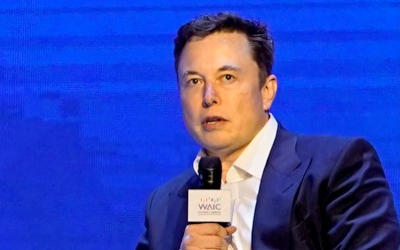
“The biggest problem the world will face is population collapse!” – Elon Musk
Pay close attention to these six countries: Nigeria, Congo, Tanzania, Ethiopia, Angola, and Pakistan. The future of our planet is happening inside these countries.
In his August 12th appearance at the World Artificial Intelligence Conference in Shanghai, Elon Musk emphatically stated, “I think the biggest problem the world will face in 20 years is population collapse. Collapse, I want to emphasize this. The biggest issue in 20 years will be population collapse—not explosion, collapse.”
Well, population collapse is not happening inside these six countries. In fact, just the opposite.
While global fertility rates are plummeting, half of the world’s future population is being born in these countries.
Africa is projected to overtake Asia in births by 2060, if not sooner.
If current birth rate trends continue, over 90 countries will experience declining populations before the end of this century, and the median age of people on planet earth will change from 31 today to over 42 by 2100.
According to Pew Research, these six countries are projected to account for more than half of the world’s population growth through the end of this century, and five are in Africa – Nigeria, Congo, Tanzania, Ethiopia, Angola, and one non-African country, Pakistan.
At the same time, very little money is being invested in educating this future half of the planet.
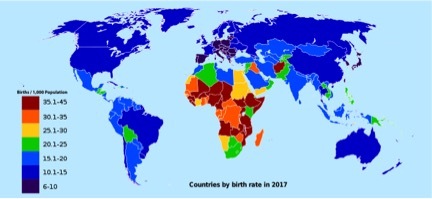
All of the countries in blue have super low birth rates!
Shifting Global Demographics
Demographics is a tricky subject, especially when it comes to projecting out over the next 80-100 years. But children born today will likely live more than 100 years, and birthrates are driven more by culture than they are by other trends.
It is the children and grandchildren of today’s young people that will determine the fate of our world, and those kids are being born primarily in Africa and parts of Asia.
India is projected to surpass China as the world’s most populous country in 2027.
According to the UN’s latest study, by 2100 the counties with the most people in the world will be:
India – 1,450,000
China – 1,065,000
Nigeria – 733,000
U.S. – 434,000
Pakistan – 403,000
Congo – 362,000
Indonesia – 321,000
Ethiopia – 294,000
Tanzania – 286,000
Egypt – 225,000
In the UN report, by 2100, the world’s population is projected to reach approximately 10.9 billion, with annual growth of less than 0.1% – a steep decline from the current rate. But many now doubt whether the global population will exceed 9 billion. More on this below.
The global fertility rate is expected to drop to 1.9 births per woman by 2100, down from 2.5 today, and well below the replacement rate of 2.1.

Kisokwe Primary School in Tanzania is home to 800 primary students.
The Poorest of Poor Education
According to the UN, roughly 69 million new teachers must be recruited and trained in order to achieve universal primary and secondary education standards established by UNESCO (UN Educational, Scientific and Cultural Organization).
More specifically, they’ll need to recruit 24.4 million primary school teachers, and 44.4 million secondary school teachers, to achieve the standards they’ve established.
Sub-Saharan Africa and South Asia are the regions most affected by this worldwide teacher shortage. In these countries, less than three-quarters of teachers are trained to national standards.
In Africa, where they have the fastest growing school-age population, 20% of all children do not attend any school whatsoever, according to UNESCO research.
South Asia faces the second largest teacher shortage, where an additional 15 million primary grade teachers and 11 million secondary level teachers will be needed by 2030.
Adult literacy rates in these six counties are as follows:
Congo – 77%
Ethiopia – 39%
Pakistan – 57%
There are many reasons for poor education. Here are a few more:
Lack of Funding – Only 20% of financial aid for education goes to low-income countries, according to the Global Partnership for Education.
Lack of Classrooms
Children in many countries in sub-Saharan Africa are often squeezed into overcrowded classrooms, classrooms that are falling apart, or no classrooms at all – learning outside. They also lack textbooks, school supplies, and many other tools they will need to become successful. In Malawi, for example, there are an average of 130 children per classroom in first grade.<
Lack of Textbooks
Outdated and worn-out textbooks are often shared by six or more students in many parts of the world. In Tanzania, for example, only 3.5% of all sixth grade students had their own reading textbook.
Gender
Gender is one of the biggest reasons why children are denied an education. Despite recent advances in female education, a generation of young women has been left behind. Over 130 million girls around the world are not currently enrolled in school. One in 3 girls in the developing world marries before the age of 18, and typically leaves school when they do.
Conflicts
When it comes to warring tribes or regional conflicts, most often local education systems are the first thing to fall apart. Children exposed to violence are far more at risk for becoming under-achievers and for dropping out of school. The impact of conflict cannot be overstated. Nearly 250 million children are living in countries affected by warlords, violence, and regional conflicts.
Distance
For many children, walking three hours in each direction is not uncommon in many parts of the world.
Hunger
The impact of hunger on education is seriously underreported. It’s estimated that roughly 155 million children under the age of five have become intellectually stunted even before entering school.
Disabilities
Despite the fact that education is a universal human right, being denied access to school is common for the world’s 150 million children with disabilities. In some of the world’s poorest countries, up to 95% of children with disabilities are left out of school.
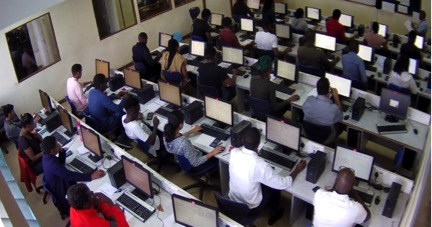
Pockets of excellence! This is the Oshwal college computer lab in Kenya.
Final Thoughts
Poor countries do not need to have “poor education”.
For the first time in modern history, the world’s population is expected to virtually stop growing before the end of this century, due in large part to falling global fertility rates.
The U.S. Census Bureau numbers show the world population growth rate peaked over 40 years ago in 1963 and has been trending downward ever since.
Counter to what the UN is estimating, demographers at the U.S. Census Bureau predict that absolute human population will peak at 9 billion by 2070 and then diminish. This prediction of racing to 9 billion, once forecast to occur 1950, keeps getting throttled back, and may indeed never happen.
Long before 2070, many nations will shrink in absolute size. At the same time, the average age of the world’s citizens will shoot up dramatically. For example Mexico is aging 5 times faster than the United States. By aggressively addressing the dangers of overpopulation, the world may have pushed on the brakes a bit too hard. Instead, the big new problem will be an aging and declining population.
Before giving in to the temptation of thinking fewer is better, think again. Growth is an economic driver. A world with fewer people has fewer people buying new homes, new clothing, and meals in a restaurant. A planet with a shrinking population will suffer from entirely new kinds of problems, such as “ghost town syndrome,” leading to tired and often sickly economies.
With birth rates declining and seniors shifting to less-arduous work, many nations will begin experiencing worrisome talent shortages.
Coupled with the other challenges associated with an aging, shrinking society, the elderly are less inclined to innovate, learn new technical skills, or take the same kind of risks as their younger counterparts. If these tendencies hold, a graying society will be less equipped to meet the challenges ahead in the coming age of empty playgrounds.
Translate This Page
Select LanguageAfrikaansAlbanianAmharicArabicArmenianAzerbaijaniBasqueBelarusianBengaliBosnianBulgarianCatalanCebuanoChichewaChinese (Simplified)Chinese (Traditional)CorsicanCroatianCzechDanishDutchEnglishEsperantoEstonianFilipinoFinnishFrenchFrisianGalicianGeorgianGermanGreekGujaratiHaitian CreoleHausaHawaiianHebrewHindiHmongHungarianIcelandicIgboIndonesianIrishItalianJapaneseJavaneseKannadaKazakhKhmerKoreanKurdish (Kurmanji)KyrgyzLaoLatinLatvianLithuanianLuxembourgishMacedonianMalagasyMalayMalayalamMalteseMaoriMarathiMongolianMyanmar (Burmese)NepaliNorwegianPashtoPersianPolishPortuguesePunjabiRomanianRussianSamoanScottish GaelicSerbianSesothoShonaSindhiSinhalaSlovakSlovenianSomaliSpanishSudaneseSwahiliSwedishTajikTamilTeluguThaiTurkishUkrainianUrduUzbekVietnameseWelshXhosaYiddishYorubaZulu
#goog-gt-tt {display:none !important;}
.goog-te-banner-frame {display:none !important;}
.goog-te-menu-value:hover {text-decoration:none !important;}
.goog-text-highlight {background-color:transparent !important;box-shadow:none !important;}
body {top:0 !important;}
#google_translate_element2 {display:none!important;}
Search for:
Recent Posts
The future of the world is heavily dependent upon countries with the poorest education systems! Here’s why!
63 Smart City Capabilities: Here’s how they’ll change our jobs, businesses and our children
28 Reasons why driverless tech will be the most disruptive technology in all history
Categories
Artificial Intelligence
Business Trends
Future of Agriculture
Future of Banking
Future of Education
Future of Healthcare
Future of Transportation
Future of Work
Future Scenarios
Future Trends
Futurist Thomas Frey Insights
Global Trends
Predictions
Social Trends
Technology Trends
Speaking TopicsFuture of Healthcare – “Is Death our only Option?
Future of AI
Future of Industries
By Futurist Thomas Frey, author of 'Epiphany Z – 8 Radical Visions Transforming Your Future'
The post The future of the world is heavily dependent upon countries with the poorest education systems! Here’s why! appeared first on Futurist Speaker.
October 3, 2019
63 Smart City Capabilities: Here’s how they’ll change our jobs, businesses and our children
Don't Get Blindsided By The Future
Thomas Frey - Google's Top-Rated Futurist Speaker
Book Thomas
 On a recent trip to London, it became clear that the British people are far less sensitive to surveillance cameras than we are in the U.S.
In fact, the number of cameras being installed in London is growing at a much faster rate than ever because homeowners are installing their own cheap security systems. Many people are genuinely scared and will share security camera footage on social media when the police don’t act fast enough. This is quite common.
In London, doorbell cameras and inexpensive DIY systems have become part of the overall surveillance network that is on track to exceed one million cameras by 2025.
Yet video cameras are only a small piece of the equation. Once we add sensor networks, audio recorders, sniffer tech, heat signature monitors, chemical analyzers, photoemission spectroscopy, thermal scanners, magnetometers, chromatography, and a wide variety of other forensic science tools to our street corners, flying drones, driverless cars, lamp posts, and sewer systems the amount of data we’ll be working with to better understand the nature of our cities will be staggering.
If we think of cities as living breathing organisms, where every facet of the city is expanding-contracting, flowing-trickling, inputting-outputting, and inhaling-exhaling, we begin to understand the dynamic nature of this kind of community.
There are lots of attributes that we’ll add to our wish list for the smart city of the future, but first and foremost, they will need to be “aware.” They’ll need to be aware of everything happening inside their borders. Awareness breeds responsibility and sets the stage for what comes next.
It’s all about flow. Smart cities will simultaneously aspire to be easy to live in, easy to work in, easy to travel in, and create easy ways to meet and connect with others.
At the same time, we’ll judge them by their liveliness, enthusiasm, vibrancy, spontaneity, impulsiveness, and their overarching aptitude for serendipity.
Not only will they need to offer great food and abundant forms of entertainment, but we will also want them to feel safe and free from criminal activity.
For business people, it’ll be a good investment. For talented people, it will have a way of amplifying their skills and abilities. And it will be both a great place to be a kid, and to raise a family.
Somehow a truly great smart city will not only make you feel like you’ve arrived, but it will just smell good, feel good, taste good, and have a way of exuding good karma!

Smart cities are all about the tools we have to work with!
Managing a Smart City through its Digital Twin
Cities will soon have their own fleets of drones, with scanning capabilities, to create digital models of their communities. As scanners, sensors, and resolutions improve, cities will begin creating increasingly functional digital twins of their streets, neighborhoods, and activity centers.
Having thousands of drones swarming over most metro areas on a daily basis may seem annoying at first, but the combination of new businesses, jobs, information, data analysis, new career paths, and added revenue streams will quickly turn most naysayers into strong industry advocates.
But for cities, digital twins will go much deeper than what’s viewable from above. This will mean digital twins of every power line, substation, sewage system, water line, emergency services system, Wi-Fi network, highway, security system, traffic control network, and much more. Done correctly, every problem will only be one or two clicks away from viewing on the digital twin master control center.
In short order, digital twins of cities will become treasure troves of data as the daily inflow and outflow of people, traffic, and weather become far better understood. This form of digital modeling will also give rise to search engines for the physical world.
Search Engines for the Physical World
Online search technology has framed much of our thinking around our ability to find things. In general, if it’s not digital and online, it’s not findable.
In the future, drones and sensors will replace much of the work of today’s web crawlers when it comes to defining our searchable universe.
Search technology will become far more sophisticated in the future. Soon we will be able to search on attributes like smells, tastes, harmonic vibration, textures, specific gravity, levels of reflectivity, and barometric pressures.
Over time, search engines will have the capability of finding virtually anything in either the digital or physical world.

We will soon see an explosion of smart city capabilities!
63 Examples of Smart City Capabilities
Most discussions about smart cities are masked in vague descriptions and ambiguous metaphors.
For this reason I’ve decided to put together a list of potential capabilities that smart cities could develop. With each of the items listed below, it’s easy to view them through the “too-intrusive lens” or “if this happens I’m leaving lens,” but every community will have the ability to determine their own feature sets, and how acceptable they’ll be to their constituents.
With the right kinds of sensors and technology, all of these questions can be answered.
Smart air monitoring systems
Full spectrum air monitoring to detect new forms of pollution, disease, toxic chemicals, insects, and other airborne issues.
Are telecom signals reaching dangerous levels?
What are the most dangerous allergens currently floating in the air and when do they pose a serious danger?
How have oxygen and CO2 levels changed?
Where is the source of air-flutters or air disturbances?
What is the source of specific kinds of air pollution?
Smart playgrounds
Monitor possible surface contaminants.
Scan for presence of animal feces, insects, snakes, and rodents.
Signal alerts for emergency situations, injuries, child abandonment, etc.
Are surface temperatures too hot or too cold?
Has there been any signs of vandalism?
Are the restrooms in safe and working order?
Smart transportation networks
Continually check for animals, birds, or other irregular objects that will interfere with the flow of traffic.
Automatically reroute traffic around problem areas.
Where are the wait times the longest?
Monitoring bird flow
Is the overall bird population going up or going down?
Are they flying higher or lower?
How have migratory patterns changed?
How has the mix of bird species change?
What abnormalities are showing up and why?
What is the overarching reason for these changes?
Smart delivery networks
The primary objective for smart delivery networks will be to automatically find the fastest delivery route.
Are there any dogs, trees, steps, or potholes that will interfere with a delivery?
Have there been any people or kids “messing” with deliveries in the area?
How have delivery times changed over the past week, month, year?
How long do packages typically remain outside before they’re taken inside?
What abnormalities are showing up that require further investigation?
Smart policing, fire protection, and emergency rescue
Whenever an emergency call comes in, first responders will activate their fleet of drones to “get eyes on it.”
When someone hits the emergency button in an autonomous vehicle, EMTs will quickly respond.
Monitoring systems that gauge unusual ground tremors can be used to better anticipate earthquakes and volcanic activity.
Smart street lights
Smart streetlights will use a variety of sensors to monitor light, heat, wind, sound, moisture, pollution, magnetic pulses, harmonic vibrations, barometric pressures, and much more.
They will automatically change color spectrum to help people in rain, fog, full moon, etc.
Auto dimming will be used to let neighborhoods “go to sleep”.
What buildings and structures show the greatest heat loss in cold weather?
Mosquito tracking
Is the overall mosquito population going up or down?
How effective have recent efforts to control mosquitoes?
What new species are showing up and why?
What is the primary breeding source and how has that changed from year to year?
What diseases are they carrying and how has that changed?
What are the most dangerous areas of the city today?
Noise monitoring
Our world is filled with very distinct sounds and things like gunshots, screams, collapsing structures, and rushing water should all prompt further investigation.
Pinpointing the source of noise violations.
How has the mix of electric vs. gas-powered vehicles changed over the years?
Does the howling of wolves, coyotes, or other predatory animals mean that more have moved into the area? Should neighborhoods be notified?
Sewer analysis
Analyze urine and stool samples for abnormalities in color, consistency, volume and frequency.
How have people‘s diets changed?
What new pharmaceuticals are showing up in the sewer system?
Are there any traces of parasites, infectious diseases, blood, sugar, or illegal narcotics?
Are there any biomarkers present like urobilin, azithromycin, or sterols showing possible sewage contamination?
How has the volume of waste changed both seasonally & annually?
Sniffer tech
Sniffer tech will be used to detect the presence of a fire much like a community smoke detector.
Triangulate the source of toxic and pungent emissions.
How has the air quality changed and can it be tied to the weather?
Much like a bloodhound, precision sniffer tech can follow the trail of both a suspect and a victim.
It will also be used to track pollen levels, radon, ozone, and other forms of airborne pollution.
Landfill trackers
How has the volume of waste entering the landfill changed over time?
How has the mix between biodegradable vs. non-biodegradable trash changed?
What toxic materials are ending up in the landfills and what are their sources?
Testing for urine or bladder infections.
Detect early signs of chronic conditions like cancer, diabetes, or even highly contagious diseases like Ebola.

Our ongoing struggle to balance privacy with security and convenience continues!
Final Thoughts
Our idea of what a smart city is today will undoubtedly morph and shift over the coming decades.
To be sure, data privacy will be an ongoing issue. Smart cities are essentially radiating information and it is up to us to determine the best way to protect residents when the probing and analysis becomes too intrusive.
Data privacy and security issues are more sensitive in some settings than others, and privacy is only part of the equation. If we think of this issue as a three-legged stool, we quickly realize that we have to balance privacy with security and convenience.
Some initiatives such as coordinated traffic lights are high on convenience and low on privacy issues, making them no-brainers. Others, such as tracking people through private businesses will provoke a backlash because they undermine the need for business secrecy in private spaces.
If poisonous fruit has made its way into some of the local grocery stores, people will want to know instantly. This is the same if local mosquitoes are found carrying a dangerous virus.
Competing WITH privacy is far different than competing AGAINST privacy. When we add intelligence to our homes, communities, and our cities, we face a whole new set of decisions to determine the best path forward.
As humans, we are obsessed with trying new things, pushing the boundaries, and testing our limits just to make a difference.
In the end, every capability our smart cities have will come down to our own human-centered value systems and how it will prepare us for a better future ahead.
Translate This Page
Select LanguageAfrikaansAlbanianAmharicArabicArmenianAzerbaijaniBasqueBelarusianBengaliBosnianBulgarianCatalanCebuanoChichewaChinese (Simplified)Chinese (Traditional)CorsicanCroatianCzechDanishDutchEnglishEsperantoEstonianFilipinoFinnishFrenchFrisianGalicianGeorgianGermanGreekGujaratiHaitian CreoleHausaHawaiianHebrewHindiHmongHungarianIcelandicIgboIndonesianIrishItalianJapaneseJavaneseKannadaKazakhKhmerKoreanKurdish (Kurmanji)KyrgyzLaoLatinLatvianLithuanianLuxembourgishMacedonianMalagasyMalayMalayalamMalteseMaoriMarathiMongolianMyanmar (Burmese)NepaliNorwegianPashtoPersianPolishPortuguesePunjabiRomanianRussianSamoanScottish GaelicSerbianSesothoShonaSindhiSinhalaSlovakSlovenianSomaliSpanishSudaneseSwahiliSwedishTajikTamilTeluguThaiTurkishUkrainianUrduUzbekVietnameseWelshXhosaYiddishYorubaZulu
#goog-gt-tt {display:none !important;}
.goog-te-banner-frame {display:none !important;}
.goog-te-menu-value:hover {text-decoration:none !important;}
.goog-text-highlight {background-color:transparent !important;box-shadow:none !important;}
body {top:0 !important;}
#google_translate_element2 {display:none!important;}
Search for:
Recent Posts
63 Smart City Capabilities: Here’s how they’ll change our jobs, businesses and our children
28 Reasons why driverless tech will be the most disruptive technology in all history
Building the Brains of the Robot
Categories
Artificial Intelligence
Business Trends
Future of Agriculture
Future of Banking
Future of Education
Future of Healthcare
Future of Transportation
Future of Work
Future Scenarios
Future Trends
Futurist Thomas Frey Insights
Global Trends
Predictions
Social Trends
Technology Trends
Speaking TopicsFuture of Healthcare – “Is Death our only Option?
Future of AI
Future of Industries
By Futurist Thomas Frey, author of 'Epiphany Z – 8 Radical Visions Transforming Your Future'
The post 63 Smart City Capabilities: Here’s how they’ll change our jobs, businesses and our children appeared first on Futurist Speaker.
September 19, 2019
28 Reasons why driverless tech will be the most disruptive technology in all history
Don't Get Blindsided By The Future
Thomas Frey - Google's Top-Rated Futurist Speaker
Book Thomas
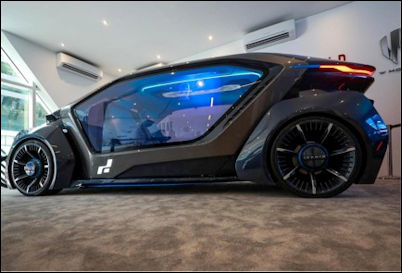 The impact of driverless vehicles will be profound, touching almost every aspect of our lives, and the level of disruption will be staggering.
It will not only change the way we get from point A to point B, but also how we think about shopping, entertainment, dining out, as well as the design of our buildings, houses, hospitals, churches, and shopping centers.
It will shift how we manage our businesses, how we schedule our time, how we interact with our friends, and what we should invest in.
Virtually every facet of society, in every country around the world, will be touched by driverless technologies, and the vast majority of it is destined to improve our global standard of living.
Yes, there will be job losses, but they will be offset by job creation. Businesses that disappear will be replaced by innovative new businesses.
As transportation becomes faster, cheaper, and easier, we will simply do more of it. We will become a very fluid society, and all this movement will seem natural and effortless.
However, the path to progress is strewn with countless land mines and pitfalls. Many things will go wrong as every new tech journey is never smooth.
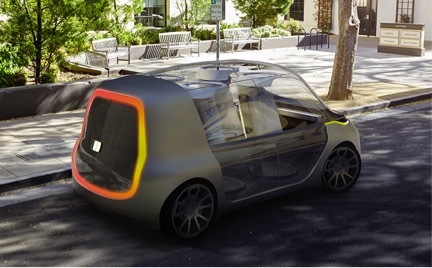
Vehicle design will rapidly iterate from one design to the next.
28 Reasons
Here are a few of my latest thoughts on the impact of driverless tech.
1. People will still own their own cars in the future, but it will be a rapidly declining number.
Transportation-as-a-service companies will first spring up in large metro areas and expand into small towns and rural communities. But few of the early fleet owners will be interested in small-town-small-profit communities, even though they might serve as a far more manageable proving ground. With both human drivers and autonomous vehicles sharing the same highways, a number of complications will crop up to impede progress.
2. Car manufacturers will most likely be the early fleet owners.
While software and tech companies are taking over many industries (i.e. some of the biggest banks in the future will be tech companies), car manufacturing still requires unique skills and companies such as Tesla, Toyota, and Ford will be in a deciding position as to how their cars will be used. They will also have the greatest potential for responding to rapidly shifting market demands. Self-driving cars will be heavily used, 24-7 if possible, and fleet owners will learn the nuances of customer preferences first hand, translating quickly evolving expectations into next generation design details in a matter of months. For this reason, it will be in the manufacturer’s best interest to eliminate every possible barrier between design teams and end users as they rapidly iterate from one design to the next, and grapple with emerging business models in the process.
3. One autonomous car will replace roughly 30 traditional cars.
There are roughly 273 million registered vehicles in the U.S. and replacing them all will be a long drawn out process. But here’s the math most people don’t understand. For a city of 2 million people, a fleet of 30,000 autonomous vehicles will displace 50% of peak commuter traffic. During off-peak times, 30,000 autonomous vehicles will handle virtually all other transportation needs. Peak traffic times will naturally be the hardest to manage.
4. Vehicle design will rapidly iterate from one design to the next.
Car companies have spent so much time in the race to get the technology safe and functional that they haven’t taken time to understand the evolving expectations of driverless customers. As an example, people will still pay more to ride in luxury vehicles, but our definition of luxury will change. Ease of entrance and exit will become important issues. So will lighting, visibility, noise levels, entertainment option, seating arrangements, and cleanliness. The operating systems for driverless tech will also evolve quickly as use cases grow and adaptive self-learning AI-based neural networks respond to every new situation. Eventually all technology to support human drivers will disappear, including steering wheels, dashboards, gas pedals, and brake pedals. Instead, vehicles will be designed around comfort, conversations, entertainment, project spaces, desktops, power outlets, and snacking/eating.
5. Child seats will be the most challenging feature to design in self-driving cars.
For parents, the safety of their children takes priority over virtually every aspect of their life. The elaborate process of strapping kids into their seat and buckling each of them into a five-point harness has become a routine way of life for moms and dads everywhere. Let’s face it. Kids are messy, dirty, get sick, throw up, toss things, and find ways to turn a perfectly clean vehicle into a waste management problem in a matter of seconds. At the same time, fleet owners will not want to ignore kids because they represent a significant percentage of the marketplace.
6. Other major design issues will include dealing with pets, service animals, handicap people, elderly, and politicians.
What if a daycare center needs a vehicle with six car seats? What if a dog trainer has to pick up four dogs? What if an assisted care center has three people in wheelchairs that want to travel together? What if politicians pass a law requiring fleet owners to accommodate all of these situations?
7. Next generation storage cells will mean that batteries will never have to be changed on autonomous vehicles.
If Tesla’s latest claims holds true, they will soon have a battery that lasts a million miles. This means the rest of the car will wear out before the batteries.
8. Car death and accident rates will plummet.
In 2018, roughly 40,000 people lost their lives in car crashes, and about 4.5 million people were seriously injured in crashes. Over the next three decades we will see a constantly shifting ratio of human drivers vs. autonomous vehicles. As human drivers decline, death and injury rates will fall. Our safest form of transportation is the airline industry. If we can get car safety even close to that of airlines, we will save tons of lives and lifelong injuries in the process.
9. We currently spend over $500 billion per year repairing people after car accidents.
This amounts to one out of every six dollars in the healthcare industry. Cars are taking a huge toll on our society.
10. How will autonomous cars affect retail?
In a big way! Over time there will be no more customer-facing mechanics, tire shops, brake shops, car washes, auto parts stores, or gas stations. Over 10% of retail is car related and likely to disappear.
11. Autonomous vehicles will be used to create driverless mobile businesses.
As we removed the driver from the equation driverless tech opens the door to completely different ways of doing business, ones that separate themselves from a permanent location. The number one challenge of traditional retail has always been driving customers to the store. As we move into a highly mobile marketplace, this type of business will soon be able to drive to where the customers already are.
12. Over 80% of driverless cars will be one-passenger vehicles.
Since 85% of cars on the road only have one person in them, and since one-person vehicles will be cheaper, it’s very likely that upwards of 80% of autonomous fleets will be designed around single passenger occupancy. Naturally larger vehicle can be summoned whenever necessary. It may be counter intuitive, but people will actually prefer to one-person cars.
13. Cities will lose over 50% of their current revenue streams.
When we combine the loss of sales tax, retail stores, income from traffic violations, gas tax, vehicle licensing, parking meters, and parking garages, the total loss of revenue to a city becomes a very large number. Keep in mind, cities will undoubtedly develop new forms of revenue but that will require considerable foresight and planning.
14. Driverless tech will likely trigger a city pension crisis.
Numerous cities have made overly generous long-term commitments to fund staff pensions, a commitment that will be especially hard to manage when revenues begin to drop. With increased longevity, most pension funds were never adequately funded in the first place. Since driverless tech will undermine many of our city’s existing revenue streams, the challenges they’re facing today will transition into a full-blown pension crisis for many of them in the future. There will be no easy solutions for bailing out these super expensive pension plans.
15. We will reach the peak demand for oil before 2040.
Once we reach peak demand for oil, stemming from a surge in wind, solar, and nuclear, prices will start to plummet. Driverless tech will hasten the shift to electric cars. There are many geopolitical implications that will accompany this change. Petroleum will continue to be valuable for making plastics and other materials, but will not be burned for energy at any scale. Many companies, countries, and investors have already started making plans for what comes next.
16. Location will no longer matter.
In the past, being in business was all about “location, location, location.” However, as the driverless world evolves, passengers will become much more involved in working, watching movies, and playing games throughout the commute. As a driver, we become very invested in the landmarks along the way, and understanding the context of our location. But once drivers become passengers, they will be paying far less attention to local landmarks. As a result, it will be far easier to just ask your car to take you to whatever store or business you want to go to, regardless of proximity to your current location. Perhaps a better way of thinking about this is that location will still matter, but it will matter differently.
12. Over 5 million acres of parking lots will soon become available for redevelopment.
Currently 14% of Los Angeles is dedicated to parking. We have an amazing amount of land dedicated to parking – over 5 million acres to be precise. Demand for parking will begin to dwindle over the coming decades and this property will be sold as prime real estate for redevelopment.
18. Owning a car will soon become a very expensive hobby.
Autonomous vehicles will cause car ownership to evolve from a necessity to a luxury, to an expensive hobby. As dealerships and gas stations begin to dwindle, the overall cost of owning and maintaining a car will begin to ratchet upwards. Once autonomous vehicles reach 20-50% of commuter traffic, the cost of traditional car ownership will skyrocket.

Entertainment options inside cars will grow exponentially.
19. Roughly 25% of today’s jobs will disappear as a result of autonomous vehicles.
Over the next 2-3 decades, driverless technologies will be either directly or indirectly responsible for the loss of 25% of all of today’s jobs. But that’s only part of the story. Virtually every aspect of society, in every country around the world, will be touched by driverless technologies, and the vast majority of it is destined to improve our global standard of living. Job losses will be offset by job creation. Businesses that disappear will be replaced by innovative new businesses built around the ingenious new capabilities autonomous vehicles provide.
20. The automobile insurance industry will dwindle to a fraction of its current size.
Total personal automobile insurance premiums in the U.S. stood at about $173 billion in 2018. According to KPMG, accidents will decline 80% by 2040 due to autonomous transportation. While the cost per accident may rise substantially because new cars and their parts are more expensive, once driverless tech hits its stride, the decline will be dramatic and result in sizable reductions in loss and premiums. More than 90% of accidents each year are caused by driver error.
21. The number of taxi and truck drivers will drop, eventually to zero.
In its place we will see many of the same people working at truck and transport command centers. Someone born today might not understand what a truck driver is or even understand why someone would do that job — much like people born in the last 30 years don’t understand why someone had ever been employed as a switchboard operator.
22. Lobbying efforts surrounding autonomous vehicles will get ugly.
The biggest losers in driverless tech will be insurance, banks, and auto dealerships and they will spend heavily to muck up the political playground for this emerging industry.
23. Driver’s licenses will start to dwindle as will the Department of Motor Vehicles in most states
. People will start using other forms of ID but biometrics and face recognition will pave the way for the inevitable digitization of all personal identification.
24. No more DUIs. Traffic tickets will dwindle and disappear altogether
along with traffic court, lawyers, DAs, and all the revenue streams they perpetuated. This will happen relatively soon since all driverless vehicles will operate at the correct speed and there will be fewer options for slipping between vehicles and racing down an open stretch. Speed junkies, for the most part will go away since few people will even care how fast they’re going.
25. Police departments will shrink dramatically.
With up to 80% of today’s police forces focused on traffic control, cops that survive the transition will soon have a far less visible presence and a substantially different daily routine.
26. Alcohol and cannabis consumption will rise.
Restaurants and bars will sell more because people will consume more, as they no longer need to consider how to get home and will be able to consume inside vehicles. Many self-driving vehicles will come equipped with their own mini-bars.
27. Tech companies will study every little detail inside each car.
Companies like Google and Facebook will accumulate data on everything related to customer movements and locations. Unlike GPS chips that only tell them where someone is at the moment, autonomous vehicle systems will know where people are going in real-time and how they’re preparing for what comes next.
28. Privacy mode for the inside of vehicles will be an upsell feature.
Privacy mode will be designed for those having business discussions, arguments, sex, affairs, doing illegal drugs, and much more. But it will come with heavy fines if the vehicle is somehow damaged or trashed during the blackout period.
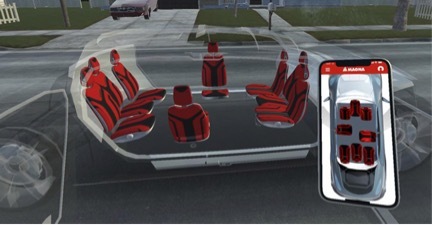
As we enter the “driverless era,” the focus will shift to the passenger experience
Final Thoughts
My goal in writing this has been to spark your imagination about the dramatic changes that will soon take place.
Car designers today spend the vast majority of their time trying to optimize the driver experience. After all, the driver is the most important part of the ownership equation.
As we enter the “driverless era,” the focus will shift to the passenger experience.
Fancy dashboards displaying dazzling amounts of information for the driver will become a thing of the past as riders fuss over on-board movies, music, and massage controls.
Some fleet owners will offer car experiences that are more conversational in nature, pairing socially compatible riders in a way to maximize conversations and improve the social environment. Others will stress the benefits of alone-time, offering a peaceful zen-like experience for those wishing to escape the hustle and bustle of work-life.
However, as we navigate our way towards a safer, more efficient society, we still have a few bumpy roads to go down before we see the light at the end of the tunnel.
Translate This Page
Select LanguageAfrikaansAlbanianAmharicArabicArmenianAzerbaijaniBasqueBelarusianBengaliBosnianBulgarianCatalanCebuanoChichewaChinese (Simplified)Chinese (Traditional)CorsicanCroatianCzechDanishDutchEnglishEsperantoEstonianFilipinoFinnishFrenchFrisianGalicianGeorgianGermanGreekGujaratiHaitian CreoleHausaHawaiianHebrewHindiHmongHungarianIcelandicIgboIndonesianIrishItalianJapaneseJavaneseKannadaKazakhKhmerKoreanKurdish (Kurmanji)KyrgyzLaoLatinLatvianLithuanianLuxembourgishMacedonianMalagasyMalayMalayalamMalteseMaoriMarathiMongolianMyanmar (Burmese)NepaliNorwegianPashtoPersianPolishPortuguesePunjabiRomanianRussianSamoanScottish GaelicSerbianSesothoShonaSindhiSinhalaSlovakSlovenianSomaliSpanishSudaneseSwahiliSwedishTajikTamilTeluguThaiTurkishUkrainianUrduUzbekVietnameseWelshXhosaYiddishYorubaZulu
#goog-gt-tt {display:none !important;}
.goog-te-banner-frame {display:none !important;}
.goog-te-menu-value:hover {text-decoration:none !important;}
.goog-text-highlight {background-color:transparent !important;box-shadow:none !important;}
body {top:0 !important;}
#google_translate_element2 {display:none!important;}
Search for:
.et_bloom .et_bloom_optin_2 .et_bloom_form_content { background-color: #ffffff !important; } .et_bloom .et_bloom_optin_2 .et_bloom_form_container .et_bloom_form_header { background-color: #dd4242 !important; } .et_bloom .et_bloom_optin_2 .et_bloom_form_content button { background-color: #3b3b3b !important; } .et_bloom .et_bloom_optin_2 .et_bloom_form_content .et_bloom_fields i { color: #3b3b3b !important; } .et_bloom .et_bloom_optin_2 .et_bloom_form_content .et_bloom_custom_field_radio i:before { background: #3b3b3b !important; } .et_bloom .et_bloom_optin_2 .et_bloom_form_content button { background-color: #3b3b3b !important; } .et_bloom .et_bloom_optin_2 .et_bloom_form_container h2, .et_bloom .et_bloom_optin_2 .et_bloom_form_container h2 span, .et_bloom .et_bloom_optin_2 .et_bloom_form_container h2 strong { font-family: "Open Sans", Helvetica, Arial, Lucida, sans-serif; }.et_bloom .et_bloom_optin_2 .et_bloom_form_container p, .et_bloom .et_bloom_optin_2 .et_bloom_form_container p span, .et_bloom .et_bloom_optin_2 .et_bloom_form_container p strong, .et_bloom .et_bloom_optin_2 .et_bloom_form_container form input, .et_bloom .et_bloom_optin_2 .et_bloom_form_container form button span { font-family: "Open Sans", Helvetica, Arial, Lucida, sans-serif; }

Subscribe To Our Newsletter
Join our mailing list to receive the latest news and updates from Thomas Frey.
SUBSCRIBE!
You have Successfully Subscribed!
Recent Posts
28 Reasons why driverless tech will be the most disruptive technology in all history
Building the Brains of the Robot
The Air Mattress on the Plane Guy, and the Future of Comfort
Categories
Artificial Intelligence
Business Trends
Future of Agriculture
Future of Banking
Future of Education
Future of Healthcare
Future of Transportation
Future of Work
Future Scenarios
Future Trends
Futurist Thomas Frey Insights
Global Trends
Predictions
Social Trends
Technology Trends
Speaking TopicsFuture of Healthcare – “Is Death our only Option?
Future of AI
Future of Industries
By Futurist Thomas Frey, author of 'Epiphany Z – 8 Radical Visions Transforming Your Future'
The post 28 Reasons why driverless tech will be the most disruptive technology in all history appeared first on Futurist Speaker.
August 29, 2019
Building the Brains of the Robot
Don't Get Blindsided By The Future
Thomas Frey - Google's Top-Rated Futurist Speaker
Book Thomas
 Every time we talk to Alexa, Siri, Google, or Cortana, we are building the brains of the robot.
Whenever we speak to these devices, we are imparting tiny pieces of human intelligence, and over time, with the right kind of AI learning software, it will be possible to build the kind of foundational base of knowledge needed to operate our robots in the future.
Granted, we are still at the “chisel-on-stone writing” stage of this transformation, but our verbal exchanges are fueling the early reservoirs of human intelligence that will be needed to power the brains of our robots over the coming decades.
The robots, I’m referring to, may be drones, driverless cars, or actual robots, but an incoming stream of intelligence is what will be needed to separate the blind, order-following robots of the past from the emotionally-perceptive, multisensory bots that will be a common site in our future.
In many situations, the robot itself will begin to disappear, and over time will morph into forms of automation that we no longer consider to be associated with robotics.
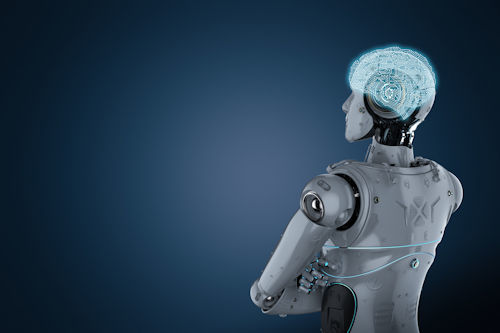
How will we know if future robots are making good decisions?
The Ethical Robot Dilemma
How much authority will future bots have? Will they be given the authority to keep alcohol away from alcoholics, cigarettes away from minors, and turn off devices when kids should be doing their homework?
Will the same bots that serve as your personal trainer and image consultant also be given authority to change your diet, schedule doctor appointments, and arrange social engagements?
Will they be given authority to sign for certified mail, to fill a prescription, hire an exterminator, or care for a baby?
Could we also go down the dark side of robotics and direct them to terminate a dictator, rebel leader, or anyone else who may stand in our way?
Will bots be used as the intermediaries in drug deals, human trafficking, and arms shipments to keep the principals at a safe distance?
Will autonomous bots have their own bank accounts and also be required to pay taxes? Could community bots be organized like a foundation and evolve into the biggest tax haven of all times?
In the future, will you allow a robot to give you a haircut? How will you know the good bots from the bad ones?
Isaac Asimov’s “Three Laws of Robotics”
The thinking behind Asimov’s Three Laws of Robotics first started taking form in his 1942 short story “Runaround,” but he had mentioned some of his thinking in a few earlier stories.
In his “Handbook of Robotics” published in 1958, Asimov’s “Three Laws of Robotics” became official:
A robot may not injure a human being or, through inaction, allow a human being to come to harm.
A robot must obey orders given it by human beings except where such orders would conflict with the First Law.
A robot must protect its own existence as long as such protection does not conflict with the First or Second Law.
While the laws seemed very visionary and formed a cultural meme around the ethics needed for the coming age of automation, they are simply not adequate for the nuanced capabilities and behaviors we are beginning to see in today’s devices.
At the same time, Asimov was driving the first stake in the ground for machine ethics, a field that hadn’t even been invented yet, and should be commended for his farsighted approach to the human-machine relationships that we will be wrestling with for decades to come.

Our relationship with robots is changing. How will we know if they truly care?
Failsafe Mechanisms
If machines are using our conversations to add to the overall intelligence of robots in the future, they will also need to protect our privacy.
If a robot knows everything about me, then it will know our credit cards, bank accounts, and passwords. That level of intrusion into our lives becomes a very dicey issue because too much transparency means we lose our ability to own things, and ownership is a foundational principle upon which our society works.
Does the protection of privacy has become a “new law” required in every future robot operating systems?
At the same time our robots need to understand our preferences. What kind of products do we normally buy? What food do we like, who are our family members, friends, pets, what brands do we prefer, what forms of entertainment do we enjoy? Every piece of information helps streamline our transactions and reduces the amount of time invested in every accomplishment.
If we send our robot to the store to buy groceries, how will we empower it to select the right products?
The Economics of Automation
Our economy is based on people. Humans are the buying entities, the connectors, the decision-makers, and the trade partners that make our economy work.
Without humans there can be no economy.
Generally speaking, when a person buys tools, it increases their capability, and by extension, increases their value as an economic entity.
When a person buys a computer and becomes proficient at using it, this added piece of digitization increases their capabilities, their earning power, and their sphere of influence as a consumer. In general, people with computers earn and spend more than people without computers.
Similarly, people who own cars, homes, and businesses tend to earn and spend more than people without them. Ownership and control becomes part of our personal toolbox, a toolbox that gives us additional capabilities and thereby adds to our economic contribution.
Since the capabilities granted by owning a computer connected to the Internet can be far more scalable than owning a car or home, its influence upon economic theory has been largely underestimated.
We will encounter similar underestimations as we combine the scalability of Internet-connected automation to the capabilities of a person in the years ahead.

How long before your best friend is a robot?
Final Thoughts
Competing WITH robots is far different than competing AGAINST robots. When we add machine skills to the resume of an individual we end up with a far different equation.
So the coming decades will be far less about humans competing against machines and far more about how we can leverage them to our advantage.
For this reason, it’s imperative that the tech companies formulating these future “brains” get it right. We will need to trust our machines, and trust the decisions they make.
We are still a long way from creating Hollywood style robots with an emotional mind capable of making value judgments that we feel comfortable with. But we are very close to leveraging machine capabilities in far more interesting ways.
Machine-based automation will revolutionize our world every bit as much as our computers already have.
What cannot be lost in this discussion is the need for a rapid transitioning skill base where we quickly identify the gaps and train people to fill them.
Machines can become our greatest asset or our greatest liability. It’s up to us to decide which will dominate.
Translate This Page
Select LanguageAfrikaansAlbanianAmharicArabicArmenianAzerbaijaniBasqueBelarusianBengaliBosnianBulgarianCatalanCebuanoChichewaChinese (Simplified)Chinese (Traditional)CorsicanCroatianCzechDanishDutchEnglishEsperantoEstonianFilipinoFinnishFrenchFrisianGalicianGeorgianGermanGreekGujaratiHaitian CreoleHausaHawaiianHebrewHindiHmongHungarianIcelandicIgboIndonesianIrishItalianJapaneseJavaneseKannadaKazakhKhmerKoreanKurdish (Kurmanji)KyrgyzLaoLatinLatvianLithuanianLuxembourgishMacedonianMalagasyMalayMalayalamMalteseMaoriMarathiMongolianMyanmar (Burmese)NepaliNorwegianPashtoPersianPolishPortuguesePunjabiRomanianRussianSamoanScottish GaelicSerbianSesothoShonaSindhiSinhalaSlovakSlovenianSomaliSpanishSudaneseSwahiliSwedishTajikTamilTeluguThaiTurkishUkrainianUrduUzbekVietnameseWelshXhosaYiddishYorubaZulu
#goog-gt-tt {display:none !important;}
.goog-te-banner-frame {display:none !important;}
.goog-te-menu-value:hover {text-decoration:none !important;}
.goog-text-highlight {background-color:transparent !important;box-shadow:none !important;}
body {top:0 !important;}
#google_translate_element2 {display:none!important;}
Search for:
.et_bloom .et_bloom_optin_2 .et_bloom_form_content { background-color: #ffffff !important; } .et_bloom .et_bloom_optin_2 .et_bloom_form_container .et_bloom_form_header { background-color: #dd4242 !important; } .et_bloom .et_bloom_optin_2 .et_bloom_form_content button { background-color: #3b3b3b !important; } .et_bloom .et_bloom_optin_2 .et_bloom_form_content .et_bloom_fields i { color: #3b3b3b !important; } .et_bloom .et_bloom_optin_2 .et_bloom_form_content .et_bloom_custom_field_radio i:before { background: #3b3b3b !important; } .et_bloom .et_bloom_optin_2 .et_bloom_form_content button { background-color: #3b3b3b !important; } .et_bloom .et_bloom_optin_2 .et_bloom_form_container h2, .et_bloom .et_bloom_optin_2 .et_bloom_form_container h2 span, .et_bloom .et_bloom_optin_2 .et_bloom_form_container h2 strong { font-family: "Open Sans", Helvetica, Arial, Lucida, sans-serif; }.et_bloom .et_bloom_optin_2 .et_bloom_form_container p, .et_bloom .et_bloom_optin_2 .et_bloom_form_container p span, .et_bloom .et_bloom_optin_2 .et_bloom_form_container p strong, .et_bloom .et_bloom_optin_2 .et_bloom_form_container form input, .et_bloom .et_bloom_optin_2 .et_bloom_form_container form button span { font-family: "Open Sans", Helvetica, Arial, Lucida, sans-serif; }
Subscribe To Our Newsletter
Join our mailing list to receive the latest news and updates from Thomas Frey.
SUBSCRIBE!
You have Successfully Subscribed!
Recent Posts
Building the Brains of the Robot
The Air Mattress on the Plane Guy, and the Future of Comfort
Visiting the Future with Thomas Frey of the DaVinci Institute
Categories
Artificial Intelligence
Business Trends
Future of Agriculture
Future of Banking
Future of Education
Future of Healthcare
Future of Transportation
Future of Work
Future Scenarios
Future Trends
Futurist Thomas Frey Insights
Global Trends
Predictions
Social Trends
Technology Trends
Speaking TopicsFuture of Healthcare – “Is Death our only Option?
Future of AI
Future of Industries
By Futurist Thomas Frey, author of 'Epiphany Z – 8 Radical Visions Transforming Your Future'
The post Building the Brains of the Robot appeared first on Futurist Speaker.
August 8, 2019
The Air Mattress on the Plane Guy, and the Future of Comfort
Don't Get Blindsided By The Future
Thomas Frey - Google's Top-Rated Futurist Speaker
Book Thomas
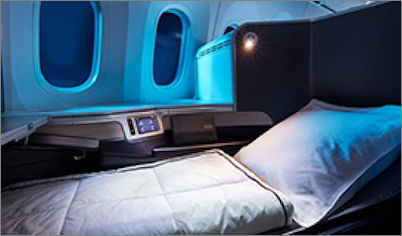 I recently returned from a speaking engagement in South Korea, and on my trans-pacific flights between San Francisco and Seoul I tried something new – an air mattress.
I had my doubts at first, but it turned out to be a total game changer!
Since I’m larger than most people, comfort has been an elusive commodity on the 10-14 hour flights I often find myself on. Even though I’m flying business class with seats that lay flat, after a few hours virtually every seat causes unusual pain points to develop.
The air mattress I took along was a Polarmile Ultralight Sleeping Pad that fits into a double-fist sized carrying case, but inflated to fit well on the United 787 that I was a passenger on.
Admittedly, I was rather self-conscious about blowing up an air mattress onboard, thinking the whole world was watching “as I prepared my campsite” on a crowded plane.
But that wasn’t the case. No one noticed, and more importantly, no one cared.
The online description for the Polarmile says it only requires 10-15 breaths to inflate, but I found it to be more in the 75-80-breath range. No, I wasn’t trying to maximize my lung capacity with each breath, but I do think they understated it a bit.
I also didn’t want it to be at full capacity. I wasn’t looking for a firm, rigid air mattress, but something that would mold to the seat as I adjusted it in various states of recline. So, close to full, but not full.
Since United already provided a blanket-like mattress pad for the seat, I placed that over the top of the air mattress to add another layer between the plastic and my skin.
Over the years I’ve tried many things to make the trips easier, and to be honest, very few of them worked. So my expectations were rather low.
I’ve found that when I start with low expectations, virtually any progress seems like a huge victory. But this air mattress experiment, not only was it a radical improvement, it continued to impress me flying both ways over the duration of the entire trip.
So why is this important?
It’s quite simple. Comfort has shifted from a “good enough” item on a checklist to a topic of elite cocktail party discussions and become an essential decider of brand value.
The Future of Comfort
The reason an air mattress adds comfort is because it diffuses natural pressure points over a broader section of the body. Distributed pressure means less chance of developing those annoying points of pain.
As we think through the idea of comfort, the three places where the human body comes into contact with the physical world most are the beds we sleep in, the shoes that we walk in, and the chairs we sit in.
Each of these primary contact areas has long been the center of our attention as we are always looking for a better solution.
Moving forward, we will expand our use of digital products, adding additional sensors to our body, greatly improving our ability to spot problem areas before they develop.
Not only will we have the ability to zero in on the precise location of the problem, but also the tools to uncover the root cause and solutions to remedy them.
Yet, comfort involves far more than physical contact. If our space is too humid, too dry, too noisy, too bright, too dark, filled with vibrations, offensive odors, or changing air pressure, our overall comfort changes significantly.
This becomes an increasingly important topic when we study the evolving landscape of comfort.
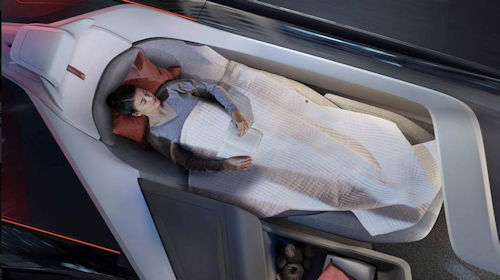
Very soon car companies will be competing with airlines for short and medium haul passengers.
Competing for Comfort
Very soon, traveling in an autonomous car will become a viable option. In many cases it will be preferable to flying in a plane to short-range destinations.
Rather than wading through the hassle of scheduling a flight, driving to the airport, dealing with baggage and security, waiting to board, crowding into tiny airline seats, enduring the flight itself, and finding transportation once you arrive, it’ll only take a few minutes to have a driverless car out front and you can ride comfortably for the next 6-10 hours, working on projects, watching movies, playing video games, or just sleeping as you make your way to your destination.
Suddenly airlines will be facing a new form of competition they never saw coming.
As an industry, they will have to eliminate many “layers of discomfort” before they can effectively compete with the cross-country autonomous cars of the future. And seating is only part of the equation.
If we expand our horizons, space tourism and traveling to other planets may not be far off, and the idea of comfort takes on a whole new dimension. Stresses on the human body and duration of travel will extend far beyond anything most of us have confronted so far.
Autonomous Vehicles will take the Lead
Once you are able to summon a vehicle to take you across town, the key differentiators will be comfort, cleanliness, and functionality. The relationship we have with our vehicles becomes a complicated equation, far different for every user:
Can I wear a suit or fancy dress without worrying about some kid having smeared chocolate on the seats?
Is it possible to dim the windows so I can sleep?
Are there spaces for a computer, purse, briefcase, or small tote?
If I bought a few things at my last stop, will they fit into the trunk? Can I hang onto this car so I don’t have to bring all my bags with me?
Is there a fold out desk where I can do some serious work?
When I’m on a Skype or Zoom call, how stable will my connection be, and how much road noise will I hear?
If I have my kid(s) with me, are there child seats built in? Are there tray tables so they can play with toys, eat food, or just sleep.
Will the car connect to the music on my smartphone? Can I watch videos or play games?
Were there dogs, cats, or some other animals that I may be allergic to in this car before me?
How comfortable will this car be on a 10-12 hour trip?
Are there extra charges for dropping off the car in a different city?
Was the last passenger smoking, vaping, sweaty, or suffering from some contagious disease?
Can I meet with more than one person inside the vehicle as we’re driving around?
Will it be possible to stand up, do exercises, or engage in some kind of workout while I’m traveling?

Over the coming months our thinking about autonomous cars will dramatically change.
Final Thoughts
Every person views transportation through a different lens. Blowing up an air mattress may have solved one problem, but it only scratches the surface of complex comfort issues that will arise as we move into a future with far more shared use options.
Future contact surfaces will have expansion cells that interact with sensors on our body. We will develop complex interfaces that share vast amounts of information with virtually every surface we come into contact with.
So far we’ve done a poor job of molding the world to mesh with us, the human users. Over the coming years, this will become the primary focus of design thinking.
The examples listed above were intended to spark your imagination, and only represent a drop in the bucket of what’s truly possible. Please let us know other ideas come to mind as you read this. I think we all want to know.
Translate This Page
Select LanguageAfrikaansAlbanianAmharicArabicArmenianAzerbaijaniBasqueBelarusianBengaliBosnianBulgarianCatalanCebuanoChichewaChinese (Simplified)Chinese (Traditional)CorsicanCroatianCzechDanishDutchEnglishEsperantoEstonianFilipinoFinnishFrenchFrisianGalicianGeorgianGermanGreekGujaratiHaitian CreoleHausaHawaiianHebrewHindiHmongHungarianIcelandicIgboIndonesianIrishItalianJapaneseJavaneseKannadaKazakhKhmerKoreanKurdish (Kurmanji)KyrgyzLaoLatinLatvianLithuanianLuxembourgishMacedonianMalagasyMalayMalayalamMalteseMaoriMarathiMongolianMyanmar (Burmese)NepaliNorwegianPashtoPersianPolishPortuguesePunjabiRomanianRussianSamoanScottish GaelicSerbianSesothoShonaSindhiSinhalaSlovakSlovenianSomaliSpanishSudaneseSwahiliSwedishTajikTamilTeluguThaiTurkishUkrainianUrduUzbekVietnameseWelshXhosaYiddishYorubaZulu
#goog-gt-tt {display:none !important;}
.goog-te-banner-frame {display:none !important;}
.goog-te-menu-value:hover {text-decoration:none !important;}
.goog-text-highlight {background-color:transparent !important;box-shadow:none !important;}
body {top:0 !important;}
#google_translate_element2 {display:none!important;}
Search for:
.et_bloom .et_bloom_optin_2 .et_bloom_form_content { background-color: #ffffff !important; } .et_bloom .et_bloom_optin_2 .et_bloom_form_container .et_bloom_form_header { background-color: #dd4242 !important; } .et_bloom .et_bloom_optin_2 .et_bloom_form_content button { background-color: #3b3b3b !important; } .et_bloom .et_bloom_optin_2 .et_bloom_form_content .et_bloom_fields i { color: #3b3b3b !important; } .et_bloom .et_bloom_optin_2 .et_bloom_form_content .et_bloom_custom_field_radio i:before { background: #3b3b3b !important; } .et_bloom .et_bloom_optin_2 .et_bloom_form_content button { background-color: #3b3b3b !important; } .et_bloom .et_bloom_optin_2 .et_bloom_form_container h2, .et_bloom .et_bloom_optin_2 .et_bloom_form_container h2 span, .et_bloom .et_bloom_optin_2 .et_bloom_form_container h2 strong { font-family: "Open Sans", Helvetica, Arial, Lucida, sans-serif; }.et_bloom .et_bloom_optin_2 .et_bloom_form_container p, .et_bloom .et_bloom_optin_2 .et_bloom_form_container p span, .et_bloom .et_bloom_optin_2 .et_bloom_form_container p strong, .et_bloom .et_bloom_optin_2 .et_bloom_form_container form input, .et_bloom .et_bloom_optin_2 .et_bloom_form_container form button span { font-family: "Open Sans", Helvetica, Arial, Lucida, sans-serif; }
Subscribe To Our Newsletter
Join our mailing list to receive the latest news and updates from Thomas Frey.
SUBSCRIBE!
You have Successfully Subscribed!
Recent Posts
The Air Mattress on the Plane Guy, and the Future of Comfort
Visiting the Future with Thomas Frey of the DaVinci Institute
Circadian Time: Unlocking Our Inner Superman
Categories
Artificial Intelligence
Business Trends
Future of Agriculture
Future of Banking
Future of Education
Future of Healthcare
Future of Transportation
Future of Work
Future Scenarios
Future Trends
Futurist Thomas Frey Insights
Global Trends
Predictions
Social Trends
Technology Trends
Speaking TopicsFuture of Healthcare – “Is Death our only Option?
Future of AI
Future of Industries
By Futurist Thomas Frey, author of 'Epiphany Z – 8 Radical Visions Transforming Your Future'
The post The Air Mattress on the Plane Guy, and the Future of Comfort appeared first on Futurist Speaker.
July 10, 2019
Visiting the Future with Thomas Frey of the DaVinci Institute
Don't Get Blindsided By The Future
Thomas Frey - Google's Top-Rated Futurist Speaker
Book Thomas
 Meet Thomas Frey: futurist, speaker, and founder of the DaVinci Institute in Westminster, Colorado—and SU community member. He has spoken around the world to such audiences as NASA executives and other high-level government officials and such Fortune 500 companies as IBM, AT&T, Lucent Technologies, First Data, Boeing, Capital One, Bell Canada, Visa, Ford Motor Company, and Qwest. Formerly an engineer at IBM for 15 years, Frey now works to develop original research at the DaVinci Institute in areas not normally addressed by futurists.
Some of Frey’s predictions include:
The reunification of North and South Korea will happen by 2020
By 2030, the largest company on the Internet will be an education-based company that we haven’t heard of yet
Cryptocurrency is very much here to stay and is going to displace 25% of national currencies by 2030
By 2030, over 2 billion jobs will disappear
We will reach the first billion drones in the world by 2030
Thomas, we’re big fans of visiting the future frequently to inform our thinking and planning for today. It seems you visit the future often, and come back with predictions that are sometimes controversial.
Well, the point is not just to be controversial, but definitely to be provocative in terms of expanding our thinking and understanding about the future. Sometimes, the best way to shake us out of our typical thinking patterns is to throw out a very controversial starting point, or premise, or approach existing arguments in a different way. For example, everyone agrees that understanding the future is important.
But what if I said that ignorance is a valuable part of the future—that our greatest motivations in life come from NOT knowing the future. Once a future is known, we quickly lose interest in trying to influence it. If we knew the future, we would have little reason to vote in an election, host a surprise party, or begin a new project. For this reason, our greatest motivations in life come from NOT knowing the future.
Because no one has a totally clear vision of what lies ahead, we are all left with degrees of accuracy. Anyone, any organization, that achieves a higher degree of accuracy, even by only a few percentage points, can achieve a significant competitive advantage. I have said that humanity will change more in the next 20 years than in all of human history. At that rate of change, developing a clear vision of the future becomes not just important, but critical to an organization’s survival.

So is it true that we must be proactive and disrupt ourselves or be disrupted by someone who’s moving faster? Are there only two choices?
You can do the quantum leap thing where you leapfrog forward with a brand new solution that’s better than any current solution—and I would encourage people to stretch their minds and think in those terms. There’s a huge effort in the world today to solve all of our problems, and really these are all the historic problems that have built up to this point. And we haven’t really spent much time looking at the innovations in the future that will actually change the problem sets.
I mean, if we colonize Mars, that’s a whole different set of problems. It gives us a different perspective. Instead of the idea of having an overpopulated Earth, suddenly we’re thinking in terms of an underpopulated universe. It’s the same issue, but it’s looking at it from radically different perspectives.
All of these things change as our technologies change, as our reach changes. Our capabilities change. This technology that we’re creating, it’s giving us additional capabilities. It’s giving us the ability to do things faster, better, cheaper than ever before. And that’s what’s fascinating to me: as we step further, as we step into the next realm of technology, we acquire a different vantage point and things just look different from there. Almost anyone who has ever started a business will tell you that once they get into the business, they start spotting relevant opportunities that they never realized were there.
You’ve also talked about existing technologies that will keep morphing and developing, as opposed to being replaced. What’s an example?
I was thinking about the idea of what technology will replace the photograph, but the photograph itself seems pretty durable. We’re adding more capabilities to that one photograph and how we store it, how we display it, and how we interact with it. The photograph might start out as just a still image from the past, and then we add a timestamp, geolocation, and machine learning is getting a lot better at recognizing people and objects. We can actually go back and sort through the time frame, the people, and possibly where the photo was taken because of objects in the background.
Then we start adding human relationships, like “This is my great uncle, and he was related to this person and that person.” Suddenly, we have a genealogy map that we didn’t know existed. It’s fascinating what might happen as people start digging away into all the attributes every photograph has. 2D photos can become 3D photos. Still images can become animated. With AI we’ll soon be able to “fill in the blanks” between photos. Photography has been around since 1839, and I think that we’re going to be reinventing the photograph 50 years from now, still. It has that much potential.
You also effectively step back into the past to imagine the future of transportation.
It’s a good example of the cascading effect. The transportation industry affects so many other industries. The cars that we drive today have been in development for over 120 years, primarily around the assumption of a human driver. Through most of the incremental advances in auto technology, we’ve haven’t planned for autonomous vehicles. Now designers are more focused on electric vehicles, and not focused on the human’s relationship with the steering wheel, the dashboard, gas pedals, and so on.
So then there’s this growing idea that we’ll no longer have to own vehicles. We have 273 million registered vehicles in the United States—a lot of hardware that’s just sitting idle 96% of the day, on average. We have built garages for our houses in which to store our cars, we have parking garages in town, parking spaces all over. And you start asking the question, “Well, what if we didn’t need all that? What if one car could actually take the place of 30 cars?”
The implications are huge when you start looking at the cascading effect that this shift could have. It’s beyond the future of transportation to the future of work, finance, real estate, travel, and all these aspects of our lives. If I don’t have to own my own car, the people making the car loans are out of a job. The car insurance people, suddenly they’re selling fewer and fewer policies and a lot of them are out of jobs.
And we can start using that real estate for other purposes. Over 10% of retail space in cities is car-related. That’s not only car dealerships, but car washes, the auto parts stores, the brake shops, tire shops. All of these things start to dwindle over time, and how does that change our lifestyle?
Could I actually have a mobile platform where I go to work and my office is mobile and it drives around town all day and picks up people that I’m meeting with? That’s a different type of lifestyle for some business executives. If I want to go to Chicago, Miami, or Dallas, rather than go through all the security hassle at the airport I can just jump in a vehicle and take off, and I’m watching movies and playing video games for the next 12, 15, or 18 hours. Imagine if you don’t have to deal with feeling like you’re packed in like cattle on an airplane. Soon, you may be able to forget about airport security or crowds, and watch the sights roll by as you cruise cross-country in an autonomous vehicle.
Technology will have a massive impact on the travel and transportation industries. What will happen to airlines and airports? What about those massive parking garages that surround our airports? About 41% of income for the average airport in the United States comes from parking and transportation fees. All the limo drivers, the shuttle bus drivers, tow-truck drivers, all of those jobs start to go away. So the cascading effect of all of this is just staggering. And all of the income from traffic violations, traffic courts, the highway patrol—all of that starts to go away, too.
[image error]
It sounds like the future of transportation is closely tied to the future of work.
There are connections wherever you look. In 2012, I was giving a TEDx talk in Istanbul, and I made the prediction that by 2030 over two billion jobs will disappear. Now I am quoted about this in newspapers, magazines, and TV stations all over the world. That was never intended to be a doom-and-gloom statement. I never intended it to mean we’re going to have two billion people unemployed in the world. Rather, it was intended to be a wakeup call that we must create new jobs at a faster rate than ever before.
We’re going to baby-step our way into the future and we will have a lot of failures along the way. And as long as we have these failures, and all the problems that come with failure, we’re always going to have jobs—certainly not the same jobs we have today, but we’re always going to have a lot of work to do to fix all these things that we’ve created.
So, you must ask the question, “Is it the same job?” That’s very important because 20 years from now, we’re still going to have teachers, accountants, lawyers, and nurses, but the tools, techniques, and strategies they use are going to be radically different. Teachers are in the education profession, and they may be in the same profession in 20 years—but their roles will look very different than they do today. I think the idea of a profession evolving with new tools and technology is more realistic than a scenario in which a new job comes along and it eliminates that old job. It’s not that simple. It’s much messier than that; it’s much blurrier. So yes, we should just assume that our jobs will get redefined again, and again, and again.
So what’s the takeaway for those who are concerned about remaining relevant in this messy, blurry future?
Virtually everybody I run into today has this nagging anxiety, wondering “Am I still going to have a job five years from now? If not, what new skills do I need to learn to remain relevant?” We all have to replace that anxiety with action. Learn from what’s known, and extend that out into the unknown future. Whatever your profession, what can you learn from its historical context? How will the future be different as exponential technologies emerge and converge? We can’t just read about these technologies. We need to touch them, experiment, and figure out how to apply them to the problems we’ll face in the future.
I like to say we shape our future, and our future shapes us. The more time you spend visiting the future and thinking about potential scenarios, the more comfortable you will feel in preparing for it. Think on a global scale, and pay attention to the accelerating rate of change driven by technologies. One common mistake people make is underestimating just how quickly our lives, business, and every industry are changing.
Finally, I would say that there’s never been a better time to find your tribe. Join future-focused communities. Attend events, mastermind groups, hackathons, and professional associations. None of us can know the future, but all of us can empower ourselves to know what’s coming and to create our own fulfilling futures.
This post was originally published on the Singularity University Blog on June 27th, 2019.
Translate This Page
Select LanguageAfrikaansAlbanianAmharicArabicArmenianAzerbaijaniBasqueBelarusianBengaliBosnianBulgarianCatalanCebuanoChichewaChinese (Simplified)Chinese (Traditional)CorsicanCroatianCzechDanishDutchEnglishEsperantoEstonianFilipinoFinnishFrenchFrisianGalicianGeorgianGermanGreekGujaratiHaitian CreoleHausaHawaiianHebrewHindiHmongHungarianIcelandicIgboIndonesianIrishItalianJapaneseJavaneseKannadaKazakhKhmerKoreanKurdish (Kurmanji)KyrgyzLaoLatinLatvianLithuanianLuxembourgishMacedonianMalagasyMalayMalayalamMalteseMaoriMarathiMongolianMyanmar (Burmese)NepaliNorwegianPashtoPersianPolishPortuguesePunjabiRomanianRussianSamoanScottish GaelicSerbianSesothoShonaSindhiSinhalaSlovakSlovenianSomaliSpanishSudaneseSwahiliSwedishTajikTamilTeluguThaiTurkishUkrainianUrduUzbekVietnameseWelshXhosaYiddishYorubaZulu
#goog-gt-tt {display:none !important;}
.goog-te-banner-frame {display:none !important;}
.goog-te-menu-value:hover {text-decoration:none !important;}
.goog-text-highlight {background-color:transparent !important;box-shadow:none !important;}
body {top:0 !important;}
#google_translate_element2 {display:none!important;}
Search for:
.et_bloom .et_bloom_optin_2 .et_bloom_form_content { background-color: #ffffff !important; } .et_bloom .et_bloom_optin_2 .et_bloom_form_container .et_bloom_form_header { background-color: #dd4242 !important; } .et_bloom .et_bloom_optin_2 .et_bloom_form_content button { background-color: #3b3b3b !important; } .et_bloom .et_bloom_optin_2 .et_bloom_form_content .et_bloom_fields i { color: #3b3b3b !important; } .et_bloom .et_bloom_optin_2 .et_bloom_form_content .et_bloom_custom_field_radio i:before { background: #3b3b3b !important; } .et_bloom .et_bloom_optin_2 .et_bloom_form_content button { background-color: #3b3b3b !important; } .et_bloom .et_bloom_optin_2 .et_bloom_form_container h2, .et_bloom .et_bloom_optin_2 .et_bloom_form_container h2 span, .et_bloom .et_bloom_optin_2 .et_bloom_form_container h2 strong { font-family: "Open Sans", Helvetica, Arial, Lucida, sans-serif; }.et_bloom .et_bloom_optin_2 .et_bloom_form_container p, .et_bloom .et_bloom_optin_2 .et_bloom_form_container p span, .et_bloom .et_bloom_optin_2 .et_bloom_form_container p strong, .et_bloom .et_bloom_optin_2 .et_bloom_form_container form input, .et_bloom .et_bloom_optin_2 .et_bloom_form_container form button span { font-family: "Open Sans", Helvetica, Arial, Lucida, sans-serif; }
Subscribe To Our Newsletter
Join our mailing list to receive the latest news and updates from Thomas Frey.
SUBSCRIBE!
You have Successfully Subscribed!
Recent Posts
Visiting the Future with Thomas Frey of the DaVinci Institute
Circadian Time: Unlocking Our Inner Superman
Fractal Organizations: Defining a New Era of Global Governance
Categories
Artificial Intelligence
Business Trends
Future of Agriculture
Future of Banking
Future of Education
Future of Healthcare
Future of Transportation
Future of Work
Future Scenarios
Future Trends
Futurist Thomas Frey Insights
Global Trends
Predictions
Social Trends
Technology Trends
Speaking TopicsFuture of Healthcare – “Is Death our only Option?
Future of AI
Future of Industries
By Futurist Thomas Frey, author of 'Epiphany Z – 8 Radical Visions Transforming Your Future'
The post Visiting the Future with Thomas Frey of the DaVinci Institute appeared first on Futurist Speaker.
July 3, 2019
Circadian Time: Unlocking Our Inner Superman
Don't Get Blindsided By The Future
Thomas Frey - Google's Top-Rated Futurist Speaker
Book Thomas
 The time gods are insisting on your attention.
Every wall clock, alarm clock, and wristwatch has a way of demanding you pay attention. No, they don’t shout orders, or poke you if you ignore them, but their relentless monitoring of the hours, minutes, and seconds of our day have a way of telling us “the world is changing and you’re falling behind.”
When ancient Egyptians first devised their sundial timekeeping systems, they had no idea how destructive it would later become. Sundials evolved into clocks, and Jost Burgi’s invention of the minute hand in 1577 gave clocks a practical edge and they started gaining traction.
However, it wouldn’t be until the 1920s when Henry Ford established the 5-day, 40-hour work week, and made sure that all his employees had their own alarm clocks, when clocks really caught on.
From a management standpoint, Ford realized his assembly lines wouldn’t work unless all of the workers were on time and well focused. So he invented the 9-5 workday and expected his workers to be on time.
Measuring time just seemed like a practical way of doing things. Regardless of how contradictory it would become to the normal ebbs and flows of the human body, it gave us our first practical way of managing our days.
Yet, with our normal circadian rhythms constantly having to conform with global time, few of us knew there was an “inner superman” waiting to be unleashed.
Circadian Time
This may have seemed like a crazy question at first, but what if you started your day at sunrise rather than when the alarm clock goes off?
The idea of Circadian Time started with me asking the question, “What if our clocks were oriented around sunrise instead of 12:00 noon?”
Long before alarm clocks were invented, everyone used the light from the rising sun to begin their day. But today’s ubiquitous use of clocks has changed all that.
Our timekeeping systems have become so entrenched in our thinking we simply can’t fathom another system for managing our lives. Let me explain how this could work and why our current system is the source of so many problems.
Each one of us has a circadian rhythm that is a natural, internal process that regulates our sleep-wake cycles and repeats every 24 hours.
As humans, we need to be in sync with the planet we live on. So it’s rather ironic that our timekeeping system, the one designed to help us manage our lives, keeps us in a constant state of readjustment rather than harmonious equilibrium.
Virtually everything on earth is affected by our natural circadian rhythms. They involve the patterns, movements, and cycles stemming from the light and dark cycles of the earth’s rotation.
Circadian Time, as I envision it, is based on the notion that our system for timekeeping no longer has to be the rigidly pulsing overlord of humanity that constantly demands compliance. Rather, with a little tweaking, our time systems can be reoriented around people, molded to the natural flow of humanity, creating fluid congruent structures rather than our current, abrasively rigid ones.

What if your days closely matched your own circadian rhythms?
Starting at Daybreak
For the vast majority of us, our days will flow far better if our days begin at daybreak, when the sun first crests the horizon.
However, we find ourselves with daybreak happening at a slightly different time every day. The reason this happens is because our time systems are oriented around 12:00 noon when the sun is at its highest point.
For ancient timekeepers this made the most sense because the only other options, daybreak and sunset, were constantly changing. Either would have been an impossibly difficult orientation for those designing early mechanical clocks or even ancient sundials.
In addition, our geographical location is also a major factor.
In Colorado, where I live, sunrise fluctuates by nearly 3 hours between the longest days of summer and the shortest days of winter. And going further north, the fluctuation is even greater.
If we were to reorient our days so sunrise happened consistently at 6:00 am every day, then sunset would fluctuate twice as much as normal, close to 6 hours between seasons.
At the same time, people in Argentina and other parts of the southern hemisphere would be experiencing the time shifts just the opposite of us up north. That means when we’re experiencing the summer solstice, the longest daylight of the year, people in Argentina are experiencing the winter solstice, the shortest daylight of the year.
With this level of complexity, creating a universal timekeeping system oriented around our own geo-sensitive circadian rhythms becomes an impossible task. But that’s where technology comes in.
Working with self-correcting atomic clocks and having our time systems recalibrated around sunrise on a daily basis in every place on the planet is entirely possible. Yes, this means our sunsets will fluctuate twice as much, but we will be able to maximize our daylight hours.
Technology becomes the great complexity enabler.

Will there be a Circadian Time App in your future?
Creating an AI App for Circadian Time
A few years ago I realized that I had achieved the “no alarm clock” lifestyle. My sleep cycles were totally up to me since I was working for myself. Since most of my work happens in my home office, every workday begins and ends when I want it to.
Over time I’ve met many others who also have complete control of their workday. But very few people know what an optimum sleep-wake cycle looks like. They feel obligated to orient their days around the global timekeeping system.
Our circadian time app will begin every day at “zero time,” at sunrise, and start counting from there.
However, since we still need to reference a universal timekeeping system for the world, any type of circadian time app will need to be fashioned as an overlay on our current time.
Now let’s suppose you’re able to download an app that does exactly that. With a series of supporting sensors and devices, this app will use artificial intelligence to analyze millions of data points on our body and brain to determine exactly what our circadian time clock should look like.
Unlike our current fad-based systems for throwing tons of good ideas about food, sleep, wake, work, rest, and exercise against the backdrop of an antiquated system for managing our daily schedule, this AI app would create an entirely new timekeeping system for managing our lives.
Rather than managing your time with the tick, tick, ticking of an impersonal one-size-fits-all clock, you will start your day with a pulsing, living, breathing, fully aware circadian timepiece that will overlay the numbers on a dial with activity and inactivity zones, and work and rest cycles, that constantly adjust and readjust according to everything happening in your day.
Once you are able to truly master the hyper-individualized circadian time cycles of your life, this built-in AI system will help you craft your own superman formula for living your life.
This means you will be able to out-think, out-strategize, out-imagine, and out-perform virtually everyone you come into contact with.
Circadian time, as I imagine it, will be a powerful tool that will enable you to tap into the energies of the world and direct these energies towards any project you’re working on.
Final Thoughts
We tend to think about the underlying systems we use for keeping time in much the same way that fish think about water. We simply don’t.
Have you ever considered the lunacy of using 12-hour clocks to manage a 24-hour day? And why 24? Wouldn’t it make sense to have metric time with 10-hour days?
The numbers on the clock are a constant reminder of our daily schedule, where we should be, and what happens next. We eat, sleep, and breathe according to a framework of time established by ancient humans without ever stopping to ask “Why?” We have built our entire social structure for planet earth around a few guys saying, “Hey, let’s do it this way.”
We now have the ability to shift from a system-centric approach to something with a far better human interface. The convergence of atomic clock technology, GPS, AI, and an increasingly pervasive Internet will give us the tools we need to reinvent our core systems for thinking about time.
This is far more than a Mensa exercise. As we explore these options we can begin to uncover some of the true imperatives for our human-to-time relationship.
Keep in mind; the entire Roman Empire failed to produce any famous mathematicians because they used Roman Numerals. Every number itself was essentially an equation, and that prevented them from doing any higher math.
Naturally this begs the question, what other systems do we employ today that are the equivalent of Roman Numerals that prevent us from doing great things?
Personally, I think our timekeeping systems fall into that category.
As a species, we can never know where our true potential lies until we confront the systems that keep us tied to the past. And that is where the true adventures begin.
Translate This Page
Select LanguageAfrikaansAlbanianAmharicArabicArmenianAzerbaijaniBasqueBelarusianBengaliBosnianBulgarianCatalanCebuanoChichewaChinese (Simplified)Chinese (Traditional)CorsicanCroatianCzechDanishDutchEnglishEsperantoEstonianFilipinoFinnishFrenchFrisianGalicianGeorgianGermanGreekGujaratiHaitian CreoleHausaHawaiianHebrewHindiHmongHungarianIcelandicIgboIndonesianIrishItalianJapaneseJavaneseKannadaKazakhKhmerKoreanKurdish (Kurmanji)KyrgyzLaoLatinLatvianLithuanianLuxembourgishMacedonianMalagasyMalayMalayalamMalteseMaoriMarathiMongolianMyanmar (Burmese)NepaliNorwegianPashtoPersianPolishPortuguesePunjabiRomanianRussianSamoanScottish GaelicSerbianSesothoShonaSindhiSinhalaSlovakSlovenianSomaliSpanishSudaneseSwahiliSwedishTajikTamilTeluguThaiTurkishUkrainianUrduUzbekVietnameseWelshXhosaYiddishYorubaZulu
#goog-gt-tt {display:none !important;}
.goog-te-banner-frame {display:none !important;}
.goog-te-menu-value:hover {text-decoration:none !important;}
.goog-text-highlight {background-color:transparent !important;box-shadow:none !important;}
body {top:0 !important;}
#google_translate_element2 {display:none!important;}
Search for:
.et_bloom .et_bloom_optin_2 .et_bloom_form_content { background-color: #ffffff !important; } .et_bloom .et_bloom_optin_2 .et_bloom_form_container .et_bloom_form_header { background-color: #dd4242 !important; } .et_bloom .et_bloom_optin_2 .et_bloom_form_content button { background-color: #3b3b3b !important; } .et_bloom .et_bloom_optin_2 .et_bloom_form_content .et_bloom_fields i { color: #3b3b3b !important; } .et_bloom .et_bloom_optin_2 .et_bloom_form_content .et_bloom_custom_field_radio i:before { background: #3b3b3b !important; } .et_bloom .et_bloom_optin_2 .et_bloom_form_content button { background-color: #3b3b3b !important; } .et_bloom .et_bloom_optin_2 .et_bloom_form_container h2, .et_bloom .et_bloom_optin_2 .et_bloom_form_container h2 span, .et_bloom .et_bloom_optin_2 .et_bloom_form_container h2 strong { font-family: "Open Sans", Helvetica, Arial, Lucida, sans-serif; }.et_bloom .et_bloom_optin_2 .et_bloom_form_container p, .et_bloom .et_bloom_optin_2 .et_bloom_form_container p span, .et_bloom .et_bloom_optin_2 .et_bloom_form_container p strong, .et_bloom .et_bloom_optin_2 .et_bloom_form_container form input, .et_bloom .et_bloom_optin_2 .et_bloom_form_container form button span { font-family: "Open Sans", Helvetica, Arial, Lucida, sans-serif; }
Subscribe To Our Newsletter
Join our mailing list to receive the latest news and updates from Thomas Frey.
SUBSCRIBE!
You have Successfully Subscribed!
Recent Posts
Circadian Time: Unlocking Our Inner Superman
Fractal Organizations: Defining a New Era of Global Governance
Megaprojects: Four Bridge-Tunnel Projects that will Rewrite the Future of Humanity
Categories
Artificial Intelligence
Business Trends
Future of Agriculture
Future of Banking
Future of Education
Future of Healthcare
Future of Transportation
Future of Work
Future Scenarios
Future Trends
Futurist Thomas Frey Insights
Global Trends
Predictions
Social Trends
Technology Trends
Speaking TopicsFuture of Healthcare – “Is Death our only Option?
Future of AI
Future of Industries
By Futurist Thomas Frey, author of 'Epiphany Z – 8 Radical Visions Transforming Your Future'
The post Circadian Time: Unlocking Our Inner Superman appeared first on Futurist Speaker.
June 20, 2019
Fractal Organizations: Defining a New Era of Global Governance
Don't Get Blindsided By The Future
Thomas Frey - Google's Top-Rated Futurist Speaker
Book Thomas
 Large tech companies now wield more clout than most countries.
This becomes a critical issue when the needs of a country and the needs of a business collide. A prime example is when Facebook was caught off-guard with the Cambridge Analytica scandal, and the issue of privacy suddenly took center stage.
Few people truly understand privacy, and of those who do, none are seated in a position of global authority.
To understand the full privacy spectrum, we must also understand the politically popular term “transparency.” Many people today still lean towards having a radically transparent world, where, as the thinking goes, we will live in a much safer world if we all know everything about everybody.
However, the flaw in that logic is that if I know everything about someone, I’ll also know his or her bank account numbers, credit card numbers, and passwords. Suddenly we lose our ability to own things, and our ownership ability has become a foundational principle upon which the world operates.
“Transparency unimpeded means we will soon lose our ability to own things.”
For this and many other reasons, we need to maintain a privacy bubble around every person, but so far it hasn’t been defined. It hasn’t been defined legally, technologically, or culturally, and with so many new tech advances happening on a minute-by-minute basis, each new privacy policy will require constant updating.
From a public policy standpoint, this becomes a very dicey issue when individual countries decide their own policy. The privacy policy of the U.S. will likely be very different from the privacy policies of Sweden, Japan, Brazil, and Cambodia.
Since privacy is a topic that lives on the bleeding edge of emerging technology, very few people currently understand the implications of privacy with each new digital breakthrough.
If we leave it up to individual counties to decide, there simply aren’t enough privacy experts in the world to go around. If 180 countries develop 180 different privacy policies, we quickly create a very blurry privacy landscape.
But if there was a single global organization filled with all of the world’s top privacy experts, and individual countries had an active membership role, then this one organization could begin deciding privacy policies and standards for the world.
This is what I refer to as a “Fractal Organization” because each member country manages a fraction of its overall operation.
First a Little History
The term “nation-state” came into play in 1648 with the Treaty of Westphalia. This was an important turning point because countries transitioned from rogue protectorates to cultured political systems that recognized each other’s borders and were empowered to make deals with other nation-states.
Since 1648, countries, operating as nation-states, have become the most powerful entities on the planet. With large militaries to defend their interests and advanced monetary systems to build infrastructure, countries have become complex organisms with self-adapting properties.
However, when the Internet started providing borderless connectivity, we began seeing national systems transition into global systems. As the use of borders became less obvious, traditional ways of defining a country began to erode and the value of citizenship, less defined.
While countries struggle to maintain their role in the global community, people, as citizens of these nation states, have become far more mobile, wanting to be less confined by systems, rules, and geography.
So what comes next?

Fractal Organizations will sit at the intersection of national and global governance.
Paving the Way for Fractal Organizations
Using this to set the stage, let’s look at how our current nation-state could evolve.
Since technology is exceeding government’s ability to manage it, new global systems in the form of fractal organizations could emerge as a possible solution. Each fractal would be highly automated, and comes with its own management structure.
I think of them as fractals because each represents a tiny bit of order in an ocean of chaos. If fractals catch on, we will also see other new patterns of governance emerge.
Fractal Organizations will be positioned at the intersection of national and global governance.
In much the same way ICANN is the global authority for naming and numbering systems related to the Internet, the Privacy Fractal would establish itself as the global authority on privacy.
Fractal Organizations will serve as a check-and-balance for national governance, but only in a very limited scope.
Fractal Governance Defined
A Fractal Organization would represent a narrow spectrum of global authority managed by a board of directors comprised of directors from each member state. While it would remain outside the control of any individual nation, member nations would select their own experts to be representatives on the Fractal’s board.
As a general rule, Fractals will need to be politically neutral, industry agnostic, and represent the world as a whole rather than the interest of a single nation.
Some Fractals may be mandated by large international assemblies such as a G20 Summit while others will originate organically, recruiting member nations on their own.
Fractal Organizations will be funded through nation-based membership dues.
Once a Fractal is launched and reaches critical mass, somewhere in the range of 20 member states, it will begin to serve as the default authority in all matters related to its scope of governance.
Types of Fractal Organizations
The full range of possible Fractal Organizations is only limited by our imagination, but the earliest ones will be designed to address the most divisive problems in the world today.
Since very few countries understand how to deal with cryptocurrencies, we may see a “Cryptocurrency Fractal” mandated at the next Global Summit. But that may be too broad of a topic and a separate authority may be needed for Bitcoin, Etherium, Ripple, Monero, and each of the cryptocurrencies gaining traction around the world.
With the concept of ownership being muddied by governments and police claiming authority to seize property, an “Ownership Fractal” may be needed to sort out all of the issues related to ownership around the world. Simply claiming rights based on the “spoils of war theory” is not a good way to manage disputes.
Fractal Organizations have the potential to cover a wide range of topics from concrete to esoteric. Here are a few possibilities to help stimulate your thinking:
Global Accounting Standard
Business Ethics
Time Zones
Nanotech Industry Standards
Incarceration Standards
Ocean Pollution
Asteroid Mining
Global Marijuana Policy
Global Language Archive
Patents and Intellectual Property
GPS
Cross-Border Taxes
Telepresence Networks
Identity Standards
Wind Rights
Over time, turf battles between nations will be replaced by turf battles over the range and limits of Fractal authority.

Will new Fractal Organizations solve today’s problems with technology oversight?
Final Thoughts
There are many benefits to having separate countries around the world. On one hand they preserve national cultures, but at the same time help spawn new industries.
However, the biggest benefit is the competition that takes place between countries. This nation-to-nation competition is pushing our standard of living to increasingly higher levels.
Done correctly, countries will welcome many aspects of fractal governance because it demonstrates attention to growing problem areas. People will have confidence in these expert-run systems as opposed to the political generalists, with lobbyists in the background, that are making decisions today.
Admittedly, this is still a half-baked idea at best. My descriptions are crude and the overall concepts are still rough. So, does this sound like the direction we’re headed or am I way off base? I’d love to hear your thoughts.
Translate This Page
Select LanguageAfrikaansAlbanianAmharicArabicArmenianAzerbaijaniBasqueBelarusianBengaliBosnianBulgarianCatalanCebuanoChichewaChinese (Simplified)Chinese (Traditional)CorsicanCroatianCzechDanishDutchEnglishEsperantoEstonianFilipinoFinnishFrenchFrisianGalicianGeorgianGermanGreekGujaratiHaitian CreoleHausaHawaiianHebrewHindiHmongHungarianIcelandicIgboIndonesianIrishItalianJapaneseJavaneseKannadaKazakhKhmerKoreanKurdish (Kurmanji)KyrgyzLaoLatinLatvianLithuanianLuxembourgishMacedonianMalagasyMalayMalayalamMalteseMaoriMarathiMongolianMyanmar (Burmese)NepaliNorwegianPashtoPersianPolishPortuguesePunjabiRomanianRussianSamoanScottish GaelicSerbianSesothoShonaSindhiSinhalaSlovakSlovenianSomaliSpanishSudaneseSwahiliSwedishTajikTamilTeluguThaiTurkishUkrainianUrduUzbekVietnameseWelshXhosaYiddishYorubaZulu
#goog-gt-tt {display:none !important;}
.goog-te-banner-frame {display:none !important;}
.goog-te-menu-value:hover {text-decoration:none !important;}
.goog-text-highlight {background-color:transparent !important;box-shadow:none !important;}
body {top:0 !important;}
#google_translate_element2 {display:none!important;}
Search for:
.et_bloom .et_bloom_optin_2 .et_bloom_form_content { background-color: #ffffff !important; } .et_bloom .et_bloom_optin_2 .et_bloom_form_container .et_bloom_form_header { background-color: #dd4242 !important; } .et_bloom .et_bloom_optin_2 .et_bloom_form_content button { background-color: #3b3b3b !important; } .et_bloom .et_bloom_optin_2 .et_bloom_form_content .et_bloom_fields i { color: #3b3b3b !important; } .et_bloom .et_bloom_optin_2 .et_bloom_form_content .et_bloom_custom_field_radio i:before { background: #3b3b3b !important; } .et_bloom .et_bloom_optin_2 .et_bloom_form_content button { background-color: #3b3b3b !important; } .et_bloom .et_bloom_optin_2 .et_bloom_form_container h2, .et_bloom .et_bloom_optin_2 .et_bloom_form_container h2 span, .et_bloom .et_bloom_optin_2 .et_bloom_form_container h2 strong { font-family: "Open Sans", Helvetica, Arial, Lucida, sans-serif; }.et_bloom .et_bloom_optin_2 .et_bloom_form_container p, .et_bloom .et_bloom_optin_2 .et_bloom_form_container p span, .et_bloom .et_bloom_optin_2 .et_bloom_form_container p strong, .et_bloom .et_bloom_optin_2 .et_bloom_form_container form input, .et_bloom .et_bloom_optin_2 .et_bloom_form_container form button span { font-family: "Open Sans", Helvetica, Arial, Lucida, sans-serif; }
Subscribe To Our Newsletter
Join our mailing list to receive the latest news and updates from Thomas Frey.
SUBSCRIBE!
You have Successfully Subscribed!
Recent Posts
Fractal Organizations: Defining a New Era of Global Governance
Megaprojects: Four Bridge-Tunnel Projects that will Rewrite the Future of Humanity
Understanding the Future of Korea – Interview with EDaily
Categories
Artificial Intelligence
Business Trends
Future of Agriculture
Future of Banking
Future of Education
Future of Healthcare
Future of Transportation
Future of Work
Future Scenarios
Future Trends
Futurist Thomas Frey Insights
Global Trends
Predictions
Social Trends
Technology Trends
Speaking TopicsFuture of Healthcare – “Is Death our only Option?
Future of AI
Future of Industries
By Futurist Thomas Frey, author of 'Epiphany Z – 8 Radical Visions Transforming Your Future'
The post Fractal Organizations: Defining a New Era of Global Governance appeared first on Futurist Speaker.
Thomas Frey's Blog

- Thomas Frey's profile
- 2 followers

