
Thomas Frey's Blog, page 28
July 13, 2018


July 5, 2018
Insights On The Future Of Banking
When is the last time you set foot into a bank?
While many of us have a love-hate relationship with our bank, where we love the people but hate the fees, we still tend to go there.
According to a recent survey by Fiserv of 3,000 bank users, over the past 30 days, more than 80% said they logged into their bank’s website an average of 11 times. But 61% said they had also visited their bank during the same timeframe.
Normally we would think that they made the trip to do something they couldn’t online, but that would be wrong. According to their research, 53% of customers prefer online banking, but 44% still like to go there in person.
As an industry, banks have studied their customers from thousands of different angles to determine if there are any cracks in their thinking. They all intuitively know that the banking industry is in the second half of the bell curve, but so far haven’t spotted the fault lines they all know are coming.
As an example, FMSI is an organization that studies bank visits and concluded that the average number of teller transactions have declined more than 45% in the past 20 years. Over the past ten years, teller-transaction volume per hour at banks has dropped over 32%, from 7.1 to 4.8.
In 2007, the average cost per-transaction was 85¢ but has risen to over $1.08, an increase of more than 25%.
Banks also know that when they close a branch, 40% of their customers will switch to a new financial institution and the number of new small business loans drops by 13%. In low-income neighborhoods, lending activity shrinks by 40%.
According to Accenture, 40% of millennials would consider banking without a branch. Ironically, Gen-Z, those between ages 18-21, use their branch bank more regularly than any other groups, with 25% visiting at least once a week.
So what are the telltale signs that branch banks will follow the path of Kodak? Even as a keynote speaker specializing in the future of banking, it’s hard to say. However, to learn more about the future of banking and what that looks like, here are some of the major tipping points looming in the near future — all part of my future of banking keynote speaker insight.
Five Critical Tipping Points for Banks
Since the financial crisis in 2007, banks have closed over 10,000 branches, an average of three a day. In the first half of 2017 alone, a net 869 brick-and-mortar entities shut their doors.
Over the next couple of years, bank closures will accelerate to 10-15 per day or 3,000-5,000 per year. Here are some of the primary reasons.
1.) By 2025 the largest banks will be tech companies.
Many in the tech world still blame the banking industry for the 2007 recession, even though many techies were also involved.
One-click ordering from Amazon, tracking deliveries on Etsy, auto-populating information on Google Chrome, stored account information on Uber, and other innovations have changed our understanding about what is possible and what is expected in ecommerce. With tech and retail sites setting new standards, customers increasingly expect interactions with their banks to be easy, fast, transparent and done on their own terms.
Even in the past 6-12 months, our expectations have changed dramatically, with frustration rearing its ugly head when things are not as easy as we expect.
These demands and other competitive factors are pushing banks inexorably toward a new model. By 2025, leading banks will be operating as digital financial superstores that blur the line between technology companies and banks. All these developments have left banks in a tough spot.
Bank failures have created an opening for nonbank lenders and fintech providers to leverage cutting-edge technology and their largely unregulated status to deliver the type of service and experience consumers have come to expect from the best Internet and mobile sites.
Even as large banks attempt to reassert themselves in a digital age, they face competition from new market entrants eager to apply far-reaching networks, artificial intelligence, cloud-computing platforms and other tech advantages to the world of banking.
2.) Banking deserts are forcing rapid adaptation.
In June 2017 the U.S. Federal Reserve Bank estimated there were over 1,100 banking deserts in America, defined as an area at least ten miles from a bank. That number could easily double if small community banks continue to close.
This situation may seem more dire than it actually is since banking deserts still only represent 1.7% of the population. For most of the country, banks are still within easy reach, typically just two miles away. Nine out of ten Americans live within five miles of a bank. Half live within one mile.
That said, the U.S. is one of the heaviest banked nations in the world with 32 branches for every 100,000 adults, far more than countries such as Germany and The Netherlands.
However, as banking deserts grow, so will the tools for interacting with a financial institution from a distance. Many fintech companies view this as an opening, the perfect proving ground for their latest offering.
3.) Live human-robot ATMs
Bank tellers will be the telegraph operators of the 21st century when we look back in 100 years.
The largest banks in the US have been investing millions in updating the capabilities and physical appearances of thousands of ATMs, an invention that turned 50 earlier this year.
As ATM capabilities grow, customers at bank branches will spend more time interacting with machines for their day-to-day needs, while bank personnel will move from behind the counter and focus more on complex transactions such as coordinating loans for homes or small businesses.
The next wave of ATMs with larger, digitally enabled screens akin to tablets will offer almost all of the services human tellers now provide as well as new capabilities like setting up cash withdrawals on your phone that you can be easily completed at a nearby ATM.
ATMs are already outfitted with more flexible denominations — $1, $5, and $10 bills instead of only $20 bill — and introduced cardless transactions, wherein customers can log in more securely just with their phone.
Very soon, having a remote conversation on an ATM with a live loan officer or bank executive to handle more complicated banking matters will make hanging on to most existing bank properties superfluous.
4.) The law of accelerating tipping points
Overall, customers interact with their banks an average of 17 times a month. Yet only two of those interactions involve human contact. In the U.S. only two out of 15 monthly bank dealings involve going to a branch.
JPMorgan Chase, which operates a network of more than 16,300 ATMs and 5,300 branches across the U.S., saw its teller transactions fall by 25% from 2014 to 2016.
In 2013, an Accenture survey found that 48% of Americans would switch banks if their current bank branch closed. In last year’s survey, that share shrank to just 19%.
Visiting a bank has increasingly become a long tail activity. Virtually every branch manager can describe a customer interaction that is impossible to cope with over a phone or online. But these edge cases are proving to be less of a compelling argument as online capabilities improve and attitudes change.
5.) Cryptocurrencies are paving the way for circumventionist thinking
If you’ve ever had a conversation with your bank about handling fractional cent micropayments, coming from a rapidly scaling online business where the transaction volume can approach hundreds of million per hour, you’ll quickly understand how ill-equipped today’s banking industry is in dealing with next-generation business models.
Even though today’s cryptocurrency industry is deeply flawed, it has a way of pointing a glaring spotlight on the structural limitations buried in our existing bank infrastructure.
On one hand, stealing bitcoins is the perfect crime. No one has ever been convicted of stealing bitcoin and there are no bitcoin-cops or bitcoin-justice systems. A lost bitcoin is not recoverable.
However, national currencies are becoming increasingly dysfunctional. It’s no longer possible to use cash for many transactions like purchasing airline tickets, hotel rooms, or rental cars.
The idea of using a personal signature to secure a payment by check is fairly preposterous with our ability to use phones to copy and replicate nearly everything.
Massive data breaches have become a daily activity with headlines about Equifax, Chipotle, Gmail, Arby’s, Verizon, Yahoo, and Uber showing us how vulnerable we’ve become as a digital society.
With no perfect solutions to point to, we are left with a heavily regulated and rapidly decaying banking system whose days are clearly numbered and a fledgling and faceless cryptocurrency industry trying to usurp the power and authority of today’s banking elite.
Final Thoughts
Yes, we will still have banks for many years to come, but I have yet to come up with a compelling reason why we need the buildings.
If JPMorgan Chase, Bank of America, Wells Fargo, and Citigroup were all to close their branches tomorrow, what effect would that have on the financial health of the nation?
Besides the obvious loss of jobs and vacant real estate, how would this change the way business is done?
39% of bank customers like the idea of going bank-less, but that still leaves many who don’t.
With easy-to-use smartphones to manage most transactions and clickless payment systems like Uber, Lyft, and the Bodega vending machine, our need to interact with bank personnel is fading.
Bank closures are about to shift from linear to exponential, and to some this will be disconcerting. But in this transition, we will find countless opportunities for new business and industry, and by 2030 we’ll be wondering why we ever needed them in the first place.
To learn more about the future of banking and get me to come to speak about it, contact future of banking keynote speaker Thomas Frey.
By Futurist Thomas Frey
Author of “Epiphany Z – 8 Radical Visions for Transforming Your Future”
June 5, 2018
The Mannequin Vs. Model Showdown is Coming
“If it weren’t for their glowing eyes, I would have sworn they were live fashion models dancing in the store window.”
 How long before we can’t tell them apart from humans?
Moving smoothly to match the music playing in the background, each of the seven perfectly proportioned mannequins swayed to a carefully choreographed set of moves designed to draw attention to the clothes they were wearing.
The eerie feeling that they were watching me as much as I was watching them was not a mistake. They were indeed looking at me.
In fact, each move was being used to carefully assess my reaction on a millisecond by millisecond basis, morphing body proportions, adding and lowering height, making nipples more or less visible, altering the hue of eye shadow, and transforming the smile from pouty disinterest to happy engagement with mesmerizing precision.
When I caught myself drooling I knew that they had touched a nerve. As seconds turned into minutes, I realized that each of the mannequins were competing for my attention.
Being a guy who always hated being asked to go dress shopping, and even offering to take a beating rather than have to experience anything like that ever again, I was quickly changing my mind.
Obviously they knew I wasn’t going to buy woman’s clothing, but the longer my gaze was held by theirs, I wasn’t so sure.
It was only around the 18-minute mark that I realized a large crowd had gathered next to me. The mannequins hadn’t managed to convert me from casual observer to active buyer so they were now working on other people in the crowd.
With women, it was amazing to watch how the mannequins morphed into an almost exact replica of the person looking at them. But it was a better version of them, something they would aspire to become.
Almost on queue the mannequin would flash a knowing blink and ladies, in what could best be described as a hypnotic-like trance, would reach for their phone, click on the “purchase” button, feel absolutely nothing as they had their body scanned, and leave knowing full well that a perfect fitting outfit would arrive at their home within an hour or so.
No longer the passive ornaments used in today’s retail stores that merchandizing experts hope, at best, to garner an occasional fleeting glance, these mannequins were destined to serve as stand alone sales agents, never requiring a coffee break, sales commission, health insurance, or even an encouraging thank you.
Welcome to the world of interactive mannequins, the life-sized body models endowed with ample enough technology to make even the nerdiest of nerds stand up and pay attention.
“Mannequinology” – The Early Years
Initially designed to support the arts, mannequins have been an integral part of human culture for centuries. However, the path of stationary mannequins has been on a collision path with other forms of tech like animatronics and robotics for a long time.
Animatronics had its roots as far back as 1515 when Leonardo da Vinci designed and built the Automata Lion to impress the King of France. Over the centuries that followed, a number of ingenious self-operating devices, or automata, were built paving the way for such notable advances as Sparko, The Robot Dog, featured at the 1939 New York World’s Fair and the Enchanted Tiki Birds first making their appearance at Disneyland in 1963.
Animatronics paved the way for Honda and their teams developing humanoid robots in the 80s. In 2000 Honda introduced ASIMO, a cute little walking talking robot-person that raised the bar significantly, and gave us a whole new understanding of what machines were capable of.
Since then, humanoid robots have become an integral part of our culture, appearing in newscasts, television shows, and movies on a daily basis. It is no longer uncommon to see a robot giving a TED talk, a TV interviewer asking a robot about its work life, or having robot dancers taking center stage at the Consumer Electronics Show.
But until recently, mannequins have remained little more than a plastic or wood stand-in for the human body. Commonly used by artists, tailors, and dressmakers, most of us think of them as little more than ornamental figures used to display the latest fashions.
The 2013 Jean Paul Gaultier Exhibit
In late 2013, French fashion designer Jean Paul Gaultier unveiled a stunning exhibit at The Brooklyn Museum in New York City. Working with 30 animated mannequins manufactured by Mannequins Jolicoeur International, Quebec, the figurines came to life, with some laughing, winking, smiling, whistling, and even speaking. It was all done in such a realistic way that it made visitors do an instant double-take.
The animation effects were accomplished by a high-tech, high-definition audiovisual system that projected facial images on to the mannequins.
In addition to the animated mannequins, the exhibit also featured another 110 ground-breaking mannequins that used unusual color finishes to create skin tones that corresponded with the diverse ethnicities that Gaultier hoped to portray.
Even though this exhibit dramatically raised the level of realism for modern day mannequins, the true potential for this technology will be unleashed over the coming years with the Internet of Things.
The Internet of Things Goes Full Mannequin
So how do today’s lifeless pieces of plastic end up evolving into full animatronic fashion models that spend more time watching us than we spend watching them?
Mannequins will soon become part of the tech industry, closely integrating advances in machine intelligence, stationary robotics, sensor technology, facial prosthetics, and 3D printing for everything from teeth, to nails, to realistic looking skin.
Most of the advancements in “mannequinology” will inch forward one Internet-of-Things device at a time, but the real magic will occur later when all of the pieces are assembled and synced together like a symphony of moving, sensing, twisting, reacting pieces all working in concert around one central objective.
 Are they real or are they mannequins?
The Great Mannequin Vs. Fashion Model Showdown
With inflating, deflating muscles, perfectly timed eye movements that create broad smiles as they pierce your consciousness, and morphing styles and fashions that have an amazing way of flowing perfectly with every body contour, the real trial will come when a staged test will determine whether or not these mannequins can outsell an equivalent team of live fashion models in the world’s major fashion centers of Paris, New York, London, Barcelona, Rome, Berlin, Sydney, Los Angeles, Antwerp, and Shanghai.
Much like IBM’s Watson computer pairing off against Jeopardy champions Ken Jennings and Brad Rutter in 2011, the “Mannequin Vs. Model” showdown will inevitably end with machines stealing the show.
Fashion models living in human bodies with human limitations will have little hope of competing with the chameleon-like color-changing, shape-shifting features of future machines with full sensory capability of reading someone’s emotions with 100% accuracy.
At the same time, even though they can closely replicate human appearance, it will be a long time before they have the ability to simulate the warm and caring nature of genuine people.
Final Thoughts
For many, the idea of having fashion models, that many of us regard as the ultimate form of personal beauty, lose in a one-on-one battle with synthetic humans is a rather depressing thought.
This notion that lowly machines, made of gears, motors, and switches can evolve into lifelike forms that can out-flirt, out-fox, and out-finesse even the sexiest among us is both confusing, depressing, and troubling all at the same time.
But before you resign yourself to this new state of depression, keep in mind that machine perfection like this will only exist if humans create it, manage it, and repair it when it breaks down. And it will always eventually break down.
It will also enable people to aspire to a higher calling. Rather than living the life of human works-of-art, this may be nature’s way of pushing us for more – more wisdom, more compassion, more of what it means to be human.
I would invite you to weigh in on this line of thinking. Will we be having a showdown between fashion models and humanoid mannequins anytime soon? Will people still remain in control, or will some form of machine intelligence create an entirely new set of problems for us. I’d love to hear your thoughts.
Author of “Epiphany Z – 8 Radical Visions Transforming Your Future”

May 9, 2018
Mini Airports: Coming to a city near you
As a futurist, I often get questions about flying cars. Well, the bad news is that we will never actually get to the flying car era that many have imagined, but flying drone taxis are similar and will prove to be far better. And the best part is they’re right around the corner.
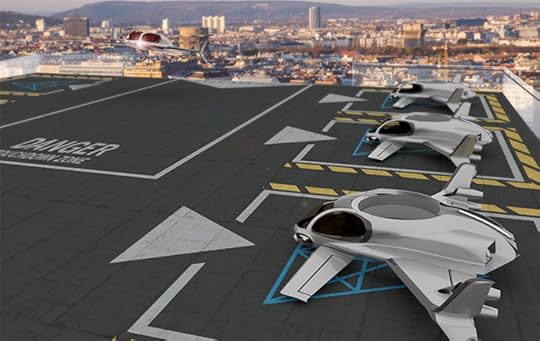
When flying drones started entering our consciousness a few years ago, a number of drone pioneers focused their attention on vehicles big enough to transport people.
Today, following the maiden voyage of the first Volocopter drone taxi flight September 2017 in Dubai, several companies have announced their intentions to compete in the soon-to-emerge drone taxi industry.
No one disagrees with the vast number of problems that will need to be solved before it becomes a staple of our transportation mix, yet the overwhelming allure of this prospect has attracted a growing number of our best and brightest seeking to make a name for themselves in an industry where the sky is literally the limit.
In just a few years air taxis will be common in most major cities and along with them will come a new kind of infrastructure – mini airports.
During the first stage of development, planners and entrepreneurs will carve out first-generation landing pads around cities. These will most likely be small sections of existing parking lots.
As traffic grows, and the number of landing and departures grows from tens to hundreds a day, single landing pads will grow into multiple pads with waiting areas.
Over time, crude landing areas will evolve into sophisticated terminals for managing passengers as well as the street-level and air traffic surrounding each of these mini airports.
The speed of this evolution will largely depend on pricing. With private planes still costing many times the cost of a first class ticket, it’s never broken into mainstream consciousness. If flying drones can somehow be lowered to 2-3 times an Uber drive across town, it will grow quickly.
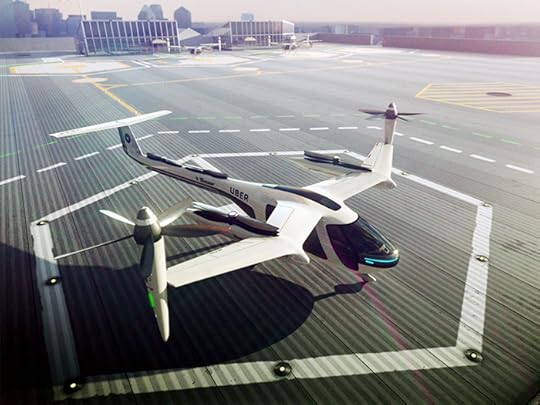 Will mini airports first appear on rooftops or in parking lots?
Launching the industry
Creating an entirely new industry like this requires a special breed of risk-taking entrepreneurs that know how to simultaneously raise money, design equipment, hire talent, deal with IP and legal matters, balance PR and publicity stunts, and tiptoe through a minefield of ten thousand decision points, where one wrong move could permanently torpedo their business.
Leading the charge are eight companies that include Volocopter, Boeing-Aurora, Airbus Vahana, eHang, Kitty Hawk, Lilium, Urban Aeronautics, and Joby.
Uber is also talking about being in the air taxi business, but they will not be developing their own equipment.
Even though Volocopter got tons of publicity in September 2017, the first one to actually start offering commercial flights was eHang who started offering a limited number of passenger flights starting in February 2018 with their 62 mph eight-rotor drone. Even though their ingenious design already comes with some level of autonomy and remote control flying ability, it still lacks many of the safety features like parachutes and airbags that will likely be required in the future.
Offering a bit more speed, the German startup Lilium has constructed an EVTOL jet that flies at 180 miles per hour. It’s 36 electric “jet” (ducted fan) engines allow triple redundant power system design, and are particularly quiet compared to traditional rotors. They are also claiming an impressive one-hour flight range, capable of traversing even the most sprawling metro area.
 Pricing and noise will be the two key issues surrounding the air taxi industry
Dispelling the front-of-my-house landing argument
Logically, most passengers would prefer to have a drone that can pick them up in front of their home or business, but there are several reasons why this level of convenience will be a far later development.
Any drone large enough to haul people will be noisy and require routine refueling, battery charging-changing, and maintenance. This will mean that landing-takeoff locations have supporting ground crew to manage both the passengers and the equipment.
Since cities are very wary of any situation where potential fatalities could take place, a number of safety measures will need to be put into place. These will include fire and security procedures as well as having paramedics close by to deal with any emergencies.
Landing areas will need to be well planned, free of such things as trees, tall poles, power lines, animals, and children. Severe weather conditions such as high winds, hail, rain, and snow will force the closure of these mini airports until the situation improves.
To be sure, cities will want to add additional mini airports as demand grows and having multiple suburban locations will make them far more convenient. The big unknown will be the number of privately owned commuter drones and the need for private hangar space.
It is likely that one or more of these companies will design fly-drive drones capable of picking up a passenger and driving them to the nearest mini airport and flying them to their final destination. In this situation, we will likely see more privately owned vehicles.
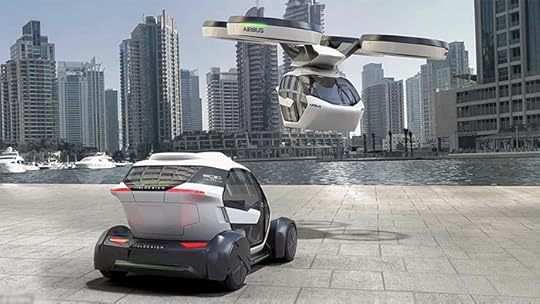 Fly-drive air taxis are already in development
Problems to overcome
As with most breakthrough technologies, this one comes with a rich problem set that will have to be wrestled to the ground. Here are a few of the issues, but by no mean is this a complete list:
1.) Noise – Electric drones will solve some of the engine noise problems, but the whirling blades still create enough sound to generate neighborhood complaints.
2.) Safety – Operating without pilots, these drones will have to incorporate a number of rapid compensation algorithms to literally correct problems on the fly. Will we still have a need for parachutes and airbags or can overall reliability be boosted to the point of making them unnecessary?
3.) Trust factor – Our relationship with machines inevitably starts with developing a level of comfort around safety and security. For many of us, our trust of flying drone taxis will stem from hearing our family and friends tell us about their experience.
4.) Autonomy – Flying a drone is far too complicated for the average person on the street, so air taxis have to become fully automated and mind-numbingly simple.
5.) Range, speed, and power – The first goal will be to design vehicles that can accommodate 90% of passenger needs. Convenience is the key, so price, range, and speed are all pieces of the complex equation for developing a minimum viable service offering.
6.) Visual aesthetics – Tiny electric drones become invisible even at a short distance. But noisy, banner-pulling, exhaust-spewing, and disturbingly snoopy drones will force a number of laws to be written for governing the use of drones.
7.) Wi-Fi everywhere – All autonomous vehicles, both cars and drones, need to talk to each other. Rapidly changing road and air conditions are critical variables. For this to happen, we will need a pervasive, reliable signaling system, with minimal latency, devoid of shadows and dropped signals.
8.) Devious people – While most people will find the drone era refreshingly easy and convenient, there are always a sinister few who will find ways to use them for nefarious purposes.
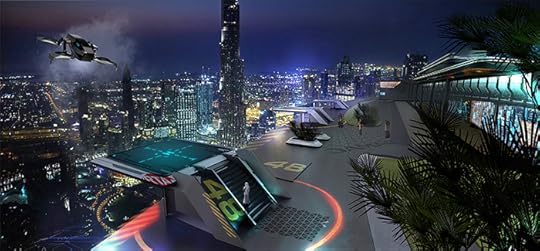 How much will mini airports add to the cost of an air taxi flight?
Final Thoughts
Interestingly enough, the chief competition for drone taxis will be driverless technology. It’ll be a race to see which one develops fastest.
The driverless world will take 2-3 decades to unfold as the combined driver-driverless transition period will be rather messy. But each year of progress will step us closer to an increasingly fluid transportation system.
During this time, the air taxi industry will improve both in speed, range, and sophistication.
Since both require the creation of entirely new systems, we’ll first have to develop a regulatory environment to insure we have safe and reliable systems.
However, every regulation has both a compliance cost as well as operational cost associated with it. But a totally unregulated environment, where failures are unpredictable, can also be expensive.
This is yet another area that city’s are woefully unprepared for. They will need to come up the learning curve quickly.
I, for one, can’t wait for my first air taxi ride. That will likely happen within the next two years.
Author of “Epiphany Z – 8 Radical Visions Transforming Your Future”
April 19, 2018
20 common jobs in 2040
German industrial giant, Siemens, recently hosted an Innovation Day that I participated in at their Chicago design center to give thought leaders in the U.S. a first look at many of the cutting edge technologies they’re working on. The topics they covered ranged from autonomous vehicles, to drone taxis, electric aviation, digital twins, agripods, VR, robotics, microgrids, energy storage, AI-powered manufacturing, and the overall potential of a digitized value chain.
All of these topics, which have been at the top of my research list, offered tremendous insight in the world ahead. But more than insight into the technology, they give us a glimpse of what some of our jobs will be in the future.
If you walked into an average 1950s era household, you would see much that you would recognize, including home appliances, a TV and an automobile. On the other hand, if you had to live in a 1900′s era home, with no running water or electricity, you would struggle to survive.
Now we’re entering a new era of innovation that is likely to be far more impactful than the last wave of innovation. Much like the computer revolution was built on top of electricity, the new era will use computing to drive advancement in other fields, such as genomics, nanotechnology and robotics.
This new era has already begun. We are learning to both manipulate individual atoms and molecules as well as to work with massive amounts of data to create machines that can do jobs previously thought to be uniquely human. Still, much like our predecessors in 1918, we struggle to fully grasp what the impact will be.
Glossing over interim steps
Like most people, I have a habit of glossing over many of the interim steps necessary to make the engineering advances that seem obvious.
As example, the first experiments on driverless vehicles actually started in the 1920 and researchers then envisioned that someday all cars would be able to drive themselves. But this leap in advancements has taken nearly 100 years so far, and we’re still not there.
Similarly, physicist Dennis Gabor first worked on the idea of holography and three-dimensional displays in 1947. While it has been easy to envision a lifelike 3D display, the engineering needed to create one has been far more complicated than first imagined. Seventy years later we still haven’t achieved it.
For these reasons it has been very easy to under-predict the time necessary for change to happen, and also easy to under-predict the full scope of the resulting impact.
Today, we find ourselves competing in a networked world where the key to competitive advantage is no longer the sum of all efficiencies, but the sum of all connections. Strategy, therefore, must be focused on widening and deepening linkages to access ecosystems of technology, talent, and information, and the talent piece of this equation should never be underestimated.
It’s become common to think that if a job disappears that it’s simply gone and nothing will fill the void. But that’s not true.
With all the headlines predicting jobs being automated out of existence, as robots and artificial intelligence take over our jobs, we begin imagining delusional timelines and unrealistic consequences for what lies ahead.
The first misconception is that robots, automation, and A.I. destroy jobs, which is not true. It does kill parts of jobs and eliminates the needs for certain skills, but entire jobs are far more complex than that.
In the short to medium term, the main effect of automation will not necessarily be eliminating jobs, but redefining them.
As example, ATM machines did replace many of the tasks that bank tellers performed, but not all of them. As a result, ATMs enabled tellers to be more efficient doing other things.
Before we start a discussion of what the most common jobs will be, let’s take a quick look at the categorization problem.
Most common jobs today
Defining jobs is a fuzzy art.
I spent quite a bit of time looking at the list of today’s most common jobs below, and found it very confusing. For example, many retail sales people also work as cashiers and many secretary/admin workers also do bookkeeping.
Also, a registered nurse in an ER setting does vastly different work than one doing home health, but they’re both RNs. Similarly, a patent attorney does vastly different work than a criminal defense attorney, yet they’re both lawyers.
At the same time many part-timers are working multiple gigs simultaneously – morning barista, janitor by day, and Uber in between.
Future jobs will have professions that bridge technology, but it will be the technology that is the primary job generator, not the profession.
Here are the top 50 most common jobs in the U.S. today.
Retail salesperson – 4,155,190
Cashiers – 3,354,170
Office clerks – 2,789,590
Combined food preparation and serving workers – 2,692,170
Registered nurses – 2,601,336
Waiters and waitresses – 2,244,480
Customer service reps – 2,146,120
Janitors and cleaners – 2,058,610
Freight, stock, and hand material mover laborers – 2,024,180
Secretaries and admin assistants – 1,841,020
Stock clerks and order fillers – 1,795,970
General and operation managers – 1,708,080
Bookkeeping, accounting, and auditing clerks – 1,675,250
Elementary school teachers – 1,485,600
Heavy and tractor-trailer truck drivers – 1,466,740
Nursing aides, orderlies, and attendants – 1,451,090
Wholesale and manufacturing sales representatives – 1,367,210
First-line supervisors of office and administrative support workers – 1,359,950
Teacher assistants – 1,249,380
Bus and truck mechanics and diesel engine specialists – 1,222,770
Maintenance and repair workers – 1,217,820
First-line supervisors of retail sales workers – 1,172,070
Executive secretaries and executive administrative assistants – 1,132,070
Accountants and auditors – 1,072,490
Secondary school teachers – 1,053,140
Security guards – 1,006,880
Receptionists and information clerks – 997,080
Business operations specialists – 993,980
Home health aides – 982,840
Team assemblers – 928,170
Restaurant Cooks – 901,310
Maids and housekeeping cleaners – 865,960
Landscaping and groundskeeping workers – 829,350
Food preparation workers – 802,650
Light truck or delivery service drivers – 780,260
Construction laborers – 777,700
First-line supervisors of food preparation and serving workers – 773,400
Licensed practical and licensed vocational nurses – 730,290
Shipping, receiving, and traffic clerks – 687,850
Personal care aides – 686,030
Packers and packagers – 676,870
Middle school teachers – 655,090
Police and sheriff’s patrol officers – 644,300
Carpenters – 620,410
Childcare workers – 611,280
Automotive service technicians and mechanics – 587,510
Computer support specialists – 579,270
Lawyers – 561,350
Tellers – 556,310
First-line supervisors of production and operating workers – 555,260
 Tomorrow’s workforce will be driven by technology, not professions
20 common jobs of 2040
Once again, future jobs will have professions that bridge technology, but it will be the technology that is the primary job generator, not the profession.
For this reason, the following list of common jobs will be framed around common technologies like drones, robots, and blockchain as opposed professional categorizations like nurse, teacher, or engineer.
Keep in mind we’re automating tasks out of existence, not entire jobs. As our tasks disappear, new tasks will get created, and jobs, work, and entire industries will be redefined.
1.) Robot Sherpas – Robots today tend to be good at one or two things. So far we haven’t seen the iPhone equivalent in robotics where people can build apps and the robot is capable of many things. That will happen well before 2040.
However, smart robots will still require an entire ecosystem of support staff to operate at peak efficiency. In much the same way a single passenger plane creates employment for dozens of people (pilots, flight attendants, ground crew, reservationists, ticket agents, etc.), our most versatile robots will require a team of support workers to optimize their performance.
Robot maintenance
Robot monitoring
Robot operation techs
Robot suppliers
Robot programmers
Robot UI/UX experts
Robot ethicists
Robot business developers
2.) Data Junkies – In many respects, data is the new oil. As a seemingly unlimited resource with the potential to create millions of new products, data will spawn hundreds of new job categories.
Data-catters – sourcing new forms of data, acquiring rights, licensing to users
Data detective
Data frackers
Data analytics
Data monitors
Data ethicists
Data trust officers
Data brokers
3.) Drone command crews – By 2040, large fleets of drones will be very common, as we will have surpassed the first billion-drone mark in the early 2030s. Drones will come in every possible shape and size, and since risks are high and so many things can go wrong, we will see many drone-related positions created for monitoring payloads, systems and optimizing traffic flow.
Drone command center operators
Drone taxi ground crew
Traffic flow optimizers
Drone maintenance and repair
Aerial security teams
Drone designers
Drone programmers
Drone salespeople
4.) Personal health maestros – Yes, we will still have nurses and doctors in the future, but most of the job growth in the health industry will be surrounding the digitization of personal health and the optimization of human performance.
Anti aging practitioners
Brain augmentationists
Nurses
Aging assistants
Gene sequencers
Epigenetic therapists
Brain neurostimulation professionals
Genetic modification designers and engineers
5.) AI-Enhanced Freelancers – Over the past few decades we have transitioned from a world where information was scarce and only the experts had access to it, to a time where information is plentiful but only the experts know what to pay attention to. Before 2040 there will be a similar transformation as we begin adding AI enhancements to our bodies and minds where only those skilled in the craft will be able to fully leverage the AI turbocharging we add to our capability mix.
AI-enhanced freelance coaches and trainers
AI-enhanced writers
AI-enhanced musicians
AI-enhanced artists
AI-enhanced quantum programmers
AI-enhanced accountants
AI-enhanced cyber security experts
AI-enhanced AI experts
6.) Driverless ground crews – Just because the driver is gone doesn’t mean there’s no room for humans. In fact, just the opposite is true. Yes, it will eventually be possible to automate many of these positions out of business, but it will require thousands of iterative developments for increasingly narrow niche edge cases. In many situations we simply reach the point of diminishing returns where it’s far cheaper and easier to employ a person instead of building a robot to handle a situation that only occurs once in every million-car trips.
Command center operators
Payment and accounting department
Circulation engineers
Maintenance and repair
Cleaning crews
Traffic flow analyzers
Charging station installers
On-board experience designers
7.) Blockchain architects – Blockchain in all its forms and derivations represents an exciting new industry that will overlay virtually every other industry. In many respects, this is virgin territory and we have yet to discover the true limits of blockchain.
Blockchain regulators
Blockchain engineers
Blockchain designers
Blockchain UI/UX experts
Blockchain cloud managers
Blockchain system analysts
Blockchain product managers
Blockchain business development gurus
8.) 3D printing fabricators – Over the next two decades 3D printing will grow exponentially in speed, precision, and in the kinds of material that it can be used. This will open the doors to a wide variety of support personnel, as each machine becomes a major profit center.
Digital house architects
Contour crafters – 3D house builders
Material scientists
3D product designers
3D printed pill pharmacies
3D printed organs, limbs, and prosthetics
3D printing specialists for reconstructive surgery
3D food printers
9.) Cryptocurrency – While the existing banking/finance industries will still employ a huge number of people, the traditional money world will be shrinking as automation causes most of the branch banking outlets to disappear. At the same time we will see over 50% of national currencies replaced by cryptocurrencies. Most of the growth in the financial sector will take place in professions surrounding cryptocurrency.
Cryptocurrency regulators
Cryptocurrency bankers
Cryptocurrency transaction specialists
Cryptocurrency wealth managers
Cryptocurrency insurers
Cryptocurrency miners
Cryptocurrency exchange operators
Cryptocurrency analysts
10.) Sensor system architects and curators – By 2040 the data universe will be driven by over 100 trillion sensors. As the MEMs and sensor industry uncovers innovative ways to sense and monitor different aspects of the world around us, the number of workers needed to bridge the interface between data and our physical world will also grow exponentially.
Sensor designers
Sensor installers
Sensor tailors and garment creators
Sensor data modelers
Sensor data transmission optimizers
Sensor signal engineers
Sensor architects
Sensor troubleshooters
11.) Space tech ground crews – Space X is causing industry experts to rethink time tables for the entire space industry. By 2040, we will have already begun to colonize Mars and space tourism rocket launches will be a daily occurrence. Similar to the airline industry, every launch will require a large cast of people employed in hundreds of different roles.
Space mission planners
Space launch management
Space launch prep, cargo prep, meteorologists
Space command traffic analyzers
Space command guidance monitors
Space experience designers
Space impact minimizers
Space ethics experts
 Asteroid mining will become a huge industry by 2040
12.) Asteroid miners – Asteroids are filled with all the ingredients necessary to construct things in space as well as material that can be taken back to earth. These include gold, iridium, silver, osmium, palladium, platinum, rhenium, rhodium, ruthenium and tungsten for transport back to Earth; and iron, cobalt, manganese, molybdenum, nickel, aluminum, and titanium for construction. As launch costs continue to drop, activity in this space will grow quickly.
Asteroid scouts and surveyors
Asteroid mining ground crews
Asteroid mining launch specialists
Asteroid mining bot operators
Asteroid material scientists
Asteroid transport operators
Asteroid-based smelting operators
Asteroid analytics data managers
13.) Fusion power plant builders – With the first fusion power plant coming online in 2040, the global power industry will be making plans to build literally thousands of new fusion power plants to replace our aging power infrastructure. Even though it will still be a fledgling industry, the hiring and prep work will have already begun.
Fusion plant designers
Fusion engineers
Fusion system integrators
Fusion micro grid experts
Fusion plant contractors
Fusion plant architects
Fusion in space planners
Fusion project manager
14.) CRISPR, biohacking, and programmable healthcare gurus – By 2040 we will be able to program our way to better health and genetically cure most diseases. Most will be wearing a huge range of sensors offering real-time monitoring. Longevity will rise, with many living well beyond 100. Children born in 2040 will essentially have a blank slate when it comes to life expectancy. With gene therapy, stem cell and nano-scale medicine, barring an accident or fatal disease, we cease to worry about dying, and look much younger as we age.
Algorithmic health providers
Algorithmic health researchers
Algorithmic dietitians
CRISPR biotechnicians
CRISPR engineers
CRISPR auditors
Biomanufacturing experts
Biomanufacturing organ designers
15.) Tube transportation infrastructure builders – By 2040 we will have begun building a global tube transportation network, which will commonly be referred to as the world’s largest infrastructure project. Tube transportation will employ countless millions of people in both the construction and operation of the global tube system.
Tube network designers
Tube network builders
Tube network command center
Tube network safety engineers
Tube network operators
Tube network traffic optimizers
Tube network maintenance and repair
Tube network janitors
16.) Quantum tech gurus – By 2040 we will have made the transition from bits and bytes to qubits. Qubits are the standard units used to measure quantum information. With quantum computing, all traditional encryption systems become hackable, and all users will have been forced to upgrade to quantum level encryption long before 2040.
Quantum computing programmers
Quantum data analyzers
Quantum level privacy monitors & managers
Quantum level trust managers
Quantum equipment operators
Quantum health monitors
Quantum level medicine pharmacists
Quantum computing personality designers
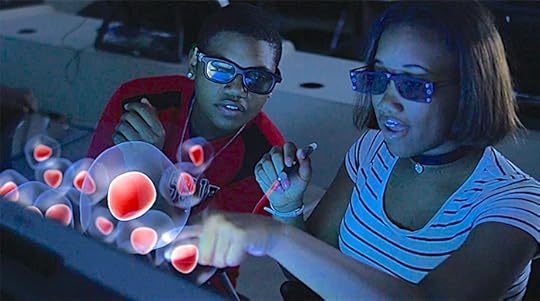 There’s a huge difference between a 2D thinker and 3D visualization
17.) Mixed reality builders – Few of us realize this, but we’ve been taught to think two-dimensionally. Starting with 2D paper, books, whiteboards and blackboards, our schools have beaten us over the head with 2D thinking. As we moved into the computer age, we moved to 2D screens. If we throw away the display on our computer and project everything three-dimensionally above our desks, we can’t even imagine what it’ll look like to “surf the net,” produce a 3D website, or if we created 3D charts and graphs, what that third dimension will represent. We all live in a three-dimensional world, but we’re only now getting to the point of experiencing it the way it already exists.
Mixed reality travel agents
Mixed reality therapists
Mixed reality trainers
Mixed reality coaches
Mixed reality game designers
Mixed reality movie producers
Mixed reality experience builders, designers, and creators
Mixed reality news producers
18.) Cultured meat producers – Even though it’s still not commercially available, within two years it will be cheaper than ranch grown meats, and that’s where things get very interesting because a number of industrial pivots will kick in, opening the doors to a vast new set of industries.
Cultured meat bioreactor designers
Cultured meat stem cell managers
Cultured meat designers
Cultured meat ethicists
Cultured meat quality control
Cultured meat new product development
Cultured meat dietary engineers
Cultured meat process managers
19.) IoT– Home automation professionals – By 2040 home automation will be used to protect people, their health and belongings as much as it is to enhance their lives.
IoT elocutionists
IoT smart building installers
IoT smart clothing developers
IoT health monitors
IoT system anthropologists
IoT proximity alert systems
IoT data actuaries
IoT failure point assessors
20.) AI-teacherbot educators– In 2040 we will be living in a world that will require higher caliber people to make it work, and it’s rather preposterous to think our existing systems can suddenly start producing better results. AI-enhanced teacherbots are coming and the ones who benefit the most will be the ones who start making an early transition.
AI-enhanced teacherbot interface designers
AI-enhanced teacherbot courseware creators
AI-enhanced teacherbot engineers
AI-enhanced teacherbot maintenance and repair
AI-enhanced learning coaches
Personal AI-enhanced skill builders
Personal AI-enhanced life monitors
Learning optimizers

Final thoughts
Today we can only see a small slice of what the future holds for us. We know that computer architecture, energy sources and manufacturing practices will change dramatically and we can see rough outlines of the shifts ahead. What we can’t see is the secondary effects, the technologies and business models that will build on top of base technologies, that will impact tomorrow’s industries.
There were no newspaperman who looked at a mainframe computer and saw social media or websites, just like no retail store owners that looked at the first “horseless carriages” saw the coming of strip malls and supermarkets. They were too busy trying to serve their customers and beat their existing competitors. For this reason they missed the growing threat that would eventually disrupt their businesses.
That’s why today it is crucially important to set aside resources to explore, experiment and to tackle grand challenges so that you can begin to understand and ultimately harness the forces that will shape an industry. It’s better to prepare than adapt because, by the time you see the need to adapt, it may already be too late.
By Futurist Thomas Frey
Author of “Epiphany Z – 8 Radical Visions Transforming Your Future”

April 9, 2018
Creating the self-delivering package

A couple years ago I was asked to keynote the 8th annual Turkish Postal Symposium in Antalya, Turkey on the future of the postal industry. This was a fascinating event where thought leaders from around the world gathered to discuss next-generation postal systems.
I focused my talk around a central question – “How long will it be before we can mail a package and have it travel to a city on the other side of the world without ever being touched by human hands?”
The example I used was a package traveling from Istanbul to San Francisco without human contact.
Thinking through the path of automation, this is a reasonable question to be asking. Once we set a package into motion, it will essentially guide itself to its final destination by way of a completely automated global distribution network.
 Ship any thing from anywhere with only a few clicks on your app
Mailing a Package in 2030
As I envision the process, whoever is sending a package will simply place it on their front doorstep and take a photo of it with a special shipping app on their phone. This will start the process, detailing the package size, dimensions, and GPS coordinates, and the sender will add particulars such as destination, level of urgency and weight category (i.e. under 10 lbs). Within a short while, a robotic pickup service will arrive, retrieve the package, and load it onto a drone delivery vehicle.
While the sender will know the price range at the time they put it into the app, they will get exact pricing once the package is picked up, along with tracking details, and exact time of delivery.
Several pieces of this distribution network are already in place, but as we dig deeper and try to understand what it will take to achieve this level of automation, we begin to uncover not only the technical elements that still need to be developed, but also the necessary system layers to develop global standards and compatibility.
Since packages come in a variety of shapes and sizes, it’s reasonable to assume limits on the size and the weight, both on the high end as well as the low end. As example, a package the size of a grain of salt or as light as a helium balloon will need to be in a larger package. On the larger end of the spectrum, mailing items like furniture, exercise equipment, or motorcycles will require a different kind of delivery service.
In addition to size and weight issues will be a series of legal requirements for shipping restrictive items like alcohol, pharmaceuticals, live animals, biohazard materials, or products with special handling requirements like fragile glass, frozen food, or sensitive instruments.
Establishing limits, rules, and standards will be part of the critical thinking process necessary for developing this future mega-system.
Today’s delivery systems place a heavy emphasis on using a standardized shipping label for every package, however the label itself could be produced by the delivery service and coded onto the package once it’s been picked up. In some cases, it may be beneficial to work with specialty sensor labels to track the condition of sensitive contents in real time.
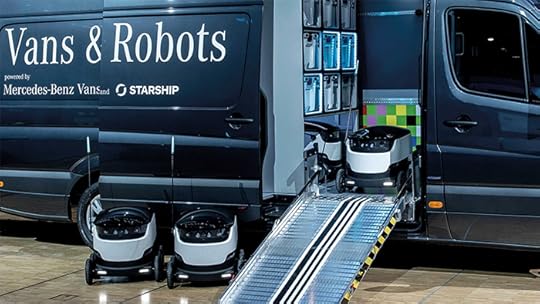 Daimler is currently testing out a number of robotic delivery schemes
The pickup problem
Retrieving a package from someone’s front door presents a huge number of engineering challenges.
First, the robot will have to travel to and from where the package is. Obstacles could include stairs, trees, broken sidewalks, no sidewalk, dogs, cats, squirrels, snakes, rain, hail, snow, children, rocks, and mud to name just a few.
The package could be square, round, triangle, rectangle, or an odd shape that is hard to describe. The outer material of the package could be cardboard, paper, plastic, cloth, synthetic, loose, tight, waterproof, air tight, porous, full of static, oily, wood, or leather.
There could be fences, gates, security guards, locked doors, motion detectors, nosey neighbors, piles of leaves, or overgrown lawns.
Timing is also an issue. A package left outside for 2 minutes will generally be fine, but one left exposed to the elements for 30-60 minutes could have any number of things go wrong.
For this reason, the relatively simple task of retrieving a package can be riddled with complexity.
A new kind of global infrastructure
As an overarching trend, we are transitioning from national systems to global systems, and every piece of system-level infrastructure becomes an essential part of the overall network.
If we think of this growing into a worldwide distribution network, we begin to get a sense as to how it could change the lives of virtually everyone on earth.
Many fully mechanized distribution centers already exist in Europe, Asia, and North America, but this level of automation will require countries around the world to develop many additional layers of standards and compatibility.
With normal deliveries to a building, messages will also be sent when the package is delivered. Each building will have its own designated delivery area.
There is no miracle science needed to complete this kind of infrastructure, just plenty of engineering work, and the political will and foresight to make it happen.
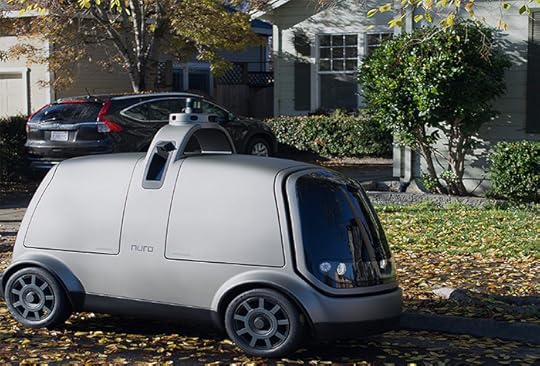 Nuro is a driverless delivery startup based in Silicon Valley
The missing pieces
Naturally there are many missing pieces to the fully automated mega-system that will eventually be created.
1.) High Tech Mailboxes, Pickup & Delivery Pods – There is a huge opportunity awaiting for the first person who creates a universally accepted machine-dockable mailbox, as well as standardized, weather-protected pickup and deliver pods for homes and offices.
2.) Standardized High Tech Mailing Labels – Labels like this will monitor both the package’s location and the condition of its content.
3.) Automated Loading and Unloading Systems – Since several modes of transport will be involved, special attention will need to be paid to the handoff from one to the next, such as from a truck to a train or ship.
4.) Robotic Customs Agents – There will always be a need to inspect and monitor package contents to prevent the distributing of illegal items.
5.) System Durability – Early systems will have countless points of failure, but over time, durable systems will reduce failures to a fraction of today’s human centric systems.
6.) Trained Human Operators – As a system designed “by humans for humans,” there will still need to be a number of skilled human operators to step in whenever something goes wrong.
The list above is intended to highlight a few opportunities, but admittedly glosses over many of the details and intricacies involved in developing a complex global system like this.
Over time the need for boxes and packaging will decline and eventually disappear altogether as super smart systems know how to deal with every object on a piece by piece level.
The argument for going global
Developing something this grand will require an amazingly talented team lead by a Global Systems Architect. This will be a person who is globally sophisticated, unusually driven, and capable of working through a wide range of cultural, diplomatic, legal, and technical issues without losing perspective.
A global system will be terribly disruptive, causing a number of today’s key players to lose power and control.
Over the coming years, global systems, involving representatives from countries all over the world will spring to life, helping to bridge the cultural barriers currently preventing mega projects like this from moving forward.
It boils down to the question of whether we are better off being a more cohesive, blended global society, or less of one.
 Ecotranzit is an autonomous shipping robot being developed by Bombadier
Final Thoughts
Our need for mega projects like this is explained in a previous column of mine about coming explosion of “Global Megaprojects.”
First, we’re seeing a shift in power towards megacities. As people relocate from rural to urban communities and population clusters grow, so does the demand for major infrastructure improvements to help manage the traffic, water, sewage, power, and living strains of these growing economies.
Second, the wages paid for workers building infrastructure projects will improve the local economy to a point where other megaprojects become viable.
Third, as global awareness improves, so does the desire to standout and impress the rest of the world. Megaprojects become a source of national pride and a status symbol for emerging economies.
Fourth, we are moving into an era of technological unemployment where jobs are automated out of existence at an unprecedented level. The demand for new jobs will trump most other arguments.
As our list of megaprojects grows, we will see more spending on infrastructure in the next 40 years, than we have in the past 4,000 years.
Author of “Epiphany Z – 8 Radical Visions Transforming Your Future”

Is death our only option? Buying into the dream of immortality

Imagine what it will be like attending the Olympics in 2248. Men and women competing in their respective sports will range in age from 16 to 212. The oldest competitor is now in his 38th Olympic competition, and young people have complained for years how hard it is to break into some of the elite sports when old time veterans continued to strengthen their techniques and are addicted to the winner circle.
Certainly many of us wish this were one of our problems today.
Over the next couple of decades, most of us will have the opportunity to decide how long we want to live. But while it may start as a forever wish, the promise of halting the aging process will be plagued with tremendous uncertainty, ethical debates, and cultural pressures that few have anticipated.
The first wave of this technology will most likely be very expensive, but it won’t take long for the price to drop and for middle class people everywhere to taste the magic and experience the dream.
Early on we will hear an ethical debate coming from those who profit from today’s short-lived version of humanity. We will, however, transition from those who profit from fixing today’s health problems to those who profit from prolonged life cycles and substantially better health from here on out.
We will also hear from over-population alarmists, limited resource worriers, and those who fear we are playing God and interfering with our spiritual destiny.
There will be challenges to our social structures, pressures on our existing systems, and a constant rewriting of rules for relationships.
In spite of the naysayers, just as we overcame our fear of flying in planes and traveling to other planets, we will transcend our current 19th century thinking on aging and death, and look forward to what comes next.
This column is about what comes next.
 In the future, old age will not look like old people trying to act young again
Benefits of an aging society
A recent study published in The Journal of Clinical Psychiatry, determined that not only were older people more satisfied with life overall, they were also less likely to be anxious, depressed, and/or stressed out. And the best part was that happiness tends to increase with age, with some of the oldest survey recipients reporting the highest levels of life satisfaction.
While this is counter to what most would imagine, there is a scientific explanation to these findings.
“Brain studies show that the amygdala in older people responds less to stressful or negative images than in a younger person,” said senior author of the study Dr. Dilip Jeste.
Gathered from extensive polling of 1,546 people ages 21 to 99, the older respondents, despite physical and cognitive decline, were more likely to have better mental health than the younger ones.
According to Jeste, “As we age, we become wise. Peer pressure loses its sting. Better decision-making, more control of emotions, doing things that are not just for ourselves, knowing ourselves better, being more studious and yet more decisive are all upsides of aging.
Should we anticipate this level of age satisfaction for the 100+ crowd as well. This is particularly good news for young people as they now have something to look forward to.”
History’s Search for the Fountain of Youth
An ancient story titled the “Water of Life” described Alexander the Great and his servant crossing the Land of Darkness to find the restorative spring that gave eternal youth.
Later, many stories of a “fountain of youth” were attributed to the first Governor of Puerto Rico, Ponce de Leon, even though it turned out to be a myth.
Throughout history, references to a magical spring continued to fuel the imagination of primarily wealthy people who dreamed of regaining the vigor of their younger years.
More recently the dream of eternal youth has take on a much more scientific feel using terms like indefinite life extension, experimental gerontology, and biomedical gerontology to describe the study of slowing down or reversing the processes of aging.
Researchers in this field are referred to as “life extensionists”, “immortalists” or “longevists.” They believe that future breakthroughs in tissue rejuvenation, stem cells, regenerative medicine, molecular repair, gene therapy, pharmaceuticals, and organ replacement will eventually enable humans to have indefinite lifespans.
In fact, a significant number of Silicon Valley thought leaders have tried to recast aging as merely another legacy system in need of recoding:
Oracle co-founder Larry Ellison’s Ellison Medical Foundation has spent more than $400 million on aging research.
Since 2013, Alphabet has been working on a moonshot life-extension project called Calico.
X-Prize founder Peter Diamandis has partnered with famed gene sequencer J. Craig Venter to launch Human Longevity Inc.
Paul F. Glenn, an 85-year-old VC who watched his grandfather die of cancer, launched an aging-science foundation more than 50 years ago that has funded a dozen aging-research centers around the country.
Peter Thiel has given over $3 million to the Methuselah Foundation, the research vehicle for the famed immortality advocate Aubrey de Grey. Thiel has also explored the transfusion of blood from the young to the old.
Even Facebook founder Mark Zuckerberg recently called for science to end all disease this century.
The sale of anti-aging products such as nutrition, physical fitness, skin care, hormone replacements, vitamins, supplements and herbs is an industry that already generates over $50 billion a year.
Even though we’re making progress and average lifespans continue to increase; no one has managed to crack the code for living past the 120-year threshold, and finding an attractive quality of life for people past 100 is still an elusive dream.
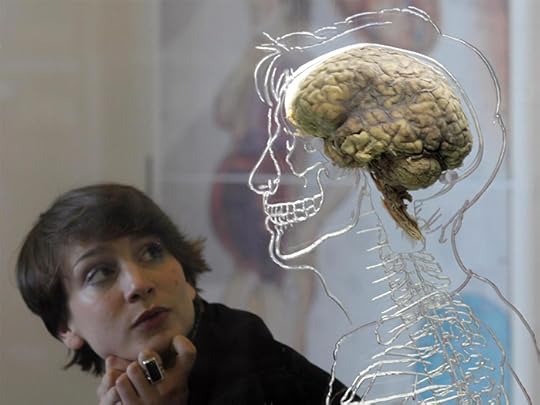 Do we truly understand the problem we’re trying to solve?
Transhumanism and the Singularity
Transhumanists believe that humankind can evolve beyond its current physical and mental limitations to become “superhuman” and, eventually, immortal. For them, aging and death are the biggest plagues of our time.
Google’s Director of Engineering, Ray Kurzweil, has consistently predicted that machine intelligence will exceed human intelligence in 2029, and from this transition point we will witness the end of human diseases including the end of aging.
Going even further, transhumanists think the Singularity will give rise to a new breed of humans that are far beyond anything we can comprehend today.
Setting the stage for an era of indefinite lifespans
As always, we should be careful what we wish for.
Let’s begin by assuming a series of breakthroughs happen and the human race is no longer plagued by short lifespans.
Using indefinite existence as a premise, meaning that we find a way to dramatically delay the effects of human aging along with most of the normal deteriorations of the human body associated with aging, how will this change society?
We’re already constantly changing as individuals. You are literally not the same person you were five minutes ago. People are more like trajectories through some space of possible identities and configurations, connected by an identity thread between who you were before and who you’ll become next.
With that given, someone who lives for a long time will undergo an unimaginable amount of change. People today look back at who they were in their youth, filled with different attitudes and experiences. Imagine that times one thousand.
I realize this requires a quantum-leap-of-faith between a world where average lifespans of 70-80 years old are doubled, tripled, or even longer, but for the purposes of this thought experiment, let’s make that assumption.
Let’s also assume the cost of an indefinite lifespan is generally affordable to most people and few will experience any significant deterioration to their quality of life for most of their existence.
While these are huge assumptions, my goal in stepping you through this trial balloon is to talk through whether this dream is as rosy or gloomy as many would imagine.
 Will we still like who we’re about to become?
Weighing the Positives Against the Negatives
It’s hard to imagine how different life will be when over 50% of the world’s population is over 100. Not all of it will be good and the positives will certainly offset the negatives, if not most of them. But let’s consider some of the far-reaching implications:
POSITIVES
1.) Improved Health – Living a super long life means we will have cured most diseases and corrected the majority of human biological flaws setting the stage for even more radical life extensions, perhaps moving towards something “post-human” or even “turbo-human.”
2.) Delayed Death – Our greatest fear is death and our world is consumed by it. We think about it relentlessly. Most books, movies, and television storylines use death as a focal point in their message. But what if death becomes universally fixable and only one hundredth as important as it is today? Without today’s universal death-focus we would be free to think far more creatively and far more expansively.
3.) Dramatically Improved Intelligence – With age comes wisdom, along with improvements to our biological intelligence and the acuity of our sensory systems. Logically this should lead to us having enhanced abilities to understand, appreciate, and change the world in ways we cannot yet imagine.
4.) New Age of Discovery – For the most part, we don’t know what challenges and opportunities super long lifespans will bring. On the plus side, we may have greater contentment, less volatile systems, and greater social wealth. But on the downside, we may discover diseases that only occur to people over 140, have a harder time dealing with disruptive thinking, and cling to things that should have been dismantled decades, even centuries, earlier.
5.) New Social Structures – What kind of relationships will a person’s great, great, great grandparents have with their grandchildren? How intimate will family relationships be when there are 7-10 generations of relatives attending a family gathering?
6.) More Stable Society – With longevity comes stability and the pace of change will begin to stabilize. This will mean less volatility in human-based systems like governments, markets, policies, and political will. History is a great teacher, but it is an even greater teacher if we’ve lived through it ourselves.
7.) Additional Levels of Maturity – We will learn from our mistakes, and with literally centuries of mistakes under our belts, we’ll tend to avoid making the most painful ones again in the future.
8.) More Diverse Economy – Since the needs of a 250 year old are vastly different than the needs of a 50 year old, we will be inventing new market categories with products we can’t yet imagine.
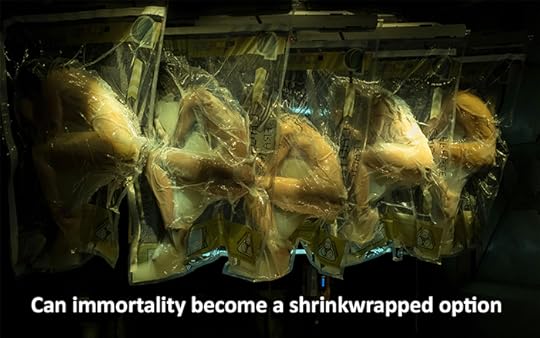
NEGATIVES
In most cases the “negatives” can also be construed as positives when viewed from a slightly different perspective.
1.) Old System Failures – Today’s retirement-based systems will fundamentally break down if people retire at age 65 and then live another 200 years. No one will be interested in life insurance if people no longer die at a predictable age. No more assisted living centers, senior Olympics, probate courts, estate taxes, nursing homes, or senior discounts.
2.) Messy Transition – Since we may or may not be able to reverse the aging that has already taken place, a person who is 20 year olds will continue to look like some version of a 20 year old and those who are 90 will continue to look like some version of 90 year olds. Eventually most of the visual characteristics we associate with aging will disappear, but those caught during this transition period will be the anomalies.
3.) Family Dynasties – Well-managed families will accumulate wealth, power, and influence far beyond anything possible today. Sins of the past will continue to haunt influential families long into the future.
4.) Wealth Controlled by the Super Old – Today’s wealth transitions will be replaced by tomorrow’s wealth entrenchments. For many of the super old, the gamesmanship of being a master manipulator will be their form of entertainment. Today’s puppet masters will seem like amateurs when compared to tomorrows social-chess-masters.
5.) Super Entrenched Political Systems – If you can imagine a time when 47 former presidents are still alive, and all 47 come from 4 different families, you’ll begin to get the picture.
6.) Loss of Urgency – When people live to ages of 200-300 and our working life is 5-10 times longer than it is now, today’s urgency will become tomorrow’s acceptability. While deadlines will still exist, the penalty for missing them will be less onerous and less significant.
7.) Loss of Innovation – Along with longer lifespans will come an increased resistance to change. Family dynasties and entrenched political systems will give way to higher barriers to change and greater political resistance to changing the status quo.
8.) Heavy-Handed Population Control – Since most people instantly jump to overpopulation as being one of the key issues, even though it won’t be, look for a series of population control measures to be implemented from country to country including child bearing licenses, extra child taxes, limited paid maternity leaves, etc.
“I don’t mean you’re all going to be happy. You’ll be unhappy – but in new,
exciting and important ways.” – Edwin Land
Final Thoughts
I’d love to hear your thoughts on these topics. There will be plenty of room for disagreement on each of these points, so please feel free to help paint a different perspective.
Roughly 65% of today’s jobs in the U.S. are information jobs that didn’t exist 25 years ago, and over the next 25 years we will get far better at using advanced forms of bioinformatics and biotechnology to reprogram our bodies away from disease, frailties, and all the characteristics we tend to associate with human aging.
To be clear, I‘m a big fan of having people live longer, and I’m even ok with eliminating human aging altogether. But it’s far better to move into an era like this with our eyes open, knowing that the downside may be more severe than any of us suspected.
In my estimation, the odds of reaching a point where people never die is zero. It actually becomes a meaningless argument because proving that someone is capable of living forever will mean someone will have to live longer than the person who lives forever, and that’s not possible.
However, the odds of most people living radically extended lifespans is a near certainty. The progress we’ve made in understanding human biology is remarkable, and continued breakthroughs are inevitable.
Author of “Epiphany Z – 8 Radical Visions Transforming Your Future”
March 20, 2018
Creating the self-delivering package

A couple years ago I was asked to keynote the 8th annual Turkish Postal Symposium in Antalya, Turkey on the future of the postal industry. This was a fascinating event where thought leaders from around the world gathered to discuss next-generation postal systems.
I focused my talk around a central question – “How long will it be before we can mail a package and have it travel to a city on the other side of the world without ever being touched by human hands?”
The example I used was a package traveling from Istanbul to San Francisco without human contact.
Thinking through the path of automation, this is a reasonable question to be asking. Once we set a package into motion, it will essentially guide itself to its final destination by way of a completely automated global distribution network.
Ship any thing from anywhere with only a few clicks on your appMailing a Package in 2030
As I envision the process, whoever is sending a package will simply place it on their front doorstep and take a photo of it with a special shipping app on their phone. This will start the process, detailing the package size, dimensions, and GPS coordinates, and the sender will add particulars such as destination, level of urgency and weight category (i.e. under 10 lbs). Within a short while, a robotic pickup service will arrive, retrieve the package, and load it onto a drone delivery vehicle.
While the sender will know the price range at the time they put it into the app, they will get exact pricing once the package is picked up, along with tracking details, and exact time of delivery.
Several pieces of this distribution network are already in place, but as we dig deeper and try to understand what it will take to achieve this level of automation, we begin to uncover not only the technical elements that still need to be developed, but also the necessary system layers to develop global standards and compatibility.
Since packages come in a variety of shapes and sizes, it’s reasonable to assume limits on the size and the weight, both on the high end as well as the low end. As example, a package the size of a grain of salt or as light as a helium balloon will need to be in a larger package. On the larger end of the spectrum, mailing items like furniture, exercise equipment, or motorcycles will require a different kind of delivery service.
In addition to size and weight issues will be a series of legal requirements for shipping restrictive items like alcohol, pharmaceuticals, live animals, biohazard materials, or products with special handling requirements like fragile glass, frozen food, or sensitive instruments.
Establishing limits, rules, and standards will be part of the critical thinking process necessary for developing this future mega-system.
Today’s delivery systems place a heavy emphasis on using a standardized shipping label for every package, however the label itself could be produced by the delivery service and coded onto the package once it’s been picked up. In some cases, it may be beneficial to work with specialty sensor labels to track the condition of sensitive contents in real time.
Daimler is currently testing out a number of robotic delivery schemesThe pickup problem
Retrieving a package from someone’s front door presents a huge number of engineering challenges.
First, the robot will have to travel to and from where the package is. Obstacles could include stairs, trees, broken sidewalks, no sidewalk, dogs, cats, squirrels, snakes, rain, hail, snow, children, rocks, and mud to name just a few.
The package could be square, round, triangle, rectangle, or an odd shape that is hard to describe. The outer material of the package could be cardboard, paper, plastic, cloth, synthetic, loose, tight, waterproof, air tight, porous, full of static, oily, wood, or leather.
There could be fences, gates, security guards, locked doors, motion detectors, nosey neighbors, piles of leaves, or overgrown lawns.
Timing is also an issue. A package left outside for 2 minutes will generally be fine, but one left exposed to the elements for 30-60 minutes could have any number of things go wrong.
For this reason, the relatively simple task of retrieving a package can be riddled with complexity.
A new kind of global infrastructure
As an overarching trend, we are transitioning from national systems to global systems, and every piece of system-level infrastructure becomes an essential part of the overall network.
If we think of this growing into a worldwide distribution network, we begin to get a sense as to how it could change the lives of virtually everyone on earth.
Many fully mechanized distribution centers already exist in Europe, Asia, and North America, but this level of automation will require countries around the world to develop many additional layers of standards and compatibility.
With normal deliveries to a building, messages will also be sent when the package is delivered. Each building will have its own designated delivery area.
There is no miracle science needed to complete this kind of infrastructure, just plenty of engineering work, and the political will and foresight to make it happen.
Nuro is a driverless delivery startup based in Silicon ValleyThe missing pieces
Naturally there are many missing pieces to the fully automated mega-system that will eventually be created.
1.) High Tech Mailboxes, Pickup & Delivery Pods – There is a huge opportunity awaiting for the first person who creates a universally accepted machine-dockable mailbox, as well as standardized, weather-protected pickup and deliver pods for homes and offices.
2.) Standardized High Tech Mailing Labels – Labels like this will monitor both the package’s location and the condition of its content.
3.) Automated Loading and Unloading Systems – Since several modes of transport will be involved, special attention will need to be paid to the handoff from one to the next, such as from a truck to a train or ship.
4.) Robotic Customs Agents – There will always be a need to inspect and monitor package contents to prevent the distributing of illegal items.
5.) System Durability – Early systems will have countless points of failure, but over time, durable systems will reduce failures to a fraction of today’s human centric systems.
6.) Trained Human Operators – As a system designed “by humans for humans,” there will still need to be a number of skilled human operators to step in whenever something goes wrong.
The list above is intended to highlight a few opportunities, but admittedly glosses over many of the details and intricacies involved in developing a complex global system like this.
Over time the need for boxes and packaging will decline and eventually disappear altogether as super smart systems know how to deal with every object on a piece by piece level.
The argument for going global
Developing something this grand will require an amazingly talented team lead by a Global Systems Architect. This will be a person who is globally sophisticated, unusually driven, and capable of working through a wide range of cultural, diplomatic, legal, and technical issues without losing perspective.
A global system will be terribly disruptive, causing a number of today’s key players to lose power and control.
Over the coming years, global systems, involving representatives from countries all over the world will spring to life, helping to bridge the cultural barriers currently preventing mega projects like this from moving forward.
It boils down to the question of whether we are better off being a more cohesive, blended global society, or less of one.
Ecotranzit is an autonomous shipping robot being developed by BombadierFinal Thoughts
Our need for mega projects like this is explained in a previous column of mine about coming explosion of “Global Megaprojects.”
First, we’re seeing a shift in power towards megacities. As people relocate from rural to urban communities and population clusters grow, so does the demand for major infrastructure improvements to help manage the traffic, water, sewage, power, and living strains of these growing economies.
Second, the wages paid for workers building infrastructure projects will improve the local economy to a point where other megaprojects become viable.
Third, as global awareness improves, so does the desire to standout and impress the rest of the world. Megaprojects become a source of national pride and a status symbol for emerging economies.
Fourth, we are moving into an era of technological unemployment where jobs are automated out of existence at an unprecedented level. The demand for new jobs will trump most other arguments.
As our list of megaprojects grows, we will see more spending on infrastructure in the next 40 years, than we have in the past 4,000 years.
Author of “Epiphany Z – 8 Radical Visions Transforming Your Future”
March 1, 2018
Is death our only option? Buying into the dream of immortality

Imagine what it will be like attending the Olympics in 2248. Men and women competing in their respective sports will range in age from 16 to 212. The oldest competitor is now in his 38th Olympic competition, and young people have complained for years how hard it is to break into some of the elite sports when old time veterans continued to strengthen their techniques and are addicted to the winner circle.
Certainly many of us wish this were one of our problems today.
Over the next couple of decades, most of us will have the opportunity to decide how long we want to live. But while it may start as a forever wish, the promise of halting the aging process will be plagued with tremendous uncertainty, ethical debates, and cultural pressures that few have anticipated.
The first wave of this technology will most likely be very expensive, but it won’t take long for the price to drop and for middle class people everywhere to taste the magic and experience the dream.
Early on we will hear an ethical debate coming from those who profit from today’s short-lived version of humanity. We will, however, transition from those who profit from fixing today’s health problems to those who profit from prolonged life cycles and substantially better health from here on out.
We will also hear from over-population alarmists, limited resource worriers, and those who fear we are playing God and interfering with our spiritual destiny.
There will be challenges to our social structures, pressures on our existing systems, and a constant rewriting of rules for relationships.
In spite of the naysayers, just as we overcame our fear of flying in planes and traveling to other planets, we will transcend our current 19th century thinking on aging and death, and look forward to what comes next.
This column is about what comes next.
In the future, old age will not look like old people trying to act young againBenefits of an aging society
A recent study published in The Journal of Clinical Psychiatry, determined that not only were older people more satisfied with life overall, they were also less likely to be anxious, depressed, and/or stressed out. And the best part was that happiness tends to increase with age, with some of the oldest survey recipients reporting the highest levels of life satisfaction.
While this is counter to what most would imagine, there is a scientific explanation to these findings.
“Brain studies show that the amygdala in older people responds less to stressful or negative images than in a younger person,” said senior author of the study Dr. Dilip Jeste.
Gathered from extensive polling of 1,546 people ages 21 to 99, the older respondents, despite physical and cognitive decline, were more likely to have better mental health than the younger ones.
According to Jeste, “As we age, we become wise. Peer pressure loses its sting. Better decision-making, more control of emotions, doing things that are not just for ourselves, knowing ourselves better, being more studious and yet more decisive are all upsides of aging.
Should we anticipate this level of age satisfaction for the 100+ crowd as well. This is particularly good news for young people as they now have something to look forward to.”
History’s Search for the Fountain of Youth
An ancient story titled the “Water of Life” described Alexander the Great and his servant crossing the Land of Darkness to find the restorative spring that gave eternal youth.
Later, many stories of a “fountain of youth” were attributed to the first Governor of Puerto Rico, Ponce de Leon, even though it turned out to be a myth.
Throughout history, references to a magical spring continued to fuel the imagination of primarily wealthy people who dreamed of regaining the vigor of their younger years.
More recently the dream of eternal youth has take on a much more scientific feel using terms like indefinite life extension, experimental gerontology, and biomedical gerontology to describe the study of slowing down or reversing the processes of aging.
Researchers in this field are referred to as “life extensionists”, “immortalists” or “longevists.” They believe that future breakthroughs in tissue rejuvenation, stem cells, regenerative medicine, molecular repair, gene therapy, pharmaceuticals, and organ replacement will eventually enable humans to have indefinite lifespans.
In fact, a significant number of Silicon Valley thought leaders have tried to recast aging as merely another legacy system in need of recoding:
Oracle co-founder Larry Ellison’s Ellison Medical Foundation has spent more than $400 million on aging research.
Since 2013, Alphabet has been working on a moonshot life-extension project called Calico.
X-Prize founder Peter Diamandis has partnered with famed gene sequencer J. Craig Venter to launch Human Longevity Inc.
Paul F. Glenn, an 85-year-old VC who watched his grandfather die of cancer, launched an aging-science foundation more than 50 years ago that has funded a dozen aging-research centers around the country.
Peter Thiel has given over $3 million to the Methuselah Foundation, the research vehicle for the famed immortality advocate Aubrey de Grey. Thiel has also explored the transfusion of blood from the young to the old.
Even Facebook founder Mark Zuckerberg recently called for science to end all disease this century.
The sale of anti-aging products such as nutrition, physical fitness, skin care, hormone replacements, vitamins, supplements and herbs is an industry that already generates over $50 billion a year.
Even though we’re making progress and average lifespans continue to increase; no one has managed to crack the code for living past the 120-year threshold, and finding an attractive quality of life for people past 100 is still an elusive dream.
Do we truly understand the problem we’re trying to solve?Transhumanism and the Singularity
Transhumanists believe that humankind can evolve beyond its current physical and mental limitations to become “superhuman” and, eventually, immortal. For them, aging and death are the biggest plagues of our time.
Google’s Director of Engineering, Ray Kurzweil, has consistently predicted that machine intelligence will exceed human intelligence in 2029, and from this transition point we will witness the end of human diseases including the end of aging.
Going even further, transhumanists think the Singularity will give rise to a new breed of humans that are far beyond anything we can comprehend today.
Setting the stage for an era of indefinite lifespans
As always, we should be careful what we wish for.
Let’s begin by assuming a series of breakthroughs happen and the human race is no longer plagued by short lifespans.
Using indefinite existence as a premise, meaning that we find a way to dramatically delay the effects of human aging along with most of the normal deteriorations of the human body associated with aging, how will this change society?
We’re already constantly changing as individuals. You are literally not the same person you were five minutes ago. People are more like trajectories through some space of possible identities and configurations, connected by an identity thread between who you were before and who you’ll become next.
With that given, someone who lives for a long time will undergo an unimaginable amount of change. People today look back at who they were in their youth, filled with different attitudes and experiences. Imagine that times one thousand.
I realize this requires a quantum-leap-of-faith between a world where average lifespans of 70-80 years old are doubled, tripled, or even longer, but for the purposes of this thought experiment, let’s make that assumption.
Let’s also assume the cost of an indefinite lifespan is generally affordable to most people and few will experience any significant deterioration to their quality of life for most of their existence.
While these are huge assumptions, my goal in stepping you through this trial balloon is to talk through whether this dream is as rosy or gloomy as many would imagine.
Will we still like who we’re about to become?Weighing the Positives Against the Negatives
It’s hard to imagine how different life will be when over 50% of the world’s population is over 100. Not all of it will be good and the positives will certainly offset the negatives, if not most of them. But let’s consider some of the far-reaching implications:
POSITIVES
1.) Improved Health – Living a super long life means we will have cured most diseases and corrected the majority of human biological flaws setting the stage for even more radical life extensions, perhaps moving towards something “post-human” or even “turbo-human.”
2.) Delayed Death – Our greatest fear is death and our world is consumed by it. We think about it relentlessly. Most books, movies, and television storylines use death as a focal point in their message. But what if death becomes universally fixable and only one hundredth as important as it is today? Without today’s universal death-focus we would be free to think far more creatively and far more expansively.
3.) Dramatically Improved Intelligence – With age comes wisdom, along with improvements to our biological intelligence and the acuity of our sensory systems. Logically this should lead to us having enhanced abilities to understand, appreciate, and change the world in ways we cannot yet imagine.
4.) New Age of Discovery – For the most part, we don’t know what challenges and opportunities super long lifespans will bring. On the plus side, we may have greater contentment, less volatile systems, and greater social wealth. But on the downside, we may discover diseases that only occur to people over 140, have a harder time dealing with disruptive thinking, and cling to things that should have been dismantled decades, even centuries, earlier.
5.) New Social Structures – What kind of relationships will a person’s great, great, great grandparents have with their grandchildren? How intimate will family relationships be when there are 7-10 generations of relatives attending a family gathering?
6.) More Stable Society – With longevity comes stability and the pace of change will begin to stabilize. This will mean less volatility in human-based systems like governments, markets, policies, and political will. History is a great teacher, but it is an even greater teacher if we’ve lived through it ourselves.
7.) Additional Levels of Maturity – We will learn from our mistakes, and with literally centuries of mistakes under our belts, we’ll tend to avoid making the most painful ones again in the future.
8.) More Diverse Economy – Since the needs of a 250 year old are vastly different than the needs of a 50 year old, we will be inventing new market categories with products we can’t yet imagine.
NEGATIVES
In most cases the “negatives” can also be construed as positives when viewed from a slightly different perspective.
1.) Old System Failures – Today’s retirement-based systems will fundamentally break down if people retire at age 65 and then live another 200 years. No one will be interested in life insurance if people no longer die at a predictable age. No more assisted living centers, senior Olympics, probate courts, estate taxes, nursing homes, or senior discounts.
2.) Messy Transition – Since we may or may not be able to reverse the aging that has already taken place, a person who is 20 year olds will continue to look like some version of a 20 year old and those who are 90 will continue to look like some version of 90 year olds. Eventually most of the visual characteristics we associate with aging will disappear, but those caught during this transition period will be the anomalies.
3.) Family Dynasties – Well-managed families will accumulate wealth, power, and influence far beyond anything possible today. Sins of the past will continue to haunt influential families long into the future.
4.) Wealth Controlled by the Super Old – Today’s wealth transitions will be replaced by tomorrow’s wealth entrenchments. For many of the super old, the gamesmanship of being a master manipulator will be their form of entertainment. Today’s puppet masters will seem like amateurs when compared to tomorrows social-chess-masters.
5.) Super Entrenched Political Systems – If you can imagine a time when 47 former presidents are still alive, and all 47 come from 4 different families, you’ll begin to get the picture.
6.) Loss of Urgency – When people live to ages of 200-300 and our working life is 5-10 times longer than it is now, today’s urgency will become tomorrow’s acceptability. While deadlines will still exist, the penalty for missing them will be less onerous and less significant.
7.) Loss of Innovation – Along with longer lifespans will come an increased resistance to change. Family dynasties and entrenched political systems will give way to higher barriers to change and greater political resistance to changing the status quo.
8.) Heavy-Handed Population Control – Since most people instantly jump to overpopulation as being one of the key issues, even though it won’t be, look for a series of population control measures to be implemented from country to country including child bearing licenses, extra child taxes, limited paid maternity leaves, etc.
“I don’t mean you’re all going to be happy. You’ll be unhappy – but in new,
exciting and important ways.” – Edwin Land
Final Thoughts
I’d love to hear your thoughts on these topics. There will be plenty of room for disagreement on each of these points, so please feel free to help paint a different perspective.
Roughly 65% of today’s jobs in the U.S. are information jobs that didn’t exist 25 years ago, and over the next 25 years we will get far better at using advanced forms of bioinformatics and biotechnology to reprogram our bodies away from disease, frailties, and all the characteristics we tend to associate with human aging.
To be clear, I‘m a big fan of having people live longer, and I’m even ok with eliminating human aging altogether. But it’s far better to move into an era like this with our eyes open, knowing that the downside may be more severe than any of us suspected.
In my estimation, the odds of reaching a point where people never die is zero. It actually becomes a meaningless argument because proving that someone is capable of living forever will mean someone will have to live longer than the person who lives forever, and that’s not possible.
However, the odds of most people living radically extended lifespans is a near certainty. The progress we’ve made in understanding human biology is remarkable, and continued breakthroughs are inevitable.
Author of “Epiphany Z – 8 Radical Visions Transforming Your Future”
February 22, 2018
Using AI to turn the Global Language Archive into the “Louvre of Languages”

In 2012, I proposed the idea of creating a Global Language Archive. This was roughly the same time that the Endangered Languages Project was getting kicked off, which I’ll discuss in more detail below. But I always viewed a Global Language Archive as being much more than an online effort.
The world is losing languages at a rapid clip. Over 500 languages have less than 10 people still speaking them and many of these native speakers are losing the will to struggle forward to keep them viable.
While I understand the conflicted feelings of people loosing their heritage, I also had people telling me that the world would become a far easier place with fewer languages. For me, this was a difficult problem to resolve.
Logically, the world would be a simpler place if we had fewer languages to deal with, yet loosing a language meant having zero record of all the fascinating communities of people who helped build the world around us.
I had many question.
Is saving languages really necessary? Much like animals going extinct, isn’t it just nature’s way? How will the world be a better place 100 years from now if most of our 7,000 languages survive? And what exactly does archiving a language mean?
Underlying Purpose
It took me several months, but these are some of the conclusions I came to.
To begin with, our society today, including all of our social, legal, and governmental systems, has been built on the backs of literally billions of our ancestors, all struggling to create a better place for future generations. Language has been a central ingredient in forming our heritage, modern culture, and even our way of thinking.
We are the prime beneficiaries of the struggles, so in many ways we owe it to them to somehow preserve their legacy.
While we seldom consider it, most of history’s greatest stories have never been recorded, happening among people who left no recorded version of it.
Even though language is our greatest tool, used to accomplish our greatest achievements, it’s also been a huge obstacle, blocking our understanding of what truly happened.
Our words are a way of expressing of our emotions, kindness, and love. They’re a tool for business and give of a reason to persevere. They describe our fears, our intentions, and offer hope for our daily struggles.
Without having a language-level understanding of our past, we struggle to understand who we are today.
How can humanity possibly know where it’s going if we don’t know where we’ve come from?
The purpose of the Global Language Archive is to preserve the legacy of those who have gone before us, through the languages they used to communicate with.
But it needs to be far more than a dusty old museum filled with past recording of native speakers. It needs to be a “living museum.”
Perhaps the most important reason for developing the kind of “living museum” that I’ll describe below, are the unknown things we’ll discover once we create it. We should think of it as a never-ending work site for future discoveries.
“How can humanity possibly know where it’s going
if we don’t know where we’ve come from?”
What does it mean to archive a language?
Language is far more than the verbal sounds that come from our mouths. It’s a combination of facial expressions, intonations, gestures, symbols, postures, and body language used to convey the intellectual concepts, verbal syntax, and emotionally values involved in basic human-to-human communications.
In general, the minimum requirements for archiving a language is sufficient evidence of past forms of communication for an AI (artificially intelligent) Language Recreation Engine to sufficiently reassemble a functional language that can be taught to others.
Inputs will involve the collection of sufficient video, audio, and written documents for an AI Language Recreation Engine to generate a functional three-dimensional avatar capable of teaching the language to someone wanting to learn it.
While there is currently no such form of AI in existence, there is growing evidence that a language recreation engine is not only possible, but also likely to be developed soon.
Taking it a couple steps further, not only will this give us the ability to recreate the language but it will likely enable us to “fill in the gaps” and find missing words, create a written language if none exists, and do seamless translation from one language to the next.
For this reason, the process of archiving a language will involve the accumulation of sufficient remnants of a failing language so the AI Engine can take over. Each language collection will include sufficient fragments of written and spoken words, definitions, common phrases, expressions, explanations, and value systems to begin the process.
Since most people can gain a function level of language proficiency with roughly 2,500 of the most common words, I’m estimating that will be the approximate range of words needed to begin the process.
If possible, the archive for each language will involve far more comprehensive collections that attempt to capture the lifestyles, cultures, and routines involved in normal day-to-day living and communication.
Collections will include whatever is available including such things as artwork, books, music, pieces of clothing, photographs, weapons, cookware, maps, videos, and more. These will of course vary from one language to the next.
The loneliest books in the world are those written in languages that no longer exist. Yet these books hold clues to an unknown history filled with unknown value and importance that cannot yet be expressed.
The greatest moments in human history were never recorded in any traditional fashion, and are currently inaccessible to modern people.
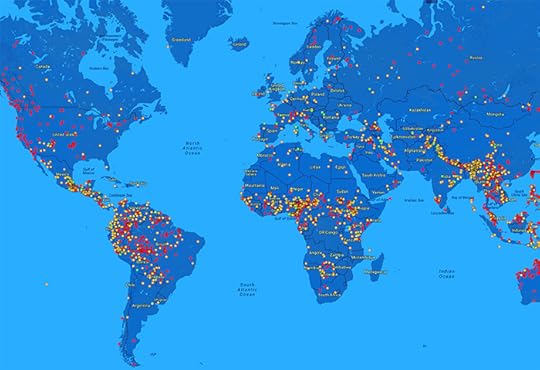 Each dot represents another endangered language
The Endangered Languages Project
When I first started talking about a Global Language Archive, another effort was taking shape.
The Endangered Languages Project has so far collected information on 3,410 languages. Its purpose is to be a worldwide collaboration between Indigenous language organizations, linguists, institutions of higher education, and key industry partners to strengthen endangered languages.
At the heart of their project is a website that was launched in June 2012 with funding from Google.
While Google oversaw the development and launch of the website, their long term goal was for it to be led by true experts in the field of language preservation.
For this reason, the project is now managed by First Peoples’ Cultural Council and the Endangered Languages Catalogue/Endangered Languages Project (ELCat/ELP) team at University of Hawaiʻi at Mānoa in coordination with the Governance Council.
In the words of the Endangered Languages Project:
“Humanity today is facing a massive extinction: languages are disappearing at an unprecedented pace. And when that happens, a unique vision of the world is lost. With every language that dies we lose an enormous cultural heritage; the understanding of how humans relate to the world around us; scientific, medical and botanical knowledge; and most importantly, we lose the expression of communities’ humor, love and life. In short, we lose the testimony of centuries of life.
Languages are entities that are alive and in constant flux, and their extinction is not new; however, the pace at which languages are disappearing today has no precedent and is alarming. Over 40 percent of the world’s approximate 7,000 languages are at risk of disappearing. But today we have tools and technology at our fingertips that could become a game changer.”
Users of the Endangered Languages Project website play an active role in putting their languages online by submitting information or samples in the form of text, audio, links or video files. Once uploaded to the website, users can tag their submissions by resource category to ensure they are easily searchable.
The Endangered Languages Project serves as a great first step, setting the stage for some far greater opportunities ahead. But several other resources like Wikipedia, National Geographic, Global Oneness Project, UNESCO, and many more are attempting to draw attention to this problem in their own way.
 Brazilian community that speaks the Eastern Bakairi language
A few examples of endangered languages
The Endangered Languages Project puts technology in the hands of organizations and individuals working to revive struggling languages and save themselves from extinction.
Some had developed hundreds of words for beads, fish, leathers, and snow because those had become focal points of daily living. Here are a few examples:
Voro has fewer than 50,000 native speakers and is spoken in the southeastern corner of Estonia and the Pskov Province in Russian.
Bisu has roughly 2,740 native speakers. In China, Bisu spoken in one village of 240 people. In Burma, it’s spoken by 2,000 in two or three villages. In Thailand, Bisu is spoken by some members in two villages with a population of 500.
Bakairi is spoken by approximately 900 people in Brazil. This language has two rather divergent dialects: Eastern Bakairi, spoken by seven hundred people in seven villages, and Western Bakairi spoken by 200 people in two villages.
Cimbrian is spoken by fewer than 2,000 people in Italy, in the towns of Giazza, Roana, Mezzaselva, and Rotzo, and Luserna. People who speak Cimbrian also speak Italian, German, and Venetan.
Tjupany is an Australian language with only 10 native speakers remaining in the world.
Karelian is a language closely related to the Finnish language with 63,000 native speakers in Russia and Finland.
El Molo is spoken by roughly 700 in a small community of fishermen living in two settlements along the eastern shore of Lake Turkana, in northern Kenya.
Tuscarora is a dying language spoken in Ontario, Canada. Only two or three speakers of Tuscarora remain, all over the age of 80.
 Artist conception of the Global Language Archive
The goal of the Global Language Archive
Creating a physical place that represents a focal point for language preservation brings with it tremendous opportunity. Unlike today’s cultural museums that capture physical fragments of history, the Global Language Archive will have a mission to preserve the communications, stories, and dreams of our ancestors.
Online efforts only go so far. By adding physical dimensions, human contact, audio stories, and peripheral experiences, we breathe life into these otherwise single-dimensional languages.
As “last speakers” begin to dwindle, the final-person-responsibility brings with it tremendous stress and anxiety. The loss of a language means the loss of birthright, heritage, and customs. It somehow breaks the connection with their ancestors and invalidates all of the accomplishments of the past, dishonoring the culture of their families.
But much of this stress can be diffused by taking these speakers through a formal preservation process that transforms them from “crazy person clinging to the past” to “cultural expert with a deep understanding of their ancestors.”
Curators of languages are different than curators of artifacts. Languages are constantly morphing tools of expression with deep emotional ties. Done correctly, the Global Language Archive will attract massive crowds from around the world and draw attention to this critically important problem. It will be a one-of-a-kind facility serving as a magnet for linguistic scientists and cultural researchers around the globe.
Once an AI Language Recreation Engine can be developed, it opens the doors for entirely new kinds of research we can only speculate will be possible.
In this context, language itself becomes a cultural taxonomy, and with upwards of 7,000 languages left to preserve, it has the potential for becoming the largest museum in the world with associated universities, hotels, culture-inspired retail centers, and much more.
At the same time, many question still need to be answered:
Will we need to develop a triage system saving dying languages?
If you decided to learn one of the endangered languages, how would you make that decision?
If it becomes easy to learn a new language, how many will you want your children to know?
What are the revenue streams needed to sustain a Global Language Archive?
What’s the ideal location for this type of facility?
How can the entire world be recruited to support this venture?
Final Thoughts
What’s the best way to experience a language?
Yes, it is possible to experience pieces of these native tongues through a website, but having access to local experts, cultural guides, and linguistic coaches takes it to a whole new level.
In our ever-expanding virtual world, it’s easy to start thinking that proximity isn’t important, but it is. Being surrounded by like-minded people at the Global Language Archive who share a common interest is very important.
Much like the difference between seeing an online copy of the Mona Lisa or traveling to the Louvre in Paris and experiencing it first hand, it becomes and entirely different level of engagement.
The Global Language Archive is envisioned to become the “Louvre of Languages.”
Author of “Epiphany Z – 8 Radical Visions for Transforming Your Future”
Thomas Frey's Blog

- Thomas Frey's profile
- 2 followers

