
Thomas Frey's Blog, page 32
November 16, 2016
42 Daunting Questions Facing the Future of both Intellectual Property and Personal Ownership
At a recent International Copyright Technology Conference in Seoul, Korea, I gave a talk on the “Future of Intellectual Property.” Leading up to the event my research led me to conclude that today’s IP laws, systems, and processes are not designed to handle the issues we’ll be facing with technologies next wave.
One example I used came from the highly publicized introduction of A.I. music using Sony’s Flow Machine software where it listened to all of the music recorded by the Beatles and produced a new song, “Daddy’s Car,” in their same style.
Naturally this led to more questions than answers.
1.) Ten years from now if consumers are given a choice between A.I. generated music and human composers, which will they choose? Keep in mind A.I. music can be produced as hyper-personalized one-of-a-kind songs.
2.) Will A.I. generated music be “owned” by the person running the A.I. software?
3.) How will they establish their claim of “ownership” in an all-digital music environment?
4.) If the A.I. generated music is based on past music from Fleetwood Mac, Rickie Lee Jones, Beyoncé, or the Beatles, do they deserve royalties for these derivative compositions?
Naturally we’re just getting started with this line of thinking.
Every person is radiating information every hour of every day. Just as the information we mentally emit can be logged and constitute the basis for a copyright or invention, the information we physically emit has value.
Tiny bits of human intelligence go into every online search, transaction, and ad click. This information is so valuable that once fed into a preference engine, a full one third of all Amazon sales come from “other recommended” products.
Material information about what we eat, our physical activities and even the people we hang out with can be hugely valuable to insurance companies, online retailers, healthcare providers, and ad placement services. Should the value of our physical information be automatically assigned to us or those who collect the information?
Both personal and intellectual property is getting harder to define, manage, and control. It is in this perplexing quandary of rights and ownership that we begin this column.
Intellectual Property and Ownership Issues Bubbling to the Surface
Future IP issues will be focused on ownership, privacy, and freedoms as legal systems attempt to reimagine themself with entirely new technologies that fit poorly into the existing frameworks.
It’s often been said that quantum computing will give us the ability to rethink the very building blocks of the universe so it’s no wonder that we’ll also have to rethink the rights of creative individuals.
Over the coming years we’ll have to wrestle with the changing nature of “property.”
Accelerating Timelines – The half-life of most products today can be measured in months not years. In the future it may even be reduced to days and perhaps even hours.
Digitalization leads to Dematerialization – At what point does less material constitute a new innovation?
Innovation is being Parsed into Far Smaller Pieces – Innovation today can be as small as a single emoticon, hash tag, or idea. Tomorrow, perhaps a single byte.
Shrinking Timeframe of Value – In the past, most of the value of a patent was derived in the last few years of its term. With digital technology it tends to come with first mover advantage up until advanced competitors arrive.
Shift from Ownership to License Holders – In a sharing economy, ownership becomes far less valuable than the right to distribute, the right to sell, and the right use. As example, Uber owns no vehicles, Facebook creates no content, Alibaba has no inventory, Airbnb owns no real estate. Will this growing mirage of ownership require a different kind of license?
 Our “property” involves far more than what we can see with our eyes
Rewriting the Rules with Emerging Technology
At the forefront of this transition are a number of emerging technologies, and rest assured, I’m just scratching the surface of challenging issues ahead. The technologies listed below are just a few that come to mind, and yes there will be many more to come.
Driverless Technologies – Within ten years it will be common to hale a driverless car on our smartphones, much like we do with Uber and Lyft today. But the data surrounding both the transaction and inside-the-car activities have great value.
5.) Can autonomous car companies sell photos of occupants, announce when famous people will be arriving somewhere, or monitor if riders may be doing something illegal?
6.) How much data surrounding the trip can car companies collect? (i.e. ages of occupants, music listened to on the trip, hair colors, eye colors, style of clothing, heart rates, and how many times riders use words like “totally” and “sweet”)
7.) Will riders automatically waive their rights to avoid advertisements? Do they have the right to ride in an ad-free environment?
8.) With competition coming on many fronts, how much of the “ride experience” will car companies be able to protect? Will they be able to patent, copyright, or trademark the level of privacy, its sound, texture, smell, taste, or harmonic vibration of the ride?
Sensor Networks – Over a trillion sensors are predicted to be collecting and distributing information over the next decade.
9.) Do we have the right to control, monitor, and delete data collected from our personal sensors? (i.e. When we buy sensor-infused clothing in the future, it may already come with a built-in data distribution network that we automatically agree to with the purchase.)
10.) With more data comes more definition. Will we soon be able to trademark our signature personality traits like our dance moves, hand gestures, ear wiggle, or laugh?
11.) Once we start tagging valuable objects, vehicles, and devices that we own, how will we prevent our “ownership network” from being hacked, monitored, or outright stolen from us?
12.) What exactly will ownership mean in an era where physical products are replaced by digital ones and our ability to share, distribute, assign, and license are just a tiny fragment of the options available through our constantly morphing digital rights?
Internet of Things – As I like to say, the Internet of Things is all about “devices talking to devices, talking trash about other devices, spreading rumors and lies about other devices.” Naturally this leaves us with a few questions.
13.) When we own a smart refrigerator, do our insurance companies have the right to monitor our diets and feed the data into their latest actuarial tables?
14.) If we use “mood-casters” to interface with the buildings around us, can the meta-data surrounding our attitudes and temperaments be scraped, used, and repurposed by building owners and neighboring occupants?
15.) Will my IoT devices become searchable? Yes, being able to search the contents of my refrigerator while I’m at the grocery store may be convenient, but it also has the potential for being highjacked by marketing companies, headhunters, and political adversaries.
16.) Does my IoT pot have the right to call my IoT kettle black?
3D Scanning & Printing – With changes happening almost on a minute-by-minute basis, the 3D printing industry is on the verge of becoming one of the largest industries on the planet.
17.) Who owns the rights to our digitally scanned bodies? Who else can and will have access to them?
18.) Will someone who wants to buy me a pair of hyper-personalized shoes as a present have access to my foot-scans? Will this type of permission also give access to other marketing companies?
19.) When I grow older and 3D printed organs, body parts, and entire replacement bodies become available, will I be buying or licensing the replacement body parts? Can they be repossessed for lack of payment?
20.) Having doctors monitor our replacement body parts remotely may sound convenient, but who will have access to the data? And will there be an off switch?
Contour Crafting – Created as a large-scale form of 3D printing, contour crafting is now viewed as a disruptive technology poised to revamp the entire construction industry.
21.) What features in a printed house will be patentable? Printed cabinets? Printed insulation? Artistic walls? Printed solar roofs?
22.) What tools will designers use to protect unique features such as lighting and audio configurations, elevator styles, sensor networks, and the operational characteristics of appliances?
Flying, Driving, Swimming, Crawling Drones – While flying drones are constantly in the news, drones are robotic vehicles with far more capabilities than simply flying. They can also roll along the ground, stick to the side of a building, float in a river, dive under water, jump onto a building, climb a tree, or attach themselves like parasites to the sides of trains, ships, and airplanes. Future drones will be designed with a wide range of complex capabilities, and these capabilities will dramatically change our understanding of privacy, personal space, and proximity-based rights.
23.) Who owns information collected by drones, and who else will have access?
24.) Does an open window somehow mean that it’s a public place and drones can fly in? Where do property lines begin and end? Where does personal space begin and end?
25.) Will people have the right to “shoot down” or otherwise destroy unlicensed or “trespassing” drones?
26.) What are the legal privacy barriers that will protect people from drones with cameras and audio scanning capabilities as well as drones equipped with a variety of other types of sensors? Should we have a Drone Bill of Rights?
Virtual & Augmented Reality – Both VR and AR are Internet-sized opportunities on the verge of exploding around us.
27.) Do “real world” augmented reality game designers have the right to include the general public as unwitting participants in their games?
28.) Who owns the “reaction data” in VR simulations? How a person reacts to specific situations can be incredibly valuable data.
29.) Will VR experiences be patentable, copyrightable, or protectable in any way?
30.) What is the proper term for a VR creation – a video, a game, a simulation, an experience, or something else?
Artificial Intelligence – With A.I. we stand on the brink of a technological revolution that will fundamentally alter the way we live, work, and relate to one another. Microsoft even claims to have breakthrough A.I. technology for reprogramming cells back to a healthy state, and has announced they will be able to cure cancer in less than 10 years.
31.) Will AI systems replace our need for human drivers, musicians, and doctors?
32.) Can we reprogram our cells to cure most major diseases as Microsoft and others have proposed?
33.) Will we “buy” the cure or just “license” it? Can we “gift” it to others?
34.) Can an A.I. “entity” be copyrighted, trademarked, licensed, or sold?
Cryptocurrency – Currently over 3,300 cryptocurrencies are being tracked around the world.
35.) At what point will cryptocurrencies become more stable than most national currencies? NOTE: Bitcoin is already more stable than some.
36.) Who is in charge of solving cryptocurrency-related crimes like theft, counterfeiting, or fraud?
37.) If I take out a loan in cryptocurrency, such as a house loan in Bitcoin, and the cryptocurrency collapses, is the debt still owed?
38.) If I’ve stored all my cryptocurrency on my smartphone, and I lose it, is the money recoverable?
Future Search Engines – In the grand scheme of things, search engines are still a prehistoric technology. Quantum computing will soon give us the ability to define, test, and search for a variety of new physical and digital attributes. These include attributes like smells, tastes, barometric pressure, harmonic vibration, reflectivity, textures, and specific gravity.
39.) When it comes to definable sensory creations like tastes and smells, will we soon be able to protect them with patents, trademarks, copyrights, or something else?
40.) Can other definable attributes like harmonic vibration, reflectivity, and textures also be trademarked in a form similar to “sonic branding?”
41.) How long will it be before we create “attribute scanners” to log our daily experiences in a way that will also make them searchable?
42.) When will we see an artificial nose more accurate than a bloodhound? How long before someone creates the periodic table of smells?
 The value of our information is directly proportional to our earning power!
Final Thoughts
As we move into a globally connected world with borderless communications and borderless economies, whose authority will come into play?
Due to a lack of any true global authority, tech companies like Facebook, Google, LinkedIn, Pinterest, and Twitter have been forced to define their own code of ethics, deciding what is or isn’t fair use or original content.
In this role of them serving as quasi-governmental agencies, they have begun arbitrating digital rights issues with their own terms of service agreements that virtually no one ever reads. When the European Union ruled that people have the right to be forgotten, the terms of service agreements were altered to include that provision.
For this reason, tech companies have broad overarching powers to decide who and what is searchable, findable, and promotable. Since we see growing issues surrounding privacy, data collection, and distribution, they will also have the ability to influence, manage, and even control many of the data markets moving forward.
While we will have a bright future ahead, the challenges should never be underestimated.
Author of “Epiphany Z – 8 Radical Visions for Transforming Your Future”



October 30, 2016
How Virtual Reality will Transform the Future of News
The year is 2026.
When the police arrested the couple for human trafficking, a news drone was able to slip through the door and get first hand footage of the squalors the young girls were being held in.
The same drone that did a quick video sweep of the building was able to pause momentarily in the center of each room and stitch together an entire virtual environment for a different kind of news broadcast.
Rather than watching a typical 2D broadcast, a select group will opt to pay for a premium channel where they can experience news segments in an entirely different way.
Whether its feeling like you’re part of a courtroom drama as its unfolding, being on the field when a football team wins the Super Bowl, or watching the second by second details of a stranded skier being pulled free from an avalanche, watching the news today is nothing compared to tomorrow’s full immersion newscasts.
Next generations virtual reality news will enable viewers to become engaged with the topics on a far deeper emotional level, to the point where some will become emotionally addicted to this kind of broadcast.
News anchors will be transformed from the well-groomed face behind the desk to a narrative guide that helps participants understand the experience. Every element of VR news will have to be rethought from a 360-degree viewer perspective.
The challenge in producing and selling these types of newscasts will center on VR’s full-immersion requirements. As a viewer, rather than doing crossword puzzles and catching a few passing comments and images on the screen, VR News will be a demanding medium.
Yes, it may be possible to watch VR news while working out on a treadmill or sitting in a driverless car, but the either-or requirements of switching your consciousness away from the here-and-now into a new virtual setting will be considerably different.
From an advertiser’s standpoint, it may not garner the mass audiences broadcast news organizations strive for today. However, the intensity of the experience coupled with hyper-individualized ad selection will offer more than enough offsetting advantages to give it an even better return on investment.
While it may be easy to point to a few fatal flaws in this line of thinking, the entrepreneurs among us will be working overtime to devise every possible way a model like this can succeed.
Our 2D World
Few of us realize this, but we’ve been taught to think two-dimensionally. Starting with 2D paper, books, whiteboards and blackboards, our schools have beaten us over the head with 2D thinking.
As we moved into the computer age, we moved to 2D screens. Even adding 3D glasses to our experience only gave us a slight marginal improvement.
If we throw away the display on our computer and project everything three-dimensionally above our desks, we can’t even imagine what it’ll look like to “surf the net,” produce a 3D website, or if we created 3D charts and graphs, what that third dimension will represent.
We all live in a three-dimensional world, but we’re only now getting to the point of experiencing it the way it already exists.
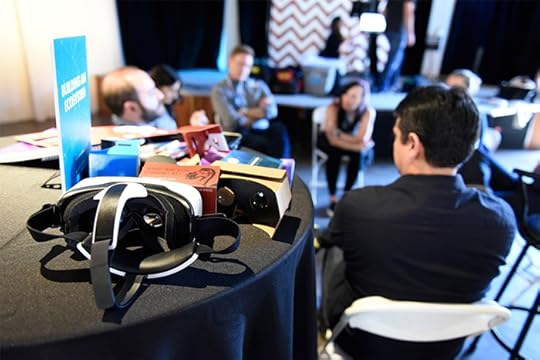 Life in a VR newsroom
The VR News Advantage
Here are a few of the reasons why VR is about to invade our life in thousands of new ways, and sooner or later VR newscasts will become a staple of our daily information diets.
1.) Automated Collection – Every local incident, whether it’s a plane crash, a protest, a robbery, or a murder will trigger a fleet of news-gathering drones to converge on the scene. With a combination of highflying drones to give the 1,000-foot perspectives and tiny sneak-through-any-open-window drones to give a more intimate view of the situation, this type of news coverage will give a far more intimate assessment of the unfolding story than anything today’s newscasters ever dreamed of.
2.) Context & Realism – VR News will add the reality to virtual reality, giving context, realism, and a sense of time and place to every situation. Gone are the days of staged performances just to make the 6:00 o’clock news. Any incident that has the slightest hint of phony journalism will be instantly slammed and ridiculed.
Very often a news story gives a far different impression than what is actually happening. Rather than only seeing the handful of protestors burning a flag, the short clip of the worst possible flooding scene on a remote highway, or the single house that gives the impression a whole city was destroyed in a tornado, a VR broadcast will instantly let viewers know if this is an important story worth following.
3.) Deep Emotional Impact – Whether it’s a sense of empathy, compassion, anger, or relief, a VR newscast will engage viewers on a far deeper emotional level. Instead of listening to a few grieving neighbors lamenting over a troubled teenager, VR-drone coverage will include scenes of closets packed with guns, empty syringes and pill bottles lying on the coffee table, and a shaved cat locked in the basement. Every element of the situation will contain its own points of emotional context.
4.) Redefined Relationships Between Police and News Organizations – Moving past the carefully logged and photographed police scenes of the past, a few video-drone sweeps of an area will give more detail than ever in the past, with enough information to reconstruct the scene virtually in microscopic detail that both police and news teams will have access to. People-less information gathering means far less chance of interference and far fewer people hoarding critical pieces of information. As a result, news organizations can potentially move towards a more mutually constructive relationship.
5.) Redefined Relationships Between Government and News Organizations – Over the years, journalism’s checks-and-balance responsibility have placed it squarely in political crosshairs, creating an ongoing adversarial relationship with many levels of government. While this should never go away, the nature of this relationship moving into a VR-drone news era with heightened levels of transparency, will take the argument out of most arguments. A new era of trust can begin to blossom with government once again trusting the role and responsibility of news organizations and news crews regaining at least some of the trust of government as seen through the eyes of their own constituency.
6.) Redefined Sense of Purpose – As news teams begin to explore the true reach of their capabilities, news organizations will feel empowered to reach beyond normal headlines and scope out the hidden meaning behind the stories, global trends, the ripple affect of every incident, and the cause-and-effect events creating the problems we all have to deal with.
7.) Expanded Role for News Coverage – With drone-VR news coverage there is really no limit. The news is well past the time constraints of television or what can be squeezed into the pages of a newspaper. Instead, in-depth coverage of seemingly minor events like board meetings, funerals, weddings, home burglaries, and dog shows can become profitable through a fully automated system. The long tail of news is about to get even longer.
8.) Real-Time Facial Polling – Since AI-enabled video capture will have the ability to analyze facial expressions, exuding the equivalent of an up-vote or down-vote on every piece of information, VR news coverage will be constantly learning about each users likes and dislikes. It can also rate advertisements, length of messaging, preferred images, narrative styles, and even vocal dialects. In short, we will know what news people like and don’t like.
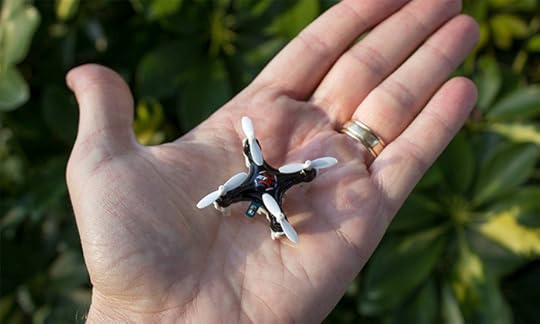 Ultra tiny drone-VR capture devices
Final Thoughts
Naturally the combination of virtual reality, drones and artificial intelligence will open a Pandora’s Box of possibilities, and not everything will be positive.
We run the risk of having any semblance of privacy totally stripped away. We also run the risk of having mountains of bureaucratic laws spring to life and slow progress in this field altogether.
But given the right circumstances, VR-drone news has the potential to reinvigorate the news industry, adding back some of the lost revenue to their coffers, while opening the door to a whole new approach for doing business.
The purpose of this exercise has been to expand our thinking about business opportunities right around the corner. But as with all future visioning projects, this one runs the risk of being overly optimistic, overly pessimistic, or simply wrong.
For these reason I’d love to hear your thought on the future of VR news and whether its alive with possibilities or simply dead on arrival.
Author of Epiphany Z – 8 Radical Visions Transforming Your Future

October 25, 2016
“122 Things” you will be able to do in the library of the future that you can’t do today
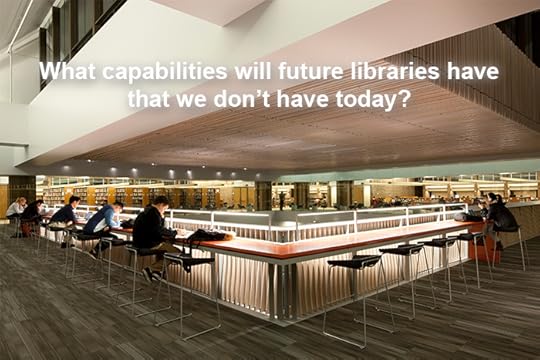
It all started with a conversation I had with the National Library of Greece a couple weeks ago. As they shared with me their plans for constructing a massive new National Library, a beautiful facility they hope to open next year, they started asking my thoughts on how to “future proof” their new facility.
As I advised them to operate it more as a laboratory for future libraries, where their mission will be to constantly test out new features, options, and systems, it occurred to me that very few people in the library world have any idea about where this current transition is taking us.
Over the past two decades, information has morphed and shifted into a myriad of different forms, going digital for the most part, with physical books and paper-based sources, as a percentage of the whole, all on the decline.
With digital comes an exponential increase in the number of ways we can access, manipulate, search, parse, combine, manage, and store each of the growing number of elements in the knowledge universe.
As a result, our expectations surrounding libraries and the activities and capabilities we expect from a local neighborhood information center, are also beginning to change.
Stepping through this list of possible activities, we should begin with the understanding that very few libraries, if any, will have all of them.
My intent in creating this list is to help those working with libraries to think about the multidimensional nature of our unfolding digital world. Certainly these changes will affect far more aspects of life than just libraries, but as a society we expect them to be ahead of the curve, helping us understand what we should be paying attention to.
As we add technologies like chatbots, virtual reality, and artificial intelligence to our libraries, activities will begin to coalesce around the strengths of particular communities and their regional differences. And that’s ok. In fact every library will need to operate as a working laboratory, testing new equipment, activities, and approaches to our ever-expanding info-verse to see where users gravitate.
What should libraries be?
How will we describe the nature of libraries in the future? Should they be:
Baby friendly
Pet friendly
Food friendly
Beer, wine, and alcohol friendly
Event friendly
Party friendly (should they provide a list of approved catering companies)
Homeless friendly
Privacy advocate friendly
Business friendly
Casual user friendly
Should they have facilities for:
Traveling museum exhibits
Private meetings
Aerobic reading
Taking a shower
Preparing and serving food
Taking a nap
Storing personal items
Sending money or making payments
Traditional Information Archive – Over the years libraries have expanded their collections. Certainly not all are large enough to manage every items on this list, but most have a majority of them.
Print books
Digital books
Audio books
Newspapers
Magazines
Music
Movies
TV shows
Radio broadcasts
Presentations
Courseware
Audio materials (discs, tapes, talking books and other recorded formats)
Maps
Microforms
Videos (film, television broadcasts, DVDs)
Sheet music
Photographs, posters, prints, and drawings
Apps and mobile apps
Social media archives
Artwork

Non-Traditional Archives
Libraries also have an obligation to archive their local communities. Some of the non-traditional archives may include:
1. History of every business in region.
2. Overview of every graduating class in every school.
3. History of local infrastructure including bridges, tunnels, waterlines, sewer lines, fire stations, water towers, police stations, schools, etc.
4. Aging of the community done through sequential photo queues.
5. The sound of the city in the form of audio recordings over the years.
6. Cultural influence timelines.
7. Local archive for emergency equipment such as emergency generators when the power does down, or emergency lighting, emergency cots, etc.
8. Record of every law, ordinance, and regulation affecting every member of the community
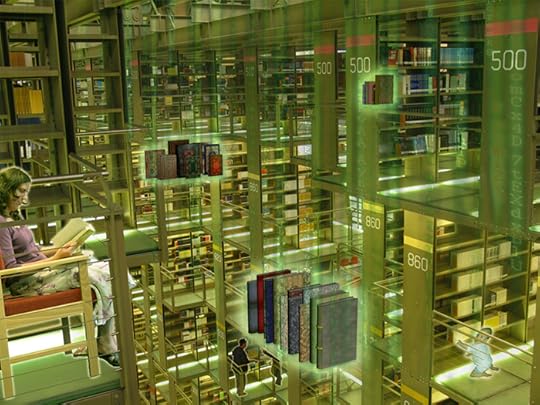
Search Command Centers
Most people entering a library are searching for something. Over the coming years search technology will become increasing complicated, but at the same time we will have far more capabilities to use in our search.
Video Search – When it comes to video search, we still struggle with attributes like context, style, circumstances, and a variety of situational details. Examples of future video searches may include:
9. Bring up every public video of Jane Doe (average person) between 1980 and 2005 when she was in Manchester, England.
10. What are the top 20 most watched videos of an audience laughing at someone who is in the process of dying from a fatal accident?
11. Show me the top 10 Twitch tournament videos of Korean players playing Destiny version 4.3.
12. What are the 12 common features of low grossing movies produced by Paramount Pictures in 1978?
Drone Search – It may seem unlikely today that libraries will have their own fleets of drones to deploy for physical search inquiries, but that will change over the coming decades.
13. Using thermo scans, what houses in my city have the least amount of insulation in the attic?
14. Where is the hole in the fence that is allowing livestock to enter the Eagle Ridge Neighborhood and cause damage?
15. Which areas in my city are least likely to get flooded when the river overflows its banks?
16. Give me a 360-degree views of the three major sculptures erected in my city last year?
Demographic Search – The demographics of the world is changing and we need better tools for monitoring it.
17. Show me a heatmap of the world, broken down by 1 square mile regions, showing highest to lowest birthrates
18. What regions of the world are most like Winnipeg, Canada (pick any city) based on climate, age demographics, political views, education levels, scientific interests, personal health, etc.
19. Who is the most knowledgeable person in the world on acidic soil types?
20. Show me a decade-by-decade breakdown of increasing average incomes in Africa since 1900.
Complex Searches
Over time search engines will deploy a combination of techniques for finding the answer to complex questions.
21. Interactive map of the world highlighting regions currently at 10 degrees Celsius?
22. What world leaders are currently in NYC?
23. Interactive map of butterfly migrations in Panama?
24. What movie has Harrison Ford wearing a blue sweater while chewing gum?
25. Why is this object (hold up an object) important?
26. How famous am I compared to other people in my community?
27. Timeline Search – How have recipes for bread changed over the past 300 years?
28. Who else in the world has a disease like mine?
Future searches
As we enter the age of quantum computing, far more search attributes will become quantifiable. Someday soon we will be able to search for:
29. Smells
30. Tastes
31. Harmonic vibrations
32. Reflectivity
33. Specific gravity
34. Chemical composition
35. Textures
36. Viscosity
Fussy search features
How do we search for things with similar qualities? Future searches may include options to specify:
37. Looks like
38. Smells like
39. Feels like
40. Tastes like
41. Sounds like
42. Absorbs like
43. Echoes like
44. Coats like

Spherical Displays
Spherical displays in the future will have the ability to give an accurate perspective of planet earth.
45. Track pollution flows across the ocean in real-time
46. Monitor major hurricanes from satellites and track new developments on a minute by minute basis
47. Book a complex travel itinerary from a spherical perspective
48. Show how warm water currents have changed over the past two decades.
Maker Spaces
Libraries are rapidly transitioning from a place for passive visitors who consume information to active participants who would much rather produce it. Areas to include:
49. Potters wheel and workshop for mixing the mud and making pottery.
50. Growing vegetables using aquaponics.
51. Video studio for both shooting and editing a video.
52. A production area for both recording and editing a virtual reality experience
53. IoT workbenches complete with Internet of Things help desk
54. Access to 3D scanners and printers capable of printing items out of several hundred different materials.
55. Laser cutters for etching/cutting wood, glass, metal, and ceramic.
56. Jewelry making stations
Creative Spaces
These types of spaces will come complete with all the tools, technologies, and supplies for creative people to get creative.
57. Produce art
58. Produce music
59. Produce games
60. Produce podcasts
61. Produce webcasts
62. Produce VR experiences
63. Host IoT workshops
64. Create & print with 3D printers
Mini theaters
It’s important for groups have a place to gather for such things as:
65. Watching movies
66. Playing video games
67. Watch live events such as concerts, sporting events, NASA landings, etc.
68. Watch YouTube, Facebook, Twitch, and more
Live webcast studios
While we no longer need a studio for doing live webcasts, the age of the studio is far from over.
69. Book reviews
70. Game reviews
71. App reviews
72. Course review
73. Chatbot review
74. Tech reviews
75. 50 years ago today
76. “How to” accomplish something
3D Printing
As the process of additive manufacturing improves, it will begin to enter all of our lives in unusual ways:
77. 3D printer lending
78. 3D scanner lending
79. 3D printer workshops
80. 3D scanner workshops
81. 3D design competitions
82. 3D printer-scanner help desks
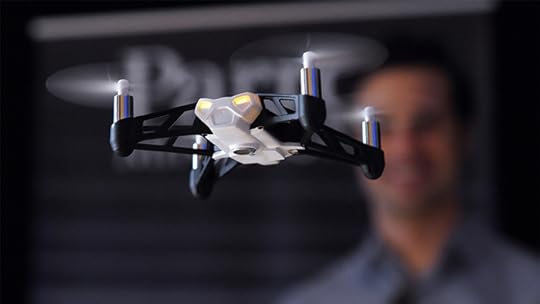
Flying Drones
In much the way kids that lived a century ago wanted to learn how to fly, young people today are enamored with flying and driving drones.
83. Drone lending
84. Flying drone flight simulators
85. DYI drone workshops
86. Drone competitions
Artificial Intelligence
Artificial intelligence is already in existence and already knows far more about you than any person alive today. Will future libraries offer:
87. AI lending
88. AI workshops
89. AI competitions
90. Monitor and anticipate visitor usage
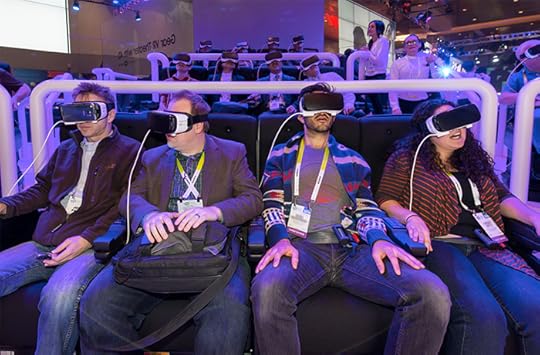
Virtual Reality and Augmented Reality
Both will become far more pervasive in the future.
91. VR & AR hardware lending
92. VR & AR software lending
93. VR & AR production studios
94. VR & AR search engines
Robotics
Robots will become far more common in the future.
95. Robot lending
96. Robot rodeos
97. Robot workshops
98. Robot competitions
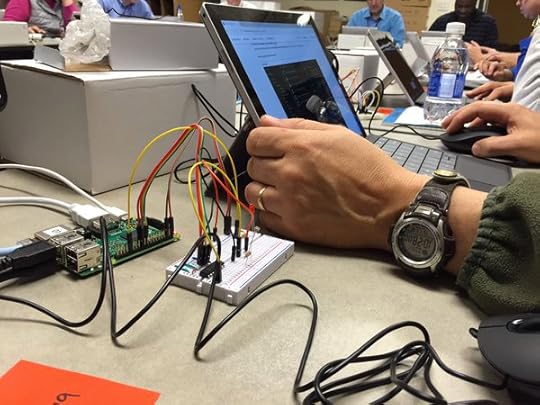
Internet of Things
As more of our devices join the connected world we will see an increase in demand for:
99. IoT device lending
100. IoT prototyping workshops
101. IoT competitions
102. IoT expert speaker sessions
Equipment Archive
Most people have old forms of information on disks, cartridges, stick drves, and tapes, and many are looking for a place to convert it to a new medium that people today can access.
103. Read and print microfiche
104. Both read and convert 8”, 5.25”, and 3.5” disks to the cloud
105. Convert photos to video
106. Convert from VHS to DVD
107. Digitize and repair old photos and documents
108. Old gaming consoles to play programs and games on cartridges, apps, stick drives, and CDs
Global Library Projects
109. VR chat rooms with people in other counties
110. Cross cultural lending programs (i.e. books written in Japanese, not translated, about Ben Franklin)

Video and Non-Video Games – Games are quickly becoming the cultural norm for most young people today.
111. Game tournaments
112. Game lending
113. Game builder workshops
114. Game expert events
New Facilities – Most major libraries will be testing out a host of new options to make their facilities relevant for next generation users.
115. Mini Planetariums
116. Robotic storytelling centers
117. VR dating stations
118. Time capsule room
119. Drone lending program
120. Pet lending program
121. Expert events – meet the experts
122. Community archives – let the community decide
Final Thoughts
As a kid growing up, libraries were always that magical place full of ideas and possibilities. Future libraries will have all that and more.
Yes, they will be continually evolving over the coming decades and the key to our understanding them lies in our ability to expand our perspective and reframe our thinking abut their role and purpose.
The list above is merely scratching the surface. Libraries can start with a formula, mission statement, policy plan, or lengthy surveys, but in the end libraries will evolve, morph, and transform on their own even without human intervention.
It’ll be an exciting thing to watch, and even more exciting to be part of.
By Futurist Thomas Frey
Author of Epiphany Z – 8 Radical Visions Transforming Your Future
September 28, 2016
The Transformative Tech Playbook – Eight Emerging Internet-Sized Opportunities
When it comes to innovation it’s always hard to point to that exact moment when an invention, contribution, or individual caused the course of history to change.
But there’s something about the right combination of ideas, technology, and personalities that creates a new force of nature.
Most of it is driven by unsung heroes, slaving over a project or detail that virtually no one will ever know about, forsaking family and friends, working past the point of exhaustion, putting their own creativity to the test, for an accomplishment that can neither be explained or demonstrated.
But somehow it makes a difference.
It makes a difference to them and the next unsung hero who gets handed the same spark-of-ingenuity and is tasked with moving the innovation needle another millimeter along the path of progress.
That’s what happened in 1852 when Elisha Otis invented the safety elevator, an elevator that automatically comes to a halt if the hoisting rope broke. This one breakthrough opened the door for high-rise building to be erected all over the world.
That’s also what happened in 1950 when Frank McNamara and Ralph Schneider devised a way of using a small cardboard card to pay their bill at a restaurant. This insignificant transaction is what launched Diners Club and paved the way for today’s massive credit card industry.
It happened again in 1990 when Tim Berners-Lee, sitting in his laboratory in CERN Switzerland, developed HTML, URI, and HTTP, some of the critical pieces for launching the World Wide Web.
However, each of these turning points in history were built on the work of hundreds of people, and thousands of minor accomplishments, leading up to the point of their contribution.
Once the Internet was formed, the network itself became a massive platform upon which millions of new innovations could spring to life. As a networking platform, every new application can be hung like ornaments on a Christmas tree, to add additional capabilities.
In a connected digital environment, innovation is parsed into far smaller pieces, enabling even more people to contribute.
In 2007, the introduction of the iPhone paved the way for a massive app-building community that has made smartphones an essential part of everyday living.
Today we are witnessing the convergence of technologies that are forming several new platforms, each with the potential to grow exponentially into an Internet-sized opportunity.
Meet the New Kids on the Block
Most people are aware of these technologies, having heard the buzz in the news media, but few are actually viewing them as massive growth engines with the same explosive potential as the Internet.
Many of these started long before we ever heard of the Internet, but the Internet is what’s given birth to a host of new turbo-charged offspring.
Over the coming years we will hear about things like cross-platform connectedness, interoperability, and operating system wars. But in the end everything is connected. We’re moving from a connected world to a super-connected world, and we’re just getting started.
Here’s a look at the new kids on the block.
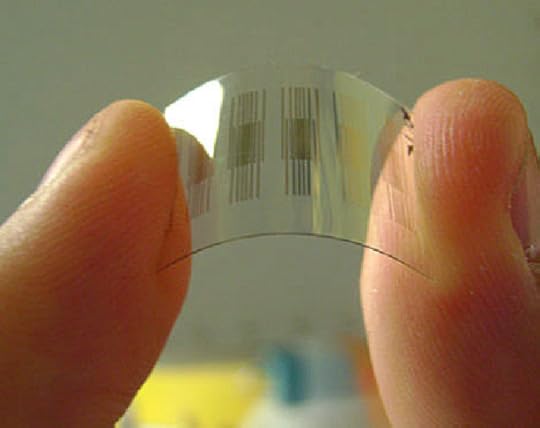 Every trillion sensors is just a stepping stone to the next trillion!
1.) Trillion-Sensor Network
When Janusz Bryzek, VP of Fairchild Semiconductor first presented the idea of a trillion sensor summit, the prospects of growing and managing that size of sensor network seemed like a far off dream.
However, the mobile market is a bullet train for the sensor industry. With the number of sensors doubling every 4 years in smartphones, reaching upwards of 80 per phone by 2024, and the sale of smartphones projected to reach 2.5 billion annually, this one industry alone could account for more than 200 billion sensors per year in less than eight years.
As the sensors grow ever cheaper, and the network grows ever larger, the more data we as individuals, professionals, companies and governments will collect and analyze to make ever more intelligent decisions.
Sensors that measure heat, light, moisture, movement and thousands of other attributes will shrink to dust-sized particles and be imbedded in coating like paint and powder coating, planted with our crops, sewn into our clothing, and 3D printed into products to add tiny bits of information to virtually ever surface around us.
More importantly, the sensor industry is paving the way for the Internet of Things.
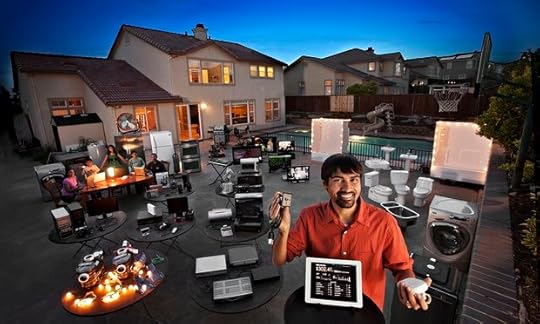 When it comes to the Internet of Things, we’re just getting started!
2.) Internet of Things
One day soon, we will wake up and wonder how we ever survived in a world of ‘dumb’ disconnected things. Our homes, including our pantries, closets and shoe racks, our offices, factories and vehicles will be full of connected devices.
The World Economic Forum estimates that the number of connected devices will grow at a compound annual growth rate (CAGR) of 21.6% over the next four years from 22.9 billion in 2016 to a headline-grabbing 50.1 billion by 2020 – equivalent to almost five connected devices for every person on the planet.
But we’re just getting started. As an industry, the Internet of Things will work closely with the 3D printing industry to make all of our products smart-products.
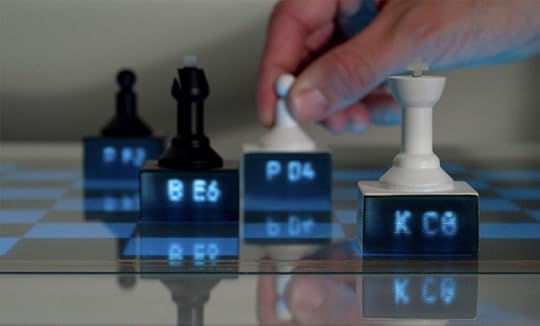 3D printed chess pieces with light pipes on an interactive tabletop that suggest your next move
3.) 3D Printing
Exponential growth in 3D printing is being fueled by improvements in scanning, materials, and multi-material print capabilities.
3D printing already appeals to artists, architects, inventors and other creatives who need an easy method of prototyping or modeling.
The reach of 3D printers extends far beyond that. While the printing process today is slow, tomorrow’s machines will be designed as full production models where virtually anything can be produced cheaply and in large quantities eliminating the need for overseas manufacturing. 3D printing will support a diverse range of other applications including medicine, fashion, and even food, if you are into artistically designed highly processed meals.
The industry will continue developing. On the consumer front, lower prices will make 3D printers more attractive and improvements in quality, speed and safety will further the cause.
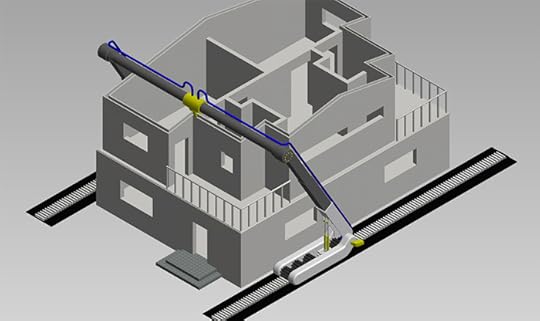 With contour crafting, our very definition of what a house, condo, or office is will begin to change!
4.) Contour Crafting
Many people tend to dismiss contour crafting as the grown up version of 3D printing for building houses, but it ends up being a completely different industry with vastly different enablers and growth curves.
Next generation contour crafting will be far more than just printing the structure. Multi-material machines will print the wiring and plumbing in the walls, cabinets and fixtures in the kitchen, and toilets and sinks in the bathroom.
We will no longer have the need for flat walls. Every wall can be an artistic centerpiece.
Our very definition of what a house, condo, or office is will begin to change once we begin to explore the full potential of this technology.
Architects will go crazy with their ability to create freeform designs impossible to build with today’s construction methods.
Over the coming months we’ll see headlines lauding the worlds first “printed” post office, hospital, school, hotel, and baseball stadium.
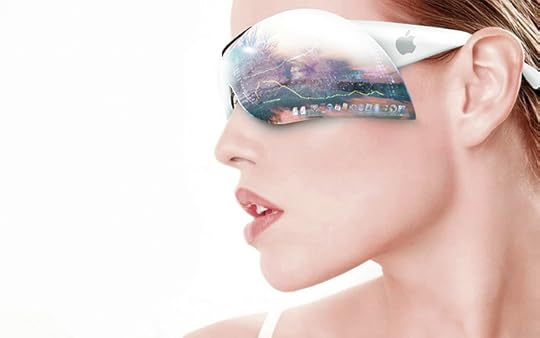 At what point does our virtual world become more valuable than our real world?
5.) Virtual and Augmented Reality
References to VR go back over 80 years, and AR about 50 years, but the term “virtual reality” started making its way into modern culture in the 1980s due to Jaron Lanier, one of the modern pioneers of the field.
However, it wasn’t until Facebook bought Oculus in March 2014 that the entire world started taking notice.
While VR itself is a technology platform, it has taken many years for all the necessary pieces to come together to create the exponential explosion that is about to happen. The enabling tech convergence is being driven by our growing bandwidths, networks, and VR equipment that is both reasonably priced and sufficiently high resolution to create a mass consumer market.
VR and AR applications are about to touch every industry today including architecture, gaming, education, physical therapy, entertainment, sports, communications, and much more.
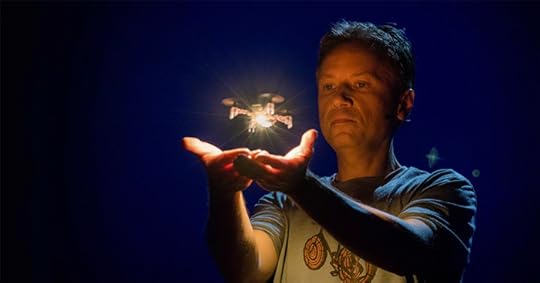 We will reach our first billion drones in the world between 2030-2032!
6.) Flying Drones
When I wrote my column on 192 Future Uses for Flying Drones in 2014, it was intended to spark people’s imagination.
At the time I hadn’t really given much thought to the driving, swimming, climbing, rolling, jumping, surfing, and digging drones that have begun to dot the emerging technology landscape.
Any combination of movement and automation can be used to develop of whole new range of capabilities for next generation robotic vehicles.
By 2030 the drone industry will have splintered into multiple new industries with abilities impossible to imagine from today’s vantage point.
 Driverless technologies will touch virtually every industry!
7.) Driverless Technologies
Imagine stepping out of your house 15 years from now and using your smartphone to summon a driverless vehicle. Within 2-3 minutes a driverless vehicle arrives and whisks you off to work, school, shopping, or wherever you want to go.
A form of on-demand transportation is already happening with companies like Uber and Lyft. If we eliminate the driver, costs will plummet.
Once the technology is perfected, on-demand transportation companies will crop up in most metropolitan areas with large fleets of vehicles poised to meet consumer demand.
There’s a significant difference between a driverless car and a fully autonomous vehicle. We already have a number of vehicles on the road today with driverless features, but that’s only a small step towards the no-steering-wheel type of driverless car many are imagining.
As we move further into the fully autonomous car era, we also need to understand the distinction between “user-operated” and “completely driverless” vehicles. Because of regulatory and insurance issues, user-operated fully autonomous cars will come to market within the next five years, while complete autonomous driverless autos will remain further off.
As I’ve said many times, driverless cars will change transportation more dramatically than the invention of the automobile itself.
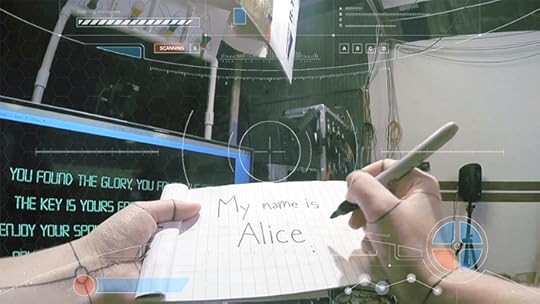 How will we know if it’s real or AI?
8.) Artificial Intelligence
Artificial intelligence has a magical element to it because we still don’t know where its capabilities end.
As example, AI music is coming. We won’t need musician to write new music, AI can do it all by itself.
Very soon we’ll have all-AI music stations on the radio and AI background music playing at parties. ASCAP can try to collect all the royalties they want, but they’ll soon be out of business.
In much the same way, computers have beaten chess, Jeopardy, and Alpha Go champions, AI will soon out-write writers, out-art artists, and out-produce movie producers.
That doesn’t mean we’ll all rush to buy AI produced products, but at this point we don’t know.
It does mean that AI will be entering our lives in thousands of different ways, and it will eliminate tons of jobs along the way.
Final Thoughts
So if these eight technologies are driving the next wave of innovation, what comes after them?
Rest assured there are a large number of equally transformative technologies already percolating their way to the top. Some may even grow faster and more explosively than the list above.
Keep an eye on things like blockchain technologies, synthetic biology, quantum computing, super materials (graphene, stanene), tube transportation (ET3 & Hyperloop), bioengineering (CRISPR), DNA sequencing, chatbots, neuroengineering, quantum computing, atmospheric energy harvesting, near-earth satellite tech (project Loon, Aquila, Titan), robotics, neural user interfaces, and mass energy storage.
The next generation of transformative technologies may be exponentially larger, possible 32 or 64 of them happening simultaneously.
Going back to the Christmas tree analogy, tiny improvements will be hung like ornaments on each of the new platforms, causing them to scale far faster than ever before.
If you think we’re going to run out of work anytime soon, think again. We’re about to enter a period of severe talent shortages. But since, future jobs will bear little resemblance to our jobs today, only the super adaptable need apply.
Author of Epiphany Z – 8 Radical Visions Transforming Your Future
August 30, 2016
The Immortal Human: Do we truly understand the problem we’re trying to solve?
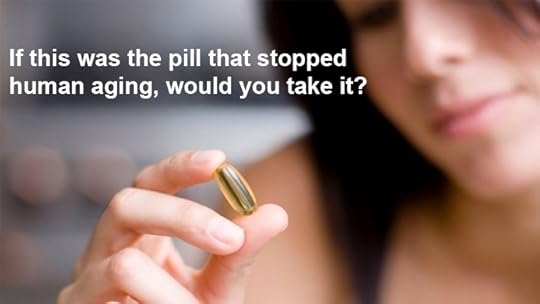
Imagine what it will be like attending the Olympics in 2248. Men and women competing in their respective sports will range in age from 16 to 212. The oldest competitor is now in his 38th Olympic competition, and young people have complained for years how hard it is to break into some of the elite sports when old time veterans continued to strengthen their techniques and are addicted to the winner circle.
Certainly many of us wish this were one of our problems today.
Over the next couple of decades, most of us will have the opportunity to decide how long we want to live. But while it may start as a forever wish, the promise of halting the aging process will be plagued with tremendous uncertainty, ethical debates, and cultural pressures that few have anticipated.
The first wave of this technology will most likely be very expensive, but it won’t take long for the price to drop and for middle class people everywhere to taste the magic and experience the dream.
Early on we will hear an ethical debate coming from those who profit from today’s short-lived version of humanity. We will, however, transition from those who profit from fixing today’s health problems to those who profit from prolonged life cycles and substantially better health from here on out.
We will also hear from over-population alarmists, limited resource worriers, and those who fear we are playing God and interfering with our spiritual destiny.
There will be challenges to our social structures, pressures on our existing systems, and a constant rewriting of rules for relationships.
In spite of the naysayers, just as we overcame our fear of flying in planes and traveling to other planets, we will transcend our current 19th century thinking on aging and death, and look forward to what comes next.
This column is about what comes next.
 In the future, old age will not look like old people trying to act young again
Benefits of an Aging Society
A recent study published in The Journal of Clinical Psychiatry, determined that not only were older people more satisfied with life overall, they were also less likely to be anxious, depressed, and/or stressed out. And the best part was that happiness tends to increase with age, with some of the oldest survey recipients reporting the highest levels of life satisfaction.
While this is counter to what most would imagine, there is a scientific explanation to these findings.
“Brain studies show that the amygdala in older people responds less to stressful or negative images than in a younger person,” said senior author of the study Dr. Dilip Jeste.
Gathered from extensive polling of 1,546 people ages 21 to 99, the older respondents, despite physical and cognitive decline, were more likely to have better mental health than the younger ones.
According to Jeste, “As we age, we become wise. Peer pressure loses its sting. Better decision-making, more control of emotions, doing things that are not just for ourselves, knowing ourselves better, being more studious and yet more decisive are all upsides of aging.
Should we anticipate this level of age satisfaction for the 100+ crowd as well. This is particularly good news for young people as they now have something to look forward to.”
History’s Search for the Fountain of Youth
An ancient story titled the “Water of Life” described Alexander the Great and his servant crossing the Land of Darkness to find the restorative spring that gave eternal youth.
Later, many stories of a “fountain of youth” were attributed to the first Governor of Puerto Rico, Ponce de Leon, even though most turned out to be a myth.
Throughout history, references to a magical spring continued to fuel the imagination of primarily wealthy people who dreamed of regaining the vigor of their younger years.
More recently the dream of eternal youth has take on a much more scientific feel using terms like indefinite life extension, experimental gerontology, and biomedical gerontology to describe the study of slowing down or reversing the processes of aging.
Researchers in this field are referred to as “life extensionists”, “immortalists” or “longevists.” They believe that future breakthroughs in tissue rejuvenation, stem cells, regenerative medicine, molecular repair, gene therapy, pharmaceuticals, and organ replacement will eventually enable humans to have indefinite lifespans.
In fact, a significant number of Silicon Valley thought leaders have tried to recast aging as merely another legacy system in need of recoding:
Oracle co-founder Larry Ellison’s Ellison Medical Foundation has spent more than $400 million on aging research.
Since 2013, Alphabet has been working on a moonshot life-extension project called Calico.
X-Prize founder Peter Diamandis has partnered with famed gene sequencer J. Craig Venter to launch Human Longevity Inc.
Paul F. Glenn, an 85-year-old VC who watched his grandfather die of cancer, launched an aging-science foundation more than 50 years ago that has funded a dozen aging-research centers around the country.
Peter Thiel has given over $3 million to the Methuselah Foundation, the research vehicle for the famed immortality advocate Aubrey de Grey. Thiel has also explored the transfusion of blood from the young to the old.
Even Facebook founder Mark Zuckerberg recently called for science to end all disease this century.
The sale of anti-aging products such as nutrition, physical fitness, skin care, hormone replacements, vitamins, supplements and herbs is an industry that already generates over $50 billion a year.
Even though we’re making progress and average lifespans continue to increase; no one has managed to crack the code for living past the 120-year threshold, and finding an attractive quality of life for people past 100 is still an elusive dream.
 Do we truly understand the problem we’re trying to solve?
Transhumanism and the Singularity
Transhumanists believe that humankind can evolve beyond its current physical and mental limitations to become “superhuman” and, eventually, immortal. For them, aging and death are the biggest plague of our time.
Google’s Director of Engineering, Ray Kurzweil, has consistently predicted that machine intelligence will exceed human intelligence in 2029, and from this transition point we will witness the end on human diseases including the end of aging.
Going even further, transhumanists think the Singularity will give rise to a new breed of humans that are far beyond anything we can comprehend today.
Setting the Stage for an Era of Indefinite Lifespans
As always, we should be careful what we wish for.
Let’s begin by assuming a series of breakthroughs happen and the human race is no longer plagued by short lifespans.
Using indefinite existence as a premise, meaning that we find a way to dramatically delay the effects of human aging along with most of the normal deteriorations of the human body associated with aging, how will this change society?
We’re already constantly changing as individuals. You are literally not the same person you were five minutes ago. People are more like trajectories through some space of possible identities and configurations, connected by an identity thread between who you were before and what you’ll likely be next.
With that given, someone who lives for a long time will undergo an unimaginable amount of change. People now look back to how they were when they were younger, with different attitudes and experiences. Imagine that, a thousand-fold.
I realize this requires a rather large quantum-leap-of-faith between a world where average lifespans of 70-80 years old are doubled, tripled, or even longer, but for the purposes of this thought experiment, let’s make that assumption.
Let’s also assume the cost of an indefinite lifespan is generally affordable by everyone and that people will not experience any significant deterioration to their quality of life for most of their existence.
While these are huge assumptions, my goal in stepping you through this trial balloon is to talk through whether or not this dream is as rosy or gloomy as many of us seem to imagine.
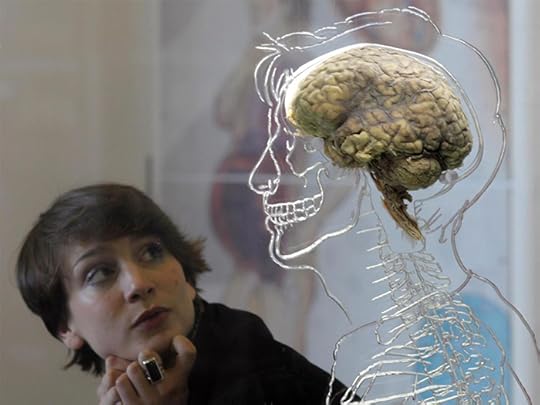 Will we still like who we’re about to become?
Weighing the Positives Against the Negatives
It’s hard to imagine how different life will be when over 50% of the world’s population is over 100. Not all of it will be good and the positives will certainly offset some of the negatives, if not most of them. But let’s consider some of the far-reaching implications:
POSITIVES
1.) Improved Health – Living a super long life means we will have cured most diseases and corrected the majority of human biological flaws setting the stage for even more radical life extensions, perhaps even moving towards something “post-human,” or even “turbo-human.”
2.) Delayed Death – Our greatest fear is death and our world is consumed by it. We think about it relentlessly. Most book, movie, and television storylines use death as a focal point in their message. But what if death was universally fixable and only one hundredth as important as it is today? Without today’s universal death-focus we would be free to think far more creatively and far more expansively.
3.) Dramatically Improved Intelligence – With age comes wisdom, along with improvements to our biological intelligence and the acuity of our sensory systems. Logically this should lead to us having enhanced abilities to understand, appreciate and change the world in ways we cannot yet imagine.
4.) New Age of Discovery – For the most part, we don’t know what challenges and opportunities super long lifespans will bring. On the plus side, we may have greater contentment, less volatile systems, and greater social wealth. But on the downside, we may discover diseases that only occur to people over 140, have a harder time dealing with disruptive thinking, and cling to things that should have been dismantled decades, even centuries, earlier.
5.) New Social Structures – What kind of relationships will a person’s great, great, great grandparents have with their grandchildren? How intimate will family relationships be when there are 7-10 generations of relatives attending a family gathering?
6.) More Stable Society – With longevity comes stability and the pace of change will begin to stabilize. This will mean less volatility in human-based systems like governments, markets, policies, and political will. History is a great teacher, but it is an even greater teacher if we’ve lived through it ourselves.
7.) Additional Levels of Maturity – We will learn from our mistakes, and with literally centuries of mistakes under our belts, we’ll tend to avoid making the most painful ones again in the future.
8.) More Diverse Economy – Since the needs of a 250 year old are vastly different than the needs of a 50 year old, we will be inventing new market categories with products we can’t yet imagine.
NEGATIVES
In most cases the “negatives” can also be construed as positives when viewed from a slightly different perspective.
1.) Old System Failures – Today’s retirement-based systems will fundamentally break down if people retire at age 65 and then live another 200 years. No one will be interested in life insurance if people no longer die at a predictable age. No more assisted living centers, senior Olympics, probate courts, estate taxes, nursing homes, or senior discounts.
2.) Messy Transition – Since it is unlikely that we will be able to reverse aging, a person who is 20 year olds will continue to look like some version of a 20 year old and those who are 90 will continue to look like some version of 90 year olds. Eventually most of the visual characteristics we associate with aging will disappear, but those caught during this transition period will be the anomalies.
3.) Family Dynasties – Well-managed families will accumulate wealth, power, and influence far beyond anything possible today. Sins of the past will continue to haunt influential families long into the future.
4.) Wealth Controlled by the Super Old – Today’s wealth transitions will be replaced by tomorrow’s wealth entrenchments. For many of the super old, the gamesmanship of being a master manipulator will be their form of entertainment. Today’s puppet masters will seem like amateurs when compared to tomorrows social-chess-masters.
5.) Super Entrenched Political Systems – If you can imagine a time when 47 former presidents are still alive, and all 47 come from 4 different families, you’ll begin to get the picture.
6.) Loss of Urgency – When people live to ages of 200-300 and our working life is 5-10 times longer than it is now, today’s urgency will become tomorrow’s acceptability. While deadlines will still exist, the penalty for missing them will be less onerous and less significant.
7.) Loss of Innovation – Along with longer lifespans will come an increased resistance to change. Family dynasties and entrenched political systems will give way to higher barriers to change and greater political resistance to changing the status quo.
8.) Heavy-Handed Population Control – Since most people instantly jump to overpopulation as being one of the key issues, even though it won’t be, look for a series of population control measures to be implemented from country to country including child bearing licenses, extra child taxes, limited paid maternity leaves, etc.
“I don’t mean you’re all going to be happy. You’ll be unhappy – but in new, exciting and important ways.” – Edwin Land
Final Thoughts
I’d love to hear your thoughts on these topics. There will be plenty of room for disagreement on each of these points, so please feel free to help paint a different perspective.
Roughly 65% of today’s jobs in the U.S. are information jobs that didn’t exist 25 years ago, and over the next 25 years we will get far better at using advanced forms of bioinformatics and biotechnology to reprogram our bodies away from disease, frailties, and all the characteristics we tend to associate with human aging.
To be clear, I‘m a big fan of having people live longer, and I’m even ok with eliminating human aging altogether. But it’s far better to move into an era like this with our eyes open, knowing that the downside may be more severe than any of us suspected.
In my estimation, the odds of reaching a point where people never die is zero. It actually becomes a meaningless argument because proving that someone is capable of living forever will mean someone will have to live longer than the person who lives forever, and that’s not possible.
However, the odds of most people living radically extended lifespans is a near certainty. The progress we’ve made in understanding human biology is remarkable, and continued breakthroughs are inevitable.
Author of Epiphany Z – 8 Radical Visions Transforming Your Future
August 8, 2016
72 stunning things in the future that will be common ten years from now that don’t exist today
How many things do we own, that are common today, that didn’t exist 10 years ago? The list is probably longer than you think.
Since the iPhone came out in 2007, we didn’t have smartphones with mobile apps, decent phone cameras for photos and videos, mobile maps, mobile weather, or even mobile shopping.
None of the mobile apps we use today existed 10 years ago: Twitter, Facebook, Youtube, Instagram, Snapchat, Uber, Facetime, LinkedIn, Lyft, Whatsapp, Netflix, Pandora, or Pokemon Go.
Several major companies didn’t exist a decade ago. Airbnb, Tinder, Fitbit, Spotify, Dropbox, Quora, Tumblr, Kickstarter, Hulu, Pinterest, Buzzfeed, Indigogo, Udacity, and Jet.com.
Ten years ago very few people were talking about crowdfunding, the sharing economy, social media marketing, search engine optimization, app developers, cloud storage, data mining, mobile gaming, gesture controls, chatbots, data analytics, virtual reality, 3D printers, and drone delivery.
At the same time we are seeing the decline of many of the things that were in common use 10-20 years ago. Fax machines, wired phones, taxi drivers, newspapers, desktop computers, video cameras, camera film, VCRs, DVD players, record players, typewriters, yellow pages, video rental shops, and printed maps have all seen their industry peak and are facing dwindling markets.
If we leapfrog ahead ten years and take notice of the radically different lives we will be living, we will notice how a few key technologies paved the way for massive new industries.
Here is a glimpse of a stunningly different future that will come into view over the next decade.
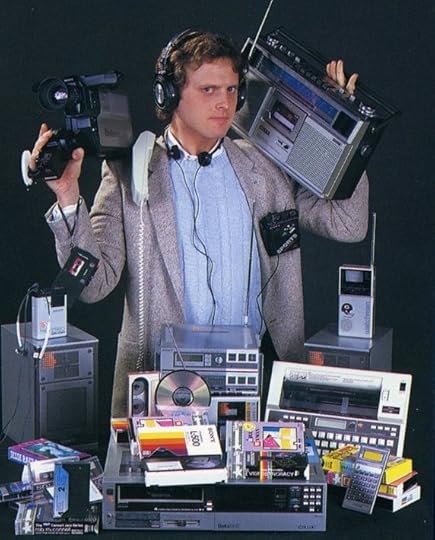 All of these items were replaced with smartphones!
3D Printing
Also known as additive manufacturing, 3D printing has already begun to enter our lives in major ways. In the future 3D printers will be even more common than paper printers are today.
1. 3D printed makeup for women. Just insert a person’s face and the machine will be programmed to apply the exact makeup pattern requested by the user.
2. 3D printed replacement teeth, printed inside the mouth.
3. Swarmbot printing systems will be used to produce large buildings and physical structures, working 24/7 until they’re completed.
4. Scan and print custom designed clothing at retail clothing stores.
5. Scan and print custom designed shoes at specialty shoe stores.
6. Expectant mothers will request 3D printed models of their unborn baby.
7. Police departments will produce 3D printed “mug shots” and “shapies” generated from a person’s DNA.
8. Trash that is sorted and cleaned and turned into material that can be 3D printed.
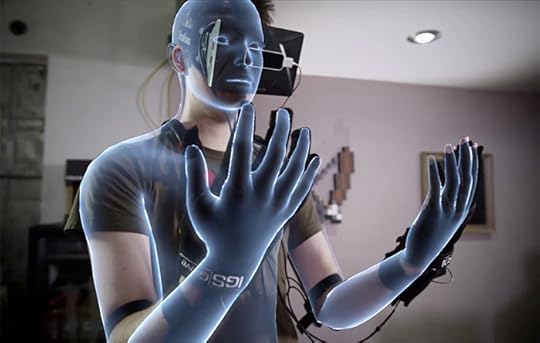 How long before you own the next generation VR headset?
Virtual/Augmented Reality
The VR/AR world is set to explode around us as headsets and glasses drop in price so they’re affordable for most consumers. At the same time, game designers and “experience” producers are racing to create the first “killer apps” in this emerging industry.
9. Theme park rides that mix physical rides with VR experiences.
10. Live broadcasts of major league sports games (football, soccer, hockey, and more) in Virtual Reality.
11. Full-length VR movies.
12. Physical and psychological therapy done through VR.
13. Physical drone racing done through VR headsets.
14. VR speed dating sites.
15. For education and training, we will see a growing number of modules done in both virtual and augmented reality.
16. VR and AR tours will be commonly used in the sale of future real estate.
Flying/Driving Drones
Drones are quickly transitioning from hobbyist toys to sophisticated business tools very quickly. They will touch our lives in thousands of different ways.
17. Fireworks dropped from drones. Our ability to “ignite and drop” fireworks from the sky will dramatically change both how they’re made and the artistry used to display them.
18. Concert swarms that produces a spatial cacophony of sound coming from 1,000 speaker drones simultaneously.
19. Banner-pulling drones. Old school advertising brought closer to earth.
20. Bird frightening drones for crops like sunflowers where birds can destroy an entire field in a matter of hours.
21. Livestock monitoring drones for tracking cows, sheep, geese, and more.
22. Three-dimensional treasure hunts done with drones.
23. Prankster Drones – Send random stuff to random people and video their reactions.
24. Entertainment drones (with projectors) that fly in and perform unusual forms of live comedy and entertainment.
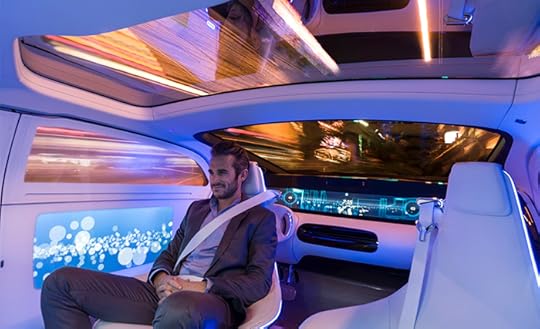 Our driverless future is coming!
Driverless Cars/Transportation
Driverless technology will change transportation more significantly than the invention of the automobile itself.
25. Queuing stations for driverless cars as a replacement for a dwindling number of parking lots.
26. Crash-proof cars. Volvo already says their cars will be crash-proof before 2020.
27. Driverless car hailing apps. Much like signaling Uber and Lyft, only without the drivers.
28. Large fleet ownership of driverless cars (some companies will own millions of driverless cars).
29. Electric cars will routinely win major races like the Daytona 500, Monaco Grand Prix, and the Indy 500.
30. In-car work and entertainment systems to keep people busy and entertained as a driverless car takes them to their destination.
31. In-car advertising. This will be a delicate balance between offsetting the cost of operation and being too annoying for the passengers.
32. Electric car charging in less than 5 minutes.
Internet of Things
The Internet of things is the network of physical devices, vehicles, and buildings embedded with electronics, software, sensors, and actuators designed to communicate with users as well as other devices. We are currently experiencing exponential growth in IoT devices as billions of new ones come online every year.
33. Smart chairs, smart beds, and smart pillows that will self-adjust to minimize pressure points and optimize comfort.
34. Sensor-laced clothing.
35. “Print and Pin” payment systems that uses a biometric mark (fingerprint) plus a pin number.
36. Smart plates, bowls and cups to keep track of what we eat and drink.
37. Smart trashcan that will signal for a trash truck when they’re full.
38. Ownership networks. As we learn to track the location of everything we own, we will also track the changing value of each item to create a complete ownership network.
39. Self-retrieving shoes where you call them by name, through your smartphone, and your shoes will come to you.
40. Smart mailboxes that let you know when mail has arrived and how important it is.
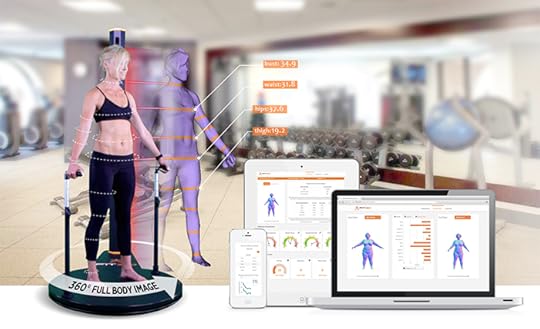 Full-body physical health scanner!
Health Tech
Even though healthcare is a bloated and bureaucratic industry, innovative entrepreneurs are on the verge of disrupting this entire industry.
41. Hyper-personalized precision-based pharmaceuticals produced by 3D pill printers.
42. Ingestible data collectors, filled with sensors, to give a daily internal health scan and report.
43. Prosthetic limbs controlled by AI.
44. Real-time blood scanners.
45. Peer-to-peer health insurance.
46. Facetime-like checkups without needing a doctor’s appointment.
47. Full-body physical health scanners offering instant AI medical diagnosis, located in most pharmacies
48. Intraoral cameras for smartphones for DYI dental checkups.
 The future of computers is the mind!
Artificial Intelligence
Much like hot and cold running water, we will soon be able to “pipe-in” artificial intelligence to any existing digital system.
49. Best selling biographies written by artificial intelligence.
50. Legal documents written by artificial intelligence.
51. AI-menu selection, based on diet, for both restaurants and at home.
52. Full body pet scanners with instant AI medical diagnosis.
53. AI selection of movies and television shows based on moods, ratings, and personal preferences.
54. Much like the last item, AI music selection will be based on moods, ratings, and musical tastes.
55. AI sleep-optimizers will control all of the environmental factors – heat, light, sound, oxygen levels, smells, positioning, vibration levels, and more.
56. AI hackers. Sooner or later someone will figure out how to use even our best AI technology for all the wrong purposes.
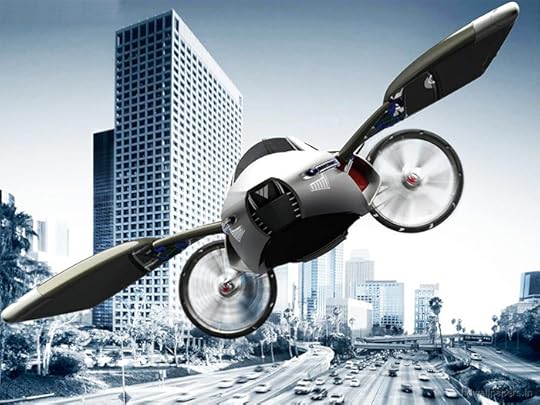 Unmanned aviation is coming!
Transportation
Future transportation will come in many forms ranging from locomotion on an individual level to ultra high-speed tube transportation on a far grander scale.
57. Unmanned aviation – personal drone transportation.
58. 360-degree video transportation monitoring cameras at most intersections in major cities throughout the world.
59. Everywhere wireless. With highflying solar powered drones, CubeSats, and Google’s Project Loon, wireless Internet connections will soon be everywhere.
60. Black boxes for drones to record information in the event of an accident.
61. Air-breathing hypersonic propulsion for commercial aircraft. Fast is never fast enough.
62. Robotic follow-behind-you luggage, to make airline travel easier.
63. Robotic dog walkers and robotic people walkers.
64. Ultra high-speed tube transportation. As we look closely at the advances over the past couple decades, it’s easy to see that we are on the precipices of a dramatic breakthrough in ultra high-speed transportation. Businesses are demanding it. People are demanding it. And the only thing lacking is a few people capable of mustering the political will to make it happen.
Miscellaneous
As I began assembling this list, a number of items didn’t fit well in other categories.
65. Bitcoin loans for houses, cars, business equipment and more.
66. Self-filling water bottles with built-in atmospheric water harvesters.
67. Reputation networks. With the proliferation of personal information on websites and in databases throughout the Internet, reputation networks will be designed to monitor, alert, and repair individual reputations.
68. Atmospheric energy harvesters. Our atmosphere is filled with both ambient and concentrated forms of energy ranging from sunlight to lightning bolts that can be both collected and stored.
69. Pet education centers, such as boarding schools for dogs and horses, to improve an animal’s IQ.
70. Robotic bricklayers. With several early prototypes already operational, these will become common over the next decade.
71. Privacy bill of rights. Privacy has become an increasingly complicated topic, but one that is foundational to our existence on planet earth.
72. Hot new buzzword, “Megaprojects.”
 The safer we feel, the more risks we take!
Final Thoughts
There’s a phenomenon called the Peltzman Effect, named after Dr. Sam Peltzman, a renowned professor of economics from the University of Chicago Business School, who studied auto accidents.
He found that when you introduce more safety features like seat belts into cars, the number of fatalities and injuries doesn’t drop. The reason is that people compensate for it. When we have a safety net in place, people will take more risks.
That probably is true with other areas as well.
As life becomes easier, we take risks with our time. As our financial worries are met, we begin thinking about becoming an entrepreneur, inventor, or artist. When life becomes too routine, we search for ways to introduce chaos.
Even though we see reports that billions of jobs will disappear over the coming decades, we will never run out of work.
As humans, we were never meant to live cushy lives of luxury. Without risk and chaos as part of our daily struggle our lives seem unfulfilled. While we work hard to eliminate it, we always manage to find new ways to bring it back.
Yes, we’re working towards a better world ahead, but only marginally better. That’s where we do our best work.
Author of Epiphany Z – 8 Radical Visions Transforming Your Future
July 27, 2016
151,600
Every 10 seconds, another 17 people die.
In the time it takes me to walk across a typical stage for my talks, another 15-20 people will lose their life.
151,600 is the number of people that die every day in the world.
Some die from old age, infectious disease, car accidents, cancer, childbirth, heart attacks, suicide, gunshots, or any of dozens of different causes. The ending of human life is a sobering reality, happening relentlessly, every second of every day.
Whenever I get lulled into a false sense of “this will never happen to me,” I realize this same number begins its countdown ever morning of every day. There are no exceptions.
As I was preparing for a recent talk on the future of healthcare, I began questioning, “What’s the role of our healthcare system in this number?”
Is it simply to rearrange the dead, to change the order of how and where some of us will die?
Every baby that’s born into this world comes with an expiration date. We don’t know when anyone will die, but so far, no one has managed to live forever.
As a society, we grieve all of our losses but we abhor premature deaths, all of the ones that could have been prevented. We go out of our way to guard against disease, mending wounds after an accident, and protecting against those who wish us harm.
But then it occurred to me that death might not be inevitable. What if no one ever needed to die?
What if our healthcare system got really good at curing diseases, repairing people after an accident, finding solutions for mental health issues and even deviant behavior? What if we even found the antidote for human aging?
That means no person would ever have to die… EVER!
Should that be the goal of our healthcare system? Well, why not?
Wrapped Up in Bad Assumptions
Whenever we toy with the idea of making death a thing of the past, we instantly leap to the problems associated with over-population.
For this reason, we have a tendency to dismiss the idea out of hand before we ever really consider it.
But shouldn’t that still be our goal?
If we can cure all these things, we can also fix all the problems that cause our quality of life to decline as we age. Wouldn’t it be nice having 80 year olds competing against 20 year olds in the Olympics?
Knowing that the odds of actually achieving this kind of immortality, along with a remarkably better quality of life, may indeed be less than a billionth of one percent, why shouldn’t it still serve as our goal, our moral directive, representing a new kind of Hippocratic oath?
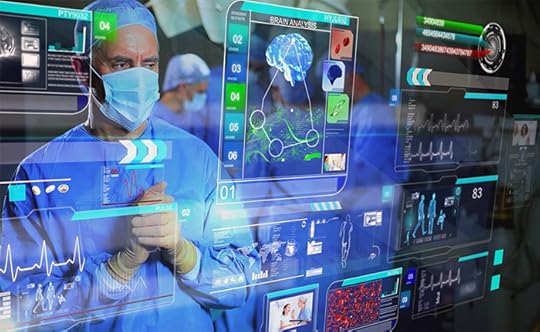 Digital modeling will soon replace labs and testing
Transitioning from Pharmaceuticals to Data
Healthcare is transitioning from an industry dominated by pharmaceuticals to an industry run on data!
Our progress so far has been measured in millimeters, making it imperative that we truly understand what constitutes progress.
Far too much of our current healthcare system is based on testimonials and one-off feelings of improvement. In most situations we lack the ability to prescribe a remedy based on a thorough analysis of our own hyper-individualized situation.
Over the coming years we will be integrating a host of scanning and sensory equipment in our daily routine.
Rather than having doctors prescribe either 200 or 400 milligrams of a drug because those are the only doses currently being offered by the pharmaceutical companies, we will be moving quickly towards self-diagnostic equipment that will tell us we need precisely 327 milligrams and have a dispensing system capable of producing that exact dosage.
If we can create a system that produces an impartial health diagnosis, we will begin seeing remedies that recommend drug, diet, and exercise alternatives only if and when they represent the optimal solution.
However, this will only happen for a short interim period.
The Promising World of Precision Healthcare
Pharmaceuticals tend to be very crude instruments for correcting the failures of the human body. It’s sort of like using a shotgun to kill a mosquito. It’ll do the job but has the potential to cause a ton of collateral damage in the process.
To explain precision healthcare, I love to use the example of “perfect water.”
We all know that polluted water is bad for us, and that if we distill water and remove all of the so-called impurities, that it’s less than optimal. Somewhere in this entire water spectrum is “perfect water,” meaning it’s perfect for you as an individual, at that particular moment in time.
With over 7 billion people in the world, this would mean there are over 7 billion formulations of perfect water. Complicating it even further, each of these formulations will change every second of every day as the metabolism of the human body changes.
Somewhere in this line of thinking is the level of precision that will be needed for tomorrow’s hyper-individualized healthcare.
Consider the following scenario.
Sometime in the not-too-distant future, patients walking into the doctor’s office will first receive a full-body scan, creating a complete data model built around several thousand data points. Any area that gives even the slightest hint of troublesome activity will warrant closer inspection.
For any number of conditions, rather than prescribing medicine as a treatment, doctors will prescribe a device. Devices will have a wide range of purposes ranging from ingestible cams and monitors, to wearable super data-collectors, to body function amplifiers, to pulse correctors, to early warning indicators.
During the transition period it will be a combination of drugs and devices, but eventually most medicinal treatments will be replaced with devices designed around coaxing the body into repairing itself.
Over time, doctors will transition from being the experts on human biology and medicine to being the experts on bioinformatics and biological devices.
Enter CRISPR and the Era of Gene-Editing
CRISPR technology involves a series of DNA reading and editing tools that are being used to solve a wide range of healthcare problems.
The true game changing potential for CRISPR is that it allows scientist to perform cut-and-paste like functions to remove existing or add new gene sequences to our DNA in a way that’s faster, cheaper, easier, and more precise than ever before.
With the cost of DNA sequencing plummeting over 1,000% in the past 15 years, we are on the verge of remapping the source-data that drives all of our bodily functions.
Inside our body lies a multifaceted ecosystem of more than 1,000 distinct types of bacteria. These bacteria include viruses, fungi, and other microorganisms. Altogether they account for over three million genes, making the human genome and its 23,000 genes seem rather tiny in comparison.
To give you an idea of the physical size of these microorganisms, they account for roughly one to three pounds of our body weight and are distributed throughout our body, with the largest concentration found in our gut.
Studies are now showing how our bacterial ecosystem, or microbiome, is connected to our overall health. Abnormalities in our microbiome have been linked to problems with digestion, asthma, arthritis, obesity, food allergies, even neurological disorders like depression and autism.
Researchers are now finding that excessive use of antibiotics, especially as a child, can permanently damage a healthy well-functioning microbiome by destroying healthy gut bacteria, contributing to all these illnesses.
Problems like this are what’s driving scientists to sequence the 3 million genes in a person’s microbiome to understand how each gene is affecting the body, and creating customized bacteria with CRISPR tools being used to inch that person back to health, curing multiple diseases and disorders throughout the process.
The current bottleneck for CRISPR is the computing horsepower necessary to sequence, analyze, and edit the genes. That’s why quantum computing has become such a hot topic, with its ability to perform in seconds all of the complex genetic calculations that require years of data processing with today’s super computers.
However, CRISPR is far from the “cure everything” panacea that many believe. While doctors are lining up to be the first to use CRISPR tech to cure cancer, diabetes, and any number of other disease, there are also many warning of the dangers of contaminating the human germline for all future generations.
As ethicists attempt to formulate an overarching precautionary principle for the Pandora’s box of possibilities that CRISPR is about to unleash, another 151,600 people will die every day that the debate drags on.
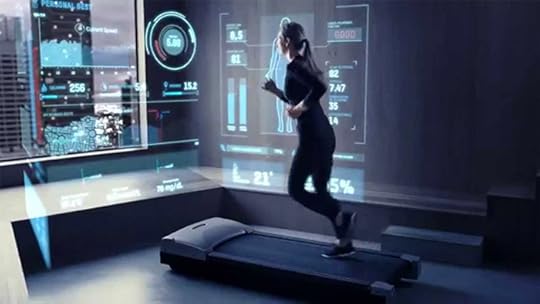 Our ongoing quest to become super-human!
Transitioning from Preventative Care to Enhanced Human Performance
In the future it will no longer be enough to just be healthy. We will demand ways to be physically stronger, more alert, super resilient, exceptionally durable, intellectually brilliant, and so much more.
In much the same way we use coffee and energy drinks to improve alertness today, tomorrow’s gadget market will include a wide selection of tools for “dialing in” some kind of performance enhancer.
It may be as harmless as a music player that anticipates the perfect music for every setting or it could be a bit more risky like making someone’s body temporarily more durable so it can survive a fall from a 20-story building.
With our current struggle to return to “normal” health, we have a hard time imagining what a super body and mind combination would look like, but rest assured, it’s coming.
Final Thoughts
It would be a mistake to assume that we won’t need doctors in the future. The deeper we probe into the inner workings of human biology, the greater our realization of how little we actually know.
It would also be a mistake to blame doctors for the system they currently find themselves in. Buoyed by the whims of big insurance companies, big pharma, and big government, doctors often end up being the unwitting pawn of other, much larger, agendas.
That said, doctors are about to enter unfamiliar territory, with mountains of data replacing judgment calls, and former ways of doing business simply gone forever. Not all will survive this transition.
Data models will replace x-rays; sensors will replace labs and testing; devices will replace needles, blood draws, and pills; and people will soon gain control over their own data.
There may indeed be a bifurcation of old school and new school physicians, and universities that teach traditional medicine vs. those that teach bioinformatics, data-chemistry, genomic-roadmapping, and cellular manipulation.
But in the end, for those who want to continue learning, and continue probing the farthest reaches of healthcare, doctors will have unlimited opportunities to make a difference in the years ahead.
Should we be content with 151,600 deaths a day being a fact of life, just like gravity and the speed of light? I don’t think so. All rules are made to be broken, and from my perspective, the sooner, the better.
Author of Epiphany Z – 8 Radical Visions Transforming Your Future
July 13, 2016
The Seven Deadly Sins of Machine Intelligence
The year is 2028 and James Mathews has been summoned to appear in front of Winston III, the famous AI Judge overseeing an electronic courtroom, set up as a pilot project, but many have already dubbed it the justice system of the future.
Mathews, the defendant for this test case, has developed an image-forming technology that captures reflections of reflections, and through these obscure light fragments, manages to piece together works of art comprised of personal images and video clips. With many of his works depicting people behind closed doors, a slew of well-articulated media condemnations began showing up claiming his work to be an invasion of privacy.
Since his machines only use what he refers to as “second generation reflections,” light fragments that he collected in public spaces far away from the people and buildings his images portray, Mathews believes he’s in the clear, and his artistic works are fair game.
Many believe this to be the perfect test case for Winston III, a lifelike judge-bot infused with state of the art AI capabilities. Because of the complexity of privacy laws and the tens of thousands of rules, regulations, and requirements governing the issue, an impartial compiler of all the facts would be needed to render an evenhanded final judgment.
In the courthouse, Winston III is dressed like a techie judge, of sorts, to give participants the feeling they’re in a traditional courtroom, but one that will produce a fairer outcome.
After decades of people protesting the bias and favoritism shown by our fraying legal system, a team of research scientists set out to design the ultimate fair judicial process, starting with a redesign of the most central figure in a courtroom, the judge.
Creating a robot that looked like a judge was a minor accomplishment compared to the artificial intelligence engine needed to assimilate the intent of countless statutes, apply them to a given situation, and rendering a legal opinion.
Since there were no central repositories for the laws, their first task was to create a public database of all laws and make it both accessible to their AI engine and viewable by the general public.
Once the database was in place, they next had to add meaning to the seemingly endless verbiage in past laws, regulations, and court rulings. They did this by linking past court rulings with each statute and reverse engineering the legal interpretations as they were applied over the past several decades to each case file.
Using human decisions from the past and applying them to the artificial intelligence engines of the future is nothing new, but this project attempted to raised the bar of sophistication to a whole new level.
The danger of using the “reverse-engineered human” technique, at least in this application, was in the possible contaminating of an impartial and preference-neutral AI with human biases.
As many of us already know, along with our attempts to make machines more human-like in their thinking, comes the potential for them to develop more flaws in their decision-making…. just like humans.
But human bias is only scratching the surface of imperfections that can result from badly programmed AI. For this reason I thought it would be enlightening to discuss the downside of machine intelligence and the seven deadly sins of flawed encoding and how it can go woefully wrong.
The Original Seven Deadly Sins
The seven deadly sins did not come from the Bible, but do stem from some of the teachings of King Solomon found in the Book of Proverbs 6:16-19. In these verses, King Solomon refers to the “six things the LORD doth hate: yea, seven are an abomination unto him.”
1.) Lust – It is usually thought of as intense or unbridled sexual desire but can also include lust for power and money.
2.) Gluttony – Overindulgence and overconsumption of anything to the point of waste.
3.) Greed – An abnormal desire for possessions, to the point where stealing, hoarding, and kleptomania can be justified.
4.) Sloth – While sloth can be defined in many ways, it’s generally defined as laziness where people fail to act. Evil exists when “good” people fail to act.
5.) Wrath – Best described as uncontrolled feelings of anger, rage, and even hatred, often manifesting itself in a desire to seek vengeance.
6.) Envy – Similar to greed and lust, malicious envy is characterized by an insatiable desire or resentful covetousness towards the traits or possessions of someone else.
7.) Pride – While not all pride is bad, extreme hubris or bride is often considered the most dangerous of the seven deadly sins. Pride, in this context, refers to dangerously corrupt selfishness, the putting of one’s own desires, urges, wants, and whims before the welfare of everyone else.
 How do we know if our machines are hardwired to fail?
Seven Deadly Sins of Machine Intelligence
Future self-learning systems will develop inputs from a variety of sources. As requirements for subtle human-like perception increases, the fastest path to data collection will be to capture the processes used by human experts.
For example, quality control in the perfume industry is often based on judgment calls made by seasoned professionals weighing a number of hard-to-quantify olfactory attributes that lead to a final decision.
Without a periodic table for smells and tastes to serve as a baseline of comparison, one person’s olfactory talents may indeed be quite different from someone else’s.
In this type of situation, it may be easier to monitor and learn from the reaction of experts rather than develop a top-down decision-tree. With this scenario, data gathering from human subjects is far easier.
Its not easy to explain how judgment calls made for the perfume industry can cause biases in unrelated applications such as analytic accounting, anticipatory tutoring, or even recommending a lifestyle-specific diet plan, but that’s exactly what will happen.
Over time, self-learning systems will develop “sanitizing” software to eliminate favoritisms and biases stemming from marginal inputs, but that will take time.
In the mean time, here are some of the deadly sins likely to accompany these kinds of tainted inputs.
1.) Deceptive Sneakiness – In much the same way a person feels betrayed by a cheating spouse, future machines with secretive reasoning and veiled tendencies will yield similar feelings of distrust.
2.) Skeptical Pessimism – TV shows and movies have conditioned us to believe that by simply asking a computer what the odds for success are, future computers will give an exact number like 35.5%. But computers have never been that precise, nor will they be in the future, instead offering wide ranges such as 40-70%. An AI suffering from a pessimism bias will often yield gloomy predictions like 0-10% or, discouraging words such as, “You’re doomed to failure!”
3.) Self-Centeredness – It’s easy to imagine a machine that is programmed for survival, perhaps even at the expense of its own operators. Yet this human-like quality has the potential to be much more subtle and permeate its decision-making circuits with “me first” requests like better operators, better materials, better maintenance, or even fewer hours.
4.) Gullibility – We would hope that machines of the future would be impervious to online scams, but just as spam filters have their own workarounds, every decision-point has the potential for similar blindspots.
5.) Domineering – Nobody likes a bully that brushes off new inputs and discards better options, but a domineering AI is nothing to trifle with. Machines can learn to get their own way by adapting
6.) Indiscretion – Everyone has his or her own secrets and conveying the sensitivity of certain information to a machine is not easy. For example, if you asked a machine to reorder your medicine, it may not understand the need to keep both credit card info and medical data secret in an overly complicated ordering process.
7.) Narrow-Mindedness – Are we better off with decisions made after reviewing huge volumes of information, or more efficient judgments from a limited number of databases with higher quality records? Machines can be narrow-mindedly broad, but shallow, as well as narrow-mindedly limited in scope.
Final Thoughts
Going back to the opening scenario, will we be working with judge-bots anytime soon?
In my opinion, we are destined to work with a number of prototypes, several generations of decreasingly flawed Winston III judge-bots, before we finally get to a machine capable of rendering a reasonably unbiased verdict.
Using the “seven deadly sins” approach to understanding how negative human attributes can corrupt non-human machines has been an exercise for me in better understanding the massive potential for how things can go wrong.
In the future, machine intelligence will only be as good as the decision-forming architecture at its core. AI will find tons of uses in narrowly defined applications, but every time we stretch the scope, even by a seemingly insignificant amount, the potential for imperfections will grow exponentially.
“Just when we thought it was safe to go swimming in intelligent waters, we realized the water was still dumber than the toe we were attempting to dip into it.”
Author of “Communicating with the Future” – the book that changes everything
June 20, 2016
Spontaneous Warzones and the Future Tech Needed to Stop Them

If you haven’t been paying attention, incidents like the shootout in Paris and the Pulse Nightclub in Orlando are increasing. Yes, we do have more crazed people with weapons, but we are also dealing with some foundational shifts away from existing systems for resolving conflict and witnessing a more distributed form of modern warfare.
People who think that wars are only fought with soldiers, guns, and armored vehicles on distant battlefields have very little grasp of the evolving nature of conflict. Today’s militaries find themselves with all the wrong kind of equipment to function in this kind of stealth battlefront.
As we put more and more power into the hands of an individual, small groups or even a single person, it can turn virtually any setting into a spontaneous war zone.
Even though body count has never been a good measure of victory, it tends to be the scorecard that gets the most headlines; and grabbing headlines creates its own form of victory.
Conflicts come in many forms ranging from personal disputes, corporate confrontations, cultural clashes, national skirmishes, religious divisiveness, and much more.
The survivability of any nation, culture, or social structure is highly dependent on its ability to resolve conflict. Courts and justice systems have been tasked with managing this on the lower levels and militaries when things begin to escalate. But young people today have little time for either.
Gone are the soldier-vs-soldier battles of the past with today’s religious zealots choosing instead to destroy the weakest among us, shooting women, babies, and handicap alike to somehow bolster their warrior credentials.
War has always been messy, but by tossing the last remnants of battle decorum out the window, we are on the verge of witnessing a no-holds-barred unleashing of super-tech weaponry, the likes of which are scarcely understood today.
If you will indulge me, I’d like to step you through a number of future weapon technologies that will change our ability to defend ourselves, resolve conflict, and if necessary, go on the offensive.
 Will we soon have command centers for monitoring human deaths?
1.) Tools of Awareness – Global Death Monitor
First, consider what it would be like to have a machine that instantly registers every human death on the planet, triggered by the ending of a heartbeat. Not only would it record every death, but it would also provide a map as to where the death occurred, those who were in close proximity, and eventually even the cause of death.
Whenever the cause of death is unknown, the machine would immediately trigger an investigation.
The machine would also compile analytical data about those who died and help us understand the surrounding context, circumstances, and background information, distinguishing between natural and unnatural causes of death.
With an average of 151,600 deaths happening every day in the world, we somehow need to automate the process for resolving the cause and conditions for the ending of every person’s life.
2.) Jammer Tech
Most people assume that jammer technology is primarily for jamming radio waves, but I think about it in a much broader context of opportunity.
Body Jammers – Think of this as an EMP blast for the human body where someone flips the “off” switch on your metabolism and you simply pass out. If this were used in the Orlando nightclub, countless lives could have been saved.
Light Jammers – It’s already possible to distort visible light to jam photos, so why not push it to the next level and garble the visible spectrum to the point where no one can see at all? Losing our sight is disconcerting and instantly debilitating.
Metal Jammers – At the first sound of gunshots, a metal jammer would apply an intense magnetic field throughout a room or building to the point where all metal guns become impossible to fire.
Anger Jammers – A number of emotion monitoring gadgets have paved the way for larger crowd monitoring devices. Once we can zero in on the one or two people who are ready to blow a gasket, turret mounted wave cannons can instantly swivel and hit them with an anger diffuser beam.
3.) Moving into Star Trek Era Weaponry
Shooting lethal bullets is a very primitive one-option-fits-all approach to dealing with conflict.
The first time I watched Star Trek and heard Captain Kirk utter the phrase – “Set your phasers to stun!” – it occurred to me that these future weapons would house a number of different settings.
While most people assumed a simple two-position switch with only “kill” or “stun,” I found myself dwelling on the possibilities of a 10-12 position switch and wondering what the other options might be.
Perhaps they would include 1 stun-p (with pain), 2 stun-np (no pain), 3 giggle (make them laugh uncontrollably), 4 amnesia (forget what they’re doing), 5 slo-mo (causing them to move in slow motion), 6 suicide (making them take their own life), 7 seizure (all muscles fire at once), 8 overwhelming guilt (immobilized by guilt and self loathing), 9 overwhelming pity (suddenly they become your friend), 10 distraction (squirrel) or 11 kill-p (with pain), 12 kill-np (no pain).
These may sound silly, but since today’s weapons only have one setting, we have a hard time imagining a technology with more choices.
 The irony is that reverse blackmail can be an equally effective in a pervasively aware society
4.) Blackmail as a Weapon
For many of us, our reputation is one of the most important aspects of our lives. It’s central to everything we do.
Every time a live TV courtroom drama plays out, whether it’s a trial featuring Eliot Spitzer, Martha Stewart, Clarence Thomas, or Monica Lewinsky; we instantly identify with the most embarrassing pieces of the testimony because it could easily be us. We are all terminally human, with enough of our own character flaws to make us the central character of a juicy reality TV show.
Recent revelations about the NSA PRISM program make this kind of paranoia even more justifiable. Virtually any person, put under a microscope, can be threatened with his or her own character flaws.
An even greater danger comes from knowing personal weaknesses, and in most cases, it’s the person or thing we care about most. Those seeking leverage always want to know the one button they can push, and whether it’s a child, parent, valuable possession, or their reputation, a single well-crafted threat can become instant blackmail.
In much the same way Amazon’s personalized marketing system delivers targeted ads, an intimidation engine could be equally as capable as delivering highly targeted threats.
When cyber crimes like this begin to escalate, we run the risk of having our social structures deteriorate into invisible mafia-style community with blackmailers ruling the blackmailees.
The irony is that reverse blackmail can be an equally effective situation diffuser and with our world trending towards a pervasively aware society, blackmailers can quickly fall victim to the same kind of threats.
 Will our future insects have parasitic nano-scouts living on their exteriors?
5.) Nanotech Battlefront
Nano-weapons have the potential to offer unusually tiny remedies for large-scale conflicts. Here are a few examples:
1.) Nano-needles – Invisible to the human eye, nano-diameter needles could be shot like clusters of bullets from great distances to “pin” people to a wall or freeze their physical movement. Nano-needles, because of their incredibly tiny diameter, will be the ultimate non-lethal weapons, invisible to the human eye, leaving no visible wounds and causing no permanent damage.
2.) Nano-Scouts – Using technologies that effectively “live on” and controls live insects, the proverbial “fly on the wall” could literally have hundreds or even thousands of parasitic nano-scouts living on its exterior. In addition to the commonly assumed eyes and ears of military intelligence, these smart dust nano-scouts will also have the capacity to analyze every situation to determine the presence of chemicals, changes in moisture levels or barometric pressure, and even the ability to sense movements, temperature, and vibration.
3.) Water Bullets – As a different kind of non-lethal weapon, self-contained water balls, formed around an elevated surface tension, could be used to knock people down, temporarily rendering them harmless.
4.) Nano-Poisons – Most people instantly think of poison as a tool for killing someone. But nanotechnology, with its capacity for triggering specific brain functions, will set the stage for a whole new menu of poison options. As an example:
Liar poison will make it impossible for someone to tell the truth
Kleptomaniac poison will make it impossible for the person to stop stealing things
Alcoholic poison will make a person unable to stop drinking alcohol
Obesity poison will cause a person to eat themselves to death
My favorite – – we’ll call it the “Clockwork Orange Poison,” – – will make a person incapable of ever being angry or mean.
 The nature of war is changing and we have to change with it!
Final Thoughts
In a perfect world, some things just have to be imperfect!
The absence of war is seldom peace and people today have an increasing number of channels for expressing their displeasure.
The downside of a super-connected society is that we can easily connect with others who share our frustration, and shared frustrations often ferment their way into unusual forms of conflict.
Battlefields of the future will continue to morph along with our tech culture and the weapons of the future will be unrecognizable by today’s standards.
Whenever a battle is over, scars are slow to heal, and it’s always better to squelch angers before they escalate.
What’s different today are a number of pervasive technologies that enable us to parse problems into far smaller pieces and pinpoint the source of the issue. We also have the ability to leverage a wide variety of tools, techniques, and system changes to resolve conflicts before they escalate.
In much the same way we never want to show up with a knife for a gunfight, our armies are a terrible match for today’s stealth battlefields. We are a long ways from having the right tools and tech needed for tomorrow’s spontaneous warzones.
Author of “Communicating with the Future” – the book that changes everything
June 2, 2016
Creating the World’s First Neural Lace Network
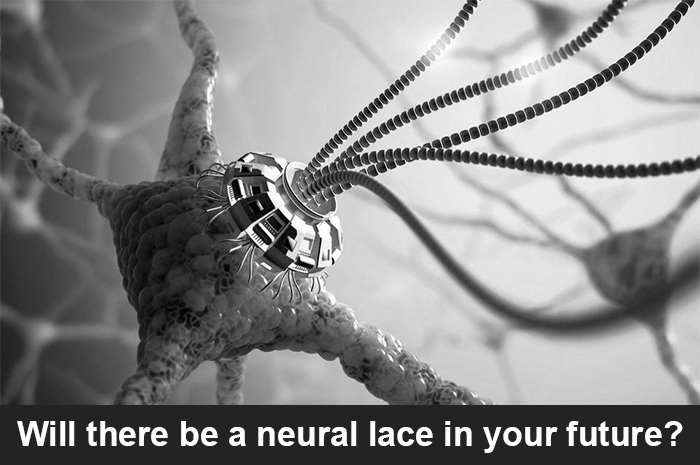
Elon Musk recently added a new twist to his vision for tech-related accomplishments by saying he was interested in creating a “neural lace.”
For a little background, science fiction author Iain M. Banks first coined the term “neural lace” in The Culture series. In these novels, people living on another planet installed genetically engineered glands in their brains capable of secreting stimulants, psychedelics and sedatives whenever they wanted them.
Last year, researchers from Harvard and the National Center for Nanoscience and Technology in Beijing managed to create a working neural lace prototype. They figured out a way to inject a tiny electronic mesh sensor into the brain of a mouse that fully integrates with cerebral matter that enabled computers to monitor brain activity.
Using a syringe, the mesh was injected into the mouse brain where the material expanded to 30 times its original size. Once inside, the mouse brain cells grew around the mesh, forming connections with the wires in the flexible mesh circuit. Unlike most implants, the mouse brain completely accepted the mechanical component and assimilated with it without any damage being caused to the mouse.
To show how this type of technology could be applied to humans, we currently use electric shock treatment for patients suffering from severe muscle spasms. While this approach is only used in worst-case scenarios, it uses long wires that are inserted deep into the brain, risking long-term brain injury with every insertion.
If a neural lace is able to completely integrate with the human brain, this would enable doctors to treat all sorts of neurodegenerative diseases that are currently difficult to cure. But that is only a small piece of a much bigger opportunity here.
Even though we can only speculate on the full potential, it should eventually be possible to master brain-to-brain communications, record visual inputs, control sleep patterns, instantly reset our emotional disposition, adjust our own chemical-brain balance, and intellectually do brain-searches of the Internet.
Information at the Speed of Need
The distance between information and our brain is getting shorter.
Twenty years ago if you had access to a large information center, such as the Library of Congress, and someone asked you a series of questions, your task would have been to pour through the racks of books to come up with the answers. The time involved could have easily added up to 10 hours per question.
Today, if we are faced with uncovering answers from a digital Library of Congress, using keyboards and computer screens, the time-to-answer process has been reduced to as little as 10 minutes.
The next iteration of interface design will give us the power to find answers in as little as 10 seconds. That’s where neural lace technology comes into play.
The ease and fluidity of our information-to-brain interface will have a profound effect on everything from education, to the way we conduct business, to the way we function as a society.
After we achieve a 10-second interface, we’ll immediately set our sights on the next milestone, the 10-millisecond interface.
Once we get past the notion that “fast” can be made to go even faster, we will begin to enter an entirely new era where collaboration will happen instantly across all kinds of boundaries, with all kinds of people. The rulebook for the entire world will be rewritten around the “speed of need.”
 Injecting a neural lace through a syringe
Answering the Ethical Questions
Venturing into new territory is a perfect opportunity for us to speculate, and since I’m not a brain matter expert, this is the part that will probably get me in trouble. Some of my assumptions may indeed be erroneous. Science fiction has evolved into the ugly step-sister of the horror industry, leaving us with far too many crazy notions about mind control and the evil intent of people working in this field.
Increasing the speed with which we access information does not mean we are becoming “The Borg” on Star Trek, and our minds will not instantly become controllable or even accessible to others without our consent.
Every mind is different. The patterns and connection we make inside our own minds is uniquely our own. To someone peering in from the outside it will be like looking at a cryptic 3-dimensional document written in a foreign language.
To be sure, dangers still exist, but most will result from areas we don’t yet understand. Social reclusiveness, information additions, and destructive idea viruses may all be part of a much longer list of things that can go wrong.
Next-Generation Learning
As most storytellers have learned, the basic components of every story deals with six elements – who, what, when, where, why, and how.
Four of these elements – who, what, when, and where – are factual. With a 10-second neural lace interface, and especially if we drop it to 10-milliseconds, learning becomes far less about committing factual information to memory because information becomes so easily accessible.
Many of today’s most scholarly people who have mastered the capacity to retain vast reservoirs of minutia will find themselves staring toe to toe with average people who have mastered the exact same ability, albeit indirectly with the use of technology.
Schools will no longer focus on the factual information but on the indirect aspects like relational elements, pattern analysis, value statements, opinions, and basic questions like “why” and “how.”
Here are some examples of questions that are not easily answered with a neural lace interface:
Explain the context within which those comments were made?
How do animal behaviors vary from species to species?
Was their underlying motivation behind that change detrimental to their cause?
How did that kind of thinking relate to what other cultures were going through?
Why do you think that happened?
Based on your understanding of the situation, was that a good move?
 Will it soon be possible to record everything we see?
Neural Lace Search Engines for the Physical World
Neural lace technology opens the door to recording everything we see on a daily basis. In fact, it opens the door to information about what everyone else is seeing as well.
As example, if we lose our keys a neural lace will be able to find them because it recorded where we last saw them.
But it’s not just about what we see, it’s also about our other senses as well. Soon we will be able to search on a variety of sensory attributes like smells, tastes, harmonic vibration, texture, specific gravity, and barometric pressure.
Eventually, search engines will have the capability of finding virtually anything in either the digital or physical world.
Each step we take in this direction will be viewed as further intrusion into the sacred ground of privacy, and as a result, a host of masking and cloaking technologies will begin to appear on the market.
Signal jammers, light wave disrupters, and other forms of digital camouflaging will serve as a short-term substitute for public policy failures.
Final Thoughts
Every piece of cutting edge technology ushers in an entirely new set of problems. Innovations become self-perpetuating because problems demand solutions, and all solutions create more problems.
Living in a super transparent society brings with it and equal number of positives and negatives, but we won’t know where to draw the line on policy matters until we’ve experienced it for ourselves.
In the process we will effectively be rewriting the rules for humanity – our value systems, our expectations, and all the synaptic firings that define us as humans.
Can we possibly be the people we think we should be?
Will Elon Musk be the visionary that paves the way for full-scale implementation of this technology?
When the 10-second interface finally arrives, I will invite all of you to join me in a 10-second toast as we stop to celebrate the importance of this accomplishment.
Enjoy it while you can, the next celebration, perhaps only a few years away, will only last 10-milliseconds.
Author of “Communicating with the Future” – the book that changes everything
Thomas Frey's Blog

- Thomas Frey's profile
- 2 followers

