Ilene S. Cohen's Blog, page 10
October 13, 2019
Answers to Frequently Asked Questions by People-Pleasers
1. What is the difference between wanting to be nice to people and people-pleasing?
There is a subtle difference between wanting to be nice and people-pleasing. Wanting to be nice to others is trying to do the right thing, being respectful and honoring others feelings. I think people-pleasers want to be nice and a lot of their behaviors are dictated by them wanting to be perceived as being nice. The problems come in when you feel a compulsion, or need to please others, without taking your own feelings, values and principles into account. Many people try and people please but are there actions actually the nice and right thing to do? If you’re basing your value and worth on how you’re perceived by others, or in fear of hurting others, you might be pleasing them but not doing the right thing for you and your relationship. For example, say you continue to date someone you aren’t that into because you feel bad about hurting their feelings. Is it really the best thing to do for you and the other person if you keep dating them because you feel bad? Probably the better, nicer, thing to do would be to let him or her down easy, even if it displeases them.
2. How do you know your people-pleasing and not being nice? What are the red flags to pay attention to that a person can spot as people-pleasing in themselves?
A big sign is if you feel resentful after you say “yes” to something. If you notice you say “yes” to things and then are kicking yourself wishing you didn’t say “yes.” If you find yourself stuck in relationships that you feel used in. If you feel burned out and taken advantage of.
3. Why do people become people-pleasers?
A lot of that has to do with their upbringing. When we are young all of us want to please our caregivers and make them proud of us. Some pleasers might have had a parental figure that was hard to please, that was very critical and/or over-reacted. So, pleasing them might have been the only way they could receive the love and acclimations they desired. Then as they got older they continued that pattern in all of their relationships as a way to give and receive love. It develops as a way for the pleaser to decrease their anxiety around criticism, and disapproval.
4. Why is people-pleasing so detrimental to a person’s health? To relationships?
Because they aren’t being true to themselves. They might not even know who they are. They are so focused on others needs and wants, they become invisible in their own lives and in their relationships. They also internalize their emotions, they don’t validate their own experiences. Research shows if we don’t learn to express ourselves, or if we aren’t aware of our internal experiences, this can lead to chronic inflammation in the body, and that leads to a lot of other health issues. People-pleasers are more susceptible to stress and anxiety because they take on the responsibilities of others, they also feel responsible for other people’s feelings. How could that not lead to burn out and stress?
It is detrimental to relationships because the pleaser isn’t showing up for the relationship. They don’t speak up when something bothers them or when a boundary is broken. Most don’t know their boundaries, so they feel stuck, resentful, underappreciated etc. Overtime, they either experience health issues, cut off from relationships or blow up. They end up feeling disconnected from themselves and their partners.
5. In your book “When It’s Never About You: Reclaiming Your Health, Happiness, and Personal Freedom” you discuss how to stop people-pleasing behaviors. Can you summarize the 8 steps that you suggest in your book?
1. Become aware of yourself. Self-awareness is important because first you have to be aware that there is an issue and how your behaviors have been contributing to those issues. It’s also important to become aware of who you are, what your likes and dislikes are, what your boundaries are, your values, principles, passions etc.
2. Realize that doing too much is hurting your relationships. Pleasers tend to over-function in their relationships. This contributes to other people’s under-functioning. Why would anyone want to do anything if you will just do it? People need to be responsible for themselves and their own tasks. If not, they aren’t growing, and you will be burned out.
3. Understand the importance of being yourself. All of us have something to offer to our relationships and to the world. You deserve to know yourself and live as an expression of you. You don’t have to please and work yourself to death to make others happy. You can be happy too, by being yourself, and living in that truth.
4. Learn to let go. Pleasers tend to hold onto a lot of negative emotions and critical voices from the past. They don’t want to displease people or make a mistake because they are scared of others reactions and they are avoiding their own self-critism. So, if we can learn to let go of the past and cut ourselves some slack then it will be easier for us when we displease someone.
5. Realize that avoiding problems doesn’t help you grow. Pleasers are big avoiders. However, if we don’t learn to face our problems, confront others and/or speak up we will never grow and mature. Yes, it is hard to speak your mind or do something that makes you anxious, if you throw yourself into situations that you’re scared of you can grow your confidence muscle and then it gets easier over time.
6. Decide whether you want to be free to love, or a prisoner of love. So, pleasers are prisoners of love, they feel an addiction to please and make others happy. They also feel like they are responsible for others. Love can feel more like confinement then freedom. If you are aware of yourself, your boundaries, can speak your mind, and know your values, love is freeing. You don’t have to be anyone but you, and you can still love and be loved.
7. Navigate through anxiety. So, when changing people pleasing patterns it is anxiety provoking. You will start changing behaviors that were first put in place to avoid your anxiety around disapproval and criticism. It is hard to say “no” and tell others things they might not want to hear. However, once you decide you want to stop being a pleaser, the real work happens when you change your behaviors.
8. Find acceptance of self. If you fully accept yourself, flaws included, you don’t worry as much as about what other people have to say. Pleasers have a hard time accepting their flaws, it makes them anxious to have imperfections. They expect more from themselves then they do from others. If they can learn to give themselves the compassion they so easily give to others, they can work on accepting all of themselves. It’s okay to have flaws, pleasers are only human.
Did you enjoy reading this article?
Once a week I send out a newsletter with new articles and unique content for readers. It is my way of staying in touch with you and giving you free advice based on some important topics.
Click here to sign up for my newsletter.
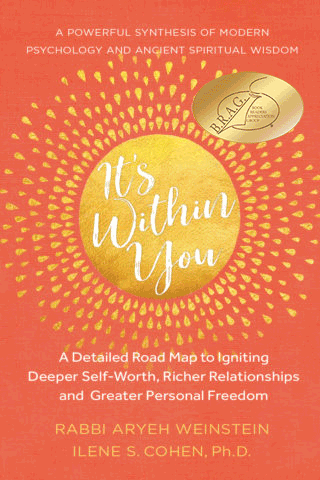
Get a copy of my popular book “Its Within You.” It is a guide to help you to live within and cultivate your sense of purpose. https://amzn.to/2LP2pNL
Talk soon,
Dr. Ilene


September 29, 2019
How Not to Get Sucked Into the Problems of Others
Here’s a question I get asked as a therapist:
How do you listen to people’s problems all day? Don’t you get burned out?
In all honesty, I have worked on my ability to be present and accountable for my clients without taking on their feelings. You can imagine that I see people who are anxious, uncomfortable, lost, sad, frustrated, and traumatized. I hear people’s darkest thoughts, and about the hardest times in their lives. As a compassionate person, it’s only natural to feel their pain too. However, I have worked on better managing my own emotions around others’ discomfort because I get a lot of practice at it. And I know it’s better for myself and for my clients to remain objective and clear minded. The ability to manage yourself in the presence of other peoples’ anxiety and difficult emotions is an ability that can be practiced and strengthened within all of your relationships.
Below are five skills I have learned that have helped me to effectively and respectfully deal with other people’s tough emotions. If you can learn to implement and strengthen these skills, this will help you keep your calm in every relationship in your life, especially the most important ones.
Seeing Emotions As a Symptom, Not a Problem To Get Rid Of
When someone we care about is very anxious, overwhelmed with sadness, or just plain frustrated, it’s natural to see the emotions they are feeling as the problem. This pulls us into action thinking it must be something to be taken care of and resolved as quickly as possible. This is why we so often turn to giving advice, and trying to “solve” their problems when the people we care about are upset.
However, as I’m sure you’ve come to learn, giving advice to someone that is very anxious, usually isn’t helpful. What if instead of seeing emotions as the problem we see them as a symptom that is letting the person who is experiencing them know that there is a bigger issue. So, in actuality their emotions are serving a purpose, and instead of trying to solve their issue, we can get curious about what is going on.
Viewing someone’s emotions as the problem gets us thinking that emotions are bad. When we think of something as bad, we think it must be gotten rid of immediately. On the other hand, thinking of it as a symptom, puts us in a mindset of curiosity. And when we’re curious about another person’s emotions, it’s far easier to be validating, understanding, and empathetic, which is what most people experiencing strong, painful emotions really need.
Some curiosity-driven questions look like:
What is it like for you to be experiencing these emotions?
What is your best theory for why you are feeling this way?
Even though you don’t like feeling this way, what do you think this emotion is telling you?
When you shift from problem-thinking to curious-thinking, your mindset becomes driven by interest, which is more helpful for both you and the person who is upset. When someone you care about is having a hard time, try to understand how and why they’re feeling that way. Think about when you’re upset. How is it that you like to be comforted?
Try to Remember a Time When You Felt the Same Way
Empathy is when you put yourself in another person’s shoes and try to imagine what it must be like to be in their situation. Empathy is an important skill to implement for many reasons, it’s especially helpful for managing yourself while another person is upset. Instead of just putting yourself in someone else’s shoes, try to remember a time when you wore the same shoes.
Try to remember a time when you struggled in a similar way and with a similar set of difficult emotions. This is a powerful way to appreciate someone else’s struggle because it’s based on your own experiences. The more you can relate to what they’re going through, the better your odds of being genuinely helpful and supportive, not to mention being less reactive and emotional yourself.
Practice Reflective Listening
When people are struggling emotionally they don’t want you to fix their pain, they want to feel understood. This takes the pressure off of you to think that you need to solve another person’s problem, and gives you permission to merely listen. So, how do we get out of the fixing mindset and start helping people feel understood? The best way is to practice a technique called Reflective Listening. Reflective Listening means that when someone tells you something, you simply reflect back to them what they said, either literally or with your own understanding.
The value of reflecting back what someone just said is that it helps them feel like you are with them, that you’re connected and understanding. By mirroring another person’s experience you’re giving them something far more valuable than advice — you’re giving them a genuine connection.
Validate Your Own Emotions
One of the hardest things about being in the presence of an anxious person is the emotions they tend to stir up in us. When we’re deep into a spiral of our own negative emotions, it’s hard to have enough mental and emotional bandwidth to navigate our own mood and that of someone else. This is why we often react to other people’s moods in a way that ultimately isn’t helpful to them, us, or the relationship.
The solution is to get better at noticing and managing ourselves early and we do this through validation. Validation simply means acknowledging our own emotions and reminding ourselves that they’re okay and perfectly reasonable.
If you are in the presence of an anxious person, acknowledge that you’re feeling annoyed and frustrated, remind yourself that it’s okay and natural to feel that way, and then ask yourself what the most helpful way to move forward might be.
Remember It’s Not Your Responsibility
A mistake I see people make when trying to deal effectively with other people’s problems is taking responsibility for how the other person feels. In short, because you can’t control how someone feels, you’re not responsible for them. So much unnecessary struggle, conflict, and energy comes from a fundamental misunderstanding about what’s really under our control.
It truly amazing how much genuinely helpful energy gets freed up when you remove the burden of excess responsibility from yourself. When you stop expecting to be able to make someone feel better, you can start taking real steps to connect with them in a heartfelt way and become genuinely supportive.
Overall, painful emotions are hard to deal with— both in ourselves and the people we care about. While it’s not possible to “fix” another person’s emotional struggles, there are a handful of practical skills you can learn to help you be more genuinely supportive and helpful. Skills like self-validation and reflective listening will help you stay calm and effective instead of reactive and impulsive in the face of other people’s problems.
Did you enjoy reading this article?
Once a week I send out a newsletter with new articles and unique content for readers. It is my way of staying in touch with you and giving you free advice based on some important topics.
Click here to sign up for my newsletter.
Get a copy of my popular book “Its Within You.” It is a guide to help you to live within and cultivate your sense of purpose. https://amzn.to/2LP2pNL
Talk soon,
Dr. Ilene
August 31, 2019
Finding and Living Your Own Truth
“As far as we can discern, the sole purpose of human existence is to kindle a light in the darkness of mere being.”
– Carl Jung
“I never thought I was capable of this. Not in a million years did I ever think I would betray someone like this. Sometimes I don’t even think this is my life.” Tom, a childhood friend, said this to me over coffee, while speaking about an affair he’s been having with someone at work. His emotions took over his life, and he entered territory he never thought he’d find himself in. Living a life of secrets and lies, far outside your own truth, can feel exhilarating at first—that is, until it starts to mess with your beliefs about who it is you want to be in this world.
During his affair, Tom was living as a slave to his reactivity and instinctual urges. He regularly suppressed and ignored his internal values and logical mind in order to experience instant gratification and unrestrained ecstasy. As a result, he became overwhelmed with shame. He was guided exclusively by his emotions, only concerning himself with his feelings and ignoring everyone else’s. In the process of living this way, he lost the most valuable thing: himself.
When we indulge in behaviors that deviate from our personal value systems, our ability to think logically gets weaker and weaker over time. Before we know it, our lives start falling apart, our relationships are in shambles, people feel disconnected from us, and we struggle to get close to anyone. We find ourselves unhappy, and we don’t know why. Our inability to truly express ourselves, show our vulnerabilities, expose our shortcomings, and cope with discomfort stunt our growth and potential to live in a place of truth.
Everything Starts with Awareness
Giving yourself time to become more aware of yourself and your internal experience will allow you to manifest into action what you truly want. Experiencing your true self will help keep you feeling real, healthy, and truly satisfied, giving you the push you need to continue down that path. Becoming more self-aware will help you change your behaviors and stop filling the void inside you in unhealthy ways. It will open up a new journey, giving you your own voice and rewarding you with a life that feels like your own. As John Kim, LMFT puts it, “The highest currency you’ll ever have is self-awareness. Without it, it’s impossible to know what you need to change. Usually, people experience awareness by getting chopped at the knees over and over until they realize something has to change.”
You may have an understanding of what needs to change in your life. You might have become aware of it through your relationships, traumatic events, people’s responses to you, or your reactions to them. Being vulnerable and open to change means accepting all of your story and taking responsibility for your role in it. It isn’t about blaming others for it, acting like a victim, or ignoring your truth. Becoming who you truly are is a process. But if you want to practice self-awareness, you have to make the choice to accept where you’re at and fully accept all of your story without shame or regret. Speaker, bestselling author, and behavioral scientist, Steve Maraboli, explains it this way:
“There are times in my life when I have been medicine for some while poison others. I used to think I was a victim of my story until I realized the truth; that I am the creator of my story, I choose what type of person I will be and what type of impact I will leave on others. I will never choose the destructive path of self and outward victimization again.”
If you’re starting to feel powerless over your life and a victim to your circumstances, it’s time to look in the mirror and accept responsibility for your story and your life. When I listened to my friend Tom share his truth with me, I struggled to stay neutral. I could see that a big part of him didn’t want to end his affair, which brought him so much pleasure. So I asked him, “Do you want to live a life of pleasure or purpose?” Most of us aren’t used to doing what’s uncomfortable for us. We live our lives avoiding the tough decisions and doing what we’ve always done, even if it isn’t working for us. In the moment, it seems like we’ve found a shortcut. But as it turns out, that short cut ends up being the long way.
The truth is, like most of us, Tom was afraid. He was afraid of rejection, failure, being alone, and facing the unknown. He was scared to be himself, and as a result ended up creating an outlet for himself in the form of a love affair. He found a way to create a connection without actually having to get intimate or commit; it was the perfect way to hide.
Of course, changing is hard. That’s why most people don’t do it and, instead, just wait for the next thing that will bring them momentary pleasure. But experiencing your truth is not only about you; it’s about the world being able to experience you at your best.
Practicing Self-Awareness
Think about a typical day in your life. As you go through the details, ask yourself this question: When do I feel most like myself, and when do I feel disconnected? Take your time. Close your eyes if you have to. Dive into your experience of a typical day. Is it when you’re at the gym, having a drink with friends, outside in nature, driving, at work, or with family? Then ask, Where do I feel the most connection? If it’s hard for you to play back a typical day in your mind start practicing self-awareness by becoming aware of your internal experiences throughout the day, without judgement. Notice what makes you feel reactive and what seems okay with you. Start to become aware of what brings you joy and what makes you feel uneasy.
This work is all about looking within, getting to know yourself, and then changing your mindset and beliefs about what truly aligns with your Self. Living your life fully aware of yourself is freedom at its best.
Did you enjoy reading this article?
Once a week I send out a newsletter with new articles and unique content for readers. It is my way of staying in touch with you and giving you free advice based on some important topics.
Click here to sign up for my newsletter.
Get a copy of my popular book “Its Within You.” It is a guide to help you to live within and cultivate your sense of purpose. https://amzn.to/2LP2pNL
Talk soon,
Dr. Ilene
August 18, 2019
B.R.A.G Medallion Winner
I am so grateful that we received 5 stars, a wonderful review and beautiful medallion from B.R.A.G (Book Readers Appreciation Group) for our book “Its Within You”!
B.R.A.G.’s review:
“Excellent book. Recommended it to many people in my family of course … I found many points I can use and wish I had its knowledge when I was counseling. It comes from a different point of view being at least one of the authors is Jewish but I found that refreshing and often times helpful.
Unique point of view, extremely helpful information, great exercises that could produce new insight if followed precisely. I will continue to keep this in my arsenal of
help.
I gave all 5s on the scoring … I LOVED this book. I was going through a really hard time with exactly this subject and I have been reminding myself over and over- look within, it’s within you, not outside of you. I want to thank the author(s) for writing this book and I definitely recommend this book for a B.R.A.G medallion.”
Get your copy today! https://amzn.to/2z0n89H
August 11, 2019
July 27, 2019
How to Build a Strong and Authentic Sense of Self
“One of the greatest tragedies in life is to lose your own sense of self and accept the version of you that is expected by everyone else.”
– Unknown
Knowing yourself and becoming confident in who you are, isn’t as easy as it may sound. Building a strong sense of yourself can seem like an impossible task at times. It’s a lifelong project figuring out who you are, what you value, and what is important to you. It is especially hard to know yourself when living in a culture that sends us constant messages about who we should be and what we should like. It makes it challenging for us to separate what we want from what other people want. It is hard to know ourselves and find our own voice in the midst of so many other dominant ideas and opinions.
So, let’s get started with how you can build a strong and authentic sense of self, even when others think differently. To truly know yourself and be known by others, you must distinguish yourself by figuring out what your values, beliefs, and truths are, apart from other people’s opinions about what they should be. Begin by making choices for your life, instead of looking to others to make decisions for you. If you’re tired of wishing you had the strength to say no, if you’re overwhelmed by living a life others expect you to, if you wish you didn’t have to work so hard for approval, if you don’t have the courage to express your feelings or the ability to be happy with who you are, then you know you’re living a life that isn’t congruent with who you are. You know you aren’t living for yourself. Below are some tips on how to build a strong and authentic sense of self:
Differentiate yourself. Look within, distinguish yourself from your surroundings, allowing you to become more self-aware. Before you make any decisions—especially life altering decisions—you have to figure out what you want and how you want to spend your time. People who know themselves make decisions for themselves automatically. But it takes time to get there. The process of defining a self, especially later in life, can be slow. Take your time and remember that knowing yourself happens through the decisions you make.
Create yourself. When developing a sense of self, it helps to stay in conversation with yourself, always exploring new ways to be who you want to be. You can do this by becoming the observer of your own life, which will help you be more attuned with your inner self. When a situation occurs, take a step back and watch your process, thoughts, and feelings, without trying to react immediately. For example, if someone asks you to do something for them, you don’t have to answer right away. Instead, you can say, “Let me get back to you.” This will give you some time to really consider your options, without having to make an instant decision. Your automatic responses can lead you in a direction that isn’t in line with yourself, and you may end up regretting it later if you don’t take your time to answer.
See challenges as a way to know yourself. When you’re faced with difficult situations in life, try to see them as opportunities for you to decide who you are and see what you’re capable of. As Neale Donald Walsch says, “each circumstance is a gift, and in each experience is hidden treasure.” When you continue to act in ways that don’t align with your values, you rob yourself of the opportunity to experience who you want to be in different situations and circumstances. How you choose to behave, think, and feel are all expressions of who you want to be. When you observe your self without judgment or impulsivity, you’re making a decision about who you are; you’re getting to know You. Situations in life, even negative ones, can always serve as opportunities.
Apply these actions to your life. There are a few ways that you can practice knowing yourself in your daily life, allowing You to move through life as a more distinguished self: a. Make a real effort to have your feelings line up with your logical brain by looking at the facts every situation, b. Practice sitting with the discomfort that comes from your wants not being immediately satisfied, c. Think about your personal values instead of imposing them on other people, d. When people in your life upset you or you don’t agree with them, try to stay connected to them rather than pulling away, e. Have your own ideas, values, and thoughts even if others disagree with them, f. Look beyond your initial impulsive reactions so you can see your real intentions, and act in ways that better fit with who you want to be versus what your impulses dictate.
Take obstacles, situations and interactions with people as an opportunity to express who you are, who you want to become, and how you want to express your true self. The only way to really know who you are is to try on certain actions for size and see how they make you feel. Over time, you may notice that acting in ways that fit with who you are simply feels better than acting in ways that don’t naturally align with your true nature.
Did you enjoy reading this article?
Once a week I send out a newsletter with new articles and unique content for readers. It is my way of staying in touch with you and giving you free advice based on some important topics.
Click here to sign up for my newsletter.
Get a copy of my popular book “Its Within You.” It is a guide to help you to live within and cultivate your sense of purpose. https://amzn.to/2LP2pNL
Talk soon,
Dr. Ilene
July 13, 2019
How to Cultivate Your Sense of Purpose
“The mystery of human existence lies not in just staying alive, but in finding something to live for.”
―Fyodor Dostoyevsky
Does the world seem to be getting more complex by the day? Stress, and anxiety, are at an all-time high. And the world seems to be getting more divided every day. When all of this happens, it’s easy to feel bad about life, to live with a pessimistic mindset and to feel like totally throwing in the towel.
When watching the news, it is pretty easy to get overwhelmed by all of the problems of the world. Having the urge to pull the sheets over your head in the morning instead of facing the day is understandable.
It seems like the only two states of being that are available these days are either anxious or numb. Feeling stuck, alone and like no one will understand you. However, this is not the first time in history that humans have felt this way. History is riddled with all kinds of hardship and opportunities to be pessimistic. Even so, we have progressed and overcome challenges.
And even though it doesn’t seem that way, it has never been more appropriate than right now to be optimistic about the future than at any time in human history.
We are more connected, more abundant and more available for positive change than ever before.
It is hard to see the good when the bad is so painful, and exploded on the headlines. It is hard to be optimistic in the midst of so much doubt and worry. It’s easier to be pulled into the drama, living with the idea that to be alive is to be in pain. However, there is so much more to life, than the bad and the ugly. So much more beyond our hurt.
There are so many tools, and skills you can learn to pull yourself out of the dumpster. However there is one thing that if you cultivate this within yourself, you will become happy once again.
This is realizing your Purpose. When you find and live your life’s purpose, everything changes.
Purpose is what will keep you going even in the hardest of times. It’s the thing that keeps you powerful. Purpose is the one thing that changes everything else. And Purpose isn’t what you might think it is. Many people think that purpose in life is something that you do, like your job or the role you play in your family. Being a parent. Being an accountant. Being a sister or brother. Being a business owner.
None of those things are actually your purpose in life. However, they can be an expression of your life’s Purpose. Purpose is an internal emotional state, that you cultivate within yourself and then express it to the world. Purpose is a state of mind, not a specific thing that you do.
And, there are three skills that are helpful when living a life of Purpose:
1. Emotional Awareness – how do I feel now and how do I want to feel?
2. Emotional Intelligence – knowing what to do to feel the way I want to feel.
3. Emotional regulation – doing what it takes to emotionally regulate myself day to day and moment to moment.
The key to success is not as difficult as you might think.
It is the ability to have emotional awareness, and intelligence. I think that emotional regulation is becoming one of the most important skills that you can learn today to be able to not only find your purpose, but thrive in it from now on.
Make sure you are surrounded by the people, environments and mentors who can guide you to learn and embody these skills.
Did you enjoy reading this article?
Once a week I send out a newsletter with new articles and unique content for readers. It is my way of staying in touch with you and giving you free advice based on some important topics.
Click here to sign up for my newsletter.
Get a copy of my popular book “Its Within You.” It is a guide to help you to live within and cultivate your sense of purpose. https://amzn.to/2LP2pNL
Talk soon,
Dr. Ilene
June 30, 2019
Boundaries in Relationships After an Affair
It was an honor to be interviewed by Melissa Founder of After the Affair created for those suffering from the trauma of an affair. We discuss setting boundaries and how to heal after an affair. Melissa talks about her experience of being cheated on while being a stay at home mom. Check out our video interview!”
Boundaries in Relationships After an Affair
Boundaries in relationships after an affair are extremely important. Learning how to set boundaries, why you should set boundaries and how boundaries protect you are vital skills to learn when healing from a traumatic event.
I was excited to join Melissa Davis founder of After the Affair to discuss boundaries after being cheated on and what to do when one person wants to heal the relationship and the other person wants out of the relationship.
ABOUT AFTER THE AFFAIR After the Affair was made by the cheated for the cheated. Melissa created a let’s get to the point, way to help people heal from their partner’s unfaithfulness. She wanted to know what to do about the hurt partners racing and obsessive thoughts now, not after 7 months of therapy sessions that cost a fortune. In 8 weekly videos they cover topics like: trauma recovery, creating a support system, grief, PTSD, boundaries, reactions, reality, flashbacks, depression, anxiety and fear. For each subscription, they give away a subscription to those in need. Members can watch recorded videos when their schedule allows and as often as they would like. To Learn more about After the Affair go to https://www.aftertheaffair.co.
June 17, 2019
My Life Isn’t Perfect . . . And That’s Okay!
At some point in my life, I got the message that if everything in my life didn’t look perfect for the outside world, people would perceive me as unworthy, as less than them. So I stuffed down my imperfections like the donuts I wasn’t “supposed” to be eating. I refused to accept the parts of myself and my life that didn’t fit into my perfectly painted picture of how I was supposed to be. I ignored everything that would be perceived as negative to other people. Sadness? Doesn’t happen to me. Anger? Beneath me. Heartbroken? No clue what that feels like. I went to great lengths to lie to myself and everyone around me, just to protect myself from the truth.
As a therapist, I now see that a lot of our problems come about when we avoid natural human emotions like the plague. But distancing and denying a natural part of life only strengthens its furry. Like most of my clients, I had to learn that lesson the hard way. What if instead of avoiding my suffering, I decided to let it in? What if instead of running away from my flaws, I accepted them with compassion? What if instead of always escaping the truth, I faced it head on and learned to better deal with it? These are intense questions. Like most things in life, all of this is easier said than done. No one wants to live in pain, no one wants to face their demons with compassion, no one wants to unearth their fears and anxiety. When it comes to these emotions, vulnerability is more intense than standing naked in front of everyone you know.
However, the truth is that living your life to prove something, to prove your worth, to prove your value, to play it “safe” and avoid suffering, doesn’t allow you to live in the most authentic way possible. It doesn’t allow you to connect with others in deeper ways or give you the confidence to know that even though life can be a crap storm at times, it’s okay, because you’ve got this. You don’t have to have it together 100% of the time to be a well-functioning and healthy person. You can fall apart and know how to get everything back together again.
You see, no one really bought the story that I was fine after my beloved aunt died and left two kids behind. No one bought that I was okay after my dog of 14 years passed away. No one bought that I wasn’t angry at my ex for cheating. No one bought that I was totally cool with being in labor for hours. Some things are objectively bad. And it’s okay to have emotions about them. There’s power in crying, in pain, and even in anger. Emotions are honest. They are raw material letting you know what’s up. If you deny them because you want to appear as though you have it together all the time, they will find a way to show themselves. I think as a culture and within each individual family, we will all do ourselves a great service if we let our children cry when they fall, allow our loved ones to be in pain after a breakup, and let in the intensity of grief. Maybe once we do that, we will understand that emotions won’t kill us; they will only bring us closer to ourselves.
I no longer try to project perfection out into the world. I also don’t shy away from others’ pain like I once did. I honor life’s annoyances, drama, and pain through compassion, not through denial. The more I accept that my life isn’t perfect, the more I can be accepting of others and what they’re going through. The more I can be present and accountable. So, if you received the message as a child that you always have to have on a brave face, to stay “strong”, to never air out your dirty laundry . . . I say it’s time to evaluate those ideas. Ask yourself, how are they serving you? You become a prisoner to what you fear and avoid. And if you don’t know the real you, other people won’t get to know the real you either.
These days, I would say that my life is a good life; but it’s not perfect. And that’s okay, because I believe that a happy and good life doesn’t necessarily have to be perfect. I thrive to be the best person I can be, but I have flaws—one of which is fighting against having flaws. Luckily, I now see that life’s hiccups and annoyances are opportunities for growth, not chances to prove to everyone how okay I am. So, the next time you try to deny yourself sadness or find yourself striving for perfection without knowing why, take a minute to reflect. Take a breath and ask yourself: “What am I trying to prove?”
Did you enjoy reading this article?
Once a week I send out a newsletter with new articles and unique content for readers. It is my way of staying in touch with you and giving you free advice based on some important topics.
Click here to sign up for my newsletter.
Want to learn more about feeling good enough for life? Check out my new book, “It’s Within You.” https://amzn.to/2Y3i7Yr
Talk soon,