Allison Gilbert's Blog, page 7
June 21, 2018
How to Make Sense of Life’s Highs and Lows
The last several days have been a whirlwind of emotion for my family. My beloved father-in-law passed away within the same week my son was heading out to prom and graduating from high school.
The juxtaposition of such highs and lows was remarkable but hardly unusual. Perhaps you’ve had to navigate such emotionally complicated terrain, too. My husband and I decided the only way to move through this time was to address each experience completely yet separately, giving ourselves permission to be wholly invested in each one. This allowed us to be fully present at my father-in-law’s funeral, keeping thoughts of Jake’s end-of-year celebrations at bay. And the next day, switching gears, we were able to rejoice in Jake’s big moment, while keeping our sadness – and Jake’s too — in check.
I didn’t realize it at the time, but this plan reflected one of my favorite concepts I write about in Passed and Present: Keeping Memories of Loved Ones Alive. The strategy is to set aside time to give grief 100%. This may include carving out 30 minutes to linger over photographs, or 10 minutes to re-read old letters, emails, and birthday cards. Devoting uninterrupted time to remembering is healing. It gives emotions their due. Individuals are able to move forward without guilt or reservation because no emotion is given short shrift.
Successfully managing sorrow and joy is what I discuss in a Google Talk I gave not too long ago. In my presentation I reveal the only way to make sense of life’s ups and downs is to embrace the word “and.” It’s possible to honor our past AND celebrate our present.
Absence and presence must coexist. This isn’t a choice. We need to cuddle up to both. This is the essential key to finding resilience after loss.


May 31, 2018
Meaningful Ways to Remember Loved Ones on Graduation Day
In 2014, I shared on Facebook how my parents would have been so proud of my son when he graduated from 8th grade and was inducted into the National Junior Honor Society. In the photo I posted back then, he’s shaking hands with the principal and assistant principal of his middle school.
 Fast forward nearly four years and Jake will be graduating high school in just a few weeks. My parents would have been overjoyed now, too. Perhaps even more so.
While I wish my mom and dad could be part of this special occasion, I recognize there are opportunities for seamlessly incorporating their memory into our special day.
Consider the below ideas for your upcoming celebrations.
Meaningful Opportunities for Remembering Loved Ones on Graduation Day
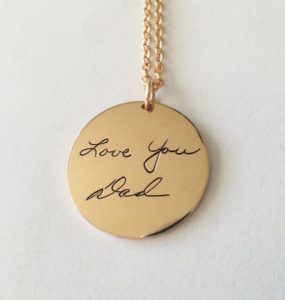
Consider engraving a new or existing piece of jewelry with their loved one’s handwriting. Simply take a note or letter with their loved one’s signature and bring it to a jeweler. Jewelers can etch names and shapes (smiley faces and hearts they may have drawn) into virtually anything — charms, cuff links, and bracelets. I discuss this idea and other great strategies in my book, Passed and Present: Keeping Memories of Loved Ones Alive .
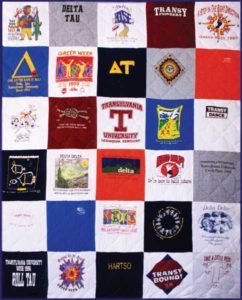
Create a quilt or blanket for a college bed. Use their loved one’s t-shirts, jeans, or sweaters to make a one-of-a-kind throw. If you aren’t handy with a needle and thread, get help from a local tailor or campusquilt.com.
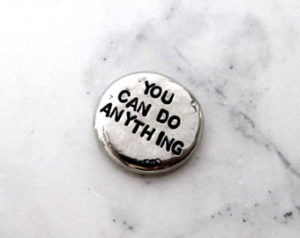
Design a meaningful pocket token. Feature one of their loved one’s favorite quotes or sayings, a small yet powerful gift. The one here reminds me of my dad. He always believed in me and told me, “You can do anything.”
Eat their loved one’s favorite food (especially if it’s chocolate cake!). Enjoying what they loved will create a sweet graduation celebration memory. Read more ideas about how to incorporate food as part of remembering loved ones here.

The bottom line for remembering loved ones on Graduation Day is this:
Recognize that absence and presence can coexist. As I shared during a Google Talk not too long ago, taking intentional steps to remember loved ones is key to healing. By proactively embracing the memory of loved ones on special occasions, we increase our capacity for joy during times we often miss our loved ones most.

May 11, 2018
Memorial Day: Make This Year Really Count
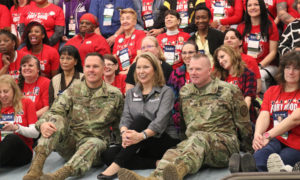 I’ll be celebrating Memorial Day in Washington, D.C. this year. In honor of our nation’s fallen heroes, I’ve been asked to speak at the TAPS National Military Survivor Seminar. There is no greater honor than helping more than 2,000 military family members remember their loved ones — the husbands and wives, mothers and fathers, sisters and brothers, sons and daughters left behind. I’ll be including new creative and uplifting strategies I’ve discovered since writing Passed and Present: Keeping Memories of Loved Ones Alive. I can think of no place I’d rather be.
If you’re looking for meaningful ways to commemorate Memorial Day, the following idea is one of my favorites.
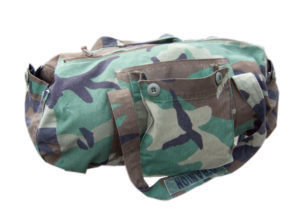 This picture is of an army jacket refashioned into a duffle bag. There are dozens of upcycling projects you can do, either by yourself (if you’re handy with needle and thread!), or with the help of a local tailor. I’ve had great success finding creative partners online.
If you’d like more fabric upcycling ideas, for Memorial Day or any time of year, email me for a FREE tip sheet. Write “Fabric Ideas” in the subject line.
And if you have strategies to share, please post them on my Facebook page or Instagram or Twitter feed. Let’s learn from each other!

April 18, 2018
On Mother’s Day: Celebrating Moms Gone Too Soon
I’ve learned a critical lesson in the 20 years since my mother died: the more proactive I am about remembering her, the happier I tend to be. This is because keeping a loved one’s memory alive is absolutely essential for healing. (Read more in The Reflection Effect, my essay for O, the Oprah Magazine, here.) And because of this, Mother’s Day is a perfect time to celebrate what your mom still means to you. Below are some of my favorite ways to honor moms no longer with us.
Plant Daffodils
 The idea is to plant one bulb for every year your mother lived. Daffodils are perennials, so they’ll come back spring after spring — and they’re virtually indestructible. In my book, Passed and Present: Keeping Memories of Loved Ones Alive, I discuss how this is a great social activity and can involve family, friends, and neighbors. Not only will you benefit from the extra hands, you’ll be able to use the time to invite conversation and share stories about your mom.
Buy Meaningful Gifts
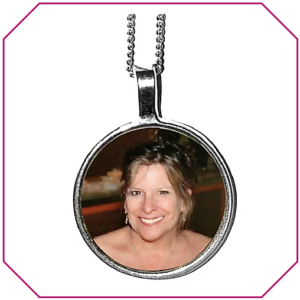 As many readers and friends know, I’m super proud to be Executive Family & Memories Editor at Legacy Republic. The charm shown here features a photograph of my Aunt Ronnie, who died a few years ago of breast cancer. The necklace is by far one of my favorite Legacy Republic keepsakes. I gave it to my cousin in remembrance and in celebration of her mother. My hope is that it prompts her two young children to ask questions about their grandmother, an incredible woman they never got to know. If you want to get a meaningful keepsake for yourself or a friend, Mother’s Day deadlines are approaching fast. See more gift ideas here.
Repurpose Jewelry
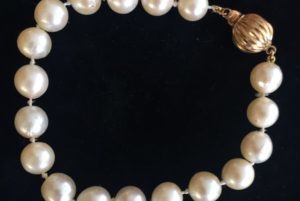 While I love wearing some of my mother’s jewelry as-is, there are a few pieces I’ve completely refashioned to make them even more special. For example, for my wedding, I had a long strand of my mother’s pearls made into several smaller pieces — a bracelet for me, and a pair of earrings for each of my bridesmaids and maid of honor. Wearing the bracelet (and seeing my friends and family still wearing their earrings) makes me feel close to my mom. And with so many summer weddings on the way, this opportunity is especially timely.
Mother’s Day isn’t just for those fortunate enough to still have their moms. The holiday is for all of us. Embracing this notion is validating. Acting upon it has the capacity to boost our sense of joy and overall well-being.

April 4, 2018
The Best Earth Day Ideas for Remembering Loved Ones
It hasn’t seemed much like spring in New York, but I’ve been thinking a lot about Earth Day on April 22. I love the opportunity warmer weather provides for reflection. It’s an unparalleled time for taking advantage of the outdoors and finding creative ways to remember loved ones. Below are a few of my favorite ideas for using Earth Day as an occasion to celebrate the family and friends you never want to forget.
1. Create a Memory Garden
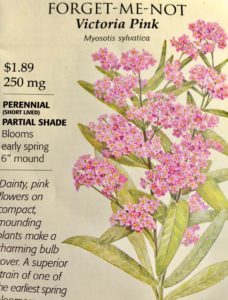
Grow your loved one’s prized flowers, treasured plants, or favorite herbs. Or simply pick combinations of these that feature his or her favorite colors. Choose a prime location for your Memory Garden so you can see and enjoy it often. If you live in an apartment, this project can also be done with terra cotta pots. For more ideas on using flowers to strengthen memories of loved ones, please read these posts.
2. Fortify the Earth

Plant a memorial tree in recognition of loved ones on Earth Day. Explore ways to do so by using websites like nationalforests.org (benefitting the National Forest Foundation) or www.worldlandtrust.org (protecting wildlife habitats worldwide). For a more hands-on experience, saplings can be planted locally. Towns across the country host ceremonies for Arbor Day (held in April, too). You can also plant a tree in your Memory Garden.
3. Build a Refuge
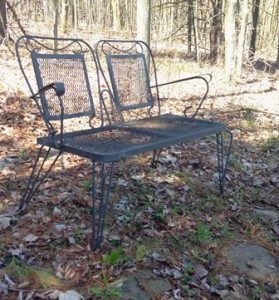
After my father died, my stepmother Cheryl longed for a quiet place outdoors to think about my dad. Her ideal spot ended up being a secluded place right in her own backyard. She cleared out a few weeds, bought an iron bench at a garage sale, and . . . a refuge was born. You can read more about this idea and many others in Passed and Present: Keeping Memories of Loved Ones Alive.
My favorite part of Cheryl’s retreat is the path she made to get there. She gathered a large number of medium-sized stones and carefully positioned them one after the other until a line of rocks stretched from the side of the house to the bench. And then, over the course of several visits, she asked my children and my brother’s children to help her paint each stone with a different stanza from We Remember Them, a poem by Rabbis Sylvan Kamens and Jack Riemer.
Here’s how the poem begins, adapted below:
At the rising sun and at its going down
We remember them.
At the blowing of the wind and in the chill of winter
We remember them.
At the opening of the buds and in the rebirth of spring
We remember them.
At the shining of the sun and in the warmth of summer
We remember them.
At the rustling of the leaves and in the beauty of the autumn
We remember them.
At the beginning of the year and at its ends
We remember them.
As long as we live, they too will live;
for they are now a part of us,
as we remember them.
So even though spring feels like it’s coming way too late this year, create warmth right now by focusing on Earth Day. Take a moment to consider the activities that would be most enjoyable to you. Then, while you’re still cozy inside, create a plan to make your idea happen.
Gardening photo courtesy: Benjamin Combs

March 21, 2018
Spring Cleaning Increases Resilience After Loss: Here’s Why
When a loved one dies, there are almost always objects and heirlooms to sort through – and then decisions to make about what to do with them. After my parents died, I felt a responsibility to keep many of their belongings – my father’s neckties, my mother’s scarves, their books, home videos, photographs, and more. And for a while, these possessions made me feel closer to my mom and dad. Surprisingly though, so did repurposing them and not keeping them at all.
Purging objects and upcyling others drives resilience after loss. Deciding what to do with belongings, instead of unceremoniously packing them away in a closet, attic, or basement, sparks a sense of control. Death makes us feel unmoored; taking ownership of what comes next makes us feel empowered. Being proactive also increases the likelihood the belongings we choose to keep will be truly meaningful to us and won’t weigh us down.
Below are five opportunities for using spring cleaning to build resilience after loss. I explore many more creative strategies for remembering and celebrating family and friends in my book, Passed and Present: Keeping Memories of Loved Ones Alive.
Frame Their Handwriting — Frame a handwritten recipe or locate your loved one’s signature on a letter, car title, or passport. Doing so not only gives you the chance to sort through these items, it provides new opportunities to talk about your loved one when family and friends come to visit.
Upcycle Clothing — Reimagine your loved one’s favorite sweater, shirt, or pair of jeans. Gather a few pieces and transform them into teddy bears, throw pillows, or bean bags. Pieces of fabric can also be used to create one-of-a-kind quilts. Read my post on upcycling and how I created a quilt with my dad’s neckties.
Curate a Gallery — Gather your loved one’s official documents (college ID, driver’s license, military papers, business cards, etc.) and turn them into decorations around your home. To create a cohesive look, frame objects in like-colored mattes and frames. A collection that spans multiple generations often works best —no need to arrange documents in chronological order.
Donate Objects — Items of all types (ceramics, costumes, sports memorabilia, stamps, textiles, typewriters, etc.) are of potential interest to museums and historical societies. Giving objects to professional preservationists and curators helps ensure the individuals who owned them will never be forgotten. Consider what types of objects you have and find organizations that maintain vast collections of them. By donating these items, you may also alleviate any guilt that bubbles up from parting with your loved one’s possessions.
Approach Textiles Creatively — Show off and enjoy meaningful fabrics – table linens, towels, ties, scarves, even curtains. Frame a portion of a wedding dress or display a religious garment or uniform in a case. Wrap a love-worn tablecloth around a large canvas and mount it on a wall.
Giving yourself permission to toss or transform your loved one’s possessions accomplishes two distinct and complementary goals. One, it decreases the likelihood the items will become a burden; and two, it increases the chance that what’s left will make you smile. Embrace spring cleaning as an unrivaled opportunity for healing and renewal. And if you want even more strategies, I share additional ones here.

March 16, 2018
Jon Stewart on Grief, Resilience, and Supporting Those Who Serve Others
Jon Stewart’s father passed away several years ago. But the former The Daily Show host’s personal experience with loss is not what prompted our discussion for my grief & resilience blog. Jon and I were in Arlington, Virginia to join Presidential Medal of Freedom recipient and founder of TAPS, Bonnie Carroll, for the launch of the TAPS Institute for Hope and Healing. Also with us were authors Hope Edelman, Claire Bidwell Smith, and Rebecca Soffer. Read more about this pioneering organization and its new Institute here.
Jon is a staunch supporter of service members, veterans, and military families. He is also a tireless advocate for first responders and is credited with being a driving force behind getting Congress to pass the James Zadroga 9/11 Health and Compensation Act.
The Zadroga Act provides health care and financial support for 9/11 first responders. These men and women breathed in toxic dust and smoke during the massive cleanup at Ground Zero. According to John Feal, founder of the FealGood Foundation, more than 7,000 first responders have developed cancer (as certified by the government) and nearly 2,000 have died.
Jon has spoken at Iraq and Afghanistan Veterans of America and USO events and he’s visited with troops overseas. Most impressively, he’s used his singular platform to hold America accountable for the care of those who have served and suffered.
Our conversation was intimate and far-reaching. He also spoke with WTOP radio and Connecting Vets about the significance of the new Institute. Below is an edited compilation of the most important portions of these discussions.
Allison: Why have you chosen to talk so openly about grief and resilience?
Jon: Grief and illness are really isolating when they occur. Unfortunately, when people go through tough times many choose not to reach out for help or don’t know what to do. There’s so much confusion. Individuals may even wonder if they’re grieving the “right” way. [Note: there is no “right” way to grieve that works for everyone.] And while everybody experiences loss, too few know how to grieve so they can hold tight to their loved one’s memory while making the best of the time they still have in front of them. (You can learn 85 strategies for honoring and remembering family and friends by reading my book, Passed and Present: Keeping Memories of Loved Ones Alive.) Sadly, this is one of those fields where TAPS has an incredible wealth of experience and compassion.
Allison: What inspired you to lend your voice to the launch of TAPS Institute for Hope and Healing?
Jon: I’ve done a bunch of work with the USO and military families at Walter Reed and Fisher House. I’d become aware of TAPS through that. Yet even amongst injured or ill veterans, there is a separate area for Gold Star families or other military families who have experienced loss. There’s a divide, even within communities that have each other’s backs in an enormous way – and there’s no community better than the veterans’ community with each other. But man, grief is still this really strange area, this taboo that I think is really tough for people to think about. And Bonnie, to her great credit, used her loss as a springboard to be there for others who are in that same situation. It’s incredible what she’s been able to build.
Allison: I’m sure you get asked to lend your voice to many charities. Why first responders and the military?
Jon: I’m drawn to supporting people who give of themselves so selflessly. It’s an unusual individual who, when you hear the sounds of trouble, actually moves towards it, rather than away from it. I’m generally in the “I just have to be faster than the least fastest person’ category.
I’m also struck by the stoicism within these communities. Members of the military and their families don’t often reach out for help when they need it. And I think too often we depend on them, and yet when the time comes for them to depend on us, we’re not there for them. So I try to help push along the idea that the least we can do for them is repay their service and selflessness with support.
Allison: Is there a TAPS program that speaks to you the most?
Jon: The mentor program. I think this initiative is especially important for the children left behind, for them to see someone who is like their dad or like their mom, who is in the military, who understands what they’re going through. There are little things that most people don’t even think about. For example, if a loved one is lost during service and the family lived on a base, that family doesn’t get to live on that base any more. As isolating as grief can be, that’s even more traumatic. So for TAPS to come in and provide a softer landing for people and a way to move forward is just amazing.
Allison: Is there ever a wrong time to laugh about loss?
Jon: Everyone deals with loss differently. Laughing is how I deal with it. And people always say, ‘What’s the right time?’ or ‘Are there times that are off limits?’ For me, for my family, no. Like, we will probably be joking in the midst of a death, during that moment. But everybody is different and that’s what’s so great about the TAPS Institute for Hope and Healing – it supports a process that tells people, ‘Hey man, there is no right or wrong way to do this. There’s no time frame. Embrace who you are. You’ll get through it that way.’
Allison: What still needs to be done to support 9/11 first responders?
Jon: People need to make it unacceptable for politicians to mess with them. They should write their Congressperson. The idea that we bring first responders and military families anything but peace and support is very upsetting to me. The government spends money incredibly frivolously in many different areas, and then we quibble over nickels and dimes when it comes to really important areas. I think providing grief support to military families — and truly any one who needs it — is a really important area.

February 27, 2018
This Is Us and the Importance of Preserving Family Memories
If you’re a This Is Us fan like me, it will likely come as no surprise I’m still thinking about the episode that aired after the Super Bowl. Quick recap: viewers learned exactly how Milo Ventimiglia’s character, Jack, died.
The episode shows how the Pearson family remembers Jack’s death on Super Bowl Sunday 20 years before. The characters reminisce in various ways: Randall celebrates his father’s memory by having a party and making a big deal of the day (Jack loved the Super Bowl), Rebecca, Jack’s wife, prepares his favorite lasagna, while Kate, his daughter, watches a home movie of her and her father.
What struck me most, however, was the near catastrophe that happened when Kate’s VCR made a terrifying whirring sound while she viewed the tape. She’d been enjoying the video when the machine sputtered and stopped playing. Her husband attempts to fix it, but the VHS tape seems beyond repair. Kate starts crying at the possibility these images are gone forever. That video is her only copy. The couple rush to get the tape fixed, and luckily, it’s salvaged and uploaded to the Cloud.
The Great VHS Scare is a reminder that our most important memories are just one crisis away from being eternally lost. After my father died (my second parent to pass away), I started digitizing our family’s 35mm slides, 8mm film reels, and yes, VHS tapes. I began slowly at first. After several years of starting and stopping, proceeding and then being distracted by work, my children, life!, I’ve now uploaded most of these images and feel secure they’re safeguarded for my children and future generations.
This process has been a joyful experience for me — so much so that I now serve as Executive Family & Memories Editor for Legacy Republic. If preserving and sharing memories are passions for you, too, I highly recommend making your interests a career. Legacy Republic has launched its Pro Services division. Check it out here.
Over time, I’ve come to learn the key to healing after loss is being proactive about remembering. Watching home movies helps. Sharing stories is wonderful, too. (You can learn 85 ways to honor family and friends you never want to forget in my book, Passed and Present: Keeping Memories of Loved Ones Alive.)
One of the most popular opportunities for remembering loved ones is cooking reminiscent food. That’s exactly what Rebecca did when she made that lasagna in Jack’s memory. Just like the fictional Pearson family, we can all benefit from taking a moment to honor the connections we still have to our loved ones. Doing so is precisely what drives happiness and fuels our capacity for resilience.
Photo courtesy: NBCUniversal

This is Us and the Importance of Preserving Family Memories
If you’re a This is Us fan like me, it will likely come as no surprise I’m still thinking about the episode that aired after the Super Bowl. Quick recap: viewers learned exactly how Milo Ventimiglia’s character, Jack, died.
The episode shows how the Pearson family remembers Jack’s death on Super Bowl Sunday 20 years before. The characters reminisce in various ways: Randall celebrates his father’s memory by having a party and making a big deal of the day (Jack loved the Super Bowl), Rebecca, Jack’s wife, prepares his favorite lasagna, while Kate, his daughter, watches a home movie of her and her father.
What struck me most, however, was the near catastrophe that happened when Kate’s VCR made a terrifying whirring sound while she viewed the tape. She’d been enjoying the video when the machine sputtered and stopped playing. Her husband attempts to fix it, but the VHS tape seems beyond repair. Kate starts crying at the possibility these images are gone forever. That video is her only copy. The couple rush to get the tape fixed, and luckily, it’s salvaged and uploaded to the Cloud.
The Great VHS Scare is a reminder that our most important memories are just one crisis away from being eternally lost. After my father died (my second parent to pass away), I started digitizing our family’s 35mm slides, 8mm film reels, and yes, VHS tapes. I began slowly at first. After several years of starting and stopping, proceeding and then being distracted by work, my children, life!, I’ve now uploaded most of these images and feel secure they’re safeguarded for my children and future generations.
This process has been a joyful experience for me — so much so that I now serve as Executive Family & Memories Editor for Legacy Republic. If preserving and sharing memories are passions for you, too, I highly recommend making your interests a career. Legacy Republic has launched its Pro Services division. Check it out here.
Over time, I’ve come to learn the key to healing after loss is being proactive about remembering. Watching home movies helps. Sharing stories is wonderful, too. (You can learn 85 ways to honor family and friends you never want to forget in my book, Passed and Present: Keeping Memories of Loved Ones Alive.)
One of the most popular opportunities for remembering loved ones is cooking reminiscent food. That’s exactly what Rebecca did when she made that lasagna in Jack’s memory. Just like the fictional Pearson family, we can all benefit from taking a moment to honor the connections we still have to our loved ones. Doing so is precisely what drives happiness and fuels our capacity for resilience.
Photo courtesy: NBCUniversal
February 13, 2018
What One Mom Learned After the Death of Her Son
This piece was written in partnership with Nisha Zenoff.
Not too long ago I came across The Unspeakable Loss: How Do You Live After a Child Dies?, a thoughtful and necessary book by Nisha Zenoff. The heart of the book is not the death of Zenoff’s 17-year-old son Victor who was killed in a hiking accident; rather, it’s the urgent set of universal questions such as the ones below that Zenoff poses and then answers summarily for her readers:
“Will my tears ever stop?”
“Who am I now without my child?”
“How can I help my other children cope?”
“Will my marriage survive?”
The structure of The Unspeakable Loss is what makes the book such essential reading. Each Q & A is a quick and satisfying read and every section provides a soothing Band-Aid of support and information. Zenoff’s warm and welcoming approach acknowledges the outsize pain of losing a child, yet offers the kind of opportunity that gives permission to other bereaved parents to embrace life, love, and joy again.
For Zenoff, the decision to move forward involves honoring Victor’s love of the outdoors. She and her husband sprinkled his ashes along a dirt trail in the woods. Zenoff’s daughter named one of her daughters Victoria, in honor of her brother. Opportunities for remembering like these are just the types of meaningful strategies I share in Passed and Present: Keeping Memories of Loved Ones Alive.
Grief experts agree the key to healing after loss is creating meaningful rituals of remembrance. Focusing on practical ways to remember loved ones is why Passed and Present is truly a how-to guide for celebrating the family and friends we never want to forget. When we create authentic opportunities for remembering we honor what our family and friends still mean to us.
If you’re seeking a way to help a friend grieving the loss of a child, Zenoff’s book is a powerful gift. If you’ve lost a child, do yourself a favor — buy this book.